Saturday, July 17, 2021

Disowning the flesh. . .

Though we have ample reason in our past to embrace a dualism in which the spiritual (non-material) is greater than the material, Christians should not join the cause to pit spirit against flesh.  In fact, there is nothing much in Scripture to give support to such dualism -- unless you take passages out of context.  But that is exactly what many do and that is exactly why Christians have joined their non-Christian friends in presuming that the material is not as good as the spiritual.  Flesh is used in several ways in Scripture and without the context it is easy to miss what is being said.  

Jesus did not disdain our flesh but was conceived, born, lived, and died as one of us, like us except for sin.  He became flesh and dwelt among us full of grace and truth.  (John 1)  To disown the material is to reject the love that was incarnate for us and for our salvation.  But that is exactly what we are tempted to do.  The current move to distinguish the biology or material of the body from the spiritual gender or the spiritual person rejects the material in some kind of dualism that is in conflict with Scripture.  We are embodied creatures by God's design and not spirits imprisoned in flesh awaiting release.  The modern day penchant for suggesting that the body is a burden instead of a gift or that God made mistakes in assigning us a gender in body that is in conflict with our spirit is absolutely foreign to Scripture.  

For the Christian God is not an idea but flesh and blood in Christ.  We do not meet Him on the level of some idealized existence but in the midst of our flesh and even in the midst of our sin that has marked us for death.  We do not imagine God nor do we experience Him as an idea or a feeling.  "That which was from the beginning, which we have heard, which we have seen with our eyes, which we looked upon and have touched with our hands, concerning the word of life— the life was made manifest, and we have seen it, and testify to it and proclaim to you the eternal life, which was with the Father and was made manifest to us."  (1 John 1:1-2)  This is reminded us even in the dismissal at the end of the Distribution when the pastor says "The body and blood of our Lord Jesus Christ strengthen and preserve you in body and soul to life everlasting..."   

This has become something or alien to us.  Even Christians have embraced the idea of a more disembodied self and a God who is likewise more idea than anything else.  In fact, the idea of Jesus is really much more attractive to us than the real Jesus whose words and actions are made known to us in Scripture.  Not long ago, the daughter of a political family tweeted that if Jesus were alive today, he would...  That is the point.  Either Jesus is not alive (somebody forgot Easter) or else Jesus is alive only as an idea or a principle or a cause. Sacramental churches should be better prepared to combat this kind of dualism in which the material is an enemy of the spiritual.  We live a life of sacraments, means in which Christ comes to us in a material element and we taste, touch, and feel Christ as well as hear His voice in the preached Gospel. 

Certainly technology is the antithesis to this embodied life and Savior.  The whole attraction of the internet, social media, and video games is that it is not real or at least only real in so far as we would grant it reality.  It is the domain of the mind unleashed by its captivity to the material.  Perhaps the most radical aspect of this is how sex has shifted from personal intimacy to an idea (pornography) and even worse, the idea of robotic prostitutes.  The only humanity left in this equation is the idea of humanity.  Our true selves are not the people in the mirror but the idea of self which we have generated or which others apply to us.  The flesh becomes a mere costume we wear as opposed to something essential to who are and how we see ourselves.  Contrast this with the God who comes to us in flesh -- this is My body and this is My blood!

The body is not the problem, sin is.  The body is not an impediment to our spiritual but the domain in which that spiritual life is lived out.  “Glorify God in your body.” (1 Cor. 6:20)  Death is the enemy not because it kills the flesh only but because it takes away from us that which makes us truly human.  We are not free spirits who inhabit flesh for a time but embodied creatures.  This is evident in all aspects of our lives from our conception, our life in the womb, our birth, our growth, our marriage, our families, and our death.  Our culture rebels against this and insists that the child in the womb is something less than human and therefore can be dealt with as one desires without guilt or shame.  Our culture insists that marriage is not a man and a woman fulfilling the vocation God ordered for them in creation but a utilitarian relationship that can be defined, changed, and ended at whim.

Christian stewardship is not the worship of the material but the honoring of the material as a gift from God.  As St. John of Damascus put it: "I do not worship matter; I worship the Creator of matter who became matter for my sake, who willed to take his abode in matter; who worked out my salvation through matter. Never will I cease honoring the matter which wrought my salvation! I honor it, but not as God."  We honor God in part by honoring His creation as a gift, blessing, and sacred trust.  What we do with the matter of God's creation matters.  Even our bodies are not lost but created anew to be like Jesus' own glorious body and we confess this every Sunday: "I believe in the resurrection of the dead and the life everlasting."  Or in the Apostles' Creed more specifically:  "I believe in the resurrection of the body."  We may judge this to be something extraneous to us and who we are but this is not the case by God.

Lutherans teach that the Holy Spirit works exclusively through means -- the external Word of God and sacraments.  These are not alternates or options to the work of the Spirit but the very essential means by which that Spirit creates and sustains faith and bestows salvation on us. Lutherans believe this and articulate this in a way the few others do.  It is from this saving act that we learn how it is that we live and work under the Lord and within His Kingdom both not and eternally. 

That is why we cannot simply sit quietly while around us the material is denied as the domain of God and the spiritual left as the only place where God lives.  That is why we cannot ignore the way our culture defines sexuality and gender as something divorced from the flesh of the body.  That is why disowning the flesh is in reality disowning God.

Friday, July 16, 2021

When confessing your sin. . .

When making confession, it is not necessary to include all the details or to frame the sin in such way that it might not appear as bad as you fear.  Just confess.  While there may be a need for and a benefit to the one confessing to elaborate, it is not required.  Furthermore, God knows the sin.  He wants to know you know it, too.  That is the setting for confession.  When we confess we do not tell God what He does not know but we own what we know He does know.  

Over the years I have heard some interesting confessions -- not because the sins were especially scandalous or shocking but because the one confessing seemed to work very hard to either minimize the sin or justify it so it really wasn't his or her fault.  I learned early on that to confess your sin is simply to confess it.  God knows the circumstances.  Your father confessor does not need to know them but only that you are penitent and desire and cherish God's forgiveness.  Part of the blessing of private confession is that owning your sin and saying it out loud for another to hear makes it more difficult to keep its poison hidden inside you and take back from our Lord what He died to take from you.

If you get nervous, as many do, simply slow down and be deliberate.  If you forget something, go back and start over.  If you remember something after your confession, bring it up next time.  Remember that in addition to the specific sins you enumerate, you are also making a general confession.  If this is something that needs to be said, go back and say it or confess it next time.  If it is not, then it is certainly included in the general confession that is also a part of private confession.

Don't worry what your pastor will think.  Most sins are rather ordinary in that they are common to most folks.  What makes them significant is how they can exert a hold on us and detract our attention from forgiveness.  That is why the most important part of confession is the absolution -- hearing the forgiveness spoken directly to you.  

Relax.  This is not some ordeal meant to punish you but a gift and a blessing.  If you are feeling awkward or ill at ease, talk to your pastor.  If you are having trouble feeling forgiven or ceasing the specific sin you have confessed, talk to your pastor.  If you pastor asks you a question, it is not because he has some unwholesome interest but because he is trying to help you and some details make a significant difference in the pastoral care he is giving you within the confessional.

Absolution is not like a vending machine where we insert something to get something back.  It is a blessing.  God has done the heavy lifting.  He died for your sins.  Our sinful hearts are reluctant to let go of our sin just as they are hesitant to admit them.  It is the Spirit's work to bring us to know and own our sin in confession and to know and rejoice in God's gift of forgiveness -- personally applied by the pastor.  Our penitence does not pay for our sins -- only the blood of Christ cleanses us from our sin.  But our penitence is itself the work of the Spirit within us preparing us to receive this blessed gift.  

So if you have never enjoyed the blessing of private confession and absolution, don't wait.  Call your pastor and make an appointment.  If it has been a while, maybe now is the time to call and sit down with your pastor.  If there are sins for which you struggle to feel forgiven and which you carry with you, then this is past time for you to rejoice in the gift of the absolution and in the clear conscience that forgiveness offers.

Thursday, July 15, 2021

The big picture and many smaller ones. . .

The numbers are in and the Lutheran Church Missouri Synod is smaller today than we were last year and it is not something we can blame on COVID.  In 2020, we counted 1,861,121 baptized members; in 2010 we counted 450,00 more or 2,310,235.  So we lost a Wisconsin Synod and five or so Evangelical Lutheran Synods thrown in.  To put it into perspective, over the last decade we lost nearly 1 out of 5 people.  Not good news.

The health of the denomination, however, is not simply the numbers.  It lies in the congregations reporting those numbers.  Some of that loss represents people who were not really ours in the first place.  Congregations clearing membership rolls generally are pretty patient and lenient about who and when to remove names.  Chances are most of those lost to us in this decade were already headed out the door the decade before.  Some of that loss represents a population shift.  Rural areas continued their decline along with city centers.  We have talked about renewal for a long time but soon we may not have much left to renew in the rural parishes that were once our solid base and the urban congregations that were once quite large.  The other problem lies with suburban parishes that have declined for a host of reasons.  In some case, neighborhoods changed and the congregation did not.   In other cases the congregation suffered conflict and division that scarred the life of those left and hindered the welcome of new folks.  In other cases there was a failure that contributed to the decline -- pastors failing to catechize, parents failing to instill the devotion to the faith in their children, congregations failing to take advantage of opportunities to go after new folks.  There is enough blame to go around.  What it all means is that there is no one answer.  Well, there is one answer, but we don't want to hear it and it is not the only reason for the decline.  

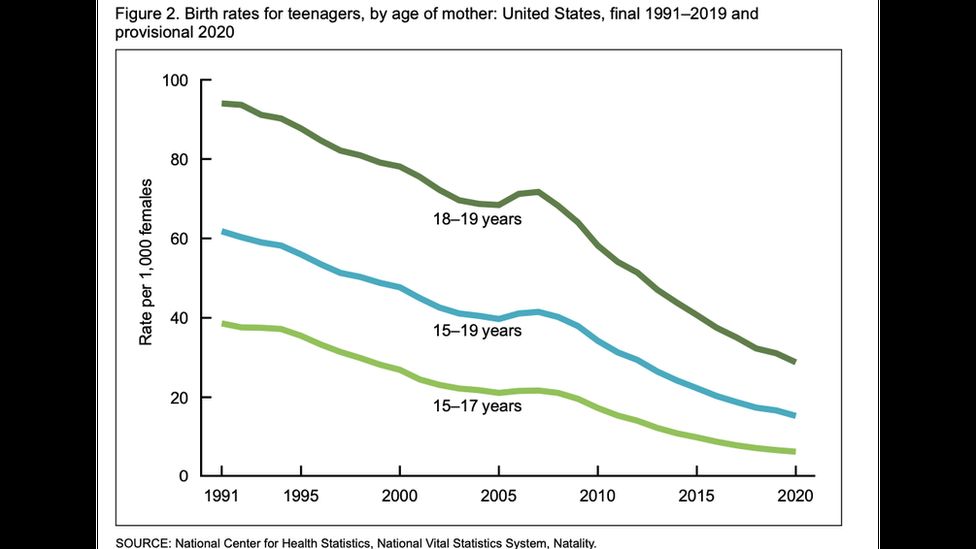
Our people are not having babies.  The big number declines is in the number of infants baptized which obviously led to a decline in the number of youth confirmed.  Again, people will laugh and ridicule this but the reality is that we always grew at least as much by having children as we did by bringing in new people.  No segment of the American population is having babies.  Everyone of them is in decline.  The answer is not only to have more babies (that would not hurt!) but to keep the folks we have.  Faithfulness on the part of pastors and parishes and the folks in them is key.  But you cannot keep those you do not have.

The American birth rate fell for the sixth consecutive year in 2020, with the lowest number of babies born since 1979. The U.S. birth rate fell 4% last year, the largest single-year decrease in nearly 50 years!  It dropped for moms of every major race and ethnicity, and in nearly every age group.  Though births have been declining in younger women for years, birth rates for women in their late 30s and in their 40s have been inching up. Not last year.  Not even with the help of COVID 19 and a lock down.  CDC reports this on the basis of birth certificates issued so it is incontrovertible evidence.  In 2020, the general fertility rate in the US was about 56 births per 1,000 women - the lowest rate on record and about half of what it was in the early 1960s.  For a generation to exactly replace itself, this number must be at or above 2.1; today, the US total fertility rate sits at 1.6 - another record low. 

Like the population of America, the numbers of LCMSers is aging.  So either we all jump on the elusive young family or we acknowledge that some of our future consists in reaching those who have gray hair.  There may be places where young families will be more significantly represented (like my own parish with the large numbers of young military families in our community) but in most places that will not be the case.  So, gray haired Lutherans, do you know other gray haired folks who are not attending church?  Now is the time to spread the Word.  Literally.

To be sure, the numbers of abortions have dropped some as well but think what a difference there would be to the figures overall IF there were no abortions and all those children had been born!  Perhaps the answer to the abortion problem is to admit that we need those children and cannot allow those precious lives to be lost to us.  Could it happen?  Maybe.  Will it happen?  Probably not.  We are still in love with the ideas of personal freedom and nothing is more sacred to the most progressive groups in America than reproductive freedom.

I guess the climate change people are happy -- even though their grandmothers and grandfathers might be the ones serving them at the drive thru at McDonalds or Starbucks.  But the rest of us should be sad.  We live in a time in which we have presumed too much and repented too little of our selfish lives in which we treat children as toys and dismiss the value of the family.  The reality is that the future does not simply look bad for the LCMS but for every Christian church.  Radical faithfulness is what is needed most -- radical faithfulness in the home and at church.  There are many smaller snapshots of what is going on around us and a big picture, too.  But underneath it all is the price we pay for divorcing sex from love, love from marriage, children from marriage, and happiness from love that sacrifices.

Wednesday, July 14, 2021

Biden's war on meat. . .

So I read where Biden's climate change proposals recommend reducing meat consumption to 4 pounds per year per person.  A quarter pounder a month.  Coming from one of those states where cattle outnumber people, I am even more at a loss for words.  I guess Nebraska is in for a greater population decline than anyone could have predicted!

The Beef States are in for a sad awakening if initiatives in some states catch on.  Apparently Oregon wants to prevent all slaughter of animals and limit meat production only to animals who die of natural causes.  Colorado has a proposal to require that animals be allowed to live out 25% of their natural lives before being slaughtered (natural being defined as 20 yrs for cows, 15 years for pigs, and 8 years for chickens).  But don't worry.  You can continue to kill babies in the womb whenever the notion strikes you.  Furthermore, both measures would prevent artificial insemination (again, humans exempted!).  Oh, my.  Some are insisting the castration of male animals no longer be allowed (but vasectomy is allowed to any bull who gives informed consent).

Hey, do you believe these will pass?  No?  Neither do I.  At least not yet.  The point of this is to show how far our culture will go in the conversation to protect animal lives and how little we will tolerate the consciences of those who object to the protection of human lives in the womb.  It is ridiculous and, worse, a sad indictment of our skewed values.

Life is cheap unless you are a cute furry calf or a squealing cute pig.  What will happen to America?  And people say religion is not necessary or essential?  The only way we come up with such foolishness is by ignoring what God has taught us.  The further away we banish God and His Word from our lives, the further these extreme voices will go in betraying the inherent values of life God instilled in us and sin corrupted.  God help us!!!


Tuesday, July 13, 2021

We're not good because we are old. . .

In my neck of the woods a roofing company advertises how long they have been around and says We are not good because we are old, we are old because we are good.  It is an interesting way of putting it.  In other words, old is not automatically good but one does not stay in business long without being good -- without delivering to the customer and earning their loyalty and trust.

The Church does not suffer from a shortage of folks who believe that being ever new is the key to revival.  Whether in liturgical or non-liturgical denominations, there are many voices who insist we must change or die, go with the times, and re-invent ourselves from time to time.  They have been largely successful in evangelicalism and moderately successful in nearly every other tradition -- except, perhaps, Orthodoxy.

No one defers absolutely to the past.  But only a food would dismiss the voice of those who went before without giving due consideration to their witness.  Yet the key here is neither antiquity nor modernity but faithfulness.  If I might rephrase the advertising slogan,  We are not faithful because we are old, we are old because we are faithful.  Faithfulness bears the good fruit of longevity.  Faithfulness endures every new old heresy and new bad old idea.  It is no secret that Jesus said "He who endures to the end shall be saved."  Endurance is the victory of faithfulness that is steadfast before temptation, steady under trials, and patient in trouble.  

At the time of the Reformation, the cause was not novelty or newness but faithfulness.  Whether or not you agree that this movement was salutary, it would be a false characterization of Luther and his cohort to say that they wanted to breathe fresh new air into the Church.  If anything, their claim and goal was to breathe the air of the ancient fathers, to be refreshed by Scripture and authentic tradition, in restoring things gone astray.  Needless to say, not everyone who claims their legacy is as committed to the catholicity and faithfulness of the Church as they were.  That is an ongoing struggle and not one battle after which you may rest on your laurels.

The Church will not decline because we failed to be new but she will surely suffer from failing to be old, to be faithful, to live out and confess the yesterday, today, and forever faith.  We do not need to constantly reinvent ourselves or upset the apple cart on Sunday morning.  We need faithfulness, anchored to the Word of God, within the living tradition of the faithful who went before us, and determined to make sure the body lives by the head which is Christ.  When and where that happens, the Church need not navel gaze at herself to see how things are going but march ahead while the saints pray her on to the day when heaven and earth shall be forever one before the throne of God.

Monday, July 12, 2021

Prophets and plumb lines. . .


Sermon for the Seventh Sunday after Pentecost, Proper 10B, preached on Sunday, July 11, 2021.

    How much is the life of a prophet worth?  Well, ask them.  Ask Isaiah who was, according to tradition, sawed in half by Manasseh, King of Judah.  Or Jeremiah who dodged death several times before being stoned by his own people.  Or Ezekiel who is said to have died in Babylonia, killed by Israelite exiles.  Or Micah who is said to have been killed by Joram, Son of Ahab.  Or ask John the Baptist.  Now, perhaps, you know why Jonah ran and other prophets were reluctant to accept the Lord’s call.  But is it only the fear of death?


    Amos frames the whole thing in the first reading for today.  The job of the prophet is to be a plumb line.  Now if you have watched any DIY shows on TV, you know that a plumb line is a weighted line that shows you how crooked something is.  If you are smart, you will heed the warning of the plumb line and straighten up what is crooked.  If you are not, your house will eventually fall in on itself and be destroyed.  The prophets were those who spoke this kind of warning to the crooked in every generation.  But nobody wants to listen to a prophet.  Not then.  Not now.  Not you.  Not me.

    None of us wants to be warned of our sins.  For a time Herod had protected John the Baptist – not because he welcomed his voice or repented but because he knew that John’s accusations were true and that John was sent by God.  For a time this uneasy tension between the desire to shut John up and distance himself from God’s wrath worked.  That is, until his eyeballs began to tickle his loins and Herod could not stop himself anymore.  His adulterous wife Herodius and his lecherous desire for his own step-daughter conspired to unbalance what had been kept in check.  And John, the plumb line, had to go.
    
    That is how we all feel.  The only Law we want to hear is the Law that points out the sins of others.  When the Law gets too close to our own sins, we cry foul.  We would rather excuse our crooked thoughts, words, and deeds than have them exposed.  That is why the shadows of denial are so attractive to us and why the light of God is so fearful.  His Light exposes what we want kept secret.  The plumb line is actually a help because it keeps things straight and narrow, solid and good.  But to sinners, the plumb line is a bother.

    Let the pastor preach God’s goodness and how God loves us and what good gifts God gives us and how bad it is to judge others and we are crazy happy.
But let that same pastor preach the Law unflinchingand we are offended.  Nobody wants a pastor to start talking about uncontrolled sexual desire or cohabitation or pornography or lust.  Nobody wants a pastor to point out lies or cheating or stealing or vulgar words or pride or a thousand other sins.  EXCEPT to point out how they are at work in others.

    But that is the point.  The only truth a liar tells is when he admits he is a liar.  If you say you have no sin, you deceive yourself and the truth is not in you.  Or, to put it more bluntly, if you deny your sins you are a liar.   The most truth that is ever on your lips is when you confess that you are a sinner, that you have sinned in thought, word, and deed, by the evils you have done and by the good you have left undone.  That is the plumb line of the Law pointing out your crooked ways and that is the Holy Spirit leading you to hear and heed the voice of truth.

    God takes no pleasure in pointing out your crooked ways.  If He did, there would be no Savior.  No, it pains the Lord more than it pains you to square up your life according to the plumb line of the Law.  But it has to be done or the Savior will mean nothing to you at all.  Jesus said it.  Only the sick desire a physician.  Only the guilty desire relief.  Only sinners desire forgiveness.  Only the accused desire a Savior.  God speaks through the prophet the plump line of the Law to point you to the only one who can tear down what is crooked through forgiveness and then square you up with His righteousness.  In Him you also, when you heard the word of truth, the Gospel of your salvation, and believed in Him, were sealed with the promised Holy Spirit.  That is what St. Paul is talking about.

    We hate the prophet because we think he is only interested in making us look bad, in trotting out our sins from all their hiding places.  But the prophet is not interested in seeing us condemned but in seeing the Gospel planted within us, in seeing us forgiven of our sins, and in seeing us build our lives by the power of the Holy Spirit, straight and tall.  Everyone of us wants a clear conscience but no one gets a clear conscience by hiding their sins away.  Everyone of us wants a good life and a life of goodness but there is no good apart from the new life Christ builds in you by His Spirit.  The prophets God sends to us are sent in love.  He does not send the prophets to condemn us but to redeem us, not to send us packing but to restore us as His own baptized people.  John was not killed because he spoke the Law but because Herod refused to hear the Law or hope for the Gospel.  So his frenzied effort to keep his sins hidden led him to even greater sin.

    Dear people, loved by God.  The plumb line of confession that begins our worship points us to Jesus whose mercy forgives us and whose grace builds us up in righteousness.  His goal is not to make us sorry and fill us with regret but to make us new and fill us with faith.  No pastor wants to assume the prophet’s mantle and speak the Law to you.  But any one who would stand in the name of God and not speak the Law is no pastor.  The pastor, like the prophets before him, speaks the plumb line of the Law so that Christ can tear down your failed righteousness and build you up in His righteousness, and present you to His Father in heaven as a completed new creation, a building wherein the Holy Spirit dwells, and a fitting temple for which God to dwell within. 

    Just as sin cannot be left hidden and dealt with, neither can sin be fixed by declaring it no longer sinful.  There is only one answer.  Repent.  Confess your sins.  Believe the Gospel.

    May the Lord grant us the courage to hear, the conviction to confess, the faith to believe, and the will to do the works of God.  For if the building is straight, the plump line cannot say anything against what is built.  And if Christ is at work in you now, working in you that which is well pleasing in His sight, you have nothing to fear from God.  Not today, not tomorrow, and not on judgment day.  Amen.

Where do you belong?

One of the fruits of the various kinds of online presence that became the norm in the pandemic is the fact that video of worship service, sermons, and Bible studies now go throughout the world.  It is not automatically a good thing or a bad thing.  There are good fruits and some not so good.  It is good that a soldier stationed far from home can tune in and be connected to a home congregation or another faithful LCMS congregation when a chaplain and especially a Lutheran chaplain may not be near or available.  It is good that shut-ins and those who have been literally locked down in assisted living centers and nursing homes may hear the sermon, pray the Our Father, and sing a hymn with fellow Christians.  It is a good thing that many who may never have heard the faith are experiencing it for the first time through an online Lutheran source.

It is not so good, however, when people who could be in church find the online offerings sufficient for their taste and neither long for or yearn to be present with God's people around the Word and Table of the Lord.  It is not so good when people equate every online offering with the good and faithful preaching and teaching of an LCMS congregation and end up being led astray by convincing but misguided folk.  It is not so good when people's preference for an online offering located far and away from their own congregation becomes the excuse for abandoning the local assembly where the Word is preached and the Sacraments administered.  It is not so good when questionable practices equate the online offering with being together in the Lord's House for the blessing of the Lord's Table (here I am thinking of online Holy Communion of one sort or another).  

We have used many things that are neither appropriate nor salutary over this pandemic.  One of them is sending presanctified elements through the mail to those who cannot or will not attend in person.  This is a version of the set up your own elements while you watch the service and then commune by long distance consecration via the interweb.  There are many versions of this practice that ought to be challenged and they ought to cease immediately.  While in some cases we may not be able to say definitively whether these are valid, they are not licit.  Although we may not be able to prove such celebrations not salutary, we cannot say they are either. Even when governments had shut down the buildings, these are not appropriate and they are certainly not appropriate now as things have opened up and many congregations (most?) have returned to a more normal schedule and practices.  We have addressed this as a church body and our people and pastors should not be in doubt about where we stand in this and yet the practices persist.

Another consequence is the erosion of parish boundaries.  No, COVID did not invent the blurring of pastoral care and responsibility for people across parish boundaries.  It has been going on for some time.  People routinely drive by one or more LCMS congregations to get where they want to go.  I understand that.  But what has changed is that while people think they are under the pastoral care of one congregation and pastor the explosion of online offerings has made it down right impossible for anyone to know who is really caring for these people.  The reality is that in choosing an online church, you are placing yourself under no one's pastoral care.  You are on your own.  Worse, you are being regularly fed and nourished by means that are not simply not appropriate but actually dangerous to your spiritual well-being.  We are not itinerant preachers with vagabond congregations spread all over everywhere but attached to a pulpit and altar.  In good times and in bad, this is a salutary and blessed thing for the faithful.  

It is time we asked of our people:  Where do you belong?  We need to know but they also need to know and be able to answer this question.  Otherwise membership means little or nothing and the Church is even more invisible that some Lutherans think.  It is also time we asked of those clergy who are serving people distant from them and only by internet means to refrain from presuming to be the pastors of these people.  You are not doing them any favors.

Some things in the wake of COVID may automatically go back to the default but I fear this is one area that will not return to the old practices and I fear the new normal is a very bad normal indeed.

Sunday, July 11, 2021

The Church in France is on fire. . .

With Pentecost in our rear view mirror, it might be understandable if you think that this is about renewal in the moribund state of Christianity in France.  If only that were true.  In fact, it is the other way around.  The churches in France are burning down.  It may have begun with Notre Dame but that public spectacle was only the most visible fire burning among Christians in France.  It was followed by another fire.  The 16th-century Church of Saint-Pierre in Romilly-la-Puthenaye, Normandy, northern France, was consumed by fire about 2 years to the day after the famed Paris cathedral.

According to one commentator, one religious building disappearing in France every two weeks — by demolition, transformation, destruction by fire, or collapse — two-thirds of fires in religious buildings are due to arson. Edouard de Lamaze said “Although Catholic monuments are still ahead, one mosque is erected every 15 days in France, while one Christian building is destroyed at the same pace.  It creates a tipping point on the territory that should be taken into account.” 

Of course, the problem is not simply the loss of historically significant architecture.  The buildings are a treasure to the French culture but they are a powerful symbol of the implosion of Christianity in what was once considered the “eldest daughter of the Church” because the Frankish King Clovis I embraced Catholicism in 496.  It was not been slow in coming but the decline has hastened lately.  Few Roman Catholics go to mass and few consider the faith a part of their daily lives.  Though Lamaze is concerned about the nation's culture, the real concern ought to be their soul.

Islam has just the opposite history.  It is on the ascent in a nation in which cultural division is hard to mask.  Immigrants and asylum seekers as well as the French speaking populace who ethnic heritage is not French are not integrated into the society but live on the fringes, some in their own religious and cultural ghettos.  But they are growing as Christianity declines.  We have seen it in the headlines.  Now we are seeing its effect as buildings that once testified to the vitality of the Christian faith in France are empty, decaying, and burning down.  While the hope is that people will care about the historic structures, the greater hope is that the leaders of French churches and the people will awaken to to need to repent and return to the faith.  If they don't, France's legacy may be Christian and its historic structures once churches but its future a mosque.  The rest of Europe may not be far behind.

Saturday, July 10, 2021

Worth it. . .

One of the things we have learned from the pandemic are those things we have decided are not worth dying for -- sports events, work, education, movies, and, yes, church.  By and large, by our willingness to accept restrictions on these and other things, we acquiesced to the idea that these may be good and valuable but not good enough or valuable enough to risk our lives for.  

That is a very fragile idea of the nature of life and what it makes life worth living.  Generations before us saw it in every different terms.  Instead of the question of what was not worth dying for, they began with what was worth dying for.  If it was good and right and true, then its value was defined precisely by the willingness of the person to do for it.  This was proven on countless battlefields in Europe and innumerable beaches in the Pacific.  Rows of crosses and white monuments laid out in lush green cemeteries across the world testify to what was worth dying for.  Today we have turned around completely and insist that life is defined not by what we are willing to die for but what is worth living for.

As a culture, we seem willing to surrender rights for which our forefathers died in pursuit of personal safety and security.  We are willing to purge the public square of the Christian faith that informed and helped to define us a nation once.  We are willing to shut down the nation to protect one life while keeping the doors open on businesses whose only work is killing the unborn.  Who we are is being defined not by the rights we once fought to preserve but the rights we are willing to give up for things we value more than liberty.

There are no seeds willing to be planted in the ground of death for any cause.  It is no wonder that we have trouble understanding the willingness of Jesus to die for sinners unworthy of His sacrifice.  St. Paul's statement has become almost laughable.  No one is willing to give up anything for anyone -- no matter how righteous -- and certainly not at the cost of his or her life.

We live in a time in which our past is being characterized only by our sins and not by our accomplishments, when we squander our liberty on self-expression and personal preference, when we look to government for solutions that can only come through personal responsibility and accountability, and when we give to others the right to determine whose voice will be heard and whose voice will not be tolerated.  It is a hard day for a Church that preaches repentance, ownership of sin's guilt and shame, as the path to forgiveness, redemption, and restoration.  At best, liberal Christianity can only mimic the voices of those around them, forsaking the Gospel of the cross and empty tomb for a feel better approach to our sins.  

Where once our sinful thoughts and desires were challenged by God, new age Christianity insists it is better to be true to them and to your sinful self than to be true to God or there is no God worth having unless He (or whatever pronoun God chooses to use) is willing to accept, condone, and approve of those sins.  The only redemption we seem willing to hear is the one which accepts who we are and judges it good enough and so the voice of orthodox Christianity is increasingly judged as hate speech not to be allowed anymore.

While all of this might be expected in a world spinning out of control in its death spiral, who would have thought that there would be this debate going on in Rome or in the confessional communions who once stood firmly on what they believed, taught, and confessed?  This is the terrible state of affairs.  Rome has on Peter's stool a man who seems unable to speak coherently except when he confuses the truth his church has said his office exists to guarantee.  Those who claim Luther seem intent upon distancing themselves from nearly everything Luther every wrote or said about the Gospel.  Those who once looked to Geneva seem to fall all over themselves as they flee from the things Calvin once thought incontrovertible.   Within Roman Catholicism, Lutheranism, and Protestantism, the number of faithful adherents and attenders continues to decline as some of their most visible teachers and preachers seem unable to give amen to what even the most basic creeds confess.

Is it worth dying for?  If it is not worthy dying for the Gospel, then is it worth living at all?  Jaroslav Pelikan once said “if Christ is risen, nothing else matters. And if Christ is not risen—nothing else matters.”  It is not our affluence or pleasures that make our lives worth living, but the very thing worth dying for that makes living something wonderful.  Jesus told us this when He invited us not to enjoy a life of ease at His expense but to lives of cross bearing, suffering, and even death -- like Him.  These are not things we should avoid at all costs but these things end up giving meaning to the lives we live.


Friday, July 9, 2021

Baptismal improvement. . .

Although I am happy to have Lutheran Service Book as the hymnal of our church, that does not mean I think it to be a perfect resource.  It is about as good as one can hope for but still have room for improvement.  One of the areas I had hoped for more improvement was the Rite of Baptism.  

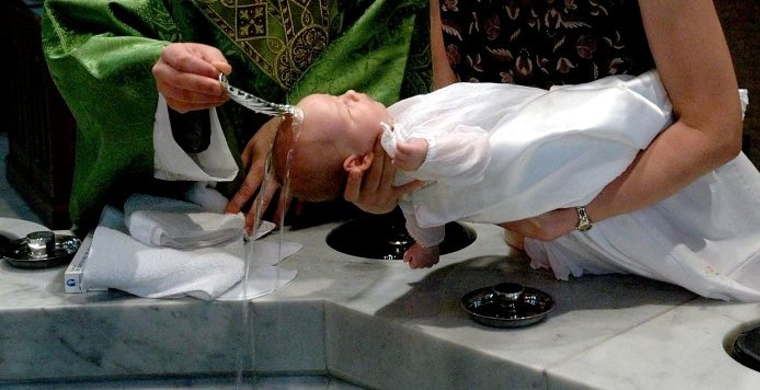
I was disappointed that the exorcism of Luther's 1526 Rite was omitted (yes, I know it is in the Agenda but the things in the pew edition tend to become the norm for most).  In any case, Luther's first revision and later Little Book of Baptism offers two exorcisms.  The first occurs at the very beginning with exsufflation and then again after the Flood Prayer (although shortened in the 1526 Rite).

Luther’s 1523 RiteLuther’s 1526 RiteLutheran Service Book, p. 268
Excorcism with Exsufflation Exsufflation Invocation & Admonition from Holy Scripture
Sign of the Cross Sign of the Cross Name & Sign of the Cross
Two Prayers One Prayer
Giving of Salt

Flood Prayer Flood Prayer Flood Prayer
Exorcism Exorcism (shortened)


Enrolling of Sponsors
Prayer

Mark 10:13-16 Mark 10:13-16 Mark 10:13-16
Lord’s Prayer w/ Laying on of Hands Lord’s Prayer w/ Laying on of Hands Lord’s Prayer w/ Laying on of Hands
Ephphatha
Blessing & Entrance into the Church Blessing & Entrance into the Church Blessing & Entrance into the Church
Renunciation of the Devil Renunciation of the Devil Renunciation of the Devil
Profession of Faith Profession of Faith Profession of Faith
Anointing on Chest & Back

Declaration of Intent Declaration of Intent Declaration of Intent
Baptism Baptism Baptism
Anointing on Head & Peace
Blessing
White Garment White Garment White Garment
Baptismal Candle
Baptismal Candle


Welcome


Prayer & Peace

I was also disappointed that only the Markan reading with its focus on infants was given as a choice.  Surely it would not have been that difficult to include another reading for the baptism of adults -- we still do those, don't we?  It was there in Lutheran Worship, after all.

The other thing I note in the Rite of Baptism is something we could have learned from the Service Book and Hymnal.  While in the Proposed Rite from Worship Supplement 1969 and the one published in LW chose to have said during the signing of the cross "Receive the sign of the holy cross both upon your forehead and upon your heart to mark you as one redeemed by Christ the crucified," there was an opportunity to make a significant change.  Although I do not know the history behind it, in the Order for the Baptism of Infants in the Service Book and Hymnal of 1958, we have this:  "Receive the sign of the holy Cross, in token that henceforth thou shalt know the Lord, and the power of his Resurrection, and the fellowship of his sufferings."  It seems a little too happy to welcome the child into the fellowship of those redeemed by Christ the crucified without also admitting what this fellowship is about!

One small point is that the giving of the name happens at the very beginning of the LSB Rite and does not enter in other rites until the actual baptism or the question immediately preceding the baptism.  Why do we start off with the name when the name should be focused on the baptism itself?  Perhaps someone can explain it.  Since the 4th century this has not been a small part of the rite itself and it seems downright strange to begin with it since its place has always been in the baptism itself.

The other thing I find odd is the placement of Luther's Flood Prayer.  I have always seen Luther's magnificent prayer as a kind of blessing of the font and its water now to be used as vehicle for God's grace.  Presuming that I know better than Luther, I move the Flood Prayer from its place right after the sign of the cross and place it instead right after the Blessing and Entrance into the Church and just prior to the renunciation of the devil.  I think it works much better here into the meat of what is being done rather than as prelude.  You are free to disagree though I am hard to convince.

Well, there you have it.  An area in which an already good book might be improved.  Ah, well, another day. 

Thursday, July 8, 2021

Suspicion of the messenger. . .

Who says it is just as important as what is said.  We all know that.  In the world there are certain folks who have authority not of office elected nor of appointment but simply by virtue of their stature.  When Warren Buffet speaks on business or the economy, people pay attention.  Even in a congregation there are non-elected people who can sway the opinion and vote of others.  The media decided that when Trump spoke, it was a lie and so everything he said was suspicious.  Biden says the same thing and there is no inherent suspicion.  It is not the content but the speaker that changes how things are heard.

For some time now the media has become the voice of science and medicine and morality.  Instead of simply reporting the facts, the media has insisted upon coloring those facts according to a political and ideological bias.  Everyone knows this except the media, it seems.  They sit in their ivory towers at NBC, Fox, CNN, etc., and presume that the world looks at them with respect -- so much respect that they take what they say as truth.  But that is the problem.  The media have less credibility than hawkers of used cars or today's TV special value.  That means that we are as a nation suspicious of what we hear even when what is spoken is fact.

The media has taken on certain causes as their pet projects and climate change is one of them.  It would seem that every one of them had to read Rachel Carson's Silent Spring in high school and from then on have only read what accords with her view of the coming destiny to the planet.  Anyone who deviates from the sacred truth of climate change is either a fool or a lunatic or a Trumper and none of them have any credibility in the media.

So it was interesting that I read (in the New York Times no less) that the chief scientist in the Obama administration’s Energy Department (and a professor of physics at Cal Tech) wrote a book that challenges the gospel according to Al Gore, the inventor of the internet.  He has the real science to suggest that while climate change is real, just about everything we have been told about it is not. 

In his book,  Unsettled: What Climate Science Tells Us, What It Doesn’t, and Why It Matters, Steven E. Koonin puts the science against the claims of the media that have dominated our thinking and driven our policies for many years.  He writes:

tornado frequency and severity are . . . not trending up; nor are the number and severity of droughts. The extent of global fires has been trending significantly down. The rate of sea-level rise has not accelerated. Global crop yields are rising, not falling. And while global CO2 levels are obviously higher now than two centuries ago, they’re not at any record planetary high—they’re at a low that has only been seen once before in the past 500 million years.

and

Heat waves in the U.S. are now no more common than they were in 1900 . . . the warmest temperatures in the U.S. have not risen in the past 50 years. . . . Humans have had no detectible impact on hurricanes over the past century. . . . Greenland’s ice sheet isn’t shrinking any more rapidly today than it was 80 years ago . . . The net economic impact of human-induced climate change will be minimal through at least the end of this century.

You can read him for yourself.  He has the credentials and data to make his claims.  But this is not about him.  It is about how media can color how we see things -- this is just as important as whether or not they are true.  So, for example, the whole coverage of the pandemic has presumed that science is saying one thing when science is saying many things but the media chose what to report and challenges every other viewpoint.  The media thinks it is being objective but it is arbitrarily choosing sides for us and then telling us what supports this side while debunking every other voice that challenges this side.  Is it no wonder we are not what to think about masks, social distancing, shutting down businesses and churches, vaccines, and the like?  We are not given facts as much as we have been given the story that the media wants to tell.  I have every confidence that some of what they say is true but how is the person listening to the radio, watching TV, reading papers, or perusing the internet supposed to know fact facts from uncertain facts -- or worse, whether the conclusions drawn from the facts are reliable, credible, and trustworthy?

When climate science or pandemic policy or religious claims are colored by blindness to fact and truth, how is anyone supposed to know what to believe?  When climate change cannot stand up to real debate, is it truth?  When pandemic policy cannot stand up to opposing opinions and facts, what are we to think and do?  When the media has decided that skeptics are the only true voices of Christianity, is it no wonder that the Church is bleeding off members?  I am very certain that God can stand up to His critics and He does not need us to defend Him -- only to speak the truth in love!  I am quite confident that whatever is true about climate change can stand up to a real debate and all we need are facts and the disputing voices interpreting those facts -- not someone to think for us.  I am sure that after a year of information that is sometimes contradictory and sometimes incoherent, most of us will do the right thing if we are given real facts and a real debate of substance on what those facts mean.

But my point is that the media will not do this.  Our politicians will not do this.  And so we will continue to be hesitant about what and who to believe and instead choose to listen only to those who say what we think.  The messenger can make the message and they can kill it, too.

Wednesday, July 7, 2021

The means to heaven. . .

When I was in Seminary, no less than Prof. Kurt Marquart first mentioned the work of Alexander Schmemann and his 1970 book For the Life of the World.  When I first read it, I found so much that I could resonate with and it has had a profound affect on the way I looked at my own Lutheran liturgical legacy.  Marquart's own life had been impacted by Orthodoxy in a more personal way.  I had not known much about Orthodoxy until I read of it in Seminary and had my first experience of the Divine Liturgy.  It was both foreign and familiar at the same time.  Though I am certainly not ready to surrender Western spirituality for the piety of Orthodoxy, it does not prevent a person from appreciating where they intersect.

It was Schememann who first taught me that liturgical acts are themselves means (media) that bring us to heaven. The consequence is that worship can never be mere personal preference or trend or fad.  With the liturgy uniting for a moment of preview heaven and earth in the Word that ushers in that future and the Sacrament that is the foretaste of it, liturgy cannot be adiaphora or anything indifferent. The medium of the liturgy is not simply a neutral form on which we hang what it is we desire but is itself both confession and proclamation.  Its power is that speaking within the Divine Service is the Word that does what it promises and the Sacrament that enacts what it symbolizes. 

One of the great fallacies of the modern liturgical movement is that it focused too much in liturgical form and architectural style the present moment -- the horizontal dimension.  With that focus, the real power and gift of the liturgy is lost.  For it is not simply an earthly community that is established but a heavenly communion into which we are entered by God's grace and favor.  Even where Latin became the vernacular and hymns entered into the service, the earlier liturgies never lost their focus on that which was beyond but accessible because Christ was present in His Word and Sacrament.  This immediacy of His presence was not the end but itself pointed to the outcome and goal of our salvation -- the perfect communion and reunion with God and the saints, angels and archangels, around His throne forever.

One of the great foibles of Lutheranism is the idea that we worship the way we do because it is traditional (we have a hymnal and that is what we use) and that it is possible to retain the content while not using the form.  We must recover why the hymnal and its liturgy (and the ceremonial that attends it) are important to the confession and profession of the faith.  We must dig deeper than the tradition of the last 50 or 100 or even 175 years in order to understand, recover, and restore our claim to be catholic in content and practice.  Melancthon understood this when the Augsburg Confession was written but we seem to have forgotten or no longer care that catholicity is our claim.  Worshiping like Lutherans means little if anything and everything can define what that worship is.  The only worshiping like Lutherans that means something is that which is consistent with and gives outward form to what we confess in our Symbols.  

By the way, adiaphora has become the rabbit hole into which every heresy, fallacy, and apostasy hides.  What was meant as a way out of the rigid central control of Rome has become the license to do whatever pastors and parishes please and with it the right to call that oddness Lutheran.  To be quite frank, I am over it.  Adiaphora had meaning when there was integrity to what happened on Sunday morning but given that the majority of LCMS folk worship in congregations that have contemporary worship as at least an option violates whatever usefulness the term once had.

Lastly, the fear was that the liturgical movement would make every denomination look the same on Sunday morning.  What has accomplished this far more effectively is evangelical style contemporary worship.  It seems the whole of Protestantism has given into an entertainment style service in which technology has become one of the primary sacraments and relevance and likes the indicators of success.  Lutherans should beware but some Lutherans have decided that there is no future for a Lutheranism of the Divine Service and the sturdy hymns of old.  They have cast their lot not with the Church of the Lutheran Confessions but with a media savvy church where God's job is to make us feel better, achieve our dreams, and preserve every false illusion about life, sin, and death.

Tuesday, July 6, 2021

Called to repentance. . .

Sermon for Pentecost 6, Proper 9B, preached on Sunday, July 4, 2021, by the Rev. Daniel M. Ulrich.

     One of the hardest things for us to do is to admit that we’re wrong.  One of the hardest things for us to do is to name our sins out loud.  That’s why we squirm in our seats whenever the topic of private Confession and Absolution comes up.  We admit that we’re sinners, and we’re comfortable confessing our sins in a public and corporate way.  But...but to say out loud the sins that we’ve committed with our hands, the sins we’ve spoken, the deep dark sins that we’ve thought about; well, that’s too much.  We fight against this kind of confession, and we fight against anyone who calls us to make this kind of confession.  We don’t want anyone to tell us to repent, especially if we know that person. 
    There’s a proverb that says, “familiarity breeds contempt.”  It’s a confusing saying because usually we like the things we’re familiar with.  We’re creatures of habit.  When given the chance, we choose to do the same things over and over again.  We like our hobbies, activities and topics that we’ve familiarized ourselves with.  And we like our friends, people we’ve gotten to know over the years, people that we’ve shared life’s joys and sorrows with.  And yet, this proverb, “familiarity breeds contempt,” is true. 
How often do we get bored doing the same thing over and over again?  Think about your jobs.  Is there anything that you have to do repeatedly that you wish you didn’t?  Of course there is.  And how many of us would say that our family lives are 100% perfect?  Or that our relationships with our husband or wife or our children or parents or brothers and sisters are perfectly conflict free?  Aren’t these the people we’re most familiar with?  Aren’t these the ones whom we know best and who know us best?  And yet, they’re the ones we most often have conflict with.  They’re the ones we sin against the most, and they’re the ones who sin against us the most.  “Familiarity breeds contempt.”  It’s a proverb that’s true for us and a proverb that rang true for Jesus.  
Near the beginning of Jesus’ earthly ministry, He went back home, to Nazareth, to the place where He grew up.  The people there knew Him.  They knew Joseph and Mary and the rest of the family.  People there probably had memories of Jesus from when He was a young boy.  And so, they were astonished when they heard about the miracles He’d performed.  They were amazed hearing the words that He spoke in the synagogue.  
Mark doesn’t tell us exactly what Jesus said that Sabbath day, but Luke does.  Jesus was handed the scroll of Isaiah and He read from chapter 61: “The Spirit of the Lord is upon me, because he has anointed me to proclaim good news to the poor.  He has sent me to proclaim liberty to the captives and recovering of sight to the blind, to set at liberty those who are oppressed, to proclaim the year of the Lord’s favor” (Lk 4:18-19).  Those verses that Jesus read were a messianic prophecy, and after reading them, He said that those verses were being fulfilled at that moment.  Those verses were about Him.  And hearing this, the people were astonished.  How could Jesus be the promised Messiah?  How could He be the Christ?  He was Joseph’s and Mary’s son.  He once was a boy running up and down the streets of Nazareth.  We know Him.  There’s no way He’s the Messiah.  
Knowing what the people were thinking, Jesus continued. “A prophet is not without honor except in his hometown and among his relatives and in his own household,” (Mk 6:4) and to prove this, Jesus reminded them of the prophets of Elijah and Elisha.  He reminded them that these men were sent as prophets to Israel, to their own people, but the people of Israel refused to listen.  Instead it was the Gentiles who heard their words and believed.  By referencing these prophets of old, Jesus was calling the people of Nazareth out.  He was calling them out for following in the footsteps of their forefathers who rejected God’s prophets.  He was calling them to repent of their sin and unbelief.  And the people in that synagogue wouldn’t have it.  
How dare he say that!  Who does he think he is?  We know who he is.  He’s the son of Joseph, with a questionable birth by the way.  His family still lives in this village today.  He’s no different from us.  The people of Nazareth rejected Jesus because they knew Him.  They rejected Him because they didn’t want to hear His call to repent.  And we do the same.
We don’t want anyone pointing out our sin.  We don’t want anyone telling us to repent.  Because of our sinful nature, because of our pride, whenever someone calls us out for our sin, our first response is to attack, especially if we know that person.  How dare they say that!  Who do they think they are?  They’re not perfect.  What gives them the right to say that I’m wrong!  And what about them?  What about their sins?  People who live in glass houses shouldn’t throw stones.  No way am I as bad as them.  What a hypocrite!  These are familiar words.  If we haven’t said them out loud, we certainly have all thought them.  
It’s hard, it’s embarrassing, it’s shameful to have others point out our sin.  It’s difficult to face our guilt, to show our face in front of people when they know what we’ve done.  We don’t want to do this.  It’s easier for us to just turn away from them and our sin.  It’s easier to reject them and refuse to listen to those calls of repentance.  But that’s what we need.  We need to hear God’s call to repent.  We need to see our sin.  We need to face it and repent of it so that we can be set free from it, so that we can receive forgiveness and salvation in Christ.
    Repentance has to be preached.  That’s the sermon that Christ came to proclaim.  Jesus went to His people proclaiming that the kingdom of God was at hand.  He called them to repent and to believe in the Gospel, to trust in God’s mercy.  And He sent His disciples out to do the same. 
    After His rejection at Nazareth, Jesus sent out twelve.  He sent them out with authority over unclean spirits, giving them the power to cast out demons and to heal people.  But this wasn’t the only thing they were supposed to do.  The main thing was proclaiming repentance and speaking peace.  Their mission was to point people to Jesus.  That’s what the casting of demons and healing of the sick did.  It shows that Christ has all authority.  He has authority over sin and death.  He has authority over the devil.  He’s the one that forgives and gives everlasting life.  So look to Him and believe.  Repent of your sins and look to Him for your salvation that was won on the cross. 
We may not like it, but we need it.  We need to hear God’s call to repentance.  We need to hear it most especially when that hard message comes from someone we know.  In fact, we pray for that kind of call to repentance.
You may not have noticed it, but that’s what we asked for in our Collect for today.  Go back to your bulletins and open it up to page 4, and read that prayer again. …   “O God, Your almighty power is made known chiefly in showing mercy. Grant us the fullness of Your grace that we may be called to repentance and made partakers of Your heavenly treasures.”  In this prayer, we ask God to call us to repent of our sin.  We ask Him to send familiar people in our lives who love and care about us, so that they may help us turn from our sin.  We pray for this because that’s what we need.  We need others to call us to repent.  You need to be called to repent.  I need to be called to repent.  Together, we need this, so that we can turn from our sin and turn to our Savior trusting in His forgiveness, trusting in God’s great mercy.   
 It’s hard to hear someone pointing out our sin.  It’s even harder when we know that person. We say we’d prefer this, for a close friend to point out our sin over a total stranger, but of course that’s not true.  If we had our way, no one would call us out.  It’s hard to admit we’re wicked sinners.  But we need to hear this call to repentance, and we need to heed it.  We need to turn from our sin and turn to our Savior, because forgiveness is found only in Him.  
So repent.  Turn from your sin.  Turn from your deeds that transgress God’s Law.  Turn from those hateful words that you’ve spoken.  Turn from those deep dark and shameful thoughts that you’d be embarrassed of if anyone found out.  Repent and turn from your sin.  Seek the forgiveness of Christ.  Set your eyes on Him and His cross, for that is where your forgiveness, life, and liberty is found.  In Jesus’ name...Amen.  
 

Who does the Lord prune?

While explaining yet again the Gospel for Easter 5B and the work of the Father in pruning the vine, I came to realize that the focus is almost universally on the individual Christian and God's work to prune away distractions from the faith, evil thoughts and desires, and creature comforts.  It occurred to me that this must also apply to the Church.  For if God loves the Christian enough to prune and care for them, then surely the Lord loves the Church enough to do the same thing.

We do not tend to think in those terms but perhaps the end result of a year of pandemic, liberalism masquerading as Christianity, and sexual whim that now defines desire and gender is that pruning.  If the Church is smaller -- at least we know the number of those gathered around the Word and Table of the Lord weekly has dwindled -- is the Lord working through these things to help His Church produce more fruit?

Most of us would prefer to think of the glory of every sermon reaching thousands and of churches in which pews are packed and altar rails are full but that has not been the norm of history.  Things have always moved up and down for a variety of reasons but surely some of them involve times of temptation, apostasy, and the Lord's pruning work.

I would not presume to explain away the troubles we have endured and chalk it all up to the Lord's work but the Lord works all things for good for those who love Him.  He can use a pandemic and a host of other things to make the Church both more faithful and more fruitful.  And if that is the outcome, then thanks be to God!  

Churches have struggled for a host of reasons but not in the least because the faithful have not been, well, as faithful in living out what they say they believe, passing the obedience of faith to their children, and showing forth both the desire for and the pursuit of holy things.  Yes, the Church has always labored with clergy who are sinful and unclean just as the people in the pews but in this social media age doubts are cast forth more than confidence and the preachers tempted even more by what they think than what God says.  There is enough blame to go around.  But if the Lord is working behind what is happening to prune away what is dead or what is foliage for looks instead of fruit, we ought to be thankful.  The Lord's act of pruning is driven by love for us and for the fruit created by the Spirit's work in us and in His Church.  So if this is a time of pruning and sifting, may the Lord work even harder that we might believe more deeply and pursue what is holy with even more urgency.  And, I pray, that in the end we will be more faithful and more fruitful -- in our individual lives as Christian people and in the Church as a whole.


Monday, July 5, 2021

The face of Christ. . .

We live in a time in which pastors wear their own face more than any other.  There are those who cultivate the cult of personality -- figures who become larger than life and who view the church as a stage and the sermon as their time in the spotlight.  There are those who cultivate a following like media figures and who live and die by the statistics of likes and hits.  There are those who have taken it upon themselves to redefine the church and her confession as if these things were matters of preference and appeal more so than truth.

Some thought this a Protestant matter, of rebels unfettered by tradition and liturgy and sacrament.  Some presumed that this was an American matter -- of people who saw the church in entrepreneurial terms and who delighted in their role as marketers of a product.  Some thought it was a modern problem, born of media and made possible by technology.  

I wish that it were just a Protestant matter or a simple issue of a few people out of control.  I want to believe that it is a fad that will go away.  But we all know better.  In fact, we are living at a time when the current Pope has himself subscribed to the idea that he is not a custodian of the sacred but a chisel to soften the hard edges of truth.  He delights in adding question marks where exclamation points were once placed.  He does not so much agitate for change as play with it, treating doctrines as if they were pieces of a game to be moved about a bit here and there.  In this he has shown himself no different from the Joel Osteens of this world or even the more local personalities who believe the man defines the office and not the other way around.

The truth is that there have always been singular personalities -- pastors, bishops, and confessors who have shown exemplary courage and ability on behalf of Christ and His Church. Most of them understood, however, that they were not the church but merely its servants.  Some of them earned the title of reformer and confessor while others were branded heretic and false teacher.  In some cases, the verdict is still out and in other cases the label placed upon them depends upon your perspective today.

In most of history, however, the vast majority of Christ's ministers were relatively anonymous.  In fact, to most it did not matter who they were.  They were simply custodians of an office bigger than themselves and on them was bestowed a sacred trust to preserve what had been passed to them.  Who they were did not matter all that much to the faithful, either.  While they had different gifts and abilities, they preached the same Gospel and administer the same sacraments as those who came before them (and, if the people were fortunate, as those who would follow them).  And they were content with that -- both the men who held the office for a time and those who looked to them as the face, mouthpiece, and hands of the Lord.  By the way, there are still those who labor in the same way for the Kingdom.  They are faithful pastors who esteem the office more than themselves and who seek faithfulness more than notoriety and reward.  God bless them and God bless those whom they serve in Christ's name.

Imagine that.  Imagine a ministerium in which it did not matter to the faithful who held the office because whoever it was would preach the same Gospel, teach the same doctrine, warn of the same errors, comfort the penitent with the same absolution, baptize with the same water empowered by the Spirit, distribute the same body and blood for the forgiveness of sins, comfort the grieving with the same hope of the resurrection and eternal life.  Imagine a church where it did not matter where you went, the familiar words of the liturgy would find their way onto your lips, the familiar melodies of the Church's song would beckon to your voice, and the same affirmation would redound:  The Word of the Lord.  Thanks be to God.  Imagine a time in which pastors were not businessmen or life coaches or vision casters but pastors -- taking the things of God to the people and taking the things of the people to God.  It could be a great blessing if only the people would allow it and the pastors would be content with it.  Imagine if the people in the pews saw the face of Christ in their pastors and the pastors saw the face of Christ in their people.  For Christ is who the pastor serves and Christ is the shepherd of His people.  

Sunday, July 4, 2021

The test of liberty. . .

The test of liberty is never when times are good and the living is easy.  Nobody has any problems living out freedom when there are no conflicting values or goals.  It is precisely division, conflicting plans, and sharp words that create the perfect test kitchen for a nation to cook up what it means to be an American.

This past year has created no shortage of tests.  We began with an already bitter partisan divide when a pandemic came along to pit individual liberties and the bill of rights against public health concerns.  By all accounts, this was a rocky road.  An impeachment process distracted us from larger issues.  Individual liberties were constrained by shut downs of work and pleasure and many of us spent more time in our homes and online than we ever expected.  The rights we thought were guaranteed were brought into conflict as churches were cast aside as non-essential parts of our culture and society while liquor stores and abortion clinics were left open.  Then came the election season which was not its usual silly time.  With Biden hidden away in a basement and Trump going through more threats from a hostile Congress, it was hardly business as usual.  An election in which some states bent over backwards to interpret or expand election law to benefit the Democrat was matched by attempts in other states to restrict the interpretation of laws to benefit the Republican.  The rest of the time was matched by heated rhetoric which erupted in a demonstration few saw coming but all of us should have expected.  The march on the Capitol will not soon be forgotten.  But in the backdrop of all of this were issues of race and justice.  Black Lives Matter orchestrated protests that did not remain peaceful.  Police were in the cross hairs as violent episodes between the cops and Blacks were deemed unjust and unfair and a cop convicted in a very public and quick trial.  

How did we do?  Depends on who you talk to, I guess.  Some folks think we did better than expected while others are greatly disappointed.  I am not here to give us a grade.  But I would like us to think about the direction of things and how this impacts us now and in our future as a country.  The things that unite us seem fewer today than at other times.  We live in a culture in which diversity is a higher value than what we share in common.  We live in a time in which individual rights are on the ascent in some areas (sexuality, gender, etc...) while they are being questioned or challenged in others (free speech, right to bear arms, right of religious assembly, etc...).  We claim to have a youth culture but the two candidates for President were the oldest ever to be on the ballot and we elected the oldest man in the race.  We are not supposed to notice things like race or gender and yet we cannot blink an eye without some reminding us that this person is the first woman, person of color, trans, or whatever to be elected, appointed, etc...  All of these things might be typical of people celebrating firsts except that the stridency witch which these things are noted indicates that there will be more and more firsts and more and more rejection of things white and male and Christian.  On top of this we continue to have an immigration crisis that has transcended one administration and entered another (even though policies have not differed greatly between them).

It should be remembered that America's greatness was never its ability to welcome the tired, poor,  huddled masses yearning to breathe free, and wretched refuse of your teeming shore.  The welcome was and is important.  We are a nation of immigrants.  But the genius of America was that the diversity was countered by a common language, a commitment to work, a shared morality, a willingness to listen, debate, vote, and then unite behind our leaders.  This has not been the case for a while now.  The media have been key to this, preferring a politicized view of the news to an objective one and clearly agitating for certain people and certain positions.  Social media has not given anything on its promise to bring people together and instead has become a forum for our differences and our impatience with those who disagree.  Worse, social media has lived under the illusion of freedom while actually censoring the conversation and weighing in on one side against another.

On this Fourth of July, it will take more than some plant based burgers and hotdogs to restore America's dream.  Instead, it will take a renewed commitment to the basic ideas that characterized our beginning -- more emphasis on what we owe to each other than what we are owed and a deeper commitment to working for what desire rather than expecting others or our government to give these to us.  The richest heritage of our nation has been our industry and our sense of personal responsibility.  Where these continue, our future will be strong.  If these decline, we will continue to struggle and find ourselves frustrated by divisions that not only cannot be reconciled but distract and dishearten us as a people.  

I am grateful that my great-grandparents left behind their homelands and came here and I deeply appreciate all the blessings and benefits living here has accorded me.  Paying taxes is not the cost of liberty but it does help with the upkeep.  The cost of liberty has been borne by those who fought in wars, those who died far from home and those who came back home to get back to work, raise their families, and volunteer -- like my dad and father-in-law.  May we remember our commitment to the basic things that have always marked what made us great and the future will be hopeful.

God bless America!

Saturday, July 3, 2021

I don't like it. . .

Tomorrow is Sunday.  Tomorrow is also the Fourth of July, our nation's most sacred holy day.  I don't like that the Fourth of July is on a Sunday.  While some might not like it because it fail to steal a day off from the work week, I dislike it because it invites all sorts of things that are not only inappropriate but down right offensive.

Living in the South, I know that on July 4th (on a Sunday) means that color guards will march into churches all over but especially here.  Patriotic songs will replace hymns and preachers will wax long on what makes America great and how, if only our people will repent, we will be great or greater again.  The presumption underneath all of this is that God is an American (or should be).  That presumption is false and it mixes patriotism and Christianity in a way that is unfaithful to either.  

God is not an American and America is not the chosen land.  It is a wonderful nation and I am very, very grateful to have been born here, to live here, and to raise a family here.  The worst thing we can do as Americans is to confuse faith with patriotism.  They are not the same.  To whom much is given, much is expected.  And we have been given much.  With that much goes great responsibility but what does not go with it is the freedom to presume that God favors us over all others.

I know that some will be offended by what I write.  They will assume that I am anti-American (which I am not).  But it is an even greater offense to co-mingle the rightful pride and the wonderful heritage we have as Americans with our faith in the God who delivered up His own Son to be our Savior and Redeemer and who established a kingdom in but not of this world.  Church is not the place to confuse this distinction.  Nations and churches have both suffered greatly when patriotism and faith are woven together into a single fabric.  Lutherans ought to know better.  Everyone ought to know better.

That is about all I am going to say on the subject.  If you visit us tomorrow, you will hear us pray for our leaders, for our nation, for all manner and situations of our people, and we will sing a hymn or two that puts the tension between patriotism and faith into proper perspective.  You will hear Jesus Christ and Him crucified but you will not here a patriotic sermon.  That would betray the Gospel and mix together what should be kept distinguished and separate.  We owe it to Jesus and we owe it to the nation we love so much not to fall into the trap of presuming God is an American or loves Americans better than all the rest.

Friday, July 2, 2021

What does this mean?

Every Lutheran owes it to themselves to look at Rome and ask, from time to time, if the Reformation is still relevant and if Rome has manifested the reforms that would make the Reformation superfluous.  I understand that some folks will turn red at this but I would suggest that it is entirely Lutheran to do so and that there is something not Lutheran in ignoring Rome or writing it off without considering what Rome teaches.  It is for this reason I am interested in Rome.  But I will admit, I am not much interested in Rome's dissidents -- folks who remain in the Roman Catholic Church but who either disagree with or ignore the teachings of Rome.  Who would pay attention to a Roman Catholic (or Lutheran or anyone) whose basic position is a condemnation of the Church they claim as their own?  So liberal Roman Catholics who are out of step with their own church teaching are not much interest or use to me (as I expect they are not much use to their own church!).  So if I read things about Rome, I read them from their staunchest supporters and most eloquent defenders.

That said, I am often mystified by what I read.  And the example for this blog post is this curious statement from a Latin Mass sort of priest:

Remember, the blessings in force in 1962 with the Rituale Romanum must be done in Latin or else, as the Rituale itself says, they do nothing.  No… really.  (Cf. Title VIII, Ch. 1, no. 2: Benedictiones sive constitutivae sive invocativae invalidae sunt, si adhibita non fuerit formula ab Ecclesia praescripta.)

This is my curiosity.  How can the language of a blessing affect its validity or effectiveness?  In Latin it does something but not in English???  I certainly know that Lutheranism is filled with idiosyncrasies that probably mystify those on the outside but this is one of those things a Lutheran would never ever say.  And I cannot figure out why official documents and books of Rome would say it either.  Now there is no explanation as to why only in Latin would this blessing be of effect so I am left to wonder on my own about this most curious statement.  

As I said, Lutherans might say many things but a Lutheran would never have said this.  Lutherans had qualms about the ability of theology to be rendered in English but it was not from the suggestion that the theology would be of no effect.  Rather it was an admission that Lutheranism had found a dogmatic home in the German language that was so familiar some Lutherans did not know how they a theological discourse could be possible without that vocabulary.  I do not know of any Lutheran who ever suggested that a baptism in English or a blessing given not in German would suffer any lack.  So it hits me funny that a Roman Catholic would say that language affects not simply the understanding but the very substance of the blessing itself and its validity.

Thursday, July 1, 2021

Nothing in particular. . .

Over at the GetReligion website, you can find a very interesting story fleshing out some of the details of what we know about the nones.  I found it compelling reading.  It challenges the superficial take on the changes in religion in America that so many have fostered.  Even more, it frames these nones in the larger context of what is happening in our culture and society and how that is reflected in belief and practice.

"When you say 'nones' and all you think about is atheists and agnostics, then you're not seeing the big picture," said Ryan Burge (see the video below).  "Atheists have a community. Atheists have a belief system. They are highly active when it comes to politics and public institutions.  But these 'nothing in particular' Americans don't have any of that. They're struggling. They're disconnected from American life in so many ways."

While most folks might assume that the nones reject religion in principle, it is clear that a goodly number of those nones are reflecting their own isolation and disconnection and, for them, this includes the Church and the faith. "Nothing in particular Americans seem to be stuck. They're left out. They're cut off and trapped by globalization and economic forces that are totally beyond their control," said Burge. "Many are angry, and they have nothing to lose. That's why this NIP phenomenon is kind of scary to me."

Burge is on to something. It is not as simple as a rejection of faith. It is how their isolation and alone-ness reflects their relation to the Church and the faith as well as everything else around them. That is concerning. These are hardly the militant atheists who are a pain in the side of every Christian nor are they strident against the Church. What they are, it might appear, is similar to those who have burned out or fallen away because of personal crisis or wound. Disconnected from much that is positive and hopeful in American life, some of these nones represent a completely different kind of mission field than the more strident atheists, agnostics, or woke folks with their stronger agenda. They fail to feel strongly about the things of God because this same feeling characterizes much of their daily lives across the board.

Burge has written a book on this. Although I have yet read it, it sounds very interesting. "The Nones: Where They Came From, Who They Are, and Where They Are Going."  If you have read it, tell me about it and what you thought of it.