“Rejoice in the Lord always; again I will say, rejoice” (Phil 4:4).
Many pastors in our church body close their sermons with the same words every Sunday: “The peace of God that surpasses all understanding keep your hearts and your minds in Christ Jesus.” These words come from Paul’s letter to the Philippians. But what do they mean? What kind of peace are we talking about? Because if we’re being honest, there’s not a whole lot of peace in our world; or in our lives.
The Christmas season always brings with it the idea of peace. As you drive through neighborhoods, you’ll not only see homes decorated with lights and inflatables Santa Clauses, but you’ll also see some with the word “peace” on windows and yard signs. We associate peace with Christmas. That’s probably because that’s what the angels sang when they visited the shepherds that first Christmas night. That heavenly chorus sang “Glory to God in the highest, and on earth peace, goodwill toward men!” (Lk 2:14 NKJV). Everyone seems to know these words, even non-Christians, so we think about peace on at Christmas.
It’s ironic though, because ever since Christ’s birth, there hasn’t been peace on earth. A quick look at history proves that. Not even the holidays are a guarantee of a short time of peace. Just 5 days ago, our nation remembered Pearl Harbor Day. There was no peace then, on December 7, 1941. And if you’ve been listening to the news, it seems like Russia and the Ukraine may be getting ready for a fight. There’s no peace now. The victims of the recent tornadoes aren’t experiencing peace either. So what kind of peace did the angels sing about?
Maybe it’s not world peace that they sang about, but peace in the lives of Christ’s followers? Maybe that song of peace was just for God’s saints? Maybe it was a promise of a perfectly calm and quiet life? Many people think that’s the case. Many think, and we even wish, that since we’re Christians, we’ll have easy lives. Since we’re baptized children of God, that means He’s going to give us a peaceful life: a life free from trouble and pain and sorrow. That’s the kind of peace that we want.
The peace that we want is a calm and quiet life. We want the peace of a happy home, where we always get along with our husband or wife, where the children always do what they’re told, where no one yells, and the dishes are always done. We want the peace of a secure job and great economy, where our paycheck pays for all our bills and all our toys. We want the peace of a happy community, agreement in politics, and no crime. We want the peace of a healthy body that never gets sick, and if by chance we do fall ill, we want the doctors to quickly heal us. This is the peace we want…but it’s not the peace we get.
This wasn’t the peace that John the Baptist got. Doing everything the Lord sent him to do didn’t get him peace. Instead, it got him thrown in prison and eventually, got his head cut off. And the same thing can be said about Paul. His life definitely didn’t get more peaceful after his conversion. Right away, his life was threatened by martyrdom. In his 2nd letter to the Corinthians, Paul talks about all that he suffered: multiple imprisonments, beatings, receiving 39 lashes five different times, being stoned, being shipwrecked; and that doesn’t include the normal hardships of missionary life on the road, being cold and hungry and tired; or that unknown thorn in his side that he asked the Lord three times to remove, but He didn’t. If we think the peace of God is a perfectly calm and quiet life, then we’re greatly mistaken.
The peace that Christ brings is a peace like no other. It’s not the peace of a harmonious world. It’s not the peace of economic security or a body free of illness. It’s not even the peace of emotional happiness. The peace that Christ brings is the peace that endures all trials, tribulations, and suffering. It’s the peace that comes from Him overcoming all sin and death. It’s the peace that looks to Christ for salvation alone, trusting in His forgiveness and promised life and salvation. It’s the peace that brings us back into a right relationship with God, making you at one with Him because of Christ’s atonement.
This peace may not look like much from the outside, but it’s the very thing that sustains you during all the unpeaceful times. Knowing your Savior has overcome everything, that He’s overcome the world, that He’s overcome sin and death, that He’s overcome Satan, for you, that peace enables you to endure. That peace carries you through. That peace makes you stand up straight in the unpeaceful times and says, “I know my Savior has come. I know my salvation has come. I know my life is secure in Him. And nothing can steal that away.” And because of that peace, you can rejoice at all times.
“Rejoice in the Lord always; again I will say, rejoice” (Phil 4:4). This is what Paul encouraged the Philippians, and all of us to do. And this is what we do. We do rejoice at all times. We have joy at all times. This joy isn’t always expressed with leaping and jumping, laughs and smiles, but it’s still always there; even at times when joy seems to be completely absent: like John the Baptist's imprisonment, Paul’s sufferings, or at the funerals of loved ones.
We don’t think there can be much joy at funerals. That’s one of the reasons why many have stopped having funerals and instead want a celebration of life. But even in the midst of mourning and sadness at funerals, there’s also joy. The very last words of a funeral are joy. Right before the Benediction, the pastor says: Alleluia! Christ is risen; and the congregation responds with: He is risen indeed. Alleluia! These are joyful words. These are peaceful words. Because our Lord has come, died, and risen, you have a joyful peace. You rejoice in Him and the salvation He gives.
If we’re being honest with ourselves, we all want the peace of a perfectly calm and quiet life. That’s the kind of peace that the world thinks about this time of year. But this peace is nothing compared to the peace we have in the face of sin and death. We don’t have peace with sin and death. We don’t come to terms with it. Sin and death, Satan, they’re still our enemies. But the peace we have is in spite of sin and death, because our Savior has come and overcome our enemies. It’s with this peace that we rejoice at all times. We rejoice in our Savior coming. We rejoice in the salvation He gives.
This is why pastors end sermons saying: “The peace of God that surpasses all understanding keep your hearts and your minds in Christ Jesus.” Having heard what your Savior has done for you gives you a peace like no other, a peace that endures all things. May the Lord always give you this peace, and may you always rejoice in it. In Jesus’ name…Amen.
Tuesday, December 14, 2021
Rejoice in Surpassing Peace. . .


The politics of communion. . .

As much as we would like to make this about Rome, it is the Protestant side that has politicized the Eucharist and it is the Evangelical Lutheran Church in America that has raised this politicization to a fine art. So eloquent has the ELCA been in its pursuit of an open table is that it has been more earnest with those who confess no real presence at all than it has been with Lutherans who try to remain true to their confessions. The Eucharist became first a symbolic act of an assembly in which diversity had long before replaced unanimity. From the gay lobbies and their use of the Eucharist as a tool to advance their own agenda to the inclusion of all sorts of non-Christian or even anti-Christian rites and adherents, this Eucharist had been politicized at the very cost of its unique identity as a Sacrament of Christ's body and blood. The ELCA welcomed church bodies to join them at the altar rail and presiding at the Eucharist without even remotely considering that the faith stood for something more than the individual conscience. It is as if the ELCA learned well to find a large umbrella in which every view is accommodated while rite and ceremony were preserved -- at least in form. The Episcopal Church with its vague language of presence has always allowed this diversity -- from the Anglo-Catholic to the broadest of broad church folks to the lowest of the low (evangelical wannabes). The ELCA simply wrote into Lutheran Confessions the imprecision they had learned from the Protestants now become their partners kneeling together at the same rail.
If there is any unity among the diverse, it is to charge those who desire integrity among those who commune with the ultimate politicization of the Eucharist. From the conservative bishops in Rome to the Missouri Synod and her closed communion, those who have chosen to believe that the Eucharist is anything resent those who believe that the Eucharist is something. What is even more curious, however, is that closed communion itself has become more matter of who is a card carrying member of the Synod than those who live under the pastoral care of confession and absolution at this altar. It has become politicized on the other side by those who insist that only Missourians may commune at Missouri's altars but who presume that anyone who ever was baptized, confirmed, or on a membership roll somewhere is a worthy communicant. The days in which worthy meant those who confessed and were absolved of their sins by the pastor who knew them and took responsibility for their pastoral care with the means of grace are long gone. Private confession is not even a memory in most places and the general confession with its dependence upon the individual to make the good and sincere confession and to judge themselves absolved by the words of the pastor has become the norm.
The worthy communicant is not he or she who is without sin but those whose sin has been confessed and who have been absolved. If we banned all adulterers, thieves, fornicators, liars, cheats, and the like from the altar, there would be no communicants at all. What matters is not the sin of the sinner but their status under grace as the repentant who believe the words and promise of Christ spoken through the pastor. The other side, of course, has no notion at all of worthy communicants. Only people who come having declared their conscience guiltless because their is no sin greater than denying your own desires or feelings. He who is worthy is the one who has faith in these words. But not faith apart from repentance or faith without absolution but faith in Christ whose once for all atoning work on the cross has paid the price for all sin. All of this has become a particular problem for Lutherans who insist that Christ instituted the Sacrament so that we might commune often and not simply as something for us to watch as spectators to an event with cosmic significance but no compelling reason to come forward to eat and drink. Perhaps that is exactly the issue. It is easier to politicize the Eucharist than to be true to the Sacrament Christ has instituted. It has always been. But some refused the easy path that we seem destined to follow now. If only we could resist that temptation there might be some integrity among our cousins in the ELCA and less of a desire to justify communing among those who think worthiness needs to be proved rather than presumed. Then, it might be, we will have returned to what Augustana says is the mark of our life together. Those who commune are examined and absolved.
Monday, December 13, 2021
Pleading the science. . .

The science of gender dysphoria conflicts with the modern push to listen to the feelings of the moment when defining gender -- instead of paying any attention to the body. Science can prove nothing of gender reassignment because it is a psychological problem and not a biological one. But no one is listening to science when it comes to gender confusion. Instead, the science is largely thrown out the window and the scientists deemed unreliable or uninformed. The person is the authority. The judgment of that person is the truth. Strangely enough, it is child abuse not to have your child vaccinated but it is also child abuse not to allow your child to take hormones that will prevent the onset of puberty. Again, the selective use of science follows the conclusion already arrived at by the people.
Then there is the science with respect to abortion. The original SCOTUS ruling relied significantly upon the science of 1973 when it came to the viability of the child in the womb and what we knew of the feelings and prescience of that child in the womb. But we do not live in 1973 and the science has changed. Science now knows that the child is viable much earlier than was true 50 years ago, that the child in the womb from the first day after conception is identifiable as an individual human being on a molecular level, feels pain, and that the child has measurable brain waves, sucks his thumb, has fingerprints, etc., all within the first month to six weeks after conception. But science does not support the my body my choice mantra of feminism and society's judgment so the science for this issue is ignored. Not to mention, whatever happened to the my body my choice principle when it comes to deciding whether or not to be vaccinated?
My point is this. Though we say we believe that the child in the womb is a fully human person deserving of all the protections we afford them after they are born, this is not strictly a religious conclusion. It is science. Science will distinguish the stages of life but renders no judgment on when that child in the womb is a life worthy of protections. That is a moral judgment and, just as once the jurists listened to science, it is time that we all listened to science again. The real question in the abortion debate is not what we think or what we believe but whether or not our society will give the protection of law to the life indisputably human that already was begun at conception and lives for now within the womb of his or her mother. Abortion is not strictly a religious debate but a moral debate within a society in which justice for those most vulnerable is a cardinal principle of law and truth and virtue.
The job of the Church in this debate is to be the conscience of a nation that has closed its ears to the voice of conscience, to call the nation to the science that supports the pro-life claims, and to provide a safety net for the children and their mothers who believe they have not choice but to abort. If we get this right, then we will not impede the progress now slowly being made that has begun to challenge the wisdom of feelings over truth, conviction over science, and rights over justice with respect to the unborn. And if we get this right, we might have some influence in swaying the judgment that life belongs to the individual and that individual can, at some point in life, define when life is not worth living and expect society and medicine to hasten their painless departure. None of this will happen, however, as long as we frame our position as one of faith alone.
Some of our politicians, especially those who try to walk the fine line of personally opposed but unwilling to impose their beliefs upon others, need to be called out for the fallacy and hypocrisy of such a statement. It is is nothing less than the surrender of science to the politically expedient task of re-election and the choice to affirm an unjust ruling of the court that every year has killed many more than COVID has over its nearly two year run.
Sunday, December 12, 2021
Tempus fugit. . .

Think of this, for example. Richard Milhous Nixon, our 37th President, and a name well known in the modern era for a variety of reasons, grew up in horse and buggy days. In fact, it is said that a fall from a horse drawn buggy was the reason why he combed his hair differently than in youth. He had a head injury from the fall and it left him with a scar he wished to cover up. Yes. The man who saw us land on the moon, lived to see his great nemesis the Soviet Union fall, and even watched as the internet began, also rode a horse and buggy. Born in 1913, Nixon died in 1994 -- after not even a particularly long life. Imagine what he would have seen if he had lived into his 90s!
Nixon live through the vast expanse of time that saw two world wars, two conflicts in Southeast Asia, the first of many conflicts in the Middle East (Desert Storm), innumerable excursions into space by man and satellites made by men, and the opening of China to the West -- among other things. He watched as the world moved through the Industrial Age to robots replacing people on the assembly line, the transformation of America by the automobile and highway system, and the shift from metal to plastic in just about everything. But it was slow in coming and more deliberate in pace. Time flew but not at supersonic speeds.
Now, time really does fly. Put a youth in a car with a clutch pedal or in front of a rotary phone and that child will likely be stumped by what he or she sees. Yet it was only a generation or two before that these were somewhat ordinary and even, perhaps, the norm. Time has always flown but the pace at which it flies has become faster and faster. There are no more Richard Nixons in our future -- people who can recall a radically different age and who lived through the unfolding of the modern era. But those folks have been replaced by a people who not only live through but expect constant and rapid change. It is literally tearing away at the fabric of our selves, our marriages, our families, our communities, our nation, and our world. Some places never went through their paces but high jumped from no phones to cell phones and smart screens. It is dizzying to think about.
Now more than ever, we are in need of anchors to hold us fast against this blurred world of constant and rapid change. Our gray haired people and leaders were once those anchors. Now, it seems, a white haired President is one of the prime movers of legislation to literally remake our nation with the force of law on the government's (translate that our children's) credit card. And yet there seems to be little real opposition to the federal government taking over child care, preschool, and health care. With even the government and its leaders partnering in this sea change, anchors will become critical to prevent us from succumbing either to socialism with its government economy and our surrender of rights or a chaos of conflict in which we fight the same battles over and over and over again.
The Church is fully poised to offer this anchor. It comes, however, at the expense of what some, even many, think is our future -- change or die. We can be an anchor only by proclaiming a Gospel that remains the same and the Jesus who is yesterday, today, and forever the same. This is not about a refusal to use technology where it serves this Gospel well but about remaining consistent and true to the faith. It is about being faithful. While this is most certainly true about the Gospel itself -- that the Son of Man must be betrayed into the hands of sinners, crucified, died, and rise again so that the forgiveness of sins and the promise of eternal life might be proclaimed to the world -- it is not only about the kerygma. It is also about the weekly rhythm and flow of the liturgy, lectionary, and our lives of prayer and service. Going to church every Sunday only to see the liturgy reinvented as a tool of change not only denies this anchor but destroys our ability to offer an unchanging hope to a changing world.
Amid a nation tearing down statues and re-writing our history to reflect our modern point of view, we insist that the only true Gospel is that which we learned from the apostles, which was handed down as the sacred deposit through the ages, and which is our duty to pass on unchanged and unadulterated. Such faithfulness is not quite in vogue except among those who realize now, too late, that a hermenuitic of discontinuity not only empties the pews but it harms the mission that Christ has given His Church.
As we approach this Christmas, a holiday rich with traditions but one whose traditions have recently been sacrificed in the face of COVID, let us remember that it is not what we do that gives anchor to our ship in the storms or security in the face of the winds of change. It is what God has done. What God has done is the only means by which we are rescued from our past, relieved of the burden to live our whole lives in the present, and promised an eternity of everlasting peace, joy, and contentment. Time flies even faster and it is time for us to hold even more securely to the faith inherited from the saints. Scripture still speaks the living voice of our Good Shepherd. Baptism still saves. Absolution still sets free. And the Eucharist still tastes of everlasting life.
Saturday, December 11, 2021
Balance or order?

Some in the churches have sought to adopt this pursuit as a Christian goal and process. We, as Christians, work to find the balance now between faith and life in the world. It is as if faith were merely one of many things and not the primary thing, one of many priorities instead of the chief priority, and one of many aspects of our life instead of that which defines us. It fits well within the scheme of things for those who view holiness as off putting and goodness as boring. Balance. Yeah, that is what we struggle for -- not too holy and not too worldly.
Sometimes the churches are an enemy not only of balance but of order. We flood our people's schedules with programs and events that are not bad in an of themselves but they only increase the stress upon their lives and end up making the important things of worship and catechism and instruction in the Word compete with sports leagues and self-help groups. We make their lives busier but not richer and the churches end up finding ways to justify their large buildings and staff.
In the end what we have to offer the world is not balance but order. God's order in the home and in the world. God's order or plan of salvation was laid down early for us but unfolded over many years. In the beginning was the Word... and the Word was made flesh and dwelt among us full of glory... to all who received Him.. He gave the right to become the children of God....... God's order is our goal -- not balance but the order that flowed from His creation (even though interrupted by sin) and was restored in the redemption that comes in the blood of Christ. It is this order that gives our lives meaning, purpose, and a context. It is this order that grounds us for the disorder that, no matter how balanced, threatens our lives and well-being.
Seek ye first the Kingdom of God and His righteousness. . . and everything else will find its proper place. That is the promise. It is not a matter of finding a balance between competing priorities and demands upon us but discovering the peace of God's order in which Jesus is always first, others come next, and then ourselves. How contrary to the world and its promise that if you put yourself first you will find peace, happiness, and contentment! Balance lives under the veil of control but order is the surrender of faith to the promise that God's will, good and gracious, is best for us. . . always.
Yes, we are in the midst of that busy season. And our lives cry out for a refuge from all the busy-ness. But the answer does not lie in trying to find an illusive balance but in the right order as defined not by our hearts but God's Word. Therein lies the promise of peace. So do not short the time spent in prayer or skip the worship services of God's House in the hopes of squeezing a few extra moments to fulfill all the demands upon us. And do not run from the ordinary and yet special relationships of spouse, children, and home to find your sweet spot all alone. God has promised that order is the key and His work to restore the order that was lost when sin stole away our identity and disordered our lives from His grace. Herein is our peace that passes understanding -- order. God's order.
Friday, December 10, 2021
Information overload. . .

It might seem strange to suggest that we have too much information. For a very long time, it might have seemed like information was precisely what was missing for most folks. When it took a couple of weeks before anyone realized that World War I had even begun, you might think that the problem was timing. Maybe it was, in part. But now we find ourselves daily barraged with information that is current but often unclear or unsubstantiated and we are in the opposite position of our ancestors. We think we no everything because we have the technology to know what is happening while it is happening. How often don't you hear people say that they have researched something -- only to find that this means they have paid attention to what comes in the social media feeds instead of pursued something more than what was the factoid of the moment?
As true as this is for the culture, it is also true of the Church. All our technology and all our social media have turned every one into a religious expert who knows better than anyone and everyone else what is true, what is right, and what is correct. Every crackpot and kook has a venue provided by our technology and we have the right to listen only to those who agree with us. Again, as bad as this is for our culture, it is even worse for the Church. The central focus of the Church is not on information but on truth. It is not how much you know but who you know and how you know Him. Knowledge is not the primary commodity of the Church but faith and trust.
This is why I have warned about Bible studies that impart information to satisfy curiosity but do not focus on building us up in the faith. We live in an age in which more books, journals, and internet sites are devoted to increasing Christian knowledge but sometime at the very expense of the faith itself. The things of Scripture are treated more as curiosities that faith and the center of the Scripture is not Christ. How does all of that information help the Christian grow in faith? Furthermore, some of things actually become a distraction to the faith and to the faithful. In the end, too much information is as much of a problem as too little. Where there was once a hunger for the things of God, there is replaced a fullness that translates into laziness and boredom. If we are doing things right, preaching increasing the yearning for more and faith that insists "I believe" is accompanied with the prayer, "Lord, help my unbelief." If we are doing things wrong, then the Scriptures become a book of trivia to satisfy interest without pointing to Christ or building up the faith.
Thursday, December 9, 2021
The Conservative Liturgical Principle. . .

A faithful servant of the Church should not have such a desire for change to the point where he wants to change according to his own desires the usual church practice and ceremonies that have been accepted by a holy consensus of the Church. By such changes, all sorts of offenses and divisions can easily arise. Instead, he should above all else, keep the traditional salutary church practices.—Johann Gerhard, Schola Pietatis III:427.
Note what Gerhard says. Keep what has been accepted by a holy consensus of the Church. Keep the traditional salutary church practices (AKA ceremonies). What Gerhard was pleading against has become, much to our shame, normative. I suggest that if Gerhard surveyed Lutheranism today, he might add or change a word. Restore. Restore what has changed from the usual church practice and ceremonies accepted by a holy consensus of the Church and restore the traditional and salutary practices that have been abandoned and rejected in pursuit of an a-liturgical form of worship that does not reflect our Confession.
Some might equate restoring with changing -- those who have seen the worship of liturgy and hymnal jettisoned in favor of screens, praise bands, worship leaders, and preachers in khakis or jeans and gotten used to is might say that the hymnal is a change. But this is not a change of preference. It is the restoration of a liturgical identity that is the other side of our confessional identity. The whole point of lex orandi lex credendi not to say whether prayer/worship or creed is the primary influence but to say that we cannot pray and worship one way and believe another just as we cannot worship one way and pray and worship another way. One will become only theory without concrete and local application to our faith and piety. Either the liturgy will become only words that mean nothing to us or the faith we say we believe will fade away in favor of the faith that governs how we worship.
How shocking it is that Lutheran pastors in Lutheran congregations have to tread so very lightly in trying to restore a semblance of Lutheran liturgical identity! We have gotten to the point where being Lutheran in a parish which has abandoned its liturgical identity as a Lutheran parish becomes a scandal to the faith of the Lutherans in that parish. And it is because we have forgotten the word that was the drumbeat of the Lutheran liturgical reformation -- keep -- and replaced it with the exception that allowed doctrinal unity without exact liturgical uniformity -- change (adiaphora).
The work of those who brought the Common Service to American Lutheranism has largely been cast aside by those who make liturgy its own focus without believing the words they speak and sing and by those who no longer believe and sing the liturgy. We have replaced the verb keep with the verb change and come to believe that only by changing who we are in faith and on Sunday morning will keep us relevant and alive. The reality is that as soon as change replaces keep, it is not merely the liturgy that suffers but the Gospel itself and we have put in place the seeds of our own self-destruction. Strangely enough, the heyday of Lutheran unity may well have come and gone when we decided that change or die and change or be judged irrelevant was the only choice before us.
Wednesday, December 8, 2021
The Imperial Presidency. . .

While some complain about the imperial presidency, the complaints seem to bounce back and forth between parties. The party out of power complains while they do not have their own person in the oval office and seems inclined to overlook things when they do. But the cycle of presidential orders, mandates, and directions has escalated to the point where the debate on an imperial presidency is no longer frivolous. Furthermore, it shows no sign of abating especially in view of the closely divided Congress and Senate. While some insist that this is a symptom of the broken and fractured state of affairs within our legislative branch, the whole system was designed to prevent one branch from exercising the kind of imperial or monarchical power that the colonists has just fought against. It was also designed so that a nation would not tilt radically from one side to another but would be governed by the slower and more deliberate process of consensus in which executive and legislative (and more than a simple majority) would be forced to agree upon a course of action. But our impatience only mirrors the political, ideological, and social divisions in our population. So what do we do now?
I do not have the magic answers to this dilemma but I hope that the rather egregious use of executive power hastens the day when we will figure it out. Conflict and division always extract a high price from a nation -- the consumption of our time, energy, and passion on fostering these divisions and making small advances against the opposition. All of these come when our attention should be more fully focused on resolving some of the divisions themselves and upon our seeming inability to dialog about many of them with anything but a heated and explosive rhetoric that only further divides. The rapid pace of social change has not helped us. As a nation and a people we have had little time to actually process the court advanced rights and legislatively enacted laws that show an abrupt breach with the values that were once nearly universally held. Furthermore, the pace of this change is not slowing but only increasing. Technology has had a side effect few foreseen and this has been to put the pedal to the metal on how quickly things can change. While some in America are debating which pronoun to use, others in American do not even get what this dispute is about. The divisions between Red and Blue America are being felt within families, business, and entertainment every bit as much in politics. It is too much. The very fabric of our being is now stretched almost to the breaking point. Who we are as a nation, how we view our history, what we hope for in the future, and how we address what is happening around us have left us dazed and confused, anxious and fearful, angry and divided.
Curiously, at the same time we are discussing an imperial presidency, those in Rome might be well served in discussing a monarchical papacy. For, it seems, that though those on the conservative side of things are generally suspected of behaving as autocrats, the real perpetrators of such tend to be those on the liberal side of things. Biden has taken it upon himself to mandate what is or should be a personal decision for private employers. If someone on the other political side had done so, it would have been summarily dismissed as presidential overreach. In the same way, what Francis did to the permission Benedict had given for the older rite was not a small correction but a wholesale shut down of that rite. If a pope of another viewpoint had done something similar to the post-Vatican II changes to the mass (never intended or passed by the council itself), the rest of the Roman Catholic Church would have rejected such a move. Again, the point here is not a single act but the manner in which such an act was thrust upon a nation and a church that makes it imperial.
Instead of addressing the issues, even churches have become tied up into the kind of debates and reflect the kind of divisions the rest of our society is suffering. It is not politics to address the morality of the way we address life issues (from its natural beginning to its natural end) nor is it politics to address the challenges of reinventing marriage and family or casting the whole institution aside. It is not politics to challenge definitions of gender and the primacy of sexual desire that have nothing in conflict with God's creative order and His Scriptural pattern. But too often we in the church act as if we are speaking politics instead of truth and doctrine. In the end, our people hear us being political because that is the only way they hear anything today. This is the fault of weak or non-existent catechesis in which doctrine is one person wide and deep and truth gives way to feelings. If we in the Church expect to influence our people with a Biblical ideal, we had better do our homework in preparing our people to hear the Word and to be judged by that Word. Or else it is just politics, power, and control. Meanwhile the imperial presidency assumes more and more control and authority over us and over every aspect of our lives.
Tuesday, December 7, 2021
Straight Paths for Service. . .

We struggle with good works. We struggle with them as forgiven sinners because we know we should do them, but so often we don’t. We struggle with good works as Lutheran Christians because we know they can’t save us. We’re saved by grace through faith. That’s the Good News. That’s the Gospel. Salvation comes from Christ and His cross, not by what we do, but by what He has done for you. And because of that, out of a fear that we and others might become self-righteous, trusting in ourselves instead of Christ, we shy away from talking about good works. But John didn’t, and neither does our Lord. Christ has set you free from sin and death so that you can do good works. Baptized in Him, He’s prepared you for lives of service.
It wouldn’t be Advent without hearing that voice of John the Baptist in the wilderness crying out “Prepare the way of the Lord, make his paths straight.” At the proper time, God sent John to prepare His people to receive their Messiah. He was to fill the valleys, make every mountain and hill low, to straighten the crooked paths, level out the rough roads. But what does all that mean? It means removing all obstacles that would prevent people from seeing their Savior. And John did exactly that. It couldn’t have been clearer than when He physically pointed to Jesus and said, “Behold, the Lamb of God who takes away the sin of the world.” But even then, some wouldn’t see their Lord because they were blinded with their own self-righteousness. That’s the mountain that John had to level; a mountain of self-righteousness that only looks inward towards oneself.
Some of the strongest words of Law and condemnation came from John’s mouth. You can’t help but be taken aback when you hear him call the Pharisees and others a brood of vipers. Calling those men that implied that they were Satan’s children. Pretty harsh words. But true words. And John had to speak those words to get their attention.
They were self-righteous. They looked to themselves. They looked to their works, and they looked to their heritage. They falsely believed that simply because they were blood descendants of Abraham that they were on the right side of God. And because of that, they weren’t ready to receive the Savior. They didn’t think they needed one. So John had to show them otherwise. He showed them their sin. He spoke God’s Law and pointed out their failure to keep it. He called them to repent and to bear fruit of repentance, because if they didn’t, they’d suffer the fate that all fruitless trees face: they’d be cut down and thrown into the fire.
When the crowds heard this, many were cut to the heart. Their eyes were opened to their sin and they repented. They asked John what they must do. And he told them: “Do good works.” “Whoever has two tunics is to share with him who has none, and whoever has food is to do likewise.” The good works that John directed the people to do were works of service.
Around this time of the year there always seems to be an increase in service work. Charitable giving goes up. Winter clothing drives collect coats and mittens and hats. People spend their time helping out at soup kitchens and donating food to food banks. Angel Tree gifts get purchased. Coins and bills are dropped into red kettles. All of this is good. We should be thankful for all of the service that happens around the holidays. But it does make you wonder…why don’t we do things like this year around? If those kinds of good works are beneficial during November and December, wouldn’t they be good the other 10 months?
John wasn’t telling the people to do a few good works and call it good. He was calling them to a lifetime of good works, a lifetime of service. That’s what you’ve been called to, a life of service, service to the Lord and service to your neighbors.
Good works are necessary. The Lord calls you to do the good that He commands. The 10 Commandments don’t just say what not to do, but what to do. And there’s no option here. You don’t get to pick and choose. In the Small Catechism, Luther’s given us the Table of Duties, obligations for us based on our vocations. These duties come straight from Scripture, and they’re all about serving: husbands serving wives and wives serving husbands; parents serving children and children serving parents; neighbors serving neighbors; employees and employers; pastors and hearers. All of us are called to serve each other, we’re commanded to serve, to do good works. And this isn’t a dreadful thing. We welcome serving opportunities.
That’s what we prayed for in the prayer for today; Stir up our heart, O Lord, to make ready the way of Your only-begotten Son, that by His coming we may be enabled to serve You. We want to serve our Lord. We want to serve those around us. We want to do good works, because that’s the fruit of faith.
When John told the people what good works they need to do he wasn’t commanding works righteousness. He wasn’t saying that if they shared their coat they’d be saved. Instead, he was directing them to lives of faith. That’s the fruit he spoke about, the fruit of faith, faith that doesn’t look to oneself and works; but faith that looks to Christ and His work.
We have no good works of our own. The people who came to see John had no good works of their own. Our works are sin because we’re sinners. Like those Pharisees, we’re a brood of vipers, under Satan’s control. We confess this very thing in the Baptismal liturgy. At the beginning of that rite, we acknowledge that we’re all conceived and born sinful and are under the power of the devil until Christ claims us as His own. And that’s exactly what your Lord has done. He has claimed you as His own.
He claimed you with His death and resurrection. He purchased you from all sin, death, and the power of the devil with His holy, precious blood and innocent suffering and death. He’s placed the mark of His cross on your forehead and on your heart, marking you as one His redeemed. In the waters of baptism He raised you, a new man, a forgiven saint, to live before God in righteousness and purity forever. It’s because of this, because of what Christ has down for you, that you live a life of faith. Christ has set you free for this life, and in this life it’s a joy to serve; just as your Savior has served you.
Luke 3:18 is a verse that can often get overlooked. In it, Luke summarized John’s work. “With many other exhortations he preached good news to the people.” John came to preach the good news, to proclaim the Gospel. He pointed to the Savior. But with that proclamation, he encouraged the people to live by the faith they received. With the fruit of faith, trusting in the Savior, you are free. You’re free from sin and death. You’re free from Satan’s control. And with that freedom you follow your Savior in service, in good works that reflect His love and good work. In Jesus’ name…Amen.
The gift of liberty. . .

Abortion was justified as a small price to pay for a greater good -- the emancipation of women from their own bodies natural reproductive destiny, the elimination of unwanted children and the prevention of them living unwanted lives, and the establishment of a right that justified the ending of one life at the decision of another. We were haunted by pictures of back alley botched abortions and twelve year old rape victims that slanted the views of many in support of a procedure that did not at all reflect the statistics. All before we had ultrasounds and knew what we know now about those babies in the womb! But it was for the greater good.
It began after 9-11. Faced with an enemy we did not see and seemed unable to predict, we began a process of secret courts to justify the greater good of preserving our land against the terrorist we did not know. We began patting down old ladies in wheelchairs at airports and scanning children to see it they were threats. We began requiring documentation of identity (the now postponed gold star on the driver's license that says you are who it says you are). Both of these seemed prudent and reasonable to the many in the wake of such shocking attacks -- just like the decision to intern the Japanese after Pearl Harbor. But how far are we willing to go protect ourselves?
After school shootings the now normal metal detectors and those in uniform patrolling the hallways of our schools, now locked down during school hours, became routine. Again, it was the cost of protecting our children. Who would not be willing to sacrifice something to protect those most precious to us? It was a greater good that justified what was done but it has not stopped there. Legal gun owners have now become pariahs in some places and a right guaranteed by our most sacred documents is under scrutiny by those who seek to restrict legal ownership.
Then came the social media police deciding what deserved to be heard and seen and what did not. Free speech is only free if it supports the party line -- that is what we shuddered to find out about life under communism but who knew that it might show up in our own back yards? Now we have a strange situation in which the Taliban can post to Facebook but a former President of the USA cannot. We have fact checkers telling us what is true because we can no longer agree on what truth is. Pilate would be proud. Again, the justification is the greater good.
By the time the pandemic hit, we were ready to shut down our economy, empty the skies of air travel, send home our kids, close down churches, and do whatever we thought would end a virus none of us can see and some of us, apparently, can have without symptom. When the vaccine came and we thought we were returning to normal, we began the drumbeat of mandate that said the greater good was more important that individual conscience or liberty.
All the cell phone manufacturers adjusted the programming to allow for contact tracing in the wake of the pandemic -- add this to the government's ability to read our texts, listen in to our conversations, and mark where we go. Apple decided that its part against the scourge of child pornography would be to look through our stored photos on our I-devices and in the I-Cloud and decide which were porn and which were not. It is a tremendous overreach -- not of government but of industry -- and yet in pursuit of a greater good many think it is justified.
Climate change gurus are telling us that our lives must radically change and we must be willing to pay the cost of that change to preserve the environment. So autos will be mostly electric in 10-15 years and all electricity will be green and manufacturing will have to find new ways to produce and new things to produce to prevent the oceans and landfills from being polluted. It will cost jobs and it will make everything we use and eat and purchase cost more but it will be worth it -- so we are told. Since we are not doing this on our own, government will tell us what we must do and will enforce its mandate. It is all for the greater good, of course.
An infrastructure bill proposed is much more than an infrastructure bill. In it are hidden goodies that will complete the radical transformation of our lives and the disruption of our freedoms -- all in the name of the greater good. It represents a wholesale takeover of so much of our lives and yet it has broad support. The government would pay for family leave, would provide for universal preschool from age 3, would receive income supplements, all school children would receive free meals, high school graduates would be guaranteed two years of college education free, work force training programs would fund the shift of our labor force to new careers, elder care would be covered, and Medicare expanded to cover dental, hearing, and vision coverage. Among other things. In other words, from cradle to grave, the federal government would direct, control, and fund the shape of our lives. It is costly, to be sure, but the plea under it all is, again, the greater good.
We seem poised to surrender so much of our liberty and give up so many rights in pursuit of a life without risk, a protected life in which others make decisions for us, and a preserved life that affords us the entertainment, pleasure, and happiness we seek. But labor, moral choices, and freedom are not what we seek. A nation born of people who came here to be free -- free to work, free to worship, free to wed, free to raise their children, and free to make their own choices in life -- has given way to a nation willing to live lives stripped of rights and freedoms in order to preserve their own individual welfare. While it sounds good in the face of a growing inequity between rich and poor, the end result is to make everyone poorer. If we are all dependent upon the government, then we are all on welfare.
Is this what we want? Does this accord with Scripture? Can we as Christians embrace a birth to death government reach into our homes, neighborhoods, technological devices, and lives? In effect, the government has relieved us of one messy problem -- who is my neighbor? The only hitch is that we will be unable to bite the hand that feeds us and will become accomplices to those who decide what the greater good is and how it works out. This could be a greater impact upon the shape of America than any attack on our land has ever been -- from Pearl Harbor to 9-11. I am not sure that those who died to preserve our liberty would be as willing as this generation is to give it all up in favor of a greater good. Further, I shudder to think what other greater goods await us and what that will cost us down the pike.
Monday, December 6, 2021
How bad is it?

In just one locale, Cincinnati, the plan put forward seems to have all the support from the people who matter, even if it may lack the support of those in the pews. Listen to the plan. The Archdiocese announced in October its most ambitious plan in its 200-year history. If they follow through, they will change where nearly a half-million Roman Catholics will attend Mass, go to school, receive catechetical instruction, play bingo, and other activities connected to their faith. Titled (if somewhat tongue in cheek) Beacons of Light, the goal of this process is to combine the archdiocese’s 208 parishes into 60 “families of parishes” and then to turn these families into single parishes. It is a staged plan in which the parishes will unite first by sharing priests and resources as early as next year.
The bishops insist they have no choice -- fewer priests and less money and people have conspired against the parishes continuing as they were before. Consolidate or die, that is the mantra of Roman Catholicism today. The high and mighty in Rome and in the episcopal residences around the nation are presiding over a wholesale closure of parishes that make the closing of Sears and K-mart seem ordinary. And all the while these closures are going on, the Pope has made it his business to tick off conservatives by attacking their leadership, their TV station, and their Latin Mass. Boys, it is bad. Much worse than most are willing to admit.
Strangely, there are Lutherans who are envious of the power of the mitre and staff to shutter buildings, close parishes, and merge congregations. I hear it all the time. Those little congregations of under 30-40 in attendance just need to die. But why? Why do we think that we will breathe new life into the Church by closing down individual gatherings of the faithful around the Word and Table of the Lord? What good does it do the cause of Christ to have fewer outposts for the Gospel out there in an unfriendly world? What does it cost the rest of us and what will the rest of us gain by shutting the doors to congregation after congregation? Would it not be better to work our energy into reinvigorating those congregations -- especially those where there are no sister parishes nearby? Yes, I know. Some of them will die. Maybe most of them. But in their own time. And if they can be served in some way with pastoral care, why are we so upset about it all? Do we delight in downsizing the House of God? Do we get some perverse delight over the plight of these small churches and our presumption that they have no future but the death we assign to them? Last time I checked, many of those let loose by the closing of a parish (just about any denomination) remained loose, unattached, and, perhaps, even lost to the numbers of the faithful. Are we so sure that a smaller church will be a better one that we do not grieve these closings enough to figure out some other way?
Yes, I know that survival is not the best mentality or focus for a congregation -- paying the bills, keeping the lights on, making sure the doors are open, well, these are not quite the Great Commission. But serving the faithful with the gifts of God is and the only way revival will come to the Church is through the means of grace and not the through business models or economies of scale. God did not ask us to make sure we were doing His work economically but did command us to be faithful. Maybe some will close no matter what but some will grow. I have seen it. You have seen it as well. Parishes that were on life support came alive when the Word and Spirit of God worked that turn around. Presence is not everything but absence from the places where our people live and work is nothing all that grand either.
Frankly, we as Christian people have spent far too much time focusing on us and too little time focusing on the Word and promise of the Lord. He will sustain us through troubled times and grow His Church in His time and where He wills. It is enough for us to be faithful. Faithful in the parish, in the Christian home, and in the good works that display our faith to our neighbors and serve them in Christ's name.
Sunday, December 5, 2021
Guardians of tradition. . .
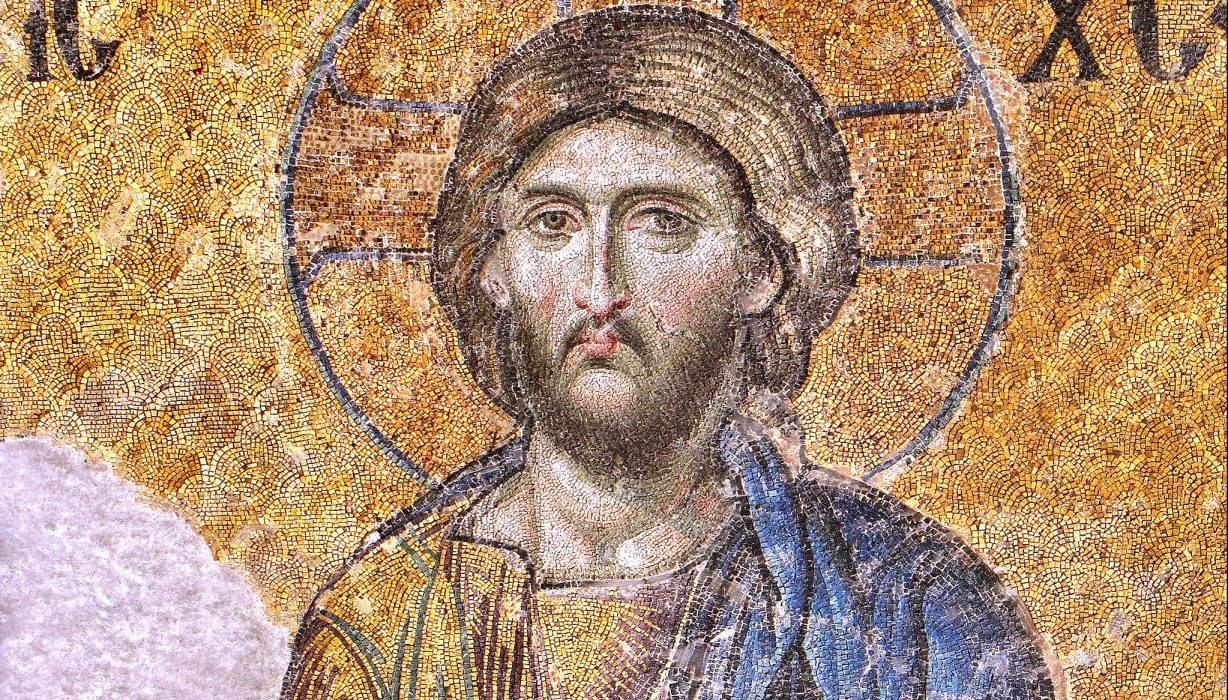
Of course, it is absolutely true that the bishops and priests (or whatever you wish to call them) are, indeed, guardians of the tradition, the sacred deposit, the rich body of creeds, confession, and liturgy (1 Tim 6:20; 2 Tim 1:14). In the wake of the Second Vatican Council, Pope John Paul II wrote in the Apostolic Constitution Fidei Depositum, "Guarding the deposit of faith is the mission which the Lord has entrusted to his Church and which she fulfills in every age." The bishops and priests are the point people in this sacred task on behalf of the Church but they are not the only ones with a duty to preserve and prevent departure from the one true faith and the doctrine that does not change. The joke is not with this but with a pope who seems intent upon evolving what is believed and how that is practiced and with those bishops who walk lock step with his embrace of change. If this pope is not working to change the Roman Church, then he is worse than a liar but deceiving the people on both sides of the great divide of Scripture and its authentic tradition.
Tradition is not tradition because a pope says it is or because bishops say it is or because priests say it is. Tradition belongs to the judgment of the whole Church. Where popes, bishops, and priests depart from this witness of Scripture and its authentic tradition, there had better be people in the pews who raise a holy fuss and who refuse to be quiet until faithfulness is restored. As true as this is for Rome, it is no less true for Lutherans, Anglicans, and for the whole of all that groups who fall under the general name of Protestantism. While the churches have been floundering trying to keep up with the pace of culture and the fickle opinions of the masses, the faith has been surrendered and the Gospel silenced in favor of everything from a deity named climate change, sexual desire, gender identity, and social justice. That only shows us that a pope is not enough, bishops are not enough, and priests are not enough to prevent the replacement of truth with error. Now more than ever, the future of the Church depends upon the faithful in the pews as much as it depends upon the ministers of the Church. In this sense we are all guardians of tradition.
The parents who teach the faith in the home, who put their children's hands together and impart the faith through prayer, and who bring them to the worship services of God's House are no less the guardians of the sacred tradition (Scripture and its many faithful voices who proclaim it and defend it through the ages). The Sunday school teacher or catechism instructor or youth group leader all are guardians of the faith and not babysitting or entertaining the children of God by baptism and faith. Those who instruct God's people in the Scriptures, in the witness of creed and confession, and in the pattern of the faith prayed in the liturgy are also guardians of tradition. Faithful church workers are essential to the passing on of the sign of faith. Nobody doubts or denies that. But they cannot function alone or in isolation. They work in concert with the parents in the home, the many voices and teachers of the faith, official and unofficial, to proclaim the once and forever faith. We need all of them.
Lutherans believe in apostolic succession but we refuse to confine it simply to one office. We insist that there is an uninterrupted line of authority, doctrine, and practice, down from the Apostles and through the ages but we insist that this involves the whole community of the faithful and cannot be confined to one office. It is neither the succession of an idea that exits only in an imagination. It is a true and real apostolic succession, every bit as apostolic as Rome insists, but of a believing community also gathered around the Word and Table of the Lord along with the pastor. It is not unfaithful to admit that the distinction between pastor and bishop is one of jurisdiction defined by human authority and not by the Scriptures or the earliest Christians. But for Lutherans it is step too far to insist that succession applies only to this office as distinguished by the Church (dare I say developed over time). No one but a fool would say that bishops and pastors are not guardians of the rich and faithful tradition passed down from the apostles (of which Scripture is it's beating heart and source of life). But it is foolish to presume that these are the only guardians who bear responsibility for passing down faithfully what is believed, confessed, and taught. We do not need fewer but as many as possible working together, captive to the Word, and joyfully living in fidelity with the Scriptures and the catholic witness of the saints before us. We need them all.
Saturday, December 4, 2021
We are a village. . .

We need eyes and ears on us. We need a large and extended family and friends to watch over us, gently guide us, and, if you will pardon my bluntness, to give us a good kick when we go wrong. These are not accidental. They are by God's design. It is the Lord who designed the family for us, who gave us that extended family, and who surrounded us with a full complement of folks in church and community. In a time in which we have lived hidden in homes where we work and play and watch around us through our screens. The person touch has been missed but even in this context we acknowledge the truth of family and community and church.
But there is another side to all of this. It is not simply that it takes a village to raise us but that we are a village. In us live those who went before us. I am not simply me. I am a composite of my mother and father and brother and grandparents and aunts and uncles and great aunts and great uncles. They are alive in me and through me -- not as a consolation prize for eternal life but because of eternal life. I carry them not as voices from the grave but as a people of faith who delighted in my birth even as I grieved their death -- together under the cross.
There are more. The whole company of the saints and martyrs live on in us and through us. We carry them not as memories of those gone but as the people of God who live. Our faith was passed down to us through them, the witnesses who delivered to those to come after them the testament or sacred deposit. We owe them honor and thanksgiving for their faithfulness and if we are grateful we will do the same to those who come after us.
No man is an island. We are not alone or solitary but live in debt to those who went before us and live with a duty and obligation to those who come after us. This should not come to us as a surprise. It is the shape of any real life and it is the shape of that life which is the most real of all. It is the shape of our Christian lives. We are heirs of an astonishingly rich tradition of the faithful and it is our one duty in Christ to faithfully pass on to those to come that same holy confession. Whether we pray alone or in a great congregation, we pray the same Our Father. In the creed we confess Jesus who for us men and for our salvation came down from heaven. The gift of forgiveness is not some narrow grace between God and the sinner but the blessed means to real community and the power of love to glue the broken together again and restore the whole. Heaven is not some individualistic utopia but the place where reunion and resurrection are enjoyed in the presence of Him who gives forgiveness to the sinner and life to the dead.
We are all villages. Either we are the village of the world with a hopeless end or the village of the Church with an endless hope. All of this is hidden and seen only by faith now but then face to face. The bosom of Abraham holds all of our ancestors and in the end it will hold us. The God of Abraham, Isaac, and Jacob is not a historical reference but a confessing of those who live even though they die. With the great patriarchs and prophets of old, we add to them the saints of the New Testament, those with mighty names through time and history, and those known only to us and God. It is glorious.
Why we would settle for an individualized faith in which it is me'n'Jesus against the world is beyond me. We need a posse and a cohort, an army and a community. That is the gift we forget to celebrate when we look into the mirrors of our souls. We are all villages of God's making. Thanks be to God!
Friday, December 3, 2021
A few unpopular thoughts. . .

But there is another path that is beginning. With the Texas and Mississippi laws and all the rhetoric about restricting abortions or making them illegal or allowing seemingly disinterested parties to sue, we have forgotten one profound thing that this law and those laws like it do for the child in the womb. They call the child in the womb a life, they recognize the child in the womb as a life with a right to life. The beating heart part of that law makes it clear that under everything else, Texas is trying to mark the fetus as a child, define that fetal existence as life, and grant to that life the ordinary protections of any life.
I have no idea if Roe will ever be overturned. It was wrongly decided on so many levels but even bad laws and decisions become normative over time. Perhaps we will never get to a point at which our justices will say they were wrong. But I do believe that the more we identity the life in the womb as a child and a life deserving of ordinary protections, the justification and case for abortion will grow so weak as to be untenable. We may not be able to outlaw it but outlawing sin has not necessarily contributed to its decline anyway. Instead, we might be able to do something more profound. We might be able to get most folks to agree that with a beating heart and every possibility of that child's future already there in the child, that is life and just as every life has rights and deserves protection, so does this life in the womb.
Many pastors have told me and I know that many have taken hits from folks in the pews and media pundits for applauding the Texas law. It is not unusual for even our supporters to tire of hearing about abortion all the time. But by shifting the focus from what we are against to what we are for, we might have a new foothold on the climb to protect life as sacred, God-given, and worthy of our most basic and noble protection.
Now is the time to work to change the way we view the child in the womb. Either that child is a sort of parasite within the right of the woman to purge from her body or that child is a life worthy of the full protection of society and our laws. There is no middle ground here. Though so much ink is spent on the fringes (rape, incest, the real prospect of physical or emotional health to the mother, the right to be wanted, etc.), this is but a grand distraction designed to make those opposed to abortion concede their own position little by little. The vast majority of abortions have nothing to do with these narrow circumstances and have only to do with whether the woman carrying the child is willing to go through pregnancy and delivery or not. The simple answer is that these women choose not to go through with it. It is not that they could not but do not want to. The issues of physical or mental health are often enlarged as justification to avoid the stark reality -- they do not see this baby in the womb as a child, a life, or anything worth protections or a legal status. So the most profound answer to this is to focus on that life, the beating heart, and to get the nation to see the child in the womb as a child and as a life worthy of all the ordinary (not extraordinary but simple) protections of the law. Whether the Texas law stands or falls, it has moved us toward this goal. Whether the Mississippi law stands or falls, every conversation moves us to look at the child in the womb and make a decision.
Thursday, December 2, 2021
The cost of change. . .
It is soon that time of year when the sitting Synod President will decide whether or not to go for one more term. Whether you adore him or despise him, such a decision is significant in the life of our church for many reasons. It is not just about the man who seeks to lead the Lutheran Church Missouri Synod but also about those who are led. This is not about this year or the man who must decide but the process and the impact of that process upon us as a church body.
With each succeeding change in leadership, there is a cost to be borne. This cost is the distraction from the things of God to the politics of cementing new leadership from the top down. For a while the only thing we are concerned about are roles and choices -- who serves where. This cost is magnified in that we have so few pastors working in national offices. The cost of change extracts a great deal from those who serve us in Christ's name and, because there are fewer of them, we put an even greater burden on their service and their leadership. I worry about things like that -- knowing the faithful few who work in the International Center doing a great deal while consuming as few of the precious monetary resources we give them.
The cost that is paid by those who are already stretched thin in their work in the nation and in the world is similar to the cost that is paid by those in pews. We do not have a visible or deep back bench. We live at a time in which there are fewer and fewer national leaders in our church body -- perhaps in any church body. Some of that may be due to cultural changes that affect the whole fabric of our society -- including church. Some of it is due to the fact that we have fewer opportunities to develop nationally known leaders from whom the church can call her leaders. The fragmentation of our political landscape is similar to the divisions we have experienced in our churches. We have more leaders identified with ideology than we do leaders with the stature to bring together and heal the divisions among us. While this is also true of our nation, it is no less true of our church body.
Because of the way the process is now structured, everything happens long before the delegates sit down at the national convention to address the rest of the elected leaders and to chart the course before us for another three years. While I once thought this was a good thing, I am no longer so sure. Without the clear and visible places for the church to look and listen to those who would vie for leadership positions, we lack the ability to raise up a leader from almost nowhere -- the way a convention could once be swayed by eloquent oratory or passionate speech.
I wish I had a solution. I do not. I have only the lingering suspicion that until we figure this thing out, our leaders will continue to struggle to bring together the diverse positions and people that make up our church. I fear that without people of stature to address those on the very edges, there will not be people who have the authority and gravitas to tell the extremes enough already. We are fractured enough and already comfortable in our divisions, who and what has the ability to unite us in a strong doctrinal confession, a common liturgical expression, and a formidable force to share the Gospel. While some may not care, I am convinced that national structures and leaders are not extraneous to our success but profound helps in the task of remembering who we are and why we exist as a church.
Yes, we have good leaders. Many of them. But few of them are well known outside a district or region or caucus. We do need to work to figure this out or the backbiting, division, self-interest, and loss of momentum will prevail and the work of the Kingdom will suffer. I will say one thing. Now more than even we need someone who can preach Christ and rally us through the proclamation of the Word to the cause of Christ -- much more than we need an administrator to dot all the i's and cross all the t's. A program is not what we need or lack but solid, reliable, faithful, and visible leaders across the span of our church body are needed.
Wednesday, December 1, 2021
The curse of affluence. . .

Though we hear it often enough, we Americans do not believe that the rich. We hasten to protest the label and insist that we are middle class. In every way that wealth is counted, we are wealthy and perhaps somewhat entitled to that wealth. We love to protest but underneath the figures rests a people who can afford the newest technology, the latest entertainment, lavish health care, and high expectations from life. Among us routinely are people who live on the very extreme edge of wealth -- from the techno giants of the Gates to the financial gurus of the Buffet empires. Add to that the Bezos and others who can afford what whole nations cannot. It is dizzying. But the effect of all of this wealth has not been happiness. Ask the divorced Gates and Bezos or the Hollywood stars tarnished by sorrow, addition, pain, and depression.
If you can afford everything, then nothing has any real value. That is the curse of affluence. Where it was once the domain of the few, the numbers of those for whom money has no real value continues to grow. Watch Million Dollar Listing -- a TV series devoted to the excesses of those for whom a price tag means little. As Everett Dirksen put it: “A billion here, a billion there, and pretty soon you're talking real money." But how real?
My dad was fond of saying that unless you had a willing buyer ready to pay the price, nothing had any real value. That is certainly true. All those things I thought were so wonderful were left in the heap of my yard sale because nobody else valued them. But the other side of this is also true. If you can afford everything, nothing has a price tag worth your notice and so it does not have any real value either. That is the burden sin has put upon us. We seem inclined only to over value everything or to give nothing any real value. If there were any lasting good to come of COVID, it might be that we are beginning to crack this nut. I am not sure that this is true, but I can hope.
Throughout the Gospels the disciples are enamored by wealth and convinced that the wealthy can do anything and everything. Jesus, on the other hand, cautions them against this invincibility. Like the proverbial eye of the needle and camel, Jesus warns against the presumption of wealth. Like the story of the rich man with full barns who dies, Jesus raises the specter of being so full of things that you are empty of life itself. Like the story of the rich man and Lazarus, Jesus insists that there will be no second chance or momentary relief of a drop of water. We live with our choices and sometimes we die because of them. Yet Jesus is not simply a prophet of warning but the herald of hope. For those who delight in the riches God has given will not be found poor in death. That is the promise of faith. It looks and sees what the things of this world can and cannot do and what the gift of God has done and does.
The if onlys of this life can be the worst prison of all -- living on hold while waiting for the cup to fill while refusing to rejoice in what God puts in that cup! Consider the lilies. They neither toil nor reap and yet who is arrayed in greater glory than these flowers here today and gone tomorrow? Who indeed! Christian do not forget that part of your calling and vocation is to manifest to the world the contentment that proceeds from possessing the one thing needful, the pearl of great price, the treasure hidden in a field, and that which moth and rust cannot destroy. Once we get this right, everything else does seem to find its proper place. Get this wrong and nothing else is right.
Tuesday, November 30, 2021
A wearisome caution. . .

One of the visiting pastors who made his way into our Divine Service last summer complimented the extras while at the same time lamenting that his people would never go for all that and his brother pastors would castigate him for being too Roman or something. But he yearned for something more than minimalism as a theological, liturgical, and musical motif. He was not the first nor the last to speak in this way. How sad of us! We Lutherans seem to appreciate food and drink well enough. Why do we think that the best supper in God's House is austere and plain? It is not like we as a Lutheran Church are in any immanent danger of abandoning truth for style. The average liturgical parish in the LCMS is still what could be called low church in ceremony and music. Our golden age of Bach and Brahms and Pachelbel and Walther have been replaced with worship absent of choir or cantor, mostly spoken liturgy, and a common body of hymns we share more with Methodists than with our Lutheran forbearers. So why must we always warn against excess when a congregation or pastor begins to put forward something other than a minimum in the Divine Service?
Even when we do laud and honor the gift of art and music and our own heritage of artists, artisans, and musicians, we do so with a caveat. Yes, these are all well and good, mind you, but you don't need them and they are extraneous -- not essential. It is like the strange way we approach the rite of ordination -- it is, after all, only apostolic custom -- God forbid that apostolic custom should count for much! This strange preoccupation with simplicity was not essentially Lutheran -- at least the early Lutherans were all in for art and music -- from the Cranachs to Luther the composer himself! But at some point in time, we must have met a Calvinist who convinced us to be embarrassed by our Lutheran identity and in our shame we repented of good music, good liturgy, and good art. Can you explain it to me? Even in the comment threads of this blog, there are also those voices of concern cautioning me against any normative Lutheran tradition when it comes to an appreciation for art, music, vestments, ceremony, and the like. This caution about art, music, liturgy, and ceremony is about as logical to our Lutheran identity as those who order a diet drink with their extra size fries and triple patty Whopper.
Before someone from a less is more congregation decides to argue with me, I refuse to listen. Your caution has been like a pain in my, well, side, for most of my ministry and I am simply tired of hearing your warnings. The LCMS is in danger of abandoning truth for show about as much as America is in danger of forgetting the pandemic. It ain't gonna happen anytime soon. So I am announcing that from now on I will not listen or read or give place to those who voice caution when instrumentalists are added to worship or art is added to the sanctuary or musicians are paid what they are worth or time is spent doing things right or a bow, genuflection, bell, or elevation draws attention to the holy things of God that are supposed to be our joy and delight. Instead, I caution you against a false humility which is really hubris as you delight in being a Lutheran version of spiritual but not religious -- simple Lutheran Christians who are Amish in liturgy and satisfied with what is plain and unadorned on Sunday morning. In your faux piety and superiority you look down on congregations and pastors who want and do something more and you thank God you are not like those. God has not called you to be the conscience of His people -- you have put yourselves into that place.
And you pastors trying to offer more and do more, God bless you. God bless your efforts. God bless the fruits of those labors. Your works are not in vain. The day will come when people will awaken to the gifts of God in arts and music and ceremony and then, Deo volente, God's people will not be content to settle for the false dream that less is more.
Gosh, I feel better. I hope you do as well.