Tuesday, December 28, 2021

Happy Martyrs. . .

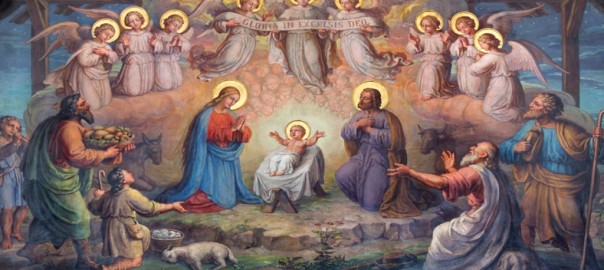
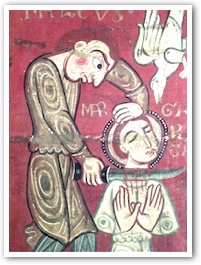
A Christian martyr is someone willing to face death rather than deny Jesus Christ or His Gospel.   It began even as Christ was born.  The Holy Innocents of Bethlehem, St. John the Forerunner, St. James, St. Stephen, and the whole of the apostles except for St. John.  The deaths were agonizing -- beheading, stoning, sawing, crucifixion, burning at stake, the lions in the Coliseum --  these were were some of the horrific ways Christians were punished for the sake of Christ.   In the latter part of the second century there was a distinction between martyrs and confessors.  Those who were martyrs were those who  suffered the extreme penalty, death, whereas the title of confessors was given to Christians who had shown their willingness to die for their belief but who bravely endured imprisonment or torture but not death. The word martyr comes from the Koine Greek μάρτυς, mártys, which means "witness" or "testimony".  

Tertullian, from the 2nd century, famously wrote that "the blood of martyrs is the seed of the Church" -- telling us that the martyr's willing sacrifice of his life was what gave credence to the faith and encouraged others to believe so fervently.  Far from cautioning the faith and boldness of God's people, persecution ended up sparking the devotion of the saints, facilitating the rapid growth and spread of Christianity.  It was not without problems.  Though Islam is often seen as the religion of the martyrs, it was and is Christianity that martyrdom is most distinctive.  Unlike Islam, by the third century, Christian theologians were arguing that martyrdom should not be sought but neither should it be avoided unless there was no other alternative.  Within a few decades, the orthodox Christian view was that voluntarily seeking execution was not martyrdom but that did not mean that martyrdom stopped.  More than 70 million have been martyred for the cause of Christ over the years.  

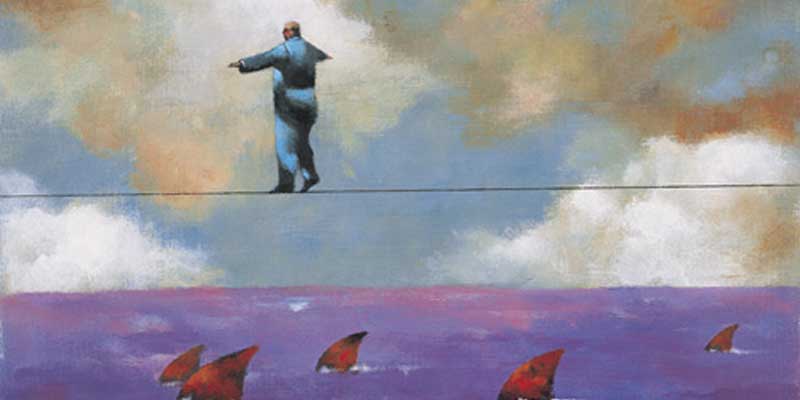
What has changed is Christianity.  Martyrdom has become almost mythological.  How many modern Christians believe that martyrdom is either a possibility or a choice?  We live in an age in which compromise and negotiation is the ordinary path of life.  Martyrdom has become the extreme and while we might admire those who die rather than deny, we are not at all sure we would follow them.  Consider how easily Christians accepted the judgment of the government and the new rules of the pandemic that in person worship was not essential and the Church itself irrelevant to the faith.  Consider how willingly churches closed their doors and switched to screens to replace what has always been an incarnational, face to face, and in person faith.  Consider how those who dared to resist these measures were labeled dangerous or extreme?  I wonder how many Christians have drunk the koolaid of your best life now to the point where they could never imagine a circumstance in which they would be willing to deny themselves anything for the sake of Christ.  We no longer rejoice over the blood of the martyrs whose courage stands as example -- no, we are embarrassed by their extremism and presume that there is always a way to preserve your life even if it comes at the cost of your faith.

Percy Dearmer translated a 10th century Latin text that exemplifies how we once viewed the martyr:

1 Martyr of God, whose strength was steeled


To follow close God’s only Son,
Well didst thou brave thy battlefield,
And well thy heavenly bliss was won!

2 Now join thy prayers with ours, who pray
That God may pardon us and bless;
For prayer keeps evil’s plague away,
And draws from life its weariness.

3 Long, long ago, were loosed the chains
That held thy body once in thrall;
For us how many a bond remains!
O Love of God release us all.

4 All praise to God the Father be,
All praise to thee, eternal Son;
All praise, O Holy Ghost, to thee,
While never-ending ages run. Amen.

His is not the only hymn that does so.  Fifteen texts in Lutheran Service Book mention martyrs.  Sadly, the most profound, Rise Again, Ye Lion-Hearted,  did not make it into that book, not even the four stanzas translated by Martin Franzmann.  But the whole hymn did make it into Walther's Hymnal, translated by Matthew Carver and published by CPH.  Tip, buy it!  

Rise again, ye lion-hearted
Saints of early Christendom.
Whither is your strength departed,
Whither gone your martyrdom?
Lo, love’s light is on them,
Glory’s flame upon them,
And their will to die doth quell
E’en the lord and prince of hell.

These the men by fear unshaken,
Facing danger dauntlessly;
These no witching lust hath taken,
Lust that lures to vanity.
Mid the roar and rattle
Of tumultuous battle
In desire they soar above
All that earth would have them love.

To the truth they own adherence,
On the substance train their sight,
Never trusting in appearance,
Judging all by heav’nly light;
Blest in their conviction,
Even in affliction,
Far from human slavery
And its shackles, they are free.


Great of heart, they know no turning,
Honor, gold, they laugh to scorn,
Quench desires within them burning,
By no earthly passion torn.
Mid the lions’ roaring
Songs of praise outpouring,
Joyously they take their stand
On th’areana’s bloody sand.

Would to God that I might even
As the martyred saints of old,
With the healing hand of heaven,
Steadfast stand in battle bold!
O my God, I pray Thee,
In the combat stay me.
Grant that I may ever be
Loyal, staunch, and true to Thee.

But for Thee I weakly cower,
Void of any asset small,
Let alone great feats of power;
On Thee only hangeth all.
Lord, my hope’s assurance,
Pledge of my endurance,
Grant me as a champion now
Not to break my knightly vow!

Grant me, armored by the Spirit,
In Thy name, O Christ, to fight
With a lion’s strength and merit,
Slumb’ring not, but by Thy might
Bravely battle waging,
‘Against the devil’s raging.
Let no rout o’ertake my soul,
But support me till the goal.

Time will come when goes, arising,
Rage again to take the field,
Christian souls in war surprising,
Spilling blood on sword and shield;
Ponder well this warning:
Days of shrouds and mourning
Here our homes again shall know —
Yea, and many a martyr’s blow.

Now at last must come the leaven,
For the measure must be filled, —
Martyrs more be crowned in  heaven,
On the cross of glory killed; —
Eve that morn be ruddier,
Church’s dusk be bloodier,
As the Lamb at even died
Which at morn was crucified!

Courage, brethren! Firm and fearless,
Steady in your calling stand:
Follow we that cloud of peerless
Witnesses in warlike band,
Who, the flesh subduing,
Know no cause for ruling;
Flesh must suffer as it will,
And the soul will flourish still.

Count we not the Cross, betpattered,
Like the wise, a foolish thing!
Let us no from thence be scattered
When we should proclaim our King;
Let it be our station
When the generation
Of the Foe attacks the faith,
Threat’ning us with swords of death.

Slacken not, though thou be slaughtered:
Is it not with martyrs’ blood
That the Church’s beds are watered,
And bedewed her fertile mud?
From these crimson showers
Spring her countless flowers;
Oh, what bounties here she yields
In her fruitful battlefields!

Spirit, as a rain descending!
On our drying hearts be poured,
That for Thee we may unbending
Wilt at neither fire nor sword,
In Thy love surrounded,
Firmly in Thee grounded,
Make Thy Church in faith to be
Rich as in her infancy.

Monday, December 27, 2021

I have seen my salvation. . .

Sermon for the Feast of St. Stephen, Martyr, and the First Sunday after Christmas, preached on Sunday, December 26, 2021.

On this day we recall how our Lord was presented in the Temple and Blessed Mary purified AND we remember St. Stephen, deacon and martyr, who was killed giving witness to Jesus.  Their stories may seem very dissimilar but their hope is the same.  They both saw Jesus and that was all they needed to see.  They were ready for whatever the future was because they had seen Jesus.  In faith they clung to God’s Word and promise and nothing else mattered.  Oh, how I wish I could say that I had the same kind of faith they did!

Although Scripture is not explicit in telling us this, we presume that Simeon was old.  In fact, we think of Simeon as a man very near the end of his life.  He had gone to the Temple day after day with the promise of the Lord that he would not die until he had seen the Lord’s Christ.  And day after day he went home without having seen Him.  Until this day.  He was shown God’s salvation and Israel’s consolation and he saw it in the face of a 40 day old baby.  Sort of implied in the Gospel is that Simeon died soon thereafter.  But death was not his end.  He had seen the Lord’s Christ and even in the face of this baby boy Simeon saw that death could not contain him or steal his joy or silence his voice.  In Christ he lives.

Stephen was a man full of grace and power.  He had been chosen by the apostles to be a deacon, to serve tables but not only that.  The Lord worked through him mightily if only briefly.  His preaching and works drew undo attention to Stephen and the enemies of the Lord marked him as someone to be silenced.  Like Jesus, false witnesses laid charges against him.  Like Jesus, his face shown like the face of an angel.  Like Jesus, the verdict rendered against Stephen and his preaching was death.  We presume that Stephen was not old but quite probably fairly young.  He was filled with the urgency and brashness of youth.  He did not shy away even when his enemies stood in judgment over him.  He called them out with no uncertain words.  Stiff-necked, uncircumcised, resisters of the Spirit, persecutors of the prophets, and murderers of Jesus.  Stephen died but Stephen now lives.

We might think of Simeon’s story as a nice end.  He realized his dream and was ready for death.  But Stephen’s story was not nice.  He was too young to die and had a bright future that was killed with him.  In reality, their story is the same.  Both of them were ready for whatever happened because they had seen Jesus.  Simeon staring into the face of a baby in the arms of Mary and Joseph.  
Stephen with a vision of heaven opened wide, the glory of God, and the face of Jesus at His right hand.  The end of a long life of waiting and the end of a short life just beginning found a common consolation in the face of Jesus.  Both rejoice that in death they saw life and they saw it in the face of Jesus.  They died without fear.

My friends, it may seem awkward and unkind to speak of death so close to Christmas and its joyous holiday traditions.  But it is not.  Death is always near.  Whether you are old and have lived a long life or you are young and your life has barely begun.  Death is no respecter of persons.  The wages of sin is death.  It is that plain, that simple, and that brutal.  Death does play according to the rules.  It does not wait until we are ready for it nor does death come when we no longer want to live.  Like every enemy, death hides in the shadows of life until it springs forth and claims us.  It is for death that Christ has come to manger and temple and cross.  It is for the sin that has brought death’s curse on us that Christ has come.

To a people who live under the shadow of death and wait for its surprise entrance, there is only one comfort, one consolation, and one means to ready ourselves for its coming.  That is to see Jesus.  To see Jesus where God has promised Jesus will be.  To peer not into the flesh of a 40 day old infant but into the water that has become our womb, our path from death to life in Christ.  To look not with heavenly vision up there somewhere but to the heaven on earth that God has given by setting up among us in the presence of all our enemies the Table of the Lord.  To hear not simply with earthly ears but with the ears of faith the voice of our Good Shepherd calling to us His sheep by His Word.  That is the gift of Christmas.  Not a momentary reprieve from the hard things of life but the vision of Jesus to look at when the worst of life slaps across our faces.

The old Simeon and the young Stephen and every one of us – wherever we are on the spectrum of age and mortality – we are all ready for death because of Christ.  After years of fear, of separation, of threat, of death too near, of hope stretched thin by trouble and trial, we are not without consolation and we are not without hope. St. Paul gives voice to this in Philippians 1: “Christ will be magnified in my body, whether by life or by death. For to me, to live is Christ, and to die is gain.”  And Hosea the prophet:  ““I will ransom them from the power of the grave; I will redeem them from death. O Death, I will be your plague! O Grave, I will be your destruction!”  That is what we see in the face of Christ.  The end of sin, the end of death, the beginning of righteousness, and the beginning of everlasting life.

After we come to Holy Communion but before we head back to homes and the routines of our lives, we sing Simeon’s song.  Having now eaten the Body of our Lord and drunk His Blood for the forgiveness of our sins, we see the promise of the future, the foretaste of the eternal feast to come.  Some of us are nearer that feast than others but together we meet death by looking into the face of Jesus.  We are ready.  We cower no more in fear nor do we tremble in uncertainty because the most certain thing of all is Christ for us and Christ in us.   

Like Simeon and Stephen, we will die.  And until we die, we will live.  And whether we life or die, Christ will be magnified in our bodies.  For us, to live is Christ and to die is gain.  That is the gift of Christmas – to see Jesus and in Jesus to see our future.  To see Jesus and to see Jesus so clearly that nothing else matters.  To see Jesus and to be ready and prepared for life and all that it can thrust upon us and for death and all that it takes from us.  In Jesus’ name.  Amen.

Missing Markers. . .

Where is the Church?  This is not an academic question or a theoretical one.  It is the most practical of all questions -- one relevant to the Reformation and no less urgent and relevant to us today awash in a sea of church choices.  As Sasse once noted and many Lutherans with him, this question must accompany and be on the forefront of the mind of all Lutherans.  It is not a statement once answered and then filed away to be forgotten but a question and its answer that daily arise and daily are answered not by opinion but by the very Word of God that endures forever.

Toward the very end of his life, Martin Luther addressed this question through a rather lengthy critique of the medieval church and its need for and a justification of its reformation.  This was not Luther simply lambasting his opponents but searching the Scriptures for the marks of the one, holy, catholic, and apostolic Church.  His answer is, then, not a guess but based on Holy Scripture.  If you read his words you will find typical Luther -- prodding, offending, and challenging but also comforting, teaching, and assuring.  Near its end, Luther identified what he called the seven marks of the Church.  By these marks, then, one can know where the Church is located (even though its full extent may not be visible to you).  These marks are God’s Word; Holy Baptism; the Sacrament of the Altar; the Office of the Keys; called ministers; and prayer, praise and thanksgiving to God.  To this list Luther appended a seventh mark of the Church: the true and sacred Cross (we might actually call this the Gospel itself). 

In his 1539 treatise, On the Councils and the Church, Luther addresses what I as a Lutheran address on almost a daily basis and that which compels me to answer for me, for my ordination, and for my minister on behalf of and to the people of my parish.  I hope and pray that I am not alone in this.  It is the most urgent and relevant consideration we as Lutherans (and every serious Christian and Christian minister) should have.  Where is the Church?

Rome is clear about this.  For Rome the Church is where the Pope is and there is no Church not in communion with the Pope, not under his staff and authority, not under his vicarage.  I will admit that as a Lutheran I would like to believe this.  It would solve so many problems I face as a Lutheran and as a Christian in a world where churches are a flavor of the month and within each communion is such diversity of doctrine and practice as to render any commonality almost an exception.  But as much as I would love this to be the case, it is not the answer of Scripture or even the witness of the earliest Christianity.  How do you go from Ignatius' where the bishop is, there is the Church to the Roman claim of exclusivity (except, of course with respect to the Orthodox and even the Jews, with their own way to God's grace apart from Christ)? 

Wherever the bishop appears, there let the people be; as wherever Jesus Christ is, there is the Catholic Church.  Does this offend against Luther's seven marks or does this accord with them?  Does the creed conflict with Luther's extended list or does it agree with them?  How does Rome's claim of exclusivity fit within these marks and Ignatius' claim?  These are things I wrestle with and I suspect many Lutherans and true Christians also do.  I am not so sure that many within Rome struggle much with the answer to this question.  I fear that this is a settled issue with them and the simple answer of the Pope has left them with an easy out.

This is certainly a reason why I am a Lutheran and why I have not swum the Tiber, so to speak.  If Luther is in any way correct in the marks of the Church, then we should be able to judge the whole on the basis of its parts, its faithfulness to those parts.  And it is in this arena where Rome comes up short.  Rome is hardly a church of God's Word.  Oh, yes, the Scriptures are read seriously within the mass but Rome has officially sided with the idea that the factual basis of what that Word says does not necessarily relate to its truth.  Rome is surely not alone in this but how can any church desiring to be the Church countenance treating the Word of God as included in Scripture but not Scripture?

Holy Baptism is another problematic area.  When the issue of a priest's baptism was addressed, Rome struggled to know how to deal with the deacon's straying from the script.  You surely recall the story.  But in the end, the failure of the deacon to say I baptize left the priest's ordination and all his sacramental presiding invalid.  Is baptism rooted simply in this form?  What about the East and its more ancient formula of You are baptized in. . . ?  While none of this is pivotal it seems that Rome's preoccupation is with validity and licit sacraments more than Romans 6.

When it comes to the Sacrament of the Altar, Rome seems to suggest that the sacramental grace is apart from the eating and drinking but in sacrificial offering.  Perhaps I am mistaken in this, I often am, but Rome equates the adoration of the Corpus Christi with its eating and drinking and there is no Scriptural warrant for this conflagration.  Even then, the sacramental liturgy, especially in the Latin Mass, seems to see the faithful as disinterested spectators while the real action lies in the hushed tones of the priest at the altar.  How does that accord with Scripture?  I will not even begin to address the liturgical oddities and hurried masses that betray the reverence demanded by taking seriously what is happening within this Eucharist.

With the Office of the Keys we face the same problem -- how is this sacrament administered?  While there is nothing wrong with and something salutary about encouraging the sinner seeking absolution to address the behaviors that make them vulnerable to temptation and wrong, emphasizing the satisfaction over the absolution dramatically changes the whole thing.  I envy how normal confession is in Roman Catholicism but the penance assigned has become larger than the grace imparted.

For Rome, the ministry is all about the form.  Apostolic succession has become a formality and line instead of a succession not only of office but of doctrine and teaching and preaching.  I actually do have a couple of good Roman Catholic preachers whose sermons I listen to every now and then but the reality is that the sermon or homily is routinely the weakest part of the mass and that thing which the priest spends the least amount of his time upon -- listen in just about anywhere.

Finally, with its rushed pace and casual and irreverent attitude toward the things of God, what happens among Roman parishes in prayer, praise and thanksgiving to God so often pales in comparison to the reverence, enthusiastic singing, and strong vocal participation of the place where I serve.  In this the question is rather simple: Does what we actually see in the worship and liturgical life of the Roman Catholic Church look like that which we expect of the One, Holy, Catholic, and Apostolic Church?  I think you know my answer.  Rome looks like the worst of Protestantism more than it looks like anything else.

Markers.  I look for them.  When I look to Rome, I find mixed signals in the words and a distinct lack of markers in the practice.  So when it comes to the claims made, I have little recourse but to reject them because where I am, I do not see them lived out.  This ought to the goal and purpose of every parish no matter the name -- we preach, teach, preside, and sing like the one, holy, catholic, and apostolic church. 

We cheerfully maintain the old traditions made in the Church for the sake of usefulness and peace. We interpret them in a more moderate way and reject the opinion that they justify…. We can truly declare that the public form of the churches is more fitting with us than with the adversaries… Among us many use the Lord’s Supper every Lord’s Day. They do after they have been first instructed, examined, and absolved. The children sing psalms in order that they may learn. The people also sing so that they may either learn or pray… Among us the pastors and ministers of the churches are encouraged publicly to instruct and hear the youth. This ceremony produces the best fruit… In our churches all the sermons are filled with topics such as these: repentance; the fear of God; faith in Christ, the righteousness of faith, the comfort of consciences by faith; the exercises of faith; prayer, what its nature should be, and that we should be fully confident that it is powerful, that it is heard; the cross; the authority of officials and all civil ordinances; the distinction between the kingdom of Christ, or the spiritual kingdom, and political affairs; marriage; the education and instruction of children; chastity; all the offices of love. From this condition of the churches it may be determined that we earnestly keep Church discipline, godly ceremonies, and good Church customs.—Ap XV:38-44

Sunday, December 26, 2021

Our "no" and God's YES!

Sermon for the Eve of the Nativity of Our Lord, Lessons and Carols, for Christmas Eve, December 24, 2021.

We live in a world of no’s.  In fact, the last couple of years have only reinforced this no.  No to work, no to school, no to shopping, no to church, no to kindness, no to travel, no to just about everything we thought made our lives bearable and gave us joy.  We surrendered everything that once was sacred to us and thought it was worth it – worth it just to get through such a terrible time of fear, uncertainty, and death.  Still our lives ache for things to get back to the time when we did not fear a hand stretched out in welcome or a stranger too close in line at the register or politics of division and hate.  Will things go back to normal?  Will we ever forget what we have endured?

The truth is that our generation is not unique.  Every time and age has known its terrible sorrows and struggles.  We have been struggling for a long time and did not even know it until the obvious was made clear.  We hid our sorrows behind Amazon deliveries and online entertainment and social media.  We took comfort in making this life better or safer and did not dare presume to hope for something more.  Faced with all kinds of social ills, we hoped for some justice and prayed that justice would satisfy the noisy complainers and give us a reprieve from all that troubles us.

God has heard our prayers, known our fears, and felt our pain.  But His answer to all our needs has come not in a better life but a new one, not in a safer life but an eternal one.  Our God has come to us in our desperation and announced that death will not get the last word.  He has done this by a baby’s cry out into the silent night of a world so long ago and yet so much like the one in which we live today.  

The shepherds were minding their own business when angels turned their predictable lives upside down.  We have minded our own business but God has turned our lives upside down as well.  This night is the birth of joy and hope to a people who have ached for some joy and hope for so very long.  And if we will listen, we will find that what happened so long ago in Bethlehem of Judea has transformed every corner of this present world and transformed the very foundation of our lives.

There, standing across the great divide between heaven and earth, the angels called to the shepherds to come and see.  There, between the tear in heaven and the rip of the earthly veil, Jesus has come.  He has ended once for all the war between us and God, released to us the power to resolve what anger and bitterness divide with the healing grace of forgiveness, and opened to us the new door of everlasting life to a people too willing to make our peace with death.

The music of heaven is heard on earth and we have been invited to join our voices with the heavenly angels.  The promise of the future has been delivered to a people who had only a past.  And in the manger of bread and wine, water and Word, God comes to us still.  Here is the flesh powerful enough to undo the curse placed in our flesh by the rebellion of Eden.  And yet herein is the flesh tender enough not to wound but to heal, not to condemn but to forgive the sinner.

The shepherds were afraid.  Who could look upon angels and not be terrified by their power and their reality.  Like them, we see God through the lens of our fears and doubts, our pain and problems, our darkness and death.  We wonder where God was when things went bad and why He did not just deliver us then and there from all that troubled us.  We have forgotten that in the war of sin and death, we pulled the trigger first and we chose evil over good.  God remembers the wrongs we have thought and said and done but He is determined to rescue us from them.  In spite of our unworthiness, He is worthy and He has kept His promise to us.  Absolved, He remembers our sin no more.

The Gospel is not some panacea for all that troubles us.  Our Lord has not come to relieve our pain with the opiates of distraction and addiction.  This is not about getting what we want but about God bestowing upon us what we need.  And then giving us the Holy Spirit so that we might see as He does the curse of sin and how terrible death is.  We needed more than a temporary medicine or vaccine but to be healed from death once for all and to be delivered from death to life everlasting.

This is His gift.  This is what we find as we peer into the manger.  Christ is a baby but not just any baby.  He is the end to our past, the release from our present disappointment, and the promise of a brand new future.  He is the YES death cannot still in the face of all the ways we have heard “no” last year and the year before and the generations before it.  He is our yes and He is our hope to answer all that is wrong and turn the page once for all on despair and death.  But to receive His gift, we must confess the false hopes and dreams we have built upon lies, deception, and excuses.  
Sin has told us so often that the lie of our dreams is better than the truth of reality that we have forgotten how to repent.  But repentance is where hope begins anew.

My friends, we have forgotten that our warfare is over, our battle done, and our journey ended.  Lying in the manger is the only life strong enough to rescue us from our own lives and the only death strong enough to redeems us from our fears. In the midst of a world of no’s and our heart always quick to choose the path of complaint, God has spoken forever His YES in Christ.  That is His gift to us.  That is the marvel of this night and the blessing in the manger.

Sin began with a “no” to God’s Word.  It seemed such a simple thing.  Thanks, God, but no thanks.  We will do it ourselves.  The commandments seemed to us like God was saying “no” to everything we wanted to do but it is only in Christ that we realize what we want is harmful to us.  Still, we instinctively prefer the prison of our sins to the freedom of a life directed by God.  We are always about the “no” – insisting that our sins are not so bad, that we are not responsible, that we can make our peace with death, and that if God really loved us He would just do what we want Him to do when we want it done.  But God is about the YES!

God’s “yes” comes not to acquiesce to our demands or to surrender to our wants but as the power to end sin’s prison and restore us as His own, the power to meet death and the grave and make a pass through which we go to life everlasting, and the power to give new birth to our old lives in baptismal water.  God’s “yes” is His willingness to take from us the burden of our sin and pay it with the blood of His only-begotten Son.  God’s “yes” is to give to us new and glorious bodies that never are diseased, age or wear out.  God’s “yes” is to give us this priceless treasure without cost to us.  God’s “yes” to us is to shine the light of the Holy Spirit into the darkness of our hearts and minds so that faith may grow.

My friends, we have lived too long in a world filled with “no’s” and with hearts to quick to condemn and complain.  Our bodies ache for the promise of a new life and a new world, without division, complaint, and fear.  That is what God has given to us here.  His Son.  His “yes” to all the “no’s” of this mortal life.  Yes, God loves you.  Yes, He is with you.  Yes, He has kept His promises.  Yes, He has forgiven you.  Yes, He has delivered you from death to everlasting life.  Look into the face of Jesus and you see God’s “yes” now and forevermore.  Amen.

Worse than bad taste. . .

The good folks at the Bradford Exchange have upped the ante when it comes to Nativity Scenes in poor taste -- this one is outright blashphemy!


But as bad as this is, perhaps this is worse.  Timely, ironic, but terrible!


Faces . . .

It has been a long time since we routinely saw faces.  Masks have been the norm for many of the last months and more than a year.  I must confess that I forget I am wearing a mask.  Sometimes I smile at people oblivious to the fact that they cannot see that smile.  Perhaps I am not the only one.  It is hard to see people without the full on facial view.  Faces communicate so much and it is hard to know much of someone without looking over the face -- the wrinkles of age and experience, the eyes that sparkle with joy, and the mouth that purses the lips or breaks into a wide grin.  We have been deprived of this view for a long time.  I hope that it comes to an end soon.

We are living in the age of faces -- not so much the personal face viewed directly with the eye but the digital one.  On my computer I am asked to put a face on some of my programs -- an avatar or profile picture that identifies me to my techno gadgets and me to the people on the other end.  Some of them are less than pictures, more personas or caricatures.  You can find places to sell you a face for use on those profiles or free sources that will turn your picture into an avatar.  It is you and it is not you.  Social media has replaced the face with likes, dislikes, and a host of stock statements about us.  Curious that such a thing might pass for the face of a person. 

Though we are living in the age of the face and one of the most popular platforms of social media is called Facebook, I am not sure that faces define us anymore.  Our fascination with technology came long before the advent of the small screens we carry around but they have left us with a false idea of face to face.  God does not give us a caricature of Himself or even an image.  He give us the face of His Son.  In the face of Jesus we see the invisible God.  From the early Church we learn that the word for face (prosopon) is also the word for person.  In the face of Jesus we see the whole person of God.  To read His face is to know God's disposition toward us.  Scripture offers us the hope and promise of seeing God face to face, even more intimately than Moses saw God pass by.  St. Paul describes this beholding of Christ face-to-face as the fulfillment of salvation itself. 

Though the manger and the cross have become symbols, they were not originally.  The manger was nothing important but the Holy Child the manger held was and is.  In the same way, the cross has become shorthand not for a simple event but a person, Jesus the Christ, who suffered in our place, died our death, and rose to bestow upon us eternal life.  The crucifix is one of the ways we remember this.  It is not simply a cross but the man upon the cross who accomplishes all things for our salvation.  But it begins with a manger and the child in the manger.  Therein we see the face of God.  That is the great mystery of Christmass.  And the reason it is not just and can never be a holiday.  It is the holy day in which God revealed Himself not as smoke in the sky or fire at night or thunder or lightening or sign or wonder but flesh and blood.  Still we meet Him in the manger of bread and wine wherein we receive His body and blood.


Saturday, December 25, 2021

A Blessed Christ Mass

And it came to pass in those days, that there went out a decree from Caesar Augustus that all the world should be taxed. (And this taxing was first made when Cyrenius was governor of Syria.) And all went to be taxed, every one into his own city.

And Joseph also went up from Galilee, out of the city of Nazareth, into Judea, unto the city of David, which is called Bethlehem (because he was of the house and lineage of David), to be taxed with Mary his espoused wife, she being great with child.

And so it was that while they were there, the days were accomplished that she should be delivered; and she brought forth her first-born son, and wrapped him in swaddling clothes; and laid him in a manger, because there was no room for them in the inn.

And there were in the same country shepherds abiding in the field, keeping watch over their flock by night. And, lo, the angel of the Lord came upon them, and the glory of the Lord shone round about them, and they were sore afraid.

And the angel said unto them, Fear not; for behold, I bring you good tidings of great joy, which shall be to all people. For unto you is born this day, in the city of David, a Saviour, which is Christ the Lord. And this shall be a sign unto you: That ye shall find the babe wrapped in swaddling clothes, and lying in a manger.


And suddenly there was with the angel a multitude of the heavenly host, praising God, and saying, Glory to God in the highest, and on earth peace, good will toward men. 


Click here for the continuous Christmas music from Lutheran Public Radio. . . 


Friday, December 24, 2021

O come, let us adore Him. . .


And it came to pass in those days, that there went out a decree from Caesar Augustus that all the world should be taxed.  (And this taxing was first made when Cyrenius was governor of Syria.)  And all went to be taxed, every one into his own city.  And Joseph also went up from Galilee, out of the city of Nazareth, into Judaea, unto the city of David, which is called Bethlehem; (because he was of the house and lineage of David:)  To be taxed with Mary his espoused wife, being great with child.   And so it was, that, while they were there, the days were accomplished that she should be delivered.   And she brought forth her firstborn son, and wrapped him in swaddling clothes, and laid him in a manger; because there was no room for them in the inn.  And there were in the same country shepherds abiding in the field, keeping watch over their flock by night.

And, lo, the angel of the Lord came upon them, and the glory of the Lord shone round about them: and they were sore afraid.  And the angel said unto them, Fear not: for, behold, I bring you good tidings of great joy, which shall be to all people.  For unto you is born this day in the city of David a Saviour, which is Christ the Lord.  And this shall be a sign unto you; Ye shall find the babe wrapped in swaddling clothes, lying in a manger.  And suddenly there was with the angel a multitude of the heavenly host praising God, and saying,
             Glory to God in the highest, and on earth peace, good will toward men.

And it came to pass, as the angels were gone away from them into heaven, the shepherds said one to another, Let us now go even unto Bethlehem, and see this thing which is come to pass, which the Lord hath made known unto us.  And they came with haste, and found Mary, and Joseph, and the babe lying in a manger.  And when they had seen it, they made known abroad the saying which was told them concerning this child.  And all they that heard it wondered at those things which were told them by the shepherds.  But Mary kept all these things, and pondered them in her heart.

And the shepherds returned, glorifying and praising God for all the things that they had heard and seen, as it was told unto them.


Thursday, December 23, 2021

What are you looking at?

Where you are looking determines what you see.  That has always been true.  It is even more true now. Looking at the world is not only depressing but dangerous.  It steals not only the confidence and hope from the heart but over time can steal faith itself.  But that is the temptation.  It is a consuming addiction to think of the world, of all the things that are wrong, and of all the things that cause us fear and anxiety.

Scripture is filled with calls to look to the Lord or seek the Lord:

Look to the Lord and his strength; seek his face always.  Psalm 105:4   

But as for me, I watch in hope for the Lord, I wait for God my Savior; my God will hear me. Micah 7:7

So we fix our eyes not on what is seen, but on what is unseen, since what is seen is temporary, but what is unseen is eternal.  2 Corinthians 4:18

Let us fix our eyes on Jesus, the author and perfecter of our faith, who for the joy set before Him endured the cross, scorning its shame, and sat down at the right hand of the throne of God.  Hebrews 12:2

“Look, he is coming with the clouds,” and “every eye will see him, even those who pierced him”; and all peoples on earth “will mourn because of him.” So shall it be! Amen.  Revelation 1:7

Seek the Lord and his strength; seek his presence continually! 1 Chronicles 16:10-11

And those who know your name put their trust in you, for you, O Lord, have not forsaken those who seek you. Psalm 9:10

You have said, “Seek my face.” My heart says to you, “Your face, Lord, do I seek.” Psalm 27:8

Seek the Lord and his strength; seek his presence continually!  Psalm 105:4

Seek the Lord while he may be found; call upon him while he is near.  Isaiah 55:6

But seek first the kingdom of God and his righteousness, and all these things will be added to you.  Mattthew 6:33

If then you have been raised with Christ, seek the things that are above, where Christ is, seated at the right hand of God.  Colossians 3:1

The good counsel of God's Word knows that if our focus is not on the Lord, it will be upon things that distract us from the Lord, compete with Him, and pull us from the grasp of His love.  As true as this is for individual Christians, it is even more true for the Church as a whole.

How easy it is for the Church to turn our focus to the world, to make a gospel that is palatable to the modern mind, amenable to the values of the moment, and in step with the direction of the people not of the Kingdom!  How tempting it is to keep the focus on what kind of worship people outside the Church might like or what kind of buildings or what kind of preaching or what kind of programs!  How urgent seems the cause of making the faith relevant to what people are thinking or feeling outside the Church!  But the cost of this focus is unfaithfulness, the willing surrender of the sharp edged truth for a therapeutic faith that is powerless to do any more than console people to follow their hearts.  The cost of seeking the approval of man is to lose the approval of God, to exchange the true Gospel for lies, deceptions, and distortions that can save no one.

Christmas is the call to look at the manger, to see the face of God in the Child Mary bore, and to rejoice in the gift of hope, forgiveness, comfort, and life.  These ought to be our focus.  The Spirit makes this Gospel relevant by confronting the heart and mind of man with despair, the prison of sin, the discomfort of loneliness, and death.  And it is the Spirit who makes a home for this Gospel in the heart of unbelievers by the preaching of the Church and her ministers.  It is the Spirit who fills the cold home with the warm fire of God's love as husband, wife, parent, and child teach and proclaim this Gospel one to another. Somehow churches seem to have forgotten that it is the Word we seek and the Word by which we live and the Word that we deliver to the nations in our Savior's name.  And when the Church forgets this, the home is in danger of being consumed by distractions and temptations as well.

When Christians come wounded and weary by the cares of the world, the answer is not therapy but the Gospel.  Keep your eyes upon Jesus and turn off the distractions.  Turn off the news if you have become addicted to the incessant political battles that are never resolved and the string of evils and wrongs that consume the news cycle.  Seek the Lord and your heart will rest in peace.  When the Church has lost her way and looks out upon empty pews after surrendering truth to a feel good religion whose music has a good dance beat, maybe we need to do the same thing.  God has not called us to analyze the world and its evils but to call out and confront them with the Law in all its sharpness and with the Gospel, to those who repent, with all its sweet comfort.  If we do that, it will be enough -- no matter what the world around us chooses to do.  The Word of the Lord endures forever and those who endure in this Word to the end shall be saved.  Look to the Lord and seek His Word.  It has always been true.

Wednesday, December 22, 2021

The manner of our words. . .

I am sure that to the slow drawl of the South, my speech patterns are too fast.  I will admit that I, on the other hand, am sometimes frustrated by the time it takes for some folks to spit the words out.  Strangely, then, I find myself on the other side of things when it comes to the Divine Service.  It is shocking to me how fast some clergy can spit out the words of the liturgy, as if they were under a time constraint or would be rewarded if they came in first in the sprint to the finish.  As much as this happens among Lutherans -- and it does! -- it is more frequently the practice of Roman Catholic fathers who seem to be motivated by the seeming impatience of their children as they make the Mass take as little time as possible.  This is even more true of those priests who make available their priestly obligation of the daily masses through digital means -- here I am referring to the Latin Mass in particular.  It is as if the words did not matter except to repeat them as quickly as possible.

For Lutherans, the Eucharist is a word that acts; it is the visible Word -- not quite, as some would say, a a sermon dramatized but something that is not done but does.  The Eucharist is not offered to the Father while people happen to be there while this happens but is God descending to us, full of grace, truth, and glory, and bestowing His gifts to us through the means He has appointed.  Here is Christ, the crucified One, who delivers to us the fruits of His suffering, death, and resurrection.  Here is the Spirit, the breath of God, to plant faith where there is none and to strengthen faith where this is.  But for the Roman Catholic, the mass is an opus operatum; an action which by the powerful and indefectible promise of Christ is objectively (not merely subjectively and in the heart of the believer) effective and its direction is less to the pew than to the unseen Father on high.  The Lutheran does not seen the Eucharist as educational program or converting power (though it may certainly do these things).  Rather, ,the Eucharist is where God meets us in the means of grace He has appointed with the gifts He has won for us, freely given though they cost Christ everything.  The pace needs be deliberate and not hurried.  There is much here -- too much to be taken casually or to be rushed.  It is not for the same of understanding but for faithfulness that the Word is given its due in the Divine Service -- especially the words of Christ.  On the other hand, in the Roman Catholic mass, it is the priest's intrinsic purpose is to confect the Body and Blood of the Redeemer and to offer this in sacrifice for the sins of men. Rome might complaint that relevant liturgy is a misnomer and Lutherans would condemn it for very different reason but the contrast between Rome and Lutherans is hard to miss.

For Rome, the words of the Mass almost must be hurried as if neither God nor man can wait for the sacrifice to be offered.  That is what I encounter so often.  As a Lutheran, I do know well the words of the mass but seldom in a mass do I have a chance to respond to the liturgical dialog portions that are mine.  The priest has his foot on the gas pedal and speaks his part and mine before I can spit the words out.  For the Lutheran this is a problem but not for Rome whose priest is hurrying on as if impatient to get to the end. Quickly the words are said and quickly the thing moves to its climax for Rome.  The awful words , the words of sacrifice, are too great a thing to dilly dally with and must not be denied, even, seemingly, by the need to catch a breath.  For Rome it seems the mass pace must be fast to get there.  For the Lutheran, as the hymnwriter put it, too soon we rise, the vessels disappear...  

Lutherans, slow down.  Do not emulate Rome.  We are not in a rush to get there or impatient to leave.  I have noticed that former Roman Catholics often tell me that when they went to mass they would get through the liturgy and commune 800 people in half the time it takes for the Lutheran Divine Service at Grace.  Maybe so.  Maybe, it should be so.

Tuesday, December 21, 2021

Digital religion. . .

The great temptation has been to make faith a thing of the mind.  Rationalism was its movement but long after the movement was gone, we cling to the idea that faith primarily entertains the mind with explanations and justifications and truths that appeal to our desire to know.  While this was more predominate in the past, it has left its mark upon the nature of Christianity and how Christians view the Church.

During the pandemic, we traded the religion of Christ for one of the mind -- an explanation of what was happening to us and how to find our way out of the mess.  We listened to the voices, captive to every word.  Masks, social distance, vitamin therapy, odd drugs that might work against it, vaccines -- you name it.  So we watched religion as if it were a show on TV and listened with ears wanting to hear the words, the right words, that would lead us out of this curse.

Strangely enough, the religion of the mind is always associated in some way with the religion of the heart.  Rationalism as a movement was accompanied and then, seemingly, replaced by pietism.  Just as rationalism is mostly gone as a movement, so is pietism.  But it left us with the baggage of its time and it has woven itself into the fabric of the faith.  We listened with ears for answers for the mind but we were happy to hear words that drew out the feelings of our hearts.  When those answers did not give us what we wanted, we were content to live within realm of feelings -- even if those feelings could not change what we were going through we might feel better anyway.

During the pandemic, religion honed its therapeutic role to help us sort through our feelings and to console us and give us hope.  Absent the concrete answers that could reason this time out for us, the faith of the screen offered us something to feel good about it.  At that point we were probably content with a distraction that felt good anyway.

The digital substitutes for in person worship will probably not go away.  They have been championed by those who saw the numbers in the pews decline and who were heartened by the success of the screen offerings.  All of this helped the transition away from the sacramental to what we think and what we feel.  All of this hastened the move from the Word to what satisfied our curiosity and what consoled our longings.  Worship was already on a move from the theological and sacramental to the individual and anthropological but this movement was hastened by the restrictions against in person gathering and the judgment that such in person worship was neither essential nor beneficial when technology provided an alternative easy and already normal in our techno world.

An age of spiritual but not religious people with their mindset influenced all the churches not simply in the areas of worship and its practice but also in the way we view and use Scripture and doctrines distilled from that Word.  We have come to believe that communion is no longer a matter of eating and drinking with the body but something that happens inside our heads and inside our minds.  Perhaps we have no practical association with the dualism of ancient cultures but we have certainly come around to the idea that the spirit is good and the body is secondary to the practice of the faith.  So the goal of the faith is to fill the mind and give experience to the heart and when the mind needs no more filling and the heart no longer is moved by the experience, the person moves on to something that will continue to fill the mind and warm the heart.  It could very well be that in such a progression, the day will come when actual worship attendance will be obsolete and the digital practice of the faith will replace the in person gatherings entirely -- at least in the minds of some people and on the part of some churches.  

All of this, of course, stands in stark contrast to the incarnational message of Advent and Christmas.  He is satisfied not with symbol or image but with real flesh and real blood.  While some may be content with a digital reality, God is not and if He is not, should we be?  Much to think about here. . . 

Monday, December 20, 2021

The work of the Spirit. . .

In my library is an old but worthy short tome with a catchy title.  The Half-Known God.  The author is Lorenz Wunderlich, sometime professor at Concordia Seminary, St. Louis, ages ago.  Next to it is one of the volumes produced by a Lutheran advocate of the Charismatic Movement (ages ago) complaining about the silence of words about the Holy Spirit.  They sit together on my shelf, anyway, although the tension has been long throughout Christian history.  What do we know of the Spirit?  What we know of the Spirit is through the work of the Spirit.  

It is by the work of the Spirit that dead hearts are enlivened, the stone cold heart is made warm, and the heart that beats only for death now beats for life.  This is not some isolated work apart from Christ but the work Christ directed and promised when He told His disciples to wait for the Spirit.  It is not some magical work that happens without means but the work of the means -- where the Word is spoken life is born and where the Sacraments are administered there that life is also born, nurtured, and brought to its divinely appointed goal.  It does not happen in an instant but over time and in time -- just as the plan of salvation unfolded over the generations while a world was distracted until it would be revealed for all nations and peoples in Christ.  In fact, it was the Spirit working through those ages to keep the hope alive, to make known in darkest times the light that the darkness cannot overcome, and to maintain the Church once born on the narrow path of life though we seem hell bent upon veering upon the broad boulevard of destruction.

When it comes to us as individuals, it is by the Holy Spirit that our weary hearts so sure that they cannot endure are lifted up and given the power to go on. It is by the Holy Spirit that the weak are held by the hand, in His hand, and made strong in the strength that comes never by the flesh but only by the Spirit.  It is by the Holy Spirit that the bruised and broken are given healing so that they may be sustained through their afflictions and brought through them to the perfect healing that awaits according to the promise of God.  It is by the Holy Spirit that the sinner is sanctified, the unrighteous made holy, and the stained made pure -- it is the power of sanctification that can only come from on high and never be the object of our prideful accomplishment.  It is by the Holy Spirit that we advance, often unknown and unseen to us, but deliberately by God's design to the perfection that is His goal for us -- just as it is the goal of the Spirit to keep us in this hope and promise when we cannot see the ending and the outcome is not in our view.

It is by the Holy Spirit that the things of God are disclosed to those who know nothing of them and the work of God revealed in the surprising places where His Word and promise live.  It is by the Holy Spirit that light is shined upon us, sitting in darkness and death,, and this light not only exposes what we would keep hidden but delivers us from its curse and stain.  It is by the Holy Spirit that those who are not spiritual at all are made to be spiritual, to be of the Spirit and connected to Christ's death that redeems us from sin and His resurrection that bestows upon us the gift of everlasting life.  It is by the Spirit that we who were nobodies and nothings are made the somebodies of God's own children and adopted into that undeserved status of rightful sons and daughters with a name and an inheritance.  It is by the Holy Spirit that we who not only lived in darkness but were dark, now shine as beacons of Christ to those still living in darkness and death.  It is by the Holy Spirit that we are not only given a future that death cannot steal but anticipate and celebrate this future around the Word and Table of the Lord in the Divine Service.  It is by the Holy Spirit that the mysterion are met and believed and trusted -- not as the curious who want to know but as the people who know that the promise is enough to sustain our hope and deliver us to everlasting life.  

It is by the Holy Spirit that our self-centered lives give way to the fresh work of God teaching us to love what He commands and to hate what He forbids and to do the works of Him who has called us from darkness into His light.  It is by the Holy Spirit that good works are born as the fruit of His life in us and as testament of His life to the world.  It is by the Holy Spirit that our feeble minds confess the inestimable mystery of God's oneness and His Triune being, to the glory of this God and for the purpose of making Him known among us and through us to others.  It is by the Holy Spirit that our apprehension and anxiety find their perfect peace that passes understanding and defies circumstance and situation.

We may not speak of the Spirit clearly and as often as we might but it is by the Holy Spirit that we confess Christ and live within the means of grace and are now being brought to everlasting life.  And it is the work of the Spirit to make Christ known -- for this He works and is content.  Perhaps we should learn one more thing from this Spirit -- contentment in Christ.

Different stories or one?

Sermon for the Fourth Sunday in Advent, preached on Sunday, December 19, 2021.

They were a story of opposites.  Mary is a virgin, a young woman of marriageable age but not yet married.  Elizabeth an old married woman who could barely recall what her life was like before she married.  Both of them, however, were unlikely prospects to be moms.  Mary knew that for her to conceive meant a husband and she had none.  Elizabeth had a husband but she also had a lifetime of grief and disappointment for the want of a child who never came.  And then both of them found their wombs filled with the promise of God in the flesh of a son.

To us the story seems so quaint and old-fashioned.  Our culture long ago decided that sex did not mean marriage and neither marriage nor sex meant a child.  In fact, the birth rate this past year was the lowest in recorded history.  Only 17.8% of American families look like married parents of their children.  Nobody is bothering with marriage and nobody thinks anything of living together and nobody presumes that children are wanted or needed.  COVID deaths still pale in comparison to the babies aborted since the pandemic began.  How quaint, old-fashioned, and out of step these stories are to the present day!

This is not some antique description of how life was but the most contemporary story of all.  A barren woman finds herself pregnant with the voice of the prophet who would prepared the way of the Lord.  A virgin finds herself pregnant with the very Son of God in flesh and blood.  One becomes the mother of the man Jesus calls the greatest of those born of women and the other becomes the mother of the One who will confront death, pay the price of sin, and open the door to an eternal future.  Two unlikely mothers woven together in one story of God’s deliverance.

As if the mothers were still surprised and shocked by it all, we find the cousins rejoicing in this mission from within the womb.  St. John hears the greeting of the Mother of our Lord and jumps for joy.  Jesus hears the words of praise offered up by Elizabeth to the one whom all generations would call blessed.  Two mothers and two sons come together for the one story of God’s mighty act of salvation.

What we celebrate this week is not some sentimental moment in the midst of an often harried and hassled year and week but a miracle strong enough to save us all. The fullness of time has come.  The plan set forth from the foundation of the world now enters its final days.  The sons both women carry will carry out this plan and fulfill the promise of the Father and even the secular world will pause.

The world still stands in need of voices to prepare the way and the Savior who comes to save.  All manner of troubles and trials, decadence and deprivation, sorrows and struggles, evil and affliction are not only present but celebrated among us.  We ought to be chastened and we need to repent.  We thought life was improving, getting better, and we were getting a handle on everything.  But we have only succeeded in ruining more of what God made and destroying our hopes with the ruins of our noble intentions.

We lived in an age when it was easy to be a Christian and we did not take any advantage of this ease.  We exploited the gift of technology for foolish ends that entertain us to death or pervert our values.  We used our social connections to be so very unsocial to one another.  We cowered in fear worrying more about catching a virus than losing out on hearing God’s Word or receiving His Sacrament.  Now we find the world even more hostile to God and more resistant than ever to the message of salvation.  Our culture has become the barren woman who no longer wants or desires a child and who is ashamed of virtue and virginity.

As much as we need to repent of the ways we have lost or distorted God’s call and turned away from His gifts, we also need to learn to rejoice again in the hope He offers us in spite of our unworthiness.  We should be glad that the last hope of a barren woman was fulfilled in the son who would prepare the way of the Lord.  We should be glad that a Virgin was filled with the Holy Spirit and her womb filled with God in flesh.  This is a story of hope and a future for a people who despair and are preoccupied with their past.  Christ fulfills the promise of the Father and comes to deliver the sinner from punishment and death.

God is no longer the God who is out there somewhere but the God with us, in the flesh of the Virgin’s Son, in the Gospel word, in the absolution gift, in the baptismal water, and in the bread and wine of Holy Communion.  He has entered our world to carry the burden of our misery, the curse of our sin, and the pain of our death.  He has come to bestow riches to beggars, hope to the wounded, and life to the dying.  He has come to clothe our darkened and evil hearts with righteousness and holiness forever.  That is the story of the Virgin who met an angel and the barren woman who gave birth to a son in her old age.  That is the joy that we meet on this day just days before Christmas.

My friends, there is nothing quaint or old-fashioned in this Gospel.  It is as relevant and contemporary as anything can be.  Despite our screw up, God is faithful.  God is good.  And you who deserve nothing of that goodness or faithfulness can rejoice and be glad.  The Lord has worked to save YOU, to redeem YOU, a lost and condemned creature, not with silver or gold but by a baby born of the least likely woman for a mission to redeem an undeserving people.

THIS God has surprised us all not with condemnation but with mercy, with a baby boy strong enough to call a world to repentance and with a baby boy strong enough to save every sinner and raise up all the dead.  This is why we are the blessed of our Father, the mourners who find comfort, the grieving who find hope, the lonely who find friends, the persecuted who find peace, and the dying who find life.  Jesus has come for you and to you.  He came to fulfill the promise of the prophet and to fulfill the holiness of the law, to die the death once for all so that we might live, and to pay the price of sin not with silver or gold but with His own most holy and precious flesh and blood.

The son of Elizabeth bore the name God promised.  The Son of Mary born the name God promised.  And YOU bear the name of promise, in your baptism into Christ.  Repent, rejoice, and believe.  The Bible has only one story.  It leads from the surprise of the womb to the surprise of the tomb and this story has the power to deliver you to everlasting life.  That story was written for you.  You are written into God’s story by baptism and faith.  Who can but rejoice in this news? In Jesus’ name,  Amen.

Sunday, December 19, 2021

This happened on our watch. . .

Watchmen not only watch, they guard and defend and sound the warning when the threat is great.  The duty of the watchmen is faithfulness.  Everyone who has been charged with the responsibility of the faith -- whether in the pastoral office and the Church or in the home -- is a watchman with a duty and a responsibility both to those who went before and to those who come after them.  Even greater, this duty and responsibility accords to the faith itself and to the God who has entrusted us with the sacred deposit.  It is not ours to do with as we please but to pass on as faithfully as it was passed on to us.

People my age look around and we are tempted to complain.  The world is going to hell in a hand basket.  We all know this.  When we argue over which bathrooms to use or when we treat nonchalantly the latest and newest perversion, distortion, or disconnect with the good things of God's Word and the culture that seemed to honor those things (at least on the surface), we know things are not good.  I do not think that anyone every where believes that things are getting better.  Anxiety is chronic.  Depression is rampant.  We are prisoners to our fears as much as we have been prisoners of our homes during this pandemic.  We seem to be more conscious than ever of all the things that were wrong in the generations that went before us but we have forgotten the good things.  We are more victims than masters of just about anything in our lives.  People my age are good about complaining.  But we have forgotten that all of these things happened on our watch.

Those who came of age in the 1950s and early 1960s must wake up to the fact that the things that have gone wrong happened on our watch -- during the years when we were responsible.  Believer you me, this thought haunts me.  I know that God has forgiven me my sins.  It is not that I am haunted by guilt but rather I am haunted by the things I might have, could have, and should have done to keep some of this from going so far afield from God's Word.  I hope and pray that I am not alone.  I hope that many of my age will own up not only to our failings but to what we failed to do.  What failed was our catechesis.

We presumed that the rather staid and reserved things of the past needed to be liberated from the dour dullness and that we were the ones to do it.  So we spent less time teaching the faith and more time asking people what they thought about it.  We spent less time memorizing the words of the faith and more time getting in touch with our feelings about the faith.  We modernized the liturgy before we even realized what we were doing and we updated the hymnal before we knew what songs we were singing.  We cast aside the organ and the great church musicians of our past in order to give church music a beat and a style fully in sync with our own.  And we were sure God was happy with this and we were doing a good thing for God in doing this.  God had given us an old and tired faith and liturgy and we knew what needed to be done -- we remodeled the liturgy, the creeds, the confessions, and the very faith itself.  We even forgot to offer it to God because we were so caught up with delight in offering it to the faithful in the pews and the curious  not yet there.  It was our watch and our responsibility and we screwed it up.

Therefore, we need to admit this failure so that those who are our sons and daughters and grandchildren and great-grandchildren might realize that this failure might well happen again on their watch.  We cannot go back in time to fix what we screwed up but it is not too late to undertake with the greatest seriousness and urgency the important task of catechesis.  I am nearing the end of my watch and so it is incumbent upon me to warn those who come after me not to walk in my footsteps.  That is the warning my generation ought to be sounding to a world in which foolishness parades as wisdom and the wisdom of faith is rejected as irrelevant or hate speech.  Catechesis is not simply the duty and responsibility of the pastors of the Church but of the parents in the home as well.  Together we cover all bases -- we teach the faith in the home, husband to wife, wife to husband, parent to child, child to parent, and we extend this catechesis to the Church where every age and status of people hear together the Word of the Lord.  

So please forgive my generation for its failure and do not walk in our steps.  Forge a new path of faithfulness and fidelity as your duty and delight.  It is not too late.  Every generation must turn over to the next the job of being a watchman.  May the Lord inform you of your calling and equip you for your vocation and bless your struggle to be faithful in a faithless generation.  


Saturday, December 18, 2021

Living on the edge. . .

Perhaps the source of the Covid virus will never be known fully.  Did it come from nature or from an institution committed to learning about the role and development of viruses by what is called "gain of function" research?  Either the path to explain it is unclear or the politics of it all will prevent the answer from being made public.  Who knows?  Not me.  But there remains the question of the morality of this kind of experimentation that actually allows and encourages a virus to evolve and become even more dangerous to us and to our world.  We actually have seen this kind of science become more and more in vogue -- at least until the corona virus.  It is not enough to observe but science today actually intervenes to hasten and encourage more and more deadly outcomes for the research in the lab.  Will there be another pandemic?  Probably.  I wish I could say that I believed such research would be precluded by the fears that erupted in the wake of this pandemic but I do not believe we are at a point where stopping such exploitation is even realistic.  But that is the problem.  Science without morals to govern where such science can or cannot go is even more dangerous than the things science experiments on!

There was a time when it might be presumed that the scientist or the people overseeing the science might know when and have the courage to put on the brakes.  I am not sure that even those who think it would be prudent are ready to place limits on where we are determined to go to find answers to our many questions.  I am fairly confident that many would consider the limitations more immoral than any of the outcomes of our dangerous exploration of such enemies of people, their lives, and their world.  But we shall see.

In any case, what we in the U.S. are willing to fund in research on pathogens may not be enough to discourage or limit what others are interested in doing.  Right now, the projects must be funded and vetted by the agencies that fund or oversee them and by the review committees of universities,  hospitals, and quasi-governmental agencies that live and are responsible for what happens under cover.  In any case, the reprieve commonly issued against those agencies and institutions exploring the unknown have not receded at all from the prominence before politicians and government edit.

St. Paul said it best.  Not everything possible is beneficial.  I only wish that we took this to heart. I only wish we believed that what is possible is not always good for us.  But it seems that the possible is the unmistakable magic we cannot resist.  So if we can, we will.  Whether it is right and good and beneficial to us and our lives or not.  Right now we have about as much self-control as a teenager who stands transfixed by the forbidden by the sudden distraction of others.

Maybe that is our role in society -- to be those voices who warn when we are getting dangerously close to the edge.  Well, if that is what we are supposed to do, then let us do it.


Friday, December 17, 2021

Look Up!

Advent's call to look up for the coming of the Lord and prepare for that coming fits well with my thoughts today.  Ceilings in the church.  Though there is little enthusiasm today for spending the money on a part of the building which is, in the minds of most, simply there to keep the rain and snow and sun off our heads, it was not always so.  The ceilings of the churches for a very long period of time were themselves works of art and witness.  Even though these were generally buildings with tall ceilings that might be easily overlooked as a canvas for the church's witness and faith, they were not.  And not only among Roman Catholics but also Lutherans have preserved the ceiling as a place to direct the eye in witness and to remind the earthly assembly of their heavenly place prepared by the Lord just for them.

This ceiling can be found at St. Michael's in Hildesheim, a former Benedictine Abbey church which, since the time of the Reformation, has been a Lutheran church.  The ceiling is unique insofar as it is a full scale depiction of the Tree of Jesse. By way of some background, Jesse was the father of King David, and the prophecy concerning the coming Messiah was that he would be of the house and lineage of David and be born in David’s city of Bethlehem. The Tree of Jesse points to the genealogy of Jesus Christ in relation to the house of David and the fulfillment of the messianic prophecies in His Person.  Within the various circular medallions in the center the ceiling are depicted the ancestors of Christ beginning with Abraham. 

Historic Trinity in Detroit is a more local expression of the same desire to fill the uplifted eye with images of the faith.  It's ceiling is an important part of the overall imagery and artwork of the entire building, a splendid example of Lutheran interest in and expressive of art in service to the Gospel.  If you have not ventured to Detroit to take a look at this gem, now is the time to plan a visit.


My point in this is simple.  Art in service to the Gospel should not be a relic of the past but something to which we pay great attention now -- with symbols still mattering and making a statement beyond the words themselves.

Unfortunately, this is seldom the case.  There are Lutheran churches with historic artwork that have been repaired and restored but the numbers of Lutheran church buildings in which this is an integral part of the overall plan of the building remain few and far between today.

In particular, the ceiling of the chancel is traditionally well ornamented.  In plainest form it may be simply a blue sky with gold stars or other similar imagery.  Or, it may be the most elaborate and ornamented painting or mosaic.  Whatever the choice the chancel is clearly the focus and the place to begin if you are so inclined to recover the well covered ceilings of the churches of our past.


Thursday, December 16, 2021

An opinion on everything. . .

Truth is I am almost always accused of having an opinion on everything.  To be fair, it does seem like that even to me.  Yet the opinions I have on most things are merely opinions.  The things of God that consume my vocation as pastor are not opinions at all but convictions built upon the Word, informed by the Spirit, and lived out under the means of grace.  So do not confuse my convictions with mere opinions.  But I am not alone in this.

Liberal Christianity has opinions as well.  Every day some version of progressive and liberal Christianity spews out another opinion about such things as gender equality, same sex marriage, gender justice, climate change, racism, gender identity, the rights of illegal immigrants, the injustices in our past, the injustices in our present, critical race theory, institutional racism, and just about every other liberal opinion that comes from the left.  In most cases, they are pro whatever ism or issue is being mentioned and they never fail to find a way to identity the Gospel with their stand on social issues.  But strangely, they are silent about what consumes the Scriptures -- the cross!

Liberal Christianity has opinions but not convictions -- at least no real convictions with regard to Jesus, betrayed into the hands of sinners, crucified, died, risen, and having sent forth a Gospel to be proclaimed in His name for the forgiveness of sins.  Liberal Christianity is sure that the Gospel accounts are filled with less than factual statements and events (even myth and legend!).  Progressive Christianity is not sure how much can really be trusted to be truthful or accurate and so looks at Scripture as a book with words from God in it but it is not the Word of God.  Liberal Christianity has much to say about its judgment against the institutional sins of a nation but seems tongue tied when it comes to the sins of the individual (at least as the commandments name them).  Progressive Christianity has much to say about love but seems unable to connect that love to the cross where love is not a word but an act on behalf of the unworthy and undeserving by a self-less God.  Yet, this is the only thing that Jesus officially commands His Church to speak about.  The rest of the good works we are to do as individuals flow from this encounter with the life-changing Gospel of Christ crucified and risen.

No, this insistence upon speaking to everything except what Jesus Himself defines as the Gospel is as confusing to those in conservative churches as it is to those with no church.  It is no wonder that people yawn when the topic of Christianity comes up.  The liberal or progressive churches join with those in secular society to paint the conservative and orthodox Christians as narrow-minded, judgmental, and irrelevant to the world today.  But when dialog between the orthodox and liberal minded begins, there is no agreement whatsoever about the core and center of the Christian faith.  It is as if all the talk about sin and forgiveness is somehow mistaken or ill-conceived.  That the only really important things are the social topics that dominate the culture and the news today.  It has reached so deeply into the fabric of this vacuous Christianity that they welcomed the judgment of the government that churches were not essential, that faith is mainly a private affair, and that the real work of the kingdom can go on just fine without the weekly gathered of God's baptized people to hear His Word, be absolved of their sins, and receive the Sacrament of Christ's body and blood.

I am probably rightfully accused of having an opinion on everything but at least I recognize that the Gospel is not an opinion but a conviction -- informed by the Word, inspired by the Spirit, fed and nourished by the Eucharist, and witnessed in creed, confession, and good works before the world.  That is something liberal Christianity seems to have forgotten.  For them, the Gospel itself is merely an opinion and one that seems not to be nearly as important as the other opinions about the progressive stances on the issues of this moment.  How sad.

Wednesday, December 15, 2021

The problem of the local. . .

Sadly, one of the unintended consequences (or were they?) of the liturgical movement, the advance in technology that allows customization, and our limited attention spans has been the elevation of the local over everything else.  Surely this is true of congregations.  In whatever church body you belong, the worship is more and more localized -- and not simply in terms of a little idiosyncrasy here or there but a wholesale re-ordering of what happens on Sunday morning.  Worship reflects the assembled and the assembly often bears little resemblance to what is happening elsewhere in the denomination.  Even in Rome there is a diversity of Vetus Ordo and Novus Ordo and within the Novus Ordo everything from Gregorian Chant to bluegrass and rock and roll.  It is often hard to identify the actual denomination of the congregation from what happens in worship.

In my own church body there are many congregations and pastors who do not bother with the smaller gatherings of clergy generally monthly, the larger regional gatherings of pastors, or the lay/clergy conventions or assemblies held every few years or so.  They have no time for anything but that which is right before them and no interest in that which is not directly in their self-interest.  In addition, there is something more than disinterest but suspicion and skepticism about anything beyond the local.  There is nothing pastors love to do more than complain about the jurisdictions of their church!  The bloated bureaucracies and layers of management and waste of resources are a constant topic of local conversation and they slant the views of our people in the pews to mirror the prejudices of their pastors.

As true as all of this is, it is tragic.  There is an inherent loneliness among the folks who gather and those who bring them God's Word and Sacraments.  Although it often seems that it is just me'n Jesus against the world, it is not.  Although it often appears that the regional and national leaders of our churches are either disinterested or against the local congregation and her pastor, they are not.  In fact, it is more than tragic.  This kind of isolation and individualism is harmful to our faith.  

From the rising of the sun to the going down of the same, the name of the Lord is to be praised. Or so says the Psalmist.  How can that be true if it speaks only of the congregation you see gathered at one place at one time?  It is only true in the larger sense of the whole church, the church catholic.  While it is surely true that no one sees that whole church and that its individual members are not visible to us, the church is where the means of grace are, where the Holy Spirit has called and gathered a people around them, and where a pastor stands to distribute to them the gifts of God for the people of God.  It is where baptismal water in the Name of the Father and of the Son and of the Holy Spirit reclaims from the death and gives new and everlasting life.  It is where absolution speaks and the chains of sin fall away.  It is where Christ has set His table in the presence of our enemies and a people come in repentance to receive His body and blood.  It is where faith is born to challenge the fear that once ruled the heart unchallenged.  It is wherever these take place -- in grand cathedrals or simple chapels, in crowded urban cities and deserted plains, in places that shine with our greatest technology and in the places where life seems almost primitive by comparison.  We are the church gathered in one place, the marks of the Church being the Word and the Sacraments, but we are not the fullness of those who believe, who also gather around those means of grace, and who rejoice in the promise of Christ's death and resurrection.

I well recall when on Mission Festival we invited a furloughed missionary to tell us of his work.  His family gathered with him and they recounted a world I did not even imagine as I grew up on the plains of Nebraska.  It was exiting to imagine but incredible to know that this was not an imagination at work but the reality of Christ and His Church.  I recall also the times when a district president or Lutheran Hour speaker would come to our area and how the church would be full as people strained to see and hear those who led us in God's name or preached to us from the radio.  Even a small congregation in a corn field did not miss the opportunity to send the pastor and a lay delegate to the district convention or smile at the surprise that our pastor or a layman we knew was going to the national convention of our church.  We poured over the Concordia Publishing House catalog when it came in the mail and were like kids in the candy store looking at what our church body was offering in book, music, and curriculum.  It is not that way anymore.  Most places look at the missionary as a cost they are not sure they can or want to bear, could not tell you even the name of our church leaders or Lutheran Hour speaker, and toss the religious catalogs in the trash without even a glance.  

Let me be clear.  I am not saying that everyone elected to office in our church is the best and brightest among us but they occupy offices worthy of our respect.  Even more so, being conscious of the church at large is to celebrate and rejoice in what God is doing even if where we are at seems a struggle we are losing.  We need to recover a sense of our connected-ness and re-establish the community that extends not only among those locally gathered but throughout the larger church.  We would be enriched by it and we are poorer for the isolation and indifference that typically pervades both congregation and their clergy.  God's name is being praised and His Word working all throughout the world.  To know and celebrate this is to rejoice in the grace and mercy of God every bit as much as rejoicing over our own salvation.  We have enough to isolate and divide us and it is time we paid attention to the church beyond our borders.  Others need to be held accountable and we also need to be held accountable but we need to learn to celebrate the work of God in other places just as others need to celebrate with us the work of God where we are.