Tuesday, March 15, 2022

Prayer begins with its answer. . .

The discipline of prayer is a difficult one.  Nearly every Christian feels guilty about not praying enough or not praying rightly.  Nearly every Christian admits that prayer does not come easily.  So nearly every Christian has lived with the guilt and the frustration of knowing prayer is good but not knowing how to pray and knowing he or she should be praying more but does not really want to.  Pastors are hesitant to scold their congregations about prayer because they are in the same boat.  The devotional lives of pastors are at least as difficult as the devotional lives of our people.  What then shall we do?

I fear that the real answer is that we do not know what prayer is.  There is a certain amount of audacity in the presumption that we pray to God to inform Him of things He does not know.  God apparently knows everything except the things we have not yet told Him.  So we pray to inform Him so that He is not in the dark and we can be assured that He knows what it is that we want.  Is that what prayer is?  An exchange of information?  If our God is not powerful enough to know what we would pray before we pray it, I am not at all sure that He is worth being called God.  And if we are so powerful as to inform God of that which He does not already know, then perhaps we should be called gods.

It is for this reason that prayer has become so one sided -- the telling of information to a God who does not know it and the waiting for information from God that we do not know.  In the end, the disciples who asked Jesus to teach them to pray were being more honest than we are.  We assume we know how to pray but just cannot find the time.  The disciples were at least forthright enough to admit that they did not know what it means to pray -- and this coming from a tradition in which prayer played a pretty big role!

Scripture tells us the Spirit intercedes when we do not know what to pray for or how to pray -- interpreting even groans and sighs into the phrases of a prayer comprehensible to God even when it is not to us.  Scripture tells us that the Spirit prompts our prayers when our hearts are weary and our minds preoccupied -- certainly most of the time!  But who could be prepared for Jesus' answer to the request to be taught to pray?  When you pray. . . say. . . Our Father, who art in heaven. . .   That must not be enough nor must it be all that important because we quickly tire of the Our Father and think that the best prayers are the unscripted ones that flow immediately from our hearts.

What Jesus was teaching us is something that ought to be obvious to us.  All prayer begins with the answer -- not with the need or the request or the justification for that request.  Jesus is God’s answer.  And the prayer prays for faith to believe God’s answer.  When we pray in Jesus' name we are not giving a coupon code to get God to loosen up the strings on His purse of grace.  God is not by nature stingy or reluctant.  He is just the opposite.  He is lavish and generous -- so much so that we are scandalized by His generosity and indiscriminate giving.  Yet it is this knowledge of God's giving love that both prompts our prayers and forms them.  We pray what we know and none of us really knows what is best for us but we know God does.  We pray what we know and though we think we know our hearts and desires, we know them only for the snapshot of the moment.  Only God can see past, present, and future.  So to pray begins with the name of God,, the name above all names, the name of Emmanuel, the name that opens the shackles of sin, the book of life, the gates of heaven, and the door of the grave.

To pray in Jesus' name and with the words He has taught us is to pray the answer before the request.  That is because Jesus is our only and every answer.  There is no need or want that Jesus does not answer and there is no worry or fear for which Jesus is not the answer.  When we pray Thy will be done we are praying as Jesus prayed because, unlike us, Jesus knew the will of God to be good and gracious.  We are not praying some kind of passive request if it be Thy will but the confident voice of faith says to the Lord what we desire and yet at the same time looks to Jesus and adds, but not what I think or desire, what You, O Lord, will.  We do this not as some sort of regretful end to cover our butts at the end of a wish list but as a people who know the Father through the Son and by the power of the Holy Spirit.  We know God's will -- it is good, gracious, and merciful.  To speak the name of Christ is to call upon the Father to give us what Christ has promised.  This is not some what if but the grand because of faith.  I am fully confident for myself and for every Christian that if we began our prayers in this way, it would not only be easier for us to pray thus but we would pray more.

Monday, March 14, 2022

Steadfast to Jerusalem

Sermon for the Second Sunday in Lent (C), preached on Sunday, March 13, 2022.

At the end of chapter nine, St. Luke records “Jesus set His face to go to Jerusalem.” In Greek is the word “steadfastly.” Jesus set his face steadfastly – He was resolved to go to Jerusalem and the danger there did not matter.  “To Jerusalem” is a literary motif in Luke’s gospel – Jesus is determined to fulfill His father’s saving will and purpose no matter where that led Him.  St. Luke fills in the gaps – Herod wants Jesus dead and the Pharisees want Him gone.  And then another literary motif appears.  Jesus insists that on the third day He will finish His course.  Jesus is not one to ignore subtlety.  But this is hardly subtle.  After three days, indeed.

Today, tomorrow, and forever point to the cross.  This is not about anything less than the place where Jesus would offer Himself as priest and victim to pay for the sins of the whole world, your sins and mine.  It marks the very essence of what it means for God to love us.  He sends His Son for just this moment, to face the destiny of the cross in Jerusalem – where many a prophet met their end, Jesus will go.  In fact, He says, “I must go.”

Except, perhaps, for a split second decision to act, every instinct of our lives is to protect our lives, to prolong them and prevent death.  We are jealous of our lives and will do whatever it takes to preserve them.  That is the clear lesson of the pandemic.  No cost is too great and no sacrifice too much to protect our lives and the lives of those whom we love.  But Jesus says He will and, indeed, He must go right into harm’s way.  This is not some last moment choice to rush out into traffic to save a child or dive into the waters to save a friend but the whole direction of His life.  He must go. . . to the cross. . . for you. . . for me.

Nobody wants Jesus to go there.  The devil does not want Jesus to meet the destiny that will save a world marked by sin and death.  The Pharisees did not want to dirty their hands with death.  Neither did Herod.  Neither did Pilate who washed his hands in a public display to wipe them clean from this mess.  But they knew it had to be done; Jesus knew it had to be done – but for very different reasons.  For all the rest His death would tidy up a problem.  For Jesus it would end the problem of sin and its death once for all.  The Pharisees knew what they were going to do; Herod knew what he had to do; Pilate knew what he must do; but Jesus knew better than them all what He must do.  All except those for whom Jesus was to die.

The people God formed to be His own people, called out from all the peoples, covenanted into a formal relationship of adoption, and sealed in sacrificial blood were the very people who refused God’s mercy.  Over and over again He sought to cover them with His mercy and shelter them under His wing but they refused.  Now the hour had come for the consequence of this refusal to be felt.  Israel would be forsaken and they would hear or see no more of Jesus until He was ready to feel the pounding of the nails and bear the full weight of the sins of the world in His body on the cross.

God’s people always complain that God is not listening to their prayers or paying attention to their plight or following the right time line to deliver them.  You are no different.  Neither am I.  We wonder where God is when our lives come crashing down and presume God has other interests greater than ours or that we have done something to make Him angry and so much appease Him to get back on His good side.  We blame God.  These are the lies we tell ourselves as we nurse our wounds and salve our consciences and tend to our bruised egos.  But they are lies.

Jesus must go and the cross must be accomplished.  It is not God who is deaf or the Lord who is not paying attention.  The people of God scatter at the very moment when God was gathering them.  And it happens here every Sunday.  Those whom God would gather are scattered by busy lives or distractions or bigger interests than church and worship.  In this congregation, more than half our people are not here on Sunday morning.  The Lord must do all to save us but apparently we don’t have to do anything we don’t want to do – not even show up.  God lifts His wing of mercy and comfort in the voice of the Gospel preached, the sound of absolution spoken, and the taste of bread His body and wine His blood.  God calls us here from the wherevers of our lives but we respond with stones and curses.

In the Introit we heard the Psalmist’s words: Zeal for Your house has consumed me.”  What is true of Jesus can hardly be said of those who claim to belong to Jesus.  We are not zealous.  All around us Christianity is threatened and shaken.  The world and the devil have combined with our sinful flesh to taunt and tempt and try the people who claim the Lord by faith.  The promise of God does not waver but the people of God do.  And at what cost?  Those who reject the Lord or simply deem Him not as important as everything else in their lives live under this threat of destruction and the consequence of being forsaken by God.  

That is exactly what happened to the Pharisees when their beloved Temple fell and all they were left with was the temple of Christ’s crucified and risen body.  What will happen to us?  God calls and gathers and what of our response to the call and shelter of the means of grace?

We are two weeks into the mighty journey of Lent.  Last week we heard about temptation.  Now we hear about rejection.  It was never God tempting and it is not God rejecting.  It was always about the temptation we love to find and the rejection that has become the norm in every congregation.  God wants us but we do not want Him.  God calls us but we do not hear.  God gathers us under the arms of His mercy and we wiggle out of that mercy to stand on our own two feet.  That is the call of repentance we hear today.

Any God worth His salt would have turned His back on us and left us for dead at the side of the road.  Any God worth His salt would have given up on the prodigal’s return.  Any God worth His salt would have said “You sinned; it is your problem.”  But thanks be to God we have a God not worth His salt as a God.  He is gracious and merciful, slow to anger and abounding in steadfast love.  For now there is still time to hear, still time to hide in the arms of His mercy, still time to rejoice in the relentless love of God determined to save us whatever it cost.

Herod warned of death and the Pharisees warned Him to leave them alone.  Jesus refused.  He set His face to Jerusalem, determined to finish the path of redemption even at the cost of His life in suffering and His death upon a cross.  He must do this not for Himself  and not even for the Father, but for us – all that was necessary for us to be gathered to our Father as His beloved sons and daughters.  

Jesus said you will not see Him until you say “Blessed is He who comes in the Name of the Lord.”  Well, that is what we sing today.  It is the voice of faith, the song of worship, and the canticle of redemption that we sing right here and right now.  Jesus is here to keep his word.  Here in this Word.  Here in this Eucharist.  Here to shelter us in the wing of His mercy, comfort us in our sorrows, forgive and restore our many sins, and deliver us with the victory of the third day – His resurrection that we too might live forevermore.  In the Holy Name of Jesus.  Amen.

A sacerdotalist. . .

National LCMS Convention - The Lutheran Church—Missouri Synod 

Clericalism is often the charge of those who do not like to see clerical collars at church conventions or pastors having something to say at church meetings.  So often this is the call of those who resent the idea that there are pastors at all, that faith needs the Church, or that the Church is the gathered people of God around His Word and Sacraments.  This is also the domain of those who enjoy so much talking about the indivisibility of the Church and who barely admit that the Church can be seen or recognized anywhere.  It is the delight of those who dislike chanting and vestments and the historic church usages or ceremonies that those who sing, wear something other than black, bow, genuflect, and the like are clericalists -- pastors who lord it over the lay.

Missouri has been forever traumatized by her beginnings.  We seem forever destined to frame ourselves in contrast to Bishop Stephan and usually this means organizing ourselves as some sort of grand democracy in which the voice and vote of our clergy must be balanced and offset (should I say diluted?) by the laity.  As often as this happens in the larger gatherings of districts and the Synod as a whole, it more regularly shows itself in way we order the congregation.  It would seem that some insist upon reminding pastors that they do not own the church -- with the presumption that the laity do.  

This shows itself in the oddest things.  While some congregations would insist that the congregation must vote on how often Holy Communion is to be observed among them or whether or not the pastor may chant or any of the many other things that are rightly the domain of the pastoral office alone, they would also insist that the pastor should have little input into or opinion on how the daily affairs of the congregation are administered.  How foolish we have become and how fearful!  Pastors are foolishly afraid of telling God's people that certain things belong to them and were conferred upon them in the call and the people are foolishly fearful of allowing their pastors too much authority (although they are more than happy to add onto his responsibilities!).

The congregation and the Church are not a democracy.  For my part I think we do far too much voting in the typical congregation and not enough listening.  But at the heart and core of it, the fear of and the charge of clericalism is less about pastors growing too big for their britches than it is a deeply individualized relationship to God that presumes faith to be more obedience than listening and keeping. Take, for example, the question of whether believers and church members should go to church on Sunday morning.  When did this become controversial?  When did worship and faith become opposites or competitors?  When did it become okay to vote against a pastor by staying home on Sunday morning or withholding your tithes and offerings from the Lord's work (precisely because they might be used to pay the man you do not like or respect?).

Sacerdotalism' sounds worse but it is the better word.  It means simply the belief that certain men are given by God certain priestly powers and responsibilities to act on His behalf for the sake of His Church -- gifts, authority, and responsibility not given to others.  I recall when Everyone a Minister raised up the specter of pastors who merely equipped people to do the work of ministry and did not so much minister to the people the gifts of God.  Very quickly we got the idea that you were not serving God unless you were in the chancel and you were not serving God unless you were doing what the pastor did.  But the reality is that Lutherans have always believed that not everyone was called or ordained to preach, teach, baptize, administer the keys, and preside.  In fact, we said as much when we insisted that it was taught among us that no one should publicly preach or teach or administer the sacraments without being called according to the ordinary rite of the Church.  

It is not being clericalist to presume that those on whom this responsibility is given and with it the authority conferred should do what they are to do and it is not being clericalist to presume then that those on whom this responsibility is not given and no authority conferred are to listen with faith and receive with faith the gifts given them by their ministers.  In fact, one ought to be suspicious and wary of those who presume to do what is not given them to do.  Sacerdotalism sounds worse and it is generally used in its negative sense but it is not a negative word.  It simply means what Augustana XIV says.  It is high time that pastors stepped up to the plate and the people of God rejoiced to receive the gifts of God bestowed upon them in His Word and Sacraments.

The priesthood of all believers has little to do with the pastoral office -- except that those who have this general priesthood exercise it best when they call and ordain a man to fulfill that office in their midst.  Luther did nothing to eliminate the pastoral office or to minimize its importance or narrow its domain but he did everything to elevate that office precisely because of the importance God has attached to preaching and the Sacraments.  The pastoral office does not proceed out of the priesthood of all believers but was established by Christ to serve the royal priesthood that they might fulfill their baptismal vocations where God has placed them.  It is a measure of our great confusion that we still think that Luther somehow denigrated the pastoral office or made it merely a functional office that could and probably should be exercised by laity.  When we get this wrong, we automatically get so many other things wrong and end up perpetuating error after error.  What is so bad about admitting that we are sacerdotalists -- we believe that God has ordered some (pastors) in His Church to do certain things and not ordered others to do those things?

Sunday, March 13, 2022

Another Korby gem. . .

Korby pulled another gem out of his mind in this one and nailed it to the wall:

The baptistification of our society and religion has nurtured the flesh with religion.  The Old Adam has grown healthy under it – especially when it links itself to evangelism and church growth programs.  It is the Spirit that gives life, says Jesus.  The flesh cannot.  Whatever is produced by the flesh is of no avail. . .  That which is neither animated by the Word of Christ received in faith nor under the dominion of that Word. . .   We have learned to handle God’s Word and Supper in order to achieve the goal we have laid out for it.  There were over 5,000 people present at the beginning of John 6 and before long they wanted to make a decision for Christ that He should become their King.  And when He fled them, they chased Him.  They seemed to want to do the work of God.  And they prayed, “Give us this bread always!”  But in the sermon of Jesus, as it becomes plainer, their ardor cools off.  Then it turned to grumbling and, finally, they all leave.  There are twelve left at the end and Jesus thinks they might leave, too.  But we have found a way to resolve that problem.  Growth and reaching out can be done better.  We have found a way to keep the crowd.  

I fear he is exactly right.  I know he is.  I live within that tension.  Every pastor does.  Every pastor worth his salt not only knows that tension but daily asks the probing questions related to it.  Jesus, for all that He could, could not keep the crowd.  In fact, He does not seem to even regret that they leave Him complaining of not enough attention to their needs or wants, not enough time for them to wax eloquent about their wants and needs, and preaching and teaching too difficult for them to easily digest, comprehend, or stomach.  

John 6 is a paradigm of the problems we face in the Church today.  We have found a way to keep the crowd and one up Jesus.  Except that people are still leaving.  No matter that we have surrendered morality to whatever seems right in the mind and in the moment of the people.  No matter that we have gutted truth and made it more about the feeling or conviction of the believer than anything of power or life in the speaker.  No matter that we have made worship as culturally friendly and consumer oriented as possible.  No matter that we have castrated the pastors and bishops and turned them into shopkeepers and paper pushers.  People are still leaving.  So confused we are and so confident in what we are doing, we do not even see it that we have abandoned Christ in the pursuit of relevance and still the churches are empty of people and substance, truth and life.  But we think we have cracked the nut and found a way to keep the crowd.  So we keep doing what we have been doing.  We treat evangelism as if it were a committee, teaching as it is were a program, worship as if it were outreach, and truth as if it were up to the individual.   

H. Richard Niebuhr said it well.  "A God without wrath brought men without sin into a Kingdom without judgment through the ministrations of a Christ without a Cross."  This is the word of the Lord?!?  The Church is not dying because we have preached faithfully the Word of God and it has failed to do what God promised.  The Church is dying because we have failed to preach the Word of God and still blame God for withholding His promise.  As a Lutheran, it is not Lutheranism that people are rejecting today but the non-fat, low cal, gluten free, dairy free, non GMO Gospel that we tell people is Christ and the whimsical worship that befits such a tasteless fake food.

Saturday, March 12, 2022

Voices from my past. . .

The sainted pastor Dr. Kenneth Korby was a profound teacher and blunt but eloquent speaker on behalf of the evangelical and catholic faith confessed in the Confessions of the Lutheran Church.  Born in 1924, he was ordained on July 25, 1948 at Redeemer Lutheran Church, St. Paul, Minn., he served there as Assistant Pastor. Later he served as Pastor at St. Peter's Lutheran Church, Medford, Ore. He was known to many as Professor in the Theology Dept. at Valparaiso University from 1958 to 1980 -- the first celebrant in the magnificent Chapel of the Resurrection after it was built.  He left Valpo to accept a call to Chatham Fields Lutheran Church, Chicago, Ill., a small largely Black congregation.  He served there until he retired in 1987.   In retirement, he continued to preached and taught at Zion Lutheran Church, St. Paul, Minn., until 1997 when he and his wife moved to Port Angeles, Wash. He died in Ft. Wayne, IN, in 2006.  He left to the Church a legacy of thoughtful and provocative conversations about a variety of topics but especially related to the Sacraments and the Office of the Ministry.  To hear him speak is to know the fire in his belly and the fire of the Spirit in his heart and no one can listen to his voice without leaving both humbled and inspired.

I knew Dr. Korby though not well.  I knew him through the sainted pastor the Rev. Charles Evanson, my mentor and friend of many years.  Evanson served with Korby in Chicago, attended Valpo while Korby taught there, and served with him in the English District of the LCMS.  Though I am forever grateful for the tutelage of Father Evanson, I am also grateful for his introduction to pastors and teachers I might not have known except through him.

Recently I have begun going through some old things and listening to recordings of Dr. Korby and it has reminded me both of his candor and wisdom -- as appropriate to the situation in the Church today as ever.  In listening to him speak on John 6 and its connection to the Sacrament and a sacramental piety, I am reminded of his pithy and powerful turn of a phrase.  He said this in that address:

As a young pastor I used to try to illustrate and expound the meaning of the Lord’s Supper by comparing it to a family meal – the work, the preparation, the food, the table conversation, the singing, the fellowship.  Now I am an old pastor at a different time.  Now what I do is to teach the people the meaning of their work, the food, table manners, conversation, singing, and fellowship by comparing it and giving them a model in the Lord’s Supper. . . 

Korby began his ministry at a time when Lutherans held a high view of the Sacrament of the Altar but whose piety lived largely outside the Sacrament.  It was offered usually quarterly or, in progressive congregations, monthly, but as an add on to the Service of the Word and not really much more.  By the time he died, Korby saw the Sacrament become more regularly celebrated.  In 2006 the typical parish had the Eucharist at least every other week and many weekly (though sometimes at different service times).  So his remark both describes the evolution of the practice and the difficulty of connecting the Sacrament to daily life and daily life to the Sacrament.  

Korby began by encouraging not simply a more frequent Communion but an integration of the Sacrament into the piety of God's people.  He used then the illustration of what the people did know -- the family meal.  They understood that the family lived not only by the food that was served but by the koinonia of the table that took place with the eating and drinking.  It is a masterful way of reminding people that the Sacrament is not something to be viewed from afar but to be received -- just as the Word of the Lord is to be heard and not simply known.  With the more frequent celebration of the Sacrament did not automatically come its integration into the piety and daily life of God's people.

So Korby turns the tide.  Now that they know the Sacrament as something more frequently celebrated, they need to connect still the Sacrament to their daily lives.  But this is not their work to make the comparison or connection, it is the Lord's.  The work of people within their vocations, the food that nourishes their bodies, the way they approach the table, their conversation, singing, and fellowship all find their meaning fulfilled and given purpose because of what takes place in the Sacrament.  Truly that is the task.  Not simply to remember that the Sacrament has a context similar to our own but that our own meals live within the context of the Sacrament.  Sadly, Lutheran history has shown a piety quite at odds with the doctrine of the Sacrament.  Korby is a voice working to bring the two back in line.

Listen to him here:    

https://ctsarchive.s3.us-east-2.amazonaws.com/KorbyTheUseOfJohn6InLutheranSacramentalPiety01.mp3

https://ctsarchive.s3.us-east-2.amazonaws.com/KorbyTheUseOfJohn6InLutheranSacramentalPiety02.mp3


Friday, March 11, 2022

A process turned upside down. . .

Listening to a series of old lectures by Dr. Kenneth Korby has once again unsettled what is settled and drawn attention to what has become the norm but is not normal.  It is always good to have things upset every now and then and Dr. Korby does this but within the framework of Scripture and our Confessions.

An example of this has to do with the way we recruit men to be pastors.  He suggests that the seminary should have no role whatsoever in recruiting men to the office of the ministry.  What is so shocking here is that we have forced this role upon the seminaries of the church because they survive through the tuition and fees of students more than the financial support of the churches whom they serve.  When we took away the checkbook and suggested that the seminaries could finance the cost of forming new pastors, we also gave them the responsibility of recruiting men to that office.  The problem, of course, is that the seminary is far removed from the parish where such youth and men are.  How can the seminary discern the character of such candidates or know the esteem in which they are held?  Yet that is what has become the norm.  Not only do we expect the seminary to fill the church with ministers of the Gospel but we expect that the selfsame seminary will find a way to cover the cost of training these men to be pastors.  The pastor's role has become merely a character reference in the process and the district president's role has become a rubber stamp.  Oh, sure, there are exceptions but in ordinary practice the seminary recruits, trains, and then certifies men for office -- all on the dime of the candidates and people with deep pockets.

Looking down the line is the issue of examination and certification.  We have at the same time we delegated the responsibility for recruiting and training men to be pastors also delegated the examination of these men and their certification to the same seminary.  It is not their fault.  We in the Church have done this and, in part, because we do not want to admit how little we know those who go to seminary or how little we know about their readiness to be pastors.  

Perhaps in the old days (when I was headed toward the seminary) this was less true.  Boarding high school, a junior college system with completion at a senior college -- all of which were set within a context of men and other church workers preparing for church work -- provided some time to know and a variety of people to review and judge those preparing along the way.  Every year advancing through the system was a review and a judgment upon the character of that young man toward the final review and judgment.  Vicarage was not only under a bishop who was tasked both with training in place and judgment of the credentials of the candidate but also expected a district president to be regularly involved.  That was the case in my own vicarage.  My DP at the time, Ron Fink, not only watched me during that vicarage year but visited me quarterly and examined my progress along with the pastors of the circuit of my vicarage congregation.  

With the change in the system, more accurately the dismantling of that system, the seminary was left to decide who should be trained and what kind of training that candidate should receive and if that candidate had actually been successfully trained.  How often don't act to fail when we fail to act?  In other words, by inaction and our willingness to have others take responsibility, we have put our seminaries in an impossible situation.  They recruit to fill the classrooms (and eventually the pulpits) and train them up in the way they should go and then tell the Church they have been successfully trained and arrange to send them out on behalf of Christ.  The only problem with this is that these candidates are not well known to the Church nor have they been examined by the Church in their ability to do the basic things that pastors do -- like preach, teach, preside, hear confession, etc...  We ought to know better but that has become the abnormal norm in the LCMS.  Our District Presidents are charged with the responsibility for the roster but this is not simply a matter of moving around names but of knowing these men, knowing the congregations, knowing both well enough to give aid and counsel in time of vacancy and aid and counsel when disputes arise.  This is not one part of their responsibility but the lion's share of their episcope or oversight -- yet one that is too often lost in a maze of competing responsibilities and duties that mirror a CEO more than they do a bishop of the Church!

At every stage along the way I was commended to the Church -- from the first year of college to seminary graduation and certification.  Yet few of those involved with or charged with the responsibility of examining and commending me had ever actually heard me preach or teach or saw me preside at the Liturgy or had even a clue if I knew what to do with a penitent or impenitent.  But is this not the primary responsibility of a pastor?  Again, I do not blame the seminary.  The seminaries are doing what we told them to do.  I blame a church body in which supervision and oversight have become bad words, when episcope has been confused with the color of a clerical shirt instead of the will and duty to know well enough the ministers and candidates to commend them to the Church.  I blame congregations when a personable pastor has become a more important goal than an orthodox one.  I blame pastors who think that their congregations are their own play yards to do as they please and who fail to attend winkels and conferences.  And I blame a congregationalism in which it is easy to think only of your own parish instead of what is right for and best for the Church at large.

I am nearing the end my years of full-time service and I can say without a doubt that I have learned that I am both unprepared and unworthy of the office I have held for some 42 years.  There are days in which I am sure that the Church should have passed me up and sent me down for a more thorough formation into the office I sought.  I am painfully aware of the many ways I have failed the good people entrusted to my pastoral care.  And that is about the only thing that commends me -- the fact that I know now how much I do not know about being a pastor and regret more than anything those who suffered through my mistakes as I tried to figure it out.  Every pastor worth his salt should feel the same way.  But every Church ought to reconsider how we treat the issue of episcope (oversight of doctrine and practice), how we recruit and train and examine those who would be pastors, and their record of service to the Church.  The times are difficult but that means we need better prepared and examined men not less.  And before it is too late, maybe we ought to reconsider how we have been doing this process.

Thursday, March 10, 2022

Woke is?????

The word woke is borrowed from those who advance it as a shorthand term for the larger agenda of diversity, equity, and inclusion.  While it includes race and the construct of critical race theory, it seems to be even more focused on sexual matters -- sexual liberation and gender identity.  Yet we who would question this concept suffer from the lack of a precise or careful definition.  It is and has been a moving target.  But it is clear that the woke agenda is working to gather the force of law and moral consensus behind it so that any discussion will be limited.  Once a culture grants LGBTQ+ ideology, the idea of systemic racism, and a gender identity which is both the goal of life and its own personal identity a favored legal status, it will be too late to question it.  When that time comes, all the forces of law and media, morality and politics will be placed in service to enforce it without compromise and, when that happens, any and all dissent will end -- at least in the public square. 

This is not a benign idea that orthodox Christianity can dismiss or ignore.  It involves nothing less than the comprehensive rewriting of our history and the destabilization of the present form and structure of society until the revolutionary form takes over. In service to this goal, the definition and structure of the family must be dismantled.  Science and biology must surrender the pursuit of truth to the given of gender ideology which posits identity upon the uncertain ground of feeling.  It will not be good enough to guarantee equal access but the perceived wrongs done to any minorities (as judged by the woke) must be reversed and the heirs of this discrimination punished.  Furthermore, any dissenters from this woke agenda must be discredited and vilified.

The battlefield for now lies in the university and in all levels of public education.  We engage it not simply with a debate over the particulars but over access.  Surely part of the push for universal, federally paid, preschool is to control what is being taught to children at the earliest stage of their educational process and the end result of such free preschool access will be not only to segregate those who disagree but to force them to pay for their privilege of disagreement not only for their children but also for the children covered by the public institutions.  In addition, viewing homeschoolers with suspicion and parents as enemies of the classroom is but another venue where this war is being fought.  The big slip came when one politico was caught admitting that parents have no right to know what goes on in the classrooms of their minor children.  But the real arena for the woke agenda of diversity, education, and inclusion now is the university.  Professors who are not on board are suspect and in danger of losing their jobs.  The universities as institutions fear they cannot continue to live off the train of government money (including federally guaranteed student loans) unless they mirror the gobbledygook coming from Washington and the liberal and progressive voices throughout America.   Surveys of the positions and values of the sons and daughters of conservative and orthodox Christian homes show how influential this invasion of the educational process has been.

It is at least this that is at work now as Christian bodies like the LCMS must consider what to do with the colleges we established to train church workers and now have become private universities in which their role as institutions for the formation of church workers plays a minor or non-existent role.  It is this that must be considered as much as the case of a single professor and his views on what is being promoted at one school.

Wednesday, March 9, 2022

Prompted to correctness. . .

According to information hitting the newspapers, Microsoft is offering a feature to prompt the unwoke to be more sensitive and more inclusive.  Apparently the feature in Word will suggest alternatives to those who do not realize they are being offensive in their writing.  Surely, this feature had me in mind.  I am exactly the kind of guy who does not pay attention to such things.  Some of the examples below are so much milder than what I have transgressed.

The line Neil Armstrong uttered when he stepped on the Moon — “That’s one small step for man, one giant leap for mankind” — is deemed problematic by the software, which suggests changing “mankind” to “humankind” or “humanity”.

The children’s cartoon Postman Pat also fails the inclusivity test, with the software preferring “mail carrier” Pat or “postal worker” Pat.

The software also offers to tweak Billy Paul’s 1970s hit Me and Mrs Jones to a more modern Me and Ms Jones, while Barry Manilow’s infamous Lola in the song Copacabana might more appropriately be referred to as a performing artist rather than a showgirl.

Other words to change include “headmaster” (Word suggests “principal”), “master” (“expert”), “manpower” (“workforce”) and “heroine” (“hero”).

Microsoft has decided to hasten the change toward a more "inclusive" culture.  The Word feature will warn users when they have inadvertently (or deliberately) used offensive phrases or words.  It is a gentle prod, to be sure, a purple line appears under the unwoke copy the software gods think “implies bias” and suggests alternatives better in line with an enlightened point of view.  Among the offensives this new software looks for are age bias, cultural bias, gender specific language, sexual orientation bias and socioeconomic status.  I mighty need the age bias one as it seems that I am frequently mistaken for being an old man.  Nobody wants that.

Again, the simple point, is that when people are not changing fast enough to suit the modern mindset, the progressives in charge of our technology have supplied tools of the trade to hasten our compliance with more contemporary values.  Ah, the good news here is that the feature can be switched off.  I only wish it were that easy to switch off the nagging voices of discontent who are behind such innovations.  In the end, what troubles me most is not the feature but the idea that the marketplace and specifically the technology companies that seem to run America are in charge of what is right and what is wrong.  It is not a new idea -- from the software billionaires to the social media giants, these folks have always believed that they knew and do continue to know best.  It seems that the silent majority in America (in you can recall such an ancient term) has surrendered itself to these self-appointed gurus of political correctness.  It won't be long, then, until the feature will be joined by other censors which cannot be shut off.  If Word goes woke, so will you -- whether you want to or not.

Tuesday, March 8, 2022

Which reformation?

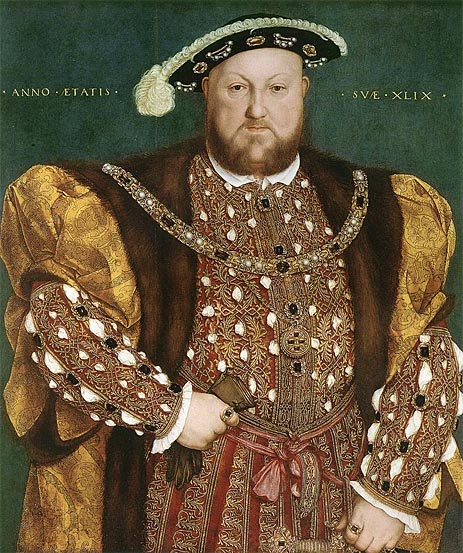
First Things blog has an article entitled in bold: The Man Who Painted the Reformation.  It is a curious judgment upon a first rate painter Hans Holbein the Younger.  He certainly painted what happened in England but it remains to be seen that such could be called a Reformation.  One or both of the Cranach's could lay claim to that title -- not because they were superior to Holdein, though it might be argued such, but because they chronicled a true Reformation.  If Holbein had stayed home (he was born in Augsburg, Germany, within a few years of Luther), he might have more claim to the title.  But his travels to England and his paintings there are more what he is known for than any other of his works.  He was a portrait painter and seemed able to navigate between enemies and friends on the outs.  He left us a marvelous gallery of figures but as far as painting the Reformation -- not so much.

I have always had a problem equating what happened in England under Henry VIII as reform. A few aspects of it might appeal to Lutherans but not much, really.  Just as Henry could agitate against Luther when it might have worked in his favor, so he might claim something from a real Reformation for the same purpose.  To say that Henry was interested in reforming the English Church would be a stretch.  At best, he took over being its head so that he might get his way in the bedroom.  He sacked the monasteries and stole property and lands to dole out as bribes to the landed gentry who were not friendly to his whims.  But reform is a word too noble for what happened in England (and what happened there was not really accomplished in full until Elisabeth (the daughter he never wanted) finished what he began.

Great story, great intrigue, great casting, and great props -- all to be sure -- but if you want a real Reformation, better stick with Germany and Luther.  Which remains the problem with the Church of England.  Great ceremony, great pomp, great history, and great props but not much under the surface.  Welby has presided over another step toward ignominy for a church that deserved better than Henry and, to quote a famous movie line, coulda been a contenda. Instead, Holbein's body of work is more like postcards of a train wreck than a chronicle of a Reformation.  But, then again, Holbein never claimed the title.  It was claimed for him.  Perhaps by those who would not know a real Reformation if it slapped them in the face.


Monday, March 7, 2022

Triumph is the temptation. . .

Sermon for the First Sunday in Lent (C) preached on Sunday, March 6, 2022.

Jesus, full of the Holy Spirit, returned from the Jordan and was led by the Spirit in the wilderness where for forty days He was tempted by the devil. And during those days he did not eat and was hungry.  At least that is how St. Luke records it.  It should not have been that way.  After all, the Baptism of our Lord should have been His moment of glory and triumph.  John the Baptist finally agreed to baptize Jesus after first being hesitant.  The voice from heaven declared Jesus to be the beloved Son of God in whom He is well pleased.  With this voice came the command to listen to Him.  And yet before Jesus had a chance to take a breath, He was led by the Spirit into the wilderness to be tempted by the devil for forty days – all while Jesus was hungry and without others to stand with Him.

Triumph is its own temptation.  Jesus was at the beginning of His public ministry and had been attested to by the Spirit as a dove and the voice of the Father.  But the rush into the wilderness and the temptation that waited for Him there is a stark reminder of the cost of His glory and the price of that triumph.  It is always about the cross.  It always was.

The devil hits Jesus directly at the cross.  You do not have to suffer want or hunger or suffer or pay any price to get what you want.  The devil is a clever one.  He does not put this temptation in his own words but in the very words of God.  The cross can be avoided.  Jesus stands where Eve stood.  Again, in the temptation of Eve it was all about God, all about God’s Word, and all about whether there is an easier path than obedience to God.  In the moment of triumph when creation is complete and all is as God wills, temptation comes to steal away what belongs to the Lord.  The devil saw it work in Eden but he did not see that it would not work with Jesus.

We think our greatest moments of temptation come in defeat, when we are wounded by loss and broken by sorrow.  We presume that the worst temptation is want, the desperation of hearts and desires that long to be filled.  As great as these temptations are, the devil finds a much more willing victim in success.  Heady with our own triumphs, the devil sees an open door through which he can use that success to turn our trust away from the Lord and His cross and onto ourselves, our wants, and our desires.  That is why the glory of our accomplishments must be laid upon our Lord and all our success laid at the feet of Him who gives us everything good and worthy. 

The devil’s works and ways are lies and deception and the greatest lie of all is that we did it our way and the greatest deception is that we are mighty people in charge of our destiny.  The curse against Adam and Eve in the garden was that their very purpose in creation and life would not only extract great cost from them and but also become their great temptation – we did it.  In response to this, you and I begin our baptismal new life with the renouncement of the devil, of the devil’s works, and the devil’s ways.  We do this again when we are confirmed.  Do you renounce the devil, his works, and his ways?  And again when we join the congregation.  It is not the few who speak these words to distance them from the devil, but all of us whose voices become one in saying, “Yes, I renounce him, I renounce them...”

The Lord shows us how this is done.  Not by brave words we speak in the safety of the Lord’s own house but by an appeal to God’s Word and by the acceptance of the cross as the central story of that Word.  Jesus stands in the place of Adam and Eve to change the outcome of the devil’s taunting and tempting lies.  He does not simply show us how to resist but resists for us, standing in our place in flesh and blood, weak before the want of desire, and alone.  As mere flesh, Jesus stands and answers the devil’s lies with the truth that cannot lie, the Word of the Lord that endures forever.  And Jesus shows us that it is not bread for our bodies we need or angels to do our bidding or an easy path to glory.  All we need is the cross and the Savior who is not only strong enough to say no to the devil but yes to the Father’s saving will.  

Adam and Eve fell by eating what was forbidden and Christ stands firm by hunger for the only thing that counts – the Word of God and the cross which is the center of that Word and truth.  Jesus does not simply show us what to say or how to be strong in the face of the devil’s wiles.  Jesus covers us with His own obedient righteousness and with the clear vision of what is true and what is false.  

Our Savior went into the wilderness on our behalf.  He did so as part of His atoning work.  But that does not mean that we learn nothing from what our Lord said and did to undermine the devil’s works and ways.  Jesus is always teaching.  And here He teaches us not to do what we did but to stand in Christ so that Christ may do for us what He already did when He stood alone to meet the devil’s works and ways.

When Jesus taught us to pray, He taught us to say “Lead us not into temptation.”  Of course God does not tempt anyone to evil but faith is tested by every temptation. This is because in every temptation is not simply a test of our wills against the devil’s.  It is a test against trusting in anything but the cross – the world, our flesh, yes, but even more the false idea that we are strong and that our triumphs are examples of how strong we are.  It was in His greatest weakness that Christ won the greatest victory.  From a hungry man alone in the wilderness and hungry comes the triumph of God over the devil’s works and ways.  From a mortal man alone on the cross, Christ’s triumph offered a world the hope of redemption accomplished in His blood.  From simple water with God’s Word come the water of life and the power of the cross.  From ordinary bread and wine come the real food that satisfies hunger and the real drink that quenches thirst – the body and blood of Jesus.

Jesus was alone in temptation but you are not.  You have the Word of God to instruct you when you waver or do not know the right way but you also have the Spirit who lives in you working in you that which is pleasing in God’s sight.  And you have the cross marked upon you in your baptism and through which sin dies and you live as the new person created in Christ Jesus to say no to the devil and yes to God.

St. Paul was afflicted with some sort of thorn in the flesh, a weakness he thought was inhibiting what he could do for God.  It turned out that it was not a weakness at all but that mark to point him to the strength he had in Jesus and to the grace sufficient for his every need.  Temptation is designed for one purpose only – to wrest us from God’s hand with evil.  Testing is designed for a completely other purpose – to drive us into the arms of our Savior in whom we are strong and in whom we are forgiven.  We fear our worst moments are when we are the weakest before the devil but he knows that triumph is when we are most vulnerable.  But Christ has answer both.  In Christ, under the shadow of the cross, no temptation, no weakness, no triumph, no strength, and no failure can steal the kingdom from us.  The message is this.  Remain in Christ, in His Word and within the fellowship of His Table and there is strength in trial and forgiveness to restore us when we fall.  Amen.

What's changed?

Although most of us think of MASH the TV series when we think of a field hospital, the Mobile Army Surgical Hospital, or MASH, concept was first deployed by the U.S. Army during World War II. They were initially called Auxiliary Surgical Groups and were an attempt to move surgical care closer to wounded soldiers than the fixed-in-place hospital further from the battlefield or those permanent hospitals accessible by air and located on more established bases.  We still see this today.  The Hospital at Ramstein Air Base is often in the news as it remains the largest US installation in Germany (perhaps in Europe!) and its facilities are both established and excellent.  Wounded military personnel who have received emergency medical treatment at the forward hospitals are evacuated from the fighting zone were and are often sent to Ramstein -- at least those who are expected to survive.

Field hospitals -- MASH units -- are wonderful places of healing and horror.  The job of those in triage is to separates the wounded into categories -- those who must receive the most urgent care, those who can wait, and those who will not survive.   As I recall from MASH the TV series, it is a terrible burden and creates a heart wrenching environment with great success and painful failures.  It is the place where death is all too common and where success may still mean disability for the patient who survives.  It smells like death -- even among the survivors -- and the sights are terrible to behold.  But it works.

The field hospitals and MASH units are by nature temporary places.  Like the TV series, there are down times when nothing happens and there are moments in which too much is happening.  It is the nature of the place.  The patients there are all temporary -- the dying are comforted in their last moments and the survivors are patched up as best can be and then sent elsewhere down the line.   Some don’t make it.  Those who do carry their wounds with them long after healing has finished.

Such is the nature of the Church.  We are not the fine permanent hospitals who finish the healing before sending the folks home to their leisure as much as we are the MASH units and field hospitals planted right in the midst of the battlefield.  The folks who walk through our doors come right from the fight.  We tend to their wounds with the healing balm of God's Word and Sacraments.  As soon as they are able, they are passed along and back into the fight.  Some will not make it.  They will be lost to the battles of faith and life, distracted by the cares and joys of the moment, having surrendered the eternal for the present.  We do the best we can.  The miracle is not in us but in the means of grace.  We meet most folks in their worst moments of life (and some, in their best).  They are the lost seeking their way, the guilty seeking forgiveness, the erring not even aware of their wrongs, the living in love with all the wrong things, and the dying without hope.  All we have to give them is Christ.  And Christ is enough.

Original sin is the common wound of us all and actual sin tears at this wound until its pain threatens life itself.  It is painful and it is desperate because sin is death without the healing grace of Christ to restore the broken.  It is no wonder that our people are not calm and reasonable and easy to deal with.  Those who know their wounds are fixated upon them and beg for another picture stronger than the mortal pain they know.  Those who do not know their wounds will find themselves shocked by the diagnosis and the prognosis.  But they also will be surprised by the promise of an answer to sin in the bloody death of another and answer to death in the grave of Him who died for us all and rose to plant us in hope.  

Your pastor carries your wounds in him -- not because He is the Savior but because He serves the Savior with the Savior's love and mercy.  It is easy for the pastor to despair for all the wounded and wounds he meets and it is easy for his family to wrestle with that same kind of despair -- sharing their husband and father with a huge and different family in addition to theirs.  But it works.  It has worked.  We do not need to reinvent the Church but to be faithful.  We do not need to make pretty what cannot or to put a good face upon death.  We need to be faithful in the Word and Sacraments of our gracious God. The Church needs to do the same thing.  We cannot turn away the wounded or broken because serving them is messy or costly but neither can we get down into the muck of their sin and become like them -- to do so would be to surrender our hope and to render ourselves worthless to the task of saving some.  Neither can we afford to be idealistic in presuming that we are the healers or that everyone can be saved.  Grace and mercy are offered to all and some will inevitably reject them as those once rejected Christ.  It is the painful tension of our calling.  But God is at work in our midst -- saving and rescuing through the Gospel proclaimed and by the power of the Spirit turning deathless ends into endless futures.  

In the midst of all this mess, pain, and death, God reveals beauty.  The music of angels sung from our own lips, the vision of the eternal feast right here in the present Eucharist, the hope spoken right here in the face of death, and the arts which deliver with noble purpose to ear, eye, taste, and smell the glimpse of heaven.  The vision is not beauty to replace reality but beauty right here in the terrible reality of a world gone astray, virtue surrendered to vice, selfishness replacing sacrifice, and self-interest to govern everything about life.  My friends, every church is a field hospital or MASH unit, planted by God in the midst of the battlefield, equipped with the healing balm of the Gospel, and able to save many.  Let us not rejoice in what we cannot do but what we are able to do with God's own resources.  And let us pass them on and patch them up so that they may enter the fray again and fight the good fight of faith until they wear the victor's crown of glory.   Good Lent, my friends!


Sunday, March 6, 2022

Temptation thoughts. . .

Today we hear how our Lord was tempted as we are but remained faithful.  It is anything but a morality lesson and has everything to do with the sufficiency of God, working through His Word, to keep us strong, secure within the grasp of His grace, and faithful.  Jesus does not face the devil on His own, as some sort of superhuman heroic figure with powers beyond the ordinary -- though He could!  He faces them as Man for men, in the strength of God's Word, secure within the grasp of grace, and faithful.  He does so not to show us how to do the same but to be the obedient for the disobedient, the righteous for the unrighteous, and the strong for the weak.  He does so to show that original sin is real, that no one born of woman is immune from the taunts, temptations, and trials of desire -- though He, the God incarnate, is able to withstand what leaves us broken.  He stands up not simply to the devil and his twisted truths become lies but to the ordinary desires of the human heart to choose what is easy over what costs us something, what you do on your own over what you do in the strength of God's Word, and what you see with eyes in your head over what you see by faith.  And Jesus does what we cannot do -- again, not to prove Himself better than us or to teach us how to do what He does but as Man for men, in our place before the Law and before temptation.

It also tells us something of how the devil operates.  His appeal is not simply to the power of our desire but to the ability of our fallen hearts and minds to use God's Word to justify our sin and excuse it.  The devil taunts us not only with what we want (the easy, the comfortable, and the least costly path) but what, in a twisted view of Scripture, is what God wants.  In this, nothing has changed from Eden.  Except that God has given us the promise of His Word that we do not need to stand alone in the face of the devil's lies and perversion.  No temptation has seized you except what is common to man. And God is faithful; He will not let you be tempted beyond what you can bear. But when you are tempted, He will also provide an escape, so that you can stand up under it.  So says St. Paul to the Corinthians.  And with those words we are chastened.  Our lot in life is not extraordinarily more difficult or dangerous.  Temptation is common to all men.  We are not suffering more or facing more than what all face -- though not all at the same time nor is our suffering apparent to all.  But God has placed limits.  Like with Job, God has placed limits to what the devil can do to tempt us.  As comforting as that is, it is even more comforting to know that God has placed an escape -- a means to answer the devil's taunts and temptation's allure.  That is His Word.

Luther admitted, “My own worst enemy is closest to me, I am carrying him in my breast. Therefore, if God does not help me with His Holy Spirit, I am lost. I cannot govern myself for a solitary hour.”  Luther had a profound sense of the devil, of temptation, of his weakness, and of God's strength.  Perhaps nothing distances us more from Luther than our presumption that the devil is more myth than reality, symbol over substance, and legend than a regular and daily part of our lives.  Not for Luther.  Luther scholar Heiko A. Oberman once wrote, “if I were to cut out the pages in the Weimar edition of Luther’s works in which he mentions the Devil more than twice, I would be left with perhaps two and a half volumes.”  For us it is no luxury to live with God's Word a stranger and His voice unfamiliar because we do not take as seriously as the saints before how much the devil is at work against us.  For if we did, we would avail ourselves of His Word and truth as necessity.

Therefore Satan here attacks Adam and Eve in this way to deprive them of the Word and to make them believe his lie after they have lost the Word and their trust in God. Is it a wonder that when this happens, man later on becomes proud, that he is a scorner of God and of men, that he becomes an adulterer or a murderer? Truly, therefore, this temptation is the sum of all temptations; it brings with it the overthrow or the violation of the entire Decalogue. Unbelief is the source of all sins; when Satan brought about this unbelief by driving out or corrupting the Word, the rest was easy for him. . . . The chief temptation was to listen to another word and to depart from the one which God had previously spoken. (Luther)

That well describes our dilemma.  We listen to every word but God's and reject God's Word while accepted feelings as the most profound truth of all.  And the devil laughs.  But God has not abandoned us.  His Word and truth remain and His Spirit works in and through them so what St. Paul promised will not be set aside.  God's Word is not simply our refuge but our escape.

Saturday, March 5, 2022

The story of devotion. . .

I have chronicled here before the story of the devotion of our organist, choir director, and finally, cantor, Rocky Craft.  His 22 years of service to the parish I serve has proven the impact a parish musician can make on the life, integrity, and fruitfulness of a congregation.  He came among us when we had a broken down Rodgers electronic and small choir.  He retired having been the guiding force behind two pipe organs (65 ranks in the main sanctuary and 11 ranks in the chapel), a large and accomplished choir, an established music series with well attended concerts, several bell and chime choirs, and the love and affection of all our people.

When Cantor Emeritus Craft retired in 2019, we had commissioned an anthem from Benjamin Culli, a wonderful and very easy composer to work with.  It was a wonderful text and the anthem was more than we could have hoped.  It has become one of our favorites.  Concordia Publishing House published this anthem later and then now it is featured on their blog.  You can read the story from composer Culli (himself a parish musician!) here.  You can listen to the CPH performance choir with their rendition below.  But my personal favorite was its premiere at Grace Lutheran Church to the surprise of our Cantor and with our greatest joy and gratitude from the parish he served so well.  That Facebook video is at the bottom of the page.  God bless you, Rocky!


Friday, March 4, 2022

A visual clue. . .

All around us Christians are being drawn into the immanent agendas of everything from ecology and climate change to technological aides to a longer life.  It is as if Christians have forgotten the journey, have lost track of the path.  Liturgically it is the tie between the baptismal beginning and the funeral that ends with its own acknowledgement of that baptism and points beyond to an eternal future.  What was once there liturgically was also there architecturally.

What I mean is this?  The font was there both as the instrument of the new beginning and its reminder to the baptized of that new birth of their lost lives by water and the Word.  But just as the font was the beginning, the cemetery out back signaled the end.  The visual clues to this connection were always there but were known and appreciated only sporadically.  And that is a shame.  

The loss of these ties has come for many reasons.  On the one hand, the urbanization and suburbanization of the congregation has left churches without land to connect a cemetery to their building.  In rural areas it was extremely common but in our press for space, cemeteries have become expensive land hogs that few congregations find worth the investment.  On the other hand, burial is a less popular option today than ever before.  Of course, this is due to the cost (average funeral, stone, and burial plot is more expensive than ever) but it is also due to the mobility of families and the lack of a common ancestral home to be the location of burials.  In my own parish, few of the children of our families live locally and fewer of those families were local in the first place.  Cremation and figuring out what to do with the ashes has become normative for our time.  Although Christianity has had its issues with cremation, the cost and attention given to the body cannot be considered good Christian practice either.  So it is hard to deny the urge to cremate but even then the cremation cannot be allowed to avoid the need for a proper place of inurnment to prevent the ashes from being carted about.  That is not Christian either.  Nor is the sentimental favorite of dropping little bits and pieces of a loved one here and there as the cremains are left here and there where the deceased or the family has attachment.

All of this might simply be academic except that the advent of the celebration of life with its attention on the past and the lack of attention given to the proper resting place of the remains have only encouraged this focus on the life lived instead of the life promised in baptism.  It shows up more and more in the funeral services (or, as I detest, celebrations of life) but also in the sermons and homilies from clergy.  It is not uncommon to hear little or no mention of the resurrection of the body and the life everlasting which are the gift of our Risen Savior.  Instead, we are left with a vague notion of a spiritualized existence somewhere out there -- not far from Disney's circle of life idea where the future is some grand reunion with nature and the spirits of all the dead more than the resurrection of the body and the life everlasting IN Christ.

It makes me long for the visual clue of font and cemetery that connects the eye and the mind to what baptism promises and God's fulfillment of the new and everlasting life which is His gift and blessing from the water and the Spirit.  Maybe we need to work more on this re-connection -- especially during Lent.

Thursday, March 3, 2022

Looking at Lent. . .

Instead of giving up silly things for Lent (chocolate, ice cream, kidney beans. . . ), why not give up something of substance?  Give up not going to Church.  Though we think of this in different terms, not going to Church is itself an active habit and not simply a momentary choice.  This Lent, why not give up the old habit of staying at home, sleeping in, or even watching a service online and just go to Church?  You do not develop a taste for worship by absenting yourself and you do not learn to pray by not praying.  Give it six weeks.  Go to Church (and Bible study and Sunday school) for the next six Sundays in a row.  Try hard not to miss for any reason.  If you are not a church going Christian, start now.  Don't expect fire works but listen, pay attention, hear the voice of God in His Word and come to the altar rail to receive His body and blood.  It may not be fire works but it is fire for the Holy Spirit is at work in those means of grace.  Give up your habit of not attending and start with six Sundays in Lent.  You can do it.  After Lent makes its climax in Palm Sunday and the Passion reading that begins Holy Week, I am sure that you will stay in it for Easter.  Who walks out of the movie before it is over, right?  And I am confident of one more thing.  Give it six weeks and throw in Easter as well and a new habit will be born.  Nurture that good habit and blessings will flow.  Go ahead, you can do this.  Start on Sunday!!!

That is just symbolic. . .

When you don't like incense, it is easy to say that incense is just a symbol and nobody needs to actually use it.  When you don't like singing, it is easy to say that the call to sing or chant is merely symbolic and singing is optional.  When you don't like a weekly Eucharist, it is easy that often is symbolic language and we are free to decide how often we want or need it.  When you don't like something in Scripture, it is always easy to dismiss it by labeling it symbolic and therefore neither literal or real.

The same could be said of the Confessions.  If you don't want to call ordination a sacrament, then you dismiss what the Confessions say as merely symbolic language.  If you don't want to go to private confession, you simply reject what the Confessions say as symbolic language or words rooted in a particular moment in time.  If you don't want to have the Sacrament of the Altar weekly, you simply call the Confessions descriptive instead of prescriptive and then you can do what you want.  I could go on and on. . . Maybe some think I already have!

Fill in the blank.  You get the idea.  If you don't want to, you don't have to.  You can write off what you object to as symbolic or descriptive or theoretical or ideal (as opposed to real).  And then you are free to go ahead and do what seems good and right to you.  Besides there is certainly some example of a theological figure who had the same idea you have and you can appeal to that example for support.  And you can surely find some era in church history in which what you don't like, they did not like either and so you have precedent.  Prooftexting for preference.  What a game.

That is the danger of letting preference rule.  Sure, incense does not matter greatly.  We Lutherans have lived so long without it that it is a foreigner to our shores.  Why bother -- especially when so many do not like it or want it and will fight against it?  But you could say that about so many things.  Fill in the blank.  When preference rules you can write off anything and everything -- even Jesus.  The truth is that we need things we find unpleasant and even offensive to us.  It is not about us.  It is about the Lord.  As I wrote a while ago, if it is not offensive, it is hardly worth believing.  How much danger has been done to the faith by trying to soften its hard edges, make it palatable, make it comprehensible, make it, make it easy...  We are so worried that somebody might ask us to do or accept something we do not like or welcome when the real danger to the faith has always been and will always be to slow casting aside of the things we do not like or welcome or prefer or want...  Eventually, Jesus will have to go as well.


Wednesday, March 2, 2022

That is not love. . .

A while ago on Facebook I posted what I thought was an obvious observation about a family with four very small children, a pregnant wife, and faithful husband who somehow found how to get them all washed up, fed, dressed, and in Church for Christmas Eve, Christmas Day, and the Sunday after Christmas.  I acknowledged it must not have been easy.  Then I showed myself to be an unloving brute by asking what was the excuse of the rest of those who were not in the Lord's House (not for all three or even one of those services!).  I was roundly attacked by some who found my tone unpleasant and my words unloving.

Today our Lord does the most unloving thing of all.  Even more unloving than my post.  He calls us to repentance.  This is Ash Wednesday.  On this most solemn day we acknowledge that we are not the people we should be, that we think we are even, but sinners to the core.  We are not unsaved or unloved but sinners who have been saved by grace bestowed upon us unworthy though we are and loved enough not to be left to the lies and shadows of sin and its death.  Thanks be to God!  God loved us enough to call us to repentance and this He does so in spades on Ash Wednesday.

We wear the ashes as the sign of the death in us because of sin but we wear them in the shape of a cross to show forth God's grace to sinners.  We wear them as outward marks of inward repentance and faith.  We put them on with solemnity and ceremony to show that this repentance is no casual thing but profound and the fruit of the Spirit's working in us.  We own our sin, to be sure, but we also own the consequences of sin (the wages so clearly elucidated by St. Paul).  We also own our helpless condition -- were it not for God's superabundant grace and mercy we would be left without hope.

This day is filled with love -- the love that would dare to call our thoughts, words, and deeds sin!  The love that would dare to speak of sin as an unnatural natural condition that we would suffer even if, by some miracle, we might not add anything of our own to the mountain of sin that separates us from God and from each other.  The love that meets us where we are -- in our world of sin and death in the flesh and blood of our Savior, Jesus Christ.  The love that washes us clean in His own sacrificial blood out poured.  Clothes us in His righteousness -- which we have no claim to except by grace.  The love that fills our empty hearts with His Spirit so that we see, acknowledge, and rejoice in what love has done to us and for us.  The love that brings us again and again to repentance, to confession, and to rejoice in holy absolution -- a people convicted, rescued, and restored.  And the love that urges us to go and sin no more.

The world might find it hard to call this love.  In Christ we learn that it is the truest love there is.  God loves us enough to speak of that which we find unspeakable and to call us to stand bare naked before His Law and then to be covered in a righteousness borrowed from Christ until His righteousness is fully formed in us through sanctification.  

Go to Church.  Go to confession.  Go Ash Wednesday and every Lenten service and Sunday Divine Service.  You will find there the greatest love of all and it will not leave you the same but will transform you.  That is how Lent begins.  Love speaks where fear and shame and self-righteousness will not.  Pray the Holy Spirit to listen and hear His voice well.  Thanks be to God!

Tuesday, March 1, 2022

Listen to Christ. . .

Sermon for the Transfiguration of Our Lord (C) preached on Sunday, February 27, 2022 by the Rev. Daniel M. Ulrich.

    Over the years, going back decades, and probably even centuries, a common statement has become popular with Christians.  This statement can be heard across all denominations, in all kinds of churches, spoken by pastors and people in the pews alike.  They'll say, “The Lord spoke to me and said,” or today you may hear them say, “God’s laid this or that on my heart.”  The idea behind these kinds of statements is that God speaks to His people; and He certainly does that.  God does speak to us.  But these kinds of statements suggest that He speaks to us directly as individuals, on a One on one basis, like our conversations with a friend.  But the Lord hasn’t promised to speak to us in that way.  He never promised to speak to us directly, by a direct revelation.  Instead, He promised to speak to us through His Son; and so it’s best for us to listen to His Son, to listen to Jesus and His Word; just as God commanded on the Mount of Transfiguration.
    Our God isn’t a far off God.  He’s never been a far off God, isolated from His people.  He’s never been silent.  He’s always spoken to His people.  In the days of old, He did this through His prophets.  That’s what the whole Old Testament is, the Lord speaking to His people by His prophets.  And of the greatest of those prophets was Moses.
    The history of Moses' prophetic career began with that burning bush.  As he was tending his father-in-law’s flock, he saw that bush on fire, not burning up, and so he approached it to investigate.  But as he got closer the voice of God called out to him.  
    Now, for some reason today, people think they’d welcome this kind of experience.  They think they’d be overjoyed to hear the voice of God.  They wish for their own burning bush moment.  But that’s never how it plays out in Scripture.  When Moses heard God’s voice, he wasn’t excited about it; he was afraid. He hid his face.  He didn’t want to hear God’s voice.  He didn’t want to see His presence in that burning flame.  And He didn’t want to be God’s prophet.  He made up all kinds of excuses to get out of it: the people wouldn’t believe; they wouldn’t listen to him; and he wasn’t a good speaker either.  But the Lord used Moses to be one of His greatest prophets.  
   After Moses, the Lord continued to send His prophets.  He sent Elijah at the time of King Ahab.  Ahab was one of the most wicked and evil kings of Israel.  He worshiped false gods and led Israel to do the same.  God sent Elijah to confront Ahab with his idolatry and to call the people back to God with repentance.  Elijah heroically stood up to Ahab and all the false prophets of Baal on Mount Carmel.  Over and over and over again God spoke through His prophets.  He wouldn’t turn His back on His people, even when they turned their backs on Him.  He sent His prophets to speak, and every single one foreshadowed the time when God would speak through His Son.  
    Today is Transfiguration Day, and we remember the miraculous events that took place on the Mount of Transfiguration.  Jesus took Peter, James, and John with Him up onto this mountain, and there, Jesus’ divinity was briefly revealed.  Christ’s face was altered.  His clothing became dazzling white, and standing next to Him were Moses and Elijah.  Christ and those two prophets were talking about His upcoming departure, His exodus; they were talking about His death and resurrection; which Moses and Elijah foretold.  And then the cloud of God’s presence appeared and the Father’s voice was heard: “This is my Son, my Chosen One; listen to him!”  And with that, the prophetic age ended and the Messianic age began.    
    It’s significant that Moses and Elijah were there with Jesus at that time.  It’s significant because it pointed to the fact that all of the Old Testament points to Jesus.  But more than that, these two prophets were especially a foreshadowing of the Messianic age, the coming of the Savior.
    Right before Christ’s Transfiguration Jesus asked the disciples about what the crowds were saying about Him.  Who was He?  At that time, some believed Jesus to be the reincarnation of John the Baptist or Elijah.  Others believed Him to be one of the other OT prophets resurrected.  But then Jesus asked the disciples who they believed Him to be.  Peter answered for the group, “[You are] the Christ of God” (Luke 9:20).   Jesus is the Christ, God’s Chosen One, the Anointed One, the One who is the Prophet like Moses.
    At the time of Moses' death, it was said that no prophet had arisen like him who knew the Lord face to face.  But in Christ, that new Prophet had come, not only knowing the Lord face to face, but being the Lord Himself.  God sent John the Baptist to be the last prophet, to do the same work Elijah did, to prepare the people for Christ, to call them back with repentance.  With John’s work finished; with Moses and Elijah standing there with Jesus, the time of the prophets was over.  The Son of God, the Savior is here; and through Him, the Lord speaks to you now.  
    God speaks to you through His Son.  He speaks to you through His Word, the very Word that Christ spoke, the very Word that reveals your Savior to you, the very Word of God Incarnate.  There’s no better Word to listen to than this Word proclaimed in Scripture, this Word visible in His Sacraments.  This Word is for everyone, not just for certain individuals.  The Lord doesn’t hide His Gospel, speaking it to some and not to others.  He speaks to all, so all may hear and believe.  And in this Word He says to you, “I have died for you.  I’ve taken your guilt away.  I paid the price of your sin.  I sacrificed my life on the cross so that you’d have life.  Because of that act of love, you’re free.  You’re free from sin, death, and the devil.  Salvation is yours.  Believe in me.  Trust in me.  Trust in my Father’s grace and mercy; and receive all the blessings of everlasting life that He gives.”
    Can the Lord speak to us directly, as individuals?  I guess He can; He’s God.  He can do whatever He wants to do.  But He’s never promised to do this, and so we shouldn’t be looking for it.  We shouldn’t be looking for a burning bush moment.  We shouldn’t be looking for a Mount of Transfiguration moment.  Instead, we should listen to what He has revealed.  We should listen to His Son, clearly proclaimed in Scripture, clearly proclaimed in the books of the prophets and apostles.  
     It’s interesting to note that Peter, who was there on the Mount of Transfiguration and heard God’s voice directly, it’s interesting that in his second letter he says that we have a more certain word than that miracle; the Word of Scripture.  The certainty of our faith doesn’t come from the voice of God that only we can hear, but from the Word of that God has spoken to all people.  Listen to that Word.  Listen to Christ.  Trust in His Word.  And with faith, receive exactly what His Word gives: forgiveness, life, and salvation.  In Jesus’ name…Amen.  
 

Update on our Concordias. . .

While those charged with the ecclesiastical supervision of Concordia University Wisconsin and Ann Arbor are telling to be patient and let the system work (which did not quite work for Prof. Schulz), another development has unfolded.  I agree that it will undoubtedly take time for this dispute at CUWAA to get resolved (everyone will need to save face in this), the underlying concern was not simply Prof. Schulz or CUWAA but the viability of the whole Concordia system.  Every incident like this, added to the closure of three Concordias in quick succession, only points out how difficult it is to maintain a private university within the current system of higher education in America and how much more difficult it is to do so as a conservative institution tied to a confessional church body.  But, as some have said, the difficult is easy; it is the impossible that takes a little time.  

In that vein, another trumpet has sounded against the Concordias.  Concordia Texas has decided it would like to divorce the Synod but would like to retain enough of a relationship so as not to impede student recruitment or raising funds.  You can read for yourself:

The Concordia University Texas Board of Regents has notified the Lutheran Church – Missouri Synod Board of Directors that it wishes to enter into a conversation by which the CTX Board will be the sole-governing body of the institution and remain in alignment with the LCMS, working together to serve the mission of the church and the university.  We expect to hear from them within a short time, after which a process will be determined, arriving at a final agreement between the LCMS and CTX no later than August 31, 2022.   

The CTX Board is seeking this type of governance and alignment for several reasons:

1 Both higher education and the church are facing changes in the culture and complexity in how they do their work.  Having greater freedom to lead locally and responsively serves both institutions well.

2 The autonomy of the Board is critical as it determines the future for CTX.  The proposed bylaws coming to the 2023 LCMS convention limit that autonomy.

3 In reviewing various models of governance among church-related schools, the Board sees this as an opportunity to govern more locally and lean into its alignment with the LCMS.  

We ask for your prayers that this conversation can lead to an outcome that is beneficial for the church at large.

Again, my point is not to comment on the wisdom or foolishness of the CTX proposal.  On this I have merely opinions and few facts.  What I do wish to point out is that the handwriting has been on the wall for some time.  It is not easy and is, in fact, quite difficult, for any and all of our Concordias to do all of the things we expect of them:

  • Maintain their financial viability without much formal money from the LCMS;
  • Maintain and make viable programs for church worker education for the LCMS;
  • Maintain a faculty of people committed to teach within the LCMS confession;
  • Maintain faithfulness to the doctrine and practice of the LCMS.

All those voices out there who decry what the Concordias have become must admit that what we have today is largely the result of our own neglect as a Synod.  We set high standards for them, give them access to the LCEF, pretty much require their enrollment in the Concordia Plans, and insist that they recruit and train church workers for the LCMS as their core mission.  At the same time, we do not give them cash except to give them a mailing list and we expect them to continue to flourish at a time when every small college is struggling.  In the midst of all of this, we demand that they maintain faithfully  LCMS doctrine and practice.  None of what we expect or demand is wrong or bad and the high standards we assume for them are not the problem.  The problem is that we no longer know why we have the Concordias.  Only in Seward and on the Ann Arbor campus of CUW are church worker programs more than a token presence.  The college are not and should not be the primary recruiters for these programs but we have saddled them with the majority of that responsibility.  We have our back against the wall financially and cannot cough up much to support the Sems much less the colleges.  So what are our options?

Although I laud the efforts of the CUS and the new CUI initiative, I fear that this is too little too late.  All of the Concordias will eventually have to sink or swim on their own with only the prayers and well wishes of Missouri to support them.  Perhaps we could be left with one of them, Seward being the best alternative, to maintain a Hillsdale style college in which church worker preparation is central and their integration into Missouri is much stronger than a legacy or access to a credit line.  Even then, there is no promise of success for such a school.  Unless..... we pastors and the parishes of the LCMS send our sons and daughters there to train for the appropriate church work programs our Synod needs and wants AND foots more of the bill.  In any case, what CTX wants is what Mequon/Ann Arbor and Irvine and River Forest and St. Paul will probably end up with anyhow.  If you want to argue with me, feel free but unless you are willing to come up with a train load of students and a truck load of cash, it is all simply words.  But do not simply blame the Concordias and their Presidents.  We must admit as a church body that we have not served them well either.  We put them in a terrible position and now we all should admit this and begin with repentance.