Monday, September 14, 2020

Holy Cross Day. . .

Holy Cross Day Quotes I found on my computer:

"Question: What does this mean: “Thy rod and Thy staff, they have comforted me” (Psalm 23:4)? Answer: The rod is the Cross, afflictions and the staff is the Jesus Prayer. The rod is the active part of virtue, and the staff is the noetic part."  St. Ambrose of Optina (+1891)

"The Cross, is wood which lifts us up and makes us great ... The Cross uprooted us from the depths of evil and elevated us to the summit of virtue"  St John Chrysostom

"The holy Fathers relate that when the thief of the Gospel, too, came to the gates of the Kingdom, the Archangel with the flaming sword wanted to chase him away, but he showed him the Cross. Immediately the fire-bearing Archangel himself withdrew and permitted the thief to enter. Understand here not the wooden cross. But which? The Cross in which the chief Apostle Paul boasts and concerning which he writes, 'I bear in my body the marks of the Lord Jesus (Gal. 6:17)."  St. Anatoly of Optina, Collection of Letters to Nuns

"Did you see how baptism is a cross? Learn that even Christ called baptism the cross when He used the name of baptism interchangeably [with that of the cross]. He called your baptism a cross. 'I call my baptism a cross,' he says. Where does He say this? 'I have a baptism to be baptized with, of which you do not know.' And how is it clear that He is speaking of the cross? The sons of Zebedee came up to Him - rather, the mother of the sons of Zebedee, saying 'Command that these my two sons may sit, one at thy right and and one at thy left hand, in thy kingdom.' A mother's request, even if it was an inconsiderate one! How then did Christ answer? 'Can you drink of the cup of which I am about to drink, and be baptized with the baptism with which I am baptized?' You see that He called the cross a baptism."  St. John Chrysostom, Baptismal Instructions

"Do not seek the perfection of the law in human virtues, for it is not found perfect in them. Its perfection is hidden in the Cross of Christ."  St. Hesychius the Priest

"Far be it for me to glory, save in the cross of our Lord Jesus Christ" (Gal. 6:14). Truly this symbol is thought despicable; but it is so in the world's reckoning, and among men; in Heaven and among the faithful it is the highest glory. Poverty too is despicable, but it is our boast; and to be cheaply thought of by the public is a matter of laughter to them, but we are elated by it. So too is the Cross our boast. He does not say, `I boast not,' nor, `I will not boast,' but, `Far be it from me that I should,' as if he abominated it as absurd, and invoked the aid of God in order to his success therein. And what is the boast of the Cross? That Christ for my sake took on Him the form of a slave, and bore His sufferings for me the slave, the enemy, the unfeeling one; yea, He so loved me as to give Himself up to a curse for me. What can be comparable to this?"  St. John Chrysostom, Homilies on Galations

"Glory, O Lord, to the power of Thy Cross, which never fails! When the enemy oppresses me with a sinful thought or feeling, and I, lacking freedom in my heart, make the sign of the Cross several times with faith, suddenly my sin falls away from me, the compulsion vanishes, and I find myself free… For the faithful the Cross is a mighty power which delivers from all evils, from the malice of the invisible foe."  St. John of Kronstadt

"Many indeed are the wondrous happenings of that time: God hanging from a Cross, the sun made dark, and again flaming out; for it was fitting that creation should mourn with its Creator. The Temple veil rent, blood and water flowing from His side: the one as from a man, the other as from What was above man; the earth was shaken, the rocks shattered because of the Rock; the dead risen to bear witness of the final and universal resurrection of the dead. The happenings at the Sepulchre, and after the Sepulchre, who can fittingly recount them? Yet not one of them can be compared to the miracle of my salvation. A few drops of Blood renew the whole world, and do for all men what the rennet does for milk: joining us and binding us together."  St. Gregory the Theologian

 "The Most High planted in the middle of Paradise The thrice blessed wood, the gift of life for us, In order that, in approaching it, Adam might find eternal and immortal life, But he did not strive earnestly to know this life, And he failed to attain it, and revealed death. However, the robber, seeing how the plant in Eden Had been beautifully transplanted in Golgotha, Recognized the life in it and said to himself: `This is what my father lost formerly In Paradise.'"
St Romanos the Melodist - On the Adoration at the Cross

"The cross is the door to mysteries. Through this door the intellect makes entrance in to the knowledge of heavenly mysteries. The knowledge of the cross is concealed in the sufferings of the cross. And the more our participation in its sufferings, the greater the perception we gain through the cross. For, as the Apostle says, `As the sufferings of Christ abound in us, so our consolation also aboundeth by Christ." The Ascetical Homilies of St. Isaac of Syria

"The one who knows God will follow the Lord's footsteps, bearing the cross of the Saviour. It is said, "The world is crucified to him and he to the world." The Lord says, "He who loses his life will save it." We can "lose our lives" in one of two ways. First, we can risk our lives just as the Lord did for us. Secondly, we can separate our lives from the customary things of this world. Bearing the cross means to separate our souls from the delights and pleasures of this life. If you do this, you will find your life again - resting in the hope of what is to come. Dying to ourselves means being content with the necessities of life. When we want more that these necessities it is easy to sin."  St. Clement of Alexandria in The One Who knows God

"What does it mean to take up your cross? I means the willing acceptance, at the hand of Providence, of every means of healing, bitter though it may be, that is offered. Do great catastrophies fall on you? Be obedient to God's will, as Noah was. Is sacrifice demanded of you? Give yourself into God's hands with the same faith as Abram had when he went to sacrifice his son. Is your property ruined? Do your children die suddenly? Suffer it all with patience, cleaving to God in your heart, as Job did. Do your friends forsake you, and you find yourself surrounded by enemies? Bear it all without grumbling, and with faith that God's help is at hand, as the apostles did."  St. Nikolai Velimirovich, Homilies, Vol. 1

"When the first creature was shut out from Paradise, An order was given to the Cherubim to guard the road; But take My cross On your shoulders, and thus go into Eden with haste. If the sword of the Cherubim did not see you wearing the title rights of the inscription, The sword of flame which stands guard would consume you But, taking the inscription of My cross, robber, Walk up to the Cherubim, And they will know the symbol of life and they will give into your hands The power to open and to lead My friends Into Paradise."  The Kontakia of St. Romanos, On the Adoration at the Cross

"Why do we honor the Cross with such reverence that we make mention of its power in our prayers after asking for the intercession of the Mother of God and the Heavenly Powers, before asking for that of the Saints, and sometimes even before asking for that of the Heavenly Powers? Because after the Saviour's sufferings, the Cross became the sign of the Son of Man, that is, the Cross signifies the Lord Himself, incarnate and suffering for our salvation."  St. John of Kronstadt, My Life in Christ

"While man can scarcely keep what belongs to him by nature, Christ gives the grace of sonship through the Cross."  Saint Kosmas Aitolos +1779

"We have been born anew through baptism and restored by the tree of the cross. The passion of the Lord effects the resurrection of our race and its readiness by grace to paradise whence it had fallen by sin freely willed. When Christ provided for us the refuge of his cross, the Lord destroyed the sting of death which was reigning over us."  St Benedict of Nursia, from "The Rule of the Master" - (Kalamazoo, Michigan: Cistercian Publications, 1977), pp. 95 - 101.


Sunday, September 13, 2020

When we have time. . .

When we are finished dealing with the COVID issues and done sorting out whether wearing masks is Gospel or Law, whether Holy Communion is dangerous, whether singing is a threat, and whether church is essential, then we can get back to preaching the Gospel. . . 

When we are finished redressing old wrongs to benefit people who have suffered but not the wrongs that we are redressing and when we have completed the mission of removing everything that offends from the hearing or sight of people who are offended, then we can get back to preaching the Gospel. . .

When we are finished advocating for every social justice cause, affirming every sexual orientation, celebrating every gender identity, and shaming every cis gendered person for their hegemony and insensitivity, then we can get back to preaching the Gospel. . .

When we are finished giving voice to every oppressed group, giving place to every person and group once denied place, pushing to the head of the line everyone who was once at the end, and opening doors to everyone who faced a closed door, then we can get back to preaching the Gospel. . . 

When we are finished fixing the police or eliminating them, guaranteeing an income to all people, making sure that no one has to do a job they don't like with people they don't like, and keeping everyone from having to deal with things that make them feel uncomfortable, then we can get back to preaching the Gospel. . . 

When we are finished removing every offense from Scripture, updating its language and focus to meet the stringent standards of our current culture of victimhood and offense, and eliminating every purported fact that conflicts with current science, our worldview, or our prejudice free world, then we can get back to preaching the Gospel. . . 

When we are finished eliminating sin as a category, making friends with death (as long it comes on our terms), and setting free the power of desire and self, then we can get back to preaching the Gospel. . .

But, of course, that will never happen.  We will never have time to preach the cross and resurrection as long as there are ills to be confronted and corrected in the world around us.  Even Jesus admitted this.  The poor you will always have with you.  He was certainly not telling us to ignore the needy and those who are oppressed but the Jesus who suffered for our sins and died for our justification and rose to bestow upon us eternal life will certainly not countenance the choice between social justice and the preaching of sin and forgiveness.  Some churches have decided to redefine the Gospel so that doing what they are doing is preaching the Gospel.  It would certainly be easier and more popular.  But it is certainly not being faithful.  Moses and Elijah, the Law and the Prophets, and the Psalms all point to Jesus and how He must suffer, die, rise on the third day, ascend to the right hand of the Father, and how the preaching of forgiveness would begin from Jerusalem and extend to the far reaches of the earth.

No, I am NOT suggesting that we should not be in the business of advocating for the poor and the oppressed.  I am NOT saying that we should ignore those who have been marginalized by the powerful maintaining their power.  I am NOT saying that racism or prejudice or white supremacy or anything else should be given a pass because the worst of it was in the past.  What I am saying is this.  If the Church does not preach sin and repentance, Christ crucified and risen, the gift of the eternal to a people who are in a world passing away, and grace on which to stand before the judgment seat, who will?  We cannot allow ourselves to be distracted from the central message of Jesus Christ.  This is the weakness of modern Protestantism, of liberal Roman Catholicism, and of progressive religion as a whole.  The ills of yesterday and today and the pursuit of a better world and a better life now have become the only agenda and Christ crucified and risen has become an asterisk instead of the central focus of the Church.  A gospel which is only social is no Gospel at all.

Perhaps there was a time, maybe even in the recent past, when it might have been that the churches were more likely to forget the poor and oppressed and remember the cross.  Now is not that time.  The progressives in nearly every church body are pushing ever harder to direct the mission to correcting the ills of the past and of the current day -- even if that means at the expense of the eternal Gospel of Christ crucified and risen.  We may not choose to take sin seriously or to preach repentance but that choice may cost us our legitimacy as the Christian Church.   Luther complained about a church that had ignored the great social ills of the day but he would surely complain today about a church that had forgotten what the Gospel was and is.

Saturday, September 12, 2020

Not really missing it. . .

Several times when I have served as vacancy pastor or filled in for someone who was called away, I have received the elaborate instructions of how they do the liturgy just like the hymnal, except for. . .   Inevitably there is always some variation when it comes to the offering.  Having grown up with the added ordinary of the hymn We Give Thee But Thine Own, I understand that there are little peculiarities when it comes to the offering.  Do the plates start out on the altar or end up there and who it is who hands them to the ushers and receives them from the ushers. . . or, more importantly, how and how long are the offerings lifted up before the altar so that God can see how good and generous we are with our money. . .  Once I was literally asked if I would hold up the offering plates a little higher the next time I served there.  Really?!

Since the beginning of all the COVID-19 changes, we have stopped passing the plates or receiving them.  We had long ago stopped placing them on the altar and put the empty plates as well as the full ones received from the ushers on a small credence table opposite the other credence in the chancel.  For most of the last months the plates have sat at credence tables placed outside the chancel and people simply dropped off their offerings.  Now we have added giving boxes for offerings at four posts throughout the nave.  Even when the day comes and we no longer have to worry about such things, I guess that offering plates will not be as big a deal.  More and more are using online giving and others give monthly instead of weekly and all of this has contributed to me not missing the offering plates.

In the end, I would rather use the several minutes taken up in collecting the offering in other places.  Perhaps if this were done, fewer parishes would have the liturgy truncated simply for the sake of time.  In any case, it takes but a minute or so to prepare the altar and I for one have not missed the presentation of the plates to the ushers or the presentation of the offerings.  Perhaps others will argue with me here but I would be good if it never returned.  What do you think?

Friday, September 11, 2020

The trivializing of vocation. . .

Lutherans and vocation go hand in hand and yet too often the sense of that term vocation is trivialized until it merely becomes a matter of sacrilizing voluntary choices.  Vocation is not simply occupation nor is it merely profession.  Where it had meant only religious calling, vocation has been restored under Lutheran leadership to revolve around the estates of our lives.  You can look to the Table of Duties for some catechetical framework.  Gustav Wingren did a masterful study of Luther on vocation and modern day Lutherans like Gene Veith have also helped to keep the understanding of calling or vocation before us.  Yet we are more and more at risk of losing the real sense of vocation as it devolves into a justification for personal choices.  Nowhere is this more pointed than when it comes to the single life.

Vocations are those things that you do not change.  You are a son or daughter to your parents for as long as they or you live.  You do not choose this. It belongs to you quite apart from any choice on your part.  Likewise, parenting is a vocation not chosen but the responsibility and privilege until you or your children die.  Marriage fits this idea of vocation.  You do not wake up and choose today to be married or not.  This estate belongs to you whether you feel it or not.  In contrast, you may be a nurse or lawyer or janitor and it these are not vocations but occupations.  Work is a vocation but where you work is not.  It is a matter of choice.  It should be guided by a sense of your skills and abilities as well your training but where you work is not strictly your vocation.  

Celibacy is a vocation, a gift, and not simply a choice.  We are to remain chaste until married but this single life is not the same as the celibate life.  Many have tried to elevate the single life to a vocation but this is an attempt to make sacred what is anything but sacred.  The modern idea of the single life is not at all rooted in vow or promise or commitment but just the opposite.  It is the ultimate self-indulgent life.  That does not mean it is necessary filled with lust but it is self-centered and self-absorbed.  The single life is by its very nature unstructured and individualistic.  The single life should be subject to all the other marks of the life of the baptized but here the identity is being fudged.  The single life is chosen not to engage responsibility but to avoid it and yet without the pursuit of the holiness of chastity or abstinence.  

There is a calling either to marriage or to live a chaste and celibate life.  There is no third estate of the chose who choose to be single without giving up any desires or indulgences.  This single life is a lie and a deception.  It is an attempt to sanctify the plain attempt to avoid sacrificial relationship and responsibility for anyone but self.  The single who desire marriage and who are looking for a spouse are a different story from those who choose to remain single but still indulge sexual appetite and even have a child but without marriage and without the burden of a spouse.  I do not mean to suggest that those looking for marriage should be lumped in with those who cohabit, who enjoy friendship with benefits, who want career and success, but who also want, from time to time, to enjoy the company of another in more than a friendship.  In fact, I have grown weary of trying to explain to those who live this self-absorbed life how this is not a vocation or a legitimate choice for the Christian.  

I know many singles who desire more than anything to be married.  They deserve our kindness and compassion for the special burden borne by their unfulfilled desire.  Yet this does not include a wink and a nod at casual sexual indulgence on the way to finding that spouse.  I also know many singles who are single by choice, who do not desire the entanglements of marriage, but who have not foregone any of the privileges of marriage simply because they are without a spouse.  They have personal pursuits in which there is simply no room for another -- much less a family.  But we need to be careful about inventing a vocation where this is none.  Individualism and the indulgence of individual desire may require our forgiveness but they do not deserve the covering of legitimacy that vocation gives.

Thursday, September 10, 2020

The quest for order. . .

The search for order is as old as man.  We want to think that there is an order to things, a rationale, and a reason for everything.  We want to believe that religion exists to provide this order.  The great temptation over the years has been to corrupt the Biblical faith with reason and an order imposed upon the Scriptures -- all to satisfy our want and, perhaps, need for things to be orderly.

We might have thought that St. Paul felt this way with his call for things to be done decently and in good order.  I am pretty sure that as much as St. Paul felt the same pull for things to be neat and tidy, there is a limit to what might satisfy this desire.  Surely certain things are orderly from God's perspective but the creature is not the equal of the Creator and His ways are far above ours, His reason and understanding beyond ours, and His power makes us even smaller in comparison.  But from our perspective, the order which is the object of our desire is hidden in the brokenness of sin and beyond our apprehension.  It is an article of faith.

I am pretty sure that not only do the things of God seem messy to us but the center of God's mighty work of salvation is also messy and unavoidable.  Though our modern age is particularly fond of order and not all that patient in their pursuit of this order, it is not simply a modern problem.  Yet it cannot be denied that this order which is our desire is even more distant from the modern era -- due not simply to our distance from God and the things of God but because creation itself is moving to decay and chaos as the results of sin's undoing of God work.

There was once a program on TV about life after man, a look at how the cities and accomplishments of man might fare if man disappeared.  It showed how nature might reclaim man's glory and leave in ruins all our greatest dreams.  There was a time when we presumed the triumph of our intellect and will, when we believed the idea that we were in charge of our destiny.  The more recent events of COVID 19 and the protests have exposed the lie underneath all of this.  Yet our will and desire to rewrite history to fit our prejudices.  The once common myth of human progress has been stalled by the current fascination with the redoing the past but when we have tired of all of this we will undoubtedly take up again our desire to manufacture an orderly narrative of the human story and God's creation.  Though there are politics and people intent on slowing the pursuit of the progressive vision, it can only be delayed and seems it cannot be undone. Our lives, we presume, will be better if we are able to finally master the mess that is life we still turn to religion as an instrument of our pursuit of order.  We will manage what people think and say and do to make them conform and behave.

From the Garden of Eden and the fall, man had worked to try and dress up the story and the fig leaf represents the conviction of sinful man that if it cannot be fixed it can still be managed.  There were no weeds in Eden but man has been dividing the world into wheat and weeds ever since.  The command of God was to have "dominion" and there is little doubt that man has defined this as the pursuit of order in the chaos of sin's wake.  Look no more to the neat rows of tombstones in cemeteries to show our belief that even death can be organized.  "Ashes to ashes, dust to dust" is not simply the circle of life from man's beginning to his end but has been turned into the idea that being organic is itself a kind of order.  We cannot eliminate death but we can try to order our lives around it in such a way that it appears we have organized and tamed it.  But our lives are a mess and even the redemption of God does not appeal to our sense of order or reason but to faith that trusts in what eyes cannot see and mind cannot imagine.

Lutheranism is a faith willing to live with paradoxes that spoil our order and beg our faith.  We live with seeming Biblical contradictions, without a systematic theology that organizes the chaos of God, and without a real need or urgency to solve the riddles that have preoccupied Christianity since the beginning.  Why some and not others may drive the Calvinist to find order in predestination or Rome to find cover under the borders of the earthly papal kingdom but Lutherans live with the tensions between promise and rejection, trust and disappointment, what can be known and what remains hidden.  The mystery of God is so clear that it can be known by the child but so deep and dark that it confounds the wisdom of the mightiest.  It is the messiness of a world in which faith lives and reason is its servant and not its master.  We are not the masters of order but the victims of chaos -- the chaos of death.

Living in the shadow of COVID 19 and violence all over the world, we should know better.  Our pursuit of order is our vain pursuit of power -- thinking God and the things of God can be controlled or managed.  But we cannot.  The goal is an illusion created by sin and fed by our pride.  We can know clearly only what God has revealed clearly in His Son and this saving will and purpose we apprehend not by sight but by faith.  Is it enough?  Well, that is the eternal question of faith.  Is it enough. 

Wednesday, September 9, 2020

Like a little child. . .

Sermon preached on Pentecost 14, Proper 18A, on Sunday, September 6, 2020.

     When I was a child in my parents’ home, I heard it over and over again.  “Grow up.”  It was usually accompanied by the admonition to stop acting like a baby or a little child.  Parents are forever telling their children to grow up and stop acting like a child. Sometimes we say it so often, we forget how it sounds.  What we mean, of course, is that we want our children to accept responsibility, to become accountable, and to be mature.  At the same time we tell them to grow up and stop acting like a baby, however, we warm them not to get too big for their britches.  We also remind them all the time that they are still children and not yet adults.  Is it no wonder our children are confused?

    Who wades into this whole thing but Jesus.  He calls a child to Himself and says “Become like this child or you will never enter the Kingdom of God.”  Then Jesus ups the ante a bit and says that a humble child is the greatest in the Kingdom of God.  Then Jesus hits the jackpot by saying that whoever causes one of these little children to sin would be better off drowning himself in the depths of the sea.  What does this mean?  Surely Jesus wants us to grow up and not be a child, right?

    To become like a little child is not to be childish.  St. Paul is clear here.  He was a child and when he grew up he put away his childish ways.  St. Peter urges us not to be infants in our thinking but to grow up into Christ who is our head.  No, the point of Jesus is not to be childish.  The Lord is not glorifying immaturity or suggesting that we should avoid becoming Christian men and women.  But when it comes to faith, there is no better example than that of the child.  Here is the point that we struggle with all the time.  We think faith means understanding God but it really means trusting Him – trusting Him when the mind cannot comprehend His ways and the eyes cannot see Him at work.  That is the realm of the child and this is where the child teaches the adult.

    A childlike faith is implicitly believes the Lord, is captive to the Word and promises of God, and depends not upon understanding but trusting God’s gracious will and ways.  To be a child of God and to live as a child of God means to live by faith, trusting in the Lord at all times but especially when tempted to systematize God or organize Him or define Him or understand Him.  As a child is utterly dependent upon the words and promises of the parent, so are we, as children of God, utterly dependent upon God’s Word and promises.  Children are not consulted nor must they give their consent for the ways of the family and neither does God consult with us nor does He await our approval or agreement.  Such faith may sound easy but if it were easy, we would still be in Eden’s garden.  Few of us are content to be childlike and most of us desire to be known and treated as equals.  It is the path of humanity and it is the way sinful humanity has addressed God.

    Our first and greatest temptation has always been to pull ourselves up to God, to become His equals, and to presume that God is somehow as dependent upon us as we are dependent upon Him.  This is the most childish thing of all.  The path of faith is to be childlike, to be content to live in utter dependence upon God’s grace and mercy and to live this out trusting in the Lord at all times and for all things.  The childlike lives by his daily instruction in the Word of God.  But we are tempted to treat the Word of God like the instructions that come with something we must assemble.  We only look at the directions when we run into problems and we only turn to God when our own efforts fail.  We continue to act childish when God has called us to be childlike.

    The cross was not given to us so that we might comprehend the unfathomable love of God but so that we might see that love displayed in unmistakable terms, and, by the Holy Spirit, trust that in this cross all our redemption is made.  The Law was not given to us so that we might learn its wisdom and agree to its holiness but to protect us in the chaos of a world at odds with God our Creator, to direct us to God our Redeemer when the bite of sin and the stain of its guilt leave us wounded, and to show us how then those who belong to the Lord should live.  

    Being a child of God is not something we do but what God does.  He does not ask of us great intellect or solemn consent but a childlike heart of faith, trusting in the Lord to do what He has said and promised.  In this way maturity is not independence or presumption but humility and faith, trusting in what Jesus has done to make us His own and to keep His own in His kingdom forevermore.  This is not a path of our decision but of His work, the Holy Spirit cutting through our childish arrogance to teach us this humility of faith and leading us from our old childish haunts of sin and evil into the light of life in Christ.

    In the days when Jesus was born of Mary and walked upon the earth, children were not that highly valued.  Rather, the aged were esteemed as the wise and gray hair was a mark of glory.  That is not how it is today.  In our culture we glorify youth and not just youth but childishness.  We hide behind the door of our own willfulness and we think that we can impress God by our great knowledge or amuse God with our wit or awe God with our accomplishments.  Yet God, in His mercy, is not offended but loves us still and in His mercy, and saves us before we even want Him to be our Savior.  Christ carries the burden of all our sins upon His shoulders, dies in our place the death we should have died, and rose to bestow upon us the new and everlasting life we do not deserve.  This He does not so we might get Him or understand Him but in love, waiting for hearts that would trust what He has accomplished.

    To live out this childlike faith is to learn to rejoice in what God has done for us, to learn to love others as He has loved us, to forgive others as we have been forgiven, and to speak of His salvation so that those who have not heard might hear and believe.  To live out this childlike faith is to live so that we may learn to hate our sin and love what is good and right and revealed in God’s Law.  To live out this childlike faith is to live not in the gray areas where darkness and death hide but in the light of Christ where life and hope reside.

    To live this childlike life is to acknowledge our sin and our great need and to respond to what God has done with gratitude and thanksgiving.  To live this childlike life out is to struggle to abandon the ways of sin and to mark that which tempts and deceives us so that we may be God’s own children and live always under Him in His kingdom here on earth in the Church and in heaven where the righteous shine like stars.

    Within this childlike life, there is no competition for greatness, no disdain for those who are weaker, no abandonment of those slow to know of God’s ways, and no callous treatment of those who cannot repay us for our kindness.  Children are valued not for their innocence or for their potential or for their love.  They are valued simply because they are children.  God values us not for our innocence or what we might become or even for our great love.  Instead, He loves us in spite of all that is lacking in us and delivers us from sin and its death through His Son.  Because He did not despise the childish or foolish, we love and protect and teach our children well to know the Lord and to walk in His ways.  As a child imitates His parents on earth, so do we imitate our heavenly Father as we grow up into Christ, our head.

    We live in a culture of sin in which the childish are lauded and the holy are ridiculed.  We live in a culture of sin in which the life of a child is considered cheap enough to kill with the whim and the fragility of old age is considered a burden too great for us to love and care for.  We live in a culture of sin in which children are considered toys or accessories to be purchased when we desire them and to be ignored when we have tired of them.  But thankfully God is not us.  He loves and forgives us, whom He has fearfully and wonderfully made, and rescues us from ourselves to be His forever.  He does not count the cost of our redemption too great or the cost of loving us to much but willingly becomes our Savior.  He treats us not as toys or distractions but as His greatest treasures and yet we can do nothing for Him.  No, indeed.  Unless you become like a little child in faith, you will never enter the Kingdom of God and unless you confess in humility the great limitations of your sinfulness, you will never know the greatness of the Lord’s love for you.  Because you know both, see that you do not despise the little ones but love them as He has loved you.  Amen.

A Catholic University?

I have a great number of friends with degrees from Notre Dame so I tread on thin ice by singling them out.  Yet the great question faced by churches with universities is how to maintain them as schools of the Church.  We Lutherans are not immune from the tensions faced on campuses that are associated not simply with the faith but with a specific confession or tradition. 

The ELCA schools are legacy schools and therefore make no attempt to live within the parameters of Lutheranism -- except to follow the ELCA and its leadership in the fields of gender and sexual attraction.  There is no daylight between the ELCA and its social positions and the legacy schools and their own social justice stances.  But that is pretty much expected.  A legacy school simply means that your relatives attended there and they have access to the deep pockets of their alumni and church membership when fund raising.

The LCMS has always maintained a much closer relationship between its schools and the confession of the church.  That has not been without problems as some schools itched to get out from under the burden of a stodgy Midwestern Lutheran Synod and it has not been without problems as the student population swelled with anyone but Lutheran students.  So far we have had mixed success but the challenges are mounting and the difficulties increasing.

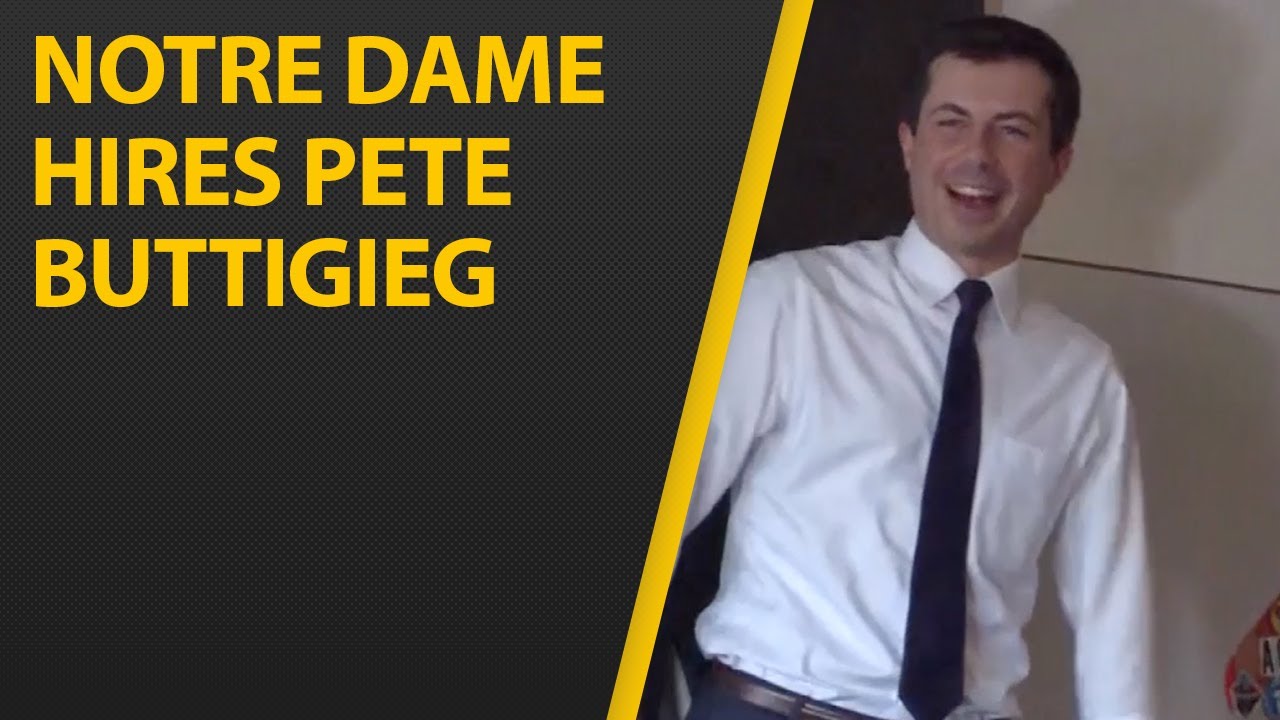
Rome has tried to maintain the lie that there were Catholic Universities.  Sure, there may be a few but not all schools with the claim can support it.  We all recall when Governor Mario Cuomo received accolades from Notre Dame while saying he might be personally against abortion but could not impose his morality or religion on others.  Now it seems that the Fighting Irish have taken in a Maltese-American whose dad was once a Jesuit seminarian but who himself has found a home in the Episcopal Church.  Pete Buttigieg always said he was more comfortable with Catholic liturgy than Catholic Theology so maybe he is a good fit for Notre Dame.  This is a school that has steadily drifted to the left under the leadership first of Theodore Hesburgh and now his successors.  It likes to think of itself as a Catholic University but now that means it has a chapel where the mass is said and has a casual relationship with Roman Catholic doctrine.

One can hardly suggest that Notre Dame needs to live on the edge of the Roman Catholic Church to survive.  It has become perhaps the most successful university under the Roman Catholic umbrella with many students, many wannabe students, much money, and great prestige.  So why does ND want to hire Pete Buttigieg?  What does the university gain?  What does it lose?  These are the questions that ought to be asked by those in charge -- not only of the schools that claim their churchs identity but also those who reject it.  The days of the Christian university may be numbered for a variety of reasons.  Surely Notre Dame will survive but as what?  Somebody ought to be asking that question.

Tuesday, September 8, 2020

A Modern Church or a Church to Meet Modernity. . .

There are voices across Christianity insistent upon the need for the Church to be modernized and these voices are sure that failing to modernize will mean the Church will not survive.  There was a time when voices in Rome began to think of how that church might be modernized.  I am not at all sure that Pope John XXIII was as radical as some think and his call for a Council might do and what that Council ended up doing could have been very different things.  But Rome does not have a corner on the market of those who think change or die is the verdict for our age.

Rome's experiment, however, should prove to give us pause.  Several generations later, it appears that the Council was not at all helpful to Rome.  It did not reinvigorate worship but seems to have helped to empty the pews.  It did not strengthen the stature of Rome in the world but helped to diminish its reputation and its power.  It did not improve its outreach to the unchurched and, despite some high profile converts, any growth has come from less developed nations.  In fact, Rome today has either contributed to or unwittingly assisted in the decline of the religious content, culture, and commitment of the West, especially in Europe.

The modernists won in the wake of Vatican II.  They had the ear of the Pope who would be almost single-handedly responsible for implementing what the Council decided and, since that was mostly general, defined what the post-Council church would look like.  The modern church, however, did not impress modernity, at least not in any tangible way.  This ought to warn those who find themselves facing the same press to modernize or die.

Among confessional churches there are those ready to suggest that the symbols of old either need to adjusted or simply ignored in order for them to stem the losses.  Some have already abandoned their confessions and chosen to simply become an echo of what is happening outside the churches.  They have decided that the Biblical ethic of sex and gender has to give way to the cultural move to desire over biology and gender by choice.  They have surrendered the Word of God to reason and have decided that myth, legend, and imagination are hopelessly intertwined with fact and principle.  The Gospel has been detached from the cross and attached to the idea of love that accepts and affirms but dare not judge.

Even those hesitant to enter such a radical course are not sure that simply maintaining the status quo will help.  They would advocate a more selective refresh of the church's message and life.  They would adopt whatever methods will work while attempting to maintain in theory the same confessional stance.  They have built their house of cards on the proposition that style and substance can not only be differentiated but should be kept distinct.  So Lutherans can preach and worship like Evangelicals while Evangelicals may play at trying out a liturgy or two.  Both are equally in search of something that works, that will fill the seats, add to the coffers, and help achieve the illusive dream of success.

A Church that hopes to meet modernity is not the same as a modern church.  At some point in time we must realize this.  Modernity requires a Church fully rooted in the past, anchored to facts and truth, and one that has weathered the storms of change over the years.  Modernity is an idea in search of a rationale.  The Church has more than a rationale, the Church has a Savior who has more than an idea of love but the reality of a love so strong that this love is willing to suffer innocently to redeem the guilty.  I am fully convinced that modernity offers a real challenge to the Church but the Church strong enough to meet that challenge has to be fully rooted and planted in the Word of God that endures forever, in worship that meets the Lord where He has promised to be, and in lives transformed beyond desire to become the new person promised in the waters of baptism.

A Modern Church is stale and stark.  It is a blank canvas on which modernity expects to writes its own revelation.  A Modern Church is built with man as its center and focus.  But modernity needs something more than a mirror.  It needs a canvas on which has been painted the Gospel that has endured challenge and persecution, a canvas that provides evidence of the saints and martyrs who suffered, who endured, and who received their eternal reward.  Modernity needs a truth so large that it cannot be swallowed up in the sacred tenets of the moment or the promise of desire.  Such a Church requires a confession, confessional integrity, confessional theologians, and confessional worship. 

Monday, September 7, 2020

Labor Day thoughts revisited. . .

Remembering what I wrote a while ago. . .

It has become the buzzword.  Got no signal for your smart phone?  First world problem!  Got no organic, free range eggs for your egg white omelet?  First world problem!  Got no dishwasher for your tiny house?  First world problem! We carry around our water bottles oblivious to the environmental impact of all those plastic bottles in the land fill.  We spend all our money on technology and complain about tipping the water who forgot all the substitutions we made on the menu items we ordered.  First world problem!  We are sad when we planned on retiring at 55 only to have to work ten years more before we are free to live off the grid of responsibility.  First world problem!

We complain that we cannot sleep but we spend most of our days staring in the vast emptiness of the internet on cell phones we cannot turn off with ear buds making us slowly but surely deaf while driving our hybrid automobiles as if they were weapons in our hands.  We assume that money is a right and work is an option.  If we must work it is only so that we can play and not because there is anything laudable or honorable about the labor itself.  We put in place rules to prevent our children from learning how to work at all and then we fill them with the idea that they are owed financial remuneration consummate with their idea of their worth when they do seek a job.

There is my rant for Labor Day.  There is something noble and good about work -- even though most of us have forgotten about it.  And I am not referring here to the paycheck.  Work.  It is a gift.  Ask the unemployed or underemployed who would love to work but cannot find a job!  Ask the person who has been told to retire because they made it to a magic age but they just want to keep on working.  Go back to Genesis and ask God about work. We were created for it.

We were created to exercise dominion over all that God made.  Our first sin was wanting to be owner when we were just managers.  We rejected God, we rejected His Word, and we insisted that dominion meant we could do as we pleased.  Look how far that got us.  Even when God had to banish us from Eden, He did not leave us without direction.  Man's labor shall cost him the ached of his back and woman's delight shall come at great pain.  Even their very relationship will require work for it to endure.  Yet the gift of Christ is not to bypass this purpose in creation.  Our Lord redeemed us so that we might take back the labor as our noble work.

Six days shall you labor, says the Lord.  It was not punishment until we rebelled against God's purpose and chose to dominate and exploit rather than exercise dominion over His creation.  Labor is not a means to an end (the paycheck that buys us leisure) but privilege of God's partnership -- and one that did not disappear at the introduction of sin even though it was dramatically transformed.

I expect to work until I die.  I suspect that most of us will whether we expect it or not.  To be sure, we may not last forever at the pinnacle of our success but work is inevitable.  Our homes invite labor just as much as our relationships require it or they will fall apart.  How many times have we not seen someone keel over dead only weeks after retirement supposedly opened up a new tomorrow for them?  Man is defined by his purpose and woman is defined by her purpose and both labor, side by side, to make a house a home, a home a neighborhood, a neighborhood a community, and industry to supply the community.  There is nothing wrong with that.  It is how we were wired by God.  So happy Labor Day to you.  Just as you were designed for work, you were created for worship.  Labor is better gift than gold.  Just don't forget it.

In a world in which we actually have people suggesting a guaranteed annual wage for every citizen is a real and salutary goal, one perhaps prepared by the recent COVID checke we all received, labor continues to be seen in less than favorable terms.  In a world in which protests against injustice steal away the fruits of a lifetime of labor for the small businesses that suffered when these turned into riots, the value of labor is obscured.  In a world in which people presume that you are better off on unemployment than risking anything by venturing out to work, labor has become an enemy of our well-being and not an agent of it.  The bulk of the words above I wrote a very long time ago but little has changed.  There is nothing evil or wrong with work. We were created for work.  So again, happy Labor Day to you all..  If you have a job, give thanks to God.  If you have a job but are looking for a better one, God bless you.  If you have no job but are striving to find one, may the Lord guide your ways.  But if you are sitting at home thinking this world and your fellow men owe you a living, the Scripture for you is if a man will not work, neither shall he eat.  

Saturday, September 5, 2020

Mystery of Faith

The phrase Mystery of Faith undoubted comes down to us from the first Epistle to St. Timothy where St. Paul uses the expression “holding the mystery of faith in a pure conscience” (1 Tm 3:9).  At some point, though no one seems to have a clue when, those words were appropriated into the Words of Institution within the Roman Canon.  Though no Evangelist narrates that Christ spoke all these words, by all accounts they have been in the words of Christ setting apart the Cup for a very long time, indeed.  Yet not without some uneasiness.  St. Thomas Aquinas objected to their placement within the voice of Christ's own word.  Yet they survived over the centuries.  Some have justified their place because of their content and meaning and others suggesting that these words were some of the many Jesus said that were not included in Scripture but told to the apostles.  It would seem to me that both arguments are rather specious and it would be best to omit them from where they are, yet keep the words themselves.

Before the wholesale renovation of the Mass after Vatican II, the words were included in the words of Christ:  “For this is the Chalice of My Blood, of the new and eternal Covenant: the Mystery of faith: which shall be shed for you and for many unto the remission of sins. As often as ye shall do these things, ye shall do them in remembrance of me.”  After the conciliar changes to the liturgy, these words became part of the so-called Memorial Acclamation.  The priest strangely said either Let us proclaim the mystery of faith: to which the most popular response of the people was:  Christ has died, Christ is risen.  Christ will come again. This later became simply:  The Mystery of Faith.  And the people ended up with several choices for response (none of which is as popular as what was).  The celebrant proclaims, as a kind of detached phrase, “The mystery of faith.” And the people may answer with one of three acclamations:

We proclaim your Death, O Lord, and profess your Resurrection, until you come again.

When we eat this Bread and drink this Cup, we proclaim your Death, O Lord, until you come again.

Save us, Savior of the world, for by your Cross and Resurrection you have set us free.


They say imitation is the sincerest form of flattery and the liturgical innovations certainly borrowed from the East in pursuit of what they thought were earlier and purer forms of the rite.  Whatever.  I am not sure there is a neat paper trail to where and how and when this phrase became part of the Western rite.  In any case, however, wherever it is placed, it is still a nice phrase.  From a November 29, 1202, letter of Pope Innocent III we read:
‘Mystery of faith’ is used, because here what is believed differs from what is seen, and what is seen differs from what is believed. For what is seen is the appearance of bread and wine, and what is believed is the reality of the flesh and blood of Christ and the power of unity and love.
It is actually a very concise and clear statement of the hidden mystery that is not apparent to the eye but known and held by faith. While this is certainly true of the Real Presence, seen by the eye as bread and wine (as well as the nose and mouth), faith affirms that it is the Body and Blood of Christ.  It could also refer to baptismal water which is not just water but water with God's Word, doing what that Word says.  But who is to say that the mystery of faith is not also the most central mystery -- the Holy Trinity!  In any case, I like the phrase and wish that we used it more and tried to explain things away less.  By the way, I am also rather fond of the acclamation itself (though others have complained about whether it ever fit where it had been):  Christ has died.  Christ is risen.  Christ will come again.  It need not be in the Eucharistic Prayer but it could be placed somewhere as more fitting words that seem destined to come out of ICEL and liturgical reform committees today.  Lastly, there is something to be said about the Benedictus (as it was in the EF) as a profound acclamation.  Blessed is He who comes in the Name of the Lord!  Amen.

So now you know the kind of random thoughts that flow through my crooked thought passages on a Friday (my day off)....

Friday, September 4, 2020

Appearance only. . .

In 2 Timothy 3:1–5, St. Paul warns the young pastor of what is to come:

But understand this, that in the last days there will come times of difficulty.  For people will be lovers of self, lovers of money, proud, arrogant, abusive, disobedient to their parents, ungrateful, unholy, heartless, unappeasable, slanderous, without self-control, brutal, not loving good, treacherous, reckless, swollen with conceit, lovers of pleasure rather than lovers of God, having the appearance of godliness, but denying its power. Avoid such people. (ESV)

I cannot say what blessed Timothy found of the truth of these words but it should be apparent to most of us that those of whom St. Paul warned are more and more common among us.  Some would call them the in name onlys who hold to the form and appearance of the faith they once believed and confessed but who have abandoned the faith into which they were catechized.  They hold to the form because there is practical value still in American politics, society, culture, and religion to keep the name but long ago the content and what those names stand for have become political, societal, cultural, and even religious liabilities.

Personally I hate it when people, even commenters here, accuse folks of being Lutheran in name only.  There is, after all, something essential self-righteous in policing who can rightfully bear the name.  As we all know, the sins of others are always worse than our own sins -- even when it comes to such as this.  Yet as the political season unfolds, it cannot be ignored that there are those who insist they are pious Roman Catholics and yet who countenance abortion.  The old saw about being personally opposed but about governing with the national conscience is a rabbit hole.  Either you are for or against life.  But it is not only the baby in the womb who suffers the neglect of the politician.  The aged in nursing homes, the mentally ill, and those who decide their lives are no longer worth living escape the protection of life's sacred character and are allowed latitude to end what is precious in the Lord's sight.

And as the society and culture around us splinter into advocacy and hate groups of one kind or another (the label may depend upon if you agree with them or not), we run the risk of increasing violence.  It will be directed against those who hold to the teaching unless they are willing to countenance the catechesis of the Church as something private and ineffective in forming their own opinions on the matters before them.  So the militant view of those who would normalize every kind of sexual orientation or attraction threaten to undo the easy peace churches and people have had with doctrine and truth.  Soon those in name only will have to choose either the name or to be swept along with the flood of change and new normalcy that is being sought.

With respect to churches, the integrity of the confession is at risk for more than Lutherans.  For much of Protestantism it is already long gone and the shell remains with the interior a mess of conflicting and confusing beliefs.  For Rome, the once central unity with the Pope had covered differences in teaching and practice that are now threatening to overshadow papal authority.  Even the East is not some monolithic rock of doctrine and faith.  But my concern is Lutherans.  While it is easy to mark the differences between the ELCA and the more conservative Lutheran branches, within every Lutheran body there is conflict and confusion.  The ELCA tries to look catholic with bishops and the liturgy but scratch the surface and you find this is an appearance that masks a great disconnect with creed, confession, and doctrine of the faith of the fathers.  Missouri tries to hold a theoretical unity that is challenged by more and larger congregations appearing evangelical in practice but we all know that we cannot long countenance a confession which is divorced from practice.  We do not know what will happen among us but time is slipping away.

So in the end, the in name onlys are a real problem.  They are a problem for all traditions and jurisdictions of Christianity.  Far from encouraging unity in generalities, this hesitance to embrace specifics weakens all of Christianity and confuses the world as to who we are and what we believe and what we have to offer those not of the Kingdom.  For too long we have attempted to keep the in name onlys if only for the sake of size and numbers and the continuance of the image that things are good in Jerusalem.  That too is a problem.  For as we attempt to paper over our differences, we weaken our commitment to the Word that endures forever.

Before I end, let me warn against the self-righteous who take it upon themselves to supervise the doctrine and practice of others.  We do not need bounty hunters who work outside the structure.  We need faithful episcopoi who will do their job.  We also do not need to make the funnel any narrower than it must be or we will make the Church no larger than each of us and those we can convince to follow us.  Such an individualistic and person centered approach cannot last either.  No, we must be, as the Augsburg Confession reminds us, true to the catholic faith believed and practiced, suspicious of novelty and discerning of innovation, lest in the name of creativity we lose our claim to faithfulness.


Thursday, September 3, 2020

Equal Results

Over at First Things, Bob Benne spoke of the change from equal opportunity to equal results.  He mentioned how this was first posited in the 1970s, how he dismissed it, and how now, he fears, he should have paid more attention.  According to Benne, Since the ’70s our country has been working to ensure that women, blacks, and other minorities are represented in every facet of our society according to their rough percentage in society.  He is, of course, absolutely accurate.  The ground has changed and it is no longer enough to offer equal opportunity, an equal playing field, if you will.  Now, the score must be rigged to provide the programmed results.  In days gone by this would illegal in every other setting, from sports to academics.  Not today.  We have seen protests and protests turn into riots and political outrage and political pandering all with the idea that the past, whatever that past might be, justifies a set outcome in education, business, culture, and religion.

The political and cultural side of this is somebody else's domain for comment but the educational and religious side of it directly affects me as a pastor, a Lutheran, and a Christian.  And if you are one of the three, it will affect you, also.  Benne rehearses the sad state of a quota system engineered for the brand new church body to make sure this was not your grandfather's church.  The Evangelical Lutheran Church in America was born of this mindset and, though it has struggled to achieve its goals, is even more white than the Lutheran Church Missouri Synod (a church body a great deal more content to be known as grandpa's church).  It did not matter who was the better candidate, for the ELCA fifty percent of every committee, division, and representation had to be women; 10 percent had to be people of color (representation five times the number of people of color in the denomination).  While the LCMS has never had those goals, we are still sensitive to the imagery and the charge of white supremacy.  We have shared a concern about making our publications, pictures, and church as racially diverse as we are able.  We are still licking our wounds about closing the only Lutheran historically Black college in America -- even though it bled red ink for decades, had a marginal Lutheran student population, and was failing academically as well.  We know how things look and we don't want to look bad -- especially in this age of guaranteed results and not just opportunity.

While this may have reached a fevered pitch in colleges and universities historically associated with the ELCA, it would be hard to find any institution of higher education that has not given preference to the recruitment and retention of women, Blacks, Hispanics, those with the gender du jour and as faculty, staff, and students.  Missouri finds itself either alone or attempts to accommodate the same ends without violating the school's historic ties and public confession as part of the LCMS.  To a certain extent this accusation has been made against Missouri and may play a part in some legal troubles with the closing of one of the Concordias (but a court is sorting that one out).  When institutions are accused of institutional racism and prejudice and when this is said to be systemic, it is no longer enough to prove equal opportunity.  The loudest voices are clamoring for more, marching for more, and threatening to get more.  They want guaranteed results.

As churches, we will face this no only on the level of colleges and universities directly tied to our national church bodies or historically connected, we will meet this battleground in our preschools, elementary schools, and high schools.  Many of those institutions have already been weakened by the lack of Lutheran babies, financial uncertainty, and the impact of the COVID 19 pandemic.  It will not take much more to make those fighting for religious schools to think about throwing in the towel when the schools will be judged not simply by fair opportunity but by diverse results.

Racism is abhorrent in all its forms.  Our nation's past has not been without its shameful moments.  No one but an idiot or zealot would try to argue against the sins of our past or to excuse them.  Yet the reality today is that America has improved and the opportunities available to all citizens, regardless of race, ethnicity, and religion are better than they have ever been.  Of course, that does not mean we should stop working to improve things.  But guaranteeing results will benefit no one and lumping the churches together under the charge of institutional and systemic racism betrays the reality of history.  In 1958 when the parish I serve was writing its first church constitution, the mostly Northern European founders insisted that this congregation be integrated when the schools and businesses of this Southern small city were most definitely not.  No, it has not resulted in our membership numbers reflective of the racial breakdown of the community around us but no one notices race or ethnicity here. 

Racism should be called out and prejudice should be denounced but when the pursuit of equality insists that the outcomes must be equalized, a new prejudice is born.  Liberalism and progressivism have not increased tolerance but have increased the noise and threat when their narrative and history do not match.  We do not have a great history at either inclusion or solving the problems of racial and ethnic divide but we have made progress and we have among the most diverse populations in the world.  Yes, there are many places where poverty, crime, poor schools, broken families, gangs, neighborhood decay, and a host of other conditions work against our goals.  Children born into such conditions have an unfair disadvantage, to be sure.  But the answer lies not with developing a system in which outcomes are engineered.  Equal opportunity remains the goal and the conscience of America will not be at peace until we work to improve the conditions the prevent a fair and equal chance for all.

Perhaps the one area where churches can help is to provide educational opportunities that better prepare youth at risk to compete.  Rather than harming our churches educational institutions or dismiss them and the churches themselves as being hopelessly prejudiced and systemically racist, a partnership between religion and education would be in the best interest of both.  Now, if only we could convince the rest of the nation that vouchers could and should be used to benefit those so disadvantaged, we might see this partnership flourish even more.  But no one will gain by stripping away the constitutional protections placed upon the free exercise of religion or by insisting that our voices be silenced in the public square.  That is its own prejudice.

Wednesday, September 2, 2020

Remains of a 1300 year old church discovered in Israel

The remains of a 1,300 year old Christian Church were uncovered in Kfar Kama, in Northern Israel.  It features mosaic floors and three apses.  The Israel Antiquities Authority was in charge of the excavation and they worked with Kinnert Academic College.

The church measured some 12 by 36 metres, a large courtyard, a narthex foyer, and a central hall.

The nave and aisles were paved with elaborate mosaics parts of which survived remarkably in tact. Even a small reliquary, a stone box used to preserve sacred relics, was found.  Additional rooms were also found giving rise to the potential of this being a community, perhaps a monastery.

Nearly sixty years before, a smaller church with two chapels was excavated inside the village of Kfar Kama, dating to the first half of the sixth century AD.  This is thought to be the parish church for the village.

This attests to the importance of the Christian village settled in the Byzantine period, close to Mount Tabor where it is believed that the Transfiguration took place.  This is of primary significance for Christianity.  The photos are from the Israel Antiquities Authority.


<iframe width="560" height="315" src="https://www.youtube.com/embed/2942Z9RO5Ys" frameborder="0" allow="accelerometer; autoplay; encrypted-media; gyroscope; picture-in-picture" allowfullscreen></iframe>


Tuesday, September 1, 2020

The Necessity of the Cross

Sermon for the 13th Sunday after Pentecost, Proper 17A, preached on Sunday, August 30, 2020, by the Rev. Daniel M. Ulrich.

    It’s an odd thing that an instrument of capital punishment is the universal symbol of our faith.  Given the choice today, we probably wouldn’t have picked the cross to represent us.  And in fact, sadly in fact, it’s not unheard of to walk into some churches today and not see a cross, anywhere.  Public torture isn’t attractive.  A message of suffering doesn’t “bring people in,” and so, it’s a great temptation for us to ignore, and even outright deny, the cross.  But THE CROSS OF CHRIST AND THE CROSS THAT WE BEAR ARE ESSENTIAL TO OUR LIFE. 
    The cross is essential to Christ.  It’s who He is.  Last week we heard Peter’s great confession, proclaiming Jesus to be the Christ, the Son of the living God.  And today we hear Jesus explaining what it truly means for Him to be the Christ.  Because He is who He is, it was necessary for Him to suffer at the hands of the elders and chief priests and scribes.  It was necessary for Him to be killed.  This had to happen: no if’s, and’s, or but’s about it. 
But Peter didn’t like that message.  Peter couldn’t believe it, wouldn’t believe it, that the Christ would suffer and be killed.  There’s no way this could happen.  And so Peter let Jesus know just how wrong He was.  “Far be it from you, Lord!  This shall never happen to you” (Matt 16:22).  “You’re the Son of God.  Plus, nobody’s going to follow you if you talk about suffering like that.”
It’s a fact of life, we don’t like to suffer.  We’ll do just about anything to avoid it.  We hate to suffer: physically, and most especially mentally and emotionally.  If Jesus went around talking about how it was necessary for Him to suffer, then no one would follow Him.  A message of suffering and salvation don’t go together, and so Peter couldn’t allow Jesus to talk like that.  But this was one of the times Peter probably should’ve kept his mouth closed. 
Jesus replied to this aside rebuke straight on.  “Get behind me, Satan!  You are a hindrance to me.  For you are not setting your mind on the things of God, but on the things of man” (Matt 16:23). 
O how quickly the great fall!  Just 5 verses before this, Peter made his great confession.  Just 5 verses before this, Jesus blessed Peter for his confession.  Just 5 verses before this, everything seemed great.  Everyone was on the same page.  The disciples were flying high with faith.  But now, not so much.  Peter went from confessing Christ to denying what it meant for Him to be the Christ.  The faith that God revealed to him, he was now abandoning.  No longer was he speaking words of the Lord but the twisted words of Satan.  No longer was he thinking about God’s will but his own.   
That message of suffering and salvation does seem to be contradictory.  It doesn’t make sense.  Suffering and saving don’t go together.  Suffering is painful.  Suffering is a sign of weakness.  Suffering is defeat.  But God’s plan of salvation required the suffering of Christ.  It was necessary.  It had to happen.  It had to happen because God is righteous and just.  It had to happen because He is gracious and merciful. 
God’s Word is clear, the wages of sin is death (Rom 6:23).  He said this all the way back in the Garden to our first parents, and He continues to say it throughout His Word.  Because He is righteous and just, sin has to be punished with death.  Your sin has to be punished with death.  But that’s not God’s will.  He doesn’t desire your death.  He doesn’t want you eternally suffering for your sin, and so, because He is gracious and merciful, He sent His Son to suffer that punishment, to suffer that fate, for you.  Because God is righteous, because He’s merciful, the Christ had to suffer and be killed, so that you’d be saved, so that you’d be forgiven, so that you’d have salvation and life, so that you’d be raised.  Even though it’s hard to hear, the suffering and death of Christ on the cross are necessary.  The cross is Christ’s work, and without the cross you have no life. 
    As faithful Christians, followers of Christ, we can’t deny the cross.  We can’t deny the cross our Lord died on, and we can’t deny the cross that we have to bear.
    After putting Peter in his place, Jesus said, “If anyone would come after me, let him deny himself and take up his cross and follow me. For whoever would save his life will lose it, but whoever loses his life for my sake will find it” (Matt 16:24-25). 
    The Lord tells us that we have a cross to bear, no if’s and’s or but’s about it.  If we’re going to follow our Lord, we have to carry it. 
    But what is this cross?  Often we think our cross is the normal everyday difficulties and burdens of life.  We think our cross is the chronic physical pain, sickness and disease, the stress of balancing work and family life, economic struggles, relationship difficulties, you name it.  All of us suffer these things from time to time.  All of us have stuff to deal with.  But are these the cross that Christ says we have to carry, the same burdens that all people have?  Or, is the cross we have as Christians different?
    The everyday burdens and suffering of life are a heavy cross to bear, but the cross that Jesus tells us to take up is more than that.  The cross we have as Christians isn’t just a general suffering, but a suffering of morality, a fighting against the temptations of the world and Satan, a suffering under the anti-Christian messages and outright blatant hatred that surrounds us, a giving up of the normal and popular ways of this world.  The cross Christ calls us to pick up and carry is following Him at all cost, a willingness to give up everything, even a willingness to die before giving up the faith.  That’s what all of us said we’d do when we were confirmed and when we became members of Christ’s Church.  At that time we were asked, “Do you intend to live according to the Word of God, and in faith, word, and deed to remain true to God, Father, Son, and Holy Spirit, even to death? … Do you intend to continue steadfast in this confession and Church and to suffer all, even death, rather than fall away from it?”    In answer to those questions, by the help of the Spirit, we replied, “I do, by the grace of God.” 
    But too often we’re like Peter.  We deny this cross.  We take it off our shoulders to avoid suffering.  We follow after the things of this earthly life, we try to avoid all suffering in it, even to the point of giving up the very cross of Christ that gives us true life.  This is a timely sermon, because we see it happening right before our eyes.  All over the world, our country, even right here in our city and in our congregation, people are abandoning the place where God’s life giving Word is proclaimed and the benefit of Christ’s cross are given.  We’re so tightly trying to hold on to this life, that we’ve given up the source of everlasting life.  But it’s precisely because of the cross of Christ that we have life.
Peter was distracted from Christ when He started talking about suffering, and too often so are we.  We try to avoid suffering the cross we’re given to carry.  But instead, let this suffering direct us to what is true and certain.  In your suffering look to the suffering of Christ and His cross, and there you’ll find your life.  In Jesus’ name...Amen. 
 

What makes care pastoral?

More and more we talk of pastoral care without anything exclusively tied to the word pastoral.  It is as if a therapeutic model has replaced a sacramental one.  I am not sure it is a conscious replacement but at some point we seem to have decided that what happens therapeutically is at least as helpful and perhaps even more helpful and profound than what happens through the means of grace. 

To be pastoral has, as I have spoken before, come to mean something different.  Pastoral has come to mean flexible, accepting, welcoming, friendly, understanding, etc...  Classically, however, pastoral was a word more closely associated with and more tied to the specifics of the pastoral office.  In other words, pastoral referred to the pastor exercising the care of the people in his parish through confession and absolution, preaching and teaching (catechesis), intercession and supplication, correction and rebuke, and the not quite sacramentals (anointing the sick, for example).  I am not sure that this is the typical expectation of the people today and I am also this is not the first thing a pastor thinks of when he thinks of pastoral care.

In particular, the arenas of social justice and the fast pace of change with which so many personal choices seem to be thrust not only upon individuals but churches have blurred this direction.  Pastoral care has become the support of and advocacy for individuals (in everything from the cause of the poor and the oppressed to the newer categories of sexual attraction and gender identity).  Even more so, those doing pastoral care are, in many cases, not pastors at all.  So when we speak of pastoral care we may or may not even be describing what it is that pastors do and are more likely, in fact, to be speaking of how this care is provided than what this care looks like.

One definition that pops us puts it this way:  Pastoral care consists of helping acts, done by representative persons, directed towards the healing, sustaining, guiding, reconciling and nurturing of persons whose troubles and concerns arise in the context of daily interactions and ultimate means and concerns.  Even Lutherans speak of pastoral care in the broadest possible terms.  One Lutheran describes pastoral care the ministry of caring at the heart of the church’s life in the context of asking lay people to be part of their congregation's pastoral care ministry.  

For Lutherans, it is imperative that we be more specific.  Preaching is pastoral care, perhaps the most universal and central way we engage the people of God. The Word of God proclaimed from the pulpit works to create, sustain, and grow the faith in a person.  It is uniquely pastoral and it is the first line of  spiritual care that your pastor provides.  With this ministry of the Word, comes the pastoral care provided not only through the actual baptism itself but the nurturing of that baptismal life.  The pastor reminds the baptized who they are when feelings and circumstances cloud that identity.  The pastor reminds the baptized of the fruits of this new life and identity God has and continues to provide.  Through the Sacrament of the Altar, the pastor provides the blessed food of Christ's own body and blood for the forgiveness of sins and as the pledge and token of the heavenly banquet anticipated in this communion.  The Office of the Keys is not simply confession and absolution but it is no less.  It is where we are directed by God's Word, corrected by His voice, and restored to a right relationship with Him.

Pastoral care is not simply a helping service or caring but serving and caring with the Means of Grace!  The more we remember this the better people will understand not only the pastoral office but also how the Lord watches over and cares for them in their life in His Church.  The therapeutic model is limited by its own intent to listening and affirming while the means of grace provide the very presence, rescue, and renewal God's people seek and need.


Monday, August 31, 2020

Lecture Halls or Churches. . .

CFW Walther once complained that the churches of America looked more like lecture halls than churches, places that appealed to a cerebral Christianity but not places where the people of God met before His Word and Supper.  If that was true long ago, it is still true.  Americans build our churches with a focus toward the stage at which the action takes place and provide comfortable seating complete with cup holders so that everyone can enjoy the show.  Though music is a big part of the typical Protestant service, most of it is warm up to the main event.  The sermon is still king although I am not sure you can call it a sermon in the way that term was once used.  These are more inspirational talks built upon a tidbit of Scripture stolen from its context and used to encourage the people to believe that cares for them and wants them to be happy, healthy, and have all the things they desire.  Though the seats were once laid out in grand stadium style, COVID 19 has moved us to the galleries of home, complete with lounging furniture, watching it all unfold on the screen.

I am not sure I like pews.  Oh, I get why we have them.  The service is long and not only the elderly need to have time to sit.  But I am not sure that pews have helped what happens in the worship services of God's House.  In many churches the seats are placed so close together that it is impossible to kneel and hard to stand and difficult to pass by someone already seated there.  When seats are too comfortable we are moved to spectate more than participate and when seats restrain us we feel even more distant from what happens in the Divine Service. 

Pews tend to be latecomers to the design of a church.  Seating, when there was seating, was in the form of spare benches.  Although some might suggest that seats evolved for comfort, I wonder if that is true.  When we visited Colonial Williamsburg and the Bruton parish church, we were reminded that seats were for the wealthy, bought and paid for or rented out.  Both the seat and the placement of the seat were as much about prominence as comfort.  The Jews knew nothing of seats in the Tabernacle courts or in the Temple itself -- although every synagogue you see today is arranged just like every Protestant church.  I read somewhere that pews did not start showing up in force until 1100 or thereafter.  And, if I recall, these were choir stalls or seats where monks prayed the daily offices.  Now we have largely given up pews for individual seats and for many, theater style seating, because worship has move from being a lecture hall to an entertainment venue, further reinforcing the idea that you are here to watch others do things for you.  Sizes have grown possible as technology allows us to throw our voices and project our images so that everyone has a good view.  As true as this is for non-liturgical churches, it has become the single most important architectural criterion for sacramental churches as well -- a good line of sight to the action up front and a clear path for the sound.

I am not suggesting that pews be abandoned.  I am only observing that we need to take care with the seats so that they assist the Divine Service and do not impede it.  We do not want to be too comfortable and we should not be too restricted to prevent the liturgical calisthenics of standing, kneeling, sitting, and proceeding to the rail for the communion.  It should be less about how many folks we can pack into each square foot of space but how well the entire space works to fulfill its purpose.  Perhaps COVID 19 has reminded us that a little distance can be a helpful thing although I would hate to design our churches to accommodate a pandemic.

Sunday, August 30, 2020

Comments on a comment. . .


In comments on a previous post, an anonymous contributor has added the following quotes:

“There is much false emotionalism in Lutheran circles over receiving Communion. It is seen as greater and more powerful than the Word preached, taught, read, and trusted – perhaps because it involves our actions and looks more impressive than just listening to and living in God’s Word. But the act of receiving the Supper can easily become a cursed work of the Law, if preaching does not preserve it, so it is administered correctly. The bare act of physically receiving the elements does not make one a Christian or grant faith – quite the opposite – it requires (besides faith) self-examination and some knowledge of Christ to benefit from this specific gift of forgiveness, whereas Baptism does not (See 1 Cor. 10-11).

“So no one needs Communion, nor is it necessary in any scriptural sense. To make it required, is to impose a law upon the Gospel. Even the idea of weekly Communion can be an idol – a legal mandate and cursed law. The forgiveness of sins must be free, it cannot be compelled or shoved down anyone’s throat. Communion by itself, without faith, does not help, instead it harms. But the push in high church circles to commune very young children, without full instruction, and even infants in some cases, is somewhat parallel to virtual attempts at communing in separate meals, while pretending to be together by linked computers. Both sides miss the point of the Supper: to promote faith in those who already believe – it is not for everyone and it is certainly not the center of our religion – Christ has not limited His help to a meal. Forgiveness is not limited to the Supper. It can always be desired, but it does not have to be received at every instant for you to have comfort.”

It is the classic case of the straw man.  Who is saying what is being attacked?  Where has anyone said that receiving Communion is greater and more powerful than the Word preached, taught, read, and trusted?  Who says that?  Where have I ever said that?  I have never read any Lutheran who said that. 

And then there is a solemn warning:  the act of receiving the Supper can easily become a cursed work of the Law. . .  Well, of course.  Is not that one of the core issues of the Reformation?  To whom is this warning directed?  Toward people like me who suggest that there is something wrong with a holding to a Confession in principle without holding to it in practice?  I have never heard or read of any Lutheran who would disagree with the warning but the warning is placed against whom?

The idea of weekly Communion is thrown around as if the witness of the Augustana does not suggest that this is, indeed, the norm of those who hold to this Confession.  Does the comment mean to suggest that when we had quarterly observances of the Holy Sacrament we were more Lutheran than when offered the Sacrament more frequently?  Remember here that this is about offering Holy Communion and not about receiving it.  Reception does, indeed, depend upon the communicant being examined, absolved, and desiring to receive what the Sacrament offers -- faith!  I do not know of anyone who inveighs against those who do not receive the Sacrament weekly.  I do know of many, including myself, who suggest that offering the Sacrament less than weekly is not in keeping with the Augustana.

So no one needs Communion, nor is it necessary in any scriptural sense.  I am not at all sure what to do with such a statement and I am having trouble with the idea that a Lutheran wrote it.  Of course the Sacrament is necessary.  Not because we make it so but because Christ has bequeathed this wonderful Sacrament to His Church, attached Himself to the bread and wine set apart by His very Word in according with His own testament and command, and delivers through this means the forgiveness of sins (and where there is forgiveness of sins, there is life and salvation).  No, the Lord does not mandate how often we must receive but, as Luther suggested, regular reception is expected if we value and esteem the Lord, the Word, and His promises. 

The forgiveness of sins must be free, it cannot be compelled or shoved down anyone’s throat.  Again, where is this a problem?  Christ has not limited His help to a meal. Forgiveness is not limited to the Supper. It can always be desired, but it does not have to be received at every instant for you to have comfort.  Of course, forgiveness is not limited to the Supper.  Who says that?  But forgiveness IS promised in the Supper.  And the Supper is commanded.  So what is the problem?  God has bound Himself to the sacraments, but He is not bound by the sacraments.  Of course, we Lutherans not only admit this, we believe it wholeheartedly.  Because it is the truth.  Yes, we have the Word and the Word does not lack for anything nor ever fail to do what it says.  But we have not only the Word.  We have absolution.  It is not an extra but part of the very essential gift Christ has given to His Church.  We also have baptism which neither competes with the Word nor fills in what it lacks.  Baptism is not some little added extra but Christ's essential gift to His Church.  Holy Communion is not some little added extra we attach to the Word now and then but lives in complement to the Word as Christ intended.  We are fools for trying to pick and choose or to dissect why Christ has given so much.  Do we begrudge Him His generosity?  We must stop talking like this.

Yes, we have to address issues like infant communion and the temptation to set a pecking order for the means of grace.  But not by setting up straw men.  And not by demeaning anything Christ has given or commanded.