Sunday, June 14, 2015

God in every syllable. . .

In a wonderful tribute to Luther's translation of the New Testament into German in a short 10 weeks, author James Reston, Jr., has written us a wonderful piece to look at both the who and the how of this amazing work of Luther.  It is even more remarkable in comparison to the number of scholars and the length of time taken to produce other translations (from the King James of old to the modern versions).

A taste:

One can only imagine the spare look of Luther’s cell as he settled into his monumental task of translating the New Testament. With only his Greek and Hebrew texts as physical references, and no library to consult or clutter, delay or confuse his labor, his concentration was total. It would be easy to romanticize the process. But a more realistic vision involves sweat and frustration, long hours, and a feeling of being overwhelmed. He approached the assignment with awe. Later, he would call it “a great and worthy undertaking” and say that, given the unsatisfactory Bibles then available to the common person, “the people require it.” But the language of the Bible dazzled him.

He truly believed that he was dealing with the very words of God.

“One should tremble before each letter of the Bible, more than before the whole world!” he would say later. “God is in every syllable. No iota is in vain.”

Indeed, the great accomplishment of Luther is not simply the German New Testament but the premise which began his work -- God is in every syllable.  I wonder if that is not part of the problem today.  Both translators and readers are more inclined to say that God's Word is in the Bible but not nearly as willing to say with Luther that God Himself is in every syllable.
There is a dynamism in Luther's translation that some attribute to his mastery of rendering the sense of the original into the sense of the German of his day.  That is surely so but it is not the real source of the power of his words.  In fact, Luther can be down right crude and spare in his translation compared with those that render the words poetic with complex sentences.  No, Luther's dynamism springs from his absolute conviction that the Word of God (the Bible) is God's living and active Word, a performative Word that does what it says and an efficacious Word that delivers what it promises.  God IS in every syllable.

In contrast to the ways that Scripture is used as a springboard for sermons and teachings that are mostly about the preacher or the hearer, Lutherans are heirs to this dynamic understanding of God's Word and speak of God's Word as sacramental and a means of grace.  In contrast to those who use Scripture as a book of rules or laws which must still be followed, if not to earn salvation then to make God do what you want, Luther is captive to the text, captive to the Word itself.  In contrast to those who use Scripture as a road map to earthly happiness or success, Luther meets in the Word the Word made flesh, Jesus Christ, who accomplished salvation and now delivers that salvation to the hearer by the Spirit's power.

We can win all the battles over inerrancy we want but unless and until we recapture this dynamic sense of God in every syllable, Lutherans will remain distant heirs from the Reformer and Translator whose name we claim.  We need a renewal in the pulpit and pew to recover the truth of it, the joy of it, and the power of seeing God in every syllable.  Perhaps then the preacher will gain renewed enthusiasm for the preaching task and the hearer will stop fidgeting and clock watching during the sermon.  When both preacher and hearer hang upon the Word expecting to meet Christ, hear Christ, and receive Christ's blessings, then a renewal of preaching will happen among us.

Saturday, June 13, 2015

Come to the feast. . .

Sermon for Trinity 2 (one year series) preached midweek at Grace Lutheran Church.

There is something rather shocking and and even foreboding about the Gospel's invitation.  That is the fact that people reject it and that rejection has consequences.  It does not matter why they reject the invitation of the Lord but it does matter that they do.  We Christians tend to be kind of defensive here.  They are not necessarily bad people and some of them are friends, neighbors and family members.  They reject the Lord’s invitation and we hope that they have not rejected the Lord.  Such a fine distinction may make us sleep better at night but it is hardly implied in the text.

God invites and people give their regrets, their excuses, and their good reasons why now is not a good time or they have prior engagements or they are interested in other things. But God gets angry and insists that none of those invited shall ever taste His banquet.  Their place will be take by others.  It sounds so harsh.  We want to apologize for God but God will have none of it.  There are two kinds of people.  Those who pray “Thy will be done” and those whom God will allow to suffer the consequences of their own wills being done.  At least that is how CS Lewis put it.

To refuse to love the light is to love the darkness.  To reject God’s invitation is to reject Him and all His kingdom.  That is the hard side of the truth and it must be said in order to speak faithfully God’s truth.  Our hearts go out to those who have no time for God now or who have been hurt by the church in some way or who think the church is optional to the faith.  They are not bad people and certainly no worse than we are.  But it is God’s way or no way.

As much as we would apologize for God in this or seek to change God’s mind, our focus is not meant for those who reject God’s invitation.  The focus of our faith and our lives is the fact that God does invite – the unworthy, the broken, the sinner.  God invites us all.  He loves us so much that He invites us all and treats us as if we were better than we are.  God is loving and merciful.  But God is also jealous.  He will not have half of us or even most of us.  He will not share our priorities or our lives with another god.  He claims us – all of us – even our sins with the blood of Christ that cleanses us from all sins.

God is nothing less than kind and generous but He refuses to spend the precious life of His one and only Son for merely part of us.  He bids us come, He cleanses us from our sins, He gives us new birth, He feeds us to everlasting life.  We tend to think that God’s gifts are only for those who deserve them but even our sins cannot stand in the way of His love.  Yet our pride and arrogance do stand in the way of His love.  And this is what God will not abide. 

So what shall we do?  We can fret that some will not come or we can delight that we have been called, gathered, enlightened and sanctified.  We can let our joy in the kingdom be diminished by the fear that some invited will not come or we can rejoice in those who do.  We can focus on the excuses or speak the invitation of God over and over and over again, trusting that the Spirit works through the Word.  We can survey why people do not come and tinker with the facility, the music, or the style or we can trust that the Spirit is at work still -- calling, gathering, enlightening, and sanctifying the Church and put our energies into this gracious Word.  We can apologize for God or challenge the world with a love so strong it refuses to be divided among competing priorities or loyalties.

Remember how this story began.  Blessed is everyone who will eat bread in the Kingdom of God.  This is not some theoretical bread but the bread which is Christ’s body, His flesh for the life of the world.  He has set His table in the presence of our enemies.  His flesh is real food and His blood real drink.  We are not worthy of His grace but it is His mercy to invite us, to set us honored place, and to feed us eternal life.  Why on earth would we say no?  Come to the feast, the good and the bad, come and be glad, come to the feast.  Amen

You are not doing God a favor by going to church

One of the most screwed up ideas we have gotten is that somehow or other we are doing God a big favor by going to church on Sunday morning.  It is as if God is the one who chiefly benefits from our presence (probably by getting our money in the offering).  What a terribly backwards view of things!

We don’t go to church to do God a favor; rather, we go to church to receive the favor of God. We go to church to receive Christ and His gifts.  God serves us with the favor of His grace.  We do not serve Him with the favor of our attendance, the offering of our time, and the sacrifice of our desires to do something else with the couple of hours we spend in church on a Sunday morning.

Nor do we go to church to serve God. It is God who serves us and without this service of God we can do nothing at all. We need Jesus. We need His gifts. We cannot begin to serve Jesus until He first serves us with His Word and Sacraments. Only Him whose humble obedience to the Father has procured our salvation can present us to the Father as His own and send us forth in His name with His Word.

Our Protestant cousins are all agreed -- from the Calvinists and their predestination to the Pentecostals and their spiritual gifts to the Evangelicals and their feel good focus. God does not act to give to His people the forgiveness of sins, salvation from hell, and eternal life by means of the speaking of a man (pastor) or the earthly elements of water, bread, and wine. Lutherans insist our Protestant cousins are wrong. It is our belief and teaching that the man who wears the stole speaks for Jesus Christ Himself to forgive our sins -- as sure and certain as if it does not look or sound like our pastor but Christ Himself.  God does not borrow the mouth of this man because of the pastor's personal piety or righteousness.  He is himself a sinner whom God has redeemed and has no claim to the authority of the Word because of his personal holiness.  He may be flawed and his faults obvious to us -- remember how God spoke through Balaam’s ass and the flaws and failings of the patriarchs and prophets. Our confidence lies in the means of grace. When this mere man we call a pastor baptizes, absolves, preaches, and administers the Lord’s Supper, there is God at work through the Spirit to call, gather, enlighten, and sanctify the whole Christian Church on earth and each of us as individual members of it.  God's Word declares it.  It not a choice -- the church and the ministry or not.  It is where and how God has chosen to work.  Period.

We go to church because God is there, doing what He has promised through the means of grace He has appointed.  Period.  Church shopping should consist only of finding a place where the Word of Truth is taught in all its purity and the Sacraments administered as Christ intended.  We do not hop around trying to find a church that fits but a place where the voice of Christ speaks and the hands of Christ deliver to us His grace in the sacraments -- all through the intermediary or instrument of the ordained pastor.  If we judge a church on other merits or another basis, we miss the forest for the trees.  Personal preference, a place that fits me like a glove, a place where I can do my thing for Jesus, etc... these only distract us from the one thing needful -- Christ working through His Word and Sacraments. 

We have confused going to church with eating out and seeing a movie.  We go to the place that fits our taste, peruse the menu to order what meets our desire du jour, eat to our enjoyment, pay the bill and look for the entertainment to cap the evening.  We are starving ourselves to death while right in front of us God is delivering the feast of His riches in the Gospel and the Sacraments -- for which we cannot pay but may respond with thankful gifts and which are not the domain of a gifted entertainer whom we enjoy but the pastor whom God has appointed to speak the truth in season and out (when we want to hear it and when we don't).  Such is the sorry state of Christianity in America when we think we are doing God a favor to show up on Sunday morning and figure He owes us at least a good time for all our trouble.

So what will you be doing tomorrow morning and why?


Friday, June 12, 2015

Luther and the Church

Martin Luther writes in the Large Catechism,

I believe that there is on earth a little holy flock or community of pure saints under one head, Christ.  It is called together by the Holy Spirit in one faith, mind, and understanding.  It possesses a variety of gifts, yet is united in love without sect or schism.  Of this community I also am a part and member, a participant and co-partner in all the blessings it possesses.  I was brought to it by the Holy Spirit and incorporated into it through the fact that I have heard and still hear God’s Word, which is the first step in entering it.  Before we had advanced this far, we were entirely of the devil, knowing nothing of God and of Christ. Until the last day the Holy Spirit remains with this holy community or Christian Church.  Through it [the Church] he gathers us, using it to teach and preach the Word.

Some make much of the individualism they believe was introduced and fostered by the Reformation.  There are many of those who lay the blame directly at the feet of Luther himself.  Indeed, the sad truth is that too many Lutherans act as if faith were an individual matter, simply between the Christian and his or her God, in which the Church plays a supporting or even optional role.  Luther was anything but churchly and as is easily demonstrated from his catechisms, he believed, taught, and confessed nothing to support this modern idea of "me n Jesus" and our solo walk when we come to the garden alone.

What Luther did teach is that first of all the Church does not derive its power from its size.  Notice how he calls the Church a little holy flock.  Today we have bought into the Wal-Mart theology of the church in which we believe size is the chief indicator of effectiveness and that statistical growth and numbers are the primary means of charting our success.  Not Luther. 

He described the Church as a community of pure saints under one head, Christ.  In case you missed it, this is a pure baptismal reference.  Our sainthood is not our morality or good behavior paraded before God but the righteousness of Christ we are clothed with in baptism and which we wear by faith. 

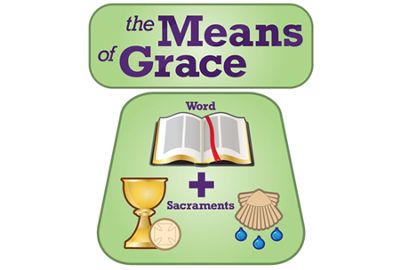
The Church is for Luther not a voluntary organization but those whom the Lord calls and gathers by the Spirit.  It is God's activity happening through the means of grace (Word and Sacrament) and the ministers of these means of grace (Pastors).  The Church does not grow through programs nor is its appeal self-interest but God calls, awakens faith, and gathers the community of His own around His Word and Sacraments. 

For Luther the Church possesses a variety of gifts not for personal edification but for the fulfillment of the work assigned to the Church as witnesses and instruments of God continuing to call, gather, enlighten, and sanctify His Church as one people (heart - faith and mind - doctrine/teaching).  Its unity is not compromised or negotiated agreement but the unity of the Spirit working in love to create a community of love.  It is not divided, not sectarian, nor schismatic but united with Christ as Christ is with the Father.

The individual members are part and partners, members and participants.  That is the largess of God's lavish grace.  We who are unworthy even to be part are made partners in His endeavor and we who do not deserve to  be members are made participants in God's work here on earth.  Not "me n Jesus in our solo walk in the garden" but me with the saints who like me are baptized into Christ and who with me are gathered by the Spirit through the means of grace for God's holy purpose and glory.  You do not hear in Luther any of the modern day fascination with our personal journeys with Jesus and God's great plan for our individual lives.  What you hear is "that I may live under Him in His kingdom".


I was brought to it [the Church] by the Holy Spirit and incorporated into it through the fact that I have heard and still hear God’s Word not in the sense of my personal reading of God's Word (largely absent in Luther's day) but my common life around that Word in the Church and the services of God's House.  This is churchly talk, a sacramental Word that speaks and delivers God's grace to us and the visible Word of the sacraments that deliver what they sign (new life in baptism and the flesh and blood of Christ in the Eucharist).

Before this I was not simply neutral to God's will, Word, and ways but an enemy of Christ and a creature captive to the devil.  Before we had advanced this far, we were entirely of the devil, knowing nothing of God and of Christ... and apart from God's actions to call me, gather me, enlighten me, and sanctify me, that is what I remain -- captive to the devil and his evil purpose.  Luther knows nothing of the basically good human nature only slightly soiled by occasional bad choices.  Luther knows only of enemies whom God has turned by killing them and making them alive anew in baptism and imparting to them with faith a new heart and will by the power of the Spirit.

Finally, note the last line of Luther's explanation:  Until the last day the Holy Spirit remains with this holy community. . .  Lutherans who have bought into the deception of Evangelicalism with its emphasis upon the individual and its conception of our individual walk with Jesus find no help from Luther.  We are kept by the Spirit working within the Church through the means of grace.  The world is not filled with solitary flowers of Christianity that sit in isolation from the others but God plants us within His kingdom by baptism, creates faith in our stubborn and fearful hearts, and gives us to live within His house where His Word speaks and His Holy Supper feeds us.  And this Church has only the Word and Sacraments as our tools to do His bidding, our instruments through which He is among us to accomplish His purpose, and our weapons against those who fight against Him.


Thursday, June 11, 2015

In essentials, unity; in non-essentials liberty; in all things, charity. . .

Perhaps that phrase is remembered because Pope John XXIII used it in his first encyclical, Ad Petri Cathedram (1959): “In things essential, unity; in things secondary, liberty; and in all things, charity” (In necessariis unitas, in non-necessariis libertas, in utrisque caritas).  It was a quote attributed to St. Augustine but it has been impossible to locate that within the known Augustinian corpus.  It was famously used by C. S. Lewis in Mere Christianity who actually borrowed the phrase from the seventeenth-century Puritan divine Richard Baxter, who is largely responsible for its familiarity to English speaking folks.

What I find fascinating is that it seems the source of the quotation for Baxter was probably the Lutheran theologian Peter Meiderlin (AKA Rupertus Meldenius), who, in his Paraenesis votiva pro pace ecclesiae ad theologos Augustanae of 1626 had said, "Verbo dicam: Si nos servaremus in necessariis Unitatem, in non-necessariis Libertatem, in utrisque Charitatem, optimo certe loco essent res nostrae.", meaning "In a word, let me say: if we might keep in necessary things Unity, in unnecessary things Liberty, and in both Charity, our affairs would certainly be in the best condition".  It could have first used in 1617 by Archbishop of Split (Spalato) Marco Antonio de Dominis in his anti-Papal De Repubblica Ecclesiastica.

I always find curious the often intertwined history of good quotes and pithy sayings.  What is not merely curious, however, is how well this summed up early Lutheran descriptions of church unity and instructions for worship.  Lutherans famously retained as much of the ceremonial of the mass as they possibly could (which only highlights how uncomfortable modern day Lutherans are with the catholic ceremonial of the Divine Service).  The Lutheran liturgical principle was retain as much as you can without conflicting with the Gospel.  Today our Lutheran liturgical principle has forgotten this catholic principle and seems intent upon seeing everything -- including the Divine Service itself -- as adiaphora, that is, things indifferent and unimportant.  While the early Lutherans refused to make uniform ceremonies a requirement for unity, they certainly did not see church usages, ceremonies, or ritual as unimportant.

There is also a key missing here among modern day Lutherans.  That is the final words of the phrase -- in all things charity.  Here I would point out that Lutherans who retained the fuller ceremonial that has always been Lutheran and legitimate in the Divine Service practiced among Lutherans have frequently suffered the uncharitable attacks of those who have called them papist, romish, closet Catholics, etc. . .  Those whose ceremonial is decidedly less catholic are much less likely to find condemnation from their more liturgical Lutherans but the more liturgical are regularly viewed with suspicion and their usages spoken against by those less liturgical.

Perhaps that is because so much of this discussion has centered merely around preference or taste.  It is impossible to find substance in Lutheranism to support the anti-liturgical perspective of some among us and, lacking the theological wherewithal to challenge the fuller ceremonial, those who do not like or feel comfortable with it are left to ad hominem attacks, choose straw men over truth, and speaking unkindly and uncharitably against the fuller Lutheran liturgical piety that characterized Lutheran Divine Services consistently through the day of J. S. Bach and which the Saxon immigration found so objectionable when they arrive in their new homeland.

Where there are those who chose to argue less the merits than to falsely characterize their opponents in some manner, the call is clear.  Charity.  In things essential, unity; in things not essential, liberty; and in all things charity.

Wednesday, June 10, 2015

What is killing Christianity in America?

Matt Walsh, Maybe Christianity In America Is Dying Because It’s Boring Everyone To Death | TheBlaze.com is a young "blogger, writer, speaker, and professional truth sayer" (his own words).  He believes that the decline of the faith in America, especially among Millenials, is not due to the radical shape of this Christianity (at least on Sunday morning) but to its conventional appearance.  Christian worship for many denominational folks and for nearly all non-denominationals mirrors the music and culture all around them.  The message does not offend but neither does it inspire.  The preaching does not challenge but neither does it speak the Gospel faithfully.  It presents the person in the pew (pardon, theater seating) with a Christianity easily dismissed with a yawn.  Nothing new here. . . move along.  The radical shape of Christianity is the full truth of Scripture unapologetically proclaimed and worship rooted in the transcendent means of grace that deliver what they promise and do that of which they speak.  If you are a Lutheran who thinks our salvation rests in slavishly following the lead of the big box evangelicals and non-denominationals, read his words carefully.

__________________________________

I recently attended a service that might help solve the riddle of the fantastic decline of American Christianity. It was a different church from the one I normally go to.  Let me set the scene, perhaps it will sound familiar:
I walked in and immediately realized that I’d inadvertently stumbled upon a totally relaxed, convenient, comfortable brand of church. The first hint was the choir members dressed in shorts and flip flops. Sweet, bro. So chill.

There were a bunch of acoustic guitars and drums and tambourines and a keyboard. Before the service/concert began, some guy came out to rev up the crowd. Opening acts aren’t usually a part of the liturgical experience, but this is 2015 and we’re, like, so not into solemn silence and prayer anymore.
There must always be noise. Always noise. Sounds. Lights. Never silence, not even for a moment.
Finally, church started. The choir, or jam band for Jesus, or whatever it was, played a song that sounded like a cross between a 90′s Disney soundtrack and an easy listening favorite you might hear if you skimmed through your aunt’s second generation iPod. It wasn’t really contemporary, or good, or relevant, but at least it wasn’t traditional. Because YUCK! Tradition is old!

The singer was relatively talented, but he carried on like an American Idol contestant. I got the impression that he was fishing for applause, not worshiping the Lord of the Universe. His style and demeanor said “talent show” but the music said “wine and cheese festival” or maybe “my dentist’s waiting room.” It definitely didn’t say “truth,” or “heaven,” or “the Great King sitting upon his throne amidst throngs of mighty angels.”
The pastor began with another round of jokes. They weren’t very funny but they succeeded in being unserious, which I guess is close enough. The sermon was jam packed with youth slang and pop culture. He mentioned a couple of TV shows and Netflix. He made sports metaphors. He didn’t do anything with the references, he just hung them out there like we were supposed to be impressed that he knows about these things.

I think he even said something about Angry Birds. Dated, sure, but it did the job of letting us know that the guy speaking also used a smart phone at some point in the last five years. OMG! He totally gets us!
The word “Gospel” made maybe one appearance in his message. The words “truth,” “sacred,” “reverence,” “sin,” “hell,” “virtue,” “obedience,” and “duty” were conspicuously absent, just as they’re absent from most sermons delivered in most churches, everywhere in the country. Of course he did throw in a friendly helping of “friend” and “helping.” And “tolerance.” Obviously tolerance. It’s important to only preach the sort of principles we can practice from our couches, you know.

Also left out of his spiel: any semblance of an insight, a challenge, a truth, a call to action, or a point.
About halfway in, I turned around to get a look at my fellow congregants. Do you know what I witnessed? Hundreds of captivated churchgoers.

Just kidding.

Actually, a lot of empty seats. A disinterested yawn echoed through the hall. I could see the guy next to me fighting to keep his eyes open. I understood where he was coming from. Maybe this was the plan: stop people from leaving by putting them to sleep.

Effective, yes, but to what end?

Tuesday, June 9, 2015

The claim of truth. . .

The great attraction to Rome and its most attractive claim is that not of doctrine or practice but of ecclesiology.  What I mean is this, those who leave one tradition for another do so for a variety of reasons but the main case for Rome is its claim to be the one holy catholic and apostolic church of the creed and its insistence upon an unbroken history to the apostles.  Now I do not mean to grant every claim made in this regard or even to suggest that they are as attractive as might seem on first inspection.  What I to mean to point out that the settled truth of Rome with regard to ecclesiology at one and the same time points to the unsettled nature of church (and ministry) among Lutherans.

While listening into a long email conversation in which a Roman Catholic was urging a Protestant to chose Rome over Orthodoxy, I heard familiar complaints about Rome.  The church is a mess.  People do not take doctrine seriously.  People like the personality of some popes but completely disregard their teaching and in other cases are drawn to the personality because they think this pope may not be serious about doctrine.  The liturgical state of the individual parishes is also a mess.  Throw away missals and music predominate and masses seem like mass production industrial style events to see how fast they can go through the liturgy and commune the assembly and send them home.  Morality is in decline and many Roman Catholics openly reject the church's teaching on everything from homosexuality to birth control to divorce to sex outside of marriage.

The sole argument in favor of Rome was ecclesiology.  As long as you get the church, everything else will sort itself out in its own time.  What you have to make sure is that you have chosen the one true church that fulfills all claims -- authority, catholicity, liturgy, etc...  Normally this would not be a compelling argument for Protestants accustomed to Biblical truth and authority.  What makes this attractive is the sad and sorry state of the church among most Protestant denominations and even within Lutheranism.

We look around us and we see the signs of a broken church and wonder how can we claim we got the Scriptures right,  confess the correct doctrine, and we have such a confusing and contradictory mess when it comes to oversight, discipline, and faithfulness in the church?  Take the Lutherans, for example.  We have a wonderful church -- at least theoretically -- but in practice we have DIY church on Sunday morning with little of our doctrinal catholicity showing up in worship.  We have the highest sacramental theology but treat the elements as if they were barely symbolic and treat the means of grace as if it were a little added extra to our faith and piety and not source and summit.  We have a high view of the pastoral office but hire and fire our pastors at will for such things as failing to make "sales quotas" or "being all things to all people."  We have mighty words of vocation and baptismal calling but we are losing youth in part because they find nothing compelling about the church and we have left them incapable of discerning eternal truth from momentary whim.

As I have often said, few people become Mormon for the doctrine.  They are drawn in by the fellowship and swallow hard at the outlandish claims of Mormon dogma.  Could it be that the attraction to Rome is equally a mix of what attracts and what one must stomach as well?  Could it be that the soft underbelly of Lutheranism (church and ministry) are the very things that are clear in Rome?  Could it be that Rome also has a soft underbelly but we can stomach this as long as we have the ecclesiology we long to know?

Just a few thoughts as I ponder what makes Rome so attractive to some among us. . . Contrary to those who think that liturgical type Lutherans are attracted by the smells and the bells, the average Roman parish does little of either.  Roman Catholic parishes typically do not chant, do not sing, and have a sparse ceremonial -- perhaps even barer than a typical traditional Lutheran Divine Service!  If smells and bells are what turns your crank, the better choice is a traditional Lutheran Divine Service with mighty organ, strong congregational song, and a people not held captive to Catholic prejudice -- I would certainly choose this over a strumming guitar, Joncas/Haugen song, a liturgy rushed so 500 enter, commune, and exit in 45 minutes, and a sermon empty of everything except some pious platitudes and moralistic guilt.  No, liturgical considerations cannot be the magnet for Rome but ecclesiological concerns may well be.

Monday, June 8, 2015

About my Dad. . .

My parents had asked me some time before we ever knew Dad was ill that they wanted me to preach for their funerals.  I had deferred answering but when suddenly Dad became ill and had a couple of weeks to live, his request was more urgent.  Who can say no to their father's dying request?  I hesitated to put the text of my eulogy and sermon on line but a number of folks requested it.  So here it goes.  It remains hard for me to think about and there are thousands of details and duties keeping our minds and hearts from resting our grief so fully in Christ that it does not consume us. . . but a couple of months have passed so here it is.. . .


The Funeral Sermon for Albur G. Peters + April 19, 1927 - March 19, 2015
Isaiah 35:3-10 + Revelation 7:9-17 + John 10:1-10  

The hymn we just sang might have sounded strange to you but the words to the last stanza are special.  They belong to the Commendation of the Dying.  As Dad’s breathing became difficult, we prayed the Commendation of the Dying; he mouthed the Lord’s prayer and the words of the Aaronic benediction.  And among the last words Dad heard this side of glory were these:

Lord, let at last Thine angels come,
To Abram's bosom bear me home,
That I may die unfearing;
And in its narrow chamber keep
My body safe in peaceful sleep
Until Thy reappearing.
And then from death awaken me
That these mine eyes with joy may see,
O Son of God, Thy glorious face,
My Savior and my Fount of grace,
Lord Jesus Christ,
My prayer attend, my prayer attend,
And I will praise Thee without end.

Being a parent is hard work.  There is no dispute about that.  Sometimes being a son is not easy either. I had it easier since I went away to school and have lived all over but my brother has had a harder path living here.  He worked with Dad for nearly forty years.  As the days were passing to their close, I found one request hard to do but even harder not to keep. No son welcomes the death of a father he loves nor easily discharges his father’s request to do his funeral.  Being a pastor at the death of your parents is a mixed blessing.

Albur George Peters was born in Wausa, April 19, 1927, the 5th of 6 children to Wilhelm Christian and Emma Krohn Peters.  He graduated from Wausa High School in 1944, attended trade school in Omaha, worked in a land mine factory, and then served in the US Army.  After the end of WW II, Albur came back to Wausa and worked in the Council Oaks store before entering into partnership with his dad in Peters’ Electric in 1952.  I came along in 1954 and 1958 was a banner year in Albur’s life – he got a second son and he purchased the hardware store from Carl Anderson.

Dad served on Town Board, Library Board, Woodlawn Cemetery Board, the Wausa Development Corporation, the Fire Department, and a host of other civic positions.  But most of Dad’s life revolved around his family and his work.  Family reunions were big occasions for Dad and we loved hearing stories of Grandpa and Grandma Peters and his brother Pete and sisters Dorothy, Opal, Vinona, and Vernal.  We got mixed up at how we were related to that large extended family but it did not matter – the main thing was they were family.

Dad had to win my mother’s heart and she did not immediately warm up to the guy who whose yearbook said, “What this world needs is more men like me.”  But she could not resist his charms and they were married in 1950, living together just shy of 65 years of marriage.  It was a love story we find ever more difficult to achieve in this world.  Dad loved to work and he loved the store because it was his work.  It also gave him the opportunity to talk to people and that he also loved.  He was a tireless worker who gave away too much to ever become rich in things.  But rich in life and friendship and love, he certainly was.

Albur George Peters was not perfect.  He was maddeningly stubborn.  But he was loyal to a fault.  He was not a shrewd businessman or he would have accumulated great wealth.  But he was a hard worker and worked on when others might have given it all up.  He was not the smartest man in the world.  But he was among the wisest.  He loved his wife, his sons, his daughter-in-law, his grandchildren Joseph, Andrew, and Rachel, his brother and sisters, and his whole extended family with love stronger than words.  He did not always like what we said or did, but He loved us resolutely to the very end.

The first love of Dad’s heart was the Lord.  Dad was a man of faith.  From the moment of his baptism, in this very font, to his last breath, Dad knew he was a child of God.  He was raised in this faith as a child, he confessed it in his confirmation right here in this chancel, he was here in this church on every Sunday health would allow, he communed at this altar upon Christ’s flesh and blood, and now we are gathered here today to remember him with thanksgiving and to commend him eternally to the God who gave him life, redeemed his life through Christ’s cross, and who took him into the place of eternal light and life to complete His baptismal promise made to Albur George Peters on May 22, 1927.  On June 16, 1940, he affirmed his baptism and was confirmed here, given the verse II Peter 3:18: Grow in grace and in the knowledge of our Lord and Savior Jesus Christ. To Him be the glory!  And that is exactly what Dad endeavored to do with every ounce of his being all the days of his life – living as a sinner in the arms of God’s mercy through Jesus Christ.

My Dad was hard to live with.  He was a man of honor and integrity and these are not easy things to abide in a world with short cuts where the end justifies the means.  He was a man with a generous heart.  Like his father before him, he gave away too much to ever become rich.  From the free advice he gave to every do-it-yourselfer to the gifts he gave to the many who could not afford what they needed, to the nighttime and Sunday trips to fix a furnace or repair a hog fountain or restore electricity, Dad was, if anything, a giver.  Givers are not easy to live with in a world where taking is valued most of all.  While he lay dying, he continued to tell us what needed to be done for folks at the store.

He was a man of the church.  My brother and I knew unless Dad found us cold and blue in bed, Sunday morning would be spent in church – usually among the first to arrive and the last to leave.  It is not easy to live with someone who insists that the first day of the week belongs in church on Sunday morning.  But it did not end there for Dad.  From the things he literally gave to Golgotha Lutheran Church to the Fellowship Hall he almost single handedly ramrodded through, it is not easy to live with people driven for the Lord.  He lived every day under the grace of God and as one for whom Christ died and lives, a sinner in the arms of His merciful Savior.

Dad was a simple man.  Early in the morning, in the black recliner, he read the Scriptures, the catechism, the Lutheran Confessions, Portals of Prayer, and he prayed.  I used to sit up at the top of the steps every now and then and watch him.  Every day began this way.  Before any work could begin or even breakfast eaten, he spent time in prayer.

He loved Mom and pursued her when she was not so sure about him.  He and Mom were different and their weaknesses and strengths complemented each other’s weaknesses and strengths.  They lived under the forgiveness of Christ and practiced it freely each toward the other.  Theirs was a love that sustained nearly 65 years of marriage.  He loved his brother and sisters and their families and nothing was better than to spend a Sunday afternoon on a car ride to end up at one of their homes with some chips and dip and maybe a drink or two.  Family occasions were not duties but privileges – the precious privilege of family.

My Dad loved his home.  He loved to welcome people into his home.  Mom and Dad were great hosts who entertained rich and poor, old friends and strangers, famous and anonymous – all with the same affection and warmth.  My Dad loved a short power nap after lunch – sort of a sacred ritual in his whole life.  And, of course, he loved to work – as one who believed that labor was a privilege and the duty of the child of God toward God and neighbor.  Dad found it easier to deal with failure than to live with the regret of never having worked to make it happen.  As a teenager I found his work ethic foolish.  As a 60 year old son, I find it noble and wise and honorable.

Dad did not acquire these traits from rich experiences and they were not inborn into his character.  He had wonderful examples in my Grandpa and Grandma Peters but his life was shaped from the baptismal font, by the power of the Holy Spirit, toward the cross of Christ, and for the glory of God.  That is why I speak to you today.  There is nothing you can know of my Dad without first knowing the Gospel of Jesus Christ and Him crucified.  He was a man whose life was lived forever in the shadow of the cross where the saving will of the Father met the love of the Son and the Spirit marked this redemption for Albur George Peters, and for the sake of the whole world. 

Faith is not theory or philosophy.  It is the most practical thing of all.  It is where sinners hanging their heads in shame meet the grace of God in forgiveness.  It is where hopeless lives are reborn to everlasting life by the power of Christ’s resurrection.  It is where the limits of our smartness and our stubborn wills come face to face with the mind and heart of God, relentless to save.  It is where we meet the Lord who refused to surrender us to death, to tears, to fears, to pain, to grief, to sorrows, to disappointed hopes, to broken dreams, to tawdry pasts and to uncertain futures.  So great is the love God has for Albur, for you, and for me...  And just when we think we have given up everything, God points us to the cross where God gave up so much more – so that we might have all of it without cost to us though it cost Jesus everything.

I chose Isaiah 35 because it speaks of Dad – of feeble knees whom the Lord has made strong and its call to be strong, fear not, and trust in the Lord to save you.  And also because in the last hard days of his life, his prayer and ours was for the gladness and joy to begin and the sorrows, struggles, and sighs to flee away.  John 10 was one of those sections of worn pages from Dad’s Bible – a place where he fled for comfort and strength.  Jesus is the door to the sheep pen, the shepherd who calls His sheep by name, and the good shepherd who dies for His sheep.  We all pay attention to that part.  Dad focused also on the other part of Jesus’ words.

My sheep hear My voice and follow Me...   That was Dad and it should be you and me.  There are charlatans and strangers and thieves and robbers who have distorted Christianity and led too many Christians astray.  Where the Scripture’s vocabulary of sin and repentance, forgiveness and life through the cross, and the goal of eternal life have been replaced by selfish and foolish notions of your best life now, where God has become more motivational speaker for people looking for a better life, we have a big problem.  The sheep recognize only one voice – the voice of the crucified and risen Lord and this is the Savior whom they follow – and none other.

The lesson from Revelation is perhaps my favorite.  Those who read strange foreboding things into Revelation have got it all wrong.  John insists that he writes to comfort his people in their tribulations and to encourage their patience endurance in the Lord Jesus.  If you read Revelation and you get no comfort or encouragement out of it, you read it wrong.  Nowhere is this more true than in this passage from chapter 7.  If you have ever watched someone you love suffer, if you have ever waited at the bedside for the end none of us wants, then these words speak to you as they do to me.  In our moments of greatest test, we cling to the promise of sinners cleansed in the blood of the Lamb, serving the Lord joyfully in His eternal presence, where hunger, thirst, sorrow, and tears no longer haunt, hurt, or threaten.

The truth is my Dad is not dead.  Those who believe in Christ, who were washed in baptism, called by the voice of the Spirit in the Word, nourished and fed at Christ’s table. . . well, death cannot claim them and the grave cannot hold them.  Whether we live or die, we belong to the Lord, St. Paul says.  When the trumpet will sound and Christ will come again to stand upon this earth and finish His new creation, He will reach down into the dust of the earth and He will raise up Albur George Peters.  Nothing can stop Him.  Nothing will stop Him.  Those who die in Christ live in Him and from death they wait with us for Christ to raise us to immortality and lead us to the place He has prepared for us, the great and blessed reunion with the saints – the bosom of Abraham, as Scripture calls it.  Dad was ready to see this promise fulfilled and in his last days he enjoyed the peace of Christ’s forgiveness and the comfort of Christ’s body and blood.  Would that each of us knew with the same confidence this promise from God and the peace in of His presence in our final hours.

Now if Albur meant something to you, listen to the voice of Jesus.  Reclaim Your baptismal hope. Rejoice in the gift of life that is yours.  And when that day comes, Albur will greet you in Christ.  When the earth coughs up its dead, when our tears are wiped away, when illness and old age can touch us no more, when sorrow and struggle are over, when satan is locked in his prison forever, when sin is no longer even a memory, those who live in Christ by baptism and faith will rejoice. . . And Albur will be there, too.

And one more thing – I say only to those who call Golgotha Lutheran Church your home.  If Albur’s life has meant something to you, then let it be shown in your steadfast faithfulness to the Lord and to this congregation.  Parishes come and go but let it never be said that this church died for lack of will and desire from those who were fed and nourished upon Christ’s Word and Sacraments here.  This building is no shrine or monument but it houses the font where the dead are given life, the pulpit where sinners are called to repentance and faith, the lectern where the Word of God is read, and the altar where the flesh and blood of Christ feed us now to eternal life.  This building has no special claim but what happens here does.  So do not take this congregation lightly or fail to give your best for God’s glory.

Until then, let us walk in faith.  Let us rejoice in hope.  Let us remember with joy.  Let us give up our wounds to Christ the healer.  Let us endeavor to live honorable lives to His glory.  Let us read His Word.  Let us pray our prayers.  Let us tell our children of Jesus.  Let us show forth in actions the love of Christ to our neighbors.  And when we meet in sorrow as we do today, let us find comfort in the holy Christian Church, the communion of saints, the resurrection of the dead, and the life everlasting.

I have no clue what people will say about me when I am gone.  If I am half the man my Dad was, I will be satisfied.  And if I leave to those who follow me, the same unfailing witness of faith my father has left me, my life will not be in vain. 

Thank you for sharing my father’s life, for supporting my mom, for loving my brother, and for being here today.  I am sure that Dad would say I spoke too long and was far too generous in speaking of him.  I am sure he would have said I should have spent my time only speaking of Jesus.  So, unlike every other moment of my life, today, Dad, I got the last word... But of course that is not true.  Dad would delight in pointing out that I was wrong; Christ has the last word!  And that word is the forgiveness of sins, the resurrection of the body, and the life everlasting.  So, in this faith, today we commend the Lord’s servant, Albur George Peters.  Amen. 

The Lord gave.  The Lord has taken away.  Blessed be the Name of the Lord.  Amen.

Sunday, June 7, 2015

We can tell you everything about nothing but nothing about everything.

A friend recently sent me an email with a tidbit about Sherlock Holmes.  We had been trading these back and forth and this was one I had entirely forgotten.

It seems that Watson and Holmes were having a discussion once about elementary things -- the planets and moons and stuff. Watson was both upset and amazed that Holmes didn't know basic facts about the solar system. Holmes responded with customary biting wit:

“You see,” he explained, “I consider that a man’s brain originally is like a little empty attic, and you have to stock it with such furniture as you choose. A fool takes in all the lumber of every sort that he comes across, so that the knowledge which might be useful to him gets crowded out, or at best is jumbled up with a lot of other things, so that he has difficulty laying his hands upon it. Now the skillful workman is very careful indeed as to what he takes into his brain-attic. He will have nothing but the tools which may help him in doing his work, but of these he has a large assortment, and all in the most perfect order. It is a mistake to think that that little room has elastic walls and can distend to any extent. Depend upon it there comes a time when for every addition of knowledge you forget something that you knew before. It is of the highest importance, therefore, not to have useless facts elbowing out the useful ones.”


I fear that this is exactly what often happens in Bible studies across America and in churches as well.  We crowd our minds with the curious things that may ping our interest but forget the basic truths that inform, sustain, and nourish our lives in Christ.  We can tell you everything about nothing but nothing about everything.  This is what happens when we turn up our noses at the catechism and presume its elemental information is too basic and spare for our lofty minds consumed by and consuming the weird, strange, and curious.  This is what happens when we know everything about Scripture but have confused Law and Gospel to the point we are not sure what enables us to stand before the Lord -- our accomplishments or Christ's merits.  This is what happens when sin and righteousness are replaced by categories of happiness, pleasure, desire, interest, and preference.  This is what happens when we insist that the church's songs be upbeat and happy and give us ways of expressing our own feelings while refusing to sing the more sturdy tunes with texts that speak God's Word to us.  This is what happens when we walk out the door of the church on Sunday morning confident we have walked with God today because we feel good but have not been called to repentance, have not worked with the aid of the Spirit to amend our sinful lives, and have passed on the Word of the Cross in favor of life lessons that will get us what we want.

It does little good to know curious facts and not to know and cherish the good news of Christ crucified.  Yet all you have to do is pursue the average thing that passes for Bible study from any of the popular authors and you miss just that -- Law and Gospel faithfully distinguished, the message of Christ crucified front and center, and the Spirit working to bring forth repentance in us.  Yes, I know that the story of salvation is old news and that often the orthodox Bible studies are more dull and tedious than the flash in the pan produced by the big names in Evangelicalism.  Yes, I know that it seems strange to keep walking where we have already been since there is so much to speculate about in Scripture and such speculation is so darn enticing.  But that is the problem.  We love the curious but yawn at the profound.  Our natures grow weary of the truth than endures forever and is too fascinated by knowledge that exists for its own sake.

We need some Holmes to remind us every now and then not to clutter our minds with the weird, strange, curious, and odd to the point where we miss the truth that endures forever.

The quote I sent my friend, by the way, was the ever popular mythology of Holmes and Watson out camping in a tent.

The story is told that Sherlock Holmes and Dr. Watson once went camping. In the middle of the night, Holmes woke up Watson and said, “Watson, look up, and see the stars. What do you deduce from that?” 

“Well,” said Watson, “There are so many of them—billions, to be sure. Some of those stars must be like our sun. And some of those must have planets revolving around them. And some of those planets must be hospitable for life. And some of those planets hospitable for life must have life on them. So I deduce that we are not alone in the universe.”


“You missed the main point!” said Sherlock. “From the fact that we can see the stars, we can deduce that someone has taken our tent!”

Saturday, June 6, 2015

God is not our last hope but our only hope

Sermon preached on Luke 16:19-31 for midweek Eucharist.

At first glance the story of Lazarus the poor beggar and the rich man seems to assure us that in the end all people will get their just due. The poor will be vindicated, the self-centered rich will suffer and, as the Bible promises, the rich will become poor and the poor will become rich.

I want this to be true and I am sure you do as well.  In part because I identify as the poor and not as the rich.  Even though our lives says we are rich by the world’s definition of rich, most of us in our hearts feel like the poor.  So we hope the day will come when we can smugly snicker when the rich get the comeuppance and poor will receive beyond their hopes and dreams.

But this is wrong.  Suffering does not curry favor with God any more than ease. The rich man and Lazarus are different not simply by how much money they had but they are distinguished by the character of their hearts.  Lazarus, whose name means mercy, has only mercy as his hope but the rich man has everything to count on.  He has everything but he is not content with this and death shows him how little everything it.  He insists that God give him something more – more than Moses and the prophets, more than God’s Word, and more than His mercy.

For the rich man the Word is not enough.  He wants more.  He wants a sign – even if it can do nothing for him, the rich man knows it will take more than the Word to convince his brothers.  And therein is our condemnation.  The Scriptures speak the voice of God even when we choose not to hear.  We will get nothing more and nothing less that the Word.  That is the hard part of this message and it is the promise of the Gospel at the same time.  The Word is enough.

Lazarus found no mercy from the hand of this rich man.  He lay wounded and in pain.  He was rejected by rich and the poor alike.  He had only the Word to hold on to – the Word was His courage and strength in life and His comfort and peace in death.  The rich man did not need the Word.  He had everything.  But in the end his everything was nothing and only the Word was endured.

We do not come to Bible study because it is interesting or because we learn something new.  We come because it is the Word of life and there is no where else for sinners to go to find mercy for their failure, forgiveness for their sins, hope in their weakness, life in their death, and comfort in their pain.

Mercy endures forever.  That is what the Word teaches.  Lazarus’ story proves that mercy is enough, that mercy will sustain us when we appear lost and lone.  Lazarus was not a better man than the rich man but he trusted in the promise of the Lord to redeem Him when the rich man trusting in no one and in nothing. 

In the end, the rich man found that only the Word endured forever and only the Word had the power to rescue Him from sin and death.  Lazarus did not know this – he was as weak and vulnerable as you and I are but he trusted the Word of the Lord as his only hope. The story showed us that Lazarus hope was vindicated.

When Paul said he was no man but merely a worm, when Luther wrote on that scrap of paper the last words of his life, “we are beggars, this is true. . .” both men got it right and got it from Lazarus.  God’s mercy is not our last hope but our only hope. For weak or strong, rich or poor, insider or outcast, we enter the Kingdom of God through mercy’s gate and that is its only door.

God won't give you more than you can bear. . .

A recent question asked me on which specific Scripture this oft repeated sentiment is based.  Of course we have the promise that God will not allow temptation beyond our ability to withstand.  (No temptation has overtaken you that is not common to man. God is faithful, and he will not let you be tempted beyond your ability, but with the temptation he will also provide the way of escape, that you may be able to endure it. I Cor. 10:13 ESV)  But what about trials and troubles?  What about sorrows and struggles?  My personal least favorite expression:  God saves His greatest battles for His toughest soldiers.  Then make me weak God so my life will be easier!!

I will admit that I have always had a problem with the common expression "God is in control."  Does that mean God is causing me (allowing and sending are very fine distinctions usually lost on the hurting) to hurt, suffer, bleed, question, despair, etc.?  Evangelicals and the Reformed have taught us Lutherans to talk as if God has some grand plan for our lives in which even the painful moments are but pieces of His grand puzzle of our lives.  So it is my job to figure out the plan, follow God's leading, and rest assured that no matter how battered, bruised, or bleeding I am, God wants me to be that way. Where is the comfort in that?

In my own family in the past six months or so we have struggled through the death of two fathers, five aunts and uncles, a couple of cousins, job issues, financial set backs, car accidents, and a host of other things I will not admit here.  We have been bounced around to the point where it is a struggle most days to get out of bed.  Luther himself wrestled with such depression, weariness, doubts, and fears.  I figure I am in good company here.  But the answer lies not in God's grand plan that will make sense of all the wounds but the wounds that give healing, the death that kills death, and the eternal life which is beyond imagination in this mortal life.

I must admit that I wonder about people who find the Beatitudes of the Sermon on the Mount comforting.  If they are a blueprint of what I must deal with as a baptized child of God, then they scare me.  I don't want to be persecuted even for righteousness sake.  I don't want people to speak all kinds of lies, slander, and whispers about me for the sake of Christ or anyone else.  I don't want to face the prospect of a choice between faithfulness that may mean death and denial that might save my butt.  Yet Jesus is blunt.  He tells us of those who will face suffering, even death, for His sake.  Even in symbolism this is not a path I relish for me or my loved ones.  No amount of confidence in God's grand plan can remove the fear and trembling in my heart at the prospect of such a life.  What about you?

We Lutherans have got to stop echoing the pious platitudes of our Evangelical cousins because that is not who we are.  We don't believe because God gives us answers to all our questions.  We believe that Christ is the answer to all that matters and we cling to Him like a lifeline when our hearts are ready to give up, our bodies ache from their wounds, and our spirits lag near despair for the troubles, trials, and tribulations heaped upon the children of God by a world at odds with God's eternal purpose, an evil enemy working at every turn to release us from the grasp of grace, and an old sinful self (the old Adam) who wants to give up and live for the moment.

Our best life is not now, our best future is not today, and our best hope is not for an answer that will make sense of it all.  This life is prelude to the real life to come (without at all diminishing this mortal life or its joys).  The future is the eternal one in which death is no more, sin is not even a memory, and no more trouble can come near us.  The hope we have is not answers but Christ, crucified for us and risen for us and our death with Him in our baptism and our new life in Him in that same baptism.

God won't give you more than you can bear but the world, the devil, and even your own sinful nature are trying to do that every day -- to get you to abandon your trust in the cross and surrender your hope in the triumph of eternal life.  In John 17 Jesus prays for His disciples and those who will believe in Him through their witness.  "Guard them..." He prays.  He knows why.  They (we) will face much tribulation, endure many trials, face many troubles... but we believe that these sufferings are brief and momentary in comparison with eternity... and we acknowledge that by these sufferings we share with Christ and in His name God is purifying us like gold is purified by fire... And we are kept by the sufficient grace of Him whose grace and mercy will not disappoint us.  Perhaps this is makes one thing clear.  Jesus does not pray for our success but for us to endure.  That ought to tell you something right there.  Not to mention His haunting question, "When the Son of Man returns will He find faith on earth?"

Friday, June 5, 2015

Our children have learned too well. . .

Sitting with a catechism class teaching on marriage as the SCOTUS is debating on which to revise the definition of marriage for all states is interesting, to say the least.  These middle schoolers with a couple of high schoolers thrown in have learned well -- not from mom or dad or the church but from the prevailing mood of America and the revisionist view of all things marital, sexual, and political.

Our children have learned to see marriage as an emotional, romantic, sexual bond between two people.  Even when they are opposed to same sex marriage, they are opposed because they find it personally unappealing and not because they have any real or substantial reason to oppose it.  Whether moms and dads and churches have not been teaching it or not teaching it as well as the media, educational enterprise, and culture, they see traditional marriage as an emotional, romantic, sexual bond between two people.

I tried to point out that if that is the working definition of marriage, why on earth can you justify excluding marriage between any and all people who desire this emotional, romantic, and sexual relationship?  And that is where the blank looks begin.  Remember that I am speaking within the confines of a church population and not opining on a street corner somewhere.  What do you suppose happens among a typical college discussion of marriage?

We have it all wrong.  SCOTUS will not redefine marriage; marriage  was redefined already, most likely in the hidden consequences of the sexual revolution.  We are in no danger of marriage being redefined; it already has been and this revisionist view of marriage has become the definition used even by people who might come down on the traditional side with respect to same sex marriage.  SCOTUS will not redefine marriage but will simply recognize whether it has been already redefined and if the constitutional issues can all be written into this changed definition.

The gay liberation movement is not the force behind this redefinition.  We had already sown the seeds of their claim to this right when we removed from marriage the distinctives that had shaped its definition for millenia.  Once sexual fidelity, child bearing, financial unity, sacrificial love, life-long expectations, public accountability, etc. . . were removed from the definition, there was and there is little reason left not to include anyone and everyone who wants some sort of emotional, romantic, sexual bond with another person for as long as it lasts or feels good.  When happiness and pleasure became not only the aims of marriage but the criteria on which marriage is judged or kept, we had already prepared the future we now find.

Read through so-called Christian marriage books or books on sex.  They do not read like Scripture nor do they present a view consistent with our Judeo-Christian history.  Just the opposite.  They read like the times in which they were written and published.  It is all about me, all about happiness, all about emotion, all about getting what you want from your significant other (especially in the bedroom), and they give all the how-to details of every kind of sex without a hint of an idea that there is anything that feels good that might not be good.  And then we complain about those liberals.  We have become them -- subtly and so slowly that what was revisionist has become traditional even to a great segment of Christian population and what is Christian has become so completely out of step with their views that it is almost reprehensible in their minds and hearts (witness the Roman Catholic mess on the Synod for Family).

It is too late to assign blame and there is more than enough to go around.  If we hope to recapture the truth for our children, we have our work cut out for us.

Thursday, June 4, 2015

What do the numbers say. . . and what do they not say. . .

So, according to the Pew Research Center, the population of Christians in America dropped from 78.5% to 70.6% with increases among those "unaffiliated" (whatever that means), declines among Roman Catholics (not sure how they arrived at this number) and mainlines (all thoroughly predictable here), with Evangelicals (included here is the LCMS -- danger here -- remaining relatively stable).

I will leave it to others to parse the details and explain what is behind the numbers.  For now let me simply say that this does not really say much at all about the health or vitality of Christianity in America.  Numbers are only numbers and they are the results of self-reporting.

Let me say that hidden behind some of the numbers is the movement of those always on the fringe of the faith to just outside the fringe.  Whether you call these the de-churched, the un-churched, or the not really converted or those not fully catechized, this is an indicator of the failure to catechize and the failure to fully convert (that is fully integrate the person into the life of the church).  These have always been marginal Christians.  I am not saying that we should write them off but that they were never solid in the first place.  Whether they chose to remain on the fringe or we failed to fully bring them in, this does not say much about the overall health and vitality of Christianity in America.  It does say something about those who desire to be anonymous Christians or congregations where people are allowed to simply drift in and out without much pastoral care.

Since this snapshot is fully supported by decades of research showing the significant and serious decline in the denominations, congregations, and membership of the so-called American Mainline Protestant churches, this is a big problem for those who think the health of Christianity and its future lies with liberal, non-doctrinal, Christianity.  This should continue to discredit those denominations who hover on the liberal edge of social change, who treat the Scriptures as more fiction than fact, and who have replaced the voice of the Gospel with tolerance, diversity, and equal justice.  Christianity's future was never here and never will be.

The relative stability of the Evangelical segment of American Christianity is deceiving.  The membership shifts from church to church, the growth among some congregations is matched by declines in others, and the constant remodeling of the faith by some segments of Evangelicalism may mask a weakness not identified in the numbers.  Further we are seeing some Evangelicals begin to follow the path of the Mainlines in distancing the content of the faith from fact and Scripture and a willingness to embrace the politically correct positions of the social change movement (such as gay marriage).  Should this continue, no one can really predict the future for Evangelicals.

The numbers that hold the greatest weight are those in which there is doctrinal certainty, Scriptural infallibility, catholicity of liturgy and worship, vitality of preaching and teaching, and the refusal to be bullied into social positions in conflict with God's Word.  Wherever you find this, and you cannot narrowly define this to one or more denominations, the faith is vibrant, healthy, and growing.  This should be the focus of our attention as we seek to maintain faithfulness in doctrine and practice, speak faithfully and forcefully in witness to the world, and serve sacrificially and joyfully as instruments of Christ's love to the hurting.

The health of Christianity cannot strictly be defined by numbers.  That said, the manipulation of Christianity by social agendas, so-called scientific viewpoints on history and fact, and a faith designed to appeal more to reason and sentiment has not done anything to help the church grow or slow its decline.  Just the opposite, it has hastened the departure of those not fully indoctrinated or inculturated (is that a word?) into the faith and the life of the church.

But there is one thing we Lutherans of the Missouri stripe ought to take as a warning shot across the bow.  Pew does not know what to do with us and so it has labeled us Evangelicals -- let us hope and pray we do not let this become prophetic or the catholic and evangelical faith of the Lutheran Confessions will become merely a footnote in history and the Reformation will have been betrayed by those who claim its legacy today.

Wednesday, June 3, 2015

Church Bells are Calling. . .

Happy to pass this on. . .

Church Bells Are Calling  

by Greg Alms
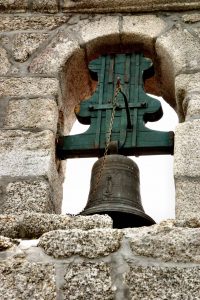
The answer lies in the example of church bells. Church bells do two things. First, they call Christians to abandon the world and assemble for worship. They call out us to flee our normal routines, our day to day activities, and come to where Christ is present in mercy and life and join with angels and archangels in the feast that has no end.  We are called out of the world to be the church and receive forgiveness from our crucified Savior. That is what the word “church” means in Greek. “Ecclesia” literally means “called out.” We abandon the world to be united to Jesus.
file000343752907
Church bells seem an anachronism in today’s world. Church goers come from far distances and can’t hear the bells ringing, calling them to worship. That’s what Twitter and Facebook and email are for. The hymns that are often played at noon or 6:00 p.m. can’t be heard in the rush of traffic or through the sealed air-conditioned cars buzzing past. But church bells can do one thing: It helps us think about the church’s relationship to the world around her.

One of the most pressing issues of our time (and really anytime) for the church is how to relate the culture and world that surrounds us. The New Testament counsels us both to flee the things of the world (1 John 2;15) and to engage the world (Acts 1:8). The world is both the evil haunt of Satan (John 12:31) and the precious object of God’s redeeming love (John 12: 47). The church both conquers the world (1 John 5:4) and evangelizes the world (Matt. 28:20). This question is all the more urgent for us when society around us is less and less Christian and more and more unfriendly to Christianity.  What are we to do? Flee the world or save it?

But church bells do something else. They proclaim the message and existence of the church out into the world. There is an LCMS  church in my area in (Augustana in Hickory, N.C.) that was once in the middle of farmland and pastures. It is now next door to a big shopping mall and surrounded by fast food stores and a busy highway. It has church bells and a carillon, and if you go at the right time you can sit in the drive-thru at Wendy’s and hum along to “A Mighty Fortress is our God” or “Christ the Lord is Risen Today.” This is a picture of what the church is in the world. Bells call Christians both to flee the world and to participate in the world.  The worldliness and fallenness “out there” is precisely where the church ought to be loud and joyful and insistent with her message.

Ultimately Christians do both:  Flee the world and connect with the world. But we flee the world to save it.  God calls us out of the world into the communion of the church to save us. The world is passing away, but there is a new world right in the midst of this dying place, the church, where Christ crucified is present and given as gift. This message and life is what the church engages the world with: new life right here in your midst.

This is not easy. Ringing bells in this noisy culture we live in can seem futile. The cars rush past with their windows up. But we keep ringing for God is calling sinners to His church and the sweet music of the Gospel  never fails to do its work.
The Rev. Paul Gregory Alms is pastor of Redeemer Lutheran Church, Catawba, N.C.

Tuesday, June 2, 2015

Only the Trinity can make known God is love. . .

Sermon preached for the Festival of the Holy Trinity, on Sunday, May 31, 2015.

    Today, as we approach the confession of the mystery of one God in three persons, we acknowledge that the Trinity is not a definition of God but His self-revelation.  This is who He is and not some logical attempt to reasonably explain God.  Our sinful nature has so distorted who God is that we can only know God is if He chooses to reveal Himself.  Apart from that self-disclosure God is unknowable.  Even within that revelation, our sin has so distorted our hearts that we misread God and His intention.
    We see this at work in the Old Testament reading.  Isaiah misread God’s intention.  His perspective of God was so shaped by sin and its guilt that He instinctively feared God.  That fear colored everything God said and did.  Our relationship with God is just as skewed by sin – whether or not we fear Him like Isaiah did.  Unless we acknowledge that sin, God remains a mystery.
    In the mirror of God’s holiness Isaiah stood convicted.  He and all who know God as holy and righteous and good, despaired before the Lord.  “Woe is me, I am a man of unclean lips amid a people of unclean lips and now I have seen the holy God...”  Though we live in an age when sin does not enter the conversation all that much, guilt remains a common problem.  Until sin is answered by God’s forgiveness, we run from God.
    It was sin that poisoned our lives with guilt and shame and fear and death.  We see things forever through the distorted lens of sin.  So we are suspicious of who God is and fearful of His intentions and skeptical of His ways.  That translates into a fear of personal relationships.  We are likewise suspicious of people, fearful of their intentions, and skeptical of their ways.
    Finally, when we look in the mirror, we approach ourselves with the same self-doubts.  We are suspicious of who we are and hide our thoughts and feelings.  We are fearful of our motives and second guess ourselves all the time.  We are skeptical of everything except our desires – to those we have surrendered since the Garden of Eden and what a mess it has left us.
    So what shall we do?  Shall we live a lie in which evil is called good, death is transformed into something natural, and life is what we make of it?  Do we ignore our consciences or do we lie even to God’s voice within and do whatever feels good at the moment?  Do we despair of everything and give up, confident that all is lost and nothing is really good?  Do we accept our sinful desires and lives as normal and live at peace with them – calling them normal?
    Into this comes Jesus.  “For God so loved the world. . . “ As beloved as that verse is, it is the verse that follows which is pivotal: God did not send His Son to condemn but to save.
    Our sin, guilt, fear, and suspicion have misread God and His intentions.  He desires not to condemn but to save.  The Holy Trinity frames God through His saving will and purpose.  If God is to be known at all, He will be known as the gracious God who has become our Savior, the merciful God who does not kill but makes us alive in baptism, and the hopeful God who fills us with the Spirit of hope to believe.
    Christ is the burning coal of Isaiah’s vision who touches our lips and makes us clean.  He comes not to destroy but to rebuilt our lost, broken, and death filled lives. He comes not as agent of God’s wrath but as the triumph of the Father’s love.  He looked upon us and saw us in our need and sacrificed Himself into death that we might life.  He comes to show us the triumph of the Father’s love.  This is the Trinity; love triumphs!
    Christ is sent by the will of the Father and He adopts the rescue of our fallen lives as His own life’s work.  He sends forth the Spirit so that we will not be left victims of our own skeptical fears, and He leads us home to the Father for now and for all eternity.  This is the Trinity.  Love  stronger than sin, stronger than guilt, stronger than fear, and stronger than death. 
    Look at the reading – see how Isaiah’s story changes with forgiveness. When He discovers God’s love, it leads Him to serve the Lord. “Here am I; send me.” It’s the same for each of us.  The content of God’s revelation and self-disclosure is love.  Love that cleanses us sinners from our sins, love that redeems our lost lives, love that pays for us the awful price of our redemption, love that dies so we might live, love that bestows the precious gift of eternity to a people who chose mortality. . .  If we will serve God and our neighbor, it will be because of this love, having its way with us, and leading us with new hearts to delight in His will and walk in His ways.  That God is holy our conscience already knows -- even if we choose not to admit it.  That the Trinity is love is something we learn only by revelation – love within Father, Son and Holy Spirit that becomes the saving love for you and me. . . that triumphs over sin, over fear, and even over death, for you, for me, for our now and forevermore.  Amen.

Who speaks for the Church?

George Weigel wrote eloquently about Francis Cardinal George.  You can read and feel free to agree or disagree with Weigel's sentiments about the now deceased Cardinal.  That is not my point here.  I draw your attention to the first paragraph or so in Weigel's article.  Without attributing this voice to anyone in particular, I would maintain that this is exactly what is needed among Lutherans.  Who speaks for us?  You read Weigel and see what I mean. . .

On September 2, 1939, the House of Commons debated the British government’s response to the German invasion of Poland the previous day. The ruling Conservative Party was badly divided between those demanding that Britain fulfill its obligations to Poland and those addicted to the habits of appeasement. “Party loyalty” was being invoked to drown out Conservative opposition to Conservative prime minister Neville Chamberlain when the deputy leader of the opposition Labour Party, Arthur Greenwood, rose to speak. Then, from the Tory back benches, came the voice of an anti-appeasement Conservative, Leo Amery, who cried, “Speak for England, Arthur!”

Who speaks for country and principle, not just for faction or party? It’s a perennial question.

If it is true for politics, it is no less true for the Church.  What we have in Lutheranism is a cacophony of voices all claiming authority but what we need are a few voices who actually possess this authority to speak, to witness, to defend, and to lead.  It was not always that way.  In the Lutheranism of my youth, there were clear leaders whose voices carried weight and whose words spoke softly but profoundly.  Perhaps it is a consequence of conflict that we lose confidence in our leaders.  Perhaps it was part of the age and time (end of the 1960s and start of the 1970s).  Perhaps it was the partisan nature of our conversations.  I do not know if you can assign a simple cause but our church body needs a voice to speak for us.

Some of our District Presidents (who are entrusted with episcopal responsibility for oversight of doctrine and practice) are thoughtful individuals who need not shout to speak loudly.  Not enough of them have this character of sober, thoughtful, wise, and faithful theological and pastoral leadership.  Some of our leaders in Synod have this character.  Unfortunately, because elections are political and their consequences are political, it is hard even for some of these good men to be seen beyond their election.  It is sad that we want so to act in a partisan manner that we view one another with such deep suspicion and mistrust.

Even those in whom we meet the gravitas of people speaking not simply in self-interest but for the good of the whole, those are rare whose respect and character extends beyond the pale of the local area in which they serve.  We need people who can speak to us within the church body and those who can speak for us to the world.  Without such voices, the world hears the din of too many people clamoring for the same stage and the same microphone and the church hears people they do not automatically respect.

In the parish we suffer the same vacuum of leadership.  Parish governance is not considered interesting or rewarding and so we often go begging for people who will agree to stand for election or appointment.  Every parish pastor knows of this circumstance.  In the end our parishes tend to depend upon the pastor or staff when the voices and stature of their leaders is not great enough to speak with authority in time of uncertainty, conflict, and grief.

Lutheranism has an inherent weakness in the structures of our jurisdictions -- at least as I have observed them.  We need those who will speak to the Church and for her to the world.  When you pray, it would be appropriate to pray for God to raise up such people and for the willingness of those within and without to hear them as people who speak to us in the Lord's name and with the authority of His Word.  The Lutheran fear of democratic structures has always been anarchy.  We are not far from that.  We are never far from that.  Pray for our leaders.  Pray for those who should be our leaders.  Pray for wisdom, for respect, for nobility, for God to raise up those who can speak to us and for us.

Monday, June 1, 2015

Passing of an era. . .

The Rev. Halvor Bergan (born 8 August 1931 in Skien, died 3 May 2015) was the about last living Scandinavian Bishop who opposed the ordination of women (there is one Finnish bishop who remains).  He was made bishop of Agder in Norwayin 1983 and retired in 1999. His theological degree was from 1957 and his practical theological exam in 1958.
He was ordained by Bishop Karl Marthinussen to serve as pastor of HÃ¥land parish in Stavanger diocese in 1958 and had this service to 1966, when he was appointed pastor of Solum parish. From 1971 he was the first pastor in Nenset. He was also hospital chaplain at Telemark Central Hospital. In 1980 he became pastor in Sauherad. The service here was quite short, for in 1983 he was nominated bishop in college, and after a referendum where he won the majority in all instances, he was appointed bishop by Erling Utnem.
In 1980 he took his doctorate in church history with a dissertation on Confession in the Norwegian Church of the Reformation to the present.  Bergan retired in January 1999 and settled on Melum in Skien. He was followed by Olav Skjevesland as bishop in college.
   Among his published works was his 1982 book Confession and Confessional: Confession in the Norwegian Church from the Reformation to the Present Day   (Oslo: Universitetsforl., 286 p. a revision of doctoral dissertation, University of Oslo, 1980).