Quoted by Naomichi Masaki, Theodor Kliefoth wrote: It is not that where two or three believers are, there is a congregation [church], but where God works through the means of grace, there are believers and so [there is] a congregation [church]. Faith does not create the congregation nor is faith autonomous. Faith is the result of God at work doing what He has promised through the means He has chosen.
On the one hand we hear the constant drumbeat of those who complain that congregation [church] has come to mean constitution and bylaws, structure and building, books and page numbers. Everyone from the missionals to Dale Meyer constantly reminds us that church is church without these things. Of course it is. But these things have salutary purpose in the ordering of our right confession and the confession of right worship and the accountability of both.
On the other hand we find ourselves consumed by constitutions and bylaws, structures and buildings, books and page numbers. It seems that it is nearly impossible to hold people accountable to the faith we commonly confess without these things and apart from the procedures established to hold us all accountable. It seems impossible for one generation to commend to another the living legacy of faith without some form of these things.
What we find so easy to forget on all sides is the fact that this is not a formula to achieve our ends or goals but a description of the promise of God and a call to trust the Word of the Lord. Where God works there is the church -- whether you see it with your eyes or it takes away to unfold before you. The means of grace is the means God has chosen to use, the instruments through which He delivers what He has done as gifts to a people who neither deserve nor desire them -- unless or until God works by the Spirit to enable them. Where God works through the means of grace, there are believers. Is that so difficult for us to believe?
We have surrendered our confidence to programs that we can control to achieve ends that we purpose. There is no shortage of programs and procedures being offered from all sides to avoid trusting the Lord to work as He has promised through the means of grace He has appointed to do what He has said He will do.
Where two or three are gathered in My name is a promise. It is not a set of rules to follow but a promise given by our Lord. There am I in their midst. This is not magic or incantation but promise. This promise does not depend upon our agreement or our appreciation in order to be true. Where is Christ's name but in His Word and in His Sacraments? What is He doing in our midst except what He has promised -- through the means He has chosen?
One side complains of pastors who spend too much time in the study or office. Maybe there are those who hide from their pastoral duties in this way but only a fool would suggest that a pastor should not study and pray and prepare for duties conferred upon him (preaching, teaching, preparing for worship, etc...). On the other hand there are those who would suggest that pastors do not engage the world with the Gospel -- that is the job of the laity. Of course it is the job of the laity to engage the world with the Gospel (in witness and in service to neighbor) but a pastor has neighbors, too. It is simplistic to suggest that the problems we have in our church are caused by or solved simply by getting pastors out of their offices or to suggest that the baptized engage the world apart from the leadership or example of the pastor. But missing here is the real problem, the elephant in the room.
We have forgotten both the promise and the means through which the promise is kept. God works through the means of grace to create believers, establish His church, and equip His people for their baptismal vocation in and to the world. We do not need new programs. We do not need new insights. We need confidence that God is working as He promised, through the means He has chosen, to accomplish the purposes He desires. This is what underlies everything. It is the obvious so easily forgotten in a sea of plans, programs, ideas, opinions, blame, and hope. Our confidence lies in the Lord to do what He has said He will do through the means He has chosen to work to accomplish the purposes He desires. Where this faith is vibrant and robust, the church will be also.
Sunday, January 10, 2016
Saturday, January 9, 2016
A fall back position. . .
Norman Nagel once observed that when Lutherans cease being Lutheran, they go back to being what they were before... Quoted from Jonathan Mumme
I guess that is no surprise. Nagel undoubtedly meant it in the larger sense of Lutheranism and its fall back in the Augustinian tradition to the ideas of grace and salvation enumerated previous to the official time of Lutheranism's origins. But I wonder if it is not equally or even more true of those who were not raised Lutheran but who converted. When folks meet up with something that conflicts with reason or the way they had always understood things before, the more authoritative voice is the older voice of their catechesis and identity.
We may catechize adults into the faith and do a fine job of it but it is hard to eradicate from the heart and mind what was learned as a child. It is often the base for our knowledge, from which we judge the rest of our experience, and the norm that norms the normal we may experience later. When I grew up... is often a way of saying, I don't know where you got this hymn or liturgy or idea or whatever, but it is not what I learned when I grew up in the church. And often they are exactly correct -- the confessional character of Lutheranism expressed in catholic doctrine and practice is NOT what we grew up with (even when we grew up as Lutherans).
Underneath all our veneered exterior of fine, upstanding Lutheranism, we hide the Calvinism, fundamentalism, evangelicalism, or other ism du jour. It may not show up objectively until someone asks us what is our favorite hymn. Then we say instinctively the name of one of those found not in a Lutheran hymnal collection but surely among the standards of Gospel or American hymnody. When it comes to funerals and eulogies, it is often hard to challenge the desire to hear a celebration of old Aunt Maddie's life complete with all the embarrassing stories that have nothing in common with the woman of faith she had become under the Spirit's tutelage.
I am not trying to accuse but rather to account for the fact that our catechesis in the faith often seems to find a dead end when converting the hymnody that sings in our hearts to the doctrine we learned from catechism and confession to believe. To know and acknowledge this is to equip ourselves with what we need to keep the heart of the church from being at odds with the mind of the church, finding an embarrassing conflict between the hymns we sing and the faith we hold. "I know I should not love them but I do..." admitted someone as we struggled to find a hymn for a funeral. The ones that were brought out like comfort food in times of stress were at odds with what the person confessed in life.
So catechesis must be ongoing and the faith must be continually re-taught or the emotional appeal to the heart will tear out the objective truth within the mind. Who we were will be who we become again unless we are wedded to the text of Scripture, instructed regularly and faithfully in the Catechism, and led past the altar of preference and desire to the altar of truth. What we all know only too well Nagel put in the form of a short, pithy saying that I wish I could claim as my own.
I guess that is no surprise. Nagel undoubtedly meant it in the larger sense of Lutheranism and its fall back in the Augustinian tradition to the ideas of grace and salvation enumerated previous to the official time of Lutheranism's origins. But I wonder if it is not equally or even more true of those who were not raised Lutheran but who converted. When folks meet up with something that conflicts with reason or the way they had always understood things before, the more authoritative voice is the older voice of their catechesis and identity.
We may catechize adults into the faith and do a fine job of it but it is hard to eradicate from the heart and mind what was learned as a child. It is often the base for our knowledge, from which we judge the rest of our experience, and the norm that norms the normal we may experience later. When I grew up... is often a way of saying, I don't know where you got this hymn or liturgy or idea or whatever, but it is not what I learned when I grew up in the church. And often they are exactly correct -- the confessional character of Lutheranism expressed in catholic doctrine and practice is NOT what we grew up with (even when we grew up as Lutherans).
Underneath all our veneered exterior of fine, upstanding Lutheranism, we hide the Calvinism, fundamentalism, evangelicalism, or other ism du jour. It may not show up objectively until someone asks us what is our favorite hymn. Then we say instinctively the name of one of those found not in a Lutheran hymnal collection but surely among the standards of Gospel or American hymnody. When it comes to funerals and eulogies, it is often hard to challenge the desire to hear a celebration of old Aunt Maddie's life complete with all the embarrassing stories that have nothing in common with the woman of faith she had become under the Spirit's tutelage.
I am not trying to accuse but rather to account for the fact that our catechesis in the faith often seems to find a dead end when converting the hymnody that sings in our hearts to the doctrine we learned from catechism and confession to believe. To know and acknowledge this is to equip ourselves with what we need to keep the heart of the church from being at odds with the mind of the church, finding an embarrassing conflict between the hymns we sing and the faith we hold. "I know I should not love them but I do..." admitted someone as we struggled to find a hymn for a funeral. The ones that were brought out like comfort food in times of stress were at odds with what the person confessed in life.
So catechesis must be ongoing and the faith must be continually re-taught or the emotional appeal to the heart will tear out the objective truth within the mind. Who we were will be who we become again unless we are wedded to the text of Scripture, instructed regularly and faithfully in the Catechism, and led past the altar of preference and desire to the altar of truth. What we all know only too well Nagel put in the form of a short, pithy saying that I wish I could claim as my own.
Friday, January 8, 2016
What you should not have gotten your kids. . . posted without comment.
Mattel Jumps on Gender Fluidity Bandwagon with Moschino Barbie Ads Aimed at Boys
Boys, mind you, with George Michael-esque hairdos that require more product and styling than most women employ for their weddings. “Moschino Barbie is so fierce!” he declares as he loops a leatherette purse over Barbie's shoulder.
A second commercial features a series of girls enacting various professions. Taking the emasculation of the next generation to a new level, one is the coach of an all-male soccer team. That’s right, girls aren’t girls unless they’re giving the orders. And boys aren’t boys unless they’re playing like… girls?
An NPR segment on the commercials is telling when it comes to the motives of both Mattel and Barbie’s feminist critics. If you think these folks give two wits about boys, think again. In their mind, boys are a mere foil for their target market. Boys only exist to make girls feel better about themselves, whether by imitating their feminine behavior or taking their orders. Boys have never and will never be the target market for female doll makers. They are simply pawns used to play up to a target market’s parents' politically correct notions.
So, if you let your little boy play with girls’ dolls are you giving in? A more realistic dual-gendered commercial would feature boys playing with Ken, boys beating Barbie up with G.I. Joes, or better yet, boys sneaking a peek up Barbie’s sweater. (Don’t think girls didn’t look there, either, albeit for completely different reasons.) Is this ad in any way culturally relevant for the majority of American boys?
The answer is: It isn’t. That’s why Mattel will never air the ad during prime kid TV time. In fact, the ad was the creative brainchild of Moschino creative director Jeremy Scott. The boy in it was fashioned after the gay designer whose biopic reads like a Lifetime movie of the week, and whose fashion is a stereotypical pop culture smash. Kids might never see the Mattel version of his alter-ego, but they’ll get plenty of the real thing thanks to Katy Perry and the like. Despite his professed hipster nihilism, Scott believes fashion should be transgressive. Who wouldn’t want their eight-year-olds violating social acceptability through imaginative play?
But, the Barbie brand as-is isn’t selling. Transgression, it would seem, is Mattel’s only choice. So, the girls that are their target market are not being taught to trust boys as strong, independent providers. Rather, they are being taught that the only safe boys to be around are the ones who act girly, just like them. Moreover, they are learning that they must take control over men in order to be respected and remain safe. Where’s the fun in all that?
Thursday, January 7, 2016
The pitiful state of examination. . .
Whenever close(d) communion is discussed the subject of examination is not far behind. Most of the time such examination never takes place and is supplanted with an appropriate bulletin paragraph (this is who we are and what we believe and who may commune). My parishes have such a paragraph and I know no real way around them but I also know that this is not what kind of examination of faith is intended for those who desire to commune other than at their home altar.
If there is such an examination, it is usually about which church you belong to and whether or not that parish is, in fact, a part of or in fellowship with the Lutheran Church Missouri Synod. So what happens is somebody says "Pastor, I would like to commune. I am Missouri Synod, a member of St. Jehoshaphat by the Convenience Store, in Straight Arrow, Illinois." To which the pastor responds, "Well, sure, we would love to have you commune with us." And everyone goes back to their places. Yes, I have done this and I know of no real way around such perfunctory conversations rushed along as the organist begins the first hymn but I also know that this is not what kind of examination of faith is intended for those who desire to commune other than at their home altar.
If more is involved, it may lead to a series of questions, generally with rather short answers. Are you baptized? Have you been confirmed? Where are you a member? Do you confess the creed? Do you believe that Christ's flesh and blood are really present in and with the bread and wine? Do you repent of your sins and believe in Christ's atoning sacrifice and pray for the aid of the Spirit to amend your sinful life?" And the answer is generally, "Yup." Yes, I have done this and no of no real way around such a conversation which does not really answer anything and does not help us get to the crux of the matter nor is it the kind of examination of faith intended for those who desire to commune other than at their home altar.
In reality, communing is much more than simply what you believe and whether or not this faith is common to the altar where you desire to receive (or the other way around). Examination ordinarily has meant confession, private confession. In other words, it is not simply about whether or not you and your church are kosher but whether or not you have been examined, whether or not you confess your sins, and whether or not you are able to receive the Sacrament without impediment and for your benefit. But this is not how we think or what we do or even how we speak anymore.
Entrance to the Lord's Table should not simply be satisfied by a membership card nor should it be satisfied by the right answers to the right questions. It ought to be about more than this. But since private confession has waxed and waned and hardly anybody within our parishes practice it, we have conveniently forgotten that this really what the examination is all about.
For everyone to be admitted to the Lord’s Supper, without distinction or selection, is a sign of contempt that the Lord cannot endure. The Lord himself distributed the supper to his disciples only. Therefore anyone not instructed in the doctrine of the gospel ought not to approach what the Lord has instituted. No one should be distressed when his Christianity is examined even down to the finest point when he is to be admitted to the Lord’s Supper. It should be established as part of the total state and system of discipline that ought to flourish in the church that those who are judged unworthy should not be admitted. (John Calvin, “Letter on Various Subjects” in the book Calvin’s Ecclesiastical Advice)
Yes, I know it is strange that I am quoting Calvin, who was surely no Lutheran, but he gets it right here and I appreciate that the source is from a prime spiritual father of most of Protestantism (to one degree or another). The key here is the second in bold. It is not an offense to examine the faith of those who desire to commune... but it has surely become one. And this is the prime problem for close(d) communion. I should not have to prove my faith or answer any questions or do a darn thing for me to commune wherever I desire to commune. That is the attitude that has pervaded the church (not just Lutheran). My faith is personal and private and I don't have to answer to nobody but the Lord. Yes, there are those who say close(d) communion is not being hospitable and those who complain that it is messy and many folks are offended if you do not admit anyone and everyone but the point is that we are accountable and we ought to be offended when our faith is not examined -- both the folks who are faithfully members of the parish and the visitors who show up once. We ought to be prepared to give answer when questioned and we should not consider this an intrusion or offensive but that is the rub. We don't think it is anyone's business -- not even the pastor's -- and we presume that if we think we are fit and good to go, no one, not even God Himself, should intervene to prevent us from munching at the Lord's altar.
Yes, I know I am a hypocrite. I do not require folks to answer to me the way I am speaking of here in this post but I certainly do talk about this from pulpit and in classroom. It is a long and hard process of restoring what we have lost and it will not be quickly or easily repaired but that should not stop us from trying. Flashing a membership card may get you into Sam's Club but it is not what entrance to the Lord's Table is about. It is about repentance and faith, creed and confession, obedience and discipline -- all for our good and not to harm us. It will be a long time before the ordinary members of a Lutheran congregation begin to think this way and it will be even longer before a visitor will understand that this is for their own good. God help us keep on trying to teach it well and get it right.
If there is such an examination, it is usually about which church you belong to and whether or not that parish is, in fact, a part of or in fellowship with the Lutheran Church Missouri Synod. So what happens is somebody says "Pastor, I would like to commune. I am Missouri Synod, a member of St. Jehoshaphat by the Convenience Store, in Straight Arrow, Illinois." To which the pastor responds, "Well, sure, we would love to have you commune with us." And everyone goes back to their places. Yes, I have done this and I know of no real way around such perfunctory conversations rushed along as the organist begins the first hymn but I also know that this is not what kind of examination of faith is intended for those who desire to commune other than at their home altar.
If more is involved, it may lead to a series of questions, generally with rather short answers. Are you baptized? Have you been confirmed? Where are you a member? Do you confess the creed? Do you believe that Christ's flesh and blood are really present in and with the bread and wine? Do you repent of your sins and believe in Christ's atoning sacrifice and pray for the aid of the Spirit to amend your sinful life?" And the answer is generally, "Yup." Yes, I have done this and no of no real way around such a conversation which does not really answer anything and does not help us get to the crux of the matter nor is it the kind of examination of faith intended for those who desire to commune other than at their home altar.
In reality, communing is much more than simply what you believe and whether or not this faith is common to the altar where you desire to receive (or the other way around). Examination ordinarily has meant confession, private confession. In other words, it is not simply about whether or not you and your church are kosher but whether or not you have been examined, whether or not you confess your sins, and whether or not you are able to receive the Sacrament without impediment and for your benefit. But this is not how we think or what we do or even how we speak anymore.
Entrance to the Lord's Table should not simply be satisfied by a membership card nor should it be satisfied by the right answers to the right questions. It ought to be about more than this. But since private confession has waxed and waned and hardly anybody within our parishes practice it, we have conveniently forgotten that this really what the examination is all about.
For everyone to be admitted to the Lord’s Supper, without distinction or selection, is a sign of contempt that the Lord cannot endure. The Lord himself distributed the supper to his disciples only. Therefore anyone not instructed in the doctrine of the gospel ought not to approach what the Lord has instituted. No one should be distressed when his Christianity is examined even down to the finest point when he is to be admitted to the Lord’s Supper. It should be established as part of the total state and system of discipline that ought to flourish in the church that those who are judged unworthy should not be admitted. (John Calvin, “Letter on Various Subjects” in the book Calvin’s Ecclesiastical Advice)
Yes, I know it is strange that I am quoting Calvin, who was surely no Lutheran, but he gets it right here and I appreciate that the source is from a prime spiritual father of most of Protestantism (to one degree or another). The key here is the second in bold. It is not an offense to examine the faith of those who desire to commune... but it has surely become one. And this is the prime problem for close(d) communion. I should not have to prove my faith or answer any questions or do a darn thing for me to commune wherever I desire to commune. That is the attitude that has pervaded the church (not just Lutheran). My faith is personal and private and I don't have to answer to nobody but the Lord. Yes, there are those who say close(d) communion is not being hospitable and those who complain that it is messy and many folks are offended if you do not admit anyone and everyone but the point is that we are accountable and we ought to be offended when our faith is not examined -- both the folks who are faithfully members of the parish and the visitors who show up once. We ought to be prepared to give answer when questioned and we should not consider this an intrusion or offensive but that is the rub. We don't think it is anyone's business -- not even the pastor's -- and we presume that if we think we are fit and good to go, no one, not even God Himself, should intervene to prevent us from munching at the Lord's altar.
Yes, I know I am a hypocrite. I do not require folks to answer to me the way I am speaking of here in this post but I certainly do talk about this from pulpit and in classroom. It is a long and hard process of restoring what we have lost and it will not be quickly or easily repaired but that should not stop us from trying. Flashing a membership card may get you into Sam's Club but it is not what entrance to the Lord's Table is about. It is about repentance and faith, creed and confession, obedience and discipline -- all for our good and not to harm us. It will be a long time before the ordinary members of a Lutheran congregation begin to think this way and it will be even longer before a visitor will understand that this is for their own good. God help us keep on trying to teach it well and get it right.
Wednesday, January 6, 2016
Living in lies... called out by Light
Sermon for Epiphany Observed, preached on Sunday, January 3, 2016.
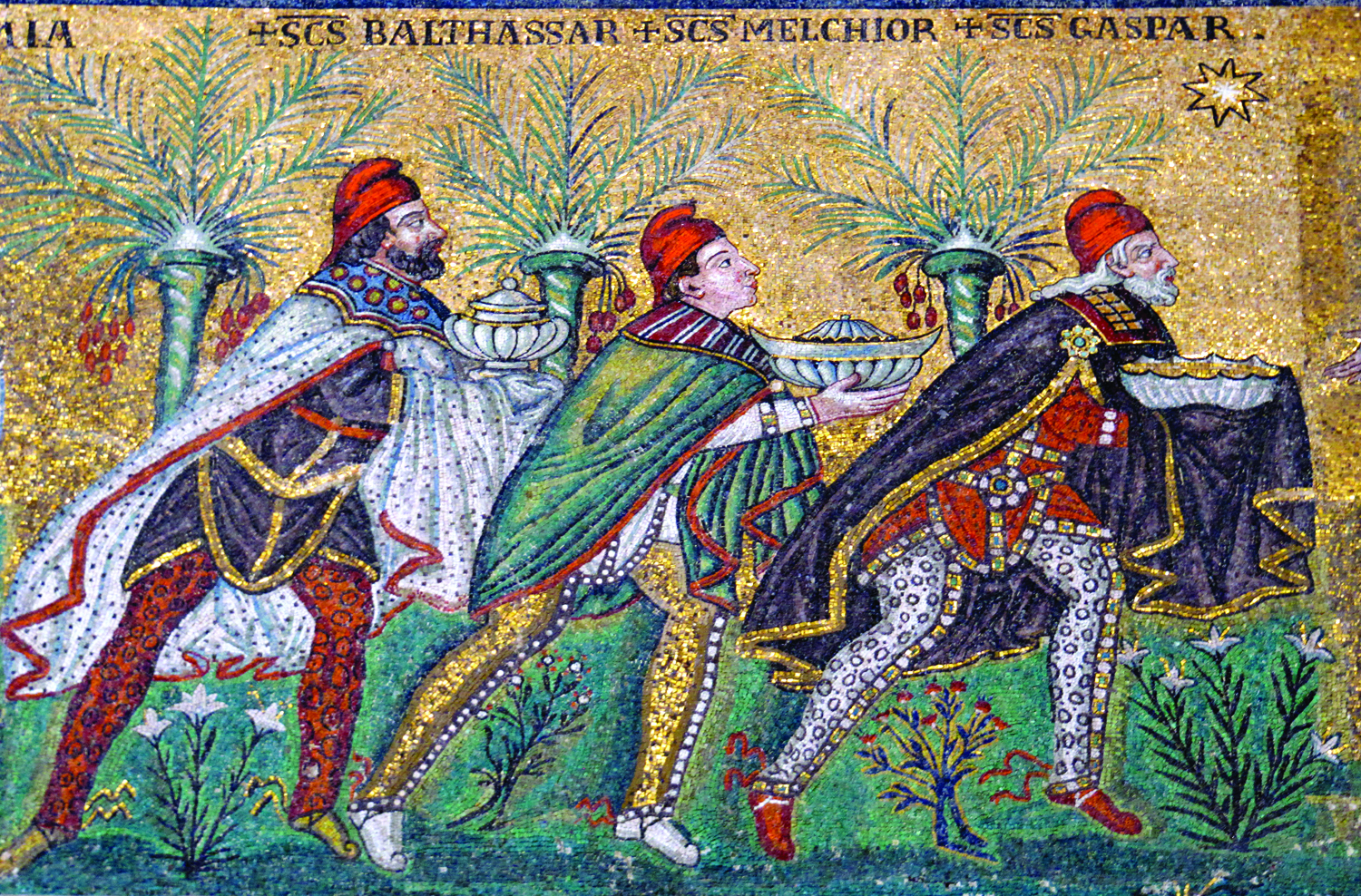
The conversation the Magi had with Herod was extremely nuanced. Did you notice what Herod did not say? When asked about the King of the Jews, Herod did not claim to be King of the Jews. Herod was living a lie. He could not claim what he knew to be a lie – not even despicable old Herod! He lived a lie, sitting as King, a puppet of the Romans and no friend to the Jews. But hidden in our lies God brings the unpleasant truth none of us likes to hear or admit. When confronted with it, we cannot deny it; but instead of pain we find salvation there!
The Word of God is unpleasant truth that intrudes upon the comfortable lies of our everyday lives. We tell ourselves that sin is normal, that you can’t avoid it so make your peace with it. We tell ourselves that our sins are not as bad as the sins of others. We tell ourselves that we can make up for our sins and God really doesn’t expect anyone to be good, anyway. Sin is not natural – it is a corruption of our nature. Eden corrupted what God had made and turned us into lies who prefer lies to truth.
We say that sin is more an occasional lapse when we are weak more than it is a fatal condition that infects ever inch of us. That is the comfortable lie but the truth is that we wear the clothing of death and sin has tainted everything we are and do.
We tell ourselves that all we really need is a little motivation and we can be better people, that faith is more about inspiring the best in us than anything else. But we don’t need a better cheering section to be good people. What need is a Savior who exposes the shameful lies of sin and its death with the light that shines in the darkness. We need a Savior and Redeemer. We don’t need a King to look up to but a Savior who dies for us.
The devil is constantly telling us to hide in the shadows, to live in the lies that appear comfortable but only impart misery. Christ does just the opposite. He exposes the lies and delivers to us the hard truth that saves. We don’t need a role model but a Savior who is born of the Spirit and a Virgin in the most unlikely of places like Bethlehem.
We have a God who comes to us because we could not come to Him. He came to wear the soiled clothing of our sin and in the great and surprising exchange, He gives us His holiness as our new clothing. We do not need a road map to God but a God who finds us in our lost and sinful condition, who sorts out the comfortable lies that we tell ourselves, and leads us into the Light of His truth where salvation is to be found.
For all his bravado, Herod knew the truth. He was a sham of a king living on a borrowed throne that belonged to another. The Magi’s presence made him confront the lie he tried to avoid.
Every Sunday the Word of the Lord shines like the star that led the Magi. It brings us to the place where lies are exchanged for truth that saves. It takes our dead flesh and breathes into it the life of the Spirit so that we might confront our lies and believe the truth. Every Sunday is an Epiphany, a weekly Epiphany, truth telling to sinners who love their lies and who find comfort in the shadows and darkness where lies live.
We don’t need a motivator. We don’t need someone to inspire us. We don’t need a little push to get us over the top. We don’t occasional forgiveness for occasional sins. We need the Light that shines in the darkness, that leads the blind to see, the deaf to hear, the lame to walk, the dead to live. We need a Savior strong enough to wear our flesh and blood and carry the burden of our every sin even to death on a cross. We need truth that confronts all our lies and exposes all our sin. We need a voice strong enough to call us to repentance.
The voice of God speaks in no half-truths nor does it lie. It speaks only truth – the hard truth that saves. Even strangers from the East who do not belong find a home where this truth lives in the flesh and blood of our Savior. Herod knew enough to fear the truth – for truth cannot co-exist with lies. So, now we come. Let us be as honest. The mercy of God cannot live in hearts that love lies and darkness and sin. Believe, repent, live.
The Light of Christ shines in the darkness. It brings the out cast and foreigner to find home in the mercy of God. It calls the fearful from their comfortable shadows, darkness, and lies into the Light of Christ that saves. It shines where death once reigned and it refuses to allow death its victory. That is the King of Kings whom the Magi found where prophets had promised. In Epiphany we come where prophets have also promised the King of Kings will be – forgiving the sinner, welcoming the stranger, giving the outcast a home, and bestowing life upon the dead in trespasses and sins. What a blessed Epiphany!
The conversation the Magi had with Herod was extremely nuanced. Did you notice what Herod did not say? When asked about the King of the Jews, Herod did not claim to be King of the Jews. Herod was living a lie. He could not claim what he knew to be a lie – not even despicable old Herod! He lived a lie, sitting as King, a puppet of the Romans and no friend to the Jews. But hidden in our lies God brings the unpleasant truth none of us likes to hear or admit. When confronted with it, we cannot deny it; but instead of pain we find salvation there!
The Word of God is unpleasant truth that intrudes upon the comfortable lies of our everyday lives. We tell ourselves that sin is normal, that you can’t avoid it so make your peace with it. We tell ourselves that our sins are not as bad as the sins of others. We tell ourselves that we can make up for our sins and God really doesn’t expect anyone to be good, anyway. Sin is not natural – it is a corruption of our nature. Eden corrupted what God had made and turned us into lies who prefer lies to truth.
We say that sin is more an occasional lapse when we are weak more than it is a fatal condition that infects ever inch of us. That is the comfortable lie but the truth is that we wear the clothing of death and sin has tainted everything we are and do.
We tell ourselves that all we really need is a little motivation and we can be better people, that faith is more about inspiring the best in us than anything else. But we don’t need a better cheering section to be good people. What need is a Savior who exposes the shameful lies of sin and its death with the light that shines in the darkness. We need a Savior and Redeemer. We don’t need a King to look up to but a Savior who dies for us.
The devil is constantly telling us to hide in the shadows, to live in the lies that appear comfortable but only impart misery. Christ does just the opposite. He exposes the lies and delivers to us the hard truth that saves. We don’t need a role model but a Savior who is born of the Spirit and a Virgin in the most unlikely of places like Bethlehem.
We have a God who comes to us because we could not come to Him. He came to wear the soiled clothing of our sin and in the great and surprising exchange, He gives us His holiness as our new clothing. We do not need a road map to God but a God who finds us in our lost and sinful condition, who sorts out the comfortable lies that we tell ourselves, and leads us into the Light of His truth where salvation is to be found.
For all his bravado, Herod knew the truth. He was a sham of a king living on a borrowed throne that belonged to another. The Magi’s presence made him confront the lie he tried to avoid.
Every Sunday the Word of the Lord shines like the star that led the Magi. It brings us to the place where lies are exchanged for truth that saves. It takes our dead flesh and breathes into it the life of the Spirit so that we might confront our lies and believe the truth. Every Sunday is an Epiphany, a weekly Epiphany, truth telling to sinners who love their lies and who find comfort in the shadows and darkness where lies live.
We don’t need a motivator. We don’t need someone to inspire us. We don’t need a little push to get us over the top. We don’t occasional forgiveness for occasional sins. We need the Light that shines in the darkness, that leads the blind to see, the deaf to hear, the lame to walk, the dead to live. We need a Savior strong enough to wear our flesh and blood and carry the burden of our every sin even to death on a cross. We need truth that confronts all our lies and exposes all our sin. We need a voice strong enough to call us to repentance.
The voice of God speaks in no half-truths nor does it lie. It speaks only truth – the hard truth that saves. Even strangers from the East who do not belong find a home where this truth lives in the flesh and blood of our Savior. Herod knew enough to fear the truth – for truth cannot co-exist with lies. So, now we come. Let us be as honest. The mercy of God cannot live in hearts that love lies and darkness and sin. Believe, repent, live.
The Light of Christ shines in the darkness. It brings the out cast and foreigner to find home in the mercy of God. It calls the fearful from their comfortable shadows, darkness, and lies into the Light of Christ that saves. It shines where death once reigned and it refuses to allow death its victory. That is the King of Kings whom the Magi found where prophets had promised. In Epiphany we come where prophets have also promised the King of Kings will be – forgiving the sinner, welcoming the stranger, giving the outcast a home, and bestowing life upon the dead in trespasses and sins. What a blessed Epiphany!
Tuesday, January 5, 2016
Your name is Christian
Sermon for the Eve of the Circumcision and Name of Jesus preached by the Rev. Daniel Ulrich on New Year's Eve, s0215.
Names are very important to us. We name everything: roads, buildings, statues, pets, and even our cars. Everything has its own name and it becomes synonymous with that name. This is especially true for us and our names. Our names our foundational to who we are. A lot of discussion and consideration takes place when parents decide on what they’ll name their children. It’s of utmost importance that they give them the right name, because that’ll be who they are, it’ll identify them for the rest of their lives.
I. Parents choose names for many different reasons. Some pick a name because they like the way it sounds. Others name their child after someone they admire, like a professional athlete or a movie star. Some name them after a close friend or relative. This would’ve been the case for John the Baptist. At his circumcision and naming celebration, the people wanted to give him the name Zechariah, after his father (Lk 1:59). Sometimes parents give their child a certain name because of that name’s meaning. For example, Isaac, which means “he laughs,” was given this name because when Sarah gave birth to him in her old age, she praised the Lord and said, “God has made laughter for me; everyone who hears will laugh over me” (Gn 21:6).
Names traditionally had meanings. They told you something about that person. Isaac’s name told you that his birth was a joyous one and a blessing from God. Our last names are a great example of this, or at least they were. At one point in history, a person’s last name told you their occupation. If you were a Baker, that meant you baked. If you were a Miller, you milled; and if you were a Smith, then you smithed. Jesus’ name is very much like these last names, because His name tells us what He does.
The name Jesus is the Greek version of the Hebrew name Joshua, which means “the LORD is salvation.” The names Jesus and Joshua were very popular amongst the believing people during Jesus’ time. However, only in this Son of Mary was the meaning of this name being fulfilled. Jesus’ name and purpose go together. His identity and work go hand in hand. The name “Jesus” tells us why this Child was born. In Matthew’s gospel, we hear the angel tell Joseph that he is to give Mary’s child the name Jesus, because He will save His people from their sins (Mt 1:21). And He accomplished this work with His perfect life and sacrificial death on the cross.
II. Jesus life was a perfect life. Never once was He in the wrong. He submitted to all of God’s Law; He fulfilled it all, including being circumcised on the eighth day. In Genesis 17, God made a covenant with Abram, a promise. He gave Abram a new name, Abraham, and He promised to make him the father of a multitude of nations, to give him and his offspring the land of Canaan, and to be their God (Gn 17:4-8). Within this great promise was the promise of the Savior, the one who would save all of God’s people. As a sign of this covenant, as a reminder of God’s promise, God commanded that every male, eight days old and up, be circumcised.
This law of circumcision continued throughout the generations, and Jesus submitted to it. He submitted to this law and to the rest of God’s Law. He obeyed all of the 10 Commandments, in His actions and in His thoughts. He always lived according to God’s will. Jesus loved God the Father with all His heart, with all His soul, with all His strength, and with all His mind, and He loved His neighbors as Himself (Lk 10:27). For us this is impossible, because we’re sinful by nature, we’re born with original sin. But Christ wasn’t. He wasn’t born in a natural way, He was conceived by the Holy Spirit, born of the Virgin Mary, He is true God and true man; and therefore He was born sinless. And yet, even though He was sinless, He still willingly submitted to the Law.
Jesus had to do this in order to fulfill His name, to accomplish His work of salvation. He had to submit to the Law so that He could atone for your sin, to pay the penalty for it, to be your substitute on the cross. If Christ didn’t do this, if He didn’t submit to the Law, if He wasn’t sinless, His sacrifice would be completely useless. It would do you no good. His death would be no different from the death of any other person. But, because He willingly submitted to God’s Law, because He was sinless and lived the perfect life that is required of you, He is the perfect substitute. His sacrifice is pleasing to God, His life is a vicarious satisfaction. His perfect life is credited to you. Jesus Christ, without sin, became your sin-bearer. He shed His blood so that you can be declared innocent and named as one of God’s people.
III. The rite of circumcision was completely counter cultural. It was something unheard of and it goes against our basic reasoning. But God used it for His purpose. Through this rite, God brought an eight day old infant boy into His people. It marked the boy as one who would receive God’s promises. In circumcision, males received a permanent and visible sign of God’s promise to send a Savior. No Hebrew man could live a day without being reminded of this promise that God made long before to Abraham.
Today, God continues to remind us of this promise, and its fulfillment in Jesus. Today, God continues to bring us into His people, not with the rite of circumcision, but through the Sacrament of Holy Baptism.
St. Paul, in his letters to the Colossians, connects circumcision and baptism. He writes, “In [Christ] also you were circumcised with a circumcision made without hands, by putting off the body of the flesh, by the circumcision of Christ, having been buried with him in baptism, in which you were also raised with him through faith in the powerful work of God, who raised him from the dead” (Co2:11-12). In your baptism, your sin has been circumcised, it has been cut away, and you’ve been raised with Christ. In those waters, you receive all the benefits of what Christ has done for you; your sins are forgiven, you’re given saving faith in Him, and you receive everlasting life. At that font, you’ve been baptized into Christ and put Him on (Gal 3:27). As the pastor poured water over your head saying, “I baptize you in the name of the Father, and of the Son, and of the Holy Spirit,” Christ’s name is put upon you, God adopts you as one of His children. He makes you one of Abraham’s offspring, and therefore an heir of God’s promises to him, an heir of everlasting life through your Savior. And just like how God gave Abram the new name Abraham, your Father gives you a new name. You’re given the name Christian. Names identify us and tell others who we are. In the Sacrament of Holy Baptism God gives you a new name. In those saving waters THE NAME OF YOUR SAVIOR IS PLACED UPON YOU, you’re called Christian, and this name is with you every day; it identifies you for the rest of your life. It identifies you as one who has been clothed with Jesus’ righteousness, washed clean in His blood. It identifies you as one who trusts in Jesus life, death, and resurrection. It identifies you as a child of God who has everlasting life in Him. In Jesus’ name...Amen.
Liberal Christianity – the bastard daughter of the Enlightenment
Liberal Christianity – the bastard daughter of the Enlightenment... now there is a line you are not soon to forget. I wish I could say I had written it but I did not. And another one, well, several lines:
Unlike either the Renaissance or the Reformation, the Enlightenment had begun not as an attempt to rescue some hallowed past, but as an assault on the past in the name of the future…It was a period which sought to overturn every intellectual assumption, every dogma, every ‘prejudice’ (a favourite term) that had previously exercised any hold over the minds of men. Anthony Pagden.
There is the problem. Too often shallow history sees the Enlightenment is seen as one side of the coin of which the Reformation is the other -- a vast movement of freedom casting off the constraints of authoritarianism, Biblicism, and dogmatism in favor of a Star Trek approach to the understanding of God and man -- to boldly go where no man has gone before. What foolishness!
The Reformation began as a quest FOR authority -- not some contrived authority posited in men or councils who may agree for a moment only to change their minds later but an eternal authority that has the yesterday, today, and forever stamp upon it. Luther was a man on a quest not from the past but into the past, to the church before institutions had assumed what belonged to the voice of the Apostles and their written words that carried the authority of the Son of God. It was never a sola scriptura in the sense of the Bible alone, naked, ripped from the community of faith and the succession of believers whose creeds and confessions flowed from the living Word. It was never a sola under the domain of reason trying to tie up God's loose ends and systematize and organize a God who often appears wild (gadfry, Lutherans have never really produced much in the way of systematic theology to tame the untamed God or His Word). We live within the comfort of paradox that seems to conflict but lives at the same time awaiting the fullness of the Spirit and the disclosure which will render the questions mute.
Liberal Christianity is surely the bastard daughter of the Enlightenment. It is the repudiation of authority and the invention of truth on a relative scale, ever evolving and never the same. It is centered not in God nor in His Word but in man, the god who lives at the center of all things and rules his universe (if only from the vantage point of his own mind). Liberal Christianity eschews authority and truth just as much as the Enlightenment takes on as its guiding principle the refutation of the past. Liberalism always appears egalitarian but is in reality the most snobbish and elite of ideas. Freedom yes but not for all -- everyone else must live within the politically corrected vocabulary and ideas that have the approval of the cultural elite for the idea that we are all free and equal is, of course, an illusion. Some are always freer and more equal than others.
Lutherans are so often misunderstood even as they so often misunderstand themselves. The golden thread through our Confessions is not any of the buzz words of the Enlightenment but rather the clear and manifest insistence that we have not deviated from Scripture, from catholic doctrine, or from catholic practice and, in this regard, we are the fruit of the one authority that is genuine and that has the power to hold up our lives -- the efficacious means of grace in the Word and Sacraments who are the God whom we confess at work to deliver what He has promised to all who will receive His gifts.
Unlike either the Renaissance or the Reformation, the Enlightenment had begun not as an attempt to rescue some hallowed past, but as an assault on the past in the name of the future…It was a period which sought to overturn every intellectual assumption, every dogma, every ‘prejudice’ (a favourite term) that had previously exercised any hold over the minds of men. Anthony Pagden.
There is the problem. Too often shallow history sees the Enlightenment is seen as one side of the coin of which the Reformation is the other -- a vast movement of freedom casting off the constraints of authoritarianism, Biblicism, and dogmatism in favor of a Star Trek approach to the understanding of God and man -- to boldly go where no man has gone before. What foolishness!
The Reformation began as a quest FOR authority -- not some contrived authority posited in men or councils who may agree for a moment only to change their minds later but an eternal authority that has the yesterday, today, and forever stamp upon it. Luther was a man on a quest not from the past but into the past, to the church before institutions had assumed what belonged to the voice of the Apostles and their written words that carried the authority of the Son of God. It was never a sola scriptura in the sense of the Bible alone, naked, ripped from the community of faith and the succession of believers whose creeds and confessions flowed from the living Word. It was never a sola under the domain of reason trying to tie up God's loose ends and systematize and organize a God who often appears wild (gadfry, Lutherans have never really produced much in the way of systematic theology to tame the untamed God or His Word). We live within the comfort of paradox that seems to conflict but lives at the same time awaiting the fullness of the Spirit and the disclosure which will render the questions mute.
Liberal Christianity is surely the bastard daughter of the Enlightenment. It is the repudiation of authority and the invention of truth on a relative scale, ever evolving and never the same. It is centered not in God nor in His Word but in man, the god who lives at the center of all things and rules his universe (if only from the vantage point of his own mind). Liberal Christianity eschews authority and truth just as much as the Enlightenment takes on as its guiding principle the refutation of the past. Liberalism always appears egalitarian but is in reality the most snobbish and elite of ideas. Freedom yes but not for all -- everyone else must live within the politically corrected vocabulary and ideas that have the approval of the cultural elite for the idea that we are all free and equal is, of course, an illusion. Some are always freer and more equal than others.
Lutherans are so often misunderstood even as they so often misunderstand themselves. The golden thread through our Confessions is not any of the buzz words of the Enlightenment but rather the clear and manifest insistence that we have not deviated from Scripture, from catholic doctrine, or from catholic practice and, in this regard, we are the fruit of the one authority that is genuine and that has the power to hold up our lives -- the efficacious means of grace in the Word and Sacraments who are the God whom we confess at work to deliver what He has promised to all who will receive His gifts.
Monday, January 4, 2016
Mormons take stand on same sex marriage. . .
In
the last two years, Nathan Kitchen has revealed to his five children
that he is gay, gone through a divorce from his wife and grappled with
how to stay in a religion that does not condone his lifestyle. Now
comes the toughest task: telling his children that he could be kicked
out of the Church of Jesus Christ of Latter-day Saints if he marries a
man, and warning his two youngest, 11 and 15, that they might be barred
from serving a mission under new church rules.
“It’s
almost like they now have to choose between a gay father and a church
that they love,” said Mr. Kitchen, a 47-year-old dentist from Gilbert,
Ariz. “This is almost too much to bear.” The changes to the Mormon handbook — disseminated last week to church leaders around the world — say that being in a same-sex marriage
warrants ousting from the religion and that children of gay parents
must wait until they are 18 and disavow homosexual relationships to be
baptized.
The
revisions set off a wave of anger, confusion and sadness for a growing
faction of L.G.B.T.-supportive Mormons who were buoyed in recent years
by church leaders’ calls for more love and understanding for lesbian,
gay, bisexual and transgender members. Mormon
officials said the goal of the handbook changes was to provide clarity
to lay leaders who run congregations. The religion has long been on
record as opposing same-sex marriages, a church spokesman, Eric Hawkins,
said.
My Comments. . .
For too long the media and many Christians have suggested that this is merely a matter of practice and not a doctrinal one. Whether you like the Mormons or not, they have made it clear that this is not merely a matter of practice but of essential teaching. They have made consequences that affect not only the person who enters a same sex marriage but the families of those individuals. I am sure that they will be demonized and it is probably a PR fiasco but I personally hope that they do not back down. I do not agree with Mormons on much but I cannot but appreciate that they have stood their ground in shifting sand that suggests many Evangelicals are backing away from their public opposition and trying to find a means of accommodation that will deflect the heat from them -- especially the larger mega churches.
Churches that oppose same sex marriage are in grave danger of being shut out of the public square and of being labelled as hate speakers. It is not without irony that the same voices who pleaded for toleration are among the most intolerant of those who disagree with the pro-GLBT agenda. It is clear that they do not want toleration but insist upon full agreement and full compliance or those who disagree cannot speak to the issue in public. This is the further narrowing of religious freedom into a freedom of worship only. Could it be that those who disagree with same sex marriage will be able to say what they want behind the closed doors of their own congregations gathered for worship but will find the world outside that refuge no longer tolerant of their views nor willing to listen to anyone who has the gall to disagree with them? Only the SCOTUS can intervene and restore what our bill of rights mean and guarantee the freedom of religion and freedom of speech that was the bedrock of the American identity but the court has proven largely sympathetic to the cause and may be looking for a way to weasel through a compromise which dilutes the essential freedoms our constitution supposedly guarantees to churches and to religious expression -- even within the public square!
Sunday, January 3, 2016
Incarnatus est. . .
Thoughts on the Incarnation. . .
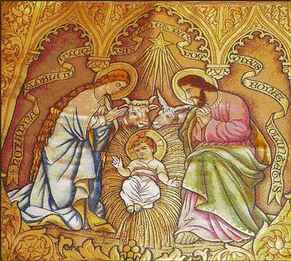
From St. Jerome: He found no room in the Holy of Holies that shone with gold, precious stones, pure silk and silver. He is not born in the midst of gold and riches, but in the midst of dung, in a stable where our sins were filthier than the dung. He is born on a dunghill in order to lift up those who come from it: “From the dunghill he lifts up the poor.” (Ps 113:7 (112:7 LXX). [On the Nativity of the Lord]
From Gaius Marius Victorinus: As there is a fullness in things, so there is in time. For each thing has its fullness in a full and copious perfection that abounds in everything. Christ is the fullness of things. The fullness of times is the consummation of freedom. So that His fullness may be whole and perfect Christ collects His members who are scattered, and in this way His fullness is achieved. So in the same way the fullness of times was achieved when all had become ripe for faith and sins had increased to the utmost, so that a remedy was necessarily sought in the judgment of all things. Hence Christ came when the fullness of time was completed. [Epistle to the Galatians 2.4.3-4]
From St. Ambrose: He was a baby and a child, so that you may be a perfect man. He was wrapped in saddling cloths so that you be freed from the snares of death. He was in a manger so that you may be in the altar. He was on earth that you may be in the stars. He had no other place in the inn so that you may have many mansions in the heavens. “He, being rich, became poor for your sakes that through His poverty you might be rich”. (2 Cor 8:9) Therefore His poverty is our inheritance, and the Lord’s weakness is our virture. He chose to lack for Himself that He may abound for all. The sobs of that appalling infancy cleanse me, those tears wash away my sins. Therefore, Lord Jesus, I owe more to your sufferings because I was redeemed than I do to works for which I was created…. You see that He is in swaddling clothes. You do not see that He is in heaven. You hear the cries of an infant, but you do not hear the lowing of an ox recognizing its Master, for the ox knows his Owner and the donkey his Master’s crib. [Exposition of the Gospel of Luke 2.41-42]
From St. Jerome: The Lord is born on earth, and He does not even have a cell in which to be born, for there was no room for Him in the inn. The entire human race had a place, and the Lord about to born on earth had none. He found no room among men. He found no room in Plato, none in Aristotle, but in a manger, among beasts of burden and brute animals, and among the simple too, and the innocent. For that reason the Lord says in the Gospel, “The foxes have dens, and the birds of the air have nests, but the Son of Man has nowhere to lay His head.” (Luke 9:58). [Homilies on the Gospels 1.6]
From St. Jerome: He found no room in the Holy of Holies that shone with gold, precious stones, pure silk and silver. He is not born in the midst of gold and riches, but in the midst of dung, in a stable where our sins were filthier than the dung. He is born on a dunghill in order to lift up those who come from it: “From the dunghill he lifts up the poor.” (Ps 113:7 (112:7 LXX). [On the Nativity of the Lord]
From Gaius Marius Victorinus: As there is a fullness in things, so there is in time. For each thing has its fullness in a full and copious perfection that abounds in everything. Christ is the fullness of things. The fullness of times is the consummation of freedom. So that His fullness may be whole and perfect Christ collects His members who are scattered, and in this way His fullness is achieved. So in the same way the fullness of times was achieved when all had become ripe for faith and sins had increased to the utmost, so that a remedy was necessarily sought in the judgment of all things. Hence Christ came when the fullness of time was completed. [Epistle to the Galatians 2.4.3-4]
From St. Ambrose: He was a baby and a child, so that you may be a perfect man. He was wrapped in saddling cloths so that you be freed from the snares of death. He was in a manger so that you may be in the altar. He was on earth that you may be in the stars. He had no other place in the inn so that you may have many mansions in the heavens. “He, being rich, became poor for your sakes that through His poverty you might be rich”. (2 Cor 8:9) Therefore His poverty is our inheritance, and the Lord’s weakness is our virture. He chose to lack for Himself that He may abound for all. The sobs of that appalling infancy cleanse me, those tears wash away my sins. Therefore, Lord Jesus, I owe more to your sufferings because I was redeemed than I do to works for which I was created…. You see that He is in swaddling clothes. You do not see that He is in heaven. You hear the cries of an infant, but you do not hear the lowing of an ox recognizing its Master, for the ox knows his Owner and the donkey his Master’s crib. [Exposition of the Gospel of Luke 2.41-42]
From St. Jerome: The Lord is born on earth, and He does not even have a cell in which to be born, for there was no room for Him in the inn. The entire human race had a place, and the Lord about to born on earth had none. He found no room among men. He found no room in Plato, none in Aristotle, but in a manger, among beasts of burden and brute animals, and among the simple too, and the innocent. For that reason the Lord says in the Gospel, “The foxes have dens, and the birds of the air have nests, but the Son of Man has nowhere to lay His head.” (Luke 9:58). [Homilies on the Gospels 1.6]
All things to all students? Or not. . .
Something has got to give. . .
I have always thought that we need two different types of colleges, liberal arts colleges and professional colleges. Liberal arts colleges can have very high admission standards, no quotas, and continue to recruit only the ‘best of the best’ American youth, and can dispense with most ‘babysitting’ administrative offices, all varsity athletics, etc. Professional colleges, whose chief purpose is to get young people jobs, can simply teach business skills and basic math. The latter can generally function online, like the University of Phoenix, which does a perfectly good job with this sort of thing – and again, you can dispense with all the administrative functions, get rid of dorms/residencies, get rid of varsity sports, etc. The latter could become dirt-cheap, potentially even free (i.e., taxpayer-funded), since running an online curriculum costs almost nothing.
The problem is that most state universities want to be all these things at once – a babysitting service, a professional sports team, a liberal arts academy, a research facility, and a job training agency.
There is much wisdom here. I wonder if those who ponder the future of church colleges are listening. We tend to have the Pauline model in mind -- be all things to all people! We think that the best model of a church colleges and universities is to be everything a successful state school is (defining success by size) and then adding a little Christian frosting to the largely secular cake. We Lutherans are not the only ones who are struggling with what it means to be a Lutheran institution. The Roman Catholics are also complaining about colleges and universities who bear only the slightest resemblance to their church sponsors and in which faith seems to be peripheral to what happens in the classroom and on the campus instead of at the core and center of it all.
Maybe this is exactly what we need to do -- to embrace the vision of a liberal arts college and ditch the expensive frills that seem to be front and center even on Lutheran campuses. I don't know. But what I do know is that the mission of our colleges and universities has dramatically changed whether we noticed or not. Nearly every Concordia was established to be first and foremost a school not merely of the church but for the church -- producing church work students for the positions of Lutheran pastor and parochial school teacher. Now these are distinct and, in some cases, largely absent identities on campuses that now train Christians to fulfill their Christian callings in the world. It appears that there are not even enough Lutheran students to keep the majority of our campuses Lutheran in faculty, staff, and student body. Is this the shape of Lutheran institutions of higher learning or are there other choices and models? This is what we will be wrestling about for some time both in the church and within the very institutions themselves.
There are some Lutheran deep pockets but not enough of them for us to be all things to all people. So whether we want to or not, we will have to choose who we are and who we want to be in the future. I hope that this conversation is taking place among the administrators of the schools, the Concordia University system itself, and within the general population of the Lutheran churches who own and sponsor these schools. We have no place to hide from the coming future and it is best for us all to have these conversations out in the open and quickly or we will squander the time and resources God has given us -- wasting both opportunity and the dollars that could clear up the muddy waters.
I have always thought that we need two different types of colleges, liberal arts colleges and professional colleges. Liberal arts colleges can have very high admission standards, no quotas, and continue to recruit only the ‘best of the best’ American youth, and can dispense with most ‘babysitting’ administrative offices, all varsity athletics, etc. Professional colleges, whose chief purpose is to get young people jobs, can simply teach business skills and basic math. The latter can generally function online, like the University of Phoenix, which does a perfectly good job with this sort of thing – and again, you can dispense with all the administrative functions, get rid of dorms/residencies, get rid of varsity sports, etc. The latter could become dirt-cheap, potentially even free (i.e., taxpayer-funded), since running an online curriculum costs almost nothing.
The problem is that most state universities want to be all these things at once – a babysitting service, a professional sports team, a liberal arts academy, a research facility, and a job training agency.
There is much wisdom here. I wonder if those who ponder the future of church colleges are listening. We tend to have the Pauline model in mind -- be all things to all people! We think that the best model of a church colleges and universities is to be everything a successful state school is (defining success by size) and then adding a little Christian frosting to the largely secular cake. We Lutherans are not the only ones who are struggling with what it means to be a Lutheran institution. The Roman Catholics are also complaining about colleges and universities who bear only the slightest resemblance to their church sponsors and in which faith seems to be peripheral to what happens in the classroom and on the campus instead of at the core and center of it all.
Maybe this is exactly what we need to do -- to embrace the vision of a liberal arts college and ditch the expensive frills that seem to be front and center even on Lutheran campuses. I don't know. But what I do know is that the mission of our colleges and universities has dramatically changed whether we noticed or not. Nearly every Concordia was established to be first and foremost a school not merely of the church but for the church -- producing church work students for the positions of Lutheran pastor and parochial school teacher. Now these are distinct and, in some cases, largely absent identities on campuses that now train Christians to fulfill their Christian callings in the world. It appears that there are not even enough Lutheran students to keep the majority of our campuses Lutheran in faculty, staff, and student body. Is this the shape of Lutheran institutions of higher learning or are there other choices and models? This is what we will be wrestling about for some time both in the church and within the very institutions themselves.
There are some Lutheran deep pockets but not enough of them for us to be all things to all people. So whether we want to or not, we will have to choose who we are and who we want to be in the future. I hope that this conversation is taking place among the administrators of the schools, the Concordia University system itself, and within the general population of the Lutheran churches who own and sponsor these schools. We have no place to hide from the coming future and it is best for us all to have these conversations out in the open and quickly or we will squander the time and resources God has given us -- wasting both opportunity and the dollars that could clear up the muddy waters.
Saturday, January 2, 2016
What to celebrate. . .
But hidden in the story was this: the 3.7 million-member church. . . There is it in black and white and official, right from the denomination itself. Just 3.7M members still counted as the Evangelical Lutheran Church in America! So why am I, a member of a church body with 2.3M members fixating upon this statistic? When this church body began with great fanfare, it boasted 5.3M members. Now, 27 years later, they have bleed off a third of their membership. Who even knows what else hides behind this current statistic of 3.7M baptized members. The ELCA has nearly dropped a church body almost the size of the Lutheran Church-Missouri Synod. Now, I am not suggesting that the picture of Lutheranism in other jurisdictions of all that much rosier but in the case of the ELCA perhaps half of this number came in the past several years following the 2009 CWA decision to mainstream GLBT folks into all positions of membership, leadership, and clergy. Literally two church bodies have been born of this split (the North American Lutheran Church and the Lutheran Congregations in Mission for Christ). This from what was supposed to end Lutheran divisions and become the blueprint of unity to thrust the churches forward.
My point is not to pile on the ELCA and its sad story. My point is that a church body thrives only when its people are fully united in doctrine and practice and not through much celebrated diversity. Reconciled diversity lasts only as long as the other options are less appealing that staying where you do not feel at home. At some point the ELCA was abound to divide. Compromises that were fashioned together to glue an ALC, LCA, and AELC together could not weather the major storms of mission, ministry ecumenical agendas, and social justice positions that left the past behind in the dust of a church body scrambling to find a new identity.
The warning is clear -- commonly agreed upon and confessed doctrine and uniformity of practice do not prevent unity but make unity possible and even strong. We hear over and over again that we don't need doctrine and practice police enforcing rules upon unwilling congregations. We all agree on this. But what we do need are pastors and parishes vigorously teaching and confessing the common faith and willing to flaunt the direction of the world to practice this unity. We have nothing to fear from our Lutheran confessional identity and our willingness to practice in conformity with that confessional identity. Being the Lutherans we claim to be is our best and biggest hope for the future. Authentic to the Scriptures and to our Confessions, we know both the questions and the answers that the world is yearning to know. This is the robust Lutheranism which, when it has practiced, has thrived and can still be our best hope for the future, for our children, and for our grandchildren.
We are surrounded by the examples of once vibrant church bodies who have forgotten who they were and now have nothing left to celebrate but a diversity that does not even honestly reflect the statistics of who they are now -- church bodies who once produced faithful confessors and vibrant preaching now are left to mirror the stale old politically correct social advocacy of the liberal left. We will all end up there unless we rediscover our confessional heritage and embrace this with the confidence the world longs to hear and know. The sad truth is that Lutheranism was much more united in our divisions of the 1950s than the pale imitation of unity that passes for the wilting flower of a 27 year old merger and an LCMS that sometimes seems unsure what kind of Lutheran it wants to be.
Could it that the largest Lutheran Church in the United States is the U2BLs -- those who used to be Lutherans and fell away? Think about it...
Friday, January 1, 2016
Faithful witness from Down Under. . .
A Covenant to Promote Biblical Renewal within the Lutheran Church of Australia... It is certainly a long title and not a brief document either. It is a faithful witness and a call to faithful witness for those within the Lutheran Church of Australia. It is pleasantly written in clear and unmistakable language that is accessible for everyone. It is also a deep and profound witness and call to remain faithful to the Scriptures and the Confessions at a time when Biblical illiteracy and suspicion and a nebulous confessional subscription seem to rule the day in Lutheran circles. All in all it is an impressive document with impressive signatories and we should all give thanks to God for the faithful who contend for the faith within the LCA.
If you have a care and concern for faithful Lutheran witness, careful and steadfast churchmanship, and a concern to pass on the faith as faithfully as it was received, it will warm your heart to read and rejoice in the covenant proposed for the renewal of the faith (and not just a concern for the ordination of women) by Dr. Gregory Lockwood. The Lord of the Church is being well served by folks like Dr. Lockwood and the many who have joined in his call to renewal. God bless you all who heed the call and endeavor to remain steadfast and immovable in the orthodox and catholic faith.
Read the document here. . .
Okay, I cannot help myself. Here is the conclusion:
If you have a care and concern for faithful Lutheran witness, careful and steadfast churchmanship, and a concern to pass on the faith as faithfully as it was received, it will warm your heart to read and rejoice in the covenant proposed for the renewal of the faith (and not just a concern for the ordination of women) by Dr. Gregory Lockwood. The Lord of the Church is being well served by folks like Dr. Lockwood and the many who have joined in his call to renewal. God bless you all who heed the call and endeavor to remain steadfast and immovable in the orthodox and catholic faith.
Read the document here. . .
Okay, I cannot help myself. Here is the conclusion:
We have prepared these theses for our mutual encouragement and as an appeal to all LCA members to join us in our endeavour to uphold the authority of God’s Word.
We commit ourselves to provide sound biblical teaching in line with these theses, and thereby promote renewal within the Church.
We are thankful for the unity God gave the LCA at its inception. With his help we will strive to preserve that unity on the basis of the common confession of the two former churches. We pledge ourselves to work for the building up of the church in love, so that it will grow to maturity in Christ in its life and mission, and not be blown around by every wind of doctrine. (Ephesians 4:14-16)
In order to avoid the disunity and division fuelled by the critical attitudes of some towards our foundational documents, and in order to resolve the issues that have arisen among us, we reaffirm the following thesis on ‘Principles governing church fellowship’:
Where differences in teaching and practice exist or arise between Churches uniting, these differences are to be removed by willingly submitting to the authority of the Word of God. Where a difference in teaching or practice is a departure from the doctrine of the Bible, such difference cannot be tolerated, but must be pointed out as an error, on the basis of clear passages of Holy Writ; and if the error is persisted in, in spite of instruction, warning, and earnest witness, it must at last lead to a separation.In adopting this covenant, we invite you, the Pastors and lay-members of the LCA, to
append your names to ours as we pledge to uphold and promote the LCA’s confessional basis, so that the church rediscovers fullness of joy in Christ and his Word.
Building an appetite for beauty. . .
Dr. John Patrick, spent the better part of his career in the third world
developing a protocol to rehabilitate starving children. Children would
come to his clinic for treatment in advanced stages of starvation, with
skin loose on bones and internal organs shutting down. Dr. Patrick
developed a rehabilitation protocol which resulted in over 95% success,
and it wasn’t complex, though it confounded the basic instincts of other
doctors until that time. The principle is simple; instead of
immediately stuffing these children full of nutrient rich solutions,
feed them watery broth first. As the child regains appetite, add
substance to the broth, but always allow the appetite to come first.
When the appetite is fully engaged, then let the child eat as much as he
wishes. Today Dr. John Patrick’s method is used throughout the world to
save countless children’s lives.
I found this fascinating both for the history of the good doctor and the applicability of his method to the church. The sad truth is that we have developed an appetite for vulgarity that threatens to consume us. From movies to news, from internet to print, we see more vulgarity and barbarism than almost any age before us (save for those who spent most of their time in the grisly affairs of war, disease, famine, and plague). It has colored our minds and tainted our hearts. We do not merely see naked images but view the erotic in everything from advertisements to media. There is little that is left to the imagination. We watch the explicit images of horror in the reality of news that no longer seems to shock us and in movies that are so real they equally dull our senses to the terror of what they convey. Our conversation is filled with vulgarity -- from the private words whispered out of view of the ears of others to the public oratory that we cannot but hear. Once we compared such salty talk to a drunken sailor but walk down the hallways of the average public middle school or high school and perhaps even drunken sailors might learn a few choice words.
Art and image that claims beauty has sought to shock rather than inspire. From the much celebrated pornographic and offensive art of a Mapplethorp and to the famous crucifix in urine of Andres Serrano to the harsh and stark slabs of concrete, glass, and metal that adorn too many of our cityscapes, beauty is not in the eye of the beholder but absent without leave. While it is easy to dismiss the great artists and artisans of the past as quaint, it is difficult to find many modern examples that idealized the world and life the way the sculptor's chisel and painter's brush once did.
The problem is not that we no longer are surrounded by beauty -- that would be easy to correct. Instead the core of the malady is that we have lost our taste for beauty. It has to be slowly and carefully restored. You cannot cram beauty down the throats of the uninitiated and expect them to appreciate or desire it. Love for beauty and the desire for that which is noble and virtuous must be learned in steps.
So it is that we cannot suddenly thrust upon people the beauty of liturgy, music, and architectural setting and expect them to know what it is or desire it with their full heart. It has to be taught. This is the domain of the parish pastor. He is the teacher of beauty. The stark walls of warehouse buildings cannot be quickly replaced by paint, sculpture, or glass without patient and earnest instruction in beauty. The sound of worship that mirrors the radio cannot be replaced with Gregorian chant or Lutheran chorale without deliberate and painstaking teaching. Such instruction does not end but continues endlessly as generation after generation learn to love that which inspires and ennobles in visual and aural form in a manner consistent with the very words of the Gospel itself.
So I urge you to a long pastorate and to patient teaching if this is your call. I know this from experience. It takes a generation to teach and but a few months or a year to destroy the thirst for that which is good, right, true, beautiful, and majestic. But it is worth it. We fight not merely against the poor choices of those before us but a culture consumed with the base and vulgar all around us. Step by step and little by little we wage a war against the devil's curse -- giving us the stark, the worst, the cheap, and the shameful and then teaching us to love and desire only these.
A new year begins on our calendars but the same old quest is before us -- we have to learn what beauty is, learn its taste, learn to savor its aroma, learn to desire its goodness... and then we will move not only to appreciate the forms of art that inspire but to create that which honors the legacy of the finest in the past and adds the best of this moment. The Gospel is worth it -- worth our best, our noblest, our greatest beauty in response to God's greatest treasure freely offered in His Son. Happy New Year!
I found this fascinating both for the history of the good doctor and the applicability of his method to the church. The sad truth is that we have developed an appetite for vulgarity that threatens to consume us. From movies to news, from internet to print, we see more vulgarity and barbarism than almost any age before us (save for those who spent most of their time in the grisly affairs of war, disease, famine, and plague). It has colored our minds and tainted our hearts. We do not merely see naked images but view the erotic in everything from advertisements to media. There is little that is left to the imagination. We watch the explicit images of horror in the reality of news that no longer seems to shock us and in movies that are so real they equally dull our senses to the terror of what they convey. Our conversation is filled with vulgarity -- from the private words whispered out of view of the ears of others to the public oratory that we cannot but hear. Once we compared such salty talk to a drunken sailor but walk down the hallways of the average public middle school or high school and perhaps even drunken sailors might learn a few choice words.
Art and image that claims beauty has sought to shock rather than inspire. From the much celebrated pornographic and offensive art of a Mapplethorp and to the famous crucifix in urine of Andres Serrano to the harsh and stark slabs of concrete, glass, and metal that adorn too many of our cityscapes, beauty is not in the eye of the beholder but absent without leave. While it is easy to dismiss the great artists and artisans of the past as quaint, it is difficult to find many modern examples that idealized the world and life the way the sculptor's chisel and painter's brush once did.
The problem is not that we no longer are surrounded by beauty -- that would be easy to correct. Instead the core of the malady is that we have lost our taste for beauty. It has to be slowly and carefully restored. You cannot cram beauty down the throats of the uninitiated and expect them to appreciate or desire it. Love for beauty and the desire for that which is noble and virtuous must be learned in steps.
So it is that we cannot suddenly thrust upon people the beauty of liturgy, music, and architectural setting and expect them to know what it is or desire it with their full heart. It has to be taught. This is the domain of the parish pastor. He is the teacher of beauty. The stark walls of warehouse buildings cannot be quickly replaced by paint, sculpture, or glass without patient and earnest instruction in beauty. The sound of worship that mirrors the radio cannot be replaced with Gregorian chant or Lutheran chorale without deliberate and painstaking teaching. Such instruction does not end but continues endlessly as generation after generation learn to love that which inspires and ennobles in visual and aural form in a manner consistent with the very words of the Gospel itself.
So I urge you to a long pastorate and to patient teaching if this is your call. I know this from experience. It takes a generation to teach and but a few months or a year to destroy the thirst for that which is good, right, true, beautiful, and majestic. But it is worth it. We fight not merely against the poor choices of those before us but a culture consumed with the base and vulgar all around us. Step by step and little by little we wage a war against the devil's curse -- giving us the stark, the worst, the cheap, and the shameful and then teaching us to love and desire only these.
A new year begins on our calendars but the same old quest is before us -- we have to learn what beauty is, learn its taste, learn to savor its aroma, learn to desire its goodness... and then we will move not only to appreciate the forms of art that inspire but to create that which honors the legacy of the finest in the past and adds the best of this moment. The Gospel is worth it -- worth our best, our noblest, our greatest beauty in response to God's greatest treasure freely offered in His Son. Happy New Year!
Subscribe to:
Posts (Atom)