Tuesday, July 12, 2016

Will the silliness ever end?

Let the whining begin!  It seems the students at our expensive colleges want the schools to make sure that they get their money's worth from the experience as a whole and are not overly burdened by such things as exams and grades.  It seems that students are much in danger of hearing things they do not want to hear, being confronted with ideas with which they do not agree, being threatened by opinions they do not like, and being distracted from their experiences by such trivialities as grades, exams, and classes.  Perhaps the day will come when all of these will disappear and the student will finally be free to hear what they want and be confronted only with things with which they agree and not be constrained with such burdens as an educational process.  Until then, pray for these students because their burdens are great and their suffering is unreasonable!  Or, not.  Instead you might pray for them to become respectful, patient, listeners who learn from others -- including those whose opinions they find offensive -- and that they study hard for their exams and work for the grades they deserve.  
Students at Oberlin College are asking the school to put academics on the back burner so they can better turn their attention to activism. More than 1,300 students at the Midwestern liberal arts college have now signed a petition asking that the college get rid of any grade below a C for the semester, and some students are requesting alternatives to the standard written midterm examination, such as a conversation with a professor in lieu of an essay.

The students say that between their activism work and their heavy course load, finding success within the usual grading parameters is increasingly difficult. "A lot of us worked alongside community members in Cleveland who were protesting," Megan Bautista, a co-liaison in Oberlin's student government, said, referring to the protests surrounding the shooting death of 12-year-old Tamir Rice by a police officer in 2014. "But we needed to organize on campus as well — it wasn't sustainable to keep driving 40 minutes away. A lot of us started suffering academically."

The student activists' request doesn't come without precedence: In the 1970s, Oberlin adjusted its grading to accommodate student activists protesting the Vietnam War and the Kent State shootings, The New Yorker reports. But current students contend that same luxury was not granted to them even though the recent Rice protests were over a police shooting that took place just 30 miles east of campus.

"You know, we're paying for a service. We're paying for our attendance here. We need to be able to get what we need in a way that we can actually consume it," student Zakiya Acey told The New Yorker. "Because I'm dealing with having been arrested on campus, or having to deal with the things that my family are going through because of larger systems — having to deal with all of that, I can't produce the work that they want me to do. But I understand the material, and I can give it to you in different ways."

Monday, July 11, 2016

True multiculturalism. . .


Multiculturalism is the modern mantra, the goal of every program and the measure of its success.  From ethnicity to gender identity to age to preference we glory in a variety of tastes, images, and choices in everything from food to religion.  It is all good.  At least that is the official version of things.  In reality it does not work quite that well.  Our diversity creates a tension on our unity and our very identity as a nation.  How can we respect differences which may challenge others?  How far can the limits of toleration be stretched?

So often we bow to the altar of multiculturalism by showcasing differences on the stage together.  So the politician is careful to show Blacks, Asians, Latinos, Women, GLBT, and every other kind of face in support of his candidacy.  It is no different in the Church.  We are tempted to show not only the diversity of faces and people but to include the music and ceremonial of many cultures on Sunday morning in the hopes of being judged faithful by the world around us.  The Gospel has no culture of its own, we say, but takes on the culture of those who believe it.  In time of national crisis or tragedy, the culture looks to churches to come together on the same platform, equal gods practicing the noble character of egalitarianism, wherein we each pray to our own deities while affirming that none of them is exclusive.

In reality this is not only a distortion of the Gospel, it is a false multiculturalism.  Christians cannot allow the Gospel to be seen as merely one version of the truth.  This is not born of some jealousy or pride but of the very nature of the Gospel itself.  The Gospel of Christ incarnate, crucified, and risen is by its nature the most multicultural word spoken.  It is one set of truths for all people -- the most profoundly multicultural expression that can be made.  God was in Christ reconciling the world to Himself.  He did not choose a culture but created a new culture -- the culture of a God who becomes the Savior of the world, whose name if prayer for all languages and dialects, whose worship is not about personal preference or opinion but the divine revelation the broke through every barrier and division, and whose hope is for all caught in sin and death.

Modern multiculturalism bows at the Tower of Babel and glories in the differences and distinctions without assigning value to any of them.  True multiculturalism is met in the undoing of Babel in the common language of the cross and empty tomb.  On Pentecost we see this displayed not in the many languages but in the common content of all of them:  everyone who calls on the name of the Lord shall be saved.  Christ is not the Savior of the good or the few or those who look or sound the same.  He is the one who brings together a people whose diversity has torn them apart and who find unity in their common need of a clear conscience and life stronger than death.  This Christ does by standing in place of every sinner on the cross and rising to bestow life that death cannot overcome -- for all people everywhere.

Modern multiculturalism is happy before Babel and thinks the differences are the treasure.  Christianity glories in the language of salvation for all people, everywhere and at all times.  Our treasure is not what we bring to Christ but what Christ brings to all -- the same grace and mercy, the same favor and blessing.  Christ does not pander to us by suggesting that we are good on our own and do not need Him very much at all; no, indeed, He does just the opposite.  He confronts us with a common malady (sin) and our common destiny (death) and then puts Himself in our place for our good.

Christians cannot afford to allow the Gospel to become captive to any agenda -- not multiculturalism in all its diversified glory nor in the triumph of one culture over another.  Christ has introduced a new culture -- of the Word that delivers what it says, of water that kills the already dead to make them alive again forevermore, and of bread and wine that gives to the earthly mortal heaven's grace and gift.  We need to spend less time trying to make our churches appear more multicultural and diverse and proclaim the true multiculturalism of one truth for many, indeed, for all.  For God so loved the world that He gave His only-begotten Son that whosoever believes in Him should not perish but have life everlasting.

Sunday, July 10, 2016

The predominance of the low mass. . .

I was reading an article by a Roman Catholic complaining that the low mass has become the normal when it is not the ordinary -- the high mass is.  Now if you are Lutheran, you are probably thinking smells and bells at this point.  Wrong.  The chief distinction between the low mass and the high mass is whether or not it is sung.  A low mass is spoken.  A high mass is sung.  Sure, there are other differences but the singing or lack of singing (chant) is the biggie.

That is certainly true of Lutheranism.  We have moved significantly away from the recovery of the high mass (okay, read that sung Divine Service) restored to common usage by the Common Service of 1888 and its requisite forms in the customary hymnals of the various jurisdictions until roughly 1978 (at least officially).  The Divine Service was sung historically and remains meant to be sung.  It is spoken not by choice but by the lack of musicians or instrument to lead the singing.  The Divine Service was an is meant to be sung -- from beginning to end, whether the extraordinary form (Divine Service setting 3 or novus ordo in Divine Service settings 1 & 2).

The advent of contemporary worship has done one significant thing -- it is emphasized the spoken form and nearly removed all familiarity with the sung Divine Service from those parishes where contemporary services are the norm.  Music has been relegated to hymns or songs (whether congregational or performance oriented) and the liturgy, where this is liturgy, is nearly always spoken.  This has become so common that there is actually opposition to the pastor chanting and the people singing all the parts of the Divine Service (ordinary and pericopes).  Some of this may be due to an undercurrent of anti-katholisch sentiment but other reasons are time (singing takes longer) and there is the abysmal lack of good musical education in the schools (teaching us to sing).

The singing of the Divine Service has been the norm since the earliest of days.  The Jews were accustomed to song and chant and the early Christians borrowed from the liturgical cues of their forebears.  When Pope Gregory set a form of chant style and notation as the ordinary form of song for the Divine Service, he literally invented what would become congregational song.  Though this eventually was farmed out more to the liturgical choir than to the people, one of the byproducts of the Reformation was the restoration of a voice to those in the pews through the chant and hymns that flourished in its aftermath.

Unfortunately, worship has become the domain of the “four-hymn sandwich.”   We open with a song, we sing one before the sermon, another during the distribution, and another at the end.  Sadly, even the "four-hymn sandwich" has been shortened by the elimination of all the stanzas and the typical pattern of odd or even stanzas, or even first and last.  This was most certainly not invented in the rebellious era of liturgy in the late1960s but derives from the erosion of the sung liturgy as normative long prior to the new liturgical movement.  The goal of minimal singing coincides with the desire to make liturgy more personal and, inevitably, more sentimental.  All of this stands in constant tension with the liturgy’s more public, formal, objective character and with the people’s genuine participation chiefly through the chief parts of the Divine Service with the hymns.

At Grace Lutheran Church we sing the full liturgical service, including Introit and Psalm, along with 5-6 hymns each week.  We are blessed to have a great parish musician to lead from the organ console and a fine pipe organ to support the singing.  But the key here is not to mimic a cathedral setting.  The chanted service does not have to sound professional nor must we have a great choir or organ. It is enough that all that should be sung is sung, with the proper texts and appointed melodies, as best we are able.  It should not be a choice between musical perfection or spoken service.  Good is not the enemy of perfect, as a friend is want to say.  Singing is cultivated by singing and nothing is more fitting for the gift of music and the instrument of the voice that to raise it in worship, praise, thanksgiving, and honor of our merciful God.


Saturday, July 9, 2016

Because Atheism is so misunderstood and so unfairly treated today. . .

First in the nation?!?
With an increasing number of Americans leaving religion behind, the University of Miami received a donation in late April from a wealthy atheist to endow what it says is the nation’s first academic chair "for the study of atheism, humanism and secular ethics."
The chair has been established after years of discussion with a $2.2 million donation from Louis J. Appignani, a retired businessman and former president and chairman of the modeling school Barbizon International, who has given grants to many humanist and secular causes – though this is his largest so far. The university, which has not yet publicly announced the new chair, will appoint a committee of faculty members to conduct a search for a scholar to fill the position.
"I’m trying to eliminate discrimination against atheists," said Mr. Appignani, who is 83 and lives in Florida. "So this is a step in that direction, to make atheism legitimate."
So the press release goes from the University of Miami on the endowment of a chair for the study of atheism, humanism, and secular ethics.  Hmmmm.  Yup, I can see it now.  We live in a culture so thoroughly endued with religion that atheism is poorly understood and so very mistreated.  Even more so in the sacred and hallowed halls of academia which tend to slight and even persecute atheists who dare to venture out from the shadows of their privacy.  Yup, that's it.

The sad truth is that most departments of religion in universities are inhabited by professors who barely believe anything and who mostly believe nothing.  Earnest Muslims, Buddhists, Sikhs, and other non-Christians are welcomed for diversity and more than tolerated even though the views of many fully conflict with modern values with respect to homosexuality and the status of women.  But Christians are the ones who dare only speak to confess their doubts and whose duty it is to constantly remind us that the Scriptures tell us little of the real Jesus but that the Jesus of history was most certainly nothing like the Jesus of orthodox and catholic Christianity.

There was once a reputable cause in the departments of religion in secular universities.  That day has long since gone.  Even those fine institutions once begun under religious purpose and for Christian cause have cast off the shackles of restraint and flaunt their reason over revelation, diversity over truth, and subjectivity over objective and eternal values (think Harvard and Yale and Princeton).  There was once a reputable cause in the departments of religion in secular universities but that day was so long ago I was not around to appreciate it.

Mr. Appignani is behind the times.  Atheism needs no help to be legitimate.  In fact, it has become so legitimate that Christian faith itself is the bastard step-child of our past who must be disowned lest it claim any of the treasures of our culture and age.  Christianity has always allowed those who choose not to believe the right of their choice.  Unlike radical Islam, we do not threaten, coerce, or kill the infidels who choose not to believe.  Christians will leave their fate to God.  It is enough for us to speak the Word of the Lord and trust that God will accomplish His purpose.  No, Mr. Appignani, you may feel a hint of guilt over your atheism but the world has pretty much jumped on the bandwagon of skepticism of the religions and the religious to the point where admitting that you believe the Scriptures and stand with them will soon probably be labeled hate speech.  Freedom of religion has become the freedom to worship -- in private, not on public property, so that nobody sees you or hears what happens behind closed doors.  Atheism is not being threatened in the public square but faith is constantly under attack.

Mr. Appignani, you are not going where no man has gone before but treading where so many have trod before that it is no longer avant garde to disbelieve, it has become so pitifully pedestrian.

Friday, July 8, 2016

Can we accept death as normal. . .

While reading Louis Bouyer's Memoirs, I came across a couple of his encounters with the dying.  One of them was of a woman to whom he had given viaticum and who then died right away in what Bouyer describes as radiant serenity.  He described this as having a lasting benefit and profound impression upon him, significant for something that occurred at the very beginning of his ministry (when he was a Lutheran pastor).  The second is equally significant but radically different.  He had been asked to visit a sick woman whom he found to be most disagreeable (and her family).  He delayed his visit longer than he ought (his own remembrance) and then found out that the woman had died.  So deeply did this affect Bouyer that he repented of his negligence and resolved never again to postpone his pastoral duty to the sick and dying.

Pastor Bouyer went on to become a profound theologian and liturgiologist of the Roman Catholic Church but in his memoirs these memories deeply informed his pastoral character throughout his lifetime.  It is not strange for such incidents to have a profound impact upon a young cleric.  I resonated with his accounts for they mirrored my own early life as a Lutheran pastor.  I entered post-op when a member's open heart surgery went bad and she was awake only to find out she was dying.  My time in that hospital post-op room, while she was still washed with the yellowish orange of betadine and breathing her last, deeply and profoundly impacted my ministry and my appreciation for life and death.  Her husband's death before I arrived and my vigil with his dead body as I awaited family, coroner, and funeral director also created a deep and profound memory that has accompanied my whole life and ministry.  I am sad to say that there are too many occasions when I failed to honor instinct and visit the sick in hospital or home and therefore failed to be there before death claimed them.  Like Bouyer I have repented of this negligence and struggled to take full advantage of the opportunity to visit the sick before the threat of death.

Death experiences do deeply affect us.  I have watched too many people die, not nearly as many as my wife in her career in the ICU, but plenty enough.  Two of them are my father-in-law and my father -- within three months of each other.  Their last gasping breaths continue to haunt me even though those who were not with them would be tempted to say their death was merciful, even peaceful.  Therein lies the rub.  I find more and more Christians who speak of death as if it were normal, routine, and perhaps even easy and comfortable.  I cannot join them in this judgment.  I do not believe that God can countenance such a description or appreciation for death in this way.

Death is equally horrid when it comes to the physically weak and mentally fragile after eight or nine decades of life as it is when it comes to the infant or newborn who has live only days.  From our perspective we find it less tragic when those at the end of a long life die than when those at the cusp of life have their breath stolen form their bodies.  It is true that death can, indeed, be merciful to those suffering great pain but death itself is always the enemy, the thief who steals the life God gives and the curse born of the sin of Eden that has now passed to all people.  We may make our peace with death but God refuses to make peace with death.  He has done nothing less than send forth His one and only Son into the suffering of the cross and the cold darkness of death for us.  It is not that Jesus' death was merely the consequence of his suffering on the cross but that death was part of the whole salvific event by which we were saved.

I confess that I cannot judge death normal any more than I can accept sin as normal.  These are the corruptions of normal, of our natures, that came as enemies upon us and enemies of God's will and purpose in creation.  Death is never our friend.  God redeemed us from death and it cost Him nothing less than His only Son.  From the vantage point of our redemption, we know that we will not die as those who have no faith.  We are not ignorant of what God has done to transform death into the gate and door through which we pass with Christ and our own joyful resurrection.  But as wonderful as this hope and promise are, we still admit and confess death's reality with the tears of those who remain while those who have gone before now rest from their labors.

God did not create us to die.  God sent forth His Son into death to steal death's sting and to open to us everlasting life.  My great fear is that the way Christians are tempted to treat death as very normal will in effect steal the shine from the gift of the resurrection and the promise of eternal life.  The replacement of the somber tones of the old funeral rites (ashes to ashes, dust to dust) with the casual memories and banter of a typical celebration of life service testifies to me that we have too quickly accepted death as normal and therefore diminished the radical nature of Christ's work and gift of everlasting life.

Honestly, sometimes I think we ought to go back to black as the color of death.  The world has made its peace with death but God has taken death seriously -- so seriously that His Son died for us that we might live.  God refused to make peace with death and killed it for us in Christ.  The least we Christians can do is to give what Christ did some measure of solemnity when we gather to remember the dead before Him and commend them to His mercy in sure and certain hope of eternal life.  Perhaps this is also a consequence of shifting death rituals from the home to the funeral home, making memory more the focus than our hope, and fixing up the body to look as if it were not really dead.  I cannot say but I am uncomfortable when we are ready to claim death as normal and to be content when it waits for a long or full life to steal the breath from our bodies.  Not only does this fail to take death seriously as a real enemy but it also diminishes Christ and His real victory.

Finally I worry when we are tempted to suggest that there are things worse than death -- like living with pain, living with weakness and fragility unable to care for ourselves and dependent upon others, or living without the things we have deemed essential to a full and happy life.  There is a short journey between this kind of thinking and the normalization of suicide for those who have deemed their lives too painful, too hopeless, or too aimless. 

Thursday, July 7, 2016

War on boys?!


While some may disagree with the assessment, I fear that it is pretty much on target.  If this is true in school, could the same criticisms be leveled at the way the Church treats our boys and young men?  Sermons that address faith almost exclusively in terms of emotion, hymns and songs that sound like love ballads to Jesus, and an emphasis upon participation which targets feelings all say something to boys and men.  Just a few thoughts. . . on a touchy subject. . .

Wednesday, July 6, 2016

Am I real?

I am familiar with folks who really do believe that Obama's birth certificate is a forgery and a fake, that the moon landing was staged in an Arizona desert, that the credit card chips are the precursor of the demonic number, and that the government has inserted a tracking and listening device in us since birth.  Most of these folks are thoroughly ordinary and reasonable individuals.  Apart from their idiosyncrasies.

So when I read from Albert Mohler of a fellow who is the up and coming science educator in America and who offhandedly believes that the universe is not real, I figure I am not surrounded by crazies after all.  “Agnostic scientist Neil deGrasse Tyson says its very probable the universe is a simulation.”

Actually I think I read this before and watched it in a movie (Matrix anyone???).  But of course this is the ultimate skepticism.  Am I real has morphed into is anything real -- or maybe we are merely the imagination of another being or the creation of another intelligence -- sort of like the old computer program called the Sims).  In any case, what troubles me that this same individual is apparently very highly regarded and one of the most influential science educators in the media today.

And then I thought again.  Perhaps he is correct.  Not in the sense that we are created by some alien intelligence or running like some computer program but the creatures of a Divine Creator in whose hand we live and work and have our being.  That said, God does not play games with us and He has not created us as some cosmic experiment or toy.  We were created by Him for His glory, to live our lives out in His presence and to serve Him.  Sin was the ultimate corruption of God's grand design but even sin could not outwit the Lord.  Before the foundations of the world were laid, He set apart a plan that was revealed to us in many and various ways through the prophets until that plan became the flesh and blood of His Son, born of the Virgin and the Spirit.  God did not enter a simulation or alternate reality but came among us as one of us yet without sin to redeem sinners from their sin, from the shame of our guilt, from their lost condition apart from God, and from the death that would return them to dust without hope.

We are real.  The world is real.  Sin is real.  Death is real.  But so is Jesus.  At this point I am not sure that Mrd. Neil deGrasse Tyson is real.  I have not met him and I know him only through the internet (but, of course, everything on the internet is real and true, right?!?).  The ultimate reality that trumps everything else is the cross and empty tomb.  Life is not a game nor is salvation a crap shoot.  Just as we are real sinners subject to real death, God was in Christ reconciling the world to Himself and establishing the promise of a new heavens, a new earth, a glorious new flesh, and an eternity devoid of the old rules born of Satan and the complicit wills of Adam and Eve.  In this the Church is our new mother and with the Blessed Virgin herself as example, we are her new children, born of the water, Word, and the Spirit. 

Agnostics and atheists are strange people.  It is too much to believe that God made us and redeemed us.  But it is not too far fetched to believe that this is all a simulation of reality and none of us are who we think we are or the world what we think it to be.  Which requires the greater faith?  Hmmmmm!

Tuesday, July 5, 2016

Rejoice and Boast!


Sermon for Pentecost 7, Proper 9C, preached by the Rev. Daniel Ulrich on Sunday, July 3, 2016.

It’s our nature to rejoice over the things we’ve done, to boast about our accomplishments.  We look at our achievements and we take joy and pride in them.  Starting at a very young age we become excited with our abilities.  Children run to their parents and say, “Look what I can do!” or “Come see what I just did!”  This attitude continues into adulthood.  We want people to know about our accomplishments.  But all of our accomplishments, no matter how great they are, they don’t last.  What God has done, however, what He has done for us, that’s what lasts, and that’s what we rejoice and boast in.
          We rejoice in the fact that Jesus sends out laborers.  He said, “The harvest is plentiful, but the laborers are few.  Therefore pray earnestly to the Lord of the harvest to send out laborers into His harvest” (Lk 10:2).  This harvest is the Lord’s, and He is the One who brings it in through the work of His laborers.  You and I are part of this harvest.  We’re the ones who’ve faithfully received God’s grace and mercy, and we rejoice because the Lord has gathered us into His Church.  And as we rejoice, we pray that the Lord will continue to send out laborers, just as He always has.
In Old Testament times, God sent prophets, like Isaiah.  In the New Testament Jesus sent out the Twelve and the 72.  God used all of these men to spread the Gospel, to proclaim His kingdom.  
Today, 2,000 years later, our Lord still sends out His laborers, with the very same message and task that He sent His prophets, the Twelve, and the 72 with.  Every year men graduate from our seminaries and are sent out to the people of God’s Church.  Some are sent to established congregations; others are sent out into the mission field.  But all are sent with the same work, to bring in God’s harvest through preaching and teaching.
All pastors are to preach the Gospel, the good news of Christ’s cross and His resurrection.  They’re to heal people broken and plagued with sin and death.  They’re to forgive sins as called and ordained servants of Christ and by His authority.  They’re to bring people to life through the waters of Baptism and they’re to feed this life through the food of Jesus’ very body and blood. 
As part of God’s harvest, we rejoice in this and in these men.  We boast in what the Lord has done.  We thank God every day for sending laborers, for the pastors that He raises up and gives to us.  Working through these men He has miraculously and graciously brought us into His kingdom, and we rejoice in this kingdom. 
          When Jesus sent out the 72, He gave them specific words to say.  He told them to heal the sick and say, “The kingdom of God has come near to you” (Lk 10:9).  Often we think of a kingdom as a specific place and location.  For example the United Kingdom is a specific country in Europe.  It has boundaries and borders.  When we think about the kingdom of God, we can also think in these terms.  We imagine heaven with boundaries and borders: the kingdom of God is up above, with earth and hell below.  But the kingdom of God isn’t a place with boundaries and borders.  The kingdom of God is a reign.  It’s wherever He rules.  The kingdom of God is in Jesus, and therefore, the kingdom of God is wherever Jesus is, wherever our Savior is preached and proclaimed.
When the 72 went out announcing Jesus’ arrival, they were bringing with them the kingdom of God.  Jesus has come in and replaced the kingdom, the reign and rule of Satan, sin, and death.  That’s what the healing miracles showed.  That’s what the exorcising of demons showed.  Jesus has come into this world to defeat Satan, to overcome all sickness and death.  With His sacrificial death on the cross He has paid for your sin.  He has forgiven it and freed you from its penalty.  With His resurrection He has destroyed death and won for you everlasting life.  When Jesus sent out the Twelve and the 72, He was preaching people into His kingdom, and through His pastors, He does this for you.  Through His Word and Sacraments, God has taken you out of the devil’s kingdom and brought you into His.
You’re living under the reign of our Lord right now.  This is a present reality, even though we don’t see this kingdom in full.  The kingdom of God is a now and not-yet for us.  It’s a now because Christ’s reign began on the cross and continues forever.  At that moment in time Christ our Savior defeated your enemies of sin, death, and the devil.  And living under His reign you currently possess all the blessings He gives: forgiveness, grace, mercy, and even everlasting life.  This kingdom is a not-yet however, because we don’t always see its glories.  We see tragedies happening every day, like terrorist attacks inflicting pain and paralyzing people with fear.  We see sickness and death; cancers taking the lives of loved ones, both young and old.  We endure temptations of the devil and the world.  Our sin still plagues us and our suffering still continues.  But all of these can’t and won’t overcome you.  Our Lord has already overcome them all and promised you everlasting life in Him.
          You’re a citizen of God’s kingdom, and nothing can take that away from you.  As we celebrate the day our country declared her independence, we take pride in being citizens of the United States.  We’re proud of our country, we rejoice and boast in it, in all she has accomplished and in the freedoms she gives.  It’s a blessing to be a citizen of the USA, but our rejoicing and boasting shouldn’t be in this country, in its boundaries and borders.  Our rejoicing and boasting should be in our Lord, in what He has done for us.
When the 72 returned from their mission, they were filled with joy because even the demons were subject to them in Christ’s name (Lk 10:17).  The Lord had given these mean authority over Satan’s minions, but they weren’t to boast in this.  Instead, Jesus said, “Rejoice that your names are written in heaven” (Lk 10:20).  These men were to rejoice in blessing of everlasting life they were given.  They were to rejoice in the fact that God had written their names in the book of life.  And so are we.
We rejoice that our Lord has written our names in the book of life.  God has written your individual name in this book with the ink of Christ’s sacrificed blood, and this is permanent.  It can never be erased.  Nothing can revoke your citizenship in His kingdom.  This is what we rejoice in, this is what we boast in.  
As Paul says, “Rejoice in the Lord always; again I will say, Rejoice” (Php 4:4).  Rejoice today, and every day, in what the Lord has done.  Rejoice and be thankful that He has sent out laborers, His pastors to proclaim His peace and kingdom.  Rejoice and have faith, knowing that you live in God’s kingdom, that you’ve been give eternal life.  Rejoice and boast in Christ alone, for He is your Savior and given you salvation.  In Jesus’ name...Amen.

Sabbath Slipping Away. . .

Reading some assorted news stories, I came across a Deseret News poll about Sabbath keeping.  It said that the number of US adults who found spiritual value and meaning in the Sabbath is down from 74% to 50%.  According to the survey, the idea of a day set apart for religious expression has given way to a day focused upon leisure, running errands, sports, and a host of other diversions that have replaced a focus upon faith.

Of course we are not talking about blue laws and the kind of Sabbath keeping that would have satisfied the Pharisees of old.  We are talking about lives in which priority was given to the weekly assembly of the baptized around the Word and Table of the Lord.  The priority given to time together in prayer and study of God's Word (or Sunday school).  The priority was given to refreshing relationships with those who share the pews and a cup of coffee as well.  The priority was given to family, together in Church and together at home.  I know that this may sound like a dream or a flash back to another era, but the most important thing about Sabbath is how we value the time and the time we value enough for faith and family.

It seems like we struggle in this area more than ever.  I am not complaining about people who go to Kroger instead of Church or who spend their day catching up on all the loose ends left from busy Mondays through Saturdays.  I am speaking of the sense of loss we feel in lives far too busy and far too governed by commitments that make us feel we have no time at all.  Could it be that even though we equate busy with happy, the reality is that busy too often steals our happiness and leaves us empty.  The emptiness isolates us from those we care about most and it creates not only distance from the things we know should be important (faith and family) but saps our energy with guilt (yes, guilt).  We know what we should be doing even though we don't do it.

Sunday has become a catch up day for people whose lives are over-scheduled and whose expectations are way over the top.  We are too afraid of missing something to spend some of our precious time on those things that do not seem to be productive.  The Church has too often competed for our time and attention as if worship and faith and family were simply other burdens to be balanced along with sports and social media and work and everything else.

Years ago I read a book by Marva Dawn on Sabbath keeping.  I must admit I thought it was kind of goofy.  I don't remember all her points but I think her premise is still correct.  Man was not made for the Sabbath but the Sabbath for man.  I read that somewhere.  Far from the rigid requirements that make demands upon us, God made command for the spiritual rest of the soul in His mercy, for the rest of His Word in hearts and lives, and the rest of lives spinning too fast and too far.

It makes me think.  I hope it makes you think. 


Monday, July 4, 2016

Forgotten truths. . .

We just heard on Sunday morning for freedom Christ has set us free. . . do not submit again to a yoke of slavery. . . do not use your freedom as an opportunity for the flesh, but through love serve one another. . .  While St. Paul meant those words in an entirely different context, they are not without import to a nation whose heritage is liberty and whose treasure is a freedom for which so many were wounded and so many died.

Freedom is a noble word.  It is the right to think, speak, and act without any restraint of government; not subject to the control or domination of another; and not imprisoned or held captive.  This is most certainly true.  But America was not built upon the dream of merely unfettered liberty.  It was built upon the restraint of conscience, for the pursuit of virtue, and for noble purpose and not squandered on self-centered desire.  The exercise of freedom was meant to be practiced by a moral people whose shared values and goals of betterment of life and the human condition would be unrestrained and unfettered by the domination of government and the control of another.  It has worked best when the people who claim this freedom also bore the responsibility not only for its defense but for its exercise for common good as well as individual good.

We who live in the land of the free and the home of the brave are being ever more threatened not by terrorism or external enemy but by our own capitulation to the enslavement created by unrestrained desire.  There is a very real threat to us not from outside our borders but from within our hearts as we have increasingly pursued freedom for individual expression of what is base, vulgar, and self-centered.  The greatest danger to us is becoming self-serving and self-indulgent people who use our freedom as mere license to justify the raw and unfiltered expression of our desires.

Marriage and family are the building blocks of a healthy society and ours is threatened by marriages and families under threat not by those who want to control us but by our own refusal to accept responsibility, to act morally, and to use freedom for service to those whom we love.  This cannot simply be blamed upon those who would redefine marriage to a temporary consensual arrangement of desire for any and all who choose it.  No, long before the courts decided to change the definition of marriage we had all participated in this destruction through the dream of pure sexual freedom, the freedom to end marriage on a whim without blame or fault to anyone, and the exchange of spouses like a change of clothing -- without concern even for the children who call them mom and dad.

We treat possessions with little care since we can always purchase something new.  Worse than this is the fact that we treat children as if they were possessions designed to increase our own happiness.  So we discard lives that come at inconvenient times and we sacrifice the child for our own failures to act responsibly.  We have come to see children as a burden we are not sure we want to suffer so many choose to remain childless in marriage.  Personal pleasure has become the right rewritten into our constitution and those who prevent us from pursuing or achieving this personal pleasure are the greatest enemies of modern society.

Business and entrepreneurship flourished in this land because people took personal responsibility for themselves and for their actions.  We are threatened less by enemies outside than by our own refusal to accept any complicity for the ignorance and poor choices we have made.  In a culture of victims the most flourishing business is the pursuit of a scapegoat and the compensation of those who claim to have been harmed.  Who can watch the TV without seeing ad after ad compelling us to pick up the phone and call this lawyer or that to see if we may be entitled to some compensation?  As much as this has fueled a personal weakness in us as people, it has the power to cripple the American spirit and end the hope of a better life for our children.

As we eat our hamburgers and hotdogs and sit on lawn chairs and visit the theme parks and watch the fireworks this 4th of July, we ought to take at least a moment to consider the freedom that cost so many so much, consider the responsibility that accompanies this freedom, consider the God whose generosity has so lavishly been showed upon this land and this people, and renew our commitment neither to squander this heritage nor to pass it on in worse shape than we received it to those who come after us. 

  • Let us remember that freedom is never free, that the constraint of government or foreign power does not mean a refusal to be guided by alert conscience, moral goodness, and virtue.  
  • Let us delight in the American dream that goes on even in the face terrorism, economic threat, natural disaster, and uncertainty about the future only because we refuse to abandon personal responsibility and act as victims.  
  • Let us work to keep us from bitterness and anger and strive to be not simply free people but people who use their freedom for noble purpose -- protecting the weak and vulnerable and creating an atmosphere where all will find the opportunity to thrive.  
  • Let us recover the noble virtues and common morality that enabled those from different cultures and of different ethnicity to be woven together into a common fabric of people, preserving our identities while learning the new identity as American people.
After the holiday is over, we will awaken again to many problems and many temptations.   But if this holiday means anything, it will have also reawakened within us the resolve not to waste our precious liberty but to let us be the reason for being our best and doing our best.


Sunday, July 3, 2016

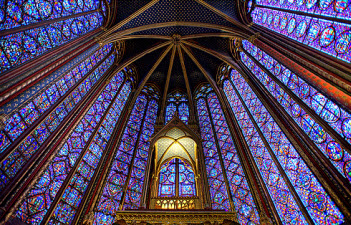
Stained glass is a threat to America. . .

This just in. . . The EPA is on the verge of shutting down American production of the art glass used in stained glass.  Glass is still available from European and other sources but it will come at a greatly increased cost both of production and shipping.  Some firms -- even the largest stained glass production firm in the US, are closing because the profit margins are slim, the demand fluctuates, and the cost of compliance is too great.  So if you are a church considering stained glass, be prepared to raise more funds than you expected. . . and if you have an order in place, the cost may escalate due to the change in rules.
The EPA crackdown on glass manufacturing regulations stems from a February investigation into high levels of cadmium — a heavy metal that can cause lung cancer — and other toxic heavy metals found in the air around two glass factories in Portland, Ore.  But those are also the metals that add color to stained glass, which is delivered in squares and then melted and shaped by artists and workers.

Since 2007, EPA regulations have required that furnaces producing glass 24 hours a day, seven days a week must be equipped with industrial filters that prevent up to 99 percent of pollutants from escaping smokestacks. But small-batch furnaces, like those in specialty stained glass shops, were allowed to circumvent those rules.  Now the EPA may tighten those regulations, requiring all glass manufacturers that make more than 50 tons of glass a year with toxic chemicals to filter their exhaust.

"We haven't seen the full reverberations yet because it's so new, but it will definitely have an effect," said David Jedson of the Stained Glass Association of America. "It's not just the initial investment of emissions controls, which we fully support, but part of the problem is these companies haven't had any time to plan.  "It happened so quickly, and they've had trouble responding."

The EPA said the new rules are not final.  "EPA is continuing its review of art glass plants across the country," said spokesman Nick Conger in an email to the Tampa Bay Times.  Those changes factored into companies like Spectrum Glass, one of the biggest suppliers in the stained glass industry, closing shop last month after 40 years. The Washington manufacturer provided ready-to-shape glass to companies nationwide, but said sales have been weak since the recession, so it couldn't afford the new pollution controls required by the EPA. The company will cease operations by the end of July.
The repercussions of Spectrum's decision are being felt in Florida. Ken Casola said he typically buys colored glass from Spectrum for his Casola Stained Glass Studio in Naples. But he said the company's closing, and an anticipated increase in cost for domestic glass, could force him to import more glass from out of the country at a higher price.

"The whole industry is going to be affected by it; it's going to be a problem," said Casola who has been in the glass business since 1985. "I had been reading about it, but I didn't think it was really going to happen."

Saturday, July 2, 2016

The Bible is not enough. . .


At one point in time the speaker was not required to put chapter and verse to a Bible quote.  The people hearing knew and recognized the Scriptures.  In fact the speeches of our American heroes of the Revolution, the Articles of Confederation, and the Constitution were accustomed to sprinkling in verses from Scripture quite without attestation because they knew and could expect their hearers to recognize and understand the quotes.


One of the reasons for this was surely the predominance of one single English version of Scripture -- one that was almost the exclusive English voice of God for some 300 years.  That, of course, is the King James or Authorized Version.  Such a gift was this universally acknowledged English translation that it afforded the people hearing and the speaker a common vocabulary of Bible verses and quotations and the erudite and earnest afforded themselves the luxury of including what they knew would be recognized and understood as the authority of the Bible.

One can complain about the plethora of translations (I often do) but it is not simply the abundance of choices in English that has helped to foster Biblical illiteracy.  No, indeed, there is more.  Even when the verse changes little from translation to translation, the hearers have lost their grasp of the Word of God and do not have a registry of Scripture to draw upon in which to hear and understand when verses are quoted.

The Bible is not enough.  Having the Scriptures is not enough; one must know them and know them well enough to recognize Scripture and to understand when it is being spoken faithfully and when it is not.  This is the solemn duty of the people in the pew.  They must listen with the informed ear of those who hear the Word of God, who recognize it, and who can tell when it is being misused.  That is the other part of the equation.  Not only have many of our people lost touch with the sound of their Master's voice in Scripture, they are then rendered powerless to recognize, challenge, and prevent heresy and apostasy and error.

We live in an age that glorifies the personality and supposed success of the popular.  We have a cultish fascination with TV, print, and internet stars.  Many of them are charlatans and fakes; most of them misuse Scripture and get away with it because the people listening are so unfamiliar with the Word of God and the faithful tradition that has always surrounded it that they cannot identify what is true or false, what is authentic and what is fake.  The Bible is not enough.  We must know the Scriptures (and Catechism and Confessions and even the popular faith of the hymnal) well enough to be able to recognize the faithfulness of what is being spoken or its unfaithfulness.  And if we are not hearing the truth, then we should flee from that place and find a church where the Gospel is faithfully proclaimed and the Word of God is rule and norm of all doctrine.

The Reformation gave birth to a renaissance of Biblical learning designed not only for the scholar but for instruction in basic Biblical literacy for the folks in the pew. That era has come and gone and now it is truly our task once again.We cannot expect to recover what came to be in the aftermath of the Reformation and the desire to know the Scriptures and what they say but that cannot and should not prevent our people from a fresh engagement with the written Word of God today and a growing familiarity with its consistent and faithful expression in the catholic tradition of creed and confession.  Only then will they will be better equipped to find their way through the maze of faux teachers who can patch together a loose fabric of Bible quotes only to tear down what the Sriptures really teach.  Then and only then will the Word of the Lord be indeed “a lamp unto our feet and a light unto our pathway” (Psalm 119:105).

Friday, July 1, 2016

Worship is strange. . .

We are often told to make what happens on Sunday morning welcoming to the stranger, accessible to those who have never been there before, and sensible to those who do not believe.  Indeed, for most of American Christianity, Sunday morning is the primary entrance into the church and the faith for those who are coming from outside.  So we hear from those who are experts in telling us what those outside the faith want to see and hear on Sunday morning.  More often than not, we are told to use common vocabulary, to minimize the ceremonial, to appear ordinary to those whose ordinary is definitely not the same as ours.  Yet I wonder how this is possible -- how can we appear to be normal and ordinary to those outside the faith and still be faithful to the God whose name gathers us and whose Word and Table are the central focus of that gathering?

The Divine Service is, in fact, quite odd, strange, and incomprehensible outside the faith. Those who visit the Divine Service find not only the weird and the strange, but even that which is shocking a not a bit creepy. We speak of God who is present and yet we do not see Him with our eyes.  We talk of the God who made all things from nothing and then just casually drop that this God became flesh and blood in a Virgin by the Holy Spirit.  We are attentive to the words of a book written thousands of years ago and claim this is the living Word of God, the God who is speaking through what was once spoken and then written.  And then there is the oddest of the oddities -- we eat God. And we eat him because He has commanded us to break the bread and give thanks with words spoken once two thousand years ago that still effect what they did that one night in the Upper Room..  He has not only asked us to do this but promised to be in this holy eating and drinking to bestow forgiveness, life, and salvation. We actually believe that an event that occurred over two thousand years now is made present and we participate in its communion as they did who first watched Jesus act and heard His voice immediately.  This is not mere drama or symbolism but God doing what He has promised to do and we eating His flesh and drinking His blood. To those of us who were raised in the faith this might not seem so strange but to the stranger in our midst this has to be nothing less than shocking and perhaps not a little off-putting.  It might not be such a bad idea for us to remember how strange we appear to those not yet of the faith.  It is something wonderfully normal to us but shockingly strange to those not of the Kingdom.

Now I am not at all suggesting that we prevent those not yet of the faith from witnessing what happens on Sunday morning but I am saying that if we are faithful to the Word of God and the tradition of the faith, then they will not miss how odd it is what we are there for, what we believe God is doing, and what we believe we are receiving.  I do not know how to reconcile the strange and yet wonderful oddity that is the Divine Service with the ordinary world of people who do not believe.  I am certainly not saying that we must dumb down what is happening to make it sensible (can it be?) or palatable (can it be?) to those who are walking into the Divine Service for the first time.  But it could be that Sunday morning has become a little too ordinary and not as other worldly and blessedly shocking as it should be if we take the Lord and His Word at face value.

Worship is strange, out of keeping with the ordinary of the world, and anything less than this Godly oddity is unfaithful to the Lord and His Word.  Maybe if we thought about it, we would learn to be moved by what God is doing toward the reverent awe that is quick to bow the head in silence and slower to treat the mystery of it all with unfaithful casualness.  Holy ground requires something more than being comfortable.  If the stranger gets this right away, why does it take us so long to acknowledge that what happens in the Divine Service is so thoroughly out of keeping with the ordinary of a world made by Him but which rejects Him as a stranger!