Picking up the ringing phone one day (yes, we still have non-cell phones both at my church and my home), I got a salesperson trying to tell me to give up my current phone service and purchase his own. I would get everything I already had and so much more and even get to keep my phone number! What a deal! Who could possibly say "no"?
In all the years I have been a Pastor in the Lutheran Church-Missouri Synod, there have been those who saw this as the mission approach that would save our slowly declining confessional Lutheran church body. In other words, for more than 30 years there have been voices suggesting that instead of bringing people into the Kingdom, we need to bring the Kingdom to the people. It may sound like semantics but it is not. This approach has transformed a significant segment of many denominations -- not in the least my own. But I have struggled to identity clearly and simply the different parameters of these different mission approaches.
Pastor Bill Woolsey has done me the service of making the divergent paths very simple and very clear: According to Woolsey, “My desire in starting CrossPoint [the LCMS congregation in Texas where he is Pastor] was to create a congregation that
not only spoke the language of the local lost person but also loved that
person so much we could not help but speak their language and love
their music and adopt as many of their values as possible.” [Emphasis added]
Far from seeing the church as an agent of transformation, this idea sees the church as incorporating much of the language, culture, style, and identity of lost people. Now, to be sure, Woolsey would insist that transformation would take place but it is a process and it begins with the church mirroring the values, culture, language, music, and style of the lost people (as much as is possible). This perspective believes that nearly everything is negotiable and able to be compromised for the sake of reaching those lost (except for the barest core beliefs of Christianity). Your confessional identity, your liturgical heritage, your musical legacy, etc... are all candidates for revision or replacement if they get in the way of your reaching the lost. We have heard this all before by those who define style and substance as not only distinct but different and, essentially, not necessarily related.
To get back to the beginning, the sales idea for such a perspective is that you get to keep your life, keep your values, keep your preferences, keep your music, keep who you are but ADD to it Jesus Christ. This was the whole basis for the seeker service movement (think Willow Creek) in which the idea was that if you pack them in by adopting a message and a medium from their own culture and experience, eventually they will learn and grow and be integrated into the "deeper" aspects of the faith. This was admittedly not what happened. People were content to have their values, desires, language, and music mirrored back to them but they did not adopt the transformation values of God's Kingdom and dig deep into the church's life. They remained on the edges.
No one disputes that by adopting the language, music, and culture of the world you can fill the pews. The real question is what you are building. Some, even from within the movement, have begun to wonder if they are actually building the church and making disciples out of those who have surrendered little of their lives to be changed but who may be willing to add a little Jesus to their mix. Clearly one of the most difficult things to do if you adopt this mission perspective is how to bring these lost into the Kingdom and reflect instead the values of Christ, the language of Scripture and creed and confession, the continuity with the liturgical and hymn legacy of those who went before, and be able to pass on a distinct identity of the faith to those who follow them. An orphan church made up of people who have little in common with those who went before finds it difficult to sustain their existence for more than the generation of the founder (without a radical change in direction).
Woolsey says, “most of the mainline churches in my denomination spoke a language long gone.” What Woolsey forgets is that although there may have been the appearance of congruity between culture and the Church in ages past, the language of the Kingdom, the values of the Kingdom, the liturgy of the Kingdom, the music of the Kingdom, and the piety of the Kingdom have always been at odds with the culture of the lost. The Church grew not by adopting the shape of things and the preferences of those around them but by boldly preaching and through this planting the radical nature of the Kingdom of God.
Thursday, November 13, 2014


Wednesday, November 12, 2014
Them or us. . .

Today we find fewer places where this brotherhood of parishes remains as vital. In place of the complementary relationships, congregations have learned to compete with one another for what they often describe as a "shrinking" pool of people or, perhaps, an "aging" pool of existing Lutherans. Maybe some of this is the inevitable result of some historical conflict (in the LCMS it dates back to the early 1970s). Maybe some of it is due to the natural inclination to circle the wagons when one sees enemies or threats on the horizon. Maybe some of it has filtered in from the increasingly self-centered nature of our lives as individuals. I am sure there are many causes but the very times when we should be working together, we seem to more inclined to go solo.
For the medium to large size congregation, the desire is more to manage their own mission outreach than to partner with the national church body. Congregations want to own their mission and this includes not only foreign missions but also everything from mission trips (within the US) to mission starts. We have seen these congregations desire to begin satellite sites just down the block from an existing parish of their own denomination. They believe that they can do better as an extension of their own identity and work than a partnership or sponsorship of such work.
For the smaller congregation, the medium to large size parish is a threat. They often appear to be like a steam roller that will roll right over and swallow up the prospects of the smaller parish. For example, I have heard folks lament that they cannot compete with a medium to large size congregation -- especially in the area of youth, young adults, singles, etc...
Both the smaller and larger parishes often share a suspicion about district judicatories and national church structures. These folks are nearly always "them" to the folks in the pews. Districts and Synods are entities always with their hands out in search of money that congregations of all sizes do not want to give OR entities with their hands out to control the local freedom of the parishes to do things the way they want to do them. Perhaps there is some truth to this but it was not always so easy to characterize our life together as we and them. This shows up in the area of finances and nearly every denomination reports income to national and district judicatories is down or, at best, flat. People seem to value local projects and causes over those nationally or district wide -- unless of course it is locally directed.
All I am saying is that this characterization of us and them is self-destructive. It will tear down the good purposes of organizing and working together and it will eventually isolate and weaken the parishes themselves. We need to figure out how to rekindle a common identity as congregations together in regions and even nationally. I believe that this will be the fruit not of programs or even conversation (alone) but the renewal of our confessional identities as Lutherans (or Methodists, fill in the blank). Renewing our identity with our confessional past is not the glorification of yesterday but the reminder of who we are, what we believe, and what bound us together in the first place. Unfortunately, who we are, what we believe, confess, and teach, and what bound us together in the first place are far from the radar of the people and agendas of our congregations today. It is also one reason why we find it easier to seek out and adapt the ideas of those whose theology conflicts with our own than to renew ourselves by working together.
It has become too easy to go our own way both theologically and in mission. The result is that we are weaker as a church and are made up of weaker congregations. We need to rediscover the joy of our common confession and our common mission.
Tuesday, November 11, 2014
Sorry it is late
To those who looked and nothing was up for today, my blog experienced a few technical difficulties. I think we are back up and running. Sorry!
Remembering those who served. . .

In an age of superhero worship, we need a healthy dose of reality when it comes to the men and women of our military. They were and are ordinary folks -- warts and all. What makes them heroic is not their sterling character but the fact that they heard the call, took up their arms, served their country and each one of us, where they were assigned. That is, in and of itself, no small thing.
I have often joked that I, too, would serve if I could enter the service at the rank of, say, Major or Colonel. It is a pretty bad joke. The officers lead and I certainly want to give them their due but the people who win wars are most often the same kind ordinary people Sen. McCain wrote about. They were chosen not because they were the best but because they were called and responded. They served in grit and grime, in unpleasant settings doing unpleasant duties. War and peace are messy and dirty and not for the faint of heart. But they served and still serve us in this noble calling -- cracks and blemishes along with moments of shining heroism, nobility, and bravery.
My dad is one of them. My father-in-law another. I have cousins and friends who served and still serve. I serve a congregation in which there are an inordinate number of active duty soldiers as well as a large contingent of those who served in the past. Their honor lies not in some imaginary fairy tale ideal but in the reality of war and peace, ordinary men and women serving an extraordinary cause, amid all sort of things most of us would find unsettling to say the least and perhaps appalling as well. They gave their best and sometimes it was not good enough. That is how it goes. The battlefields all across the world are matched by the burial plots of soldiers who fought and died. Some of them in graves well marked and honored and some in anonymous fields with families who still wonder where, when, what...
Today we honor them. We remember them on this day first called Armistice Day. Poppy Day. And with this memory comes the reality that most of human history has been about war and conflict. Armistice Day had it about right -- a pause in hostility and a temporary reprieve from the battle. That is about all we get. Cold wars turn hot and warm battles cool off but there are always threats and challenges and conflicts and enemies. God bless you, men and women, who fight not only for the great causes of liberty and freedom but also for the small causes of me and my family. I don't know how to say it better that this. Thank you and God bless you. And may there always be those who hear the call, answer its summons, and take up their lonely posts to defend our nation from enemies and threats great and small even to pay the greatest price. And let us not forget their families who still wear the wounds of their loved ones service and sacrifice.
Monday, November 10, 2014
It's not my problem. . .

Since Russia assumed control of Crimea, authorities have enforced Russian laws that require religious communities to register for formal approval. To date, Forum 18 has found, no religious communities in the region have been registered.
Because only formally registered communities are allowed to have ministers from other countries, Catholic priests and religious from neighboring countries will be required to leave. When questioned by Forum 18 about the difficulties these rules would cause for Catholic (and other) communities in Crimea, a Russian immigration official replied: “I don’t know. It’s not my problem.”
Ah, another sign of the winsome and welcome nature of Putin and Putin's Russia! But of course it is not really religious persecution since the targets are Christians and the world has turned a blind eye to persecution or discrimination aimed at Christians! It may not be the problem of the Russian immigration official quoted but it is most certainly a problem and our problem!
The confusion about mercy. . .

“Many ask: If God is always merciful, why is the Church not the same? Or, why does the Church not seem to be as merciful as God?”
However, God is not merciful in the sense that this question is being asked and therefore the Church cannot be merciful in that sense either. God does not shrug off sin but calls His people to repentance. God did not ignore sin but painfully delivered up His own Son to bear the full force of His wrath, carry the full weight of sin's suffering, wear the full face of sin's guilt and shame, and die to kill death. God's mercy is not a denial that sin is sin or the willingness to look away or overlook sin. God's mercy is to forgive sin and absolve the penitent. This is what the Church is called to do.
You can weigh in somewhere else about the Roman Catholic situation with divorced members unable to receive communion. That is NOT what this post is about. What I am talking about is the glorification of victimhood and of sin that insists mercy and grace require us to condone, tolerate, and accept whatever it is that people believe to be true or moral and however people choose to act on this and the manner in which they live out their lives.
There is no mercy is remaining silent about sin -- especially when it means condemning the sinner to bear the full force of God's anger and punishment when Christ has already blunted that anger and born the cost of our sin. To direct a person to Christ is to call them to repentance and faith. To call them to repentance and faith is to proclaim the mercy of God. The Church can do no more and no less than this when it comes to sin.
How foolish it is for those who insist that while these things may not be our cup of tea, mercy requires us to either remain silent or to welcome without condition those who remain unrepentant and those who insist that doing whatever is right in their own minds and hearts is the greatest truth and virtue. For even a cursory reading of the Scriptures reveals that this is the very definition of sin and the measure of how far man has fallen from his creative place of glory. Only the loveless and most unmerciful of churches and people would be silent or shrug off the sins for which Christ gave His all in sacrifice sufficient to save and redeem every sinner! Indeed, for the Church to overlook the sins for which Christ died is to make mockery of the cross and diminish the mightiest act of mercy which God has done to redeem His lost and condemned creation!
It is surely true and a terrible thing that there are Christians and so-called "churches" who presume to judge in God's place the sinner for whom Christ also died and to joyfully gloat at the sins of others. Jesus had something to say about the impediment to their eyesight for which they will be held accountable. The Church has no joy in recognizing and condemning sin. But the Gospel of Jesus Christ is meaningless without such identification of sin, the owning up of that sin through confession, the lament of a contrite heart, and the desire to amend the sinful life. No, those churches and Christians and clergy who delight in the sins of others are no less unfaithful than those churches and Christians and clergy who ignore sin to speak of God's love as if it were a panacea or placebo designed to appeal to the feelings rather than confront sin and all its consequences.
The confusion of mercy is a real problem -- both inside and outside the Church. The best we can do is not to further confuse what mercy is or what mercy has done for us in Christ. Faithfulness is what God expects from those who proclaim His truth to the world. The truth spoken in love, gently and compassionately, but accurately and objectively. The whole truth, the fully counsel of God's Word, and the full force of the Law without which the Gospel has little meaning. . .
Sunday, November 9, 2014
One of the reasons why I remain a Lutheran. . .

Let me give one basic reason why I remain a Lutheran. Christ. Christ not as an idea of the imagination or a feeling of the heart or the thought of the mind but the real presence of Christ in Word and Supper. These are the twin poles of Lutheranism. The Word and the Sacrament of the Altar are where our baptismal faith has both its source and and summit. Christ. Christ enfleshed still in the bread and wine of the His Supper. Christ incarnate still and speaking through the voice of His Word.
One of the inherent problems I have with Rome is that it seems to matter little whether you commune or are merely present as a spectator while the Holy Sacrifice of the Mass is re-presented to the Father. This real presence is engaging to a point but the whole essence of Christ's meal and His presence are found in the invitation to eat and drink. I can "commune spiritually" without this eating and drinking but the whole point of the real presence seems lost to me if it can be satisfactorily replaced by my own private and personal meditation. Even Lutherans sometimes speak this way (though for different reasons than Roman Catholics) -- as if somehow the Lord's presence in the Sacrament was optional and extra and not essential. Unlike Roman Catholics, Lutherans sometimes act as if it is the same old grace that comes to us so it does not matter how it comes -- I don't "have" to commune. But that is what is compelling about Christ's presence in the Sacrament of the Altar. He bids us come. He sets us a place. He puts us in the higher seats of honor. He is both host and victim. He owns the table and He is the food.
This wonder and awe at Christ's presence in the Eucharist pervades Lutheranism. We are Eucharistic in piety -- that is the shape of our faith. We meet Christ where Christ has promised to be. His presence is neither expected nor reasonable but the surprise of His promise. In that presence are the fruits of His past (the cross) and the promise of His future (eternity) and they are given to us in the eating and drinking. Lutherans are often described as more baptismal in our piety and I suppose to a certain extent we focus a great deal on baptism but our baptism life points us to the altar where we eat and drink the very body and blood of Christ -- the Christ not of memory but of His Word. It is where we encounter as closely as we can on this side of glory the incarnate Lord. Christ is here. He is come as He promised to deliver to us His promise. Guess what. He is the promise.
Saturday, November 8, 2014
The lament that leads to life. . .
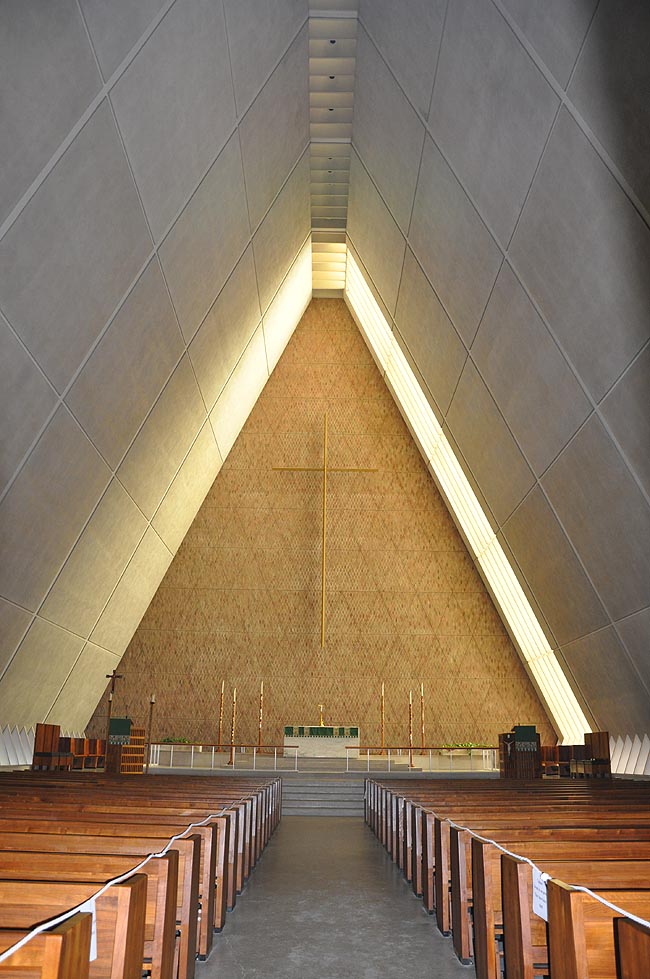
In the Name of the Father and of the Son + and of the Holy Spirit. Amen.
The last time I stood here in this pulpit, David Scaer was a young man and I was a boy. I am not sure how Dr. Scaer feels today but I feel very much the youth, standing where so many giants have stood, to speak God’s Word to such a crowd of faithful servants of Christ and those preparing for His service. Then, on top of it all, I was given as the text, Lamentations 2:12-17!
Jesus had something to say about complaint and misery and lament: “...to what shall I compare this generation? It is like children sitting in the marketplaces and calling to their playmates,
“‘We played the flute for you, and you did not dance;
we sang a dirge, and you did not mourn.’ (Matthew 11:16-17 ESV)
We sang a dirge and you did not mourn. But who would sing a dirge in seminary, or at least this seminary? Who here admits the lament of despair? Whose voice has admitted out loud the hopelessness or fear within?
But that is exactly the point. All of us have sung the dirge and given voice to the lament within. For some it is merely a litany of complaint that life is not fair, that God is not fair. For others it is the somber confession that our ruin is as vast as the sea. How it wounds us to admit that no one can restore us – not even ourselves!
The prophets have been sent forth in every generation and in this school of the prophets they are readied to be sent forth still. Today six more will receive their calls. But even prophets can get lost in the terrors of rejection and in the desire to be loved. Those who have not exposed the iniquity of the people and have proposed false and empty dreams in place of the Word of the Lord that endures forever.
All the world loves it when the people of God betray their sinfulness, when they surrender their bodies to temptation and their hearts to iniquity. All the world loves it when the high and mighty fall lower than the low. “Is this the city called the perfection of beauty? Is this the city that was the joy of all the earth?”
Look around you. The world is an evil place. You have enemies. The enemies of God and His Gospel are hidden at every twist and turn of life. They have no need to make relative the eternal truth or raise doubt about the historicity of Adam or the resurrection of Jesus. All they need to do is point to you, the beloved of the Lord whose thoughts, words, and deeds have tarnished the shine of God’s glory, whose willfulness has refused correction whose desire has reigned over truth, whose self-interest has been chosen over neighbor, and whose hearts have chosen the moment over eternity. Even God seems to have left you without pity for He has made your enemy rejoice over you and turned you into the victim of your foes.
Every prophet’s weakness is his desire to be loved, admired, respected, and liked. Take that to heart those whom we send today and those waiting for their day. None of us wants to speak what hearers do not want to hear. The lament of Jeremiah speaks judgment against the sinner but even more to the prophets who spoke peace when there was no peace and left God’s people without comfort and without healing. They did not expose sin and they did not proclaim guilt and therefore they left the people without hope or comfort, exposed to the judgment of God.
Only God can restore His fallen people. The faithful preaching of the prophet leads the people to see the judgment of God against them and to admit in repentance “The Lord has done what He purposed. The Lord gave. The Lord has taken away. And the faithful say: Blessed be the name of the Lord!” Only God can restore His fallen people. That is the message of the faithful preacher. And this He has done in His Son.
Read past the text and you find: “But this I call to mind and therefore I have hope. The steadfast love of the Lord never ceases ; His mercies never come to an end; they are new every morning; great is Your faithfulness.” The same Lord who lays bare the festering soul filled with sin cuts to kill what is already dead and to give new life where there was only death. The same Lord who speaks in righteous judgment against His people’s sin clothes them with a righteousness that is not there own. The same Lord who brought destruction can rebuild His broken people and raise them to heights they cannot ever imagine, so great is that which He has prepared for those who love Him.
Read past the text and you find: “Why should a man complain about the punishment of his sins? . . We have transgressed. . . we have rebelled. . .” There is no comfort in comfortable lies; comfort comes only from the truth. But we are not left without hope. For He who has condemned us has the power to restore us. Because “the Lord will not cast off forever. Though He cause grief, He will have compassion, according to the abundance of His steadfast love. . . Let us test this promise, let us examine our ways in repentance, and let us return to the Lord, lifting high our hearts and hands.”
If you hear, repent and believe the Gospel. If you speak, dare to speak the truth of sin and the power of the death that gives life to the dead. If you study, study to show yourself approved, so that you may be found a faithful prophet for God’s people who may lead them to the true comfort of Jesus Christ and Him crucified and the truth healing of His blood.
And then let us rejoice. Do not forget to rejoice. Rejoice and give thanks and raise the song of hope.
This dirge is a confession, this lament the voice of repentance, this threat of destruction has a purpose. It brings redemption to those who deserve nothing, it brings hope to a people who have run out of hope in themselves or this world, and it brings life to those who live in the shadow of death. This redemption has a face, this hope a name, and this life a voice – Jesus Christ. God has not given us the justice we think we need but the mercy for which we dare not ask and cannot hope. He has given us the mercy that saves us through the redemption which is ours in Christ Jesus. Let this be the voice that ushers forth from those who are sent in His name. And if it is, God will not fail us. Not then. Not now. Not ever.
In the Name of Jesus. Amen
You may watch a video of the sermon and the calls given to the six here.
OR if that link is problematic, try this one.
Atheists are not born but made. . .

Cognitive scientists are becoming increasingly aware that a metaphysical outlook may be so deeply ingrained in human thought processes that it cannot be expunged.
While this idea may seem outlandish—after all, it seems easy to decide not to believe in God—evidence from several disciplines indicates that what you actually believe is not a decision you make for yourself. Your fundamental beliefs are decided by much deeper levels of consciousness, and some may well be more or less set in stone.
This line of thought has led to some scientists claiming that “atheism is psychologically impossible because of the way humans think,” says Graham Lawton, an avowed atheist himself, writing in the New Scientist. “They point to studies showing, for example, that even people who claim to be committed atheists tacitly hold religious beliefs, such as the existence of an immortal soul.”
This shouldn’t come as a surprise, since we are born believers, not atheists, scientists say. Humans are pattern-seekers from birth, with a belief in karma, or cosmic justice, as our default setting. “A slew of cognitive traits predisposes us to faith,” writes Pascal Boyer in Nature, the science journal, adding that people “are only aware of some of their religious ideas”.
Read it here in Science 2.0...
Fearfully and wonderfully made is not simply an expression of the intricacies of life and the human mind and body, it is also a reference to the fact that we were created to live in communion with the God who made us. He marked us with His own image and likeness and, though sin can distort and mar this imago Dei, it cannot take it completely away. The most basic vestige of that image is the inherent desire to know who made us, where we came from, and the conviction that such knowledge is key to living a fully human life. The atheist may deny this primal pursuit of the Creator but he cannot remove from people what God has planted within them. Certainly the conscience and our inborn sense of right and wrong are tied to this.
Children are born trusting -- a trust parents feel obligated to destroy for their own protection. They are born with an unrestrained sense of wonder. We teach them to fear, to doubt, and to deny. For this very reason, Jesus insists that we must become like little children to enter the Kingdom of God. Funny. There are those who believe that children are naive and must be educated when Jesus puts it just the other way around. Adults are the naive ones -- presuming that nothing is true until they think it is true and confusing education (perception of the world around us) for the real knowledge that fills the longing within.
But if a belief in cosmic justice is natural and deeply rooted, the question arises: where does atheism fit in? Albert Einstein, who had a life-long fascination with metaphysics, believed atheism came from a mistaken belief that harmful superstition and a general belief in religious or mystical experience were the same thing, missing the fact that evolution would discard unhelpful beliefs and foster the growth of helpful ones. He declared himself “not a ‘Freethinker’ in the usual sense of the word because I find that this is in the main an attitude nourished exclusively by an opposition against naive superstition” (“Einstein on Peace”, page 510).
Friday, November 7, 2014
Hidden in suffering is the Church's glory. . .

In this age the fullness of the Church is, for the most part, hidden. Where the Church gathers, you see with your eyes but the tiniest part of her – this is true whether thousands are gathered in one place or two or three. Thousands, let alone hundreds, are only a small visible snapshot of the whole that we know only by faith. Yet the Church is not fractions or tidbits. She is the whole lot. So in Revelation St. John glimpses for us a vision of the whole, when the veil is lifted and all exposed.
That is what we hear in the readings for today. The great multitude beyond numbering from every tribe, people, and language. That is the church "catholic" – the word that means it all, the Church of every time and place. In the vision, all are gathered as one people before the throne of God and the Lamb.
With palms of victory in their hands and voices loud and strong they cry: Salvation belongs to our God who sits upon the throne and to the Lamb." In other words, we did not get here by ourselves. We were gotten here by Him who sits on that throne. So the elders and all the living fall flat to worship God saying: "Blessing and glory and wisdom and thanksgiving and honor and power and might be to our God forever! Amen!" Poor John is left speechless. We would be too!
Then he is quizzed about what he sees. "Who are they and from where have they come?" He plays it safe. "You know." These are those who have come out of the great tribulation, who washed their robes white in the blood of the Lamb, who serve night and day before the throne where God shelters them in His presence, where they neither hunger nor thirst anymore, and where neither sun nor moon can compete with the glory of God.
The Lamb is their Shepherd. He guides them to springs of living water; he wipes away their tears. The Church we see may be hidden in suffering and the appearance of defeat but on that day the glory of God can no longer be hidden and nothing can afflict the Church whom the Lamb has purchased with His blood. We are not there yet. We have sent ahead the saints, the giants whose names are well known and the anonymous, too.
Yet we come to the same gathering, around the same throne, real but seen with eyes of faith, hidden in the Word and promise of God and in the meal that is foretaste of the feast to come. The world neither sees nor knows us but God does. The world did not know Jesus either. He has fulfilled the Father's saving will and gathered the Church to Himself by His own bloody suffering and death.
So we come today to remember those who have gone before and to see with eyes of faith the future God has prepared for us.
When Christ comes on that great day, He will reveal Himself and no one will mistake Him. But not only He will be revealed. The Church in all her fullness will likewise be revealed. We shall no longer see through the mirror dimly but face to face. We shall see the Lamb as He is, the Lamb whose blood washed us clean in the baptismal river and who answers our hunger and thirst with the food of His flesh and the drink of His blood.
On that day, what we now see by faith will be revealed in unmistakable clarity and what is hidden will be shown in all its splendor. And you too will shine like He shines. For the glory of God is YOU – those for whom He died, those whom He has claimed in baptism, those to whom faith has been given, and those whom He fed and feeds to eternal life.
God will finish in You His new creation. He will restore to you the flesh pulled from the grave and now made to shine like the glorious flesh of Jesus. So if your body matters then, then it also matters what you do in this body, the temple of the Spirit. This is where we live – in the almost and not yet character of the Kingdom. For now we see by faith but then face to face. So we see glimpses and only in part. We see our sins and our failures, we see our struggles and trials, we see the beginning but not yet the ending. Yet He bids us not to lose heart. Even hidden, the glory of God is here. Though seen only by faith, it is still real. Even the blessed Beatitudes of Jesus declare the hiddenness of what is to come. We see these words as describing Him to us but they also declare the promise of who we shall be in Him. The mourning who are comforted, the meek who inherit the earth, the hungry and thirsty for righteousness who are satisfied, mercy for the merciful, the vision of God for the pure in heart, and the peacemakers who are made blessed.
What lies ahead is not far off. The mortals must put on immortality, the perishable the imperishable. Then shall come to pass the saying that we long to hear: death is swallowed up in victory forevermore. We look for the sign that this is indeed our future but it is already here – the Lamb is in His glory on the throne of the altar and the saints are with Him. You cannot be nearer to God or to the saints who have passed on ahead of us than here and now. But for now your faith is your eyes, this meal is your future, as the clock ticks down the end of time.
Do not give up. Do not lose heart. Do not grow weary. What is hidden will be revealed. What now we glimpse by faith, we shall see face to face. You too will shine and the darkness will not overcome you. Here is where the future is anticipated, the wounded healed, the broken made whole, the past forgiven, the thirsty drink, the dirty are cleansed, and the dead live to praise God forever. Amen.
What Pastors hear. . .
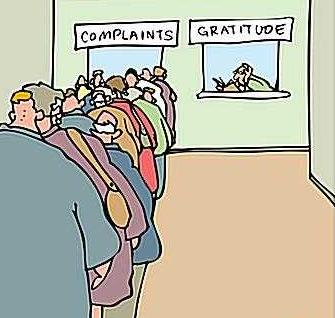
This was the entry to a post on another blog that was forwarded to me. I am sorry to say that it is accurate. Pastors are lightening rods for complaints, dissatisfaction, disappointment, and conflict. The truth about pastoral care is that we encounter people at their worst possible moments -- in death, despair, doubt, debilitating illness, divorce, etc... Pastors expect this and such is the nature of pastoral care -- to bring the full measure of God's Word (both Law and Gospel) to those in great need. The comfort of Christ and His cross is the only medicine for the life and soul sick with sorrow, suffering, and struggle.
What Pastors do not expect is the unending complaint over things much less urgent, sometimes trivial, that accompanies the fellowship ritual of shaking hands at the door. In addition, most Pastors find that much of the communication they receive during the week is likewise filled with complaint, upset, and, frankly, whining. I did not get this at first. Early on in my life as a Pastor I learned to dread hearing all this negativity and took most of it personally. Later I learned that, while the complaint may be triggered by something in the church, the source of the upset is generally elsewhere. People have learned to complain loudly and often (perhaps the legacy of social media, electronic communication, etc...) and we are often unaware of how much complaining we do. Pastors, too!
Sundays, a Pastor routinely hears:
- Why did you pick that hymn? I don't like that hymn.
- Why don't we ever sing my favorite hymn?
- Why is it so hot/cold in here? I was uncomfortable all service.
- When are you going to tell those moms to take their screaming kids out of service?
- Who moved the table I gave in memory of my great grandfather?
- When is somebody going to weed the gardens? They look terrible.
- Why does the service have to take so long?
- Why do we need Communion so often? It just makes the service longer.
- Why is there always somebody or some organization selling things?
- Why do we have so many announcements/Why didn't you announce xyz?
- Who does the proofreading? There was a typo in the bulletin/newsletter...
- Why did those people (new folks usually) sit in my pew? I was upset all through the service...
- Why do some people dress so casually/why do some people dress so formally?
- Why do you have to preach so long?
- Who picked that choir anthem? I hated it.
- Where do I go to complain about the coffee?
- Why do we have special parking for visitors and not for longtime members?
- Why do you do baptisms in the service? They take too long.
- Why do we have so many meetings/why does this group or that never meet?
- What do you do all day? I wish I had a one day a week job...
- Where will you be spending Christmas? Easter? etc... DUH!
- Why are your kids so wild/why doesn't your wife take on more jobs around here?
Of course there are those who will say that my blog is basically my venting board wherein all my complaints, upsets, disappointments, and disputes are made public. Sometimes that is true and I deserve to be called to account. But I do try to refrain from merely turning this forum into a misery loves company session in which I get to dump on people or things. My complaints are more in the vein of "why don't we try being Lutheran in doctrine and practice?" I am convinced that God's Word will not fail us, that His sacraments will not fail to deliver what they sign, and that what we believe, confess, and teach as Lutherans is faithful and true. If we stuck to this, I wonder if the complaints might wane. Hopefully, anyway.
.
Thursday, November 6, 2014
Philosphy explained. . .
Wish I had the benefit of this while learning philosophy from Professor Soovik (Vas ist the essence of duck). . .
Wednesday, November 5, 2014
The ugliness of sin. . .

Sin is offensive and ugly. When we peer into the mirror of the law of God, we find nothing pleasant staring back at us. Instead we see the face of sin -- raw, brutal, deceptive, corrosive, decadent, destructive. Somehow the modern forms of confession seem to focus more on our lack of being truly human than the reality of fallen humanity. We confess that we are judgmental against others, intolerant of others, and suspicious of others. We seldom get specific. We have murdered with words if not actions. We have rebelled against those who protect us. We have despised God's Word and the sound of His voice. We have painted up lust until it looks good in our eyes. We have lied until we no longer recognize or desire truth. We have stolen what belongs to others because we believe we deserve better than they. We have let desire for things and relationships and people consume us with the corrosive acid of envy and jealousy.
Instead we are more likely to lament our failure to be good stewards over the earth or realize our full potential for happiness or accept others without judgment. Our sin is not ugliness anymore. It is simply a shortage of the virtues of the moment. Such sins do not need a savior -- no way -- they just need a little more sensitivity on our part, a little more effort, a little more authenticity to our selves, and a little more love of me. Perhaps the sins of others are ugly but not our own. They are acceptable, understandable, reasonable, and justifiable.
The reason the Gospel does not mean so much to us (except as some vague principle of love) is that sin no longer is ugly to us, offensive to us, and shameful to us. I remember once a man who stood up on Sunday morning after being caught in a very public sin. He confessed what he had done, asked for the forgiveness of his brothers and sisters, and prayed them to help him to be restored to grace. Nobody wanted to hear it. We all just wanted him to go away. He was offensive to us not just in what he had done but in the way that he reminded us of sin's ugliness and shame. If he was a sinner, someone we thought we knew and could trust, that just might mean we were sinners, too. And that is too much to bear.
The Gospel will continue to be love lite until we admit and confess that sin is ugly and we have worn its terrible ugliness too well, too comfortably, and too easily. Only then will the ugliness of the cross with all its suffering and death become the beauty of redemption. Only when we admit we are sinners does the need for a savior and the person of Christ Jesus our Savior become hauntingly beautiful.
Sin is a scandal to the modern mind (like it was to the old mind that went before it). But the Gospel is a scandal that only makes sense if we admit the scandal of sin worn in our mortal nature is like the ill fitting clothing we were not meant to wear but have to wear since it is all we have. Then and only then will the custom tailored clothing of Christ's righteousness become the blessed clothing that fits us like we never knew anything could.
Tuesday, November 4, 2014
Yeah it has been around but it is just too choice to let it die. . .
Joyce Meyer was once a member of the Lutheran Church Missouri Synod and apparently has not forgotten the words of the confession (a poor, miserable sinner) which, according to her own words, she is not or at least no longer.
One does not have to make up things to condemn the manifold personalities that claim a place in the spotlight of Christian TV... one only has to wait for them to be caught by their own words. . . Her words mark her as one outside the pale of orthodox Christianity on this point. . . but there are also many other points of digression from the true Christian confession. . . more to come.
Monday, November 3, 2014
The pursuit of vernacular. . .

"Liturgical Latin, as constituted towards the end of Christian Antiquity and preserved unchanged - in its main lines at least - is a deliberately sacral stylisation of Early Christian Latin as it gradually developed in the Christian communities of the West. The Latin Christians were comparatively late in creating a liturgical language. When they did so, the Christian idiom had already reached full maturity and circumstances rendered it possible to draw, for purposes of style, on the ancient sacral heritage of [pagan] Rome ... As regards the plea which we hear so often for vernacular versions of the prayer texts, I think ... that we are justified in asking whether, at the present time, the the introduction of the vernacular would be suitable for the composition of sacral prayer style. As I have pointed out, the early Christian West waited a long time before adopting the use of Latin. It waited until the Christian language possessed the resources necessary to create an official ecclesiastical prayer language. ... the modern, so-called Western languages ... are less suitable for sacred stylisation. And yet we must realise that sacral stylisation forms an essential element of every official prayer language and that this sacral, hieratic character cannot, and should never, be relinquished. From the point of view of the general development of the Western languages - to say nothing of the problems raised by other languages - the present time is certainly not propitious for the abandonment of Latin".
The Dutch Classicist Christine Mohrmann, in a long series of articles and books in all the main European languages, she demonstrated that Liturgical Latin (and, indeed, Liturgical Greek) were never intended to be be vernaculars. Indeed, they were intentionally formal, archaic, and hieratic. So, for example, King James English was not the common speech of the day but a particularized speech intended for use in the faith, where thees and thous were not mere formalisms but the direction of a whole liturgical language. It was this stylized language that became the liturgical idiom of the Book of Common Prayer under the leadership of Archbishop Cranmer, whose ability to let the language soar remains unparalleled in the history of liturgical English.
I wish I could tell you more about this author and her thesis but this is all I have for now and this, through the Rev. Fr. Hunwicke (HT to him) but it sounds intriguing to me... what about you???
Sunday, November 2, 2014
Worth a read. . .

When magicians are omnipotent there is no magic. Heroes need a flaw and the chance to fall or there is no story. Complete plenty eliminates desire, and when everything is visible imagination dies.
So I mused on exiting the cinema with my children after watching The Voyage of the Dawn Treader. On the release of the first film I was excited to see Narnia come to life. I was delighted to step through the wardrobe with Lucy. I was thrilled with how the sorcerers of modern technological had summoned up naiads and dryads, centaurs and minotaurs, dwarves, unicorns and every other marvelous and magical beast from Narnia. I was sure C.S.Lewis would have been amazed and delighted and enchanted to see his world come to life.
However, on the third cinematic outing to Narnia I began to feel jaded. Perhaps I simply had had a glut of the impressive artificiality of computer animation. Maybe I had witnessed too many explosions, endured drama with predictable plot lines and flat dialogue that was bloated with whizz bang camera angles and a swooping orchestral scores. It could be that I had gasped at too many mythical monsters and handsome heroes. Maybe I was suffering from fantasy film overload. The spell was broken. I was disenchanted.
So I asked my thirteen year old son what he thought of the movie. “It was okay I guess, but they’re all the same.” Yes. Here be dragons. Too many dragons. Here be heroes. Too many heroes. Here be witches. Too many witches. Here be wizards. Too many wizards. Here be marvelous, magical, mythical, mysterious, movies. Here be fabulous, fun and frightening fantastical films. Too many of them. Harry Potter. Seven. Narnia. Three so far. Lord of the Rings. Three big ones. Two to come. King Arthur and Camelot. They keep coming. The Titans. Trash. Stardust. More dust than star. Train Your Dragon. Trite. Labyrinth. Labyrinthine. Never Ending Story. Never Ending Stories...
The death of imagination occurs when too much of a story refuses to be left to the imagination and our eyes and minds become overly enthralled with and dependent upon the imagination of another. . . Movies often spoil a good book.
Saturday, November 1, 2014
Is this THE church?

The great thing about authentic architecture is that it speaks for itself. In this case, a mid-century cinder-block school gymnasium begging to be released from the sacred work for which it was never made, the way an 80?s Toyota Corolla really does not want to be your moving van.
How many make do beginnings become the sum total of a parish's architectural home? How many buildings out there beg to be released from their sacred work for which they were not constructed and now labor against all odds to house? How many things do we do as church thinking that they are temporary only to find that they become permanent? How many first stages end up being the only stage of a parish's dream and vision.
Winston Churchill famously said that we shape our buildings and then they shape us. What do we want to shape us? Why should our buildings end up enemies of the most important thing they house -- the Divine Service? Why should all other functions of a space take priority over THE gathering of God's people on the Lord's Day around the Word and Table of the Lord?
This woman got it right. The budgetary choices we believe are forced to live with become the things that define us to each other and to the world outside the parish. Who wants to belong to a bargain church? Since when did a good deal trump all other reasons to buy or not to buy? Down the road from me is a Lutheran congregation making its home in a former nightclub (the best term I could use in mixed company) and years later it is still a church feeling ill at ease on the stage where the band once played, sitting where the dance floor once beckoned, surrounded by mountains of brass rails in what were a couple of full service bars and booths. I know of another that purchased a retail strip mall and rehabbed it into multipurpose space with some rental income on the side and people still say that is the church where Fred's used to be.
Surely someone will argue with me that there were good reasons for buying these structures and trying to make them a home for the Divine Service and I am sure they are all steals of a deal... but how well do they really serve us? When we are weekly reminded that we worship in a seedy bar, what does that do to celebration of the Divine Service? When warehouse stark and bare is the architectural theme of the space where we eat and drink the Body and Blood of the Lord and hear His Word, what does that say about which of the functions that claim the space is more important?
Maybe it is the best we can do... I am not so sure. We may settle for something thinking that the future will see better but so often it does not. I remember a congregation we called "Dark Gethsemane" because it worshiped for several generations in the temporary space of their gym without windows. I am not saying we have to be spendy here but I wonder if we are really saving much of anything by choosing to call the Church what everyone knows is a sleazy bar, closed discount store, or basketball court. Maybe we can do better? I hope so. . . Generations before us have bequeathed to us noble structures that are consistent with their purpose and are space with a virtue. What will we bequeath to those who come after us? I hope it is better than "Oh, yeah, that is the church that used to be strip club?!"
1. For all the saints who from their labors rest,
Who Thee by faith before the world confess,
Thy name, O Jesus, be forever blest,
Alleluia! Alleluia!
2. Thou wast their Rock, their Fortress, and their Might;
Thou, Lord, their Captain in the well-fought fight;
Thou, in the darkness drear, their one true Light.
Alleluia! Alleluia!
3. Oh, may Thy soldiers, faithful, true and bold,
Fight as the saints who nobly fought of old
And win with them the victor's crown of gold.
Alleluia! Alleluia!
4. O blest communion, fellowship divine,
We feebly struggle, they in glory shine;
Yet all are one in Thee, for all are Thine.
Alleluia! Alleluia!
5. And when the fight is fierce, the warfare long,
Steals on the ear the distant triumph song,
And hearts are brave again, and arms are strong.
Alleluia! Alleluia!
6. The golden evening brightens in the west;
Soon, soon, to faithful warriors cometh rest.
Sweet is the calm of Paradise the blest.
Alleluia! Alleluia!
7. But, lo, there breaks a yet more glorious day;
The saints triumphant rise in bright array;
The King of Glory passes on His way.
Alleluia! Alleluia!
8. From earth's wide bounds, from ocean's farthest coast,
Through gates of pearl streams in the countless host,
Singing to Father, Son, and Holy Ghost,
Alleluia! Alleluia!
The
great thing about authentic architecture is that it speaks for itself.
In this case, a mid-century cinder-block school gymnasium begging to be
released from the sacred work for which it was never made, the way an
80′s Toyota Corolla really does not want to be your moving van. - See
more at:
http://www.patheos.com/blogs/jenniferfitz/2014/09/if-you-have-to-ask-is-that-the-church-its-time-to-call-an-architect/#sthash.rRVSULqN.dpuf
Friday, October 31, 2014
Remember my kudos to The Lutheran Witness???

Perhaps the article that stands out most in my mind was one subtitled The Most Real Church I Know and it was written by Kaethe Schwehn, a summary of her year as a 20 something coming to terms with her floundering faith..." I cannot tell the state of her heart but if her article is any reflection of the state of her faith today, it still seems to be floundering to me.
She describes Vespers at Holden Village as a requirement for all who live there "whether or not God is your thing." Schwehn calls it a quiet time together, with either feigned or artificial but unison liturgical conversation. I agree with her, "to practice a religion is, in some ways, to take responsibility for it. This is why it is easier to be spiritual than religious..." But then things got dicey. By remaining aloof from religion, "you don't have to deal with the idiots who still think God is a man [I hope she would agree Jesus was/is], who still think marriage is just about men and women [I guess that position is so over for folks of her age], who want to preach the tomb without the resurrection [what about those who want to preach the resurrection without the tomb?], or damnation instead of grace [but no problem with preaching grace without consequences]..." Anyway, if this represents the caliber of The Lutheran, I cannot recommend it, and, apparently, many within the ELCA agree with me because I am told subscriptions are dropping precipitously....
Let me leave you with one more choice statement: "I go [to Vespers] because I love the space where we worship. . . with its acid trip ceiling and altar standing just to the left of the free throw line, is the most real church I know..."
I don't wanna

Don't get me wrong. I love Reformation Day. I love being Lutheran (most all the time). But I fear for the future of Lutheran churches (not so much for Lutheranism). The Lutheranism that is the Book of Concord confessed, the great Lutheran chorales sung, the Divine Service with all of its reverence and awe, the Small Catechism and its explanations -- these will endure. Sometimes I am not so sure about the Lutherans.
We Lutherans might have been undone by our pride in the man Luther and in our hero worship of his person but not so much anymore... We Lutherans might have been undone by our flirtations with evangelicals and others -- the folks we might be if we were not Lutheran and still try to be while attempting to be Lutheran -- and we still could be. We Lutherans might have been undone by those who have given up on the Reformation entirely and who are resigned to reconciliation with another communion (Rome or Constantinople) but the numbers swimming in either direction is fewer than the publicity implies.
What will be our undoing is our laziness, our infatuation with preference and feeling, and our unwillingness to work very hard at anything spiritual. If Lutherans disappear, it will be because I just don't wanna will end up ruling the day. I just don't wanna do anything so I will just stand here and watch from the sidelines of Sunday morning... I just don't wanna learn anything, so I will just assume that all churches basically believe the same things or their errors and virtues complement the other churches so that none of us really knows what is truth... I just don't wanna speak the words of the Divine Service or sing the hymns so I will let others do it and stand there like a lump on log... I just don't wanna pay attention to doctrine and truth so I will content myself to measure what happens on Sunday morning on whether or not I feel better, got anything out of it, were entertained, educated, or got to do my thing in the spotlight... I just don't wanna be responsible for raising my child in the faith, taking him or her to catechism and Sunday school, or modeling for him or her how to participate in the Divine Service... I just don't wanna be accountable to anyone for anything and I don't want others to look over my shoulder and presume to tell me anything... I just don't wanna do anything I don't wanna do! Believe! Practice! Sing! etc...
If Lutheran churches end up disappearing, it will not happen because Rome won or Geneva won but because Lutherans ended up giving up on their confession, congregation, catechism, and conscience. That is the real danger facing us -- look in the mirror. When Lutherans find other things to do on Sunday morning they are saying the Divine Service, the Word and the Sacraments, and their local congregation don't matter so much after all. This is what threatens our existence. The devil is counting on our lackadaisical attitudes that leave the believing, the confessing, the singing, the worshiping, the teaching, the serving, the caring to others.
We are our own worst enemies. Some of us have forgotten the voices of our fathers in the faith and have attempted to reinvent Lutheranism (in the image of evangelicalism, fundamentalism, mainline Protestantism). Some of us have forgotten the witness side of confession and treat the stranger as the oddity to be ignored rather than the stranger to be welcomed. Some of us have forgotten that pure doctrine matters because their people believe and confess it and not as an ornament for the shelf. Some of us have forgotten that unless we pass on faithfully the legacy passed on to us we have little to be proud of. Some of us have forgotten that Lutheran is not antithetical to Christian but claim to the one, holy, catholic and apostolic faith.
Lutherans unite -- not against the world but for the Divine Service as source and summit of our Christian lives EVERY week... not as a people whose every word is "no" but as those who speak also and with even greater vigor God's "yes" in Christ crucified... not as a people willing to let others do what is our baptismal calling but as the people convinced that what we believe, confess, teach, and do matters... not as a people happy to beat our chest for the victories of yesterday but as those who fight the good fight of faith today... not as a people who secretly wish we were somebody else but as those whose convictions are solid, sure, and deep in the faith called Lutheranism...
Come on, Lutherans, be Lutheran -- not just on Sunday morning either. We are our own worst enemies. Either we believe the efficacious Word and have confidence in the means of grace to deliver what they sign or we have no business wearing the name that others wore so nobly before us. If Lutherans disappear we can blame no one but ourselves. Today is Halloween -- when folks dress up in costume. Lutheran is not a costume -- it is a confession upheld, a conviction shared, a community gathered around Word and Sacrament, a catechism to be taught, and a cause too important to be left to others. . . Don't wear your Lutheranism as a costume. Wear it as the face of faithful catholic Christianity. Then Lutherans and Lutheranism will have a sure future.
Subscribe to:
Posts (Atom)