When I was a child, my maternal grandmother would often play the gospel hymn "His Eye Is on the Sparrow" and sing along as she played. It is not a favorite of mine but I cannot hear it without hearing the sound of Grandma's voice and hearing the way she played. It is an old song not sung all that much anymore. George Beverly Shea sang it at the Billy Graham Crusades. Some of the greats of the past sang it (Mahalia Jackson, for example -- though her rendition has little in common with Grandma's).
The words are comforting -- the picture of God who watches over the sparrow which is of little consequence urges us to consider how He watches over us, whom He counts as of much greater worth to Him. There is a reference to John 14 and a reminder that the trials and troubles of this mortal life are meant to drive us into the arms of our Savior and not away from His mercy and grace. As Gospel songs go, the words are pretty good.
But I wonder about the other view in all of this. We know God's eye is watching us. Where are we looking? What is the view in our lens? I must confess I seldom feel like God is looking away from me. There are many moments when I am uncertain or confused about how this or that is working out and times I feel somewhat alone. The problem does not like with God's distractions. They are with mine.
I find that one of the great things about the liturgy is the ability of this familiar form and words to call me back when my heart begins to wander, when my mind is distracted, and when my eyes turn away from Jesus. No Pastor believes that everyone in the pews remains constantly focused upon what is happening in the Divine Service. We drift. We are distracted. We sometimes choose to focus on what is not there instead of what is. The great blessing of the liturgy and hymns is that they call us back, returning the wandering hearts to the Word of the Gospel read, preached, and sung. They provide multiple entry points for the distracted mind to return to what is at hand. And one of the values of the art of the stained glass and banners and paraments and paint is that the eye is constantly returned to the images of faith when our vision begins to fade away from what is at hand.
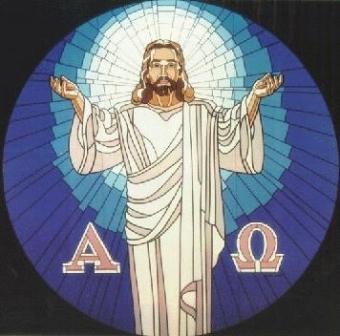
One of the fellows in our Church had grown accustomed to watching the sky and clouds through an 8 foot diameter round window above our altar. We knew that eventually it would be stained glass but for now we could not afford it. It was left clear. After a few years, the stained glass came (the results are shown on this blog - the means of grace window). The gentleman spoke to me about how disappointed he was that we covered up his window to the sky with stained glass. A few years later this same man came up to me and told me how he had missed the clear window with its vantage point to the sky but he had come to realize that this was an open window for his attention to wander and for his mind to go far afield of what was happening in the worship service. He had learned the value of those sacred images of the Word and Sacraments and the power of this visual image to return him to the context of the Divine Service as it unfolded before Him.
I know where God's eye is. It is mine that wanders. My eyes, my mind, and my heart are prone to wander and the journey back would be long and hard were it not for the family sound of the hymns, the regular routine and living pulse of the liturgy as it flows along, and the wonderful images that move the eye and prod the mind and heart back to what is happening. God is here. His Word speaks. He does what His Word says. He absolves me of the weight of my failures and guilt. He addresses me as His own by baptism and faith. He feeds me at His own Table -- the food of Jesus' flesh and blood. His eye is always where it needs to be. My eyes need to be turned back toward the home of His house often.
Such is also the power of daily devotional time and prayer. It focuses the eye, the heart, and the mind. The day will be filled with distractions, with trials, with temptations, and with sins. But that moment in prayer and reflection upon His Word becomes one of the means I am continually called back to who I am by baptism, what I confess by faith, and how I live by grace in Christ.
So, we know where God's eye is.... what about yours?
Monday, December 20, 2010
Sunday, December 19, 2010
Phone Calls for the Pastor
It is routine for Pastors to get phone calls from their people in time of trouble or difficulty. Most of the time these phone calls do not ask the Pastor for much of anything. Many do ask for his prayers. Some have specific needs which require some action or another. But in most cases, the person is calling to unload his heart of weighty concern -- be it personal, another family member, job related, illness related, or about a death.
Sometimes folks regard these as kind of intrusions upon the Pastor's private time (now there are two interesting words for a Pastor to put together -- private time?!). More often than not, these calls are not all that urgent. Another day or few hours would not make much difference with respect to the need.
Although some Pastors and often the Pastor's family may regard these as intrusions, I welcome them. I welcome them not because I have great wisdom to share or my prayers availeth more than theirs but because it is a sign of their trust and affection for me as their Pastor. These phone calls are the subtle affirmations of a deep and abiding pastoral relationship. They call me because they know me and trust me and they know I care for them and care about them. It is a great privilege to be included in the hurts and wounds of them or their families and I do not take such phone calls lightly -- even when there is nothing I can but listen to them.
These phone calls are important not only to the folks who make them but to me to whom they are directed. I worry about those Pastors who do not get such calls (or, increasingly, emails, texts, and facebook messages). It is often a sign of their distance from their people and this is not a good thing. Sure, when the Pastor is new and the pastoral relationship is just being explored, these calls may come less frequently. One of the great benefits of a longer pastorate is that they come all the time. I sometimes get irritated when calls come to me about stuff like "do you know who turned down the heat in our Sunday school room" or "why was the light left on the choir room last night" and I really dislike the calls at all hours of the night when the fire alarm company lets us know they have a trouble signal (not a fire alarm but a signal saying something is not quite right with the mechanism). But I rarely get irritated about the calls from my people who want me to know what is happening in their lives. This is the subtle affirmation of a deep, abiding, and positive pastoral relationship and bond with my people. And that, my friends, is a good thing.
Sometimes folks regard these as kind of intrusions upon the Pastor's private time (now there are two interesting words for a Pastor to put together -- private time?!). More often than not, these calls are not all that urgent. Another day or few hours would not make much difference with respect to the need.
Although some Pastors and often the Pastor's family may regard these as intrusions, I welcome them. I welcome them not because I have great wisdom to share or my prayers availeth more than theirs but because it is a sign of their trust and affection for me as their Pastor. These phone calls are the subtle affirmations of a deep and abiding pastoral relationship. They call me because they know me and trust me and they know I care for them and care about them. It is a great privilege to be included in the hurts and wounds of them or their families and I do not take such phone calls lightly -- even when there is nothing I can but listen to them.
These phone calls are important not only to the folks who make them but to me to whom they are directed. I worry about those Pastors who do not get such calls (or, increasingly, emails, texts, and facebook messages). It is often a sign of their distance from their people and this is not a good thing. Sure, when the Pastor is new and the pastoral relationship is just being explored, these calls may come less frequently. One of the great benefits of a longer pastorate is that they come all the time. I sometimes get irritated when calls come to me about stuff like "do you know who turned down the heat in our Sunday school room" or "why was the light left on the choir room last night" and I really dislike the calls at all hours of the night when the fire alarm company lets us know they have a trouble signal (not a fire alarm but a signal saying something is not quite right with the mechanism). But I rarely get irritated about the calls from my people who want me to know what is happening in their lives. This is the subtle affirmation of a deep, abiding, and positive pastoral relationship and bond with my people. And that, my friends, is a good thing.
Saturday, December 18, 2010
Liturgy and Piety and Faith
Being rather an Anglophile, I most enjoyed my conversation with her extended family. I inquired about a number of things -- from favorite BBC television shows to the wonderful Day of Remembrances and performances at Royal Albert Hall. It was so wonderful to speak with folks who had been there -- alas, it is my fortune only to have been then through the interest and streaming video.
I asked if they listened to Choral Evensong on the BBC Radio 3 Wednesdays and Sundays at 4 (their time). It was very interesting to see to the bride's grandmother perk right up and tell me how important this choral service is to her. "I sing along," she said, "as I listen." "So do I," I confessed. Here we were a half a world apart and yet joined as we listened to Choral Evensong, singing the hymns, repeating the creed, and praying the prayers of an office at one and the same time foreign to our modern world and yet so familiar to our faith.
There are those who would suggest that the liturgy is a formalistic expression of the faith, somewhat at odds with a vibrant and spiritual piety. Sadly, the pietists have made great strides in undermining the role and importance of the liturgy in our Lutheran piety and in sustaining our Lutheran faith through the changes and chances of this mortal life. I think they are wrong. Liturgy is not some aesthetic beauty but prayed doctrine and faith. Even Choral Evensong on the BBC Radio 3 is a tie, a connection, a lifeline between the home and the Church. As this woman listened, sang, and prayed at home as the radio carried the sound of the cathedral, choir, and clergy into her home, her faith was stirred, strengthened, and sustained. The liturgy is not antithetic to an authentic and living faith -- it is a powerful tool to maintain and sustain such an authentic and lively faith while the world and the sinful flesh constantly work to pull us away from the Lord.
It is not hard to see that the numbers of folks in Church on a given Sunday is a smaller percentage of the population of Great Britain than it is Tennessee in the USA. Yet, it is often hard for us to see how such things as a tradition of Choral Evensong works to maintain the identity of the faith even in a culture largely secular and thoroughly diverse in religion and outlook. I was struck by how this woman warmly spoke of her own personal connection to her church and to her faith as being nurtured as the liturgy of the cathedral became the prayer office of her home and heart. While I would never suggest that such replaces the personal attendance at Morning Prayer or Eucharist, I would not underestimate how these rich and ancient services help the faithful amid lives and a culture which tends to marginalize the faith.
We do not have anything quite like it here. Oh, truth to tell, I do regularly listen to chapel from my alma mater (Concordia Theological Seminary, Ft. Wayne) but it is not as pervasive to us Lutherans as Choral Evensong on BBC Radio 3 each Wednesday and Sunday at 4 pm.
Making Children Old Before Their Time
Working in an elementary school (K-6th grade), an acquaintance of mine reported dealing with the following issues: a girl drunk in the restroom, three boys with matches trying to set a fire, a boy with a knife, a girl sent home for showing too much skin, a girl asking how she could get a pregnancy test, a boy with bruises from a beating at home, two boys with marijuana in their lockers, etc. Remember when kids 10-12 years old were kids and schools seemed to be a safe place? Schools today are often a miniature arena for the problems affecting our culture as a whole.
One of the biggest problems is that children are no longer children – they are small adults. With that comes the kind of problems and issues adults face. Eight year old girls going on 21 and ten year old boys acting like street wise adults. Medical researchers have already labeled early physical development as precocious puberty and are telling us that more and more kids are developing physically 1-2 years earlier than just a decade ago. Our kids are growing up too fast and we are doing little to slow down this rush.
We tell kids to act their age when we mean to act older than they are and they are listening. The clothes they wear, the things they want to do, and the trouble they get in is the kind of stuff which used to be found in high school. Now it is found in middle schools and elementary schools. We expect our kids to act like adults but without all the privileges of adulthood. They are home alone or on their own yet lack the maturity to make good decisions amid all the choices available to them on TV, internet, etc. The music they listen to has adult themes. The images they see on TV and on the internet are filled with sexual innuendo and overt sexuality – even graphic displays of things we as parents do not think they are ready for. But who is telling them to just be kids?
We press them into choosing a career when they ought to be choosing toys. We dress them up as small versions of adults. We give them access to all kinds of dangerous things and do not speak to them about those dangers. We do not monitor their activity. We do not talk to them as kids. So they act like they dress, try things they are too young to make informed judgements about, and listen to their peers more than anyone else. And we are not helping!
What can we do?
1. Understand the culture. Familiar yourself with the world your kids live in and the pressures and temptations they face.
2. Protect their youth. Be a good gatekeeper on their minds and hearts. Give them the permission to be kids. Give them the space and time to play like kids and then watch over them.
3. Listen to them. Not just to their words, but listen to what they are saying (and not saying). Keep the conversation going so that you retain an influence in their lives or your silence will be tacit permission that they can do what they want.
4. Cultivate a healthy self-respect. Be supportive and share with them how valuable they are to you. Tell them what God has done for them and endow them with the best self-esteem of all – the one that comes from knowing “I am a child of God!”
5. Address their concerns. If they have something that is important to them, address it but do it in a manner appropriate to their age and maturity.
6. Don’t be obsessed with your own self. Kids get their cues from us. If we stress out over how we look, what we want, how we feel, etc... they will do the same. Live life easily.
7. Treat them like kids. Even if they are developing early, don’t forget that they are still kids. Dating, make up, going to the mall alone, dressing like an adult, having a lot of money – these need to wait. It is not cute to treat kids like adults. It is a recipe for disaster!
8. Set limits. Make sure kids know where the lines are drawn – in behavior, vocabulary, attitude, etc... It may be hard on you but it will be great for them if you know how to set age appropriate limits and stick to them.
9. Live in today. We all tell stories “when I was your age...” but the world is different. Kids growing up today are dealing with things their parents and grandparents never imagined. Yesterday’s world is gone but there is another alternative other than surrendering to all that is today. Make wise choices and equip your kids to made wise choices. And don’t rush them into adulthood. Let them be kids for as long as they are kids.
One of the biggest problems is that children are no longer children – they are small adults. With that comes the kind of problems and issues adults face. Eight year old girls going on 21 and ten year old boys acting like street wise adults. Medical researchers have already labeled early physical development as precocious puberty and are telling us that more and more kids are developing physically 1-2 years earlier than just a decade ago. Our kids are growing up too fast and we are doing little to slow down this rush.
We tell kids to act their age when we mean to act older than they are and they are listening. The clothes they wear, the things they want to do, and the trouble they get in is the kind of stuff which used to be found in high school. Now it is found in middle schools and elementary schools. We expect our kids to act like adults but without all the privileges of adulthood. They are home alone or on their own yet lack the maturity to make good decisions amid all the choices available to them on TV, internet, etc. The music they listen to has adult themes. The images they see on TV and on the internet are filled with sexual innuendo and overt sexuality – even graphic displays of things we as parents do not think they are ready for. But who is telling them to just be kids?
We press them into choosing a career when they ought to be choosing toys. We dress them up as small versions of adults. We give them access to all kinds of dangerous things and do not speak to them about those dangers. We do not monitor their activity. We do not talk to them as kids. So they act like they dress, try things they are too young to make informed judgements about, and listen to their peers more than anyone else. And we are not helping!
What can we do?
1. Understand the culture. Familiar yourself with the world your kids live in and the pressures and temptations they face.
2. Protect their youth. Be a good gatekeeper on their minds and hearts. Give them the permission to be kids. Give them the space and time to play like kids and then watch over them.
3. Listen to them. Not just to their words, but listen to what they are saying (and not saying). Keep the conversation going so that you retain an influence in their lives or your silence will be tacit permission that they can do what they want.
4. Cultivate a healthy self-respect. Be supportive and share with them how valuable they are to you. Tell them what God has done for them and endow them with the best self-esteem of all – the one that comes from knowing “I am a child of God!”
5. Address their concerns. If they have something that is important to them, address it but do it in a manner appropriate to their age and maturity.
6. Don’t be obsessed with your own self. Kids get their cues from us. If we stress out over how we look, what we want, how we feel, etc... they will do the same. Live life easily.
7. Treat them like kids. Even if they are developing early, don’t forget that they are still kids. Dating, make up, going to the mall alone, dressing like an adult, having a lot of money – these need to wait. It is not cute to treat kids like adults. It is a recipe for disaster!
8. Set limits. Make sure kids know where the lines are drawn – in behavior, vocabulary, attitude, etc... It may be hard on you but it will be great for them if you know how to set age appropriate limits and stick to them.
9. Live in today. We all tell stories “when I was your age...” but the world is different. Kids growing up today are dealing with things their parents and grandparents never imagined. Yesterday’s world is gone but there is another alternative other than surrendering to all that is today. Make wise choices and equip your kids to made wise choices. And don’t rush them into adulthood. Let them be kids for as long as they are kids.
Friday, December 17, 2010
Pushing the Restart Button
One of the lessons learned from our age in which video games are so prominent is that when you die, you press restart and everything starts all over. It is a subtlety, I will admit, but often the subtleties of our lives have a much deeper influence upon us than the obvious things. The problem with this is that we find ourselves further and further distanced from the consequences of our actions. We do not have to face up to things or deal with the outcomes of our choices, we look for a way of pressing restart and then starting over. You can do that in video games but you cannot do it in real life.
Repentance is not a restart -- it is not a do-over in which we go back to square one, act as if we did not make a mistake, and get a second chance to get it right. Repentance does not gloss over or ignore the consequences of our actions but enables us to face them head on. Repentance is the way we confront our failure -- not a way around it. It is only by owning the sin that the sinner can be pointed to grace. Naturally, this is the work of the Spirit and not our own good character and I do not wish to give the impression that repentance is our work -- it is always the fruit of the Spirit at work in the Word and Sacraments.
I fear a world in which repentance is equated with a do-over or restart. It will lead us even further away from the blessed fruit of repentance in which we have no place to go but the arms of our Savior, whose grace is the only power that can disarm the failed thoughts, words, and deeds of our sins. The do-over mentality leads to the false and damaging idea that we keep getting second chances to get it right until we win. In contrast to this, genuine repentance is the Spirit working in us to know and accept that we can never get it right. The entrance into God's kingdom comes not with ringing bells and victory images of a win but the warning sounds of "game over" and the admission that only Christ won. The miracle of grace leads us to see that He won not for Him but for us, and not for a second chance but for eternal redemption.
In addition, other lessons of the video games have taught us to cheer for the one who lives life on the edge, who cuts corners, who knows the cheat codes, and who bend the rules. Now, to be fair, this is also the lesson we learn from media figures who screw up so you cannot lay all the fault at the video console. But the images we get from the games and the media coverage of fallen celebs is the same. Nobody plays by the rules. If you can't win by doing what is honorable, then you can win by bending the rules or cheating a little here and there. Everybody gets a do-over. The most fun is living on the edge -- the edge of safety, the edge of morality, and the edge of getting caught.
As I have repeatedly stated, I am not a Luddite. I am not suggesting that we cash out of our techno age. But I think we need to be aware of some of the unintended consequences of the world in which our children are growing up and in which most young adults live. Without a deliberate and equally weighted counter balance to the world of do-overs and cutting the corners, youth and the young have a distorted view of reality which makes faith less important and masks the real and harmful risks to them, to their lives, to their real happiness, and to their eternity... Something every parent who is purchasing a video game this Christmas might well want to ponder...
Repentance is not a restart -- it is not a do-over in which we go back to square one, act as if we did not make a mistake, and get a second chance to get it right. Repentance does not gloss over or ignore the consequences of our actions but enables us to face them head on. Repentance is the way we confront our failure -- not a way around it. It is only by owning the sin that the sinner can be pointed to grace. Naturally, this is the work of the Spirit and not our own good character and I do not wish to give the impression that repentance is our work -- it is always the fruit of the Spirit at work in the Word and Sacraments.
I fear a world in which repentance is equated with a do-over or restart. It will lead us even further away from the blessed fruit of repentance in which we have no place to go but the arms of our Savior, whose grace is the only power that can disarm the failed thoughts, words, and deeds of our sins. The do-over mentality leads to the false and damaging idea that we keep getting second chances to get it right until we win. In contrast to this, genuine repentance is the Spirit working in us to know and accept that we can never get it right. The entrance into God's kingdom comes not with ringing bells and victory images of a win but the warning sounds of "game over" and the admission that only Christ won. The miracle of grace leads us to see that He won not for Him but for us, and not for a second chance but for eternal redemption.
In addition, other lessons of the video games have taught us to cheer for the one who lives life on the edge, who cuts corners, who knows the cheat codes, and who bend the rules. Now, to be fair, this is also the lesson we learn from media figures who screw up so you cannot lay all the fault at the video console. But the images we get from the games and the media coverage of fallen celebs is the same. Nobody plays by the rules. If you can't win by doing what is honorable, then you can win by bending the rules or cheating a little here and there. Everybody gets a do-over. The most fun is living on the edge -- the edge of safety, the edge of morality, and the edge of getting caught.
As I have repeatedly stated, I am not a Luddite. I am not suggesting that we cash out of our techno age. But I think we need to be aware of some of the unintended consequences of the world in which our children are growing up and in which most young adults live. Without a deliberate and equally weighted counter balance to the world of do-overs and cutting the corners, youth and the young have a distorted view of reality which makes faith less important and masks the real and harmful risks to them, to their lives, to their real happiness, and to their eternity... Something every parent who is purchasing a video game this Christmas might well want to ponder...
Thursday, December 16, 2010
Lutherans Are Evangelistically Disabled
The most recent issue of The Lutheran Forum magazine (as opposed to the Forum Letter) has a very interesting article by church historian Mark Granquist debunking the myth of "The Boat." According to accepted wisdom from missional people promoting a new paradigm and purveyors of new forms of church renewal for dying Lutheran congregations, Lutherans are functionally illiterate about evangelism and outreach and theologically disabled when it comes to growing the Church (they are more suited to maintaining it as chaplain/caretakers). Even in legendary Lake Wobegon the same idea is pretty much a staple of the humor.
The only reasons Lutherans have ever grown (and they did) is because the boats came from Europe bringing large numbers of Lutherans (in the form of Scandinavians and Germans) in waves of immigration that ended in the early 20th century. Oh, and, also, because the Lutherans had big families (at least when they were still young immigrants because the longer they were here, the smaller their families became). I have heard this tale from so many people (educated, mission oriented, liturgical, and even unchurched) that I have assumed that it was true -- in part even if not in full.
Granquist explodes the "myth of the boats" by suggesting a couple of surprising things (from such objective sources as membership rosters, census records, etc.). First he suggests that the myth of the boat cannot explain Lutheran growth up to 1960 nor its lack of much growth since then. Since the period of the mass immigration ended in 1920, with the major waves of new people coming during the colonial period and then from 1840-1920, we are left with a big question of why, then, did the number of Lutherans double between between 1935 and 1960? In addition, he ventures that those who came off those boats were not exactly rushing into the Lutheran congregations even though they were actively sought out by those Lutheran Pastors and parishes. He suggests that of the Scandinavians, only about 29% if the Norskies, 17% of the Swedes, and 9% of the Danes actually affiliated with the Lutheran denominations (those darn Danes really were hard to catch). I did not see any solid figures for the Germans, but even if they were a great deal more pious than the Norskies, it still would not distort Granquist's main thesis. Perhaps their first step onto those boats was not only a flight to economic opportunity but also a flight from religious affiliation.
Now there is something in this article which I am still unsure about. That is the suggestion of Granquist that Lutherans were borrowing evangelistic methods and practices from their American counterparts (revival movements like the Second Great Awakening as one example). This may or may not be true but there was no solid evidence presented in his article to support this conclusion.
What is clear is that Pastors, land, and buildings were cheap and readily available and local congregations started other local Lutheran congregations and this was the primary means that evangelism and outreach took place until, say, the later 1960s or so, when the cost of Pastors, land, and buildings went up. It is true that Lutherans grew by moving their franchise into previously sparse Lutheran frontiers like the South, the Southwest, and the West. It is true a culture of evangelism, with its impetus from the national headquarters of the various Lutheran bodies, took over the direction of evangelism and outreach beginning in the 1960s. I would venture that this, in and of itself, may be have somewhat responsible for the decline in results or the lack of success in this period.
It is true, especially among the more "Americanized" Lutherans, that by the 1970s Lutherans had questions about the appropriateness of trying to make Lutherans out of people who were not Lutherans (or anything else). I would call it a Lutheran angst about their identity and a lack of confidence in their "brand" (read that Confessions) that eventually bore the fruit of the confusing situation among Lutherans today. Lutherans as a percentage of the American population has actually declined 40% in the past 50 years.
Let me end with one humble suggestion. We can try something new. We can try simply being Lutheran in identity, confession, and practice. It seems to have helped us grow in this Southern city and, before we would lose our identity, confession, and heritage by looking, acting, and being like every other Americanized version of pop Christianity, I think we owe it to ourselves and our for bearers to give being Lutheran a good try before we abandon our identity and adopt methodologies inconsistent with who we are.
The only reasons Lutherans have ever grown (and they did) is because the boats came from Europe bringing large numbers of Lutherans (in the form of Scandinavians and Germans) in waves of immigration that ended in the early 20th century. Oh, and, also, because the Lutherans had big families (at least when they were still young immigrants because the longer they were here, the smaller their families became). I have heard this tale from so many people (educated, mission oriented, liturgical, and even unchurched) that I have assumed that it was true -- in part even if not in full.
Granquist explodes the "myth of the boats" by suggesting a couple of surprising things (from such objective sources as membership rosters, census records, etc.). First he suggests that the myth of the boat cannot explain Lutheran growth up to 1960 nor its lack of much growth since then. Since the period of the mass immigration ended in 1920, with the major waves of new people coming during the colonial period and then from 1840-1920, we are left with a big question of why, then, did the number of Lutherans double between between 1935 and 1960? In addition, he ventures that those who came off those boats were not exactly rushing into the Lutheran congregations even though they were actively sought out by those Lutheran Pastors and parishes. He suggests that of the Scandinavians, only about 29% if the Norskies, 17% of the Swedes, and 9% of the Danes actually affiliated with the Lutheran denominations (those darn Danes really were hard to catch). I did not see any solid figures for the Germans, but even if they were a great deal more pious than the Norskies, it still would not distort Granquist's main thesis. Perhaps their first step onto those boats was not only a flight to economic opportunity but also a flight from religious affiliation.
Now there is something in this article which I am still unsure about. That is the suggestion of Granquist that Lutherans were borrowing evangelistic methods and practices from their American counterparts (revival movements like the Second Great Awakening as one example). This may or may not be true but there was no solid evidence presented in his article to support this conclusion.
What is clear is that Pastors, land, and buildings were cheap and readily available and local congregations started other local Lutheran congregations and this was the primary means that evangelism and outreach took place until, say, the later 1960s or so, when the cost of Pastors, land, and buildings went up. It is true that Lutherans grew by moving their franchise into previously sparse Lutheran frontiers like the South, the Southwest, and the West. It is true a culture of evangelism, with its impetus from the national headquarters of the various Lutheran bodies, took over the direction of evangelism and outreach beginning in the 1960s. I would venture that this, in and of itself, may be have somewhat responsible for the decline in results or the lack of success in this period.
It is true, especially among the more "Americanized" Lutherans, that by the 1970s Lutherans had questions about the appropriateness of trying to make Lutherans out of people who were not Lutherans (or anything else). I would call it a Lutheran angst about their identity and a lack of confidence in their "brand" (read that Confessions) that eventually bore the fruit of the confusing situation among Lutherans today. Lutherans as a percentage of the American population has actually declined 40% in the past 50 years.
Let me end with one humble suggestion. We can try something new. We can try simply being Lutheran in identity, confession, and practice. It seems to have helped us grow in this Southern city and, before we would lose our identity, confession, and heritage by looking, acting, and being like every other Americanized version of pop Christianity, I think we owe it to ourselves and our for bearers to give being Lutheran a good try before we abandon our identity and adopt methodologies inconsistent with who we are.
Wednesday, December 15, 2010
I missed the touch of the shepherd's staff.
More than 30 years ago, the Rev. Ronald F. Fink went out into the woods surrounding Resurrection Lutheran Church on the hunt for something. It was but an hour or so before he was set to install a young Pastor into his first call. It seemed a foolish thing for the good Bishop to do, but oft he went. When he came back he had a big stick in his hand. The bark was gone but none of the roughness of a branch pulled directly from the woods. In the installation rite the good Bishop spoke to the kneeling Pastor: "Take heed over the flock over which the Holy Spirit has made you overseer (Bishop)." And then he placed the rustic and heavy stick into the young man's hand.
The man was me. I have carried in that big stick during the entrance hymn of so many worship services I cannot count them all. It is just as crude and rough as it was so long ago though the wood has aged to a dark and rich color. It was his gift of a shepherd's staff to a young Pastor that has helped me to realize that this is my calling and my place. I do not long to teach in a Seminary or college. This is where I am supposed to be.
President Matthew Harrison in his blog has recently referenced the sadness of Dr. John W. Behnken (President of the Synod from 1935-1962) on leaving behind the parish for administrative duties as District President and Synod President. He wrote in his book This I Recall, I missed the touch of the shepherd's staff. I know what he meant (and perhaps what Matt Harrison feels as well, having given up the parish for service to the Synod on various levels).
Yet you do not need to own a piece of wood to know and feel the touch of the shepherd's staff. The staff of the Pastor is not a crook of wood but the Word of the Lord, the richly flowing and living water of baptism, the voice of absolution, the firm arms of the pulpit in your hand, and the altar where you distribute to God's people the very body and blood of Christ. For surely the staff we are given to use to shepherd the people of God is nothing less than these means of grace through which God does what He promises and accomplishes what He purposes.
I don't know about other Pastors, but this touch of the staff is what enables me to do the other things I do not relish (like administering a parish, unlocking the doors, ordering supplies, going to meetings, etc...). It is this presence and role in worship and in the sacramental life that flows out of this worship (confession and absolution, catechesis, burial of the dead, etc.) that forms the staff whose touch is so familiar, so comfortable, so challenging, and so lofty that at one in the same time I am amazed I am allowed to handle this staff and yet could not imagine who I am without it... Strange... but true.
The man was me. I have carried in that big stick during the entrance hymn of so many worship services I cannot count them all. It is just as crude and rough as it was so long ago though the wood has aged to a dark and rich color. It was his gift of a shepherd's staff to a young Pastor that has helped me to realize that this is my calling and my place. I do not long to teach in a Seminary or college. This is where I am supposed to be.
President Matthew Harrison in his blog has recently referenced the sadness of Dr. John W. Behnken (President of the Synod from 1935-1962) on leaving behind the parish for administrative duties as District President and Synod President. He wrote in his book This I Recall, I missed the touch of the shepherd's staff. I know what he meant (and perhaps what Matt Harrison feels as well, having given up the parish for service to the Synod on various levels).
Yet you do not need to own a piece of wood to know and feel the touch of the shepherd's staff. The staff of the Pastor is not a crook of wood but the Word of the Lord, the richly flowing and living water of baptism, the voice of absolution, the firm arms of the pulpit in your hand, and the altar where you distribute to God's people the very body and blood of Christ. For surely the staff we are given to use to shepherd the people of God is nothing less than these means of grace through which God does what He promises and accomplishes what He purposes.
I don't know about other Pastors, but this touch of the staff is what enables me to do the other things I do not relish (like administering a parish, unlocking the doors, ordering supplies, going to meetings, etc...). It is this presence and role in worship and in the sacramental life that flows out of this worship (confession and absolution, catechesis, burial of the dead, etc.) that forms the staff whose touch is so familiar, so comfortable, so challenging, and so lofty that at one in the same time I am amazed I am allowed to handle this staff and yet could not imagine who I am without it... Strange... but true.
Ooh, that's why I'm easy... I'm easy like Sunday morning
Ooh, that's why I'm easy... I'm easy like Sunday morning... That's why I'm easy... I'm easy like Sunday morning... so sang Lionel Ritchie and the Commodores in their 1977 hit.... Wasn't much happening on Sunday morning in 1977 but a report on internet usage suggests that some folks are pretty busy on Sunday morning today. The big easy of Sunday morning has apparently taken on a whole new meaning.
According to a study, the most popular time to access internet pornography is Sunday morning (the least busy day for internet porn is Thanksgiving Day). Well, there you have it. One good reason for going to Church on Sunday morning. It cuts down on internet porn traffic. Which has some logic to it. Something like 2 of every 3 porn watchers are men and the number of women and children in Church exceeds the number of men, so, well, you add it all up.
BTW... interesting also is that if both mom and dad are regular in Church on Sunday morning, it is a 40% chance their children will continue regularly and another 38-40% will be irregular in Church, with a loss of only about 20% of their children. Even more interesting, is that if mom only is regular and dad is either irregular or completely absent from Church on Sunday morning, the chances the children will be regular drops to the single digits. The numbers of irregular attenders for the children of these parents hovers about 1 out of 5. But, the most striking numbers are that if mom is irregular but dad is regular, the percentage of their children who will be regular is about the same as if BOTH are regular and so with the irregular church attenders...
So, men, home is not only a distraction but a temptation. Church on Sunday morning is where you need to be... for you... and for your family... Save a child, reduce internet porn traffic... Go to Church!
According to a study, the most popular time to access internet pornography is Sunday morning (the least busy day for internet porn is Thanksgiving Day). Well, there you have it. One good reason for going to Church on Sunday morning. It cuts down on internet porn traffic. Which has some logic to it. Something like 2 of every 3 porn watchers are men and the number of women and children in Church exceeds the number of men, so, well, you add it all up.
BTW... interesting also is that if both mom and dad are regular in Church on Sunday morning, it is a 40% chance their children will continue regularly and another 38-40% will be irregular in Church, with a loss of only about 20% of their children. Even more interesting, is that if mom only is regular and dad is either irregular or completely absent from Church on Sunday morning, the chances the children will be regular drops to the single digits. The numbers of irregular attenders for the children of these parents hovers about 1 out of 5. But, the most striking numbers are that if mom is irregular but dad is regular, the percentage of their children who will be regular is about the same as if BOTH are regular and so with the irregular church attenders...
Tuesday, December 14, 2010
The Problem of Being Prophetic
One of the justifications for making change is the appeal to the prophetic moment, when the Church hears the Word of the Lord and does a "new thing" - an unfolding understanding of God's Word and work. We have heard from many who are on the vanguard of change in the Church that they are speaking prophetically, that this prophetic perspective and goal transcends the understanding of the past and moves the Church a step forward, a step closer to God's goal and plan.
Some of those in the ELCA, and other church bodies where gays and lesbians have achieved a recognition and a status unthinkable a generation or two ago, have spoken of this movement as a prophetic movement -- similar to the Civil Rights Movement, for example. And there are many who describe the move toward acceptance of gays and lesbians as the natural extension of that Civil Rights Movement or the newest chapter in a larger movement toward rights, recognition, and respect for others who are different (of which the Civil Rights Movement is another chapter, women's liberation still another, etc.).
I have no problem with saying that some of these voices are being prophetic. It is clear that Americans (and others throughout Europe and other parts of the world) are moving toward a definition of marriage in which gender plays little, if any, role and toward an egalitarian vision of society in which all people are not only equal but interchangeable -- without any real significance to gender or sexual orientation. Those who thought that the most successful TV shows would feature gays and lesbian main characters or those who thought that places in the heartland like Iowa would legalize gay or lesbian marriage were indeed visionary or prophetic. The Church was almost caught by surprise by the quickness with which this movement has entered the mainstream of politics, society, and even military service.
But... the problem is with the idea that this prophetic voice is from God. God does not change -- I learned in catechism as a youth that one of the attributes of God is His immutability -- His inability to change. Now this attribute is important to us first and foremost with reference to justification and salvation. Since it is God who declares us righteous and who justifies us by declaration, without any merit or worthiness on our part, how can we have confidence in this declaration unless we believe that God cannot change His mind at the last minute? It is by His nature that God is not reactive and changeable but proactive and immutable. This is key to our salvation but it also has consequences for the prophetic role of the Church in the world.
Christians do not understand the prophetic voice of God and His people to be the voice of change, a disconnect with the Scriptures and the sacred deposit of the faith once handed over to the saints. God does not change. The prophetic voice and role is to speak the unchanging will, word, and work of God in our changing world. The prophetic voice is the anchor that holds secure a world headed toward destruction on a sea of change. The prophetic voice of God speaks what God has always said -- we do not reinterpret His Word to mean something different today than it did before nor do we discard portions of His Word in favor of a "gospel principle" of liberation, tolerance, acceptance, equality, and egalitarianism. The voice of God's prophets speaks what God has always said -- not something new and different that represents a disconnect from His Word and truth.
We need to be careful about claiming the prophetic role in culture and society. So often what happens is that the prophetic role is co-opted by those who adopt the current whim and trend of political, societal, or cultural change and then go backwards to advocate for these in the name of Jesus -- in effect putting words into His mouth that He did not speak, would not speak, and cannot speak.
As an example, I believe in the stewardship of God's creation as part of our vocational responsibility in baptism. We recycle in our household, we use CFL bulbs in most fixtures, and we try to act responsibly with respect to chemicals, pesticides, and the like. It is a good thing but the green revolution is not the voice of the Gospel and those who speak prophetically for the environment cannot make this into the Gospel. The Gospel is about sins forgiven, lives reborn, death overcome, and heaven promised. The Gospel is not advocacy for windmills or electric cars or solar energy. I am not saying these are bad things but it is worse than bad when these become the prophetic voice of the Church to the world. God has put us here to speak prophetically of one thing -- the Kingdom of God of which John was messenger and Jesus is fulfillment and of our place in that Kingdom by grace through faith.
So when somebody takes a stand for something and tells me they are speaking prophetically... I get a little nervous. The prophets of God speak forth His Kingdom. Anything else and we are simply putting words into the mouth of God that He did not, would not, and cannot speak. The world needs prophets for justice and other causes, this is true. But the only prophet of God's mercy in Christ is the Church and her individual members. We dare not forget that.
Some of those in the ELCA, and other church bodies where gays and lesbians have achieved a recognition and a status unthinkable a generation or two ago, have spoken of this movement as a prophetic movement -- similar to the Civil Rights Movement, for example. And there are many who describe the move toward acceptance of gays and lesbians as the natural extension of that Civil Rights Movement or the newest chapter in a larger movement toward rights, recognition, and respect for others who are different (of which the Civil Rights Movement is another chapter, women's liberation still another, etc.).
I have no problem with saying that some of these voices are being prophetic. It is clear that Americans (and others throughout Europe and other parts of the world) are moving toward a definition of marriage in which gender plays little, if any, role and toward an egalitarian vision of society in which all people are not only equal but interchangeable -- without any real significance to gender or sexual orientation. Those who thought that the most successful TV shows would feature gays and lesbian main characters or those who thought that places in the heartland like Iowa would legalize gay or lesbian marriage were indeed visionary or prophetic. The Church was almost caught by surprise by the quickness with which this movement has entered the mainstream of politics, society, and even military service.
But... the problem is with the idea that this prophetic voice is from God. God does not change -- I learned in catechism as a youth that one of the attributes of God is His immutability -- His inability to change. Now this attribute is important to us first and foremost with reference to justification and salvation. Since it is God who declares us righteous and who justifies us by declaration, without any merit or worthiness on our part, how can we have confidence in this declaration unless we believe that God cannot change His mind at the last minute? It is by His nature that God is not reactive and changeable but proactive and immutable. This is key to our salvation but it also has consequences for the prophetic role of the Church in the world.
Christians do not understand the prophetic voice of God and His people to be the voice of change, a disconnect with the Scriptures and the sacred deposit of the faith once handed over to the saints. God does not change. The prophetic voice and role is to speak the unchanging will, word, and work of God in our changing world. The prophetic voice is the anchor that holds secure a world headed toward destruction on a sea of change. The prophetic voice of God speaks what God has always said -- we do not reinterpret His Word to mean something different today than it did before nor do we discard portions of His Word in favor of a "gospel principle" of liberation, tolerance, acceptance, equality, and egalitarianism. The voice of God's prophets speaks what God has always said -- not something new and different that represents a disconnect from His Word and truth.
We need to be careful about claiming the prophetic role in culture and society. So often what happens is that the prophetic role is co-opted by those who adopt the current whim and trend of political, societal, or cultural change and then go backwards to advocate for these in the name of Jesus -- in effect putting words into His mouth that He did not speak, would not speak, and cannot speak.
As an example, I believe in the stewardship of God's creation as part of our vocational responsibility in baptism. We recycle in our household, we use CFL bulbs in most fixtures, and we try to act responsibly with respect to chemicals, pesticides, and the like. It is a good thing but the green revolution is not the voice of the Gospel and those who speak prophetically for the environment cannot make this into the Gospel. The Gospel is about sins forgiven, lives reborn, death overcome, and heaven promised. The Gospel is not advocacy for windmills or electric cars or solar energy. I am not saying these are bad things but it is worse than bad when these become the prophetic voice of the Church to the world. God has put us here to speak prophetically of one thing -- the Kingdom of God of which John was messenger and Jesus is fulfillment and of our place in that Kingdom by grace through faith.
So when somebody takes a stand for something and tells me they are speaking prophetically... I get a little nervous. The prophets of God speak forth His Kingdom. Anything else and we are simply putting words into the mouth of God that He did not, would not, and cannot speak. The world needs prophets for justice and other causes, this is true. But the only prophet of God's mercy in Christ is the Church and her individual members. We dare not forget that.
Monday, December 13, 2010
The Purpose of Conversation
Listening in to some of the conversations in the Church over what happens in worship, who communes at the Lord's Table, and how much diversity/disagreement may be allowed over established dogma, I find that the conversation is hardly ever fruitful -- though nearly always illuminating. It is illuminating whenever we must speak, support, and defend our positions in a healthy debate. We learn something as well as those with whom we speak. Such is the wonderful fruit of the earlier rounds of Lutheran - Roman Catholic dialogs. When we had men the caliber of Arthur Carl Piepkorn speaking the Lutheran position, we learned something about our Lutheranism and were made students again of our Lutheran Confessions -- through this conversation with others. I would suggest that the same thing happened among the Roman Catholic participants. That is not to say that such conversation necessarily moves people to convergence or agreement. Most often it does not. But what it may accomplish is the removal of stereotyped positions, straw dogs, and misconceptions.
In order for this to happen, the participants in this conversation must be true to their positions, vigorous in speaking and defending themselves, and willing to listen to what the others are saying. For this reason it is difficult to predict or make such conversation work toward the fruitful end of information and illumination. I have most enjoyed some of the rich conversations made possible by internet forums on Lutheran theology and practice -- though I will admit that it can also be greatly frustrating when we make the same points over and over again to no end or when those misconceptions, straw dogs, or stereotypes remain at the end of it all. There have also been some very helpful private conversations to this end as well -- and some that have not turned out so well.
The difficulty is that we want people to be passionate about their positions but so often such passion is also accompanied by an unwillingness to listen or to learn. So, I have great hope for the koinonia project of deliberate conversations about the issues that divide us or cause us problems within the Lutheran Church Missouri Synod and I pray God's blessings upon Pres. Harrison's leadership in this area. But at the same time I find that the great temptation to us is either to ignore the elephant in the room and speak about peripheral things OR to direct a conversation that neither illuminates nor informs but merely offers arguments to abut arguments as reinforcements might back up troops.
So I guess it will depend upon those who come to the table to talk, whether they are willing to listen as well as engage, and whether they will be willing to learn as well as defend....
There is one more point to add. That is the fact that when we gather for this conversation, it is essential that the saints have voice and place in this dialog. For the tradition of the Church is not some dead baggage we carry around but the living voice of saints, who contended for the faith, and delivered to us the great deposit. For this reason tradition requires that we have good cause for change or adjustment to that which has been believed, taught, confessed, and practiced in our past. This is not some nod to the attitude "we have never done it this way before" but the honest appreciation that we did not and do not invent the faith, that the faith is not a novelty to be treated casually, and that the faith is not our possession to do with what we please, but only our sacred trust to be received and to be faithfully passed down....
In order for this to happen, the participants in this conversation must be true to their positions, vigorous in speaking and defending themselves, and willing to listen to what the others are saying. For this reason it is difficult to predict or make such conversation work toward the fruitful end of information and illumination. I have most enjoyed some of the rich conversations made possible by internet forums on Lutheran theology and practice -- though I will admit that it can also be greatly frustrating when we make the same points over and over again to no end or when those misconceptions, straw dogs, or stereotypes remain at the end of it all. There have also been some very helpful private conversations to this end as well -- and some that have not turned out so well.
The difficulty is that we want people to be passionate about their positions but so often such passion is also accompanied by an unwillingness to listen or to learn. So, I have great hope for the koinonia project of deliberate conversations about the issues that divide us or cause us problems within the Lutheran Church Missouri Synod and I pray God's blessings upon Pres. Harrison's leadership in this area. But at the same time I find that the great temptation to us is either to ignore the elephant in the room and speak about peripheral things OR to direct a conversation that neither illuminates nor informs but merely offers arguments to abut arguments as reinforcements might back up troops.
So I guess it will depend upon those who come to the table to talk, whether they are willing to listen as well as engage, and whether they will be willing to learn as well as defend....
There is one more point to add. That is the fact that when we gather for this conversation, it is essential that the saints have voice and place in this dialog. For the tradition of the Church is not some dead baggage we carry around but the living voice of saints, who contended for the faith, and delivered to us the great deposit. For this reason tradition requires that we have good cause for change or adjustment to that which has been believed, taught, confessed, and practiced in our past. This is not some nod to the attitude "we have never done it this way before" but the honest appreciation that we did not and do not invent the faith, that the faith is not a novelty to be treated casually, and that the faith is not our possession to do with what we please, but only our sacred trust to be received and to be faithfully passed down....
Sunday, December 12, 2010
I'll Be Back -- the Terminator
The old joke says "The good news is Jesus is coming back. The bad news is that He's really angry." Why is it that we are so comfortable with the Jesus who will return being a stranger to the Jesus promised of old and laid in a manger? I cannot figure it out. Though God has moved time and eternity to speak love to us, we seem determined to make Him into an angry and vengeful God. This does not diminish the judgment or deny the fact that there will be those who have refused God's mercy and must face His justice. But Jesus does this with all the regret of a mother hen who would have gathered her chicks under her wing, but they would not... There is no joy in Mudville nor in Heaven about those who elected to stand outside of mercy's reach and are allowed to stand there by the God who will not compel us but who woos us like a lover woos and wins his beloved.
It is as if we could say that the Terminator was based upon Jesus and folks in the pew might believe us. Such is the tragedy of grace that calls and invites but is rejected. The Giver of that grace takes no joy in the loss of those who refuse His overture of hope -- only great sadness.
Plus, the line about "you drew first blood" has the atonement so screwed up that it ain't even funny.... oh, well, another post to deal with that one... Suffice it to say that such a sentiment is sad and unfaithful to the Gospel that moves and wins with love and perfect love, well, casts out all fear... I read it somewhere....
A Royal Waste of Time
Well, its Sunday morning and soon the building will be filled with people wasting their time -- royally. And how wonderful it is! A few days ago I was pointed to a couple of blog posts about the pointless nature of the Church and who she is and what she does. Far from apologizing, the authors suggest that the Church should be the one place without vision, mission statement, supporting goals, and plan. Not that strikes many as being anathema in a world where a modified business model of structure and plan has become the holy grail of modern Christianity. But I think there is something to this.
There are simply too many people on all sides of the dogma debates and worship wars who try to make an agenda for the Church. There is simply too much talk out there about the need to be mission focused or purposeful in all the Church is and does. There is simply too much emphasis on goals and outcomes that have stolen the purpose of worship from the Lord and turned it into one of many programs that fall under the umbrella of "Church."
Though not a particular fan of Marva Dawn, she hit upon one great title when she wrote about A Royal "Waste" of Time. There is simply no way to explain or justify or support taking time away from yourself or your family or your work and spend it in worship, prayer, and devotion. It is a worthless activity according to the world and down deep you know there is a part of you that fully agrees with this assessment. Christianity is not a "practical" religion in the sense of helping you achieve your goals. Christianity has been co-opted by those who would make it into a program that has goals, purposes, and a means of evaluation.
Some would make these entirely personal and some would make them more social, but they think the key to growing the Church is convincing people that worship is worthwhile, that prayer is worth the time and effort, and devotion is worth the hard work of making it happen. In order to do this, worship, prayer, and devotion must have tangible results and measurable results. In other words, if we can just prove to folks that you get something tangible and real out of it, something practical and useful, something that will help you get what you want, the Church will grow. If you go to Church you will live longer, be happier, have a better marriage, turn out better kids, get ahead at work, have a better financial status, be free to explore the fullness of your human life, and make a lasting and real difference in this world.
Others would make the Church's purpose and impact mostly social. The world is filled with problems and the Church is filled with answers so if we could just get folks into the Church some of the social problems in our world would go away and the family would be better equipped to contribute to the good of society or the needs of the poor, the marginalized, the oppressed, the different, etc. would be protected, upheld, and supplied.
But I think such promises are false and deceptive. The point of Church is not a better or more happy you or a better or more happy world. The point of the Church is to be the arena in which Christ is source and center, fountain and summit. The whole point of who the Church is and what she does is not me but Jesus Christ. When we turn the Church into another place where you get something you want or need, then we have turned Christ into a commodity and the Gospel into a marketing plan. The Church no longer becomes the Church when this identity takes hold and the programs of the Church -- our programs -- become more important faithfulness to Christ.
I can offer you no barometers to gauge the success of who the Church is or what she does -- other than the Gospel rightly proclaimed and the Sacraments rightly administered. Apart from these, the goals are distinctly man centered. We have no target range for growth, no evaluative machinery, no practical application from Scripture. What we have are the Word and the Sacraments -- the means of grace -- that deliver to us what it is that Christ won for us. Some of His gifts are distinctly impractical -- forgiveness, for example. But they are what He knows we need -- even if we are not so sure for ourselves.
What happens on Sunday morning is not evangelism or education or therapy or motivation... or any other ism or tion. What happens on Sunday morning is that Christ bids us come because He is there. It is implausible to our minds, impractical to our hearts, and incomprehensible to explain to others. It just is. That is why the efficacy of His Word is of far more importance than ending the war because we have won the inerrancy debate. True. Yes. But for what purpose this truth and what is this truth? That God keeps His promise, that His Word accomplishes whereof it speaks, and that Christ is that Word.
The Divine Service is a pointless activity and a royal waste of time -- except that Jesus Christ is there, speaking through His Word, cleansing through His Water, restoring through His absolution, and nourishing through His Table. I am not saying that it is all impractical or other worldly but this is not a commodity to be sold or a program that convinces us because there is something in it for me. This is something radically different and until we begin to realize this, we will be left with marketing plans instead Gospel proclamation, with programs instead of worship, and with incremental human goals instead of the radical power of grace.
There are simply too many people on all sides of the dogma debates and worship wars who try to make an agenda for the Church. There is simply too much talk out there about the need to be mission focused or purposeful in all the Church is and does. There is simply too much emphasis on goals and outcomes that have stolen the purpose of worship from the Lord and turned it into one of many programs that fall under the umbrella of "Church."
Though not a particular fan of Marva Dawn, she hit upon one great title when she wrote about A Royal "Waste" of Time. There is simply no way to explain or justify or support taking time away from yourself or your family or your work and spend it in worship, prayer, and devotion. It is a worthless activity according to the world and down deep you know there is a part of you that fully agrees with this assessment. Christianity is not a "practical" religion in the sense of helping you achieve your goals. Christianity has been co-opted by those who would make it into a program that has goals, purposes, and a means of evaluation.
Some would make these entirely personal and some would make them more social, but they think the key to growing the Church is convincing people that worship is worthwhile, that prayer is worth the time and effort, and devotion is worth the hard work of making it happen. In order to do this, worship, prayer, and devotion must have tangible results and measurable results. In other words, if we can just prove to folks that you get something tangible and real out of it, something practical and useful, something that will help you get what you want, the Church will grow. If you go to Church you will live longer, be happier, have a better marriage, turn out better kids, get ahead at work, have a better financial status, be free to explore the fullness of your human life, and make a lasting and real difference in this world.
Others would make the Church's purpose and impact mostly social. The world is filled with problems and the Church is filled with answers so if we could just get folks into the Church some of the social problems in our world would go away and the family would be better equipped to contribute to the good of society or the needs of the poor, the marginalized, the oppressed, the different, etc. would be protected, upheld, and supplied.
But I think such promises are false and deceptive. The point of Church is not a better or more happy you or a better or more happy world. The point of the Church is to be the arena in which Christ is source and center, fountain and summit. The whole point of who the Church is and what she does is not me but Jesus Christ. When we turn the Church into another place where you get something you want or need, then we have turned Christ into a commodity and the Gospel into a marketing plan. The Church no longer becomes the Church when this identity takes hold and the programs of the Church -- our programs -- become more important faithfulness to Christ.
I can offer you no barometers to gauge the success of who the Church is or what she does -- other than the Gospel rightly proclaimed and the Sacraments rightly administered. Apart from these, the goals are distinctly man centered. We have no target range for growth, no evaluative machinery, no practical application from Scripture. What we have are the Word and the Sacraments -- the means of grace -- that deliver to us what it is that Christ won for us. Some of His gifts are distinctly impractical -- forgiveness, for example. But they are what He knows we need -- even if we are not so sure for ourselves.
What happens on Sunday morning is not evangelism or education or therapy or motivation... or any other ism or tion. What happens on Sunday morning is that Christ bids us come because He is there. It is implausible to our minds, impractical to our hearts, and incomprehensible to explain to others. It just is. That is why the efficacy of His Word is of far more importance than ending the war because we have won the inerrancy debate. True. Yes. But for what purpose this truth and what is this truth? That God keeps His promise, that His Word accomplishes whereof it speaks, and that Christ is that Word.
The Divine Service is a pointless activity and a royal waste of time -- except that Jesus Christ is there, speaking through His Word, cleansing through His Water, restoring through His absolution, and nourishing through His Table. I am not saying that it is all impractical or other worldly but this is not a commodity to be sold or a program that convinces us because there is something in it for me. This is something radically different and until we begin to realize this, we will be left with marketing plans instead Gospel proclamation, with programs instead of worship, and with incremental human goals instead of the radical power of grace.
Saturday, December 11, 2010
Dark Night of the Soul
Although I am not going to use this to work through the tome by this title written by St. John of the Cross, I nominate the title as one of the all time great titles. Written by the widely acclaimed Spanish mystic who lived roughly 1542 to 1581, the book is actually part of another work called Ascent of Mount Carmel. You can Google it or read it for yourself...
The title is an intriguing one for me -- especially at this time of the year. At the very moment when the Church proclaims that the Light of the world has come, incarnate in the flesh and blood of Jesus, born of the Holy Spirit and the Virgin Mary, so many folks find the darkness of their lives even darker. While so many are celebrating so much, there are also many whose lives are wounded by sorrow, touched by grief, burdened by disease and chronic pain, and veiled in the shadows of deep depression. I cannot go through this season without acknowledging this and those people who fight to get through it all.
As a Pastor I look out on a congregation of people whose wounds may be hidden to others but are sometimes visible to me. I see people recuperating from major surgeries with varying degrees of success. I see folks whose lives will not be restored but will be lived within the limitations of pain or frailty until death comes. I see people torn because family members are in the midst of a health crisis and their travels this season are not the joyful homecomings to which we look forward but the lonely journeys to bear with the burdens of those whom they love. I see husbands facing this Christmas without their wives and wives facing Christmas without their husbands -- often for the first time since death separated them. I see families split by divorce with children caught in a tug of war between both parents whom they love. I see people who struggle to smile, some even to get out of the house, because their spirit's are cast down in depression and despair.
Yet it is exactly for the dark night of our souls that Christ came, still comes, and will come again. He comes as the Light to enlighten all our darkness. Not as instantaneous as we would switch on the lights in a room, but the often slow and unfolding Light that brightens more by degree than by drama. I am truly touched by these many and by the weights that they bear -- day in and day out -- but especially so during the holidays.
I guess that is why one of my favorite Christmas carols is rather new. Written by Jaroslav Vajda with haunting tune by Carl Schalk, this has become the one text and tune that I think of when I look upon those who are so weighed down that Christmas comes with sorrow as well as joy. And the message is radical, relentless, and even reckless grace --- THERE IS STILL ROOM FOR ME! So read the words today and listen to the you-tube video and I pray that it will be a comfort to those so heavily burdened and to those who know and love them...
1.
Where shepherds lately knelt and kept the angel's word,
I come in half-belief, a pilgrim strangely stirred;
But there is room and welcome there for me,
But there is room and welcome there for me.
2.
In that unlikely place I find him as they said:
Sweet newborn Babe, how frail! And in a manger bed,
A still small voice to cry one day for me,
A still small voice to cry one day for me.
3.
How should I not have known Isaiah would be there,
His prophecies fulfilled? With pounding heart I stare:
A child, a son, the Prince of Peace for me,
A child, a son, the Prince of Peace for me.
4.
Can I, will I forget how Love was born, and burned
It's way into my heart unasked, unforced, unearned,
To die, to live, and not alone for me,
To die, to live, and not alone for me.
For me.... that is the message we need to hear. For me in my sorrows, in my pain, in my sin, in my loss, in my wounds, in my despair, and even in my death.... There is still room for me... These are the words the sing out in the dark night of our souls and bid us come to the manger, meet at the cross, stare into the empty tomb, and watch the ascending figure... and then to gather where the Word and Sacraments of the Lord continue to make place, room, and grace enough for me. Blessed, Jesu, make it so... for me, for the wounded, and for those who love them...
The title is an intriguing one for me -- especially at this time of the year. At the very moment when the Church proclaims that the Light of the world has come, incarnate in the flesh and blood of Jesus, born of the Holy Spirit and the Virgin Mary, so many folks find the darkness of their lives even darker. While so many are celebrating so much, there are also many whose lives are wounded by sorrow, touched by grief, burdened by disease and chronic pain, and veiled in the shadows of deep depression. I cannot go through this season without acknowledging this and those people who fight to get through it all.
As a Pastor I look out on a congregation of people whose wounds may be hidden to others but are sometimes visible to me. I see people recuperating from major surgeries with varying degrees of success. I see folks whose lives will not be restored but will be lived within the limitations of pain or frailty until death comes. I see people torn because family members are in the midst of a health crisis and their travels this season are not the joyful homecomings to which we look forward but the lonely journeys to bear with the burdens of those whom they love. I see husbands facing this Christmas without their wives and wives facing Christmas without their husbands -- often for the first time since death separated them. I see families split by divorce with children caught in a tug of war between both parents whom they love. I see people who struggle to smile, some even to get out of the house, because their spirit's are cast down in depression and despair.
Yet it is exactly for the dark night of our souls that Christ came, still comes, and will come again. He comes as the Light to enlighten all our darkness. Not as instantaneous as we would switch on the lights in a room, but the often slow and unfolding Light that brightens more by degree than by drama. I am truly touched by these many and by the weights that they bear -- day in and day out -- but especially so during the holidays.
I guess that is why one of my favorite Christmas carols is rather new. Written by Jaroslav Vajda with haunting tune by Carl Schalk, this has become the one text and tune that I think of when I look upon those who are so weighed down that Christmas comes with sorrow as well as joy. And the message is radical, relentless, and even reckless grace --- THERE IS STILL ROOM FOR ME! So read the words today and listen to the you-tube video and I pray that it will be a comfort to those so heavily burdened and to those who know and love them...
1.
Where shepherds lately knelt and kept the angel's word,
I come in half-belief, a pilgrim strangely stirred;
But there is room and welcome there for me,
But there is room and welcome there for me.
2.
In that unlikely place I find him as they said:
Sweet newborn Babe, how frail! And in a manger bed,
A still small voice to cry one day for me,
A still small voice to cry one day for me.
3.
How should I not have known Isaiah would be there,
His prophecies fulfilled? With pounding heart I stare:
A child, a son, the Prince of Peace for me,
A child, a son, the Prince of Peace for me.
4.
Can I, will I forget how Love was born, and burned
It's way into my heart unasked, unforced, unearned,
To die, to live, and not alone for me,
To die, to live, and not alone for me.
For me.... that is the message we need to hear. For me in my sorrows, in my pain, in my sin, in my loss, in my wounds, in my despair, and even in my death.... There is still room for me... These are the words the sing out in the dark night of our souls and bid us come to the manger, meet at the cross, stare into the empty tomb, and watch the ascending figure... and then to gather where the Word and Sacraments of the Lord continue to make place, room, and grace enough for me. Blessed, Jesu, make it so... for me, for the wounded, and for those who love them...
Friday, December 10, 2010
Refuge or Forward Position
It is kind of interesting to see how the contrasting images of the Church play out among Christian people today. If you tuned into the LCMS Convention you may have heard Terry Tieman's devotion on the Jesus walking on the water. His point, if you want to walk on the water, you need to get out of the boat. Jesus wants us and invites us to walk on water. We have to get out of our comfort zones, get out of our boats, and learn some things and take some risks for the sake of the kingdom. Yet the Lutheran hymn, A Mighty Fortress, picks up on another text (Psalm 46) which sees God as a fortress or refuge from the troubles, trials, and assaults of the evil one. Or you could skip through the Psalms for one or more of the dozens of similar images (Psalm 18: The LORD is my rock, my fortress and my deliverer; my God is my rock, in whom I take refuge. He is my shield and the horn of my salvation, my stronghold. Psalm 27: The LORD is my light and my salvation—whom shall I fear? The LORD is the stronghold of whom shall I be afraid? or one of my favorites, Psalm 32: You are my hiding place; you will protect me from trouble and surround me with songs of deliverance.).
Are the Scriptures schizophrenic or does it depend upon the circumstance orf situation or what? I find that the predominant images are of the Church or God as refuge, fortress, or strong-hold. Hiding place rates up there also - at least as a unique twist on the refuge idea. Much as I am tempted to try and find texts to say to God's people, "Get off your duff and do something," the primary images of the Church and God are just the opposite -- when you have no where else to run, God is there and His mighty power is enough for every situation and against every enemy.
Growing up in the 1950s and 1960s, going to college in the 1970s, I find that the idea of getting the church out of the boat was a common focus or idea. To many of that era, the Church was a sleeping giant that needed to be awakened (now that quote ought to set your google cooking since it has been variously assigned to different speakers as they spoke about the Lutheran Church Missouri Synod). I would also have to say that during much of that time, it was thought God also needed to be awakened. Whether He was asleep in the back of the boat or hidden away in the mountain tops, He surely was not aware of the stir and fuss going on in the world and He must be summoned from His nap to wake up and do something.
Much as the home has changed from a welcome place where we invite people to a refuge where we go to get away from the stress and turmoil of our lives, so have we returned to the comfort and calm of a God who is a refugre, who provides us a fortress, and who is our strong-hold in the face of every enemy assault. The Church would do well to pick up on this image and promote it (the legitimate image from Scripture and not as some marketing tool). People are ripe for picking when it comes to seeking and finding a quiet place, a center in their lives, a refuge from the struggles and storms, and a fortress which cannot be moved when the enemies assault it/us.
Recently a meeting was held at our Church and it brought in a bunch of people who had never been there before. One woman, accustomed to a far different "style" of Church than Lutheran, commented over and over again about the sense of peace, tranquility, and security she got at our Church. It was a comment made even though no she was not there to attend a worship service or, for that matter, for any overtly religious activity.
We have no video screens, the building does not look like the mall (inside or out), and the images our distinctly traditional (stained glass, very large Christus Rex, plaster and stenciling, kneelers, Jacobean frontals, candles, tabernacle, etc... Far from being put off by these things, she was attracted to them. They spoke to her of the "other" that the Church is and witnesses to while being in the world. They spoke to her of the idea of the Church (and God) as fortress, refuge, and strong-hold. They spoken to her of calm and continuity, of peace and presence. She will probably never become Lutheran but she seemed to get what a lot of Lutherans are missing.
So next time you sing "A Mighty Fortress" (sanitized words or traditianal, isometic or rhythmic tune), take a moment to read those words and listen to what they are saying. The world may be quite different from the day in which Luther penned that hymn and the situation facing the Church may be distinctly different than what faces us today, but we cry out for the same confident hiding place in the mercy of God, the same strong and powerful God who is able to defend and protect us, His children, and who provides a hiding place in the shadow of His wing to hold us, keep us, and protect us. Right now, this is the image that I desire and that I cling to most of all...
Are the Scriptures schizophrenic or does it depend upon the circumstance orf situation or what? I find that the predominant images are of the Church or God as refuge, fortress, or strong-hold. Hiding place rates up there also - at least as a unique twist on the refuge idea. Much as I am tempted to try and find texts to say to God's people, "Get off your duff and do something," the primary images of the Church and God are just the opposite -- when you have no where else to run, God is there and His mighty power is enough for every situation and against every enemy.
Growing up in the 1950s and 1960s, going to college in the 1970s, I find that the idea of getting the church out of the boat was a common focus or idea. To many of that era, the Church was a sleeping giant that needed to be awakened (now that quote ought to set your google cooking since it has been variously assigned to different speakers as they spoke about the Lutheran Church Missouri Synod). I would also have to say that during much of that time, it was thought God also needed to be awakened. Whether He was asleep in the back of the boat or hidden away in the mountain tops, He surely was not aware of the stir and fuss going on in the world and He must be summoned from His nap to wake up and do something.
Much as the home has changed from a welcome place where we invite people to a refuge where we go to get away from the stress and turmoil of our lives, so have we returned to the comfort and calm of a God who is a refugre, who provides us a fortress, and who is our strong-hold in the face of every enemy assault. The Church would do well to pick up on this image and promote it (the legitimate image from Scripture and not as some marketing tool). People are ripe for picking when it comes to seeking and finding a quiet place, a center in their lives, a refuge from the struggles and storms, and a fortress which cannot be moved when the enemies assault it/us.
Recently a meeting was held at our Church and it brought in a bunch of people who had never been there before. One woman, accustomed to a far different "style" of Church than Lutheran, commented over and over again about the sense of peace, tranquility, and security she got at our Church. It was a comment made even though no she was not there to attend a worship service or, for that matter, for any overtly religious activity.
We have no video screens, the building does not look like the mall (inside or out), and the images our distinctly traditional (stained glass, very large Christus Rex, plaster and stenciling, kneelers, Jacobean frontals, candles, tabernacle, etc... Far from being put off by these things, she was attracted to them. They spoke to her of the "other" that the Church is and witnesses to while being in the world. They spoke to her of the idea of the Church (and God) as fortress, refuge, and strong-hold. They spoken to her of calm and continuity, of peace and presence. She will probably never become Lutheran but she seemed to get what a lot of Lutherans are missing.
So next time you sing "A Mighty Fortress" (sanitized words or traditianal, isometic or rhythmic tune), take a moment to read those words and listen to what they are saying. The world may be quite different from the day in which Luther penned that hymn and the situation facing the Church may be distinctly different than what faces us today, but we cry out for the same confident hiding place in the mercy of God, the same strong and powerful God who is able to defend and protect us, His children, and who provides a hiding place in the shadow of His wing to hold us, keep us, and protect us. Right now, this is the image that I desire and that I cling to most of all...
Have You Got a Few Minutes?
Busy is chic; being busy is “in”. How many times don’t we hear today, “I just don’t have the time to.....?” We are time-starved. Young, old, married, single, parents, children – we are up to our necks in busy and desperately short of time.
Why? The statistics cannot explain it. For more than 40 years the federal Bureau of Labor and Statistics has had a range of Americans keep time diaries of how we spend our days. A few years ago we learned that we have about as much “non-work” time as “work” time. Now there are people definitely running on empty – single parents holding down two or more jobs and raising kids... employees working extra to keep from being the ones laid off, and folks taking care of elderly parents (as well as their spouses and children) – to name just a few. BUT most of us do NOT fall into those categories.
The average American spends 9 hours at work, 8 hours asleep, and 7 hours “off” of work. So what do we do with those 7 hours “off” that keeps us so busy? Turns out TV absorbs a big chunk, so does the internet (you are reading my blog, right, and there are more than 150 million blogs out there and every day 150-175,000 more begin)... and cell phones... ordinary chores barely take up an hour (heating up food in the microwave, housework, laundry, etc.).
Most of us can’t even tell you how we got so busy – when you drive through Utah going 80 mph you hardly notice because there is nothing to see but when you try to read a road sign and its just a blur – then you notice. Busy means important to us. Not being busy often means not important. We keep ourselves busy to keep ourselves feeling important. It is a badge of honor to be busy and a shameful admission to have free time. Being busy has become a status symbol.
The Girl Scouts can earn a “Less Stress” merit badge for learning how to manage their busy lives. Businesses are teaching employees how to manage time. Rachel Ray teaches us how to cook 30 minute meals.
If you find yourself tired but not necessarily productive... if you find yourself weary but empty at the end of the day... if you find yourself mixing personal and work time... take minute to think reflectively on what you are doing with your time. If the story of your life is only how busy you are, it is not such a great story. It is time for us to consider if our lives are really that demanding or whether we have chosen to make them so demanding... and turn off the cell phone for a while... turn off the TV for a while... check the email tomorrow... wait to run errands until they accumulate into a list of things to do... and create a better story for our lives.
Genesis 2:1-3 . . . When heavens and the earth were finished, and all the host of them, on the seventh day God rested on the seventh day... So God blessed the seventh day and made it holy, because on it God rested from all his work that he had done in creation. If God who holds us and all things in His hand can find time to rest, can we not also slow down our busy lives?
Why? The statistics cannot explain it. For more than 40 years the federal Bureau of Labor and Statistics has had a range of Americans keep time diaries of how we spend our days. A few years ago we learned that we have about as much “non-work” time as “work” time. Now there are people definitely running on empty – single parents holding down two or more jobs and raising kids... employees working extra to keep from being the ones laid off, and folks taking care of elderly parents (as well as their spouses and children) – to name just a few. BUT most of us do NOT fall into those categories.
The average American spends 9 hours at work, 8 hours asleep, and 7 hours “off” of work. So what do we do with those 7 hours “off” that keeps us so busy? Turns out TV absorbs a big chunk, so does the internet (you are reading my blog, right, and there are more than 150 million blogs out there and every day 150-175,000 more begin)... and cell phones... ordinary chores barely take up an hour (heating up food in the microwave, housework, laundry, etc.).
Most of us can’t even tell you how we got so busy – when you drive through Utah going 80 mph you hardly notice because there is nothing to see but when you try to read a road sign and its just a blur – then you notice. Busy means important to us. Not being busy often means not important. We keep ourselves busy to keep ourselves feeling important. It is a badge of honor to be busy and a shameful admission to have free time. Being busy has become a status symbol.
The Girl Scouts can earn a “Less Stress” merit badge for learning how to manage their busy lives. Businesses are teaching employees how to manage time. Rachel Ray teaches us how to cook 30 minute meals.
If you find yourself tired but not necessarily productive... if you find yourself weary but empty at the end of the day... if you find yourself mixing personal and work time... take minute to think reflectively on what you are doing with your time. If the story of your life is only how busy you are, it is not such a great story. It is time for us to consider if our lives are really that demanding or whether we have chosen to make them so demanding... and turn off the cell phone for a while... turn off the TV for a while... check the email tomorrow... wait to run errands until they accumulate into a list of things to do... and create a better story for our lives.
Genesis 2:1-3 . . . When heavens and the earth were finished, and all the host of them, on the seventh day God rested on the seventh day... So God blessed the seventh day and made it holy, because on it God rested from all his work that he had done in creation. If God who holds us and all things in His hand can find time to rest, can we not also slow down our busy lives?
Thursday, December 9, 2010
Lions and Lambs, Stumps and Shoots. . . the Images of Advent
Sermon preached for Advent 2, on Sunday, December 5, 2010.
Scripture is rich with images – especially contrasting ones. In this way God imparts to us a glimpse of His kingdom and tells us not only how He works but what He is working for. Advent is the king of seasons when it comes to rich imagery. Today we heard about a stump of a tree which is not yet dead, of prey at peace with their predators, of a wild man sent to men tamed by death and sin, of a brood of snakes hissing danger, of trees that will cut down because they bear no fruit, and of a harvest that sifts the grain from the chaff and burns with unquenchable fire. Have I got your interest yet? There is an image here for everyone. But what do they mean?
If you make one side of these images your focus, then you will see a vision of hope. But if you look at them outside the vantage point of faith, they are strange and even sad. As God’s people by baptism and faith, we see them as the wonderful images of hope for a people filled with hope in Christ. In the voice of the prophet, in a letter from an apostle, and in the words of Jesus we meet a future full of promise. Here in these images is the hope of enemies reconciled by Him who is born the Prince of peace. That reconciliation begins with the Creator who takes responsibility for making peace with His fallen, wounded, and dying creation.
Today we see lambs that lie down with wolves, goats with leopards, calves with lions. The natural conflict between adversaries has been erased by peace incarnate in Jesus Christ. From this peace with God, flows the peace that teaches adversaries the path of peace the winds through forgiveness to reconcile enemies and reunite those estranged. God was at work in Christ bring His peace to reign and it is a radical peace that reigns – a transforming peace, a relentless peace. This peace does not gloss over differences but confronts them with grace.
From these images come the promise of an idyllic splendor that is beyond our human imagination. But this is no fairy tale. It is as real as the fears and divisions that we feel all aroun us. This pastorale scene is the reality we know now by faith but we know face to face when this Advent gives way to Christ’s final Advent or coming as King and Lord of all.
In the surprise of grace, a stump that seemed dead, sprang forth with the life of God as Jesus issued forth from a people who has almost given up on God. The stump was Israel’s dead hope and the seeming end to the story God has been writing in History. But just when they were sure it was dead and done, the surprise of hope brings life from death and Christ is born. All of us are those stumps. We are the sick, the suffering, the wounded, the dying, the broken hearted and disappointed who bear in our lives the mark of death. But instead of reconciling with this death, God has brought the surprise of life in Christ – a life no longer hindered by death. We already possess this life in Christ by baptism and faith and yet the fullness of that life is not yet complete in us.
What we see as images of hope, the world sees with fear and trepidation. Stumps are just stumps – monuments to a past but without any promise of a future. Where lions and lambs lie down, the world sees fear and conflict. This is not the way of the world – so get up and run before the world’s hard reality comes to claim its victims. The prophets of God were wild men – too crazy to be believed and Christian truth too unreasonable and illogical to be believed. Our hope is not rational or reasonable but that doesn’t mean our hope is not real. Yet only faith can see this and trust in the images of hope God speaks to His fallen creation.
We sometimes talk about living life on the wild side but the sad truth is that death has long ago tamed us and stolen our dreams. We are only the shadow of what we were created to be. In our world death is your master, fear and anxiety are your constant companions. But God’s grace is wild – too wild to be tamed by death. God does not make peace with death, He overcomes death and breathes Christ’s radical new life in us. We who were once tamed by death have been made wild in Christ to see beyond death to the future Christ has prepared for us. As much as the world wants to think this way, only faith sees this hope.
The world looks at the bare trees chopped down and picks up the wood to try and build a better today. But we are not content with a better today. We wait upon the Lord whose life causes even the stumps to be reborn. We refuse to be content with the memory of a past and a moment today. We wait for the future God has prepared for us. So don’t be content with fast food today when God has prepared a rich and everlasting banquet to come. Don’t make your peace with death but trust in Christ who brings life stronger than death.
Advent is a season fo images in conflict. Either it is a cosmic battle in which no one wins or your enemy wins – OR – it becomes the image of hope which God alone can make possible. In these images of Advent, we find radical grace and redemption. Our enemies are reconciled to us from the reconciliation of Christ's blood. Our turmoil and inner conflict meet their peace in Christ – a peace not reasonable or logical but passing understanding in Christ only. Death is no longer the enemy that shadows our every day lives but the door through we pass to the life death cannot touch – in Jesus Christ.
The key is faith. Where the world sees as foolishness, hypocrisy, and despair, we see hope. Indeed the whole point of Advent as a season is to refocus our vision from the runaway images of sorrow, loss, and death to see through the eyes of Christ by faith – to see the hope that God has planted within us by baptism and faith.
I remember a tree in our front yard of my childhood home. It began shedding branches and soon the tree trimmer came with his old John Deere and cut it down. It turned out that it was rotten to the core and the inside was hollow. It was dead and waiting to fall. But that spring, the stump shot forth with new branches. It became a bush and we cut it down. We ground down the stump so that tree would get the hint but it refused to die. Today, the image of hope is that tree rotten and dead. A stump was all that was left. But God insisted death would not get the last word. Hope would be born in Bethlehem, laid in a manger, live in righteousness, die on a cross, rise the victor over death, and go ahead to prepare a place for us and us for that place. Amen.
Scripture is rich with images – especially contrasting ones. In this way God imparts to us a glimpse of His kingdom and tells us not only how He works but what He is working for. Advent is the king of seasons when it comes to rich imagery. Today we heard about a stump of a tree which is not yet dead, of prey at peace with their predators, of a wild man sent to men tamed by death and sin, of a brood of snakes hissing danger, of trees that will cut down because they bear no fruit, and of a harvest that sifts the grain from the chaff and burns with unquenchable fire. Have I got your interest yet? There is an image here for everyone. But what do they mean?
If you make one side of these images your focus, then you will see a vision of hope. But if you look at them outside the vantage point of faith, they are strange and even sad. As God’s people by baptism and faith, we see them as the wonderful images of hope for a people filled with hope in Christ. In the voice of the prophet, in a letter from an apostle, and in the words of Jesus we meet a future full of promise. Here in these images is the hope of enemies reconciled by Him who is born the Prince of peace. That reconciliation begins with the Creator who takes responsibility for making peace with His fallen, wounded, and dying creation.
Today we see lambs that lie down with wolves, goats with leopards, calves with lions. The natural conflict between adversaries has been erased by peace incarnate in Jesus Christ. From this peace with God, flows the peace that teaches adversaries the path of peace the winds through forgiveness to reconcile enemies and reunite those estranged. God was at work in Christ bring His peace to reign and it is a radical peace that reigns – a transforming peace, a relentless peace. This peace does not gloss over differences but confronts them with grace.
From these images come the promise of an idyllic splendor that is beyond our human imagination. But this is no fairy tale. It is as real as the fears and divisions that we feel all aroun us. This pastorale scene is the reality we know now by faith but we know face to face when this Advent gives way to Christ’s final Advent or coming as King and Lord of all.
In the surprise of grace, a stump that seemed dead, sprang forth with the life of God as Jesus issued forth from a people who has almost given up on God. The stump was Israel’s dead hope and the seeming end to the story God has been writing in History. But just when they were sure it was dead and done, the surprise of hope brings life from death and Christ is born. All of us are those stumps. We are the sick, the suffering, the wounded, the dying, the broken hearted and disappointed who bear in our lives the mark of death. But instead of reconciling with this death, God has brought the surprise of life in Christ – a life no longer hindered by death. We already possess this life in Christ by baptism and faith and yet the fullness of that life is not yet complete in us.
What we see as images of hope, the world sees with fear and trepidation. Stumps are just stumps – monuments to a past but without any promise of a future. Where lions and lambs lie down, the world sees fear and conflict. This is not the way of the world – so get up and run before the world’s hard reality comes to claim its victims. The prophets of God were wild men – too crazy to be believed and Christian truth too unreasonable and illogical to be believed. Our hope is not rational or reasonable but that doesn’t mean our hope is not real. Yet only faith can see this and trust in the images of hope God speaks to His fallen creation.
We sometimes talk about living life on the wild side but the sad truth is that death has long ago tamed us and stolen our dreams. We are only the shadow of what we were created to be. In our world death is your master, fear and anxiety are your constant companions. But God’s grace is wild – too wild to be tamed by death. God does not make peace with death, He overcomes death and breathes Christ’s radical new life in us. We who were once tamed by death have been made wild in Christ to see beyond death to the future Christ has prepared for us. As much as the world wants to think this way, only faith sees this hope.
The world looks at the bare trees chopped down and picks up the wood to try and build a better today. But we are not content with a better today. We wait upon the Lord whose life causes even the stumps to be reborn. We refuse to be content with the memory of a past and a moment today. We wait for the future God has prepared for us. So don’t be content with fast food today when God has prepared a rich and everlasting banquet to come. Don’t make your peace with death but trust in Christ who brings life stronger than death.
Advent is a season fo images in conflict. Either it is a cosmic battle in which no one wins or your enemy wins – OR – it becomes the image of hope which God alone can make possible. In these images of Advent, we find radical grace and redemption. Our enemies are reconciled to us from the reconciliation of Christ's blood. Our turmoil and inner conflict meet their peace in Christ – a peace not reasonable or logical but passing understanding in Christ only. Death is no longer the enemy that shadows our every day lives but the door through we pass to the life death cannot touch – in Jesus Christ.
The key is faith. Where the world sees as foolishness, hypocrisy, and despair, we see hope. Indeed the whole point of Advent as a season is to refocus our vision from the runaway images of sorrow, loss, and death to see through the eyes of Christ by faith – to see the hope that God has planted within us by baptism and faith.
I remember a tree in our front yard of my childhood home. It began shedding branches and soon the tree trimmer came with his old John Deere and cut it down. It turned out that it was rotten to the core and the inside was hollow. It was dead and waiting to fall. But that spring, the stump shot forth with new branches. It became a bush and we cut it down. We ground down the stump so that tree would get the hint but it refused to die. Today, the image of hope is that tree rotten and dead. A stump was all that was left. But God insisted death would not get the last word. Hope would be born in Bethlehem, laid in a manger, live in righteousness, die on a cross, rise the victor over death, and go ahead to prepare a place for us and us for that place. Amen.
A Culture of Continuity. . .
“Hold fast,” St. Paul urges, to “that word which I preached to you” (1 Cor 15:2). Again: “Stand fast and hold the traditions which you were taught.” (2 Thess. 2:15). This urgent exhortation echoes through the Bible: “Let us hold fast to our confession” (Heb. 4:14). In the book of Revelation, the voice of the Lord says to the churches that await his final triumph: “Behold, I am coming quickly! Hold fast what you have, that no one may take your crown.” (Rev. 3:11).
Borrowed from Robert Reno's contribution called The Pontificate of Continuity from FIRST THINGS.
Robert Reno gives us a detailed perspective of the overall focus of the pontificate of B16 and it is a compelling one. And this from a Pope who as young "radical" was an advisor to Vatican II which represented a radical shift from the past and, what some have described, a disconnect with that past. Ahhh, but I am not here to comment on Benedict or Rome. I am here to suggest that his words might well have been spoken of the need and challenge before us as Lutherans.
We live in a culture enamored with new things. Whether technology or trend of fashion, fad or freshness, we love anything you can call new and different. When it comes to matters of faith, it is no different. Our culture and our self-inflicted love of new things have pressed the same idea upon the Church -- who we are and what we do. I well recall the early days of the liturgical movement when some jumped on the bandwagon because what was being spoken about and done in that movement appeared to be new and different. In reality it was not so new but sometimes new is as much perspective as it is descriptive. Herb Lindemann wrote The New Mood in Lutheran Worship to describe the liturgical movement. In the end, some were disenchanted when they found out the liturgical movement was not about things new but a recovery of things lost. Those who grew impatient and out of step with this recovery of the past soon left for other pursuits.
I also well recall when people began speaking of the "new paradigm" of mission and when it began to be fashionable to say "We can't keep doing the same old things and expect to get new results." I remember when Don Abdon began talking about evangelists as specially trained individuals with specific gifts and then evangelism became the domain of the few rather than the calling of the whole Church. I remember when a Lutheranized Evangelism Explosion insisted that we have to change the way we witness and learn from those who were more effective at it that we had proven to be. I remember when people began talking about Pastors of large congregations as different kinds of Pastors and how we needed to learn from their success at administration, delegation, leadership development, visioning, being missional, teaching others to minister instead of being the only minister, etc...
I watched as Lutherans began to embrace relationships based on tolerance of diversity rather than unity of faith, as Lutherans began a disconnect with their past over how marriage is defined and who can and should be married within the Church. I watched as acceptance of behaviors once called sinful has come to dominate the modern day debate within Lutheranism and how a "new" thing some believe God is doing has brought turmoil and shame to one church body -- all because the past was rejected (both the past of the Scriptures and of what Lutherans had confessed and believed about what those Scriptures taught and teach).
I saw Fuller Seminary become a new training ground for Pastors who wanted to learn new methods for being Pastors and doing Church. I read books by Lutherans, who found the approaches of people whose theology was very foreign to Lutheranism, but who, nonetheless, adapted these approaches for Lutherans. Over time "Church Growth" became a specific term for approaches relating to everything from spiritual gifts to marketing the Church (and the Gospel) like a commodity. I watched as parachurch leadership organizations like PLI (Pastoral Leadership Initiative) and congregationally focused organizations like TCN (Transforming Congregations Network) developed programs borrowed from American Baptists and other authors and perspectives to rejuvenate tired, old, Lutheran parishes that were not growing. Worship, constitution, structure, roles, responsibilities, and presuppositions must change, they said.
It would be wrong to cast aspersions on the motivation behind these movements. The people who worked in them were good people and are good people. They firmly and passionately believe that old Lutherans must learn new tricks or we will simply go away, like dead branches on a vine, to be pruned away and cast aside. "We have to do something." And, in this, they are correct. We must do something. But what shall we do?
My greatest concern about the things called new and different, is that they represent a significant disconnect from our past. Many of them represent a rather blunt and harsh judgment upon our past. The things of yesterday do not work today. "You can't do the same things you have always done and expect new results." "Who moved my cheese?" The people whose worship and parish life and identity is consistent with the past are like the drone mice who follow the same routine over and over again but the cheese (results) are no longer to be found there.
I am not advocating a slavish duty to be who we were and do what we always have done. What concerns me is that the means of grace are lumped in with the old that needs to be tweaked (at best) or ditched (at worst). We learned to harp on the inerrancy of Scripture from those on the evangelical right but we forgot that the primary characteristic of Scripture is its efficacy (it does what it says). We learned to worship like those on the evangelical left with all sorts of new songs and new chancels and new technology but we forgot that the liturgy is not some straight jacket forced upon us but the very flower of our Confessional beliefs at practice (Word and Sacrament). We learned to shift the roles of the Pastor from presider and preacher to coach and visionary but we forgot that the Pastor is not really leader but priest and proclaimer and seelsorger (carer for the souls). What we have learned is that others have a lot of wisdom (perhaps more than we possess) and we can learn from them but what we forgot is that Lutheranism is not some denominational label or sectarian identity -- Lutherans confess the one, true, catholic and apostolic faith, once delivered to the saints, confessed in the Book of Concord, and manifest in visible form where Pastor and people of God gather around the Word rightly proclaimed and the Sacraments rightly administered.
New things can and must be learned but there is also a deep seated need to maintain what Benedict has called a culture of continuity. We cannot afford to be set adrift on a sea of modernity without an anchor to that past, the living tradition. We cannot afford to label as old or out of date the very nature of our identity as Word and Sacrament, Law and Gospel Christians and to the church usages and practices that flow from these. We cannot afford to become strangers to our ancestors (living or departed) or, as Dean Inge put it, we will be become widows in the next generation. We cannot afford to see our past as museum nor to become strangers to the home of our fathers. The Church is not born again by every wind of change but who she always was and is -- even amid the changes and chances of this mortal life. Every disconnect with this past is an opportunity for apostasy and every time we label that past or judge it unkindly we risk being orphans with no yesterday and an uncertain tomorrow. Even in the Reformation of the sixteenth century, the point was not the reinventing of the Church but the recovery of what was lost (as the ample testimony of the fathers in the Lutheran Confessions attest).
Finally, you seldom see the word "new" in a favorable light in the Scriptures (except when it is God who decides to do "a new thing" -- and even then it is new to us but old to Him). But Scripture is replete with references, commands, and exhortations to hold fast to the faith delivered to you, to the tradition, to the Apostles' doctrine, koinonia, eucharistia, and prayers... As Reno concluded: a commitment to continue in the truth—and not futile efforts to become relevant—forms the basis of a Christian witness that has the evangelical power to make a dramatic difference in the world. We believe a faith once delivered, not one renegotiated every generation. A truth powerful enough to refashion the world, not one remolded in accord with changing political or moral or cultural fashions.
Wednesday, December 8, 2010
Kids and Faith
I live in a community in which the predominate flavor of Christianity is Baptist, Nazarene, or Church of Christ. There are a few other choices offered but the previous versions are by far the most popular. Most of these folks do not consider Lutherans real Christians. They see us variously as cult or worshipers of form over Christ. They often reject us as Catholics -- something so instinctively offensive to Lutherans that they will often do anything to avoid being so labeled (including rejecting major portions of their faith and choosing a Protestant identity and practice over anything that might cause them to be equated with the Church of Rome).
Now, by nature, Lutherans are pleasers. We have an inbred desire to try to get along and not be offensive. Garrison Keillor has a good living over the foibles of Lutherans so self-conscious of their faith they will defer to almost anyone before standing up for themselves. So when these other denominations invite our kids to youth group activities or sports programs or musical events, we gladly send our kids. We think church is church -- at least they are not out there fornicating or something. So we peel off a $10 and tell them to pick up some ice cream after it is finished. And we think we have done the right thing. But have we???
Most of these other church bodies have well ingrained the fear of others into their children and parents. If we have youth group activities or something else, they are often hesitant to send their kids and if they do, they warn them about those Lutherans and their unChristian ways. Their kids may come to our worship services or parish events, but their guard is up and they view things with a fearful gaze that something must be wrong there. The parents are sure they are doing the right thing by putting this fear into their children because not all those who claim to be Christian are really Christians, if you know what I mean?!
God forbid you have a smart, talented, good looking Lutheran teenage girl in a school full of these other Christian types. Or a handsome, athletic, and intelligent boy. They will hook up with some fine individual of the opposite sex and get invited to youth group or Sunday night church (Lutherans never have plans for Sunday evening) or a Wednesday sports league. And since the gal or guy they fancy will be there, the Lutherans are not far behind. And they are pleasers. They don't just sit there, they participate. They pay attention. They get involved.
Next thing you know, they come home with questions or maybe they decide to go to the boyfriend's or girlfriend's congregation on Sunday morning, too. Next thing you know, they start talking like, well, somebody who thinks Lutherans are not the only ones who are right or maybe not even all that right about what Scripture says. Finally, they want to be baptized as an adult because they don't even remember that infant baptism and it wasn't really anything anyway since infants and small children cannot believe. Then when the communion tray comes around the pews, they pick up the glass of Welch's grape juice and piece of saltines and toast the Lord with joyful remembrance but without any sense that Christ could be in that bread or that cup. And then we have pretty much lost them. Even if they don't marry the high school sweetheart, the damage is done. They have been set adrift from their moorings and are loose on a sea of choices without a solid Lutheran dock in sight.
Maybe I am just an old curmudgeon. I am at the point of saying, "Parents, don't let your children grow up to be nice when it comes to the faith." Teach them to know what they believe and to stand their ground. If they have friends or date outside their Lutheran faith, require that the friend or date come to Lutheran services and events at least as often as your kids go to theirs. Draw the line early on. Lutherans are Lutheran. We are a Lutheran family. As a Lutheran family, we worship together as a family. Don't be thinking that you can go to church somewhere else and call it good. It is not a matter of judging others (but why not, they are judging you) but we are Lutherans and Lutherans stay close to home -- church home that is.
Okay, I did not tell the truth. I am not at the point of saying this. I am saying this. Lutheran parents -- wake up! You are not fulfilling your parental duties and keeping the promises you made in your kid's baptism when you let them exchange their Lutheran identity for another -- at least not while they live under your roof. Stand up and be counted. We are Lutherans. Period. This is who we are and what we do. Period. As a family. Period.
Rant is now turned off... but the sentiment expressed is real and it continues. Call me rude or unrealistic. I just don't care at this point. Lutherans are losing out on this court of public opinion by being nice when we need to stick to being Lutheran. (By the way, if you think that another pastor of one of those Baptist, Nazarene, or Church of Christ congregations has not already had this talk with parents and kids, you are fooling yourself.)
Now, by nature, Lutherans are pleasers. We have an inbred desire to try to get along and not be offensive. Garrison Keillor has a good living over the foibles of Lutherans so self-conscious of their faith they will defer to almost anyone before standing up for themselves. So when these other denominations invite our kids to youth group activities or sports programs or musical events, we gladly send our kids. We think church is church -- at least they are not out there fornicating or something. So we peel off a $10 and tell them to pick up some ice cream after it is finished. And we think we have done the right thing. But have we???
Most of these other church bodies have well ingrained the fear of others into their children and parents. If we have youth group activities or something else, they are often hesitant to send their kids and if they do, they warn them about those Lutherans and their unChristian ways. Their kids may come to our worship services or parish events, but their guard is up and they view things with a fearful gaze that something must be wrong there. The parents are sure they are doing the right thing by putting this fear into their children because not all those who claim to be Christian are really Christians, if you know what I mean?!
God forbid you have a smart, talented, good looking Lutheran teenage girl in a school full of these other Christian types. Or a handsome, athletic, and intelligent boy. They will hook up with some fine individual of the opposite sex and get invited to youth group or Sunday night church (Lutherans never have plans for Sunday evening) or a Wednesday sports league. And since the gal or guy they fancy will be there, the Lutherans are not far behind. And they are pleasers. They don't just sit there, they participate. They pay attention. They get involved.
Next thing you know, they come home with questions or maybe they decide to go to the boyfriend's or girlfriend's congregation on Sunday morning, too. Next thing you know, they start talking like, well, somebody who thinks Lutherans are not the only ones who are right or maybe not even all that right about what Scripture says. Finally, they want to be baptized as an adult because they don't even remember that infant baptism and it wasn't really anything anyway since infants and small children cannot believe. Then when the communion tray comes around the pews, they pick up the glass of Welch's grape juice and piece of saltines and toast the Lord with joyful remembrance but without any sense that Christ could be in that bread or that cup. And then we have pretty much lost them. Even if they don't marry the high school sweetheart, the damage is done. They have been set adrift from their moorings and are loose on a sea of choices without a solid Lutheran dock in sight.
Maybe I am just an old curmudgeon. I am at the point of saying, "Parents, don't let your children grow up to be nice when it comes to the faith." Teach them to know what they believe and to stand their ground. If they have friends or date outside their Lutheran faith, require that the friend or date come to Lutheran services and events at least as often as your kids go to theirs. Draw the line early on. Lutherans are Lutheran. We are a Lutheran family. As a Lutheran family, we worship together as a family. Don't be thinking that you can go to church somewhere else and call it good. It is not a matter of judging others (but why not, they are judging you) but we are Lutherans and Lutherans stay close to home -- church home that is.
Okay, I did not tell the truth. I am not at the point of saying this. I am saying this. Lutheran parents -- wake up! You are not fulfilling your parental duties and keeping the promises you made in your kid's baptism when you let them exchange their Lutheran identity for another -- at least not while they live under your roof. Stand up and be counted. We are Lutherans. Period. This is who we are and what we do. Period. As a family. Period.
Rant is now turned off... but the sentiment expressed is real and it continues. Call me rude or unrealistic. I just don't care at this point. Lutherans are losing out on this court of public opinion by being nice when we need to stick to being Lutheran. (By the way, if you think that another pastor of one of those Baptist, Nazarene, or Church of Christ congregations has not already had this talk with parents and kids, you are fooling yourself.)
Tuesday, December 7, 2010
Feed Your Flock
Video is down at Vimeo... try this link FEED YOUR FLOCK
It is a funny and great commercial, so bad on so many levels, and yet I find myself extremely sad after watching it... because the truth is, we are not so far from replacing the Sacrament with something we all find more desirable or tasty. As Lutheran churches increasingly abandon a Eucharistic piety in which Christ of the bread and cup is the center of our faith and life, we are left with an unembodied piety that soon leads to an unembodied God and a faith resident only in our thoughts, feelings, and spiritualized identities. Certainly the Eucharist is the means God has given us to keep our faith in the Incarnate One whose incarnation is mirrored every Sunday when we come and kneel at His Table to receive His flesh and blood hidden in forms of bread and wine...
Are You Being Served?
Being the Anglophile that I am, one of my favorite TV shows is the old BBC series about a fictional department store (Grace's) and the clerks on the men's wear and ladies intimate apparel floor... It was a hoot, at least from 1972 to about 1985 (and can still be seen in reruns on some stations). The clerks would approach the prospective customer with the always polite and proper question, "Are you being served?" If you are too young to have seen it or missed it for another reason, do yourself a favor and check it out on YouTube. I am giggling just thinking about Mrs. Slocombe and Captain Peacock. Ahhhhh.
Anyway, the long way around to my point is that we often ask the same question of people and their experience with the worship life of their church home. Are you being served? Are you being fed? Are your needs being met? As in the TV series, we confuse the question of whether we are getting what we want with whether we are being served. Hardly anyone on that show ever got what they wanted (unless what they wanted was something absolutely crazy). But regardless of whether or not they got what they desired, they were always being served -- even it it was by a rather kooky and inept staff.
Are you being served? Interesting question, actually. Is the Word there? Is it being read and proclaimed faithfully from Scripture and preached faithfully from the pulpit? Too often, people say "no" when the answer is really "yes." We are being served up God's Word but the problem lies in that it is not that Word we are hungry for or desire to hear. We who possess the itching ears described by St. Paul (For the time is coming when people will not endure sound teaching, but having itching ears they will accumulate for themselves teachers to suit their own passions) are often getting exactly what God intends but not what we want.
Are you being served? Are the Sacraments there? Are they faithfully administered according to Christ's Word and institution and are they offered faithfully in a practice consistent with this intention? Our people are not so sure -- not because they do not know if the Sacraments are there and are being offered faithfully but simply because we are not content with what God has given to us. We are always looking for more, for something different, for that which is novel or new, or for that which suits our desire. So we complain that we are not being served or fed nor are our needs being met when that is not the truth at all.
I, for one, would like to banish all such questions from the vocabulary of those who study or consult with congregations. Should not the whole issue be framed differently? Is the Word read and proclaimed faithfully? Are the Sacraments administered regularly and according to Christ's intention? If the answer is "yes" to both of these questions, then the problem lies not in what the Church offers but what our hearts desire.
We want things that appeal to us and make us the center of everything. We want to be given not only choice, but veto power over those choices. We vote not only with our complaints but with our attendance and with our dollars. And the truth is we choose witch doctors over solid medicine more often than we care to admit. We accept what fits our preexisting ideas and reject that which does not -- no matter how true it is and how false what reflects our own thinking and desires. We cannot trust ourselves. That is the whole point. We will always choose chocolate and chips over broccoli and brussel sprouts. If we could trust ourselves, we would not need the intercession and work of the Spirit to lead us where our hearts do not want to do and to illuminate the darkness our hearts have learned to call light.
Let us all agree -- no matter what our theological perspective -- to judge by another standard that if we feel we are being served, fed, nourished, or needs met. Let us all agree, that if congregations and the Church as a whole are going to be evaluated, it needs to be on the basis of faithfulness and not whim or fancy.
Anyway, the long way around to my point is that we often ask the same question of people and their experience with the worship life of their church home. Are you being served? Are you being fed? Are your needs being met? As in the TV series, we confuse the question of whether we are getting what we want with whether we are being served. Hardly anyone on that show ever got what they wanted (unless what they wanted was something absolutely crazy). But regardless of whether or not they got what they desired, they were always being served -- even it it was by a rather kooky and inept staff.
Are you being served? Interesting question, actually. Is the Word there? Is it being read and proclaimed faithfully from Scripture and preached faithfully from the pulpit? Too often, people say "no" when the answer is really "yes." We are being served up God's Word but the problem lies in that it is not that Word we are hungry for or desire to hear. We who possess the itching ears described by St. Paul (For the time is coming when people will not endure sound teaching, but having itching ears they will accumulate for themselves teachers to suit their own passions) are often getting exactly what God intends but not what we want.
Are you being served? Are the Sacraments there? Are they faithfully administered according to Christ's Word and institution and are they offered faithfully in a practice consistent with this intention? Our people are not so sure -- not because they do not know if the Sacraments are there and are being offered faithfully but simply because we are not content with what God has given to us. We are always looking for more, for something different, for that which is novel or new, or for that which suits our desire. So we complain that we are not being served or fed nor are our needs being met when that is not the truth at all.
I, for one, would like to banish all such questions from the vocabulary of those who study or consult with congregations. Should not the whole issue be framed differently? Is the Word read and proclaimed faithfully? Are the Sacraments administered regularly and according to Christ's intention? If the answer is "yes" to both of these questions, then the problem lies not in what the Church offers but what our hearts desire.
We want things that appeal to us and make us the center of everything. We want to be given not only choice, but veto power over those choices. We vote not only with our complaints but with our attendance and with our dollars. And the truth is we choose witch doctors over solid medicine more often than we care to admit. We accept what fits our preexisting ideas and reject that which does not -- no matter how true it is and how false what reflects our own thinking and desires. We cannot trust ourselves. That is the whole point. We will always choose chocolate and chips over broccoli and brussel sprouts. If we could trust ourselves, we would not need the intercession and work of the Spirit to lead us where our hearts do not want to do and to illuminate the darkness our hearts have learned to call light.
Let us all agree -- no matter what our theological perspective -- to judge by another standard that if we feel we are being served, fed, nourished, or needs met. Let us all agree, that if congregations and the Church as a whole are going to be evaluated, it needs to be on the basis of faithfulness and not whim or fancy.
Subscribe to:
Posts (Atom)