Thursday, January 16, 2014

Prompted for good. . .

The sad and mournful cry of Sarah McLaughlan's On the Wings of an Angel has become permanently entered into my consciousness with the image of an abused dog.  The commercials are quite effective at marshaling up the forces of sentiment and guilt in support of a noble cause.

We could name a dozen or more commercials that do a good job of marrying music and image to prompt us to tear up and to feel sympathy for this cause of that.  Nearly all of them are good causes and we should be supporting them whether we feel an emotional attachment and a tinge of guilt or not.  Over time, however, the images and music have to be ramped up to remain effective or we will have grown numb to the emotional tug and the guilt that once moved us to do what is right.

There is great danger in transforming faith into sentiment, in judging the success of the Gospel by a burst of emotion, and defining faith in terms of feeling.  While these work well in the beginning, they grow less and less effective over time.  In fact, sentiment tends, over time, to prompt less action and more inaction.  That is why the subtle learning from the charismatic and pentecostal segment of Christianity, especially in terms of worship and what happens on Sunday morning, has had such a deleterious effect upon mainline churches.  We thought we were borrowing songs and a style but with those songs and a style came a complete redefinition of faith, worship, and piety.  Faith became an emotional response to an emotive prompting.  Worship (and particularly the music of worship) became a sacramental effort to create intimacy, a pious tug at the heart strings, a means of establishing community, and a build up to the emotional peak of the service, the sermon.  Piety because the impossible effort to sustain the emotional level or the pursuit of alternative means of obtaining the desired "high" that discovers God's presence and favor.

How many times can you watch those abused animal commercials before the power of the music and the image begin to fade?  How often can you be brought to an emotional fervor by the same music or the same pattern of worship?  In the end, the effect not only wears off but it breeds inactivity and immunity to the cause.  We live in a world awash in an emotional style of Christianity, in which feeling substitutes for objective truth,  It has certainly resulted in the feminization of Christianity and the Church but it has also contributed toward the fearful, uncertain, in constant need of reaffirmation style of faith so vulnerable to doubt and despair.

So what are we to do?  We must reassert the Christianity of our fathers, in which doctrine was taken seriously enough to be the subject of dispute, in which intimacy with God was no feeling but the fruit of our participation in the means of grace where His promise is attached to earthly element, and to the knowledge of God's Word which gives us confidence of our salvation.  We must reassert the Small Catechism as the signal work that ties catechesis and personal piety together in the ordinary calling of daily life.  We must reassert the didactic hymnody of the Lutheran Chorale which sings what God has said so that we might carry with us no mere melody but the song of faith throughout the day.

What will happen if we do not stop this slide is that the emotional "high" of entertainment worship and its musical sacramental style of worship will grow old and tiresome, we will search for something to replace the feeling, a search which will take us further and further from the cross, from the authentic Gospel of Christ crucified, and from our confidence that the blood of Christ cleanses us from all sin.  Then we will wake up one day to find that we are no longer sure we believe anything because we no longer feel it.  Once that happens, we become calloused and hardened even more to the voice of the Word and the power of the Spirit.  And, as St. Paul several times expressed, the Gospel will have been spoken in vain to us.

Wednesday, January 15, 2014

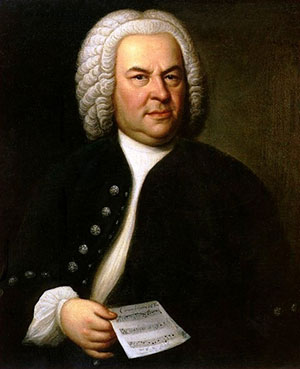
Learning Bach and Learning from Bach. . .

Concordia Lutheran Seminary (CLS) is gearing up for its Winter 2014 Quest Course: “A Man for our Times: Bach’s Music and Theology for a New Millennium.” The course, which is free to attend and will be live-streamed online, will be taught by Rev. Lorne Manweiler.

“So often, J.S. Bach is held up as a paragon of the high Baroque and of an even higher church music,” the course description reads. “It may be surprising to many that Bach dealt with the same grass-roots challenges the modern church worker and church musician faces: chronic lack of resources, doctrinal inconsistency, cultural pressures, few capable parish musicians, and often antagonistic working relationships.”

Do you want to find out more about JS Bach?  Click here and find out how to take this online class.   The course will take place Tuesday evenings February 4, 11, 18, and 25 from 7:00 p.m. to 9:00 p.m. Edmonton students may take part on campus at Concordia Lutheran Seminary. Online students can access the video-conference feed here: concordia.adobeconnect.com/quest. (For information on computer requirements, click here).

Ugly is not in the eye of the beholder

Ugly is not in the eye of the beholder... instead it is in a side chapel of the Catholic Cathedral of Dresden (compare this Roman Catholic atrocity with the beautiful Frauenkirche!).

In the photos you can just see what might have been.  Most of it has been removed and something, I know not what, has been put upon the foundations of the beautiful past.  They say it is Mary but whose Mary?  Not the blessed Virgin Mother of Our Lord!  Thanks to the family from Dresden who drew my attention to this, well, travesty of art.

Here is the exterior:


Here is a view of the chancel:


Here is the "new" chapel design:


Which picture captures ugliness?  God keep us from artists and the arts gone awry.  Ugliness is no servant of the liturgy or worship.

Tuesday, January 14, 2014

It ain't rocket science. . .

It ain't rocket science but that does not mean it is not open to misinformation, confusion, and even mystery.  I had a pipe break in the yard and, since it was near a beautiful Japanese Maple, I dug it up by hand, carefully exposing the break for the plumber to fix.  When he came, he was at first disappointed that he was not going to be charging me for digging the hole with his backhoe and then proceeded to insist that we must dig a trench all the way to the house.  I listened as he insisted there was no other way.  I wondered aloud if we could just cut off the plastic pipe that brought water to the house, insert a coupling and a plastic union.  He looked into the hole for a while and then told me he did not have a plastic union with him.  I offered to pick one up while he prepared the water line.  And so it went... without digging up anymore of the yard.

Those with fresh eyes often see what old eyes miss.  So it is when you bring up the subject of a welcoming church and a caring community of faith.  Sometimes those new to the congregation see us differently than we see ourselves.  With that in mind Concordia has put together a helpful series of "how to" books on various practical subjects (Five Things You Can Do...).  They are targeted largely to a lay audience but very helpful for pastors as well.  I received a review copy of the volume on making yours a caring church (by Paul Cain) but I already had ordered five or six titles from the series for our little parish bookstore.

Most things related to "church growth" call upon the congregation to unlearn its identity and become something new.  Cain's little book does just the opposite. It sees the means of grace as the source of welcome and caring.  Sure, there is an abundance of common sense stuff urging us to see with fresh eyes everything from where you park to how you enter the building and how you make your way to the sanctuary but this is a much fuller approach and it all flows from the Word and the Sacraments.

Cain gives us the helpful reminder that our caring neither supplements nor replaces the Lord's caring for us but is an extension of how Jesus continues to provide His care to His people.  It flows from the Divine Service itself.  Even the common sense issues of parking, facility, greeters, ushers, etc...all are servants of the Divine Service and not ends in and of themselves.  None of this matters unless we have the Lord's service to offer those whom He has called and gathered.  Cain also points out how the primary tool of our worship, the Lutheran Service Book hymnal is user friendly.

The Divine Service is the font and source for all that a Lutheran parish does, according to Cain.  Even the love we express to our neighbors and the witness we share with those around us is formed from and directed toward the Divine Service where Christ serves us with His gifts.  Human care (a fancy term for works of mercy) is putting into action what we have received in the Divine Service.  Liturgy and witness, love and service, all have the same beginning, if not the same venue.

Cain even includes a section on how we care for those who care for us with the means of grace.  Often congregations forget that how they esteem and care for the Lord's servants and his family is not unrelated to the larger issue of caring within the community of faith and caring outside toward their neighbors.  The end touches upon one of the hidden gems of Lutheranism -- talk of vocation.  We live out our baptismal life in various ways, in different settings, and in different roles, but they are all born of this new life which is God's gift in the water.

Most of the time I find reading this kind of literature a chore.  Most of the time the author insists that we must forget who we are and what we do to become something different.  Only then will we be able to reach our goals.  CPH is trying to give Lutherans some resources that begin with the premise that who we are and what we do the means to genuine church growth.  These are not large or imposing volumes but if they can help us learn to use God's gifts in the means of grace as our starting point and ending point, this is encouraging.  Maybe if we read more of this kind of literature instead of the usual stuff from evangelical sources, we would be less tempted to discard our identity to improve our practice.  It is often those who are newest to Lutheranism who see this clearly.  Something about fresh eyes on old problems...


Monday, January 13, 2014

Foolish pupil though I was. . .

Once again another writer has said it better than I:  I had grown bored with the [liturgy] as if the [liturgy] was to blame.  But the fault lay squarely within me.  Only when I slowed down, and truly looked, did I realize that familiarity need not breed contempt; it can invite comprehension, awareness, a depth of understanding impossible apart from long-term, intimate knowledge.

Another prescient line:  What a foolish pupil I was, yet what a patient teacher my Lord had been.

Finally this:  We scurry along the surface of the liturgy week after week as if the goal is to get from the invocation to the benediction at breakneck speed.  And we can do this because we assume we know the lay of the land.  Blindfold us and we think we can still maneuver around the twists and turns of worship.  Just as my feet pounded out a rhythm along that trail, while my heart was far away, so our lips rhythmically speak the words, but in our heart it all too easily sounds like, “I confess that I am by nature blah, blah, blah…I believe in blah, blah, blah…The LORD bless you and blah, blah, blah.”  The fault, however, is not in the Divine Service.  It’s not time to find a new liturgical trail.  It is time, however, to ease from running to jogging to walking to kneeling, and there, on your knees, to contemplate the divine riches we’ve been trampling underfoot.  It’s time to let familiarity breed comprehension.

I resonate with what Chad Bird has said not because it agrees with me but because this is the normal experience of all living in all of life.  Indeed, it does not matter if we agree or admit or even appreciate this truth.  It is still true.  The familiar becomes the object of our boredom not because of any fault with the familiar (the liturgy) but because we have itching ears, wandering eyes, and hearts convinced the grass is always greener elsewhere.

So long ago the complaint arose from Israel that they were tired of manna, they wanted choice, they wanted what appealed to them...  Never mind that they were being given food daily and richly, quite apart from their labor or worthiness.  Their complaint so quickly disdained what God had given -- not because it was defective but because their ears itched, their eyes wandered, and their hearts were convinced that as bad as it was, it was better than relying upon the Lord.  Have we learned anything?  Precious little, I am afraid.  We continue to take what is God's and treat it as if it were beneath us, not good enough for us, or too routine to be interesting, relevant, or enough to sustain us.  We have not just sought to ditch the liturgy in favor of something of our own manufacture, we have grown tired of grace, weary of the Gospel of Christ's suffering, death, and resurrection, and bored with divinely appointed cycle of Christian life which flows from and calls us back to the means of grace.  And just like in Eden, it is God's fault.

Once when my kids were heading to church with another youth who had grown up here and ridden this same path countless times, mention was made of a caboose in the yard of one of the houses almost to the church.  "Where?" he demanded.  "I've never seen it!"  But there it was.  So we continue to come to church on Sunday mornings demanding to know where all this stuff is that God has promised.  There it is -- hidden in plain sight.  So whom do we blame?  Not us, of course.  I like how Chad has put it.  Would that we all spent a little more time with the familiar of Sunday morning and an effort to appreciate it instead of a cursory run through and the judgement that we need something new!

Sunday, January 12, 2014

Those dang literalists!

Literalist!  Fundamentalist!  These are the charges laid against the "conservatives" who take Scripture at its word.  Why that could not possible be true!  This is their charge against every apparent contradiction, every seeming conflict within the Word of God.  Those of us who, like Missouri, say the Word is true are charged with redefining otherwise clear passages to explain away, erase away, eradicate away the apparent conflicts and contradictions.

It would seem this now applies to creeds and confessions as well.  This could not possible mean what it says and it if means what it says, we must reject it for the sake of the Gospel!  At least that is the position of some on the liberal end of things.  In this case it was a discussion about the opening words to the Athanasian Creed.  On another forum a debate has arisen over how we hear and understand the words of the Athanasian Creed and how we subscribe to those words.  In the past, this would have hardly begun a testy exchange but this one has proven to have some fireworks.  I do not wish to rehash the whole thing here but to use this to illustrate what happens when one begins with the skeptical mind as opposed to what happens when one begins with the confident mind of faith.

It is said that one cannot subscribe to the actual words of this creedal statement because of this beginning and its ending.  Whoever desires to be saved must, above all, hold the catholic faith. Whoever does not keep it whole and undefiled will without doubt perish eternally....At His coming all people will rise again with their bodies and give an account concerning their own deeds. And those who have done good will enter into eternal life, and those who have done evil into eternal fire. This is the catholic faith; whoever does not believe it faithfully and firmly cannot be saved.  Why, to do so would surely be Pelagianism!  So therefore one subscribes to the dogma, particularly the Trinitarian and Christological doctrine within the Athanasian Creed but not the creed per se.

Never mind that these words accord with St. Paul, the grand expositor of justification by grace through faith: "For we must all appear before the judgment seat of Christ, so that each one may receive what is due for what he has done in the body, whether good or evil. Therefore, knowing the fear of the Lord, we persuade others..." 2 Cor. 5:10,11

Never mind that these words accord with Jesus, the Savior whose suffering and death have purchased and won this salvation so that we might be declared righteous and just before the throne of God:  John 5:28-29 "Do not marvel at this, for an hour is coming when all who are in the tombs will hear his voice and come out, those who have done good to the resurrection of life, and those who have done evil to the resurrection of judgment."

OR

Matthew 25 (the whole chapter not printed out here).

Never mind that the fathers of the Church have understood this easily enough.  "Holy Scripture should be interpreted in a way which is in complete agreement with those who understood it and not in a way which seems to be inconsistent to those who are least familiar with it. Paul said that a man is justified through faith without the works of the law, but not without those works of which James speaks." (Augustine, FC 16:36)

"That Abraham believed God deep in his heart is a matter of faith alone, but that he took his son to sacrifice him … is not just a great act of faith but a great work as well." (Augustine, WSA 3/1:181)

"On the one hand, the blessed James says that Abraham was justified by works when he bound Isaac his son on the altar, but on the other hand Paul says that he was justified by faith, which appears to be contradictory. However, this is to be understood as meaning that Abraham believed before he had Isaac and that Isaac was given to him as a reward for his faith. Likewise, when he bound Isaac to the altar, he did not merely do the work which was required of him, but he did it with the faith that in Isaac his seed would be as numberless as the stars of heaven, believing that God could raise him from the dead." (Cyril of Alexandria, CEC 17)

"Just as faith without works is dead, so the reverse is also true. Therefore let integrity in faith shine forth along with the glories of upright living." (Cyril of Alexandria, FC 77:15)

"Although the apostle Paul preached that we are justified by faith without works, those who understand by this that it does not matter whether they live evil lives or do wicked and terrible things, as long as they believe in Christ, because salvation is through faith, have made a great mistake. James here expounds how Paul’s words ought to be understood. This is why he uses the example of Abraham, whom Paul also used as an example of faith, to show that the patriarch also performed good works in the light of his faith. It is therefore wrong to interpret Paul in such a way as to suggest that it did not matter whether Abraham put his faith into practice or not. What Paul meant was that no one obtains the gift of justification on the basis of merit derived from works performed beforehand, because the gift of justification comes only from faith." (Bede, PL 93:22)

Never mind that the Lutheran Confessions affirm not merely the Trinitarian and Christological content of the Athanasian Creed, but also its received wording, which is the confession of the Church, the faithful confession of the Church.  "Likewise, we reject and condemn it both when some Antitrinitarians reject and condemn the ancient, time-tested Creeds, the Nicene and Athanasian, both in their intention and their actual wording, and when they teach that there is not a single, eternal, divine essence..." (FC SD XII:37; K/W 659)


The liberal perspective, always skeptical and even willing to be a literalist or fundamentalist with respect to a text in order to question its veracity, refuses to allow Scripture to interpret Scripture or to use the whole of the content of the creeds and confessions of the church to illuminate specific passages.  This, it is claimed, is cheating.  The only fair way is the skeptical way -- pick a passage out of its context, refuse to allow the other clearer passages to shed light upon this one, and then reject it because it does not conform to your predisposed notions.  The claim is always laid at the door of orthodoxy that in order to get there from here, you must use "special exegesis" because any fair reading of the text renders such orthodoxy impossible.

The only question here is who can do the good of which these passages speak and the Athanasian Creed speaks?  Here Scripture is clear again.  The good is done by those whom the Lord has declared good and in whom the Holy Spirit has worked faith in the heart to receive and believe this gift of alien righteousness.  So it is not difficult to reconcile James and Jesus or Paul and Jesus or Jesus, James and Paul with the Athanasian Creed.  It takes no effort whatsoever -- except for the skeptics who will use any tool, even seeming literalism, to betray the text, rough it up, and then discard it.  It cannot say what it says, it cannot mean what it says, therefore it cannot be faithful and true.  Simply by extension of this principle, one can nearly eradicate every word of the New Testament until one is left with merely a golden rule that offers little real gold and a few other pious moralisms, none of which can save you, if, indeed, you need saving.

While it may seem that the great liberal divide is a matter of texts and interpretation, the reality is that the starting point is the real issue.  Do we begin with the joyful affirmation of Scripture and its own claims about itself, the creeds formed by the Church in faithfulness to the Word, and our confessions having their source and content from the Word of God... OR must we constantly review, redress, and re-interpret Scripture, creed, and confession as our own rational mind leads, seeming archeological evidence might show, and historical interpretation change?  In the first view the faith is static -- it is yesterday, today, and forever the same -- even in the midst of a changing world.  In the skeptical view nothing is ever static and even the truth of God is constantly under scrutiny and redefinition.  Some may go further and others in this, but, once you have begun down this slippery slope there is nothing to stop the slide into complete relativism.


Saturday, January 11, 2014

Made up sacraments. . .

A church cannot exist without sacraments.  Where the church eschews the Biblical sacraments of baptism, Eucharist, confession, and, perhaps, ordination, they will make up a sacrament to replace what is lost.  In the end it is the ultimate act of idolatry to reject the means of grace God has appointed and to which He has attached His promise and, instead, to pursue other means of grace to accomplish a similar purpose but without the divinely established promise.  But when has that ever stopped us?!

I have often written of the way prayer has been turned into a sacrament and, truth to be told, Lutherans are not immune from writing about prayer in this way and elevating prayer to a place of prominence equal to the means of grace normally acknowledged by our Confessions.  But as easy as it is to attach sacramental grace to prayer and turn it into more of a transaction than conversation, prayer is not the only one of several usual suspects for replacing the Scripturally mandated sacraments.

Certainly the Charismatic Movement has declined in prominence but it is still a viable and effective movement -- especially in Africa.  Back in the ancient of days when I was ordained, district pastoral conferences sometimes pitted pro and anti speakers on just this topic within Lutheranism (I recall Howard Tepker debating Richard Jungkuntz at one such gathering).  Perhaps its greatest fruit is that it has left a lasting imprint upon the contemporary worship movement and that has fully entrenched itself in nearly every Christian tradition.

The contemporary worship movement was born of the Charismatic Movement of the 1960’s and 70’s. Evidence of this connection lies particularly in the musical style that was passed from the charismatics to the contemporary worship crowd and with it the understanding of the purpose of this music.  This connection forged a musical style that was rooted in a particular understanding of the Spirit in worship. This musical style was less about praise and worship (as it has now become identified) than about a vehicle for changing the mood and introducing the Spirit to bring the assembly to a common spiritual place. The purpose of singing and the character of the congregational song (both performed for and for participation in this song) was understood sacramentally -- though seldom was this term used. It was believed by the charismatics and now by the contemporary worship crowd that the music of worship was a means through which God was encountered in the Spirit, and almost uniquely so.
  • congregational song and the music of worship was a primary means of intimacy with Jesus
  • the music of worship was not about God but addressed to God
  • the pronouns of this song were predominantly first person
  • the song tended to include repetitive phrases more than an unfolding narrative
  • the time of singing was essential to worship and often occupied a larger segment of the worship time than even preaching
  • the tone of the music was intensely personal and sensual
When mainline and old style fundamentalist congregations began to import the songs, the sound, the style, and the textual focus of charismatic song, they inadvertently or deliberately adopted the sacramental role of music in their worship services and radically changed both the expectation of music in worship and the way music was chosen and congregational song evaluated.

Since most of these congregations thought they were adopting a form but not a new theology, many were unaware of the impact a simple decision on what music will be used would make on the very nature of their denominational identity and confessional integrity.  I would submit that it is impossible to adopt the style and exclude the theological suppositions that gave this style its birth and in which its expression flourished.  The very nature of this music has contributed to a commonality of Sunday morning experience that transcends the confessional identity of the church so that people who move are much more likely to choose a new church home which fits the worship style they had than to choose on the basis of what is believed and confessed by that church.  In the end the worship service itself was no longer the assembly of the church speaking and singing praise to the Triune God as much as it was a means of evangelism, outreach, and attraction to those not yet of the faith.  The end result is that many of these congregations have relegated the Sacrament of the Altar to a secondary service with the primary sacramental focus of Sunday morning the music that ushers in the desired atmosphere of intimacy and sets the mood for the work of the Spirit, culminating in the "sermon" and its invitation to faith.


Liturgical communions like Lutheranism find themselves with not only mini-denominations within their traditional structures but with a combative and testy atmosphere, the aptly named worship wars, that have further divided and alienated people within the same national church body from each other.  This is, at least in part, due to the significant impact of the charismatic movement upon traditionally non-charismatic churches.  Missouri's own Renewal in Missouri (RIM) may no longer be much of a factor in the church but it has left its permanent mark in the great divide between those whose worship is primarily word and contemporary song and those whose Sunday morning is marked by the full Divine Service, sacramental preaching, and the great Lutheran chorales.


For more on this topic, read here....  The result was that the songs themselves and the style itself became the focus. Particularly in mainline congregations influenced by the Church Growth Movement, “contemporary worship” was a technique for reaching out—the concept of “praise and worship” as sacramental/encounter was diluted at best.


Friday, January 10, 2014

The Gift of Evening Prayer. . .

If I were ever to lose my faith, God forbid, I think it might be rekindled in the shadows of the darkness by the sounds, smell, and silence of Evening Prayer.  There is much that I have come to lament about the magnitude of change borne by the liturgical movement within Lutheranism that gave birth to LBW/LW/LSB/ELW.  The older I get, I am more aware of the fractured state of Lutheranism compared to the day when I grew up.  I am not speaking here of the doctrinal distance between us so much as the liturgical unity that was once commonplace by the Common Service in slight variation between the Service Book and Hymnal and The Lutheran Hymnal.  It was the unleashing of a sea change upon the Lutheran Church when we had optional forms and musical settings for the Divine Service.  It is not that I do not like them -- I do.  But I fear the cost of giving these choices to the churches was far greater than we realized then or now.  Yet I cannot lament all of the change.

Vespers is what I grew up with and it is a fine choral service of the evening hour.  I like it.  It is home to me even though it has been a very long time since we have sung it regularly in my parish.  But Evening Prayer was truly a gift to Lutheranism and to this particular Lutheran.  I was mesmerized by Evening Prayer the first time I sang it.  It goes back to 1978 when LBW was being introduced (I am old; I was there).  It was a liturgy that was completely new to me and yet seemed to be as old as time.  That first Evening Prayer I encountered was simply done, without the extra Psalm and with words that barely qualify as a sermon, but it was stunning.  With limited resources, the Paschal Candle was reconfigured into the great light that ushers in that Service of Light.  It had me from the get go.

Evening Prayer can be both elaborate and simple.  I have seen it done wonderfully with the full resources of choir and instruments, mounds of incense, and hundreds of voices.  I have begun the Service of Light in utter darkness with hand candles spreading the light as the building was aglow with the flickers of hundreds of candles.  I have done Evening Prayer in the makeshift setting of a motel conference room without any of the usual furniture and under the blaze of cruel fluorescent lighting.  It is always good.

It is best, I think, here at Grace.  This is not due to my gifts as leader or preacher but to the wonderful blessing of the Evening Prayer liturgy itself.  We dim the lights so that the Service of Light can be set where it should be, in shadows.  We follow the order directly from the hymnal.  The first Psalm is sung as incense strings its smoke and smell toward the ceiling (symbolizing the prayers of God's people). The second Psalm is simply done using the Psalm tones of LSB.  The lesson and sermon are catechetical, designed to teach the basics of the faith through the penitential seasons of Advent and Lent.  The refrain of the Magnificat is sung by all but its text by a single female voice.  At the end our tradition is to borrow from Compline its antiphon (Guide us waking, O Lord, and guard us sleeping that awake we may watch with Christ and asleep we may rest in peace) and then to sing the Nunc Dimittis from the Quinn paraphrase (LSB 937) followed by the antiphon (then in near total darkness).

Of course we have some who sniff and cough at the barest whiff of incense (hidden behind the altar a good 50 feet away from anyone but me and my acolyte) and we have some who don't like singing so much ("Why couldn't we just speak the prayers?") and there are those who no longer drive at night or too busy on a Wednesday for Evening Prayer.  There is always something.  But it all seems to fade away when the first intonation (Jesus Christ is the Light of the World) and we sing the Phos Hilaron and I chant the Thanksgiving for Light.

There are a lot of things wrong with worship we might put at the door of the ILCW and the process that gave birth to LBW and LW but I tend for forgive and forget when, lost in the shadows, Evening Prayer begins again. . .

I can't vote for him but I wish I could. . .

I grew up in Nebraska.  I am still a Nebraskan at heart.  I bleed when the Huskers go down to defeat.  I long for the one finger wave (no, not that finger), and for a small town culture in which your neighbor is your family.  My mom and dad still live there.  Going on 87, Dad still goes to work at 7 am to the store he has owned about as long as I have been alive.  My brother is a volunteer fireman, paramedic, church worker, and town historian (his hobby).  My middle child lives in Norfolk where he is an assistant manager of Hy-Vee East.  I love Nebraska.  I was baptized at Golgotha Lutheran Church on a hill miles outside of any town, the place where my grandfather and father and my oldest son were also baptized.  There is something that touches my heart when I see a white clapboard church building sitting alone, surrounded only by cornfields.

So when Gene Veith posted this video commercial from Ben Sasse (born 27 miles away from my hometown), my interest was piqued.  His campaign theme:  Move the Capital of the US to Nebraska -- no, not necessarily the building but the mindset and heart.  I can't vote for him but gosh darn I wish I could vote for this fellow Lutheran.  And I would actually like to see the Capital moved to Nebraska (maybe leaving some of the bureaucrats back behind to fix the mess that is DC.  You watch and tell me you don't think it is a good idea, too!

Thursday, January 9, 2014

Constricting or opening up?

I have had folks talk to me about Christianity and their fear that faith constricts you, your world, your universe.  The common complaint is that science is the eye and mind opener and the Church is the one with blinders and a closed mind.  It is, as these folks have put it, that the job of faith is to nail things down and what you end up with is a very small room -- one without space for questions or doubts or uncertainties.

It does not help the case that you drive around behind bumper stickers that proudly proclaim:  God said it!  I believe it!  That makes it so!  No, it does not help the cause that the media seem to brand all disagreement with the prevailing social and ontological theories as ignorance.  I also confess that too often the apologetic of well-meaning Christians is to disparage doubters and to hold up absolute confidence as the hallmark of a "real" faith.

I know that there are some Lutherans who throw the Catechism or a Bible passage at every question, every doubt, and every doubter.  Funny that Lutherans would use Luther's Small Catechism in such a way since its author was a man with frequent bouts of doubt and despair.  What consoled him was not God in a box but the concrete means of grace that gave access to the divine and saving mystery.  We Lutherans sometimes have forgotten that mystery is not some loose end to be tied up and packed away.  The surprise of grace is mystery!  The means of grace are mysterion, doors and entrances to the mystery -- what we in the West call sacraments. 

We have gotten in the nasty habit of boxing up God as if this were the duty He has assigned to us -- cleaning up His messes.  Nothing could be further from the truth.  God's self-disclosure does not draw a box around Him but honors the real mystery of the Triune God without distancing us from that mystery.  Take a gander at the Athanasian Creed and its definitions of God that proceed from what He is not more than what He is.  The beginning of that creed is certainly the prologue to the greatest mystery of all.  Whoever would be saved must above all confess the catholic faith... and the catholic faith is this:  That we worship one God in Trinity and Trinity in Unity, neither confusing the persons nor dividing the substance...  Almost too abruptly we are thrust into the mystery that is God -- not the God of our imagining but the God who has disclosed Himself to us in paradoxes and contradictions that literally boggle the mind!

How sad it is that we feel we must tame God and disarm the mystery in order to teach it to our children and witness it to the world.  The creeds spend very little time defining God -- they confess Him as He has revealed Himself with the faith that this God keeps His promises and does what He says.  That is enough.  Far from boxing in God, this opens up God to us.  He is not some neat and tidy idea that appeals to human reason but God who is incarnate -- who holds all things in His hands, who was and is and is to come but can still fit in the womb of the Virgin!

Any genuine catechesis opens up the door to the grand and limitless imagination of the God who breathed His mystery into the authors of Scripture until His Word became their words -- all so that we might know Him and worship Him.  There is no constricting to this God.  He refuses to be bound by anything except His own promises and these He is compelled to keep.  His revelation blows holes in us and in all our designs to compact Him.  Your God is too small -- He insists to us.  And this is not the speculation of a curious mind wondering "what if" but the unlimited nature of a life that begins with His because...

Christianity is no small faith with a small God.  Just the opposite!  Christianity is a great faith and our God is greater than the mind can ever imagine!  The surprise of grace is that hidden in all of this grandeur is not some pedestrian idea of glory but the radical glory of a God who comes to suffer and whose suffering redeems us.  This is the mystery that has captivated the minds of the greatest artists and artisans!  How can it be that we think this God small and this faith constricting?  Far from it.  Faith opens the door to a grander life and a greater imagination than any of us could conceive on our own.  Where is our sense of wonder?  Where is our awe?  Unless we communicate this with our memorized catechetical passages and Bible verses, we will have given our youth and the unchurched a false idea of God and a sense of Christianity that is too small to be true! 


Wednesday, January 8, 2014

A feel good moment at the start of a New Year. . .

The next Sarah Brightman?

Thoughts on hymns. . .

One of the distinctive characteristics of Lutheran hymnody is that it is catechetical -- it teaches!  The words are a reflection of God's Word to us, telling the story of the fall, the destruction of sin, the promise through the ages, and its fulfillment in the crucified and risen Jesus.  They do a marvelous job of presenting the Gospel in context and are very careful to make sure that through them we sing Christ.

English hymnody is certainly no match for the great Lutheran chorales in this regard.  It does not need to be.  English hymnody soars in the prayerful form of a response to this Gospel.  Here is one less obvious example, this one by John Wesley:

O Thou who camest from above,
the pure celestial fire to impart
kindle a flame of sacred love
upon the mean altar of my heart.

There let it for thy glory burn
with inextinguishable blaze,
and trembling to its source return,
in humble prayer and fervent praise.

Jesus, confirm my heart’s desire
to work and speak and think for thee;
still let me guard the holy fire,
and still stir up thy gift in me.

Ready for all thy perfect will,
my acts of faith and love repeat,
till death thy endless mercies seal,
and make my sacrifice complete.

Or listen to it here.


Another profound example is the hymn of the day for All Saints and a staple of funerals:


Finally, we might turn to the beloved evening hymn "Abide with Me."


Let's face it.  For some (too many) the only catechesis they get is through hymns and the Divine Service.  While I do not in anyway mean to diminish the value of the liturgy to teach the faith, hymns are more, shall we say, portable.  Any smart Pastor or parish musician will make sure that the bulk of the hymns on Sunday morning teach the faith by giving us opportunity to sing the Word of the Lord He has spoken to us.  But that does not mean that we should not give ample opportunity to sing reflective, prayerful, and responsive texts as well.  It is not a choice but a balance.  While not every Lutheran chorale is singable, not every prayerful text is worthy of being sung and hymns should be chosen with great care, a balance of known and unknown, the predominance of catechetical hymns to tie directly with the pericopes of the day, and a responsive text or two to help us form into prayer for us and the high calling of our daily lives what we have heard and sung in the story of God's act for our redemption through Jesus Christ.


Tuesday, January 7, 2014

A lot of bull. . .


Note:  This was supposed to have posted on January 3, 2014, but, as I have mentioned elsewhere, I am having a few blogger issues. . .


Today (January 3) is the anniversary of the papal bull of excommunication effectively throwing Martin Luther out of the church -- at least the one in communion with the Bishop of Rome.

The flowery language of this papal bull seems to have disappeared from most church publications.  What a shame!  I wish we still talked like this (though obviously I have some issues with the content):

Editor's Introduction

Pope Leo's bull, Exsurge Domine, condemning the teachings of Luther set a sixty day time limit during which Luther was required to make an act of obedience to the Pope. The time limit expired on November 27, 1520, after the bull had been posted on church doors in Meissen, Merseburg and Brandenburg. After Luther received the original document, he burned it with contempt on Dec. 10, 1520, along with a copy of the code of canon law. On January 3, 1521, the Bull Decet Romanum pontificem officially declared Luther a heretic, as well as his followers, and anyone who from then on accepted or helped Luther and his followers. The Pope reserved for himself the possibility of acquitting the friar and ordered all the archbishops, metropolitans, bishops, Cathedral Chapters, canons and the superiors of regular orders to combat against Luther's and his followers' heresy to defend the Roman faith. On the same day the Bull was published, apostolic letters were sent to the Archbishop of Mainz, Albrecht (nominated General Inquisitor for all Germany) and to the Nuncios Caracciolo and Eck to granting them the appropriate powers to fight against and judge all the Lutherans.

The Bull "Decet Romanum"

Preamble

Through the power given him from God, the Roman Pontiff has been appointed to administer spiritual and temporal punishments as each case severally deserves. The purpose of this is the repression of the wicked designs of misguided men, who have been so captivated by the debased impulse of their evil purposes as to forget the fear of the Lord, to set aside with contempt canonical decrees and apostolic commandments, and to dare to formulate new and false dogmas and to introduce the evil of schism into the Church of God-or to support, help and adhere to such schismatics, who make it their business to cleave asunder the seamless robe of our Redeemer and the unity of the orthodox faith. Hence it befits the Pontiff, lest the vessel of Peter appear to sail without pilot or oarsman, to take severe measures against such men and their followers, and by multiplying punitive measures and by other suitable remedies to see to it that these same overbearing men, devoted as they are to purposes of evil, along with their adherents, should not deceive the multitude of the simple by their lies and their deceitful devices, nor drag them along to share their own error and ruination, contaminating them with what amounts to a contagious disease. It also befits the Pontiff, having condemned the schismatics, to ensure their still greater confounding by publicly showing and openly declaring to all faithful Christians how formidable are the censures and punishments to which such guilt can lead; to the end that by such public declaration they themselves may return, in confusion and remorse, to their true selves, making an unqualified withdrawal from the prohibited conversation, fellowship and (above all) obedience to such accursed excommunicates; by this means they may escape divine vengeance and any degree of participation in their damnation.

 1] [Here the Pope recounts his previous Bull Exsurge Domine and continues]

2] We have been informed that after this previous missive had been exhibited in public and the interval or intervals it prescribed had elapsed [60 days]-and we hereby give solemn notice to all faithful Christians that these intervals have and are elapsed-many of those who had followed the errors of Martin took cognisance of our missive and its warnings and injunctions; the spirit of a saner counsel brought them back to themselves, they confessed their errors and abjured the heresy at our instance, and by returning to the true Catholic faith obtained the blessing of absolution with which the self-same messengers had been empowered; and in several states and localities of the said Germany the books and writings of the said Martin were publicly burned, as we had enjoined.

Nevertheless Martin himself-and it gives us grievous sorrow and perplexity to say this-the slave of a depraved mind, has scorned to revoke his errors within the prescribed interval and to send us word of such revocation, or to come to us himself; nay, like a stone of stumbling, he has feared not to write and preach worse things than before against us and this Holy See and the Catholic faith, and to lead others on to do the same.

He has now been declared a heretic; and so also others, whatever their authority and rank, who have cared nought of their own salvation but publicly and in all men's eyes become followers of Martin's pernicious and heretical sect, and given him openly and publicly their help, counsel and favour, encouraging him in their midst in his disobedience and obstinacy, or hindering the publication of our said missive: such men have incurred the punishments set out in that missive, and are to be treated rightfully as heretics and avoided by all faithful Christians, as the Apostle says (Titus 3:10-11).

3] Our purpose is that such men should rightfully be ranked with Martin and other accursed heretics and excommunicates, and that even as they have ranged themselves with the obstinacy in sinning of the said Martin, they shall likewise share his punishments and his name, by bearing with them everywhere the title "Lutheran" and the punishments it incurs.

Our previous instructions were so clear and so effectively publicised and we shall adhere so strictly to our present decrees and declarations, that they will lack no proof, warning or citation.

Our decrees which follow are passed against Martin and others who follow him in the obstinacy of his depraved and damnable purpose, as also against those who defend and protect him with a military bodyguard, and do not fear to support him with their own resources or in any other way, and have and do presume to offer and afford help, counsel and favour toward him. All their names, surnames and rank-however lofty and dazzling their dignity may be-we wish to be taken as included in these decrees with the same effect as if they were individually listed and could be so listed in their publication, which must be furthered with an energy to match their contents.

On all these we decree the sentences of excommunication, of anathema, of our perpetual condemnation and interdict; of privation of dignities, honours and property on them and their descendants, and of declared unfitness for such possessions; of the confiscation of their goods and of the crime of treason; and these and the other sentences, censures and punishments which are inflicted by canon law on heretics and are set out in our aforesaid missive, we decree to have fallen on all these men to their damnation.

4] We add to our present declaration, by our Apostolic authority, that states, territories, camps, towns and places in which these men have temporarily lived or chanced to visit, along with their possessions-cities which house cathedrals and metropolitans, monasteries and other religious and sacred places, privileged or un-privileged-one and all are placed under our ecclesiastical interdict, while this interdict lasts, no pretext of Apostolic Indulgence (except in cases the law allows, and even there, as it were, with the doors shut and those under excommunication and interdict excluded) shall avail to allow the celebration of mass and the other divine offices. We prescribe and enjoin that the men in question are everywhere to be denounced publicly as excommunicated, accursed, condemned, interdicted, deprived of possessions and incapable of owning them. They are to be strictly shunned by all faithful Christians.

5] We would make known to all the small store that Martin, his followers and the other rebels have set on God and his Church by their obstinate and shameless temerity. We would protect the herd from one infectious animal, lest its infection spread to the healthy ones. Hence we lay the following injunction on each and every patriarch, archbishop, bishop, on the prelates of patriarchal, metropolitan, cathedral and collegiate churches, and on the religious of every Order-even the mendicants-privileged or unprivileged, wherever they may be stationed: that in the strength of their vow of obedience and on pain of the sentence of excommunication, they shall, if so required in the execution of these presents, publicly announce and cause to be announced by others in their churches, that this same Martin and the rest are excommunicate, accursed, condemned, heretics, hardened, interdicted, deprived of possessions and incapable of owning them, and so listed in the enforcement of these presents. Three days will be given: we pronounce canonical warning and allow one day's notice on the first, another on the second, but on the third peremptory and final execution of our order. This shall take place on a Sunday or some other festival, when a large congregation assembles for worship. The banner of the cross shall be raised, the bells rung, the candles lit and after a time extinguished, cast on the ground and trampled under foot, and the stones shall be cast forth three times, and the other ceremonies observed which are usual in such cases. The faithful Christians, one and all, shall be enjoined strictly to shun these men.

We would occasion still greater confounding on the said Martin and the other heretics we have mentioned, and on their adherents, followers and partisans: hence, on the strength of their vow of obedience we enjoin each and every patriarch, archbishop and all other prelates, that even as they were appointed on the authority of Jerome to allay schisms, so now in the present crisis, as their office obliges them, they shall make themselves a wall of defence for their Christian people. They shall not keep silence like dumb dogs that cannot bark, but incessantly cry and lift up their voice, preaching and causing to be preached the word of God and the truth of the Catholic faith against the damnable articles and heretics aforesaid.
6] To each and every rector of the parish churches, to the rectors of all the Orders, even the mendicants, privileged or unprivileged, we enjoin in the same terms, on the strength of their vow of obedience, that appointed by the Lord as they are to be like clouds, they shall sprinkle spiritual showers on the people of God, and have no fear in giving the widest publicity to the condemnation of the aforesaid articles, as their office obliges them. It is written that perfect love casteth out fear. Let each and every one of you take up the burden of such a meritorious duty with complete devotion; show yourselves so punctilious in its execution, so zealous and eager in word and deed, that from your labours, by the favour of divine grace, the hoped-for harvest will come in, and that through your devotion you will not only earn that crown of glory which is the due recompense of all who promote religious causes, but also attain from us and the said Holy See the unbounded commendation that your proved diligence will deserve.

7] However, since it would be difficult to deliver the present missive, with its declarations and announcements, to Martin and the other declared excommunicates in person, because of the strength of their faction, our wish is that the public nailing of this missive on the doors of two cathedrals-either both metropolitan, or one cathedral and one metropolitan of the churches in the said Germany-by a messenger of ours in those places, shall have such binding force that Martin and the others we have declared shall be shown to be condemned at every point as decisively as if the missive had been personally made known and presented to them.

8] It would also be difficult to transmit this missive to every single place where its publication might be necessary. Hence our wish and authoritative decree is that copies of it, sealed by some ecclesiastical prelate or by one of our aforesaid messengers, and countersigned by the hand of some public notary, should everywhere bear the same authority as the production and exhibition of the original itself.

9] No obstacle is afforded to our wishes by the Apostolic constitutions and orders, or by anything in our aforesaid earlier missive which we do not wish to stand in the way, or by any other pronouncements to the contrary.

10] No one whatsoever may infringe this our written decision, declaration, precept, injunction, assignation, will, decree; or rashly contravene it. Should anyone dare to attempt such a thing, let him know that he will incur the wrath of Almighty God and of the blessed Apostles Peter and Paul.

Written at St. Peter's, Rome, on the 3rd January 1521, during the eighth year of our pontificate.

Luther himself received an official copy bearing the papal seal in early October of that year.  Obviously the rumor mill hit him before the actual copy of the document itself.  In characteristic form, Luther had something to say about it all -- either not his most shining moment or, if you prefer, his spontaneous best.  Luther reacted in protest. He burned the Papal Bull ("Exurge Domine") along with the book of church law and many other books by his enemies on December 10, 1520 in Wittenberg where the Luther Oak (Luthereiche) stands today. He is said to have yelled: "Because you, godless book, have grieved or shamed the holiness of the Father, be saddened and consumed by the eternal flames of Hell".  Luther issued a second response in 1521.  Bainton's translation of Luther is below:

I have heard that a bull against me has gone through the whole earth before it came to me, because being a daughter of darkness it feared the light of my face. For this reason and also because it condemns manifestly the Christian articles I had my doubts whether it really came from Rome and was not rather the progeny of that man of lies, dissimulation, errors, and heresy, that monster John Eck. The suspicion was further increased when it was said that Eck was the apostle of the bull. Indeed the style and the spittle all point to Eck. True, it is not impossible that where Eck is the apostle there one should find the kingdom of Antichrist. Nevertheless in the meantime I will act as if I thought Leo not responsible, not that I may honor the Roman name, but because I do not consider myself worthy to suffer such high things for the truth of God. For who before God would be happier than Luther if he were condemned from so great and high a source for such manifest truth? But the cause seeks a worthier martyr. I with my sins merit other things. But whoever wrote this bull, he is Antichrist. I protest before God, our Lord Jesus, his sacred angels, and the whole world that with my whole heart I dissent from the damnation of this bull, that I curse and execrate it as sacrilege and blasphemy of Christ, God’s Son and our Lord. This be my recantation, Oh bull, thou daughter of bulls.
Having given my testimony I proceed to take up the bull. Peter said that you should give a reason for the faith that is in you, but this bull condemns me from its own word without any proof from Scripture, whereas I back up all my assertions from the Bible. I ask thee, ignorant Antichrist, dost thou think that with thy naked words thou canst prevail against the armor of Scripture? Hast thou learned this from Cologne and Louvain? If this is all it takes, just to say, “I dissent, I deny,” what fool, what ass, what mole, what log could not condemn? Does not thy meretricious brow blush that with thine inane smoke thou withstandest the lightning of the divine Word? Why do we not believe the Turks? Why do we not admit the Jews? Why do we not honor the heretic if damning is all that it takes? But Luther, who is used to bellum, is not afraid of bullam . I can distinguish between inane paper and the omnipotent Word of God.

They show their ignorance and bad conscience by inventing the adverb “respectively.” My articles are called “respectively some heretical, some erroneous, some scandalous,” which is as much as to say, “We don’t know which are which.” 0h meticulous ignorance! I wish to be instructed, not respectively, but absolutely and certainly. I demand that they show absolutely, not respectively, distinctly and not confusedly, certainly and not probably, clearly and not obscurely, point by point and not in a lump, just what is heretical. Let them show where I am a heretic, or dry up their spittle. They say that some articles are heretical, some erroneous, some scandalous, some offensive. The implication is that those which are heretical are not erroneous, those which are erroneous are not scandalous, and those which are scandalous are not offensive. What then is this, to say that something is not heretical, not scandalous, not false, but yet is offensive? So then, you impious and insensate papists, write soberly if you want to write. Whether this bull is by Eck or by the pope, it is the sum of all impiety, blasphemy, ignorance, impudence, hypocrisy, lying – in a word, it is Satan and his Antichrist.

Where are you now, most excellent Charles the Emperor, kings, and Christian princes? You were baptized into the name of Christ, and can you suffer these Tartar voices of Antichrist? Where are you, bishops? Where, doctors? Where are you who confess Christ? Woe to all who live in these times. The wrath of God is coming upon the papists, the enemies Of the cross of Christ, that all men should resist them. You then, Leo X, you cardinals and the rest of you at Rome, I tell you to your faces: “If this bull has come out in your name, then I will use the power which has been given me in baptism whereby I became a son of God and co-heir with Christ, established upon the rock against which the gates of hell cannot prevail. I call upon you to renounce your diabolical blasphemy and audacious impiety, and, if you will not, we shall all hold your seat as possessed and oppressed by Satan, the damned seat of Antichrist; in the name of Jesus Christ, whom you persecute. But my zeal carries me away. I am not yet persuaded that the bull is by the pope but rather by that apostle of impiety, John Eck….
If anyone despises my fraternal warning, I am free from his blood in the last judgment. It is better that I should die a thousand times than that I should retract one syllable of the condemned articles. And as they excommunicated me for the sacrilege of heresy, so I excommunicate them in the name of the sacred truth of God. Christ will judge whose excommunication will stand. Amen.


What kind of cross. . .

I recently read a rant from someone who insists that crosses with the figure of the risen Christ are not crucifixes and the fruit of a shallow, vacuous, and sentimental Christianity fearful of the real crucifix with its undisguised portrayal of suffering.  Perhaps he is correct, a figure of the risen Christ is not the same as a crucifix's image of the suffering Lord, but he is not right -- it is not necessarily the fruit of a Christianity which refuses to behold Christ's suffering.

The parish I serve has one of those terrible figures of the risen Christ.  It was not my first choice but it was a compromise with those who insisted that it be an empty cross or none at all.  Teaching is progressive by steps just as the departure from orthodox teaching and life is regressive by steps.  Living in a Southern city in which the vast majority of your neighbors are Baptist, Church of Christ, Nazarene, or some variation on a non-denominational theme, the idea of any figure of Christ on the cross is a scandal -- just as the cross itself is or should be a scandal.  But we have confused the scandal of the cross not simply by removing the figure of Christ from it but by imagining that our Lord's resurrection somehow erases the suffering and displaces His death.  This has led to a Gospel of redemption without Christ's suffering and forgiveness by decree and not because our Lord paid the awful price of sin with His blood.

A cross with a figure of the risen Christ may be an attempt to ignore the cost of our redemption though it is free to us.  More likely, it is a step, a teaching step to restore the crucifix as the visual mirror of the preaching and proclamation of Christ crucified.  Seeing a figure of Christ on the cross, whether the more graphic images of Christ's suffering or the image of the risen Lord, points to that suffering just as the cross always points to the suffering that gives relief, the blood that cleanses us from all sin, and the death that gives life.  Every cross points to Christ's suffering and there is no such thing as an Easter cross. 

I would certainly have preferred a regular crucifix but this parish had never had one, the culture in which we  lives finds it hard to accept, and there is no need to make a hill a place to die when it might become an occasion of teaching.  Thus the end result was a figure of the risen Christ on a cross.  Perhaps at some point down the road it might be replaced with a regular crucifix.  I do not know.  There are a couple of crucifixes in the chancel and one by the baptistry so it is not like the crucifix is absent.  Our processional cross has a bronze figure of the suffering Christ -- all of these together represent a dramatic improvement over the previous chapel which had no art work whatsoever and one empty cross on the altar that faded into the colored glass window behind it (oh, yes, there is a red colored glass cross in that window).

My personal preference is Christ on the cross in His priestly robes -- sort of like Christ in a chasuble.  I like it simply because of the association of that suffering and the fruits it has borne with the means of grace ministry of the Pastor.

In the end I would be happy to see any one of these three or any variation of them as the principal cross in the chancels of Lutheran parishes across the world.  Whether it is a crucifix of some type or a painted triptych with the figure of Christ on the cross prominently displayed (some very fine examples in Germany), it is certainly a great improvement over the thin, unsubstantial crosses that end of saying little and being eminently forgettable as symbols of the preached Christ.

Monday, January 6, 2014

Blogger errors today. . .

Woke up to find my blog had not posted as I had prepared... checked it out and have attempted to repost what did not post...  Perhaps the blog is as frozen as I am this AM....

Every pilgrimage of the wise leads to Bethlehem. . .

Sermon preached for the Epiphany of our Lord, observed, on Sunday, January 5, 2014.

    So maybe you have already packed up the decorations and taken down the Christmas tree and put away any thoughts of Christmas for another year.  Judging by the stack of Christmas trees at Dunbar Cave, that began Christmas morning.  I will have to admit some sadness when all the decorations are gone and all we have left are memories; hopefully good memories! But, that said, I want more than memories of Christmas.
    I would suggest, however, that the gift of Christmas is not limited to a day or even a season.  Today we observe Epiphany, the Gentile Christmas that came nearly three years after the birth of Jesus.  The Christ whom the Magi sought was not some temporary distraction but the radical transformation of their whole lives.  He was their gift through which their whole lives were redefined.  This gift of Christmas never ends.
    The ultimate question of faith and life is the same one the  Magi asked of old: Where is the Christ that we might worship Him?  What the Magi were asking is not where is Jesus.  They had not yet learned of Jesus.  What they were asking is where is redemption for my lost life?  Where can my  my sins be forgiven and my conscience cleansed?  Where is answer for my guilty conscience? Where is life that death cannot swallow up? Where is God who can restore my purpose in life?
    All of these questions were subsumed in their question, Where is the Christ that I might worship Him?  They got the direction right.  The light of the star led them to the area.  Indeed that is about all our human hearts can do with the conscience God has placed within us to light our way – we get the direction right.  But the exact address requires the Word of the Lord.  The Magi needed the voice of Scripture to tell them exactly where the Christ can be found to answer their questions.
    Even those who had long since given up on the promise, knew the promise of the prophets well enough to answer the Magi on behalf of Herod.  In Bethlehem of Judea, the prophets say.  The Magi had come to the right area and from the unmistakable source of Scripture, they knew where to go.
    Every true pilgrimage in search of the answers to the great questions of life leads to Bethlehem.  We who live a couple of thousand years later are haunted by the same questions that led the Magi to undertake their journey of discovery. Where is redemption for my lost life?  Where can my  my sins be forgiven and my conscience cleansed?  Where is life that death cannot swallow up? Where is God who can restore my purpose in life?
    The light of conscience can point us in the right direction but only the Word of God can locate the true source of Him who answers these burning questions of life.  We are led like them.
    Led by the Spirit to the Word of God that points us to Jesus, that cradles Jesus like a manger to deliver the Savior long promised to a people who have been waiting a long time.
    Every true pilgrimage ends in Bethlehem – first at the manger where the incarnation of God's Son is revealed.  From the Bethlehem of Judea, Scripture points us to the House of Bread that is the Church.  Not in the town of Judea but here on the altar and given to us in the Holy Communion is the Christ who gives us His body in bread and His blood in wine.  We no longer go to a small village in Palestine to find Jesus.  We go to the Bethlehem, to the House of Bread, that is this Church.  Here is Christ as He has promised.
    The prophets still point us right here.  Not to some Christ of our imagination but to the Lord of bread and wine.  All who are wise will follow the Magi and end up right here.  Where the light of conscience directs and the Scripture's reveal, here is Christ.  Here is the One who answers all of the great questions of faith and life.  Not an idea or a principle or even an example but the true Emmanuel, the God who comes to us to save us. 
    He is incarnate now in bread and wine.  This bread which is His body as His Word promises and this wine which is His blood.  The journey of the wise always leads to Bethlehem – not the place of His birth but the place of His presence.  We are the Magi whom the Spirit has enlivened, pointed in the right direction, and then revealed to us the fullness of the divine promise in the Christ who is born of the Virgin Mary by the Holy Spirit.  Here is God who forgives the sinner.  Here is God who rescues us from our aimless wandering and gives purpose and meaning to who we are and what we do.  Here is God who meets us in the valley of the shadow of death and imparts to us the life death cannot overcome.  Here is God who redeems His lost creation and gives us back our birthright.
    The ultimate question of faith and life is the same one the  Magi asked of old: Where is the Christ that we might worship Him?   Because of this, Christmas never stops giving us the gift of God.  Because of this, our gifts to Christ return to us more than we offer Him.  Because of this, the holy joy of this season cannot be packed away and forgotten.
    Epiphany means revelation.  The Magi found the revelation God had promised and we do, too.  It is the beginning and the end of all life.  The journey is directed by God to the place where His promise is incarnate to us.  Once in a manger in a village in Judea and today upon this altar in this Holy Sacrament.  A blessed Epiphany to you all.  Amen.

Blessed Epiphany!

As is traditional, our observance of Epiphany (transferred to yesterday) included the solemn announcement of the dates of the sanctorial cycle for the year 2014.  Hopefully, I was not a lone voice among Lutherans in attending to this.  I give high value to the ways in which we draw attention to the sanctorial cycle and, indeed, the whole church year, in the minds and lives of our people.

Know now, brothers and sisters, that, as we have rejoiced at the Nativity of our Lord Jesus Christ, so by leave of God’s mercy, we announce to you also the joy of His resurrection, who is our Savior.  For on the fifth day of March will fall Ash Wednesday and the beginning of the Lenten season.  On the twentieth day of April you will celebrate with joy Easter Day, the Paschal feast of our Lord Jesus Christ.  On the twenty-ninth day of May will be the Ascension of our Lord Jesus Christ.  On the eighth day of June, the feast of Pentecost, and so the festival cycle of our sanctorial year is marked through the Year of our Lord, 2014.  Amen.

Archbp Welby has too much time on his hands. . .

From The Mail:

[Archbishop of Canterbury] Welby casts out ‘sin’ from christenings: Centuries-old rite rewritten in ‘language of EastEnders’ for modern congregation... Parents and godparents no longer have to ‘repent sins’ and ‘reject the devil’ during christenings after the Church of England rewrote the solemn ceremony.
The new wording is designed to be easier to understand but critics are stunned at such a fundamental change to a cornerstone of their faith, saying the new ‘dumbed-down’ version ‘strikes at the heart’ of what baptism means.


In the original version, the vicar asks: ‘Do you reject the devil and all rebellion against God?’  Prompting the reply: ‘I reject them.’ They then ask: ‘Do you repent of the sins that separate us from God and neighbour?’, with the answer: ‘I repent of them.’  But under the divisive reforms, backed by Archbishop of Canterbury Justin Welby and already being practised in 1,000 parishes, parents and godparents are asked to ‘reject evil, and all its many forms, and all its empty promises’ – with no mention of the devil or sin.

 
The new text, to be tested in a trial lasting until Easter, also drops the word ‘submit’ in the phrase ‘Do you submit to Christ as Lord?’ because it is thought to have become ‘problematical’, especially among women who object to the idea of submission The rewritten version – which came after reformers said they wanted to use the language of EastEnders rather than Shakespeare in services – is designed as an alternative to the wording in the Common Worship prayer book, rather than a replacement.


But insiders predict this draft will become the norm for the Church’s 150,000 christenings each year if, as expected, it is approved by the General Synod. It may discuss the issue as early as this summer.  But the idea has angered many senior members of the Church, who feel it breaks vital links with baptisms as described in the Bible. 


Writing in The Mail on Sunday, former Bishop of Rochester Michael Nazir-Ali said the reform should be scrapped before it further reduced Christianity to ‘easily swallowed soundbites’. And one senior member of the General Synod, who did not wish to be named, said: ‘This is more like a benediction from the Good Fairy than any church service.

Somebody should spend a bit more time seeking to faithfully preserve the faith and less time considering how things might be misunderstood by folks intentionally looking to misunderstand them...  Lord preserve us from those who are offended by the faith!

Sunday, January 5, 2014

Raising a thin skinned generation. . .

Let me say at the start I do not condone racism, I do not excuse bullying, and I do not accept bigotry.  That said, however, I wonder at times if we have not gotten to be a nation of thin skinned people in search of reasons to be outraged.  I could cite a host of examples.  In politics, those who disagree with the President are labelled racist.  In society, those who disagree with same sex marriage are bigots.  In religion, Christianity remains the only group that you can insult with impunity.

As much as I am offended by the abuse, I do not think we gain anything by becoming a thin skinned society, always the victim, always filled with (self) righteous indignation, and always politically correct.  We have moved to an extreme in the opposite direction of our more overtly racist, bigoted, and divisive past.  In the process we are not less divided but more divided.  We are constantly outraged by things we ought to be able to shrug off and, in the process, we have no indignation left for that which rightfully deserves our outage. I fear for the children we raise with such constraints upon our speech and with such a penchant for being the victim.

This is not merely a debate going on outside the Church; it has entered the conversation of Christians as well.  I have personally been accused of being a misogynist for refusing the ordination of women.  I have had people tear up and claim offense because I do not approve of same sex marriage.  I have had people stomp out of my office because I mentioned that their cohabitation was not the same as marriage.  All of this happened not in the arena of culture and society but within the Church.

It seems we have forgotten everything Jesus said about turning the other cheek or how Luther explained the eighth commandment (put the best construction on everything).  Instead we divert the focus away from the real wrongs and place it instead upon imaginary wrongs -- someone has the nerve to disagree with me.  As I have posted before, we are called to speak the truth in love.  That still means to speak the truth.  I am not advocating here for personal opinion as truth but for THE truth -- the doctrine and formulations of the Church from Scripture, through tradition, down to the present moment.

In the end we have adopted a new form of Pharisaism in which moral outrage and indignation are the cover for the log in our eyes while we pick at the speck in the eyes of others.  We have learned the audacity of shifting the uncomfortable spotlight of God's Law away from us by searching for the cracks in others, especially those who speak God's Word to us.  In the end, however, being thin skinned and carrying our outrage as very public baggage, we will still be held accountable but the only One whose judgment counts.

We serve a faux Gospel that does not really offer forgiveness because we will admit none of our sins.  We have a faux church because we have no creed for belonging and no requirements of membership.  We speak only in the language of affirmation -- even though what we affirm is a temporary truth sure to change as the years come and go and sure to need adjustment as we discover more of what we like about ourselves and dislike about others.

What have we gained by
  • schools in which everyone passes and no distinction is made about grades, 
  • sports in which everyone gets to play and no score is kept except fouls, 
  • language in which disagreement is itself the worst offense, and 
  • morality in which each person gets to set their own compass -- so long as it does not in any way judge, affect, or offend others?
And what have we lost by it all?

Nowhere is the cost of our thin skinned culture more threatening than in the community where God's Word is supposed to speak unhindered and His gifts given to those with faith who come in repentance!  Grow up people.  The truth is hard not because it seeks to wound but because it has the power to heal.  Sometimes I read the lessons on Sunday morning and wonder who will  be offended today because the Lord speaks for marriage and against divorce, because the Lord places the burden of reconciliation upon the one offended instead of the offender, because not only is the truth spoken but error condemned?  Could it be that we have grown so comfortable with our wounds that we no longer seek to be healed?  That we have grown so attached to our sins, we do not want to be forgiven?  That we are so fiercely protective of the right to an opinion that we silence the Truth (or distort it)?

One of the surest ways in which sin shows itself is when we live as thin skinned people always ready to take offense and unprepared to give account of hope that is ours in Christ.  Whining is not covered by one commandment -- it is implied by all of them.  In the process of giving into the whiners, we have taught a generation you do not need to be truthful, you will not be held accountable, and you do not have to stand for anything.  So we can all be outraged at the name Redskins on a sports team while ignoring the institutionalized death of abortion... or we can all insist upon the inappropriateness of certain words that refer to people's race or ethnic background while speaking vulgarity and insisting upon our right to talk like that... or we can make violent and pornographic movies within our creative rights but insist that those who disagree are either hicks or prudes... or we can insist upon giving every spiritual kook a microphone to speak while insisting that the real religious (translate that Christian) people need to shut up.

Look at where our whining, thin skinned, victimization culture has gotten us!  The only thing left that we can all agree is offensive is the Word of the Lord than endures forever.