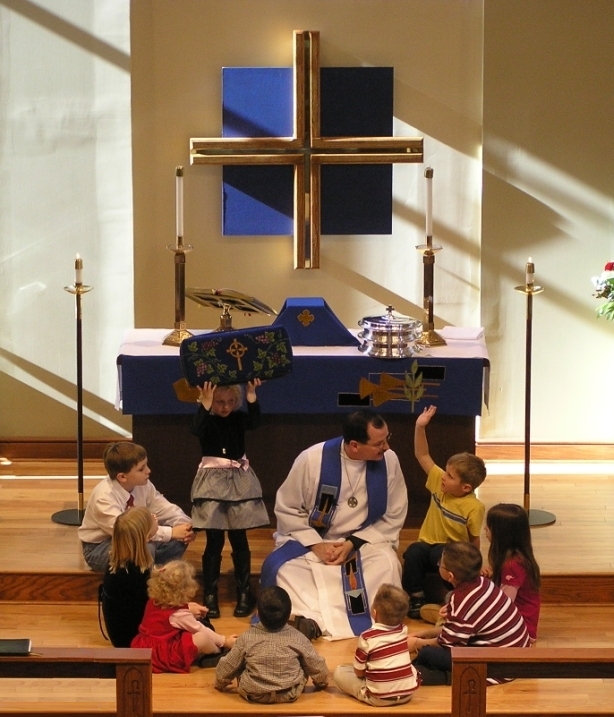
In our Sunday morning Bible class we are reviewing the Bible in the Liturgy. In preparation for the step by step walk through the liturgy, we began with a discussion of singing and music in relation to worship. Of course, the weight of those passages was decidedly toward the Psalms. An offhand comment I made provoked some discussion so I thought I might touch upon it here.
While we tend to think of music as reflective of individual, personal taste, music is a gift from God for the purpose of worship and praise of Him who gave us this gift. God never asks of us that which He has not first given to us and so it is with music. While music is dominantly secular today, it was not always so. Perhaps only a few hundred years ago and music was predominantly sacred. Choral music and music sung by an assembly remains dominantly religious in nature. There are few places where people gather as a group to sing that do not relate to worship. So even though we are tempted to believe that music has become predominantly a secular enterprise, we are reminded that we spend most of our time singing, singing in Church.
Now there are those who say that singing is not my thing. Some will confess (and not falsely) that they do not have a singing voice or the musical ability to carry a tune. I might go the path of those who say God said "make a joyful noise" and therefore it does not matter how badly you sing or how tone deaf you are, add your noise to the mix and do not be shy. My experience is that folks who do not sing or cannot sing do not appreciate being told to bellow like a cow and God will be glorified by it all (even though the Christians brothers and sisters around you may be scandalized).
I would suggest something very different. If you cannot or do not sing, do NOT stand there with your hymnal shut and your eyes looking around. Open your hymnal, place your eyes upon the text, move your lips, and sing in your heart and mind. The words and music that you cannot sing, you may speak in your heart and mind and move your lips to testify to this worship of "silent" singing. It is ridiculous to stand with the book shut and your eyes, heart, and mind wandering around the sanctuary while others sing. It is selfish to listen to others singing (remember they are not singing for you but to the Lord). It may not be salutary to join your voice if you cannot sing or your singing may distract from the song itself. Therefore, move your lips to show you are part of the assembly, read the words in your minds, and sing in your heart with the congregation that it may truly be the song of all that is lifted to the Lord with thanksgiving and joy.
Many years ago a rather blunt and mean spirited Pastor told my Dad not to sing because he sounded like a sick cow. Let us not continue to promote such foolishness and rudeness in the name of God. Congregational song is for all the people -- even if some will by necessity sing silently -- not with their voices but joyfully in their hearts. Hymns are the songs of the Church, the heritage of the faithful who went before us to which we add our own contributions -- the best of today for His glory. Let them continue to be the song of the Church (and all who are part of that community of faith). So I refuse to say not to sing but rather to sing in your heart if you cannot sing with your lips but to join us in that song, to move your lips as testament to your place within the great choir of the faithful, and let the Word in that song speak to you and through you and the music support that Word in its flight of praise, thanksgiving, worship, and witness (the great marriage of text and tune).
There is nothing sadder than to survey a people gathered in song only to see some folks standing there as if the congregation were singing for their benefit or they were not a part of this assembly called and gathered by the Spirit. So do not stand apart but join the community by singing in your heart, reading with your mind, and moving your lips in testament to the words that speak to us the Word and, in turn, speak it to the world in witness.
Tuesday, June 15, 2010
Monday, June 14, 2010
Perspective... The Helpful Lens of Experience
Though we do not talk about it much, many Pastors experience something of a depression after ordination and installation into the first parish. I know I did. I was accustomed to the liturgical life of a Seminary campus and a congregation with an inspirational liturgical history. I had been surrounded by wonderful musicians and wonderful church music. I had listened to great preachers and great sermons. I had been on the receiving end for a long time before the responsibility shifted to me. And when I ended up was a parish with a monthly and then twice monthly Eucharist, a well intentioned by poorly trained organist, a willing folk choir with their own repertoire (most of which I had never heard before), and a parish which had become deliberately less Lutheran over the years. It was a shock to wake up and realize the wonderful services of Kramer Chapel and Redeemer on Rudisill were gone and I was left with something less than ideal.
The truth is I was depressed for months. I did not show it to the congregation because I did not want to blame them for my disappointment and disillusionment but every day it was a labor just to show up. I knew that my wife was similarly depressed though we did not talk as much about it as we might -- perhaps fearing bringing the other down in our sea of discontent. We were new to the area, we had no friends, we were viewed with curiosity from the parish (which had heard of charistmatic, bronze age, Protestant, and evangelical Lutherans before but had never encountered a liturgical and confessional one).
It was a good thing that a call did not come one year, two years, even five years into that time. Without a call and an escape, I was left with the prospect of making the best of our disappointing situation. Slowly and surely the parish began to see their Lutheran identity as a help and not a problem. Slowly and surely the preaching from and to the Eucharist began to raise their expectations of the Sacrament and their awareness of the Sacrament of the Altar as the fountain and center of their spiritual lives and parish mission. Slowly and surely the conflict of the past with its bitterness gave way to some friendliness and reconciliation. With the help of a wise Bishop (Ron Fink), two wonderful circuits of wise and faithful Pastors, and a willingness to dig in and do what it was going to take... and the disappointment and depression began to wane. I learned the art of seeing things in perspective. I saw the parish for what it was but also for what it could be. By honestly addressing what was there, I could also honestly address what the future might hold.
We spent some 13 years there and the parish was very different when I left than when I had arrived. But I was very different as well. The helpful lens of experience had given me the gift of perspective and it worked to help me see who I was and what my place was in the life of this congregation. It gave me a point to start from and a realistic yet optimistic view of what might unfold by God's blessing and grace. And it has served me well... into this parish also.
Unfortunately some new Pastors never stay long enough to learn this lesson on perspective and do not let their experience grow and shape them as well as their parishes. I wish for all Pastors this lesson of perspective, the learning that comes through lens of experience...
The truth is I was depressed for months. I did not show it to the congregation because I did not want to blame them for my disappointment and disillusionment but every day it was a labor just to show up. I knew that my wife was similarly depressed though we did not talk as much about it as we might -- perhaps fearing bringing the other down in our sea of discontent. We were new to the area, we had no friends, we were viewed with curiosity from the parish (which had heard of charistmatic, bronze age, Protestant, and evangelical Lutherans before but had never encountered a liturgical and confessional one).
It was a good thing that a call did not come one year, two years, even five years into that time. Without a call and an escape, I was left with the prospect of making the best of our disappointing situation. Slowly and surely the parish began to see their Lutheran identity as a help and not a problem. Slowly and surely the preaching from and to the Eucharist began to raise their expectations of the Sacrament and their awareness of the Sacrament of the Altar as the fountain and center of their spiritual lives and parish mission. Slowly and surely the conflict of the past with its bitterness gave way to some friendliness and reconciliation. With the help of a wise Bishop (Ron Fink), two wonderful circuits of wise and faithful Pastors, and a willingness to dig in and do what it was going to take... and the disappointment and depression began to wane. I learned the art of seeing things in perspective. I saw the parish for what it was but also for what it could be. By honestly addressing what was there, I could also honestly address what the future might hold.
We spent some 13 years there and the parish was very different when I left than when I had arrived. But I was very different as well. The helpful lens of experience had given me the gift of perspective and it worked to help me see who I was and what my place was in the life of this congregation. It gave me a point to start from and a realistic yet optimistic view of what might unfold by God's blessing and grace. And it has served me well... into this parish also.
Unfortunately some new Pastors never stay long enough to learn this lesson on perspective and do not let their experience grow and shape them as well as their parishes. I wish for all Pastors this lesson of perspective, the learning that comes through lens of experience...
Sunday, June 13, 2010
Dancing the Dance of Death
Sermon Preached on Sunday, June 13, Pentecost 3 and Proper 6C.
Where do our children learn how to sin? We have to teach them how to use the toilet, dress themselves, eat, walk... but who teaches them sin? Don’t you find it interesting that we have to teach our children nearly everything but sin they know how to do from birth. How does sin work? Today we have our eye on how sin works by looking at David in the Old Testament lesson for today. We see ourselves in his dance with death and it tells us something of how leads us in a dance of death until God comes to our rescue. Today we see how David's dance with death tells us something about how sin works and how our only hope is the God who intervenes with forgiveness to restore us.
Scripture tells us that desire gives birth to sin and sin give birth to death and death takes us down. Period. It sounds so cut and dried. Is it? Look at David and what happened to him. It all started out with a walk on the rooftop to escape the heat and encounter a cool night breeze. An innocent glance became a controlling lust, taking over David's heart. It wouldn't let him go.
It was a single sin that started it all but sin is fruitful and multiplies. It was a single solitary sin that turned an innocent glance into a controlling lust that required more and more sins to cover its tracks, to explain it away, to keep up the appearance of righteousness, and to hide the fear and the shame of this mighty King over Israel and God's chosen leader. Sins never come alone – they come in pairs and platoons and whole divisions. That is what David learned and we find out too.
A sin that began with an innocent glance and turned into a tower of sins trying to hide the first transgression turned into death and more death. It was death to an innocent victim for the husband of Bathsheba and death to the cohorts whom David enlisted to carry out his evil and death to David, the trigger man for it all. That is how sin works. It sends death to the one who pulls the trigger as well as the target of it all. That is still how sin works in us and through us.
Much as we would like to hide our little dance with death, just as David desired, only the painful exposure to the revealing light ends this tragic trail of tears, shame, and guilt. What David needed and what we need is a prophet from God bold enough to speak to us an unpopular word. We need someone who can address us and our guilt, drag it out of the shadows and into the Light of Christ where God can do something about this sin. But we resist such exposure and in futility cling to the darkness and shadows.
So God has placed His Spirit upon His Word so that Word cuts to the quick to expose our sin, to reveal our guilt, and to point to the death that results from it all. Only the Word powered by the Spirit can cut out the death that walks inside of us because of sin. It works like the scalpel in a surgeon's hand to divide truth from error that sin's death may be transformed to life through the Gospel. This Word of God empowers our repentance and forgives us our sins – no matter how great – and restores us from our fall – no matter how far.
The Law of God is this scalpel cutting away what is dead and the Gospel is the healing medicine God pours into our death to cleanse sin's wound and heal it without a scar to mark its place. If only we see how sin works, then we can see how the Law and the Gospel work hand in hand to end this dance of death, to end this fear and shame, and to restore us to life and hope again.
We saw it in David. We see it in ourselves. David was loathe to admit what he knew in his heart of hearts. He paraded an appearance of righteousness as the compassionate King who took this poor, widowed mother into his own home. David did not want to admit the truth. Neither do we. It is the work of God alone to coax us from the arms of sin and evil that we might see clearly the face of its death... and coax us into the arms of light and life where sin is exposed, cut out, and the healing balm of the Gospel poured in. That is why we are here week after week. We have danced with the devil and been marked with his death and now we come to be made clean again, to let the Light of Christ shine in sin's darkness, exposing, cleansing, and healing, and finally to set us upright again as the children of God by baptism and faith.
In the Gospel lesson for today Jesus demonstrates this healing power of forgiveness to answer sin when a woman with a past anoints His feet. Her sinful life was well known and yet Jesus recognizes the repentance in her actions and the faith that led her there. He does not point His finger in judgement but opens His arms to embrace her with forgiveness. Some were offended that someone with a well known past could get so close to Jesus but Jesus insists that this is His mission and purpose. To end our dance with death and teach us the dance of life.
The old saying reminds us that you need to leave the dance with the one who brung ya... true everywhere but here. Sin brought you to this dance of death but Christ has intervened so that you can go home with Him. That is the redemptive power of the Gospel.
God shows us how sin works... how the Word works... how the Law works... and how the Gospel works... to bring to our need Jesus Christ and His redemptive grace. And that is why we are here.... to hear the Word of life, to feast upon the bread of heaven, to drink the cup of salvation, and to be made whole and new again as once we were when baptism first claimed us.... and by His grace, can begin to fulfill the promise of that new life given to you in your baptism. We see how sin works. Christ shows us how grace works. Amen and Amen.
Where do our children learn how to sin? We have to teach them how to use the toilet, dress themselves, eat, walk... but who teaches them sin? Don’t you find it interesting that we have to teach our children nearly everything but sin they know how to do from birth. How does sin work? Today we have our eye on how sin works by looking at David in the Old Testament lesson for today. We see ourselves in his dance with death and it tells us something of how leads us in a dance of death until God comes to our rescue. Today we see how David's dance with death tells us something about how sin works and how our only hope is the God who intervenes with forgiveness to restore us.
Scripture tells us that desire gives birth to sin and sin give birth to death and death takes us down. Period. It sounds so cut and dried. Is it? Look at David and what happened to him. It all started out with a walk on the rooftop to escape the heat and encounter a cool night breeze. An innocent glance became a controlling lust, taking over David's heart. It wouldn't let him go.
It was a single sin that started it all but sin is fruitful and multiplies. It was a single solitary sin that turned an innocent glance into a controlling lust that required more and more sins to cover its tracks, to explain it away, to keep up the appearance of righteousness, and to hide the fear and the shame of this mighty King over Israel and God's chosen leader. Sins never come alone – they come in pairs and platoons and whole divisions. That is what David learned and we find out too.
A sin that began with an innocent glance and turned into a tower of sins trying to hide the first transgression turned into death and more death. It was death to an innocent victim for the husband of Bathsheba and death to the cohorts whom David enlisted to carry out his evil and death to David, the trigger man for it all. That is how sin works. It sends death to the one who pulls the trigger as well as the target of it all. That is still how sin works in us and through us.
Much as we would like to hide our little dance with death, just as David desired, only the painful exposure to the revealing light ends this tragic trail of tears, shame, and guilt. What David needed and what we need is a prophet from God bold enough to speak to us an unpopular word. We need someone who can address us and our guilt, drag it out of the shadows and into the Light of Christ where God can do something about this sin. But we resist such exposure and in futility cling to the darkness and shadows.
So God has placed His Spirit upon His Word so that Word cuts to the quick to expose our sin, to reveal our guilt, and to point to the death that results from it all. Only the Word powered by the Spirit can cut out the death that walks inside of us because of sin. It works like the scalpel in a surgeon's hand to divide truth from error that sin's death may be transformed to life through the Gospel. This Word of God empowers our repentance and forgives us our sins – no matter how great – and restores us from our fall – no matter how far.
The Law of God is this scalpel cutting away what is dead and the Gospel is the healing medicine God pours into our death to cleanse sin's wound and heal it without a scar to mark its place. If only we see how sin works, then we can see how the Law and the Gospel work hand in hand to end this dance of death, to end this fear and shame, and to restore us to life and hope again.
We saw it in David. We see it in ourselves. David was loathe to admit what he knew in his heart of hearts. He paraded an appearance of righteousness as the compassionate King who took this poor, widowed mother into his own home. David did not want to admit the truth. Neither do we. It is the work of God alone to coax us from the arms of sin and evil that we might see clearly the face of its death... and coax us into the arms of light and life where sin is exposed, cut out, and the healing balm of the Gospel poured in. That is why we are here week after week. We have danced with the devil and been marked with his death and now we come to be made clean again, to let the Light of Christ shine in sin's darkness, exposing, cleansing, and healing, and finally to set us upright again as the children of God by baptism and faith.
In the Gospel lesson for today Jesus demonstrates this healing power of forgiveness to answer sin when a woman with a past anoints His feet. Her sinful life was well known and yet Jesus recognizes the repentance in her actions and the faith that led her there. He does not point His finger in judgement but opens His arms to embrace her with forgiveness. Some were offended that someone with a well known past could get so close to Jesus but Jesus insists that this is His mission and purpose. To end our dance with death and teach us the dance of life.
The old saying reminds us that you need to leave the dance with the one who brung ya... true everywhere but here. Sin brought you to this dance of death but Christ has intervened so that you can go home with Him. That is the redemptive power of the Gospel.
God shows us how sin works... how the Word works... how the Law works... and how the Gospel works... to bring to our need Jesus Christ and His redemptive grace. And that is why we are here.... to hear the Word of life, to feast upon the bread of heaven, to drink the cup of salvation, and to be made whole and new again as once we were when baptism first claimed us.... and by His grace, can begin to fulfill the promise of that new life given to you in your baptism. We see how sin works. Christ shows us how grace works. Amen and Amen.
What Is the Work of the Church
After reading another charge that too many Pastors are concerned only with "maintenance" and not with "mission," it occurs to me that there is a radical difference between the perspectives of these two Lutheran Pastors. One sees worship as a more utilitarian act of the Church, such as those who see food as merely something that must be eaten in order to live. The only way that these folks can justify the time, money, and energy put into worship is to make worship mission. Worship is seen as rather selfish time unless it is mission in focus and evangelistic in purpose. Only then is worship seen as legitimate and the money, time, and energy spent on worship justified.
Now I cannot speak for all those accused of "maintenance" ministry instead of "mission" but for me and many others worship IS the mission of the Church, not a function secondary to outreach or a stepchild to mission but mission itself. The Lord has established worship by giving to us His Word and Sacrament and made worship the priority of the community of faith that we call the Church. There is no need to balance or justify what is given to worship with what is given to mission -- worship is the first, the core mission of the Church -- the fount from which flows everything else the Church does.
By investing worship with this high priority and acknowledging its essential purpose, we give to worship the place our Lord has intended in the life of the Church and each Christian individually a member of the Church. Worship IS our mission. We do not need to turn worship into an evangelistic activity or make worship "mission" focused. Worship IS our mission and from this rich life of worship where God's people are called, gathered, enlightened, and sanctified flow the work of witness and welcome that extend to others the privilege of worship.
We have somehow adopted the very fundamentalist and evangelical idea that the purpose of the Church is to save others. Is it only the eternal outcome of their souls that we are to be concerned about? Or, is not the mission of the Church to engage the world in witness and service precisely so that others may be brought into the community gathered around the Word and Sacraments? Just as we cannot afford to ignore the physical needs of the sinner in order to address the spiritual needs (or the other way around), neither can we be concerned about saving souls while allowing those very same souls to remain apart from the community where God's Word speaks grace and forgiveness, where His water imparts new life and identity, and where His table feeds and nourishes us for this body and this life and for eternal life.
Good friend Wil Weedon has done a great service by quoting the great Confessional scholar Arthur Carl Piepkorn in this: We cannot afford to make the mistake that is often made, that of imagining that we can somehow separate the Church at work in the world from the Church at worship about the altar of the Holy Communion. The whole work of the Church is eucharistic worship as long as Eucharistic worship remains an integral part of the work of the Church. By the same token the whole life of individual Christians in the world remains a continual eucharistia, or thanksgiving, as long as they have constant recourse, in the company of their fellow-members of the mystical body of their Lord, to His Eucharistic Body and Blood. (-- A. C. Piepkorn, The Church, p. 239)
We fulfill our calling and our work as the Church not by turning worship into a program or means of outreach, witness, or evangelism, but by keeping the Word and Table of the Lord, preserving among us the liturgy and the life nurtured by this liturgy, and by the witness that will enable the Spirit to call, gather, enlighten, and sanctify others as members with us of the Body of Christ gathered around His Body in the Sacrament. We do not need to change what is done on Sunday morning to fulfill our calling but to keep it holy and sacred, passing down to others what the Lord has passed down to us as did St. Paul (1 Corinthians 10). This is not some secondary mission or purpose but our essential purpose and mission from which everything flows... or there is nothing to turn people to once the Spirit has worked through our witness to Jesus Christ.
Now I cannot speak for all those accused of "maintenance" ministry instead of "mission" but for me and many others worship IS the mission of the Church, not a function secondary to outreach or a stepchild to mission but mission itself. The Lord has established worship by giving to us His Word and Sacrament and made worship the priority of the community of faith that we call the Church. There is no need to balance or justify what is given to worship with what is given to mission -- worship is the first, the core mission of the Church -- the fount from which flows everything else the Church does.
By investing worship with this high priority and acknowledging its essential purpose, we give to worship the place our Lord has intended in the life of the Church and each Christian individually a member of the Church. Worship IS our mission. We do not need to turn worship into an evangelistic activity or make worship "mission" focused. Worship IS our mission and from this rich life of worship where God's people are called, gathered, enlightened, and sanctified flow the work of witness and welcome that extend to others the privilege of worship.
We have somehow adopted the very fundamentalist and evangelical idea that the purpose of the Church is to save others. Is it only the eternal outcome of their souls that we are to be concerned about? Or, is not the mission of the Church to engage the world in witness and service precisely so that others may be brought into the community gathered around the Word and Sacraments? Just as we cannot afford to ignore the physical needs of the sinner in order to address the spiritual needs (or the other way around), neither can we be concerned about saving souls while allowing those very same souls to remain apart from the community where God's Word speaks grace and forgiveness, where His water imparts new life and identity, and where His table feeds and nourishes us for this body and this life and for eternal life.
Good friend Wil Weedon has done a great service by quoting the great Confessional scholar Arthur Carl Piepkorn in this: We cannot afford to make the mistake that is often made, that of imagining that we can somehow separate the Church at work in the world from the Church at worship about the altar of the Holy Communion. The whole work of the Church is eucharistic worship as long as Eucharistic worship remains an integral part of the work of the Church. By the same token the whole life of individual Christians in the world remains a continual eucharistia, or thanksgiving, as long as they have constant recourse, in the company of their fellow-members of the mystical body of their Lord, to His Eucharistic Body and Blood. (-- A. C. Piepkorn, The Church, p. 239)
We fulfill our calling and our work as the Church not by turning worship into a program or means of outreach, witness, or evangelism, but by keeping the Word and Table of the Lord, preserving among us the liturgy and the life nurtured by this liturgy, and by the witness that will enable the Spirit to call, gather, enlighten, and sanctify others as members with us of the Body of Christ gathered around His Body in the Sacrament. We do not need to change what is done on Sunday morning to fulfill our calling but to keep it holy and sacred, passing down to others what the Lord has passed down to us as did St. Paul (1 Corinthians 10). This is not some secondary mission or purpose but our essential purpose and mission from which everything flows... or there is nothing to turn people to once the Spirit has worked through our witness to Jesus Christ.
Saturday, June 12, 2010
Whose Gospel Is It?
Sermon Preached on Sunday, June 6, Pentecost 2, Proper 5.
If you read Dagwood and Blonde in the comics, you might know about the neighbor who has borrowed all of Dagwood's tools so that Dag has to ask Herb the neighbor if he can use what belongs to him. The truth is that we often lay claim to things that do not belong to us. It is the whole premise of Biblical stewardship. But the things we have co-opted are not always money or material goods and resources but can even be the Gospel itself. We have forgotten that this Gospel does not belong to us and treated it as our possession to do with as we please. But the Gospel of Jesus Christ belongs to God alone.
In the Epistle lesson for today St. Paul challenges the Galatians to whom he first proclaimed the Gospel. They had abandoned the truth of Jesus Christ as merely Paul's Gospel and he was reminding them the Gospel did not belong to him or to any person – not even to the Church. The Gospel belongs to God and He reveals to those to whom He chooses by means of the Word and the Sacraments.
Whose Gospel is it? It might seem a strange question but it is a fundamental question for the Church today. If the Gospel belongs to the Church then the Church can decide what that Gospel is, can change that Gospel, effectively placing the Church over Scripture. If the Gospel belongs to the proclaimer or even to the believer, then he or she can do the very same thing. But if it is Jesus' Gospel, then the situation is radically different. If it belongs to Jesus, then we are simply to proclaim Jesus Christ and the Gospel will accomplish its purposes.
If you look around you, you see churches and Christians who have forgotten this fact. In far too many places it is man's Gospel which is being proclaimed and promoted and not the Gospel of Jesus Christ. How is this? If the appeal is not to the cross and empty tomb but to our minds for understanding or our feelings for what the Gospel says or what is truth, then we have ripped the Gospel from the hands of our Savior and made it our own. We have lifted its foundation from the clear word of Scripture to the cloudy words and feelings of our opinions and choices. We have moved the Gospel from the solid rock to the shifting sands of time and trend.
If we make the Gospel ours, then it is about me – captive to my own definition, wants, desires, feelings, and decisions. As long as we treat the Gospel as our possession, then its truth is limited only to me and only to this moment. In contrast to this stands the Gospel of Jesus Christ which is true for all people everywhere, for all time – the only Gospel that can deliver upon its promises and do what it proclaims, forgiving our sins and granting to us the gifts of life and salvation.
St. Paul insists that we preach Jesus Christ and Him crucified. The only Gospel that counts is the one that speaks Jesus Christ and Him crucified, that we may believe only by the power of the Spirit, that we cannot obtain apart from the Word and Sacraments. The only Gospel that counts is the Gospel of Jesus' cross and empty tomb for it is only this Gospel that paid to redeem us, purchased and won us not with silver or gold, but with the holy and precious blood of Christ. The only Gospel that counts is the one that does not change, not yesterday, today or tomorrow, but which has the power to change us and give us the new birth that leads to eternal life. The only Gospel that counts is the one that does what it promises and accomplishes what it says. This Gospel belongs to Jesus Christ alone and it alone has the power to apply the cross and empty tomb to us and all our needs for forgiveness, life, and salvation.
If the Gospel is something we define, then it has no power but the power we choose to give it. If the Gospel is subject to our feelings and interpretation, then it is only ever one person deep and one person wide. If the Gospel is defined by the Church then who is to say which church is right and whose Gospel authentic. If the Gospel changes from time to time or place to place, then how can we know what to trust in?
The truth is we have too long sat in Bible studies to say what we think this means to me instead of pursuing the truth of the ages that is Jesus Christ. Now I believe my opinions are pretty good and you could learn something from me but the Gospel rests on what I think or feel then there is no reason to value my thoughts or opinions above anyone else’s. Who cares what the Gospel means to me -- what matters is what Christ has said and done. The sad truth is that we have allowed our reason and our feelings to shape the faith so that in too many places it no longer resembles the Word of the Cross and empty tomb of Scripture. We have given in to the false idea that each church as its own truth, its own gospel, and who is to know which is the genuine article. We have for too long acted as if all truths are the same and all faiths lead to the same result.
The Gospel of Jesus Christ does not belong to us, it does not belong to the Church, it does not belong to a particular time, and it does not belong to our feelings or our reason. The Gospel of Jesus Christ belongs to Him. It is for us only to believe. It is the Church's to proclaim. It is today's because it belongs to eternity. It changes our feelings and transforms our minds because it has the power to take what is dead and make it alive... as long as it remains the Gospel of Jesus Christ, and authentic to Scripture, or it is worthless and weak... so whose Gospel is it? It better be Jesus' Gospel or none at all. Amen.
If you read Dagwood and Blonde in the comics, you might know about the neighbor who has borrowed all of Dagwood's tools so that Dag has to ask Herb the neighbor if he can use what belongs to him. The truth is that we often lay claim to things that do not belong to us. It is the whole premise of Biblical stewardship. But the things we have co-opted are not always money or material goods and resources but can even be the Gospel itself. We have forgotten that this Gospel does not belong to us and treated it as our possession to do with as we please. But the Gospel of Jesus Christ belongs to God alone.
In the Epistle lesson for today St. Paul challenges the Galatians to whom he first proclaimed the Gospel. They had abandoned the truth of Jesus Christ as merely Paul's Gospel and he was reminding them the Gospel did not belong to him or to any person – not even to the Church. The Gospel belongs to God and He reveals to those to whom He chooses by means of the Word and the Sacraments.
Whose Gospel is it? It might seem a strange question but it is a fundamental question for the Church today. If the Gospel belongs to the Church then the Church can decide what that Gospel is, can change that Gospel, effectively placing the Church over Scripture. If the Gospel belongs to the proclaimer or even to the believer, then he or she can do the very same thing. But if it is Jesus' Gospel, then the situation is radically different. If it belongs to Jesus, then we are simply to proclaim Jesus Christ and the Gospel will accomplish its purposes.
If you look around you, you see churches and Christians who have forgotten this fact. In far too many places it is man's Gospel which is being proclaimed and promoted and not the Gospel of Jesus Christ. How is this? If the appeal is not to the cross and empty tomb but to our minds for understanding or our feelings for what the Gospel says or what is truth, then we have ripped the Gospel from the hands of our Savior and made it our own. We have lifted its foundation from the clear word of Scripture to the cloudy words and feelings of our opinions and choices. We have moved the Gospel from the solid rock to the shifting sands of time and trend.
If we make the Gospel ours, then it is about me – captive to my own definition, wants, desires, feelings, and decisions. As long as we treat the Gospel as our possession, then its truth is limited only to me and only to this moment. In contrast to this stands the Gospel of Jesus Christ which is true for all people everywhere, for all time – the only Gospel that can deliver upon its promises and do what it proclaims, forgiving our sins and granting to us the gifts of life and salvation.
St. Paul insists that we preach Jesus Christ and Him crucified. The only Gospel that counts is the one that speaks Jesus Christ and Him crucified, that we may believe only by the power of the Spirit, that we cannot obtain apart from the Word and Sacraments. The only Gospel that counts is the Gospel of Jesus' cross and empty tomb for it is only this Gospel that paid to redeem us, purchased and won us not with silver or gold, but with the holy and precious blood of Christ. The only Gospel that counts is the one that does not change, not yesterday, today or tomorrow, but which has the power to change us and give us the new birth that leads to eternal life. The only Gospel that counts is the one that does what it promises and accomplishes what it says. This Gospel belongs to Jesus Christ alone and it alone has the power to apply the cross and empty tomb to us and all our needs for forgiveness, life, and salvation.
If the Gospel is something we define, then it has no power but the power we choose to give it. If the Gospel is subject to our feelings and interpretation, then it is only ever one person deep and one person wide. If the Gospel is defined by the Church then who is to say which church is right and whose Gospel authentic. If the Gospel changes from time to time or place to place, then how can we know what to trust in?
The truth is we have too long sat in Bible studies to say what we think this means to me instead of pursuing the truth of the ages that is Jesus Christ. Now I believe my opinions are pretty good and you could learn something from me but the Gospel rests on what I think or feel then there is no reason to value my thoughts or opinions above anyone else’s. Who cares what the Gospel means to me -- what matters is what Christ has said and done. The sad truth is that we have allowed our reason and our feelings to shape the faith so that in too many places it no longer resembles the Word of the Cross and empty tomb of Scripture. We have given in to the false idea that each church as its own truth, its own gospel, and who is to know which is the genuine article. We have for too long acted as if all truths are the same and all faiths lead to the same result.
The Gospel of Jesus Christ does not belong to us, it does not belong to the Church, it does not belong to a particular time, and it does not belong to our feelings or our reason. The Gospel of Jesus Christ belongs to Him. It is for us only to believe. It is the Church's to proclaim. It is today's because it belongs to eternity. It changes our feelings and transforms our minds because it has the power to take what is dead and make it alive... as long as it remains the Gospel of Jesus Christ, and authentic to Scripture, or it is worthless and weak... so whose Gospel is it? It better be Jesus' Gospel or none at all. Amen.
What Marriage Rites Say About Marriage
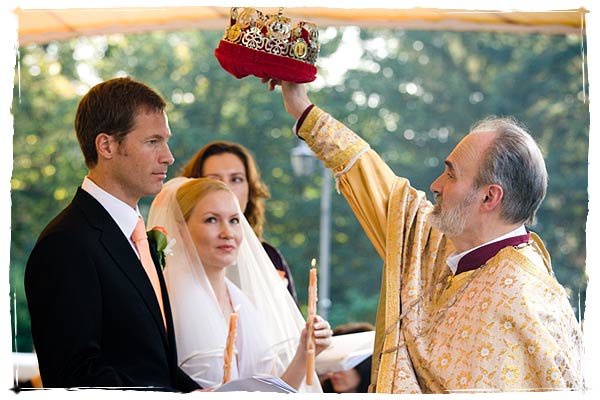
I recall being at a wedding in a Roman Catholic Church where the priest said that marriage was the only sacrament in which the priest(s) was not the ordained priest but the bride and groom. Well, it was the 1970s and he probably was not speaking exactly the theology of the sacraments as the Roman Church officially has spoken. I also recall attending a Jewish wedding and then a wedding at an Greek Orthodox Church and was struck by the differences between the Western rites and the Eastern rites (Jewish being Eastern as well). In the West we treat the marriage rite as if the bride and groom define, confect, and seal the (sacramental) union while in the East the bride and groom speak no words at all and all the action is around them or to them from the priest/rabbi and assembly. What a stark contrast to those who want to write their own vows and shape a marriage rite that fits the whims and desires of the bride (or more accurately, the bride's mom).
Weddings still confound me as Pastor and I wish we had followed the Eastern example instead of the Western rites. It appears to me that our rite (borrowed as it were from the Anglicans) is rooted more in contract law than anything else. We lay out the intent of the parties, define the terms in the vows, witness the public agreement, and add the blessing of the assembly to it all. Sure, there is a place for God in all of this but it is the same rite basically as when a justice of the peace or ship's captain administers it. Since contract law is about the parties and their agreement, the terms of that agreement, and the consequences of either party failing to honor the terms, it is not much of a religious rite at all. Just a little bit of God thrown in at the end.
In contrast to this, the Eastern rites see marriage not as the possession of the bride and groom but of the community (and in particular, God). It is the status of being married that is being conferred and not the bride and groom who claim this for themselves. Marriage belongs to the community and they bestow the status of husband and wife through the rite (with its definition of marriage, blessings, and prayers). It seems to me that this is much more Biblical than the Western way of doing it. Maybe it is just me, but the Eastern rite seems to flow better from the whole way we see marriage. It is also more consistent with the comparison of Christ the bridegroom and the Church the bride -- a marriage rooted in the will of the Father and His decree carried out and fulfilled by Christ who by His death and resurrection presents the bride to the Father that she may be sealed to Him for all eternity....
Well, just a few quick comments for today...
Weddings still confound me as Pastor and I wish we had followed the Eastern example instead of the Western rites. It appears to me that our rite (borrowed as it were from the Anglicans) is rooted more in contract law than anything else. We lay out the intent of the parties, define the terms in the vows, witness the public agreement, and add the blessing of the assembly to it all. Sure, there is a place for God in all of this but it is the same rite basically as when a justice of the peace or ship's captain administers it. Since contract law is about the parties and their agreement, the terms of that agreement, and the consequences of either party failing to honor the terms, it is not much of a religious rite at all. Just a little bit of God thrown in at the end.
In contrast to this, the Eastern rites see marriage not as the possession of the bride and groom but of the community (and in particular, God). It is the status of being married that is being conferred and not the bride and groom who claim this for themselves. Marriage belongs to the community and they bestow the status of husband and wife through the rite (with its definition of marriage, blessings, and prayers). It seems to me that this is much more Biblical than the Western way of doing it. Maybe it is just me, but the Eastern rite seems to flow better from the whole way we see marriage. It is also more consistent with the comparison of Christ the bridegroom and the Church the bride -- a marriage rooted in the will of the Father and His decree carried out and fulfilled by Christ who by His death and resurrection presents the bride to the Father that she may be sealed to Him for all eternity....
Well, just a few quick comments for today...
Friday, June 11, 2010
The Problem with Defining Yourself in Relation to Others
Living in the South I am often called to explain to non-Lutherans who Lutherans are. Most of the time they want me to say who we are like or who we are not like. It is the way of defining things by comparison and it can be a fruitful way of communication. But it can also mask who Lutherans are and make us sound like a cult instead of the Church. The Church must define herself not in relative terms but in positive terms. This is what Lutherans often forget.
It has become our habit to define ourselves in relation to those who seem to share our doctrine. So we define ourselves in relation to fundamentalists and Baptists because we speak of Scripture as without error. We are like Baptists in the way we believe, talk about, and teach Scripture. But we are not at all like Baptists and fundamentalists in this regard. We are very, very different. For the radical reformed and their heirs Scripture is the naked Scripture and this is not what sola Scriptura means. We define ourselves precisely in terms of the catholic tradition through our Confessions so that whatever sola Scriptura means -- it does not mean a naked Scripiture.
While we talk about Scripture being without error and have (more recently) adopted the use of the term inerrancy, this is not exactly the concern of Lutherans. Our concern is that Scripture is efficacious (that it does what it says and delivers what it promises as the living voice of God at work). Yes, we believe that Scripture is true but what good is a truth that has no power to do what it says? It is like an encyclopedia of facts that have no effect or bearing upon us unless we open the book and agree with the facts or truth propositions contained in it. Lutherans do not believe in this kind of Scripture but the Scripture that speaks and works what it says (forgiving sins, imparting life to baptismal water, transforming bread into His body and wine into His blood, bestowing peace and grace upon grace, etc.).
For those who belong to the reformed wings of Christendom, Scripture is not only the norm of doctrine and life but its sole source. Lutherans often forget this. We tend to speak as if Scripture were the only revelation of God, a closed canon, and that unless we can proof text our way to something or other it cannot be held or believed by the Church. But that is at odds with our Lutheran Confessions and identity. Scripture is the norm that sets the boundaries of belief and the standard against which all that is believed is judged. Lutherans are not proof texters whose doctrinal theology and confession of faith are truth propositions buttressed by Bible passages. We stand in the catholic tradition and are creedal to the core. We adopt the homoousias of Nicea even though the term is not found in Scripture because Scripture norms what homoousias confesses.
We are not evangelicals with a liturgy the way some Lutherans define themselves. We have very little in common with the right or left of the evangelical movement. We do not speak the language of individualism, we do not speak the language of decision theology, and we do not believe that anything goes as long as saving souls is the goal. We may learn a few things from the likes of Rick Warren but we are not at all like Rick Warren. We may listen to what evangelicals have to say but we are not of them. Too many Lutherans have turned the adoraphora of the Confessions with regard to worship practices to mean that worship itself is an indifferent thing to be structured, changed, and defined as seems good to accomplish the great commission goal. But this is not at all Lutheran. Lutherans understand worship as the domain only of those whom God has called, gathered, enlightened and sanctified -- the place where He comes to us in the means of grace to bestow upon us His gifts through the Word and Sacraments. We do not look to heaven to see God but to His Word and Sacraments where Christ has pledged Himself and made Himself accessible to us. We do not speak of the individual apart from the community of faith but the individual melts into the community to become one with the other baptized believers as he or she becomes one with God in baptism. We do not speak of decisions for Christ because we believe that you cannot by your own reason or strength believe in Jesus Christ or come to Him but the Holy Spirit must work the work of belief by the means of grace.
Strangely, the one relation which is most sensible to us is the one we eschew the most. That is our relation to the Roman Catholic Church. Anyone who knows Rome will see that Lutherans have a kinship with Rome -- from the way the Church looks to the liturgy on Sunday morning to the priestly service of the Pastor to the music that is sung to the catechetical life of young and old. If anything this is the one relation that seems reasonable but Lutherans are loath to suggest that we are at all like Roman Catholics. Here is the one place where relational definition seems plausible. We are the catholics Rome used to be and Rome should be. This may sound arrogant but that is pretty much the position of our Confessions. We have much with which we do not disagree with Rome and much of the faith on which our Confessions are silent because we do not disagree with our Roman brothers and sisters. We are not calling them to be more Roman but more catholic and there would be much more in common between us. Remember that we accuse them of innovation and novelty and spend a great deal of time with the fathers of the Church showing how this is, indeed, true.
All that said, I am weary of the definition of Lutheranism which turns to another group first -- we are like the Baptists but.... or the Presbyterians but... or the evangelical non-denominationals but... or even the Roman Catholics but... And the sad fruits of such definition have left us with people in the pews who are not really sure who we are or they are as Lutherans (so they reach out to whomever they think is like us but...). We have got to start speaking of Lutheranism with the voices of our Confessions and with a positive affirmation of who we are and what we believe. Or, people will begin wondering why, if we are so much like the fundamentalists or evangelicals or Rome or whomever, we don't just join them... since it seems like we are beginning to look, act, and sound like them more and more and like ourselves less and less....
Wednesday, June 9, 2010
Something About the Midwest
Having spent a few days more in the heartland of the Midwest (this time Des Moines) I note that there is something just different about the culture and communities of the Midwest. There is a certain earnestness to the folk, a seriousness about faith, and a deep commitment to both the community and the community of faith in this region of the country -- something not necessarily found in such abundance in other regions.
I served on Long Island and then upstate NY (along the Hudson River) and in both places, Lutherans seemed like immigrants or pioneers in an alien place. The culture of the congregation and the seriousness of the faith were not givens but were part of what was needed to be taught, infused, and instilled in the people. In both places these congregations suffered from a bit of conflict prior to my arrival and that certainly colored things. But it was part of the mission to establish a positive identity of the faith, a deep and abiding commitment to their life together in the congregation, and a seriousness (even urgency) about the mission before them.
When I came to Tennessee I found a congregation with a history of seeing themselves as foreigners (or better furiners) and the congregation was a refuge for those who did not belong to the community. There were some who spoke of new people as transients (as if any of us were anything but transients in this world). That certainly contributed to the distance and defeated attitudes of some. Again, there had been some conflict prior to my coming and this was something to overcome as well. Over the years I have seen my job as helping them become a community, a community of Lutherans, a welcoming community open to new folks, and a rooted community with ties and service to the community around us. In all of that I have worked to instill a sense of mission, seriousness about the faith and that mission, and a high commitment to our Lutheran confessional and liturgical identity and to this congregation. But it has not been as successful as I would like -- especially on the latter points.
I noted it again right after we arrived here. I watched in the church where we were picking up a pipe organ and saw the commitment, the community, the urgency, the seriousness of these folks. Part of it was identified by the number and work of those from this congregation who came out to help us take the pipe organ a part and load it all up. Part of it was clear in the way they treated even the facility as well as each other. Part of it was the way this group gathered for lunch over pizza and lemonade... I don't know what to call it except that exceptional culture of the Midwest... perhaps that is one of the things I am trying to replicate where I have been and where I am at... for better or worse...
I served on Long Island and then upstate NY (along the Hudson River) and in both places, Lutherans seemed like immigrants or pioneers in an alien place. The culture of the congregation and the seriousness of the faith were not givens but were part of what was needed to be taught, infused, and instilled in the people. In both places these congregations suffered from a bit of conflict prior to my arrival and that certainly colored things. But it was part of the mission to establish a positive identity of the faith, a deep and abiding commitment to their life together in the congregation, and a seriousness (even urgency) about the mission before them.
When I came to Tennessee I found a congregation with a history of seeing themselves as foreigners (or better furiners) and the congregation was a refuge for those who did not belong to the community. There were some who spoke of new people as transients (as if any of us were anything but transients in this world). That certainly contributed to the distance and defeated attitudes of some. Again, there had been some conflict prior to my coming and this was something to overcome as well. Over the years I have seen my job as helping them become a community, a community of Lutherans, a welcoming community open to new folks, and a rooted community with ties and service to the community around us. In all of that I have worked to instill a sense of mission, seriousness about the faith and that mission, and a high commitment to our Lutheran confessional and liturgical identity and to this congregation. But it has not been as successful as I would like -- especially on the latter points.
I noted it again right after we arrived here. I watched in the church where we were picking up a pipe organ and saw the commitment, the community, the urgency, the seriousness of these folks. Part of it was identified by the number and work of those from this congregation who came out to help us take the pipe organ a part and load it all up. Part of it was clear in the way they treated even the facility as well as each other. Part of it was the way this group gathered for lunch over pizza and lemonade... I don't know what to call it except that exceptional culture of the Midwest... perhaps that is one of the things I am trying to replicate where I have been and where I am at... for better or worse...
Tuesday, June 8, 2010
Okay... I'll admit it...
I am addicted to religous television and spend my time watching Paul and Jan Crouch and Benny Hinn and Joel Osteen and a thousand others well known and unknown. I watch it not because I like it or even understand it -- I don't. But I cannot stop watching until I figure out what people see in this crap. I have heard some of these folks say the most outrageous things and do the strangest things and people flock to these folks. Why? Can somebody explain it to me so I can end my addition and answer my question?
I do not watch long but just enough to look around at the folks there. They appear normal, intelligent, decent folk. Why do they keep on going and listening and sending in money and buying their books.... Please somebody tell me why? why? why?
I do not want folks to answer me with theological answers or to write off these folks, I just want to know why they go, why they love these strangoids from a distant galaxy... I don't want the pat answers about sin and people loving entertainment and how this makes them feel good about themselves... I know all that and still I do not think these things answer my question... Why?
So do an old man a favor and tell him what is going on with this American love affair with the religious weirdos of the TV of the air... and when you tell me this, I will know why people even in my own congregation talk about them and how wonderful they are... Guess it must be a real let down to listen to little ole me talk about Jesus every Sunday... Oh, well, now you know... there is a weird side of me that is fascinated with the question why so many folks like these spiritual gurus of a distorted Christianity? Please... why?
I do not watch long but just enough to look around at the folks there. They appear normal, intelligent, decent folk. Why do they keep on going and listening and sending in money and buying their books.... Please somebody tell me why? why? why?
I do not want folks to answer me with theological answers or to write off these folks, I just want to know why they go, why they love these strangoids from a distant galaxy... I don't want the pat answers about sin and people loving entertainment and how this makes them feel good about themselves... I know all that and still I do not think these things answer my question... Why?
So do an old man a favor and tell him what is going on with this American love affair with the religious weirdos of the TV of the air... and when you tell me this, I will know why people even in my own congregation talk about them and how wonderful they are... Guess it must be a real let down to listen to little ole me talk about Jesus every Sunday... Oh, well, now you know... there is a weird side of me that is fascinated with the question why so many folks like these spiritual gurus of a distorted Christianity? Please... why?
News and Needs...
I spent some time talking with Joe Herl at Concordia-Seward and found out that Seward has two pipe organs for sale. Give him a call if you are interested (an Aeolian Skinner rather nice and a Snyder-Neuman -- Nebraksa builder)... Joe can put you into a pipe organ reasonable... check with him...
I am always happy about the Concordias and their programs of church music. SAD to admit that Concordia Bronxville no longer has a church music program. SAD to find out that Seward (known for the likes of Charlie Ore and Dave Held and now Joe Herl among others) may soon be without a major pipe organ. The chapel organ is in disrepair and their is not much interest on campus in either fixing it or replacing it with a pipe instrument. So if you know of someone who is in favor of the liturgy and good church music (and has a few bucks) pass that name on to Joe Herl or do some PR work yourself. Can you imagine a school of Synod teaching parish musicians and yet without a decent pipe organ in their chapel????? Come on... people... lets see what we can do!
We need to do everything we can to keep church music a priority in our Synodical colleges...
I am always happy about the Concordias and their programs of church music. SAD to admit that Concordia Bronxville no longer has a church music program. SAD to find out that Seward (known for the likes of Charlie Ore and Dave Held and now Joe Herl among others) may soon be without a major pipe organ. The chapel organ is in disrepair and their is not much interest on campus in either fixing it or replacing it with a pipe instrument. So if you know of someone who is in favor of the liturgy and good church music (and has a few bucks) pass that name on to Joe Herl or do some PR work yourself. Can you imagine a school of Synod teaching parish musicians and yet without a decent pipe organ in their chapel????? Come on... people... lets see what we can do!
We need to do everything we can to keep church music a priority in our Synodical colleges...
Extremism in the Defense of Liberty Is No Vice
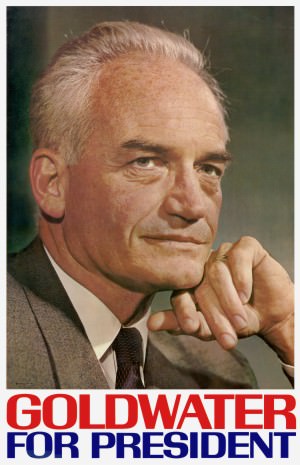
Some of you may be old enough to remember when Barry Goldwater repeated those words -- words that were used against him to brandish him an extemist who could not be trusted with his finger on the nuclear button. And we wll know how that election turn out... right. So the message is not to extreme.
On the forms that Pastors fill out to deliver to the District Office for distribution to districts and congregations considering calling him, there are several lines where you must rate yourself between theological, liturgical and practical extremes. The oft made point is mark the middle no matter what you think because congregations do not like extremists. Now we all understand that there are extremists and no one likes and no one wants in our church body or congregation -- troublemakers whose extremism is like a sieve that sifts through people to find the true believers. I am NOT talking about those folks. I believe I have posted before about the tendency of our church body to narrow the funnel until no one fits through but me...
But... there is something we lose when we are all self-identified and objectively marked as moderates. Moderates are, well, moderate -- not extreme or extremely pointed toward anything. Can moderation become its own vice? Is it okay to love our spouses and kids moderately -- we don't want to be too extreme in this, you know, passion can be a bad thing if pushed too far. Is it okay to love our Lord moderately -- evenly without too much passion or drive but pleasantly and non-threateningly. Is it okay to be moderate church members and goers, moderate in our support of the Lord and His work, moderate in our witness to those around us?
Or, is God looking for some passion in us... drive and fire... urgency and excitment? I would hope so... The moderate church bodies do not seem to be doing so well... moderate congregations and church members are not doing much other than going to church... and the Lord is looking for something more than going through the motions.... I am looking for some extremism in the Church -- not to the left or to the right necessarily but seriousness about the work of the Lord and His mission... urgency about their role and place in that work... passion about worship and the holy things of God (read that Word and Sacraments), and enthusiasm about the Gospel and mercy's work... I think God is looking for the same kind of extremism...
You know how it is when you drive down the road and somebody asks "Where do you want to eat?" "I don't know... I am flexible... whatever works..." It should not be this way about our drive to Church on Sunday morning... about our voice singing and speaking His praise... about the bill we peel from our wallets for the plate... about the "amen" to the prayers... about the the way we listen to the Word... about the way we greet others in the faith (especially new folks)... about the way we walk out the door to fulfill our baptismal vocation to the world... No, a little extremism in our parishes and some passion in our people and some urgency in our Pastors... that is a good thing!
On the forms that Pastors fill out to deliver to the District Office for distribution to districts and congregations considering calling him, there are several lines where you must rate yourself between theological, liturgical and practical extremes. The oft made point is mark the middle no matter what you think because congregations do not like extremists. Now we all understand that there are extremists and no one likes and no one wants in our church body or congregation -- troublemakers whose extremism is like a sieve that sifts through people to find the true believers. I am NOT talking about those folks. I believe I have posted before about the tendency of our church body to narrow the funnel until no one fits through but me...
But... there is something we lose when we are all self-identified and objectively marked as moderates. Moderates are, well, moderate -- not extreme or extremely pointed toward anything. Can moderation become its own vice? Is it okay to love our spouses and kids moderately -- we don't want to be too extreme in this, you know, passion can be a bad thing if pushed too far. Is it okay to love our Lord moderately -- evenly without too much passion or drive but pleasantly and non-threateningly. Is it okay to be moderate church members and goers, moderate in our support of the Lord and His work, moderate in our witness to those around us?
Or, is God looking for some passion in us... drive and fire... urgency and excitment? I would hope so... The moderate church bodies do not seem to be doing so well... moderate congregations and church members are not doing much other than going to church... and the Lord is looking for something more than going through the motions.... I am looking for some extremism in the Church -- not to the left or to the right necessarily but seriousness about the work of the Lord and His mission... urgency about their role and place in that work... passion about worship and the holy things of God (read that Word and Sacraments), and enthusiasm about the Gospel and mercy's work... I think God is looking for the same kind of extremism...
You know how it is when you drive down the road and somebody asks "Where do you want to eat?" "I don't know... I am flexible... whatever works..." It should not be this way about our drive to Church on Sunday morning... about our voice singing and speaking His praise... about the bill we peel from our wallets for the plate... about the "amen" to the prayers... about the the way we listen to the Word... about the way we greet others in the faith (especially new folks)... about the way we walk out the door to fulfill our baptismal vocation to the world... No, a little extremism in our parishes and some passion in our people and some urgency in our Pastors... that is a good thing!
Monday, June 7, 2010
An Attitude Worthy of Christ
While no one (well, no one in their right mind) would advocate Christians enter abject poverty in order to support the work of the Lord and His Church, there are too many Chrisitans who think of the work of the Lord and His Church last rather than first. I did a quick survey of a room full of teens by asking what they would do with $10K if someone gave it to them to spend as they desired... Even though this was a group of good teens who are regular in church and the youth program of our congregation and their parents are regular and faithful, not one of them said anything about giving any of that money to someone else and none of them thought of the Church. When I asked why, they quickly demurred, saying "Oh, Pastor, of course I would get you a big box of Bibles... or a new computer for your office... etc." When I said that567 I had brought this up not so that they might think of giving me something but to ask in general how they saw the work of the Lord and His Church, they looked at me confused by my point.
My point is that we have come to a point in time when even good and pious Christians believe that the Lord and His Church are not worthy of the best (well, sure, they say that they are worthy of better but certainly not the best -- I mean, really. Now I know that most congregations are fairly frugal with a dollar -- not because they want to be but because they have to be careful about how every dollar is spent since there are never enough of them to do everything. I cannot recall a church meeting ever when somebody did not ask "But how much is that going to cost?"
My point is that even though we do not necessarily need to give the shirt off our backs to the work of the Lord or empty our bank accounts to support the Church, should we not at least agree that the Lord's Work and His Church are at least worthy of all our best? I mean even if we do not follow through, should we not agree at least in theory that the work of the Lord and His House are worth the best we have $67 a square foot (this included a 60 rank pipe organ!!). But even though we were frugal and, well, cheap, in squeezing the most from each dollar and continuing our mission support (even increasing it) all the while building, we got an anonymous note saying "Wouldn't it have been better to use that money to care for the poor rather than wasting it on such a lavish building?"
My point is that we no longer even agree in principle that the Lord should be first and foremost, that His Work and His House should come before anything else. We agree in principle that speed limits are good and beneficial even though we break them everyday. We agree that everyone should live a healthy lifestyle but we break this principle every day. What happened along the way to sidetrack at least an agreement in principle that the work of the Lord and His House should come first? I mean, I know we will still need stewardship programs and good PR to loosen up enough money to pay the bills but at least it would be nice to agree in principle that the work of the Lord should come first (though we all know a lot of good reasons why we do not follow through on this agreed upon principle).
This is not an appeal for money or for things, but for an attitude worthy of the Christ who gave His best for us. Even though our sinful flesh will interfere with the follow through, the principle of the Lord first and all the best for His Church should be agreed upon, don't you think? I mean is God worth less than our best? Is the Church of Jesus Christ a charity case? Does it not demean God that we beg for money to do His bidding?
Sometimes I think back to the many churches constructed during the Great Depression... the many folks who gave like the widow (all they had) because they knew that God was worthy of their very best... but now that we have so much, we find it even harder to give a little. Statistics should that the people with the least amount of income are the most incredibly generous in their support of the Church and the work of God's Kingdom as well as community causes. Since most of us have much more, what is keeping us from returning more? It could be that we do not agree even in principle that the Lord is worthy of nothing less.... Unless we agree on this and strive to do better toward this goal, the Church of God will be forced to compete with the Girl Scouts and their cookies, the Heart Fund and its envelope trail, or anyone of a gazillion other good causes... and we will sit in judgment over their all and vote for the most worthy choice with dollar bills in our hands...
No, I think what needs to change is not a stewardship theme but a basic attitude of God first, the work of the Lord first, and His Church first.... When we agree on this in principle, then we can begin to put that principle to work... but unless we agree, we will have little to talk about about the exciting topic of what we are getting ourselves for our well earned paychecks... And that is a conversation both boring and pathetic... for those who by baptism have been given the key to heaven's treasure chest and have received grace upon grace for faith and life that has no end...
Alas, we cannot even agree on this in theory. Several years ago we built on 20,000 square feet and landscaped and furnished this addition plus adding on a new parking lot all for about $60 per square feet (including the cost of the 60 rank pipe organ). We did much of the work ourselves (laying some 14,000 square feet of ceramic tile, finishing the wood for the ceilings, and all the painting). Yet we got an anonymous note from one of the members suggesting that we wasted money that could have been used for those in need and complaining about the "lavish" building and amenities. Go figure.
My point is this, you might think that we could agree in principle that the Lord, the work of the Lord, and His Church are worth nothing less than our best... but since we cannot agree, is it no wonder that the Church must compete as a charity, convincing folks of the good that is done, how little is used in overhead, and what benefits acrue to the giver! And in the end the Lord ends up begging for our leftovers and too many of us do not feel anything is really wrong with this... because we no longer agree even in principle -- the Lord and His work first...
My point is that we have come to a point in time when even good and pious Christians believe that the Lord and His Church are not worthy of the best (well, sure, they say that they are worthy of better but certainly not the best -- I mean, really. Now I know that most congregations are fairly frugal with a dollar -- not because they want to be but because they have to be careful about how every dollar is spent since there are never enough of them to do everything. I cannot recall a church meeting ever when somebody did not ask "But how much is that going to cost?"
My point is that even though we do not necessarily need to give the shirt off our backs to the work of the Lord or empty our bank accounts to support the Church, should we not at least agree that the Lord's Work and His Church are at least worthy of all our best? I mean even if we do not follow through, should we not agree at least in theory that the work of the Lord and His House are worth the best we have $67 a square foot (this included a 60 rank pipe organ!!). But even though we were frugal and, well, cheap, in squeezing the most from each dollar and continuing our mission support (even increasing it) all the while building, we got an anonymous note saying "Wouldn't it have been better to use that money to care for the poor rather than wasting it on such a lavish building?"
My point is that we no longer even agree in principle that the Lord should be first and foremost, that His Work and His House should come before anything else. We agree in principle that speed limits are good and beneficial even though we break them everyday. We agree that everyone should live a healthy lifestyle but we break this principle every day. What happened along the way to sidetrack at least an agreement in principle that the work of the Lord and His House should come first? I mean, I know we will still need stewardship programs and good PR to loosen up enough money to pay the bills but at least it would be nice to agree in principle that the work of the Lord should come first (though we all know a lot of good reasons why we do not follow through on this agreed upon principle).
This is not an appeal for money or for things, but for an attitude worthy of the Christ who gave His best for us. Even though our sinful flesh will interfere with the follow through, the principle of the Lord first and all the best for His Church should be agreed upon, don't you think? I mean is God worth less than our best? Is the Church of Jesus Christ a charity case? Does it not demean God that we beg for money to do His bidding?
Sometimes I think back to the many churches constructed during the Great Depression... the many folks who gave like the widow (all they had) because they knew that God was worthy of their very best... but now that we have so much, we find it even harder to give a little. Statistics should that the people with the least amount of income are the most incredibly generous in their support of the Church and the work of God's Kingdom as well as community causes. Since most of us have much more, what is keeping us from returning more? It could be that we do not agree even in principle that the Lord is worthy of nothing less.... Unless we agree on this and strive to do better toward this goal, the Church of God will be forced to compete with the Girl Scouts and their cookies, the Heart Fund and its envelope trail, or anyone of a gazillion other good causes... and we will sit in judgment over their all and vote for the most worthy choice with dollar bills in our hands...
No, I think what needs to change is not a stewardship theme but a basic attitude of God first, the work of the Lord first, and His Church first.... When we agree on this in principle, then we can begin to put that principle to work... but unless we agree, we will have little to talk about about the exciting topic of what we are getting ourselves for our well earned paychecks... And that is a conversation both boring and pathetic... for those who by baptism have been given the key to heaven's treasure chest and have received grace upon grace for faith and life that has no end...
Alas, we cannot even agree on this in theory. Several years ago we built on 20,000 square feet and landscaped and furnished this addition plus adding on a new parking lot all for about $60 per square feet (including the cost of the 60 rank pipe organ). We did much of the work ourselves (laying some 14,000 square feet of ceramic tile, finishing the wood for the ceilings, and all the painting). Yet we got an anonymous note from one of the members suggesting that we wasted money that could have been used for those in need and complaining about the "lavish" building and amenities. Go figure.
My point is this, you might think that we could agree in principle that the Lord, the work of the Lord, and His Church are worth nothing less than our best... but since we cannot agree, is it no wonder that the Church must compete as a charity, convincing folks of the good that is done, how little is used in overhead, and what benefits acrue to the giver! And in the end the Lord ends up begging for our leftovers and too many of us do not feel anything is really wrong with this... because we no longer agree even in principle -- the Lord and His work first...
Sunday, June 6, 2010
Distressing News
I have been reading and listening to colleagues in the ELCA who are trying to respond to the events of the CWA in 2009 and whose congregations have been lining up to vote in the long process to leave the ELCA. It is a sad and disconcerting thing to watch a church body self-destruct. I know the pain in the hearts of those who had hoped against hope to turn the ELCA ship around. But even more disconcerting is the way some in the ELCA who are supportive of the CWA actions are casting this whole thing.It is sad to see a church body that just passed these controversial changes with respect to sexuality and the ministry by the minimum votes required (a 2/3 squeaker) are now suggesting that they need to review the situation congregations which just make the 2/3 requirement to leave. All the talk is serious and solemn about respecting the rights of those opposed but, of course, this was not the highest priority last August. It is a sham to hold congregations to the rigid requirement when anything approaching a 2/3 majority would indicate severe displeasure and a breach of fellowship.
It is sad to see a church body facing serious financial short-falls try to blame the economy and other factors rather than standing up to admit that the controversial decisions of the CWA to accept same sex relationships (albeit PALMS) and homosexual clergy (in PALMS) was costing the ELCA money, people, and congregations. If it was such a good thing, why not let those opposed simply leave and bid them adieu so that those who are staying can widen the door of the church even more to let people in and doctrine out.
It is a sad thing to see a church body call for patience when people and congregations are seeking to leave when there was nothing that could stop the steam roller movement toward radical change. Where was the call to patience when these decisions were being made? Patience has become another way to say "We are not going to let you go until we can figure a way out to take the assets away from the majority..."
It is a sad thing to see the face of Lutheranism soiled with the deception of a papered over peace that rests on a foundation cracking and falling away week after week. Just as I grow tired of those in Missouri who would presume we have nothing in common and no fellowship with those with whom we disagree about worship or Eucharistic fellowship, so am I also tired of those who insist that the good ship ELCA is going through a little rough water but the ship is in tact and on its way to smooth sailing.
I have no glee for the troubles of our Lutheran cousins in the ELCA, only tears of sorrow and pain over the destruction of a once promising start in a church body that is barely one generation old. I can stomach no boasting from a Missouri facing its own cracks in the foundation. Everywhere you look in Lutheranism in the USA you see something to make you sad... Pray that the Lord will rebuild this grand and noble reformation communion and lead us to rekindle again the gift of the Word and Sacraments that are the core and center of our life and worship and still the means to recovering what we have lost....
The Center of the Church's and Each Christian's Life
The center of the Church's life is the Eucharist. The center of each Christian's life is the Eucharist. For a long time Lutherans forgot this. It was not that they should not have known this -- the Confessions of the Evangelical Lutheran Church are explicitly and implicitly Eucharistic. The Mass or Divine Service was and is understood to be THE ordinary worship of the Church (both on the Lord's Day, in the sanctoral calendar, and each day when their are Christians who desire to receive the Lord's body and blood, or so we say in our Symbols). The Eucharist, however, was moved to the side during centuries of assault from rationalism, pietism, and too many other "isms" inflicted upon the Church and born from with her. What was once ordinary (in the sense or normal) became extraordinary (in the sense of exceptional) in the life of Lutheran congregations and Lutheran Christians in those congregations.
There was a hint of renewal at work already nearly 200 years ago. Wilhelm Loehe produced an agenda and wrote with a renewed emphasis upon the Sacrament. The Saxons who left Germany for America (to become the Missouri Synod) brought with them damask for Eucharistic vestments and chalices (not to mention THE chalice that has become identified with the Missouri Synod). It was not merely a reaction against the Prussian Union but a desire to see a Lutheranism that flourished from the Confessions that identified this Church that moved so many to leave behind a homeland to end up in Missouri nearly halfway across the world. It was this flowering catholic renewal that made them disdain the offers of other Lutherans to choose to worship in the Episcopal Cathedral of St. Louis until they might build their own houses of worship.
Perhaps it was this business of Stephan or the press of American religion or the fact that this catholic renewal was not yet deeply formed enough to flourish that kept this church body captive to a center other than the Eucharist for more than the first hundred years of existence. But then again things began to renew and in the late 1950s and early 1960s the move to a more overtly and deeply rooted Eucharistic piety began to catch hold again. Coupled with a liturgical renewal movement that caught up several denominations, groups within Missouri began to speak and act more and more like the words of their Confessions. The Eucharist, so long an addendum onto the Divine Service, became intrinsic to that Divine Service -- not only on Sunday morning but in the hearts and lives of the people in the pews.
This renewal was often criticized for its use of externals (vestments, ceremonies, gestures, etc.) but it was never about peripherals but about the core and center of the Church's life and the life of each individual Christian. Though this liturgical and confessional renewal resulted in more frequent communion and more attention to the what and how of the liturgy, it was caught again by new "isms" that have dogged and distracted the Lutheran Church again -- away from the center and to things foreign and alien to our confessional identity and life. The allure of things Protestant and the incarnation of the church growth movement gave to the worship service a different raison d'etre. Lutherans just beginning to explore their own longstanding identity and center in the Eucharist were now running after non-Lutherans who use the worship service for evangelistic and educational purposes and who structured what went on there as one might write a lesson plan or plan for an event. Music was borrowed from others, the Eucharist was sidelined once again, and the goal was to make the outsider or visitor as comfortable as possible (and as entertained as could be within the context of something called "church").
Now as I sit here on Sunday morning, I find my work cut out for me -- not only in the sense of teaching to others who we are and where our life flows from, but also learning anew for myself and unlearning the influences of those foreign to Lutheranism. The goal and the means to this goal are the same -- returning to the Eucharist as the center of the Church's life, this congregation's life, each Christian's life, and my own life of faith and identity as a child of God. Baptism points me here and as long as we have some baptismal focus there is this arrow pointing us to the bread that is Christ's body and the cup that is His blood. Our Confessions are written from and to this perspective (if only we read them so that they might speak without our presuppositions getting in the way). Our hymnals are wonderful resources to direct us again to the Divine Service, to the Mass, where in Word and Meal Christ fulfills the promise of Emmanuel. But it is ever a work that finished or an achievement that is reached -- always a work in progress. We learn anew each Sunday morning that our Christian lives flow from and return to the Christ whose Eucharistic presence is both our glory and His means of grace to finish in us what Baptism has begun... Today is one more day and one more Divine Service toward that goal.... for my Church, my congregation, my people, and myself...
There was a hint of renewal at work already nearly 200 years ago. Wilhelm Loehe produced an agenda and wrote with a renewed emphasis upon the Sacrament. The Saxons who left Germany for America (to become the Missouri Synod) brought with them damask for Eucharistic vestments and chalices (not to mention THE chalice that has become identified with the Missouri Synod). It was not merely a reaction against the Prussian Union but a desire to see a Lutheranism that flourished from the Confessions that identified this Church that moved so many to leave behind a homeland to end up in Missouri nearly halfway across the world. It was this flowering catholic renewal that made them disdain the offers of other Lutherans to choose to worship in the Episcopal Cathedral of St. Louis until they might build their own houses of worship.
Perhaps it was this business of Stephan or the press of American religion or the fact that this catholic renewal was not yet deeply formed enough to flourish that kept this church body captive to a center other than the Eucharist for more than the first hundred years of existence. But then again things began to renew and in the late 1950s and early 1960s the move to a more overtly and deeply rooted Eucharistic piety began to catch hold again. Coupled with a liturgical renewal movement that caught up several denominations, groups within Missouri began to speak and act more and more like the words of their Confessions. The Eucharist, so long an addendum onto the Divine Service, became intrinsic to that Divine Service -- not only on Sunday morning but in the hearts and lives of the people in the pews.
This renewal was often criticized for its use of externals (vestments, ceremonies, gestures, etc.) but it was never about peripherals but about the core and center of the Church's life and the life of each individual Christian. Though this liturgical and confessional renewal resulted in more frequent communion and more attention to the what and how of the liturgy, it was caught again by new "isms" that have dogged and distracted the Lutheran Church again -- away from the center and to things foreign and alien to our confessional identity and life. The allure of things Protestant and the incarnation of the church growth movement gave to the worship service a different raison d'etre. Lutherans just beginning to explore their own longstanding identity and center in the Eucharist were now running after non-Lutherans who use the worship service for evangelistic and educational purposes and who structured what went on there as one might write a lesson plan or plan for an event. Music was borrowed from others, the Eucharist was sidelined once again, and the goal was to make the outsider or visitor as comfortable as possible (and as entertained as could be within the context of something called "church").
Now as I sit here on Sunday morning, I find my work cut out for me -- not only in the sense of teaching to others who we are and where our life flows from, but also learning anew for myself and unlearning the influences of those foreign to Lutheranism. The goal and the means to this goal are the same -- returning to the Eucharist as the center of the Church's life, this congregation's life, each Christian's life, and my own life of faith and identity as a child of God. Baptism points me here and as long as we have some baptismal focus there is this arrow pointing us to the bread that is Christ's body and the cup that is His blood. Our Confessions are written from and to this perspective (if only we read them so that they might speak without our presuppositions getting in the way). Our hymnals are wonderful resources to direct us again to the Divine Service, to the Mass, where in Word and Meal Christ fulfills the promise of Emmanuel. But it is ever a work that finished or an achievement that is reached -- always a work in progress. We learn anew each Sunday morning that our Christian lives flow from and return to the Christ whose Eucharistic presence is both our glory and His means of grace to finish in us what Baptism has begun... Today is one more day and one more Divine Service toward that goal.... for my Church, my congregation, my people, and myself...
Saturday, June 5, 2010
God's YES makes possible our NO
Although I have touched upon this a thousand times in different ways in sermons across the years, I think that one of the major failings of the way we frame the Gospel is that we forget it is God's YES (the Gospel) that makes possible our NO (to sin, ungodliness, unrighteousness, and evil). The force of the Gospel of Jesus Christ is a liberating force but too often what is liberated is exactly what Christ died for -- selfishness, self-indulgence, self-will, and self-pleasure. What God has done with His YES in the Gospel is to make possible our NO -- something apart from Jesus Christ we have no power to do. Oh, yes, to be sure, we can say "no" but not as people who no longer want or desire what is wrong. We say "no" as a people who fear being caught or exposed or punished for desiring what is wrong. This is the force and power of the Law. But the force and power of the Gospel is to create within us the desire for what is right and the desire to say "no" to the heart, mind, and will that desire what is wrong, what is evil, what is ungodly, and what is unrighteous.
The Gospel is God's YES and it is the powerful liberating force that releases sinners from their captivity, from their bondage to sin, and from the result of that sin, namely, death. But we renounce sin not with the yes of the will to God (decision theology) but with the fruit of the Spirit who eases our resistance to the Father's will reflected in Jesus Christ. The Spirit works in us to receive His care -- the ultimate of that care being our redemption through Him who took upon Himself all our sin, unrighteousness, punishment, and death. This is manifest not primarily by our YES to the things of God but by our NO -- no to sin, no to self, no to evil, no to unrighteousness, and no to wrong.
If all you want to do is to reign in behavior, the commandments, the fear of being caught, and the fear of being punished are much more effective and efficient than the Gospel. But if you want to change the desire of the heart against God and the things of God, the Law is powerless. It can put boundaries along the side of the path to keep us on that path but it cannot make us want to get where that path is going. Only the Gospel can do this.
The Gospel works not simply by teaching us to say yes to the things of God but to say no to the things of sin, rebellion, the devil, our flesh, and death. The power of this NO is not to be underestimated. I noticed that on Christmas Eve we hear the words of St. Paul from Titus 2:11-14 -- at the very time we tend to indulge ourselves we hear the call to NO... to renounce what is evil and wrong and to live self-controlled lives... In other words, if the manger and cross and empty tomb are God's YES, the fruit of that YES in our lives, is this NO to sin, to unrighteousness, and to self-indulgence... and to live self-controlled lives.
It is certainly something heard less among many Christian clergy and churches who more or less glorify the desires of our hearts by teaching us how to get what we want from God and from this life -- there is not much "no" in this proclamation. We love it, though, since we would prefer a God who does what we want than to renounce our wills and trust in His. But such a Gospel is ultimately a fake Gospel that offers us nothing at all. Its empty promise is certain to disappoint us sooner or later but the genuine Gospel of Jesus Christ will deliver to us more than our minds can imagine.
God's YES makes possible our NO... now that is something to think about...
The Gospel is God's YES and it is the powerful liberating force that releases sinners from their captivity, from their bondage to sin, and from the result of that sin, namely, death. But we renounce sin not with the yes of the will to God (decision theology) but with the fruit of the Spirit who eases our resistance to the Father's will reflected in Jesus Christ. The Spirit works in us to receive His care -- the ultimate of that care being our redemption through Him who took upon Himself all our sin, unrighteousness, punishment, and death. This is manifest not primarily by our YES to the things of God but by our NO -- no to sin, no to self, no to evil, no to unrighteousness, and no to wrong.
If all you want to do is to reign in behavior, the commandments, the fear of being caught, and the fear of being punished are much more effective and efficient than the Gospel. But if you want to change the desire of the heart against God and the things of God, the Law is powerless. It can put boundaries along the side of the path to keep us on that path but it cannot make us want to get where that path is going. Only the Gospel can do this.
The Gospel works not simply by teaching us to say yes to the things of God but to say no to the things of sin, rebellion, the devil, our flesh, and death. The power of this NO is not to be underestimated. I noticed that on Christmas Eve we hear the words of St. Paul from Titus 2:11-14 -- at the very time we tend to indulge ourselves we hear the call to NO... to renounce what is evil and wrong and to live self-controlled lives... In other words, if the manger and cross and empty tomb are God's YES, the fruit of that YES in our lives, is this NO to sin, to unrighteousness, and to self-indulgence... and to live self-controlled lives.
It is certainly something heard less among many Christian clergy and churches who more or less glorify the desires of our hearts by teaching us how to get what we want from God and from this life -- there is not much "no" in this proclamation. We love it, though, since we would prefer a God who does what we want than to renounce our wills and trust in His. But such a Gospel is ultimately a fake Gospel that offers us nothing at all. Its empty promise is certain to disappoint us sooner or later but the genuine Gospel of Jesus Christ will deliver to us more than our minds can imagine.
God's YES makes possible our NO... now that is something to think about...
Friday, June 4, 2010
I Had a Bad Experience with....
Often we hear from people who have left the Church or the faith that they had a bad experience with the Church or with a Pastor or with somebody in the Church.... etc... It would seem that there is not much to commend the Church or those who belong to the Church or those who serve the Church as Pastor that so many people have had such bad experiences that it has caused them to be distant from the means of grace and remove themselves from the fellowship life of God's people around His Word and Sacraments. Now, don't get me wrong, I know that Pastors and people in the Church have behaved badly and done terrible things (from the obvious of sexual abuse to a cold shoulder shown to new folks). I know that I have failed in many ways to fulfill the full hope, promise, and scope of the Office of Pastor committed to me in my ordination and renewed each time I was installed into a particular parish. But I wonder if there is not something more than simply the failures of the Church, the people in the pew and the Pastors who serve her.
While I do not mean to diminish the hurt or wounds some have suffered at the hands of Christian people and their Christian Pastor, I must also admit that often people come to the Church with impossible expectations that are surely to be broken by the reality of human frailty. I have had folks who complained bitterly that I spent way too much time in my office and at the very same time folks complain that when they came to see me I was not there. "What good is it to have a spiritual leader who is not there when you need him?" expressed one frustrated individual when they came to the church office looking for me and I was not there. When I expressed concern about a wedding on the day after Christmas that had moved from an informal service with only a few folks to a full formal wedding with all the accouterments, the mother of the bride informed that this is what I was there for and it did not matter whether I had time to spend with my family at Christmas. Every Pastor can tell the same stories of folks who had impossible expectations designed for failure and disappointment.
Often the congregation is accused of being unfriendly or unwelcoming. The other side of the coin is that these people have welcomed and attempted to be friends with many new folks who showed up and burned hot like a sparkler for a moment only to fizzle and fall away. I am not defending unkindness but admitting that the faithful in the pews who teach Sunday school, who sing in the choir, who usher and greet, who do what is needed on work days inside and out, who serve on council, boards, and committees, who bring food to pot lucks and funeral receptions, and on and on... well, it is understandable that they might be a little sanguine in the face of new folks who want to belong immediately, change everything around them, and then disappear quickly. I am not saying this is right, but it is understandable.
Often people come to the Church with wounds looking for quick and easy healing. They come with a need to belong and want to be fully connected immediately and are sometimes very impatient as they find their place within the community and fellowship. They come with past wounds and sensitivities that become the lens through which they judge the congregation they are at now (but the folks in this congregation do not know what those past hurts or sensitivities are and therefore do not know how to respond to them). They come with frustrations and bitterness from many sources that spill out in the Church though the Church was not the cause or the source of them.
Often people come to the Church with impossibly high expectations. They expect the people of the Church to be holy and pure (at the end of the process of sanctification and not in the middle of it). They expect the Church to be able to fix kids with behavior problems, rebellious teens, spouses with problems, families broken, lives stressed to the limit, and finances a mess. They expect these things to be repaired by the Church but they are hesitant to listen to the Church and unwilling to commit much to their life together as members of the Church.
All in all I think that the failures of the Church, her Pastors and people, and the impossible expectations of some who come looking for more than the Church is capable of fulfilling have created a focus that distracts from the fact that there are faithful folks in the pews, faithful Pastors leading them, new people coming into the fellowship and finding a home in the faith, faithful work done every day through Word and Sacrament to apply the healing grace of Christ to His people in need, and faithful communities who bear one another's burdens and so fulfill the love of Christ. But this does not get the attention of the people outside the Church nor does it get its rightful focus in the meetings or on the agendas of congregations and their Pastors.
When Jesus said to us "the poor you will always have with you" He was not giving us the green light to ignore them or suggesting that we can do nothing to help them. He was reminding us that in the Church we deal in the arenas of need, sin, and death that will not end until He returns in His glory to bring to completion all things. Until that time we have the poor, the needy, the wounded, those with impossibly high expectations of us, and a skeptical world around us... but we also have Him and where He is there is His Church doing His bidding and accomplishing His purpose... hidden, out of focus, and put on the sidelines in comparison to the problems and troubles of the moment... but this picture is the bigger picture than the problems or the troubles.... don't you?
While I do not mean to diminish the hurt or wounds some have suffered at the hands of Christian people and their Christian Pastor, I must also admit that often people come to the Church with impossible expectations that are surely to be broken by the reality of human frailty. I have had folks who complained bitterly that I spent way too much time in my office and at the very same time folks complain that when they came to see me I was not there. "What good is it to have a spiritual leader who is not there when you need him?" expressed one frustrated individual when they came to the church office looking for me and I was not there. When I expressed concern about a wedding on the day after Christmas that had moved from an informal service with only a few folks to a full formal wedding with all the accouterments, the mother of the bride informed that this is what I was there for and it did not matter whether I had time to spend with my family at Christmas. Every Pastor can tell the same stories of folks who had impossible expectations designed for failure and disappointment.
Often the congregation is accused of being unfriendly or unwelcoming. The other side of the coin is that these people have welcomed and attempted to be friends with many new folks who showed up and burned hot like a sparkler for a moment only to fizzle and fall away. I am not defending unkindness but admitting that the faithful in the pews who teach Sunday school, who sing in the choir, who usher and greet, who do what is needed on work days inside and out, who serve on council, boards, and committees, who bring food to pot lucks and funeral receptions, and on and on... well, it is understandable that they might be a little sanguine in the face of new folks who want to belong immediately, change everything around them, and then disappear quickly. I am not saying this is right, but it is understandable.
Often people come to the Church with wounds looking for quick and easy healing. They come with a need to belong and want to be fully connected immediately and are sometimes very impatient as they find their place within the community and fellowship. They come with past wounds and sensitivities that become the lens through which they judge the congregation they are at now (but the folks in this congregation do not know what those past hurts or sensitivities are and therefore do not know how to respond to them). They come with frustrations and bitterness from many sources that spill out in the Church though the Church was not the cause or the source of them.
Often people come to the Church with impossibly high expectations. They expect the people of the Church to be holy and pure (at the end of the process of sanctification and not in the middle of it). They expect the Church to be able to fix kids with behavior problems, rebellious teens, spouses with problems, families broken, lives stressed to the limit, and finances a mess. They expect these things to be repaired by the Church but they are hesitant to listen to the Church and unwilling to commit much to their life together as members of the Church.
All in all I think that the failures of the Church, her Pastors and people, and the impossible expectations of some who come looking for more than the Church is capable of fulfilling have created a focus that distracts from the fact that there are faithful folks in the pews, faithful Pastors leading them, new people coming into the fellowship and finding a home in the faith, faithful work done every day through Word and Sacrament to apply the healing grace of Christ to His people in need, and faithful communities who bear one another's burdens and so fulfill the love of Christ. But this does not get the attention of the people outside the Church nor does it get its rightful focus in the meetings or on the agendas of congregations and their Pastors.
When Jesus said to us "the poor you will always have with you" He was not giving us the green light to ignore them or suggesting that we can do nothing to help them. He was reminding us that in the Church we deal in the arenas of need, sin, and death that will not end until He returns in His glory to bring to completion all things. Until that time we have the poor, the needy, the wounded, those with impossibly high expectations of us, and a skeptical world around us... but we also have Him and where He is there is His Church doing His bidding and accomplishing His purpose... hidden, out of focus, and put on the sidelines in comparison to the problems and troubles of the moment... but this picture is the bigger picture than the problems or the troubles.... don't you?
Thursday, June 3, 2010
The Psalms in the Life of the Church
One of the distinct pleasures of the Sunday's in ordinary time, is the simplicity of the Psalm alone without choir anthem or other solo music. So often the Psalm is overlooked as a real lesson and becomes mere traveling music or break between lessons. Nothing could be further from the truth. In fact I believe the Psalms provide the Christian with a prayer book and song book that is deeply personal and readily identifiable for the living out of our life of faith and trust in God and His mercy.
When I ask people where they turn in times of trouble, the Psalms are generally the first tier of Scriptures which people turn to in time of distress. This is because they generally reflect the urgencies and struggles of Christian life from the perspective of the individual going through these times of trouble or trial. So when we sing the Psalms (or speak them) on Sunday morning, we offer folks the opportunity to frame their lives of faith in the steps of those who have gone before and to see the witness of those whose struggles caused them to review the ground of their hope in time of trouble.
So, I am happy to have the Psalms included again in all their simplicity (we use a refrain and cantor on the verses). That is not to say I am happy the choir is on hiatus -- I am not -- but I am pleased that what we are left with is such a treasure of hope and peace amid the struggles of our daily Christian lives...
When I ask people where they turn in times of trouble, the Psalms are generally the first tier of Scriptures which people turn to in time of distress. This is because they generally reflect the urgencies and struggles of Christian life from the perspective of the individual going through these times of trouble or trial. So when we sing the Psalms (or speak them) on Sunday morning, we offer folks the opportunity to frame their lives of faith in the steps of those who have gone before and to see the witness of those whose struggles caused them to review the ground of their hope in time of trouble.
So, I am happy to have the Psalms included again in all their simplicity (we use a refrain and cantor on the verses). That is not to say I am happy the choir is on hiatus -- I am not -- but I am pleased that what we are left with is such a treasure of hope and peace amid the struggles of our daily Christian lives...
Wednesday, June 2, 2010
The Language of Hymns
There is much debate about what to do with ancient hymns whose language does not resonate well with the political themes of the Christian religion practiced by some today or whose language is dated enough that it is not obvious in its meaning to those who would sing or speak its words now. I must say I am conflicted by this. I am not very fond of most of the efforts to update the language of hymns. In many respects I find the modern revisions flat and the poetry forced. In addition, I am old enough (as my children keep reminding me) that I learned these hymns with their archaic language and can no longer sing them with confidence without looking at the book to see what they might have done with them. Finally, the modern sensibilities of feminism and diversity have created a circumstance none of these able and gifted writers could have possibly foreseen. It is impossible to know how they might have written had they been alive to write today (and thus I vote to leave their texts alone). If it be that we cannot in good conscience sing them without tinkering with them, then maybe we should not sing them at all. Otherwise, let us remember their context while admitting our own may not be the same and let stand their witness and leave alone their poetry.
Lutheran Worship was more into the revisions than Lutheran Service Book and Evangelical Lutheran Worship more than Lutheran Book of Worship (in this case, especially for the hymns chosen to be included and those not chosen). All in all, I think we can live with an Ebenezer or ken or a few hundred other words that are no longer in common usage. And I am not so sure why it is that women of previous generations could sing hymns that spoke of man as the inclusive term for male and female but some women of today treat this as an offense to their gender. It is not as if no one still uses the term man in this way. You can find it all the time (albeit in places not so attuned to political correctness).
No, I think that hymnody provides us with a far more serious problem than inclusive language or archaic vocabulary. What concerns me about many hymns today is that they are empty of solid theological truth and devoid of the rich Biblical imagery that marked the hymns of old. It is as if some hymnwriters today are writing to please the singer instead of to be faithful to Scripture and to the faith itself. We end up with stilted poetry, one dimensional imagery, and even more dated texts than ever before. In the end, this has cheapened the whole role and purpose of hymns as servants of the Word and instruments by which the faith is taught as well as expressed. And this makes me sad.
In the recent issue of The American Organist a letter to the editor complained about the trouble a Unitarian organist had in playing Trinitarian hymns in the congregation in which he was employed. Egads! Do we now have to be concerned about offending someone who finds hymns consistent with our faith and confession offensive to him or her??? Is it not offensive when the Church sings what is inconsistent with her faith and confession or when when she sings words nearly any religion might embrace instead of the songs consistent with her faith? We surely do not need more less specific hymn texts. We need texts less generic and more specific to our Christian faith and confessional identity. It is precisely this that has caused a flourishing of grand and enduring hymns from the pens of Lutheran hymn writers -- over the ages and even to the present day (I think of Jerry Vajda, Herman Stuempfle, Martin Franzmann, and Stephen Starke, to name a few).
Hymns are compact, efficient, and effective when the words speak more than what they say and give us the opportunity to sing the faith in but a few stanzas. Hymns are a profound way we identify and connect to those who have gone before us and lay claim to the faith yesterday, today, and forever the same. Hymns are the sung prayers and praises of a people who believe that music is a gift to be exercised in worship most of all. I am happy to look down and find that this marvelous text I am now singing in 2010 was written in 350 and translated in 1800 -- as one hymnwriter put it, "Through the Church the song goes on..." Amen and Amen!
Lutheran Worship was more into the revisions than Lutheran Service Book and Evangelical Lutheran Worship more than Lutheran Book of Worship (in this case, especially for the hymns chosen to be included and those not chosen). All in all, I think we can live with an Ebenezer or ken or a few hundred other words that are no longer in common usage. And I am not so sure why it is that women of previous generations could sing hymns that spoke of man as the inclusive term for male and female but some women of today treat this as an offense to their gender. It is not as if no one still uses the term man in this way. You can find it all the time (albeit in places not so attuned to political correctness).
No, I think that hymnody provides us with a far more serious problem than inclusive language or archaic vocabulary. What concerns me about many hymns today is that they are empty of solid theological truth and devoid of the rich Biblical imagery that marked the hymns of old. It is as if some hymnwriters today are writing to please the singer instead of to be faithful to Scripture and to the faith itself. We end up with stilted poetry, one dimensional imagery, and even more dated texts than ever before. In the end, this has cheapened the whole role and purpose of hymns as servants of the Word and instruments by which the faith is taught as well as expressed. And this makes me sad.
In the recent issue of The American Organist a letter to the editor complained about the trouble a Unitarian organist had in playing Trinitarian hymns in the congregation in which he was employed. Egads! Do we now have to be concerned about offending someone who finds hymns consistent with our faith and confession offensive to him or her??? Is it not offensive when the Church sings what is inconsistent with her faith and confession or when when she sings words nearly any religion might embrace instead of the songs consistent with her faith? We surely do not need more less specific hymn texts. We need texts less generic and more specific to our Christian faith and confessional identity. It is precisely this that has caused a flourishing of grand and enduring hymns from the pens of Lutheran hymn writers -- over the ages and even to the present day (I think of Jerry Vajda, Herman Stuempfle, Martin Franzmann, and Stephen Starke, to name a few).
Hymns are compact, efficient, and effective when the words speak more than what they say and give us the opportunity to sing the faith in but a few stanzas. Hymns are a profound way we identify and connect to those who have gone before us and lay claim to the faith yesterday, today, and forever the same. Hymns are the sung prayers and praises of a people who believe that music is a gift to be exercised in worship most of all. I am happy to look down and find that this marvelous text I am now singing in 2010 was written in 350 and translated in 1800 -- as one hymnwriter put it, "Through the Church the song goes on..." Amen and Amen!
Tuesday, June 1, 2010
Pssssst. There's Jesus!
Many years ago while having a struggle with a Postmaster who did not like our bulk mailing practices, I stood at the counter of the Post Office and wanted to scream. A member of the Church walked in with her 3 year old. The little girl kept smiling at me while hiding behind her mommy. She pulled and pulled at her until the mother bent down to listen to what the three year old had to say. "Pssssst... There's Jesus!" she said. And then Mom said it out loud so that both the Postmaster and I could hear what she said. The Postmaster looked at me with a scowl on his face. "Pretty close," I said with a grin.
The point? The little girl had it right. The Pastor represents Christ to the people. She identified me with Jesus and that is the whole point of the Office of the Ministry. It is not that the Pastor is Jesus incarnate but that the ministry of the Pastor is Jesus' ministry and not his. It is not Larry Peters who forgives their sins on Sunday morning but Jesus speaking through the voice of Larry Peters. It is not Larry Peters' opinions that people come to hear from the pulpit but the Word of Christ proclaimed in all its truth and purity. It is not Larry Peters' table to set or decide who should or should not be there but Christ's table which He sets in the presence of our enemies, through which He feeds us on His own precious Body and Blood, and He has determined those who are welcomed to this Table and admitted to this Sacrament (which the Pastor is bound to follow within the boundaries of human frailty).
No one sees the Pastor as Jesus in the same way as He was seen in the manger or on the cross, but the whole point of the Pastoral Ministry is to bring Jesus to His people through Word and Sacrament, the means of grace. The sooner Pastors get this, the better Pastors they are. It is not their agenda but Christ's, not their goals but Christ's, not their personality, but the person of Christ who works through the Pastor, complete with all his failings and frailty, sin and unworthiness.
Lest we miss the rest of the point, this also applies to the Christian in the world. Luther called Christians "Little Christs" whom the Father has placed in their homes, neighborhoods, communities, workplaces, etc. to represent Him to those around them -- again, not by their own righteousness but through the righteousness of Christ worn in baptism, where they were set apart for this priesthood shared by all baptized believers.
Pastors do not represent Christ because of their personal righteousness or even faith, but by their faithfulness to Christ's Word and Sacraments. The efficacy of the Word and Sacraments is not determined by the holiness of the office bearer but by the Word proclaimed by the unworthy and unholy man whom Christ has chosen to work through to do His bidding. The only holiness and righteousness the Pastor can boast about is the very same righteousness and holiness each Christ wears by baptism and faith.
In the same way the baptized do not represent their own holiness or righteousness or even faith to the world. No, they represent Christ to the world through the Word spoken and acted out in their daily lives -- which is one reason why forgiveness is such an important treasure in the Church (both the absolution that takes place in Church (public and private) and the absolution that takes place in the home between husband and wife, parent and child --- and by extension into the neighborhood and community and workplace, etc.
That little girl has to be about 25 years old now... but what she said so long ago is still true. Now some will probably read more into this than I am saying and get their dander up about Pastors who believe they are Jesus (and not in the sense that I have written about above). I do not say this to justify or promote the kind of clerical arrogance in which Pastors rule instead of serve. Just the opposite, the only authority a Pastor has is the authority Christ has given him through the Church's election, laying on of hands, and prayer -- that is the authority of the Word and Sacrament, the exercise of which is to be in Christ's name and according to Christ's prescriptions. Where Pastor and people understand this, God is glorified, the Church grows and fulfills her purpose, sinners glimpse Christ, and the Spirit calls them to faith....
The point? The little girl had it right. The Pastor represents Christ to the people. She identified me with Jesus and that is the whole point of the Office of the Ministry. It is not that the Pastor is Jesus incarnate but that the ministry of the Pastor is Jesus' ministry and not his. It is not Larry Peters who forgives their sins on Sunday morning but Jesus speaking through the voice of Larry Peters. It is not Larry Peters' opinions that people come to hear from the pulpit but the Word of Christ proclaimed in all its truth and purity. It is not Larry Peters' table to set or decide who should or should not be there but Christ's table which He sets in the presence of our enemies, through which He feeds us on His own precious Body and Blood, and He has determined those who are welcomed to this Table and admitted to this Sacrament (which the Pastor is bound to follow within the boundaries of human frailty).
No one sees the Pastor as Jesus in the same way as He was seen in the manger or on the cross, but the whole point of the Pastoral Ministry is to bring Jesus to His people through Word and Sacrament, the means of grace. The sooner Pastors get this, the better Pastors they are. It is not their agenda but Christ's, not their goals but Christ's, not their personality, but the person of Christ who works through the Pastor, complete with all his failings and frailty, sin and unworthiness.
Lest we miss the rest of the point, this also applies to the Christian in the world. Luther called Christians "Little Christs" whom the Father has placed in their homes, neighborhoods, communities, workplaces, etc. to represent Him to those around them -- again, not by their own righteousness but through the righteousness of Christ worn in baptism, where they were set apart for this priesthood shared by all baptized believers.
Pastors do not represent Christ because of their personal righteousness or even faith, but by their faithfulness to Christ's Word and Sacraments. The efficacy of the Word and Sacraments is not determined by the holiness of the office bearer but by the Word proclaimed by the unworthy and unholy man whom Christ has chosen to work through to do His bidding. The only holiness and righteousness the Pastor can boast about is the very same righteousness and holiness each Christ wears by baptism and faith.
In the same way the baptized do not represent their own holiness or righteousness or even faith to the world. No, they represent Christ to the world through the Word spoken and acted out in their daily lives -- which is one reason why forgiveness is such an important treasure in the Church (both the absolution that takes place in Church (public and private) and the absolution that takes place in the home between husband and wife, parent and child --- and by extension into the neighborhood and community and workplace, etc.
That little girl has to be about 25 years old now... but what she said so long ago is still true. Now some will probably read more into this than I am saying and get their dander up about Pastors who believe they are Jesus (and not in the sense that I have written about above). I do not say this to justify or promote the kind of clerical arrogance in which Pastors rule instead of serve. Just the opposite, the only authority a Pastor has is the authority Christ has given him through the Church's election, laying on of hands, and prayer -- that is the authority of the Word and Sacrament, the exercise of which is to be in Christ's name and according to Christ's prescriptions. Where Pastor and people understand this, God is glorified, the Church grows and fulfills her purpose, sinners glimpse Christ, and the Spirit calls them to faith....
Monday, May 31, 2010
Ordinary Time
There are some (and even some who visit this blog) who disdain everything Roman -- especially when it comes to the calendar -- but I sort of like the generic designation of the Sundays after Pentecost as ordinary time. It is indeed the ordinary time in a practical way when compared to the feast and festival portion of the calendar which is anything but ordinary. In contrast to this, the Sundays after Pentecost (or Trinity) are ordinary Sundays that unfold the Kingdom of God through the teachings of Jesus. It may not be the normal part of the Church Year but it is the ordinary portion of that calendar. And, truth to be told, I am ready for it. Aside from a few saints days that will give us a distraction from this unfolding of truth in word, parable, and sermon, it is ordinary time. No one can sustain a focus so festively marked as the first half of the Church Year (unless you are one of those who treats this section as ordinary time). No, we need a time "off" of the festival cycle and I am thankful for the wisdom of those who ordered the Church Year in this way. Now, granted, no Sunday is ordinary when Christ is present among us to bestow the promise of His Word proclaimed and feed us at His table, but I like this designation. Ordinary time. It's a keeper....
Subscribe to:
Posts (Atom)