Heinz Werner Zimmermann is a composer about the same age as my mom. I have gravitated toward some of his work since I first encountered it, the setting of Psalm 27, The Lord Is My Light and My Salvation. But it is another we used on Good Shepherd Sunday, Have No Fear Little Flock. Zimmermann spent a year at Wittenberg University in Springfield, Ohio, in 1967, where he was awarded an honorary doctorate. This time seems to have solidified his ties with American Lutheranism. He wrote for Concordia Publishing House, completing this text and tune for his Five Hymns (1973). I have always appreciated the lightness of the two tunes with which I am most familiar and how well suited the marriage of text and tune.
Have no fear, little flock, Have no fear, little flock,
For the Father has chosen To give you the kingdom;
Have no fear, little flock...
In the additional three stanzas supplied by Marjorie Jillson, of all things a dental secretary, the theme of Zimmermann is expounded. She collaborated with Zimmermann on two collections and so she was no stranger to the musical and textual themes he developed. Her third stanza is the one that comes to mind here.
Praise the Lord high above, Praise the Lord high above
For He stoops down to heal you, Uplift and restore You;
Praise the Lord high above...
That very Sunday we sang this hymn, a family discussion brought up a very tall young man in our parish who was an usher that day. In apt portrayal of just what we sang, my wife witnessed how he stopped down to one of the very small children to look her in the eye and address her on her level. It was just a moment and no one perceived anything exceptional happening but it was in the shadow of this hymn that this small act was seen and in that context it became much larger.
It is the same thing we sing in the Magnificat of Mary -- the high regard for the humble servant that God has shown, how He has kept His humble servant in His kind regard. In other words, the God who has stooped down to His chosen to give us His Kingdom and to heal through forgiveness His wounded children.
We do not regard the regard of God as much of anything. In fact, I wonder if we have not become so accustomed to God's presence that we have come to assume it, to assume we deserve it, and therefore to esteem His esteem as something ordinary instead of spectacular. Few would expect a very tall teen age boy to think of how distant and intimidating his height is to a toddler. Yet this young man was conscious of it and stopped down to address the child on her level. This is exactly what God has done. The miracle of the incarnation is that God, the mighty Lord of heaven, has become the God enfleshed, the Lord Jesus Christ, born of Mary the Virgin Mother. He has stooped down to us. He has addressed us with the mercy of God by becoming one of us, yet without sin, that in His esteem for us we might know the esteem of the Most High God. He has done this certainly because death was the price of our redemption and the unavoidable payment for sin but we should not minimize the grace that shown to us just in His stooping down.
One of the most wonderful perspectives of faith is to find the surprise of grace in the mere fact that God the Most High has stooped down to us, for us. To forget or pass over this miracle is to miss the delight of what it means for God to love us. We dare never esteem His esteem too lightly.
There is a wonderful scene in the movie The Kings Speech in which the King has met with his speech therapist at the therapist's home while his wife and sons are away. Much to the surprise of his wife, who returned home unexpectedly, the Queen is sitting at her dining room table and she is confronted with the King of England. "Will their majesties be joining us for dinner?" she asks. For certainly this was not what she had expected and yet instinctively she knew her manners and she knew the amazing circumstance that had come to her home. I wonder if we have not lost our sense of surprise, forgotten the grace that is revealed first in the esteem of the Most High who has stooped down to us... For surely if we knew this and rejoiced in it, we would esteem the honor of the Lord's presence in the Eucharist and His service to us in this Holy Sacrament more highly than we do... An occasion not for fear, but for rejoicing... An event not of intimidation but of grace upon grace... If Elizabeth should speak such to Mary with child, should we not speak in this same way of the God who stoops down to us to feed us and nourish us upon His own flesh and blood? "Why am I so honored, that the mother of my Lord should visit me?"
Wednesday, May 15, 2013
Tuesday, May 14, 2013
Infallibility. . .
Lutherans show some of their Protestant colors when they giggle with delight before the doctrine of papa infallibility. As does Garrison Keillor in his caricature of Lutherans, we often find ourselves a little too in love with our fallibility and this often translates into the principle that nothing is infallible. While reading the rant of a Roman Catholic against those who dissent against the Roman Catholic Church in all sorts of teachings at seemingly every opportunity, I heard something I think we Lutherans ought to take seriously.
Even though bishops of the Church are not individually infallible, they do teach infallible truth, doctrine, and morality. Go ahead. Read it again. The individual bishops (and priests) are not infallible but they teach infallible truth, doctrine, and morality. That statement hits is about right. The teachers may not be infallible but the idea that there is NO certain dogma or ethical life is fallacy. Now, of course, we Lutherans would insert here the fact that the Word is infallible, that it does not err or lead astray. But here again, though we might agree the Word is infallible, we are so tempted to say that no one understands the Word in all its truth and purity that it leaves the door open to error and uncertainty as if this were unavoidable and truth were unattainable.
Luther could hardly be called timid or hesitant. In fact, at times I am most uncomfortable by Luther's boldness and, at least on the surface, what appears to be His rashness to rush where the wise would tread more cautiously. Yet modern day Lutherans are more often than not characterized by their lack of agreement and their uncertainty more than their boldness and confidence in the truth believed, confessed, and taught.
No one would deny that when we venture from the clean confession into the realm of personal opinion or questions for which we are given no clear answer, we are potentially and probably in error. But that is not where the Church lives and moves and has its being. We live on the truth clearly taught and faithfully confessed. Consider that the Augustana, the first of the confessions presented to our opponents, waits pretty much until the last of its 28 articles to bring up dispute. We confidently and joyfully confess our agreement in the first nearly three-quarters of our chance to say what it is that we believe, confess, and teach. We do not treat the faith as if it were unknowable or at least unknowable with absolute confidence. So what has happened to us Lutherans?
The sad reality is that the creeds have moved from that which is most certain and confidently confessed to the delicious if forbidden doubts and disputes we have with the Church that went before us. Luther had us confess and pray the Apostles' Creed no less than eight times a day. Now we speak it barely once a week and then only in the Divine Service (and then when the Nicene Creed is not used). The catechisms of Luther were once the rich domain of our teaching and our devotional life. Now we are more likely to purchase the more sentimental words of some popular evangelical author than devote to the words of the catechism. Once we knew the stanzas of the great hymns of our faith by heart and were not addicted to the printed page to sing them in the public service or speak them prayerfully alone or in the company of family or friends. Now we hum to the sounds of the latest and greatest divas of pop gospel and the contemporary Christian radio station. The soundtrack of our faith has a radically disconnect with the Church of our past and what happens on Sunday morning (unless you go to one of those contemporary worship venues).
With all of this diversity has come a hesitance to believe that belief is infallible, that truth does not change, and that the doctrine of the faith and the morality of Christian living is true truth as well. I am not sure we have gained much by emphasizing the fallibility of the people. Instead, we have by transfer assumed that nothing is true except our feelings -- the least infallible things of all. No, I think we Lutherans ought to wise up to what is going on around us and pay attention to the careful distinction of the sentence with which I began this little rant...
Even though bishops of the Church are not individually infallible, they do teach infallible truth, doctrine, and morality...
Even though bishops of the Church are not individually infallible, they do teach infallible truth, doctrine, and morality. Go ahead. Read it again. The individual bishops (and priests) are not infallible but they teach infallible truth, doctrine, and morality. That statement hits is about right. The teachers may not be infallible but the idea that there is NO certain dogma or ethical life is fallacy. Now, of course, we Lutherans would insert here the fact that the Word is infallible, that it does not err or lead astray. But here again, though we might agree the Word is infallible, we are so tempted to say that no one understands the Word in all its truth and purity that it leaves the door open to error and uncertainty as if this were unavoidable and truth were unattainable.
Luther could hardly be called timid or hesitant. In fact, at times I am most uncomfortable by Luther's boldness and, at least on the surface, what appears to be His rashness to rush where the wise would tread more cautiously. Yet modern day Lutherans are more often than not characterized by their lack of agreement and their uncertainty more than their boldness and confidence in the truth believed, confessed, and taught.
No one would deny that when we venture from the clean confession into the realm of personal opinion or questions for which we are given no clear answer, we are potentially and probably in error. But that is not where the Church lives and moves and has its being. We live on the truth clearly taught and faithfully confessed. Consider that the Augustana, the first of the confessions presented to our opponents, waits pretty much until the last of its 28 articles to bring up dispute. We confidently and joyfully confess our agreement in the first nearly three-quarters of our chance to say what it is that we believe, confess, and teach. We do not treat the faith as if it were unknowable or at least unknowable with absolute confidence. So what has happened to us Lutherans?
The sad reality is that the creeds have moved from that which is most certain and confidently confessed to the delicious if forbidden doubts and disputes we have with the Church that went before us. Luther had us confess and pray the Apostles' Creed no less than eight times a day. Now we speak it barely once a week and then only in the Divine Service (and then when the Nicene Creed is not used). The catechisms of Luther were once the rich domain of our teaching and our devotional life. Now we are more likely to purchase the more sentimental words of some popular evangelical author than devote to the words of the catechism. Once we knew the stanzas of the great hymns of our faith by heart and were not addicted to the printed page to sing them in the public service or speak them prayerfully alone or in the company of family or friends. Now we hum to the sounds of the latest and greatest divas of pop gospel and the contemporary Christian radio station. The soundtrack of our faith has a radically disconnect with the Church of our past and what happens on Sunday morning (unless you go to one of those contemporary worship venues).
With all of this diversity has come a hesitance to believe that belief is infallible, that truth does not change, and that the doctrine of the faith and the morality of Christian living is true truth as well. I am not sure we have gained much by emphasizing the fallibility of the people. Instead, we have by transfer assumed that nothing is true except our feelings -- the least infallible things of all. No, I think we Lutherans ought to wise up to what is going on around us and pay attention to the careful distinction of the sentence with which I began this little rant...
Even though bishops of the Church are not individually infallible, they do teach infallible truth, doctrine, and morality...
Monday, May 13, 2013
The boats aren't coming anymore...
If you have ever gone to some gathering of Synod or District in the last generation or so, you have heard the story of those who seem giddy with delight as they remind us that the boats aren't coming anymore. Of course, they refer to the period of immigration that, in part, fueled a religious boom among Roman Catholics and Lutherans. To tell the truth, I am sick of hearing that same old song that belittles the ethnic heritage and immigrant identity of many of those who were my family members. It is a lie that this alone is responsible for the rapid growth among Lutherans or that the lack of boats is responsible for the stagnation and decline of Lutheran numbers.
A friend suggested I might be interested in a book by John McGreevey entitled Parish Boundaries: The Catholic Encounter with Race in the 20th Century Urban North. I picked it up and have begun surveying the chapters and found that many of the things chronicled here mirror the experience of Lutherans in the same period.
[From the late 1800s through the middle part of the 20th century] successive waves of European immigrants peopled a massive, and impressive church largely in the northern cities of America. In 1920, Catholics in Chicago could worship at 228 Catholic parishes… [The area of the city called] back of the yards area physically exemplified this. There, residents could choose between 11 Catholic churches in the space of little more than a square mile: two Polish, one Lithuanian, one Italian, two German, one Slovak, one Croatian, 2 Irish, and one Bohemian.… Their church buildings soared over the frame houses and muddy streets of the impoverished neighborhood in a triumphant display of architectural and theological certitude.
While this is certainly true of the Roman Catholic experience, it does speak to the Lutheran experience as well. Unlike the urban ethnic ghettos, Lutherans dispersed equally into the rural communities of America and were just as segregated though more by state and county than city address.
The Catholic world supervised by these priests was disciplined and local. Many parishes sponsored enormous neighborhood carnivals each year. Most parishes also contained a large number of formal organizations including, youth groups, mothers clubs, parish choirs, and fraternal organizations–each with a priest moderator, the requisite fund raisers, and group masses. Parish sports teams even for the youngest boys shaped parish identity, with fierce (and to outsiders incongruent) rivalries developing in sports leagues between parishes.
This also well describes the Lutheran experience. Strong parish identities that built upon the ethnic and linguistic backgrounds of their people, strong parish organizations that encouraged as well as established multiple ties to the parish, and rivalries that helped make the parish a cohesive group united against as well as for a variety of things.
These dense social networks centered themselves around an institutional structure of enormous magnitude... The general Protestant lack of geographical parish made it impossible to know who should be responsible, or to hold anyone responsible for the church and of any given area.
Most of Protestantism lacked the idea of a geographic parish identity but Lutherans seemed the exception. Even when suburban moves dispersed the people from their original neighborhoods, allegiance and loyalty to the home parish survived for a generation or so. In some cases, they are still the reason urban parishes continue to exist -- long after the neighborhoods have disappeared.
So what have we learned? The average suburban congregation is no longer a parish defined by proximity or even ethnic background (much less language). Instead, personal preference has replaced these ties. Instead of being a cohesive group well connected by shared culture and values, we have a diverse group of people who shop for a church the way they shop for other needs or wants. The result is that it is easier for people to slip through the cracks, with fewer ties to bind they are less connected, and the geographic distance means that their ties are shaped additionally by travel time. Perhaps the mega churches are working to exploit the common ties but even here the mega congregations find people using a revolving door to enter and exit while the size continues to grow. The small group idea floated by church growth gurus of the past was an attempt to replicate these ties that bind except using personal preference in place of ethnic and familial connection. Part of me has to wonder if we did not shoot ourselves in the foot when we began to gravitate away from the old idea of cohesive congregations with deep ties (cultural, familial, and values). It seems that this remains the key ingredient to vibrant congregations (for both Lutherans and Roman Catholics). How easy it is to lose what we had and how hard it is to replace it!
Yeah, the boats have stopped coming. We all get it. But that is not the only thing that changed among Lutherans that has weakened the ties of people to their parish. The loss of a common identity (here including the form of the Divine Service, the process of youth catechism, and parish organizations) has left us with a fickle population that seems ready to bolt for another parish and even another denomination if and when they get the itch, their needs or wants change, or they grow tired of what they have had.
A friend suggested I might be interested in a book by John McGreevey entitled Parish Boundaries: The Catholic Encounter with Race in the 20th Century Urban North. I picked it up and have begun surveying the chapters and found that many of the things chronicled here mirror the experience of Lutherans in the same period.
[From the late 1800s through the middle part of the 20th century] successive waves of European immigrants peopled a massive, and impressive church largely in the northern cities of America. In 1920, Catholics in Chicago could worship at 228 Catholic parishes… [The area of the city called] back of the yards area physically exemplified this. There, residents could choose between 11 Catholic churches in the space of little more than a square mile: two Polish, one Lithuanian, one Italian, two German, one Slovak, one Croatian, 2 Irish, and one Bohemian.… Their church buildings soared over the frame houses and muddy streets of the impoverished neighborhood in a triumphant display of architectural and theological certitude.
While this is certainly true of the Roman Catholic experience, it does speak to the Lutheran experience as well. Unlike the urban ethnic ghettos, Lutherans dispersed equally into the rural communities of America and were just as segregated though more by state and county than city address.
The Catholic world supervised by these priests was disciplined and local. Many parishes sponsored enormous neighborhood carnivals each year. Most parishes also contained a large number of formal organizations including, youth groups, mothers clubs, parish choirs, and fraternal organizations–each with a priest moderator, the requisite fund raisers, and group masses. Parish sports teams even for the youngest boys shaped parish identity, with fierce (and to outsiders incongruent) rivalries developing in sports leagues between parishes.
This also well describes the Lutheran experience. Strong parish identities that built upon the ethnic and linguistic backgrounds of their people, strong parish organizations that encouraged as well as established multiple ties to the parish, and rivalries that helped make the parish a cohesive group united against as well as for a variety of things.
These dense social networks centered themselves around an institutional structure of enormous magnitude... The general Protestant lack of geographical parish made it impossible to know who should be responsible, or to hold anyone responsible for the church and of any given area.
Most of Protestantism lacked the idea of a geographic parish identity but Lutherans seemed the exception. Even when suburban moves dispersed the people from their original neighborhoods, allegiance and loyalty to the home parish survived for a generation or so. In some cases, they are still the reason urban parishes continue to exist -- long after the neighborhoods have disappeared.
So what have we learned? The average suburban congregation is no longer a parish defined by proximity or even ethnic background (much less language). Instead, personal preference has replaced these ties. Instead of being a cohesive group well connected by shared culture and values, we have a diverse group of people who shop for a church the way they shop for other needs or wants. The result is that it is easier for people to slip through the cracks, with fewer ties to bind they are less connected, and the geographic distance means that their ties are shaped additionally by travel time. Perhaps the mega churches are working to exploit the common ties but even here the mega congregations find people using a revolving door to enter and exit while the size continues to grow. The small group idea floated by church growth gurus of the past was an attempt to replicate these ties that bind except using personal preference in place of ethnic and familial connection. Part of me has to wonder if we did not shoot ourselves in the foot when we began to gravitate away from the old idea of cohesive congregations with deep ties (cultural, familial, and values). It seems that this remains the key ingredient to vibrant congregations (for both Lutherans and Roman Catholics). How easy it is to lose what we had and how hard it is to replace it!
Yeah, the boats have stopped coming. We all get it. But that is not the only thing that changed among Lutherans that has weakened the ties of people to their parish. The loss of a common identity (here including the form of the Divine Service, the process of youth catechism, and parish organizations) has left us with a fickle population that seems ready to bolt for another parish and even another denomination if and when they get the itch, their needs or wants change, or they grow tired of what they have had.
Mothers' Day Follow Up
First.
The strange tweet from the White House that underscored the access to birth control and abortion as its gift to Moms on their day... like... did somebody maybe forget what it is that makes women mothers?????
Second.
In what has to be a boon for the cause of Moms everywhere, the strange case of Kermit Gosnell has found some resolution in that he was found guilty of nearly all of the charges against him.
The jury has found Kermit Gosnell guilty on three charges of first-degree murder of babies, according to reporter J. D. Mullane, and not guilty of a fourth murder charge. (Details on those murder charges here.) Judge Jeffrey Minehart had earlier dismissed three other first-degree murder charges against Gosnell.
Gosnell was also found guilty of involuntary manslaughter in the 2009 death of patient Karnamaya Mongar and convicted of numerous lesser charges, including multiple counts of violating Pennsylvania’s informed consent law and twenty-one counts of abortion of unborn babies over twenty-four weeks gestation.
The verdict follows ten days of deliberations and roughly six weeks of courtroom testimony about the more than two hundred criminal charges against him.
Third.
In a strange twist of words that confounds their dictionary meaning and ordinary stylistic application, some reporting agencies have continued to call the dead babies, babies.
In today’s Gosnell coverage, some of the nation’s most prominent media outlets called Gosnell’s victims “fetuses.” The New York Times wrote that “the defense battled over whether the fetuses Dr. Gosnell was charged with killing were alive when they were removed from their mothers.” Meanwhile the AP said with matter-of-fact ghoulishness, “That left the jury to weigh charges involving fetuses identified as Baby A, Baby C, Baby D and Baby E.” These are straightforward medical inaccuracies (no human outside the womb can be called a fetus) that conceal a moral lie. To call a baby, born or unborn, a “fetus” is a way of distancing ourselves from its humanity by means of medical terminology. Once we start referring to unwanted children in the womb as “fetuses,” we pretty soon start speaking of them outside the womb that way, too.
HT First Things
The strange tweet from the White House that underscored the access to birth control and abortion as its gift to Moms on their day... like... did somebody maybe forget what it is that makes women mothers?????
Second.
In what has to be a boon for the cause of Moms everywhere, the strange case of Kermit Gosnell has found some resolution in that he was found guilty of nearly all of the charges against him.
The jury has found Kermit Gosnell guilty on three charges of first-degree murder of babies, according to reporter J. D. Mullane, and not guilty of a fourth murder charge. (Details on those murder charges here.) Judge Jeffrey Minehart had earlier dismissed three other first-degree murder charges against Gosnell.
Gosnell was also found guilty of involuntary manslaughter in the 2009 death of patient Karnamaya Mongar and convicted of numerous lesser charges, including multiple counts of violating Pennsylvania’s informed consent law and twenty-one counts of abortion of unborn babies over twenty-four weeks gestation.
The verdict follows ten days of deliberations and roughly six weeks of courtroom testimony about the more than two hundred criminal charges against him.
Third.
In a strange twist of words that confounds their dictionary meaning and ordinary stylistic application, some reporting agencies have continued to call the dead babies, babies.
In today’s Gosnell coverage, some of the nation’s most prominent media outlets called Gosnell’s victims “fetuses.” The New York Times wrote that “the defense battled over whether the fetuses Dr. Gosnell was charged with killing were alive when they were removed from their mothers.” Meanwhile the AP said with matter-of-fact ghoulishness, “That left the jury to weigh charges involving fetuses identified as Baby A, Baby C, Baby D and Baby E.” These are straightforward medical inaccuracies (no human outside the womb can be called a fetus) that conceal a moral lie. To call a baby, born or unborn, a “fetus” is a way of distancing ourselves from its humanity by means of medical terminology. Once we start referring to unwanted children in the womb as “fetuses,” we pretty soon start speaking of them outside the womb that way, too.
HT First Things
Sunday, May 12, 2013
Happy Mother's Day!
The Church, our Mother in the Faith
The Moms who taught us this faith and taught us to pray
Those who have shown us a mother's love in surprising places
The Moms who taught us this faith and taught us to pray
Those who have shown us a mother's love in surprising places
Give the gift of life... literally!
From a blog:
HT to First Thoughts for the pick up as well...
Ahhh... nothing says love like a free sperm back donation and storage gift certificate for the guy and an egg harvest and storage gift certificate for the girl! Thanks to the wonders of technology, indeed! We have come so far down the road of separating sex from marriage, children from marriage, and now we have completed the circle and separated sex from children. Why bother with a messy thing like a spouse or marriage? Why interrupt your life or compromise the goals of success, achievement, and career you have set for yourself? No, we will intentionally become like Sarah, without child while young and saving the baby for when we are old and have finished the bucket list except for this one small item. Except Sarah and Abraham were a special case for a special purpose. This promises to become routine for those who can wait for kids but cannot wait for career advancement, freedom to live as they choose, and the right person and marriage... In other words, children are like an IRA. You put a little something away for that time in your life when you might need it... Ahhhh, that is true love. Thanks, mom. Thanks, dad. Thanks, gram. Thanks, gramp. You really know how to give a guy/girl what they need!
BTW... Happy Mother's Day!
I’ve been travelling a lot recently and in Anchorage (American Bar Association Family Law Section Meeting) I was on a panel with a doctor who does fertility work in southern California. He mentioned that it was now possible to give a gift certificate that allowed the recipient to have her own eggs frozen. It turns out to be a popular gift from parents to their daughters who are graduating from law school.
The idea here is that the eggs can be harvested when the daughter is young and in her (reproductive) prime and then they can be safely stored away until after she finds Mr. (or maybe Ms?) Right and/or gets her career up and running. It’s a way of stopping–at least for a while–the biological clock. Now, thanks to the wonders of technology and the generosity of her parents, the daughter has a choice. Freezing her eggs lets her have it all.
HT to First Thoughts for the pick up as well...
Ahhh... nothing says love like a free sperm back donation and storage gift certificate for the guy and an egg harvest and storage gift certificate for the girl! Thanks to the wonders of technology, indeed! We have come so far down the road of separating sex from marriage, children from marriage, and now we have completed the circle and separated sex from children. Why bother with a messy thing like a spouse or marriage? Why interrupt your life or compromise the goals of success, achievement, and career you have set for yourself? No, we will intentionally become like Sarah, without child while young and saving the baby for when we are old and have finished the bucket list except for this one small item. Except Sarah and Abraham were a special case for a special purpose. This promises to become routine for those who can wait for kids but cannot wait for career advancement, freedom to live as they choose, and the right person and marriage... In other words, children are like an IRA. You put a little something away for that time in your life when you might need it... Ahhhh, that is true love. Thanks, mom. Thanks, dad. Thanks, gram. Thanks, gramp. You really know how to give a guy/girl what they need!
BTW... Happy Mother's Day!
Getting from here to there. . .
I read a while ago a title of a blog post from Msgr Charles Pope: Good is not the enemy of better, it is its foundation...Those are wise and pastoral words and they apply to so many aspects and area of church life. I wish sometimes we paid more attention to this wisdom instead of cursing those who have not learned to love the more sophisticated or grow frustrated with those who are not where we think they should be.
I hear from guys who go from the heights of theological conversation and wonderful worship in the seminary to a parish with people who love Gospel music and do not know the catechism. I was there once. It was terribly depressing to drive up to my first parish and the first year was a constant string of disappointments. It was not the fault of the people there and I do not blame them. I had unrealistic expectations and did not get the great divide between mature settings like a seminary or the church college system and parishes who have labored with limited resources and their own disappointments that led them to expect and be satisfied with less. It is too easy to search for blame instead of seeing these as opportunities for growth.
In my case, I took what I had and worked with the people. I tried to model the better but did not waste my time complaining about them or what they had come to accept as good. Even though there were some who could not wait to strip the name "Lutheran" off the parish because they saw it as a hindrance and though there were generic hymnals in the pews instead of Lutheran ones, I began wherever I could to lead them from their "good" to something better. Let me be perfectly clear here -- I am not talking about personal taste. I did not impose my taste upon them. I did work to reinvigorate their understanding and appreciation for what Lutherans believe, confess, and teach... and practice on Sunday morning.
More harm than good is done by those who act like liturgical or theological snobs, who view their people with disdain and suspicion, and who think themselves better than they are (recall the Pharisee and the Publican). If you are Roman, people have to learn to love Palestrina in addition to Marty Haugen, Latin in addition to the Novus Ordo, and reverence in addition to comfort. If you are Lutheran, people have to learn to love Bach in addition to the praise band repertoire, the liturgy in addition to the informal format with Pastor as MC, and the formal Divine Services of our hymnal in addition to the evangelical style to which they may have grown accustomed. This is not strictly Lutheran wisdom -- good is not the enemy of better, but it s foundation...
In my own case, I was in my first call about 13 years. They not only learned, they learned to love being Lutheran -- the catechism, the confession, the liturgy, the hymnal, the weekly Eucharist, the fuller ceremonial, the richness of the organ's leadership in song and chant, and the fuller role a choir designed less to entertain than to sing in concert with the pericopes... They have continued in this pattern though I have been gone for more than 20 years. They did not come around to my taste but learned and grew from the good within their experience to the better of a faithful and positive Lutheran expression of what we believe and how we worship in this faith.
The same is true where I am here. When the parish honored my 20 years of service, it was with a full Divine Service, strings and harp and flute, choir singing Mendelssohn and Mozart, bishop preaching in cope, and a warm and delicious fellowship with good food and great conversation. They were not accommodating my taste but reflecting what they had learned to appreciate -- good that was not the enemy of the better but its foundation, door, and path to the better -- and we have not arrived at a plateau here but are constantly striving for more even as we bring people on and teach the new so that together we can love this and not settle for anything less than our best for His glory!
Yes, we must often end things that are not salutary or that are unfaithful to our Lutheran confession and identity, but true change comes best when we lead our people to appreciate and love not only good,. but better. In order to do this, we must be winsome and patient teachers and not cranky voices who know only how to say "no". Lutheranism and, for that matter, Christianity, must learn to say "yes" to the better more than to say "no" to the good or even less than good. This is not a battle of taste or culture but of truth, goodness, and beauty in service to the Gospel. Nobody is born loving Bach or with a full complement of ritual gestures as their piety or with a full understanding of the catechism. They grow in these even as we have grown. It is not taste or culture that we are here to impart to our people but the fullness of the truth of the faith lived out within the beauty of the liturgy and music, and lived out in the desire for holiness and goodness in life and conversation.
Snobbery wins over no one and sneering at what you find will not endear your people to learning or growing from where they are to where they could be. Pastors and parish musicians have much to learn in this area and, if we learned this lesson, we might find it easier to honor the good while leading our people to the better in our pursuit of the best for His glory. Once again I have to hand the honor to Norman Nagel and the wonderful introduction to the Lutheran Worship hymnal:
Our Lord speaks and we listen. His Word bestows what it says. Faith that is born from what is heard acknowledges the gifts received with eager thankfulness and praise. Music is drawn into this thankfulness and praise, enlarging and elevating the adoration of our gracious giver God.
Saying back to him what he has said to us, we repeat what is most true and sure. Most ture and sure is his name, which he put on us with the water of our Baptism. We are his. This we acknowledge at the beginning of the Divine Service. Where his name is, there is he. Before him we acknowledge that we are sinners, and we plead for forgiveness. His forgiveness is given us, and we, freed and forgiven, acclaim him as our great and gracious God as we apply to ourselves the words he has used to make himself known to us.
The rhythm of our worship is from him to us, and then from us back to him. He gives his gifts, and together we receive and extol them. We build one another up as we speak to one another in psalms, hymns, and spiritual songs. Our Lord gives us his body to eat and his blood to drink. Finally his blessing moves us out into our calling, where his gifts have their fruition. How best to do this we may learn from his Word and from the way his Word has prompted his worship through the centuries. We are heirs of an astonishingly rich tradition. Each generation receives from those who went before and, in making that tradition of the Divine Service its own, adds what best may serve in its own day – the living heritage and something new.
I hear from guys who go from the heights of theological conversation and wonderful worship in the seminary to a parish with people who love Gospel music and do not know the catechism. I was there once. It was terribly depressing to drive up to my first parish and the first year was a constant string of disappointments. It was not the fault of the people there and I do not blame them. I had unrealistic expectations and did not get the great divide between mature settings like a seminary or the church college system and parishes who have labored with limited resources and their own disappointments that led them to expect and be satisfied with less. It is too easy to search for blame instead of seeing these as opportunities for growth.
In my case, I took what I had and worked with the people. I tried to model the better but did not waste my time complaining about them or what they had come to accept as good. Even though there were some who could not wait to strip the name "Lutheran" off the parish because they saw it as a hindrance and though there were generic hymnals in the pews instead of Lutheran ones, I began wherever I could to lead them from their "good" to something better. Let me be perfectly clear here -- I am not talking about personal taste. I did not impose my taste upon them. I did work to reinvigorate their understanding and appreciation for what Lutherans believe, confess, and teach... and practice on Sunday morning.
More harm than good is done by those who act like liturgical or theological snobs, who view their people with disdain and suspicion, and who think themselves better than they are (recall the Pharisee and the Publican). If you are Roman, people have to learn to love Palestrina in addition to Marty Haugen, Latin in addition to the Novus Ordo, and reverence in addition to comfort. If you are Lutheran, people have to learn to love Bach in addition to the praise band repertoire, the liturgy in addition to the informal format with Pastor as MC, and the formal Divine Services of our hymnal in addition to the evangelical style to which they may have grown accustomed. This is not strictly Lutheran wisdom -- good is not the enemy of better, but it s foundation...
In my own case, I was in my first call about 13 years. They not only learned, they learned to love being Lutheran -- the catechism, the confession, the liturgy, the hymnal, the weekly Eucharist, the fuller ceremonial, the richness of the organ's leadership in song and chant, and the fuller role a choir designed less to entertain than to sing in concert with the pericopes... They have continued in this pattern though I have been gone for more than 20 years. They did not come around to my taste but learned and grew from the good within their experience to the better of a faithful and positive Lutheran expression of what we believe and how we worship in this faith.
The same is true where I am here. When the parish honored my 20 years of service, it was with a full Divine Service, strings and harp and flute, choir singing Mendelssohn and Mozart, bishop preaching in cope, and a warm and delicious fellowship with good food and great conversation. They were not accommodating my taste but reflecting what they had learned to appreciate -- good that was not the enemy of the better but its foundation, door, and path to the better -- and we have not arrived at a plateau here but are constantly striving for more even as we bring people on and teach the new so that together we can love this and not settle for anything less than our best for His glory!
Yes, we must often end things that are not salutary or that are unfaithful to our Lutheran confession and identity, but true change comes best when we lead our people to appreciate and love not only good,. but better. In order to do this, we must be winsome and patient teachers and not cranky voices who know only how to say "no". Lutheranism and, for that matter, Christianity, must learn to say "yes" to the better more than to say "no" to the good or even less than good. This is not a battle of taste or culture but of truth, goodness, and beauty in service to the Gospel. Nobody is born loving Bach or with a full complement of ritual gestures as their piety or with a full understanding of the catechism. They grow in these even as we have grown. It is not taste or culture that we are here to impart to our people but the fullness of the truth of the faith lived out within the beauty of the liturgy and music, and lived out in the desire for holiness and goodness in life and conversation.
Snobbery wins over no one and sneering at what you find will not endear your people to learning or growing from where they are to where they could be. Pastors and parish musicians have much to learn in this area and, if we learned this lesson, we might find it easier to honor the good while leading our people to the better in our pursuit of the best for His glory. Once again I have to hand the honor to Norman Nagel and the wonderful introduction to the Lutheran Worship hymnal:
Our Lord speaks and we listen. His Word bestows what it says. Faith that is born from what is heard acknowledges the gifts received with eager thankfulness and praise. Music is drawn into this thankfulness and praise, enlarging and elevating the adoration of our gracious giver God.
Saying back to him what he has said to us, we repeat what is most true and sure. Most ture and sure is his name, which he put on us with the water of our Baptism. We are his. This we acknowledge at the beginning of the Divine Service. Where his name is, there is he. Before him we acknowledge that we are sinners, and we plead for forgiveness. His forgiveness is given us, and we, freed and forgiven, acclaim him as our great and gracious God as we apply to ourselves the words he has used to make himself known to us.
The rhythm of our worship is from him to us, and then from us back to him. He gives his gifts, and together we receive and extol them. We build one another up as we speak to one another in psalms, hymns, and spiritual songs. Our Lord gives us his body to eat and his blood to drink. Finally his blessing moves us out into our calling, where his gifts have their fruition. How best to do this we may learn from his Word and from the way his Word has prompted his worship through the centuries. We are heirs of an astonishingly rich tradition. Each generation receives from those who went before and, in making that tradition of the Divine Service its own, adds what best may serve in its own day – the living heritage and something new.
Saturday, May 11, 2013
Not an idea or a cause but a person...
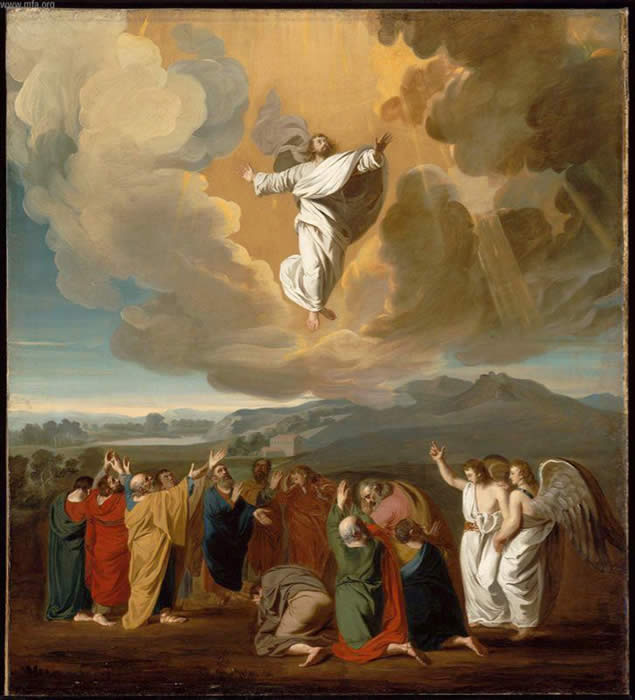
Sermon preached for Ascension evening, Thursday, May 9, 2013.
Someone once said that it would be good if guests came with an expiration date. The great dowager countess of Downton Abbey put it this way. No guest should arrive without a departure date being previously set. Or, maybe you know that familiar expression that guests, like fish, stink after three days. The departure of guests seems to be as welcome as their arrival. Except Jesus.
No one was ready for Jesus to go. Not the disciples; their faith was not in an idea or a principle or a cause but in a flesh and blood person. They were called to follow a man and not an ideal. They had been with Him for three years. They had seen Him suspend the natural law: calming storms, feeding thousands, healing sick, and raising dead. They had watched as He called out demons and sent them packing and stood up to the religious and political authorities of the day. They had seen His compassion for undeserving folks, His love for those nobody loved, His touch upon the untouchable. They had seen Him suffer and die and then been shocked with His resurrection. They were attached not to an idea or a cause; they were attached to a man.
Their joy was in a real person. Some of them had a dark past which Jesus had overcome. Some of them had personality problems that Jesus had turned into assets for the kingdom. Some of them had betrayed their Lord and been restored from their shame. They did not follow Jesus the idea but Jesus the man. He was their joy and their all. They could not conceive of their life apart from Him.
But after forty days, Jesus takes them out of the city and as He speaks, He disappears from their sight. You might expect panic, tears, anger, upset, turmoil, and despair. But instead, they go home singing for joy. How can it be that a people so attached to Him, would rejoice when He ascends into heaven and they see Him no more?
They knew a few things. They knew He was to come again as they saw Him go. This was the future promise of His return as Lord and Judge of all. Now, to be sure, they envisioned His return soon – a whole lot sooner than the 2000 years it has been. But they had confidence that the Lord who had kept all His other promises, would keep this one, too. He would return as He they saw Him go. If Jesus were to go, they had His promise as the comfort.
Another part of their joy was in their realization that what Jesus had done, He had not done for Himself but for them. He lived to live out the holiness that would count them holy. He suffered to bear their sufferings. He died their death to kill death. He rose that they might rise to life eternal. And now He goes to prepare a place that they might be where He is and He might be with them for all eternity. If Jesus were to go, they had a future waiting for them.
And finally, they took comfort and found joy in the fact that Jesus never says "good bye." It might seem a little thing, but He ascends not to depart from them, but to fill all in all. He had already promised them, "Lo, I am with you always." Not as a memory but Himself. Not as some spiritual presence, but the Christ who gives His gifts to His people still. Not as a principle to follow or an ideal to live for, but as the crucified, risen, and ascended Lord who remains among us, living as He promised.
As people were tempted to believe that Jesus ascension leaves us without the Lord’s real presence. So we turn Christianity into an idea or a principle of love or a cause to right injustice. How easy it is for us to be content with that. But we do not believe in an idea or a cause or a principle. We believe in the flesh and blood person. He has ascended but to be with us.
That is why we are here tonight. We come here not to remember an absent God, not to rekindle a distant memory, but to meet the God of His promise, who has filled all things and especially His Word, His water, and His meal. We come not to honor some aging monarch in some inglorious body that barely hints of the man He was, but the living Lord who holds today and eternity in His hand. He is neither spirit nor ghost but flesh and blood still – the glorious flesh and blood of the victorious Lord who gives us this body and this blood to eat and drink.
Christians take their cue from the disciples. Christ is not absent from His people but present in the places of His promise. We are not a people whose hope is a memory but whose joy is in the ascended Lord who has filled all in all, especially this Word and these Sacraments. He is no guest who has overstayed His welcome but the Lord who has come to take us to Himself, that we might be where He is. He does this through the means of grace now and by giving to us the glorious flesh and blood He wears for all eternity.
We are not the sad or defeated. Our hope is not in a memory nor is our comfort a feeling. Christ has ascended to fill all in all. He is not our guest, but we are His. We have been raised from sin and its death to forgiveness and life, from servants to sons and daughters, from the bondage of the world to freedom to love and serve the Lord in the chosen obedience and submission of faith. Like the disciples, we do not lament an absent Savior but sing for joy all the way home because Christ is here! Amen!
Someone once said that it would be good if guests came with an expiration date. The great dowager countess of Downton Abbey put it this way. No guest should arrive without a departure date being previously set. Or, maybe you know that familiar expression that guests, like fish, stink after three days. The departure of guests seems to be as welcome as their arrival. Except Jesus.
No one was ready for Jesus to go. Not the disciples; their faith was not in an idea or a principle or a cause but in a flesh and blood person. They were called to follow a man and not an ideal. They had been with Him for three years. They had seen Him suspend the natural law: calming storms, feeding thousands, healing sick, and raising dead. They had watched as He called out demons and sent them packing and stood up to the religious and political authorities of the day. They had seen His compassion for undeserving folks, His love for those nobody loved, His touch upon the untouchable. They had seen Him suffer and die and then been shocked with His resurrection. They were attached not to an idea or a cause; they were attached to a man.
Their joy was in a real person. Some of them had a dark past which Jesus had overcome. Some of them had personality problems that Jesus had turned into assets for the kingdom. Some of them had betrayed their Lord and been restored from their shame. They did not follow Jesus the idea but Jesus the man. He was their joy and their all. They could not conceive of their life apart from Him.
But after forty days, Jesus takes them out of the city and as He speaks, He disappears from their sight. You might expect panic, tears, anger, upset, turmoil, and despair. But instead, they go home singing for joy. How can it be that a people so attached to Him, would rejoice when He ascends into heaven and they see Him no more?
They knew a few things. They knew He was to come again as they saw Him go. This was the future promise of His return as Lord and Judge of all. Now, to be sure, they envisioned His return soon – a whole lot sooner than the 2000 years it has been. But they had confidence that the Lord who had kept all His other promises, would keep this one, too. He would return as He they saw Him go. If Jesus were to go, they had His promise as the comfort.
Another part of their joy was in their realization that what Jesus had done, He had not done for Himself but for them. He lived to live out the holiness that would count them holy. He suffered to bear their sufferings. He died their death to kill death. He rose that they might rise to life eternal. And now He goes to prepare a place that they might be where He is and He might be with them for all eternity. If Jesus were to go, they had a future waiting for them.
And finally, they took comfort and found joy in the fact that Jesus never says "good bye." It might seem a little thing, but He ascends not to depart from them, but to fill all in all. He had already promised them, "Lo, I am with you always." Not as a memory but Himself. Not as some spiritual presence, but the Christ who gives His gifts to His people still. Not as a principle to follow or an ideal to live for, but as the crucified, risen, and ascended Lord who remains among us, living as He promised.
As people were tempted to believe that Jesus ascension leaves us without the Lord’s real presence. So we turn Christianity into an idea or a principle of love or a cause to right injustice. How easy it is for us to be content with that. But we do not believe in an idea or a cause or a principle. We believe in the flesh and blood person. He has ascended but to be with us.
That is why we are here tonight. We come here not to remember an absent God, not to rekindle a distant memory, but to meet the God of His promise, who has filled all things and especially His Word, His water, and His meal. We come not to honor some aging monarch in some inglorious body that barely hints of the man He was, but the living Lord who holds today and eternity in His hand. He is neither spirit nor ghost but flesh and blood still – the glorious flesh and blood of the victorious Lord who gives us this body and this blood to eat and drink.
Christians take their cue from the disciples. Christ is not absent from His people but present in the places of His promise. We are not a people whose hope is a memory but whose joy is in the ascended Lord who has filled all in all, especially this Word and these Sacraments. He is no guest who has overstayed His welcome but the Lord who has come to take us to Himself, that we might be where He is. He does this through the means of grace now and by giving to us the glorious flesh and blood He wears for all eternity.
We are not the sad or defeated. Our hope is not in a memory nor is our comfort a feeling. Christ has ascended to fill all in all. He is not our guest, but we are His. We have been raised from sin and its death to forgiveness and life, from servants to sons and daughters, from the bondage of the world to freedom to love and serve the Lord in the chosen obedience and submission of faith. Like the disciples, we do not lament an absent Savior but sing for joy all the way home because Christ is here! Amen!
Interesting line from the Pope's sermon for April 14
"Inconsistency on the part of pastors and the faithful between what they
say and what they do, between word and manner of life, is undermining
the Church's credibility," said Pope Francis in his homily....
Now there is a mouthful. You can apply that in a myriad of ways. Of course, the most obvious is the way we speak of holiness but do not intend or attempt to live holy lives. I have often maintained that the world is not expecting Christians to be perfect but they do expect that what we believe, confess, and teach will show up in our lives -- even if in an imperfect or broken manner. It should not be something for which we are proud that most Christians do not live distinctively Christian lives but fade into the woodwork of the world and all its people. Faith should imply difference. The great problem of all Christians is that we are in the world and too much of the world. We pursue the world's goals through the world's means, then we come to church on Sunday morning to confess our sins and be forgiven, and so we go back to the same old attitudes and practices on Monday morning with a clean conscience. As one pundit put it, God's job is to forgive and ours is to sin. That has become our piety and that is not the way of Christ or the cross. Whether or not we succeed in the pursuit of holiness of life and conversation (from the collect for April 7) we ought to seek it out and strive for it.
But there is another way in which you can apply the Pope's words. For way too long the faith has become only as wide and as deep as the person to whom you are speaking, the author whose words you are reading, the parish where you happen to be, etc... Our theology has become relative. Our liturgical practice has become relative. Our morality has become relative. Clearly, nothing hurts the Church more than the idea that there is no real and objective truth -- only the subjective truth of the person or the moment. The great gulf between what we say and what we do only infuses our enemies and the church's detractors with ammunition and encouragement in their disbelief and skepticism. What we confess should inform and shape what we do -- as individuals, as clergy, as congregations, and as the church as a whole.
Personalized piety, worship practices that reflect personal preferences, and doctrine that is defined by personal doubts or interest all undermine the credibility of a Church claiming to confess that heaven and earth may pass away but the Word of the Lord endures forever. We have made the Word of the Lord what we want it to be, we have left the church to be the mistress of the moment rather than the bride of Christ for eternity, and then we wonder why it is that people do not flock in when the doors are opened.
It is true that the Spirit is the one who empowers and brings results from our witness and I do not mean to presume that it is the fruit of our efforts or our energies that people come to faith and communion with the Church. However, we ought not to stand in the way of the Spirit's work where we can help it. Inconsistency between faith confessed and faith lives and the inconsistency of worship forms and practices and theology all combine to make the work of the Spirit more difficult. Whether the Pope says it or I say it, it is true. Diversity is not a virtue of the Church as Scripture defines her. Fidelity and faithfulness are.
Down the road is a restaurant building was so many different things over the years people stopped coming. They expected to find their favorite on the menu when they returned but found instead that the restaurant had reinvented itself again. The familiar was gone and all was new. Eventually people stopped coming and the doors closed. As President Harrison once reminded, in order to be better than we are, we must first be who we are. Sinners forgiven and restored to struggle with all their might against temptation and doubt... Churches with a history that points them to the future...
Now there is a mouthful. You can apply that in a myriad of ways. Of course, the most obvious is the way we speak of holiness but do not intend or attempt to live holy lives. I have often maintained that the world is not expecting Christians to be perfect but they do expect that what we believe, confess, and teach will show up in our lives -- even if in an imperfect or broken manner. It should not be something for which we are proud that most Christians do not live distinctively Christian lives but fade into the woodwork of the world and all its people. Faith should imply difference. The great problem of all Christians is that we are in the world and too much of the world. We pursue the world's goals through the world's means, then we come to church on Sunday morning to confess our sins and be forgiven, and so we go back to the same old attitudes and practices on Monday morning with a clean conscience. As one pundit put it, God's job is to forgive and ours is to sin. That has become our piety and that is not the way of Christ or the cross. Whether or not we succeed in the pursuit of holiness of life and conversation (from the collect for April 7) we ought to seek it out and strive for it.
But there is another way in which you can apply the Pope's words. For way too long the faith has become only as wide and as deep as the person to whom you are speaking, the author whose words you are reading, the parish where you happen to be, etc... Our theology has become relative. Our liturgical practice has become relative. Our morality has become relative. Clearly, nothing hurts the Church more than the idea that there is no real and objective truth -- only the subjective truth of the person or the moment. The great gulf between what we say and what we do only infuses our enemies and the church's detractors with ammunition and encouragement in their disbelief and skepticism. What we confess should inform and shape what we do -- as individuals, as clergy, as congregations, and as the church as a whole.
Personalized piety, worship practices that reflect personal preferences, and doctrine that is defined by personal doubts or interest all undermine the credibility of a Church claiming to confess that heaven and earth may pass away but the Word of the Lord endures forever. We have made the Word of the Lord what we want it to be, we have left the church to be the mistress of the moment rather than the bride of Christ for eternity, and then we wonder why it is that people do not flock in when the doors are opened.
It is true that the Spirit is the one who empowers and brings results from our witness and I do not mean to presume that it is the fruit of our efforts or our energies that people come to faith and communion with the Church. However, we ought not to stand in the way of the Spirit's work where we can help it. Inconsistency between faith confessed and faith lives and the inconsistency of worship forms and practices and theology all combine to make the work of the Spirit more difficult. Whether the Pope says it or I say it, it is true. Diversity is not a virtue of the Church as Scripture defines her. Fidelity and faithfulness are.
Down the road is a restaurant building was so many different things over the years people stopped coming. They expected to find their favorite on the menu when they returned but found instead that the restaurant had reinvented itself again. The familiar was gone and all was new. Eventually people stopped coming and the doors closed. As President Harrison once reminded, in order to be better than we are, we must first be who we are. Sinners forgiven and restored to struggle with all their might against temptation and doubt... Churches with a history that points them to the future...
Friday, May 10, 2013
To fill all in all...
Sermon preached for the Ascension morning service, Thursday, May 9, 11 am.
How could the disciples watch Jesus float away from them and then still return to Jerusalem with great joy? They had lost Him once to death and the shock of His resurrection was still reeling in their hearts and minds. And now they were losing Him again. How could they be joyful at such a prospect?
The Ascension is one of the most misunderstood events in the life of Christ. It is often celebrated as the day of Christ’s absence. Like Enoch and Elijah, He is taken away never to be seen again. What we are left with is memory and feelings to console us, comfort us, and sustain us until the day when we see Him again.
But Jesus never says “Good bye.” Jesus predicts and prepares His disciples for His betrayal, for His suffering, for His condemnation, for His crucifixion, for His death, and for His resurrection. But nowhere does Jesus predict or prepare His disciples for a sad farewell.
That is became He has departed our visual presence to, as St. Paul says in our Epistle, “fill all things.” He has ascended not to leave but to fill us and all things. He has not left us but has taken up His rightful place and purpose as the One who fills “all in all.”
No where is that more pointed than in the Church’s life and worship. We come at the bidding of Christ whose voice still speaks but in His Word. We are absolved of our sins by the voice of that Word that speaks and does what it is that this Word says. We are washed in the water of the Lord in which He is and through which He works to kill and to make us alive anew, in Him. We are fed and sustained for this new life to eternal life in the broken bread of His body and the poured cup of His blood. Christ is not absent to us but present. And we see Him with the eyes of faith that trust in His promise.
This is why the disciples could return to Jerusalem with joy. No one who has stood in the airport or train station or at the side walk as a car pulls away takes joy in a farewell. We always fear that as we see our loved ones go, it may be the last time. Sometimes it is.
But Jesus has not bidden farewell to us. He has ascended to fill all things. In particular, the things that come with His promise and power – the Word and Sacraments.
No one who grieves is content with memories. They are at the same time painful and wonderful. They fade and the things we yearn to recall most of all become distant to us. Had the disciples been left with a memory, they would have been empty of any and all joy and the words and works of Jesus would have become a memory, a fading memory to them.
So as Jesus ascends, He promises the Spirit. The Spirit who will work faith in our hearts, who will point us to the places where Christ is present to us, who will lead us to trust in what that Word says, that water does, and that bread and wine gives. The Spirit brings to remembrance what Christ has said and done – not as the renewal of a mere memory but as that which is believed, confessed, and taught, equipping them to be the witnesses He has said all along that they will be... that we will be.
We come together not as people whose joy is a memory, whose purpose is to keep a memory alive so that it will not be forgotten. No, we come together to meet Him who fills all in all. Who fills His Word so that He speaks to us still. Who fills the water that kills the old person encumbered with sin and death and brings us forth new in Christ, wearing His holiness and living a life death cannot steal. Who fills bread and wine with the flesh for the life of the world and the cup of blessing in which we taste eternity.
Ascension is radically important to our faith... even though many churches will be shuttered today and those open will have few comers. Christ has not left us or abandoned His new creation. He has ascended to fill all in all. And we hear that in the words of the collect. For the promise of His ascension is that we too ascend in Him and to Him, from despair to hope, from sin to holiness, from wounds to healing, from weariness to renewal, from weakness to strength, from death to life.... Amen
How could the disciples watch Jesus float away from them and then still return to Jerusalem with great joy? They had lost Him once to death and the shock of His resurrection was still reeling in their hearts and minds. And now they were losing Him again. How could they be joyful at such a prospect?
The Ascension is one of the most misunderstood events in the life of Christ. It is often celebrated as the day of Christ’s absence. Like Enoch and Elijah, He is taken away never to be seen again. What we are left with is memory and feelings to console us, comfort us, and sustain us until the day when we see Him again.
But Jesus never says “Good bye.” Jesus predicts and prepares His disciples for His betrayal, for His suffering, for His condemnation, for His crucifixion, for His death, and for His resurrection. But nowhere does Jesus predict or prepare His disciples for a sad farewell.
That is became He has departed our visual presence to, as St. Paul says in our Epistle, “fill all things.” He has ascended not to leave but to fill us and all things. He has not left us but has taken up His rightful place and purpose as the One who fills “all in all.”
No where is that more pointed than in the Church’s life and worship. We come at the bidding of Christ whose voice still speaks but in His Word. We are absolved of our sins by the voice of that Word that speaks and does what it is that this Word says. We are washed in the water of the Lord in which He is and through which He works to kill and to make us alive anew, in Him. We are fed and sustained for this new life to eternal life in the broken bread of His body and the poured cup of His blood. Christ is not absent to us but present. And we see Him with the eyes of faith that trust in His promise.
This is why the disciples could return to Jerusalem with joy. No one who has stood in the airport or train station or at the side walk as a car pulls away takes joy in a farewell. We always fear that as we see our loved ones go, it may be the last time. Sometimes it is.
But Jesus has not bidden farewell to us. He has ascended to fill all things. In particular, the things that come with His promise and power – the Word and Sacraments.
No one who grieves is content with memories. They are at the same time painful and wonderful. They fade and the things we yearn to recall most of all become distant to us. Had the disciples been left with a memory, they would have been empty of any and all joy and the words and works of Jesus would have become a memory, a fading memory to them.
So as Jesus ascends, He promises the Spirit. The Spirit who will work faith in our hearts, who will point us to the places where Christ is present to us, who will lead us to trust in what that Word says, that water does, and that bread and wine gives. The Spirit brings to remembrance what Christ has said and done – not as the renewal of a mere memory but as that which is believed, confessed, and taught, equipping them to be the witnesses He has said all along that they will be... that we will be.
We come together not as people whose joy is a memory, whose purpose is to keep a memory alive so that it will not be forgotten. No, we come together to meet Him who fills all in all. Who fills His Word so that He speaks to us still. Who fills the water that kills the old person encumbered with sin and death and brings us forth new in Christ, wearing His holiness and living a life death cannot steal. Who fills bread and wine with the flesh for the life of the world and the cup of blessing in which we taste eternity.
Ascension is radically important to our faith... even though many churches will be shuttered today and those open will have few comers. Christ has not left us or abandoned His new creation. He has ascended to fill all in all. And we hear that in the words of the collect. For the promise of His ascension is that we too ascend in Him and to Him, from despair to hope, from sin to holiness, from wounds to healing, from weariness to renewal, from weakness to strength, from death to life.... Amen
Fine art. . .
New mosaic...
Old Technique
Read about it all here:
New Mosaic
As part of a refurbishment project at St
Martin’s in Roath Aidan has just finished installing this large mosaic
of Christ Pantocrator. The design draws on Western and Eastern
influences, especially the Deësis mosaic in Hagia Sophia and an image of
Christ from the vault of Sancta Sanctorum chapel in Rome.
It is has now been set into the church’s exterior north wall, about 30 feet above a bustling high street in central Cardiff.
He worked alongside stonemason Paul
Mitchell who carved a frame for the mosaic in Bath stone and Martin
Earle and Ulia Clow who helped lay some of the many thousands of
coloured glass ‘tesserae’ which make up the icon.
Fascinating.... simply fascinating...
Look at all the pictures. . .
Thursday, May 9, 2013
Happy or Holy?
Sermon for Easter VI preached on Sunday, May 5, 2013.
It is often said that the Danish Lutherans were divided – either happy or holy. The happy ones followed Bishop Nickolai Grundtvig, the Lutheran who penned "Built on the Rock the Church Doth Stand". The happy Danes focused on the outward gifts of God’s grace as they come to us in Word and Sacrament. The holy Danes were pietists and focused on the inner holiness of the Christian and how it is lived out in moral behavior.
Today it seems we are all Danes as Christians tend to fall into two camps. Those who believe God wants to make you happy and those who believe God wants to make you holy. As with anything, there is truth to both – unless, of course, you believe God wants you to be bad and sad. The problem is that we use these as crutches to steady a weak faith. If we are not happy, we fear God is not happy with us and so we work to fix our relationship in order to get the happiness we desire. If we are not holy, we fear that we cannot possibly belong to God and so we work to be holier so that we can be acceptable to God. Both have become gimmicks to explain Christian life in a way that makes it reasonable, easier to accept, and easier to live... cause and effect.
The truth is not easy or simple. Though at times we are happy, even very happy, Jesus insists that we will have trials and tribulation in this life in the world. He promises neither that we will be happy always nor that we will be made holy and therefore immune from temptation, sin, and despair. Our hope lies not in our happiness or in our holiness or even in us. Our hope lies in Christ. We are encouraged to hope and rejoice because He has overcome the world.
In the world we will have trials and tribulation. There is no way out. What is finished in eternity, still is not yet complete in time. Until He comes again, we face trouble, persecution, and test. We can't escape it. It is going to happen. Jesus has won. Tribulation in the life of the Christian does not diminish Jesus’ victory. But His victory is not complete until He comes again, until all His enemies are under His feet, and until this earth and this heaven gives way to the new heaven and new earth of His promise. Until that day and all things go their appointed end, we work out our salvation with fear and trembling as St. Paul says; with God’s all sufficient grace.
Take heart, dear people of God. Jesus has overcome the world. The world, the devil, and the flesh can afflict you but they cannot steal you from God. They can fill life with trouble but they cannot win. They can tempt you but they cannot condemn you. You belong Christ. Even now while you struggle against principalities and powers. Christ has overcome the world. Our hope lies not in us but in Him... always!
We can be happy but happiness is neither our comfort nor the goal of our lives. It comes and it goes. We all go through dry times when our hearts are sad and lives are filled with struggle. Happiness is not our comfort. Christ is our comfort. Happiness is not our goal. Christ is our goal. Happiness, or better, contentment and peace come from Christ.
We can work to be holy but holiness will not be finished in us until Christ raises us from death to the glorious flesh of His promise and to the heavenly glory beyond our earthly imagination. That does not mean we do not seek and strive to be holy. This is our calling in baptism. To be the holy people God has declared us to be in Christ. Neither can holiness be our comfort. We have no boast in ourselves. We have no comfort from progress in holiness. Our boast is Christ. Our comfort is Christ.
Christ has overcome the world and in Him we shall endure, we shall receive His promise, we shall share in His triumph for all eternity. The great problem of faith is that we attempt to take our comfort not from Christ but from momentary happiness or from progress in holiness reflected in better behavior. Our comfort, our strength, our peace, and our victory lies not in these but in Christ alone.
Think of your childhood. Once it was so tempting to measure your parents' affection in terms of gifts and things. Love was measured by what your parents gave you. But when things went bad and in time of need, you left these things and sought something else – the comfort of their presence and the embrace of their arms in love. So it is for us as Christians. It is our temptation to think happiness or holiness are the measure of faith. Yet when things go bad, none of these mean anything. We want and we need and we have Christ as our comfort and our peace.
His presence with us in Word and Sacrament, the promise of our own future tied up in His resurrection, these mean more than things. Our comfort comes not from earthly happiness or progress in holiness. Our comfort is in Christ alone, in what Christ alone has won by His life-giving death and His victorious resurrection. If we have Christ, then we have everything. We have a future without tear, sorrow, death, or struggle. We have holiness that cannot be stained because it is the holiness not of our achievement but of Christ's gift. If we have Christ we have everything. Tribulation cannot steal our peace, trouble cannot rob us of happiness, failure cannot take away our holiness... all of these we have in Christ. So all that remains for us is to remain in Christ, to hear his voice in His Word absolving our sins, to rejoice in His gift in the cleansing waters of our baptism, and to eat and drink His flesh and blood in the Eucharist. The work of the Spirit is to point us to Christ, to confirm our hope in Christ, and to sustain this hope from the allure of happiness or the despair of tribulation. Christ is our all, our everything, our happiness and our holiness, our joy, and our peace. Amen.
It is often said that the Danish Lutherans were divided – either happy or holy. The happy ones followed Bishop Nickolai Grundtvig, the Lutheran who penned "Built on the Rock the Church Doth Stand". The happy Danes focused on the outward gifts of God’s grace as they come to us in Word and Sacrament. The holy Danes were pietists and focused on the inner holiness of the Christian and how it is lived out in moral behavior.
Today it seems we are all Danes as Christians tend to fall into two camps. Those who believe God wants to make you happy and those who believe God wants to make you holy. As with anything, there is truth to both – unless, of course, you believe God wants you to be bad and sad. The problem is that we use these as crutches to steady a weak faith. If we are not happy, we fear God is not happy with us and so we work to fix our relationship in order to get the happiness we desire. If we are not holy, we fear that we cannot possibly belong to God and so we work to be holier so that we can be acceptable to God. Both have become gimmicks to explain Christian life in a way that makes it reasonable, easier to accept, and easier to live... cause and effect.
The truth is not easy or simple. Though at times we are happy, even very happy, Jesus insists that we will have trials and tribulation in this life in the world. He promises neither that we will be happy always nor that we will be made holy and therefore immune from temptation, sin, and despair. Our hope lies not in our happiness or in our holiness or even in us. Our hope lies in Christ. We are encouraged to hope and rejoice because He has overcome the world.
In the world we will have trials and tribulation. There is no way out. What is finished in eternity, still is not yet complete in time. Until He comes again, we face trouble, persecution, and test. We can't escape it. It is going to happen. Jesus has won. Tribulation in the life of the Christian does not diminish Jesus’ victory. But His victory is not complete until He comes again, until all His enemies are under His feet, and until this earth and this heaven gives way to the new heaven and new earth of His promise. Until that day and all things go their appointed end, we work out our salvation with fear and trembling as St. Paul says; with God’s all sufficient grace.
Take heart, dear people of God. Jesus has overcome the world. The world, the devil, and the flesh can afflict you but they cannot steal you from God. They can fill life with trouble but they cannot win. They can tempt you but they cannot condemn you. You belong Christ. Even now while you struggle against principalities and powers. Christ has overcome the world. Our hope lies not in us but in Him... always!
We can be happy but happiness is neither our comfort nor the goal of our lives. It comes and it goes. We all go through dry times when our hearts are sad and lives are filled with struggle. Happiness is not our comfort. Christ is our comfort. Happiness is not our goal. Christ is our goal. Happiness, or better, contentment and peace come from Christ.
We can work to be holy but holiness will not be finished in us until Christ raises us from death to the glorious flesh of His promise and to the heavenly glory beyond our earthly imagination. That does not mean we do not seek and strive to be holy. This is our calling in baptism. To be the holy people God has declared us to be in Christ. Neither can holiness be our comfort. We have no boast in ourselves. We have no comfort from progress in holiness. Our boast is Christ. Our comfort is Christ.
Christ has overcome the world and in Him we shall endure, we shall receive His promise, we shall share in His triumph for all eternity. The great problem of faith is that we attempt to take our comfort not from Christ but from momentary happiness or from progress in holiness reflected in better behavior. Our comfort, our strength, our peace, and our victory lies not in these but in Christ alone.
Think of your childhood. Once it was so tempting to measure your parents' affection in terms of gifts and things. Love was measured by what your parents gave you. But when things went bad and in time of need, you left these things and sought something else – the comfort of their presence and the embrace of their arms in love. So it is for us as Christians. It is our temptation to think happiness or holiness are the measure of faith. Yet when things go bad, none of these mean anything. We want and we need and we have Christ as our comfort and our peace.
His presence with us in Word and Sacrament, the promise of our own future tied up in His resurrection, these mean more than things. Our comfort comes not from earthly happiness or progress in holiness. Our comfort is in Christ alone, in what Christ alone has won by His life-giving death and His victorious resurrection. If we have Christ, then we have everything. We have a future without tear, sorrow, death, or struggle. We have holiness that cannot be stained because it is the holiness not of our achievement but of Christ's gift. If we have Christ we have everything. Tribulation cannot steal our peace, trouble cannot rob us of happiness, failure cannot take away our holiness... all of these we have in Christ. So all that remains for us is to remain in Christ, to hear his voice in His Word absolving our sins, to rejoice in His gift in the cleansing waters of our baptism, and to eat and drink His flesh and blood in the Eucharist. The work of the Spirit is to point us to Christ, to confirm our hope in Christ, and to sustain this hope from the allure of happiness or the despair of tribulation. Christ is our all, our everything, our happiness and our holiness, our joy, and our peace. Amen.
Funny thing about images...
It always comes as a shock to people who pick up a plaque or such at a generic Christians bookstore only to find that their commandments are not the same as the ones Lutherans have learned from the Catechism. Ahhh... it all boils down to graven images. The generic Protestants combine our 9 and 10 but add one earlier to end up with ten but a different ten commandments.
Truth to be told, I had long ago thought that some had given up the Quixotic jousting at images. Christians with icons, statues, crucifixes, and paintings so far outnumber those who would prevent them that it is not even close to a horse race. Funny thing is that we regularly get calls from Church of Christ, Baptist, and other similar folk asking if we rent out our sanctuary for weddings (we do not). It is so "pretty" and the organ and instruments possible make for a "perfect" setting not always available in their own church homes. So you might have thought the old accusation against formalism and idol worship had lost its shine.
As an example, let me quote from noted Protestant author John McArthur:
Idolatry is worshiping the wrong god and worshiping the right God in the wrong way. ... I think idolatry is also worshiping symbols that may stand for God. Now we've all-been aware of what is known as the iconoclastic controversy from the word eikon in Greek which means "image." Throughout the history of the church, the church was in its early manifestation of Romanism wanting to put everything in statues and the Roman Church still does that. ... And you still have crucifixes and other images and saints and so forth that represent a certain kind of idolatry. And you say, "Well, we don't really worship the idols it's just that the representation is there." Yes, but the transition is so subtle...so subtle.
We Lutherans seem particularly vulnerable to the attack since we have always felt somewhat self-conscious of our catholic heritage and identity. When we find out that a set of commandments includes the prohibition of graven images, we literally go into heart palpitations -- on the one hand fearing we might have gotten it wrong and on the other hand relieved to note that something we never really felt good about just might have to go and Scripture could justify the exit (thinking here about the crucifix).
So it happened that a little plaque showed up at church given by a well meaning person who, perhaps, did not even realize that there was a commandment there Lutherans do not number and two that Lutherans do number have been merged... I have already gotten a few questions about it. I direct folks to the catechism. Start there.
We could have a battle of competing Bible passages but it is worth noting that the icons, statues, crucifixes, and religious art of God's House is not art per se but visible Word -- that is, it illustrates what God has said and done. From the beginning of its building, God commanded images to be graven for use in the temple. Our Lord took on flesh and blood and so gave us the image of His divine nature in material form. The sacraments instituted by Christ use material forms to make the divine accessible to us. We have an almost unbroken history of support for Christian images (culminating with the iconoclastic controversy and the Seventh Ecumenical Council.
Funny how sensitive we are on this point... Perhaps distinguishing ourselves from the Roman Catholics is enough to make us eschew the catholic identity that is the core of our Lutheran Confessional identity....
Truth to be told, I had long ago thought that some had given up the Quixotic jousting at images. Christians with icons, statues, crucifixes, and paintings so far outnumber those who would prevent them that it is not even close to a horse race. Funny thing is that we regularly get calls from Church of Christ, Baptist, and other similar folk asking if we rent out our sanctuary for weddings (we do not). It is so "pretty" and the organ and instruments possible make for a "perfect" setting not always available in their own church homes. So you might have thought the old accusation against formalism and idol worship had lost its shine.
As an example, let me quote from noted Protestant author John McArthur:
Idolatry is worshiping the wrong god and worshiping the right God in the wrong way. ... I think idolatry is also worshiping symbols that may stand for God. Now we've all-been aware of what is known as the iconoclastic controversy from the word eikon in Greek which means "image." Throughout the history of the church, the church was in its early manifestation of Romanism wanting to put everything in statues and the Roman Church still does that. ... And you still have crucifixes and other images and saints and so forth that represent a certain kind of idolatry. And you say, "Well, we don't really worship the idols it's just that the representation is there." Yes, but the transition is so subtle...so subtle.
We Lutherans seem particularly vulnerable to the attack since we have always felt somewhat self-conscious of our catholic heritage and identity. When we find out that a set of commandments includes the prohibition of graven images, we literally go into heart palpitations -- on the one hand fearing we might have gotten it wrong and on the other hand relieved to note that something we never really felt good about just might have to go and Scripture could justify the exit (thinking here about the crucifix).
So it happened that a little plaque showed up at church given by a well meaning person who, perhaps, did not even realize that there was a commandment there Lutherans do not number and two that Lutherans do number have been merged... I have already gotten a few questions about it. I direct folks to the catechism. Start there.
We could have a battle of competing Bible passages but it is worth noting that the icons, statues, crucifixes, and religious art of God's House is not art per se but visible Word -- that is, it illustrates what God has said and done. From the beginning of its building, God commanded images to be graven for use in the temple. Our Lord took on flesh and blood and so gave us the image of His divine nature in material form. The sacraments instituted by Christ use material forms to make the divine accessible to us. We have an almost unbroken history of support for Christian images (culminating with the iconoclastic controversy and the Seventh Ecumenical Council.
Funny how sensitive we are on this point... Perhaps distinguishing ourselves from the Roman Catholics is enough to make us eschew the catholic identity that is the core of our Lutheran Confessional identity....
Wednesday, May 8, 2013
Our Wal-Mart Sins. . .
Maybe it is because I come from a small town where my father's business had to complete with a Wal_Mart 45 miles away or because I live in a community in which Super Wal-Marts (4 of them) dominate the retail landscape, or maybe it is because I hate walking through a couple hundred thousand square feet of retail space to buy a gallon of milk... I dislike Wal-Mart. More than the store, I dislike the mentality that Wal_mart has come to epitomize in American society and religion.
When it comes to marriage and family, we have adapted the Wal_Mart mentality into justification for cohabitation over marriage, self-centered marriage over sacrifice and service, and the way children are optional. In other words, our young folks have learned not to commit but to keep their options open and, when forced to choose, to make price the pivotal determiner of your choice. Co-habitation is (wrongly) seen as keeping your options open and a low-cost alternative to marriage. Never mind the lie, it is the way we shop -- even for someone with whom to share our lives.
Wal-Mart has taught us that we should be able to get what we want at a cheap price, with friendly service, and with several choices or options to fill the bill. How can we expect to enter marriage under those constraints but we do -- and the result is that when we fail to get value out of marriage, when friendly service is replaced by sacrifice for the other, and when we grow tired of the same old thing, we divorce and become an unentangled consumer again.
Children should look like the options we find at Wal-Mart -- affordable, easy, and discardable. Alas the only thing that qualifies under this definition is abortion or birth control. Kids are nothing if not expensive, never as easy as promised,, and once you have one, you cannot return or exchange him or her for another or for refund or store credit. So our Wal-Mart mentality has made children definitely optional and mostly no choice at all for the savvy consumer.
When it comes to religion, the Wal-Mart mentality has taught us that bigger is always better, that choice dictated by personal preference rules the day, that entertainment or what we get out of it defines success, and that you can shop all day anonymously with the only commitment being the bill and perhaps a tip at the end of the transaction. Successful churches in our modern world look like malls and big box stores, have all the amenities we seek in our retail environment, and offer us a splendid affirmation of ourselves at the lowest cost to us. The mega-churches have helped us cheapen religion and faith by this consumer mentality. We go for ourselves and we leave to pursue our own desires -- so much for real vocation, sacrifice, holiness, or service...
Sam Walton had us figured out pretty well. Who knew that Wal-Mart would become an attitude as well as a large retail establishment? Who knew that putting your pulse on our shopping habits and desires would give birth to attitudes that affect our culture, society, community, and religion as well? I cannot blame Wal-Mart (well, I shouldn't) for figuring us out so well but I will say I am tired of having my sins mirrored back to me by a retail plan and store chain...
When it comes to marriage and family, we have adapted the Wal_Mart mentality into justification for cohabitation over marriage, self-centered marriage over sacrifice and service, and the way children are optional. In other words, our young folks have learned not to commit but to keep their options open and, when forced to choose, to make price the pivotal determiner of your choice. Co-habitation is (wrongly) seen as keeping your options open and a low-cost alternative to marriage. Never mind the lie, it is the way we shop -- even for someone with whom to share our lives.
Wal-Mart has taught us that we should be able to get what we want at a cheap price, with friendly service, and with several choices or options to fill the bill. How can we expect to enter marriage under those constraints but we do -- and the result is that when we fail to get value out of marriage, when friendly service is replaced by sacrifice for the other, and when we grow tired of the same old thing, we divorce and become an unentangled consumer again.
Children should look like the options we find at Wal-Mart -- affordable, easy, and discardable. Alas the only thing that qualifies under this definition is abortion or birth control. Kids are nothing if not expensive, never as easy as promised,, and once you have one, you cannot return or exchange him or her for another or for refund or store credit. So our Wal-Mart mentality has made children definitely optional and mostly no choice at all for the savvy consumer.
When it comes to religion, the Wal-Mart mentality has taught us that bigger is always better, that choice dictated by personal preference rules the day, that entertainment or what we get out of it defines success, and that you can shop all day anonymously with the only commitment being the bill and perhaps a tip at the end of the transaction. Successful churches in our modern world look like malls and big box stores, have all the amenities we seek in our retail environment, and offer us a splendid affirmation of ourselves at the lowest cost to us. The mega-churches have helped us cheapen religion and faith by this consumer mentality. We go for ourselves and we leave to pursue our own desires -- so much for real vocation, sacrifice, holiness, or service...
Sam Walton had us figured out pretty well. Who knew that Wal-Mart would become an attitude as well as a large retail establishment? Who knew that putting your pulse on our shopping habits and desires would give birth to attitudes that affect our culture, society, community, and religion as well? I cannot blame Wal-Mart (well, I shouldn't) for figuring us out so well but I will say I am tired of having my sins mirrored back to me by a retail plan and store chain...
Tuesday, May 7, 2013
Everyone one a minister. . .
From Pope Francis:
“We priests tend to clericalize the laity. We do not realize it, but it is as if we infect them with our own disease. And the laity — not all, but many — ask us on their knees to clericalize them, because it is more comfortable to be an altar server than the protagonist of a lay path. We cannot fall into that trap — it is a sinful complicity.”
My Comments:
I believe that Francis gets to the heart of one of the great temptations of the Church -- and one that was addressed in the Reformation with the renewal of an understanding of vocation. We have made it seem as though the only vocation that counts is the one that is entered by ordination and we discount the baptismal vocation to the point where it becomes merely a detail of history.
Certainly this is true of the way we in the Lutheran Church have handled the issue of who may be a Pastor. A goodly number of Lutherans have made this a justice issue because they equate the pastoral vocation as the only real vocation. If this is the only real or even the primary vocation, then it stands to reason that the Church cannot prevent women, gays, or anyone else from having access to ordination. Absent other paths of service just as important, we have left the folks in the pew with the idea that in order to be as "good" as a Pastor they must either do what a Pastor does or be what a Pastor is. Because we have not fully taught the baptismal vocation, we have "clericalized" our people -- both because it makes us feel better as Pastors and because we believe and they believe it is what they want or must have.
When it comes to vocation, Lutherans have become the very enemy they complained against in the Reformation. All because we continue to minimize or fail to discuss the vocation of the baptized which is lived out less in the confines of nave and chancel than it is in the world. This is also connected to the silence of some Lutherans about sanctification. Both vocation and sanctification are connected -- not the same but clearly connected.
Why can't women or girls or whomever serve in the chancel is a question that is created by the way we discount the baptismal vocation that God's people live out within the home, the workplace, the community, and the world. This has also had the result of making marriage optional and children secondary. If being husband to your wife and wife to your husband is not a primary vocation, then the estate of marriage is left with utilitarian reasons for its existence. If being parent to your children and a child to your parents is not part of calling from God and very place where we live out a significant part of our baptismal identity, then the choice to have or not to have children is merely utilitarian -- whether economic or desire. If being a neighbor to your neighbor is accidental and not fundamental to our understanding of how we live out our baptismal life as children of God, then community can exist only of those we choose to friend and mediated by technology to fulfill our self-centered purpose. Then the poor, those in need, the sick, the imprisoned, the ill of body, mind, or heart... all of these are governmental responsibility paid for by tax assessment and not the common cause of the baptized in the name of Christ.
"Spiritual" has come to be equated with worship just as "worship" has come to mean entertainment -- both allied by the common cause of self-interest and personal preference. A gazillion years ago when spiritual gifts and inventories were all the rage, I remember asking a women very skilled at teaching if she might consider becoming a Sunday school teacher. "No," she said, "my spiritual gift is discernment." Whether the crassness or abrupt nature of desire to nay say how and where we might serve or the couching of this in the spiritual terminology of gift, we have become adept at denying the places and purposes for which we were set apart in baptism. The only glory we want to bring to God is the glory that spills over on to self. We will stand down front and sing into a mic in a praise band or serve in the chancel in some other visible way that draws attention to ourselves but we will not wash feet for the sake of the poor or those in need. We will seek out self help and personal enrichment opportunities that promise personal fulfillment but we will not remain in a marriage that is not giving us back as much as think we deserve or put children ahead of self-interest.
Francis clearly has his finger on the great chasm between the noble words we say and the way we view service and sacrifice. It is somebody else's job; not mine. Ask anyone in the Church or in the community and they will tell you jobs go begging all the time because the place or responsibility is dirty, messy, not glamorous or noteworthy. In the Church we will take a mission trip vacation to serve folk half a world away while we get to see the sights but at home we do not even bother to get to know our neighbor's name, much less serve him or her nor do we offer to work in the food pantry or teach Sunday school or serve in the nursery or clean up after coffee hour. The blame does not fall on the bad folks in the pews but first to the Pastors and church leaders who have clericalized the nature of vocation and failed to speak of the godly calling that is our baptismal responsibility of worship, witness, intercession, and service.
For Lutherans this might be a good time to review the dusty old part of the Catechism seldom spoken of: the Table of Duties. Here, within the context of personal and eloquent expressions of doctrine and faith Luther has posited the purpose of our baptismal identity and the places where we live it out. This is the noble and honorable calling of those who wear the name of Christ by baptism and faith. Unless and until we raise up these areas of service to the same or higher esteem given to service in the chancel, the Church will continue to be "clergy heavy" in both orientation and vocation. This we cannot afford. We know well what we are given in our baptism. We must know equally well what we are baptized for -- that is, what is the vocation that proceeds from that death and new birth in the baptismal waters...
“We priests tend to clericalize the laity. We do not realize it, but it is as if we infect them with our own disease. And the laity — not all, but many — ask us on their knees to clericalize them, because it is more comfortable to be an altar server than the protagonist of a lay path. We cannot fall into that trap — it is a sinful complicity.”
My Comments:
I believe that Francis gets to the heart of one of the great temptations of the Church -- and one that was addressed in the Reformation with the renewal of an understanding of vocation. We have made it seem as though the only vocation that counts is the one that is entered by ordination and we discount the baptismal vocation to the point where it becomes merely a detail of history.
Certainly this is true of the way we in the Lutheran Church have handled the issue of who may be a Pastor. A goodly number of Lutherans have made this a justice issue because they equate the pastoral vocation as the only real vocation. If this is the only real or even the primary vocation, then it stands to reason that the Church cannot prevent women, gays, or anyone else from having access to ordination. Absent other paths of service just as important, we have left the folks in the pew with the idea that in order to be as "good" as a Pastor they must either do what a Pastor does or be what a Pastor is. Because we have not fully taught the baptismal vocation, we have "clericalized" our people -- both because it makes us feel better as Pastors and because we believe and they believe it is what they want or must have.
When it comes to vocation, Lutherans have become the very enemy they complained against in the Reformation. All because we continue to minimize or fail to discuss the vocation of the baptized which is lived out less in the confines of nave and chancel than it is in the world. This is also connected to the silence of some Lutherans about sanctification. Both vocation and sanctification are connected -- not the same but clearly connected.
Why can't women or girls or whomever serve in the chancel is a question that is created by the way we discount the baptismal vocation that God's people live out within the home, the workplace, the community, and the world. This has also had the result of making marriage optional and children secondary. If being husband to your wife and wife to your husband is not a primary vocation, then the estate of marriage is left with utilitarian reasons for its existence. If being parent to your children and a child to your parents is not part of calling from God and very place where we live out a significant part of our baptismal identity, then the choice to have or not to have children is merely utilitarian -- whether economic or desire. If being a neighbor to your neighbor is accidental and not fundamental to our understanding of how we live out our baptismal life as children of God, then community can exist only of those we choose to friend and mediated by technology to fulfill our self-centered purpose. Then the poor, those in need, the sick, the imprisoned, the ill of body, mind, or heart... all of these are governmental responsibility paid for by tax assessment and not the common cause of the baptized in the name of Christ.
"Spiritual" has come to be equated with worship just as "worship" has come to mean entertainment -- both allied by the common cause of self-interest and personal preference. A gazillion years ago when spiritual gifts and inventories were all the rage, I remember asking a women very skilled at teaching if she might consider becoming a Sunday school teacher. "No," she said, "my spiritual gift is discernment." Whether the crassness or abrupt nature of desire to nay say how and where we might serve or the couching of this in the spiritual terminology of gift, we have become adept at denying the places and purposes for which we were set apart in baptism. The only glory we want to bring to God is the glory that spills over on to self. We will stand down front and sing into a mic in a praise band or serve in the chancel in some other visible way that draws attention to ourselves but we will not wash feet for the sake of the poor or those in need. We will seek out self help and personal enrichment opportunities that promise personal fulfillment but we will not remain in a marriage that is not giving us back as much as think we deserve or put children ahead of self-interest.
Francis clearly has his finger on the great chasm between the noble words we say and the way we view service and sacrifice. It is somebody else's job; not mine. Ask anyone in the Church or in the community and they will tell you jobs go begging all the time because the place or responsibility is dirty, messy, not glamorous or noteworthy. In the Church we will take a mission trip vacation to serve folk half a world away while we get to see the sights but at home we do not even bother to get to know our neighbor's name, much less serve him or her nor do we offer to work in the food pantry or teach Sunday school or serve in the nursery or clean up after coffee hour. The blame does not fall on the bad folks in the pews but first to the Pastors and church leaders who have clericalized the nature of vocation and failed to speak of the godly calling that is our baptismal responsibility of worship, witness, intercession, and service.
For Lutherans this might be a good time to review the dusty old part of the Catechism seldom spoken of: the Table of Duties. Here, within the context of personal and eloquent expressions of doctrine and faith Luther has posited the purpose of our baptismal identity and the places where we live it out. This is the noble and honorable calling of those who wear the name of Christ by baptism and faith. Unless and until we raise up these areas of service to the same or higher esteem given to service in the chancel, the Church will continue to be "clergy heavy" in both orientation and vocation. This we cannot afford. We know well what we are given in our baptism. We must know equally well what we are baptized for -- that is, what is the vocation that proceeds from that death and new birth in the baptismal waters...
Monday, May 6, 2013
Vocation -- Becoming the person God has declared you to be. . .
...asking young Christians not only to throw themselves at the foot of the
cross but also to stand up and carry it into the world. To grow into Christ. To be Christ in the world. It is a noble and hard work... from Anthony Sacramone...
Wear the cross.
That is our baptismal vocation. Justification tells us that we cannot put the cross on, God must put the cross on us. This He does in baptism. He grants us the Spirit so that we might believe the Word in the water. We are to wear the cross -- not just or even primarily on Sunday morning but where God has placed us. As Luther famously put it -- from the milk maid to the preacher, where God has put us -- showing forth in our lives the new life that this cross produces. We do not have to go somewhere else; we serve the Lord and fulfill His calling where we are. As husband to wife and wife to husband... As parent to child and child to parent... As neighbor to neighbor... As employer to employee and employee to employer... The place is where we are. The call is to wear the cross.
Wear the cross. If we believe that God has killed off the old person in baptism so that He can bring forth in us the new person of His own creation, then we do not have to do anything to recreate ourselves -- we simply be what we have become. We wear the cross. The baptized people of God look different than those outside or not yet in the Kingdom of God. What we wear is not a birthmark, so to speak, but the mark of our new birth. This means showing forth the kingdom by the good works we were created in Christ Jesus to do. Holiness of life, holy conversation, and holy works that proceed from the new heart Christ put within us in our baptism.
My experience is that we Lutherans are better and more at ease proclaiming the Word of the cross than we are wearing that cross.
Bear the cross.
As so many have said so often, one the great witnesses of John Paul II in his final years was the manner with which he wore his suffering. The world insists that suffering is always bad and the job of medicine or religion or self-help or therapy is to get rid of suffering. We know that this is impossible. But we are not left simply with the inevitability of suffering. We bear the cross in suffering, in weakness, and in frailty. We bear the cross in Christ and for His glory. We carry in these clay jars the glory of Christ. We watched Him suffer and we saw the fruit His suffering bore in our salvation. He has taught us, equipped us, empowered us to suffer.
Some of this comes from our enemies and the enemies of the faith. Some of it comes from living in the world but not of it. Some of it comes our own poor choices. Where it comes from is not nearly as important as how we handle it. My parents often told me that I could not control the things that came my way but I could control how I responded to them. They spoke this in the context of the faith they imparted to me in word and example. Our faith is not in a consolation prize after a life of defeats but in the prize we grasp hold of in the midst of suffering. Endurance is victory -- and endurance is created by faith. Faith is not ivory tower or fairy tale believing but believing and living this faith amid real world hurts, pains, sacrifices, and costs.
Bearing the cross is not the choice of a reasonable soul and mind. It is accessible only by faith -- the soul and mind under the grace of Christ and shaped by the life of Christ. We come to confession and absolution not only because we continue to sin and need grace. We come so that we may be freed from their weight and from the load of guilt so that we can put our full energy into wearing the cross and bearing the cross. We come to the Lord's Table to be strengthened in our weakness, to be made strong in our frailty, so that we might endure. He who endures to the end shall be saved. By these words Jesus reminds us that Christian life is not some easy slide into home plate but it is the wary wisdom of knowing our enemy, knowing the weakness of our flesh, and, at the same time, knowing Christ whose strength is made perfect in us. We come to be renewed in this strength and refreshed for our lives of witness, worship, prayer, and service.
As Lutherans we must become as adept at wearing and bearing the cross as we are preaching the cross.
Wear the cross.
That is our baptismal vocation. Justification tells us that we cannot put the cross on, God must put the cross on us. This He does in baptism. He grants us the Spirit so that we might believe the Word in the water. We are to wear the cross -- not just or even primarily on Sunday morning but where God has placed us. As Luther famously put it -- from the milk maid to the preacher, where God has put us -- showing forth in our lives the new life that this cross produces. We do not have to go somewhere else; we serve the Lord and fulfill His calling where we are. As husband to wife and wife to husband... As parent to child and child to parent... As neighbor to neighbor... As employer to employee and employee to employer... The place is where we are. The call is to wear the cross.
Wear the cross. If we believe that God has killed off the old person in baptism so that He can bring forth in us the new person of His own creation, then we do not have to do anything to recreate ourselves -- we simply be what we have become. We wear the cross. The baptized people of God look different than those outside or not yet in the Kingdom of God. What we wear is not a birthmark, so to speak, but the mark of our new birth. This means showing forth the kingdom by the good works we were created in Christ Jesus to do. Holiness of life, holy conversation, and holy works that proceed from the new heart Christ put within us in our baptism.
My experience is that we Lutherans are better and more at ease proclaiming the Word of the cross than we are wearing that cross.
Bear the cross.
As so many have said so often, one the great witnesses of John Paul II in his final years was the manner with which he wore his suffering. The world insists that suffering is always bad and the job of medicine or religion or self-help or therapy is to get rid of suffering. We know that this is impossible. But we are not left simply with the inevitability of suffering. We bear the cross in suffering, in weakness, and in frailty. We bear the cross in Christ and for His glory. We carry in these clay jars the glory of Christ. We watched Him suffer and we saw the fruit His suffering bore in our salvation. He has taught us, equipped us, empowered us to suffer.
Some of this comes from our enemies and the enemies of the faith. Some of it comes from living in the world but not of it. Some of it comes our own poor choices. Where it comes from is not nearly as important as how we handle it. My parents often told me that I could not control the things that came my way but I could control how I responded to them. They spoke this in the context of the faith they imparted to me in word and example. Our faith is not in a consolation prize after a life of defeats but in the prize we grasp hold of in the midst of suffering. Endurance is victory -- and endurance is created by faith. Faith is not ivory tower or fairy tale believing but believing and living this faith amid real world hurts, pains, sacrifices, and costs.
Bearing the cross is not the choice of a reasonable soul and mind. It is accessible only by faith -- the soul and mind under the grace of Christ and shaped by the life of Christ. We come to confession and absolution not only because we continue to sin and need grace. We come so that we may be freed from their weight and from the load of guilt so that we can put our full energy into wearing the cross and bearing the cross. We come to the Lord's Table to be strengthened in our weakness, to be made strong in our frailty, so that we might endure. He who endures to the end shall be saved. By these words Jesus reminds us that Christian life is not some easy slide into home plate but it is the wary wisdom of knowing our enemy, knowing the weakness of our flesh, and, at the same time, knowing Christ whose strength is made perfect in us. We come to be renewed in this strength and refreshed for our lives of witness, worship, prayer, and service.
As Lutherans we must become as adept at wearing and bearing the cross as we are preaching the cross.
But
grow in the grace and knowledge of our Lord and Savior Jesus Christ. To
him be the glory both now and to the day of eternity. Amen.
—2 Peter 3:18
—2 Peter 3:18
Sunday, May 5, 2013
If you're happy and you know it, clap your hands. . .
A diet of unremittingly jolly choruses and hymns inevitably creates an
unrealistic horizon of expectation which sees the normative Christian
life as one long triumphalist street party—a theologically incorrect and
a pastorally disastrous scenario in a world of broken individuals.... From Carl Trueman
One of the great strengths of the hymnody which begins with the Psalms and to which are added the great and study hymns of old is that they are not shallow, not addicted to pleasure, and not unrealistic about the challenges of Christian life. If we cannot lament, we cannot sing for joy. The two are not mutually exclusive. Indeed, joy begins with the lament of the the things that are against the will of God and are reflections of our sinfulness and our unholiness. It just does not end there. It continues with, as Paul Harvey used to say, "the rest of the story..."
It is an impossible journey to be happy and upbeat all the time. Joy and lament always walk together and that is why joy is not impossible. Joy flows from God's gracious declaration, from His rich and unmerited gift of grace, and from His presence among us even when we have forsaken Him. Lament does not disown joy but puts it in perspective. Our joy is not in the moment or of the moment but in Christ alone. So, as St. Paul used to say, the closer we are to Christ and His holiness, the greater we are aware of our own sinfulness... AND therefore, with greater awe and thanksgiving we acknowledge what His mercy has done for us...
The Psalms do not shy away from the language of lament, from the sorrow of confession, and from the regret of the contrite heart... but they do not end there. It amazes me how you can read such heart wrenching lament (Out of the depths I have cried to You, O Lord) only to find in the latter verses the joy restored by the faithful God whose forgiveness, grace, and mercy have delivered the sinner once again... I wonder if we have not become ashamed and embarrassed by the words of the Psalms -- they do not fit our unrealistic expectations of happiness! But if we are ashamed and embarrassed by the lament of the Psalmist, we are probably ashamed and embarrassed by the Cross as well.
Preach to pain and you will always have plenty of hearers.... That word of wisdom was told me as a very young man seeking ordination. I have found many hearers when I preach to pain. The lament of our sin, the regret of our sin-filled lives, and the lack of progress to holiness are part of that pain, to be sure. But as we preach to pain, we do not leave people with their pain. We address that pain with the one healing word that renews repentance, restores joy, and rekindles hope -- the word of the Cross.
We live amid a world convinced that pain is bad and needs to disappear, that happiness is the same as joy, and that suffering is always an affliction form which we should be released. Such a world will not find much hope in a cross. The Spirit leads us past our preoccupation with the moment and what we are feeling. The Spirit leads us to the suffering that has given birth to hope, that born the fruit of redemption, and that healed our souls with holy joy.
If you are happy and you know it, clap your hands.... Sadly, I am sometimes too busy wringing my hands to clap in happiness. In those moments, I need more than a happy song. I need a Savior conversant with pain, sorrow, and loss. I need one who has suffered and whose suffering has born the good fruit of redemption. Then I can learn joy in the midst of my pain... as surely did our Lord, who for the joy that was set before Him endured the cross...
I love joyful people but sometimes happy people make me uncomfortable... It reminds me of a great line from a movie... "I am not happy but I am not unhappy about it..." The Lord has done more than make us optimists. He has redeemed us by His blood, saved us by His suffering, cleansed us by His blood, and planted in us the holy joy of a heart that acknowledges such grace with faith and hope...
One of the great strengths of the hymnody which begins with the Psalms and to which are added the great and study hymns of old is that they are not shallow, not addicted to pleasure, and not unrealistic about the challenges of Christian life. If we cannot lament, we cannot sing for joy. The two are not mutually exclusive. Indeed, joy begins with the lament of the the things that are against the will of God and are reflections of our sinfulness and our unholiness. It just does not end there. It continues with, as Paul Harvey used to say, "the rest of the story..."
It is an impossible journey to be happy and upbeat all the time. Joy and lament always walk together and that is why joy is not impossible. Joy flows from God's gracious declaration, from His rich and unmerited gift of grace, and from His presence among us even when we have forsaken Him. Lament does not disown joy but puts it in perspective. Our joy is not in the moment or of the moment but in Christ alone. So, as St. Paul used to say, the closer we are to Christ and His holiness, the greater we are aware of our own sinfulness... AND therefore, with greater awe and thanksgiving we acknowledge what His mercy has done for us...
The Psalms do not shy away from the language of lament, from the sorrow of confession, and from the regret of the contrite heart... but they do not end there. It amazes me how you can read such heart wrenching lament (Out of the depths I have cried to You, O Lord) only to find in the latter verses the joy restored by the faithful God whose forgiveness, grace, and mercy have delivered the sinner once again... I wonder if we have not become ashamed and embarrassed by the words of the Psalms -- they do not fit our unrealistic expectations of happiness! But if we are ashamed and embarrassed by the lament of the Psalmist, we are probably ashamed and embarrassed by the Cross as well.
Preach to pain and you will always have plenty of hearers.... That word of wisdom was told me as a very young man seeking ordination. I have found many hearers when I preach to pain. The lament of our sin, the regret of our sin-filled lives, and the lack of progress to holiness are part of that pain, to be sure. But as we preach to pain, we do not leave people with their pain. We address that pain with the one healing word that renews repentance, restores joy, and rekindles hope -- the word of the Cross.
We live amid a world convinced that pain is bad and needs to disappear, that happiness is the same as joy, and that suffering is always an affliction form which we should be released. Such a world will not find much hope in a cross. The Spirit leads us past our preoccupation with the moment and what we are feeling. The Spirit leads us to the suffering that has given birth to hope, that born the fruit of redemption, and that healed our souls with holy joy.
If you are happy and you know it, clap your hands.... Sadly, I am sometimes too busy wringing my hands to clap in happiness. In those moments, I need more than a happy song. I need a Savior conversant with pain, sorrow, and loss. I need one who has suffered and whose suffering has born the good fruit of redemption. Then I can learn joy in the midst of my pain... as surely did our Lord, who for the joy that was set before Him endured the cross...
I love joyful people but sometimes happy people make me uncomfortable... It reminds me of a great line from a movie... "I am not happy but I am not unhappy about it..." The Lord has done more than make us optimists. He has redeemed us by His blood, saved us by His suffering, cleansed us by His blood, and planted in us the holy joy of a heart that acknowledges such grace with faith and hope...
Saturday, May 4, 2013
Good counsel. . .
The child has no responsibility for the marital state of its
parents. And then, the baptism of children often becomes a new beginning
for parents. Usually there is a little catechesis before baptism, about
an hour, then a mystagogic catechesis during liturgy. Then, the priests
and laity go to visit these families to continue with their
post-baptismal pastoral. And it often happens that parents, who were not
married in Church, maybe ask to come before the altar to celebrate the
sacrament of marriage. from Pope Francis. . . reflecting his own practice before becoming Pope. . .
It strikes me that there is some solid practical wisdom in these words. I have often lamented that among some baptism is practiced indiscriminately -- y'all come -- and there is great pastoral wisdom in requiring a little catechesis before baptism. And there is great pastoral wisdom in what comes after -- the follow up with the baptized lest they and their families be forgotten or allowed to forget the promises they made at the baptism. How many of those who never make it past baptism have received follow up care from the Church? Clearly this is not open ended baptism without pastoral care of the baptized.
I think it also strikes true for first communion. It seems to me that when we withhold communion until confirmation we ask a great deal more of those who commune than other periods in history. Luther communed youth at a far younger age than we regularly do. I am not in favor of a great first communion ceremony or rite to compete with either baptism or confirmation but I do think that communing ought to be encouraged as soon as youth can understand what they are receiving. I also require first private confession of those who seek first communion because that helps them understand the benefit of the Sacrament and what commends worthy reception (faith in the words and examination of life and conscience leading to contrition and repentance).
It often seems as if we think like those who ended up withholding the chalice from the lay -- some things are too holy to be given freely without demonstrating a certain level of worthiness and jumping through a few hoops. Some catechesis before is good and salutary and the catechesis of the rite itself needs some focus but I wonder why we seem to ask more of those who come to the sacrament(s) for the first time than we ask of those who come back...
I personally know of situations in which Pastors have refused or made it difficult to baptize the child of parents living together. Now, if you read this blog you know I do not believe we should leave such living arrangements unchallenged but neither do I believe that the child should be made to suffer for the sin of the parents. Baptism represents an opportune window for some catechesis, for an encounter with grace, which, last I checked, we believed is the means through which God works. The key here is balance -- preparation and catechesis but not roadblocks to the means of grace... But with all of this is the key - follow up!
It strikes me that there is some solid practical wisdom in these words. I have often lamented that among some baptism is practiced indiscriminately -- y'all come -- and there is great pastoral wisdom in requiring a little catechesis before baptism. And there is great pastoral wisdom in what comes after -- the follow up with the baptized lest they and their families be forgotten or allowed to forget the promises they made at the baptism. How many of those who never make it past baptism have received follow up care from the Church? Clearly this is not open ended baptism without pastoral care of the baptized.
I think it also strikes true for first communion. It seems to me that when we withhold communion until confirmation we ask a great deal more of those who commune than other periods in history. Luther communed youth at a far younger age than we regularly do. I am not in favor of a great first communion ceremony or rite to compete with either baptism or confirmation but I do think that communing ought to be encouraged as soon as youth can understand what they are receiving. I also require first private confession of those who seek first communion because that helps them understand the benefit of the Sacrament and what commends worthy reception (faith in the words and examination of life and conscience leading to contrition and repentance).
It often seems as if we think like those who ended up withholding the chalice from the lay -- some things are too holy to be given freely without demonstrating a certain level of worthiness and jumping through a few hoops. Some catechesis before is good and salutary and the catechesis of the rite itself needs some focus but I wonder why we seem to ask more of those who come to the sacrament(s) for the first time than we ask of those who come back...
I personally know of situations in which Pastors have refused or made it difficult to baptize the child of parents living together. Now, if you read this blog you know I do not believe we should leave such living arrangements unchallenged but neither do I believe that the child should be made to suffer for the sin of the parents. Baptism represents an opportune window for some catechesis, for an encounter with grace, which, last I checked, we believed is the means through which God works. The key here is balance -- preparation and catechesis but not roadblocks to the means of grace... But with all of this is the key - follow up!
Friday, May 3, 2013
More Evidence of the Obama Administration's Antagonism Toward Christianity
The Pentagon has released a statement confirming that soldiers could be prosecuted for promoting their faith: “Religious proselytization is not permitted within the Department of Defense…Court martials and non-judicial punishments are decided on a case-by-case basis…”.
The statement, released to Fox News, follows a Breitbart News report on Obama administration Pentagon appointees meeting with anti-Christian extremist Mikey Weinstein to develop court-martial procedures to punish Christians in the military who express or share their faith.
From our earlier report: Weinstein is the head of the Military Religious Freedom Foundation, and says Christians--including chaplains--sharing the gospel of Jesus Christ in the military are guilty of “treason,” and of committing an act of “spiritual rape” as serious a crime as “sexual assault.” He also asserted that Christians sharing their faith in the military are “enemies of the Constitution.”
My Comments:
This would be easily dismissed as another example of the paranoia of some Christians... EXCEPT that it follows a pattern of defining religious freedom as mainly the freedom to worship, the previous warning to the content of a military chaplain's sermon if it is critical of administration policy (think gay marriage here), and of the recent labeling of Roman Catholic and evangelical groups as potential terrorists.
Caveat... what is meant by proselytizing? While no one would stand for any coercion, the ordinary meaning of proselytizing would include the normal Christian witness of lay people and the specific expectations of those agencies and churches that certify chaplains for their ministry within the armed forces...
Here we go...
The statement, released to Fox News, follows a Breitbart News report on Obama administration Pentagon appointees meeting with anti-Christian extremist Mikey Weinstein to develop court-martial procedures to punish Christians in the military who express or share their faith.
From our earlier report: Weinstein is the head of the Military Religious Freedom Foundation, and says Christians--including chaplains--sharing the gospel of Jesus Christ in the military are guilty of “treason,” and of committing an act of “spiritual rape” as serious a crime as “sexual assault.” He also asserted that Christians sharing their faith in the military are “enemies of the Constitution.”
My Comments:
This would be easily dismissed as another example of the paranoia of some Christians... EXCEPT that it follows a pattern of defining religious freedom as mainly the freedom to worship, the previous warning to the content of a military chaplain's sermon if it is critical of administration policy (think gay marriage here), and of the recent labeling of Roman Catholic and evangelical groups as potential terrorists.
Caveat... what is meant by proselytizing? While no one would stand for any coercion, the ordinary meaning of proselytizing would include the normal Christian witness of lay people and the specific expectations of those agencies and churches that certify chaplains for their ministry within the armed forces...
Here we go...
Subscribe to:
Posts (Atom)