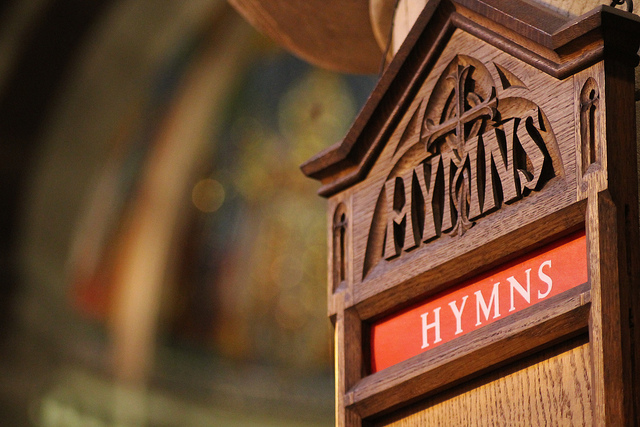
There are those who say growing old is not for sissies. It isn't, to be sure, and I am beginning to find the truth in those words. There are also those who say they would not know how to make it through the day without faith. I know what they mean. Every urgent ring of the phone, every headline news story that insists upon our attention, and every minor brush with death that accompanies life all point us to the arms of Him who is our refuge and strength. It does take faith to live (unless you are content to live as a gnat in a room full of lights).
As much as these are true, the sleep at the end of the day that our bodies need and our minds yearn to enjoy is also an act of faith. Sure, it does require faith to live but we live in possession of our reason, understanding, strength, and will. We have choices to make and actions to take that too often mitigate against the idea of living on pure faith. But when we lay our heads on the pillow at night, we surrender the powers of reason, understanding, strength, and will and we entrust all to
God. It is the ultimate act of faith for certainly none of us knows when we close our eyes in sleep that we will wake up the next day. Every night is therefore an anticipation of
the day when can never know for certain, of the last day we no more will awaken here on earth, and when our lives can no more be improved or salvation worked out with fear and trembling.
I love the night hymns and the evening prayers that meet this rest and its uncertain future with the hope and confidence of St. Paul -- whether we live or whether we die, we belong to the Lord. It takes faith to live but I wonder if it does not take even more faith to rest, to sleep, and not to know for certain what the end of that sleep will be.
Luther has taught us to pray: I thank You, my heavenly Father, through Jesus Christ, Your dear Son, that You have graciously kept me this day; and I pray that You would forgive me all my sins where I have done wrong, and graciously keep me this night. For into Your hands I commend myself, my body and soul, and all things. Let Your holy angel be with me, that the evil foe may have no power over me. Amen.
We also pray: O Lord, support us all the day long of this troubled life, until the shadows lengthen and the evening comes and the busy world is hushed, the fever of life is over, and our work is done. Then, Lord, in your mercy grant us a safe lodging and a holy rest and peace at the last; through Jesus Christ, our Lord.
And:
Abide with us, Lord, for it is toward evening and the day is far spent. Abide with us and with Your whole Church. Abide with us at the end of the day, at the end of our life, at the end of the world. Abide with us with Your grace and goodness, with Your holy Word ad Sacrament, with Your strength and blessing. Abide with us when the night of affliction and temptation comes upon us, the night of fear and despair, the night when death draws near. Abide with us and with all the faithful, now and forever.
Or:
Merciful Father, whose guiding hand has brought us to the completion of this day, we humbly pray You to stay with us and shelter us in quiet hours of this night that we, who are wearied by the changes and chances of this passing world, may rest in Your changeless peace; through Jesus Christ, our Lord.
Gracious Lord, we give You thanks for the day, especially for the good we were permitted to give and to receive. The day is now past, and we commit it to You. We entrust to You the night and rest in Your peace, for You are our help, and You neither slumber nor sleep. Hear us for the sake of Your name.
Lighten our darkness, O Lord, and by Your great mercy defend us from all perils and dangers of this night; for the love of Your only Son, our Savior, Jesus Christ.
We praise and thank You, O God, for You are without beginning and without end. Through Christ You are the creator and preserver of the whole world; but above all, You are His God and Father, the giver of the Spirit, and the ruler of all that is, seen and unseen. You made the day for the works of light and the night for the refreshment of our weakness. O loving Lord and source of all that is good, mercifully accept our evening sacrifice of praise. As You have conducted us through the day and brought us to night's beginning, keep us now in Christ; grant us a peaceful evening and a night free from sin; and at the end bring us to everlasting life through Christ, our Lord; through Him be glory, honor, and power to You in the Holy Spirit now and always forever and ever.
We praise and thank You, O God, through Your Son, Jesus Christ, our Lord, that You have enlightened us by revealing the Light that never fades. Night [is falling / has fallen], and day's alotted span draws to a close.The daylight which You created for our pleasure has fully satisfied us, and yet, of Your free gift, now the evening lights do not fail us. We praise You and glorify You through Your Son, Jesus Christ, our Lord; through Him be glory, honor, and power to You in the Holy Spirit now and always and forever and ever.
Be our light in the darkness, O Lord, and in Your great mercy defend us from all perils and dangers of this night; for the love of Your only Son, Jesus Christ, our Lord.
Eternal God, the hours both of day and night are Yours, and to You the darkness is no threat. Be present, we pray, with those who labor in these hours of night, especially those who watch and work on behalf of others. Grant them diligence in their watching, faithfulness in their service, courage in danger, and competence in emergencies. Help them to meet the needs of other with confidence and compassion; through Jesus Christ, our Lord.
Abide with us, Lord, for it is toward evening and the day is far spent. Abide with us and with Your whole Church. Abide with us at the end of the day, at the end of our life, at the end of the world. Abide with us with Your grace and goodness, with Your holy Word ad Sacrament, with Your strength and blessing. Abide with us when the night of affliction and temptation comes upon us, the night of fear and despair, the night when death draws near. Abide with us and with all the faithful, now and forever. Amen.
We pray when we go to bed, therefore, because sleep is itself an act of faith. We pray that we will enjoy the rest and meet it with a clear conscience. We ask Almighty God to help us see what we
have done well and to keep us from pride, to see what we have done badly and to forgive us, and to see what we could have done
better that we may learn from it. We ask the Lord of all mercy to forgive our sins for the sake of Christ, our Lord. Then we pray that if the Lord does grant us the gift of another day, we may glorify Him in it and if we do not receive another day, that we may be received into everlasting light and life through the merits and mercies of Christ alone.
Living does require faith. But sleeping perhaps even more. At least the good sleep that rests the mind and refreshes the body.
Wednesday, October 19, 2016
Tuesday, October 18, 2016
Faith is by nature wild. . .
The taming of faith is the constant endeavor of church and of the individual Christian. We cannot have a faith that stares into the great mystery and simply believes. Oh, no. We must have logical and reasonable support for this thing called faith. It can surely support our intuition and it can bless the reasoned pursuit of the unknown but faith cannot be allowed to contradict what logic or experience tells us. We want faith but we want a tame faith, a faith that neither shocks nor confounds. We want a faith that confirms both what we think and experience but we are not so sure about one which calls us to take the great leap into the realm of what our senses cannot know and our minds cannot comprehend. We do this because we want a tame God as well. One predictable and reasonable, with whom you can negotiate and who will compromise with us to achieve at least part of an intended end.
That said, the God of Abraham, Isaac, and Jacob as well as the God who meets us in His incarnate Son is not this God. He is wild and scary -- not because He is unpredictable but because He is. He is a God of promise who keeps His Word. He is a God of power -- not because we have no idea where that power will be shown but because we see that power displayed shockingly upon the cross. He is a God of mystery -- not because we must unpack Him and engage Him to get to know Him but because His nature contradicts and confounds our sinful nature. We meet Him on the ground of faith. It is not where we would want to find Him but it is where He has come to us -- this wild and untamed God who bids us to depart from the safety and security of our senses, our reason, and our experience and then delivers to us His Spirit to lead us where we are not at all sure we want to go.
The Word of God is not tame -- it is wild. It does what it says! It is the living voice of the ever living God who died that we might live. It is the address of a Good Shepherd who does not disdain His sheep but loves them even to His death. It is no mere truth proposition but a lively Word that speaks and in speaking it acts to deliver the result the Holy Spirit speaker intends. That God's Word is true is an easy enough thing to believe. That God's Word is efficacious, that it delivers what it says and does what it promises. Well, that is harder to believe. Only the Spirit can bid our reluctant and fearful hearts to believe this.
Consider the ancient prayer before communion. Lord, I am not worthy to receive You but only say the Word and I shall be healed... Yes, only say the Word. This is no tame God or toothless Lion but the God whose Word truly is a two edged sword and it does have the power to heal the sin sick soul and restore the lost to the life God intended. The shocking thing in the Sacrament is not that the flesh of Christ is present in the bread or His blood in the cup but that it is given to us to eat and drink. We repulse against this not because we have an aversion to flesh and blood but because no reasoned mind or thoughtful soul can comprehend a God who does this.
We speak of faith but it is not faith we seek. We seek something that is weak and impotent but makes us feel better -- a creation of sentiment and sincerity. That is not faith. Faith always wavers on the balance beam of trust and doubt; it always requires the Holy Spirit and the infusion of God's grace and power to secure the fragile and weak trust. Faith is always "Lord, I believe; help Thou my unbelief." Faith knows no other way. Only whole and complete dependence upon the Lord. Nothing in our hands we bring.
Our age is not so much troubled by the fear of God as it is the fear of faith. We want a God, a deity who knows how to be a God. We do not want a God who behaves contrary to expectation, who desires mercy and not sacrifice. We do not want to believe if believing means that God is acting in His Word, if water is more than symbol or sign, or if bread and wine really convey the mystery of His flesh for the life of the world and His blood that cleanses us from all sin. We want a tame God, to be sure, but we want even more a tame faith -- one that does not require too much of us, that conforms the things of God to our reasonable expectations, and that does not require us to only believe.
The task of preaching is not simply to call us to faith but to remind us faith is wild and not tame, explosive and not quiet, transformative and not comfortable. If only we had the faith the size of a mustard seed! Even that is too much for a people afraid to risk all on mercy, on the God who suffers for His suffering, dies for the guilty, covers the shameful with righteousness, and rises to lead them beyond imagination into the heart of the mystery of God. No, this kind of faith is even more frightening to the sin shaped heart that God Himself.
That said, the God of Abraham, Isaac, and Jacob as well as the God who meets us in His incarnate Son is not this God. He is wild and scary -- not because He is unpredictable but because He is. He is a God of promise who keeps His Word. He is a God of power -- not because we have no idea where that power will be shown but because we see that power displayed shockingly upon the cross. He is a God of mystery -- not because we must unpack Him and engage Him to get to know Him but because His nature contradicts and confounds our sinful nature. We meet Him on the ground of faith. It is not where we would want to find Him but it is where He has come to us -- this wild and untamed God who bids us to depart from the safety and security of our senses, our reason, and our experience and then delivers to us His Spirit to lead us where we are not at all sure we want to go.
The Word of God is not tame -- it is wild. It does what it says! It is the living voice of the ever living God who died that we might live. It is the address of a Good Shepherd who does not disdain His sheep but loves them even to His death. It is no mere truth proposition but a lively Word that speaks and in speaking it acts to deliver the result the Holy Spirit speaker intends. That God's Word is true is an easy enough thing to believe. That God's Word is efficacious, that it delivers what it says and does what it promises. Well, that is harder to believe. Only the Spirit can bid our reluctant and fearful hearts to believe this.
Consider the ancient prayer before communion. Lord, I am not worthy to receive You but only say the Word and I shall be healed... Yes, only say the Word. This is no tame God or toothless Lion but the God whose Word truly is a two edged sword and it does have the power to heal the sin sick soul and restore the lost to the life God intended. The shocking thing in the Sacrament is not that the flesh of Christ is present in the bread or His blood in the cup but that it is given to us to eat and drink. We repulse against this not because we have an aversion to flesh and blood but because no reasoned mind or thoughtful soul can comprehend a God who does this.
We speak of faith but it is not faith we seek. We seek something that is weak and impotent but makes us feel better -- a creation of sentiment and sincerity. That is not faith. Faith always wavers on the balance beam of trust and doubt; it always requires the Holy Spirit and the infusion of God's grace and power to secure the fragile and weak trust. Faith is always "Lord, I believe; help Thou my unbelief." Faith knows no other way. Only whole and complete dependence upon the Lord. Nothing in our hands we bring.
Our age is not so much troubled by the fear of God as it is the fear of faith. We want a God, a deity who knows how to be a God. We do not want a God who behaves contrary to expectation, who desires mercy and not sacrifice. We do not want to believe if believing means that God is acting in His Word, if water is more than symbol or sign, or if bread and wine really convey the mystery of His flesh for the life of the world and His blood that cleanses us from all sin. We want a tame God, to be sure, but we want even more a tame faith -- one that does not require too much of us, that conforms the things of God to our reasonable expectations, and that does not require us to only believe.
The task of preaching is not simply to call us to faith but to remind us faith is wild and not tame, explosive and not quiet, transformative and not comfortable. If only we had the faith the size of a mustard seed! Even that is too much for a people afraid to risk all on mercy, on the God who suffers for His suffering, dies for the guilty, covers the shameful with righteousness, and rises to lead them beyond imagination into the heart of the mystery of God. No, this kind of faith is even more frightening to the sin shaped heart that God Himself.
Monday, October 17, 2016
What can you not live without?
Andrew Sullivan, writing in New York Magazine, chronicles his technology addiction and its contribution to a melt down. It is good reading but a sobering view of what goes wrong when technology takes over our lives.
We almost forget that ten years ago, there were no smartphones, and as recently as 2011, only a third of Americans owned one. Now nearly two-thirds do. That figure reaches 85 percent when you’re only counting young adults. And 46 percent of Americans told Pew surveyors last year a simple but remarkable thing: They could not live without one. The device went from unknown to indispensable in less than a decade.
His point is well taken. We are not threatened simply by change but the rapid pace of change and the kind of change that keeps up that pace and even accelerates it. It is an addiction that causes us to crave the change -- not simply the apps or the internet or the games but the change itself. We have learned not to be satisfied or content with anything that does not change and change rapidly. We have taught ourselves to delay gratification to something that will never come and the price we have paid has robbed us of many of the distinguishing marks of humanity. But it is the paragraph about the church on which I want to focus our attention:
If the churches came to understand that the greatest threat to faith today is not hedonism but distraction, perhaps they might begin to appeal anew to a frazzled digital generation. Christian leaders seem to think that they need more distraction to counter the distraction. Their services have degenerated into emotional spasms, their spaces drowned with light and noise and locked shut throughout the day, when their darkness and silence might actually draw those whose minds and souls have grown web-weary. But the mysticism of Catholic meditation — of the Rosary, of Benediction, or simple contemplative prayer — is a tradition in search of rediscovery. The monasteries — opened up to more lay visitors — could try to answer to the same needs that the booming yoga movement has increasingly met.
The sad truth is that success for churches almost always comes with the same frenzied pace that afflicts our frazzled digital generation in the rest of their lives. We over schedule people's lives with all sorts of things that have little relative value for witness of those outside the church or for the care of the soul for those inside. Our idea of success is the 24 hour, 7 day a week church which always has something going on to compete with the attractions outside the church. We have turned our churches into anything and everything but churches -- gyms and health clubs, social circles and special interest groups, self help centers and child care centers. The one thing that faith needs has become merely one among the many programs -- our life together around the Word and Table of the Lord. Even those who resist this impulse to define success as busyness are hard pressed to fight the demon of distraction and its empty promise of happiness, contentment, and peace at the end of the technology rainbow.
We almost forget that ten years ago, there were no smartphones, and as recently as 2011, only a third of Americans owned one. Now nearly two-thirds do. That figure reaches 85 percent when you’re only counting young adults. And 46 percent of Americans told Pew surveyors last year a simple but remarkable thing: They could not live without one. The device went from unknown to indispensable in less than a decade.
His point is well taken. We are not threatened simply by change but the rapid pace of change and the kind of change that keeps up that pace and even accelerates it. It is an addiction that causes us to crave the change -- not simply the apps or the internet or the games but the change itself. We have learned not to be satisfied or content with anything that does not change and change rapidly. We have taught ourselves to delay gratification to something that will never come and the price we have paid has robbed us of many of the distinguishing marks of humanity. But it is the paragraph about the church on which I want to focus our attention:
If the churches came to understand that the greatest threat to faith today is not hedonism but distraction, perhaps they might begin to appeal anew to a frazzled digital generation. Christian leaders seem to think that they need more distraction to counter the distraction. Their services have degenerated into emotional spasms, their spaces drowned with light and noise and locked shut throughout the day, when their darkness and silence might actually draw those whose minds and souls have grown web-weary. But the mysticism of Catholic meditation — of the Rosary, of Benediction, or simple contemplative prayer — is a tradition in search of rediscovery. The monasteries — opened up to more lay visitors — could try to answer to the same needs that the booming yoga movement has increasingly met.
The sad truth is that success for churches almost always comes with the same frenzied pace that afflicts our frazzled digital generation in the rest of their lives. We over schedule people's lives with all sorts of things that have little relative value for witness of those outside the church or for the care of the soul for those inside. Our idea of success is the 24 hour, 7 day a week church which always has something going on to compete with the attractions outside the church. We have turned our churches into anything and everything but churches -- gyms and health clubs, social circles and special interest groups, self help centers and child care centers. The one thing that faith needs has become merely one among the many programs -- our life together around the Word and Table of the Lord. Even those who resist this impulse to define success as busyness are hard pressed to fight the demon of distraction and its empty promise of happiness, contentment, and peace at the end of the technology rainbow.
Then
there were the other snares: the allure of online porn, now blasting
through the defenses of every teenager; the ease of replacing every
conversation with a texting stream; the escape of living for a while in
an online game where all the hazards of real human interaction are
banished; the new video features on Instagram, and new friends to
follow. It all slowly chipped away at my meditative composure. I cut my
daily silences from one hour to 25 minutes; and then, almost a year
later, to every other day. I knew this was fatal — that the key to
gaining sustainable composure from meditation was rigorous discipline
and practice, every day, whether you felt like it or not, whether it
felt as if it were working or not. Like weekly Mass, it is the routine
that gradually creates a space that lets your life breathe. But the
world I rejoined seemed to conspire to take that space away from me. “I
do what I hate,” as the oldest son says in Terrence Malick’s haunting Tree of Life.
I
haven’t given up, even as, each day, at various moments, I find myself
giving in. There are books to be read; landscapes to be walked; friends
to be with; life to be fully lived. And I realize that this is, in some
ways, just another tale in the vast book of human frailty. But this new
epidemic of distraction is our civilization’s specific weakness. And its
threat is not so much to our minds, even as they shape-shift under the
pressure. The threat is to our souls. At this rate, if the noise does
not relent, we might even forget we have any.
As Christians and as clergy we should heed the call. We should not do what we hate only because we think it is what people want or how the world defines happiness or success. If eschewing the technology promise for the one planted on Calvary's Hill means being labeled "irrelevant," then perhaps irrelevance is the judgment we must endure to be faithful.
Sunday, October 16, 2016
The curse of bad memory. . .
The curse of bad memory means that we presume what we are doing has always been done. Where that leads is not generally a good end.
The curse of bad memory presumes that the ancients were foolish or naive in the way they look at the Bible and it was not until real science and real scientific inquiry came along that we began to get Scripture right. So everyone prior to roughly 1800 or so was shooting in the dark at something we see clearly in the light?
The curse of bad memory presumes that the Church is as old as your own denomination and that all that went before your denomination was darkness and confusion. Here we are down in the last few hundred years of the endeavor called the Christian Church and God finally gets it right (or at least we do). So there really was a Roman Catholic Church before the great schism? So nothing that went before was worthwhile and God had to start over? (BTW Lutherans go against the grain of this insisting that they hold only the catholic doctrine and do the catholic practice that was, is, and will always be -- judge us on this but that is our claim -- no novelty here.)
The curse of bad memory presumes that the worship of God is an incidental thing that each age has adjusted for its own purposes, biases, and desires. Except that until more modern times and the evangelical movement the mass was the mass (even Methodists, Presbyterians, and all sorts of others still have it pretty much as it is in the liturgical churches but in the back of book and not probably in use in the parish).
The curse of bad memory presumes that infant baptism was an aberration that was foisted upon the Church by an enemy of the faith and allowed by a weak and impotent God until the Anabaptists, Southern Baptists, and a few others came along to correct the error. Never mind that it is the unquestioned practice of the Church for more than 15 centuries. An inconvenient truth.
The curse of bad memory presumes that alcohol always bad and grape juice is God's preferred fruit of the vine. Except that grape juice did not exist until about 1870 and was invented to bypass God's natural way of yeasty skin and sugary juice inside the grape. Read this to get your eyes opened.
The curse of bad memory presumes that Christians are responsible for the distortion and preoccupation with sex and that left to themselves the natural man is free and all is good. Read this for something on that history. We are not on the wrong side of history but the right side and the Judea-Christian tradition on this subject is not a bondage for which we need to be set free but freedom for all.
The curse of bad memory presumes many things that are usually wrong and all because we forget the past, ignore tradition, and believe it all began with me. Which, in my mind, means that the curse of bad memory is the fruit of a sinful nature. Could it be that our plea for the Lord to remember is really because we work so hard to forget?
The curse of bad memory presumes that the ancients were foolish or naive in the way they look at the Bible and it was not until real science and real scientific inquiry came along that we began to get Scripture right. So everyone prior to roughly 1800 or so was shooting in the dark at something we see clearly in the light?
The curse of bad memory presumes that the Church is as old as your own denomination and that all that went before your denomination was darkness and confusion. Here we are down in the last few hundred years of the endeavor called the Christian Church and God finally gets it right (or at least we do). So there really was a Roman Catholic Church before the great schism? So nothing that went before was worthwhile and God had to start over? (BTW Lutherans go against the grain of this insisting that they hold only the catholic doctrine and do the catholic practice that was, is, and will always be -- judge us on this but that is our claim -- no novelty here.)
The curse of bad memory presumes that the worship of God is an incidental thing that each age has adjusted for its own purposes, biases, and desires. Except that until more modern times and the evangelical movement the mass was the mass (even Methodists, Presbyterians, and all sorts of others still have it pretty much as it is in the liturgical churches but in the back of book and not probably in use in the parish).
The curse of bad memory presumes that infant baptism was an aberration that was foisted upon the Church by an enemy of the faith and allowed by a weak and impotent God until the Anabaptists, Southern Baptists, and a few others came along to correct the error. Never mind that it is the unquestioned practice of the Church for more than 15 centuries. An inconvenient truth.
The curse of bad memory presumes that alcohol always bad and grape juice is God's preferred fruit of the vine. Except that grape juice did not exist until about 1870 and was invented to bypass God's natural way of yeasty skin and sugary juice inside the grape. Read this to get your eyes opened.
The curse of bad memory presumes that Christians are responsible for the distortion and preoccupation with sex and that left to themselves the natural man is free and all is good. Read this for something on that history. We are not on the wrong side of history but the right side and the Judea-Christian tradition on this subject is not a bondage for which we need to be set free but freedom for all.
The curse of bad memory presumes many things that are usually wrong and all because we forget the past, ignore tradition, and believe it all began with me. Which, in my mind, means that the curse of bad memory is the fruit of a sinful nature. Could it be that our plea for the Lord to remember is really because we work so hard to forget?
Saturday, October 15, 2016
The good that churches do quantified. . .
Gene Veith reported on a study that attempted to quantify the good that churches do to the larger community and country by their work.
Religious institutions have a greater impact on the U.S. economy than many large corporations, the authors of a new study have claimed. Dr. Brian Grim of Georgetown University and his daughter, Melissa Grim, of the Newseum Institute argue in a 31-page summary of the study – the first of its kind – that religious institutions and their associated ministries contribute as much as $378 billion directly to the economy. Those dollars — more than Apple, Google and Facebook combined — when multiplied across the economy, have an indirect and induced impact larger than Mexico’s entire gross domestic product ($1.44 trillion).
The Socio-economic Contribution of Religion to American Society: An Empirical Analysis examines “the economic impact of 344,000 religious congregations around the country, in addition to quantifying the economic impact of religious institutions and religion-related businesses,” a news release about the study said. Religious spending, the authors claim, is especially resilient and somewhat immune from downturns in the economy because churches, religiously-affiliated hospitals, and religious schools continue to operate and spend money. In fact, in spite of the recession and sluggish economy since 2008, religious spending on congregations and social programs has increased three-fold in the past 15 years.Without the benefit of hard data, any thinking person would have come to a similar conclusion. You take some 345,000 congregations, accounting for nearly half of the American population, with an average house of worship having an income of about $242,000 per year, and you have a big impact.
"For the first time, we have been able to quantify what religious institutions, faith-based charities, and even businesses inspired by faith contribute to our country," Dr. Grim said.
As gratifying as it is to have someone quantify the impact of churches upon the community and country, it is perilous to define our impact in economic terms. Yes, there is an income and expenditures largely return this income back to the community (or world in the case of missions) but that should not be taken as the sum total of the good that churches do or even the kind of good impact made.
My own parish sends out more than two dozen W-2s each year from church staff and the preschool. We pray utilities and a mortgage. We purchase custodial supplies and pay for maintenance. Every church does this to one degree or another. But that is not the good we do. The good we do is directly tied to the way we speak the Gospel to those around us, extend the love of Christ to those in need, educate and care for those who belong to our congregation, and provide a place where our people encounter the living Christ where He has promised to be in Word and Sacrament. In other words, the greatest good we do is still unquantifiable and unmeasurable EXCEPT by Him who sends forth His Word and receives back the return He intends and creates. Until then we can defend the role of church as giver and not simply receiver but we trust that God will define and measure the good that proceeds from the Church He has established. Sometime we get to see the growth first hand (we received ten new families a few weeks ago) but most of the time we are more concerned with our faithfulness and we trust that God will supply the results if we are faithful in preaching and teaching the Word of God and administering His Sacraments.
Friday, October 14, 2016
The growing gulf between the leaders and the led. . .
Reading again an article by Peggy Noonan (How Global Elites Forsake their Countrymen), I am struck by how her words express what I have been thinking, or rather fearing, for some time. She writes particularly of politics and economics but her points can be applied in other ways. She began with: This is about distance, and detachment, and a kind of historic decoupling between the top and the bottom in the West that did not, in more moderate recent times, exist.
She chronicled a conversation with an acquaintance of Angela Merkel and the pursuit of ideals that ended up with a flawed policy that has left conflict and controversy in its wake. Her immigration policy in the wake of Islamic refugees was a typical way in which a political leader had placed the burden of idealism not upon the leaders but upon the ordinary folks living in neighborhoods throughout Germany. Merkel was and is part of an elite for whom the consequences of her policy will not be personally felt (unless she is unelected). It was as if the weakness of Wall Street CEOs and their preoccupation with global products and global strategies that feel little concern for their corporate role of citizens had infected political leaders as well. National interest has become an embarrassing concept both economically and politically. This, as much as anything else, is responsible for the discontent that has so characterized the election of a president and members of the Congress.
Noonan and others have characterized the success of this globalization in stark terms. While the rising tide has certainly benefited the middle class in the developing nations and rewarded the rich in the developed world, the middle class in the developed world has not found much to benefit them in the globalization of politics and the economy. The recent exit of Britain from the Common Market only proves the frustration of the governed with those who have governed them there and elsewhere. It shows up on football fields where players take moral stands against the national anthem and on the stages when actors accept awards as a platform for expressing not only their views but their contempt for those who believe differently.
What Noonan and others have reported on for politics and economics is also true in the areas of faith and morality. Christians increasingly feel the distance between them and the religious elite who have decided that marriage must be reformed, social justice pursued even at the cost of religious freedom, and diversity is the mark of or the fruit of the Gospel at work. This is not what we were brought up to know and believe. Christians have felt the distance between the elites and the folks in the pews for a long time. In 1973 their moral cause for the unborn was thrown under the bus for the sake of an invented right of privacy and personal autonomy. Forty years later the same thing happened in the courts but this time about same sex marriage. Added to this has been the abrupt cultural embrace of all sorts of things that were once tolerated but not extolled and now are extolled and those against are not tolerated (think gender confusion and the policy of restrooms for those who feel a gender different than their biology). Worse, the elites now have identified those who disagree with their higher vision as xenophobes, homophobes, etc..., those in the basket of deplorables who shall have no public right to their opinion.
What Noonan and others note on a political or economic level is also profoundly cultural and religious. Tim Kaine insisted that his Roman Catholic Church had no choice but to change its views on same sex marriage and gender identity. Joe Biden is called devout when he defies his own church's teaching to preside at a same sex wedding. Lutherans are not far behind. In the ELCA a radical choice to depart from Scripture and tradition with respect to same sex marriage was more important than the unity of the church and a cause worth bleeding off a million or more members (some to other churches but many to nowhere at all). In Missouri we have our own elites who insist upon mission work that shares the story of Jesus but does not plant congregations in which the Word and Sacraments are front and center and those who are willing to wear whatever mask it takes to draw people in and then presume that faith may be maintained in the abstract while Sunday morning looks radically different. Missouri has folks who bristle at the idea that a church confession counts enough to hold those who publicly preach and teach accountable or that those who commune is anything more than a local decision. We saw some of that at the Milwaukee convention in the confusion of oversight and supervision of doctrine and practice with authoritarianism. So liberal and conservation churches have some of the same great divides we see happening on a political and economic level.
Noonan ends: Affluence detaches, power adds distance to experience. I don’t have it fully right in my mind but something big is happening here with this division between the leaders and the led. It is very much a feature of our age. But it is odd that our elites have abandoned or are abandoning the idea that they belong to a country, that they have ties that bring responsibilities, that they should feel loyalty to their people or, at the very least, a grounded respect.
If we feel it in the approaching election cycle, we will feel it in the pews. What does it mean to be Lutheran? Is being Lutheran a good thing or a bad thing? Does Lutheranism matter at all anymore? I wonder if the growing gulf between church leaders and the folks in the pew is not partially to blame for the way denominational loyalty has taken a hit and devotion to the faith is used as a cause for violating the very tenets of that faith. In any case, it is something to ponder for the sake of our nation and our future and for the sake of orthodox Christianity and the future of this faith in America.
She chronicled a conversation with an acquaintance of Angela Merkel and the pursuit of ideals that ended up with a flawed policy that has left conflict and controversy in its wake. Her immigration policy in the wake of Islamic refugees was a typical way in which a political leader had placed the burden of idealism not upon the leaders but upon the ordinary folks living in neighborhoods throughout Germany. Merkel was and is part of an elite for whom the consequences of her policy will not be personally felt (unless she is unelected). It was as if the weakness of Wall Street CEOs and their preoccupation with global products and global strategies that feel little concern for their corporate role of citizens had infected political leaders as well. National interest has become an embarrassing concept both economically and politically. This, as much as anything else, is responsible for the discontent that has so characterized the election of a president and members of the Congress.
Noonan and others have characterized the success of this globalization in stark terms. While the rising tide has certainly benefited the middle class in the developing nations and rewarded the rich in the developed world, the middle class in the developed world has not found much to benefit them in the globalization of politics and the economy. The recent exit of Britain from the Common Market only proves the frustration of the governed with those who have governed them there and elsewhere. It shows up on football fields where players take moral stands against the national anthem and on the stages when actors accept awards as a platform for expressing not only their views but their contempt for those who believe differently.
What Noonan and others have reported on for politics and economics is also true in the areas of faith and morality. Christians increasingly feel the distance between them and the religious elite who have decided that marriage must be reformed, social justice pursued even at the cost of religious freedom, and diversity is the mark of or the fruit of the Gospel at work. This is not what we were brought up to know and believe. Christians have felt the distance between the elites and the folks in the pews for a long time. In 1973 their moral cause for the unborn was thrown under the bus for the sake of an invented right of privacy and personal autonomy. Forty years later the same thing happened in the courts but this time about same sex marriage. Added to this has been the abrupt cultural embrace of all sorts of things that were once tolerated but not extolled and now are extolled and those against are not tolerated (think gender confusion and the policy of restrooms for those who feel a gender different than their biology). Worse, the elites now have identified those who disagree with their higher vision as xenophobes, homophobes, etc..., those in the basket of deplorables who shall have no public right to their opinion.
What Noonan and others note on a political or economic level is also profoundly cultural and religious. Tim Kaine insisted that his Roman Catholic Church had no choice but to change its views on same sex marriage and gender identity. Joe Biden is called devout when he defies his own church's teaching to preside at a same sex wedding. Lutherans are not far behind. In the ELCA a radical choice to depart from Scripture and tradition with respect to same sex marriage was more important than the unity of the church and a cause worth bleeding off a million or more members (some to other churches but many to nowhere at all). In Missouri we have our own elites who insist upon mission work that shares the story of Jesus but does not plant congregations in which the Word and Sacraments are front and center and those who are willing to wear whatever mask it takes to draw people in and then presume that faith may be maintained in the abstract while Sunday morning looks radically different. Missouri has folks who bristle at the idea that a church confession counts enough to hold those who publicly preach and teach accountable or that those who commune is anything more than a local decision. We saw some of that at the Milwaukee convention in the confusion of oversight and supervision of doctrine and practice with authoritarianism. So liberal and conservation churches have some of the same great divides we see happening on a political and economic level.
Noonan ends: Affluence detaches, power adds distance to experience. I don’t have it fully right in my mind but something big is happening here with this division between the leaders and the led. It is very much a feature of our age. But it is odd that our elites have abandoned or are abandoning the idea that they belong to a country, that they have ties that bring responsibilities, that they should feel loyalty to their people or, at the very least, a grounded respect.
If we feel it in the approaching election cycle, we will feel it in the pews. What does it mean to be Lutheran? Is being Lutheran a good thing or a bad thing? Does Lutheranism matter at all anymore? I wonder if the growing gulf between church leaders and the folks in the pew is not partially to blame for the way denominational loyalty has taken a hit and devotion to the faith is used as a cause for violating the very tenets of that faith. In any case, it is something to ponder for the sake of our nation and our future and for the sake of orthodox Christianity and the future of this faith in America.
Thursday, October 13, 2016
To Preach the Lectionary or Not. . .
In the latest Lutheran Forum, Matthew D. Musteric (Pastor, Bethlehem ELCA, Pemberville, OH) wonders about the relationship (should I say decline) of preaching to the slavish use of the lectionary by the preacher. While not opposed to "lectionaries in general or the RCL in particular" he is "uncomfortable with how they have woven themselves uncritically into the life and worship of many churches."
While not oblivious to the flaws of the 3 year lectionary (RCL or not) and while not at all sure that the historic (one year) lectionary is better, I find myself thoroughly wedded to the idea of a lectionary. I suspect that most Lutherans and nearly all Lutheran pastors are, as well. While some find the lectionary a prison, I find it continually new and fresh, applicable and appropriate to all that goes on in the world around us as well as providing a rich and diverse witness of Scripture to the people of God and the preacher as he faces his preaching task.
Yes, the problems with the lectionary that led to the 3 year series were largely unique to Rome and its system of so many commemorations of saints that the people missed out on the central message of Scripture. Musteric wonders if even the 3 year lectionary does not conceal as much as it reveals of Jesus Christ. Now to be sure, there are subtle and even larger differences between the LSB lectionary and the RCL he is writing about but I understand his point. Just as the hearing of sermons can become routine and predictable so can the writing of those sermons. But what he calls a spiritual lethargy as preachers and worship leaders due to the lectionary, I do not find credible. I do not deny the spiritual laziness and complacency of preacher and the dullness of the ears of folks in the pew. These have always been a challenge in every age of Christianity. But the blame does not fall on the lectionary -- not in whole or in part. It falls on the people (in the pulpit and in the pew).
I would suggest that planning is the big problem. I am amazed at how many Lutheran pastors I know who still burn the midnight oil on Saturday night trying to find inspiration, searching for illumination, and working to craft a sermon for their people in a few hours. [It is Thursday; do you know what you are preaching on Sunday?] No lectionary hinders or supports this failing. It belongs to the pastor and to people who do not think preaching is worthy of the time spent to plan, prepare, pray, and produce faithful, credible, doctrinal, and applicable sermons. In fact, it is precisely the gift of a lectionary which enables the pastor to see sermons within the context of a larger time frame and not simply one Sunday at a time. The lectionary is a crutch only to those who are looking for a crutch. Anything would do in that regard. The lectionary is far more a benefit than a hindrance to good Lutheran preaching (whether a 3 year lectionary or the one year version).
Finally, I would remind God's people so apt to see the pastor's role in so many other areas that preaching and prayer remain two of the primary things a pastor does for the benefit of his people. Do not begrudge the time he spends honing his craft and preparing for Sunday morning. Do not presume that any sermon can be scratched out in a few minutes unless that is all you are prepared to hear -- the scraps of loose thoughts without plan or development. Yes, it is easier for me to write a sermon today after making my way through the 3 year lectionary a dozen times and preaching the one year series for 5-10 years. But the writing of a sermon remains a primary and central task of my ministry for which planning, preparation, and prayer alone produce a credible fruit. I think my people deserve no less than my best efforts in this regard and, if I have helped them see the role and value of the sermon at all, they know a good effort when they hear it. The lectionary is far more positive a tool for pastor and for people than negative one. It is a means of meeting the kairos of God within the chronos of our daily lives. Every preacher knows this. Every good preacher capitalizes on it.
While not oblivious to the flaws of the 3 year lectionary (RCL or not) and while not at all sure that the historic (one year) lectionary is better, I find myself thoroughly wedded to the idea of a lectionary. I suspect that most Lutherans and nearly all Lutheran pastors are, as well. While some find the lectionary a prison, I find it continually new and fresh, applicable and appropriate to all that goes on in the world around us as well as providing a rich and diverse witness of Scripture to the people of God and the preacher as he faces his preaching task.
Yes, the problems with the lectionary that led to the 3 year series were largely unique to Rome and its system of so many commemorations of saints that the people missed out on the central message of Scripture. Musteric wonders if even the 3 year lectionary does not conceal as much as it reveals of Jesus Christ. Now to be sure, there are subtle and even larger differences between the LSB lectionary and the RCL he is writing about but I understand his point. Just as the hearing of sermons can become routine and predictable so can the writing of those sermons. But what he calls a spiritual lethargy as preachers and worship leaders due to the lectionary, I do not find credible. I do not deny the spiritual laziness and complacency of preacher and the dullness of the ears of folks in the pew. These have always been a challenge in every age of Christianity. But the blame does not fall on the lectionary -- not in whole or in part. It falls on the people (in the pulpit and in the pew).
I would suggest that planning is the big problem. I am amazed at how many Lutheran pastors I know who still burn the midnight oil on Saturday night trying to find inspiration, searching for illumination, and working to craft a sermon for their people in a few hours. [It is Thursday; do you know what you are preaching on Sunday?] No lectionary hinders or supports this failing. It belongs to the pastor and to people who do not think preaching is worthy of the time spent to plan, prepare, pray, and produce faithful, credible, doctrinal, and applicable sermons. In fact, it is precisely the gift of a lectionary which enables the pastor to see sermons within the context of a larger time frame and not simply one Sunday at a time. The lectionary is a crutch only to those who are looking for a crutch. Anything would do in that regard. The lectionary is far more a benefit than a hindrance to good Lutheran preaching (whether a 3 year lectionary or the one year version).
Finally, I would remind God's people so apt to see the pastor's role in so many other areas that preaching and prayer remain two of the primary things a pastor does for the benefit of his people. Do not begrudge the time he spends honing his craft and preparing for Sunday morning. Do not presume that any sermon can be scratched out in a few minutes unless that is all you are prepared to hear -- the scraps of loose thoughts without plan or development. Yes, it is easier for me to write a sermon today after making my way through the 3 year lectionary a dozen times and preaching the one year series for 5-10 years. But the writing of a sermon remains a primary and central task of my ministry for which planning, preparation, and prayer alone produce a credible fruit. I think my people deserve no less than my best efforts in this regard and, if I have helped them see the role and value of the sermon at all, they know a good effort when they hear it. The lectionary is far more positive a tool for pastor and for people than negative one. It is a means of meeting the kairos of God within the chronos of our daily lives. Every preacher knows this. Every good preacher capitalizes on it.
Wednesday, October 12, 2016
Religious Freedom secondary to civil rights. . .
From the US Commission on Civil Rights comes the rather shocking decision that religious freedom is secondary to civil rights, specifically protecting the claims of the transgendered, among others, from religious exemption. While this is not unpredictable, it is a surprise and, though without the force of law, it clearly defines the direction of the future.
Nearly 225 years after the ratification of the First Amendment to the U.S. Constitution, the cause of conscience protected by the principles of “no establishment” and “free exercise” may be losing support in the minds and hearts of the American people.
Appeals by religious individuals and groups for exemption from government laws and regulations that substantially burden religious practice are increasingly unpopular and controversial. So much so that many in the media have taken to using scare quotes, transforming religious freedom into “religious freedom.”
Now the U.S. Commission on Civil Rights appears to be recommending that we make it official: Our first freedom is first no more. According to a commission report released Sept. 7, “civil rights protections ensuring nondiscrimination, as embodied in the Constitution, laws, and policies, are of preeminent importance in American jurisprudence.”
If we accept this assertion, it means that conflicts between religious freedom and nondiscrimination principles are resolved by denying accommodation for religious conscience — except perhaps in very rare and narrow circumstances.
According to the findings of the commission:This represents a significant advance for a relatively new class of folks to receive the full support and protection of civil rights and it also departs from the tradition of the past in which religious exemption was considered at least an equal, if not primary right. What this does is marginalize all those religious institutions and churches who object on religious grounds to homosexuality or to the transgendered and gives justification for the loss of the rights of these organizations and those individuals who belong to them. While this is certainly predictable, what is surprising is how quickly the umbrella of civil rights have come to cover the whole plethora of gender identities and, in particular, the idea that religious objections lack substance or merit for consideration in dealing with the rights of the GLBTQ community. The squeeze is on and has been on for a while as churches are increasingly pushed to the sideline and the freedom of religion demoted in importance. In short, there is no end in sight for the manufactured rights not envisioned by the framers of the constitution and no limit to what may trump the freedom of religion all in the name of progress.
“Religious exemptions to the protections of civil rights based upon classifications such as race, color, national origin, sex, disability status, sexual orientation, and gender identity, when they are permissible, significantly infringe upon those civil rights.”
The findings and recommendations of the U.S. Commission on Civil Rights — an independent, bipartisan, fact-finding federal agency — carry weight with government officials responsible for national civil rights policy and enforcement.
Tuesday, October 11, 2016
The Cry of Faith. . .
Sermon for Pentecost 21, Proper 23C, preached by the Rev. Daniel M. Ulrich on Sunday, October 9, 2016.
Has there ever been a time in your life that was so difficult, so physically and emotionally draining, so hard that you had no idea what to do? Have you ever been in desperate need and wanted to pray, but you didn’t know what to say? Some of you may quickly answer yes to these questions, others, maybe not. But no matter what your answer is, the truth is all of us are in need. Our need is so great that we can’t meet it on our own. We have no idea what to do or say, so we simply cry out. But as Christians we don’t aimlessly cry, going around simply making noises of desperation and disgust. No, we cry out in faith, “Lord, have mercy.” And He does.
We are people in need; always in need of something. The rumblings in our bellies tell us we need food. The bills in our mailboxes tell us we need money. The fevers, coughs and sneezes, the aches and pains, the x-rays and MRIs tell us we need healing. Feelings of loneliness and isolation tell us we need family and friendship. We need because we’re creatures. No matter how independent we are, we can’t survive on our own. We’re dependent upon one another, we’re dependent upon our Creator, God the Father.
The ten lepers in our Gospel reading are a perfect illustration of our need. These ten real life men were in need. Their situation was a dire one. First, they were afflicted with a terrible skin disease that could lead to their death. There was no cure for leprosy. If one had it they simply had to wait: wait for the body to heal itself, or wait for it to spread and kill the body.
If this wasn’t enough suffering, these men were quarantined, separated from loved ones, from the whole of the community because they were unclean. In Leviticus we hear God’s Word concerning this. “The leprous person who has the disease shall wear torn clothes and let the hair of his head hang loose, and he shall cover his upper lip and cry out, ‘Unclean, unclean.’ He shall remain unclean as long as he has the disease. He is unclean. He shall live alone. His dwelling shall be outside the camp” (Lv 13:45-46). These ten were outside the village, alone, isolated. They were in great need: in need of physical healing, in need of restoration, in need of life.
We have the same need. We need the physical things of life: food, drink, clothing, shoes, house and home, family, friends, government, peace, health, and the list can go on and on. We need healing. No one is immune to sickness. Viruses and germs infect young and old. Cancers grow all over our bodies. Heart attacks, strokes, and the like leave lasting effects. These ailments are physical signs of sin, sin that entered the world when our first parents gave in to the devil’s temptation, sin that destroys God’s creation.
Sin doesn’t just leave physical damage though, it also damages our relationships. Our sin separates us from one another. Like the ten with leprosy disconnected from family and friends, our sin disconnects us from ours. Our hurtful, selfish, sinful words and actions pit husbands against wives, children against parents, siblings against siblings, friends against friends. Our sin disconnects us from God, our Creator who gave us life. Sin makes us unclean, and nothing unclean can come into God’s holy presence. Therefore we’re quarantined, isolated from God and others. We need restoration, but we can’t restore ourselves.
The ten lepers were helpless in their need. They could do nothing to heal or restore themselves. All they could do is cry out. Seeing Jesus they lifted up their voices and said, “Jesus, Master, have mercy on us” (Lk 17:13). And we do the same. Helpless in our need of healing and restoration, helpless in our need for life, we cry out. We lift up our voices to Jesus our Master; we cry out the Kyrie, in faith we pray, “Lord, have mercy.” And God answers this prayer with His unending mercy in Jesus Christ our Savior.
Hearing these ten men cry out, Jesus healed them. Christ cleansed them from the disease that attacked their bodies, He restored them back to the community, He gave them life, and He does the same for you and me.
Jesus overcomes that which we can’t, our sin. He did this on the cross. Sin causes death, it causes our death. We should be the ones who die because it’s our sin. But in mercy, God sent His Son who had no sin to take our sin, to die our death. And in this sacrificial act, Jesus fulfilled our need.
Because of the cross, God answers our prayer for mercy. He heals us of our sin, the disease that makes us unclean. He washes it away with the waters of Baptism. He forgives us and restores us back into a right relationship with Him. Jesus’ forgiveness overcomes the hurtful, selfish, sinful words and actions that separate us from one another. When we sin against one another, we repent and we forgive.
Jesus’ cross gives us life, both of body and soul. While here on earth, we physically suffer the consequence of sin in sickness and disease. Sometimes the Lord will provide us with healing through the hands of doctors, nurses, and the use of meds. Other times He may not. But this doesn’t mean isn’t merciful. He is, for He promises you everlasting life in heaven. This life will be free from all suffering, from viruses, cancers, and all disease. When we endure physical sufferings we look forward to that life to come, knowing God has graciously given us life in Christ.
When one of the ten realized he was healed, he returned back to Jesus, praising God and giving thanks. This faithful man couldn’t help but do this, for in Jesus he was given everything he needed, and so are we. So we follow the example of this faithful man. We return and praise God, we give Him thanks. We do this as we speak of God’s mercy in Christ and as we show mercy to others by helping them in their needs.
Yesterday we hosted the LWML Zone Rally. These women are all about showing God’s mercy toward others as they sew quilts to help keep people warm and as they donate their mites to financially support other mercy works and the great need of spreading the Gospel to others. We do likewise. We praise God for His mercy, telling others what He has done for us. We return thanks to Him by giving our offerings and tithes, supporting the proclamation of Jesus’ cross to our brothers and sisters who are in desperate need to hear this saving Gospel message. Having received God’s great mercy, we can’t help but do this.
We’re a people in need, in need of healing, restoration, and life. Unable to meet our need, we cry out in faith, “Lord have mercy!” And He does. God mercifully answers our prayers through Christ our Lord. He heals us of our sin, He restores us back into communion with Him and others, and He gives us life everlasting. And we respond to His mercy with thanksgiving and praise. We give back to Him from the gifts He has given to us. We sing His praises and tell others what He has done. We share His mercy with others in need showing forth the mercy He has given to us in Christ. In Jesus’ name...Amen.
Listening to the radio. . .
While absentmindedly listening to the radio, NPR, I believe, an on air conversation piqued my interest. These were obviously 20-30 somethings and they were talking off the cuff about politics, the election, and things in general. I was surprised to find out the depth of the roots of political correctness and the general presumption of the goodness of toleration, globalism, unfettered immigration, and diversity and the intolerance of the bad things of racism, xenophobia, homophobia, and Islamophobia. About these there was no debate nor was there any question.
As the conversation went on, I discovered that I was almost by nature a racist, xenophobe, homophobe, and Islamophobe since I was born in the Midwest, live in the South, and am an orthodox Christian. It comes as news to me but apparently not news to them. Though they were not all from the salt water regions of the US, they were all pretty united in their certainty that Clinton's description of the basket of deplorables were guilty of racism, xenophobia, homophobia, and Islamophobia and were not to be tolerated.
I am not a supporter of Trump and neither am I supporter of Hillary. I am not enamored of Gary Johnson and will vote for the one I figure will do the least damage to the positions I hold against the deplorable legalization of abortion, for the traditional definition of family, in support of the freedom of religion, and against our modern day scourge of terrorism (which seems to have one overriding thing in common that should not be overlooked). I did not come over with the Pilgrims but am a Johnny come lately -- part of the fruit of the late immigration of the end of the 19th century and the beginning of the 20th. Although I had not felt it before, as I listened I felt a distinct wall between those speaking on air and me listening in my car. I suddenly realized that I was the kind of person that these speakers found contemptible and my opinions intolerable.
The truth is that there are bigots and brutes on all sides and in every corner. But it troubles me that by nature I was assigned a persona when it was not me who had changed views but culture which had moved at a very fast pace and very far away from me. I tend to think that most folks like me are neither bigots nor racists and are not phobic toward any of the sacred groups mentioned. To disagree is not to become phobic and to hold to different values is not bigotry. Again, my point is not that I moved but the world around me moved rather quickly to distance themselves and politically correct positions and speech from where I was and remain. I am not sure what to do about that.
The congregation I serve has many young folks in that demographic who are not at all like the the folks I listened to on the radio. They are also not stodgy nor curmudgeonly like I am. They are just honest Christian people who believe the values they were taught even as they are remarkably without prejudice. While my prejudice is often the source of complaint, it seems that the real prejudice lies with those who can no longer stomach what only a few years ago were the ordinary positions of ordinary people of all ages, in and out of politics.I don't think I am bitter but maybe I am. If I am bitter it is not because I am a frothing at the mouth neo-Nazi. It is because I have been marginalized by culture on the move away from me, by political opinions that refuse to tolerate disagreement, by judicial activists who cannot convince with their arguments and who must legislate me out of business from the bench, and by the smug elites who have decided their is no place for me and my neanderthal kind in their progressive vision of the future.
It is no longer a culture war we fight to win. It is a fight to survive and to continue to believe, teach, and confess what is no longer popular and probably detestable by those who have moved on past me and the antiquated positions I hold. I wonder if you might not feel somewhat the same.
As the conversation went on, I discovered that I was almost by nature a racist, xenophobe, homophobe, and Islamophobe since I was born in the Midwest, live in the South, and am an orthodox Christian. It comes as news to me but apparently not news to them. Though they were not all from the salt water regions of the US, they were all pretty united in their certainty that Clinton's description of the basket of deplorables were guilty of racism, xenophobia, homophobia, and Islamophobia and were not to be tolerated.
I am not a supporter of Trump and neither am I supporter of Hillary. I am not enamored of Gary Johnson and will vote for the one I figure will do the least damage to the positions I hold against the deplorable legalization of abortion, for the traditional definition of family, in support of the freedom of religion, and against our modern day scourge of terrorism (which seems to have one overriding thing in common that should not be overlooked). I did not come over with the Pilgrims but am a Johnny come lately -- part of the fruit of the late immigration of the end of the 19th century and the beginning of the 20th. Although I had not felt it before, as I listened I felt a distinct wall between those speaking on air and me listening in my car. I suddenly realized that I was the kind of person that these speakers found contemptible and my opinions intolerable.
The truth is that there are bigots and brutes on all sides and in every corner. But it troubles me that by nature I was assigned a persona when it was not me who had changed views but culture which had moved at a very fast pace and very far away from me. I tend to think that most folks like me are neither bigots nor racists and are not phobic toward any of the sacred groups mentioned. To disagree is not to become phobic and to hold to different values is not bigotry. Again, my point is not that I moved but the world around me moved rather quickly to distance themselves and politically correct positions and speech from where I was and remain. I am not sure what to do about that.
The congregation I serve has many young folks in that demographic who are not at all like the the folks I listened to on the radio. They are also not stodgy nor curmudgeonly like I am. They are just honest Christian people who believe the values they were taught even as they are remarkably without prejudice. While my prejudice is often the source of complaint, it seems that the real prejudice lies with those who can no longer stomach what only a few years ago were the ordinary positions of ordinary people of all ages, in and out of politics.I don't think I am bitter but maybe I am. If I am bitter it is not because I am a frothing at the mouth neo-Nazi. It is because I have been marginalized by culture on the move away from me, by political opinions that refuse to tolerate disagreement, by judicial activists who cannot convince with their arguments and who must legislate me out of business from the bench, and by the smug elites who have decided their is no place for me and my neanderthal kind in their progressive vision of the future.
It is no longer a culture war we fight to win. It is a fight to survive and to continue to believe, teach, and confess what is no longer popular and probably detestable by those who have moved on past me and the antiquated positions I hold. I wonder if you might not feel somewhat the same.
Monday, October 10, 2016
Attachments included. . .
Have you ever noticed how many pieces you have left over when you put something together? Have you ever felt the fear of reading the words "attachments included" when you opened up a package? Have you ever felt that sinking feeling when you downloaded an attachment to an email from an unfamiliar sender? Attachments can be great. They can also be a nightmare. Let me rephrase that. Most of the time they are a nightmare.
I have a bucket of things in my garage -- I have no clue what they are, what they are for, or what to do with them. They came as attachments to various stuff. I dare not throw them away because I just might need them someday. Someday my kids will come across this bucket, scratch their heads and laugh as they toss it out. And the next day they will desperately need some widget from the bucket.
Life is filled with attachments. Some of them are great. Marriage, family, friendships, neighborhood, work, leisure -- these are all attachments to our lives and most of them are great most of the time. But sometimes they are just a pain. They take from us (even more than we expected). When the pastor pronounces you husband and wife it seems grand and easy and then one day when things are not grand or easy you wonder if you made the right choice. It is a great moment when they lay that little baby in your arms for the first time and then there are days when you wondered why in your right might did you ever want to be a parent. Usually what changes how we feel about attachments is how much they take from us vs how much they return.
The attachments of the world always take -- even when they seem to give. Remember the old movie about home-ownership? The Money Pit. You have that right. I seem to spend more time at the home center than I do at home. When that first paycheck was placed in your hand, you thought you were on top of the world. Now the dollars fly out of your pocket to bills you never dreamed you would have.
When Jesus said "God or mammon" He was not trying to rain on our parade but to awaken within us that all attachments are not the same. The attachments of the world take. The attachment of the Kingdom of God is the only one that gives. One creates anxiety and one exudes comfort and peace. One is filled with the fear of losing it and the other bestows the confidence of owning what you have only because it was freely given.
At the heart of stewardship is some fear. You cannot avoid it. Worldly things and worldly attachments are filled with fear. The answer is not to reason your way out of it. The answer is faith. We trust what we do not see more than what we do see. We have more confidence in that which we cannot earn or possess than the things God has freely given by grace, through faith. Money is never the source of the problem. It is merely a symptom. Faith is the problem. We want to believe but we are conditioned to believe that attachments take more than they return. And it would be true. . . except for the things of God. So the daily struggle to believe in spite of our unbelief. . .
Worldly attachments are not always bad but they always have a cost. Only that which God freely gives in Christ who paid for them are free. God or mammon. . . it is not a threat but a dose of honestly almost too much for us to handle. Lord, I believe. Help my unbelief. . .
I have a bucket of things in my garage -- I have no clue what they are, what they are for, or what to do with them. They came as attachments to various stuff. I dare not throw them away because I just might need them someday. Someday my kids will come across this bucket, scratch their heads and laugh as they toss it out. And the next day they will desperately need some widget from the bucket.
Life is filled with attachments. Some of them are great. Marriage, family, friendships, neighborhood, work, leisure -- these are all attachments to our lives and most of them are great most of the time. But sometimes they are just a pain. They take from us (even more than we expected). When the pastor pronounces you husband and wife it seems grand and easy and then one day when things are not grand or easy you wonder if you made the right choice. It is a great moment when they lay that little baby in your arms for the first time and then there are days when you wondered why in your right might did you ever want to be a parent. Usually what changes how we feel about attachments is how much they take from us vs how much they return.
The attachments of the world always take -- even when they seem to give. Remember the old movie about home-ownership? The Money Pit. You have that right. I seem to spend more time at the home center than I do at home. When that first paycheck was placed in your hand, you thought you were on top of the world. Now the dollars fly out of your pocket to bills you never dreamed you would have.
When Jesus said "God or mammon" He was not trying to rain on our parade but to awaken within us that all attachments are not the same. The attachments of the world take. The attachment of the Kingdom of God is the only one that gives. One creates anxiety and one exudes comfort and peace. One is filled with the fear of losing it and the other bestows the confidence of owning what you have only because it was freely given.
At the heart of stewardship is some fear. You cannot avoid it. Worldly things and worldly attachments are filled with fear. The answer is not to reason your way out of it. The answer is faith. We trust what we do not see more than what we do see. We have more confidence in that which we cannot earn or possess than the things God has freely given by grace, through faith. Money is never the source of the problem. It is merely a symptom. Faith is the problem. We want to believe but we are conditioned to believe that attachments take more than they return. And it would be true. . . except for the things of God. So the daily struggle to believe in spite of our unbelief. . .
Worldly attachments are not always bad but they always have a cost. Only that which God freely gives in Christ who paid for them are free. God or mammon. . . it is not a threat but a dose of honestly almost too much for us to handle. Lord, I believe. Help my unbelief. . .
Sunday, October 9, 2016
Rethinking some things about hymnody. . .
One of the great fruits of the introduction of the 3 year lectionary has been the flourishing of new hymns written to accompany the lectionary texts not previously heard on Sunday morning. I remain encouraged and enthused by the many and profound texts and tunes that were given birth by the inclusion of so many new pericopes in the Divine Service. We can and should be grateful for this new birth of hymnody. Sure, there are those who complain that not all new texts are sturdy nor will all endure. This is surely true and yet it is not always apparent which texts and tunes survive and which fall away. Some of these lesser children of the lectionary have endured way past their prime (at least in my estimation) and others have fallen into obscurity before they were given a real chance. Oh, well.
Though I have lived in tension with regards to the 3 year lectionary vs the historic or one year system of readings appointed for the Sundays, one of the magnets that continually drives me back to the 3 year is that rich flourish of hymnody that has accompanied the move from a one year to a three year system of repeated readings. That said, I do note that there has been a cost and a high one.
Part of that cost has been the almost universal idea that hymns are primarily, if not universally, appointed to fit the lectionary. This idea is so pervasive that many of those planning the hymns to be sung find it hard to justify the appointed Hymns of the Day precisely because they do not see the direct textual connection with the readings appointed for that day. It is true that some of them, many of them, perhaps, are thematic more than textual with regard to the appointed pericopes of the day. While it is good that we weave together hymns using the readings themselves to draw everything together into a fabric, it is also true that many of the good, even great, hymns of old simply do not relate to a specific text and have fallen into lessor use or out of the realm of the familiar within most congregations.
Lutheran hymnals since the move to English have always struggled with what to do with the hymns of their heritage. Many of them were non-liturgical (not tied into the lectionary or particularly to a season of the church year) and some of them were a little to directed toward us than we feel comfortable in our God directed idea of Gottesdienst. Survey after survey of use has shown that our people tend to like and sing more American and English hymns than the Lutheran hymns of our heritage -- almost to the point that we have become strangers to the hymnody that flourished in the post-Reformation period.
The great hymnwriters of old, like Paul Gerhardt, are often unknown to Lutherans today and their hymns (complete with many more stanzas that folks tend to want to sing) are also strangers to our people and to what we sing on Sunday morning. The hymns we have included have generally been cut and pasted to reduce 12 stanzas to 5 and 20 stanzas to 7 -- thus eliminating some of the hymn's developmental logic and witness.
The absence of a family altar where the family sing hymns in the home, the lack of hymns such as these in use for Sunday school openings, and the virtual absence of the daily offices from parish life have conspired to remove from us part of our best heritage of hymnody and devotion.
Why the demise of these great Lutheran hymns? Probably the experts have decided that there is not much use for such hymns. Probably because of their length, the folks in the pew do not miss them. Probably because they have not been translated or translated well. Probably because we think more globally than domestically (and Lutheranism is here profoundly domestic, as Gracia Grindal has noted).
What can we do about it? We can re-introduce our people to their heritage. Matthew Carver has certainly done a bang up job of translating hymns not previously accessible in English (with all their wonderful peculiarities and many stanzas). Some hymn writers are becoming more attentive to the need to translate and recast these songs of our past. The gift of desktop publishing has placed all of their efforts within our reach. So let us try to reacquaint our people with these strongly vocational, manward oriented, and richly ornamented songs of the faith that are both theologically faithful and rich while also profoundly poetic. In any case, I am reminded that these sturdy hymns of old deserve a wider usage and will try to keep that in mind as I plan the hymn calendar for my own parish.
Though I have lived in tension with regards to the 3 year lectionary vs the historic or one year system of readings appointed for the Sundays, one of the magnets that continually drives me back to the 3 year is that rich flourish of hymnody that has accompanied the move from a one year to a three year system of repeated readings. That said, I do note that there has been a cost and a high one.
Part of that cost has been the almost universal idea that hymns are primarily, if not universally, appointed to fit the lectionary. This idea is so pervasive that many of those planning the hymns to be sung find it hard to justify the appointed Hymns of the Day precisely because they do not see the direct textual connection with the readings appointed for that day. It is true that some of them, many of them, perhaps, are thematic more than textual with regard to the appointed pericopes of the day. While it is good that we weave together hymns using the readings themselves to draw everything together into a fabric, it is also true that many of the good, even great, hymns of old simply do not relate to a specific text and have fallen into lessor use or out of the realm of the familiar within most congregations.
Lutheran hymnals since the move to English have always struggled with what to do with the hymns of their heritage. Many of them were non-liturgical (not tied into the lectionary or particularly to a season of the church year) and some of them were a little to directed toward us than we feel comfortable in our God directed idea of Gottesdienst. Survey after survey of use has shown that our people tend to like and sing more American and English hymns than the Lutheran hymns of our heritage -- almost to the point that we have become strangers to the hymnody that flourished in the post-Reformation period.
The great hymnwriters of old, like Paul Gerhardt, are often unknown to Lutherans today and their hymns (complete with many more stanzas that folks tend to want to sing) are also strangers to our people and to what we sing on Sunday morning. The hymns we have included have generally been cut and pasted to reduce 12 stanzas to 5 and 20 stanzas to 7 -- thus eliminating some of the hymn's developmental logic and witness.
The absence of a family altar where the family sing hymns in the home, the lack of hymns such as these in use for Sunday school openings, and the virtual absence of the daily offices from parish life have conspired to remove from us part of our best heritage of hymnody and devotion.
Why the demise of these great Lutheran hymns? Probably the experts have decided that there is not much use for such hymns. Probably because of their length, the folks in the pew do not miss them. Probably because they have not been translated or translated well. Probably because we think more globally than domestically (and Lutheranism is here profoundly domestic, as Gracia Grindal has noted).
What can we do about it? We can re-introduce our people to their heritage. Matthew Carver has certainly done a bang up job of translating hymns not previously accessible in English (with all their wonderful peculiarities and many stanzas). Some hymn writers are becoming more attentive to the need to translate and recast these songs of our past. The gift of desktop publishing has placed all of their efforts within our reach. So let us try to reacquaint our people with these strongly vocational, manward oriented, and richly ornamented songs of the faith that are both theologically faithful and rich while also profoundly poetic. In any case, I am reminded that these sturdy hymns of old deserve a wider usage and will try to keep that in mind as I plan the hymn calendar for my own parish.
Saturday, October 8, 2016
The devotion of the devout. . .
Tim Kaine, the Democratic vice presidential nominee played weekend prophet and
theologian when he told activists in the Human Rights Campaign that the
Roman Catholic Church will eventually change its teachings against
same-sex marriage. He is surely following the lead of Joe Biden, the current Vice-President, who presided at a same-sex wedding (after receiving special dispensation not from the Roman Catholic Church of which he claims to be a devout member but from the Washington, D.C., government). Kaine is a devout Roman Catholic as well as a U.S. senator from Virginia and a former governor of that state.
I had thought that devout had synonyms like devoted, committed, loyal, faithful, staunch, genuine, firm, steadfast, unwavering, sincere, wholehearted, keen, enthusiastic, zealous, passionate, ardent, fervent, etc... I guess I was otherwise occupied when the word changed and became a synonym of disloyal, faithless, false, fickle, inconstant, perfidious, recreant, traitorous, treacherous, unfaithful, untrue, etc...
We have no shortage of such devout folks in a whole variety of churches and I suspect that the very same devotion they show to the doctrines of the churches, they also show to Scripture itself. It has become fashionable to show patriotism by criticizing your country, remaining seated during the national anthem, or behaving badly while representing America in some official capacity. It has also become fashionable to speak and act at odds with what your church believes, confesses, and teaches -- as if you were aloof from and too smart for all that faith stuff.
Yes, I am being sarcastic. I am being sarcastic because I don't know what else to make of those who believe that piety is best shown by challenging what your church believes and confesses. If that is your belief, then do your church a favor and change to another church that mirrors what it is you do believe. No one gains when their public witness for the church of their choice is one of doubt, rejection, or disbelief. Now, if it is true that your church believes something contrary to Scripture and its catholic doctrine and practice, then you may be permitted to disagree to call your church to reform and renewal. Luther learned that there are limits even to this. But if you are rejecting what your church believes and teaches because it is politically unpopular or out of step with culture or in conflict with political correctness or appears to be narrow or judgmental by those with whom your church may disagree, well then just do your church a favor and either be quiet and smile a lot or quietly leave for a church that does not want to be faithful. Lord knows there are enough of them!
The ELCA is a great home for those who want a Lutheranism that stands out and against what Lutherans historically believed, taught, and confessed -- especially about same sex marriage! There are plenty of church homes that would be happy to welcome Tim and Joe and all the other Roman Catholics who presume to know better than Scripture and tradition what is right and what is wrong with regard to GLBTQ agenda. Get to know one and find a friend. But don't stand up in public and denigrate what your church confesses and act in stark contrast to clear church teaching and then claim to be devout or allow others to say you are devout. It makes a mockery of your church, you, and the very word itself.
UPDATE. . . .
Gretta Vosper, the United Church of Canada minister who did not believe in God, was given a standing ovation by her congregation after her first Sunday service since being a United Church report branded her self-described atheism as grounds she was “not suitable” to carry on. So I was surprised by the United Church's decision to remove but not by the response of the congregation where her atheism has been front and center for a long time. Another form of a devout adherent who sees no contradiction between rejection of what a church believes and being called a fine, upstanding member...
"I think it's going to change because my church also teaches me about a creator who, in the first chapter of Genesis, surveyed the entire world, including mankind, and said, 'It is very good,'" Kaine said. He then recalled Pope Francis' remark that "who am I to judge?" in reference to gay priests.
"I want to add: Who am I to challenge God for the beautiful diversity of the human family? I think we're supposed to celebrate it, not challenge it," Kaine said.The shock here is not that Biden or Kaine have come out in support of same sex marriage and have used their good offices to support it. The shock here is that both are self-described and media lauded as devout. Devout must not mean totally committed to a cause or belief. The meaning must have changed. For now it must surely mean claiming to be good Roman Catholics while breaking with the church over major doctrines. Lest we be smug, we have many devout Lutherans as well -- folks who routinely defy and denigrate the public doctrine of the very church they claim to hold membership.
I had thought that devout had synonyms like devoted, committed, loyal, faithful, staunch, genuine, firm, steadfast, unwavering, sincere, wholehearted, keen, enthusiastic, zealous, passionate, ardent, fervent, etc... I guess I was otherwise occupied when the word changed and became a synonym of disloyal, faithless, false, fickle, inconstant, perfidious, recreant, traitorous, treacherous, unfaithful, untrue, etc...
We have no shortage of such devout folks in a whole variety of churches and I suspect that the very same devotion they show to the doctrines of the churches, they also show to Scripture itself. It has become fashionable to show patriotism by criticizing your country, remaining seated during the national anthem, or behaving badly while representing America in some official capacity. It has also become fashionable to speak and act at odds with what your church believes, confesses, and teaches -- as if you were aloof from and too smart for all that faith stuff.
Yes, I am being sarcastic. I am being sarcastic because I don't know what else to make of those who believe that piety is best shown by challenging what your church believes and confesses. If that is your belief, then do your church a favor and change to another church that mirrors what it is you do believe. No one gains when their public witness for the church of their choice is one of doubt, rejection, or disbelief. Now, if it is true that your church believes something contrary to Scripture and its catholic doctrine and practice, then you may be permitted to disagree to call your church to reform and renewal. Luther learned that there are limits even to this. But if you are rejecting what your church believes and teaches because it is politically unpopular or out of step with culture or in conflict with political correctness or appears to be narrow or judgmental by those with whom your church may disagree, well then just do your church a favor and either be quiet and smile a lot or quietly leave for a church that does not want to be faithful. Lord knows there are enough of them!
The ELCA is a great home for those who want a Lutheranism that stands out and against what Lutherans historically believed, taught, and confessed -- especially about same sex marriage! There are plenty of church homes that would be happy to welcome Tim and Joe and all the other Roman Catholics who presume to know better than Scripture and tradition what is right and what is wrong with regard to GLBTQ agenda. Get to know one and find a friend. But don't stand up in public and denigrate what your church confesses and act in stark contrast to clear church teaching and then claim to be devout or allow others to say you are devout. It makes a mockery of your church, you, and the very word itself.
UPDATE. . . .
Gretta Vosper, the United Church of Canada minister who did not believe in God, was given a standing ovation by her congregation after her first Sunday service since being a United Church report branded her self-described atheism as grounds she was “not suitable” to carry on. So I was surprised by the United Church's decision to remove but not by the response of the congregation where her atheism has been front and center for a long time. Another form of a devout adherent who sees no contradiction between rejection of what a church believes and being called a fine, upstanding member...
Subscribe to:
Posts (Atom)