Wednesday, September 11, 2019

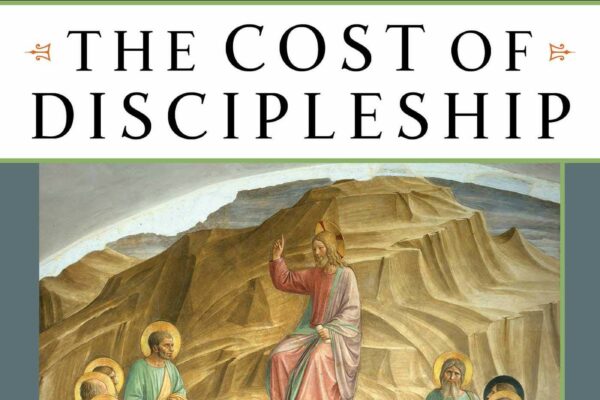
True cost of discipleship. . .


Sermon for Pentecost 13, Proper 18C, preached on Sunday, September 8, 2019, by the Rev. Daniel M. Ulrich.

               In today’s Gospel reading, we heard some confusing and harsh words from Jesus.  It sounds like Christ is encouraging us to hate: to hate our parents, our spouse, our children, our family, to even hate our very own life.  This sound right.  The great one word summary of God’s commandments is love: love God with your whole heart; love your neighbor as yourself.  And yet here Jesus plainly says, “If anyone comes to me and does not hate his own father and mother and wife and children and brothers and sisters, yes, and even his own life, he cannot be my disciple” (Lk 14:26).  So how do these go together?  How can God command us to love and Jesus tell us to hate? 
               First, we need to understand that God’s command to love and Jesus’ words of hate aren’t contradictory.  When we love the Lord with our whole heart, we will love our neighbors as well.  And yet, if we don’t love God with our whole heart, if we have other loves before Him, then we can’t love our neighbors.  So if our love for family prevents us to love God, then Jesus’ words are spot on.  We must hate everything that we put before our Lord.  It must be Christ above all.  
               Jesus spoke these words to a crowd who was following Him.  That’s what disciples do, they follow.  They closely follow a teacher, and Jesus wasn’t the only one who had disciples.  There were other teachers who had close followers, people who left everything, their homes, their occupations, even their families.  As a disciple, the most important thing was the teacher and his word.  Christ’s followers are to value nothing more than Him, not even the closest relationships that we have.
This ultimately means that following Christ has a cost.  Discipleship carries with it sacrifice, even a sacrifice of relationships.  That’s what Jesus is talking about.  This can be a hard cost to handle.  Our family is supposed to be one of the most important, if not the most important thing in our lives.  Our parents gave us life.  They raised us and cared for us.  Our spouse and children bring us joy.  We share fond memories with our siblings.  Sure, not all of family life is great, and family can bring with it great pain and sorrow, but for Christ to tells us to hate them, this is a hard thing.  Blood is thick and the family bond runs deep.  And yet, following Christ means putting Him before them, even at the expense of losing family relationships. 
This cost of discipleship, sacrificing relationships, this can be hard to bear.  And yet, the most difficult sacrifice for us to make is our self.  We hear Jesus’ words of hate and we’re shocked.  Shocked so much so that it’s easy for us to not hear what He says about hating our very own life.  Of all things, this is the most unthinkable thing to hate.  How can Christ tell us to hate our lives?  Shouldn’t we love ourselves?  Isn’t it important to have good self-esteem?  Shouldn’t we be proud of who we are and what we can do?
We love our life, and that’s the problem.  We love our life too much. We put it first.  That’s what sin is.  Sin is the reordering of things so that we’re on top and everything else is below us.  Sin puts us first in all of our relationships.  It puts us first before God.  This is the greatest cost and sacrifice of discipleship; hating ourselves; denying ourselves, putting Christ first. 
               We want to live a self-first life.  We want to be on top.  We want to be the most important thing.  We want the world to revolve around us.  We want to be self-sufficient and in charge.  And this even applies to our faith.  We want to be the one who chooses to follow Christ.  We want to be responsible for our salvation.  But we can’t, because we can’t pay that ultimate cost. 
               As Jesus was talking to the crowd that was following Him, He told two small parables.  On the surface they seem to be simply wise words about considering the cost of something before you do it.  Before you start a building project, before you start a war, you need to sit down and be sure that you can finish it.  But what does this have to do with discipleship?  Jesus used these parables to teach the crowd that there was a cost to following Him.  They would have to sacrifice to be His disciples, and they needed to know that upfront so that they could be ready for it. 
               This is important for us to remember.  There’s a sacrifice to following Christ, and we need to be ready for that.  We can’t assume that our life is going to be all puppy dogs and roses.  Following our Lord is difficult, so we need to be ready for those trials and temptations.  But more than that, we need to sit down and understand the true cost of discipleship and realize that it isn’t something that we pay. 
               The true cost of discipleship isn’t us reordering our lives and putting Christ first.  The true cost of discipleship isn’t a giving us leaving our family.  The true cost of discipleship is Christ Himself.  The true cost of discipleship is His righteous life for your sinful self-first life. 
               We hear Jesus words we put ourselves at the center of them, thinking that we have to pay to be His disciples, and yet the opposite is true.  Christ paid so that you would be His disciple.  Christ paid so that you would be cleansed from all your sin.  Christ paid so that you’d be rescued from death and the devil.  Christ paid so that you’d have life.  Christ paid so that the Spirit could create faith within you through the proclamation of the Gospel.  Christ’s sacrifice, Him giving up His life on the cross for you, that’s the only way you can be His disciple. 
               There’s nothing we can give of our own to be Jesus’ disciples.  There’s no reordering of our lives that we can do without first receiving the gift of faith.  And with that faith, we can follow our Lord.  With that gift of faith we can count the cost of disciples and meet it trusting our Lord.  It’s only by the grace of God that we can be called disciples.  It’s only by the grace of God that we can be a part of His family, having brothers and sisters in Christ, a family bond that runs deeper than any earthly family relationships we have.  .  Praise be to God, that Christ paid the cost and we’ve been made His disciples.  In Jesus’ name...Amen. 

Remember. . .


Tuesday, September 10, 2019

Dutch decline. . .

The Dutch were once known for more than tulips and windmills.  There was a time in which every Dutch village was built around a central church and the spire signaled more than just its location but also its importance.  For Roman Catholics, the Dutch was a stronghold of serious and solid Christianity.  As recently as the 1960s, way more than half the 2.7 million Dutch Catholics still went to Mass regularly, even weekly.  Forty years later, an average 439,000 Catholics went to church on any given weekend. By 2017, that number had declined precipitously, down to about 157,900 people or a mere 6 percent of all Dutch Roman Catholics.

Of course, if people stop attending, you can bet that means that there is a shortage of priests and an over abundance of church buildings.  So Dutch Cardinal Wim Eijk has suggested that in the Archdiocese of Utrecht, 285 churches need to be closed.  If that many closed, it would mean by 2030 there would be only about 15 church buildings left in the entire archdiocese.  Without choosing it, it could be an archdiocese more on the scale of the early church than modern structures -- perhaps with a part-time bishop?!

The decline of Christianity in Europe is, indeed, no surprise.  It has been coming for sometime.  That said, the surrender of Christianity to a largely secular culture will be hard pressed to reverse with a minuscule number of churches and clergy.  Further, it seems even more unlikely that those churches surrendering to the culture will find the will to restore a vigorous Christianity, orthodox in doctrine and faithful in practice.

So what's new?  Nothing -- except the fact that once again a liberal Christianity that distances itself from Scripture and tradition is shown to have no traction against a secularized world.  The hope for Christianity does not lie with a weak or shallow or compromised faith but with a robust embrace of what Scripture says, creeds confess, and liturgy prays.  Those who fear a church rendered irrelevant by a culture going in a different direction have abandoned such a vigorous Christian belief and life in pursuit of detente.  But they have shown that there is no irrelevance more to be feared than a church embarrassed by Scripture and confession.

Rome needs to wake up to this but also Lutheranism.  We are too focused on trying to explain the cause of decline instead of directing our attention and energies to a renewed and robust confession of what the Scriptures teach, creeds confess, and the liturgy prays before the world.  Our answers do not lie in surveys or polls or trying to figure out what the people outside the Church think.  Our answers are before us.  Scripture speaks the life-giving Word, baptism washes with life-giving water, and the Eucharist feeds with life-giving Bread and Cup.  These are the means to a renewed Christianity and nothing more or less.  As soon as we remember this and embrace it, Christianity will begin to halt and perhaps reverse the decline.  It will not be because of our efforts but because the Lord is true to His promise and the Spirit works through the means of grace.  Our witness is not some manufactured story or emotional appeal but the witness of a people who hear in the Word the voice of the Good Shepherd, who find in the font the living water that flows with life for the dead washed therein, and who meet at the altar the Lord who is priest and victim, host and food of the food that feeds eternal life.  Strategies will not and cannot replace this focus upon the efficacious Word and the Sacraments that bestow what they sign.

Monday, September 9, 2019

Social science as authority. . .

In our search for authorities to justify what we think and feel about such things as marriage and family, it is somewhat obvious that Scripture is no longer regarded as much of an authority -- even for Christians and Christian churches.  Marriage has become a social order that belongs not to its Creator but to those who choose it.  They define it, negotiate its boundaries, and shape its being.  Social science is employed not as authority to challenge or question that individual definition but to support it. 

The science of marriage and happiness transect at the point where marriage is seen more as a means to individual growth or or for social order.  Both sides claim the authority of science to bolster their positions.  At the same time, there are those who are offended at the very notion that any individual needs marriage at all and the presumption that the individual is not complete in and of herself or his self.  These presuppositions are so firmly entrenched that, despite reams of scientific literature about how detrimental broken homes are for children and how positive toward those children is a home in which mother and father are married and live as loving partners ―studies consistent in these conclusions for decade after decade― the evidence has not sealed the debate nor has it moved liberal thinkers and policymakers to support and defend the family as the most essential, basic unit of society.

For as long as feminists have existed so has the suggestion that marriage is good for men but not for women.  This stand refuses all social science data from women who say that married women report being consistently happier than single women.  As long as the data do not fit the presupposed conclusions, social science will be a tennis ball lobbed back and forth when it suits the argument.  In the end there is NO authority left to impact our understanding of marriage and family.  No authority, that is, except anecdote, feeling, and intuition.  Absent any real facts, there can be no wrong -- except the wrong that has been labeled such from the beginning by those who insist that marriage is an antiquated social order that has always been bad for women even though it might be good for men and for children.

So what does this mean?  All the science in the world will not lay to rest the questions circling the issues of marriage and family. In fact, such “science” has come down to cherry picking data to support the kind of community life that is presumed to be best by the those beginning the argument.  Without any authority and without a willingness to subject preconceive conclusions to the reality of any authority, there will be no end to the public debate over what marriage is and who marriage is good for and who it is not. This is about a pretend debate where the truths that matter are those the speaker believes.  In other words, Christians hoping to win some battles will find themselves frustrated  and not simply because the voice of Scripture is silenced but because the voice of reason is rendered equally mute.  For us as Christians in the public square to defend marriage as God's creative order, good for husband and wife and children, we will need to figure out another line of argument and part of that will begin with learning to affirm the social data that supports our position.  If reason is to prevail at all, it must begin by first admitting that what people say and think as a whole must count for something especially when it has consistently affirmed the public good of marriage and the family for all those who are willing to be part of one.

Sunday, September 8, 2019

Why write?

Someone asked me a while ago why I wrote a blog.  The point being made that it is substantial output and it has been going for sometime now.  I admit I do not think much about the why.  As it has been said before, we tend to write in order to be understood and we tend to read in order to understand.  I wish I could say I had some lofty idea or grand description of it all.  I fear I do not.

Honestly, I write because I think and I fear losing my thoughts into the great abyss of busyness and emptiness and so I write them down.  How I write is more or less how I think.  In fact, my writing suffers from being less an organized outline of my thoughts than real meandering thoughts of a pastor who probably thinks too much.  My writing is an extension of my thinking.  By putting words down, I come face to face with what it is I think about this or that.  Perhaps it could be said that writing is part of my thinking process and it could be that the raw conclusions of my mind are not given much shape until they become words on a page (or screen, as it were).

It occurs to me that we don't do enough thinking these days.  We do write, in the modern syntax of text and email, but we do not so much think as we simply give expression to what happens to be on our minds at any given moment.  I fear that too much of what is published on the internet is just that, a coughing up of words to express the fit of the moment.  But because they get published when we press the send or post button, we have to own them.  Because we own them, we feel we must defend them.  And so instead of getting anywhere, we seem to be mired in the unmovable trench of our whims, masquerading as thoughts, published as if they were a fully formed position.

There are those who wonder why I allow comments.  I am not sure I have a real answer.  Perhaps because I fear the folks who read what I say deserve a chance to rebut my opinions and arguments.  Perhaps because it is just easier to let people have their way with them.  The truth is I seldom pay that much attention to the comments -- not because I feel superior to them but because so often they represent their own tangents and points.  In fact, I often read a comment and wonder how on earth the reader got that from what I wrote.  One thing I hardly ever do is respond to the comments.  I do not intend to argue my point.  You can read it.  You can read it and weep.  You can read it and ignore it. That is up to you.  I have said my piece and so I leave the commenters to their comments.

Which brings me to a point.  From time to time I thank those who read because I am genuinely amazed at how many folks do read this humble blog.  I will freely admit that it is of uneven quality but I am humbled by the attention some give to my words.  So if you are a reader, I want to take this opportunity to say "thank you" for spending part of your day here.  Through the blog I have met so many different folks and it is a treasure to engage some of your in conversation when we do meet.  So thank you, my friends.  I will continue writing.  And, if you wish, continue reading. 

Saturday, September 7, 2019

But God I have dreams and plans. . .

It has certainly made the rounds but if you have not read it, you ought to.  Go and read Chase Replogle in Christianity Today on how he was convinced to give up being a visionary leader.  There are certainly different points of view on Bonhoeffer but on this point no one can argue with the man.  He has it spot on.

The sad truth is that you do not have to be a Millenial or Gen X or a non-denominational or missional or a pastor or even a Christian to have plans and dreams -- along with a desire to have a higher power give his blessing to your yearnings and help you achieve your plans.  It was, after all, the sin of Eden.  Adam and Eve knew well the plan of God and rejected that in favor of their own dreams and desires.  Even the threat of death did not sway them when opportunity and a voice told them to listen more to themselves than to the Word of the Lord.  It is not a new thing.  It is as old as Adam and Eve.

Somehow it has become new again and fashionable.  Men do not want to be pastors but leaders of men.  Women are the same.  Both have ideas of how they think God can use them best and then build an imaginary house of cards on their hopes and plans.  Much of the time they seek to help others to cast off the shackles of constraint and learn how to dream with them.  If you can dream it, you can achieve it.  The Gospel becomes some emotional and inspirational Ponzi scheme or religious Amway franchise.  What we want to do becomes central and what God has done becomes peripheral.  It may even succeed for a time but it will not last.  It has no foundation and it lacks God's mandate, promise, and blessing.

For many, life is seen as a great adventure.  Faith is an adventure, a journey, a destination, an experience.  The Christian wants to do something big for God, build something great to show how dedicated and committed the Christian is.  There is a burning desire to make a big impact, a big splash and with it all comes a disdain for the ordinary of church.  In fact, there grows a resentment against the worship services of the past, the piety in which they were formed, the routine of Word and Sacrament, sin and grace -- to the point where they cannot even call what it was church.  It is dead to them and lifeless.  They insist that there must be something more.  And they see themselves as just the kind of leaders to rescue a moribund church from itself.

This author came across Dietrich Bonhoeffer's classic book Life Together. I’m not sure what motivated me to pick it up. Maybe it was its deceptively small size. Whatever my reason for starting the book, I was entirely unprepared for four words on page 27: "God hates visionary dreaming.”

Bonhoeffer continued,

    It makes the dreamer proud and pretentious. The man who fashions a visionary ideal of community demands that it be realized by God, by others, and by himself. He enters the community of Christians with his demands, sets up his own law, and judges the brethren and God himself accordingly. He stands adamant, a living reproach to all others in the circle of brethren. He acts as if he is the creator of the Christian community, as if his dream binds men together. When things do not go his way, he calls the effort a failure. When his ideal picture is destroyed, he sees the community going to smash. So he becomes, first an accuser of his brethren, then an accuser of God, and finally the despairing accuser of himself.

In the midst of this, I came across Dietrich Bonhoeffer's classic book Life Together and ended up blindsided by its condemnation of visionary leadership: "God hates visionary dreaming.”
Bonhoeffer continued,
It makes the dreamer proud and pretentious. The man who fashions a visionary ideal of community demands that it be realized by God, by others, and by himself. He enters the community of Christians with his demands, sets up his own law, and judges the brethren and God himself accordingly. He stands adamant, a living reproach to all others in the circle of brethren. He acts as if he is the creator of the Christian community, as if his dream binds men together. When things do not go his way, he calls the effort a failure. When his ideal picture is destroyed, he sees the community going to smash. So he becomes, first an accuser of his brethren, then an accuser of God, and finally the despairing accuser of himself.
Bonhoeffer was the one who helped this dreamer see how his pastoral imagination lived not in the space of God and the Spirit but his own selfish wants and desires.  In the end such a visionary imagination has the power not only to cripple the man but kill the churches he serves.  The people become slaves to that vision, pulled away from God and His efficacious and unchanging Word toward the shifting sand of a dream planted not in hope but in the never land of what if.  The vision crushes and kills and success becomes the goal rather than faithfulness.  The people we are called to serve become our enemies and are quickly cast aside as impediments to the grand plan.  If they will not fund or follow, we will find better people.  It is obsessive and yet somehow we are convinced it is sacrificial and exactly the call of God.  So powerful is the voice within that it shuts our ears to the voice of God speaking to us.  When it all comes crashing down, neither the visionary leader nor the people are left with much to salvage except their bitterness, resentment, doubt, and emptiness.  They are even more hardened against the work of the Spirit by their so-called spiritual experience of building a new age and church for God.

It always sounds so good.  Who can resist?  I know I came out of seminary filled with dreams and found my first parish a crushing blow to my ego.  How could God expect me to work here, with these people, and accomplish the grand plan to raise up a new church for a new age?  But no calls came.  I was left with the people and resources I had found so woefully inadequate.  God did the service of breaking me down and leaving me only with His means of grace.  Finally in the surrender of my great vision, things began to happen that I did not see or plan or expect.  The means of grace DID work.  The people grew in faith, grew in the grace and knowledge of their Savior, and the congregation grew.  No, it did more than this.  It flourished.  The Word called their hearts to hear, believe, and follow and I was but a tool in it all.  Where I had written off success, God brought what I could have never accomplished.

Through it all, mature and steady voices encouraged me and senior pastors helped me and a great bishop cared for my broken dreams.  I still wrestle with the temptation to build my vision of what the future should be, what the church should be, and what I need to make it all happen.  But the surprise of God's grace has left me in wonderment.  It was never me.  It was always Him.  His Word and His Sacraments.  His gracious favor and mercy so undeserved.  I am merely a servant of that mercy as well as a recipient of it.  If God is good, He will allow us enough freedom to fail, enough faithful Christians to reach out to us, enough grace to rescue us from ourselves, and enough wisdom to see beyond the darkness of our own self-delusions to what only He can and will do.  So far, God has been pretty good.

Friday, September 6, 2019

An interesting beginning. . .

You will note that I have had words about the American Lutheran Publicity Bureau, past and present, and some personal association, having lived and served in the Atlantic District 14 years.  Some of those words have been greatly appreciative of the good work done but some not so much.  I also ventured in with an opinion about the next editor of Lutheran Forum and suggested that the future of the journal as well as Lutheranism lay not with the speculative or contemporary but with the lively confession of what we believe, teach, and confess.  In other words, a Lutheranism renewed by her own Symbols and its inherent foundation in Scripture rather than a mediating voice looking for detente.

It has been months since I have published a word on the online Forum.  From time to time I tune in to see what the discussion has been but for most of the time there has been little there to encourage me to end my silence.  I have great respect for Pastor Paul Sauer and for Pastor Peter Speckhard and commend them for keeping up their presence in this once exciting and now rather mundane endeavor.  I always hope for positive and genuine catholic renewal within the Lutheran circle, no matter the source.

So it was that the announcement of a new editor and his first words were more than a curiosity to me.  You can read them here.  I am not sure what to make of those words.  His reference point for beginning his editorship is not Luther.  It is Karl Barth (the theologian and not the seminary president - as I like to joke).  Barth is many things and some of them interesting but an odd choice to focus upon as someone begins his tenure at a Lutheran publication.  Though Barth will always occupy a huge section of history, how important is or relevant to the situation we face in Lutheranism today is Karl Barth?  Interesting reading and history, to be sure, but the new editor's first words have not done much to corral my interest.  I hope for a more substantial output and a more profound beginning and will wait to see what he actually does with the journal.  But for now, it was, in my judgment, an inauspicious beginning.

Nelson says "These differences between the eras notwithstanding, I suggest that we may receive Barth’s remarks as a more general reminder that we take a leap in the dark every time we go public with words written about God and all other things in relation to God."  Leap in the dark, huh?  Coming at a time when the death of a young pastor in my circuit, I am not much interested in words that are like a leap in the dark.  Does God mean what He says and work through His Word?  Do the words we confess mean anything?  Is it merely a stab in the dark, a leap into the unknown?  Or do we believe, teach, and confess truth, fact, efficacious Word, Sacraments that bestow what they sign,  hope big enough to tie on all our wounds, sorrows, and fears, and grace enough to forgive all our sin?  My hope is for a more robust beginning, a more profound confidence that God's Word and our preaching and teaching of it are more than a stab in the dark -- to the folks in the pews or the people in the neighborhoods around us.  I will keep watching but so far am not overly enthused.

Thursday, September 5, 2019

Protective parenting. . .

Growing up in the fabulous fifties and early sixties, my parents were very protective of their children.  They did not use vulgar language in front of their kids.  They brought us up to know that church was not optional.  They prayed with us and taught us to pray.  They made sure we learned our Sunday school lessons and did our catechism memory work.  They exemplified generosity in the support of the Church and those in need.  They showed us a solid work ethic and took their roles and responsibilities at home and in the community seriously.  They put the best construction on things instead of teaching us to instinctively think the worst of people or things.  They showed us the high priority placed upon family, even extended family.  They encouraged us and when that did not work disciplined us.  They taught us to be together even when we wanted to be apart and we spent recreational time together (from at home in front of the one TV to trips to the river or Sunday drives that usually ended up at aunts, uncles, and cousins).  I did not realize how protective they were of us until reflecting on how things are now.

Oh, it is true that the society around us supported some of this.  Church was not out of fashion in the larger world and vulgar and abusive language had not become in vogue yet.  The TV did not show the worst in the world around us and certainly did not show many images of gratuitous sex and violence (well, really none at all!).  We did not have all the technological options to play on our own so we were forced to play together.  We did play cops and robbers, cowboys and Indians, GIs vs the Nazis and a host of other war games but there was less violence than there was an emphasis upon the battle between good and evil and the triumph of good.  It was not perfect but the play generally reflected the values taught at home.

So what is different today?  I am not ready to blame the parents for the sins of their children or to make the children the victims of others and therefore not responsible for the choices they make, but I think some of the differences are clear.  We live at a time when entertainment has been equated with pleasure and happiness has come to mean getting what you want.  Even faithful Christian parents struggle against such pressures.  The media take great delight in making sure even PG movies contain language no one would have heard in movies or TV when I was a kid.  The basest of our desires and the most ugly of our emotions are regularly paraded before children of all ages.  The internet has not been the mighty vehicle to elevate us or the human conversation but seems to bring out the worst in us (porn, abuse, bullying, hate, rigidity, intolerance, vulgarity, violence, threat, and the like).  Video games seem to promote the very things we decry in our culture -- violence, loneliness, isolation, division, etc...

Are guns a problem?  Sure.  There is no rational need for people to arm themselves like some do.  But the problem has to lie not simply with the guns but with the one whose finger is on the trigger and what has informed and shaped that person's values and life up to that point when the finger got on the trigger.  Is the problem video games?  Sure.  But the problem is not simply the games but the overall culture of violence in which our children grow up.  Is the problem both parents working?  Sure.  But that does not explain those families whose children thrive in spite of the pressure on both parents to work.  At this point in time I can see that my parents were a lot smarter than I thought at the time and seemed to know more instinctively than I did (or my kids know) how much freedom to give, how much to protect, and what to do to support a good moral compass, based upon a lively faith.

The isolation so rampant in our culture has had a bigger impact upon those with mental illness and emotional issues.  Always a difficult hurdle to pass, those with such struggles are pushed ever further to the margins by the increasing isolation and loneliness that nearly everyone feels today.  How we deal with this is no longer theoretical in the face of violence that constantly hits the news when those with such struggles resort to such terrible acts.  I wish I had answers but I fear things will get worse before they get better.  At the same time, I do want to encourage parents today to continue to strive for that wonderful blessing of a solid home, secure in the faith, together in prayer, forgiving and asking for forgiveness, at home in God's House, and the importance of the family.  These will still and always will be our best gifts to our children and the means by which we make a profound impact upon the world around us.

So you are free to disagree but those are all the words of wisdom I have on this subject today. . .

Wednesday, September 4, 2019

The healing of grace. . .

Sermon for Pentecost 12, Proper 17A, preached on Sunday, September 1, 2019.

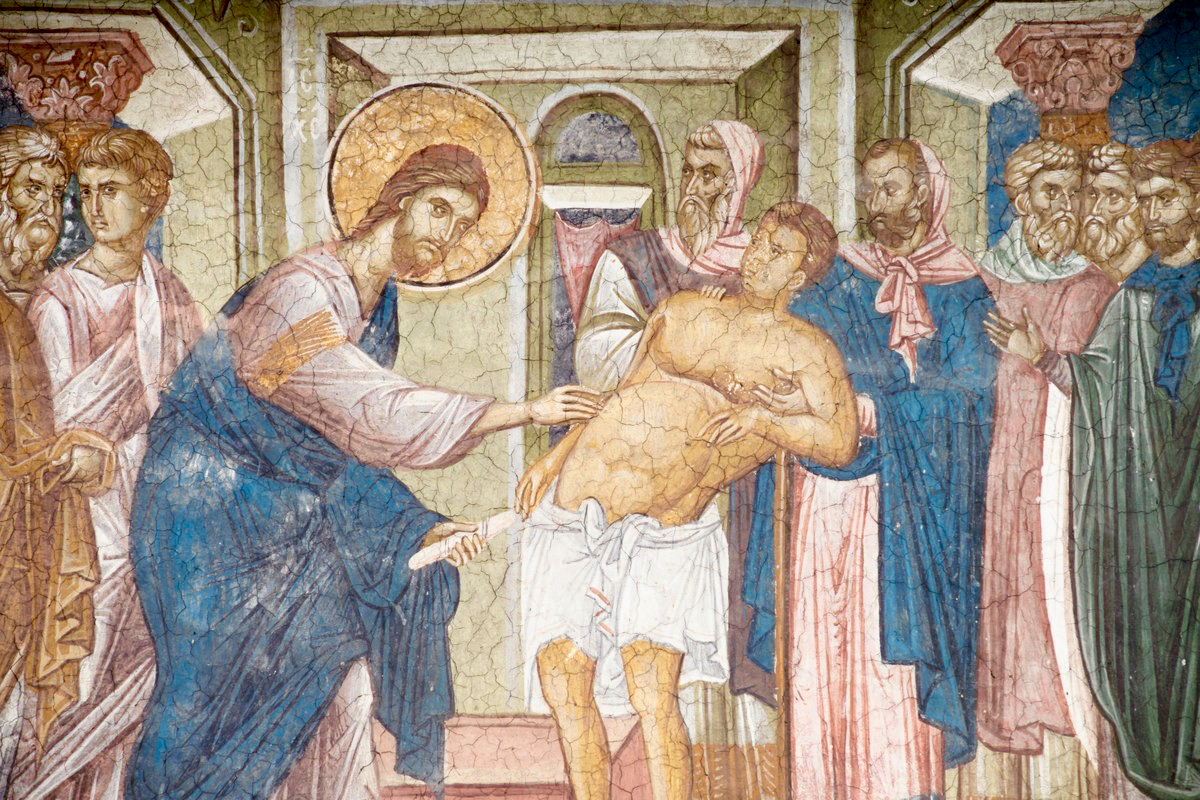
    The man in the Gospel today was literally dying of water.  Dropsy was a generic term for what we call congestive heart failure, fluid on the lungs, and edema or swelling of the extremities.  The man was literally drowning on dry land.  It is a heart problem.  The heart was not pumping as it should and so the fluid was not moving through his body as it is supposed to.  Slowly he was drowning in his own fluid.  He had been to doctors and they all saw the problem but no one could find a cure.  He was sent away simply to wait for death.

    Like anyone who received a death sentence from those who were supposed to heal him, he left the medical experts and began to seek out those who worked in the domain of miracle healings.  He ended up where he did not belong, in the home of Pharisees, to stand before Jesus, his last resort.  If Jesus could not heal him, the man would look to Jesus help him deal with the prospect of his death and of the fearful prospect of standing before the judgment seat of the most high God.  And he had picked the wrong day for it was the Sabbath and no work was to be done on the Lord’s day.  Talk about troubles.

    But maybe it was not the wrong day after all.  Jesus asks the obvious question.  Is it lawful to heal on the Sabbath or not?  Now this was not the first time Jesus had asked this question.  It is, in fact, the third time.  The first time the Lord healed on the Sabbath the Pharisees were shocked into outrage that our Lord would dare to do such a thing.  The second time Jesus healed on the Sabbath they stood convicted by their own weakness and shamed before the Lord.  This time, they were outwardly silent but in the weeks to come would end up bribing Judas to betray Jesus.  They needed no more convincing to see that Jesus was trouble and so they said nothing.

    Jesus knew all of this, of course.  We might be preoccupied with such a future if we knew it was coming but Jesus does nothing to stop them or even challenge them.  He does not change what He says or does one bit.  Jesus asks not because He expected them to answer or even because He wanted them to try and give an answer.  Jesus knew what He was going to do and was prepared to do it even if it was one more step in their grand plan to silence Him with an innocent death.  Jesus has come for just such things.

    Jesus asked them if they would save a son or an ox who fell into a well even if it was a Sabbath day.  In other words, if it were not an act of mercy for someone else, but a self-serving act to preserve family or fortune, would you bend the rules of the Sabbath to save the son or the ox.  But this was not about answers to hard questions, Jesus was talking to them of what He had come to accomplish for Pharisees, sinners, and the sick.
    The Lord knew that these Pharisees had been watching Him carefully but He had been watching them as well.  He knew how they enjoyed prominence and how they worked to put themselves forward in just the right moment and in just the right light.  The people did not hate the Pharisees but marveled at their righteousness and wanted to be as holy as they obviously were.  The world judged these Pharisees to be the first, the cream of the crop, and those worthy of the highest place.  They were worth saving.

    But Jesus has not come for the righteous who need no saving or the well who need no physician.  He has come for sinners who deserve nothing of His kindness and for the sick who wear death so obviously that no one wants to look at them.  He has come for those who were last, least, and lost.  Yet He has not come to impose salvation upon them but to visit them with grace that invites faith, to speak to them the Word of life in which the Spirit works to teach the heart to believe, and to touch them with the hand of God that will exchange their sins for His righteousness, their wounds for His healing, their death for His life.

    And the most interesting turn here is the dropsy.  The man was drowning in the water of his own body.  Water was killing him.  He was like a man who had fallen into a well and was drowning.  Water and deliverance seem to go together.  The flood killed many but it saved Noah and his family, eight souls in all.  Moses was rescued by water and delivered from death.  The children of Israel passed through the water of the Red Sea as on dry land.  Does this sound like baptism to you?  It does to me.

    Here it all becomes more personal for us.  For though baptism is surely about cleansing, it is also about death and life.  By baptism you died.  You died by being baptized into Christ’s death.  You died to sin.  You died the fearful death that causes  fear.  You died because Christ literally killed you.  Taking you down into the water so that the old life under the dominion of sin and marked with death would be no more.  As Christ was buried in the tomb, you were buried in the water of baptism as you tomb.  And as the grave could not hold him, so Christ does not leave you dead but raises you up in Him to new and everlasting life.  The life you live now you live in Christ.  You are not your own but were bought with a price.  You belong to Him.  The last have been made first by God’s power and according to His saving will and purpose.

    The man with dropsy was dying, literally drowning in his own water.  You are dying in sin but Christ has killed the life that was already marked with death so that He might bring forth in you the life death cannot touch.  By water, the Lord delivers from death by water.  By His dying and rising again, our Lord has brought salvation to us and by dying and rising in Christ we are made new, as His beloved children forevermore.

    So is it lawful to do this on the Sabbath?  It is not an irrelevant question nor is it a foolish one.  In fact, this is the question that begs the answer of faith.  Yes, it is lawful. Yes, it is good.  Yes, it is right.  Yes, it is the will of God.  For the Law was not given by a naive God who believed we could save ourselves but by the God who had always intended to become His people’s Savior by delivering up His Son to fulfill perfectly the Law, to offer the perfect sacrifice for sin, and to die in our place the fearful death so that we might be raised to new and everlasting life.  They Pharisees were silent before this question not because they agreed with Jesus but because they rejected mercy.  They clung to the foolish and damnable lie that sin was no big deal and they did not need a Savior, they needed a rabbi to teach them how to save themselves.
   
    Do not fall into the same trap.  God has not become flesh and blood to teach you how to do it but to do for you what you cannot do for yourselves.  He has come to be not your rabbi but your Savior, your Messiah, your Christ.  He has come not to argue the finer points of the Law but to fulfill it.  He has come for those whose life is killing them so that He might raise them up to new life, to everlasting life.  He has come for this saving purpose, to do the will of the Father.  Is this lawful?  This is the whole point of the Law and the Gospel, to bring us such glorious salvation, to rescue us from ourselves, and to deliver us to the life which is stronger than death.

    So are you on the side of mercy or sacrifice?  The devil insists that sinners get what they deserve but Jesus insists that mercy triumph.  Yet God will not force you.  He opens your heart so that you may believe but He does not compel this belief.  The question remains.  What is the point of the Law and the Gospel?  They testify of Christ and Christ has brought the salvation of God.  It comes as gift to the unworthy, life to the dying, forgiveness to the sinner, and holiness to the unholy.  Come through the humility of repentance and through the gift of faith and the Lord will exalt you to the place you never deserved but He has prepared for you in Christ.   Amen.

Anecdotal orthodoxy. . .

Over at the Tiber there have been debates about the role of the Latin Mass in preserving orthodoxy, order, and piety over against the Novus Ordo.  A recent survey attempted to show that those attending the Latin Mass gave more money, were theologically more orthodox, more devout, and were better Roman Catholics.  It was a study prepared by those who believed that this was going to be the outcome.  You can read over at First Things blog about the supposed flaws in this study and casting doubt upon the conclusions reached.  I have no horse in this race but am pretty sure that it would be easy to mark a more profound preference for the Latin Mass than for the Novus Ordo among attenders.  The rest of the claims will need substantial study to provide more conclusive proof.

Over on the Wittenberg side of things there are those who advocate for a similar conclusion.  Those who practice Divine Service Three (the old page 15 of TLH) and who use the one year lectionary are better Lutherans.  They give more money, are theologically more orthodox, and they are more devout in the practice of their faith.  I am sure that this does not include everyone who prefers this form of the Divine Service but I have heard it said from some.  I do have a horse in this race.  I am not at all sure that this would be an easy thesis to prove.

In my parish, the vast majority of our members do not have a fond memory of The Lutheran Hymnal or the old page 15 rite.  In fact, most of them have no memory at all of this service.  I do.  I not only grew up with it but it was the hymnal and the liturgical rite that I used exclusively (along with the one year lectionary) for my early ministry.  I do have great affection and fondness for it.  But that is not the case in my parish.  Most of those who were Lutheran prior to their membership at Grace grew up using either Divine Service I or II (or, increasingly, no liturgy at all).  We use LSB Divine Services 1-3 but we do not jump page numbers Sunday by Sunday.  We spend months and months in each setting in order to build up our people in the knowledge of the rite and familiarity with the music (which is the way most folks in the pews judge the choice).  We use both lectionaries, one for Sundays and one for the regular non-Sunday Divine Service.  So I have a foot in both worlds.

I am not sure the rite itself has all that much to do with theological orthodoxy, generous giving, and a serious and devout piety.  What I do believe has the greater influence is the preaching and teaching of the pastor.  Where theological orthodoxy is preached as well as taught, where people are encouraged to regular and faithful giving (and electronic giving platforms provided those who cannot recall if or where their checkbook is), and where people are challenged to maintain a rich and profound devotion to the Lord in their homes and personal piety, these things generally flourish.  Where the pastor treats the liturgical rite with care and devotion obvious even to those in the pew, the rite itself will serve as a source and summit of that devotion as God's people meet the Lord in His Word and Table.  It is my experience that neither form in LSB itself is the issue but the example and preaching/teaching of the pastor.

Maybe Rome can prove me wrong and maybe folks in the LCMS can prove me wrong but I doubt it.  The strong issue here is not the rite itself but where that rite fits within the preaching, teaching, devotion, piety, and life of the congregation as a whole and every family and individual in the congregation.  What I can attest is that where these things flow naturally out of the Divine Service (no matter which form is used), the whole life of God's people is deeply affected, nurtured, nourished, and directed.  Worship wars need to fought where the battleground is clear -- between Lutherans who have given up the liturgy in any recognizable form and those who keep to the Augustana's insistence that we have not abandoned the mass.  It is not helping anyone to make this about one rite or another. 

The truth is that the newest rite to many of our people is the oldest one in the book!  That shows how far things have moved over the years -- and the clock cannot be turned back.  I am of the conviction that any of the rites in LSB can be used faithfully in this manner (even though I am not a fan of the Deutsche Messe style in which paraphrased hymns substitute for the ordinary -- not even Luther's).  I believe that the key to renewing the life of the Church is to be the Church on Sunday morning, to live within the integrity of our rites (adding ceremonial is far different than deleting it), to preach faithfully and to practice orthodox teaching, and to demonstrate this faith and piety in your own life as pastor.  It may not be flashy but I think it is the key to parish renewal and to the renewal of our church as a whole.

Tuesday, September 3, 2019

The power of unity. . .

One profound moment at the LCMS Convention revealed the profound power of being on the same page, literally.  After tough words considering the closing of Concordia Selma and the legacy of Rosa Young, the tension in the air was palpable.  Words had been said.  Accusations made.  The 8th Commandment violated or pretty close.  What would happen next?  Chaplain William Weedon ditched most of the printed service to close the session and went into the familiar words of the confession from page 15 or Divine Service Three (depending upon how you remember them).  The people assembled joined in without having to look down for words.  We were not on the same page in our discussion but we were together before the Lord in repentance, confessing our sins, and seeking His forgiveness so that we might begin to forgive one another. 

Diversity is great unless and until a moment like that appears and the call to speak from down deep in the soul summons us beyond our divisions, preferences, and taste.  That, my friends, is the power of the liturgy known and prayed until it is a part of you.  That is the fruit of a common history and a common life together.  It moved us beyond ourselves and past a tense moment.  That is no small thing.

I cannot tell you how many times I have been with a family around a bed side and been told that mom or dad has not opened eyes or spoken for hours or days.  And then come the familiar words.  The Lord be with you.  And the response, buried deep within causes the lips to move.  Whether the creed or the Our Father or the confession and absolution, these words have been carved so deeply into the soul of the person on the edge of consciousness that they become the trigger to awaken them, if only for a while, to the present moment.  That is the power of unity and liturgy.

It was once said that if you went to a Lutheran church anywhere in America, you would encounter the same words on Sunday morning, the same Scripture readings, some of the same hymns, and even, perhaps, the same tunes.  That day has passed and I am not ready to hide in history but I cannot but lament the kind of unity such a common life reflected to the people gathered and to the world watching.  We may not ever get back there, even within our own Synod, but that does not minimize the power of a common life in a common liturgy to bind the diverse into one voice speaking as one body.

Some will laugh at this.  It is no laughing matter.  I wonder what the legacy of diversity will be for our Lutheranism down another age or generation.  Will there ever be a common vocabulary, a common text, and a common tune to draw the diverse together again -- especially in tense and troubled times.  The liturgy with its familiar and repeated language forms us together even more than the will and desire of a people who say they are one.  That is what Chaplain Weedon was able to draw upon in a moment that needed it.  Every parish pastor knows the value of this.  But sometimes we forget the power of unity.

Monday, September 2, 2019

Work is a gift. . .

Work is not a curse placed upon humanity for the rebellion of Eden.  Man was created for work.  Man was created to exercise dominion over all God's creation -- a dominion that was not to be equated with exploitation but with responsible conservatorship and careful use of all that God had given for God's own good purpose.  Work was a gift.  It still is.  Though sin has colored it all, it cannot erase this truth.

We struggle with this today.  We have made work either an enemy or laid upon work the impossible task of making us happy.  Work is not simply drudgery we go through for the paycheck but it is our vocation, one of the places where we serve the Lord and our neighbor.  The work is certainly colored by sin and can be filled with challenge, demand, and pressure but it is still a gift.  Through work we support those whom we love, we use our God given talents and abilities for more than self, and we demonstrate the character of God's own work in creation.

Our modern world has moved us away from more physical labor to intellectual.  The society has pressed us toward education (and I do not want to be seen as suggesting there is something wrong with learning, formal or otherwise).  But there is still plenty of room for physical labor, for the trades, for example.  My dad was a plumber.  He considered it a noble vocation and he was correct.  He worked hard, was an honorable man, used his abilities to serve those in need, and was more than generous with those who employed him.  I wish we had more folks like him.  He believed work was a good thing, a gift from God, and a place where he could serve the Lord faithfully.  I hope we learn to recapture this.  Work is not merely an economic pursuit and it is not primarily our hobby, either.  Work is work.  We need not elevate it beyond what God meant and we must not demean it as somehow not noble enough or lucrative enough for us.

On this Labor Day when we are consumed with our usual holiday routines, we need to remember to give thanks to God for the gift of work, for the gift of a place to work, for skills, abilities, and gifts to use in this work, for the reward that this work provides to support us and our families, for the opportunity to serve our neighbors through work, and, most of all, for the way this work can glorify God.  We should also remember those who struggle to find a job, who are underemployed working many small jobs in pursuit of a full-time job, whose work is valuable but not as valued as it should be (like child care, elder care, to name two), and those who have lost hope of finding any job.  We should remember the many whose labors are difficult and dangerous -- especially those who protect and defend us at home and abroad.  We should remember those whose broken bodies and spirits are all that is left from a life of dedicated and faithful labor and service.  And we should remember to teach these values to our children.  There is nothing demeaning about work, even physical labor.  It is honest and noble.  It is a gift and a privilege.  That ought to be the focus of Labor Day -- even more than the usual holiday routines that seem to dominate our long weekends.

Sunday, September 1, 2019

Get rid of that baby. . .

“I know it must have been hard for you as a 17-year-old pregnant, scared girl in Mississippi,” Oprah said, recalling that moment. “Many people no doubt told you to get rid of that baby. To have an abortion or give me away. But you didn’t. And for that I thank you. I know you did the best you could with what you had. And for that I thank you. And look how it’s all turned out.”

Those were the words Oprah Winfrey spoke to her 83 year old mother as she lay dying.  Oprah’s mother, Vernita Lee, 83, died November of 2018 after a life full of struggles.  Her relationship with daughter Oprah was “complicated,” to say the least, having had her daughter when she was 17.  Strangely enough, Oprah thanked her mother for not doing what Oprah believes is good, right, and salutary -- getting an abortion!  The July issue of Oprah's “O” magazine featured prominently “Shout Your Abortion” founder Amelia Bonow in its “Inspiration” section.  Oprah is certainly on the more liberal end of Democratic politics as well as on the forefront of feminist causes.  It is not insignificant that she lauds the choice and believes that it is equally moral to keeping the child and yet she took the opportunity to offer her thanks to her mother for not taking that choice when she was born.

She had told her mother: "I know it must have been hard for you as a 17-year-old pregnant, scared girl in Mississippi. Many people no doubt told you to get rid of that baby. To have an abortion or give me away. But you didn't. And for that I thank you. I know you did the best you could with what you had. And for that I thank you. And look how it's all turned out."  When it was hard for her to think about voicing those words to her mother, Oprah chided herself:  "Don't be a hypocrite.  If this were anyone else, you'd tell them 'Leave nothing unsaid, and yet you've said nothing."

In a blunt but cruel meme a fetus is pictured saying "Have you ever noticed that those who are in favor of abortion are already born."  True.  Those who are in favor of the choice to end a life or carry that life to term are already born.  They are in favor of making a choice for others that was not made for them.  It is the privilege of birth, at least for those who are pro-choice, that they can make this choice to end a life.  It is surely a quirk of our times that people are often more upset about how animals are treated than by the routine choice to end the life of the unborn.

But it is hypocrisy that is at the heart of this issue.  We choose for ourselves what we would not have granted to those who went before us.  We use our liberty to make choices that deny liberty to those against whom those choices are made.  We demands rights for ourselves that we refuse to grant to the unborn.  We defend the right of choice by holding up the exceptions as the rule and by referring to the hot button circumstances of rape, incest, and the health of the mother -- circumstances that account for a very small minority of the choices to abort a child.  I could go on.  Of course, those pro-choice are not the only hypocrites.  So also are those who insist they are against abortion but who say and do nothing to assist those for whom abortion appears to be the best choice.  No, on this issue there are plenty of hypocrites and Oprah is in good company but it is a bad company to be in.