C.S. Lewis, in chapter 9 of the Great Divorce, wrote: “There are only two kinds of people in the end:
those who say to God, ‘Thy will be done,’ And those to whom God says, in the end, ‘Thy will be done.’”
Lewis had a habit of putting succinctly the hard and often elaborate ways in which we seek to define God and His ways. As usual, Lewis does it here with the fewest of words yet as spare as the number of words, so profound is his use of them to make the point.
Either we learn from the Holy Spirit to speak "Thy will be done " in faith, trusting the good and gracious will of the Father expressed most profoundly through His Son... or God will allow us our own will and the full consequences of that choice.
I often regret that the word faith had ever been invented and would that we had used what the Greek word for faith means -- trust. Nothing exemplifies the nature of our relationship to God more than trust. When Jesus said unless you become like a little child, you cannot enter the Kingdom of God, our Lord was pointing to the trust that comes more easily to children than to adults. This does not mean to say that God was asking us to be childish but calling us to a childlike faith, an implicit trust, in the good and gracious will of the Father that we have seen manifest in His Son, Jesus Christ.
Trust is something in small quantity today. I once purchased a new mini-van with a handshake and drove it home without paying for it. You cannot do that today. When was the last time you picked up a hitchhiker? Do you believe those whose sales calls promise you a free vacation? When your children bring home purchased candy and homemade goodies, which are you more likely to allow them to eat? We do not trust anyone and even are unsure of our own selves and motives. Trust is not the fruit of our own efforts but the work of the Spirit.
Yet when God allows us the choice of rejecting His good and gracious will and trusting in ourselves, the moment, or, as the Psalmist puts it, earthly rulers and kingdoms, why do we consider God to be unfair? It seems that God can never win but that is not His purpose. He calls us to faith -- in what eyes do not see, hearts to do not dream, and minds do not imagine. He calls us to faith -- in what was done for us that we could not do for ourselves. He calls us to faith in the life hidden in the ruins of sin and its death by the power of the one death of the one God and man Jesus Christ. He calls us to faith that water bestows new life, that bread and wine convey the flesh and blood of Christ, and that the Word has performative power to accomplish what it says. Faith is the currency of the Kingdom of God.
It all revolves around the simple words so hard to trust - Thy will be done. Sin created a contest of wills in which we pitted our own wills and desires and our ability to know our will and decide what desires are good and right and worthy against God's. Only Jesus shows us the way. From the garden He prayed and taught us to pray, Thy will be done. This is the heart of the Amen at the end of all our prayers. Thy will, not mine, be done -- not as the regretful resignation to something we cannot control but as the positive affirmation of a people who have seen that good and gracious will at work in the cross and empty tomb.
Would that we would learn to speak these words more in prayer and live them out in lives of faith and trust. Thy will be done. . . for unless God's will is done, we are left with only our own and it will lead us where none of us really want to go. There is no dignity in refusing to relent even when our will is wrong. There is not shame in trusting in the saving will of the Father expressed in His Son because we have no where else to go for eternal life. When will we learn this? The struggle remains the daily shape of Christian life until we close our eyes in death and awaken them in the presence of Christ.
Some have take up the expulsion of Dr. Matthew Becker as if it were the Nazi's on the rise again to steal reason, integrity, truth, and virtue. It just goes to show you that we are all adept at insisting the sky is falling. Once in a while it is but most of the time it is merely a cloud we think looks ominous.
Elizabeth Goodine as written a somewhat passionate but rather panicked response to the Becker situation. You can read it here. She ends with some hysteria equating the refusal of Dr. Becker to teach in accord with the publicly stated doctrine and to practice consistently with the Lutheran Church Missouri Synod as a modern day Nazi machine moving to rigidly enforce a false truth and to prevent truth, justice, reason, and the American way of tolerance and accommodation from winning the day.
There are a number of things Ms. Goodine forgets.
Missouri is a church at rest doctrinally. It takes a lot to move something from its resting position. That is always the way it has been for Missouri. The issues in the Becker case are not new nor have they ever been but a very small minority opinion. Missouri is fully at ease with its conviction that Adam and Eve were historical people, that the Scriptural record is trustworthy and true (factually as well as spiritually), that the move to women's ordination was not a choice given to the church to make, and that close(d) communion was and is the faithful practice of the church through the ages. This is the DNA of Missouri. If change comes, it does not come through the front door but slips in the back door. Whenever Missouri has faced the question of changing its doctrinal stance, it has never failed to fall back on its yesterday, today, and, hopefully, forever position.
Missouri is NOT a hierarchical church. While few do have some power to hold us accountable to what we said we believed and agreed to practice, we elect them regularly and they are fully accountable to lay and clergy votes. Synodical Presidents, the Praesidium, District Presidents, and Circuit Visitors are nominated and elected. Some sitting folks have been unelected and some have decided not to run again when they felt the direction the wind was blowing. Yes, it is true that the majority of DPs are re-elected but that does not mean that Missouri is the victim of a machine or a hierarchy out of sync with the pews and pulpits of our members.
No one is going for anyone. Dr. Becker was not held accountable for private opinion or even for raising a question. He was and is an persuasive, erudite, and scholarly individual who has had every venue to make his points, win over his audience, and change the face of Missouri. The fact that he failed to do this has little or nothing to do with those elected on a Synodical or District level. It has everything to do with the fact that the positions he advocated represent a substantial shift in the thinking and practice of Missouri against Scripture and our Confessions as well as the particular issues themselves.
Finally, Ms. Goodine closes with this line: Will history remember me as one who stood up for free thought and for justice in this time and place? The Church is many things but she is not a place where free thought is encouraged or given primacy when it comes to doctrine and practice. Missouri in particular takes seriously that we are captive to the Word, bound to our Confessions, and constrained by our Synod's doctrinal stance to teach, preach, and practice consistently with these givens. We do encourage free thinking and creative ideas in the implementing of our doctrine, mission, and practice but the boundaries of what we believe, confess, teach, and practice are not shaped by individual opinion or even by convention vote. We insist that the Word of God and the Confessions are the backbone of this belief and practice.
Justice is a good thing. Mercy is better. The LCMS has been painfully slow and very reluctant to hold people accountable and to act with fair and impartial consequences when they refuse to heed the counsel of their supervisors and teach and practice faithfully with respect to what we have said and agreed upon. That will not change. It may frustrate some who want swift action but it is the slow, deliberate path of love. Some have forgotten this and have spoken or acted rashly. I pray I am not one of them but I know when I hear rhetoric that is over the top. Points made in this regard are seldom helpful except at raising the level of heat and diminishing the light in such circumstances.
Whether we Lutherans choose to admit it or not, the vast majority of Protestant and Evangelical Christians consider Holy Communion a mere sign of hospitality. Without anything of real substance being given or received, it is the symbolic act of hospitality that governs the practice of who is admitted to the Lord's Table. Close(d) communion has become a pejorative term describing the unwelcome and inhospitable churches who reserve the Sacrament of the Body and Blood for those who are real members or "worthy" (now there is another misunderstood term!).
Perhaps the roots of Lutheranism's track to sideline close(d) communion and open admittance to the Sacrament to any and all people is related in large measure to two things. The first is the influence and peer pressure of those who view the question of who may commune as a mere hospitality issue. Here again we Lutherans have borrowed well the language and concepts of Protestant and Evangelical cousins to the point where we find our own historic practice an affront to modern sensibilities and an embarrassment to the perceived welcome we offer to those visitors and guests among the assembled congregation. We Lutherans have always had an Achilles' heel in our desire to fit in and if fitting into the American landscape of Fundamentalist, mainline Protestant, and Evangelical churches, we seem ready to forgo that which accords with our theology in order to make our practices conform. We just want to be loved by y'all.
But it is the other element in this that is most troublesome. If we Lutherans believed that close(d) communion was the salutary practice of our theology but we felt uncomfortable admitting it, that might be one issue. In reality, it may go much deeper. In practice we Lutherans have more frequent celebrations of the Lord's Supper in our parishes but have not recovered the sacramental center and shape of our piety. It is a paradox. We have people going to communion more than ever before but that communion is less central to or defining of the piety of their faith than ever before. Strangely, when we typically had the Sacrament quarterly and went to great lengths to prepare for our worthy communion (I recall quarterly corporate confessional services an evening before the Sunday when Holy Communion was offerred), we appeared to honor the Sacrament more highly and see this communion as a mountain top experience of our piety. Now that we have the Sacrament more frequently, we do less to prepare for a worthy communion, perhaps have abandoned all idea of a worthy communion altogether, and pursue other elements as the base and idenfying character of our faith practice. In other words, we read the same spiritual drivel that is produced by popular authors but which lacks any real theological substance, doctrinal integrity, or confessional character.
I wonder if the issue of who may commune and the fading nature of close(d) communion as a regular practice is more related to the fact that the presence of Christ in the Sacrament of the Altar is no longer what defines Holy Communion and the forgiveness of sins given to us in this eating and drinking is no longer the primary benefit of our communion reception. I fear that we have spiritualized Christ's presence to the point where we no longer identify Christ in and with the elements of bread and wine and no longer understand this flesh to be the same crucified and risen flesh of our Savior and this cup to be the same crucified and risen blood of our Savior. His flesh is no longer to us real food and His blood real drink but mere symbols or spiritual values. The gifts He gives in the Sacrament have become something less real and substantially different and distinct from the real body of Jesus that walked the earth, suffered on the cross, was laid in the tomb, and rose again. It is certainly true that much of modern liberal Christianity treats Easter as if Jesus were spiritually raised but his bones remained in the tomb and this has profound impact on the practical way we see the Sacrament of the Altar.
We are more likely to see hospitality as the driving issue of who communes if we no longer believe that there is anything there that can be taken wrongly or become a danger to our faith and life in Christ. In other words, we are drawn to the modern generic understanding of communion hospitality because we have already given up much of the vitality and confidence that Christ is in and with the bread and cup in a substantial, even corporeal way, giving us nothing less than what He promises -- His flesh for the life of the world and His blood that cleanses us from all sin. Once that disappears from our faith and piety, there is nothing to justify or make sense of withholding the Sacrament from anyone at anytime.
Reading over snippets of the WELS BORAM (dontcha just love initials -- Wisconsin Synod Book of Convention Resolutions and Memorials) I discovered that they are on track to publish a new hymnal in conjunction with their 2017 celebration of the 500th anniversary of the Lutheran hymnal published after the Reformation. Now there is a surprise!
The long-range plan adopted at the 2011 synod convention stipulated that, in the years leading up to 2017, the Conference of Presidents and Northwestern Publishing House would “put plans in motion to publish a new hymnal by the 500th anniversary of the first Lutheran hymnal (1524).” This plan for developing our synod’s next hymnal was also in harmony with the 1993 Joint Hymnal Committee’s desire that Christian Worship: A Lutheran Hymnal would serve as our synod’s hymnal for approximately 30 years.
Funny how little WELS (about 1/6th the size of Missouri) is chugging along on their plan to replace their Christian Worship hymnal published in 1993 with a new one in place for 2024. They presumed that any hymnal has roughly a 30 year life span -- not only in terms of content, I would imagine, but also in durability! I guess they will have to get their act in gear to make that date since our age of copyright and sample testing means long lead times. My point is this, there are some in Missouri and even in the ELCA who suggest that hymnals are dinosaurs -- out dated and outmoded by modern technology. But WELS is working on a new hymnal seemingly oblivious to the fact that some in other bodies have described a hymnal and liturgy book as an antique and backward looking idea of where the church should be and where it should go.
Though I am not a big fan of Christian Worship, I applaud WELS for their intention and expect they will probably make the deadline and the vast majority of their parishes will adopt this hymnal (that is how it went with CW after it was published). Not surprisingly, this includes debates about which hymns, what kind of music (CCM), and lay leadership. For example: Perhaps the area where the sharpest disagreement occurs is over whether our worship should be more “traditional” or more “contemporary.” This disagreement certainly isn’t new and doesn’t come as much of a surprise. It also isn’t a surprise that those terms are often used in different ways by different people, are often misunderstood, and rarely help groups of people have beneficial discussions about worship. Yet, within this diversity debate, there is also a consistent idea: In other words, what everyone is pleading for—or at least ought to be pleading for—is timeless worship.
Timeless worship does not mean no new hymnals, no new hymns, and no changes in liturgical practice. In fact, timeless worship means neither being confined to a particular moment in history (repristination) while at the same time not being enslaved to the present moment either. Though there are those who are sure that no new hymnal is either needed or in the cards for Missouri, I expect that we will also come around and find that as our LSB approaches its 10th anniversary we may well want to begin thinking about a worthy successor to sustain the idea of timeless worship. Few are happy about this (either in terms of cost or work involved to put it together), but Missouri waited too long to replace TLH (largely dictated by things beyond the control of the Commission on Worship), and took a long time to do LSB right (it came along 24 years after LW). In order to do it right again, we will have to begin thinking about it.
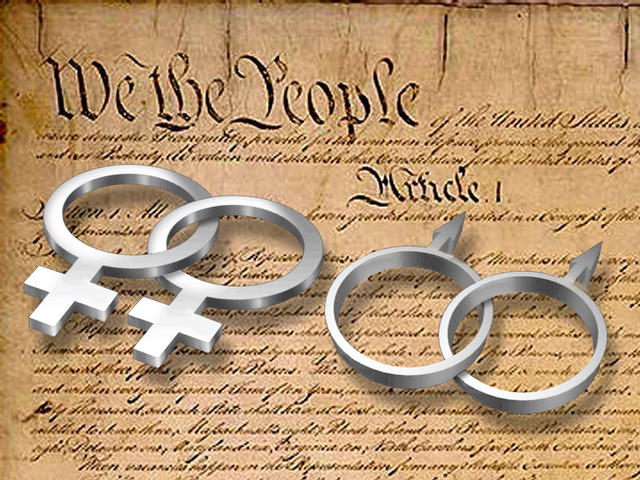
My parents were married July 9, 1950. This year would have been their 65th wedding anniversary had my father not died unexpectedly in March. Sixty five years is a long time for anything but it seems to be even longer when considering marriage. We live at a time when fewer folks are reaching milestones such as this and when marriage itself is undergoing redefinition (both by the Supreme Court and the court of public opinion). Many are not sure it will survive. Others are not sure it should. Such is the state of things.
This year my wife and I observed our 37th anniversary -- a tough year and not much of a celebration (having lost two dads, five aunts and uncles, a couple of cousins, and a host of other challenges I will not mention). The ability of a marriage to endure is like gnostic wisdom -- people have all sorts of ideas why marriages last and why they don't and all of them involve hidden reasons. We want a crystal ball before we marry to make sure the person is the right one, the time is right, and the marriage will endure. Pastors who do pre-marital counseling wish they could accurately predict if this one will last or not. So do their parents.
Love is important -- don't get me wrong. But it is not the primary factor in marital longevity. I believe it is forgiveness. The shape of love is forgiveness -- God's love for us and our practice of His love toward one another. This is especially true in the domain of marriage and family. Forgiveness is the glue that binds husband to wife and wife to husband over the long haul.
My parents had disagreements. We knew it growing up. But those disagreements were dealt with by the healing balm of forgiveness. Disappointments and hurts are always a part of any marriage but the Christian part of marriage is grace of forgiveness learned from Jesus and practiced in the most intimate and taxing of relationships -- marriage. Love is impossible to sustain amid the angry words and painful wounds of life -- unless there is something to give love a staying power. That is forgiveness. Even in death, my mom has things that she will have to forgive of my father if she is to find peace. It is always that way. It is not because my dad was a bad husband but because death always exposes our weaknesses and in our grief those weaknesses and failings tend to gum up the healing and comfort of the bereaved. The first answer to grief at the lost of a spouse is forgiveness. Then comfort comes and with it the hope and expectation of the eternal life and blessed reunion of the saints our Lord has promised.
Oddly enough, the pro-family Ronald Reagan signed into law the first no-fault divorce act (California, 1969) but it became a model for every other state until there was no blame for any marriage failing -- only a quicker and easier path to undoing the knot. Cohabitation justified itself once by saying it was marriage without the piece of paper. Now those who cohabit are choosing not to be married and don't want their cohabitation governed by law (unless it comes down to property and benefit rights to which they believe they are entitled). Gays want marriage in name but seem intent upon putting their own stamp on what marriage is (gays, at least gay men, that is, are less likely to see sexual fidelity as essential to marriage). We have many changes in the process and who can say what marriage as a legality will look like down the pike. But marriage as God's creative order has not changed much. Complementarity, faithfulness, sacrifice, forgiveness, one man and one woman, and, of course, children remain key to any Biblical definition of marriage. God has suffered through plenty of attempts to remake marriage and He will undoubtedly suffer through our own tinkering with the idea. But natural laws do not depend upon our agreement to be true. They are true by His design. Just as the rescue of a broken or wounded marriage is also His design.
Perhaps we will not see so many couples observing the higher numbered anniversaries. I hope this will not disappear. Fewer, perhaps, but still those who learn that love means forgiveness and forgiveness is the glue that binds our ties. . . That is what I think about on the day that would have been my parents 65th wedding anniversary.
Sermon for Pentecost 6, Proper 9B, preached on Sunday, July 5, 2015.
People who know celebrities and politicians often paint a less than flattering picture of them as people. From the White House to Hollywood, the impression is that if we really knew our favorite personalities, we might not like them so much. In the Gospel for today Jesus is constrained by the unbelief of those who supposedly knew Him best. Did they reject Jesus became they knew Him too well? What about us? Does Jesus look better from afar and is He as good close up? In the Gospel, the people took offense at Jesus. They did not only reject His message but Him. Jesus quoted a saying about a prophet not being honored in his own hometown but this was about more than familiarity. They were offended at Jesus and His message -- at the idea that their good works were not enough to atone for their sins. . .that sin was so deep and so powerful that it must be undone by a Savior appointed by God. . . and because Jesus was neither the Savior they expected nor the Savior they wanted. The same could be said today. We would like to think that the more you know Jesus, the better you like Him. But that is not true. On the surface Jesus looks innocent enough but in reality Jesus is a radical challenge to the values and vision we have had about life since the Fall in Eden. Jesus is nothing less than shocking in His radical call to repentance, to faith, to discipleship, and to holiness. The miracle is not that people knew Jesus too well and did not like what they saw but that anyone can love Jesus at all. Faith comes not with familiarity with Jesus, intellectual acceptance of His message, or the logic of His kingdom. Only the Spirit can engender faith in our hearts and lead us to trust in the radical words of the Word made flesh. Jesus marveled at their unbelief not because He was surprised by it but because it is a marvel how stubborn our sinful hearts can be -- even to the working of the Spirit. Jesus calls us to nothing less than radical faith and trust. We want to think that faith means being won over by reason or intellectual argument. What does Luther say? I cannot by my own reason or strength believe in Jesus Christ my Lord or come to Him but the Holy Spirit has called me... In other words, reason does not lead to the manger and intellect does not lead to the cross; they cannot. Only the Spirit can lead us there, teach us faith, and renew our minds and hearts. Sin has stolen our intellect and our will. It has skewed the way we see God and the way we see ourselves. We believe that God owes us justice but none of us really wants a just God; we need a merciful Savior. We believe God has treated us poorly and we have gotten less than we deserve; only the Spirit can teach us to see through sin’s deception and open our eyes and our hearts to the riches of God’s mercy in Christ. We want to believe that eventually the Church will become the majority, the ruling majority. But instead the Church is pictured in Scripture as the oppressed minority, the lonely ship facing mighty storms, and the remnant who still believe. Is faith the norm or the exception? We want to believe that if only people knew the Lord better, they would believe in Him. But what we need is not familiarity; we need nothing less than the Spirit to teach faith. We fear rejection. We want to be liked and loved and admired. But Jesus is surrounded by rejection and unbelief and opposition. He was then and He is now. The very things that those most familiar to Him found objectionable are the things people object to now – the depth of sin that requires as Savior, the Savior who is born of the Holy Spirit and the Virgin, the suffering that produces righteousness, and the death that gives us life. . . Faith is not easy; faith is hard. It does not come naturally to us but require the Spirit to teach us. Faith is not the norm; it is the exception. The norm is what we confessed earlier – we are by nature sinful and unclean. Without the Holy Spirit we would not believe. We think we need a reasonable, palatable, comfortable God to help us believe when what we really need is the Spirit to teach us to believe in the one eternal God whom we know through His Son. Jesus conforms to no ones expectations of God except the Lord's. He stands as a scandal and offense to everyone except those in whom the Spirit breaks down the walls of unbelief and plants faith. The God we need is not one we can imagine or design but the God who is beyond our reason and imagination – the God who comes in flesh to save a sinful and rebellious people, who was born to die and who rises to give the unworthy His eternal life. This is not the God we want but the God we need. This is not the faith that comes natural or easy but the faith the Spirit teaches. The better we know Jesus, the more we require faith to hear His hard Word, to trust in what our eyes do not see, and to follow Him on the narrow way of holiness, righteousness, and faithfulness. We don't need time to get to know Jesus better; we need the Spirit to teach us faith. But where we believe by the power of the Spirit, there are the mercies of God made accessible to us, there the healing of salvation is our gift, and there the sinner finds welcome, forgiveness and eternal life. Lord, give us this faith always. Amen.
Well, now it is public. The Contemporary Christian Music (CCM) market boom has gone bust with the whole industry a fraction of the size it once was. “In CCM’s heyday, approximately 50 million CCM albums were sold
annually,” writes Tyler Huckabee. “In 2014, that number had plummeted to 17
million.” Well, sure. Some of it is due to the shrinking size of all albums (a colloquial term give the fact that vinyl went away a long time ago). But there is more. The drop is due in part to the drop in diversity and quality of the music within this genre. Yes, that is probably true. We live in a copy cat culture in which people parrot what ever is trendy in the hopes of building on the success of others only to shoot the whole industry in the foot. But I would suggest there is even more to this.
CCM was always and has always and will always be a fad. It has no staying power. Most of it is throwaway music -- meant for one time use or a few times and then to be forgotten (thanks be to God for that, BTW). Most of it is eminently forgettable due not only to the music but to the lyrics. Love songs to Jesus -- like many of the love songs sung to your hook up lover -- grow tiresome, sound alike, and lose our interest after a while. Perhaps the whole CCM industry will have to wait for nostalgia to awaken renewed interest in the old hits and then the CCM groups will have reunion tours and shake their hips and lips in old age like Chicago has done. Or maybe not.
Some would say the liturgy is also a fad -- except for one problem. The liturgy has been with us since the earliest days of Christianity. Yes, it has evolved and changed but mostly incrementally (at least until modern times). Even the Lutheran arm of the Reformation did not produce an evangelical mass that looked all that much different from the Roman one (at least until the fearful anti-catholic segment of Lutheranism got to butcher our liturgical legacy and leave us looking like high church Methodists!). The liturgy has staying power. Liturgical music has staying power. I once heard a fellow who had gone to Lutheran parochial school -- but had been a Baptist, evangelical, and even a Pentecostal since -- sing the entire Te Deum by memory! Staying power!
Hymnody has staying power. Sure, a goodly number of new hymns will come and go and that is probably as it should be but the core of hymnody remains a remarkably resurgent part of our piety -- evangelical, Protestant, Lutheran, and Roman!! Hymns speak in timeless ways the timeless truths of Scripture and we almost instinctively recognize that. From A Mighty Fortress to Holy, Holy, Holy to You Satisfy the Hungry Heart, we seem somehow to know right away that this is not fad or trend or flash in the pan.
What happens when you build your future on a fad? You have to keep re-inventing yourself every time the fads change, trends come and go, and something new comes on the scene. God knows the church of the moment would not want to be caught with pants down behind the emergent curve! Nope, so such churches must invest heavily in crystal ball discernment of what is up and coming so that they will not be yesterday's news and yesterday's church.
Finally, with the passing of Robert Schuller and Oral Roberts and the troubles of Jimmy Swaggert and a host of others, we find that it is hard to transfer personality to the next generation. What will happen to Joel Osteen's empire when his youth can not be rescued by plastic surgery, not enough of his hair remains to color or gel, or his children lack the charisma of their daddy (presuming that he really has some)? The arena that doubles as the narcissistic sanctuary for the worship of me, the moment, and my desires will be torn down and forgotten. Build your future on a fad and you have none. Or, to put it in the words of Dean Inge, The church that marries the spirit of the age will become a widow in the next generation (and a barren one at that).
I will stick with creeds and confession, with the catholic doctrine and praxis, with catholic liturgy and hymnody, and with the Gospel that is yesterday, today, and forever the same... and therefore never subject to fad or trend or flash in the pan troubles. I hope that you will join me in exchanging the pressure to keep up with the Osteens and settle for the truth that endures forever and the catholic shape of that truth on Sunday morning.
Carved pieces of the four-poster bed that once belonged to King Henry
VII (1457–1509) of England were reassembled and sold in 2010 as a 19th
century revival for £2,200, about $3,200. A recent DNA test proved it
once belonged to the King. It’s thought the bed was made for the 1486
marriage of Henry VII to Elizabeth of York, and it’s highly likely Henry
VIII was conceived in the bed. It is now valued as a national treasure
at £20 million, just over $30 million.
Well, not THE bed. Henry VIII apparently wore that one out with his myriad of wives and mistresses. It was later turned into royal toothpicks when the wood gave up its strength and collapsed in shame.
As one who loves history and who knows the English history, specifically the history of the royalty, is filled with intrigue, wisdom, foolishness, vulgarity, nobility, faithfulness, deception, betrayal, surprise, faith, shame, virtue, morality, lust, and a host of other things. . . I can think of no more sorrowful twist than the fellow who sold the bed five years ago for £2,200 thinking he had finally gotten rid of an eyesore. Ooops!
“The Holy Father wishes to convey his closeness to all the Greek
people, with a special thought for the many families gravely beset by
such a complex and keenly felt human and social crisis,” Vatican
spokesman Father Federico Lombardi said. “The dignity of the human person must remain at the centre of any
political and technical debate, as well as in the taking of responsible
decisions.”
The Pope spoke out at length upon ecology and our stewardship of the earth. The Pope has spoken out in formal and off hand comments on a host of subjects. He called a Synod to discuss marriage, family, divorce, and same sex marriage with mixed signals that ended up disappointing everyone. He has time to talk to people on the phone about individual problems but in the face of Ireland's vote and the SCOTUS decision in the US, Pope Francis has failed to use his bully pulpit to insist that vote and judicial decision cannot nullify God's creative will and to stand boldly and positively for marriage as it has always been understood in the face of those who are changing God's design. It makes you wonder what he worries about at night and what occupies the front of his desk in the daytime.He worries about Greece's economic problems but he has yet to show the forceful and cohesive leadership of natural law and Christian witness as he might. Disappointing to say the least. . .
Today (July 1) I received official notice that President Linnemann has decided
"to initiate formal proceedings under Bylaw 2.14.6 and request [my]
expulsion from Synod." As an automatic result of this action, I am on
"suspended status" under Bylaw 2.13.4.
According to Bylaw 2.14.6c, I have 15 days to appeal my suspension.
Nevertheless, I have told President Linnemann that I will not appeal his
decision. Having suffered through those three previous heresy
trials--which burdened nearly 17 of the past 26 years of my ministry--my
family and I have come to the point of saying, "Enough! No more!"
Consequently, on July 15, I will be removed from the LCMS.
Yesterday I began to make inquiries into the process for becoming
rostered in the ELCA. Later this summer my family and I will be joining
Christ Lutheran Church (ELCA), here in Valpo.
My Comments:
While some will characterize this as a victory, it is a small one and a sad one. It is small because while Dr. Backer has certainly been a visible and vocal challenge to positions of the Missouri Synod, he is not the only voice of dissent nor will the challenges to our rather uncomplicated history of positions taken on the basis of Scripture and the Confessions disappear when he joins the ELCA. Yet it is a turning point because for too long we have assumed that there is no backbone to our confessional stance and no consequence for those who publicly teach in opposition to it. I for one do notbelieve that a diversity in which direct conflict with our stated position is helpful to us but diminishes both our internal unity and external witness. The LCMS has no thought police but when people enter the pulpits and classrooms of our Church as servants of the Church, it is the barest minimum of expectation that their teaching will be consistent with the stance of our Synod. If it is believed that we as a Synod are in error, there are provisions for dissent and for calling the Synod to review and change our position.
It is sad because no one wants something like this to end like this. Dr. Becker is by all means a gifted, talented, and effective teacher and on many points his teaching is exemplary. I for one never wanted this to end with his leaving but with his agreement to teach in accord with the historic and consistent framework of our Synod's stance on such things as the ordination of women, the historicity of creation and Genesis' record, and other areas with which Dr. Becker has raised question or voiced disagreement. Repentance from wrong is never defeat but the ultimate victory of God and His Spirit working through His Word. It was my hope that this would resolve by this gifted teacher determining both to affirm and to teach in a positive manner consistent with the stance of the Missouri Synod. That this has not happened is of great disappointment to me and, I suspect, to many others. While there are some in our Synod who want to clean house and create and exodus of those who cannot teach and preach in accord with the public, historic, and consistent position of Synod on these and other controversial issues in the modern Christian world, I would prefer that we as a Synod came to one mind joyfully and willingly to confess with one voice the changeless Christ for our changing world, the truth that is steadfast and enduring, and the Word that speaks the same truth yesterday, today, and forever. This could have been such an occasion and it still might be, the grace of God still at work!
In the end, however, I suspect that Dr. Becker stated what many who opposed him also felt -- enough... no more... When division and dispute become the consuming passion of a Christian people, the witness of that people is tainted internally and externally and we can no longer give ourselves fully and wholly to the task the Lord has set before us. So, while sad that Dr. Becker chose to leave rather than teach consistently with the positions of the Synod in which he has lived for 53 years, I believe that this is one story that needs a closing. Dr. Becker has promised to pray for the LCMS and we can do no less than to pray for him and his family and for the day when we shall unite in common confession and in uncommon confidence in the Word of the Lord that endures forever and in the Gospel of Jesus Christ crucified in which alone there is salvation for any and all who will believe.
At Golgotha Lutheran Church, rural Wausa, Nebraska, the Rev. Caryl Ritchey hosting Pastor, the Rev. Eldor Meyer ordaining, the Rev. Marion VonRentzell preaching, and assorted other clergy participating, the Rev. Larry A. Peters was ordained a minister of Christ's holy catholic church.... 34 years ago today!
It was as hot as h e double hockey sticks and a few of the participants were late and the Bishop was making his first trip ever to the parish but... God help us, we made it... And it has been an exercise in unworthiness countered by the lavish grace of God that still rules the day (thanks be to God!).
And in six days I will be a part of the ordination and installation of our new Associate Pastor. He will begin as I am watching the years pass by as I make it through the last quarter of my years of active ministry. Strangely, I often feel just as uncertain and in awe of the pastoral office as Daniel must feel and I hope all those new and old ordained feel. It is the surprise that God has called such unworthy people with so few real gifts and still has promised those who hear you, hear Me... To those I have failed, I beg your forgiveness and to those whom I have touched with the Gospel in word or deed, it remains my own privilege! Ahhh, a new chapter begins. With men it is impossible but with God all things are possible. . .
At
Golgotha Lutheran Church, rural Wausa, Nebraska, the Rev. Caryl Ritchey
hosting Pastor, the Rev. Eldor Meyer ordaining, the Rev. Marion
VonRentzell preaching, and assorted other clergy participating, the Rev.
Larry A. Peters was ordained a minister of Christ's holy catholic
church.... 34 years ago today!
It was as hot as h e double hockey sticks and a few of the
participants were late and the Bishop was making his first trip ever to
the parish but... God help us, we made it... And it has been an
exercise in unworthiness countered by the lavish grace of God that still
rules the day (thanks be to God!).
- See more at: http://pastoralmeanderings.blogspot.com/2014/07/34-years-ago-today.html#sthash.LDgrXg0z.dpuf
While the hands of the Russian Orthodox Church are surely stained by betrayal and by duplicity with respect to the Soviet period in history and even, perhaps, now with Putin, that does not prevent them from being absolutely correct -- if we can and will listen:
"The general political direction of the [Western political] elite
bears, without doubt, an anti-Christian and anti-religious character. We
have been through an epoch of atheism, and we know what it is to live
without God. We want to shout to the whole world, ‘Stop!'"
-Patriarch Kyril of Moscow and all Russia
Though the Church is always concerned for the implications upon their own faith and practice, there is another side to all of this. Justices who confuse their own opinions for legal truth and constitutional point have little to restrain them for other rulings even more injurious to our nation, our society, and our common values. People who proclaim to be men and women of faith cannot quiet their face to make choices inimical to that faith and expect no consequences (thinking here especially of the Roman Catholic legislators, congressmen, senators, and justices). We cannot at the same time claim for ourselves the never ending freedom of self-expression for sexual desire, vulgarity, and prurient interest while claiming offense for speech, symbol, and political expression that differs from us. While the danger to our faith is substantial, the danger to the very fabric of our nation and our communities is even greater. It may be dangerous to consign some voices of faith to a place outside the public square but it is even more dangerous when we are left more deeply divided as a nation and as a people at the very time when threats to our country are greater than ever. There are those who are not speaking from the vantage point of faith who worry that the very pace of change and the radical nature of this change will prove too much for our nation to absorb and we will be left a fractured people whose suspicion of one another and deep distrust of government and institutions will isolate us and leave us more vulnerable than ever to our enemies.
In a time when the culture wars are raging and it seems Christians are losing, when worship wars are waging and it appears that Christ centered sacramental worship is losing, when gender wars are waging and the family is losing, when nations are at war and it looks like fanatics are winning and democracy is losing, we Christians are often the most unhappy of campers.
Peruse Facebook and you find complaint after complaint or, worse, the sharing of one person's complaints as if this person speaks for all of us. Listen to conversation and you hear people not all that old complaining about the generation coming of age and that which is to come. Read popular magazines and you find the common lament of all kinds of things -- proving that common sense may be the most uncommon thing of all.
Sadly, many of us Christians presume that we must win these wars in order to triumph. I am becoming more and more dissuaded by the idea that culture wars, worship wars, gender wars, and national wars are won by triumph. If we do win, we do not prevent future challenges. Even if we do win, we still face defeat when the law may be on our side but the ordinary practice and values of people are not. Obama is still fighting Bush and Republicans are still fighting each other and Democrats are still fighting all things traditional and churches are not immune from the conflict and confusion of too much fighting without much winning.
I wonder if we have deluded ourselves into thinking that the culture wars will ever be won. Surely sin is behind desire that trumps truth and feeling good as the definition of true good. The culture wars fought over sexual behavior, sexual desire, the marriage definition, abortion, birth control, reproductive technology, etc... will not be won. People can be converted but the wars will remain. Individuals can be called to repentance and the Spirit can work faith in them but the wars will continue to be waged. As Christians we are not in it for the win but to be faithful to Christ with the promise that God works through faithful proclamation and faithful service -- working to reclaim the lost one soul at a time. The real question for us as Christians is whether or not this is enough? Are we satisfied with victory which remains in the hand of the God who defines what it is?
Worship wars will not be over even when contemporary music and cultural Christianity disappears. The roots of the worship wars fought today lie not in musical taste but in the truth that endures forever and itching hearts that insist up defining God, faith, truth, and all else -- first commandment issues to say the least. As long as we are tempted to be gods and as long as we believe we can be gods, we will continue to worship ourselves, let our preferences rule our values, and assume that God is as comfortable as we are with our narcissism. Even if pipe organs replace praise bands, hymnals replace screens, and catholic liturgical practice trumps the emotional sentimentality of what seems to pass for worship, the war will continue. We are fighting not for a form but for the heart and God wins that one person at a time. Will we be satisfied with such a slow pace of victory?
Gender wars are transforming the definitions of love, family, sex, children, culture, and society. We can reorder what God has ordered all we want to but we have changed nothing at all. Surely this is one of those things we think we can do while God in heaven laughs at our feeble efforts at noble and courageous improvement! We can win at the ballot box and in the courtroom and the heart will still find it hard to say no to every disordered desire that comes along. God changes things not by fiat or legal maneuvering but by one heart captive to the Word in which the Holy Spirit is calling, gathering, enlightening, and sanctifying. But are we satisfied with God's progress or do we think we can do better?
The Christian purpose is better served not by becoming like our enemies in order to triumph but by retaining the character of the Christian truth as best we might in even exasperating and disappointing circumstances. The Christian goal is not to make a better world for Jesus or even with Jesus but to call the world to repentance and to comfort the contrite with the Gospel of forgiveness through the death and resurrection of Jesus. The Christian purpose is not good for goodness' sake but good for the sake of the goodness of Him who died that we might live. The Christian is not out to change laws, behavior, or minds but to speak the Word that will convert the unbelieving, rescue the lost, forgive the sinner, and give to the dying the life death cannot touch.
I am not at all suggesting we simply sit in the sidelines of it all and smile and wait for Jesus to come again. What I am saying is that we have to regroup and remember what our purpose is, what our calling is, and what our future is. We are not out to change a law but to reach the dying with Christ's life. In the end that may well change a few laws -- and I hope it will -- but whether we are conservative Christians or liberal ones, God's purpose is not served by mirroring within the House of God's people the wars that go on outside, in the delusion that if we work hard enough God will win. Unless I am mistaken, He already has!!
Here in the South it is not uncommon on the patriotic Sundays (nearest Memorial Day, July 4th, Veteran's Day, etc...) for churches to have patriotic services. A color guard brings in the flag. Patriotic songs are sung and perhaps a Sousa march is played. A sermon inevitably addresses the sacrifices of those who paid for our liberty with their lives, on the need for national repentance to regain God's favor upon our nation, and on the special status of America before God. I do not know if this is done in other nations but here it is common to weave together the fabric of faith and patriotism, at least on certain Sundays of the year.
I consider myself a patriotic American. I am jealous about the good name and noble virtue of American exceptionalism in the world. I am in awe of the faithful folk who have stood guard against our enemies and whose blood was shed on battlefields far and near for the sake of this nation and the freedom we value so highly. I grew up carrying those white crosses adorned with poppies out to the cemeteries of fallen soldiers. I still shudder when the guns of a military salute go off and tears well up in my eyes at the funerals of veterans when a soldier gets down on one knee and presents the flag to the bereaved on behalf of a grateful nation. But there is no American flag inside the nave or chancel of this church and there should not be.
It is one of the gravest of sins to presume God's loyalty to a people or a land and to interweave faith and patriotism. The resulting fabric will not be faithful to either cause when we assume that God is one of us (Americans or any other nation and people) and when we declare ours the only righteous land and citizenry in the world. We do not do our nation or our faith any good by beating our chests and proclaiming God in our hip pocket.
If you are a patriotic American, then pray for the our President, the members of Congress, your Governor, state legislature, judges, mayors, and all levels of civil servants elected and appointed. Do not pray for those you like or those with whom you agree but for all manner of leaders in the kingdom of the left. Pray for their wisdom, for their faithfulness, for their faithful exercise of the powers entrusted to them as servants of the people, and pray for them to be people of truth and integrity who love justice, who act mercifully, and who carry the solemn mantle of public service humbly. And while you are at it, do not speak so disparagingly of our politicians that no one of good repute and noble character would deign to serve the public good.
If you are a patriotic American, then render unto Caesar the things that are his as your civil, patriotic, and solemn duty. Don't cheat on your income taxes and call it the great national sport. Don't sit at home while others cast their ballots for people, initiatives, and referendums. Don't be a silent minority or majority but engage the issues, causes, and conversations of the public square, guided by principle and faith as well. Don't refuse to speak circumspectly or to act virtuously but show forth good citizenship as best you can until and unless to do so would violate God's law.
If you are patriotic American, then teach your children our history -- the good and the bad -- and urge them to give nothing less than their best for the cause of liberty, the rule of good law, and the common good. Teach your children the sacrifices of those who went before them on lonely beachhead, in jungle heat, on thunderous wave, and cloudy sky to protect, preserve, and defend our freedom. Teach your children not to squander this legacy of liberty in the pursuit of selfish endeavor or to justify lustful desire but to pursue it with honor, integrity, and virtue. Teach your children to honor the flag without confusing flag and cross and thereby diminishing both. Teach your children how the government works and prepare them for their own time when they must pass the torch to their own sons and daughters.
If you are a patriotic American, cheer on the defense of the defenseless, the protection of the vulnerable, the cause of the unborn, the aged, and the infirm, and challenge oppression, hatred, and bigotry in all its forms. Honor life as precious gift and not as the prerogative of rich, the powerful, or those who intimidate. Refuse to allow life to be valued by the almighty dollar, the parade of accomplishments, or how productive one can be. Protect rights without dismantling morality or diminishing virtue or surrendering right to wrong, goodness to evil.
Going to worship on a Sunday close to a national holiday and raising up the flag where Christ alone should reign helps neither patriotism nor the faith. Be wary of those who intermix and confuse the two for they are prone to abuse one for the sake of the other. God is not an American but live your life and profess your faith so that your patriotism will not diminish your faith and your faith will ennoble your life as citizen and both will be honored. I know that there will be those who might take offense at what I have written but a patriot is more than someone who waves the flag a couple of times a year.
Here in the South it is not uncommon on the patriotic Sundays (nearest
Memorial Day, July 4th, Veteran's Day, etc...) for churches to have
patriotic services. A color guard brings in the flag. Patriotic songs
are sung and perhaps a Sousa march is played. A sermon inevitably
addresses the sacrifices of those who paid for our liberty with their
lives, on the need for national repentance to regain God's favor upon
our nation, and on the special status of America before God. I do not
know if this is done in other nations but here it is common to weave
together the fabric of faith and patriotism, at least on certain Sundays
of the year.
I consider myself a patriotic American. I am jealous about the good
name and noble virtue of American exceptionalism in the world. I am in
awe of the faithful folk who have stood guard against our enemies and
whose blood was shed on battlefields far and near for the sake of this
nation and the freedom we value so highly. I grew up carrying those
white crosses adorned with poppies out to the cemeteries of fallen
soldiers. I still shudder when the guns of a military salute go off and
tears well up in my eyes at the funerals of veterans when a soldier
gets down on one knee and presents the flag to the bereaved on behalf of
a grateful nation. But there is no American flag inside the nave or
chancel of this church and there should not be.
It is one of the gravest of sins to presume God's loyalty to a people or
a land and to interweave faith and patriotism. The resulting fabric
will not be faithful to either cause when we assume that God is one of
us (Americans or any other nation and people) and when we declare ours
the only righteous land and citizenry in the world. We do not do our
nation or our faith any good by beating our chests and proclaiming God
in our hip pocket.
If you are a patriotic American, then pray for the our President, the
members of Congress, your Governor, state legislature, judges, mayors,
and all levels of civil servants elected and appointed. Do not pray for
those you like or those with whom you agree but for all manner of
leaders in the kingdom of the left. Pray for their wisdom, for their
faithfulness, for their faithful exercise of the powers entrusted to
them as servants of the people, and pray for them to be people of truth
and integrity who love justice, who act mercifully, and who carry the
solemn mantle of public service humbly. And while you are at it, do not
speak so disparagingly of our politicians that no one of good repute
and noble character would deign to serve the public good.
If you are a patriotic American, then render unto Caesar the things that
are his as your civil, patriotic, and solemn duty. Don't cheat on your
income taxes and call it the great national sport. Don't sit at home
while others cast their ballots for people, initiatives, and
referendums. Don't be a silent minority or majority but engage the
issues, causes, and conversations of the public square, guided by
principle and faith as well. Don't refuse to speak circumspectly or to
act virtuously but show forth good citizenship as best you can until and
unless to do so would violate God's law.
If you are patriotic American, then teach your children our history --
the good and the bad -- and urge them to give nothing less than their
best for the cause of liberty, the rule of good law, and the common
good. Teach your children the sacrifices of those who went before them
on lonely beachhead, in jungle heat, on thunderous wave, and cloudy sky
to protect, preserve, and defend our freedom. Teach your children not
to squander this legacy of liberty in the pursuit of selfish endeavor or
to justify lustful desire but to pursue it with honor, integrity, and
virtue. Teach your children to honor the flag without confusing flag
and cross and thereby diminishing both. Teach your children how the
government works and prepare them for their own time when they must pass
the torch to their own sons and daughters.
If you are a patriotic American, cheer on the defense of the
defenseless, the protection of the vulnerable, the cause of the unborn,
the aged, and the infirm, and challenge oppression, hatred, and bigotry
in all its forms. Honor life as precious gift and not as the
prerogative of rich, the powerful, or those who intimidate. Refuse to
allow life to be valued by the almighty dollar, the parade of
accomplishments, or how productive one can be. Protect rights without
dismantling morality or diminishing virtue or surrendering right to
wrong, goodness to evil.
Going to worship on a Sunday close to a national holiday and raising up
the flag where Christ alone should reign helps neither patriotism nor
the faith. Be wary of those who intermix and confuse the two for they
are prone to abuse one for the sake of the other. God is not an
American but live your life and profess your faith so that your
patriotism will not diminish your faith and your faith will ennoble your
life as citizen and both will be honored. I know that there will be
those who might take offense at what I have written but a patriot is
more than someone who waves the flag a couple of times a year.
- See more at: http://pastoralmeanderings.blogspot.com/search?q=july+4th#sthash.SN1wR5wv.dpuf
Sermon preached for midweek service, based on Luke 5:1-11 and I Kings 19:11-21.
Elisha had the call of the Lord on him; he could not plow nor sow any longer so the oxen were slaughtered and the pursued the Lord who had bidden in the still small voice to Elijah. The kingdom of God will not take second place in our lives – not for mighty prophets of old or old pastors today or a people gathered in the Lord’s house on a Thursday morning. The disciples found it just this way on the Lake of Genneserat. The biggest catch of their lives was threatening to sink them and Peter says to Jesus “Get away from me.” To follow Jesus means to leave behind every fisherman's dream. Who among us will not admit some fear in this call? Some of it is borne from the fear of not being up to what God is calling us to. Some of it is the fear of leaving behind the known and familiar in face of that we do not know and perhaps are rightly suspicious. Some of it is the surrender of control that lays its doubts at the foot of Jesus wondering if Jesus will do what He has promised. And some of it is just plain fear because we have learned that if you expect the worst, you will probably not be disappointed. Don’t be afraid? But how can I not be afraid? Mothers who send their children out in to the world know the world is a dangerous place and it is still dangerous for those who are born in but not of it. Dads who struggle to protect and provide know that the older their children are, the harder to help and fix the hurts and wounds of this mortal life. And the children who stretch their wings know that while some fly high, all will crash and burn at some time or another. Life since the Fall of Eden is filled with fear. Our homes have become as much places of refuge as they are welcome stations for guests. Husband and wife, parent and child, neighbor and friend – we often prefer the misery we know to the fearful future we cannot predict. Part of that fear is our suspicion of Christ and of His Kingdom. Elijah lamented that he had done all the Lord asked of him and not he alone was left to bow his knee before Him. Every pastor has felt that fear. The disciples knew how to fish but they did not know how to witness for the kingdom. They were rightfully fearful of a calling in which the primary vocation was trusting what you could not control or see or predict. Every pastor has felt that fear. And now we have a new pastor among us who will learn the sad truth that the shepherding of God’s people is a vocation fraught with fear and requiring trust. I wake up every morning wishing to fulfill my sinful desire and control my destiny but the call of God is a call to faith -- especially for pastors. Elijah learned not to trust in what his eyes saw but to trust the Lord. Elisha learned to burn his bridge behind him and trust his future to the Lord. The disciples on Lake Genneserat learned to leave behind the familiar fishing for the uncertain calling fishing for men. The world rejects such call and will not trust unless the risk can be balanced by reward. But we are called to trust, to follow the Lord in ventures of which we know not the ending through paths as yet untrod. “Do not be afraid,” says Jesus. It is painful and awkward and unpopular and uncomfortable. The way of life in the Kingdom demands faith because there is nothing else. The primary vocation of every Christian is trust. Leaving behind the tried and true for the unknown of God and His kingdom. Exchanging the familiar present with the promise of that which is to come. Leaving our sins into the hands of Him who can bear them and believing they are gone. Resting our weariness upon Him who promises a new body where disease and death no longer reign. Living not to grab what we think is our right but to give and serve in mercy even strangers and our enemies. God is not watching to see if we fail, He walks with us in mercy. The baptized people of God live by faith. Fear meets faith, sin meets repentance, reason meets love, and justice is tempered with mercy. Do not be afraid. It is the sum of all Christ’s teaching. Fears for ourselves, for our pasts, for our futures, for our callings, for our success – all of these are met in Christ. The fear of the Lord is the beginning of wisdom. Faith is the greatest wisdom and trust the highest call. Do not be afraid.
God is our refuge and strength, a very present help in trouble. Therefore we will not fear though the earth gives way, though the mountains be moved into the heart of the sea, though its waters roar and foam, though the mountains tremble at its swelling. Selah There is a river whose streams make glad the city of God, the holy habitation of the Most High. God is in the midst of her; she shall not be moved; God will help her when morning dawns. The nations rage, the kingdoms totter; he utters his voice, the earth melts. The LORD of hosts is with us; the God of Jacob is our fortress (Psalm 46:1–7).
A
one-person majority of the U.S. Supreme Court got it wrong – again.
Some 40 years ago, a similarly activist court legalized the killing of
children in the womb. That decision has to date left a wake of some 55
million Americans dead. Today, the Court has imposed same-sex marriage
upon the whole nation in a similar fashion. Five justices cannot
determine natural or divine law. Now shall come the time of testing for
Christians faithful to the Scriptures and the divine institution of
marriage (Matthew 19:3–6), and indeed, a time of testing much more
intense than what followed Roe v. Wade.
Like Roe v. Wade, this
decision will be followed by a rash of lawsuits. Through coercive
litigation, governments and popular culture continue to make the central
post-modern value of sexual freedom override “the free exercise of
religion” enshrined in the Bill of Rights.
The ramifications of
this decision are seismic. Proponents will seek to drive Christians and
Christian institutions out of education at all levels; they will press
laws to force faithful Christian institutions and individuals to violate
consciences in work practices and myriad other ways. We will have much
more to say about this.
During some of the darkest days of
Germany, a faithful Lutheran presciently described how governments lose
their claim to legitimate authority according to Romans 13.
The
Caesar cult in its manifold forms, the deification of the state, is one
great form of the defection from the [true] idea of the state. There
are also other possibilities of such defection. The government can
forget and neglect its tasks. When it no longer distinguishes between
right and wrong, when its courts are no longer governed by the strict
desire for justice, but by special interests, when government no longer
has the courage to exercise its law, fails to exercise its duties,
undermines its own legal order, when it weakens through its family law
parental authority and the estate of marriage, then it ceases to be
governing authority.
Raising such a question can lead to heavy
conflicts of conscience. But it is fundamentally conceivable, and it has
time and again become reality in history, that a governing authority
has ceased to be governing authority. In such a case there may indeed
exist a submission to a superior power. But the duty of obedience
against this power no longer exists. [Hermann Sasse, “What Is the
State?”(1932)]
As faithful Christians, we shall
continue to be obedient to just laws. We affirm the human rights of all
individuals and the inherent and equal value of all people. We respect
the divinely given dignity of all people, no matter their sexual
preference. We recognize that, under the exacting and demanding laws of
God, we are indeed sinners in thought, word and deed, just as are all
(Romans 3:9ff.). We confess that the “blood of Jesus Christ, God’s Son,
cleanses us from all our sins” (1 John 1:7). We confess that God’s
divine law of marriage and the entire Ten Commandments apply to all, and
that so also the life-giving sacrifice of Christ on the cross is for
all. It is a “righteousness of God through faith in Jesus Christ for all
who believe” (Romans 3:22).
However, even as we struggle as a
church to come to a unified response to this blatant rejection of the
entire history of humankind and its practice of marriage, “We shall obey
God rather than man” (Acts 5:29). Christians will now begin to learn
what it means to be in a state of solemn conscientious objection against
the state. We will resist its imposition of falsehood upon us, even as
we continue to reach out to those who continue to be harmed by the ethic
of radical sexual freedom, detached from God’s blessing of marriage.
And we will stand shoulder to shoulder with Christians, churches and
people of good will who are resolute on this issue.
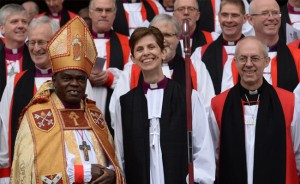
The feminist Anglicans have unveiled their latest campaign. Now
that they’ve succeeded in getting women ordained as priests and bishops
they’re pushing for the language of the liturgy to be changed to call
God “Mother.” Here are twelve reasons why you can’t call God “Mother”
So begins a column by Father Dwight Longenecker. You can read him here.The good father has given us an expansive list of twelve decent enough reasons why you cannot call God "mom" but really he needed only one. This is one of the reasons why I sometimes struggle with rationale, often from a Roman Catholic perspective, which refuses to rest simply upon the one reason needful. Jesus tells us to call God Father. That is all the reason you need.
But that is the point. Liberal Christianity has long ago stopped listening to Jesus. When it comes to the ordination of women, the acceptability of homosexuality, gay marriage, sexual promiscuity, cohabitation, divorce, birth control, etc. . . those who don't like what Jesus says, don't listen to Him anymore. So why would it be different when it comes to what you call God?
The sad reality is that even for sometimes conservative Christians, the fact that Jesus said it and Scripture teaches it no longer carries all that much weight as an argument to silence opinion or control desires. We do what we want when we want to do it. . . When it comes to the Bible, it says what we want it to say and we accomplish this by ignoring what it says.
While this is certainly true of liberal Christianity, it is often no less true of so-called conservative Christians as well. People have said that Jesus did not mean to approve of wine when He turned water into it or used it to give us His blood to drink. . . or that Jesus did not mean to suggest that these little ones who believe in Me meant infants and children. . . or that Jesus did not mean to say that if you divorce your wife and marry another you make both women adulterers. . . or that Jesus did not mean to say that pastors absolve by divine authority the sins of the penitent. . . Even some who think themselves good Lutherans have serious problems with what Jesus said and insist that what He meant was something far different than what He said.
All of this is merely the ongoing power of myth over fact, legend over truth, and my own willful opinion or feeling over the Word that endures forever. We don't have to explain what Jesus meant when He said to pray "our Father" -- what we are called to do is pray that way. Period. Perhaps things will change more for all of Christianity when we stop trying to put words in Jesus' mouth to make Him more palatable to the modern mind and ways and begin to trust that the only-begotten of the Father knows whereof He speaks.
Sermon for Pentecost 5, Proper 8B, preached on Sunday, June 28, 2015.
Mark tells us a powerful story. A old woman with a 12 year hemorrhage watched her life waste away. She was a pariah from family, prodded and poked by doctors, and suffered the medical opinions of ordinary folk. Her life was almost over. On the other hand, a 12 year old girl who lay dying before she had had much of a chance to live at all. The woman believed that if she touched Jesus she would be healed and the girl’s father believed that if Jesus touched her, she would live. In the midst of pain and suffering, illness and affliction, we found hope and faith in the touch of Jesus. Some might call it superstition. Strange how hard it is to know the difference; faith is often mistaken for superstition and superstition for faith. But Jesus knew the difference. And He still knows. The bleeding woman and the father of a dying girl came to Jesus not for magic but for healing from the Healer whom they believed had power to address their hurts, their pain, and their death. But the woman touched Jesus before Jesus could touch the daughter of the synagogue ruler. At that point everything stopped. Jesus called out the woman. Perhaps she feared that Jesus would take back her grace. Instead Jesus commended her faith and sent her forth in peace that passed understanding. Meanwhile the news from home was the worst it could be. The girl had died before Jesus touched her. In his despair, he would trouble Jesus no more. But Jesus had other plans. “Do not fear; only believe.” Taking Peter, James, and John, our Lord visited the dead girl. Where Jesus saw the moment ripe for grace and life, the people laughed at Him. But no one was laughing when she rose from death to life at Jesus touch. You and I marvel at such stories. We want to believe but fear the power of illness and death are beyond the reach of God. Week after week our Lord has called us to faith, to trust in Him and in the power of His grace. For if we do not believe God can heal the sick or raise the dead, how can we trust Him for eternal life and salvation? Interesting is the fact that the verbs to heal and to save are the same word in Greek. It is not different grace but the same grace that rescues us from our sins and restores our wounded bodies. It is not different grace but the same grace that raises the dead to life and restores our unity with God our Father. We might distinguish them, but God does not. Heal, save, make well – different words but the same grace and God at work. In it all is one compelling truth. Jesus’ touch is enough. It is enough for the bleeding, for the dying, and for the lost. It is enough for the fearful, for the fallen, and for the future. Faith is the hand that reaches out to touch Jesus, the heart that trusts in His promise, the mind that grasps His Word, the will that surrenders to His will being done, in us, among us, thru us. Some of us come here today to touch Jesus. We reach out to Him when guilt shames us, when anger consumes us, when bitterness and skepticism imprisons us. We come to reach out to touch Jesus in the splash of baptismal water and in the bread and wine that is His flesh and blood. Some of us come here to be touched by Jesus. We find it hard to believe anything or any one anymore. We have been disappointed too much and life has come crashing down on us. We come to feel the touch of Jesus in absolution, hear the voice of Jesus in His Word, and feel the presence of Jesus in His Holy Meal. And what do we find? A woman who had bled for 12 years and a 12 year old girl. One died slowly and the other suddenly. Both found life at the touch of Jesus. Faith led them to that touch and faith did not disappoint them. Faith still leads us to the touch of Jesus that heals and saves and touch us He does. He touches our sins with forgiveness, our death with His life, our sorrow with His joy, our upset with His peace, our wounds with His healing, our afflictions with His patience, our fear with His power. Like the old woman, some of us come after long struggles, long afflictions, and long lives. Like the young girl, some of us come at the dawn of life while everything is still new. No matter our age or our experience, all of us come as sinners in need of forgiving grace, as those who live in the shadow of death looking for the light of life. And we will NOT be disappointed. If fear has brought you hear, believe. If faith has brought you hear, trust. If disappointment has brought you here, hope. For there is healing, salvation, and life in one name only, the name of Jesus. Before Him we come, praying, “Lord, I believe; help my unbelief... Thy will be done...” Amen.
By now everyone in the world has seen Caitlyn Jenner and we have heard more than we wanted to hear about the woman supposedly inside this man's body. I certainly do not want to add to the sensationalism but I do think there are some legitimate questions here.
Can my body lie to me?
When I look down and see my sexual organs, can my body lie when it tells me I am a man or I am a woman? If my body can lie to me, then how can I know anything for certain. Or is it more likely that my body is not lying to me but my desires are? Is it more plausible to presume my body got it wrong and I ended up in a body which is foreign to my desires or is it more reasonable to consider that my desires got it wrong and they are at war with my body?
I am no expert and do not sit in judgment over Bruce or Caitlyn Jenner as an individual. That is God's domain. But the issue of whom we trust when our desires conflict with our anatomy remains an issue before us as Christians -- in a very public way.
What I am raising is the larger issue that every adolescent and teenage youth has to deal with -- what do I do with desires that conflict with God's creative order, with who I am when I look in the mirror, and with my sexual identity? Though we do not have more homosexuals as a percentage of the population, we do have more people experimenting, trying out things, acting on the impulse of desire -- even when those desires are disordered or in conflict with their gender as a body.
It is a modern idea, only within the last several generations, and one that had its impetus largely from new in psychiatric circles that one’s “sex” and one’s
“gender” were distinct matters, sex being genetically and hormonally
determined from conception, while gender was culturally shaped by the
actions of family and others during childhood. The issue of lying bodies has become accepted and normal for psychiatric diagnosis and treatment but should psychiatrists concentrate on trying to fix the minds of those who find body and desire in conflict or should we work surgically to fix their genitalia?
"Transgender” advocates have allied with the gay liberation
cause and argue that their members are entitled to repair the conflict between desire and anatomy with the surgical solution and that their sexual dysphoria
is a true and authentic conception of their own sexual identity. The overwhelming evidence lies more and more that this is a disorder of the mind and not of the body -- as many Christians have been saying for a long time. Despite the protests of the T part of the GLBT movement the psychology of the past is more and more challenged and fewer and fewer hospitals do sex reassignment surgery. This is a good thing. But it is not public enough.
Read what one distinguished professor of psychology has written: As for the adults who came to us claiming to have discovered their
“true” sexual identity and to have heard about sex-change operations, we
psychiatrists have been distracted from studying the causes and natures
of their mental misdirections by preparing them for surgery and for a
life in the other sex. We have wasted scientific and technical resources
and damaged our professional credibility by collaborating with madness
rather than trying to study, cure, and ultimately prevent it.
The truth is that we are not doing any service to children to encourage desires in conflict with their anatomy or even to suggest to them that their feelings in conflict with their anatomy have any real legitimacy. This is illness and this disorder is one of the terrible fruits of sin that has not only corrupted our relationship with God and each other but has left us with desires that are not simply wrong and at odds with His creative will but destructive of our own mental health and well-being. The worst possible thing we can do is to treat mental illness with surgical solutions. The best possible thing we can do for those beginning to realize sexual desire is to point them away from the disorder and to the truth.
As once we transformed the argument from being anti-abortion to being pro-life, so the Church must reinvent the cause from a stereotypical antagonism against modernism to a positive presentation of God's design for husband, wife, and family. This was never simply about who may marry and who may not but about what marriage is, how society is built and depends upon the structure of the home and family, the vision to see children as both gift and purpose of that home and marriage, and the fidelity that once and still marks the distinguishing character of marriage.
We cannot afford to be simply against gay marriage and the debate cannot be allowed to be simply about who can or should marry. What it must be about is what marriage was intended to be and how husband and wife live it out within the bounds of our sinful and frail humanity but still within God's positive and gracious design. Such a discussion does not begin with same sex marriage but with a renewed call and expectation of fidelity for married and chastity for those not married (gay or straight). In a hook up culture when marriage is peripheral to the enjoyment of sexual pleasure (safe and without responsibility for disease or children) and when reproduction becomes a personal and individual right made possibility by our technology, what the Church must hold up is the radical shape of faithfulness, sacrificial love, and fruitful creation that is a mirror God's own fruitfulness in creation.
We Christians must begin with our repentance. We have not taught our children well. We have not held them or each other to be fully accountable for our choices and habits. We have not struggled to make marriage reflect God's own design and purpose and so it has become our personal preference, choice, and definition. Once having repented as pastors, church workers, parish leaders, and Christian lay people, we must then begin a renewed time of teaching, nurture, and noble living out of such godly relationships.
We can, if we choose, decry the decisions of the SCOTUS that struck down any and all barriers for who may or may not legally marry. And we will. And we should. There will be much wringing of hands, weeping, and gnashing of teeth among us. There will be those who will refuse to preside at weddings and marry anyone lest they be required to marry everyone and others who refuse to preside except to bless some couples and there will be others who do little differently than they have. There will be those who cautiously continue what they have been doing and hope the culture will ignore them and those who will be militant in their rejection of the SCOTUS opinion and same sex marriage and will fight both aggressively and publicly to be noticed. I have no solution here and will not tell you what to do in this regard realizing that some of us will choose different paths.
What I am concerned about is not the fight that will and should take place in the political arena and courtrooms and ballot boxes but what happens in the congregations, from the pulpits, and in the classrooms of our churches. Our parishes are often woefully unprepared to say anything but "no" on this issue. We have not equipped our people to give answer and we have left them dangerously vulnerable to the power of feelings, peer pressure, anecdotal evidence, and sentiment from an extraordinarily effective GLBT lobby. But we cannot just say "no" or we will be labeled simply as naysayers within and outside our parishes. We must speak positively of the created order of man an woman before God, of marriage and children by His design, of home and family as the first place where Christ is known -- or our children and grandchildren will not know about nor appreciate the very gift and blessing of this creative order by God's design.
When sex was divorced from marriage and marriage from children, no one was set free and we were all imprisoned to the insatiable god of personal preference and the worship of desire. The rampant explosion of quick and easy divorce, the rapid rise and acceptability of cohabitation, and the reduction of goodness to personal preference and satisfaction have not added to marital happiness, enriched the lives of our children, answered the loneliness within us, or ended the terror of our fears and doubts. We are lost. We are alone. We are afraid. And we have passed this onto our children -- leaving them without the joy of childhood and with adult responsibility and erotic desire before they can shoulder their weight. We need hope. We need help. We need a higher calling and a nobler perspective than me and my momentary whims. This is what the Church is uniquely poised to offer to a world in love with freedom but unable to use it positively.
When gay people come to us, we must be ready to say more than their desires are bad and their behavior is sinful. In fact, we must not simply begin there but with a positive picture of God's creative will in which gender is not the driving force of personhood and sex not the defining aspect of nature. Self-denial in sexual desire does not stand in isolation from self-denial when it comes to indulgence in every area of life. When straight people cohabitate we must do more than simply say what you are doing is wrong. We must give them a vision of a higher love, a still more excellent way, in which sacrificial love begins with publicly accountable commitment, sanctioned by the God who gives us the power to live it out. When children come to us we must do more than tell them what they must not think or do. We must teach them how vulgarity of all forms cheapens them as God's creation and for whom Christ died and call them to live high and holy the noble calling of their baptism. We must provide for them good and wholesome environments in which to grow, learn, and experience the world God has made (home, school, church, neighborhood, etc...). We must speak the Word of the Lord into their ears that it may inhabit their thoughts and desires.
This is what we should have done and still must do. No less. The "NO' is not a sufficient replacement for the "YES" of God acting in creation and redemption out of love for us.