Monday, May 15, 2023

Not orphans. . .

Sermon for the Sixth Sunday of Easter (A), preached on Sunday, May 14, 2023.

Growing up I thought very little about the gift of family.  I had grandparents, a great-grandfather, many aunts and uncles, and a host of cousins.  I had no conception of what it means to be alone.  Now at the other side of my life, I am an orphan.  My father died over eight years ago and I am coming up on the first anniversary of my mom’s death.  There is no generation in my family older than I am and the generations younger are dispersed throughout the nation and not as close as they were when I was a child.  I have lived here longer than I have lived anywhere and more of my family is here than anywhere else.

We live in different times.  There are not many families like the one in which I grew up.  We are cast to the winds.  While this is certainly true of military families, it is also true of almost all of us.  We depend upon screens to connect us because of the distance between us.  We have lived long enough to learn what it means to be alone.  It is not a pleasant feeling and for some of us it is our worst fear.

On this day when our society honors our moms and reminds us of the gift of family, our Lord has made us a promise.  I will not abandon you or forsake you.  I will not leave you as orphans.  This is a profound and amazing promise.  In a world of broken promises, our Lord insists that He will be with us always, even to the end of the age.  We ought to spend a moment thinking about that.

This is not an empty promise.  You know how it is when illness or death strikes and people say to us, “Let me know what you need.  You can count on me.”  Jesus is not giving us pious platitudes.  He is making an absolute promise.  I will not leave you or forsake you.  You will never be alone, never be orphaned in a world unfriendly to you because of Me.  The promise is easy enough for us to understand but how does our Lord keep it?

First of all, this promise is not something attached to our death or to the life of the world to come.  He makes this promise to us right now – in this life and in this age.  He has warned us that the world appears friendly enough but as the world hated Him, the same world will hate us.  We will find persecution and trials not because of anything we did but only because we belong to Him.  Our Lord does not sit on the sidelines of our lives to see how we handle these things.  He is with us, present among us by His Word and Sacraments so that we will not be overcome.

Being here in God’s House, around the Word and Table of the Lord, is not some benefit or blessing for God to enjoy.  We are here because Christ is here.  The same Lord who was born in our flesh, who suffered for our sin, and who died our death is here right now.  He comes to us as the glorious Easter Savior who is no longer bound by time or geography.  He comes to us through the locked doors of all that this world counts as real to bestow upon us a greater reality than anyone has ever seen before.  Part of that is hidden in baptism.  Do you recall the banner we give out to those baptized?  On it are words from Isaiah 43.  “I have called you by name; you are mine.”

He promises the Spirit whom the Father will send in His name.  The Spirit is come so that we may abide in Christ and Christ in us.  The Spirit bestows the faith that sees Jesus and believes in Him.  The Spirit is at work to keep us one in Christ until that day when the earthly reality fully and finally submits to His heavenly glory.  The Spirit has but one job.  He works through the means of grace to impart faith to our stubborn and fearful hearts and to keep that faith living and active until He presents us to the Father clothed in the righteousness of Christ.  

Our weekly gathering around the Word and Table of the Lord is not some random accident but it is by God’s design and for His purpose.  Here He is in our midst, the God of salvation who has saved us by the blood of Christ, is right now saving us by His grace, and will on the last day save us to everlasting life.  He does this through the Holy Spirit.  It is an amazing grace that God so deeply and profoundly loves us and is working in us, through us, and for us, that we may be His own now and to everlasting life.  This is a great comfort but this a profound blessing.

If this is indeed what the Lord will do for us, what do we need to do so that all that He has promised, we may know.  It is interesting that our Lord points us here to His commandments.  If you love Me, keep my commandments.  The great temptation is to believe that this is about behavior.  If you loved Me, you would shape up your lives and keep the commandments.  But His life among us and in us is not conditioned upon what we do.  It is at work through His Word preached and read and through His sacraments of life and worship.   Here the commandments are not the conditions of His presence among us but the fruits.  Our love for God is not a feeling or an emotion but the desire of new hearts bestowed upon us in baptism, hearts that love and seek the will of the Father before all other things.  If we love Him, then His love will dwell in us and in what we value and desire.

Christ will not abandon us and now He calls on us not to forsake Him.  The Church is our mother in Christ, the place where we received the new birth of water and the Spirit and constant voice of God saying and doing what is good, right, and true .  Let us live like our Mother, walking in the ways of our Savior even we rejoice in His good and gracious gifts for us and our salvation.  Christ has established the Church to be our mother, the womb of the font whereby we are born again, and the table where He feeds us heaven’s food.

Having a mother is a great gift.  She is not simply the one who gives us birth but who sustains our lives.  God bless those who show us a mother’s love.  But it is exactly this love that our Lord shows us through His Church and the means of grace that are the beating heart and life of that Church.  He has done everything so that we might never be alone.  Now He calls us to do everything so that we will not orphan ourselves by disdaining His Word that is the lamp to our feet and the light to our paths and by forgetting the baptismal gift of new birth and by forgetting to stop by His Table where He has set us a place and feeds us still.  If you would have Christ as your brother, you must have the Church as your mother for therein is the work of Christ done that reborn by baptism you may be sustained to everlasting life.

Our Lord will never leave or forsake us but we leave and forsake Him all the time. We take His name in vain instead of calling on it in prayer and praise.  We do not honor His Word with our full attention.  We do not honor the gift of family as God made us and still sustains us.  We live in lies instead of the truth of His Word and we kill one another instead of honoring our relationship and life together as fellow members of the body of Christ.  We dishonor the body of Christ the Church as if our lives in Christ were less important than our individual life in Him.

Let us rejoice that Christ who has kept His promise, has given us new birth of water and the Spirit, leads us by His voice in Scripture, and daily and richly feeds us His food for life in this blest Communion.  Let us rejoice in the earthly institution of the family and order it rightly according to His Word and intent.  Let us live within the unity of His Church where He keeps us close to Him.  Let us rejoice to love Him who loved us more than death and loves us enough to grant us eternal life.  Let us pray by the Spirit that the words of our mouths and the actions we take are for Him, reflective of His love, and serve His glory.  Let us keep the faith and be faithful to Him who died that we might live. In the holy name of Jesus. 

Hubris. . .

There is no shortage of pride in this world and there is no shortage of falls caused by that pride.  Not in the least of it all is the presumption that God gives suggestions which we are free to alter or ignore or even rebuke.  It is as if we have become the Naaman's of our day and age, unfamiliar with the things of God and offended by what He says.  In fact, it seems that the only time we mention God's Word anymore is to say that it cannot mean what it says or it should not say what it means or it does not matter anyway.  If I grow tired of the drumbeat of prideful arrogance on the part of those who are supposed to be His servants and agents, I can only imagine how God feels.

Although it seems to be preoccupied by the LGBTQ+ crowd or the trans inventions or the climate change deists or the diversity folk with little bits of truth everywhere or the equity people who believe it is our job to remake the world because God screwed it all up or the inclusive folks who surrender the real for the imagined ideal of every marginalized group at the table but the privileged, it is the same sin it always was.  Whether you are building towers to touch the feet of God or remaking God into a mortal with our same sins, it is the same hubris.

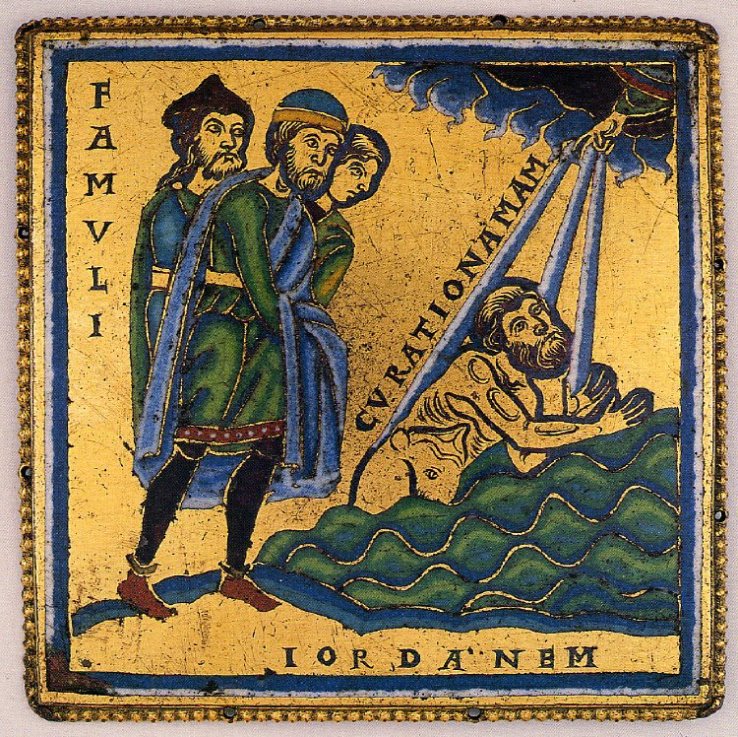
The story of Naaman remains one of my favorites though if I were the servant girl who had offered the intercession of the prophet and the God of Israel, I might not be so keen on him.  Naaman seems a decent enough fellow and must have been a pretty astute general since they kept him on even with his disability.  He is told to seek a cure for his leprosy from the “man of God,” Elisha.  Elisha was the  successor to Elijah as “prophet in Israel” (2 Kings 5:8) and the man to go to for anything from God.  In the end, this Syrian man had to be talked into making the long and somewhat difficult journey to meet up with the prophet.  He is not a fool.  Quid pro quo.  He will not beg but will pay for the cure, provided the price is reasonable.  He takes along the appropriate bags of gold and silver.  Even a cure is not worth the price quoted.  The mighty prophet Elisha tells him to bathe seven times in the Jordan and that was an inch too far for Naaman.  There are better waters than the Jordan so why should he stoop to making himself a spectacle in a foreign land when he could have stayed home and taken a dip in the mighty Damascus.  Again, his servants have to calm him down and urge him to give it a go.  He would have paid a big price or done something ? He’s about to return home in a huff when his sober minded servants plead with him to bathe in the Jordan, asking him if he would have done that which was difficult, why not do this small thing the prophet asked?  Shamed by their reason and calm, the reluctant Naaman dips into the waters of the Jordan just as Elisha had instructed him.  In an instant he is cured -- not simply of his leprosy but of his pride.  The Spirit worked repentance in his heart and brought him to faith, confessing “I know that there is no God in all the earth but in Israel” (2 Kings 5:15).  Naaman seemed a decent enough chap, probably guilty of less sins that the faithful but his pride was the roadblock to God's cure and that pride was the bigger focus of God's healing than the disease.

We are in much the same boat except that where are the reasoned servants who, in their calm demeanor, expose the pride and hubris of our age?  Certainly not in the churches and pulpits of those churches where pastors have become mere echos of the age and times.  Marginalized by the media, those who stand on the shoulders of the faithful who went before and confess faithfully God's Word and truth seem hard pressed to make any difference in our age.  Just remember this -- servants without names and faces who were not even reported in Scripture were the voices that told a man full of pride where mercy lived, who God was, and to swallow hard and repent and do as God had said.  So when we look around at an age that loves to poke fun at God's Word, to ridicule and reject God's order, and to ignore Him who is the way, the truth, and the life, let there be unnamed, anonymous, and faithful voices for God will surely work through them.  Not everyone will be saved but some will hear and, hearing, believe.


Sunday, May 14, 2023

What does this day mean?

Although my mother has died and I am coming up on the first anniversary of her death, I find myself pondering on the fate of Mother's Day.  If we cannot figure out what a woman is or is not, what will we do with a day that belongs exclusively to women?  If we no longer value the role of mother because we do not esteem or desire children, what will we do with a day that belongs to those women who have children or at least have served as a mother figure to them?   Maybe Hallmark better start planning for the future because, if things continue as they have, the future of this day is limited.

Mother's Day makes perfect sense in the Christian context.  We know what a man and a woman are because we listen to Scripture, because we know of God's design, and because we have respect for His order.  It does not make us any less sinful but at least we know the context of our lives, we have a sense of God's purpose, and, even when we screw it up, we know what the default is.  The second Sunday in May may not be the perfect day for the Christian calendar to recall and rejoice in the gift of motherhood -- I would opt for August 15 and the commemoration of St. Mary, Mother of Our Lord -- but honoring motherhood fits us.  It used to fit the world until we decided that being a mom was demeaning, that the life of the mother needed to be valued by a paycheck to be of any worth, that children were a burden to be snipped in the bud by birth control or abortion, and that marriage itself was an antiquated concept based on slave patterns.  Boy, are we smart!

Every age and culture honored and valued the role of the mother, at least in theory if not in practice, until a generation or so ago when it all began to unravel.  Feminism insisted that there must be better things for women to do than to have babies and raise them up into productive and honest adults.  Then when it seemed that they had control of their bodies and did not have to pay attention to the choice that leads to having children, a pro-choice movement deemed having the child a less fulfilling choice than disposing of them.  Contrary to what people think, statistics tell us that abortions were just what the critics said -- birth control for those who had given their consent and then had regrets.  Would that every bad choice could be undone by a medical procedure or pill!  What feminist thought that it would get to this point where a woman had nothing to do with the body and everything to do with a desire or a feeling?  Oddly enough we cannot even call them mothers anymore -- birthing parent is the term of choice.  Even the birth certificates seem headed in that direction.  We don't have moms or dads anymore -- only generic, indistinguishable parents.  So much for Mother's Day!

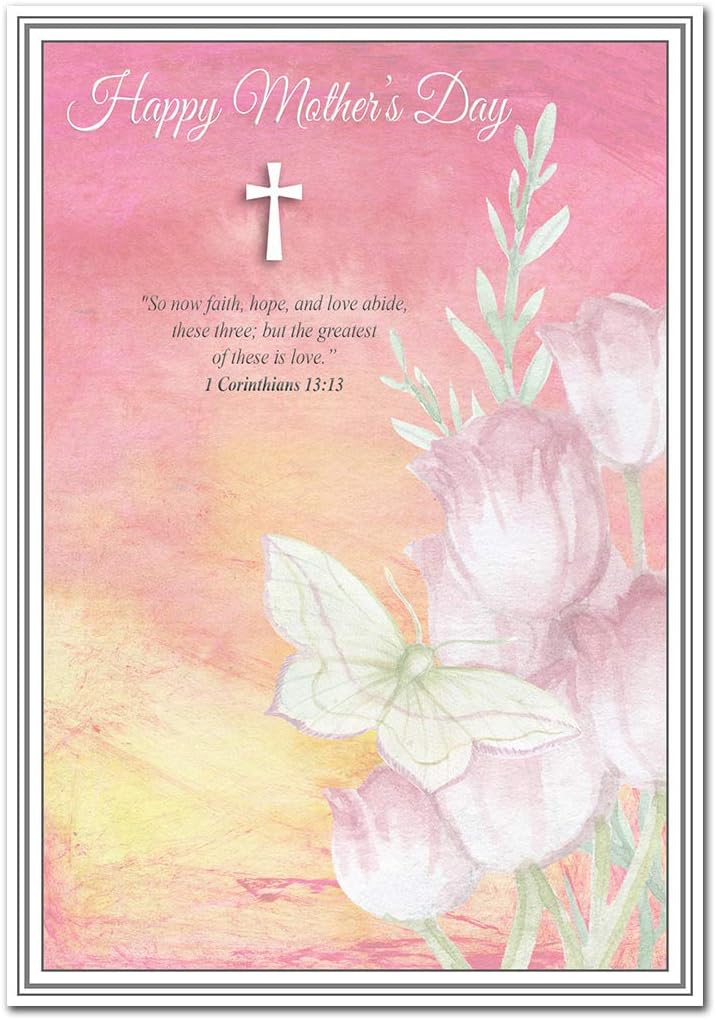
If you want to be a rebel, buy a Mother's Day card.  Talk it up.  Talk up being a woman and mom.  Insist that it is not out of place or offensive or irrelevant anymore but pretty much the most important vocation for women just as it is for men -- children are a gift and heritage from the Lord.  Better yet, buy a religious Mother's Day card.  Be an advocate for God, for godly order in creation, and all things godly.  Let's be counter-cultural; observe Mother's Day.  Who would have ever thought I could make a statement like that?  It is morning in America, folks.

Saturday, May 13, 2023

Lowest common denominator. . .

Math and I did not part on good terms.  I can do everything I need to do but my interest waned at equations.  Algebra is the part of math I love to hate though, to be sure, in my day in public school both algebra and advanced algebra were required of all students.  Fractions were helped by my interest in cooking where the meaning of these things some how began to make sense.  What never caught my attention was the idea of the lowest common denominator.  Apparently the rest of the world found this the most compelling of all concepts.

We live in a lowest common denominator world.  Everything is reduced to the minimum that we all hold in common.  We no longer sing in parts in school but we all sing melody with prefab accompaniment.  In this way we are all stars -- even those who cannot carry a tune. We put everything at a base reading level -- even Scripture -- so that no one will be excluded.  In this way we make the Word of God accessible to everyone but we also make sure that the more complicated words and concepts disappear.  We give out participation trophies to make sure no one feels excluded or unappreciated and in so doing render the victory hollow indeed. We give out academic degrees in a way sure to cheapen their value and we reduce the requirements of those degrees until it is sure that they mean little if anything consequential.  We love the idea of equal pay but somehow have lost the value of equal work.  We are quiet quitters who do as little as we must to cash the paycheck and get the benefits.

None of this is as big a problem as how this has come to relate to the things of God and His Church.  When we climbed on the bandwagon of everyone a minister, we certainly got rid of the pedestal and the Herr Pastor who stood on it.  But we also ended up cheapening the office and now we no longer urge the brightest and best among us to be pastors.  I am not meaning to diminish those now in seminary but the smaller numbers of first career pastors and the small numbers overall of those in seminary seems to be adequate evidence that either we do not esteem the office of the ministry very high nor do we bother to encourage our best to seek it.  Our quest for a cheap and easy route to ordination is also reflective of the idea that being a pastor is not so hard and just about anyone can do it with a little training.

Then there is the idea that worship should meet us all at that lowest common denominator instead of being something difficult worth striving for.  Music should be easy enough so that everyone can sing it if they want to.  We surely do not need to bother with a choir or a decent instrument (pipe organ or grand piano) as long as we have a keyboard and some wicked speakers.  I used to say that if you cannot play well, at least play loud. Given the volume level of most praise bands, the axiom has proven itself over and over again.  The make do attitude has allowed us to be dulled by CDs to accompany hymns and liturgy or all spoken services.  We no longer build buildings of substance and presence but have given into the metal structures that could be warehouses but work just fine for a hard edged worship space.  Beauty is now the image on the screen that is cheap and easy and a manufactured image sold rather than a work of art.  But it works because we have given into the idea of the lowest common denominator.  Whatever works.

When we look at the structures erected by our ancestors in hard times (depression anyone) and see how they sacrificed to provide the best for God's house and His glory, it says a great deal about who we are now and our minimalistic attitudes.  The stenciled handiwork and elaborate painting may not be the style on HGTV but it reflected a willingness to do more rather than settle for less.  It has also spilled over into what happens on Sunday morning.  Not only is the setting less but what we do in it is less.  We think it too much to expect people to stand and sit and kneel so we keep them seated and passive.  We think it too much to sing many hymns or all the stanzas so we sing in soundbites laughing at the 27 stanza hymns of old.  We dare not ask or even expect folks to dress up so whatever beer logo t-shirt or ragged jeans we find is good enough for God and for the man who sits on his bar stool up front leading them.  We would not think to tell someone that once a month is not the regular our Lord had in mind when He said "Do this often in remembrance of Me."  The end result of our lowest common denominator approach to the things of God is evident in the decline of Christianity and those on the forefront of this minimalism have experienced the same empty seats as everyone else.  The answer to our woes is not the lowest common denominator.  It never was and it never is.

Our most for His glory.  Maybe if we tried that more often, things might improve.  I remember visiting my present parish some 30 years ago.  They had called me and I came to see who they were.  When leaders asked if I had a vision or plan for the future, I was not sure what to say.  I ended up saying Everyone in worship and Bible study every week.  The response was laughter.  No one should really expect that.  But
God does.  Our best for His glory.  It sounds rather foolish except to Him who did that for us.  Think about it.  I think about it all the time.

Friday, May 12, 2023

A crayon and a piece of paper. . .

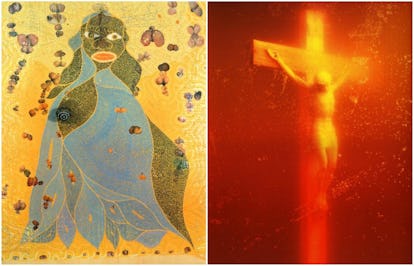
The sad truth is that what often passes as art today would have been posted on the fridge as a child's budding attempt to draw or paint.  A careful mom might have packed it all up in box to give to her son or daughter at some point in their adult life but most of them end up in the garbage, replaced by the newer, better, and more skilled editions.  Sadly, there are no moms around today to tell the wannabe artists that their work needs work and so many of them never get beyond the crayon and paper stage.  You might wonder what kind of art could be produced if only they worked at improving their craft.  But art is no longer about practice and improvement and it is all about raw, crude, and often perverted self-expression.  It is as if the modern artist is sticking a certain middle finger up at the world while they rush to the bank to cash the checks of those who saw the emperor's clothes. 

While there was a time when much if not most art was religious in subject, the art that bothers with religion today, especially Christianity, loves to trash, belittle, and blaspheme the sacred.  In this the middle finger is lifted not toward the buyer whose padded pockets make it all possible but to the God who has given His one and only Son to be our Savior and Lord.  Years ago it was more basic -- stick a crucifix in a beaker of urine and call it done.  Now they actually work at the art but use everything from dung to semen in their multimedia displays of shame.  Inevitably, there is some erotic, generally homoerotic, image hidden or obvious in their work.  Take that, the holy and might God of heaven and earth!  All of the blasphemy is validated with the price fetched by these things (I hesitate to call it art) and by the prizes awarded -- seemingly for being the most outrageous of all.

I wish I could say that this movement in art is driven by a fad or trend -- post-modernism.  It is not fueled by an artistic style or even a phenomenon.  It is nothing less than the chaotic triumph of a worldview devoid of real values and intent upon exploiting outrage.  Sure, some of the artists claim to be acting out of the typical dead sleep now called wokism but it does seem that some delight in chaos, in dispute, and in conflict.  While there may be some personal satisfaction in telling the folks, faiths, or classes you despise to go to you know where, it hardly equates either to art or erudition unless we have not evolved past the temper tantrum or the stick figure on the fridge.  In both cases, it is high time we told the critics and the artists to grow up.  For all the clamor for a new beginning, the folks who delight in tearing down what was offer scant positive structures on which a fresh start might be built.

In contrast to those who identify as artists, Christianity is a positive religion and a profound faith that fosters just that -- a new beginning.  Now in the waning stages of Easter, that new beginning is heard and celebrated in the only One who killed death and rose to grant new and everlasting life.  It was this hope that once was the subject of the greatest of artists and artisans and it offered the promise of beauty amid the ugliness of sin and its death.  It is high time that Christians reclaimed the rightful high ground and offered a significant alternative to the putrid and rancid death that modern art has supplied.  We will not win the world over only by beauty but with words of hope and promise that proclaim the death and resurrection of our Lord Jesus as well as the visual canvas that reflects that same profound hope, we will at least show the world another vision besides the self-expression that reveals the erotic and perverted as humanity's last best hope.


Thursday, May 11, 2023

A discipline or a dogma. . .

The New Testament (Mk 1:29-31; Mt 8:14-15; Lk 4:38-39; 1 Tim 3:2, 12; Tit 1:6) makes it clear that at least one apostle was married, the Apostle Peter had a mother-in-law.  It is also clear that bishops, priests,  and deacons of the time were normally family men (husband of one wife).  It is also clear from the testimony of the Church Fathers, from conciliar decrees, and much other written evidence that married clergy was a normal feature of the Church's life. Perhaps there were even married popes [St. Felix III 483-492 (2 children); St. Hormidas 514-523 (1 son); St. Silverus (Antonia) 536-537; Hadrian II 867-872 (1 daughter); Clement IV 1265-1268 (2 daughters); Felix V 1439-1449 (1 son)].  It does seem clear that marriage must precede the order and that once orders had been conferred, marriage and remarriage (for widowed) was prohibited.  St. Boniface reported to the pope that in Germany almost no bishop or priest was celibate.  But officially, from the 11th century on, celibacy has been in one way or another the obligatory discipline of the clergy at least in the West.  

It arose after a clear narrowing of the legitimacy of clergy marriage and of having children progressed down the centuries.  Lateran I (1123)  codified the prohibition of cohabiting with wives.  Lateran II (1139) reiterated the declaration of the Council of Pisa (1135), not only prohibiting marriages contracted subsequent to ordination but seemingly declaring them to be null and void.  From the time of Alexander III (1159-1181) married men were not allowed ecclesiastical benefices.  The rights of the wife were given the protection of life in a convent.  In 1322 Pope John XXII insisted that no married man could be ordained.  Some have found evidence that 50% of priests were married and accepted by the people in the 15th century.  Despite the attacks of Luther and Zwingli upon celibacy, the Council of Trent (1562-3) resisted the pressure to modify the rules of celibacy were rejected. In Session XXIV on 11 November 1563, the Council upheld the prohibition of clerical marriage.   

The Enlightenment saw fresh attacks upon clerical celibacy and in the wake of the First Vatican Council, the Old Catholics, separating themselves from Rome, abolished celibacy. Pope Benedict XV declared, December 16, 1920, that the Church considered celibacy to be of such importance that it could never abolish it.  Following Vatican II, there were many voices in favor of relaxing the discipline and exceptions were made for married deacons of mature age and for married clergy seeking to enter into communion with Rome, to the point where there are more married clergy in the Western Rite of Rome now than ever before.

All of this is interesting especially in light of Pope Francis who remarked that it was really all about money, specifically the competing claims of family and the Roman Church on the inheritances of married clergy.   "The Catholic Church began requiring celibacy in the 11th century because clergy with no children were more likely to leave their money to the church," so Pope Francis said, anyway.  While it is true that celibacy was never dogma and always a discipline, a personal discipline as a sign of fealty to the Church, the Pope, and the bishop, it is not about to go away quietly.  Further, the marriage of clergy will not end Rome's clergy problems of sexual attraction, pedophilia, and decreasing numbers.  It is not a panacea.  Celibacy is a promise made before the bishop at ordination.  It could easily be undone and yet it is highly unlikely it was fix the problems in the priesthood or fill Roman seminaries with students again.  In fact, it is rather offensive for the Pope now to claim it was a decision based upon greed.  If that is the case, this would constitute a rather petty abuse of marriage at the hands of the Roman hierarchy.

If Rome were to change the discipline, it would require Rome to change many other disciplines or practices.  These certainly include the housing, compensation, health insurance coverage, and retirement plans for Roman clergy.  If it was not simply about money in the past, it could be about money now.  How much would Rome be willing to change to allow the choice to marry to enjoy sanction as well as permission?  Oddly enough, every married pastor knows that part of the difficulty of the vocation is balancing the personal with the parish.  A wife and children do not quite make life easier even if they do make that life fuller.  Curiously, however, non-Roman clergy who remain unmarried are often viewed with suspicion and find it harder to find a parish position the longer they remain unmarried.  What is even more curious is that Pope Francis has a habit of off hand remarks that appear to indicate a change in Roman practice is forthcoming only to see that nothing happens but conflict and confusion.  In that regard, Pope Francis is doing no one any service by demeaning the reason for the discipline while at the same time holding out little hope of a change. 

Wednesday, May 10, 2023

Our children are not experimental subjects. . .

Dr. Susan Bradley, the Canadian psychiatrist who pioneered child gender dysphoria treatment, came out against the popular model of affirming children’s transgender identities through the use of puberty blockers.  Though she once advocated for just that, she now thinks this was a mistake -- according to an interview with the Daily Caller News Foundation.  Now in her 80s, Dr. Bradley's clinic began in 1975 and experimented with such radical therapies but has now backed away from something that became a standard method of treating gender dysphoria in children.  She now believes this treatment can cement the child’s sense of confusion -- confusion that they would likely otherwise outgrow if left alone.  “We were wrong,” she said. “They’re not as reversible as we always thought, and they have longer term effects on kids’ growth and development, including making them sterile and quite a number of things affecting their bone growth.”  The damage, however, has been done.  “Blocking the sexual development of children is a highly authoritarian intervention. Children are asexual, and so they can’t understand the impact of impaired sexual functioning, she said. “We are roughly 10 years into this large-scale experiment and already we have reports on issues with cognitive development, bone mineral density, and fertility. All the up-to-date evidence shows that puberty blockers are neither safe nor reversible.”

Again, one more egregious example of how we are using our children as experimental subjects.  In gender identity to educational methodology to the prescription of drugs, our children have become guinea pigs and we have violated the most sacred rule to do no harm to those in our care.  Everything about children and their childhood has become a problem to be resolved, a mystery to be cracked, and a riddle to be solved.  The reality is that what our children want and need from adults is the same as it has always been -- protection, provision, and care.  They need our protection because they are vulnerable to the whims and pursuits of adults who think it is their job and calling to tinker with children as one might do for some sort of machinery.  They need our provision because they cannot supply themselves with food or shelter or informed decision making or values.  It is our primary job to provide for them what they need -- refuges in which they may be kids, the basic needs of life always, and how to discern the path forward insulated from the burdens of an adult world of choices and changes.  It is our duty to care for them because they cannot care for themselves nor can they establish a pattern of values apart from Him who is right and who alone rights their wrongs.

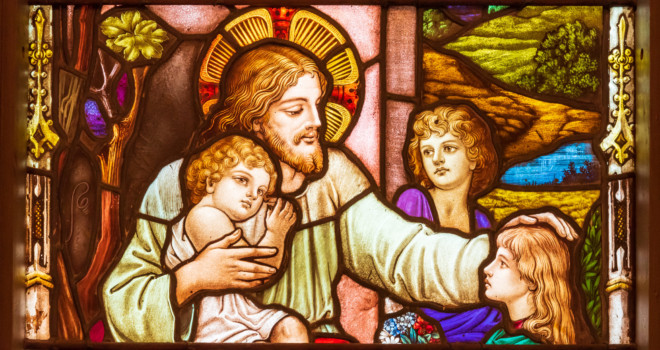
While I could focus this more narrowly upon the responsibilities and duties resting upon Christians, the guilt and the obligations fall upon all people.  Those who know that children are a gift and heritage from the Lord feel this more acutely and bear an even greater burden even without personal accountability for the harm that has been done by viewing children as experimental subjects for our curiosity.  The Christ who lifted them into His arms and blessed them rather than sending them away as those either unintended or not yet able for the Kingdom would undoubtedly remind us of the millstone that would prove a better end than the punishment He has in store.  If for this reason alone we Christians need to expose the wrongs and hold the leaders responsible for the consequences of the woke perspective built upon no facts and the most horrid of fancies.  The fact that one of the most early and vocal proponents of the more radical forms of treatment for the confusion of children with the categories of adult dysphoria has now recanted should give pause to those who continue to advocate for the abuse of children in the name of progress.  While I am personally encouraged by this regret, I am not encouraged by our ability as a culture and by the community of experts to stop this kind of abuse and even worse being fomented upon the children among us in the name of advancement.  Children were better off barefoot and left to their own devices than by the heap of wrong foisted upon them by those who claim the cover of education and improvement.  Even the greatest regret cannot restore their wholeness to those who have been left broken by our social engineering experiments.  Is there so little common sense left that even this must be left to debate?


Tuesday, May 9, 2023

When Your Moral Compass Just Spins Around. . .

While some are arguing about racial justice, police violence, school shootings, and a host of other stories in the news, I look less at institutions than individuals and what is going on.  When I was in college, situation ethics was all the rage.  At that time, it was not simply up to the person to decide what was moral and what was not but hidden within the context of the choice.  Situations differed and so the same action could be considered moral in one circumstance and not in an other.  Now we have long ago dropped the context and left it completely up to the individual to decide what is right and what is wrong.  At the same time, we have deprived the individual of much beyond themselves to guide them in their decision.  

Since the Fall into sin, the moral compass has pretty much just spun around without any solid direction of good or evil.  What mitigated against that chaos was the fact the culture and religion provided objective values to inform what was missing in the individual.  Now we live in an age in which the cultural and religious values that set boundaries are themselves in conflict.  Even Christians and Jews cannot agree on what constitutes the moral imperatives within their own traditions -- much less a solid direction for those on the fringes or exterior of these traditions.  Judea-Christian is largely an historic term without practical application or common understanding for the present day.

The realm of good and evil barely exist.  Like the truth of old, these values have become captive to the individual and are hardly transferable across communities or even neighborhoods.  Worse, we are conflicted by the pursuit of these and left divided as a nation, community, and family over rights and wrongs that would have been simple for our ancestors to determine.  Instead of responsible freedom, we have been left with the anarchy of preference and individual truth and therefore individual judgment -- one that cannot be assailed or questioned because there are no boundaries or principles with which to judge them.  How can you argue with individual perceptions or feelings or fears?

The end result is that people are left without the ordinary constraints to their words or their actions.  The anti-social social media has become a forum for malcontents, crazies, and screwballs and it is impossible to engage these folks.  They have their truth and their followers and that is all that matters.  The contempt people hold other people who have the nerve to disagree with them has only sharpened the edge of our divided society and family circumstances.  Fear has become the primary motivator and fear is always irrational to a certain degree.  From our fears comes the great leap to action.  So people who feel underappreciated or disrespected jump to violence.  This happens when the mob takes to the streets and violence mars the day for society and it happens when anger and fear boil over and the victim uses violence to create other victims.

Values and morality are never inherent but always learned.  The prime source of this learning is revelation, divine revelation.  For the Christian and the Jew, this revelation forms the law or commands of God.  God gives them precisely because He cannot assume that we will come to them on our own without His revelation.  I am pretty sure that the rise in violence, conflict, contempt, and disrespect for life is the poisoned fruit of a moral compass that simply spins in the wind of the person, the moment, and the situation.  It is precisely life which suffers most because of this confused or corrupted moral compass.  Abortion is but one side of the example of how a person finds it not simply allowable but the right thing to do to kill the child in the womb.   The other side is someone who opens fire on the stranger at the door.  In between are countless examples of not simply flawed judgment but judgment absent any moral principles larger than the person or deeper than the moment.  The decline in religion in America is not without its corresponding rise in contempt, conflict, dispute, and violence in society.  Sure, it is simplistic to suggest that God on the outside of our lives is responsible for at least some of this moral confusion but that does not mean it is wrong.   We cannot even agree on what a woman or a man are much less how to treat one another.  The decline in civility and in polite society is reflected in the parallel decline of common truth, common values, and common responsibility.  The truth is we need Jesus more than ever.

Monday, May 8, 2023

Stop playing games. . .

Sermon for the Fifth Sunday of Easter (A), preached on Sunday, May 7, 2023.

The Gospel for today makes little sense without looking at the context.  It is Maundy Thursday.  The disciples are gathered in the Upper Room.  Jesus used the occasion to further teach them not simply of the cross that awaited Him but of the fruits of that redeeming work that would be theirs.  So He speaks of heaven.  He urges them not to let their hearts be troubled.  He was not abandoning them but going on ahead to prepare for them.  He will come again that they will never be apart.  But they were not listening.  Worse, they felt like Jesus was playing word games with them when all they wanted were straight answers.

Finally Thomas opens his mouth.  We do not know anything.  We do not know where You are going.  We do not know the way even though You said You are leading where we will follow.  So Jesus makes it plain.  Look at Me.  I am the Way, the Truth, and the Life.  I am the way to the Father – the ONLY way to the Father.  If You had known Me and paid attention to everything I had told you, you would see the Father.  But look at Me now and you will see the Father.

Apparently that did not help.  Philip stepped up and said what was on the rest of their minds.  Stop playing games with us, Jesus.  Show us the Father and be done with it.  At this, Jesus does not hide His dismay.  How can you even say this?  Don’t you believe Me?  Don’t you believe in Me?  Haven’t you see the works I do?  Haven’t you heard the words I have said?   

We are much like the disciples.  We think it is God who plays games.  But it is not God who plays games with the way, the truth, and the life.  It is not God who plays games with words.  It is not God who plays games with our hearts.  We are the ones who play games.  We have turned faith into one big game.  The Lord has spoken through His Word and acted as He said to deliver us.  He gave up His one and only Son to the womb of the Virgin, to life under the law, to suffering for the sins of others, to death upon a cross, and to the coldness of the grave.  He rose so that life would be given to a people content to make their peace with death.  He went ahead to prepare a place for us, rooms in the mansion above, that we might be forever where He is.  He placed Himself into the Word that does what it says and the Sacraments that deliver what they sign.  These are not games unless we make them out to be.  God could not be clearer but the sad truth is that we could not be more dense.

Religious games have taken the place of true faith that meets God where God has placed Himself.  We have turned faith into a warm and fuzzy feeling about God and the things of God.  We have reduced truth to the level of preference – as wide and as deep as one person.  We have chosen to meet God on the level of our emotions.  We worship ourselves under the guise of what we find meaningful or satisfying.  We treat morality as if it were a wind vane that moves with the times until we live in a world in which we cannot even define male or female.  We live with strange notions of equity, justice, and diversity to replace faith, hope, and love.  We are left with sins that are not evil and evils that are not sins and death is just part of the circle of life.  It is no wonder that we do not know Jesus or where He is going or how to follow Him.

The Lord Jesus insists that the game is off.  He refuses to play games with us.  He gives us the truth that is yesterday, today, and forever the same.  He shows us the way that was and is and will always lead to the Father through Christ. He points us to a goal that is not some spiritual existence after shedding the worn out clothing of the body but a place, a room, prepared for you and for me, so that we may be forever where Christ is and Christ may be forever with us.  Faith is no game to play or win.  Faith’s eyes are opened that we may see Jesus and seeing Jesus see the Father and the future He has prepared for you and me.  Is this enough?

Worship is no game either.  We worship God not where we want to find Him but where He has placed His promise.  We meet God not on the level of our feelings or our emotions but in the facts of His suffering, death, and resurrection, and in the means of grace that serve us with the gifts of His grace. We know God not through our efforts but through His revelation and self-disclosure and the Spirit who works faith in us and keeps us in faith by His Word and Sacraments.  God never plays games with our salvation but we play games with God as if none of it were real or none of it mattered all that much.
 
Christ does not show us the way; He IS the way.  Christ does not show us the truth; He IS the truth.  Christ does not deliver life to us; Christ is our life.  God has given you all things in Christ.  Are you willing to trade all that God has given for something worth less that cannot deliver what you need?   Why are we so worried about squeezing everything we can from this life but treat eternal life as if it were no big deal?  Why do we settle for the comfort in the moment over the gift of eternity?  Why do we give up everything for happiness but nothing to be holy?

God has given us all things in Christ, including the revelation of His own face and His own heart.  When we see Jesus, we see the Father.  It is the work of the Spirit to make Jesus known so that we can see the Father.  This is not the answer to our curiosity but the redemption of our lost lives.  God was in Christ reconciling the world to Himself.  How much more serious can it get?

Games are distractions from that which is real.  We live in a world in which we gladly pay more to those who play games in front of us or entertain us than we do for anything else.  Maybe we cannot prevent the world from becoming a playground of our imaginations but we must surely stand up and insist that faith is not a game, worship is not a game, and our redemption is not a game.  It is the most important thing of all.

This is even more critical today than ever before.  We live at a time when virtual reality competes against the disappointing reality from which we would all escape. We have artificial intelligence that offers us more leisure and less of a focus on the things once so basic to life.  We deal with digital realities more than we deal with physical ones.  Even our doctors will meet us on our screens.  Not everything can be a zoom meeting.  Not worship, not the shape of our life together around the Word and Sacraments, and not the pattern of prayer and daily life in Christ.  

Like us, the disciples were frustrated.  They thought Jesus was toying with them or playing with them.  In reality, Jesus was and is the plain talker who says what it and does what it takes to bring it to pass.  He does not toy with us or treat us as playthings.  He acts with the love more real and profound than any love ever known to save us by His death and resurrection.  He promises not some vague life in the Spirit but a concrete and real life.  We live that now in the voice of His Word that speaks and our sins fall away, in the water that splashes us clean and gives us new birth, in the bread that is His flesh and the cup that is His blood, feeding us not until the next meal but to eternity, the marriage feast of the Lamb without end.

The worst thing we can do is to play at eternity while we work for the moment.

The medicine that creates the affliction. . .

I have for a very long time wondered about the common diagnosis of Attention Deficit Disorder and its kin,  Attention Deficit Hyperactivity Disorder.  These disorders were once normal boy conditions and they were handled with physical activity (called recess).  Yes, of course, I know that there are more extreme conditions of the same but these were rare.  Now it would seem that it is the exception when either a boy or girl is not diagnosed with some sort of attention problem.  Why?  Where I once thought that it was the antagonism to masculinity, I do think there is another source of the pervasive use of this diagnosis.  That is the drug used to treat it.  Once it was discovered that pep pills also had a use in the school making children, particularly boys, more docile, we decided we had to help them.   Boys are more than twice as likely as girls to receive an ADHD diagnosis but, do not fret ladies, the industry is working on evening up the score.  The symptoms of ADD/ADHD are thought to be:

  • Impulsiveness.
  • Disorganization and problems prioritizing.
  • Poor time management skills.
  • Problems focusing on a task.
  • Trouble multitasking.
  • Excessive activity or restlessness.
  • Poor planning.
  • Low frustration tolerance.

Okay.  If you kid seems to have a short attention span and is easily distracted, makes careless mistakes – for example, in schoolwork. appears forgetful or loses things, seems unable to stick to tasks that are tedious or time-consuming, they must be sick (if they were older we would presume they might have some sort of dementia).  Estimates say 11% of children and 5% of adults or almost 1 of every 6 of our children and adults have this disease and need the medicine.  Experts (and drug makers) insist that ADD/ADHD is under diagnosed on a massive scale.

Now it should be noted that there is no single test for ADHD and the diagnosis is the result of a doctor's assessment of any ADHD symptoms in the past six months. A physical exam and review relevant medical history is done to rule out any other medical or psychiatric conditions that could be causing symptoms.  So the teacher who complains about having a room of distracted fidgety boys and a parent who is tired of harping on the same kids to pick up, do their homework, or listen when they call diagnose and the doctor confirms.  The whole thing is legitimized by the fact that there is an insurance code to bill and a drug to prescribe to fix the problem.  To justify the use of ritalin, the affliction was invented.  To stop kids from shifting in their seats in schools or daydreaming out the window or being distracted from their work in school or homework, we invented a use for a drug that had been around for a while and whose use might have been waning.  But as recently as 20 years ago, we agreed the whole thing was a mess and there was no cohesive way to identify, track, or monitor the diagnosis and is treatment.  

That this is happening is without a doubt.  We have turned our kids into experimental subjects in large part because we are tired of dealing with the normal behaviors and struggles of childhood, because we do not want to figure ways to help them identify and correct excessive symptoms, and because we have saddled the classroom with so many other social engineering tasks besides learning that we don't have time for recess anymore.  What we do not realize is that nearly every drug you see advertised on TV or social media or in print is doing exactly the same thing.  They are trolling for people to see this drug and demand that they be prescribed this drug to fix whatever it is that is wrong with them -- even if what is wrong is, well, rather normal.  Big pharma has almost exhausted every quick economical way to treat existing diseases, afflictions, and problems and now is working to create new diagnoses so that old drugs get new life or to create a cash flow for their tired portfolio of yesterday's meds.  By taking pharmaceuticals out of the doctor's office and putting them into everyday life, we are doing something bigger than the disease and creating afflictions to market those meds to -- it is no longer about the disease and only about the medicine.

Mine is a small voice among many about the ADD/ADHD issue but you can see how this has affected many aspects of our health and welfare.  From pandemics to the predictable question about what our pain level is on s scale of 1 - 10, the devil is in the details and we are not paying attention to the details.  Medicine is moving away from the treatment of diseases and has become a tool for those who want to control the masses, encourage people to get on board with the program, and become dependent upon these meds for life changes they should be able to manage for themselves.   We have learned nothing from the opioid crisis and accepted all the wrong lessons from Covid.  But I do not think many care anymore.

Sunday, May 7, 2023

Discouraged but not alone. . .

Reading I Kings 19 is sometimes like looking right into the mirror of your own soul.  Every pastor who is honest has felt the pain of Elijah and found comfort in short supply.  I know that I have.  Elijah was a man of God who live in a culture and a nation that had abandoned the Lord.  Institutions and individuals had forsaken the Lord, forgotten His Word, and rebelled against those who sought to speak that Word and call them to repentance.  Every pastor has like the last man standing in a world which has surrendered to evil and called it good.  Every pastor has, like Elijah, run away in his mind if not in body to salve his wounds and his bitterness.  Alone in a cave, running for his life, and feeling abandoned even by the Lord, Elijah was discouraged -- and with him has stood pastor after pastor at one point or another.

No pastor, just like no Christian, is immune from discouragement.  It is not simply a tool of the devil but also the ordinary doubts and fears of one on whom great responsibility has been conferred and yet with it a Gospel so often dismissed as myth or legend or corrupted in a sea of feelings and emotion devoid of fact or truth.  Discouragement afflicts every shepherd of God’s people at some point or another.  After all, we live and work in a culture absolutely drowning in deception and self-deception.  We are surrounded by churches no longer concerned about offending God and instead, courting the culture and accepting its falsehoods over God's truth.  There is surely no faithful man of God who has not found himself at one point or another identifying with Elijah’s complaint: The sons of Israel have forsaken Your covenant, pulled down Your altars and killed Your prophets with the sword. And I alone am left; and they seek my life, to take it away.

With discouragement, there is always loneliness.  Though the folks in the pew see their pastor as deeply embedded in the community, the truth is that loneliness comes with the job.  We all know that we live in an age in which friendship itself is hard to find, hard to enjoy, and even hard to define.  Social media has confused us about what friendship is and who our real friends are.  For the pastor this is an even deeper problem because in order to minister effectively to the people placed in your care, friendship can blur both this responsibility and make it hard to carry it out when we must speak bluntly the hard word to those we have turned to and depended upon as friends.  It is common and even ordinary for pastors to feel isolated as they seek to minister God’s Word faithfully to God’s people.  This is not because they are aloof or because they believe themselves to be more righteous than those within their care.  It is the consequence of being shepherds and not sheep.  The adoption of democratic levers for the running of institutions in America, even the Church, has only heightened this loneliness.  In such times, it is often hard for pastors to see clearly or believe confidently the hope God has hidden in the forest of troubles.

God’s response to Elijah is worth remembering.  He did not say that Elijah's assessment of the times was wrong.  In fact, Elijah was correct in what he saw.  What Elijah did not see was what God saw and this became the hope that God spoke to His weary prophet in such a low moment: You are outnumbered, but you are not alone.  Elijah was absolutely correct in his assessment of the depravity of Israel and that was the problem.  We all see problems clearly but struggle with solutions.  It is our nature since the fall.  We see the world through rose colored glasses that belie the evil or we see the world so evil we cannot see God at all.  Though Elijah was spot on in diagnosing the world's wrongs, he was incorrect in assessing what God was doing in the midst of it all.  God was still doing what He has promised to do, accomplishing His purpose in saving His people, and though the times were bad, the cause was not lost because God was still there at work.  The problem was that Elijah had lost confidence in the resources God was using to do His work.  Maybe that is the analogy for today.  In the days of Elijah, God had still His remnant among the nation of Israel and His Word and Spirit.  Elijah was just like the rest of the people of God throughout history -- people who survey the wrongs and look at the resources of God and fear it is not enough.  What we fail to realize is that God seems outnumbered but the resources of God are always enough to accomplish His purpose.

By every measure of things, Christianity in our nation is on the decline and so are churches.  Not only the culture but churches have surrendered the eternal truth for the lies of the moment.  Churches have replaced the means of grace with gimmicks and adopted worldly tactics and methods to build their kingdoms instead of His.  It is a scandal how churches have compromised Scripture out of fear that the world will either reject them or find them irrelevant.  They have capitulated to a definition of love that cannot include the cross but insists upon tolerating, accepting, and approving whatever sin and evil in fashion with people now.  If it is easy for God's people to become discouraged, it is also easy for a faithful man of God to look at what is happening in the visible church and the surrounding culture and despair for the future.  It would be entirely reasonable and understandable for us to presume by what we see that the church is losing the battle .  There is as little consolation for Elijah as there is for us to admit that we are but a small minority in our world today.  But God never promised that we would win an earthly battle, become a dominant majority, and control the agenda.  Instead, our Lord was pretty blunt about just the opposite.  

Yet amid all of this is the promise.  He who endures to the end shall be saved.  The works that are done in the name of the Lord and according to God's own bidding shall not be forgotten.  We are not charged with watching the markers of our influence or success.  Ours is not the game of statistics.  The calling before us now more than ever is to be faithful, to speak the truth in love, and to be prepared at all times to give answer to the hope in us when questioned or challenged.  We are not the judges of our world but only of ourselves and that personal judgment should lead us to repentance but also to hope.  It was John Knox who said that one man with God is always the majority.  Cliched but truth, none the less.  Luther maybe put it better, Though devils all the world should fill all eager to devour us, we tremble not, we fear no ill, they shall not overpower us.  While the people sing that hymn, the faithful shepherd needs to listen and, hearing, be encouraged.  You are not alone.  That is the hope that rescues me from the caves in which I hide and I pray it rescues you.

Saturday, May 6, 2023

The dead end of identity. . .

Modernity has made life even harder for our children and youth.  On top of everything else, it has saddled them with the need to create, define, and promote their identity.  As if pimples and growing pains and awkwardness were not enough, now we have to decide who we are, organize that definition so that we can tell others, and then spend the rest of our lives fine tuning and publishing that identity.  

The reality is that our identity was never ours to discover but was always a given.  It was given to us by our parents who not only gave us birth but named us so that we might be known even outside the family.  Some of us even got nicknames along the way.  There were probably stories to go along with the names and certainly the nicknames.  We learned these but did not choose them.

For most of our formative years, we were told who we are by defining who our family was and is.  We learned them as grandmas and grandpas and aunts and uncles and cousins.  The stories of life before we were born and the stories added to the corporate memory after our birth were not details given to us to deliberate over or decide.  We grew up with this identity as a given for our lives.

Our friends and foes in school all contributed to this.  From those peers came nuances and profound examples to further identify us.  With these came identities shaped by abilities we discovered and those we honed -- athletic prowess, intellectual gifts, socialization skills, etc.  We were not given the choice even of what was important.  Some things just stuck on us and we ended up internalizing them and assuming them into the rest of our identity learned from others.

Those of this generation would undoubtedly add the inevitable screen to the mix.  The amount of time once spent in front of a TV gave way to other devices and other influences over us.  Indeed, we learned how to interact and made a practice of interacting as much through social media as we have in person and face to face.  This was not quite a matter of choice but an accident of the moment in history into which we were born and the technology that came to define that moment.

Though it is especially true of us as adults, it is also true that in our childhoods we were and are defined by those who market their products to us.  The increasingly personal and individual shape of this advertising has had a profound affect on what we think, how we think, what we believe, and what we deem to be normal about the world around us and about each of us as part of that larger world.

It was also true that what we did for a living, our occupation, was a great influence over our identity.  Work once defined us as individuals and as a nation but we are seeing work replaced the amusement and entertainment.  In fact it is as if work now exists only to finance what we really want -- our distractions from reality and the our fun.  As the availability of leisure time has increased, so has the pursuit of leisure activities influenced our identity even more.

Faith was once a pivotal mark of our identity -- again, not something chosen but something that became a part of us as it was given to us in the words and deeds of faith's doctrine and practices.  It appears to less significant as a factor in and an influence over our identity than it once was but we should not write it off yet.  In fact, according to Christianity, faith is the most profound given to who we are, our place within the world, and the future before us in life and in death.

If then you were raised with Christ [in Holy Baptism], seek those things which are above, where Christ is, sitting at the right hand of God. Set your mind on things above, not on things on the earth. For you died, and your life is hidden with Christ in God. When Christ who is our life appears, then you also will appear with Him in glory.(Col. 3:1–4)

In place of this eternal reality, culture has presumed desire and our feelings.  As faith has declined in influence over our identity, desire has increased and with it feelings to replace facts.  Our identities have become the passions of our lives, the most important pursuits that lay claim to us and to our days.  These are not momentary or temporary distractions but the central foci of our attention and the central claim upon our resources.  The worst of it, however, is that these have become our greatest temptation -- the temptation to settle for identity as the goal of our days instead of the pursuit of the eternal.  At least the identity given us by God in baptism offered something beyond the moment.  There is nothing in the modern pursuit, definition, and promotion of self and our individual identities to hold onto over the long haul.  No, sadly, we end up stuck in the moment rather than free to fulfill it.  We have not found the kairos of our destiny but we did find the prison of the present, of whim, of desire, and of choice.  I guess if you have already dismissed the resurrection from the list of choices, the only thing left is to rise up at a different moment in time with all the same questions to be answered from among the same questions put to us.  Maybe it is about time for us to remember where this is supposed to be leading so that we have a chance to jump off the merry go round and actually get somewhere.

Friday, May 5, 2023

Institutional trust. . .

It has been said that if Rome thinks in terms of centuries, Constantinople thinks in terms of millenia.  So what does that mean for those not Rome or Constantinople?  Well, let me make a stab at it.  Evangelicals seem to think in terms of minutes -- the moment.  They are not alone.  Though the mainline Protestant denominations try to think in minutes, they are behind the curve and end up thinking in hours.  About the time the fad has moved on, the mainliners are just starting to notice and warm up to the trend.  Some of the other denominations try to think long term but it is generally no longer than a few decades and, for some of the very conservative ones, a bit longer.  Lutherans are divided.  Some are like the mainliners and are a little slow but you have to admire how hard they are trying to be with it.  The rest think largely in terms of institutional history (the founders of their particular jurisdiction) though some within those groups reach back centuries to the Reformation itself.

The result of all of this is a loss of trust in the institutions themselves.  Evangelicals switch churches on the basis of whims and preferences and who is doing the newest thing.  It is hard to fault them when the culture of these groups, especially the non-denominationals, have little to offer but the here and now with God's sanction and blessing.  Mainliners maintain institutional loyalty even when those institutions have veered far and away from their confessional moorings.  This may be true largely because they are graying and it is harder to change when you have had a lifetime invested in one tradition.  That will change when the gray haired are no longer there anymore.  Lutherans have had a long history of a love/hate relationship with headquarters and institutions.  We know we need them but we like them about as much as a colonoscopy (that was a gray joke).  That is, until somebody criticizes our brand and then we fight like heck to defend our honor -- only family has the right to criticize family!  Rome should have been insulated from some of the loss of trust and it was for decades.  Then came Vatican II to undo what had been done on Sundays for centuries and now we have a pope who speaks kinder and gentler with paparazzi but speaks with forked tongue and venom behind closed doors.  When doctrine was no longer the tie that binds, popes became the glue to hole Rome together and nobody seems to trust this guy.

Let us not forget what the internet has done.  We are all experts on everything.  Yes, I know I am one of the guilty ones.  That said, the stridency and anger that the unsocial media has fostered has not been lost on the institutions of the churches either.  We love to hate and there is nothing more fun to hate than an institution.  We spend a pretty fair amount of time attacking our leaders as well.  Until it is election time and we have nobody left to choose but the guy we love to hate along with the rest of the institutions of the church.  At some point we must awaken to the reality that our loss of trust in our institutions is as much our fault as it is theirs.  For the Missouri Synod, this is the bitter fruit of a tolerance of things synodical for the sake of mostly agencies we think we need (Concordia Plans, anyone?) while at the some time always and ever insisting that even when Missouri gets it right it is only advisory.  The truth is that we have to see Scripture in the same way -- it may be the truth, the whole truth, and nothing but the truth but it still cannot make me believe what I do not want to or do what I do not want to.  Therein lies the problem.  We really don't want to invest ownership or oversight of our institutions -- we want them there like the fire extinguisher in case we need them but locked behind closed doors when we don't.  We will all wake up one day to find that we need to break the glass and get the institution out only to find that it is no longer there -- only a rusted hulk of something that once was.  On that day we will all get what we deserve.

Thursday, May 4, 2023

Unholy Inquisitors. . .

Everyone has managed at least a half a smile when a reporter has somebody in that gotcha moment when the words and actions of a politician come back to bite them on the you know where.  We all love those investigative journalism reports about the corrupt or crooked end up with the guilty party in the hot seat in front of God and everybody.  That said, the media has taken on another role as part of its many roles and responsibilities.  They are the unholy inquisitors of those who might dare to violate or slip under the rug any opposition to the sacred truths of the day.  You know what I mean.

Being on the wrong side of abortion, reproductive technology, gender identity, racism, equity issues, and a host of other woke positions that have become the holy grail of righteous politics can kill your future.  Everyone knows this.  And it is not only your political future that is at stake here.  What is especially tempting is when the media find out you belong to a church that does not honor this holy grail with its allegiance -- over Scripture and tradition!  At that moment, the media presumes to be the modern day equivalent of the inquisition and the inquisitors whose job it is to ferret out those who are not true blue liberals.

Modern day politics has moved way past the days of old into a new day of suspicion and distrust.  It is not enough today to vote with the majority of your party, you must personally invest yourself into the radical positions of your most extreme members and stands.  In particular, you must decry and distance yourself from anything and everything that does not honor the god of the moment.  Good and evil have been clearly defined by the extremes of sexual identity and practice, by globalism and and free trade, and by climate and global warming.  In such an age church is not a benefit or even a neutral force -- it is the evil that must be renounced as condition for survival.

While all of this is true and worth noting, what remains my concern is the who.  Who invested the media with the grand power of the inquisition?  Who decided that they must sift ever public figure and tar and feather anyone and everyone who does not live up to their standards?  Who are these self-appointed watchdogs of progressive democracy?  Why must we bow down to them and to their standards of righteousness?  Why is their stridency to be honored and the loyalty to others makes them suspect?

The Facebooks and Mark Zuckerbergs of this world -- along with their own kind -- have decided that they must unearth every violator of the holy grail of politics.  And we let them!  Furthermore, we honor them for doing the unholy inquisition by disowning truth in favor of the view popular in the moment and we disassociate ourselves from any and every group which might challenge the thinking of the day.  If you are thinking who elected me to sit on my high horse, you have a point.  But who elected the media the guardians of the orthodoxy of progressivism, either? 

Wednesday, May 3, 2023

Sharpen the axe. . .

Abraham Lincoln filled his speeches and comments with words of wisdom, often drawn from Scripture.  He is reported to have said at one point, Give me six hours to chop down a tree and I shall spend four hours sharpening the axe.  If he did not say, he should have.  Those are wise words about the value of preparation.  

As we look at the shape of pastoral formation now well into the 21st century, it would seem that the great temptation is to make it easier, faster, and cheaper.  We in our church body already have multiple routes to ordination and some of them are pretty easy, fast, and cheap.  I am not here demeaning those who take advantage of the options offered to them by our church body -- only suggesting that the answer to our need and to the challenges we face as a church in challenging times will not be fixed by easy, fast, and cheap.  We need to sharpen the axe.

The reality is that the demands placed upon pastors today and the pressures and stresses of those within the congregations where they serve are increasing and not decreasing.  We need better trained minds and better formed pastors for these days.  The temptation may be to find a way to pare down what is required or to speed up the process but that is not the path we should take.  I will agree that we need to make it cheaper -- not to the church but to the man being formed as pastor.  We do need to endow and support our seminaries so that they can focus not on the bottom line but on the best we can do for the best men among us who will serve us in Christ's name.

It would seem that we have two basic choices.  We can adjust downward both the expectation and the equipping of those trained up to be our pastors or we can adjust upward both the calling and our esteem of that calling.  If we give into the idea that the decline facing us will temper the need for new and better pastors, then by all means, easy, fast, and cheap will do to form them for the office and for the church.  But if we hope to reverse the decline, easy, fast, and cheap will not work.  

It is more challenging to preach the Word with the distractions of the internet and the presumption that truth is one person wide and deep than it was in my parents generation.  We must raise up better preachers.  It is more challenging to preside faithfully at the Divine Service in an age of option, preference, and freedom that seems to know no bounds than it was in my parents generation.  We must train up pastors to know the liturgy, lectionaries, and liturgical year so that they live in this sphere (and so that they can train the people of God to find a home there as well).  It is more challenging to sift through the abundance of words to find the genuine Word, the half-truths and falsehoods to know the truth that sets you free, and to evaluate content and not just style.  We must raise up better catechists.  We cannot afford to let our people become the victims of the internet or the celebrity talking head or the prevailing mood of culture and have a duty to instruct them in the Scriptures, the creed, and the catechism.  It is more challenging now to find lay leaders who will stand firm in Christ and offer to the churches their time and energy as well as their duties to spouse and children and home and work.  We must raise up better lay leaders who will be proactive and not simply reactive to the trend and fad and issues and problems every congregation faces.

We need to spend more time sharpening the axe -- in the church, in the schools of the church, in the homes where our people live, and in our vocations as the baptized people of God.  We have been hacking away at some of these issues with a dull axe and all it has done is left us tired, weary, quiet, and defeated.  Now is not the time to explore easy, fast, and cheap ways to raise up pastors who will serve us in the ever changing shape of the next decade or two OR we will put our energies into making sure that the pastors we form are ready to meet those challenges.  And, for what it is worth, it is not necessarily a choice between fewer but more well prepared pastors and more but less well trained.  It can be both.  It used to be.  It could be again.


Tuesday, May 2, 2023

Amazing. . .

I clicked on my low budget counter only to find that at least 4.8 million folks have tuned into this blog since I began it.  I did not have counter on it at first.  I do not have a way to count how many read via Twitter or Instagram or other means by which the blog posts are disseminated.  It is shocking and humbling that so many are curious about whatever thought is rambling around in my head today.

That said, I fear that the nature of theological conversation has changed and it is now more difficult than ever to speak and to listen.  While many resonate with what I write, others complain about it.  That is all well and good.  I have no corner on wisdom nor am I the only voice on the block.  Feel free to disagree.  What troubles me is that so much of the disagreement is leveled less at the thrust of what I am saying than a particular nuance -- how I am saying it.  I fear that this is the shape of most theological conversations today.  We immediately jump on how something is said even though we may generally agree with the gist of what is said.  That says something about how we read and how we listen.

My method of thinking is probably different than others.  I do not put out fully formed opinions that have become conclusions no longer open to change.  The way I think is to put things out there and sometimes I even end up disagreeing with myself.  This is, in my view, the point of theological conversation.  We speak not only when there is only a conclusion but we speak to form those conclusions.  Maybe this is an old way of looking at things.  I recall debate classes in high school and college where you would open a piece of paper and have to be pro or con a certain question on the spot.  It was literally thinking out loud.  I guess that is still what I do.  I think out loud, or, in this case, in digital ink.

There are those who think that this methodology is false -- we only speak when we have thoroughly vetted our conclusions and there is no more room to change them.  Maybe that is the way some folks do it.  It is not the way I do it.  I enjoy a good conversation.  I hate it when somebody gets a burr in their bonnet over a word or a phrase taken out of context.  I despise it when people use what I have written to attack me or a straw man of their own making or for the sake of old fashioned demagoguery.  Those things are much in fashion today but the end conversations and do not begin or further them.

If you read this blog you know that I harbor no thoughts of the idea that we each have bits and pieces of the truth which, if we added them together, we would have the whole truth.  The whole truth is Christ alone, His Word alone, and the witness of honest and catholic tradition to that Word and and to Christ.  But theological conversation ought not be to pick apart that Word or to dissect Christ but to unpack that Word and apply it to the day in which we live, to listen to Christ so that we may speak Christ to those around us, and to add to the glorious and rich heritage of faithful confessors who went before us.

I am still here and still reading and still thinking.  So I will probably still be writing.  The goals of my meandering thoughts are to give you something to think about and to encourage a larger conversation.  If that is the fruit of it all, I will be happy.

Monday, May 1, 2023

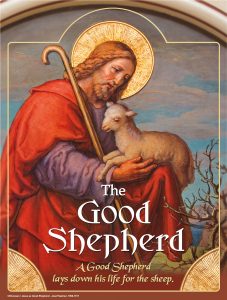
We are sheep. . . but not foolish ones. . .

Sermon for the Fourth Sunday of Easter (A), Good Shepherd Sunday, preached on Sunday, April 30, 2023.

The reality is that this figure of speech, as Jesus put it, fits the imagination but not real life.  None of us want to be sheep.  In fact, when you think about it, it is an insult to be called a sheep.  We do everything to resist the idea that we are followers, that we behave like herd animals, or that anyone controls us.  We think of ourselves as individuals, who decide our own truth and who live our own lives.  It is an illusion.  We are not who we think we are; we are sheep, like it or not.

The pandemic proved that we are sheep.  We decided then and there that most of us would do whatever it took to be safe and preserve our lives.  We shut off the aged and infirm in nursing homes that ended up being their mortuaries as well.  We hid behind masks and kept our social distance from family and friends as well as strangers.  We believed that there was a science to it all that we should trust but it was too dangerous to meet together in God’s House.  We accepted at face value that the liquor store was essential but the bread and wine of God’s Table were not.  We are still adding up the costs of being a herd and trying to figure out who led us.

We imagine ourselves to be the leaders but we have always and only been the followers.  From Eden and the prompting of the serpent to all the voices that fill our heads, we are just trying to find that voice worth following, worth our loyalty, and worth our trust.  It is a disappointing task.  The problem is not that we are sheep.  Like God who asks Adam and Eve who told them they were naked, we have always been transparent.  We have always been sheep.  We are not above peer pressure in trend or fad of what we wear, what we listen to, what we eat.  So the Lord is not calling us to be something different than sheep but He is calling us to be smart sheep.

That is why Jesus is blunt.  The Good Shepherd comes through the door – the door of God’s Word.  If you read that Word, you know who to look for and who it is that fulfills that promise.  The one who does not come through the door of the Word is not the Good Shepherd.  He is a hireling or worse – he is the wolf.  Hirelings exploit the sheep to get from them what they want and then run at the first sight of truth or danger.  Christendom is filled with hirelings who serve God’s people out of greed and gain.  You know that.  I know that.  The talking heads of the internet and snake oil salesmen who put their words above God’s Word are all around us. They are obvious but that has not prevented them from deceiving many.

The Joel Osteens of this world and those much more orthodox than him have a grand following of people blinded by their ignorance of God’s Word and their suspicion of creed and confession.  But that does not stop us from buying their books or watching them on the internet or thinking that every pastor and every church is pretty much the same.  We are vulnerable because we do not know God’s Word and we are hard pressed to know the danger because we choose this ignorance over truth.  It is not new.  It has always been that way.  The worst the hireling does to God’s sheep is to harden them with disappointment so that they do not hear the voice of the true Shepherd speaking through His undershepherds.

But the wolf is not just interested in money or fame.  He is out to devour the sheep. The devil deceives not out of sport or fun but because he will not stop until hell is filled with the lonely, the bitter, the self-serving, and the self-righteous just like him.  He is not interested in being popular but filling the empty minds and hearts of God’s people with lies filled with death and despair.  He is the most dangerous of all the fake shepherds who would steal God’s sheep but even he cannot withstand the scrutiny of God’s Word or steal sheep who know their Good Shepherd.
 
We start by admitting the obvious.  We are sheep.  We cannot be left to our own devices and we need a shepherd.  There is only one shepherd worth following.  He is the Good Shepherd.  The sheep hear his voice, and he calls his own sheep by name and leads them out.  When he has brought out all his own, he goes before them, and the sheep follow him, for they know his voice.  The Good Shepherd does not rely on some dog and pony show to distract us.  He calls us by name and leads us by the voice of His Word.  He does not let us lead ourselves but goes ahead, through the gate of death and the grave so that we might follow Him to everlasting life.  We follow Him not because He is nice or attractive or charismatic or easy but because we know His voice.  We know His Word.  We may be sheep but we are not stupid sheep.  

The pastors whom we would follow are authentic preachers of Christ’s Word and faithful providers of His sacraments to us.  We do not follow them because they are nice to us or because we are friends or because they are great around a beer and pretzels.  We follow them because they will address us with the hard word that calls us to repentance when we lose our way.  We follow them because they will comfort us with real hope when we are wounded and broken.   We follow them because they will teach us the Word of the Lord that endures forever over the word that is popular in the moment.  We judge them against the Word of Christ and that is why we dare to call them pastor.

Our Good Shepherd promises a real abundant life.  His is not some gimmick to get our spouse to be the person we want them to be or to make our kids do what we want them to do or help us get ahead of the rest of the folks at work or retire early so we can indulge our whims with more money and more time than anyone else. No, the abundant life this Good Shepherd promises cannot be ended by death or contained by the grave.  This abundant life can only be imagined this side of glory and promises a future in which the best of today becomes the ordinary of our eternal tomorrow.  

If you want to know one place where you can discern the genuine shepherds from Jesus and the hirelings and wolves and thieves from the devil, listen to a funeral sermon.  If you get a lot of sentiment about the past or stories that make you smile or sports memorabilia or a great playlist, that shepherd is fake and his gospel poison.  But if you hear of the Savior who died that you might live and lives to bring you through death to everlasting life and a new and glorious body and a life better than you can imagine now, stick with him because he is the real deal.

You are sheep.  You are not watchdogs or sheep dogs.  It is okay to be sheep.  Just do not be foolish sheep.  Pay attention to the voice of Christ, your Good Shepherd.  Pay attention to the voice of the pastor who shepherds you in Christ’s name.  Know the Word of God well enough not to be deceived out of ignorance and pay attention so that you will not be led astray because you are preoccupied.  Learn the Word, listen to the voice of the Pastor, recognize what is faithful and you will be fine.  But do not presume that you can listen to the voices of the false shepherds and not be led astray.  You are sheep.  You don’t need to know everything.  You only need to know Christ, your Good Shepherd, and the pastor who preaches Christ honestly and faithfully to you.  Amen.

Shopping for pastors retail style. . .

Although I knew it was happening, I did not realize the scope of it until it hit home.  The internet has not helped in the call process one bit.  It has become the obsession for those who base their judgments on all the wrong things and it has become the soft underbelly of churches already unsure of God's work of wisdom, guidance, and discernment.  Maybe we should throw all caution to the wind and simply market pastors like Amazon does its own products.

Instead of district presidents rating pastors or pastors rating themselves, we could have reviews and then we would be able to base a call to a pastor on the basis of a satisfaction survey or current reviews of him and his performance.  We could look at Amazon Pastors with five stars, generally expecting to pay a premium price or we could drop down a star or two to find a real bargain.  Instead of believing the Spirit is at work in the call process, we could skip the pretense of holiness and get down and dirty trying to shop for a pastor retail style.

If they knew they were being rated, it just might cure some of the affectations and differences among the clergy and make them more docile, more people pleasing, and more flexible in faith and practice.  After all, who wants a rigid pastor who holds to doctrine and piety with any real conviction?  No, really, don't we want every pastor to be more sensitive to what the folks in the pew think -- you know, the ones who are paying their salaries?

Maybe we could do the same for congregations.  Lets send a survey link after every Divine Service -- what did we do well, what could we improve, and, of course, did we meet your felt needs?  Sometimes I wonder if I am completely out of step with the times.  You go to the doctor and even if you die as a result of his treatment, he wants an online review, survey answered, and a rating given.  You visit the supermarket and they want to know how well they did.  Amazon and other online retailers pester you till the cows come home to get you to give them a number or so many stars.   We rate everything else, why not churches and pastors?

Then we could shop retail for a pastor and a congregation, on the basis of reviews, how many stars, services provided, and the cost.  No more messy business of doctrine, confession, and creed.  No, we have a higher criteria to use to judge the Church -- survey says....  I am saddened and sickened by the way we have surrendered to the power of the online presence.  Would you go to a church that had no online presence?  Would you call a pastor who did not have an online persona?  Sometimes I am downright glad that my time is winding down because I don't have the stomach or stamina to keep up with the evolving way we judge ourselves, our pastors, and one another.