We live in a time when we hear mostly bad news about the connections between the Church and teens/twenty-somethings. We live in a time when social media account for the most connections between the younger folks in high school, college, and those just entering the work force. We live in a time when we struggle to emulate the media and techno toys with which our youth are so familiar -- hoping against hope that these accommodations will help us hold on to them for the sake of Christ and His Church. So, it is hard not to tear up at what an 80 year old woman accomplished and still accomplishes with paper, pen, and postage stamp.
Read Terry Mattingly's stirring and heart warming piece about an older woman who knew how to write letters. So that is what she did, writing personal
letters to each college student to let them know that she was praying for them,
wishing them the best as they searched for a college church and looking
forward to seeing them at Thanksgiving and Christmas.
According to church members, the “students sought her out and rushed
to give her hugs and to say, ‘Thank you,’ whenever they came home,” said
Kara E. Powell, who teaches at Fuller Theological Seminary in Pasadena,
Calif.
Personal contact. You cannot beat it. Sticky people whose faith and encouragement stick with our youth shows its results in their stickiness to the Church and the faith. For all the active media ministries we might yearn for -- these kids responded most to an age old method of personal connection. I wish I had a hundred of them writing to the high school and college and young military and young married folk of my parish! I bet you do, too. Folks, this is reachable. We can do this. We can make a big difference in the lives of those most inclined to distance themselves from the Church and the faith. All it takes is commitment, some time, a heart willing to share, and some paper, pens, and postage stamps.
Tuesday, December 20, 2011
Monday, December 19, 2011
The Sun Never Sets On the British Empire... Or Does It?
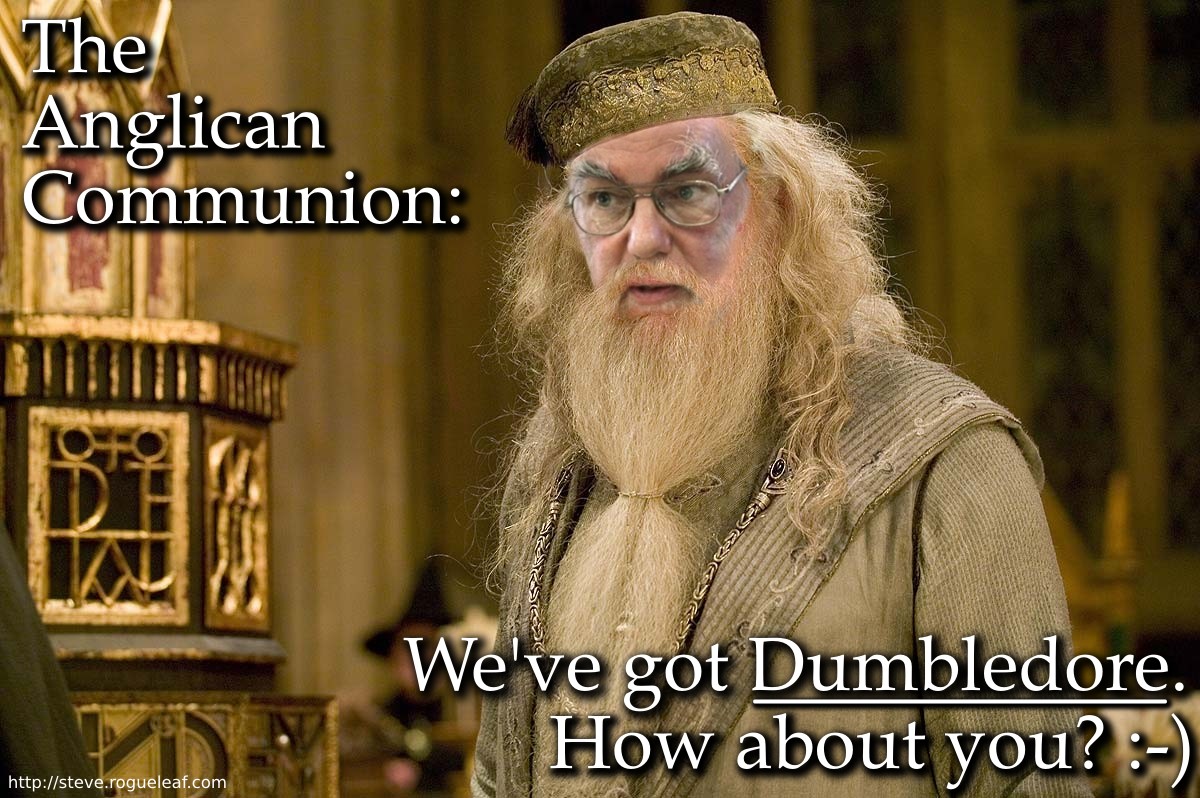
I was pointed to an article in the Weekly Standard about the apparent looming resignation of the current Archbishop of Canterbury, Rowan Williams. It appears his position has become untenable in the delicate and difficult balancing act between the overt and defying actions of the American hierarchy over gay and lesbian marriage and clergy and the conservative and more vibrant Anglican church life in Africa (among other places).
The story here is that there is no story -- nothing we would notice. Perhaps that is symptomatic of a world awash in other urgent problems and issues or perhaps it is testament to the growing marginalism of the Anglican Communion (at least the form in England, Canada, and America). Either way, it is a sad story. Williams is not such a bad man -- a literary figure and poet of some renown. But who can stand in the right place where the tensions between Protestantism and anglo-catholicism, social liberalism and traditional morality, defiance and tradition? Perhaps this is a job for no one -- except a figure head who can look good in a mozetta, rochet, crozier, and miter. It might help if one could avoid the embarrassments of friendliness toward sharia law. It might help if he had a few tricks up his sleeve or there won't be anyone left to marry the heirs to the throne and perform the important civic functions the Archbishop of Canterbury must fulfill.
It is a sad story for a church once closely connected to Lutheranism and one that returned the favor by helping us translate liturgical texts into English, one with whom we share a great body of hymnody, and one whose history was marked by missionary endeavor and theological seriousness -- at least until more recent times. Now it appears left to the Africans to give doctrinal weight and substance to the liturgical tradition that has identified Anglicanism. Perhaps they can pull it off. One can only look with sadness on what the Western homes of Anglicanism have become and pray that someone can pull this church body from the abyss of contemporary social justice parading as faith and a morality in which there are no wrongs except intolerance.
The story here is that there is no story -- nothing we would notice. Perhaps that is symptomatic of a world awash in other urgent problems and issues or perhaps it is testament to the growing marginalism of the Anglican Communion (at least the form in England, Canada, and America). Either way, it is a sad story. Williams is not such a bad man -- a literary figure and poet of some renown. But who can stand in the right place where the tensions between Protestantism and anglo-catholicism, social liberalism and traditional morality, defiance and tradition? Perhaps this is a job for no one -- except a figure head who can look good in a mozetta, rochet, crozier, and miter. It might help if one could avoid the embarrassments of friendliness toward sharia law. It might help if he had a few tricks up his sleeve or there won't be anyone left to marry the heirs to the throne and perform the important civic functions the Archbishop of Canterbury must fulfill.
It is a sad story for a church once closely connected to Lutheranism and one that returned the favor by helping us translate liturgical texts into English, one with whom we share a great body of hymnody, and one whose history was marked by missionary endeavor and theological seriousness -- at least until more recent times. Now it appears left to the Africans to give doctrinal weight and substance to the liturgical tradition that has identified Anglicanism. Perhaps they can pull it off. One can only look with sadness on what the Western homes of Anglicanism have become and pray that someone can pull this church body from the abyss of contemporary social justice parading as faith and a morality in which there are no wrongs except intolerance.
Sunday, December 18, 2011
Unpleasent truths.... and comforting lies...
We must take note also of a most
deplorable tendency of our times, namely, that of preferring the shallow
modern “Gospel anthem” to the classical hymns of our Church. The
reference is both to the text and to the tunes in use in many churches.
On all sides the criticism is heard that the old Lutheran hymns are “too
heavy, too doctrinal; that our age does not understand them.” Strange
that the Lutherans of four centuries and of countless languages could
understand and appreciate them, even as late as a generation ago! Is the
present generation less intelligent or merely more frivolous? (Paul E.
Kretzmann, Magazin für evang.-luth. Homiletik und Pastoraltheologie [June 1929], pp. 216-217)
It has been said by those inside and outside Lutheranism that the Reformation was sung as much as it was preached or taught. We would do well not to forget how singing the faith embeds the doctrine or teaching of the faith into our hearts and minds. This is no less true for youth than it is for old age.
I find it interesting that in Luther's day the youth were confirmed and communed at a much earlier age than the eighth grade or freshman age of my own youth and much of our current LCMS practice. The children of Luther's day did not have the benefit of a universal system of public school education to teach them to read and write, cheap and accessible published books and materials to teach them, and a host of technological tools to use in the classroom. Yet somehow they learned the faith, went to private confession, and came to the Lord's table and to their place as confirmed members at a younger age than our children tend to do today.
I find it interesting the modern complaint that the great Lutheran chorales and hymns as too heavy, too difficult to sing, too doctrinal, and too long. We are told that the kids cannot sing or get anything out of those hymns (and perhaps it is true of the adults, as well). How is it that nearly five hundred years ago, without benefit of a universal system of public education and without the abundant presence of music in their lives like we have today, these children learned, sang, and grew in the faith through the use of the great Lutheran chorales and hymns? Were these children smarter than our kids today? Were they more apt musically or theologically to sing the music and to understand the doctrine inherent in these hymns?
I believe that we are selling our kids short. We have already decided for them that there is nothing for them in the liturgy or the hymnal. We have already taught them to expect to hear the music of the radio or mpe player in Church on Sunday morning. We have already taught them that feelings are more important than truth and that personal taste is the primary criteria for what we sing or do on Sunday morning. We have made these choices for them and we have sold them short. We have told them lies about what they can learn, what they can sing, and what needs to be present in the music of the liturgy and then we are surprised when they turn up their noses at the hymnal. It is not their fault. It is our fault. We have sold them short, discounted their intelligence, their capability, and their wisdom.
Too much of what is dumbed down in the liturgy and hymnody of Sunday morning is because the parents have decided what their kids can learn, what they will like, and what will be effective teaching and nurturing them in the faith. We as adults in Church should repent of the way we have sold short our youth, made poor decisions on their behalf using them as excuses or justifications for those bad choices, and then criticized them when they fit into the stereotype we have have created. It is time to stop. If not for their sake, at least for ours...
We dull their senses with the baby talk of Sunday school, catechism, hymn, liturgy, and children's sermons. We act as if they are incapable when, in reality, we boomers and the like are using our kids and grandkids to justify our personal preference for entertainment that is both shallow and trite. We are pushing them out the door by deciding not to emphasize catechesis, by putting down what happens on Sunday morning, by allowing them to make decisions that are reserved for parents, and by using them to justify our own doubts, fears, and personal taste for what we think the Church should be and do. I think it is high time we stopped selling our kids short. They are smart. They are capable of far deeper levels of learning and comprehension than we have allowed. They watch what happens on Sunday morning. They learn by memorizing familiar texts and melodies (not by a constant parade of new things). They want to learn. They want to participate. Maybe we should give them a chance!
It has been said by those inside and outside Lutheranism that the Reformation was sung as much as it was preached or taught. We would do well not to forget how singing the faith embeds the doctrine or teaching of the faith into our hearts and minds. This is no less true for youth than it is for old age.
I find it interesting that in Luther's day the youth were confirmed and communed at a much earlier age than the eighth grade or freshman age of my own youth and much of our current LCMS practice. The children of Luther's day did not have the benefit of a universal system of public school education to teach them to read and write, cheap and accessible published books and materials to teach them, and a host of technological tools to use in the classroom. Yet somehow they learned the faith, went to private confession, and came to the Lord's table and to their place as confirmed members at a younger age than our children tend to do today.
I find it interesting the modern complaint that the great Lutheran chorales and hymns as too heavy, too difficult to sing, too doctrinal, and too long. We are told that the kids cannot sing or get anything out of those hymns (and perhaps it is true of the adults, as well). How is it that nearly five hundred years ago, without benefit of a universal system of public education and without the abundant presence of music in their lives like we have today, these children learned, sang, and grew in the faith through the use of the great Lutheran chorales and hymns? Were these children smarter than our kids today? Were they more apt musically or theologically to sing the music and to understand the doctrine inherent in these hymns?
I believe that we are selling our kids short. We have already decided for them that there is nothing for them in the liturgy or the hymnal. We have already taught them to expect to hear the music of the radio or mpe player in Church on Sunday morning. We have already taught them that feelings are more important than truth and that personal taste is the primary criteria for what we sing or do on Sunday morning. We have made these choices for them and we have sold them short. We have told them lies about what they can learn, what they can sing, and what needs to be present in the music of the liturgy and then we are surprised when they turn up their noses at the hymnal. It is not their fault. It is our fault. We have sold them short, discounted their intelligence, their capability, and their wisdom.
Too much of what is dumbed down in the liturgy and hymnody of Sunday morning is because the parents have decided what their kids can learn, what they will like, and what will be effective teaching and nurturing them in the faith. We as adults in Church should repent of the way we have sold short our youth, made poor decisions on their behalf using them as excuses or justifications for those bad choices, and then criticized them when they fit into the stereotype we have have created. It is time to stop. If not for their sake, at least for ours...
We dull their senses with the baby talk of Sunday school, catechism, hymn, liturgy, and children's sermons. We act as if they are incapable when, in reality, we boomers and the like are using our kids and grandkids to justify our personal preference for entertainment that is both shallow and trite. We are pushing them out the door by deciding not to emphasize catechesis, by putting down what happens on Sunday morning, by allowing them to make decisions that are reserved for parents, and by using them to justify our own doubts, fears, and personal taste for what we think the Church should be and do. I think it is high time we stopped selling our kids short. They are smart. They are capable of far deeper levels of learning and comprehension than we have allowed. They watch what happens on Sunday morning. They learn by memorizing familiar texts and melodies (not by a constant parade of new things). They want to learn. They want to participate. Maybe we should give them a chance!
Saturday, December 17, 2011
Advent Goody. . .
The hard word that only someone who loves you will say....
Read it all here. . . The Missouri Synod needs Advent, a column by Pres. Matthew Harrison
A big difference between 19 and 29...
I have not and do not say much about tattoos and body piercings. In general, I am against them. I try not to be the kind of demonizer that throws a Bible passage at someone with a tattoo as if it were a weapon. I have never preached on this -- although I do mention this in catechism class. It is certainly part and parcel of a whole area of body image and self-esteem issues. I do not plan to go into it all here but a friend passed on an even handed "rant" by a Roman Catholic monsignor and I would commend his words. They are not what I would have written but they do the job rather nicely of addresses what has become rampant in our culture.
Let me also say that I believe that much of this is youthful self-indulgence. There are a great many of our young folks (twenty or so and under) who see things only in the moment. They, like me at that age, have a certain idea about themselves and life that seems to foster and encourage spontaneous decisions. Thankfully, there were no cell and camera phones, no YouTube, and no easy access to the tattoo parlors and piercing stations that are in the malls and on Main Street across America. I could wake up after a youthful indiscretion (what I have learned to call sin) and confess it and it was gone. Tattoos and body piercings (even radical plastic surgery) does not disappear with regret or confession. These things are rather permanent reminders of our youthful fancy and, with age, they leave us with the marks of our foolishness to bear publicly and, often, prominently unto death. As one guy put it so eloquently, "There is a big difference between 19 and 29..."
So I commend this to you as a good read for those considering a tattoo or some help for those re-considering a tattoo already regretted. Scripture has at least one passage against it but more than this, the Bible speaks so positively of our body as the temple of the Holy Spirit and a gift from God. I would simply say to those attracted to these, be careful, be cautious, and take time to reconsider. Youthful actions have adult consequences. As St. Paul has told us only too well, "all things may be possible, but not all things are beneficial..." Indeed. What seems a good idea at the moment, especially with the lubricant of enough alcohol or other vice, is very often a bad idea reconsidered. By then it may be too late. The other thing is the sheer economics of this all. Tattoos are expensive. They are even more expensive to remove. They are painful. They are even more painful to remove. My advice... don't do it and just say you did (if you feel you have to fit in) better a lie to a peer than an arm, shoulder, back, butt, or face full of regret that will not easily go away...
Let me also say that I believe that much of this is youthful self-indulgence. There are a great many of our young folks (twenty or so and under) who see things only in the moment. They, like me at that age, have a certain idea about themselves and life that seems to foster and encourage spontaneous decisions. Thankfully, there were no cell and camera phones, no YouTube, and no easy access to the tattoo parlors and piercing stations that are in the malls and on Main Street across America. I could wake up after a youthful indiscretion (what I have learned to call sin) and confess it and it was gone. Tattoos and body piercings (even radical plastic surgery) does not disappear with regret or confession. These things are rather permanent reminders of our youthful fancy and, with age, they leave us with the marks of our foolishness to bear publicly and, often, prominently unto death. As one guy put it so eloquently, "There is a big difference between 19 and 29..."
So I commend this to you as a good read for those considering a tattoo or some help for those re-considering a tattoo already regretted. Scripture has at least one passage against it but more than this, the Bible speaks so positively of our body as the temple of the Holy Spirit and a gift from God. I would simply say to those attracted to these, be careful, be cautious, and take time to reconsider. Youthful actions have adult consequences. As St. Paul has told us only too well, "all things may be possible, but not all things are beneficial..." Indeed. What seems a good idea at the moment, especially with the lubricant of enough alcohol or other vice, is very often a bad idea reconsidered. By then it may be too late. The other thing is the sheer economics of this all. Tattoos are expensive. They are even more expensive to remove. They are painful. They are even more painful to remove. My advice... don't do it and just say you did (if you feel you have to fit in) better a lie to a peer than an arm, shoulder, back, butt, or face full of regret that will not easily go away...
Friday, December 16, 2011
A Sad Gift Left for St. Nicholas' Day
On December 6, the Board of Directors published the minutes from the special meeting it held with President Harrison of the LCMS and President Fondow of Minnesota North. The minutes are noted for two reasons. First, they say nothing of the BOD of MNS -- every word that was expressed by the BOD was in closed, executive session and is known only to those who were there. Second, these minutes appear to have so mischaracterized the comments of the President of the Synod, that on December 3, Pr. Harrison seemed compelled to ask to have a statement added to the minutes as an appendix. Is there no shame or embarrassment or public statement by those on the BOD? I mean, really! Read for yourself the shell of words that represents the official record.
Yes, the sale is a done deal. Would it have been so hard for the BOD to simply acknowledge and confess that they would have done some things differently if they had to do all over again -- even if the outcome was the same? Would it have been so hard for the BOD to indicate that they did not just listen to the President of Synod but they heard what he had to say and appreciated his candor and his integrity in approaching them directly? Would it have been so hard for the BOD to say something heartfelt and sympathetic to the good people and Pr. Kind of ULC about the consequences of their actions to this congregation and its vibrant campus ministry?
Merry Christmas ULC..... I hope that this thing will not just go away and the good people of MNS will remember the lack of transparency, the haste, and the arbitrary nature of the BOD actions in this matter. It is not just what we do that counts, but how we do it.
Yes, the sale is a done deal. Would it have been so hard for the BOD to simply acknowledge and confess that they would have done some things differently if they had to do all over again -- even if the outcome was the same? Would it have been so hard for the BOD to indicate that they did not just listen to the President of Synod but they heard what he had to say and appreciated his candor and his integrity in approaching them directly? Would it have been so hard for the BOD to say something heartfelt and sympathetic to the good people and Pr. Kind of ULC about the consequences of their actions to this congregation and its vibrant campus ministry?
Merry Christmas ULC..... I hope that this thing will not just go away and the good people of MNS will remember the lack of transparency, the haste, and the arbitrary nature of the BOD actions in this matter. It is not just what we do that counts, but how we do it.
A Touch of TV... Is it so bad???
The subject of video media in worship is bound to set off all sorts of fireworks. There are those who insist not and those who say why not. While I am not one of those in favor, my position is somewhat nuanced. A part of me is actually very attracted to the idea of video in worship. I watch YouTube. I love good movies. I have seen (and passed on here) clips that were and are deeply moving, inspirational, and informative. My inclination would be for judicious use and yet I cannot seem to bring myself to use video. There are trade offs that come with video that have made it impossible for me to cross the line. In fact, despite the fact that the idea is attractive, my greatest fear is that actually using it would negate everything else we do in the liturgy. Let me give some reasons for this fear.
Video tends to trivialize whatever is shown on it. Be it graphic images of sex or violence, be it awe inspiring shots from nature, video as a medium does not engage us. We are passive before it. We turn it off and turn it on. We control it. We are entertained by it. We are repulsed by it. We are informed by it. But the things on the screen are not accessible to us the way the spoken Word, the splash of water, and the taste of bread and wine are. It is impersonal. Even when we are deeply moved by what we see and hear on a screen, we do not participate in it. There is a great divide or distance between the world of the screen and the world in which we live. In this way, video as a medium works against the medium of the means of grace.
Worship engages us. We are not passive but participate in the liturgy. The Word and Sacraments are not our means but the Lord's means of grace. It is the Lord's Supper. We are bidden to us and to eat and drink of it but it is concrete and real in a way that the things we see on TV never are to us. The whole nature of the means of grace is that they bridge the gap, they come to us, they bid us come, and they engage us not only in an inspirational way but in a personal way. God is personal in the Word and Sacrament. The function and work of the liturgy are to frame the Word and the Sacrament where God comes to us in the touch of water, in the voice of absolution, in the smell and taste of bread and wine. God is embodied in these earthly elements -- that is the sacramental mystery which mirrors the incarnational mystery of God in flesh. The screen cannot embody anything and, if we are honest, it only emphasizes the hiddenness of God and makes Him as unreal as are the things we watch on it.
Video is primarily entertainment. I do not mean that entertainment is a bad thing. I love to be entertained by a good book, a good movie, a good TV show, a good performer, etc. I am not against entertainment. But worship is not entertainment. Even if we may be entertained in moments of the Divine Service it is accidental and not intrinsic to what worship is. There are moments in the liturgy which I feel myself being entertained and I find myself embarrassed by the feeling. It is not that the feeling is bad -- the setting is wrong. Americans are entertaining and amusing themselves to death say Andrew Strom and Neil Postman. While part of me wants to agree another part of me does not want to make such a sweeping indictment. But when it comes to worship, I can see the problem more clearly. The entertainment only distances us from the God who has engaged us in the incarnation of His Son and in the means of grace the deliver Christ to us.
Video is individual activity. When a couple come to talk to me about problems and I find out that their primary interaction together is sitting on the same couch watching the TV or sitting in the same room while at work on different video screens, the problem is clear. Watching TV is not a joint activity. We may both be in the same room and we may both be watching the same thing, but our minds and hearts digest and react individually to what we see and hear. The worship of the Church is communal. We stand, we sit, we kneel. We speak, we listen, we sing. We do this together -- not as isolated individuals in the same space but as part of a community in which God bids us entrance and God makes us one.
Finally, the bigger concern is that we have such a fragile understanding of the divide between the sacred and the secular, between the holy and profane, that video undermines what little remains of this vital distinction. This is the greater area of concern that gives me pause. Whenever we bring the world into the liturgy, we automatically diminish the holy that God has placed in the midst of the world. The more we blur the distinction between the world and this sphere of the holy, the greater the danger to the Church and to our identity as the baptized people of God. Putting a giant TV on the wall of the chancel is not a neutral or indifferent act. It is a monumental action. It brings what is perhaps the most powerful symbol of the world right there into the midst of what God is doing. Where two or three are gathered in My name... in other words, where we gather around the Word of the Lord and the Sacraments (which are the embodiments of His name, the elements to which He has attached His name, His promise, and that make Him known to us and deliver to us His grace and gifts).
Blending things together only distorts the identity of both. Jesus is no blend of the human and the divine. As we confess in the creed, the divinity has not been converted into flesh (the human) but the human assumed into the divinity. The means of grace are not blends of the divine and earthly. Lutherans do not say that the bread or wine has been replaced by the body and blood nor do we say that the bread and wine and the body and blood are intermingled so that they are no longer distinct. What we confess is that the bread is still bread and to it the Word has added to it the flesh of Christ given for the life of the world and that the wine is still wine but the Word has added to it the blood of Christ shed for us and for our salvation. To delve any further into the mystery is beyond us or our manifold explanations. We simply accept what is. In the same way, Christ speaks of us as those who are in but not of the world, the set apart whom He has declared and made righteous and holy in our baptism. Our citizenship is not of the world but of heaven. We are not who we were but the people Christ has made us to be, His own new creation. The Church is in the world but not of the world -- not a building or an address but the Bride of Christ. The Church consists of those called out, set apart, and made distinct from the world by God gracious act in the means of grace. This cannot simply be reduced to a dualism in which flesh and world are evil and spirit and heaven are good. This is beyond that. We are the children of God, created anew in Christ Jesus for good works, for the holy purpose and vocation assigned to us and given to us in baptism.
The liturgy or Sunday worship either preserves and assists this or else it distorts and conflicts with this baptismal identity. That is why when we bring the TV into the worship service, we make a statement that gravitates against the very reason and purpose for which we are there. We can certainly do this in unassuming ways with the same ultimate effect. When the organ is no longer a servant of the Word and insists upon its own voice distinct from its role of supporting the church's song, something is wrong. When the choir sings for the entertainment of the people instead of being an integral part of the liturgy existing for the sake of the Word and the worship of God, we have the same distortion. When the Pastor becomes the central figure and no longer exists in the liturgy as the servant of the Word (its voice), there is danger. When art becomes an end instead of a servant of the Word (the object of that art being that Word), then we find ourselves in conflict with the purpose for which we are here. When music (hymns and songs) become matters of personal taste or objects to be used for one end or another by those who plan and execute the service, such music is suspect. When we look up and see the most prominent secular symbol of our time upon the wall, how can we deny the association with the computer, tablet, smartphone, or TV that dominate our day to day life?
As much as I would like to, I know it is a bad idea to include video in what happens on Sunday morning. In the parish hall or classroom setting, well, that is a different story. But in the Divine Service, video detracts from and does not add to what is there by God's design and promise. You are welcome to try and change my mind... but this is how I see it...
Video tends to trivialize whatever is shown on it. Be it graphic images of sex or violence, be it awe inspiring shots from nature, video as a medium does not engage us. We are passive before it. We turn it off and turn it on. We control it. We are entertained by it. We are repulsed by it. We are informed by it. But the things on the screen are not accessible to us the way the spoken Word, the splash of water, and the taste of bread and wine are. It is impersonal. Even when we are deeply moved by what we see and hear on a screen, we do not participate in it. There is a great divide or distance between the world of the screen and the world in which we live. In this way, video as a medium works against the medium of the means of grace.
Worship engages us. We are not passive but participate in the liturgy. The Word and Sacraments are not our means but the Lord's means of grace. It is the Lord's Supper. We are bidden to us and to eat and drink of it but it is concrete and real in a way that the things we see on TV never are to us. The whole nature of the means of grace is that they bridge the gap, they come to us, they bid us come, and they engage us not only in an inspirational way but in a personal way. God is personal in the Word and Sacrament. The function and work of the liturgy are to frame the Word and the Sacrament where God comes to us in the touch of water, in the voice of absolution, in the smell and taste of bread and wine. God is embodied in these earthly elements -- that is the sacramental mystery which mirrors the incarnational mystery of God in flesh. The screen cannot embody anything and, if we are honest, it only emphasizes the hiddenness of God and makes Him as unreal as are the things we watch on it.
Video is primarily entertainment. I do not mean that entertainment is a bad thing. I love to be entertained by a good book, a good movie, a good TV show, a good performer, etc. I am not against entertainment. But worship is not entertainment. Even if we may be entertained in moments of the Divine Service it is accidental and not intrinsic to what worship is. There are moments in the liturgy which I feel myself being entertained and I find myself embarrassed by the feeling. It is not that the feeling is bad -- the setting is wrong. Americans are entertaining and amusing themselves to death say Andrew Strom and Neil Postman. While part of me wants to agree another part of me does not want to make such a sweeping indictment. But when it comes to worship, I can see the problem more clearly. The entertainment only distances us from the God who has engaged us in the incarnation of His Son and in the means of grace the deliver Christ to us.
Video is individual activity. When a couple come to talk to me about problems and I find out that their primary interaction together is sitting on the same couch watching the TV or sitting in the same room while at work on different video screens, the problem is clear. Watching TV is not a joint activity. We may both be in the same room and we may both be watching the same thing, but our minds and hearts digest and react individually to what we see and hear. The worship of the Church is communal. We stand, we sit, we kneel. We speak, we listen, we sing. We do this together -- not as isolated individuals in the same space but as part of a community in which God bids us entrance and God makes us one.
Finally, the bigger concern is that we have such a fragile understanding of the divide between the sacred and the secular, between the holy and profane, that video undermines what little remains of this vital distinction. This is the greater area of concern that gives me pause. Whenever we bring the world into the liturgy, we automatically diminish the holy that God has placed in the midst of the world. The more we blur the distinction between the world and this sphere of the holy, the greater the danger to the Church and to our identity as the baptized people of God. Putting a giant TV on the wall of the chancel is not a neutral or indifferent act. It is a monumental action. It brings what is perhaps the most powerful symbol of the world right there into the midst of what God is doing. Where two or three are gathered in My name... in other words, where we gather around the Word of the Lord and the Sacraments (which are the embodiments of His name, the elements to which He has attached His name, His promise, and that make Him known to us and deliver to us His grace and gifts).
Blending things together only distorts the identity of both. Jesus is no blend of the human and the divine. As we confess in the creed, the divinity has not been converted into flesh (the human) but the human assumed into the divinity. The means of grace are not blends of the divine and earthly. Lutherans do not say that the bread or wine has been replaced by the body and blood nor do we say that the bread and wine and the body and blood are intermingled so that they are no longer distinct. What we confess is that the bread is still bread and to it the Word has added to it the flesh of Christ given for the life of the world and that the wine is still wine but the Word has added to it the blood of Christ shed for us and for our salvation. To delve any further into the mystery is beyond us or our manifold explanations. We simply accept what is. In the same way, Christ speaks of us as those who are in but not of the world, the set apart whom He has declared and made righteous and holy in our baptism. Our citizenship is not of the world but of heaven. We are not who we were but the people Christ has made us to be, His own new creation. The Church is in the world but not of the world -- not a building or an address but the Bride of Christ. The Church consists of those called out, set apart, and made distinct from the world by God gracious act in the means of grace. This cannot simply be reduced to a dualism in which flesh and world are evil and spirit and heaven are good. This is beyond that. We are the children of God, created anew in Christ Jesus for good works, for the holy purpose and vocation assigned to us and given to us in baptism.
The liturgy or Sunday worship either preserves and assists this or else it distorts and conflicts with this baptismal identity. That is why when we bring the TV into the worship service, we make a statement that gravitates against the very reason and purpose for which we are there. We can certainly do this in unassuming ways with the same ultimate effect. When the organ is no longer a servant of the Word and insists upon its own voice distinct from its role of supporting the church's song, something is wrong. When the choir sings for the entertainment of the people instead of being an integral part of the liturgy existing for the sake of the Word and the worship of God, we have the same distortion. When the Pastor becomes the central figure and no longer exists in the liturgy as the servant of the Word (its voice), there is danger. When art becomes an end instead of a servant of the Word (the object of that art being that Word), then we find ourselves in conflict with the purpose for which we are here. When music (hymns and songs) become matters of personal taste or objects to be used for one end or another by those who plan and execute the service, such music is suspect. When we look up and see the most prominent secular symbol of our time upon the wall, how can we deny the association with the computer, tablet, smartphone, or TV that dominate our day to day life?
As much as I would like to, I know it is a bad idea to include video in what happens on Sunday morning. In the parish hall or classroom setting, well, that is a different story. But in the Divine Service, video detracts from and does not add to what is there by God's design and promise. You are welcome to try and change my mind... but this is how I see it...
Who was Georg Friedrich Handel?
Since this year I am seeing the Messiah at the Nashville Symphony and since it is impossible to escape hearing all or part of his "Messiah" about this time of year, I thought it might be good to find out who was Georg Friedrich Handel. Again, the Brits, who were the primary patrons of his music, have provided the answer. Watch and enjoy!
Thursday, December 15, 2011
A paradigm shift.... or not....
John Shelby Spong, the errant and irascible retired Episcopal bishop, gave a lecture at the Episcopal Divinity School on October 21. There he made the sweeping declaration that Christianity's "old symbols
increasingly are bankrupt ... [and] the new symbols have not yet fully
arisen so that they are recognized." He spoke of the great paradigm shift of Augustine or the 16th Century Reformers and how it is high time for another radical redefinition of Christianity. This "paradigm shift" requires "the death of what has been and the
birth of what is to be - and that is never a comfortable time." He has particular problem with the traditional titles of "savior," "redeemer," and "rescuer"
applied to Jesus in Scripture, liturgy, hymnody, and preaching. They have "become bankrupt,
useless, and even distorted ... I think all of them have got to go." (Remember this is the same Spong who called the Virgin Birth the "entrance myth" that accompanies the "exist myth" of the resurrection.)
The problem with them all is that "They all imply a particular definition of human life, which I think is false. ... [W]e are constantly insulting our humanity out of a particular theological frame of reference. We are beggars approaching God. We are telling God how unworthy we are." Such a theological construct, said Spong, is "simply not true. ... It is therefore bad anthropology, and no one can build good theology on bad anthropology." "Our problem is not a fall into sin," insists Spong. Our problem is "that we have not yet achieved our full humanity." Words like savior and redeemer and rescuer "simply lock us into the old paradigm," says Spong. The story of Jesus is instead the proclamation of Jesus "as the source of love calling us to love beyond every boundary, to love wastefully, to give it away, to never stop and count the cost: that's a new image of what it means to be human."
In other words, we do not need to be saved from anything and therefore we do not need a Savior. Instead we need to led by a fully human model into the full humanity that is our goal and destiny in Christ. Christ is not savior but enhancer of our human status and identity. Creedal Christianity needs purging in order for the new wave to be born and take over the failed Christian identity. The gospel according to Spong is that we have a good enough life now but it could be so much better -- freed from the antiquated constraints of morality, sinfulness, and righteousness we have the opportunity to be really free and fully human.
Hmmmm.... sounds exactly like the god we want but really don't need all that much. The freedom he lauds is captivity and that which is fully human is, in reality, the fatal sinful flaw that deprives us of our Creator's intention. There is nothing new here but that is the point. Spong and others offer little that is new. Their paradigms are the same old tried and true dead end roads of Christian heresy over the ages.
But you gotta admit that it is appealing... Think how much more time we would have to devote to developing that full self if we did not have to spend so much time preaching repentance from the old, failed self so stained and marked with sin and its death. But in the end it is a much harder sell. I have been told that Windows 7 has so many enhanced features over Windows Vista and XP but I find myself fairly comfortable with my old XP. Besides I am not sure I want to fork over the cash to cover the cost of the enhancements. In fact, it just may take Microsoft no longer supporting XP (along with its string of vendors) before I might take the ultimate risk of jumping into the newest and best operating system. The same could be said of seeing Christianity basically as an upgrade over the tried and reliable old model -- will the cost of the enhancements be worth the price of change? Now that is the age old question. In the end, what convinces us to abandon the comfortable misery we know is not that something better is out there but that the comfortable old misery is no longer tolerable and its death can no longer be ignored. And that, my friends, sounds exactly like the old, old story of Jesus and the family voice of repentance to prepare His way....
The problem with them all is that "They all imply a particular definition of human life, which I think is false. ... [W]e are constantly insulting our humanity out of a particular theological frame of reference. We are beggars approaching God. We are telling God how unworthy we are." Such a theological construct, said Spong, is "simply not true. ... It is therefore bad anthropology, and no one can build good theology on bad anthropology." "Our problem is not a fall into sin," insists Spong. Our problem is "that we have not yet achieved our full humanity." Words like savior and redeemer and rescuer "simply lock us into the old paradigm," says Spong. The story of Jesus is instead the proclamation of Jesus "as the source of love calling us to love beyond every boundary, to love wastefully, to give it away, to never stop and count the cost: that's a new image of what it means to be human."
In other words, we do not need to be saved from anything and therefore we do not need a Savior. Instead we need to led by a fully human model into the full humanity that is our goal and destiny in Christ. Christ is not savior but enhancer of our human status and identity. Creedal Christianity needs purging in order for the new wave to be born and take over the failed Christian identity. The gospel according to Spong is that we have a good enough life now but it could be so much better -- freed from the antiquated constraints of morality, sinfulness, and righteousness we have the opportunity to be really free and fully human.
Hmmmm.... sounds exactly like the god we want but really don't need all that much. The freedom he lauds is captivity and that which is fully human is, in reality, the fatal sinful flaw that deprives us of our Creator's intention. There is nothing new here but that is the point. Spong and others offer little that is new. Their paradigms are the same old tried and true dead end roads of Christian heresy over the ages.
But you gotta admit that it is appealing... Think how much more time we would have to devote to developing that full self if we did not have to spend so much time preaching repentance from the old, failed self so stained and marked with sin and its death. But in the end it is a much harder sell. I have been told that Windows 7 has so many enhanced features over Windows Vista and XP but I find myself fairly comfortable with my old XP. Besides I am not sure I want to fork over the cash to cover the cost of the enhancements. In fact, it just may take Microsoft no longer supporting XP (along with its string of vendors) before I might take the ultimate risk of jumping into the newest and best operating system. The same could be said of seeing Christianity basically as an upgrade over the tried and reliable old model -- will the cost of the enhancements be worth the price of change? Now that is the age old question. In the end, what convinces us to abandon the comfortable misery we know is not that something better is out there but that the comfortable old misery is no longer tolerable and its death can no longer be ignored. And that, my friends, sounds exactly like the old, old story of Jesus and the family voice of repentance to prepare His way....
Wednesday, December 14, 2011
How do you do it....
I read a lot (some say too much). In my reading I have noticed what terrible press the Roman Catholic Church gets (some of you will say rightly so). I mean, the clergy sex abuse scandals have been a stream of negative press (one newspaper so accustomed to this old story ran a headline that said Baptist Priest Accused of Sex Abuse -- talk about bias!). The change in the Mass translation has brought only round after round of people suggesting that the Roman Catholic Church will implode or explode and life will come to a grinding halt (it did neither). The Pope is lauded by some as restoring what has been lost and by others as a imposing a Third Reich upon the post-Vatican II Roman Catholic Church (he cannot get a break). I was talking to a Roman priest I know and asked him how he went on knowing how his church body was getting beaten up in the press like that.
His answer startled me... though I should have seen it coming. "For me and for the people in the pew, the Church is the Mass. We just keep on saying Mass and they keep on coming and, whatever happens, we will keep on saying Mass and they will keep on coming and the Church will go on..." In other words, the identity of the Church is not in the programs or ministries or ministers but in the Sacraments.
Living in the neck of the woods I do, I hear a lot of negativity about the shelf life of Lutheranism unless we radically re-invent ourselves. Sadly, I am sure some of this negativity comes out in the form of frustration in this blog and for that I apologize. But the truth is that we as Lutherans are in great position to fulfill our calling and be the Church -- if we would only believe what we confess. This Roman priest has good advice for us as Lutherans. It is great advice for Lutherans living among the naysayers who would insist that Lutheranism is a graying church body that will close the doors and shut off the lights unless we get with the times, technology, and become like the newest and greatest of the mega models. We just keep on saying Mass and preaching the Gospel and the people will keep on coming.... that is where the life of our Church and its road to health leads -- through the means of grace.
Now, don't get me wrong. I am not suggesting for a moment that we be closed communities, existing only for the insiders, the people already in the pews. The Church is always a welcoming community, introducing the Gospel to those who hear it for the first time, initiating the new into the life of the community through baptism and catechesis, acting in the community in agencies of mercy and service simply for the love of Christ and without any other agenda. Absolutely! We continue to do these with a passion. But the heart and center of our life together is the Mass, the preached Word of God, and the community of faith gathered around that Word and Sacrament(s). We will continue because of the means of grace. We will be successful because of the means of grace.
No church body gets as much bad press as the Roman Catholic Church. Even Muslims get more of a break in the media! We Lutherans do not have the bad press to worry about but we are often our own worst enemies. I constantly hear from various official and semi-official Lutheran media and jurisdictions that we are a dying church, a graying church, an uncaring church, etc... Sometimes we get to believing our own bad self-image. I am convinced that most of our problems in the areas of contemporary worship and music proceed not from bad Pastors but from Pastors who desperately want to SEE growth and who, despite internal misgivings, are willing to sacrifice just about anything of Lutheran identity and piety for the sake of better numbers. In many cases, they are being force fed this disposition because of their District press for improvement, success, and victory.
We have forgotten what this good priest reminded me -- our life as a church does not flow from programs or press but from the font, the table, and the pulpit. Where the Gospel is proclaimed within the twin polarities of Law and Gospel, where the lives of the people are rooted in the action of God in baptismal regeneration, and where we are fed and nourished in the Eucharist, the Church will grow, the mission will grow, the work of the kingdom will go on -- because these flow from the means of grace and flow back to the means of grace.
Christmas is a great opportunity for us to proclaim this great good news. Though our world seems to have room only for the culture of me, the culture of technology, and the culture of consumerism, there is, underneath, the soft belly of fear, want, and need. Rather than spend our whole time condemning the excesses of our worldly Christmas culture, we need to spend it proclaiming positively what answers our fears, what speaks to the emptiness and want in side, and what will meet our crying need for peace, joy, forgiveness, and life stronger than death. Here on Christmas we remind our people regularly in the pew and those new to the pews that our life flows from the Word that keeps its promise, from the water that cleanses us from the inside out, and from the altar that gives us heaven's bread and salvation's cup until we hunger and thirst no more.
We will always have naysayers inside and out. We cannot afford to waste the precious moment by spending our time always saying "no" and we need to be able to say "yes" to the yes God has said to us in Christ. Our success will not come because we have become masters of the media or because we have our ears to the changes within our culture or because we have the latest and greatest program or paradigm. Our success will come because we faithfully proclaim the Word of God in all its truth and fullness and because our lives are rooted and nurtured in the sacramental grace of saving water, bread, and wine.
The Roman priest friend said to me he did not pay much attention to the way his church body was portrayed in the media or the critics always ready to tell him what to do to be more effective or successful. He knew that the life of his church and his own personal life as a Christian flowed from the Mass -- that is what the folks in the pew understood, as well. As imperfect or fragile as this might be, it is enough. If that is true for them, it should even be more true for us as Lutheran Christians whose Divine Service has its twin peaks of sacramental Word proclaimed (and preached) and sacramental grace (we eat and drink).
His answer startled me... though I should have seen it coming. "For me and for the people in the pew, the Church is the Mass. We just keep on saying Mass and they keep on coming and, whatever happens, we will keep on saying Mass and they will keep on coming and the Church will go on..." In other words, the identity of the Church is not in the programs or ministries or ministers but in the Sacraments.
Living in the neck of the woods I do, I hear a lot of negativity about the shelf life of Lutheranism unless we radically re-invent ourselves. Sadly, I am sure some of this negativity comes out in the form of frustration in this blog and for that I apologize. But the truth is that we as Lutherans are in great position to fulfill our calling and be the Church -- if we would only believe what we confess. This Roman priest has good advice for us as Lutherans. It is great advice for Lutherans living among the naysayers who would insist that Lutheranism is a graying church body that will close the doors and shut off the lights unless we get with the times, technology, and become like the newest and greatest of the mega models. We just keep on saying Mass and preaching the Gospel and the people will keep on coming.... that is where the life of our Church and its road to health leads -- through the means of grace.
Now, don't get me wrong. I am not suggesting for a moment that we be closed communities, existing only for the insiders, the people already in the pews. The Church is always a welcoming community, introducing the Gospel to those who hear it for the first time, initiating the new into the life of the community through baptism and catechesis, acting in the community in agencies of mercy and service simply for the love of Christ and without any other agenda. Absolutely! We continue to do these with a passion. But the heart and center of our life together is the Mass, the preached Word of God, and the community of faith gathered around that Word and Sacrament(s). We will continue because of the means of grace. We will be successful because of the means of grace.
No church body gets as much bad press as the Roman Catholic Church. Even Muslims get more of a break in the media! We Lutherans do not have the bad press to worry about but we are often our own worst enemies. I constantly hear from various official and semi-official Lutheran media and jurisdictions that we are a dying church, a graying church, an uncaring church, etc... Sometimes we get to believing our own bad self-image. I am convinced that most of our problems in the areas of contemporary worship and music proceed not from bad Pastors but from Pastors who desperately want to SEE growth and who, despite internal misgivings, are willing to sacrifice just about anything of Lutheran identity and piety for the sake of better numbers. In many cases, they are being force fed this disposition because of their District press for improvement, success, and victory.
We have forgotten what this good priest reminded me -- our life as a church does not flow from programs or press but from the font, the table, and the pulpit. Where the Gospel is proclaimed within the twin polarities of Law and Gospel, where the lives of the people are rooted in the action of God in baptismal regeneration, and where we are fed and nourished in the Eucharist, the Church will grow, the mission will grow, the work of the kingdom will go on -- because these flow from the means of grace and flow back to the means of grace.
Christmas is a great opportunity for us to proclaim this great good news. Though our world seems to have room only for the culture of me, the culture of technology, and the culture of consumerism, there is, underneath, the soft belly of fear, want, and need. Rather than spend our whole time condemning the excesses of our worldly Christmas culture, we need to spend it proclaiming positively what answers our fears, what speaks to the emptiness and want in side, and what will meet our crying need for peace, joy, forgiveness, and life stronger than death. Here on Christmas we remind our people regularly in the pew and those new to the pews that our life flows from the Word that keeps its promise, from the water that cleanses us from the inside out, and from the altar that gives us heaven's bread and salvation's cup until we hunger and thirst no more.
We will always have naysayers inside and out. We cannot afford to waste the precious moment by spending our time always saying "no" and we need to be able to say "yes" to the yes God has said to us in Christ. Our success will not come because we have become masters of the media or because we have our ears to the changes within our culture or because we have the latest and greatest program or paradigm. Our success will come because we faithfully proclaim the Word of God in all its truth and fullness and because our lives are rooted and nurtured in the sacramental grace of saving water, bread, and wine.
The Roman priest friend said to me he did not pay much attention to the way his church body was portrayed in the media or the critics always ready to tell him what to do to be more effective or successful. He knew that the life of his church and his own personal life as a Christian flowed from the Mass -- that is what the folks in the pew understood, as well. As imperfect or fragile as this might be, it is enough. If that is true for them, it should even be more true for us as Lutheran Christians whose Divine Service has its twin peaks of sacramental Word proclaimed (and preached) and sacramental grace (we eat and drink).
Tuesday, December 13, 2011
Unsolicited Advice. . .
I have hesitated to say anything on the subject but I figured I might as well as my own two cents. Former ELCA Bishop Herb Chilstrom has sent an open letter to the Roman Catholic Bishops of Minnesota (but not only them) challenging them to embrace the gay and lesbian marriage movement. You can read it all here. It did not get much traction among the RC Bishops -- but it did get some headlines in the press. As you may guess, the media thought it good and helpful. The RCC not so much.
Unsolicited advice is often worth about as much as a bad cup of coffee. In this case it is worth less than that. Chilstrom's point seems to be that if you only knew gay and lesbian people, you would give up your opposition to homosexual marriage. In other words, he is saying that it is because we do not know gay or lesbian people that we do not like them and therefore are treating them so poorly.
This is perhaps the saddest day in Chilstrom's career. It is time for someone who cares for him to suggest that he simply be quiet. I know that will not happen but his letter is juvenile and embarrassing. I am not sure that many have ever suggested that the Church's opposition to gay and lesbian marriage is because we do not know or like gay or lesbian people. Knowing or liking homosexuals has nothing to do whatsoever with the traditional stance of the Church against all forms of pre or extra marital sex. Knowing or liking homosexuals has nothing whatsoever to do with the Church's opposition to the legalization or re-definition of marriage to include gays, lesbians, and whoever else feels themselves oppressed minorities. It is a lie that keeps getting raised up over and over again -- usually by the proponents of gay and lesbian marriage -- that opposition to this is because we do not like gay or lesbian people.
It is because we LOVE gays and lesbians that we will not be moved. Love is not tacit acceptance of that which we know is wrong and in conflict with the Word of God. Love is not tolerance for diverse points of view when that means the truth is silenced or relegated to the status of one of many truths. Love is not condoning wrong that betrays God's creative intention and will and deprives us of the gift that is family.
I remember watching a show talking about the movie awards and a comment was made about a gay actor and his wardrobe, uh, malfunction. The commenter suggested that this many could not really be gay because no gay man would ever go out in public looking like that. We cannot say we love someone if we are willing to silence the truth for the sake of feelings. It is because of love that the Church stands up for marriage and family by God's design. It is because of love that the Church refuses to change the rules simply because of the change in culture (for the moment). Love requires truth -- sometimes the hard truth -- but it is a truth designed not to exclude but to proclaim positively who God is and what it means to be made in His image (though it is shattered, distorted, and broken by sin we bear that image and the truth of our creation is not negated by the damage done to us by sin and its death).
Now, it is loveless and bigotry that the Church tends to overlook the sins of the straight people (fornication and extra marital sex) in order to focus upon the sins of a few (and, no matter what anybody says, gays and lesbians are a very, very small minority). I will admit that when we single out gays and lesbians and refrain from speaking to the larger problem of straight people shacking up, acting promiscuously, and disdaining the gift and blessing of marriage, we are being loveless and hypocrites. But the solution is not to silence what we say to gays and lesbians. The answer lies in proclaiming the same truth to all -- chastity in singleness and fidelity in marriage. Period.
I remember as a child being told by my mother to try those giant lima beans she cooked. If I only tried them, I would like them. I tried them and I thought I was going to die. I tried them and I still hate them. To treat gays and lesbians the same way we treat foods that might have an acquired taste is an affront to gays and lesbians and signals that we do not love them with the steadfast and enduring love of God in Christ. This love does not confuse affection with truth. This love speaks to us the hard word of repentance that we may know the sweet word of forgiveness. This is the Word of God for gays, lesbians, straights, and however else someone might identify him or herself. Love can do no less than to speak this this truth completely and wholly, without adjustment or selective in its reach. This is the truth that saves and love can do no less than to speak it for the salvation of all who will hear it.
BTW that horrible excuse for a Baptist Church in Kansas and others who demonize gays and lesbians only hurt the cause of the truth and give to the media and those against the Church fodder for the lie that it is about love and not about truth...
Unsolicited advice is often worth about as much as a bad cup of coffee. In this case it is worth less than that. Chilstrom's point seems to be that if you only knew gay and lesbian people, you would give up your opposition to homosexual marriage. In other words, he is saying that it is because we do not know gay or lesbian people that we do not like them and therefore are treating them so poorly.
This is perhaps the saddest day in Chilstrom's career. It is time for someone who cares for him to suggest that he simply be quiet. I know that will not happen but his letter is juvenile and embarrassing. I am not sure that many have ever suggested that the Church's opposition to gay and lesbian marriage is because we do not know or like gay or lesbian people. Knowing or liking homosexuals has nothing to do whatsoever with the traditional stance of the Church against all forms of pre or extra marital sex. Knowing or liking homosexuals has nothing whatsoever to do with the Church's opposition to the legalization or re-definition of marriage to include gays, lesbians, and whoever else feels themselves oppressed minorities. It is a lie that keeps getting raised up over and over again -- usually by the proponents of gay and lesbian marriage -- that opposition to this is because we do not like gay or lesbian people.
It is because we LOVE gays and lesbians that we will not be moved. Love is not tacit acceptance of that which we know is wrong and in conflict with the Word of God. Love is not tolerance for diverse points of view when that means the truth is silenced or relegated to the status of one of many truths. Love is not condoning wrong that betrays God's creative intention and will and deprives us of the gift that is family.
I remember watching a show talking about the movie awards and a comment was made about a gay actor and his wardrobe, uh, malfunction. The commenter suggested that this many could not really be gay because no gay man would ever go out in public looking like that. We cannot say we love someone if we are willing to silence the truth for the sake of feelings. It is because of love that the Church stands up for marriage and family by God's design. It is because of love that the Church refuses to change the rules simply because of the change in culture (for the moment). Love requires truth -- sometimes the hard truth -- but it is a truth designed not to exclude but to proclaim positively who God is and what it means to be made in His image (though it is shattered, distorted, and broken by sin we bear that image and the truth of our creation is not negated by the damage done to us by sin and its death).
Now, it is loveless and bigotry that the Church tends to overlook the sins of the straight people (fornication and extra marital sex) in order to focus upon the sins of a few (and, no matter what anybody says, gays and lesbians are a very, very small minority). I will admit that when we single out gays and lesbians and refrain from speaking to the larger problem of straight people shacking up, acting promiscuously, and disdaining the gift and blessing of marriage, we are being loveless and hypocrites. But the solution is not to silence what we say to gays and lesbians. The answer lies in proclaiming the same truth to all -- chastity in singleness and fidelity in marriage. Period.
I remember as a child being told by my mother to try those giant lima beans she cooked. If I only tried them, I would like them. I tried them and I thought I was going to die. I tried them and I still hate them. To treat gays and lesbians the same way we treat foods that might have an acquired taste is an affront to gays and lesbians and signals that we do not love them with the steadfast and enduring love of God in Christ. This love does not confuse affection with truth. This love speaks to us the hard word of repentance that we may know the sweet word of forgiveness. This is the Word of God for gays, lesbians, straights, and however else someone might identify him or herself. Love can do no less than to speak this this truth completely and wholly, without adjustment or selective in its reach. This is the truth that saves and love can do no less than to speak it for the salvation of all who will hear it.
BTW that horrible excuse for a Baptist Church in Kansas and others who demonize gays and lesbians only hurt the cause of the truth and give to the media and those against the Church fodder for the lie that it is about love and not about truth...
Monday, December 12, 2011
The Center of It All
A while ago a few of us Lutheran Pastors (the dull kind like me) were sitting around reminiscing about our most fond Christmas celebrations growing up. For most of them, Christmas centered in the family. They did not come from parsonages (except for one) and so most of them grew up attending a Christmas service and then exiting for the family gatherings, meals, and traditions of Christmas. This is all well and good. But even though I did not grow up in a parsonage, my childhood memories of Christmas celebrations are all wrapped around the Church.
It seems that unless we got to Church before anyone else, my dad considered us "late." But then he had always taken great ownership of the church building and things associated with my home congregation. His ancestors began that congregation in the late 1800s. His grandparents and parents are buried in the cemetery just out back of the altar. I understand his protective and loving care of the Church and the ministry there. So on Christmas Eve we got to Church early -- generally before anyone else, even the Pastor. He checked the thermostats, turned on the lights, and made sure everything was ready. First was the children's Christmas program. Always on Christmas Eve and always before a packed congregation. It ended with the Christmas service. It seemed to take half a day but it was probably only a couple of hours we were there.
The one consolation was that every child received a bag of candy and a piece of fruit -- usually the brightest and most shiny red apple ever surrounded by some peanuts in the shell, some chocolates, and some hard candies (you know the rippled hard candies that cut your tongue if you weren't careful as they melted away in your mouth). At the end of it all, my brother and mom and I would made our way to the cold car to wait for dad. As he was first there, so he was last to leave. Everything turned on, had to be turned off and such. We never thought of starting the car to warm it up. We sat huddled together in the cold waiting for dad so we could head home.
Home on Christmas Eve was a meal of oyster stew, some head cheese, some soft caraway seeded cheese called Bond-Ost, some homemade rye bread, and the like. Typical Swedish fare (mom's side) but it was good stuff. We opened a few gifts (we did not get much more) and headed off to bed. At 4 am, we got up and walked down the 6-8 blocks to my maternal grandparents to accompany them to Julotta -- Swedes get up ridiculously early for the first service of Christmas at dawn. Then we all headed to my parents to eat. Another gift or two and then, for most of us, it was a nap.
Now some of you might think that sounds incredibly dull, almost cruel in its absence of great family oriented traditions, but, for us, the Church was the center of it all. I don't mean this in some pious or prideful sense but this was just simply how it was. Christ was the center of everything we knew growing up. For me, this is Christmas. It matters not that I am a Pastor. I would try to do the very same thing for my family if I was not a Lutheran Pastor. Christ and the Church are the center of it all. Period.
Perhaps this was the best gift I had growing up -- growing up in a home overtly Christian and confidently Lutheran... in which Church was not on the fringes of our lives but the center... where our extended family gathered as the family of God with folks we had no blood relationship to -- except through the blood of Christ!
I used to cringe and now just sigh when people ask me "where are you spending Christmas, Pastor?" Where, indeed? But it is not about work. It is about Christ. We spend Christmas at Church -- singing the carols, hearing the familiar lessons, receiving the Sacrament, holding the candle in the darkness, the strains of Silent Night in German echoing away in the still moment of the greatest gift of God revealed in the manger so He might show Himself on the cross... The wonderful thing is that my kids never rebelled -- they understood just as I had growing up... it is about Christ... it is in the Church... for it to be Christmas... They still come to all the services (hearing the same sermon twice), singing in choir, ushering, playing flute, etc. In this way I see the tradition of my family growing up continued in our life together around the Word and Table of the Lord on the feast of the Nativity...
It seems that unless we got to Church before anyone else, my dad considered us "late." But then he had always taken great ownership of the church building and things associated with my home congregation. His ancestors began that congregation in the late 1800s. His grandparents and parents are buried in the cemetery just out back of the altar. I understand his protective and loving care of the Church and the ministry there. So on Christmas Eve we got to Church early -- generally before anyone else, even the Pastor. He checked the thermostats, turned on the lights, and made sure everything was ready. First was the children's Christmas program. Always on Christmas Eve and always before a packed congregation. It ended with the Christmas service. It seemed to take half a day but it was probably only a couple of hours we were there.
The one consolation was that every child received a bag of candy and a piece of fruit -- usually the brightest and most shiny red apple ever surrounded by some peanuts in the shell, some chocolates, and some hard candies (you know the rippled hard candies that cut your tongue if you weren't careful as they melted away in your mouth). At the end of it all, my brother and mom and I would made our way to the cold car to wait for dad. As he was first there, so he was last to leave. Everything turned on, had to be turned off and such. We never thought of starting the car to warm it up. We sat huddled together in the cold waiting for dad so we could head home.
Home on Christmas Eve was a meal of oyster stew, some head cheese, some soft caraway seeded cheese called Bond-Ost, some homemade rye bread, and the like. Typical Swedish fare (mom's side) but it was good stuff. We opened a few gifts (we did not get much more) and headed off to bed. At 4 am, we got up and walked down the 6-8 blocks to my maternal grandparents to accompany them to Julotta -- Swedes get up ridiculously early for the first service of Christmas at dawn. Then we all headed to my parents to eat. Another gift or two and then, for most of us, it was a nap.
Now some of you might think that sounds incredibly dull, almost cruel in its absence of great family oriented traditions, but, for us, the Church was the center of it all. I don't mean this in some pious or prideful sense but this was just simply how it was. Christ was the center of everything we knew growing up. For me, this is Christmas. It matters not that I am a Pastor. I would try to do the very same thing for my family if I was not a Lutheran Pastor. Christ and the Church are the center of it all. Period.
Perhaps this was the best gift I had growing up -- growing up in a home overtly Christian and confidently Lutheran... in which Church was not on the fringes of our lives but the center... where our extended family gathered as the family of God with folks we had no blood relationship to -- except through the blood of Christ!
I used to cringe and now just sigh when people ask me "where are you spending Christmas, Pastor?" Where, indeed? But it is not about work. It is about Christ. We spend Christmas at Church -- singing the carols, hearing the familiar lessons, receiving the Sacrament, holding the candle in the darkness, the strains of Silent Night in German echoing away in the still moment of the greatest gift of God revealed in the manger so He might show Himself on the cross... The wonderful thing is that my kids never rebelled -- they understood just as I had growing up... it is about Christ... it is in the Church... for it to be Christmas... They still come to all the services (hearing the same sermon twice), singing in choir, ushering, playing flute, etc. In this way I see the tradition of my family growing up continued in our life together around the Word and Table of the Lord on the feast of the Nativity...
The call to JOY!
Sermon for Advent IIIB, preached on Sunday, December 11, 2011
Some years ago we joked with a friend that his theme song was, "Don't Worry, Be Happy." He seemed unflappable. He was more than optimistic, he was happy. This was especially in contrast to his wife who was known as a realist, the kind who could find a gray cloud around every silver lining. We laughed about it often. But life is no laughing matter. A happy, joy filled person is what we all want to be and yet that person seems very distant from the reality of who we are and the kind of lives we live. Our sorrows, fears, anxieties, problems, and depression are not laughing matters. They are real.
Now almost in the home stretch of Advent on our way to Christmas, we hear a call to joy. Where do you find real and lasting joy? "I will rejoice greatly," says Isaiah the prophet, looking forward to Christ. "Rejoice always" says St. Paul of the Christ who is faithful and true. "I am the voice crying out in the wilderness," says John the Baptist, pointing us to Him whose way he prepares. It would be great if a box of joy were waiting for us all wrapped up under the Christmas tree. But we know it is not that easy, right? Or is it?
While I am not so sure that it is God's will for you to be happy, I am pretty confident that it is God's will for you to be filled with joy. Happiness and joy are not the same; happiness may come from joy but joy does not come from happiness. Joy is a gift, it is THE gift God has given to you in Christ. To know Christ is to know God's gift of joy. Happiness may be the result of this joy but this joy is not a personal achievement – it is the growing awareness of the great gift God has given to us in His Son, Jesus Christ.
When Paul says "rejoice always" he is not ordering us around; he is pointing us to the source of joy in Christ, the gift of joy that comes in Christ. Joy is the fruit of the Spirit who plants Christ in us by faith. When faith flowers the shape of that flower is joy – joy that comes from knowing our sins are not scandal or embarrassments waiting to be revealed but forgiven and completely gone. Joy comes from the knowing that death is not an enemy waiting to steal our lives away but in Christ the door and gateway to eternal life. Joy comes from fear that melts away in the face of love in Christ.
"Pray without ceasing," says Paul. What do we pray? There is no joy from the constant prayer of our misery. But Paul is calling us not simply to pray our needs but to pray the promises of God as well. Think how we see this in the Psalms as the writer rehearses not only his needs but the steadfast love of the Lord as his prayer unfolds. Prayers that are mere shopping lists of wants and needs are depressing to the one praying and to the God who hears them. What we need to pray with our wants and needs are the promises of God that bid us pray – God hears! God answers! God gives us what we need! God has not nor will He ever abandon us!
"Give thanks" says Paul. Give thanks not because you get what you want or think you need or because you get the approval of others or recognition or reward. Give thanks because you are a sinner who deserves nothing from God and instead He has given you all things in Christ. Joy flows not from getting what we think we are owed but from the surprise of grace that receives what we know we do not deserve. Give thanks... in all circumstances.
Joy is not some scarce resource that will cost you everything. Think how many gold commercials on are TV. But we gain little by purchasing gold now. We should have bought it decades ago! So it is with joy. We assume it is valuable because there is so little of it and we lament talk of joy because we do not have much of it. Rather, joy is the gift of God, the fruit of the Spirit at work in you by faith. It is not scarce but abundant in Christ. Yet, you can kill off this joy and steal back misery anytime you want. How? Start by quenching the Spirit. This does not mean putting limits upon the Spirit and being more open to God. That is baloney. You quench the Spirit by avoiding the means of grace. When you run from the Word and Sacraments, you run from joy and right into the arms of misery and discontent. Quenching the Spirit is avoiding Church, avoiding the Table of the Lord - a sure path to unhappiness.
Joy is not some secret recipe which lies hidden away like the recipe to a good tasting fruit cake. Joy is right there in Scripture. Every word that points to Jesus is points to our joy. Jesus is our joy and treasure, sings the hymn. Or another, Jesus has come and brings pleasure eternal. Joy is not some secret hidden path but the clear and well marked path of faith in Christ. It is this path that John called out and culled out in the wilderness. Make way for the Lord. So if keep your distance from the Word of God, you will remain a prisoner to your discontent, misery, and unhappiness. Joy is the fruit of knowing Jesus and of being in Jesus in His Word and Sacraments.
Joy is not like a diet in which you have to stay away from the very foods that making eating worth while. Joy is the result of not giving into evil, of not making a choice to focus on pain over joy in Christ, of not giving in to disappointment over blessing in Christ. Joy is not the fruit of life in the darkness and shadows where concealment is the goal and honesty is feared, where we compare ourselves to others – instead of to the Word and commandments of God. Come out of the darkness and the shadows of evil and wickedness and you will find in the light of Christ the gift of joy, the blessing of peace, and a heart content.
Joy is not our achievement but always God's gift in Christ. Yet with this gift comes a choice – will I trust in the promises of God in Christ and focus my heart upon His grace.... OR will we choose the disappointment and pain of the world's broken promises to us and feelings which disappear just when you need them most. Faith is no naive "don't worry, be happy." Faith is looking at the choices and standing before the Manger and the Cross in humble gratitude and appreciation for what Christ has bought with His holy and precious blood, and saying, "Lord, have mercy on me a sinner...."
Today we come face to face with the gift of God which is our cause for joy and the only path to real contentment or happiness – if we can ever know it. What will it be? To look away from our misery is to look into the face of Jesus! So, if you feel the weight of the world on your shoulders, stealing away your joy and peace, I challenge you to pray the hymn of the day we sang until its words find their home in our hearts: God’s own child, I gladly say it!
Some years ago we joked with a friend that his theme song was, "Don't Worry, Be Happy." He seemed unflappable. He was more than optimistic, he was happy. This was especially in contrast to his wife who was known as a realist, the kind who could find a gray cloud around every silver lining. We laughed about it often. But life is no laughing matter. A happy, joy filled person is what we all want to be and yet that person seems very distant from the reality of who we are and the kind of lives we live. Our sorrows, fears, anxieties, problems, and depression are not laughing matters. They are real.
Now almost in the home stretch of Advent on our way to Christmas, we hear a call to joy. Where do you find real and lasting joy? "I will rejoice greatly," says Isaiah the prophet, looking forward to Christ. "Rejoice always" says St. Paul of the Christ who is faithful and true. "I am the voice crying out in the wilderness," says John the Baptist, pointing us to Him whose way he prepares. It would be great if a box of joy were waiting for us all wrapped up under the Christmas tree. But we know it is not that easy, right? Or is it?
While I am not so sure that it is God's will for you to be happy, I am pretty confident that it is God's will for you to be filled with joy. Happiness and joy are not the same; happiness may come from joy but joy does not come from happiness. Joy is a gift, it is THE gift God has given to you in Christ. To know Christ is to know God's gift of joy. Happiness may be the result of this joy but this joy is not a personal achievement – it is the growing awareness of the great gift God has given to us in His Son, Jesus Christ.
When Paul says "rejoice always" he is not ordering us around; he is pointing us to the source of joy in Christ, the gift of joy that comes in Christ. Joy is the fruit of the Spirit who plants Christ in us by faith. When faith flowers the shape of that flower is joy – joy that comes from knowing our sins are not scandal or embarrassments waiting to be revealed but forgiven and completely gone. Joy comes from the knowing that death is not an enemy waiting to steal our lives away but in Christ the door and gateway to eternal life. Joy comes from fear that melts away in the face of love in Christ.
"Pray without ceasing," says Paul. What do we pray? There is no joy from the constant prayer of our misery. But Paul is calling us not simply to pray our needs but to pray the promises of God as well. Think how we see this in the Psalms as the writer rehearses not only his needs but the steadfast love of the Lord as his prayer unfolds. Prayers that are mere shopping lists of wants and needs are depressing to the one praying and to the God who hears them. What we need to pray with our wants and needs are the promises of God that bid us pray – God hears! God answers! God gives us what we need! God has not nor will He ever abandon us!
"Give thanks" says Paul. Give thanks not because you get what you want or think you need or because you get the approval of others or recognition or reward. Give thanks because you are a sinner who deserves nothing from God and instead He has given you all things in Christ. Joy flows not from getting what we think we are owed but from the surprise of grace that receives what we know we do not deserve. Give thanks... in all circumstances.
Joy is not some scarce resource that will cost you everything. Think how many gold commercials on are TV. But we gain little by purchasing gold now. We should have bought it decades ago! So it is with joy. We assume it is valuable because there is so little of it and we lament talk of joy because we do not have much of it. Rather, joy is the gift of God, the fruit of the Spirit at work in you by faith. It is not scarce but abundant in Christ. Yet, you can kill off this joy and steal back misery anytime you want. How? Start by quenching the Spirit. This does not mean putting limits upon the Spirit and being more open to God. That is baloney. You quench the Spirit by avoiding the means of grace. When you run from the Word and Sacraments, you run from joy and right into the arms of misery and discontent. Quenching the Spirit is avoiding Church, avoiding the Table of the Lord - a sure path to unhappiness.
Joy is not some secret recipe which lies hidden away like the recipe to a good tasting fruit cake. Joy is right there in Scripture. Every word that points to Jesus is points to our joy. Jesus is our joy and treasure, sings the hymn. Or another, Jesus has come and brings pleasure eternal. Joy is not some secret hidden path but the clear and well marked path of faith in Christ. It is this path that John called out and culled out in the wilderness. Make way for the Lord. So if keep your distance from the Word of God, you will remain a prisoner to your discontent, misery, and unhappiness. Joy is the fruit of knowing Jesus and of being in Jesus in His Word and Sacraments.
Joy is not like a diet in which you have to stay away from the very foods that making eating worth while. Joy is the result of not giving into evil, of not making a choice to focus on pain over joy in Christ, of not giving in to disappointment over blessing in Christ. Joy is not the fruit of life in the darkness and shadows where concealment is the goal and honesty is feared, where we compare ourselves to others – instead of to the Word and commandments of God. Come out of the darkness and the shadows of evil and wickedness and you will find in the light of Christ the gift of joy, the blessing of peace, and a heart content.
Joy is not our achievement but always God's gift in Christ. Yet with this gift comes a choice – will I trust in the promises of God in Christ and focus my heart upon His grace.... OR will we choose the disappointment and pain of the world's broken promises to us and feelings which disappear just when you need them most. Faith is no naive "don't worry, be happy." Faith is looking at the choices and standing before the Manger and the Cross in humble gratitude and appreciation for what Christ has bought with His holy and precious blood, and saying, "Lord, have mercy on me a sinner...."
Today we come face to face with the gift of God which is our cause for joy and the only path to real contentment or happiness – if we can ever know it. What will it be? To look away from our misery is to look into the face of Jesus! So, if you feel the weight of the world on your shoulders, stealing away your joy and peace, I challenge you to pray the hymn of the day we sang until its words find their home in our hearts: God’s own child, I gladly say it!
Sunday, December 11, 2011
It is not about me...
Sermon preached for the Circuit Winkel, Daily Divine Service Book Commemoration of Apollos, preached Thursday, Dec. 8, 2011.
Apollos was an first century Alexandrian Jewish Christian mentioned several times in the New Testament – always by Paul. After the Christian couple Priscilla and Aquila corrected his incomplete Christian doctrine, his special gifts in preaching Jesus persuasively made him an important person in the congregation at Corinth, Greece after Paul's first visit there.[1 Cor. 3:6] Later he was with Paul in Ephesus.[16:12].
Paul considered Apollos to be an apostle (1 Cor 4:6, 9-13)[1] who became a leader in the important Corinthian congregation.[1 Cor 3:6] [4:6] [16:12] In harmony with Paul's notices are the statements in Acts that Apollos was a highly educated Alexandrian Jew, who "spoke and taught accurately about Jesus, even though he knew only the baptism of John." [Acts 18:24-28] He came to Ephesus (probably in the year 52-3). After Christians in Ephesus wrote letters of recommendation, Apollos went to Achaia where Paul names him as an apostle (1 Cor 4:6, 9-13) Given that Paul only saw himself as an apostle 'untimely born' (1 Cor 15:8) and that the term apostle was not bantered about lightly, some say Apollos became an apostle in the regular way – namely as a witness to the risen Lord and commissioned by Jesus (1 Cor 15:5-9; 1 Cor 9:1).
Jerome states that Apollos was so dissatisfied with the division at Corinth, that he went to Crete with Zenas, a doctor of the law. After the schism in Corinth was healed by Paul's letter Apollos returned to the city, and became its bishop. Others assign him to Duras, or Iconium, or Caesarea. In the Epistle to Titus, [3:13] Apollos is mentioned with Zenas as bearer of the letter to Crete.
Luther suggested he might have been the unnamed author of Hebrews, an opinion that not many have followed. In many respects, Apollos has been either ignored or forgotten in history. Funny, because he is mentioned more in Scripture than some whom history well recalls. A testament, perhaps, to the difficulty in determining a person’s legacy. But we are not here to try and do that. In fact, there is but one reference I wish to turn our attention to: First Corinthians 16:12. Here we read, “Now concerning Apollos the brother, I strongly urged him to come to you with the brothers and yet it was not at all his will to come now... but he will come when he has an opportunity.”
Apollos was not normally intransigent. In fact, Paul spoke well of him as a faithful servant of God who had watered what Paul had planted and Paul insists they were united – without division between them. But no matter how strongly Paul told Apollos to go, he refused. It was not his will. Who would want to go to Corinth? They were divided, conflicted, disrespectful, heretical, and brutish. Perhaps Apollos was being noble and feared they would crown him leader of a faction and he did not want to contribute to the division. Perhaps he was being bitter, having had his fill with this stubborn bunch of so-called Christians. Either way we can sympathize. We have all been in situations where we feared we might be more a part of the problem than a part of the solution. We have all been wounded by the biting words and actions of others and have felt a little wary of jumping into the fray again.
It was not at all his will.... or so says Paul. It sounds like Paul was telling to go back but Apollos was not going to give in. I feel for Apollos. I have had situations with members in which I felt like the best thing I could do was nothing, even stepping back from the situation. So as a Pastor I feel some sympathy for Apollos. I have had the same circumstances with family. Situations in which I wanted to say something, maybe even thought I should say something, but did not. I pulled back to give it a little time. I am sure you have been there, too.
And that puts us back to the beginning of Paul’s words. Who is Apollos? Who is Paul? Servants of the Lord doing what God has assigned. I planted, Apollos watered, but God made it all happen.
We live in an age in which egos are very fragile – easily bruised and not easily healed. We live in a time when nursing bruised egos has almost become our most important priority. But it is not about us, Paul says. Not about Apollos. Not about Paul. Not about Larry. Put your name in the blank. It is about the Lord. God makes it all happen. In the Church, in the home, and in the world.
We are greatly in danger of thinking too highly of ourselves and not trusting in the Lord. In the Church, in our homes, and in the world.
As people preparing to walk again to the manger, it is good for us to hear such words. We get our dander up about all sorts of things that matter little and it seems easy for us to ignore that which matters most of all. Christmas is the season for indulgence that has forgotten the reason for it all. But Christmas merely magnifies what is going on in congregations, in living rooms, in board rooms, and in courtrooms all across America... even the world. Our place is clear whether Pastor in the pulpit or people in the pew. We are servants of the Lord doing what God has assigned. We plant, we tend, but God makes it happen. Sometimes we don’t even get to see the fruit of our labors... well, most of the time we don’t. But we do not need to... it is enough that the Light shines on Jesus, Him who is the Light.
So don’t take on too much this Christmas season.... Don’t think that you have make it all happen for everyone around you. It is still God’s work. We are simply His servants doing what God has assigned. We do what God has given us to do and, in every case, that is a supporting role. Before we speak His Word, we must hear His Word. Before we bring others to baptism or to the Table of the Lord, we come. Before we can show the love and mercy of God to others, we must know that love and mercy in Christ. So we speak of what we have heard, we welcome others to the very places where we were welcomed in water and with bread and wine. We love others as God has loved us in Christ. That is what we are to do and what we can do.
Sometimes, when we become the center of it all or we have made a mess of it all or we have found it became more about me than about Him, well, the best thing is to step back a bit... untangle yourself from the mess of it all and remember.... it is not about me... it is about the Lord. And if remembering Apollos can help us do that, it is not a bad word to hear on a Thursday afternoon as we pause from the maddening rush to Christmas... who is it all about? Amen.
Apollos was an first century Alexandrian Jewish Christian mentioned several times in the New Testament – always by Paul. After the Christian couple Priscilla and Aquila corrected his incomplete Christian doctrine, his special gifts in preaching Jesus persuasively made him an important person in the congregation at Corinth, Greece after Paul's first visit there.[1 Cor. 3:6] Later he was with Paul in Ephesus.[16:12].
Paul considered Apollos to be an apostle (1 Cor 4:6, 9-13)[1] who became a leader in the important Corinthian congregation.[1 Cor 3:6] [4:6] [16:12] In harmony with Paul's notices are the statements in Acts that Apollos was a highly educated Alexandrian Jew, who "spoke and taught accurately about Jesus, even though he knew only the baptism of John." [Acts 18:24-28] He came to Ephesus (probably in the year 52-3). After Christians in Ephesus wrote letters of recommendation, Apollos went to Achaia where Paul names him as an apostle (1 Cor 4:6, 9-13) Given that Paul only saw himself as an apostle 'untimely born' (1 Cor 15:8) and that the term apostle was not bantered about lightly, some say Apollos became an apostle in the regular way – namely as a witness to the risen Lord and commissioned by Jesus (1 Cor 15:5-9; 1 Cor 9:1).
Jerome states that Apollos was so dissatisfied with the division at Corinth, that he went to Crete with Zenas, a doctor of the law. After the schism in Corinth was healed by Paul's letter Apollos returned to the city, and became its bishop. Others assign him to Duras, or Iconium, or Caesarea. In the Epistle to Titus, [3:13] Apollos is mentioned with Zenas as bearer of the letter to Crete.
Luther suggested he might have been the unnamed author of Hebrews, an opinion that not many have followed. In many respects, Apollos has been either ignored or forgotten in history. Funny, because he is mentioned more in Scripture than some whom history well recalls. A testament, perhaps, to the difficulty in determining a person’s legacy. But we are not here to try and do that. In fact, there is but one reference I wish to turn our attention to: First Corinthians 16:12. Here we read, “Now concerning Apollos the brother, I strongly urged him to come to you with the brothers and yet it was not at all his will to come now... but he will come when he has an opportunity.”
Apollos was not normally intransigent. In fact, Paul spoke well of him as a faithful servant of God who had watered what Paul had planted and Paul insists they were united – without division between them. But no matter how strongly Paul told Apollos to go, he refused. It was not his will. Who would want to go to Corinth? They were divided, conflicted, disrespectful, heretical, and brutish. Perhaps Apollos was being noble and feared they would crown him leader of a faction and he did not want to contribute to the division. Perhaps he was being bitter, having had his fill with this stubborn bunch of so-called Christians. Either way we can sympathize. We have all been in situations where we feared we might be more a part of the problem than a part of the solution. We have all been wounded by the biting words and actions of others and have felt a little wary of jumping into the fray again.
It was not at all his will.... or so says Paul. It sounds like Paul was telling to go back but Apollos was not going to give in. I feel for Apollos. I have had situations with members in which I felt like the best thing I could do was nothing, even stepping back from the situation. So as a Pastor I feel some sympathy for Apollos. I have had the same circumstances with family. Situations in which I wanted to say something, maybe even thought I should say something, but did not. I pulled back to give it a little time. I am sure you have been there, too.
And that puts us back to the beginning of Paul’s words. Who is Apollos? Who is Paul? Servants of the Lord doing what God has assigned. I planted, Apollos watered, but God made it all happen.
We live in an age in which egos are very fragile – easily bruised and not easily healed. We live in a time when nursing bruised egos has almost become our most important priority. But it is not about us, Paul says. Not about Apollos. Not about Paul. Not about Larry. Put your name in the blank. It is about the Lord. God makes it all happen. In the Church, in the home, and in the world.
We are greatly in danger of thinking too highly of ourselves and not trusting in the Lord. In the Church, in our homes, and in the world.
As people preparing to walk again to the manger, it is good for us to hear such words. We get our dander up about all sorts of things that matter little and it seems easy for us to ignore that which matters most of all. Christmas is the season for indulgence that has forgotten the reason for it all. But Christmas merely magnifies what is going on in congregations, in living rooms, in board rooms, and in courtrooms all across America... even the world. Our place is clear whether Pastor in the pulpit or people in the pew. We are servants of the Lord doing what God has assigned. We plant, we tend, but God makes it happen. Sometimes we don’t even get to see the fruit of our labors... well, most of the time we don’t. But we do not need to... it is enough that the Light shines on Jesus, Him who is the Light.
So don’t take on too much this Christmas season.... Don’t think that you have make it all happen for everyone around you. It is still God’s work. We are simply His servants doing what God has assigned. We do what God has given us to do and, in every case, that is a supporting role. Before we speak His Word, we must hear His Word. Before we bring others to baptism or to the Table of the Lord, we come. Before we can show the love and mercy of God to others, we must know that love and mercy in Christ. So we speak of what we have heard, we welcome others to the very places where we were welcomed in water and with bread and wine. We love others as God has loved us in Christ. That is what we are to do and what we can do.
Sometimes, when we become the center of it all or we have made a mess of it all or we have found it became more about me than about Him, well, the best thing is to step back a bit... untangle yourself from the mess of it all and remember.... it is not about me... it is about the Lord. And if remembering Apollos can help us do that, it is not a bad word to hear on a Thursday afternoon as we pause from the maddening rush to Christmas... who is it all about? Amen.
Comfort or a bandaid....
Sermon for Advent IIB, preached on Sunday, December 4, 2011
Bandaids are truly one of the world's great inventions. How many trillion flesh colored, cartoon adorned, plastic, or fabric bandaids have been used since they were first invented? We use them for all sorts of different things but mostly we put them on wounds to make them heal. But the truth is that they don't make wounds heal. They keep them clean. They cover them up. They hide them. But they do not make them heal. In fact, sometimes a wound must be opened up and exposed in order for it to heal. Covering it up can actually hide the wound but also protract the time it takes to heal.
The same is true for the spiritual and emotional wounds we carry. This time of year is filled with stresses and pressures. Our wounds and hurts are even more vulnerable now in the busy, stressful, pressure cooker lives we lead than ever before. Too often, however, in our pursuit of comfort and healing, we settle for mere bandaids. We cover up our wounds, we hide them, we protect the hurt instead of exposing it. But what do we want? Do we want real comfort or just a bandaid. Out of sight, out of mind, right? We may be content with a little sympathy and a bandaid but God offers us real comfort and healing. Yet in order for God's comfort and healing to begin, we must expose the wound.
All flesh is grass... it withers and fades. It is true of you and me. Advent reminds us that we are marked for death. We can cover up our mortality or hide from it but we cannot make it go away. With repentance comes the acknowledgment of this mortality. All my beauty is fleeting. Like the wild flower that comes and goes, I am here and gone, strong and weak, healthy and ill. All my strength withers and fades in the heat of the day, in the heat of real life with all of its challenges, stresses, and pressures. None of us can hide from them.
All my life is like the breath on a cold morning. It is there and gone. We are not forever people but people of the moment. Why do you think we try to fill the day so full? Why do we spend so much time trying to make our lives so complete? Is it not because we know how fragile our lives really are? Is it not because we live with an uncertain future, we are so impatient for things and so tempted to make ourselves weary trying live as much life as we can?
What do we gain by putting a bandaid on our mortality or hiding from the changes and chances of this mortal life? Is it enough comfort to be distracted from sin, from the reality of death, from the uncertainty of life?
God offers us more than a bandaid. His Word is forever. His comfort is eternal. This is the Advent message. Not a bandaid to get us through a tough moment, but real comfort, real healing, come to us in the Savior who is Christ the Lord. Listen to the prophet describe this comfort... He tends His flesh like a shepherd watches over his sheep. You have got to think here "I am the Good Shepherd who lays down His life for His sheep." Jesus is no make do shepherd but the real shepherd who makes His sheep His highest priority in life and in death. This is no bandaid. This is God making our wounds His and healing them by His blood. This is real hope.
The prophet says, "He gathers me up in His arms..." This is the comfort of God. He comes for in Christ born of Mary. We do not come to Him; He comes to us and for us. He takes our wounds upon Himself. He lifts us up and carries back home to the cool quiet waters and rich green pastures God has prepared for us. We have resisted, we have rebelled, we have run away. But still He comes for us to take us up in His arms and hold us tight in the arms of love strong enough to take away our sin and bestow upon us the gift of life. This is no bandaid. This is real comfort.
The prophet says "He carries us home..." not to a better place in this world passing away but to the eternal home prepared for us by Jesus' death and resurrection. There the undeserving find welcome, rest, and peace.
Despite the cartoons, John the Baptist did not come as some doomsday prophet. He came as the voice of hope, the voice of comfort, and the voice of love. This was no repent or die message but the promise that the kingdom of heaven was near, at hand; repent of your sins that this kingdom may find you ready and able to receive its gift and blessing. John's was first a call to faith in the promise of comfort to come and then to repentance that we may lay aside all distractions and diversions to receive the full benefit of God's grace.
The comfort promised by the prophet is the comfort delivered in Jesus Christ. But this comfort is only available for sinners. Those who insist upon hiding their wounds, covering up their need, and settling for a bandaid will receive nothing. But for those ready with repentance to strip away the bandaid and confess their wounds, their sin, and their death, Christ offers everything – forgiveness for all, salvation assured, and life stronger than death. That is a whole lot more than sympathy and a bandaid.
So what will it be, people? If you are looking for a little sympathy, a bandaid, a cover up, or a quick fix, there is not much for you here. But if you have come confessing your sins, acknowledging your need, and exposing to Christ all your wounds, weakness, sin, and death, then Christ has more than you ever imagined, grace more than you hoped or dreamed for.
People, we do not need a bandaid. We need radical hope and comfort. We need what only Jesus can give. So lay aside your sins and your excuses. Strip off all the cover ups to expose your wound, your weakness, and your excuses. And Christ comes with solace, comfort, and hope. Not sympathy but remedy, not cover up but healing, not rose colored glasses but realism met with a real Savior. This is the call of Advent – repent, the kingdom of God is at hand, comfort is here, healing is here, grace sufficient for all is here. Amen

Bandaids are truly one of the world's great inventions. How many trillion flesh colored, cartoon adorned, plastic, or fabric bandaids have been used since they were first invented? We use them for all sorts of different things but mostly we put them on wounds to make them heal. But the truth is that they don't make wounds heal. They keep them clean. They cover them up. They hide them. But they do not make them heal. In fact, sometimes a wound must be opened up and exposed in order for it to heal. Covering it up can actually hide the wound but also protract the time it takes to heal.
The same is true for the spiritual and emotional wounds we carry. This time of year is filled with stresses and pressures. Our wounds and hurts are even more vulnerable now in the busy, stressful, pressure cooker lives we lead than ever before. Too often, however, in our pursuit of comfort and healing, we settle for mere bandaids. We cover up our wounds, we hide them, we protect the hurt instead of exposing it. But what do we want? Do we want real comfort or just a bandaid. Out of sight, out of mind, right? We may be content with a little sympathy and a bandaid but God offers us real comfort and healing. Yet in order for God's comfort and healing to begin, we must expose the wound.
All flesh is grass... it withers and fades. It is true of you and me. Advent reminds us that we are marked for death. We can cover up our mortality or hide from it but we cannot make it go away. With repentance comes the acknowledgment of this mortality. All my beauty is fleeting. Like the wild flower that comes and goes, I am here and gone, strong and weak, healthy and ill. All my strength withers and fades in the heat of the day, in the heat of real life with all of its challenges, stresses, and pressures. None of us can hide from them.
All my life is like the breath on a cold morning. It is there and gone. We are not forever people but people of the moment. Why do you think we try to fill the day so full? Why do we spend so much time trying to make our lives so complete? Is it not because we know how fragile our lives really are? Is it not because we live with an uncertain future, we are so impatient for things and so tempted to make ourselves weary trying live as much life as we can?
What do we gain by putting a bandaid on our mortality or hiding from the changes and chances of this mortal life? Is it enough comfort to be distracted from sin, from the reality of death, from the uncertainty of life?
God offers us more than a bandaid. His Word is forever. His comfort is eternal. This is the Advent message. Not a bandaid to get us through a tough moment, but real comfort, real healing, come to us in the Savior who is Christ the Lord. Listen to the prophet describe this comfort... He tends His flesh like a shepherd watches over his sheep. You have got to think here "I am the Good Shepherd who lays down His life for His sheep." Jesus is no make do shepherd but the real shepherd who makes His sheep His highest priority in life and in death. This is no bandaid. This is God making our wounds His and healing them by His blood. This is real hope.
The prophet says, "He gathers me up in His arms..." This is the comfort of God. He comes for in Christ born of Mary. We do not come to Him; He comes to us and for us. He takes our wounds upon Himself. He lifts us up and carries back home to the cool quiet waters and rich green pastures God has prepared for us. We have resisted, we have rebelled, we have run away. But still He comes for us to take us up in His arms and hold us tight in the arms of love strong enough to take away our sin and bestow upon us the gift of life. This is no bandaid. This is real comfort.
The prophet says "He carries us home..." not to a better place in this world passing away but to the eternal home prepared for us by Jesus' death and resurrection. There the undeserving find welcome, rest, and peace.
Despite the cartoons, John the Baptist did not come as some doomsday prophet. He came as the voice of hope, the voice of comfort, and the voice of love. This was no repent or die message but the promise that the kingdom of heaven was near, at hand; repent of your sins that this kingdom may find you ready and able to receive its gift and blessing. John's was first a call to faith in the promise of comfort to come and then to repentance that we may lay aside all distractions and diversions to receive the full benefit of God's grace.
The comfort promised by the prophet is the comfort delivered in Jesus Christ. But this comfort is only available for sinners. Those who insist upon hiding their wounds, covering up their need, and settling for a bandaid will receive nothing. But for those ready with repentance to strip away the bandaid and confess their wounds, their sin, and their death, Christ offers everything – forgiveness for all, salvation assured, and life stronger than death. That is a whole lot more than sympathy and a bandaid.
So what will it be, people? If you are looking for a little sympathy, a bandaid, a cover up, or a quick fix, there is not much for you here. But if you have come confessing your sins, acknowledging your need, and exposing to Christ all your wounds, weakness, sin, and death, then Christ has more than you ever imagined, grace more than you hoped or dreamed for.
People, we do not need a bandaid. We need radical hope and comfort. We need what only Jesus can give. So lay aside your sins and your excuses. Strip off all the cover ups to expose your wound, your weakness, and your excuses. And Christ comes with solace, comfort, and hope. Not sympathy but remedy, not cover up but healing, not rose colored glasses but realism met with a real Savior. This is the call of Advent – repent, the kingdom of God is at hand, comfort is here, healing is here, grace sufficient for all is here. Amen
Once again, a trail of tears to the creche...
I have ranted many times about the tasteless and downright spooky affection for the worst possible creche. I thought that last year's manger made of meat products might have taken the prize... well, you decide... I am not the only one to think.... weird...and not in a wonderful way!
And, my personal favorite, an ammunition annunciation, Jesus in shot gun shells!
| Poor Jesus has some auto-immune disorder and must be kept in a bubble. |
| A rubber ducky Jesus anybody? Great for bath time fun, to be sure!!! |
| A cupcake creche that is not only good to look at but you can eat it, too! |
| One little piggy, two little piggies, and now a Jesus piggy. Can it get better than this? |
| A snack Jesus theme -- this creche only needs a bonfire to melt it all before munching the manger away. |
And, my personal favorite, an ammunition annunciation, Jesus in shot gun shells!
| I hope this was handmade stupidity and not the kind you can purchase at your local gun shop! |
![]() |
| Or this one from Italy with two Josephs and no Mary! |
Saturday, December 10, 2011
The Misunderstood Legacy of Luther
A friend sent me a link to a couple of articles about some Roman priests in Belgium who are calling for a reform the likes of Luther. Some even call them the Belgian Luthers. But it is clear that they have no understanding of Luther's reform. Some of their theses oppose not only Rome but Luther and his legacy. In the end, even Lutherans often mistake the real point of Luther's reform and turn it in the same sort of general catchall complaint that these Belgians are making. What this does is both trivialize and distort the real issues between Luther and the Roman hierarchy. Luther's reform had little to do with anything but the unveiling the Gospel from its obscurity in both teaching and preaching and from the accretions to the Mass which had moved its focus from Sacrament to Sacrifice (and therefore from communion to a spectator activity).
Their manifesto complains about "our church of old men in dresses" and the top down hierarchy with its rules and laws. But it is clear what they are after is much more. While we might welcome their call to allow parish leadership be entrusted to trained laypeople it is clear that by trained laypeople they have in mind those who share their same agenda of justice for gay and lesbians and just about every social cause in vogue. In addition, they have called for Communion services be held even if no priest is available and seem intent upon wading into the morass of modern day Protestantism and Lutheranism in which the distortion of the priesthood of all believers has made everyone a minister of something. They extend their anti-clericalism call with a demand for laypeople [to] be allowed to preach. Lutherans technically are adverse to this but in practice the pulpit has been occupied by many with no call or ordination.
My point is this. Luther was contending not for practices but for the very faith itself. Luther contended not against the Pope or councils or agendas but for the Gospel. To see the Reformation through any other lens is to diminish the good work of the Reformers and to make their legacy a rather self-serving movement for prominence and place. Those who are likened to Luther had better be those who actually content for the faith and not those who happen to have a tiff with their church leaders over things unrelated to or even antithetic to the Gospel of the Crucified and Risen Lord. Those who compare agitators in the Roman Church to Luther make Luther into a nobody and every kooky cause into a somebody. Read Luther and you know where he would stand against the social justice agenda or the anarchy of a Church without the Office of the Ministry. In fact, you only need to see what it was that drove Luther from the house arrest for his protection back into the fray in Wittenberg. It was that kind of anarchy in which a heady protagonist found no limits to be good limits and tried to steal away the Reformation into a religious Occupy Wall Street movement (with no clear purpose except to complain).
Many of these so called "Luthers" are actually further away from Rome than Luther was. I have no claim in this debate except to complain when the Reform of Luther -- which was about the doctrine on which the church stands or falls -- is compared to those who clearly have little concern for justification by grace through faith and are driven by the current social justice trends. Luther was many things -- not all of them good -- but he was not so foolish as to confuse the Gospel with some liberation movement. In the end, Luther's plea was simply for the Gospel. If it would be permitted, allowed to be taught and preached, then he was willing to let everything else be -- so confident that the Gospel would work its own house cleaning over time. So, don't compare every idiotic whiner in Rome with Luther. It just does not wash!
Their manifesto complains about "our church of old men in dresses" and the top down hierarchy with its rules and laws. But it is clear what they are after is much more. While we might welcome their call to allow parish leadership be entrusted to trained laypeople it is clear that by trained laypeople they have in mind those who share their same agenda of justice for gay and lesbians and just about every social cause in vogue. In addition, they have called for Communion services be held even if no priest is available and seem intent upon wading into the morass of modern day Protestantism and Lutheranism in which the distortion of the priesthood of all believers has made everyone a minister of something. They extend their anti-clericalism call with a demand for laypeople [to] be allowed to preach. Lutherans technically are adverse to this but in practice the pulpit has been occupied by many with no call or ordination.
My point is this. Luther was contending not for practices but for the very faith itself. Luther contended not against the Pope or councils or agendas but for the Gospel. To see the Reformation through any other lens is to diminish the good work of the Reformers and to make their legacy a rather self-serving movement for prominence and place. Those who are likened to Luther had better be those who actually content for the faith and not those who happen to have a tiff with their church leaders over things unrelated to or even antithetic to the Gospel of the Crucified and Risen Lord. Those who compare agitators in the Roman Church to Luther make Luther into a nobody and every kooky cause into a somebody. Read Luther and you know where he would stand against the social justice agenda or the anarchy of a Church without the Office of the Ministry. In fact, you only need to see what it was that drove Luther from the house arrest for his protection back into the fray in Wittenberg. It was that kind of anarchy in which a heady protagonist found no limits to be good limits and tried to steal away the Reformation into a religious Occupy Wall Street movement (with no clear purpose except to complain).
Many of these so called "Luthers" are actually further away from Rome than Luther was. I have no claim in this debate except to complain when the Reform of Luther -- which was about the doctrine on which the church stands or falls -- is compared to those who clearly have little concern for justification by grace through faith and are driven by the current social justice trends. Luther was many things -- not all of them good -- but he was not so foolish as to confuse the Gospel with some liberation movement. In the end, Luther's plea was simply for the Gospel. If it would be permitted, allowed to be taught and preached, then he was willing to let everything else be -- so confident that the Gospel would work its own house cleaning over time. So, don't compare every idiotic whiner in Rome with Luther. It just does not wash!
Friday, December 9, 2011
Addiction and Self-Medication. . .
A recent cover story in Newsweek has turned attention to sex addiction. You can read it all there. I was struck not simply by the story but by the description of those addicted to sexual behaviors and pornography as using these as a form of self-medication. In other words, this is not simply about sex. There is an emptiness and a void that compels desire and that takes form in the self-destructive behaviors of addiction. These become a way of avoiding insecurities and escaping the emotional issues that have led to the addictive behaviors.
It seems to me that addiction is less about the vice than about the need within. While it can help to avoid the thing that is the focus of the addiction (sex, drugs, internet and social networking, etc.), the avoidance is no cure. The emptiness within that the addictive behavior has exploited remains and so the person is always vulnerable. In this day and age, with the great accessibility we have to addictive behaviors, we are not helping people by simply telling them to avoid their weakness. In fact, it is this weakness, emptiness, and void that must be exposed and confronted.
The great advances of technology have brought with them increased contact with our addictions -- largely anonymous contact. We have the internet to provide us with constant access to whatever it is that is the object of our quest -- be it the twenty four hour news cycle or porn or social media. We are plugged in all the time and this virtual reality becomes both the escape from the actual reality of our world with all its real problems and issues as well as a master that cannot be satisfied.
Self-medication takes many forms. It may be prescription pills or illegal drugs or booze or piercing or cutting or tattoos or porn or hook ups or exposure (sexting, for example)... who knows what will hit the list next. But in the end it is less about the sex or the alcohol or the drugs or the other behaviors than it is the crying need inside. We can work all day long to out law or arrest or remove the objects of the addictive behaviors but in the end we are still left with the addict. But as a culture and society we do not have enough room in our prisons to lock up everyone who turns to one illegal or immoral behavior or another in search of something to medicate their pain. It would seem to me that this is like the Law preaching that prepares the way for the Gospel. If we can figure out a way to speak to those who hide their addictions behind a seemingly normal life, this is the very place for the Gospel to be spoken.
Yet at the same time, we must be careful. The Gospel is not a self-help program. It is not a tool toward healthy lives or wholeness in our spirits. It is redemption by dying with Christ our death to sin and rising with Christ to live the new life that is not me but Thee. That is where so many of our attempts have failed to reach the addicts with the Gospel. We treat the Gospel as if it were a program or a method or a technique. In doing so, it becomes a crutch until folks believe they have been cured or are strong enough to deal with their demons on their own. For the Christian, we cannot outgrow the Gospel nor do we ever find a cure that enables us to leave behind the message of the cross. The Gospel is no quick fix and it is no fix. But it is the one and only Word that can speak to the empty hearts seeking distraction or fulfillment in substitutes for what Christ alone offers.
It seems to me that addiction is less about the vice than about the need within. While it can help to avoid the thing that is the focus of the addiction (sex, drugs, internet and social networking, etc.), the avoidance is no cure. The emptiness within that the addictive behavior has exploited remains and so the person is always vulnerable. In this day and age, with the great accessibility we have to addictive behaviors, we are not helping people by simply telling them to avoid their weakness. In fact, it is this weakness, emptiness, and void that must be exposed and confronted.
The great advances of technology have brought with them increased contact with our addictions -- largely anonymous contact. We have the internet to provide us with constant access to whatever it is that is the object of our quest -- be it the twenty four hour news cycle or porn or social media. We are plugged in all the time and this virtual reality becomes both the escape from the actual reality of our world with all its real problems and issues as well as a master that cannot be satisfied.
Self-medication takes many forms. It may be prescription pills or illegal drugs or booze or piercing or cutting or tattoos or porn or hook ups or exposure (sexting, for example)... who knows what will hit the list next. But in the end it is less about the sex or the alcohol or the drugs or the other behaviors than it is the crying need inside. We can work all day long to out law or arrest or remove the objects of the addictive behaviors but in the end we are still left with the addict. But as a culture and society we do not have enough room in our prisons to lock up everyone who turns to one illegal or immoral behavior or another in search of something to medicate their pain. It would seem to me that this is like the Law preaching that prepares the way for the Gospel. If we can figure out a way to speak to those who hide their addictions behind a seemingly normal life, this is the very place for the Gospel to be spoken.
Yet at the same time, we must be careful. The Gospel is not a self-help program. It is not a tool toward healthy lives or wholeness in our spirits. It is redemption by dying with Christ our death to sin and rising with Christ to live the new life that is not me but Thee. That is where so many of our attempts have failed to reach the addicts with the Gospel. We treat the Gospel as if it were a program or a method or a technique. In doing so, it becomes a crutch until folks believe they have been cured or are strong enough to deal with their demons on their own. For the Christian, we cannot outgrow the Gospel nor do we ever find a cure that enables us to leave behind the message of the cross. The Gospel is no quick fix and it is no fix. But it is the one and only Word that can speak to the empty hearts seeking distraction or fulfillment in substitutes for what Christ alone offers.
Thursday, December 8, 2011
The Hill of Crosses...
The Hill of Crosses is 12 km north of the city of Šiauliai, in northern Lithuania.
No one knows the exact origin of the hill but for more than 150 years the people have observed the practice of leaving crosses on the hill. Some think the first crosses were placed on the
former Jurgaičiai or Domantai hill fort after the 1831 Uprising. Over the years, crosses have been joined by giant crucifixes, by statues of Lithuanian patriots, statues of the Virgin Mary and thousands of smaller religious artifacts such as rosaries. They have been brought here by Catholic pilgrims, by Lutherans in the population of Lithuania, and by foreigners who come to stand, gaze, remember, and pray. The exact number of crosses is unknown, but some estimated it at about 55,000 in 1990 and more than double that number now.
I was intrigued by the hill of cross when I saw it on the The ABCs of Miscellany blog of Al Colver. My good friend and mentor and Pastor, Charles Evanson, serves in Lithuania, and as I saw him in the photos of the blog, I began to understand some of what might be there on that hill of crosses. It is a place where memories, both good and painful, find resolution. Where hopes and dreams of reunion and reconciliation find hope. Where desires and distance are met, both with loved ones here and those saints who have gone before us, with whom we await the blessed reunion day when Christ returns in His glory. Where sins and regrets find answer and the repentant hearts of a wounded people find healing and peace....

The plaque there reads:
"The Hill of Crosses is a unique place in terms of both its scale and its history. At present some 200,000 crosses of various sizes adorn the hill. By continually putting up crosses there people express their devotion to Christ, pray for his help and mercy, and identify Lithuania as a Christian land. The site is a reflection of the nation's spontaneous religiousness and is probably the place in Lithuania that is most often visited by pilgrims today. The Hill of Crosses gained immense significance in the lives of Lithuanian believers during the Soviet era as a sign of resistance to the totalitarian regime. After the re-establishment of independence new life has been breathed into the Hill of Crosses and it has become a symbol of the entire nation's unshakeable faith, its past suffering and hope. The Hill of Crosses gained fame throughout the world on 7 September 1993 when Pope John Paul II visited it and celebrated the Holy Mass for 100,000 people who gathered there. In 1994 a cross was put up on the site using the crucifix that Pope John Paul II gave to Lithuania. The cross blessed by Pope Benedict XVI was added in 2006. At the foot of the Hill of Crosses stands a Franciscan monastery built with the encouragement of Pope John Paul II and consecrated in 2000. The Feast of the Hill of Crosses, reinstated in 1997, draws large crowds each year on the last Sunday of July."
We have a wall of crosses in our Narthex. People have picked them up from travel, from the homes of loved ones now deceased, from deployments to the Middle East, from stores, and made themselves. It remains a popular place in our facility. People new to our parish and those who have been there forever come to stand and gaze, think, remember, and pray. It is not nearly so grand, but majestic in its own way as the cross always is. What a blessed image that points us to the the very purpose of our Lord's coming and the very center of the Church's proclamation. The wood of the manger is not long remembered but then it becomes the wood of the cross and this will never be forgotten...
The plaque there reads:
"The Hill of Crosses is a unique place in terms of both its scale and its history. At present some 200,000 crosses of various sizes adorn the hill. By continually putting up crosses there people express their devotion to Christ, pray for his help and mercy, and identify Lithuania as a Christian land. The site is a reflection of the nation's spontaneous religiousness and is probably the place in Lithuania that is most often visited by pilgrims today. The Hill of Crosses gained immense significance in the lives of Lithuanian believers during the Soviet era as a sign of resistance to the totalitarian regime. After the re-establishment of independence new life has been breathed into the Hill of Crosses and it has become a symbol of the entire nation's unshakeable faith, its past suffering and hope. The Hill of Crosses gained fame throughout the world on 7 September 1993 when Pope John Paul II visited it and celebrated the Holy Mass for 100,000 people who gathered there. In 1994 a cross was put up on the site using the crucifix that Pope John Paul II gave to Lithuania. The cross blessed by Pope Benedict XVI was added in 2006. At the foot of the Hill of Crosses stands a Franciscan monastery built with the encouragement of Pope John Paul II and consecrated in 2000. The Feast of the Hill of Crosses, reinstated in 1997, draws large crowds each year on the last Sunday of July."
We have a wall of crosses in our Narthex. People have picked them up from travel, from the homes of loved ones now deceased, from deployments to the Middle East, from stores, and made themselves. It remains a popular place in our facility. People new to our parish and those who have been there forever come to stand and gaze, think, remember, and pray. It is not nearly so grand, but majestic in its own way as the cross always is. What a blessed image that points us to the the very purpose of our Lord's coming and the very center of the Church's proclamation. The wood of the manger is not long remembered but then it becomes the wood of the cross and this will never be forgotten...
Subscribe to:
Posts (Atom)