Sunday, April 16, 2023

We welcome everyone. . .

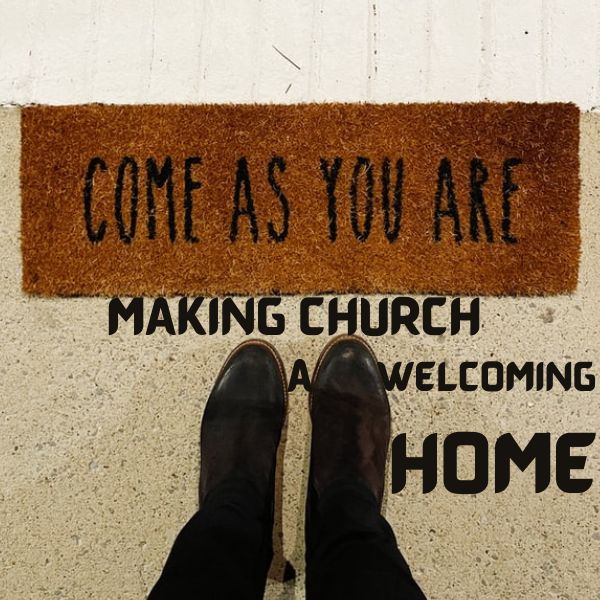
We have a treasure trove of neat little sayings we use to describe the church's welcome.  Come as you are.  We have no strangers at our church.  Everyone is welcome.  We are a friendly church.  All of them seem to try a little hard, in my view.  Oh, I get it.  I know what we are trying to say but I am not sure that the cutesy way we frame our howdy is understood or appreciated by God as well as the visitors.

It strikes me that Jesus was not always all that welcoming.  He certainly did not give the Pharisees a break.  He called the Canaanite woman a dog.  When volunteers came to Him, He seemed more inclined to dissuade them than encourage them.  To the woman caught in adultery, He said "Go and sin no more" -- probably the hardest thing anyone ever asked her to do.  Ouch.  I guess you had to hit Jesus on a good day.

We want to say that all sinners are welcome here but who would actually say that?  It is bad enough that the first words out of our mouth in the Divine Service are a confession of our sin in which we own them before the Holy God.  Do we really want to put on our sign boards Hey, Sinners.  Y'all come!  Of course, it is exactly the kind of thing a diversity, equity, inclusion goal mighty say:  All are welcome here!  But are they?  Does Jesus let us come with all our sins hanging out or is our Lord out to do something with those sins?  Do we really come as we are?

Of course, we should be warm and welcoming but we also need to admit that God does not welcome us as sinners and then leave us with our sins.  Indeed, that is the whole point.  We come as sinners but God refuses to leave us in our sin.  Neither does He place the burden of those sins on us.  He does the unthinkable.  He places the burden of our sins on His sinless Son, our Lord Jesus.  God comes to sinners but does not join them in their sin.  He eats and drinks with sinners but does not approve of their sin nor countenance their unrighteousness.  Ours is not a welcoming God but a saving God.  He meets us where we are but refuses to leave us there -- covered in the muck and stench of sin and its death.  

All are welcome here but not in the sense of us welcoming all the different points of view of all those who come.  Just the opposite.  All are welcome to live with us under the cross, surrendering our will to His, and as a people whose convictions lie under the Word of the Lord that endures forever.  God does not welcome sinners in the sense that He welcomes their sin.  There are plenty of lists of sins and sinners in the New Testament (including the letters of Paul).  None of them come with the promise of eternal life and the Kingdom of God that endures forever.  Not one of them.  All of them live in the shadow of the cross where they have been made new.  All of them come with the call to hate evil and do what is good.  We are not welcoming new and different interpretations of His Word.  Our Lord is looking for disciples and followers -- not for co-managers.  

Don't forget that it is Jesus who insists the path is narrow, the gate is small, and the way is hard.  He does not pretend to promise us earthly victories but instead is painfully blunt about the cost of discipleship.  Many are called but few are chosen.  Jesus welcomes sinners but He does not approve, understand, or accept their sins.  The Church's welcome is not a slogan but a cross in which the forgiveness is always bigger than the sin for those willing to confess the sin but with nothing for those who are not shamed by their sins.

Saturday, April 15, 2023

My Favorite Hymns?

A website called Catholic Utopia lists the following as favorite communion hymns in Roman Catholic parishes.  A brief review will find that most are newer hymns, written in folksy style, that express little of Roman Catholic doctrine about the Sacrament and either paraphrase Scripture or sing from the point of view of the person communing.  Further, it is clear that many of them tend to describe the Sacrament more as bread and cup than as Body and Blood.  Perhaps this is part of the reason why seven out of ten Roman Catholics in the pews think of the Sacrament as symbol rather than true flesh and blood of Christ.

  1.  All You Who Hunger
  2.  Broken For Me
  3.  Come, O Lord, To My Heart
  4.  Come To The Table Of The Lord
  5.  I Am The Bread Of Life
  6.  Gift Of Finest Wheat
  7.  Father And Life-Giver
  8.  Take This, All Of You
  9.  Soul Of My Savior
  10.  Deep Calls To Deep
  11.  Come To My Heart
  12.  Come To Me And Eat
  13.  Food Of Angels
  14.  Seed Scattered And Sown
  15.  Now In This Banquet
  16.  Happy Are They
  17.  One Bread, One Body
  18.  To Be Your Bread
  19.  Children Of God
  20.  Five Thousand People
  21.  Break Thou The Bread Of Life
  22.  Blanket Of The Lord
  23.  O Lord, I Am Not Worthy
  24.  Come To The Water
  25.  Take, Eat
  26.  Lord, Enthroned In Heavenly Splendor
  27.  Christ’s Love For Us
  28.  Feed On Me
  29.  Let Us Be Bread
  30.  O Lord, I’m Not Worthy
  31.  Bread That Was Sown

So what would you find if there was a Lutheran list?  For Lutherans, the answer is not so simple.  We do not have a Lutheran Utopia site to do the leg work for us.  Perhaps Concordia Publishing House could tell us some numbers for those congregations using and reporting through Lutheran Service Builder.  The end result would be a skewed result anyway since a goodly number of our congregations use contemporary Christian music not sourced through CPH or our official hymnal.  Further, since a high percentage of the those using such CCM songs are larger congregations, the numbers would be skewed since the Lutheran Service Builder program would tend to be used by people, well, using LSB but those not using LSB might have higher numbers than those who do.  Complicated, to be sure.  So, if I do not have definitive answers, why am I writing?

Clearly what you sing about the Sacrament of Christ's Body and Blood will end up influencing how you view that Sacrament.  This is a no brainer.  When Roman Catholics began to sing the ballads of Joncas and Haugen and the like, they began to sing less about the theology of the Sacrament and more about its earthly feel and perspective.  Did Rome sing itself out of believing in the Real Presence?  It may sound far fetched but it is not.  That is, after all, the whole premise of lex ordandi, lex credendi,  If you sing enough about things, you will end up identifying with what you sing.  If that is true for Rome, how could it not be true for Lutherans?

This is not an indictment of modern hymnody or hymn writers.  In fact, we have some stellar talents writing hymns even as I write this blog post and they do a superlative job of putting what believe into singable texts.  What it is an indictment of is the use of generic Contemporary Christian Music (CCM) which may be faithful paraphrases of Bible verses but which do not teach what we believe as much as they express sentiment about what is believed.  The point is that anyone can sing themselves out of believing what the Church has always taught.  This is especially true when we are more Biblically illiterate and therefore less able to identify and recognize when the texts of our songs are shallow or superficially express what we believe, teach, and confess.  There are many hymns and songs in which there is nothing really wrong but they are woefully inadequate -- especially if that is only or even primarily what is sung.

Not all hymns are created equal.  That ought to be put into a constitution somewhere.  To know this and therefore to take care so that meatier hymns are the staple and are only accompanied by these less than meaty hymns is part of the task of those who plan worship.  That folks love them and that they want to sing them is obvious but what they love and want may not be good for their spiritual health -- long term.  This is less about the Lutheran nature of the hymn than its ability to put into solid words the weighty confession of This we believe!  Luther inherited and loved and translated many old and traditional Latin hymns that did exactly this.  Today we seem more inclined to let people sing what they want even as we hold our noses while they sing them.  What is wrong is that we have forgotten the connection between what you sing regularly and how you believe.  We have forgotten that there are hymns with poor nutrition that may actually work against our faith.  It is about time that we woke up and smelled the roses here.

Friday, April 14, 2023

Who is Synod?

A long sigh..........  We are in that silly season again but this time it is not Washington that is the focus -- it is St. Louis.  The presidency is not of these great United States but of the Lutheran Church Missouri Synod.  There will be no shortage of high powered rhetoric and enough hyperbole and straw men to make almost any ordinary thing impossible to understand.  We have already entered the season and it will not end, or should I say pause, until after the last ballot is counted.

My biggest frustration is the way we banter about that word Synod.  There will be the obligatory explanations of the etymology of that word.  We will get all warm and fuzzy about the idea of a diverse people walking together, trusting each other to make decisions right for them and about our prospect of taking the world for Jesus.  We will be reminded that synod is not church but only the congregation is (an unfortunate Missourism that is generally overplayed and seldom understood as was intended).  We will hear over and over again that Synod is advisory, that congregations must and will decide whether to pay attention to Synod or not (excuse me, decide whether the resolutions of Synod are expedient or not).  We will emphasize that we vote (except on the Word of God when we are not really voting) and that we have divided the vote so pastors cannot domineer over the Synod (but it is okay if lay folks do).  Any and all of this is enough to get on anyone's nerves but what really gets me is how we speak of Synod as if it were something alien or foreign to the parish and every other part of who we are and what we do.

Some will insist that Synod cannot save us.  Others will insist that Synod is the only thing that can save us.  Both will talk about Synod as if it were a subversive organization out to strip the congregation of its power, property, and money OR as if it were an irrelevant and outdated organization that needed to be put out to pasture as other forms or agencies replace it.  All of this seems to engage the people on a visceral level and stir up those on both extremes.  The only problem is that it is impossible to speak of Synod as a hierarchical form of government imposed over the congregation and people.  Whether you want it to be or not, that is simply not who we are and it is disingenuous for anyone to speak in this way.

The District is Synod in that place.  Congregations do not form districts which form Synod.  Districts are Synod in that region.  Synod is not above or below the congregation -- Synod is the congregations banded together out of doctrinal unity, for the purpose of expressing this unity in practice, preparing pastors and church workers for the congregations, their schools and missions, for publishing orthodox materials for catechesis and worship, and for the support of this common faith in a common mission.  So to all of those who get all riled up about Synod as a foreign power with designs on the congregation, get real.  If all the congregations looked in the mirror, they would see Synod.  

I know that there is nothing I can do about the silly season which erupts every time we elect a new Synod President but the least we could all agree to do is to be honest.  No Synod President is a pope.  Synod is not some sort of threatening overlord and the congregation the heroic rebel.  For good or for ill, Synod is people (remember Soylent Green?).  The power of the Synod President is largely the pulpit -- he persuades and does not rule.  The responsibility of the Synod President is more about keeping us honest than it is telling us what to do (in other words, it is about ecclesiastical supervision).  He and all those elected with us cannot save us from ourselves -- only God can.  Ours is not a problem of finding someone new but remembering what old things God has given us (the means of grace) and how these things sustain and, God willing, grow the Church (and the LCMS).  So do me a favor, those on the left stop speaking of Synod as an evil villain and those on the right stop speaking of Synod in the same way (only louder).  If we want to improve Synod, we just might start with ourselves -- paying attention, getting involved, and stop blaming the straw men for what we have said and done to screw it up.

Thursday, April 13, 2023

Never grows old. . .

It never grows old -- Bach and the St. Matthew Passion.  Here in some 30 minutes is a masterful job of unpacking that monumental work by James Gilchrist.  Well worth a half an hour of your busy day.

Wednesday, April 12, 2023

Doubt your doubts, Christian. . .

The truth is that Satan seldom attacks us on our convictions (unless they are so in conflict with God’s Word and will that he works to encourage them).  Instead, Satan finds weak spots in us and the biggest cracks in every Christian are his or her doubts.  We are constantly led into trouble by taking our doubts more seriously than God’s promises and by listening more to those doubts than His Word.  We are always in touch with our feelings, especially feelings of uncertainty, fear, and worry and these fed into our doubts creating conflicts in our faith where they do not need to be.

Our prayers are long lists of requests for God to answer the physical ills, financial needs, worldly conflicts, and yearning desires within us.  We know what we want and what we expect from God only too well.  What we do not know well are God’s promises.  We do not know well what God has said He will always do and what we need never fear.  So the end result of this is that even active prayer lives can feed our doubts when that active life of prayer forgets to pray the promises of God along with our needs.

Doubt is a constant complaint of those who seek pastoral counsel.  We doubt ourselves, we doubt others, we doubt the people nearest and dearest to us, we doubt the strangers we meed, we doubt the things we have been taught and we doubt the people who taught us these things.  We are so fully aware of our doubts that anxiety has become a crippling crisis even among Christians.  Note what I am not saying.  I am not saying to simply ignore your doubts but we should not accept them at face value either.  Doubt the doubts and do not let them gain advantage over you. We have confidence in Christ – not because our lives are insulated from challenge, change, upset, or trouble but because we KNOW HOW IT ALL ENDS.  It ends in the resurrection of the body, the gift of everlasting life, and a joy unimaginable now.  We cling to this hope not with some tenuous thread of attachment but by the obedient life and life-giving death of Christ.  Our faith is not in a what if but in the because of what God has done to save us.  The Spirit is working in us right now that which is well-pleasing in His sight – especially so that this faith may live and grow in us and overcome our doubts and fears.

To do this means we need to be at least as familiar with God’s Word and promises as we are the doubts, worries, and fears that accompany this mortal life.  Being in God’s Word is not a luxury for those who have the time or the interest, it is the life-blood of our living and active faith.  Being in the Divine Service is not a favor to the pastor or to God but it is the way our faith is sustained amid doubts and confirmed amid challenge.  If you want to be stronger in faith, pay less attention to your doubts and more to God's Word and promises, less time on your own and more time together with the rest of God's people in His House, around His Word and Table.

Tuesday, April 11, 2023

Easter Day Sermon. . .


The Sermon for Easter Day, the Resurrection of Our Lord (A), preached on Sunday, April 9, 2023.

Everything rests upon this.  Christ is risen!  St. Paul insists that it cannot be a spiritual resurrection or a symbolic resurrection or the resurrection of the soul.  It can only be the resurrection of the body.  If Christ is not raised, our preaching is hollow and empty, your faith is equally worthless, and you are still in your miserable sins waiting for the end.   BUT Christ IS risen.  More than this, Christ IS risen as the first fruits of those who have fallen asleep in death.  He is first but there are more to come.  Not just more to come, but YOU to come.

There are those who want to fixate on every detail of the things Christ did.  Those who want to argue about a six day creation or the factuality of the details of Israel’s history or the miracle of the Virgin Birth or if the miracles of Jesus were real or slight of hand.  What do these matter if Christ is not raised?  If Christ is raised, who would not believe these?  Christ is risen.  Without the resurrection, we have nothing but a false hope.  But because Christ is risen, we have a real hope.

In the creeds we confess what must be believed to be Christian.  The heart of this confession is the fact that Jesus is the Son of God, that Jesus suffered and really died, and that Jesus rose from the dead.  This is what really divides humanity.  Do you believe that Jesus is risen or not?  Jaroslav Pelikan once said that if Christ is not raised from the dead, nothing else matters and if Christ is raised from the dead, nothing else matters.  Life is either a hopeless end or an endless hope.

Scripture is clear.  This is not an imagined resurrection.  This is not a spiritual resurrection.  This is not some ghostly resurrection.  It is the resurrection of His body.  Nothing less than the resurrection of His body offers us any real hope.  Sure, the whole circle of life thing sounds nice.  The spiritual you flies away and leaves behind the limitations of flesh and blood.  But for what?  For food you cannot taste, for water you cannot drink, for life you cannot live?  Who wants that?  We insist that God give us something more and nothing less that all He promised.

The resurrection of the body is what we confess, what was dead is now alive but in glorious form where illness and frailty and age and death can no more curse and where life is even better than it was when creation dawned.  It is not a do over but the redemption of what was lost and the gift of a future beyond imagination.  We need Him to be raised in flesh and blood or our futures are only imaginary.
We need Him to be raised with a real body or our own futures are merely a shadow of tomorrow and not the real tomorrow God has been promising all along.

Parents need to be careful what they promise to their children.  Kids remember and they will not settle for anything less than what you said.  We are the children of God who insist from the Lord that He give us nothing less than what He has promised.  The risen Savior in glorious flesh so that we may die in hope and be raised with Him to life that death cannot overcome.  Unless Christ is raised in the body, Satan still has room to gloat with at least a partial victory.  No, Jesus is risen body and soul or there is no good news for us here.

Those who claim to be spiritual but not religious would be satisfied with a spirit flying high and a body still decaying in the grave.  They were never tied to the body in the first place.  Indeed the whole shape of our modern world is to disdain the body as not that important.  It cannot even define your gender.  The reason the world is ready to surrender the body to the ground is because it does not want to risk being disappointed.  The world has grown accustomed the ways of sin and ordered its way around sin and injustice and cruelty and hate and death.  We have made it into an industry and a business.  But Christ promised that the industry of death would be put out of business permanently.  Christ insists that the body is not bad or merely the container of the soul but the gift of God to be rescued by His death and restored by His resurrection.  Christ is not about a symbolic victory or a partial victory.  Either Christ is raised in His body or we have nothing to look forward to.

Today the corruptible has put on incorruption, the moral immortality.  Today the grave has coughed up its most important dead and surrendered its sting to the life stronger than death.  Today the future began for a people who thought they had only a past, a tomorrow for a people who were content to live with only memories, and a body stronger than death for a people who would have been happy to get their best lives now.  Christ Jesus did not merely rise but abolished death and the grave and brought life and immortality to light through the Gospel.  It is this that we preach on Easter Sunday and it is this that we testify to without end.

Christ IS risen.  We say in the creed that He is risen according to the Scriptures.  Somebody once asked me what that meant, fearing that only the Scriptures said Christ was raised.  What it means is that the resurrection is what it all hangs on.  None of the Scriptures are true if the resurrection is not.  That is why St. Paul calls us pitiful and pathetic if Christ is not raised.  What is there left to hold onto?  Can we become the shallow who content themselves with this life only and comfort themselves with what they might accomplish in a moment the world will forget?  Sadly, some have.  They have decided the resurrection is a step too far and surrendered the lynch pin of our hope out of the fear of being disappointed.

Brothers and sisters, this is not Easter.  Easter is not a distraction from the norm of despair or a myth to occupy our curiosity.  It is the hope on which everything stands or falls, on which the whole promise of God rests.  Either Christ is raised or nothing is real and everything is an illusion.  That is why on this Sunday we insist BUT Christ IS raised.  He is risen.  Christ is risen!  He is risen indeed.  Alleluia!

The truth is that the devil is as done he can be.  Once he surveyed the world as his own and now he prowls about trying to deceive one more soul to provide company for him in hell.  He gambled it all on killing Jesus only to find it was God’s plan all along.  And when the stone rolled away from the tomb and the women came in search of a body, the devil lost everything.  Christ is risen, body and soul, the new and glorious flesh that is the promise of our own glorious bodies when He raises us to dwell with Him forevermore.

Christ IS Risen.  He is risen indeed.  Alleluia. 

A college packs up and leaves home. . .

With this memo now public, Concordia University Texas has said thanks but no thanks to the Lutheran Church Missouri Synod which owns the school and the Board of Regents and the administration have decided not to reverse their plan to become independent of the Synod not by formal request or bylaw process but by changing their official documents, including their incoporation.  I will withhold comment here but the memo certainly speaks volumes.


Monday, April 10, 2023

The sermon for Easter Sunrise, the Resurrection of Our Lord (A), preached on Sunday, April 9, 2023.

At first glance, Easter does not seem to have much in common with the parting of the Red Sea and the passing over of the Israelites from the land of their slavery to the land of their freedom.  But there is everything in common.  Easter is our Passover – the time of our own deliverance from all that would enslave us that we might enter into the perfect freedom which Christ alone can give.  It is certainly symbolic but it is more than symbol.  It is truth.

The Israelites were enslaved to an evil oppressor who refused to renounce his claim on them.  You and I and all people are enslaved to the cruelest enemies of all.  The devil has the enticing whisper that causes us to forget all that is true and fall for lies.  The world has the glittering allure of things that matter when they are but trivial and temporary.  Our own sinful hearts teach us to live in the prison of our feelings.  We are, like them, a people crying out to be set free.

Mary Magdalene came to the tomb early on Easter morning.  She was imprisoned to despair, thinking that her life was over with the death of the Lord Jesus.  She was imprisoned to what her eyes had seen in the cruel agony of His death upon the cross.  She cried out to be set free, hoping that the small consolation of caring for our Lord’s body would afford her some comfort in her tears.  We are, like Mary, a people crying out to be set free from the things that look so real but are passing away.

What Easter offers is not a diversion or a distraction.  This is not about the promise of Spring or time that moves on so we can forget our troubles.  Our Lord’s resurrection from the death is the true passing over where death is forced to surrender its claim on us, where sin can no more be the final word over us or the final verdict over our lost lives, and where the reality we see with these eyes must give way to the new and everlasting reality you see only by faith.

This Easter Eucharist in which we feast not upon symbolic foods but the flesh of the Lamb and the blood of the Lamb imparts to us the things hidden from this world and from our earthly vision.  Here in the communion of this bread and this cup we taste our Passover.  Here is the food that finally can deliver upon all the promises ever made.  Here is flesh to give life to our own bodies and lives lived in the shadow of death.  Here is blood to cleanse us once for all from sin.
When the Jews gathered in Passover just as they gather in Seder today, the always end with the statement “Today in Clarksville; next year in Jerusalem.”  Maybe we come with the same hope and expectation.  Next year we will surrender our tears and our fears to hope.  Next year we will lay down our sins before the cross and not take them back home to grieve us more.  Next year we will not surrender our hope to every trouble and trial and disappointment that comes our way.  Next year we will rejoice.

My friends, now is that next year.  We are already living on the other side of the Red Sea.  We are not living in the land of sorrow or slavery.  We are not living in the land of disappointment and despair.  We are not living in the land of death and darkness.  We are living in the light of Christ, the birth that shown forth from Bethlehem the hope that has been fulfilled.  We are living in the light of Christ, the sinless one who has come to wear our sin and claim its punishment.  We are living in the light of Christ, where death can no more seal our fate and where life cannot die anymore.  What Israel hoped for and Mary Magdalene longed to know is OUR hope, our life, and our joy.

The world around you can offer you nothing but a prison, nothing but slavery, and nothing but sorrow.  Once he saw Christ risen from the dead, the devil had to up his game.  The end was already in place so the only thing left in his arsenal of weapons is to lie, to cheat, to deceive us.  That is what we see around us now.  The world says the only truth that matters is the one you feel, that the only thing that matters is the moment, and that if you cannot see it with your eyes, it is not real.  Do not listen to the voice of yesterday.  You live in the future.  You are already Christ’s own, having gone down under the water in baptism and risen in Christ so that His life lives in you.  Today Christ called to Mary Magdalene to open her eyes of faith and see, to surrender the prison of her fears to His gift of liberty, and to exchange the tears of sorrow for the tears of real and eternal joy.  Our Lord calls to you and to me to do exactly the same thing.

Today is our Passover.  It is the day for us to rejoice that God has brought us through to the other side.  We have a hope that will not disappoint us, a life that death cannot steal from us, forgiveness for every one of our sins, righteousness to cover every evil, and peace that passes understanding.  While these gifts inform our feelings, they are not simply feelings.  We are not yet who we shall be, but we are not who we were.  That is the Passover we celebrate today.
It is too easy for us to forget where we have come from, and too tempting to focus on how far we have to go.  That is the dilemma of every Christian – especially on Easter Sunday.  I call you not to give into this temptation or to forget what God has made known to you.

Christ IS risen.  If God were only interested in improving your behavior, He would have left you in your prison.  Guilt, fear, and shame are mighty motivators to get you to do what you should.  But our God is concerned not simply with making you a better person.  He will settle for nothing less that your redemption – taking you from all that imprisons to the perfect freedom that is in Christ alone.

That is where we are.  We are in Christ, the crucified and risen Savior.  We are forgiven of all our sins by His blood.  We are relieved of ever fear of punishment or shame by His atoning death.  We are rescued from every dead end and detour this life can offer.  We are passed over and passed through to the promised land of forgiveness, life, and salvation.  Mary Magdalene is already there ahead of us and with her the mighty prophets and patriarchs who said this day was coming.  The apostles and evangelists, the martyrs and saints of every age are there ahead of us.  But we are not far from behind.  The new Jerusalem of heaven is on the horizon, the perfect freedom of Christ owns us body and soul, and nothing can separate us from all that Christ has prepared for us.

Christ is risen!  He is risen indeed.  Alleluia!

A sad change . . .

How sad it is that Easter has moved in our minds from a holy season of our Savior's resurrection to a Sunday and that dominated more by what we eat and the candy found in Easter eggs than the Christ whom death and the grave could not hold.  It shows up in various ways.  From the low Sunday after Easter (at least in comparison with the Easter crowds) to the way everything seems to go back to normal on Monday morning with the old routines of work and school.  It does not have to be that way.

The preaching and teaching of the Church need to be about the resurrection as the foundation of our hope and the resurrection of the body specifically.  Our day has pretty much made its peace with death and no longer aches for the promise of the resurrection or looks forward to new and glorious bodies or a new heaven and earth.  Instead we have already decided that this life is enough -- at least as long as you can live this life pretty much on your terms.  It may even be that we are relieved to surrender ourselves into death when we face the prospect of physical or mental decline.  Why, who would even want more life if that is the kind of life we have?  Furthermore, we have come to terms with death also because we see any future existence more in terms of the great circle of life and a spirit reunion with the other spirits and forces of life sort of like Avatar.  Who needs a God or at least a God who dies or even a God who dies and rises again if you have already decided the virtual life is better than the real one and death may actually be some sort of liberation?

If the person in the pulpit is wise and faithful, he will resist the impulse to move on past the resurrection, the new and glorious bodies Christ wears and has promised to us, and the victory over death that is the key to God's work for us and in us.  Our people are gravely tempted by the promise of living your best life now or making peace with death and we need to preach even more urgently this resurrection and its fruits for our own lives.  Popular talking heads who claim to be pastors have already decided that the resurrection and the resurrection of the body are not all that important.  It is essential that we challenge their corruption of the Christian hope.  Our best life now is a lie and a betrayal of all that Jesus said and did.  It is a shallow gospel and an empty hope that is at best a bandaid for the hurting but without any power or promise to offer anything more than here and now.

Have you gone to any funerals lately (ones outside our Lutheran circles)?  The eulogy has replaced the gospel as the crown of the life of the dead and the only comfort for the living.  We think that the best we can do is to tell stories at the expense of the deceased, laugh through our tears, and go home to go back to making the best of the here and now.  Who needs a Jesus for that?  Who needs a Church?  That is the point.  There is so little of Jesus, so little of His death and resurrection, spoken at funerals it is no wonder that we have called these little gatherings a celebration of the life of the deceased.  While we might have expected this from those outside the Church, it is a fool's errand for those inside the Church to take the same cause and to disdain what Christ has said and done for us.

Easter is not a diversion or a distraction or a party.  It is the risen Jesus standing over the ruins of sin and death and the devil with the promise of a hope more real than death itself.  This is not imagined or imaginary but a new flesh and blood, a new and glorious flesh and blood, and a new and glorious heaven and earth to replace the one whose glory has been fading since Eden.  Christ is risen not in our minds or in our hearts but in flesh and blood and that body He now wears is the key and promise of our own future.

Sunday, April 9, 2023

Christ IS Risen! The Alleluia has returned to our song!


Matthew 28:1–10

1Now after the Sabbath, toward the dawn of the first day of the week, Mary Magdalene and the other Mary went to see the tomb. 2And behold, there was a great earthquake, for an angel of the Lord descended from heaven and came and rolled back the stone and sat on it. 3His appearance was like lightning, and his clothing white as snow. 4And for fear of him the guards trembled and became like dead men. 5But the angel said to the women, “Do not be afraid, for I know that you seek Jesus who was crucified. 6He is not here, for he has risen, as he said. Come, see the place where he lay. 7Then go quickly and tell his disciples that he has risen from the dead, and behold, he is going before you to Galilee; there you will see him. See, I have told you.” 8So they departed quickly from the tomb with fear and great joy, and ran to tell his disciples. 9And behold, Jesus met them and said, “Greetings!” And they came up and took hold of his feet and worshiped him. 10Then Jesus said to them, “Do not be afraid; go and tell my brothers to go to Galilee, and there they will see me.”


 Listen to Lutheran Public Radio!      TAP HERE to listen on your iPhone or iPad.     


Saturday, April 8, 2023

Not impressive?

Sermon for Good Friday (PM), preached on Friday, April 7, 2023.

Sometimes the build up is bigger than the end.  Certainly that is true for much of what we do in Church.  We expect mighty things, impressive things, and so often we go home disappointed.  What was once a surprise has become a well rehearsed script called the Church Year.  We know the story so well we can even repeat the words as the Pastor reads the text.  Not as impressive as we wanted it to be. But death is not impressive.  It is sad and lonely and often painful but it is seldom impressive.  That is true also for the death of Jesus.

The death of Christ is a kind of funeral liturgy but in other ways is rather unique. Of course, there are no TVs running to show us Jesus’ baby pictures and the body is not touched up by the funeral director to look almost alive.  The family is here not because they want to be – who does – but because it is what you do when death comes.  You come together to remember, to give thanks, and to hear comfort.  

One of the things we do for comfort is to sing.  Singing was once part of everyday life but is now something isolated to a few churches and Sunday mornings.  We listen but we do not sing.  Maybe that is still what some of you do in church – you listen but do not sing.  Yet it is in the singing of what has taken place that we are reminded this death is not for nothing but for you and me.  It is in this singing that we are encouraged to believe that this death does not merely mean something but has accomplished something.

Sermons are curious things in our digital age.  It is hard to listen to such a long reading from the Passion according to St. John.  It is hard to hear a sermon of ten minutes much less twenty.  There are no screens to engage your attention but only words on a page and words in the mouth of the preacher.  It is not so impressive.

But this is not a show.  It does not entertain.  It does not amuse.  It is the sound of death that intrudes upon our evening, an old death that God would not have us forget and though this death sounds like the escaping breath of any other death, it accomplishes what no death has done before or since.  It is the once for all death in which sin is done and death itself dies.  The miracle is not in the moving character of what happens tonight but why He dies and what His death has accomplished for you and me and for all the world, if they would believe in it.  The tragedy in this death is not what we would think.  Jesus goes to death willingly for you and me.

In most funerals we complain that death has taken something from us.  It robbed us of a mom or dad or husband or wife or son or daughter or friend.  We wear the black to tell the world we are grieving the loss and touch our eyes to wipe away the tears.  But we call this funeral day GOOD Friday.  We are not hear to lament a life ended too quickly but to announce to the world the life strong enough to die so we might live.  We are bidden come not because of the sadness of a family that has lost a son and a brother but because by this death Christ has won for His family the lost brothers and sisters who had only death but now have life.

Tonight the setting is sparse.  No paraments to adorn the altar or banners to herald the faith.  No vestments of color but only black.  The only adornment for this night is the crucifix.  The focus is the body – the body given into suffering to relieve us, the body crucified to pay the price of sin, and the body that lies broken by the burden of bearing it all.  The next stop is a tomb, a grave carved out of stone where the Son of the Most High God will lay in cold darkness.  The better part of the preacher is not to make this death too dramatic or to turn the focus from the Christ in suffering to the man who tells you about it.  Not so impressive.

Jesus goes as a silent Lamb of God into the suffering of the altar of the cross for you and for me.  Everything in the Law and the Prophets and the Writings pointed to this moment.  Everything that comes after it points to this moment.  Christ dies that we might live.  He pays the awful price of sin not with silver or gold but with His very flesh and blood.  He does for us what we would not and could not do for ourselves.  That is what is impressive.  Why you can hardly get someone to die for a good cause much less one to die for sinners who were enemies of God.

Yet this is not the end.  Death is not the end.  This page of the story ends in death but this is not the end of the story.  We will wait tomorrow and gather again to remember how God foretold this deliverance through the ages.  We will lift baptismal water to give new birth to a lost life.  Then we will come again in the morning to hear the final chapter.  It will not surprise anyone.  Its power is not in its surprise ending but in the familiar announcement that Christ is risen.  His rising does not make up for His dying but completes the one saving act in which the sinner is forgiven, the guilty is made righteous, and the dead is raised to life.  That is why we call this Good Friday.  That is why for the Church, the liturgies of Holy or Maundy Thursday and Good Friday and Holy Saturday and Easter Sunday are one liturgy and one story.  

He lives.  The hint of it is already in the air.  When Jesus commends Himself to the Father, we are given a glimpse of what is to come.  He is laid in the tomb but the tomb will not hold Him.  His cross that once was scandal and shame will become for us the greatest sign of hope the world has ever known.  Calvary will be remembered forever as the holy garden where the death of Eden was overcome.  The enemy will continue to fight but his battle is lost.  He can wound but he cannot kill anymore.  The grave becomes a bed where we sleep until Christ awakens us to eternal life.  

Thanks be to God.  In the Holy Name of Jesus.  Amen.

Wait. . .

Waiting is an awful thing.  I cannot stand waiting -- whether in line or in pacing while you live by someone else's clock or in the awkward moments while the minutes click down to an appointed time.  If there is anything sin has done, it has messed with our relationship to time and turned waiting into a curse.  Of course, there are different kinds of waiting.  Sometimes it is the dread of what is to come and other times it is the anticipation of something good.  There is the wait to hear news when a loved one is in surgery and there is the wait for Christmas morning and the inevitable presents to be opened.

Wait occurs anywhere from 130-150 times in Scripture -- depending upon the version and who is counting.  Over 100 verses address waiting.  Some verses speak encouragement to the waiting that acknowledges time is not ours to control.  Wait for the Lord; be strong, and let your heart take courage; wait for the Lord! Psalm 27:14  Some verses give hope to those who wait.  But they who wait for the Lord shall renew their strength; they shall mount up with wings like eagles; they shall run and not be weary; they shall walk and not faint.  Isaiah 40:31  Some remind us that we wait for something good and not in dread of the unknown evil. I wait for the Lord, my soul waits, and in his word I hope; Psalm 130:5.

For the Christian, waiting is not about the what if but the what for.  So it is that Holy Saturday is a day of waiting.  Christ's body lay in the tomb, hastily prepared for burial because of the Passover, and now the disciples and those who followed Him were left to bide their time.  To be fair, Jesus said over and over again that He would not only suffer and die but rise again.  He told them to go ahead of Him and He would join them.  But they were so fixated upon the betrayal, suffering, and death that the seemed to miss that part of His words.  They appeared to wait as a people uncertain of what was to come and, to be fair, they did not know what the resurrection would be like.  Yes, they had seen Jesus raise the dead, dear friend Lazarus among them, but they did not know who or how Jesus would be raised.  So they waited.  Waited to finish the rushed job of burial.  Waited for this Passover Sabbath to be over so they could do what grieving people do to salve their sorrow.

Christians are in a different position today.  We do not live in the realm of what if but the context of because.   Our waiting on Holy Saturday is awkward, to be sure, but it is also purposeful.  We know that Christ is raised.  We know that His resurrection is the precursor of our own joyful resurrection and the blest reunion with those who have gone before.  We know a new and glorious body awaits us.  But still we wait.  Ours is an impatient but joyful duty:  Waiting for our blessed hope, the appearing of the glory of our great God and Savior Jesus Christ.  Titus 2:13

In this waiting on Holy Saturday we are busy.  We prepare the altar for the Easter feast.  Brass players and choirs rehearse for the big celebration of the Lord's resurrection.  Family plans are put in place to gather in our homes as well as God's House for the wonderful day.  As we wait for Easter Sunday, we remember that our lives are lived in waiting upon the merciful Lord and His timing, for the unfolding of His plan and purpose in our daily lives and for eternal life, and for that day that will never end when we and all the faithful shall join in His presence for the Marriage Feast of the Lamb in His kingdom without end.  We live in the moment but we are guided by the eternal.  May the Lord bless your day of waiting even as He blesses the Easter celebrations that prefigure the final Easter dawn.  You do not wait in vain nor do you believe in vain.  Soon and very soon we will say again Christ is risen and soon and very soon the Alleluia will be our song again.

Friday, April 7, 2023

We will do. . .

Sermon for Holy Thursday (A), preached on Thursday, April 6, 2023 (PM).

What would Jesus do?  Recall those bracelets and the fad WWJD?  It was not a mere curiosity of what Jesus might do but a question of what we should do.  To know what Jesus would do is to know what Jesus would have YOU do.  On Holy Thursday, Maundy Thursday, we rush to the mandate of loving one another and to the object lesson of that love in the washing of the disciples’ feet.  Our Lord does not command us to wash feet.  He calls this an example but does not solemnly intone that this is His testament of death to be done often.

Holy Communion is not an object lesson.  It is not a symbol.  It is not an example. Jesus does not say, “As I have fed you, you must feed the hungry.”  Jesus does not say, “As we are united in this meal now, be united in faith down the road.”  Jesus does not tell us that this is a sign to point us to something else.  Instead, Jesus says “Do this often in remembrance of Me.”  He says, “As often as you eat this bread and drink this cup you proclaim My death until I come again.”  He says “Unless you eat My flesh and drink My blood you have no life in you but whoever eats My flesh and drinks My blood has eternal life and I will raise Him up on the Last Day.”  He says, “My flesh is real food and my blood is real drink.”  It is a solemn testament of His life, death, and resurrection.  The eating and drinking of our Lord’s crucified and risen body and blood is not a ceremony but a Sacrament, not a ritual but a promise, not a symbol but a meal.  

When Luther instructs us in the Catechism to ask, “What does this mean?” he is not asking what the Sacrament means.  Jesus does not explain the mystery and Luther is not suggesting that we should either.  Luther is pointing us to the words of Christ recorded in Matthew, Mark, and Luke, and with utmost seriousness passed on by St. Paul as the Sacrament was given to him.  What do these words mean?  They mean that in this Sacrament you and I are given the very body and blood of Christ in bread and wine for the forgiveness of our sins?  The meaning is not hidden, it is plain.

Foot washing has a hidden meaning – or does Jesus mean that we should all be regularly kneeling down to scrub up the dirty toes of those around us?  Of course He does not mean that.  Foot washing has to be explained.  He has given us an example to follow – not to be served but to serve, to take up the lowest task without offense for those in want or need and not because they deserve it.

No, the Sacrament is plain.  Do this in remembrance of Me.  We do not need to figure what this means, we just need to do it.  The Church lives by the Sacrament of Christ’s Body and Blood.  It is not an occasional add on to the Word but our Lord intended us to live by the Word and Meal.  In this meal is the gift of forgiveness for our sins and by this meal we receive a foretaste of the eternal and through this meal we give witness to the world of His death and resurrection.

Christian service is good and salutary.  Jesus gives an example of service that was then and is now somewhat distasteful.  Does any of us want to wash someone’s dirty feet?  But Jesus is not telling us to do this.  He is telling us to serve our neighbor in love.  The point was never dirty feet but the neighbor in need and the character of Christian love and service.  How we show such love and what kind of service we give will change from neighbor to neighbor and from time to time and from what we have to give and what we don’t.  But this Sacrament remains the same and is the mark of the eternal in a Church that lives here in the present.

What we receive in this Sacrament does not change from age to age nor does it change from person to person receiving it.  It is not the Body and Blood of Christ because we deem it to be but because Christ says it is.  Those who do not believe it is not literally Christ’s flesh in bread and His blood in wine are not simply out of fellowship with us, they are out of fellowship with Jesus.  This is not symbolic food but real food though the real food that is there is more than what our senses taste and are what Christ says.

It is through this Sacrament that Christ abides in us and we in Him.  Our life of faith is not what we imagine it to be but what Christ says it is.  It is not subjective to each of us but objective for all of us.  That is why the mark of the Church is the weekly celebration of this Sacrament – something our confessional documents affirm not because we are Lutherans but because this is what Christ has said and because we are people of faith this is what we do.  This is not a pastoral preference or the preference of the people in the pews.  It is the Word of Christ and this is how the Church has lived through the centuries and will live until He comes again.

Christ has not given His Church mere object lessons with which to fight the devil, the world, and our sinful nature.  We do not have symbolic food to feed our weary bodies and souls but real food.  Christ lives not in our imagination but in His Word and Sacrament.  This is what it is and what Christ means for us to know as we eat.

The world is overcome with a preoccupation for what might be instead of what is. Think of where we were three years ago today and what we were willing to do to alter our lives and relationships and church because of what we did not know.  By these words our Lord is calling us to alter our lives and relationships and church because of what He has said clearly and plainly.  He is not illustrating anything but giving to us His very body and blood for the forgiveness of sins, for the strengthening of our faith, for life of our fellowship, for the equipping of the saints for the work He has given us to do, and for the glimpse of the eternal future which He has prepared for us.  Do this in remembrance of Me.

In the Old Testament reading, the people were also gathered for a solemn moment.  The words of the Lord had been read and the blood had been spattered on the altar.  The people promised.  “All that the Lord has spoken, we will do and we will be obedient.”  At that moment, the blood was spattered on them and the covenant sealed.  Today and every Holy Thursday and every Lord’s Day and every other time there are people wishing to receive the Sacrament, this is what we do.  We read the Word of the Lord and the blood on the altar is eaten and drunk and we are sealed anew in the testament and covenant of His blood to behold the Lord and dwell in His presence forevermore.  Thanks be to God!  In the Holy Name of Jesus.  Amen.

Steps to the cross..

From O. P. Kretzmann:

A great number of tragedies have come over the church during the past two thousand years, but none more terrible than the fact that our own generation has come to consider the Christian re­ligion something soft. It has no place in the mod­ern world. It can offer nothing to the most ruthless civilization of money and power which the world has ever known. The reason for this is undoubt­edly the caricature of the person of Christ to which so many pulpits have devoted their ener­gies during the last thirty years. Instead of the world-conquering, world-dominating Christ who two thousand years ago walked from the Cross to the throne, they have given us a dream-haunted wanderer far from the ways of men who walked about Judea two thousand years ago, pathetically trying to do good to a few people, and who then finally died on the Cross, a failure - beaten' by His enemies, beaten by life, beaten and crushed by a Cross.

This picture of the conquering Christ is a lie.

It ignores the majesty of the Cross. Look at Him for a few moments as He went down into death. The three hours of darkness have ended. The scene has become more quiet. The crowd has been awed into silence by the darkness and by the words of the dying Man on the cross. The Roman soldiers look on with indifference, glad that the whole mean business will soon be over. Suddenly He raises His head once more, looks far out over the crowd and cries in supreme, absolute triumph, «It is finished." To the Pharisees at the foot of the cross, the scribes and elders and the Roman soldiers these words must have sounded like the crack of doom. They did not understand them, but there was something wrong. Had they after all failed? They were killing Him. But He seemed to feel that He had won a victory. Had they lost? They had lost. Their last defeat was written in the face of the thorn-crowned Sufferer into whose eyes there had now come the glow of another world and the light of eternal victory.

If those men and women standing at the foot of the cross had but eyes to see, they would have seen every thorn in His crown become a shining gem in His diadem of glory. If they had but ears to hear, they would have heard the voices of wit­nesses, ten thousand times ten thousand"trium­phant with God-given power, hurling into the world the message of the conquering and domi­nating Christ who has the keys of hell and of death. God the Father reaches down from heaven and touches the cross. The arms of the glorified cross reach out and cover humanity. Under them stands the royal apostle St. Paul crying: "Because He was obedient unto death, even the death of the cross, therefore God has also highly exalted Him and given Him a name which is above every name, that at the name of Jesus every knee should bow and every tongue confess that He is the Lord to the glory of God the Father." Under the arms of the cross stands St. John saying: "He is the first­-begotten of the Father and the Prince of the kings of the earth."

The cross grows until it becomes the vision of the Lamb enthroned in the midst of heaven, brighter than the sun and more glorious than an army with banners. The hands that were pierced with nails wield the sceptre of the uni­verse. On the brow that was thorn-crowned and bleeding are the many crowns of universal king­hood. Here is the world-conquering Christ who even today carries a heart-demanding and heart­-searching power to which only the best and no­blest in Christian manhood and womanhood can respond.

It is time for the world to become afraid of Him. He has a strange and terrible way of coming back into a hostile, sin-loving world and a cold, indifferent church and throwing down the candle­sticks as He did two thousand years ago. On the evening of that first Good Friday thousands went down the hill and promptly forgot all about Him. It was so easy to forget. Thirty-four years later, almost to the day, our Lord Christ came back again in the noise and confusion of war, and be­fore His crowned head and uplifted arm Jerusalem crumbled into dust and ashes. Where one cross had stood there now were thousands. They had shouted, "We have no king but Caesar," and they had no king but Caesar...

There is still no room for defeatism and weariness in the Kingdom.  But we shall never know it until we hear His voice saying quietly and reassuringly: "Fear not, I have overcome the world..."  


Thursday, April 6, 2023

Blood of the Covenant. . .


 I grew up when the Sacrament of the Altar was offered four times a year and when most folks did not commune every time it was offered.  These were days in which the Sacrament was more theoretical than practical, when we believed in something that was, at best, an addition to the normal Lord's Day of Word and prayer.  Thankfully, the days when this was the norm have long ago passed and it is the rarity when a congregation has less than twice a month offering of the Sacrament.  While there is certainly a way to go, this has been a great improvement on the infrequent celebrations of the past.

That said, I am not at all sure we have regained the Eucharistic piety of the time before.  We receive the Lord's Body and Blood more frequently than in the past but ours is not yet a piety that expects and even requires the feast.  I wish it could be said that we are making progress in this but the choice of how often to offer the Sacrament remains rather local and the decision of whether or not to commune when it is offered remains equally individual.  Perhaps we have not quite understood the Sacrament in the unique terms of the readings appointed for this day (Series A).

This is the blood of the covenant.  Those are Jesus' words on the night in which He was betrayed.  They are words set within a context.  Blood and covenant go together -- from the Passover marking of the doorpost and that covenant relationship sealed in blood right down to Jesus' own words in the institution narrative.  Along the way there is the covenant blood that sealed the relationship between God and His people as Moses read the commandments and all the people said they would keep them.  From Jeremiah to Zechariah, covenant blood was the mark of God's relationship with His people.  Hebrews connects this to Christ in a profound way.  Covenant blood is the mark of the relationship God has with His people in Christ.

We meet Christ in the Sacrament now when we feel the need or even feel ready for Holy Communion.  We meet Christ there because that is where Christ has placed Himself and where He has made Himself accessible.  The onus is not on whether we will commune but instead on what could possible keep us from receiving the Sacrament.  The burden is not placed upon the Spirit and our conscience convincing us that we ought commune but those rare occasions when the Spirit and our conscience convinces us not to commune.  For most of us, those ought to be rather few and far between in our Christian lives.  That does not mean we commune without a thought or without meaningful preparation.  Though this does not make us worthy of the Sacrament, that does not mean that godly preparation of body and spirit through fasting and prayer are useless or unnecessary or unfruitful.  Just the opposite, these means of preparation aid and assist our koinonia in Christ's flesh and blood.  Nor does this mean that it does not matter who communes.  This is not about those who do not belong to the fellowship of this altar in this place.  This is about the folks who regularly gather around that table.

Because God has connected His covenant with blood and this connection is made right down to Christ's Words of Institution, our communion at this divine service is itself a confession of this connection and of the fruits of this covenant relationship.  We commune not simply for personal benefit but as corporate identity -- this communion shows that we have been made partakers of this covenant and that this covenant is our new identity in Christ.  We say this every time we quote St. Paul:  As often as we eat of this bread and drink of this cup we proclaim His death until He comes again.  A Eucharistic piety is built upon this relationship between the covenant in Christ and the blood of Christ we receive in this Sacrament.  It is a hunger and thirst for the blood of the covenant and a desire to live within the fellowship of this Table and receive the fruits of this communion always just as it is also a bold confession of what is received here and what the fruits of this covenant relationship are (the forgiveness of sins).

We make much of choice -- what church to belong to, whether to attend, etc...  Surely our communion upon the blood of Christ and this affirmation of where, why, and what benefit that covenant blood is shed is not merely a matter of whim or the feeling of the moment.  Surely our communion in Christ's blood is our duty as well as our delight and the most ordinary and yet profound mark of our belonging to Christ and our identity in Christ's body.  Because it is the Blood of the Covenant given and shed for us for the forgiveness of our sins, our place within God's House and at the rail are not simply a matter for us to choose but the clear expectation of all of God's baptized children and not to participate is an exception to that.

Wednesday, April 5, 2023

Wednesday it is Luke

Luke 22:1—23:56

In Luke's Gospel, Jesus is the Spirit-filled prophet.  With the public ministry of Jesus begun by reading Isaiah 61 and insisting the words are fulfilled in Him, our Lord does what keeps that prophecy and gifts good news to those who will hear it.  Just as Luke records the many meals Jesus ate with sinners -- including even after His resurrection, so does the Passover begin the Passion.  On the very night of that Passover, Jesus’ enemies had set a trap for him with the help of Judas, one of Jesus’ own disciples and the rest of the disciples were arguing over who was greatest.  “I am among you as the one who serves” (22:27).  Yet they would not know the full meaning of these words until His arms were outstretched in death upon the cross.

From drops as of blood that passed from Jesus to the ground where He prayed to the bitter kiss of betrayal to the knife wildly flaying the air until it cut off an ear, the contrast between our Lord and what happens around Him is clear.   “This is your hour,” Jesus tells the mob army that came for Him, “the time for the power of darkness.” (22:53), but Jesus' own hour would come and His glory would end the day.   From the empty political nature of the charges against Him to His loving gaze upon the shamed disciple who denied Him, our Lord contrasts His saving purpose with the raw nature of what unfolds around Him: “We found this man misleading our people; he opposes the payment of taxes to Caesar and maintains that he is the Messiah a king” (23:2). And, again: “He is inciting the people with his teaching throughout all Judea, from Galilee where he began even to here” (23:5).  Curiously, the most political of all the characters cannot find Jesus' guilty -- not Pilate nor Herod Antipas, the false prophet and corrupt king.

Luke’s choice of words connects Simon's carrying of the cross “behind Jesus” with the very words of Jesus about those who would believe in Him: “Whoever does not carry his own cross and come after me cannot be my disciple” (Lk 14:27). Those who would be His disciples must be willing to pour out their lives for Him as He has for them. The Jerusalem crowds are not all hostile to Jesus. Some joined in condemning Him but there were others who lamented what was happening.  In the end, the charge against Jesus that He was accused of being a “friend of tax collectors and sinners” (Lk 7:34), now would also die with them.  Again, as with the crowd, it was mixed -- one who denied and one who prayed to be remembered when He came into His kingdom.

“This man was truly just”, the Roman centurion proclaim. Luke places his confession in parallel to the very theme of his portrayal of Jesus in the passion.  Jesus is the only “just” man who is captive to God's purpose and who is willing to face death for the sake of the gospel.   In claiming the body of an executed man from those who carried out the death, Joseph exposed his faith for all to see; Joseph stands with the crucified Jesus.  He wraps the body with spices in a linen burial cloth, covers the face with a cloth, and places our Lord in a newly carved rock tomb. 

For Luke, the cross is connected to the empty tomb.  He carefully writes the script to anticipate the marvelous events of the resurrection. With the Sabbath eve approaching, there was little time so that the body was hastily lain in the tomb -- providing reason and rationale for the faithful women who had accompanied Jesus in Galilee (8:2-3) and stuck with Him before the cross to prepare spices and perfumed oil for the Easter Sunday return.  But then their Sabbath rest would be fulfilled for all who would lie in the grave.


Tuesday, April 4, 2023

Tuesday it is Mark

Mark 14:1—15:47

In the final analysis, Mark's gospel is really about the death of Jesus. It is more or less a passion narrative that also has an extended introduction.  Mark tells the story of Jesus primarily through the lens of His death and with the truncated account of the Resurrection, this is even more significant.  All of Mark's Gospel must lead to the death of our Lord.  It is a direct telling of the events with brevity, yes, but more in the sense of a lean telling that lets the death of Christ be the focus and nothing else.

Mark begins the Passion with brooding, shameful betrayal and tender fidelity. The enemies of Jesus in Mark's telling are the same from the beginning of the telling of the story of Jesus until now when they appear to have accomplished their purpose in killing Him.  They stay in character all the way through, hounding our Lord all along His ministry, opposing His teaching, and now seeing their plot to take His life fulfilled.

Amid the fragrant oil that filled the room and the shock of the extravagance of the woman's act we see the betrayal of Judas the the denial of Peter.  Jesus defends the woman and her act of love even as He warns the betrayer and the denier of what is to come.  Particularly poignant is Mark's record of Jesus' words: “she has anticipated anointing my body for burial” (14:8). 

Mark is particularly skilled at connecting stories -- the Holy Supper with the betrayal is but one example.  Even as the threat of an agonizing death hangs over the Upper Room and the Olive Grove, Jesus is calmed by prayer even though the rest of the apostles are too weary to pay attention.   The interrogation of Jesus is framed by Peter's denials as Mark adeptly points to both the courage of our Lord and His refusal to be distracted from His saving work.  

Amid the lack of clarity among some, when the High Priest poses the key of Mark's Gospel question to Jesus, He answers unequivocally: ”Are you the Messiah, the son of the Blessed One?”  Jesus’ reply: “I am.”  As they mock our Lord with the symbols of authority He does not own, it is those very symbols and all that they represent that end up being mocked by the true authority of Him who came not to be served but to serve and give His life as a ransom for many.

The end comes very swiftly in Mark’s account of our Lord's Passion.  In a sparseness of words that highlight what happened, it is as if Mark found it too painful to elaborate.  With one final taunt the irony of what lies hidden in Jesus and clear by faith is put by Mark: “Let the Messiah, the King of Israel, come down now from the cross that we may see and believe” (15:32).   Indeed, it is only because He is the Messiah that He will not come down from the cross and it is only belief must be in His suffering and death or it is no faith at all.  

Mark leaves Jesus stripped of His disciples, His freedom, His dignity, and His life.  Everything is surrendered for the sake of the world.  In Mark’s account, Jesus dies with a silent scream echoing from the dread hill to the temple where the veil is split and down into the heart of a centurion -- an unlikely witness who sees in the manner of Jesus’ death what is missed by those who put Him there. There, at the end lies the first full confession of faith expressed in the gospel: “Truly this man was the Son of God!” (15:39). 


Monday, April 3, 2023

What are you afraid of?

Sermon for Palm Sunday, the Sunday of the Passion, preached on Sunday, April 2, 2023.

What are you afraid of?  What is your deepest fear?  Is it death?  Is it a painful death?  Is it running out of money as well as time?  Is it failing to do everything on our wish list?  Is it that no one appreciates you and all you do or gives you the recognition you think you deserve? Is it that no one will acknowledge your greatness or remember you when you are gone?  Is it that you cannot protect or provide for those whom you love?  Is it that you cannot predict or control the future?  What are you afraid of?

Once it was clear that death was the ultimate problem.  Parents burying several of their children.  Husbands and wives faced children and an uncertain future alone without their spouses.  Diagnoses like cancer or heart disease forced you to jump to the end.  Retirement with your golden years filled with doctors' appointments.  Assisted living and nursing homes where people waited upon God.

It might be said that how we die is as important as how we live.  Can you end your life painlessly under a doctor’s care or should you?  What are the things that tell you life is no longer worth living?  Can we protect ourselves from any suffering or at least from the suffering of dying?  What are we afraid of?

Sin sounds so old fashioned in this context.  Today we flaunt on social media the sins that once would shame us.  Although we say we do not care what people think, we are always worried about those who unfriend us and those who speak ill of us on the unsocial social media.  What are we afraid of?  It might be only one thing or it might be a thousand things at once.  We are truly a people in need of rescue and in need of One to rescue us – not in the least from ourselves.

But we are Christians.  We are not a people without a story filled with promise and hope to a fearful people.  And we have a Savior who marches to His death like an honored guest at a parade.  Though the people crying out “Hosanna to the Son of David” have not seen the future or know where the parade will end, Jesus does.  He knows that the donkey is walking Him to the cross.  But He goes there without the kind of fears that routinely unsettle and paralyze us.  It is not because He has a  death wish but He is willing to die, even the cruelest death of agony and suffering if that is what it takes to free you and me from fear, from sin, and from death.

How long or how well we live is not our biggest problem.  There is a far worse death – the spiritual death in which this is the only life we get and death is eternal. The greater danger to us is that we will figure out a way to make our peace with the death of the body but have no fear left for the greater death of the soul.  They are connected, however.  Our bodies die because of sin and our souls labor in pain eternally because of sin.  Physical death is not the worst possible thing we face but physical death and spiritual death have the same source – sin and a Holy God.

Since Eden our bodies have always been dying.  Since Eden our souls have also lived under the terror of judgment and the threat of eternal suffering.  Since Eden our peace has been corrupted by fears real and imagined.  The miracle in all of this is that God did not abandon us to the death of the body or the death of the soul.  His righteous anger against our sin did not move Him to give up on us all but to take on flesh and blood and be our Savior.  The miracle in all of this is that even though we tend to fear the things that do not matter and do not fear the things that do, God still loves us enough to take upon Himself our pain, our sin, our fear, and our death.

Jesus has come.  He does not fear death as we do nor does He fear life as we do.  No, He knows the limits of this mortal life, the inherent weakness of our bodies because of sin, and He is willing to go where none of us want to go.  He parades to death, to the brutal and agonizing death of the cross, so that we might be relieved from suffering and saved from death by His death and resurrection for us all.  

The world is filled with suffering that is our due because of sin.  But He suffers as the innocent for the guilty, as the God who could and perhaps should have turned His back on us but did not.  What are we afraid of?  We ought to be afraid of sin and its consequences, of God’s wrath against sin and the punishment of hell.  If we were so afraid, perhaps then we might realize the magnitude of the gift our Savior has given us in His parade to the cross.  Our hope is in a life without suffering or a death without pain or a life filled with what we think will make us happy.  Jesus did not die for our happiness but for our sins.  He rose not to make this life easier but to deliver the dead to the life death cannot overcome – to present to the Father on high His baptismal born sons and daughters.

That is why we join the parade today.  Why we add our voices to the cries of “Hosanna!  Save us!”  Why we welcome the One who comes in the Name of the Lord to fulfill the promise of our Lord.  Why we lay down our clothing before Him who comes to suffer and die for us.  That is why we join the parade today.  Do not allow terror to steal from you the peace that is God’s gift in the crucified and risen Savior.  We are Christians.  We are not on our own or left to figure it out for ourselves.  We have the Lord who comes amid palms and hosannas to answer our fears with life – new lives to our old bodies and eternal life to world in which time is always counting down to the end.

It does not matter what you are afraid of, Jesus is the answer.  He dies the death we will give anything to avoid and He suffers the pain we would do anything to avoid.  He does so because in His suffering we are reborn.  We are forgiven, declared holy and righteous, and marked to belong to Him forever.  Don’t let your fear of what might happen replace the comfort and confidence of what did happen.  Christ came to die that we might live.  Until our last breath ends this life and when we are given the breath of eternal life, let us acclaim Him Lord by joining with the voices of old and of every generation:  Hosanna to the Son of David.  Blessed is He who comes in the Name of the Lord.  Hosanna in the Highest!  In the Holy Name of Jesus.  Amen.

Monday it is Matthew

Matthew 26:1—27:66

Matthew reminds us that Jesus has no blind date with the cross but this has been His direction and purpose from His incarnation through to the Palm Sunday welcome.  Matthew is particularly care to tell the Passion as a God-given destiny that was foreshadowed in the Scriptures through the voice of the prophets and is now fulfilled for us and our salvation.  Jesus is the one and true obedient Son of God who was tested by the devil not simply in the temptation but at every turn until now our Lord is obedient even unto death.  The suffering of our Lord is accomplished not as a test of His faithfulness but as the very means by which the disobedient are redeemed.  Death is the final enemy.  Jesus is unrelenting in His trust in the Father even as His will is in perfect unity for your sake and mine.

The faithfulness of Jesus is in contrast to the betrayal of Judas, the weakness of Peter, and the disappearance of the rest of the apostles at the very time when the ultimate accomplishment of all that Jesus had said was going to happen, indeed, did happen.  “My appointed time draws near” (26:18). The Greek word kairos is used here to remind us that this is exactly the full and pregnant time in which all of the love of God and His purpose are fulfilled.  As Jesus dies, so dies the reign of sin and the as His body suffers so does the devil suffer his great defeat.  Clearly, according to Matthew, the death and resurrection of Jesus are in fact the turning point in all of human history.

“Are you the Messiah, the Son of God?” (26:63).  While the answers to that question have seemed hidden or less than clear, Matthew's Gospel brings us to a clear answer now. “Yes, it is as you say,” Jesus replied.  For Matthew and therefore for all of us, there can be no Christ without the cross and nothing of the cross without the Christ who suffers there for you and for me and for all the world.  Niebuhr's striking assessment of the emptiness of modern Christianity is condemnation of the true Gospel Matthew so carefully proclaims:   “A God without wrath brought men without sin into a Kingdom without judgment through the ministrations of a Christ without a Cross.” 

The release of Barabbas displays the empty justice of a sinful world in stark contrast to the justice of God.  Just as there was no lamb caught up in a briar, there would be no release of the Lamb of God from His condemnation as the innocent for the guilty.  In a gesture hauntingly reminiscent of the Deuteronomy 21 ritual for declaring innocence, Pilate washes his hands of Jesus' death, declaring: “I am innocent of this man’s blood. Look to it yourselves.” In reply, the “entire people” neither wash their hands nor do they hide from the blood of Christ and loudly own the responsibility for which Pilate was fearful: “His blood be upon us and upon our children.” (27:24-25).  Jesus the King is now condemned by his own people as well as by the Roman authorities. 

The cross of Christ is carried by Simon from Cyrene and nothing is to prevent Jesus from being led to Golgotha for crucifixion. When the executioners fix a placard to the cross: “This is Jesus: the King of the Jews,” what they meant as ridicule come back as the most profound truth ever to be written or said.


Sunday, April 2, 2023

Palms and Passion. . .

Quite frankly I have never understood why there must be a choice between the Sunday of the Passion and Palm Sunday.  Of course, growing up in the 1950s, my own experience of Palm Sunday was shaped by the Confirmation Rite more than by Zechariah's promise or the Palm Sunday entrance of Jesus.  We never had palms blessed or distributed nor did the sermon ever focus on either the prophecy and its fulfillment of Jesus riding into Jerusalem upon a path of palms and garments while the people shouted Hosanna to the Son of David.  I do not know of anyone who grew up in that era (or anytime before) when there was any other focus than on the well groomed young men and women in their confirmation suits and white dresses ready to be confirmed in their baptismal faith.  It is an presumption not based in fact that Lutherans who confirmed on Palm Sunday ever paid much attention to the pericopes.

Any cursory review of the history of the pericopes shows that in addition to the account of the entrance, the Sunday was well associated with an included readings for the Passion of Our Lord long before the lectionary revision of the 1970s.  If your concern is with Jesus as the final King, David's Son, who sits upon His throne forever, you might begin by moving confirmation to another Sunday (we confirm on Reformation).  In reality, I have always included the joint and complementary themes of Jesus as not  another king in the line of David but the new and eternal King who sits upon David's throne! Hosanna in the highest!

One way to connect the themes is to have a genuine Palm Sunday procession.  Weather permitting, we do this outside.  We gather with the congregation outdoors for the reading of John 12, the blessing of the palms, the distribution of the palms, and then the loud procession of voices crying out Blessed is He who comes in the Name of the Lord!  Even when the weather does not permit, we gather away from the nave and in the Fellowship Hall to do the same.  It is hard to miss what is happening and it is easy to connect Zechariah and John as they point to Jesus (especially in Series B).  But we do not forget why Jesus entered.  He did not process into Jerusalem only to fulfill Zechariah's promise but to fulfill all the voices of the prophets in His obedient suffering, life-giving death, and atoning sacrifice upon the cross.

We touch on the whole of this in the Palm Sunday sermon as well as in the ceremonies and rituals associated with this unique day.  Add to that hearing the Passion from the three synoptic Gospels on Monday through Wednesday at Compline and the Passion from John twice on Good Friday, we hear in repeated detail the most significant content of the New Testament.  Although it is not typically my practice, many have followed the pattern of making the Lenten Midweek themes into an extended Holy Week in and of themselves -- elaborating on the smallest details of the Passion so that nothing is forgotten.  Is this too much?  Given the way Christianity is moving and the many ways the cross is either ignored entirely or seem as mere example of profound love, it is hardly overkill.

This I will say to those worried about Zechariah and Palm Sunday getting lost.  You are the planner of the liturgy and you are the preacher.  You are not without ample opportunity and resources to connect all of this together -- which is the genius of Palm/Passion Sunday -- the people of God get the wide view from the prophecy fulfilled in palms and hosannas to its fulfillment upon the cross in the Passion of our Lord so that they know what to listen for as the full week unfolds.  Happy Palm Sunday!