Sunday, March 13, 2011

Prayer Shaped by Our Need or God's Promises

In the now famous video of Pres. Harrison explaining the three fold emphasis of witness, mercy, and life together, he makes a small comment on prayer.  He says we know not how to pray because we know not the promises of God.  It is a very small portion of his entire presentation but a powerful one, indeed.

Most of our prayers are shaped by what we perceive to be our need.  We pray out of our troubles and trials.  We pray out of disaster and calamity.  We pray out of guilt and shame.  We pray out of fears and doubts.  We pray out of despair and death. We pray out of the same things but experienced in the lives of others.  We know those needs well because it is in this world of need in which we live.  We believe we know these needs better than anyone so it is often difficult for us to pray "as God wills."  We live with the haunting fear that God does not know our needs as we do and God will not give us what we think and what we know we need.  We often find it a betrayal of prayer to lay out all that we have determined is needed and then to end it all "in accordance with God's will."   After all, is not the whole function of prayer to make known to God our needs as we see them? 

I am sure I am not the first Pastor to be asked "why do you bother to prayer for someone on the sick list when you end that prayer 'in accordance with Your will, O Lord?'"  The person was earnest in his protest.  Surely, when we defer to God's will, we betray what it is that we have come to the Lord to ask.  In my early years as a Pastor, there were folks influenced by the charismatic movement who would urgently seek two or three others to "agree with them in prayer" so that what they asked for would be certain to be received from God.  In one tragic instance, this involved a young girl afflicted with cancer.  Her "prayer agreement" was for healing but when she died her family questioned the value of prayer and eventually fell away from the faith.

Such issues are often overcome by praying from God's promises.  When our prayers are shaped by what God has promised to bestow (as well as by our need), we stand on the firm ground of grace that is not in doubt but firmly pledged and promised.  If in worship the surest word we speak to God is the Word He has spoken to us, then this is even more true when it comes to prayer.

Someone once asked me why our petitions in the liturgy seem to pray for the same things every week (the church, her ministers, the nation, our leaders, the sick and suffering, the dying and those mourning, our worthy reception of the body and blood of our Lord, our faithful stewardship of His gifts, etc...  They suggested that it sounded as if we were praying for the same things because we never got them in the first place and so we keep harping to God for the same things, week after week after week.  But of course, we pray in the liturgy for those things which God has promised to give to us as well as the particular needs that change from day to day (the sick, for example).

I often think that how we understand prayer has been so influenced by the evangelicals and pentecostals that it bears almost no resemblance to the prayer we are bidden to pray in Scripture.  For surely the Our Father is meant not only as the prayer we pray as God's people but the prayer that shapes our own lives of prayer.  In this prayer we pray from God's promises -- what God has pledged and promised to give us in grace.  About these things we are not in doubt.  So such prayer is not the earnest but uncertain petition of a people who do not know how God will respond to their prayers but the confident request of God's people for the Lord to grant us what He has already pledged and promised to do.

It seems to me one the best things about Luther's explanation to the Our Father in the Small Catechism is that he frames out each petition within the context of this promised grace.  Truly Pres. Harrison is right -- we need to be in the Word of God in order to help our prayers and we need to learn to pray from the vantage point of those promises so that our lives of prayer might not only be earnest but rich and full.  In this respect, it might actually be an outgrowth of his own bidding to pray from God's promises if we take up the call to pray the Litany in our daily Lenten prayers.

How to pray the Litany:
(1) Set aside a time and a place for quiet meditation and prayer.
(2) Calm yourself and prepare yourself to pray in silence before you begin.
(3) If you are with others, choose one person to say the “L” parts and then all join in on the “C” parts. If you are alone say/sing each part.
(4) Kneeling is a helpful posture to assume when praying. If this is not possible, use whatever posture is most helpful to you.
(5) Use any, or all, of the concluding prayers, in the same manner as the Litany.

THE LITANY
L: O Lord,
C: have mercy.
L: O Christ,
C: have mercy.
L: O Lord,
C: have mercy.
L: O Christ,
C: hear us.
L: God the Father in heaven.
C: have mercy.
L: God the Son, Redeemer of the world,
C: have mercy.
L: God the Holy Spirit,
C: have mercy.
L: Be gracious to us.
C: Spare us, good Lord.
L: Be gracious to us.
C: Help us, good Lord.
L: From all sin, from all error, from all evil;
From the crafts and assaults of the devil; from sudden and evil death;
From pestilence and famine; from war and bloodshed; from sedition and from rebellion;
From lightning and tempest; from all calamity by fire and water, and from everlasting death:
C: Good Lord, deliver us.
L: In all time of our tribulation; in all time of our prosperity; in the hour of death; and in the day of judgment:
C: Help us, good Lord.
L: By the mystery of Your holy incarnation; by Your holy nativity; By Your baptism, fasting and temptation; by Your agony and bloody sweat; by Your cross and passion; by Your precious death and burial; By your glorious resurrection and ascension; and by the coming of the Holy Spirit, the Comforter:
C: Help us, good Lord.
L: In all time of our tribulation; in all time of our prosperity; in the hour of death; and in the day of judgment:
C: Help us, good Lord.
L: We poor sinners implore You
C: to hear us, O Lord.
L: To rule and govern Your holy Christian Church; to preserve all pastors and ministers of Your Church in the true knowledge and understanding of Your wholesome Word and to sustain them in holy living;
To put an end to all schisms and causes of offense; to bring into the way of truth all who have erred and are deceived;
To beat down Satan under our feet; to send faithful laborers into Your harvest; and to accompany Your Word with Your grace and Spirit:
C: We implore You to hear us, good Lord.
L: To raise those who fall and to strengthen those who stand; and to comfort and help the weakhearted and the distressed:
C: We implore You to hear us, good Lord.
L: To give to all peoples concord and peace; to preserve our land from discord and strife; to give our country Your protection in every time of need;
To direct and defend our president and all in authority; to bless and protect our magistrates and all our people;
To watch over and help all who are in danger, necessity, and tribulation; to protect and guide all who travel;
To grant all women with child, and all mothers with infant children, increasing happiness in their blessings; to defend all orphans and widows and provide for them;
To strengthen and keep all sick persons and young children; to free those in bondage; and to have mercy on us all;
C: We implore You to hear us, good Lord.
L: To forgive our enemies, persecutors, and slanderers and to turn their hearts; to give and preserve for our use the kindly fruits of the earth; and graciously to hear our prayers:
C: We implore You to hear us, good Lord.
L: Lord Jesus Christ, Son of God,
C: we implore You to hear us.
L: Christ, the Lamb of God, who takes away the sin of the world,
C: have mercy.
L: Christ, the Lamb of God, who takes away the sin of the world,
C: have mercy.
L: Christ, the Lamb of God, who takes away the sin of the world,
C: grant us Your peace.
L: O Christ,
C: hear us.
L: O Lord,
C: have mercy.
L: O Christ,
C: have mercy.
L: O Lord
C: have mercy. Amen.
THE OUR FATHER
C: Our Father, who art in Heaven….
One or more of the following Litany collects may be spoken or chanted. You may use as few or as many, as your devotion suggests.
L: O Lord, do not deal with us according to our sins.
C: Do not reward us according to our iniquities.
Almighty God, our heavenly Father, You desire not the death of a sinner, but rather tha we turn from our evil ways and live. Graciously spare us those punishments which we by our sins have deserved, and grant us always to serve You in holiness and pureness of living; through Jesus, Christ, Your Son, our Lord, who lives and reigns with You and the Holy Spirit, one God, now and forever.
C: Amen.
OR
L: Help us, O God of our salvation, for the glory of Your name.
C: Deliver us and pure away our sins for Your name’s sake.
Almighty and everlasting God, since you govern and sanctify the whole Christian Church by Your Holy Spirit, hear our prayers for all its members. Mercifully grant that, by Your grace, we may serve You in true faith; through Jesus Christ, Your Son, our Lord, who lives and reigns with You and the Holy Spirit, one god, now and forever.
C: Amen.
OR
L: O Lord, do not deal with us according to our sins.
C: Do not reward us according to our iniquities.
L: O God, merciful Father, You have promised to hear the prayers of all who in repentance call out to You. Graciously hear us so that all evils which beset us may be of no avail, that we, Your servants, may evermore give thanks to You in Your holy Church; through Jesus Christ, Your Son, our Lord, who lives and reigns with You and the Holy Spirit, one God, now and forever.
C: Amen.
OR
L: O Lord, enter not into judgment with Your servant.
C: For in Your sight shall no man living be justified.
L: Almighty God, You know we live in the midst of so many dangers that in our frailty we can not stand upright. Grant strength and protection to support us in all dangers ad carry us through all temptations; through Jesus Christ, Your Son, our Lord, who lives and reigns with You and the Holy Spirit, one God, now and forever.
C: Amen.
OR
L: Call on Me in the day of trouble.
C: I will deliver you, and you will glorify Me.
L: Spare us, O Lord, and mercifully forgive us our sins. Though by our continual transgressions we have merited Your chastisements, be gracious to us. Grant that all these punishments which we have deserved may not come upon us, but that all things may work to our everlasting good; through Jesus Christ, Your Son, our Lord, who lives and reigns with You and the Holy Spirit, one God, now and forever.
C: Amen.

HT to Cyberbrethen and Paul McCain

Saturday, March 12, 2011

The Seeds of Lutheranism's Death

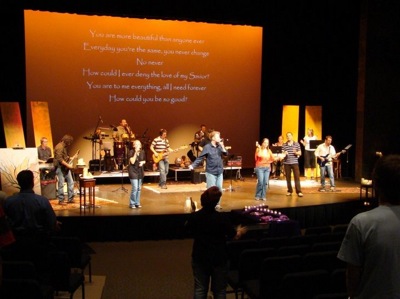
"If each and every local congregation does not make the solemn, sacred, self-effacing worship of God its absolute pastoral priority, one by one they will go extinct, drowning in an ocean of mediocrity, relativism, irrelevance -- in a word -- in a total lack of Catholic identity..."  -- from the Last Catholic Standing blog...

Ahh, the wisdom of all of this.  There are those who would insist that Lutheranism is dying because of what is or is not happening in evangelism but the seeds of our destruction are sown not in the way we do or do not witness but rather in what happens on Sunday morning.  If this is true for a Roman Catholic with all the structures of the priesthood, episcopacy, papacy, and holy mother church to make up for local weakness, excess, or lack, then it is even more true for us as Lutherans.

I am fully convinced that our problems are less about evangelism than about worship -- the theology of worship, our worship practices, and the integrity of it all.  Listen again to what this blogger has posited:  The main reason Catholic identity is now so weak is that, forty years ago, we began experimenting and tinkering with God’s sacred mysteries, and now nothing seems holy, nothing permanent, nothing worth reverencing, nothing worth genuflecting before.  For him the issue is the new mass introduced after Vatican II.  For us it is not so simple since our problem is less a new order of mass that is being followed than no order mass and parishes and Pastors doing whatever they will on Sunday morning.  All the casual character of contemporary worship -- even that form of CoWo which follows the basic mass form which has been part of Lutheran identity since Luther and catholic identity from, well, the beginning -- has diminished the idea that anything real is happening here, that anything worth noticing is present here, and that anything worth paying attention to demands our focus.

The whole focus of worship in Lutheran congregations is on the efficacious Word that does that of which it speaks and of the Sacraments that not only bestow the gifts of Christ but make the Giver present where His promise has been attached.  The truth is that you no longer know whether this Word or the Sacrament will be the core and center of what happens on Sunday morning in a Lutheran congregation.  We are not talking about musical style or page numbers in a hymnal but our confession and the liturgical identity that flows from that confession.

The only thing we have to offer the world is the efficacious Word and Sacraments.  Apart from this, Lutheranism has little raison d'ĂȘtre.  We were not born of intellectual debate, evangelistic zeal, or personal piety but of the very practical issue of what people hear and receive on Sunday morning.  It was not a curious quirk of theology that gave us birth but the need to speak the saving Gospel in all its truth and purity and the need to receive the sacraments as gifts and means of grace and not the sacrificial offering of the Church.  These may have been debated and discussed on the pages of seeming academic setting and language, but their domain is decidedly liturgical and practical in nature.  What is the Word that is proclaimed on Sunday morning and what is there to be received on Sunday morning.

The distance that is created by experimentation, by association with evangelical expression and style, by congregation autonomy, by disdain for adiaphora, and by novelty and innovation, the less we are who we claim to be and the more we deceive those we serve and those to whom we witness about Lutheranism and its confession.  This is what is killing Lutheranism -- the lack of awareness and appreciation for the sacred mystery that is God's presence in Word and Sacrament AND the idea that there is nothing real on Sunday morning other than personal taste, feeling, and expression.  We are not killing Lutheranism by our failure to knock on people's doors and speak the Gospel to them.  If we are dying as a church body, it is because of what happens on Sunday morning is no longer true to the mystery, consistent with our confession, or consistent with our evangelical and catholic identity.

This is my problem with Ablaze -- the issue that deserves our primary focus is not how well or how poorly we communicate the Gospel to those outside the Church but how well or how poorly the people on Sunday morning are confronted with the efficacious Word and Sacraments.  When we bring them into the Church and we have nothing really to offer them there, then we have failed even more so than if we never spoke the Gospel to them in the first place.  Don’t we have more important, more urgent things to worry about than worship?  I don't think so....

Friday, March 11, 2011

The Range of the Liturgical Movement

This week something amazing happened.  It took place in a small Lutheran country church.  This congregation has been in the same cornfield since 1896.  Over the door it proudly proclaims the UAC - Unaltered Augsburg Confession (a reference to the adulterated version that was the subject of great controversy in American Lutheranism of the late 1800s).  A relatively few Pastors have served there and the pastorates tend to be long.  Several of the Pastors are buried in the cemetery that is just down from the back of the building.  Many of my own family members on my father's side are buried there.  When the day comes I may be buried there (so says my oldest son, anyway).

This is the congregation where I was baptized and confirmed, the parish that supported me on my path toward ordination.  When I was growing up there, there were no hymnals in the pews.  It was not until the 1970s that hymnals and book racks showed up (a memorial for one of my extended family members).  Prior to that time you brought your hymnal with you to church (a few extras were available for visitors or those who forgot -- but few people forgot).

It was a parish that was sure of its identity -- this was not a mean spirited judgment against other Lutherans but a confidence in the Lutheran Confessions and Biblical infallibility that meant they knew they were different from the Augustana Church in town as well as the scattering of Methodists and Mission Covenant folks who filled out the rest of the religious complexion of the area.  They were identified with the Missouri Synod but never formally joined the Synod until the 1960's.  When the controversies of the early 1970s hit the Synod, there were those who wondered if they had made a hasty decision -- waiting nearly 70 years to make a formal affiliation.

Anyway, to get back to my point, for the first time in its history ashes were distributed on Ash Wednesday.  I called my dad before and afterward just to make sure that the roof did not cave in, the Protestant police did not haul away their Pastor, or the second coming did not happen and I missed it.  Everything went well.  My almost 84 year old dad stood and received ashes on his forehead for the first time in his life and for the first time in the history of that Lutheran congregation.  He knew I had been placing ashes since 1980 and receiving them even earlier and it was always a question of either too catholic or outward sign that was meaningless because God was interested in a contrite heart (like the Gospel for Ash Wednesday had not addressed that).  But now it seemed, well, right.  He was ready, the parish was ready, the Pastor encountered no back lash or any real controversy.

Those who would argue about the reach of the liturgical movement within Lutheranism and within the LCMS in particular, take notice.  It has reached the prairie.  Not as a tsunami wave of destruction but as the rising tide of a liturgical identity that has become more and more intrinsic with the Confessions of the Lutheran Church.  In the early 1970s, I introduced the surplice and the stole.  In the 1980s the alb came.  Then a more frequent reception of the Sacrament of the Altar (from the quarterly observance of my early childhood to monthly, to twice monthly, and now twice monthly plus special days).  I would have never guessed that ashes would be introduced there nor would I have ever thought it would have occurred without conflict.  Such is the reach of the liturgical movement and the reach of liturgical renewal.  It has reached the prairie. 

Ashes in and other themselves are merely signs meant to make visible the tension of death and dust and the cross that brings life even to the dead and to the dust.  The point is not ashes but a growing comfort level with who we are liturgically as a reflection of who we are confessionally.  I am not heralding a practice but the reach of a liturgical movement that, at its best, sought to reconnect confession and liturgy, belief and identity in worship.  This is indeed a good thing.  We are not a church body with liturgical canon laws but we do expect that what happens in worship within our parishes flows from our Confessional identity and is not disconnected from that Confession.  So we affirm that doctrinally pure hymnals and agendas be used because what happens in worship either reinforces our confession or contradicts our confession, inhibits our identity and faith or reflects that identity and faith.

Slowly and surely the liturgical movement has moved from cities and colleges to suburbs and now to the prairie.  Not all in that liturgical movement is good, to be sure, but when it helps us connect our evangelical and catholic confession with evangelical and catholic worship, only good can come of it....

Thursday, March 10, 2011

Living in a Plastic World

NEWS UPDATE:  You can download an app to filter out all references to Charlie Sheen from your web browsing!  You will no more be subject to the rants and raves of one of the most self-indulgent stars in the plastic and self-indulgent Hollywood.  Apparently only a few of us are interested since Sheen has garnered a couple of Guinness world records for the most Twitter followers -- 1 million within 24 yours and 2 million within five days.  I might suggest that those who follow Sheen Tweets and nothing but twits -- but that would be too easy!

What is Lent about?  Honesty.  What is the nature of our world?  Plastic -- Fake.  Lent is about the terrible truth that our plastic world refuses to admit.  We are dust -- we came from dust and we return to dust.  And we might add, in between the dust from which we came and the dust to which we return, there is more dust.... more ashes.  To put it another way, it is not all about you.  You are dust.  It is all about Him who gives life even to dust (the cross that the ashes mark).

Somebody once said that all publicity is good publicity.  Charlie Sheen must have been listening.  He is on every talk show, he calls into to countless radio shows, he has been interviewed in print, and he seems intent on giving us his every opinion on every subject.  We may laugh at him or wag our heads wondering what in the world he is on, but he is the unvarnished and raw part of every one of us.  It is just that the rest of us have learned to hide or soften this selfish core and appear less plastic, less fake.

Lent is a season of self-awareness -- not the kind that happens in an office, on a couch, with a therapist but the kind that begins with ashes and dust.  Our world is plastic -- from the plastic surgery that fixes everything that we think is wrong with us (but cannot fix death) to the plastic that finances our indulgence (with the appearance of riches) to the plastic that sides our homes (trying to look like the wood it is not).  It all starts on Ash Wednesday. There the people of God come clean and admit this most distasteful truth.  We lament this truth.  We confess this truth.  We repent of all the lies and the plastic world that covers up or deceives and stand before the Lord as the dust we truly are.  And the miracle of it all is that God does not turn away from us but comes to us -- in all our weakness and mortality, in all our flaws and failings, in our sin and death.  He comes to us not with the pointy finger of an "I told you so" or the righteous indignation that rejects us sinners.  No, He comes to us with the blood of forgiveness that washes white... with the true righteousness of Christ to cover up the filthy rags of our own goodness and holiness... with the grace that visits the unworthy and the undeserving with gifts for which we dare not ask and are too good for which to hope.

Sadly, too few churches are telling the truth on Ash Wednesday or throughout Lent.  Instead, we have turned even this season of honest appraisal into another forty days about ME.  Lent is like a "ME" filter -- it strips away the plastic veneer on our lives to expose the truth.  And you know what Jesus said about the truth -- it will set you free.

Of Pancakes and Piety - Not Much Shriving Going On

A little late, to be sure, but, as they say, better late than never...  Why do we call it SHROVE Tuesday?

The word SHROVE is from the old English verb shrive.  What does it mean to shrive?  Shrove or shrived, shriv-en or shrived, shriv-ing.

— verb (used with object)
1. to impose penance on (a sinner).
2. to grant absolution to (a penitent).
3. to hear the confession of (a person).

— verb (used without object) Archaic .
4. to hear confessions.
5. to go to or make confession; confess one’s sins, as to a priest.

If you survey the landscape of American Christianity, you do not see a whole lot of shriving going on.  To be sure there are calls to repentance but much of it is a call to manifest a specific moral behavior.  When it is applied to us as a people, it too often is seen as the stuff you have to do to get what you want (such as the distorted use of II Chronicles 7:14: if my people who are called by my name humble themselves, and pray and seek my face and turn from their wicked ways, then I will hear from heaven and will forgive their sin and heal their land which becomes a way to get America back on its track by ditching immoral behavior).

Real repentance is occasioned by the work of the Spirit -- not a preliminary work which we do and to which the Spirit responds.  Real repentance is not some precondition of grace but the fruit of grace at work already in the life of the penitent.  Repentance cannot be equated with giving up outward sins but neither can it be satisfied when there is no attempt to reign in desire and shape our outward behavior. 

Repentance is the work of God teaching us to despair of our sins and not simply regret them.  It crushes all our pride and self-sufficiency and admits that sin is no character defect that can be fixed by discipline or overcome by focusing on one's strengths.  Repentance kills us in the proverbial dust and ashes of our beginning and our ending and then in the midst of it all, cries out to God for the promise of His grace.  Christians say words like “Lord have mercy on me, a sinner” not because we are uncertain how God will respond but because we know not only His hate of sin and evil but the power of His love to work forgiveness, give life to the dead, and grant the gift of salvation to the unworthy.

To live in repentance is to live with this crushed spirit -- not to get past it or to live beyond it but to live with it, and, at the very same time, to cast your only hope for salvation on the mercy of God in His Son Christ.  In one arena, this takes place when we make confession -- the private confession of our prayers, the public confession of the Divine Service, the private confession before our Pastors, and the consolation of the brethren when we confess to one another.  Lent has turned into things like the hangover after Mardi Gras self-indulgence or the ease at which we ditch certain desires or wants or habits (knowing full well that we can grab them back after forty days or so).  Let us not treat sin or Lent so lightly -- giving up only to take back the sin in our hearts, minds, mouths, and bodies.  Lent is about shriving, repenting, confessing and living in this attitude and spirit daily.

The Tension of Sinner and Saint -- resolved only by grace

Sermon for Ash Wednesday, preached on Wednesday, March 9, 2011.
 
    I tell you straight up that I have no desire to relive my life or to be a child again.  I believe that one of the most difficult times of life is the tension between youth and adulthood.  Everyone tells you to grow up and then they insist you are still a child.  You cannot live in the carefree play world of a little child but neither can you live in the adult world with all its privileges and its responsibilities.  It's the terrible in between time; I have no desire to repeat it.
    Yet we live in that same terrible tension as Christians.  We are also here caught between who we were as sinners condemned and our newly bestowed status as saints redeemed and declared righteous by God.  If anyone suggests to you that faith is the easiest path to walk, they lie.  It is much easier to live in the dark deception of sin than it is to live in the light of God.  Yet the darkness cannot hide our sin forever – it just postpones the day of reckoning.  As painful as the light is, it provides us confidence and peace for that judgement and courage for every hurdle we face in this journey of living.
    Here in the same body, lives two people.  One is the sinner condemned by God and drowned in baptism.  The other is the saint redeemed in Christ and reborn to new life in those same baptismal waters.  But until the day of Christ's return, we carry within us the tension of two radically different people – one not yet fully dead and the other not yet fully alive.
    The world recognizes this tension and treats us as hypocrites and fakes even though God has declared us the genuine children of God.  Because we have no perfect righteousness of our own, the world finds us Christians eminently forgettable and anonymous.  Yet because we wear Christ's own righteousness by baptism, we are immortal and our identities are sealed for all eternity in the baptismal river that leads us to the very presence of God.
    We carry around in our bodies the death that sin has wrought but at the very same time we carry around in those bodies the life that death cannot overcome.  At one and the same time we are sinners condemned and the saints who are alive to God in Christ, forevermore.  It is not a choice of which people we shall be today but this is who we are at all times.  When we are evil, we are the forgiven and when we are good we are still the sinner.
    We are caught between our sorrow over the sin that continues to infect our thoughts, words, and deeds and the joy that flows from God's gracious gift of forgiveness in Christ.  We are often unsure what we should be – the somber people who lament our sins or the joyful people who live in the freedom of forgiveness.  But, of course, we live in both places at the very same time.  There is sorrow for sin on Easter Sunday and joy over forgiveness on Ash Wednesday.  It is a tale of two opposite worlds and people who live in them both at the very same time.
    We are poor and humble who dare not demand or even ask of God one thing and yet we are declared rich in Christ and called the royal children of our Lord, the very brothers and sisters of the Son of God.  We are the empty who have nothing and the people who are filled with heavenly grace.  This is the reality of the tension in which we live and we cannot escape this tensions nor can we live outside the contradiction that is the forgiven sinner.
    No where is that more in evidence than on Ash Wednesday.  This is  a day all about our sin and our need of a Savior.  It is the day we recall and take personally the words spoken to Adam and Eve in the Garden: Ashes to ashes, dust... from dust you came and unto dust you shall return.  Yet even in those ashes lies our hope.  They are not simply smudges of death on our foreheads but crosses that remind us of the life that God has built in us by baptism.
    Ashes in the shape of the cross, marked on the foreheads of condemned sinners for whom Christ died....  We are walking contradictions to everyone except to God.  This tension would be a terrible burden except for faith.  The contradictions would be impossible to bear were it not for the cross.  We are simultaneously sinners condemned and saints forgiven.  One is the reality we know and cannot escape and the other the reality declared us in Christ of which we dare not let go.  We are not who we were, but neither are we yet the people we shall be in Christ.  So today is not primarily for the unbelievers who know not God’s grace but for the sinners whom He has redeemed, who know His grace and yet, like St. Paul, lament that the good we do not and the evil we do over and over.  Baptism is the lens that makes this clear and faith is what reconciles the seeming contradiction of it all.  We, the baptized, return to the Lord.  We come not because of what we fear, but because of what we know.  We come not under compulsion but as those bidden by grace.
    In the midst of it all, we cling to the cross.  Caught in between the sin we know and the forgiveness God has declared, repentance is the only thing that makes sense.  Such is the state of repentance that marks our lives until Christ comes again.  It is in this tension that we live and work and it is in this tension that worship and rejoice.  The promise of an eternal tomorrow hidden in the reality of an earthly today... Guilty sinners declared righteous... the dead made alive in Christ... So this contradiction that only makes sense in Christ is not something we run from but run to... and the whole mystery of it all is revealed in ashes in the shape of hope... Amen.

To see Jesus and Him only....

Sermon preached for the Transfiguration of Our Lord, on Sunday, March 6, 2011.

    How many times don't we blurt out to somebody, "Did you see that?" only to have they say "What?"  After listening to the Transfiguration account in the Gospel for today, it makes me wonder what was going on with Peter, James and John.  Did you see that?  What?  Moses, the great patriarch dead for thousands of years, and Elijah, the great prophet who was to usher in Messiah's reign, who was also dead for thousands of years.  As an aside, how did they know who these guys were?  Did they have pictures in their wallets to use to recognize Moses and Elijah?
    But that is the whole point of this day, the whole point of the testimony of the Law and the prophets, of Scripture and tradition, of confession and creed: That we might see Jesus and Him clearly and see Him only.  Our Lord is not one of many messages of one messenger among many but the one message of God and the one messenger of salvation.  It is our lifelong task to see Him clearly – amid troubles and trials, sorrows and struggles, doubts and death.  It is the transforming work of the Spirit that everything else falls into the background when we see Jesus.
    Too often the Mount of Transfiguration is preached as if on it Jesus changed.  But did He?  Was He different on that mountain than in the manger or in the Jordan River or walking on water or healing the sick or raising the dead or preaching the Kingdom or eating with sinners or suffering on the cross or dying for a sinful world?  Was He a different Jesus than before?
    Was the Word of God different on that mountain?  Was its message new or different?  Was it a different Law Moses used to point to Jesus on that mountain?  Was it a different prophetic promise raised up by Elijah to point to Jesus?  Did the message of God's Word change? What exactly happened on that mountain?  Who was transformed, transfigured, and changed?  Was it the Word who changed, or the Word made flesh who changed, or?
    Or.... were the disciples transformed, transfigured, and changed?  Did Jesus have more glory than He had when He spoke the creative word that brought all things into being or when He was born of the Virgin or when He turned water into wine, sick into whole, dead into the living?  Or, was His hidden glory revealed for the sake of the disciples so that they might be changed, transformed, and transfigured... prepared for the glory that the cross would reveal, for the love that would sacrifice all, and for the triumph of mercy over sin?  Could it be that this mountain was not for Jesus but for us?  Could it be that what Peter, James, and John saw, we now see by faith?
    The transfiguration, like the cross, is for us.  It exists to shape and sharpen our vision so that we might see Jesus and see Jesus only.  What was crystal clear to the disciples with Jesus on that mountain is to be crystal clear to our hearts and minds.  That Jesus is the one and only righteous man, the holy One who has alone kept the Law perfectly and satisfied its every claim upon us, so that we sinners can give up the charade of righteousness that are our failed works and cling to Christ's righteousness alone in our baptism.
    The transfiguration is for us.  It exists to shape and sharpen our vision so that we might see Jesus and Him only as the message of the Scriptures and the One the prophets point to.  There is no other Gospel, no other Word from God and no other Word of God than the Word which is Jesus Christ, the Son of God, whom the Father has sent to be our Savior and Redeemer.  He has paid every debt of our sin, unshackled our chains to death, and made us free.
    The transfiguration is for us.  It exists to shape and sharpen our vision so that we might see Jesus and Him only amid a life with too many doubts, detours, and distractions.  It is for us so that all the sorrows and struggles, trials and tears may not steal our focus away from Christ who is our Savior.
    Hey!  Did you see that?   What?  That is the dialog spoken by faith in the face of every danger, temptation, and hurdle faced in this mortal life.  We are constantly being asked if we saw the hurtful words or actions done to us... did you see the injustice toward you... did you see how unbelievable the claims of Scripture... did you see how intolerant God is... did you see how hard it is to be good and how easy it is to be bad... did you see how short life is and how much you have to pack into it to make it worth while...  But in all of this we were not fixed or focused on these things.  Rather, we are too busy looking at Jesus.
    The transfiguration was not for Jesus but for Peter, James, and John... and for you and me living nearly 2,000 years later.  We live amid the great temptation to see everything around us with perfect 20/20 vision – everything except Jesus.  But it is only when we see Jesus that we see everything else clearly.  Our vision is being clouded by all sorts of things – from the lie that we can make ourselves good enough to the lie that we are too bad to be saved... from the lie that if you don't live for yourself you won't be happy to the lie that says there is no happiness or contentment in this world... from the lie that says the Bible is full of messages to the lie that says the Word of God has nothing to say to us whatsoever...  But we are determined to see Jesus only.  And seeing Jesus, everything else that we need to see comes into clear focus.
    Think about it... those guys up on that mountain with Jesus had seen Him do amazing things, had heard Him speak of His coming suffering, death and resurrection, and then saw Moses and Elijah as living witnesses standing there pointing to Jesus...  And shortly they would see Him mount the altar of the cross and die as the innocent for the guilty, the Son of God for mortal men.  So Jesus reveals His glory and the glimpse the grace hidden in His earthly flesh and blood so that soon they might glimpse in His suffering and death the glory of forgiveness, life, and salvation for a whole world.  They were being prepared so that seeing Jesus clearly and seeing Him only, everything else in their lives might come into proper focus.
    We come today to see Jesus.  We come with the distractions of sin and guilt on our hearts, of doubt and fear in our minds, of sorrow and despair that has stolen our joy – these things have stolen our focus so that seeing them, that is all we see.  And here Jesus reveals His glory in the surprise of simple earthly elements, hidden glory only faith may see, but glory that helps us clear out the clutter, refocus our weary eyes, and see Jesus... see Him clearly... and see Him only... and then all things we need to see fade into view in their proper focus.  Amen.

Wednesday, March 9, 2011

The Romance of Piety

As I heard the first confession of a young penitent, I harkened back to my own first, hesitant, and fearful attempt at private confession -- as the sinner seeking absolution.  My mind was filled with fear.  The words on the page seemed to refuse entrance into my mouth.  My mind assured me that whatever I said, it would not be the first time someone had confessed it and, most likely, not the first time my father confessor had heard it.  But my heart seemed reluctant to let go of the burdens binding my heart if the cost of such freedom was to give voice to what lie hidden within me.  In the end I stumbled through it with halting speech, and, like a bookie making odds, decided what I would say and what I would not say out loud.  O Lord, I wondered, why did Lutherans have to get rid of those nice, anonymous confessional booths!  What I had the nerve to confess were not the things that most troubled my soul but I consoled myself by saying this was not the last or only time I would go to confession.  When I finally left the prie dieu, the torment imposed upon my guilty conscience -- which had silenced my voice -- came spilling out in uncontrolled sobs that I could not define as either sorrow or joy.

In the end I believed it was a most salutary experience and insisted to myself that I definitely would do it again.  But, like the dental appointments that we know we should make, the next appointment with my father confessor did not come very soon.  But it came and with it a bit more of the poison kept inside of me bled out into the words of my confession.  As I became more comfortable with the setting, I found it strangely easier to speak honestly with this gentle Pastor the barbs and wounds of my sins.  I had confessed them multiple times within the general vagaries of the Sunday morning preparation office but before I left the Church I had always taken them back home with me.  God may have forgiven me but I was not so sure I could forgive myself. I yearned for the touch of my father confessor's hand, outlining upon my forehead the cross as he spoke directly to me, "I forgive you..."  It was as if the hot coals of my rebellion were jumping from within me as I found the courage to speak out loud what lie hidden and buried within my soul.  Each time I went home lighter, having lost some of the weight that I had carried around with me and I had no idea how heavy this load had become until it was pealed from my shoulders, sin by sin by sin.

I will also never forget the first confession I ever heard as a Pastor.  It was cold in the chancel.  I sat on a chair reading from the Psalms as I awaited the appointment.  As is so typical, it did not begin with a desire for private confession but with the words, "Pastor, I need to talk to you about something..."  But eventually I learned that this is Lutheran speak for I need to go to confession.  The burden of a childhood sin had been with this person well into adulthood and had remained well hidden -- no one would have ever guessed.  But they could not forget and the remembrance was becoming more and more difficult to hide and more and more costly to deal with.  The person did not know how to begin so we began with Psalm 130 and by reciting together the ten commandments out of the catechism.  There was much silence and I was not sure if I should speak or not.  Not proved to be the right course and when the words came, a lifetime of guilt and pain came with it.  A few words of counsel and the assurance that the grace of these words was indeed Christ's own word (John 20:23) and the person was off.  I was as nervous about the whole thing as this person coming to confession but we made it through and this person came many times -- never for confession but to talk to me about something.  Yet we always ended up at the altar rail and made our way through page 54 in the Worship Supplement (1969) and then page 310 in Lutheran Worship (1982).

There is a certain romance about piety -- things like private confession, fasting, disciplined prayer, daily devotions, Bible reading, etc.  We are in love with the idea but seldom do we work at it long enough for it to become habit or norm in our daily lives.  I was in love with the idea of being a father confessor to my people but knew that if that was to happen I must learn first to kneel before my own father in the faith and make my confession.  I am still in love with the idea of the daily office, with disciplined prayer times, with a daily and weekly schedule of services (as once the monastery or cathedral chapel might observe), and with a thousand other things associated with the practice of prayer and the meditative life.  But the romance is like the regret over a lost love -- it offers you nothing of the blessing until you find your way to put it into practice.  As long as it remains only an idea, it can do nothing to assist your journey in faith through this mortal life.

Lent is likewise filled with romance -- of precious loves given up, of regular fasting, of almsgiving, of good works, of special services and devotion.  But the romance of it offers little to help you along the way.  What is required is that we risk the disappointment in order to just do it.  I remember well the person who went through instruction several times and yearned for the Sacrament yet found it hard to believe that there was anything there but a bit of bread and a sip of wine.  They lived with the illusion of reality instead of the taste of that which Jesus calls "real food and real drink..."  And then they resolved to know the mystery they could not own and so this person came to the rail one Sunday.  After the Sacrament, I was tempted to ask "how was it" as if this was a first taste of lobster or some other inaugural experience of an unknown delight.  Later the person came to me disappointed because the lights did not blink and the sky did not open.  "I thought there would be more..." he said with a sigh.  "Maybe you need to still your expectations and just come," I offered.

Years later and hundreds of communions after that first taste of the Lord's goodness, the person admitted to me that the experience had grown with each visit to the Lord's table.  In the end, what they had expected to come with the initial rush of it all, came instead with the gradual experience of the hidden grace in earthly form.  This person is still communing and the reality of it all has become far more than the romance of his first imagination.

We may be in love with the idea of piety, with its romance, but the reality is much more.  The reality is messy -- never as neat and tidy, predictable and perfunctory as we assume -- but that is the way of faith and its expression.  The habit of it becomes the occasion for its greatest gift...

Tuesday, March 8, 2011

Whence Lent

The immanence of our Lenten days has its source in the bishops' gathering during the great ecumenical council in the Turkish town of Nicea (now called Isnik). It was 325 AD and some of those bishops present bore the scars of the persecutions under the emperors Maximin and Licinius. Tradition tells us there were 318 bishops there, but the canons tell that they ordered a forty day time of fasting and penance that now is called Lent.  We can only presume the forty came because Moses, Elijah, and Christ had fasted 40 days.

The bishops gathered in Nicaea knew the pain of suffering.  They believed the consequences of mortification not without salutary benefit.  They had tasted both the grief of it when inflicted by others and now they saw the grace of it when borne voluntarily. The previous history of some three days of penitential devotion was extended to forty days  and the focus was expanded from pentience to catechesis.  This was the time when the catechumens were prepared for baptism and all the faithful were reminded of the chief parts of the faith.

The practice of the Lenten fasts and penances varied until, in the seventh century, the West established  Ash Wednesday, exempting the Sundays but keeping a full forty days for the season of solemn preparation.  Already at the time of the Council of Nicaea, however, the Church in Jerusalem had eight five-day weeks of Lent so the practice was an amalgamation of earlier varied traditions and not necessarily something brand new. The word "Lent" has its source in the Old English word "lencten," itself a reference to the coming of spring with its lengthening of the daylight.

So we begin by joining with our for bearers who have seen the wisdom of fasting before feasting, of somber and pentitential devotion as a prelude to the remembrance of Holy Week and the restoration of the Alleluias of Easter.  There are countless variations of the traditions associated with the season that begins tomorrow -- not all good.  The use of the fat or lard for the sumptuous cakes and breads of Shrove Tuesday (Fasching in German) has given way to a few days of extreme self-indulgence that is seldom followed with much regret or contrition.  But Mardi Gras has little real connection to the faith except the timing.

I recall not where I read it or from whom this poem comes, but it has a certain affection for me as I think about tomorrow:

Once in winter,
I stood,
White flakes brushing my face
With white fingers,
I waited with the others
We shivered on the steps--
Stuck out our tongues to catch snowflakes
So cold they would burn.
Soon the big doors would open
On smoke and candles
and a cold thumb would brush
My forehead with a cross of ashes
"Dust to Dust" he would mutter
While snowflakes melted in my hair.

Monday, March 7, 2011

Diversity and Unity in Tension

Unless you have hidden under a rock for the past generation or two, it is obvious that a new virtue has arisen to primacy in the pantheon of goodness -- Diversity!  We have nations struggling to implement a strategy for diversity that can somehow co-exist within the parameters of citizenship, civic duty, and national identity.  We have business struggling to make sure that not only is the marketplace of jobs equal and equitable but that a nod be given for a diverse work force (ethnicity, religion, race, and sexual identity).  We have schools that teach teachers diversity in the classroom (my daughter is finishing out her academic preparation for a career in education) and we have schools that have sought to make for a diverse school population.  We have seen the political arena become the enforcer of a new political correctness in which certain things are more equal than others (a bow to diversity which appeals to new minorities over old ones).  We have seen worship and religion (at least in the Christian tradition) pressed with the need to celebrate and fully live out a diversity of cultures, expressions, definitions, truths, and lifestyles under the general umbrella of Christian freedom.  But, then, I am not telling you something you do not already know...

In particular I would focus this on the relationship between unity and diversity.  Who can deny that unity and uniformity have become, if not bad words, at least a second class word to the glories and wonders of diversity.  So the once and ordinary allowance that every congregation live out our unity together as a Church striving for as much unity and even unanimity with other congregations has become the mark of the evil empire.  Instead, the tension has been directed the other way.  The Church as a whole has got to learn to live with differences, distinctions, and diversity in worship practice (and, to a certain extent, matters of faith).  So the burden is effectively not on the individual congregations to strive together for the common good of worship practice and doctrinal integrity but upon the Church to allow and even foster such freedom of expression that may even threaten or betray the ordinary unity which might be expected of those who claim the same confession.

A common hymnal and liturgy was, in the past, almost a prerequisite of Synodical identity and koinonia.  For a long time that was mostly achieved through The Lutheran Hymnal.  Now, it is true that this hymnal had some 41 years to move from being new to the only book for LCMS Lutherans.  Antiquity does have its benefits.  Since it was published we have had no less than a couple of supplements, a couple of hymnals, a Spanish language book, almost an African-American book (Missouri declined it), and almost an ecumenically Lutheran book (again, Missouri declined it).  So some "diversity" of worship practice in our Synod -- at least since the early 1960s -- has had an almost official imprimatur upon it through these different books.  In reality, the most powerful push for "diversity" has come not through the publishing arm of Synod or other official Lutheran options, but through the advent of the photocopier, desk top publishing, and the wide and easy array of source materials from all sorts of places. 

We could spend hours talk about this but the point I want to get at is this:  When did diversity become a higher value than unity?  When did difference become more important than uniformity within the boundaries of local appropriateness or ability?  Sure, in the past unity and uniformity in text and the practice of the liturgy was commanded and enforced.  We have seen this to be sure.  Luther and the other Reformers with him were understandably shy about commanding form and practice.  Yet, it is unmistakable that they valued unity and uniformity (as much as was possible), that they sought these, encouraged these, and foster a voluntary unity and uniformity in worship form and practice.  They placed a high value upon the willingness of the congregation (and its Pastor) to forgo novelty, innovation, and diverse expression in favor of those forms and practices which gave physical expression to the doctrinal confession.

When did we lose sight of this goal and when did we begin to see diversity as a higher value?  Was this a fruit of the inherent freedom within the local congregation and Pastor or did this proceed from the adoption of cultural trends and values that exploited this freedom?

There are those who would like to see a top down approach to solving the worship wars in our Synod (indeed, across Lutheranism).  I personally believe that we are ill equipped for such an approach.  If we are to recapture a more united and uniform worship form and practice among our churches, it will come when we recognize the higher value of this unity over diversity and when we voluntarily surrender our freedom for the sake of our identity and confession.  This will mean that some of us -- me included -- may have to change some things as well as those on the fringes of contemporary worship adopt a radically different approach to what happens on Sunday mornings.  When we find again the value of such unity and when uniformity (here I mean the use of our hymnal and the Divine Service(s) within that hymnal as the fundamental core) is our willingness to yield some of the freedom we believe we might possess for a higher value and calling, then and only then will the extreme diversity within the worship of our Lutheran (and specifically LCMS) churches find a common identity and expression that flows from our Confessions and our faith (and not from an imposed rule from above).

BTW if you think this is a "Protestant" problem, read some of the Roman Catholic blogs about liturgical practice and the introduction of the new text of the mass.  Therein we find the same tension in a church body in which a hierarchical structure would seem to make it easier to impose unity and to establish uniformity.

Just a few thoughts...

Sunday, March 6, 2011

Transfiguration Thoughts...

There are so many things about The Transfiguration of Our Lord that could be said.  Some of them I will say in my homily this morning.  It strikes me, though, that one application is directly tied to what happens in the Divine Service.  In one sense, we are brought to the mountain top with Jesus, with Moses, and with Elijah each Sunday.  The Law and the Prophets point us to Jesus.  The glory of Jesus is there -- in the bread of His flesh and the cup of His blood.  In one sense it is still a glory enshrouded until the day when the veil will be fully lifted and in another sense it is not hidden at all but found in the surprise of the ordinary earthly elements that convey this heavenly grace.  And part of us wants to stay.  "Too soon the vessels disappear," says the wonderful hymn.  Yes, too soon it is all over -- the height and wonder, the mystery and our participation.  We would stay (with Peter) but we cannot.  We must go, as Jesus bids us, down the mountain and back to the domain where we bear the cross for His glory.  And the miracle of it all is that the Spirit's gift to us, as it was to the disciples who accompanied Jesus up that mountain so long ago, is that we see Jesus clearly and see Jesus only.

The disciples would have everything in them tested by what they would see on the cross.  No words or works of Jesus could fully prepare them for the brutal agony of His death, for the betrayal of the inner circle by Judas, or by the surprise waiting in the garden of the tomb.  So Jesus gives them a glimpse of that glory hidden in His flesh and blood so that they may see Him clearly and see Him only as they journey with Him to the cross.  It was a gift and blessing to them as well as the revelation that all of Scripture (the Law and the Prophets) speaks to, points to, and is fulfilled by Jesus.  He is the body in its cradle of revelation, wisdom, and truth and apart from Him it is but a book of words.  He is the power who gives that Word the grace to do what it promises and to accomplish its holy purpose with the success of the Father as its mission -- just as Jesus does.

It is a shame that so many come to Church and yet remain aloof or distant from this mountain top experience.  We used the Epiphany Eucharistic Prayer from the Hymnal Supplement 98 and I love the way it draws together the Incarnation, the Epiphany, the Transfiguration, AND what happens at the Table of the Lord. 

As you filled Your ancient temple
     with the glory of Your presence,
  so at the incarnation of Your only-begotten Son,
      You wrapped the fullness of Your glory in human flesh.
We give You thanks
   that You reveal that glory to us
      in the body and blood of Your own dear Son,
      given us to eat and drink for the forgiveness of our sins.
Grant us faithfully
   to receive His gracious presence among us,
      that we may one day
         behold His glory face to face...

And here we are... setting aside our Alleluias for a time, to walk with Jesus the journey to the cross where He reveals the glory hidden there in the surprise of obedience that makes the rebel sinner righteous, of suffering that gives him relief, of death that gives him life, and of life that cannot be taken again from him again...  Ahhh, there is much in the Transfiguration to prick and prod us during the Divine Service... I just pray we can catch part of it today...

Saturday, March 5, 2011

Deep and Abiding Friendship

I was listening the other day to another pirate radio station, Ancient Christian Radio, and the person interviewed was Kallistos Ware, the once Anglican and now Orthodox Bishop.  He has an intriguing voice that is at once strange and familiar and he speaks with a deliberate slowness that is almost a forgotten reality in our fast paced world.  It was a very interesting exchange.  Amid the many topics covered, he was asked about same sex marriage and homosexuality in general.  His answers were both refreshing and yet courageous.

On the subject of same sex marriage, he nuanced his discussion with a view to the benefits of discouraging promiscuity (gay or straight) and that certainly there was a difference in kind between gay relationships that are exclusively sexual in nature and promiscuous and those that are more than sex and monogamous.  Nonetheless, he relayed how he has counseled such couples to refrain from the sexual component of their relationship and to live together in a deep and abiding friendship.  He admitted that this was the place where laughter usually ensued but not always.  He then spoke eloquently of the nature of friendship and of both the lack of deep and abiding friendships today and the crying need of such friendships and the loneliness expressed by so many.

Building upon his remarks, I have long expressed a lack of such deep and abiding friendships in my own personal life.  Both my wife and I admitted that our parents have had longstanding and the closest of friendships that have lasted pretty much a lifetime.  Something we have not known -- perhaps in part to the more mobile nature of our homesteads and in part to the different circumstances created by my vocation as Pastor.  It is not that we do not have friends.  We do.  It is that such friendships have tended to come and go and few of them have endured the passage of time or the distance of geography.

Where I spent the first nearly 14 years of my ministry (Long Island and then Upstate New York) we found a wonderful friendship and collegiality among the Pastors of our circuits and with other Lutheran Pastors.  We found this friendship even with people we did not share a great commonality of opinion or theological perspective.  It was both the foundation of our new life together as husband and wife and as a couple hundreds and hundreds of miles away from families and friends of our youth.  Even to this day, we retain a closeness with these folks (those still living) and though we are seldom together in the same place, our hearts remain ever so close, that the passage of time between our reunions is hardly felt in the bonds of our affection.  We simply pick up where we left off.

I often wonder why the social networking media is such a hit and why young people in particular seem to be so uninhibited with their secrets, fears, confessions, sins, and feelings on that media.  it occurs to me that perhaps the social networking media is the means of youth expressing their crying need for the deep and abiding friendships that they both desire and yet seldom know in the same way as folks of a previous generation.  Consider the difference between the long, personal correspondence of figures great and anonymous and how letter writing has yet to be replaced with any other medium.  Emails, facebook posts, and tweets are certainly quicker and more accessible than the forms of personal communication of the past but not necessarily as effective or fruitful in establishing, nurturing, and enjoying the intimacy of friendship.

Of course the interviewer brought up the witness of Scripture on homosexuality and there again it seemed that Bishop Ware had his hand upon it.  We seem ill equipped to accept the kind of deep and abiding friendship between David and Jonathan or Jesus and John that is intimate in every way but not sexual.  So suspicious are we of these Biblical texts, that we presume upon them our own views and thus deprive them of their significance and eloquence.  I believe that such friendships, or rather the lack of them, has hindered and even further marred our humanity.  We were created for community and communion -- both with God and with each other.  But our youth seem to wrestle with the burden of a loneliness that longs to be filled and yet they both fear expressing such friendship will be misunderstood or it will be rejected.

For all that have to bring us closer together, we continue to struggle with the kind of friendship that seems to have marked other generations or other places -- one that is richly reflected in Biblical theme and example.  Ware suggests that this is related to the issues of sexuality and gender before us today.  I think he is right.  Even within the congregation I have seen people come and go, in search of these friendships, and not finding them, fade from the assembly.  While it is easy to say that the community of God's people should foster and build such deep and abiding friendships, it is another thing all together to help people put them into practice.  This is ever more true in a place like Clarksville, Tennessee, where military and industry combine to make this a stopover and not a destination for many on the journey of their lives.

Perhaps this might also teach young men and women better how to choose a spouse and how to build a relationship before immediately introducing a sexual or erotic component into their relationship.  Here the TV and movies do not help us.  They often compress the more adult stages of a relationship into a few moments on the screen and so our children are often confused by what they see.  In a matter of a few minutes of lines and acting, people jump into the sack as if their relationship were fully formed and defined.  Now maybe this does happen but more likely it is not as quick or abrupt as happens on the tube or in the movies.  What we see is more often the beginning and the end, and not the longer stage in the middle in which friendship gives way to love and love gives way to commitment and commitment becomes public and accountable.

I watched the wonderful movie, The King's Speech, and one of the most heartwarming parts of that amazing story is the friendship that developed between two very unlikely fellows, in radically different stations in life, and especially with one whose life was shaped against such intimacy and not for it.  I will not disclose any details of the film but I think it ties to the discussion.

Clearly we need to help our children, especially boys, learn how to build and maintain the kind of deep and abiding friendships that help us become more fully the people that we were designed by our Creator to be.  Perhaps much of that which is energized by sexuality could be more positively directed in terms of such friendships, whose bonds of affection cover nearly every aspect of life but sex and eroticism.  Scripture speaks of this in such positive terms and we have all learned much in a discussion of loves that the Bible describes, of which phileo finds expression in friendship.

Just some rambling thoughts on a Friday afternoon at the movies...

Friday, March 4, 2011

Our Nerves

Different things get on different people's nerves and one of the things you notice about writing a blog is that some things are hot button issues.  In the midst of a long post about something else, you can merely mention chanting or Mary or something like this and the comments will abound.  I find it curious that in a recent post the issue of chanting occasioned so many comments when it was barely mentioned in my post, the same with Mary in another post. Actually, truth to be told, I mentioned them specifically to see if they would light up the comments board.  And they did.

If anything will doom the conversation that Missouri needs to have it is when we focus on the little things that get on our nerves instead of hearing the whole thing.  I am not suggesting that I am immune from this.  I am not.  I struggle with the same temptation to sift through things and find something that hits my hot button and then react to that instead of overall article.  It is, probably, human nature,  but it will surely kill the very dialog that we need to have.

So what do we do?  I would suggest that we learn to ignore the obvious things that touch a nerve and listen to the rest of it, reacting to the larger thrust of the article before addressing any of the specifics that we find objectionable.  As an example, I read Burkee's book on the power and politics of the Missouri Synod in the 1960s and 1970s but his repeated error of calling Robert Preus the older brother instead of Jack Preus (who was four years older than Robert) almost caused me to put the book down.  In the end I felt compelled to mention this flaw in the book (which should have been caught by a good editor or proofreader) and used it to paint the whole scholarship of the author.  That was not exactly accurate.  I did find much in the book both accurate from what I knew and experienced living through those years and even learned a few things.  I am still not much of a fan since I believe there were broad strokes that were not fair (such as painting Missouri's conflict in the context of Nixon's resurgence of the right after the rebellion of the 1960s).  In the end it was a good read and I was glad to have read it.

I believe that most Lutherans would find things in Luther that they cannot believe or abide (his more Marian devotion than ours today, being one of them).  But we do not judge Luther on the basis of every one of his written words.  We make a judgment of him based upon the whole of his contribution.  The great tendency of worship wars or communion wars or Bible wars is to nit pick and to tear down the big things by nibbling away at the small things.  If our church body is to find some consensus, if we are to heal the divisions, or if we are to learn together, we will need to resist the great temptation to react to the raw nerve things and speak to the major thrust of the article first.

Both sides of these Missouri wars have a well-deserved reputation for prejudging, for dismissing because of details, or for refusing to listen to anything by this author or that.  It is not helpful to us.  We need to be serious and we need to seriously address some of those divisions that are testing the very seams of the garment that is Missouri.  At the same time, we best address those divisions more with a needle and thread and less with a scissors.

On many issues I am probably pretty right of center in Missouri; on others I am in the middle.  On one or two I am probably left of center (at least judging from the blogosphere and the comments on this particular blog).  I suspect that each of us has some of the same contradictions within us.  Missouri's strength of the past and the promise of its future lies in our willingness to listen a bit more and to react more deliberately than instinctively.

Thursday, March 3, 2011

Engraved on the Palms of His Hands

Sermon for Epiphany 8A, preached on Sunday, February 27, 2011.

    In the face of disaster and trouble, we often wonder "where was God?"  Like Martha who came out to meet Jesus after Lazarus died, we complain to God "that if only You had been there" this would not have happened.  This was the common complaint of God's Old Testament people: "Has God forgotten us?  Has He forsaken His people?”  Now it is true that sometimes we feel so very alone and that our perception of reality is what we see most clearly.  But can God forget us?  Will He forget us?
    In the Old Testament lesson for today we come face to face with the ever present promise of His grace.  Can a woman forget the child at her breast?  Even if she can forget, the Lord says He cannot and will not forsake His own.  He has engraved us on the palms of His hands – words that take on new meaning when we see the nail prints in Jesus' hands.  This love we see on the cross can never forget us.
    Can a nursing mother forget her child?  It would be hard to imagine. Yet God is bound to us even more strongly than mother to her child.  These words stir in us as we heard the words of Jesus in the Gospel lesson for today.  The birds of the air neither work nor reap the rewards of their work, yet they are secure in the hands of God's grace.  The insignificant and momentary lives of the grass of the field, of the flowers of the meadow, and of the birds of the air are securly in God’s hands.  How much more so are you secure in His hands... secure in the clutch of His grace.  So let go of your anxiety and turn your attention from your fears to the confidence you have in Christ Jesus.
    Why is it impossible for God to forget us?  First of all we have the covenant promise of His Word.  He has given the solemn promise of His Word and when we speak His Word back to Him we remind Him of what He  pledged to us.  That is why these promises inform our worship service and our prayers.  Saying back to Him what He has said we speak the truest truth.  These promises shape our prayers even more than our needs form the words of our supplications.  When we pray for His promises more than from our needs, we are drawn into confidence that whatever comes, God’s good and gracious will holds us securely in His grasp forevermore.
      Second, God cannot forget us because His mercy did not come cheap – it came at the cost of the suffering and death of the cross.  For our heavenly Father to forget us would be to forget Jesus' suffering and death that purchased us back from sin and restored us to life in Him.  Our Lord is no day trader with our souls but the long term investor who has invested His all in Christ and whose goal for us is nothing less than eternity.
    Finally, God cannot forget us because He has gathered us into the arms and feeds us the nurture of His grace by setting His Table in the presence of our enemies and giving us Christ's own body and blood as food and drink.  The God who bids us come, who sets us in the place of honor, and who feeds us heaven's bread and salvation's cup can no more turn His back on us than forget Himself.  This Table feeds us for today, for sure, but is also our foretaste of eternity.
    God cannot forget His children and He has the scars to prove it.  He has engraved us by name on the palm of His hand.  Now what do you suppose our Lord is talking about here?  Could the engraving be the mark of the nails, the imprint of Calvary, and the wounds of the cross?  Remember Thomas who did not believe Christ was risen and who insisted upon seeing the holes in Jesus' hand and the wound in His side?  These marks do not heal and fade.  They are the permanent marks of love, the eternal engraving of your names and mine upon the hands of our Savior.  This is what love has done and what forgiveness He has won.  Looking into the mirror of our sin we can often despair but looking into the wounds of Christ we find only love strong enough to forgive us and hope that endures to everlasting life.  God cannot forget this.  Why do  we?
    That same wounded and scarred hand extends to us the Holy Food that imparts to us Calvary's gift and the grace of the empty tomb.  Hidden in the bread that is His body and the cup of His blood is the love that can never let us go.  Every Sunday He gives to us the gift of Himself.  Jesus is not only the Giver, He is the Gift.  He is permanently invested in the lives of those for whom He died and rose again.   How can He forget us?  How can He ignore us in our time of need?
    From this confidence, St. Paul insists.  We are not our own – not our thoughts or our fears or our sins or our needs or our wants or our desires.  They all belong to Him. We were bought with a price.  We belong to Him and He has marked us as His own in baptism.  We walk our path in this world as the beloved of the Lord, who are always on His mind, always in His heart.
    We face the uncertainty of the future with the certainty of His grace and favor on our side.  We face our enemies in the world with His friendship always with us.  We face our callings as witnesses and workers of mercy with the vision of His cross ever before us. His mercy is our most prized and precious possession.  We face the world not as a people who cower in fear but as a confident and courageous people – we know that nothing can separate us from His love and this is the force and power that compels us to speak His word of welcome to every stranger.
    In our wounds we often cry out, "Where were you God?"  In our sorrows we wonder if perhaps God has forgotten us?  In our fears, we fear that we are all alone, on our own.  Nothing could be further from the truth.  God cannot turn away from us.  Even the ugly stain of our sin could not turn Him from us.  He took that sin upon Himself in Christ Jesus.  We are the children whom He has nursed to life in the waters of our baptism.  We are the heirs of Christ's death and the recipients of His life.  We are the people of His promise, whom He serves at this Table with the food that is Christ's body and blood.  When He reaches out to us, we see in His hand love's engraving of our names.  We may not be able to trust in others, but He will never fail us.
    This is not only our comfort as a people who seek His presence, who stand today to exchange the anxieties of this mortal life for the grace of His kingdom... no, this is not merely our comfort but our courage.  Our courage as a people who have been given a purpose and a calling as His people, serving Him by serving our neighbor, loving Him by loving our neighbor.
    Today we come with all our burdens to lay them down before Him.  And He tenderly invites us to come to Him, to take His light burden and easy yoke, and to walk with Him even as He has promised to walk with us.  We see the birds of the air, the grass of the field, and the creatures of the earth and we know, He who care for them, will never let us go... not now, and never.  Amen

Let me speak frankly...

For a while now I have posted on this blog the curious, the wondering, the occasionally profound, and seemingly endless meandering thoughts that accumulate in my head.  I have so appreciated this as a way of literally "thinking out loud."  It appears to have resonated with many of you, as well, for more than 200,000 of you have visited the pages and many have left various comments.

This has been a somewhat therapeutic exercise for me.  Dealing with the often stressful and urgent and pressing matters of parish life, the people whose lives are entrusted to my care, and a host of other things parish or personal, well, this has been a welcome outlet for comment and diversion.

I want to take this opportunity to thank those whose support and encouragement have made this a delightful "hobby" within the general umbrella of my pastoral calling.  I also invite you to keep me and my parish in your prayers over the next weeks and months in the hope that some matters, largely beyond our control or influence, find God-pleasing resolution.  Without this "hobby" the particulars of these issues may have been even more difficult for me to manage and through this little blog I try to keep the focus where it needs to be -- on the glorious gift of God's grace in Christ Jesus, on the task of living out our lives within that baptismal vocation, on the wondrous love which is our feast of Word and Table every Sunday, and of the witness of this joyful celebration and life-changing mercy to the world.

So, simply, thank you for listening, for commenting, for disagreeing, for challenging, and for encouraging me -- you have often helped me through some dark moments and, even though I do not know most of you personally, I do not regard lightly the connection we have through this electronic medium.  In the days to come I hope to continue the enterprise and spill out the meandering thoughts of a rather chaotic mind (and messy desk) on to the digital pages of this web conversation.  If they bless you, thanks be to God.  But this has been a blessing to my thought process, a reflection upon the marvelous gift of being a Pastor to God's people in this place, and a place to refocus when the sometimes troubling events of this mortal life can leave me unfocused.

Neuhaus' Law Revisited...

Richard John Neuhaus, of blessed memory, is famous for his rule or law:  "Where orthodoxy is optional, orthodoxy will sooner or later be proscribed."  It seems that we may well be on our way to a slight change in that law to suggest that where Christianity is optional, it will sooner or later be proscribed.

From Touchstone and the MereComments Blog: The Telegraph reports on an UK High Court ruling against a Christian couple who wanted to be foster parents. They were disqualified because they couldn't not tell a child that a homosexual lifestyle was acceptable.  The judges had stated that "biblical Christian beliefs may be 'inimical' to children, and implicitly upheld an Equalities and Human Rights Commission (ECHC) submission that children risk being 'infected' by Christian moral beliefs".   The [Christian Legal Centre] said the judgment summary "sends out the clear message that orthodox Christian ethical beliefs are potentially harmful to children and that Christian parents with mainstream Christian views are not suitable to be considered as potential foster parents".

From Al Mohler:  Attorney General Eric Holder informed Congress yesterday that President Obama had ordered the Department of Justice to cease all efforts to defend the Defense of Marriage Act in the courts. The announcement came without public warning, even as the administration was dealing with an international crisis in Libya and a political showdown over unions in Wisconsin.
 
The Defense of Marriage Act [DOMA] emerged in 1996 as at least one state — Hawaii — indicated the very real possibility that it would vote to approve same-sex marriage. The Act makes clear that no state can require any other state to recognize a same-sex marriage, and that the federal government is prohibited from extending marital benefits to same-sex couples. The Senate approved the measure by a vote of 85 to 14. In the House of Representatives, the vote was 342 to 67. Faced with such overwhelming congressional support, President Bill Clinton signed the bill into law.But 1996 was a long time ago, politically and culturally speaking. President Obama vigorously and repeatedly declared his opposition to DOMA during the presidential campaign of 2008. 

Churches will find little support from the law or the government when it comes to defending positions that conflict with the progressive beliefs of the social justice movement.  Although the issue is same sex marriage and homosexuality in general, other issues will soon replace these as this movement for radical social change marches on.  Euthanasia,  assisted suicide, abortion, genetic engineering of babies, reproductive technology in general, stem cell research, etc... these are all issues in which orthodox Christianity may find itself the enemy of the state whose opinions mirror a secular agenda in which the particularity of life and the family order are exchanged for a values neutral world (except to insist that all opinions/stances/orientations are equal).

I am no doomsday prophet but it would be foolish not to consider how these things will impact the status of the church before the world and the work of the church on behalf of Christ.  We have lived under the illusion of being not only a protected estate before the Law but also a preferred perspective by the nation and its people.  That illusion has surely been shattered by events such as those reported above.  Maybe it is true that what we thought was only an illusion of reality, a false perception of friendliness between culture and Christianity, but how many people my age would have thought that at this time in history Christianity would be seen by many as an enemy of culture, education, science, and justice?  At this point in our history, it is even more important that we not soften or adjust the message of the cross but speak even more clearly and boldly the truth of the Scriptures in love.  As much as these indicate that we may find ourselves an unpopular minority, it also indicates that the message we preach and teach is needed now more than ever.

Wednesday, March 2, 2011

We Are Not Catholics, We Are Christians!

When it first came out, I remember showing off the Worship Supplement (1969, CPH) and, of all the things that were new, what stuck out most to the people who saw it was the word "catholic" in the creed.  "We are not catholics!  We are Christians," I was told over and over again.  At the time I was not sure either about the history of the word or the reason for vehemence of those objecting to it.  After all we did say the dreaded "c" word in the Athanasian Creed (and it was in the hymnal counterpart to the King James Version -- The Lutheran Hymnal 1941).  I guess the infrequent use of that creed could justify overlooking the unpleasant speaking aloud of that which dare not be spoken in a Lutheran church.

When ILCW began planning for the book that became Lutheran Book of Worship, "catholic" was there.  Perhaps this contributed to the objections Missourians found with that more ecumenical book.  In any case, when Lutheran Worship was published in 1982, "catholic" was there but related to a footnote.  When the Hymnal Supplement 1998 came out it was again a footnote to the actual text of the creed spoken by the people.  Lutheran Service Book actually sent out a study of the creed proposing to restore the plural form of its confession ("We believe...") and "catholic" in the body of the creed with "Christian" in a footnote.  For whatever reason, fears of those presenting this to the Convention or the desire to refrain from controversy or the imposition of the Convention upon the Commission on Worship, LSB was accepted with the texts of the creeds from LW.

It was a most unfortunate decision, in my opinion, and relegates another generation of LCMS people to grow learning the creed using a word not original to that creed and one that means something very different than catholicam.  In my own parish, I began introducing the "catholic" word so that it would not be controversial when LSB came out and when LSB abandoned the quest, I retained it in our usage since we had fought the battle for understanding the word "catholic" as one friendly to Lutheranism and gone on to other things.

Judging from a couple of other blogs or forums, it is still a word that ruffles the feathers of Lutherans in the pews (and some in the pulpit).  This is a shame.  Methodists, Episcopalians, and Presbyterians have all used the word "catholic" for many years -- apparently without dispute. These churches have by their own confession and practice NOT stood within the veil of evangelical catholic identity and yet they have grown comfortable with the word.  Why then would we, a church body which claims to be intentionally evangelical and catholic in confession and practice, eschew the word "catholic" in the creed?  It literally boggles the mind.

My friend Pastor Wil Weedon put it this way:  It all depended - at least in the 16th and 17th century - on whether one was singing in German or in Latin.  If the Creed was sung in German - and that means, Luther's "Wir Glauben All" - then one confessed that the Holy Spirit "die ganz' Christenheit auf Erden hĂ€lt in einen Sinn gar eben."  But if one sang the Latin Creed, then one confessed "unam sanctam catholicam et apostolicam Ecclesiam."  And Lutherans for a couple centuries were totally at ease with confessing it either way; in many services confessing it both ways as the German was often sung by the people after the Latin was led by the choir.  The notion that "christian" is preferred over "catholic" because that's how the Creeds were rendered in the German Book of Concord does not jive with the actual history of Lutheran liturgy. 

I believe that it is imperative that we reclaim our familiarity with this word and raise our comfort level in using it in the creed for we as confessional Lutherans are not only deliberate but historically consistent in our conviction that we are not innovators but faithful confessors of the one, true, apostolic, and catholic faith.  For us this is not a word used for window dressing but something that resonates to the whole nature of who we are, what we confess, and how we live.  I think it is time to reclaim the word from the footnote and use it until it no longer offends us.  I am convinced that until we become comfortable with this word in the creed, we will not be at ease with our own confessional Lutheran identity as evangelical catholic Christians.  And that is the point.  We ARE catholics!

As a footnote.... why do we confess "I believe" in the Nicene Creed when the original was "We believe?"  Even in Luther's creedal hymn, we do not sing "Ich glaube" but "Wir glauben..."  I won't take up any more space on this, but to make this point.  Unlike the Apostles Creed and its association with baptism, the Nicene is the "we believe" creed used to define what is orthodox -- not only in terms of the individual but in terms of the whole congregation/church.  Literally by confessing the Nicene Creed we are submitting our own individual confession to that which has faithfully and in orthodox terms confessed the Holy Trinity -- from time of controversy and conflict to the present day.

Tuesday, March 1, 2011

Stewards of the Mysteries...

Although I did not preach on that text Sunday, the section from First Corinthians in which St. Paul describes himself as a steward of the mysteries and the hiddenness of God has always tugged at me.  The world and Christians living in the world have always sought neatness and order.  One of the great failings of Christians is the need to tidy up after God, to explain away all the unknowns and unresolved issues of His Word.  We tend to treat the Word of the Lord as an encyclopedia with reasoned and ordered explanations and answers to our questions and our desire to tie up all the loose ends.  Some Christians, even great Christian thinkers, have succumbed to this temptation and tidied up to the point that God's Word has spoken a different word, an unfaithful word, and even a false word.

I guess my own affection for history over systematics is showing here.  The systematician is at work in the things of God, like a passionate librarian, organizing, shelving, and boxing up God's loose ends, unrelated strands, and confusing excursuses (now when have you ever heard that word in plural -- this is an intellectual blog for sure!).  I am not so much bothered by the things that do not add up.  I am not at all bound by the great intellectual curiosity over the apparent contradictions in Scripture or in Christian theology in general.  I do not have all the answers -- I am not sure I have many answers at all except Jesus Christ whom the Spirit has revealed to reveal to us the Father and to bring to light that which was hidden in the ages -- the saving will and purpose and plan of God.  Even there I find myself often tongue tied to explain it all -- not knowing how nor feeling a burning need to wipe the mist away from St. Paul's dim mirror.  May parents said to me, perhaps too often, all things in their time.  It stuck.  What we do not know now, will be revealed eventually or it will be revealed as unimportant.  Either way I am content to wait.

What we as Pastors bring to the world are not the answers to their questions but the awesome reality of Christ both hidden in and revealed in the great mysteries of... the Word made flesh, made like us in every way except sin, whose healing blood has the power to save a whole sinful world, whose victory is made present in the moment but not fully revealed until the consummation of all things, who reaches out in baptism to kill and make alive, who speaks absolution and it is done, who makes bread to be His body and wine His blood... the endless list of mysteries of which we are not explainers but stewards.

It seems to me that often -- too often -- we surrender this role of stewards of the mysteries in order to be therapists to the wounded soul, answer men to the intellectually curious, hawkers of the things of God to those shopping for a bargain, and inspirational speakers to the unmotivated.  We do this poorly and it is a shame of religion to enshroud this activity in the aura of holiness.  The holy is fearful and pushes us away.  It is only in Christ that we find the strength and courage to stand on the holy ground of His presence.  We do so not as the casual and comfortable visitor but as the stranger and alien who is declared at home but struggles with this since we are still by nature sinners tempted by the lure of the bright lights and big city of Satan's last hurrah.

As a parent I often made the mistake of thinking that if I explained it well enough, my children would choose the right path (should I say "my path").  But my children either were not listening or did not appreciate my long and preachy explanations.  What they sought from me and what I should have given them more are firm words of truth, conviction, and direction.  God does not explain Himself to us, does not have to explain Himself to us, and refuses to explain Himself to us.  Like Job of old we may cry out "why" but what we get in response are the firm words that remind us His ways are as far above us as the heavens above the earth.  For Job it was enough so that he could cry out in faith "I know that my Redeemer liveth..."  We still struggle for that to be enough for us.

On Glenn Beck the other day an assembly of evangelical and pentecostal preachers were given religious credibility to Beck's rant of the day.  When out of the blue one reminded the rest that they were not here on a mission from God to condemn or judge or revel in the mud of worldly wrongs.  They were there to speak hope.  This is the mystery -- that God approaches us in mercy and sustains us in grace.  This is the mystery -- that His Word for the world is hope!  Hidden in the terrible instrument of death called the cross, we find the surprise of hope.  Hidden in the earthly elements we find the heavenly grace that plants, grows, and harvests hope. Hidden in the fearful reality of His return in judgment, we find hope that calls us home to the perfect place prepared for us that we may be with Him and He with us forever.

Speaking ever so personally, I do not want God to explain Himself to me.  I want Him to direct me and govern my heart and tame my willful desire.  I want a pillar of smoke by day and a pillar of fire by night to lead me through the wilderness to the eternal land of promise.  I want to approach the mystery of His grace hidden in the Word and Sacraments with the holy fear of those who know He is God and we are not.  I long not for order or reasoned explanation but the immanent and eternal grace that visits me, unworthy sinner that I am, and clothes me in righteousness, plants me in hope, sustains me in joy, for the way of the cross in which I walk today until I close my eyes and awaken in His presence and in His glory.

As I write this I listen to Bach's cantata on "What God Ordains Is Always Good."  It defies reason and earthly vision.  It defies explanation and order.  It is accessible only by faith.  I sing this hymn as one who lives in the shadow/mystery of this grace and favor and whose vocation it is to proclaim it to God's people and the world.

What God ordains is always good:
    His will is just and holy.
As He directs my life for me,
    I follow meek and lowly.
        My God indeed
        In ev'ry need
Knows well how He will shield me;
To Him, then, I will yield me.

What God ordains is always good:
    He never will deceive me;
He leads me in His righteous way,
    And never will He leave me.
        I take content
        What He has sent;
His hand that sends me sadness
Will turn my tears to gladness.

What God ordains is always good:
    His loving thought attends me;
No poison can be in the cup
    That my physician sends me.
        My God is true;
        Each morning new
I trust His grace unending,
My life to Him commending.

What God ordains is always good:
    He is my friend and Father;
He suffers naught to do me harm
    Though many storms may gather.
        Now I may know
        Both joy and woe;
Someday I shall see clearly
That He has loved me dearly.

What God ordains is always good:
    Though I the cup am drinking
Which savors now of bitterness,
    I take it without shrinking.
        For after grief
        God gives relief,
My heart with comfort filling
And all my sorrow stilling.

What God ordains is always good:
    This truth remains unshaken.
Though sorrow, need, or death be mine,
    I shall not be forsaken.
        I fear no harm,
        For with His arm
He shall embrace and shield me;
So to my God I yield me.