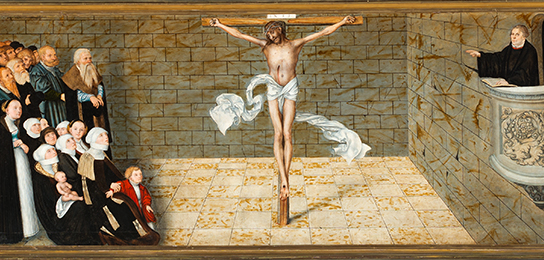
Sermon preached for Good Friday Noon by the Rev. Larry A. Peters
In John 13, not part of the Passion, but rather, part of the Maundy Thursday foot washing, a line stuck out at me. Jesus, knowing that the Father had given all things into His hand, that He had come from God and was going back to God. . . It is exactly this confidence that emboldened Jesus to do what no flesh and blood person would do without fear – suffer and die in our place upon the cross.
What love is this that our Lord should suffer in our place and die the death that was ours to die and then freely give us all the fruits of His righteous living, righteous dying, and righteous eternity? That is the question that plagues us. Here on earth we do not know this kind of love except in books and dreams. That is, until Jesus gives this love a face, a shape, and a heart.
But underneath this love is what Jesus knew as He was preparing to be betrayed into the hands of sinners, suffer, and die for us. He knew the Father had given Him all things and that He came from God the Father and would return to the right hand of the Father. This was His confidence and it led Him to the obedient suffering that gave us new and everlasting life, freed from the guilt and shame of our sins, and clothed in the gift of a righteousness that belongs to another.
But even as we acknowledge this about Jesus, we who sit here at noon on the Friday we call Good, cannot help but see the parallel for our own lives. For we are not as the spectators who did not know or understand what was happening. The Spirit has taught us to see Jesus, to trust in Him, to have faith. The same Spirit has led us to repentance and given us grace to release our sins to the blood that cleanses us. And with this has come new knowledge to sustain us in a topsy turvy world where wickedness wins and righteousness loses.
The Father has given all things to us. Did you hear that? Because of Christ, we have been given all things in Christ. This is the fruitful suffering that paid the price of sin, that delivered us from its punishment, that set us free from our captivity to the devil, and that released us from the weight of guilt that held us down.
The Father has given us all things in Christ. We did not earn it or merit it or deserve it but this love born of the cross delivers the unworthy and undeserving, who have only their sins and no righteousness of their own. We have been gifted into salvation, gifted with the forgiveness of sins, and gifted with the life death cannot undo.
We knew we came from God. Everyone knows this – from the denying atheist to the indifferent agnostic. Our souls were created to know God from whom we come.
And those souls will not rest until we invent a fake god to satisfy us for a time or until we know the real God who bestows upon us eternity. Man is doomed to invent fake religions to satisfy the heart created to know God until God revealed Himself fully and finally to us. That is the fruit of this Friday we call Good. We knew we came from God and now the God from whom we come reveals His face to us – the face of mercy for those who do not deserve it and grace to those too shamed to ask for it. This is the power of the cross. It shows us the face of the God who made us and this face is love.
And we know we are going back to God. Now we do. Because of Good Friday we do. Before the sacrifice was paid, the debt of sin erased, and the path of salvation paved in blood, we might hope for an eternal home for God but we could not know it for sure. Now in Christ we know it. Sin cannot separate us from the love of God and neither can death. That is what Christ has done. He has given us the assurance we longed for and the confidence of that we do not see. We came from God and now, in the wake of the cross, we are going back to God.
Christ is the author and pioneer, who has cut the trail through life and death into the presence of the Father. That is what Good Friday tells us. Christ knew that the Father had given Him all things, that He came from the Father and that He would return to the right hand of the Father. And for the joy set before Him He endured the cross and scorned its shame. He knew the outcome, the end.
Well, dear friends in Christ, the Father has given all things to YOU in Christ. You came from the Father and now Christ has paved the way for you to return to the Father. And for the joy set before you, what are YOU willing to endure? We are not the weak who must be placated nor are we the fragile who must be sheltered. We belong to Christ. In His weakness we are strong. His righteousness covers us. He shows us who we are and who we will be. He is with us now in this life and forever in the life to come.
So do not cower in fear or surrender to the power of terror. Do not give into the temptation of doubt or the despair of sorrow. You belong to the Lord. For that is also the message of Good Friday. The God who has moved heaven and earth for you will not now surrender you to your enemies or abandon you in the face of trouble. Even in the hour of your death, God is with you, bringing you to be with Jesus and delivering to you the fulfillment of His promise of today, of eternity, of joy, and of perfect peace.
Christian, do not be afraid. The Father has given you all things in Christ.
He has assured you that you were made in His image and created for His glory. When sin deprived you of this gift, He sent His one and only Son to suffer and die to pay for your sin and to give you life that death cannot steal. You are His and He will take you to be where He is that you may be His own forever.
Just last Sunday the Coptic Christians in Egypt has their Palm Sunday shattered by the violence of terrorists who destroyed churches and killed more than 50. Do you know where those Copts are today and and where they will be tomorrow, and Easter Sunday? They will be in Church. They will leave their homes in the face of the threats against them and they will gather in the name of the crucified Lord to rejoice in what His death has accomplished.
So you who live in so much better circumstances, do not let threats steal your confidence, fears steal your hope, or troubles dampen your joy. The Father has given you all things in Christ. You came from Him and He brings you through sin to forgiveness, covers you with Christ’s own righteousness, and in Him you will pass through death to everlasting life. This is why we are here. May this hope not only inform our hearts and strengthen our faith but instill in us courage for the journey. Our comfort lies not in feelings but in blood shed and death killed. This is what Christ has done for us. Amen.
Saturday, April 15, 2017
Friday, April 14, 2017
Read, listen, and pray. . .
John 18-19 (ESV)Betrayal and Arrest of Jesus
18 When Jesus had spoken these words, he went out with his disciples across the brook Kidron, where there was a garden, which he and his disciples entered. 2 Now Judas, who betrayed him, also knew the place, for Jesus often met there with his disciples. 3 So
Judas, having procured a band of soldiers and some officers from the
chief priests and the Pharisees, went there with lanterns and torches
and weapons. 4 Then Jesus, knowing all that would happen to him, came forward and said to them, “Whom do you seek?” 5 They answered him, “Jesus of Nazareth.” Jesus said to them, “I am he.”[a] Judas, who betrayed him, was standing with them. 6 When Jesus[b] said to them, “I am he,” they drew back and fell to the ground. 7 So he asked them again, “Whom do you seek?” And they said, “Jesus of Nazareth.” 8 Jesus answered, “I told you that I am he. So, if you seek me, let these men go.” 9 This was to fulfill the word that he had spoken: “Of those whom you gave me I have lost not one.” 10 Then Simon Peter, having a sword, drew it and struck the high priest's servant[c] and cut off his right ear. (The servant's name was Malchus.) 11 So Jesus said to Peter, “Put your sword into its sheath; shall I not drink the cup that the Father has given me?”
Jesus Faces Annas and Caiaphas12 So the band of soldiers and their captain and the officers of the Jews[d] arrested Jesus and bound him. 13 First they led him to Annas, for he was the father-in-law of Caiaphas, who was high priest that year. 14 It was Caiaphas who had advised the Jews that it would be expedient that one man should die for the people.Peter Denies Jesus15 Simon Peter followed Jesus, and so did another disciple. Since that disciple was known to the high priest, he entered with Jesus into the courtyard of the high priest, 16 but Peter stood outside at the door. So the other disciple, who was known to the high priest, went out and spoke to the servant girl who kept watch at the door, and brought Peter in. 17 The servant girl at the door said to Peter, “You also are not one of this man's disciples, are you?” He said, “I am not.” 18 Now the servants[e] and officers had made a charcoal fire, because it was cold, and they were standing and warming themselves. Peter also was with them, standing and warming himself.The High Priest Questions Jesus19 The high priest then questioned Jesus about his disciples and his teaching. 20 Jesus answered him, “I have spoken openly to the world. I have always taught in synagogues and in the temple, where all Jews come together. I have said nothing in secret. 21 Why do you ask me? Ask those who have heard me what I said to them; they know what I said.” 22 When he had said these things, one of the officers standing by struck Jesus with his hand, saying, “Is that how you answer the high priest?” 23 Jesus answered him, “If what I said is wrong, bear witness about the wrong; but if what I said is right, why do you strike me?” 24 Annas then sent him bound to Caiaphas the high priest.Peter Denies Jesus Again25 Now Simon Peter was standing and warming himself. So they said to him, “You also are not one of his disciples, are you?” He denied it and said, “I am not.” 26 One of the servants of the high priest, a relative of the man whose ear Peter had cut off, asked, “Did I not see you in the garden with him?” 27 Peter again denied it, and at once a rooster crowed.Jesus Before Pilate28 Then they led Jesus from the house of Caiaphas to the governor's headquarters.[f] It was early morning. They themselves did not enter the governor's headquarters, so that they would not be defiled, but could eat the Passover. 29 So Pilate went outside to them and said, “What accusation do you bring against this man?” 30 They answered him, “If this man were not doing evil, we would not have delivered him over to you.” 31 Pilate said to them, “Take him yourselves and judge him by your own law.” The Jews said to him, “It is not lawful for us to put anyone to death.” 32 This was to fulfill the word that Jesus had spoken to show by what kind of death he was going to die.My Kingdom Is Not of This World33 So Pilate entered his headquarters again and called Jesus and said to him, “Are you the King of the Jews?” 34 Jesus answered, “Do you say this of your own accord, or did others say it to you about me?” 35 Pilate answered, “Am I a Jew? Your own nation and the chief priests have delivered you over to me. What have you done?” 36 Jesus answered, “My kingdom is not of this world. If my kingdom were of this world, my servants would have been fighting, that I might not be delivered over to the Jews. But my kingdom is not from the world.” 37 Then Pilate said to him, “So you are a king?” Jesus answered, “You say that I am a king. For this purpose I was born and for this purpose I have come into the world—to bear witness to the truth. Everyone who is of the truth listens to my voice.” 38 Pilate said to him, “What is truth?”After he had said this, he went back outside to the Jews and told them, “I find no guilt in him. 39 But you have a custom that I should release one man for you at the Passover. So do you want me to release to you the King of the Jews?” 40 They cried out again, “Not this man, but Barabbas!” Now Barabbas was a robber.[g] Jesus Delivered to Be Crucified
19 Then Pilate took Jesus and flogged him. 2 And the soldiers twisted together a crown of thorns and put it on his head and arrayed him in a purple robe. 3 They came up to him, saying, “Hail, King of the Jews!” and struck him with their hands. 4 Pilate went out again and said to them, “See, I am bringing him out to you that you may know that I find no guilt in him.” 5 So Jesus came out, wearing the crown of thorns and the purple robe. Pilate said to them, “Behold the man!” 6 When the chief priests and the officers saw him, they cried out, “Crucify him, crucify him!” Pilate said to them, “Take him yourselves and crucify him, for I find no guilt in him.” 7 The Jews[h] answered him, “We have a law, and according to that law he ought to die because he has made himself the Son of God.” 8 When Pilate heard this statement, he was even more afraid. 9 He entered his headquarters again and said to Jesus, “Where are you from?” But Jesus gave him no answer. 10 So
Pilate said to him, “You will not speak to me? Do you not know that I
have authority to release you and authority to crucify you?” 11 Jesus answered him, “You would have no authority over me at all unless it had been given you from above. Therefore he who delivered me over to you has the greater sin.”
12 From then on Pilate sought to release him, but the Jews cried out, “If you release this man, you are not Caesar's friend. Everyone who makes himself a king opposes Caesar.” 13 So when Pilate heard these words, he brought Jesus out and sat down on the judgment seat at a place called The Stone Pavement, and in Aramaic[i] Gabbatha. 14 Now it was the day of Preparation of the Passover. It was about the sixth hour.[j] He said to the Jews, “Behold your King!” 15 They cried out, “Away
with him, away with him, crucify him!” Pilate said to them, “Shall I
crucify your King?” The chief priests answered, “We have no king but
Caesar.” 16 So he delivered him over to them to be crucified.The CrucifixionSo they took Jesus, 17 and he went out, bearing his own cross, to the place called The Place of a Skull, which in Aramaic is called Golgotha. 18 There they crucified him, and with him two others, one on either side, and Jesus between them. 19 Pilate also wrote an inscription and put it on the cross. It read, “Jesus of Nazareth, the King of the Jews.” 20 Many of the Jews read this inscription, for the place where Jesus was crucified was near the city, and it was written in Aramaic, in Latin, and in Greek. 21 So the chief priests of the Jews said to Pilate, “Do not write, ‘The King of the Jews,’ but rather, ‘This man said, I am King of the Jews.’” 22 Pilate answered, “What I have written I have written.”23 When the soldiers had crucified Jesus, they took his garments and divided them into four parts, one part for each soldier; also his tunic.[k] But the tunic was seamless, woven in one piece from top to bottom, 24 so they said to one another, “Let us not tear it, but cast lots for it to see whose it shall be.” This was to fulfill the Scripture which says,
“They divided my garments among them,
and for my clothing they cast lots.”
So the soldiers did these things, 25 but standing by the cross of Jesus were his mother and his mother's sister, Mary the wife of Clopas, and Mary Magdalene. 26 When Jesus saw his mother and the disciple whom he loved standing nearby, he said to his mother, “Woman, behold, your son!” 27 Then he said to the disciple, “Behold, your mother!” And from that hour the disciple took her to his own home.
The Death of Jesus28 After this, Jesus, knowing that all was now finished, said (to fulfill the Scripture), “I thirst.” 29 A jar full of sour wine stood there, so they put a sponge full of the sour wine on a hyssop branch and held it to his mouth. 30 When Jesus had received the sour wine, he said, “It is finished,” and he bowed his head and gave up his spirit.Jesus' Side Is Pierced31 Since it was the day of Preparation, and so that the bodies would not remain on the cross on the Sabbath (for that Sabbath was a high day), the Jews asked Pilate that their legs might be broken and that they might be taken away. 32 So the soldiers came and broke the legs of the first, and of the other who had been crucified with him. 33 But when they came to Jesus and saw that he was already dead, they did not break his legs. 34 But one of the soldiers pierced his side with a spear, and at once there came out blood and water. 35 He who saw it has borne witness—his testimony is true, and he knows that he is telling the truth—that you also may believe. 36 For these things took place that the Scripture might be fulfilled: “Not one of his bones will be broken.” 37 And again another Scripture says, “They will look on him whom they have pierced.”Jesus Is Buried38 After these things Joseph of Arimathea, who was a disciple of Jesus, but secretly for fear of the Jews, asked Pilate that he might take away the body of Jesus, and Pilate gave him permission. So he came and took away his body. 39 Nicodemus also, who earlier had come to Jesus[l] by night, came bringing a mixture of myrrh and aloes, about seventy-five pounds[m] in weight. 40 So they took the body of Jesus and bound it in linen cloths with the spices, as is the burial custom of the Jews. 41 Now in the place where he was crucified there was a garden, and in the garden a new tomb in which no one had yet been laid. 42 So because of the Jewish day of Preparation, since the tomb was close at hand, they laid Jesus there.Footnotes:
English Standard Version (ESV) The Holy Bible, English Standard Version. ESV® Permanent Text Edition® (2016). Copyright © 2001 by Crossway Bibles, a publishing ministry of Good News Publishers.
|
xmTYklsjo190QW
Thursday, April 13, 2017
No shortage of martyrs. . .
As I have often said, the tragedy of our Middle East policy is that the Christians there have suffered more following the intervention of the West and other Arab states in removing oppressive dictators than they did under the oppressive dictators. . .
If you are not praying for the Copts and for the Christians remaining in the face of unending violence and threats, you ought to be.
At Saint George Church, a Coptic church in Tanta, Egypt, the deacons were finishing the final vowels in Evlogimenos (the Hosanna to the King of Israel), when the bomb exploded..." on Palm Sunday. When the bomb exploded, they were left with 28 worshipers dead and many others wounded. Then, shortly afterwards, a suicide bomber, failed to enter Saint Mark’s Cathedral in Alexandria, where the Coptic Pope was leading the liturgy. He did not, however, fail to detonate his bomb outside the church and kill 17. On this joyful day when Coptic children often competed in turning palm fronds into the most beautiful and creative shapes, it became the deadliest day of attacks on this ancient community.
In December, the terrorists renewed their threats against the “worshipers of the cross,” their name for the Copts, and this only proves that they were serious.
Now there is some irony! Hosanna means. . . "save us, we pray" (Ps. 118:25). Indeed!
If you are not praying for the Copts and for the Christians remaining in the face of unending violence and threats, you ought to be.
At Saint George Church, a Coptic church in Tanta, Egypt, the deacons were finishing the final vowels in Evlogimenos (the Hosanna to the King of Israel), when the bomb exploded..." on Palm Sunday. When the bomb exploded, they were left with 28 worshipers dead and many others wounded. Then, shortly afterwards, a suicide bomber, failed to enter Saint Mark’s Cathedral in Alexandria, where the Coptic Pope was leading the liturgy. He did not, however, fail to detonate his bomb outside the church and kill 17. On this joyful day when Coptic children often competed in turning palm fronds into the most beautiful and creative shapes, it became the deadliest day of attacks on this ancient community.
In December, the terrorists renewed their threats against the “worshipers of the cross,” their name for the Copts, and this only proves that they were serious.
Now there is some irony! Hosanna means. . . "save us, we pray" (Ps. 118:25). Indeed!
High sacramentalism. . .
On another blog a Calvinist defended himself against the charge that his sacramentalism is too high. His defense against the charge raises the question of whether or not conversion has not replaced baptism as the secure ground of Christian identity for those within the greater evangelical community. The blog post acknowledges the uneasiness with which the evangelical community embraces Luther. They seek to define his "tower experience" as a conversion and yet, when fighting the devil, Luther himself never points to that moment but rather to his baptism. He does, for example, acknowledge that he agrees with Luther about baptizing infants but not with him on the reasons for doing so. So he admits to a high sacramentalism that he believes is consistent with Calvin even if it is not natural or easy for the greater evangelical community.
Now, as we make our way to Maundy or Holy Thursday, the whole issue of Luther's high sacramentalism raises its head again. We Lutherans insist in the Augustana that we have not abolished the Mass but keep it with greater devotion than our opponents, offering the Blessed Eucharist every Lord's day and every other day there are those who desire to receive it. Yet what does it mean? Does it mean that this is merely descriptive of the current practice of Lutheran Christians in the day of Luther and shortly thereafter? Or, does it prescribe what Lutheran practice is to be for the future, an identifying feature of Lutheranism and not an incidental description of that slice of time?
We search in vain for a mandate other than "do this often." What "often" means has been fiercely debated even within Lutheranism itself. In my youngest years I knew the Lord's Supper as a quarterly event. People got up and left before the Lord's Supper -- if they were not planning to commune. The Lutheran Hymnal that was normative was The Morning Service and the Eucharist was an add on to what was ordinary to the folks in my neck of the woods. Often for that period of Lutheran history tended to mean once quarterly at the most.
At the same time we have seen the liturgical renewal movement bear great fruit in advancing the frequency with which the Lord's Supper is offered (though it is not necessarily true that we have regained the expectation of our Confession that the chief service of the Lord's Day is Word AND Sacrament). More than this, we have not recovered the piety that expects the body and blood of our Lord to be set apart by His Word and distributed and received by the faithful. For many Lutherans, the Morning Service still sees the Sacrament as an add on and not part of the essential character of Lutheran worship.
Even Lutherans have been so heavily influenced by Protestantism in America and evangelicalism in particular that almost wish we had a somewhat dramatic conversion experience to point to instead of a baptismal moment we cannot recall and a sacramental supper we are never quite sure why we have it so often. We tend to value the remembering part of the meal more than receiving. We find ourselves drawing more from the mental association of this bread and wine with our Lord's suffering and death than we do from the actual eating and drinking of the flesh and blood of Jesus. It is a wonderful sacrament, as the collect for this day says, but it does not have to be observed every Sunday and the chief service of Sunday morning is more associated with preaching than eating and drinking.
Maundy or Holy Thursday we come face to face not with what we might think but with the words of our Lord and the practice of early Christianity. We may not have enough of what was said to settle the discussion but we have a great of evidence to point to what they did -- from Acts 2:42 on. They met together for the sacred meal that was our Lord's testament and legacy to His Church. They met in this eating and drinking not a mental image but the real and substantial flesh of Christ and His blood. This may or may not be high sacrmentalism but it is Biblical and it reflects what the earliest Christians did as well as what they said.
Strangely, we come tonight with odd thoughts. Some of us Lutherans wonder why we have it so often (perhaps even too often) and others wonder what is the big deal when the sermon is clearly the highest point of the Divine Drama. Some of us almost regret our infant baptism and wish that we could remember that day and the experience of that washing (as if this is what gives the water its power). And others, even though we practice reverence, are not really sure what is the big deal about bread that seems less than bread and wine (too often replaced with grape juice or even apple juice by those who think they have to make Jesus all things to all people) that is not the kind of wine you would purchase to drink with some brie and some good toasted focaccia bread.
Maybe it is just too scary to take the Lord at His Word. Maybe it is just to much to commend our salvation to His promise and not to our comprehension or consent to that promise. Maybe we are still embarrassed to be Lutheran. On this night, we come face to face with the promise placed in bread and wine. Some say Luther had a high sacramentalism. I wonder what other kind of faith and piety there is? Would that we did not fight over whether the Augustana prescribes or describes but simply take the Lord at His Word and delight to meet Him where He bids us come, eat, and live.
Now, as we make our way to Maundy or Holy Thursday, the whole issue of Luther's high sacramentalism raises its head again. We Lutherans insist in the Augustana that we have not abolished the Mass but keep it with greater devotion than our opponents, offering the Blessed Eucharist every Lord's day and every other day there are those who desire to receive it. Yet what does it mean? Does it mean that this is merely descriptive of the current practice of Lutheran Christians in the day of Luther and shortly thereafter? Or, does it prescribe what Lutheran practice is to be for the future, an identifying feature of Lutheranism and not an incidental description of that slice of time?
We search in vain for a mandate other than "do this often." What "often" means has been fiercely debated even within Lutheranism itself. In my youngest years I knew the Lord's Supper as a quarterly event. People got up and left before the Lord's Supper -- if they were not planning to commune. The Lutheran Hymnal that was normative was The Morning Service and the Eucharist was an add on to what was ordinary to the folks in my neck of the woods. Often for that period of Lutheran history tended to mean once quarterly at the most.
At the same time we have seen the liturgical renewal movement bear great fruit in advancing the frequency with which the Lord's Supper is offered (though it is not necessarily true that we have regained the expectation of our Confession that the chief service of the Lord's Day is Word AND Sacrament). More than this, we have not recovered the piety that expects the body and blood of our Lord to be set apart by His Word and distributed and received by the faithful. For many Lutherans, the Morning Service still sees the Sacrament as an add on and not part of the essential character of Lutheran worship.
Even Lutherans have been so heavily influenced by Protestantism in America and evangelicalism in particular that almost wish we had a somewhat dramatic conversion experience to point to instead of a baptismal moment we cannot recall and a sacramental supper we are never quite sure why we have it so often. We tend to value the remembering part of the meal more than receiving. We find ourselves drawing more from the mental association of this bread and wine with our Lord's suffering and death than we do from the actual eating and drinking of the flesh and blood of Jesus. It is a wonderful sacrament, as the collect for this day says, but it does not have to be observed every Sunday and the chief service of Sunday morning is more associated with preaching than eating and drinking.
Maundy or Holy Thursday we come face to face not with what we might think but with the words of our Lord and the practice of early Christianity. We may not have enough of what was said to settle the discussion but we have a great of evidence to point to what they did -- from Acts 2:42 on. They met together for the sacred meal that was our Lord's testament and legacy to His Church. They met in this eating and drinking not a mental image but the real and substantial flesh of Christ and His blood. This may or may not be high sacrmentalism but it is Biblical and it reflects what the earliest Christians did as well as what they said.
Strangely, we come tonight with odd thoughts. Some of us Lutherans wonder why we have it so often (perhaps even too often) and others wonder what is the big deal when the sermon is clearly the highest point of the Divine Drama. Some of us almost regret our infant baptism and wish that we could remember that day and the experience of that washing (as if this is what gives the water its power). And others, even though we practice reverence, are not really sure what is the big deal about bread that seems less than bread and wine (too often replaced with grape juice or even apple juice by those who think they have to make Jesus all things to all people) that is not the kind of wine you would purchase to drink with some brie and some good toasted focaccia bread.
Maybe it is just too scary to take the Lord at His Word. Maybe it is just to much to commend our salvation to His promise and not to our comprehension or consent to that promise. Maybe we are still embarrassed to be Lutheran. On this night, we come face to face with the promise placed in bread and wine. Some say Luther had a high sacramentalism. I wonder what other kind of faith and piety there is? Would that we did not fight over whether the Augustana prescribes or describes but simply take the Lord at His Word and delight to meet Him where He bids us come, eat, and live.
Wednesday, April 12, 2017
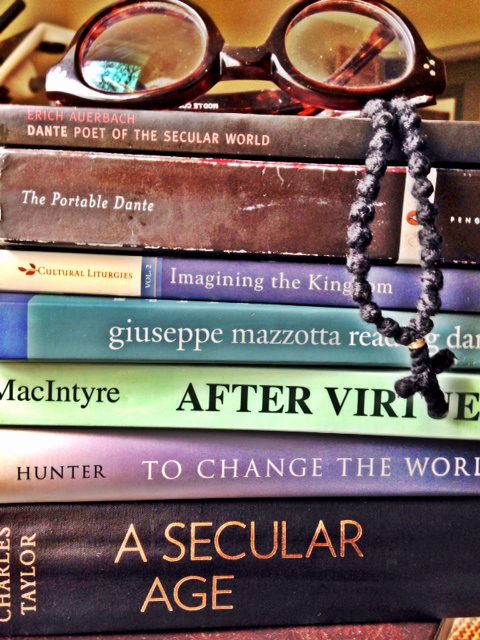
A Benedict Option. . .
It is no secret that Christians have their "moral majority." We hear over and over again that we are living in a post-Christian world in which culture is not merely suspicious of
Christian values but has rejected them and even demonized them as intolerable. As a result, Christians are finding it harder and harder to do business in the marketplace, to utilize secular educational institutions, to enter the political arena, and even to choose certain professions without also choosing to be silent about their beliefs. Even when they are silent about those religious beliefs, some find their choice of church to be itself offensive (if that church holds to doctrine that violates certain beliefs that the culture has found offensive).
It is not only Christian bakers and florists who have been under fire recently. The future is quickly shaping up to where those in medical careers will be required to assist in abortions (especially of those diagnosed in the womb with disabilities), participate in physician assisted suicides, and even euthanize those whose lives are no longer considered worth living. If there are those who think that this is a radical conclusion, think how quickly the movement for same sex marriage went from the fringes to law imposed by the SCOTUS. Clearly, the playing field is ever changing. Even the election of a President who is more friendly toward the protection of certain Christian positions will not end the move of culture toward a show down with Christian values and beliefs.
So what do we do? Finding refuge somewhere sounds attractive but where? The idea of a monastic community is no more than an idea for nearly all of us. Some are promoting what is called the "Benedict Option." This is a call to organized resistance, to the creation of a Christian movement, a counter culture shaped by order and discipline, prayer and worship, work, asceticism (in response to the vapid consumerism around us), stability, community, and hospitality -- as well as holding faith against the tide. In other words, we must respond with something more than "no." This, with other voices, have raised the cause of a "Benedict Option" and created a vibrant dialog among Christians over how, indeed, we ought to respond to our world increasingly unfriendly to Scripture and the Gospel of Jesus Christ.
Perhaps the most vocal and reasoned case for this is Rod Dreher's The Benedict Option. In it he calls Christians wherever they live and work to “form a vibrant counterculture” by cultivating practices and communities that takes seriously that our citizenship is in heaven and that we as Christians have no need to "prop up the current order.” We know that this age is passing away, that God's kingdom is not the rehabilitation of this world but a new heaven and a new earth. This is far from a retreat but consists of the Church being who the Church is supposed to be, Christians being who we say we are.
Dreher cautions against an isolationism in which we retreat but offers instead a different view of the way we engage those around us. The Church has always been an ark but we are also a well spring of the living water and give witness to the hope within us. The two themes of faithfulness and engagement (not on the culture's terms but on the terms of the faith and the Church) must coexist. The Church is, after all, the place where in baptism we die to the old life marked by sin and rise to become the new people God has declared us to be. The church is the place where same water kills, gives life. In that life, we literally “drown our old selves” through daily repentance and strive to show forth the good works that glorify God and serve our neighbor (even though they contribute nothing to our salvation).
In an age in which we Christians have grown accustom the work of mercy being done by government agencies on the government payroll, it is good for us to remember that the unique mark of Christian engagement is mercy work that reflects the noble values and virtues of our Lord and not simply the policing of the world's sins with our collective conscience.
In any case, his work, with the recent books of Archbishop Charles Chaput and Anthony Esolen have provided much fodder for us as we seek to find away through a world increasingly intolerant of what we believe, confess, and teach.
It is not only Christian bakers and florists who have been under fire recently. The future is quickly shaping up to where those in medical careers will be required to assist in abortions (especially of those diagnosed in the womb with disabilities), participate in physician assisted suicides, and even euthanize those whose lives are no longer considered worth living. If there are those who think that this is a radical conclusion, think how quickly the movement for same sex marriage went from the fringes to law imposed by the SCOTUS. Clearly, the playing field is ever changing. Even the election of a President who is more friendly toward the protection of certain Christian positions will not end the move of culture toward a show down with Christian values and beliefs.
So what do we do? Finding refuge somewhere sounds attractive but where? The idea of a monastic community is no more than an idea for nearly all of us. Some are promoting what is called the "Benedict Option." This is a call to organized resistance, to the creation of a Christian movement, a counter culture shaped by order and discipline, prayer and worship, work, asceticism (in response to the vapid consumerism around us), stability, community, and hospitality -- as well as holding faith against the tide. In other words, we must respond with something more than "no." This, with other voices, have raised the cause of a "Benedict Option" and created a vibrant dialog among Christians over how, indeed, we ought to respond to our world increasingly unfriendly to Scripture and the Gospel of Jesus Christ.
Perhaps the most vocal and reasoned case for this is Rod Dreher's The Benedict Option. In it he calls Christians wherever they live and work to “form a vibrant counterculture” by cultivating practices and communities that takes seriously that our citizenship is in heaven and that we as Christians have no need to "prop up the current order.” We know that this age is passing away, that God's kingdom is not the rehabilitation of this world but a new heaven and a new earth. This is far from a retreat but consists of the Church being who the Church is supposed to be, Christians being who we say we are.
We are only trying to build a Christian way of life that stands as an island of sanctity and stability amid the high tide of liquid modernity. We are not looking to create heaven on earth; we are simply looking for a way to be strong in faith through a time of great testing.The Church has always been an ark. Christians have always been citizens of another kingdom and pilgrims here on earth. We dream like we have always stood at a distance from the world and its own culture but the truth is that we have been an integral part of that culture -- until it becomes no longer tenable, that is how we feel most comfortable. We are as much creatures of our world as those whom we demonize. This is the indictment of a church which has grown so comfortable with the world that we would rather compromise to get along than to stand up and stand firm in "the biblical story and practices that keep us firmly rooted on the truths of that story in a world that wants to obscure them and make us forget."
Dreher cautions against an isolationism in which we retreat but offers instead a different view of the way we engage those around us. The Church has always been an ark but we are also a well spring of the living water and give witness to the hope within us. The two themes of faithfulness and engagement (not on the culture's terms but on the terms of the faith and the Church) must coexist. The Church is, after all, the place where in baptism we die to the old life marked by sin and rise to become the new people God has declared us to be. The church is the place where same water kills, gives life. In that life, we literally “drown our old selves” through daily repentance and strive to show forth the good works that glorify God and serve our neighbor (even though they contribute nothing to our salvation).
In an age in which we Christians have grown accustom the work of mercy being done by government agencies on the government payroll, it is good for us to remember that the unique mark of Christian engagement is mercy work that reflects the noble values and virtues of our Lord and not simply the policing of the world's sins with our collective conscience.
In any case, his work, with the recent books of Archbishop Charles Chaput and Anthony Esolen have provided much fodder for us as we seek to find away through a world increasingly intolerant of what we believe, confess, and teach.
Tuesday, April 11, 2017
His Passion, Our Pleasure
Sermon for The Sunday of the Passion (Palm Sunday) preached by the Rev. Daniel M. Ulrich on Sunday, April 9, 2017.
We just heard the full account of the days leading up to Jesus’ death. Hearing about everything He went through, we ask ourselves “why.” Why did He allow Judas to betray Him? Why did He allow Himself to be falsely accused, beaten, mocked, and nailed to the cross? Why didn’t He just save Himself? It would’ve been so easy for Him to do….The answer to these “why” questions is the name for this Sunday: Passion. Christ endured and suffered all He did, He died on the cross because of His passion for you.
When we think about passion we think about love. The things we’re passionate about are the things we love, and there are many things that we love. Things like hobbies: cooking, art, hunting and fishing. Many of us love our careers. Some have a passion for volunteering and helping others. We love our family and friends. We’re passionate about our boyfriends and girlfriends, fiancées and spouses.
Often, this is what we think about when we think of passion. We think of those good, warm, and even romantic feelings we have for another person. These feelings can run hot and they’re what tell us we’re in love. These feelings are what drive us to want to always be around that person. These feelings convince us that this is the person we’re supposed to spend the rest of our lives with, and as long as we’re feeling those feelings, those sweet emotions, everything's okay. Life couldn’t be any better.
But there’s a problem with this. When we equate love and passion, when we base our love on emotions, on the good feelings we get, whether it’s when we’re around a certain person or doing that hobby, it won’t last. It won’t last because passion, like all emotions, is fleeting. When we base our love on a fleeting ever changing emotion, our love is fleeting and ever changing.
You see, when we don’t feel that passion anymore, when we don’t have fire in our heart, we decide that we no longer love. When we don’t get joy out of hunting or art, we stop doing it. When we no longer get that good feeling we once did volunteering, we stop helping. When that burning feeling for our spouse dies down, we give up. We get a divorce and we go looking for that feeling somewhere else, in someone else.
When our love is based on emotion, it’s unstable and won’t last. It changes. But true love isn’t changing. True love is more than an emotion, more than a feeling. True love is a commitment, a commitment that is seen in action. True love is Christ Jesus.
Christ’s passion for you isn’t a feeling, it’s an action. His passion is the giving up of His life on the cross for your benefit, in your place. Everything that Jesus endured and suffered is what we deserve because of our sin. Because our love is self-serving and selfish, we deserve to be betrayed. We deserve the accusation of being a sinner, because that’s what we are. We should be mocked and spit upon because in our sin we’ve mocked God. Our hands and our feet should be nailed to the tree because our sin justly deserves the death sentence. But thanks be to God that’s not what you receive.
You receive Christ’s passion. You receive God’s love, a love that’s unchanging, a love that’s strong and steadfast. God’s love doesn’t come and go; it’s not fleeting. It’s the same yesterday, today, and tomorrow, and nothing can change that. God’s always loved you in this way, even though you’re a sinner and in that sin you’re an enemy of God. God loves you. This is what drove Him to send His Son to take on our flesh and blood and to die in your place. God didn’t want you to suffer the punishing death of sin, so He graciously sent Jesus to suffer it in your place. This is true love, a complete self-giving love, a love that serves others. And because of this love and passion of Christ, you receive the joys of everlasting life!
Christ’s passion is your pleasure. With the God given gift of faith, you receive the forgiveness that Christ won on the cross. This forgiveness is the assurance of God’s grace. It’s the pardoning of your sin. Because Christ died in your place, because He took your sin upon Himself, God frees you from the condemnation of sin. He declares you innocent and He gives you the gift of everlasting life. This life is yours now, a life full of God’s blessings, mercy, and love, a life of complete joy no matter what your emotions and feelings are.
Christ’s passion isn’t the same as ours. Our passion runs hot and cold. Sometimes we feel it, sometimes we don’t. And as our passion goes, so does our love. But not Christ’s. Jesus’ passion and love aren’t emotions. They’re not fleeting feelings. Jesus’ passion and love are action, strong, steadfast, and never changing. Christ’s love for you drove Him to the cross. That’s why He suffered it all. His passion saves you from sin and death. Christ’s passion is your pleasure, giving you the joys of everlasting life. In Jesus’ name...Amen.
Explaining too much?
The Kingdom of Speech, by Tom Wolfe, addresses the weakness of the evolutionary theory. According to Wolfe, the problem with evolution is not that it fails to nearly explain where things came from but that it is too neat, too tidy. It explains too much and ends up overplays its hand. It tries to do too much; it seeks to explain everything. In the end, it hangs together so that if one of its arguments fails, it all falls down. By trying to explain everything, it ends up explaining nothing.
According to Wolfe: “Darwin had fallen into the trap of cosmogonism, the compulsion to find the ever-elusive Theory of Everything, an idea or narrative that reveals everything in the world to be part of a single and suddenly clear pattern.” Lacking not merely clear and convincing evidence but nearly any real substantive evidence, the evolutionist is at a loss to find even the faintest semblance of corroborative affirmation. For Darwin,, this meant using his dog as a stand-in for actual research (other that observation). So for Darwin, “If my dog were left on an island…” or “even my dog has figured out how to…” supplants evidence to support his all encompassing need to explain everything.
Wolfe hits the whole thing in the explanation for the origin of language. The evolutionist can “explain man’s opposable thumb, upright stature, and huge cranium” but can’t find “one shred of solid evidence that human speech has evolved.” According to Wolfe: “Speech, language, is something that existed quite apart from Evolution. It has nothing whatsoever to do with it. Man, man unaided, created language. It’s an artifact, every bit as much as a light-bulb or a Buick.”
The problem of language, how it got there, is the question that ends up causing serious problems for the whole of evolutionary theory. Now to be sure, Wolfe is not ready to suggest that God placed speech within man but the Christian must find the whole thing rather delicious since this is the God who spoke things into being, the God who is the Word made flesh, and whose Word remains His living voice that returns to Him having accomplished His purpose in sending it. Christians cannot help but giggle a bit that speech (its origin and development) ends up being a hole in the whole evolutionary theory. Now you do not have to be Christian to have questions about the evolutionary theory and its need to explain everything through one basic lens but if you are a Christian, it does provide a certain amount of justice for those who are often portrayed as hapless, witless fools for disagreeing with evolutionary theory. The reality is that Genesis explains nothing about creation at all except that God made all things by speaking them into existence and that all things are ordered by His design and were created for His purpose. To this Christian, anyway, this is less of a stretch than the latest evolving explanations of the evolutionist.
According to Wolfe: “Darwin had fallen into the trap of cosmogonism, the compulsion to find the ever-elusive Theory of Everything, an idea or narrative that reveals everything in the world to be part of a single and suddenly clear pattern.” Lacking not merely clear and convincing evidence but nearly any real substantive evidence, the evolutionist is at a loss to find even the faintest semblance of corroborative affirmation. For Darwin,, this meant using his dog as a stand-in for actual research (other that observation). So for Darwin, “If my dog were left on an island…” or “even my dog has figured out how to…” supplants evidence to support his all encompassing need to explain everything.
Wolfe hits the whole thing in the explanation for the origin of language. The evolutionist can “explain man’s opposable thumb, upright stature, and huge cranium” but can’t find “one shred of solid evidence that human speech has evolved.” According to Wolfe: “Speech, language, is something that existed quite apart from Evolution. It has nothing whatsoever to do with it. Man, man unaided, created language. It’s an artifact, every bit as much as a light-bulb or a Buick.”
The problem of language, how it got there, is the question that ends up causing serious problems for the whole of evolutionary theory. Now to be sure, Wolfe is not ready to suggest that God placed speech within man but the Christian must find the whole thing rather delicious since this is the God who spoke things into being, the God who is the Word made flesh, and whose Word remains His living voice that returns to Him having accomplished His purpose in sending it. Christians cannot help but giggle a bit that speech (its origin and development) ends up being a hole in the whole evolutionary theory. Now you do not have to be Christian to have questions about the evolutionary theory and its need to explain everything through one basic lens but if you are a Christian, it does provide a certain amount of justice for those who are often portrayed as hapless, witless fools for disagreeing with evolutionary theory. The reality is that Genesis explains nothing about creation at all except that God made all things by speaking them into existence and that all things are ordered by His design and were created for His purpose. To this Christian, anyway, this is less of a stretch than the latest evolving explanations of the evolutionist.
Monday, April 10, 2017
True confession. . .
Pope Francis warned against treating the confessional like
the dry cleaners, a place to make a quick transaction, wipe away our
sins and steal a false pardon. He also stressed the need for Christians
to be truly ashamed of their sins. These come from a March 22 mass in the Vatican.
Francis' words are worth our own consideration. As we make our way through Holy Week, we can easily be tempted to be a mere spectator, watching the events of our Lord's suffering and death unfold as if we had no stake in them. It is too easy to marvel from afar instead of being drawn into this suffering and death with the deep and profound realization that our Lord suffered and died for me.
Private confession that was once normative among Lutherans has been replaced by the general confession of the Divine Service. While the general confession of the Divine Service is not a bad thing, it is not a real replacement for individual confession and absolution. There is something stark and blunt about repeating out loud the sins we carry so easily inside. Indeed, part of the power of sin is its anonymity. If nobody knows, it is so every easy to believe that we can hide these sins from God as well and therefore we are deprived of the gift of a clear conscience, the fruit of repentance that hears the Lord's voice in absolution.
I believe that there is little danger of Lutherans reverting to the kind confession practice that Luther and the Reformers challenged. There is little danger of penance being assigned or satisfaction that draws our attention away from the wounds of Jesus and the great sigh of death that paid for those sins. But there is a real danger that we treat confession rather shallowly -- as if it were a quick trip to the dry cleaners or as if confession and absolution were merely a quick stop (the way we do at the ATM). The danger here is that it is no confession at all and that our false repentance leaves us without real forgiveness and without the true consolation of the Gospel.
Francis does not need to remind us that our age wears sins publicly, almost as badges of honor. We have grown so comfortable with some sins that we bristle if someone reminds us that these are indeed sins. We have used mercy itself to justify our sins and make it offensive to do anything but accept, condone, and tolerate those sins. We have turned the Gospel into a principle which makes all things good that we judge good and ignores the voice of the Law. Shame is not high on our list of feelings. Throughout the media and in our own personal lives, we flaunt the things we have judged to be right by our feelings and shrug our shoulders if they conflict with God's will and command. That is certainly true and yet our consciences still cry out for resolution, for peace, for absolution. This comfort will not come with a quick trip through a car wash only to set our to get dirty again.
Part of confession involves the will and intent to amend our sinful lives under the power of the Holy Spirit. Absent any will and desire to make this amendment, absolution is, in effect, permission to go and sin again. And that is where we begin our week walking to the cross. We come with the shame and guilt of the sins that caused our Lord to suffer so and die. We come rejoicing in what His sacrifice has purchased in forgiveness and new life. And we come endeavoring by the power of the Spirit not to live in complacency before that cross, striving as best we are able to resist the power of temptation and follow the voice of God through His Word. The steps we walk toward Calvary during Holy Week are the same steps we walk in its shadow every day. Let our joyful confidence in what His mercy has done draw us in to honest confession and blessed absolution and the Spirit will work, as He has promised, to help us live within this faith even as He rescues us when we fall.
Lord, have mercy. . .
Francis' words are worth our own consideration. As we make our way through Holy Week, we can easily be tempted to be a mere spectator, watching the events of our Lord's suffering and death unfold as if we had no stake in them. It is too easy to marvel from afar instead of being drawn into this suffering and death with the deep and profound realization that our Lord suffered and died for me.
Private confession that was once normative among Lutherans has been replaced by the general confession of the Divine Service. While the general confession of the Divine Service is not a bad thing, it is not a real replacement for individual confession and absolution. There is something stark and blunt about repeating out loud the sins we carry so easily inside. Indeed, part of the power of sin is its anonymity. If nobody knows, it is so every easy to believe that we can hide these sins from God as well and therefore we are deprived of the gift of a clear conscience, the fruit of repentance that hears the Lord's voice in absolution.
I believe that there is little danger of Lutherans reverting to the kind confession practice that Luther and the Reformers challenged. There is little danger of penance being assigned or satisfaction that draws our attention away from the wounds of Jesus and the great sigh of death that paid for those sins. But there is a real danger that we treat confession rather shallowly -- as if it were a quick trip to the dry cleaners or as if confession and absolution were merely a quick stop (the way we do at the ATM). The danger here is that it is no confession at all and that our false repentance leaves us without real forgiveness and without the true consolation of the Gospel.
Francis does not need to remind us that our age wears sins publicly, almost as badges of honor. We have grown so comfortable with some sins that we bristle if someone reminds us that these are indeed sins. We have used mercy itself to justify our sins and make it offensive to do anything but accept, condone, and tolerate those sins. We have turned the Gospel into a principle which makes all things good that we judge good and ignores the voice of the Law. Shame is not high on our list of feelings. Throughout the media and in our own personal lives, we flaunt the things we have judged to be right by our feelings and shrug our shoulders if they conflict with God's will and command. That is certainly true and yet our consciences still cry out for resolution, for peace, for absolution. This comfort will not come with a quick trip through a car wash only to set our to get dirty again.
Part of confession involves the will and intent to amend our sinful lives under the power of the Holy Spirit. Absent any will and desire to make this amendment, absolution is, in effect, permission to go and sin again. And that is where we begin our week walking to the cross. We come with the shame and guilt of the sins that caused our Lord to suffer so and die. We come rejoicing in what His sacrifice has purchased in forgiveness and new life. And we come endeavoring by the power of the Spirit not to live in complacency before that cross, striving as best we are able to resist the power of temptation and follow the voice of God through His Word. The steps we walk toward Calvary during Holy Week are the same steps we walk in its shadow every day. Let our joyful confidence in what His mercy has done draw us in to honest confession and blessed absolution and the Spirit will work, as He has promised, to help us live within this faith even as He rescues us when we fall.
Lord, have mercy. . .
Sunday, April 9, 2017
The Shack vs The Cross
As everyone in the world knows, The Shack has sold more copies than any book of great literature and yet it is poorly written. Undoubtedly it will also propel the film version into great receipts if not great reviews. But the problems with The Shack are less literary than theological. There is no sin and there is no suffering in The Shack. Pain has bee reduced to something one reviewer called
a mere psychotherapeutic idea of pain. Suffering and pain are not real but the result of an irrational self-hatred that proceeds from guilt, unnecessary which is the fruit of taking responsibility for things that were never under one's control. Both Mack and his teenage daughter, for instance, blame
themselves for the murder of six- or seven-year-old Missy. The answer for their pain, the cure if you will, is that it wasn't their fault. Personal guilt or feelings of responsibility are then transferred to others and therefore removed.
Sin and its pain is dealt with in a different, more subtle way that also results in the justification of the sinner not with forgiveness but with the blame resting on another -- the sinful world. Evil and its fruit of sin are not something in human nature that affect my nature but are caused by terrible and negative events in the person's past (caused by, of course, somebody else -- all the way back to Eden). Therefore sin is removed not by forgiveness but by transferring the guilt to another (to be transferred over and over again until it rests upon the general responsibility of the world and therefore no one is responsible). Sin is
not an individual thought, word or deed of a disordered human will the result of the fall. No, sin is a system and its remedy comes not from a righteous One who suffers but from the entrance of a another system to counter and overbalance the old system.
I am not responsible. I grew up in a dysfunctional home. I did not have a choice. I did not know any better. I had no real options available to me. I do not need to repent, I need someone to apologize to me for putting me in that circumstance. I am exonerated from my guilt, relieved from my suffering, and my pain leaves when I realize it was not my fault to begin with. God has to apologize to me. I do not need to apologize to Him. He is also responsible for putting me where I am and causing me the psychological pain I have suffered. Because everyone’s sins are traceable to some prior sin committed against them -- all the way back to Adam -- then what we need is not redemption but apology from those who foisted upon us the long line of wrongs and left us where we are.
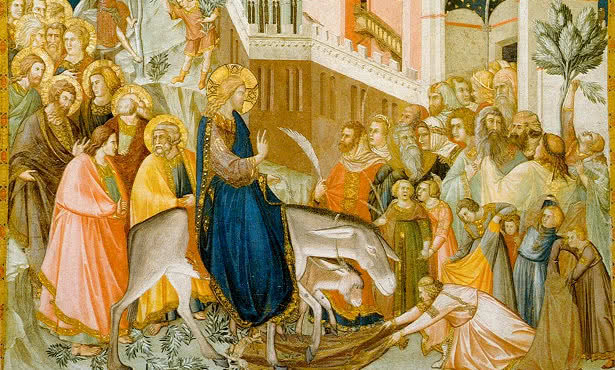
So far has our quest gone to avoid responsibility, that we would rather explain away sin than meet it on the ground of the cross where sin's debt is paid, victory is won, reconciliation is made, and its power broken. The cross and The Shack are different stories and bespeak different deities and different gospels. It may appear that they are the same to those who think spiritual and not religious is an apt description of the piety true to Scripture but today we meet Jesus who has set His face like flint toward Jerusalem, to the certain destiny of suffering and death, that will accomplish an end to suffering, the death of death, and the beginning of everlasting life. Palms and hosannas are not the polite and trite symbols of a people who explain sin away as the fault of somebody else and who proclaim a therapeutic view of redemption. No, they belong to the Son of God who is incarnate to suffer, born to die, and dying wins salvation for us and for the whole world. In the shadow of such an entrance into Jerusalem, what can we say but "Blessed is He who comes in the Name of the Lord."
I am not responsible. I grew up in a dysfunctional home. I did not have a choice. I did not know any better. I had no real options available to me. I do not need to repent, I need someone to apologize to me for putting me in that circumstance. I am exonerated from my guilt, relieved from my suffering, and my pain leaves when I realize it was not my fault to begin with. God has to apologize to me. I do not need to apologize to Him. He is also responsible for putting me where I am and causing me the psychological pain I have suffered. Because everyone’s sins are traceable to some prior sin committed against them -- all the way back to Adam -- then what we need is not redemption but apology from those who foisted upon us the long line of wrongs and left us where we are.
So far has our quest gone to avoid responsibility, that we would rather explain away sin than meet it on the ground of the cross where sin's debt is paid, victory is won, reconciliation is made, and its power broken. The cross and The Shack are different stories and bespeak different deities and different gospels. It may appear that they are the same to those who think spiritual and not religious is an apt description of the piety true to Scripture but today we meet Jesus who has set His face like flint toward Jerusalem, to the certain destiny of suffering and death, that will accomplish an end to suffering, the death of death, and the beginning of everlasting life. Palms and hosannas are not the polite and trite symbols of a people who explain sin away as the fault of somebody else and who proclaim a therapeutic view of redemption. No, they belong to the Son of God who is incarnate to suffer, born to die, and dying wins salvation for us and for the whole world. In the shadow of such an entrance into Jerusalem, what can we say but "Blessed is He who comes in the Name of the Lord."
Saturday, April 8, 2017
Singing liturgy and not just hymns...
“[Liturgical] singing means singing the Mass, not just singing during Mass.” Those words by a Roman Catholic author lament the fact that the Mass most Roman Catholics know best is the Low Mass (the spoken Mass) and not the High Mass (always sung). He further laments the fact that singing the Mass has become equated with singing hymns during the Mass.
While not directly referencing the situation among Lutherans, it can be safely said that the Reformers clearly had in mind the High Mass -- the Sung Divine Service -- as the norm. Only in places where it was not possible did Luther offer His hymn setting or Deutsche Messe. Strangely enough, the hymn Mass has become the norm for some Lutherans. I am not speaking of the LSB DS Setting 5, either. I am speaking to the fact that many places where the liturgy is on the way out will retain hymns (or at least some of the most popular Gospel hymns) -- long after the people have forgotten the responsive chants of the Ordinary.
Just recently a visitor commented approvingly on the fact that we sing the whole Divine Service AND that we do not shortchange the hymns by singing only a few stanzas. She regularly attends a Lutheran congregation where the Divine Service is routinely spoken and the hymns are sung in truncated form (1st and 3rd and 5th stanzas). It might be conceivable if the pastor is actually deliberately choosing hymn stanzas but, as we all know, the purpose of omitting some hymn stanzas lies in the pursuit of the ever essential Divine Service that is under 59 1/2 minutes! In this case the woman said the goal was to be through the Divine Service in 45 minutes or less!!
Personally, I do not get the attraction for singing only the hymns within the Divine Service (and not the responses and chants of the ordinary). I find the practice of skipping stanzas even more suspect. It is precisely liturgical singing that is the essential singing of the Divine Service and hymns are optional. Perhaps when we begin to get that, we will learn the value of listening to the whole of the poetry of the hymn and we will learn to appreciate the full context of the Divine Service. Even more hopeful is the day when we can end the odd situation of a pastor speaking his parts while the people sing theirs.
While not directly referencing the situation among Lutherans, it can be safely said that the Reformers clearly had in mind the High Mass -- the Sung Divine Service -- as the norm. Only in places where it was not possible did Luther offer His hymn setting or Deutsche Messe. Strangely enough, the hymn Mass has become the norm for some Lutherans. I am not speaking of the LSB DS Setting 5, either. I am speaking to the fact that many places where the liturgy is on the way out will retain hymns (or at least some of the most popular Gospel hymns) -- long after the people have forgotten the responsive chants of the Ordinary.
Just recently a visitor commented approvingly on the fact that we sing the whole Divine Service AND that we do not shortchange the hymns by singing only a few stanzas. She regularly attends a Lutheran congregation where the Divine Service is routinely spoken and the hymns are sung in truncated form (1st and 3rd and 5th stanzas). It might be conceivable if the pastor is actually deliberately choosing hymn stanzas but, as we all know, the purpose of omitting some hymn stanzas lies in the pursuit of the ever essential Divine Service that is under 59 1/2 minutes! In this case the woman said the goal was to be through the Divine Service in 45 minutes or less!!
Personally, I do not get the attraction for singing only the hymns within the Divine Service (and not the responses and chants of the ordinary). I find the practice of skipping stanzas even more suspect. It is precisely liturgical singing that is the essential singing of the Divine Service and hymns are optional. Perhaps when we begin to get that, we will learn the value of listening to the whole of the poetry of the hymn and we will learn to appreciate the full context of the Divine Service. Even more hopeful is the day when we can end the odd situation of a pastor speaking his parts while the people sing theirs.
Friday, April 7, 2017
Vernacular or not. . .
The familiar narrative that justifies the common language of the people for worship is that the Early Church used the same everyday language that common people used all the time -- Greek and then Latin. So when Greek became less common as a language of the people, the common language, Latin, replaced it. Then as time past, the vernacular became more and more distant from the people until finally it was incomprehensible to most folks on Sunday morning. When the Reformation took up the cause of the vernacular, it put pressure upon even Rome to ditch Latin as antiquated and out of touch with the people. Happily then, in the wake of the Second
Vatican Council, the language of worship again was restored to the language of the people. With this return to the ordinary and simplest form of that language, the liturgy was again made accessible to the greatest number, so that they might understand it. Behind all of this, of course, was the ultimate goal of active participation (not only in the language but also in the leadership -- the return of the people's work to the people themselves).
Now it seems that this may have begun with a mistaken conclusion. Dutch classicist, Christine Mohrmann, in a long series of articles and books in all the main European languages, demonstrated that Liturgical Latin (and, before it, Liturgical Greek) were never really vernacular.
My point is this, liturgical language is never the common language of man but is always the specific and directive language of Scripture and the nature of worship compels us to use an often stilted or out of date form of the vernacular (at least judged by those outside the church). I am not at all suggesting that we adopt Latin but rather challenging the idea that liturgy must use the common and ordinary forms of language. The goal of worship, after all, is not to bring the liturgy down to its common denominator but to bring the people into the presence of God (through Word and Sacrament). Where God is there is always the holy ground wherein we stand but not as a people who have a right but always through the privilege of grace. Nothing detracts from this presence more than the idea that God and His grace can be reduced to simple, ordinary, and common things. Our Lord may use common elements (water, bread, and wine) but they are given to us with the uncommon grace of His will and purpose that delivers what is signed. Language itself does this. Luther once remarked that it was not easy to teach God German. It might also be said that we must be taught the language of God.
HT Father Hunwicke
Now it seems that this may have begun with a mistaken conclusion. Dutch classicist, Christine Mohrmann, in a long series of articles and books in all the main European languages, demonstrated that Liturgical Latin (and, before it, Liturgical Greek) were never really vernacular.
"Liturgical Latin, as constituted towards the end of Christian Antiquity and preserved unchanged - in its main lines at least - is a deliberately sacral stylisation of Early Christian Latin as it gradually developed in the Christian communities of the West. The Latin Christians were comparatively late in creating a liturgical language. When they did so, the Christian idiom had already reached full maturity and circumstances rendered it possible to draw, for purposes of style, on the ancient sacral heritage of [pagan] Rome ... As regards the plea which we hear so often for vernacular versions of the prayer texts, I think ... that we are justified in asking whether, at the present time, the the introduction of the vernacular would be suitable for the composition of sacral prayer style. As I have pointed out, the early Christian West waited a long time before adopting the use of Latin. It waited until the Christian language possessed the resources necessary to create an official ecclesiastical prayer language. ... the modern, so-called Western languages ... are less suitable for sacred stylisation. And yet we must realise that sacral stylisation forms an essential element of every official prayer language and that this sacral, hieratic character cannot, and should never, be relinquished. From the point of view of the general development of the Western languages - to say nothing of the problems raised by other languages - the present time is certainly not propitious for the abandonment of Latin".While Lutherans have long been comfortable with the vernacular, we did keep an archaic form of English (commonly called King James English) for a very long time -- to the 1970s! One of the very urgent causes for changing to modern English (and a fairly common form of English) was the presupposition that the language of the liturgy should be primarily understandable and preferably the language used in ordinary speech. So we ditched the Thees and Thous and the longer endings to verbs and even terms that had been used since the time of the Reformation (at least in England) and gave up the borrowed words from Greek and Hebrew (Sabaoth became power and might). Along with this is the presumption that Lutherans got rid of Latin right away as if it were yesterday's newspaper. Joseph Herl in his Worship Wars in Early Lutheranism debunks the myth that Lutherans went quickly into the vernacular and congregational song.
My point is this, liturgical language is never the common language of man but is always the specific and directive language of Scripture and the nature of worship compels us to use an often stilted or out of date form of the vernacular (at least judged by those outside the church). I am not at all suggesting that we adopt Latin but rather challenging the idea that liturgy must use the common and ordinary forms of language. The goal of worship, after all, is not to bring the liturgy down to its common denominator but to bring the people into the presence of God (through Word and Sacrament). Where God is there is always the holy ground wherein we stand but not as a people who have a right but always through the privilege of grace. Nothing detracts from this presence more than the idea that God and His grace can be reduced to simple, ordinary, and common things. Our Lord may use common elements (water, bread, and wine) but they are given to us with the uncommon grace of His will and purpose that delivers what is signed. Language itself does this. Luther once remarked that it was not easy to teach God German. It might also be said that we must be taught the language of God.
HT Father Hunwicke
Thursday, April 6, 2017
Living room or temple. . .
We spend a great deal of time and money trying to make church comfortable -- both for those who are there every Sunday and those who walk through the door for the first time. We have formal programs of welcome. We make what happens accessible to those who have never been there before as well as those who are there all the time. We arrange the church in the shape of a movie theater so that everyone has a good line of sight. We put in comfortable seating and even cup holders so that those with the ever present bottled water or Starbucks have a spot to put them. We turn pastors into MCs who narrate and direct a variety show filled with entertainment. We preach current needs and make the message relevant to their felt needs and wants. The typical church has become a living room or family room in which casual living and relationships are the most important things of all.
Now there is nothing wrong with being attentive to the visitor or formal programs of welcome or making sure that the facility is in good shape. There is nothing wrong with making sure that what is done on Sunday morning is done well -- from preaching to music. There is something wrong with the idea that people's mental, emotional, or physical comfort is the prime concern. There is something wrong with taking the cue for preaching and teaching from the expressed needs or desires of the people in the pew. The church is a temple, a holy place where God comes to us where He has promised to deliver to us what we need (even when we may not recognize those needs). No encounter with the mighty God is ever casual.
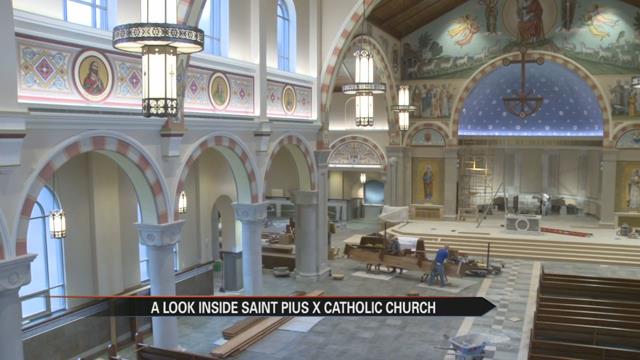
Some are beginning to rethink the modern shape of churches, with everything from low ceilings to plush carpeting to theater style seating. The older and more formal shapes of the worship space are being looked at again. It is none too soon but the damage has already been done -- not only to the older buildings which were remodeled in ways that conflict with their architecture but in the minds of people who have come to believe that their comfort and their desires are the primary things front and center on Sunday morning. The temple is holy ground wherein we acknowledge that we are standing before the most high God. The agenda is His.
Look at what one parish has done, moving from a very modern structure when an emphasis on the horizontal relationship to a new structure that is very old in style and with a focus on the horizontal emphasis. Note also the role of art in mirroring what happens in the liturgy.
Now there is nothing wrong with being attentive to the visitor or formal programs of welcome or making sure that the facility is in good shape. There is nothing wrong with making sure that what is done on Sunday morning is done well -- from preaching to music. There is something wrong with the idea that people's mental, emotional, or physical comfort is the prime concern. There is something wrong with taking the cue for preaching and teaching from the expressed needs or desires of the people in the pew. The church is a temple, a holy place where God comes to us where He has promised to deliver to us what we need (even when we may not recognize those needs). No encounter with the mighty God is ever casual.
Some are beginning to rethink the modern shape of churches, with everything from low ceilings to plush carpeting to theater style seating. The older and more formal shapes of the worship space are being looked at again. It is none too soon but the damage has already been done -- not only to the older buildings which were remodeled in ways that conflict with their architecture but in the minds of people who have come to believe that their comfort and their desires are the primary things front and center on Sunday morning. The temple is holy ground wherein we acknowledge that we are standing before the most high God. The agenda is His.
Look at what one parish has done, moving from a very modern structure when an emphasis on the horizontal relationship to a new structure that is very old in style and with a focus on the horizontal emphasis. Note also the role of art in mirroring what happens in the liturgy.
Wednesday, April 5, 2017
Absolutely repugnant!
Sooooo Judge Neely is bad but not bad enough to be removed from the bench and she belongs to a denomination called repugnant (the Lutheran Church Missouri Synod) by officials debating her case in open court even though she has not presided at any wedding or is ever required to. . . The judge, considered exemplary in her conduct otherwise, is apparently not allowed the same privilege of free speech everyone else is and certainly not allowed to disagree with politically correct positions. She has been vindicated of sorts -- she has been found to have violated judicial conduct, hold religious beliefs considered repugnant, and to belong to a church also considered repugnant. But other than that, she is a decent person and a well respected judge. And all of this happened not in New York or California or Oregon or Washington but that bastion of liberality, Wyoming. And on top of this, she has never presided at ANY wedding nor is she ever required to by Wyoming law. Ahhhh, the tolerance of the tolerant is mind blowing. . .
Okay. . . I have said all I am going to say on this ridiculous subject. . . Really? Geez!
CHEYENNE, Wyo. (AP) — A small-town judge who says her religious beliefs prevent her from presiding over same-sex marriages was publicly censured by the Wyoming Supreme Court on Tuesday.
But while the court said her conduct undermines the integrity of the judicial system, it does not warrant removal from the bench. In a 3-2 decision, Justice Kate Fox wrote that Judge Ruth Neely violated judicial conduct code but removing Neely would "unnecessarily circumscribe protected expression."
"Judge Neely shall either perform no marriage ceremonies or she shall perform marriage ceremonies regardless of the couple's sexual orientation," Fox wrote.
Neely has never been asked to perform a same-sex marriage, and Fox said that the case was not about same-sex marriage or the reasonableness of religious beliefs. ...
(T)he dissenting justices argued that Neely didn't violate any judicial conduct code. "Wyoming law does not require any judge or magistrate to perform any particular marriage, and couples seeking to be married have no right to insist on a particular official as the officiant of their wedding," Justice Keith Kautz wrote in the dissent that was joined by Justice Michael K. Davis.
Tuesday, April 4, 2017
Women probably stay. . . for now. . .
The ACNA, ever discussing the issue of women's ordination, has apparently come to something of a conclusion. The task force charged with leading in this issue appears to suggest no change. Women should continue to be ordained in the Anglican Church in North America. As one commentator put it:
If that is the case, the future of the rather surprising close connection between the LCMS and ACNA may be cloudy. It is certainly not the only issue being discussed but it is one of the elephants in the room. And it is not simply about women or the ministry but about ecclesiology, doctrine, and the catholic tradition. As is typical, the decision to review the decision to ordain women takes longer than the original decision to actually ordain women.
Arguments pro and con . . . all carry some weight, but at the end of the day they are, taken as a whole, inconclusive because they are associated with conflicting and inconclusive ecclesiologies. On that account, for the sake of unity, no departure from the status quo, that is, the denominational acceptance of women’s ordination, can be urged.However, the good news is that among some there is appreciation for the fact that the arguments for ordaining women are not simply arguments about women or about ordination but have far reaching consequences for the church itself. What happens to the fourth installment of the Task Force Report remains uncertain. It will be communicated to GAFCON and some ecumenical partners (perhaps the LCMS) but the college of bishops will talk about this more. And more. It is clear, however, that despite the passion on the various side of this issue, the impetus remains with the continuation of the status quo.
If that is the case, the future of the rather surprising close connection between the LCMS and ACNA may be cloudy. It is certainly not the only issue being discussed but it is one of the elephants in the room. And it is not simply about women or the ministry but about ecclesiology, doctrine, and the catholic tradition. As is typical, the decision to review the decision to ordain women takes longer than the original decision to actually ordain women.
Monday, April 3, 2017
Whatever became of Jonah?
Whatever became of Jonah? Or Jacob wrestling with God? Or Abraham about to sacrifice his son Isaac? Or Shadrach, Meshach, Abednego? Of course, nothing has happened to them or to their stories except that we have not taught them to our children and we have also become strangers to the great stories of the faith. Whether it is because higher criticism raised questions about their historicity or we did not go to Sunday school all that much or nobody read us any of those stories, the sad truth is that the folks in our pews are more Biblically illiterate than any generation in the last several hundred years. This despite the fact that books are cheap, videos abound, and our people are a great deal more literate than the typical person hundreds of years ago. We don't know our history and it has contributed both to our ignorance of Jesus and the ease with which we are carried away by every wind of false doctrine.
As I contemplate the birth of my first grandchild, this whole subject weighs even more on my shoulders. As grandparents and as parents we owe our children the favor of telling them the great stories of the Bible. We owe them a deep and abiding familiarity with the acts of God that prepared the way for Jesus and the life, death, and resurrection of our Lord. We have a sacred and solemn responsibility to pass on the faith in the deliberate manner of telling these stories of the Bible as much as in the observable character of our faith and piety.
It amazes me how many people under the age of 30 come into my parish with little or no background in Scripture. They do not know Jesus from Moses and it is not their fault. They were not raised in the faith and, even if they were taken to church every now and then, they were not given this knowledge. These are the same parents who made sure they ate organic food, wore clothing not made by children working sweat factories, sat in car seats, had fluoride in their water, did not contribute to global warming, and were raised in politically correct environments that celebrated diversity. The things of the day are highly visible in their daily lives (and their children see this) but not the things of eternity.
How is it possible that we are so smart about some things and so ignorant about others? How is it that we insist we need to provide everything from the right food and friends for our children but then leave matters of sin, death, and eternity for them to find out on their own (if they want to)? How is it that we can be so sensitive to the feelings of those who demand rights, approval, and acceptance but then are insensitive to and offended by the message of forgiveness, life, and salvation in Christ? Our children deserve better from us as parents, grandparents, and godparents. They deserve to hear the great history that unfolded according to God's design, flowering into the incarnation of Jesus Christ, His suffering, death, and resurrection, and the mercy that welcomes all. They deserve to know that their lives are not random or accidental but that they were fearfully and wonderfully made by the God who has prepared for them an everlasting future that death cannot steal.
The longing built within us will find satisfaction somewhere -- unless we as parents, grandparents, and godparents direct it to its right fulfillment, sorry substitutes will be tried and fail our children and leave them broken and wounded. We were created for God and even sin cannot erase that purpose -- only confound and confuse it. Teach your children well. Give them not only a moral foundation but knowledge of who God is by teaching them what God has done -- the ultimate act of God being the gift of His Son.
As I contemplate the birth of my first grandchild, this whole subject weighs even more on my shoulders. As grandparents and as parents we owe our children the favor of telling them the great stories of the Bible. We owe them a deep and abiding familiarity with the acts of God that prepared the way for Jesus and the life, death, and resurrection of our Lord. We have a sacred and solemn responsibility to pass on the faith in the deliberate manner of telling these stories of the Bible as much as in the observable character of our faith and piety.
It amazes me how many people under the age of 30 come into my parish with little or no background in Scripture. They do not know Jesus from Moses and it is not their fault. They were not raised in the faith and, even if they were taken to church every now and then, they were not given this knowledge. These are the same parents who made sure they ate organic food, wore clothing not made by children working sweat factories, sat in car seats, had fluoride in their water, did not contribute to global warming, and were raised in politically correct environments that celebrated diversity. The things of the day are highly visible in their daily lives (and their children see this) but not the things of eternity.
How is it possible that we are so smart about some things and so ignorant about others? How is it that we insist we need to provide everything from the right food and friends for our children but then leave matters of sin, death, and eternity for them to find out on their own (if they want to)? How is it that we can be so sensitive to the feelings of those who demand rights, approval, and acceptance but then are insensitive to and offended by the message of forgiveness, life, and salvation in Christ? Our children deserve better from us as parents, grandparents, and godparents. They deserve to hear the great history that unfolded according to God's design, flowering into the incarnation of Jesus Christ, His suffering, death, and resurrection, and the mercy that welcomes all. They deserve to know that their lives are not random or accidental but that they were fearfully and wonderfully made by the God who has prepared for them an everlasting future that death cannot steal.
The longing built within us will find satisfaction somewhere -- unless we as parents, grandparents, and godparents direct it to its right fulfillment, sorry substitutes will be tried and fail our children and leave them broken and wounded. We were created for God and even sin cannot erase that purpose -- only confound and confuse it. Teach your children well. Give them not only a moral foundation but knowledge of who God is by teaching them what God has done -- the ultimate act of God being the gift of His Son.
Sunday, April 2, 2017
The opinion that will not be tolerated. . .
The first bishop appointed to a senior role who did not agree with
women's ordination -- since the Church voted to allow women to become
bishops in November 2014 -- has decided to withdraw.
The new Bishop of Sheffield is to withdraw from the post after attacks from members of his new diocese over his view that women should not become priests. The Rt Revd Philip North, 50, is currently Bishop of Burnley, but had been promoted to the new role as a diocesan bishop and was due to take on the role later this year.
In a statement he said: "The news of my nomination has elicited a strong reaction within the diocese and some areas of the wider Church. "It is clear that the level of feeling is such that my arrival would be counter-productive in terms of the mission of the Church in South Yorkshire and that my leadership would not be acceptable to many." He added: "There is clearly much to be done on what it means to disagree well and to live with theological difference in the Church of England.This will be the second position he has withdrawn from in the face of loud opposition and personal attacks. Apparently the only things you can disagree with as an Anglican are the Trinity, the incarnation, the Virgin birth, the atonement, the miracles of Jesus, the historicity of New and Old Testament figures and events, and the resurrection of the dead. But not the ordination of women. This is sacred. So sad. The Church of England has given birth to some of the most profound choral pieces in Christianity, some of the most eloquent writings (think the Cranmer collects), and some of the most profound thinkers. . . but it has effectively killed off the faith itself. Christianity may live as a felicitous inconsistency within a moribund and lifeless structure that appeals to fewer and fewer people. Wonderful buildings and a great ceremonial cannot rescue a church that refuses to believe in the catholic and apostolic faith. Like Sweden next door, this tree is rotting from the top down.
Saturday, April 1, 2017
Have you registered?
|
|||||||||||||||||||
Subscribe to:
Posts (Atom)