Wednesday, July 13, 2022

Who gets the kids?

My wife and I once joked that we would have divorced a long time ago but neither one of us wanted the kids and the court required one of us to do just that.  Yeah, it was a bad joke.  The typical divorce has an opposite focus -- the fight over the kids and the lengths people might go to be awarded custody of the children.

In most cases, church divorces are still fights over the kids -- that is the property and assets.  The Episcopal Church and the ELCA Lutherans are adamant that the group remaining with them gets everything.  A ton of money has been spent in pursuit of the kids in these two denominations -- sometimes just to spite the folks leaving.  The news is filled with stories of Episcopalians who fight to the death over some bricks, mortar, and wood and of the Lutherans who would rather sell their building to a pagan religion or for less than virtuous use rather than allow the group leaving to get it or purchase it.

The reality is that several denominations that have undergone divorces have somehow found a way to split the kids and walk away.  The not so United Methodists and the Reformed are undergoing very public separations but they seem to be finding ways to divvy up the stuff.  Cash payoffs may have contributed to the agreements.

In the Lutheran Church Missouri Synod, even tarnished assets and rebellious children are hard to relinquish.  Perhaps second only to Roman Catholics, the LCMS has succeeded in a denominational identity and loyalty which makes the divorce of differing theologies untenable for either side.  We seem intent to hold onto our beloved Concordias and RSOs and cannot imagine dividing these up even for those who might want to walk away and give up some of the maneuvering and politics that have marked our sometimes contentious history.

If some of these assets and auxiliaries end up diminishing in value, it may actually make it easier to foresee a day when an institution with strong loyalty and identity might actually go the way of the Episcopalians or Methodists.  I would be sad about this but I can imagine a time when we have already written off some of our once vaunted institutions and therefore end up with the prospect of nobody wanting the kids.  The reality is that the people leaving hardly ever leave because the Word of God is being taken too seriously.  The drift of Christianity has pretty clearly been toward those who like the idea of Scripture a whole lot better than the Book.  Those who have embraced the changing patterns of belief and truth are, in many cases, in solid control of the kids and cannot see the writing on the wall that nominally Lutheran institutions are virtually valueless in a culture of nominal faith and virtue.

I would hope that we could invest time in arguing about the Word of the Lord that endures forever and our witness and confession of that truth instead of trying to deal with faith questions with bylaw answers.  It hardly seems possible that our fractured unity could be harmed by a deliberative assembly any more than it has been by the carefully scripted conventions that typically pass for national meetings today.  In fact, if we argued about the faith, we might just remember why we joined together in the first place.  Oh, well.  Just a random and meandering thought as we plug our way through a 175th anniversary years....  

Tuesday, July 12, 2022

Wearing our scars. . .

Along with the question of why Jesus' body still had the scars of His crucifixion after His resurrection, I often hear the question of what body the person will have in the resurrection.  Will it be the young, vibrant, strong body of early mortal life or the aged, frail, wrinkled body nearer life's end?  It seems to some a terrible disappointment to think that for eternity they would not wear a perfect body -- with perfection usually seen as health, youth, and good looks.

It is important to know that Jesus did not continue to wear His scars because of the inability of the Father to heal them.  The scars remain not as signs of His weakness but of His victory, not of any failure or defeat but of His triumph.  They are the marks not of a past event but of a saving work and He wears them for us just as He bore them for us. If Jesus is not ashamed to wear those scars for the benefit of those who believe in Him and those for whom He suffered, why are we concerned by them (or by our own)?

In addition to this, we know Jesus forever as the crucified One.  This is not because we keep Him on the cross and forget about the resurrection but because of His own proclamation and the Christian kerygma that is manifest in the Church from the beginning.  Think here of St. Paul and his insistence to know only Christ and Him crucified.  It was not in the new tomb of the garden that sin's price was paid and death's back was broken but on the cross.  Death reigns because of sin and where sin is undone, death is done.  Though we might want to erase from our minds the scene of Good Friday, the Church cannot and neither can we as individual members put the cross behind us.  Easter does not put away the cross the way we pack up Christmas but it completes the one saving miracle in which God saved us.

What about the saints?  Think first of the martyrs.  St. Augustine says (De Civ. Dei xxii): “Perhaps in that kingdom we shall see on the bodies of the Martyrs the traces of the wounds which they bore for Christ’s name: because it will not be a deformity, but a dignity in them; and a certain kind of beauty will shine in them, in the body, though not of the body.”  Hmmm.  Not deformity but dignity -- even beauty?  Have you ever thought of that?  Consider here So they went on their way from the presence of the Council, rejoicing that they had been considered worthy to suffer shame for His name. Acts 5:41.  And if children, heirs also, heirs of God and fellow heirs with Christ, if indeed we suffer with Him so that we may also be glorified with Him.  Romans 5:17  Finally, in 1 Peter 4:16 we are reminded that such scars are not our shame but our glory.

When (note I did not say if) we suffer for the sake of Christ and because we are numbered with Him, such scars are not shame to be covered up or wounds to be healed but the honored marks of belonging in a world which does not know Him even though it was created by Him.  Our youth culture, obsessed with fixing us with therapies and makeup and surgeries and such, does not see these marks as anything but problems to be fixed or healed or covered up.  Why do we give into such foolishness?  We do we want to look, act, and sound like teenagers or twenty-somethings our whole life?  Isn't fixing a time in our lives as the best we were or ever would be the same problem as taking only one perspective upon the life of Christ and ignoring the rest?  Jesus will have none of it.  Wear the scars of living in but not of the world as the marks of honor, the signs of our integrity and faith, and the beauty of the crucified One on us, the brothers and sisters for whom He died and in whom we now live.

Monday, July 11, 2022

Our Good Samaritan God. . .

Sermon for Pentecost 5, Proper 10C, preached on Sunday, July 10, 2022. 

I was struck by listening to one preacher’s judgment upon modern preaching.  The critic said that most sermons do not depend upon Jesus to be alive and would preach the same if He had not risen from the dead.  The critique said that too many sermons read Jesus’s parables, miracles, and teaching as mere moral encouragement.  Even among conservative preachers, the critique that is laid upon modern sermons is that if it is only about forgiveness, Jesus did not have to rise – only to die.  I must admit to having thought a great deal about my own preaching because of this commentary on preaching today.  I fear that the critic is correct.

Nowhere is that more true than when it comes to a story like the one we heard today.  We all know the story of the Good Samaritan.  Yet few of us are really sure what it means.  Most of us see it as a call from the Lord to be more aware of the needs of those around you, more compassionate toward those needs, and more generous in our response to human need.  All of this is definitely needed in our insulated world and all of this is good and the world would be better if there were more Good Samaritans among us.  But is that Jesus point?  Is He simply interested in us doing more for those in need?  Where does our Lord’s resurrection intersect with this story or would it not matter to the story if Jesus had not risen?

In the parable Jesus is teaching a lawyer that he cannot save himself, that he needs a Savior who can do for him what he cannot do for himself, and that the goal of life was not personal accomplishment or even human kindness – the goal is eternal life and heaven.  Everything must live within that context.  For kindness to matter, a Savior must die for our sins and rise to bestow upon us a life so strong death cannot end it.  Jesus must first reveal our Good Samaritan God to us before we have anything to offer the broken world around us.

We are not good Samaritans.  God is.  We are the broken and wounded who have been left on the side of the road to die.  We are people who are helpless to heal our wounds and unable to find our way home.  The first shock to the lawyer and to us is that we are the needy.  We are in need of blood that cleanses us from all our sins, of a life holy enough to clothe us with righteousness we cannot do, and of a future more than a hole in the ground and dead body dressed up to decay.  We are the strangers, sick, lonely, and suffering but guess what?  God has come for us!

The Lord looked upon us with compassion, as sheep without a shepherd and the dying without hope.  His compassion was simply sympathy but the compelling love that paid the price of all our afflictions and gave hope to our weary bodies and souls.  He gave Himself into our wounds and death and rescued us from a certain and eternal death to be His own now and forever.  For this we need Jesus and not simply Jesus but a Jesus willing to suffer in our place, die our death, and to rise again so that He might impart to us the power of His resurrection.

If we get this wrong and end up thinking that Jesus is only calling us to be better, kinder, and gentler, the world will not suffer but we will.  We will miss not only what Jesus is saying but the rescue of the cross saves us for everlasting life.  What we have to offer the world is not kindness but Jesus.  The answer to the wrongs in us and in our world is not more money, better programs, or more compassion.  The answer is Jesus.  We may be able to bind up wounds and put food in bellies but if we fail to give them Jesus, those broken and wounded by the harsh realities of this mortal life will still die – whether they die alone on the side of the road or in great comfort in mansions.  Jesus has not some to make life better but to bestow His life upon us – His life, strong enough to answer the power of death and open the door of the grave.  There is no good in kindness which makes a moment better but fails to speak of the resurrection and eternal life in Christ. It must be all or it will be nothing.

When Jesus calls us to do what He does, to imitate Him in the kindness shown to the stranger in need, Jesus is speaking to Christians who know Him as the Giver of all good and the eternal good.  The great need of the world is not a few more acts of human kindness but the very Gospel we proclaim.  God does not give us a choice of whether or not to do good works.  James is clear.  Faith without works IS dead.  But the works that God calls good are not simply kindness but kindness in Christ, moved by Christ to be Christ to those in need, accompanied by the proclamation of the Gospel.  It means speaking the cross to those who do not know it and promising the resurrection to those who think that death is their only future.

When God spoke through the prophets and promised to put His law in our hearts, to give us beating hearts warm with love instead of cold hearts indifferent to Him and those around us, He was speaking theoretically.  Jesus gives that promise form and shape.  He is the good work that saves sinners and His is the death that ends death’s reign and His is the life that the grave cannot overcome.
We are looking for loopholes and shortcuts, one or the other.  But there are no loopholes in the law or easy paths to salvation.  Whether lawyer or not, our salvation depends upon a Savior who can fulfill the burden of the law for us and die in our place to sin and rise so that death can die.  The lawyer who came to Jesus thought he knew the law.  There are always loopholes in the law, always easy outs for those willing to look for them.  But not in God’s Law.  Eternal life cannot be won by the lawyer or scribes or Pharisees or you or me.  Eternal life is given by God an inheritance belonging to all His baptized sons and daughters.  

Jesus is our Good Samaritan.  Jesus is the giver of the compassion that ends the reign of sin and rescues from death.  Jesus is the healer who places upon our wounds His suffering and from them we are healed of our sins.  Jesus is the one who became our neighbor when noone could or did come to our aid.  He calls us to imitate Him in love for those around us – not as saviors who replace Him but as the hands of Jesus, the bodies of Jesus, and the hearts of Jesus who address the wounded and broken with the Gospel of the cross and empty tomb.  

To do what Jesus has done does not mean to die on a cross but it does mean living out that cross in our daily lives, as instruments of His saving grace to those around us, proclaiming His death to the sinner and His life to the dying, and comforting the wants of the moment because we have the answer for eternity.  Jesus did not come to guilt us into being better people but to save us and that means saving hearts from loving only self so that we may love others in His name.  Our works are not the path to our salvation but they are path on which the saved walk, showing mercy to others because Christ has shown mercy to us.  That is the shape of compassion.  That is the cross shaped life of those who know Christ our Good Samaritan.  In the holy name of Jesus.  Amen.

Lived experience. . .

While listening to talk radio, I encountered a discussion of lived experience.  It was in the context of the Florida law that restricts classrooms of K-3 from addressing sexual agenda of any kind (not simply GLBTQ++).  I forget the speaker but the presumption being made was that the job of the teacher in the classroom is to share the lived experience of the teacher along with the ordinary subjects of the curriculum.  Lived experience is defined as “personal knowledge about the world gained through direct, first-hand involvement in everyday events rather than through representations constructed by other people.”  In this definition there is nothing that is real until you experience it or feel it -- everything is a social construct which can only be as deep and wide as the experience or judgement of the people who formed it.  It is as if Pilate had taken over the school and the church and turned all attention from the fact of what is to the question of whether anything can be at all -- what is truth?

Although it sounds lofty, it is the worst of bad ideas to replace objective content with lived experience as if they had equal authority and legitimacy.  The job of the teacher and the school is not to replace what is missing in the home or to do social engineering of the student but to teach the curriculum.  Of course, there will be anecdotal accounts of things that are part of that conversation in the classroom but that should be isolated and incidental and not regular or essential.  It could be said that the very reason why our children are failing academically is that we have placed too many non-academic burdens on the classroom and the teacher.  It should be said that the way to reach a more diverse, equitable, and inclusive society is by giving our students all the academic skills they need to be fully integrated into and to find success in our society -- especially in terms of employment, logic, communication, and informed participation.  This is much more reliable to advance the minorities into the mainstream than by sharing stories replete with emotional and social significance but hardly objective or factual.

Why would we expect that lived experience would not replace fact and truth in the schools when the churches have done such a wonderful job replacing revelation with it?  Yet that is exactly true of progressive and liberal Christianity.  When how you feel about something or how you have experienced it replaces its truth and efficacy, faith is in trouble.  That is the problem.  A significant segment of Christianity has decided that the factual nature or historicity of something is less important than how it makes you feel.  So whether Jesus was born of a virgin, is God incarnate, suffered for sin, died on a cross, and rose again is secondary and not altogether essential to the Gospel but how this makes you feel, how you can affirm it on the basis of your own experience, and what it does to console and encourage your own journey of self-discovery is primary and the only real Gospel.  Perhaps a few decades of Bible study in which the primary questions for the text are what do you think it means and  how does it make you feel have transformed the Christian faith and the authority of Scripture.

Truth does not depend upon you feeling it or liking it or agreeing with it in order for it to be true.  Yet we now routinely treat the truth of God revealed in Christ as something only true for those who feel it, like it, or agree with it.  It is a personal truth and not an objective one.  Nothing could be further from the witness of Scripture or the faith of early Christianity.  No Christian martyr died to defend his or her feelings or his or her lived experience of it all but they did willingly surrender their flesh to the sword, the fire, or the cross for an incarnate God who delivered the dead from their trespasses and graves by the blood that simultaneously cleansed them and clothed them with righteousness.  They were willing to offer up their own lives because they knew they had the real life that no one and not even death could take from them.  

If the classroom is not the place for the teacher to teach from his or her lived experience, neither is the pulpit or sanctuary a place for the pastor to substitute his own opinions, experiences, or feelings for the once for all truth of the cross and empty tomb. 

Sunday, July 10, 2022

Open borders. . .

There is a thought among many that the Church should have open borders.  It is as if the boundary lines are not so important as the idea that all our welcome and anyone can come and that faith in the individual is more significant that what a specific church believes, teaches, and confesses.  It is certainly a romantic idea.  It does not matter who you are or where you come from or anything -- just that you are there.

Politically we found that open borders are not quite as easy to administer as we had imagined.  The US ended up with millions of people whose presence is not documented and who are not here legally but now what?  Europe had a grand idea of a union in which nationality was secondary and bolstered this with a common currency and set of rules that govern every member nation.  But then came Brexit and a wave of immigrants and refugees that tested the whole thing.

Christians often presume that what does not quite work like planned in politics might still work well in the different environment of religion.  It generally exhibits the same problems in church as it did in the state.  So Roman Catholics, who had a parish system in which people belonged to one church but attended wherever, ended up with a sort of franchise system in which belonging took second place to where you shopped or ate.  People began to see attendance as defined by something other than location.  Some went to the Latin Mass and some to the church with clown masses and others went to the socially conscious congregation -- most driving past the parish where they belonged to find a church which shared their preference or perspective.  It became sort of a denominational system within the umbrella of the papacy.

Of course, Protestants had already perfected this kind of thing long ago.  No, not Luther, but the modern idea that belonging no longer really mattered that much -- neither did what a church taught.  Instead, other factors reigned supreme -- the sound of their music, the personality of their pastor, the value of their youth programs, the freshness of their ambiance, the welcome of the organization, and personal preference to choose among them like Goldilocks finding that perfect fit.  This was not a Reformation reality -- the churches born of the Reformation all respected rules, parish boundaries, and belonging.  But it did not take long for this to dominate even Reformation churches.

People of a certain age look with longing on all the missed opportunities for a Christian moment in which essentials could be celebrated and distinctives overlooked.  All those merger moments are now coming undone and not in a small way either.  It turned out that how you treated issues of sexual desire and gender identity ended up being more important than differences over baptism, Holy Communion, the nature of Scripture, and many other things...  Open borders was an idealized view of things in which you mattered more than what you believed and faith could be boiled down to a small subset of particulars that would still be inclusive.

The problem was that open borders ended up weakening the churches -- all of them and even those who never subscribed to the concept.  Doctrine no longer mattered (except the stuff about sex and gender) and the opinion of individual mattered most of all.  So everyone decided in their own mind what it meant to be Roman Catholic or Lutheran or Methodist or whatever.  Others decided that celebrity pastors transcended denominations anyway and non-denominational was the best denomination.  That is, until the media pastor stars started tarnishing and their mega churches started crumbling.  Now the only thing that seems left of the open borders concept is cynicism toward nearly everything religious but most of all discipline and authority.  Nobody can tell anybody anything anymore.  It is the Pandora's box that cannot be closed and the genie that cannot be put back in the bottle.  But before it is too late, perhaps it is time to admit that open borders was a ruse and a lie.  Doctrine does matter.  Belonging does matter.  Even more than what you feel or think.  Faith is bigger and deeper and wider than one person.  If renewal is going to happen, it will follow this pattern and not the modern image of an open borders church and faith in which truth is captive to the individual.

Saturday, July 9, 2022

Life and loss. . . and gain

My parents would have been married 72 years today.  Instead, my father died 7 years ago and my mother has been in a nursing home most of the last year.  All she wants is to die and be with Jesus and, along with Jesus, to see my dad again.  Amid the memory loss and physical frailty, there is the hunger for what life has taken from her and that hunger is focused on Jesus.

Life is loss. . . and gain.  There is no balance scale to make sure we get back as much as we give up or we are happy as much as we are miserable.  It only makes sense in Jesus.  In fact, the only thing that makes sense to my mother is Jesus.  Jesus was her refuge in the losses of life and Jesus is her hope for gain.  That is always the way it is although we so often muddy the waters with all sorts of strange concepts foreign to Scripture -- things like a successful life or a well-lived life or happiness.  Instead, the only contentment in loss and the only promise of gain lies with the One who lived for you and died in your place and rose so that you would never be alone.

We are all liars.  We insist that we are all alone.  Sometimes the world looks at us and agrees.  To the world my mom is all alone -- dad is dead, she lives in a care facility, most all of her friends are dead.  But she is not alone.  She knows at least that.  Jesus is with her.  That is all that matters.   Jesus is her past and Jesus is her future.  Life and loss and gain only make sense to her in Jesus.  The rest of us struggle with this sort of clarity -- we are too busy living the lie that our lived experience and our feelings are what counts most of all.  How foolish we are.

I wish that I knew as a child and youth and young adult what my mother knows now.  Jesus is all that matters.  He is the one and only thing.  If only we knew this as we were making plans for our lives, when those plans went awry, and when we waited for death.  We used to pray for a good death.  It did not mean a death without pain or suffering but the death of the faithful, whose hope rested in Christ in life and now in death.  Because Jesus is everything.  To a woman in a nursing home this is not some fake promise she is resigned to trust because nothing else is left.  No, to her it is the only things that makes sense.  With a memory loss and physical frailty has come the wisdom of faith.  Jesus is the only thing that matters.  Not even what would have been a 72nd wedding anniversary.  Only Jesus is her hope.  What a shame that such wisdom took 92 years to figure out.   But that is how long the wisdom of faith takes -- until we finally realize that the only thing that is real is Jesus and our only reality lies in living in Jesus by baptism and faith.

Friday, July 8, 2022

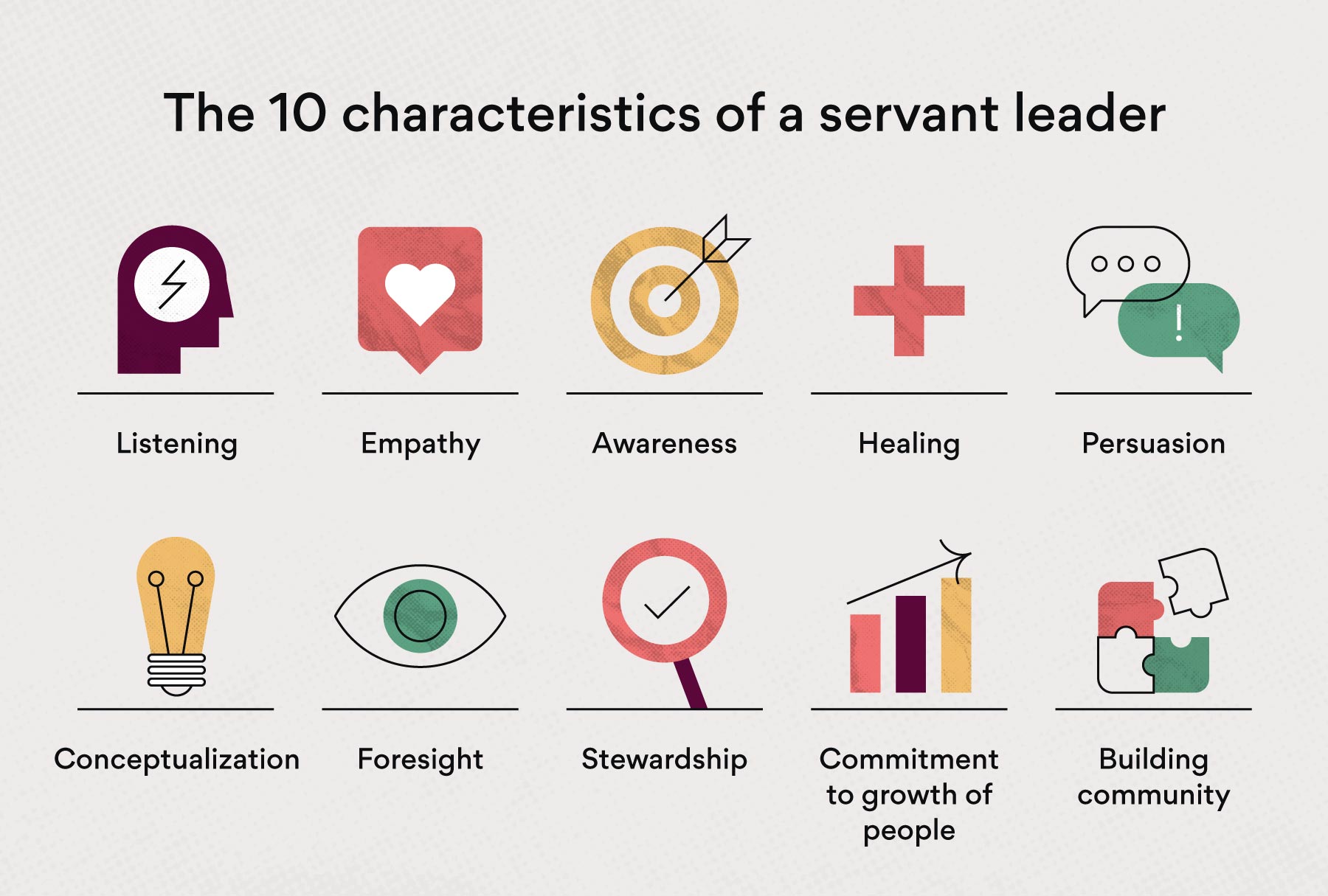
What in the world is a servant leader?

If you are old like me, you have been groomed on terms like servant leader for a long time.  It was the standard way to describe a good pastor.  He does not demand or expect but gives, serves, listens, and loves.  Not long ago I read someone else's take on this term.  It emboldened me to put in my own two cents worth.

Servant leadership is often a euphemism for something more feminine than masculine and fits in well with those who suggest that the best masculinity is the one that is feminine.  Baloney.  We have become so paranoid about domineering testosterone that every masculinity is toxic to some, perhaps many of us.  And the rest of us are silent before the critics.

Servant leaders are generally wimps, guided by fear instead of courage, who value feelings over truth.  Is that really what you want?  We cannot have justice with servant leadership nor can we have truth.  All we have left is feelings, desires, and preferences.  There is no leadership without conviction and truth.  There is no justice without some feelings being bruised.  Preferences have no absolute values, only relative.  I am over servant leaders who bleed their feelings all over you but have no strength, courage, and discipline. 

I suspect that what we really mean is sacrificial leadership -- not servant leadership.  The best and strongest leaders are those who sacrifice themselves in leadership.  Husbands and dads are good at this -- at least they used to be.  They gave up time and money and self for the sake of their wives, children, and families.  They lived in the realms of what they did for others more than what others should do for them.  This sacrificial leadership is what the Scriptures know.  Jesus was no servant leader.  He did not waver on what sin was or is, what evil was or is, or what the right thing was or is.  Jesus is not unequivocal but blunt in His sincerity and truth.  Jesus does not give up right because some folks might not understand it.  Just the opposite.  We have plenty of leaders who walk us around the table and give us all a chance to talk about what we feel or want.  What good does that do?  We need leaders in the home, church, and nation who have the wisdom, discernment, and courage to tell us what is right from what is wrong and what is truth from what is error.  We need men who will plant the flag and guard it with their lives.  Only then can the rest of us be saved.  The truth is that we are so fearful of offending that have nothing left to say except babble on about our feelings. I fear that the day is coming when the only thing our leaders can say is tolerance and this will be the Gospel of the new era.  It will also be the end of everything worth having.

Everyone is quick to remember how Jesus said, "Let he who is without sin cast the first stone" or "If no one is left to condemn you, neither do I."  But nobody remembers when He says "Go and sin no more."  We want servant leaders who will tell us we are okay just the way we are, that God loves us just the way we are, and that we don't have to change for anyone -- much less God.  Perhaps a servant leader can say this but not Jesus and neither can those who stand in the place of Jesus.  They dare not say such foolishness or the cross becomes merely an object lesson instead of the sacrificial love that dies to make alive.  I am over servant leadership and I pray everyone of you is too.  It is a sham designed to make weak what is strong to make weakness the greatest strength.  No, this is not an excuse to bully but it is surely a call to stand up and stand out as the people of Christ and those who lead them.

Thursday, July 7, 2022

The last day is not yet. . .

Okay, you are wondering, how does he know that?  Well, I admit to no crystal ball or heavenly calendar but I fear the answer I have will disappoint you.  The reason I know today or even tomorrow is not the last day is that things are not bad enough to be the prelude to the end.  That probably shocks you.  Many of you are worried that things are already pretty bad and you cannot even imagine things getting worse.  But they will. . . and they are.

They have not yet come to our doors to haul us out and threaten us with death or kill us.  They have not yet taken away our jobs and our ability to care for those who depend upon us.  They have not yet used the Law to silence our Christian voices or to prevent the Word of the Lord from being read or proclaimed.  They have not taken away our homes or confiscated God's House.  Things are not good but they are not yet that bad and they will get worse.

There is no promise that the Church will win the battle for public opinion or succeed in taking back people and property lost to unbelief.  Only the pledge of God that the gates of hell will not prevail against her.  Now is not the time to surrender our hope or hide in fear of those who can take away our lives but cannot steal our souls.  Now is not the time to presume to speak for God insisting that the end must be near.  All the bad things we hear and see are bad, indeed, but not as bad as they could get or will get before the trumpet sounds and the dead are raised.  

It is for this that Jesus reminds us that he who endures to the end shall be saved.  So if you are one prone to anxious nights of tossing and turning or worried days glued to the news, I say this.  Let it go.  Go to Church.  Pray the Our Father.  Read the Scripture.  Turn your attention to the things that will strengthen your faith and prepare you to be found holy and blameless, in Christ, when He comes in His glory as Lord of the Change to end the old and deliver the new heavens and earth.

Much of those claiming to be the church is blasphemy and such churches may well be apostate.  But like the prophet who complains he is not alone.  God will have none of our whining.  What is God’s reply to him?  “I have kept for myself seven thousand men who have not bowed the knee to Baal.”  (Rom. 11:4)  God knows what we do not and it is not given to us to speculate on what we have not been given to know but to trust Him in all things.  Things will get worse but God remains steadfast, immovable, and determined that grace shall obtain the victory.  Remember the lesson of the fig tree.  Therein the warning lies not of winter but of spring.  Where God is and with Christ in our midst, this spring remains even as winter's death lives around us.  Take heart.  Endure.  You shall be saved. 

24 Jesus left the temple and was going away, when his disciples came to point out to him the buildings of the temple. 2 But he answered them, “You see all these, do you not? Truly, I say to you, there will not be left here one stone upon another that will not be thrown down.”

Signs of the End of the Age

3 As he sat on the Mount of Olives, the disciples came to him privately, saying, “Tell us, when will these things be, and what will be the sign of your coming and of the end of the age?” 4 And Jesus answered them, “See that no one leads you astray. 5 For many will come in my name, saying, ‘I am the Christ,’ and they will lead many astray. 6 And you will hear of wars and rumors of wars. See that you are not alarmed, for this must take place, but the end is not yet. 7 For nation will rise against nation, and kingdom against kingdom, and there will be famines and earthquakes in various places. 8 All these are but the beginning of the birth pains.

9 “Then they will deliver you up to tribulation and put you to death, and you will be hated by all nations for my name's sake. 10 And then many will fall away[a] and betray one another and hate one another. 11 And many false prophets will arise and lead many astray. 12 And because lawlessness will be increased, the love of many will grow cold. 13 But the one who endures to the end will be saved. 14 And this gospel of the kingdom will be proclaimed throughout the whole world as a testimony to all nations, and then the end will come.

The Abomination of Desolation

15 “So when you see the abomination of desolation spoken of by the prophet Daniel, standing in the holy place (let the reader understand), 16 then let those who are in Judea flee to the mountains. 17 Let the one who is on the housetop not go down to take what is in his house, 18 and let the one who is in the field not turn back to take his cloak. 19 And alas for women who are pregnant and for those who are nursing infants in those days! 20 Pray that your flight may not be in winter or on a Sabbath. 21 For then there will be great tribulation, such as has not been from the beginning of the world until now, no, and never will be. 22 And if those days had not been cut short, no human being would be saved. But for the sake of the elect those days will be cut short. 23 Then if anyone says to you, ‘Look, here is the Christ!’ or ‘There he is!’ do not believe it. 24 For false christs and false prophets will arise and perform great signs and wonders, so as to lead astray, if possible, even the elect. 25 See, I have told you beforehand. 26 So, if they say to you, ‘Look, he is in the wilderness,’ do not go out. If they say, ‘Look, he is in the inner rooms,’ do not believe it. 27 For as the lightning comes from the east and shines as far as the west, so will be the coming of the Son of Man. 28 Wherever the corpse is, there the vultures will gather.

The Coming of the Son of Man

29 “Immediately after the tribulation of those days the sun will be darkened, and the moon will not give its light, and the stars will fall from heaven, and the powers of the heavens will be shaken. 30 Then will appear in heaven the sign of the Son of Man, and then all the tribes of the earth will mourn, and they will see the Son of Man coming on the clouds of heaven with power and great glory. 31 And he will send out his angels with a loud trumpet call, and they will gather his elect from the four winds, from one end of heaven to the other.

The Lesson of the Fig Tree

32 “From the fig tree learn its lesson: as soon as its branch becomes tender and puts out its leaves, you know that summer is near. 33 So also, when you see all these things, you know that he is near, at the very gates. 34 Truly, I say to you, this generation will not pass away until all these things take place. 35 Heaven and earth will pass away, but my words will not pass away.


Wednesday, July 6, 2022

What shall we be. . .

There is a great conundrum among Lutherans as they watch churches close, membership declines, and our once vaunted institutions threatened.  What shall we do in response to this?  It seems that on every level of jurisdictions to the congregation and every parish leader we are questioning what once we believed confidently and are confident about things we ought to question.  The responses are so different that it is mind boggling and stifling.  We seem to be paralyzed by it all.

On one hand, we have people who look longingly into the past and who want to be where we were in the 1950s when we were growing, when we had plenty of young men and women who wanted to be church workers, and when we were establishing institutions instead of closing them down.  But there is no past for us to retreat into -- the world has changed as well as each of us have changed.  There is no going back and it will only cause depression and despair to sigh that our glory days have come and gone.

On the other hand, we have people who seem positively giddy over ditching everything from our past -- people who delight in trashing the liturgy, faith, doctrine, creeds, and catechisms of our yesterday.  Some cast them off as chains that constrain us from being new for new times while others throw them away because they have deemed them hopelessly racist, homophobic, prudish, and corrupt.  But the problem is that no church that is a mere echo of the sins du jour has any reason for existing at all.

Don't forget those who figure that it is time to hunker down and minister to those who belong, who feel like us, believe like us, and worship like us -- at least until the last person leaves and turns out the lights.  How is this faithful to the Lord's Word and will that no one be lost, no one be left to Satan's dominion, and no one condemned as outside the blood of Christ?  We cannot lock the doors as a people in hiding around the Word and Table of the Lord and be faithful.

Let us also remember those who think that it is merely a matter of methodology that is our problem.  The message is good, maybe made a bit more practical and relatable to our daily lives, wants, and goals, but good.  It is how we do things that sucks.  We need to turn the Church on end and reinvent ourselves -- keeping the substance but learning a new style that relates to the folks of this day and time.  The problem is that the hippest churches are also dying and it is not so easy to differentiate between message and method.  McLuhan says the medium is the message.

I am of another opinion.  I fear that we will give up on Lutheranism without really being Lutheran.  I fear that we have forgotten the bold and yet thoroughly catholic confession of Augsburg and have decided that Lutheranism is merely our current institutional forms.  I fear that we have traded a snapshot in time for a catholic vision of keeping all that does not contradict the Gospel and living fully rather than minimally together and individually.  I fear that we have made a Lutheranism which appeals to our individual and personal fixation and forgotten what it means to claim to be catholic.  I fear that we have grown so comfortable acting like a sect we have forgotten we are the Church.

I fear that the individualism and personal perspective has so encapsulated Sunday morning that there is no face of Lutheranism anymore.  I fear that congregationalism has both left the weak to die alone and the strong to ignore what it means to be in fellowship, to walk together, and to care for one another.  It is this that we struggle with in our neighborhoods and it is no different in the congregation -- community is the character of our lives in Christ and this also means nationally and internationally.  I fear that we have come to settle for what is easy or does not cost us too much instead of the endless striving for all that is good, right, true, beautiful, godly, and pure.

I fear that we think our salvation lies in programs instead of faith that trusts the Word to do what God sends it forth to do and the Sacraments to deliver what they sign.  I fear that we have lost what it means to be in the presence of the Most High who is also our Savior and Sanctifier in our weekly gathering and so we no longer feel it or know it the rest of the time.  I fear that we do not pray or contemplate the mystery of God's mighty love or confess our sins with the lament of a broken heart.  I fear that we expect so little from God (a better day or life or pleasure or amusement) that we get the little we expect and miss the greatness of all that God gives to us in Christ.

I fear that we have knowledge of God but not so much trust, that we fear God's will more than we trust in that will to be good and gracious and right for us -- whether or not it is what we pray.  I fear that we are so enamored with justification that we never get to the rest of it -- living holy lives, being holy people, standing out and standing forth where God has planted us.  I fear that we are so wrapped up in ourselves that we no longer have room in our hearts for God or for others -- and that we live in a technology that appeals to this selfish and self-centered existence.  I fear we have grown so content with our isolation because it gives us the impression of security that we no longer are willing to risk having compassion for others as God had and has compassion upon us.

No, the Church cannot die.  But synods, districts, congregations, and Christians can die off the vine.  My plea and my pleading is to remain on the vine, to be nurtured in doctrine and truth that bears the fruits of the Spirit in our daily lives.  I know it can work.  It has.  It still is.  It will until God brings it all to an end in His time.  Do you believe this too?

Tuesday, July 5, 2022

Faith is not knowledge. . .

A friend said that faith is not a data dump.  That seems to me where we have lost much of our way in catechesis.  Instead of incorporating people into a discipline, an order, a worldview, and a way of life, we have imparted knowledge.  It shows up in confirmation more than other places where we open the minds of our youth and dump in knowledge and then judge them faithful and ready to receive the Lord's Supper when they can regurgitate to us what we put in them in the first place.  That is how it was when I was confirmed.

Now, let me first say that I am not suggesting that memorizing some things is not important.  Of course, it is a part of catechesis and preparation for Holy Communion but it is not the primary or the only thing.  If you look at Luther's questions and answers on page 329 in Lutheran Service Book, you find that the information imparted there is not information about something but the practical information that affects who the person communing is and who they are as they depart from the Lord's Table.  It is about faith -- the trust that is the beating heart of our relationship with God.

Faith is not simply knowledge but it is a way of life, marked by trust and reflected in a life worthy of the person God says we are.  It is a way of holiness in which goodness and righteousness are not theoretical anymore but the practical stuff of our daily lives.  Read through St. Paul and you constantly encounter this.  Walk worthy...  Be transformed...  Live holy lives... Put off your old self...  We are the live the holy life of faith that belongs to us as the children of God.  None of this earns us anything as regards our salvation but all of this marks us as those whom God has redeemed.  Look at the verbs.  The verbs that address salvation and justification address us with what God has done and we have done nothing -- not even believe.  But the verbs that address sanctification call on us to do something and to be something.

Galatians 2:20: I have been crucified with Christ. It is no longer I who live, but Christ who lives in me. And the life I now live in the flesh I live by faith in the Son of God, who loved me and gave himself for me.  Romans 12:1:  I appeal to you therefore, brothers, by the mercies of God, to present your bodies as a living sacrifice….”

We cannot earn anything of God's favor.  Duh.  If you don't get this out of Scripture, you are not reading Scripture.  But that does not mean God relieves us of any effort on our part to live as the people of His favor.  You could reduce all of St. Paul's letters to a short booklet if you removed all that he wrote regarding the effort we should put forth to be the holy people God has declared us to be.  It is not only about justification.  The freedom we have in Christ is not a license to do as we please (as if the Law or the Commandments meant nothing more to us) and that freedom does not allow us the option of doing nothing.  Faith is not simply about knowledge of what God has done but it is also about what you and I do in response to that mercy and because He is merciful.

We do not do things for God's notice but because God notices we do things.  Is this not the meaning of Jesus warnings about an outward show without an inward faith?  Jesus does not let us off the hook -- no fasting or praying or works of mercy.  Instead He tells us that when we do these, we cannot do them simply for the recognition of others (including God) but as a reflection of our faith and as the outpouring of the Spirit's work in us and through us.   This is at least as much a part of true catechesis as is the part about what God has done for us and why.  But we Lutherans have a knee-jerk reaction to anything that might suggest we need to expend any effort on anything -- including going to Church!  And then we wonder why our catechesis is not helping to keep our people in the Church.  

We think that if we can answer the questions rightly before the pearly gates, the doors will open to us.  But faith is not simply knowledge.  It is the way of life of those who know God's goodness and who seek by the help of the Spirit to be good.  When God judges those who have done well and those who have done evil, it does not mean works earn us our place in heaven.  But if James is correct and faith without works is dead, then works are a sign of faith and give testament to the work of God in us.  I honestly do not understand why this is so hard. Neither do I understand why we are comforted in any way by the fact that Christians seem to live no holier lives than non-Christians.  Unless we think that the only thing that marks faith is forgiveness.  Again, how can you come to this conclusion and read St. Paul?


Monday, July 4, 2022

The Lord's work...

Sermon for the Fourth Sunday after Pentecost, Proper 9C, preached on Sunday, July 3, 2022.

After these things, the Lord appointed seventy-two others and sent them on ahead of him, two by two, into every town and place where he himself was about to go...  All of this we have heard over and over again in what is a popular mission text.  It occurs to me that we never mention the “these things” that took place before the Lord appointed the seventy-two and sent them forth in His name.  So what exactly did Luke have in mind here?  

Looking earlier in Luke’s Gospel, we see a decidedly mixed picture of successes and failures.  Jesus foretells His death and the disciples do not get it and don’t want to hear about it.  They are too busy arguing over who is best.  Jesus puts a child in their midst and proceeds to tell them this child is greater than them all.  Before the Lord has finished speaking, John complains that there are other disciples in competition with them.  After Jesus announces that Jerusalem is their destination, they are at a Samaritan village where He is rejected because He has headed to Jerusalem and His destiny upon the cross.  Then Jesus questions their loyalty and insists that those who would follow Him cannot be distracted even by the dead but must leave everything behind to follow Him.  Then Jesus insists that those with regrets have no place among His disciples.  Then Jesus sends out the seventy-two.

Really, it is a wonder there was anyone left to send out – much less seventy-two.  Following Jesus and being sent forth in His name does not sound all that appealing, does it?  It might be as bad as trying to find people to volunteer for the worst jobs at church.  If you follow this out, it is a wonder anyone believes and an even greater wonder that anyone would want to serve the Lord as a Pastor!

The reality is that the ministry is not a plum job and the Christian’s life in the world is no easy or sweet path.  If you are looking for a job that returns as much as it asks of you, discipleship and church work are not your calling.  If you are looking for a job with comfortable hours and few emergencies, church work is probably not your calling.  If you are looking for a job where you can make a difference in the world, church work is probably not your calling.  The job is not about you or your timing or your convenience or your priorities.  What it is about is the harvest.  Jesus says so.  The harvest is great but the laborers few – pray the Lord of the harvest for more laborers.

Sit in any Church Office and you quickly get the idea that what a pastor needs to be is a therapist to solve the personal and family conflicts of the world, a social worker to fix the plight of the vulnerable, the weak, and the oppressed, a life coach to help people kick their bad habits and learn good ones, a money man because nearly all of life’s problems can be fixed by money, right?  But that is not what Jesus said nor what we need.  We need pastors.

What makes sense to God is foolishness to the world.  Men who will preach God’s Word.  Who will absolve us of our sins.  Who will baptize our babies.  Who will teach the faith to our children.  Who will feed us the body and blood of Christ. Who will visit the sick and the homebound.  Who will bury our dead.  Who will prepare us for the Last Day.  Who will help us to realize our own baptismal calling to care for our families, to support the work of the Church, and to be a living witness to those we know and those we do not.  It really matters not if the numbers are big or small, the people young or old, the work successful or not (by earthly terms) – it is not our Church but the Lord’s, the Lord’s harvest, and the Lord’s work.

This world and this life are fleeting.  The days come and go too quickly – believe me I am more aware of this now than ever.  In the blink of an eye your babies are adults and you are a senior citizen.  In a moment all that you thought would last forever is gone, replaced by things you never imagined.  The devil is a lion looking at you to be his lunch.  Evil gets called good and good is called evil.  Faith seems weak.  Our lives in Christ always under attack.  People of God, we do not need to be entertained or distracted or to have our egos fed.  We need the Word of Life, the water of new birth, the voice that speaks away our sins, and the food that tastes of eternity.  And we need those who will bring us these things in Christ’s name.

The harvest is white.  It has always been white.  It is not because this is a ripe or unique moment.  It is because we are all sinners, all captive to death, and all live in  a world where Satan rules.  We need those who will address us with the Word of Life or Satan will own us and we will be alone in the day of judgment.  The harvest is white because we are a people in need of what God in His mercy gives us in Christ.  We need to be saved, to be redeemed, to be rescued, and to be delivered.  This only Christ can do and He has chosen to do it through pastors.  This ministry is an urgent calling.  The Lord does not desire the death of any sinner but would that all would be saved and call upon His name.  
That is why you need pastors and that is what pastors are here to do – here in Clarksville and in Mattoon.

No pastor is an entrepreneur.  No pastor gets to run things for Jesus.  No pastor has the freedom to decide what the people need or what they want.  But every pastor has the unpleasant task of leading people where their sinful natures do not want to go.  The apostles were given the words of the Lord to preach in His name.  The seventy-two were given orders when the Lord sent them forth in His name.  Pastor Ulrich was placed under those pastoral orders when he was ordained right here, before this altar, 7 years ago next week.  It was given to me when 42 years ago this week I was ordained.  

The one who hears faithful pastors, hears Jesus.  Imagine that.  It sounds prideful but it is how God works.  And it does work.  The Lord works through His Word and Sacraments.  The demons cower, Satan falls, the world cannot hurt you.  But do not get a big head.  It always was and always will be Jesus at work in you and through you.  This is true of the pastor who stands before the people of God now and the one who is soon to depart for another part of God’s vineyard.  This is true of the husband and father who is spiritual head of his home.  And it is true of the wife and mother who faithfully serves in that home.  And it is true of the children who are nurtured in the Lord.  And it is true of the aged whom we carry in their weakness.  The work is the Lord’s, the results are the Lord’s, the glory is His also.

We do not rejoice because we get to see the fruits or the end results or because we think we have some personal achievement in the Lord’s work.  We rejoice for only one reason.  Whether pastor or people, our joy is the same.  Our names are written in heaven in the ink of Christ’s blood.  In the holy name of Jesus!

For democracy to work. . .

For democracy to work, the electorate must be educated, informed, and thoughtful.  We live in an age of shallowness both in understanding and in debate.  Because of this, democracy itself suffers.  When democracy suffers, the nation suffers.  

Freedom requires more from us and not less.  The democratic institutions of a nation expect that freedom will be used for improvement and not simple self-expression.  Somewhere along the line, we seem to have forgotten this.

I have no quarrel with someone who thoughtfully disagrees with me and my politics but I have no stomach for those who parrot a perspective or mimic a line without knowing what it means.  Somewhere along the way, we have lost our ability to reason and the quality of the political discourse has become painfully shallow.  It is not a matter of one side or another but a nation of people who no longer think through their positions or consider where their policies might lead.

As we pop the beer, burn the hotdogs, and light up the fireworks, it might be good for us to remember that this is not patriotism.  A day off to pursue our leisure is not the reward earned by those who paid in blood for our freedom.  I can recall a young and charismatic president who asked us to consider not what our country can do for us but what we can do for our country.  Not equal service or duty but equal sacrifice.

If we are to resist this slide into a government defined and sponsored life, we will need to move from our comfortable spaces and take up again the cause of duty and responsibility.  The pandemic taught us what we were owed but it masked the cost of it all.  Future generations may not appreciate the debt we have saddled upon them.  The strength of our nation has been a balance of self-reliance and community.  Covid cost us something of both and left us with the impression that it was more important to redistribute wealth than create it.  I am truly troubled by the increasing gap between the haves and the have nots but I am just as troubled by the triumph of a victimhood which demands payment for suffering and insists a minimal standard of living is the most basic human right.

The government overreach into our lives has been largely welcomed by those who forgot who pays government's bills and who falsely believe you can put a price tag on anything and everything.  I fear that the red and blue division in our land has less to do with people (like Trump) and more to do with the great chasm between those who think the government will improve our lives and those who fear that such improvement will ultimately cost us our freedom.

I must admit that growing up I did not think much of things like this.  Times were different but so were people.  It seems we know less for certain and are more uncertain of just about everything.  I have no illusions about the past but I am wary of the future more than ever.  Part of that is the pace of things and the rapid changes that have tested the boundaries of our union and threatened to unravel the very threads of our community.

What you do today is not so much the question.  What you will do tomorrow is.  Personal responsibility have always been key to the notion of democracy -- along with an electorate informed about the issues and the people running to be our leaders.  If we replace either with something less, our whole nation will suffer more than division and will decay.  Rot from the inside out is always harder to deal with than the deterioration of the fringes.  Perhaps it is time for us to stop voting for those who would govern by slogan or denigration of their opponents and start expecting such people to reasonably debate the pros and cons of their position.  Democracy was first an idea before it became a nation.  If we can no longer debate the strength and weakness of our ideas, we may already have signaled the end of our nation.  I hope and pray that we are up to the task.

Sunday, July 3, 2022

A day I dreaded . . .

Seven years ago a young man fresh from seminary became my associate.  At the time there were those who were not sure I would be able to work with another pastor -- Lord knows, I am set in my ways and deeply concerned about every aspect of the parish.  Today is his last day as my associate.  The Lord has called him to another part of the vineyard.  It is a day I have dreaded since I first came to appreciate this man and his gifts as a pastor.  Though I know I am not easy to live with, he found a way and, more than just working together, he and his family were part of our whole family -- in ways more than I could ever expect.  He came first a stranger, a young man growing into the office of pastor, but he leaves with my deepest respect as an excellent preacher, a man who has proven himself to be more than a colleague -- a trusted friend and confidant whose judgment I have come to appreciate and count on on in ways I am not sure he knows.  

I am sure that the parish where he is headed has no idea how blessed they are to have him and I know that this parish and I know how deeply he will be missed and how profoundly he affected us and our life together as a church.  In my mind I wish him all the best but in my heart I am not ready to say goodbye.  Quite frankly, I had come to expect that it would be me who would be leaving for retirement and he who would be continuing in this place long after I was gone.  Our plans are not God's and His ways are not ours.  Everyone who knows this also knows how hard it is to hope and pray for something only to have the Lord move in another direction.  

So that is where I find myself today.  I will dread going to the church to see his empty office.  I am not sure I am want to carry the whole responsibility alone again -- without his partnership in the Gospel -- but I know that I have no choice and will do what must be done.  While I know that the Lord is still Lord and that His Church is never ours to own but only ours to serve, we struggle with plans and hopes and dreams that help us see our place in that future.  So I covet your prayers today -- for Grace Lutheran Church, for wisdom and guidance to the pastor whom God has in store for us, for patience and courage as we sort out this all out in the next weeks and months, and for me.  But do not also forget to pray for him and his family and the parish he will serve.  Hidden in the future will be the right person God has in mind for us and along the way a bit of discovery for us as a parish and me as a pastor.  That said, my time of active service is nearer the end than the beginning and I will never work with another partner in ministry as long as I was privileged to work with Dan Ulrich.

Saturday, July 2, 2022

I will go. . .

Who can understand it?  The Father knew the rebellion was coming.  He knew the creature would proclaim himself Creator and presume to know better than God.  But even this could not constrain the will and love of the Father to make all things.  But somehow in the midst of all of this, a voice comes.  The Son says "I will go...."  His assent was not to a scouting mission to report on how bad things had become but as the One who would redeem and restore the lost creation.  He did not come in a minute but after a very long time in which the things of each day were being groomed for the right and ripe moment when God would reveal redemption.  The prophets heard the call of God and most said, "I will go."  These messengers from God had come and gone and some of the people had listened and many rejected the warnings.  But one would hear the call of God and consent to His will.  It was the new Eve, blessed Mary the Virgin, who met the astonishing visit of the archangel with her own admission of inadequacy and her acknowledgement of the Lord's mercy by saying, "Let it be to me as you have said...."  Her vision of "I will go."

Our Lord assumed His mantle in public in the Jordan River at the hands of John the Forerunner.  On His way back from the wilderness where the new Adam sent the serpent packing, His first mission was to call disciples.  Though they did not know what they were in for, by the power of the Holy Spirit, they added their voice to Christ's willingness to serve.  "I will go."  Not even blessed Mary would suffer as Christ would suffer -- for her, for all, and for the life of the whole world.  Neither did the prophets and the apostles suffer as He suffered for them and for all who would hear the Gospel through them.  But that does not diminish the consent of faith.  "I will go" -- and go they did without wallet or luggage or spare cloak or sandals but trusting only in the mercy of God to sustain them.

Ordination is the pastor's opportunity say "I will go."  The Church speaks like the archangel on behalf of God and calls, judges, and sets these men in office.  But it is not without their own consent to the Church's judgment as God's very will and purpose.  When the pastor is installed, the people cry out their own willingness to hear the Word from this servant of the Word made flesh and to follow the staff of the undershepherd as if he were Christ -- which, of course, he is in so far as He is the voice through which Christ speaks, the hands through which Christ baptizes, the lips through which Christ liberates the sinner from his sins, and the body Christ uses to give to His people His own body and blood.

"I will go."  That is what the Christian says to the call of Christ still.  The Spirit is at work in the Word placed in the ear so that the heart and mind will instruct the mouth to give this brave consent.  We know not the future nor do we have any guarantees of the tomorrows we will know here -- only that God will accompany us, God will carry us, our names are written in the palm of His hand, and our future is tied to Christ and His resurrection to everlasting life.  But that is enough.  It was enough for Jesus.  He did not have to know everything.  He gladly admitted that He did not speak or act on His own but for the Father.  It was for the Father to know the day and the time when He would return to conclude His saving work with the judgment and the resurrection.  Neither do we have to know.  Our times are in His hands.  But Jesus, who for the joy that was set before Him endured the cross, had taught us that the Father is trustworthy and the Spirit has beckoned our consent in trust so that we can also endure the crosses we must bear -- knowing the joy that is set before us!

Every day it works this way.  The Lord bids and we consent.  "I will go."  None of us are Jesus but all of us learn from Him to trust the love of the Father by the power of the Spirit.  We do not look back but learn like the plowman to look forward -- the north star of our lives is heaven and from it we know where we are on earth.  "I will go."  Like Philip we often complain along the way, worried that we do not know every detail of our future or where the earthly tomorrows will lead us.  But Christ is there.  "I know," He says. "But you know Me.  I am the way, the truth, and the life."  Where the world complains that this is not nearly enough, the Spirit works in our faith to say, "Okay, Lord.  I get it.  I will go."

When death comes near and we find our bodies frail and our minds and memories fragile, when every instinct of our lives is to stay, the Lord beckons to us in grace and the Spirit leads us to answer in faith, "I will go."  And with a sigh the life we thought was everything is released to the new life that really is everything.  We open our eyes and there is the Father.  He is leading us into His house.  "I will go."  The room is mine and the future I could not even imagine is now the only thing worth knowing.

Friday, July 1, 2022

Holding back the Anti-Christ. . .

Catching up on some things I read that Patriarch Kirill of Moscow and All Russia was quoted as saying that the Russian Orthodox Church is “holding back the antichrist.” In Kirill's mind, Russia and the Russian Orthodox Church somehow blend together into one.  Therefore, whoever puts the squeeze on Russia is actually working against the Russian Orthodox Church.  The great Satan and the Antichrist are single-handedly being held back by the Russian Orthodox Church.  Now you go figure what he means -- was this in context of Western sanctions and the war in Ukraine or whatever.  What I will say is this.  It is dangerous.  The cross is wrapped around no flag and no flag is an agency of the cross.

It is dangerous to presume that the Church is holding back Satan and his minions and not Christ protecting the Church.  It is dangerous to arbitrarily label enemies of the state, enemies of the faith and of the Church.  It is dangerous to mix together the Church and state as if they were one.  It is more dangerous than even the minions of Satan.  

I get it.  Kirill, like the rest of us, wants to fight back against the forces working to disrupt the Kingdom of God.  We all want to do that.  We all want to vindicate Christ on the battlefield.  We all want to be the saviors of truth, orthodoxy, morality, and God.  But we have it all backwards.  God is the Savior who once for all rescued us from sin and its death in Christ Jesus but He must act all the time to restore His people from their captivity to fear, from their despair over not seeing more tangible signs of Christ's victory in society and among the nations, and from the delusion of power that would make Christ weak and us strong.

Yes, the sexual and gender agendas so predominate in this time are demonic and distort and distract from God's creative gift and order and redemption.  Yes, the times are becoming even more urgent and the Church, at least in appearance, more fragile and more willing to surrender truth for the lies of this moment.  We all get it.  For God's sake, every pastor worth his salt hears this litany of fear and anxiety from his people and every pastor laments that we are not prevailing in the court of public opinion.  But we are not warring against the forces of this earth and it is not a national war of boundaries.  It is a war of truth, of the tyranny of feelings, and of the individual and self-interest against what is good, right, godly, and righteous.  

Americans have oft confused the Church with the nation and made the best interest of our country the same as the best interest of Christ and His people.  In every case it has not gone well.  It will not go well for Kirill when he does it for Russia.  It is the great foible of the powerful who confuse the Kingdom of God with a tool for political and military purpose.  Christ is not about nation building but makes His kingdom come through the Word preached and the Sacraments administered.

Kirill also said that the Orthodox Church “keeps people from losing their bearings in life. … It is the Orthodox faith, living and acting in the Orthodox Church – this is the force that holds back (the antichrist).”  Here he has got it almost right.  It is the Church that keeps people from losing their bearings in life but the Church does so by the faithful proclamation of God's Word, the faithful catechesis that builds up the faithful in that Word, and the Sacraments of life and worship by which we are sustained, nourished, nurtured, and kept in that faith worked by the Spirit.  

Kirill sounds like he is worried about the decadence of the West infecting Russia and well he should but we should be worried about a secularized Church which acts as an arm of the state in Russia making every national cause into a holy war.  Both of us must learn, however, that what will preserve the faithful is not us or our institutions or even our power but simply the Word of the Lord that endures forever and the Sacraments of Christ.  Salvation is not ours to win but God's done once on Calvary and manifested among us when the cross and empty tomb are proclaimed and taught and its fruits received in the Sacraments.  This is where the Church needs to live.  

The Church and the people of God endure not on their own strength or cunning or power but only in Christ.  There is no earthly corner of the world where any of us may retreat but only to Christ.  We cannot appeal to or confuse the national aims of our countries with the aims and purposes of God.   There may have seemed to be a time when the interests of Church and state were more in line with each other but that may have had more to do with us than any real alignment of national and divine interest.

Yes, be good citizens of the land where you live.  By all means.  But do not be blind to the error of presuming that your leaders must be obeyed and the causes of your nation supported even when they conflict with God's Word.  The lesson of Nazism must never be forgotten when religion was used by a corrupt state to terrible end.  It may not happen on the scale it did then again but it will continue to be the bane of our unwillingness to listen to the Lord.  Trust not in earthly rulers or kingdoms.  Faith belongs to Christ alone.  The Church is accountable not to despot or democratically elected leaders but to Christ.  The purpose of the Church is to preach and teach the Word of God and to administer the Sacraments of our Lord.  Everything must flow from this and be judged by this.  Kirill seems to have forgotten this.  We have from time to time as well.   God will not judge us for our political victories but He will certainly judge us according to our faithfulness in these essential purposes.  Something to think about before having the color guard parade our national emblems into churches on the 4th of July weekend.


Thursday, June 30, 2022

The way we operate. . .

I have a little experience with things like bylaws and constitutions.  But, to be frank, I do not think rules can be used to change things.  Rules follow us; they don't lead us.  I do believe that if we have rules, we ought to follow them and if we don't like them, we ought to change them.  It is very disappointing to me that we have so many rules that we do not follow and everyone seems to be good with not following them.  Why do we keep them if we don't follow them?  If we don't want to follow them, would it not be better to change them to rules we do want to follow?

Unlike some folks, I do not believe that the structures we have chosen to govern ourselves as churches are absolutes, written on stone by God, and brought down the mountain by a prophet.  We decide most of them.  No, we cannot forego pastors but having teachers or DCEs or one of the other commissioned offices we have decided to have is a choice we make -- not an edict from God.  While I think that having  bishops is more Biblical than not, I do not find the kind of definition we commonly attach to bishop today laid out in Scripture.  It is probably more true that every pastor of every congregation is closer to a bishop in the way the New Testament ordered things than a regional administrator like bishops are today.  I have read plenty of arguments to dispute this where the writer insists upon a different charism for bishop and priest.  Today, maybe but not in the parlance of Scripture or the common order of the early church.  

Districts or not, dioceses or not, well, this is plainly up to us.  What is not up to us is the business of ecclesiastical supervision of doctrine and practice.  The rest is something we decide and if we all agree, we make into the rules that govern us.  Matters of jurisdiction are more choice and tradition (in the sense that is the way we have always done it) than Biblical mandate.  But folks can get pretty caught up in it all and love to make rules about it that presume they have their origin in God.  The rules that govern us have power because we agree to be governed by them.

One example is the idea that what happens in worship ought to reflect doctrinally pure orders.  I believe that this is certainly true but nobody seems to know how to apply it.  In my church body it has a constitutional and bylaw expression but that seems to have little affect upon what a local congregation decides to do.  That is my issue.  If we don't believe it is true, change it.  But don't leave it there for everyone to see and then ignore it with a wink and a nod.  We love to do just that.  When you sub in a parish somewhere and they tell you we just follow the hymnal but then you get a couple of pages single spaced showing how they deviate from the hymnal and its rubrics, well, then you know.  We think we are following the rules but we don't follow the rules we don't like.

I wish we talked about doctrine as much as we talked about rules.  It does not seem to matter if you are called a District President in the LCMS or a bishop in the Episcopal Church or a pope in Rome, we are quick to throw rules at a problem that is really theological more than it is procedural.  Maybe we just might hear the last of some of the embarrassing or scandalous things we do if approached a doctrinal problem doctrinally.  Maybe if we talked doctrinally more often, we would not have such embarrassing lapses as apple juice in communion cups or online sacraments.  But, it doesn't seem like we will abandon our penchant for making rules and then ignoring them.  Sadly, we have doctrines that are well attested in Scripture and heralded in tradition and we don't pay full attention to them either.  If Adam and Eve had operated as we do, they would have merely told God that the rules don't apply to them.  Perhaps, that is exactly the problem of Eden and of Christianity today.

Wednesday, June 29, 2022

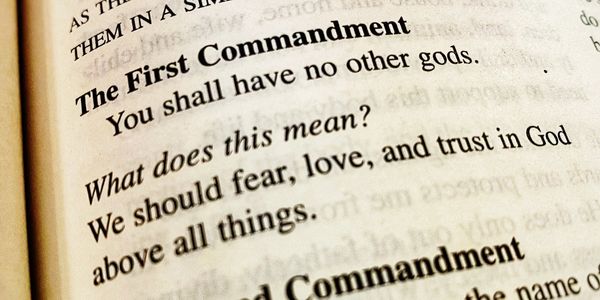
To fear, love, and trust. . .

Although I was guilty of it early on, I have come to detest those who would suggest that fear disappears for the faithful.  The passage perfect love casts out all fear has been used too often to dismiss the holy fear that proceeds not from the guilty heart that does not want to be exposed or punished for what is hidden but rather from the heart that kneels in humble awe of God's mercy.  The truth is that we do not stand with God but before Him and the posture of faith is not to stand as equals but to kneel in submission.   This proceeds not from the worry that God may squash us (and rightfully so) but from the surprise of grace that lifts the humble and forgives the sins of the guilty penitent.  Too many of us want faith to be a don't worry, be happy mentality; this is not faith.

The pandemic proved our hearts are prone to fear but to fear the wrong things.  Jesus insists that we are not to fear those who can kill the body but the One who can kill body and soul.  He does not suggest that fear has no place in faith but faith is fear rightly placed -- the holy fear that never forgets God is God and we are not and cannot begin to fathom what would move such a God to redeem such a guilty, insolent, and shameful people.  In the pandemic we were quick to give up everything to fear -- from the place where we worship to the places where we shopped, ate, and even worked.  God is not at work in such a fear.  It is a fear that is first of all misplaced and a fear that cripples instead of a rightly placed fear that sets free.

As so many others have said, if we fear God and kneel before Him we need fear no one and nothing and can stand before everything.  If the Lord is our focus, we have no crippling fear that the good things of this life might be stolen from us or we might endure suffering before entering into glory or we might have to pay a cost for bearing the name of Christ in a world at odds with Him and His purpose.  In Christ we no longer fear the threats of this world and its evil masters nor do we fear the judgment of God.  Such a servile fear is cast out by love.  But instead we have a filial fear -- the fear of being cut off from Him who loved us even to death and the fear of that which offends such redemptive love.  It is holy because it does not drive us away from God but into His loving arms.  It is not opposed to faith but the rightful fruit of faith inspired by the Holy Spirit.

We do not fear God as an unknown but because we know the Lord we meet Him in the holy fear of faith.  The Spirit has not given us a fear as a slave to his master but the holy fear of a son or daughter to their loving Father (Romans 8:15).  Ours is a fear that comes from an appreciation of the divinely bestowed gifts of grace unearned and unmerited.  What wondrous love is this?  I am not worthy, Lord, to enter Your House or for You to enter mine.  In this familiar hymn and in this communion prayer we meet this holy fear -- not so much defined as expressed.

We seem inclined to reduce God to the status of a buddy or pal when the rightful posture of faith never forgets that God is God and we are not.  Just as we do not aspire to be Him, neither do we presume He is like us.  It is this posture that faith teaches and we learn.  We are not the children born of right but the adopted children born of grace.  We are not the impatient awaiting an inheritance we presume was ours all along but we live in joyful anticipation of the largess of His grace bequeathed to those without any right except what He has given.  Nowhere is this more clear than when we reduce worship to an event designed either to amuse us or entertain God.  It is neither.  We do not worship for the entertainment of our souls and we do not worship God to appease Him or prove to Him that He made a worthy choice to redeem us.  We worship Him to receive His gifts.  Christ and His gifts are what bids us come into His presence, what we are given not as our due but His generosity, what moves our praise, and what we have to proclaim to the world.

Luther got it exactly right in the first words of the explanation of every commandment.  We are to fear, love, and trust in God.  Everyone of those words fits and each fits together to define what faith is.  Does God wants us to call Him Daddy and curl up in His lap or approach Him on the holy ground that admits we have no right to be there except the Lord bids us come?   Where this holy fear does not live, faith does not live either.  Because we know God's mercy beyond our worth and His sufficient grace beyond all reason, “we have the confidence to enter the holy places by the blood of Jesus, by the new and living way that he opened for us through the curtain, that is, through his flesh, and since we have a great priest over the house of God, let us draw near with a true heart in full assurance of faith, with our hearts sprinkled clean from an evil conscience and our bodies washed with pure water. Let us hold fast the confession of our hope without wavering, for he who promised is faithful” (Heb 10:19-23).  Having an awareness of what Christ accomplished for us, we dare never be casual about such a God or such a love as God has revealed in His Son's death and resurrection.  God will not be our toy but He never ceases to be our God and our Savior.

Tuesday, June 28, 2022

Not alone in Christ's Church...

Sermon for the Third Sunday after Pentecost, Proper 8C, preached by the Rev. Daniel M. Ulrich, his last sermon as Associate Pastor, Sunday, June 26, 2022.

Grace, mercy, and peace to you from God our Father, and our Lord and Savior Jesus Christ.  Amen.
    There’s an ironic phenomenon in our highly technological and digital age.  Now more than ever, we have the ability to be connected with just about anyone.  Within mere seconds and with very little effort, we can be talking to someone on the opposite side of the world.  Space is no longer a hindrance.   We can see our family and friends anytime we want with video chats.  But even with this constant and immediate contact, it seems more and more people are feeling isolated and alone.  This can even be felt in the Church.  We can be sitting right next to family and friends in a full sanctuary and still feel alone.  But no matter what you’re feeling, you’re never alone in Christ’s Church.  Your Lord, He is always present; preserving you and His Church through His Word and in Sacraments.  And you, you’re always connected to your brothers and sisters in Christ, even when you’re apart. 
    We often get the idea that since we’re part of God’s Church that everything is going to be fine and dandy for us: we’ll never suffer need, we’ll always get along with everyone, life will simply be wonderful.  But this kind of prosperity gospel isn’t proclaimed anywhere in Scripture.  In fact, what our Lord says about following Him is completely different.  There’s a cost of discipleship.  There’s a cost to following Him.  And in the Gospel reading today, we hear Jesus talk about that cost. 
   One man came up to Jesus and said he’d follow Him wherever He went.  But our Lord revealed that this man wasn’t ready for that cost of discipleship, because it’d mean giving up the security of an earthly home, not even having a hole or nest to live in like the animals.  Jesus is very clear here.  If you think material blessings and prosperity will come your way because of the faith, then you’re greatly mistaken.  If our Lord had nothing, what makes us think then that His followers will have more?  Faith in Christ is no guarantee of earthly riches.  And in some cases, faith in Christ leads to a loss of riches.
    But it’s not just the material things that we’re devoted to that we might have to give up for the Lord.  Sometimes the cost is our relationships.  When Jesus called the second and third men to follow Him, they said they’d go, but first they had to go back home to bury their father and say goodbye to their family and friends respectively.  Neither of these things were bad in and of themselves.  In fact, honoring parents, including caring for their burial, that’s something Jesus encourages in the Gospel.  And of course, there’s nothing wrong with saying goodbye to family and friends.  So Jesus isn’t saying that we shouldn’t do these things.  What He’s addressing though is that following the Lord isn’t based on our own terms.  These men tried to set their own conditions for following Christ, but that’s not how it works. We don’t get to set our own terms.  We don’t get to decide for the faith.  Our Lord calls, and we follow.
    Following the Lord can come at a cost, and that cost may even be our relationships.  We all know of times when divisions arise between friends and family because of the faith.  And yet, at the same time, when we follow the Lord, relationships aren’t just lost, they’re gained; new relationships based on the everlasting life of Christ.  One of those relationships the Lord graciously gives is that between His people and pastors.  
    I’ve been greatly blessed by the Lord since He called me to be the Associate Pastor here 7 years ago.  When I was deciding to go to the seminary, Katie and I knew there'd be the chance that I could be placed anywhere in the country.   And so, part of the decision to go to Fort Wayne was so that we could be closer to family a little bit longer.  After that call night, when Grace Clarksville, TN was announced, we knew we wouldn’t be able to see our family as much as we had in the past.  That was the cost of following the Lord’s call.  But He knew what He was doing.  He was bringing me here to you, creating new relationships based on the love of Christ.  And since day one, you’ve all welcomed us into God’s family here.  
    We’ve been able to celebrate life’s joys together: births and Baptisms, including those of my girls; graduations and weddings; new jobs; the list could go on and on.  And we’ve been together through the sorrows of life too, praying for each other and supporting each other.  This is part of God’s plan for us, to live in relationship with one another.  In the Garden, He said it wasn’t good for man to be alone, so He created Eve, He created family.  That family He is established in His Son, and it will never be broken.  
   The reason why total strangers can come into the church and be treated as family right away is because of the love of Christ.  They say blood is thicker than water, but the blood of Christ, shed on the cross for your forgiveness and the water of Baptism that gives you new life, that is thicker still.  God brings you into His holy family.  He unites us all into one.  And He will forever keep you and this family secure, even when you feel alone; just as He did for Elijah.
   Elijah thought he was all alone.  He thought he was the only one left who trusted in the Lord.  And in that loneliness he despaired and had no hope.  But he wasn’t alone.  The Lord was there with him, and the Lord was preserving His Church; 7,000 others in Israel who still followed Him alone.  
The Lord continues to preserve you and His Church today.  Through His Word and Sacrament; through the Gospel of Christ, His very death and resurrection for you and your salvation, the Lord preserves His Church.  He gathers you together into the family of Christ, and in this family, you’re never alone.  
    It’s hard to deal with feelings of loneliness.  It’s hard to say goodbye to family and friends.  It’s hard when the cost of following Christ is personal relationships.  But in Christ you have an everlasting relationship with your Lord and with your Brothers and Sisters in Christ.  You’re never alone in Christ’s Church.  He’s always with you.  His saints are always with you.  And together we celebrate His forgiveness, life, and salvation; even when we’re separated by space and time.  In Jesus’ name…Amen.