Friday, October 16, 2015

Overused words. . .

I have to admit that I am very tired of the word marginalized.  We hear all the time about those whom society has marginalized or those who have been marginalized by the Church.  At first this was legitimate term to describe the powerless on whom society trampled and those who had been victims of oppression.  I am not at all sure when this began being a popular term to use to describe those whose sexual orientation or lifestyle contrasts with the Biblical ethic and Jude0-Christian morality which has been remarkably consistent (at least until modern times when some have been rethinking it all).  Frankly, if I were one of those who had legitimate clam to the term marginalized I would be upset at the way others who do have access to power and media are now claiming that term.  In particular I am suspicious of those who claim they have been marginalized by the Church.

Let me begin by saying I do not believe the Church as a whole has behaved honorably and charitably in all circumstances.  Indeed, as a child of the Reformation I would say that the Church has encountered dark times when the Gospel has been subjected to all sorts of bad machinations.  That said, however, I am not at all what it means when the term marginalized is used to describe GLBT individuals.  Furthermore, I am not swayed by those who claim that the fruits mute the Biblical words or the abuses committed in the name of Christ render the morality behind those abuses impotent. 

There are GLBT people who are nicer, even better people, than heterosexuals and, in particular, heterosexual Christians.  They may have better relationships than married straight people and be exemplary in all sorts of other ways.  True as this is, this does not erase the Biblical model of male and female humanity, of marriage between a man and woman by God's design, and the family as the chief order of God's creative work.  Being straight or married does not mean we are perfect or better.  We are all sinners before God who claim no righteousness and have no clear conscience before Him except the righteousness of Christ and the clear conscience born of repentance and absolution.  That said, no amount of creative exegesis can weasel out of Scripture a justification to open marriage to whomever wishes to be married.  To hold to the Biblical model for male and female marriage and family does not marginalize anyone.

The Church does not marginalize the single because we adhere to the Biblical teaching on marriage.  The Church does not marginalize the married without children because we adhere to the Biblical teaching on children and family.  The Church does not marginalize the GLBT because we adhere to the Biblical teaching regarding male and female as God created them.  The Church does not marginalize the married without children because we offer special ministries to families and children in order to heed the Biblical call to teach the children.  The Church does not marginalize those married for a while and with children because we might offer groups for young marrieds to heed the Biblical calls for the elders to teach those who are young or the widow to mentor young marrieds.  The Church does not marginalize men because we have a women's group or women because we have a men's group. 

Sadly, we have come to term people who want reaffirmation instead of the call to repentance as marginalized.  Nothing of the case.  Everyone who comes into the life of the Church hears the call to repentance, the call to faith, the promise of an alien righteousness from Christ to cover their sin, and the promise of the Spirit to lead them into all truth and amend their sinful ways.

Marginalizing people has come to be the common charge of the churches that do not affirm, accept, and celebrate everyone just as they are.  It is a false charge because though God meets us where we are, He does not leave us there.  He brings us from sin to repentance, from guilt to righteousness, from death to life in Christ.  The Church is surely an organization of sinners with many faults and no one, certainly not me, would suggest that the Church has always acted in exemplary ways in calling sinners to repentance or welcoming sinners with the Cross of Christ.  But that failing is not the same as the charge of marginalizing those who wish to have their desires, wants, self-understandings, and wishes affirmed by a God who has come for sinners and who saves sinners -- but does not pat sinners on the back and tell them they are wonderful just the way they are.  I am me -- no excuses and no regrets -- simply, inexplicably me... and you cannot accept me as I am, celebrate who I am, and affirm me for who I am... then you are marginalizing me..... NOT!


Thursday, October 15, 2015

The vagaries of worship words. . .

A reader sent me a hymn text and asked me what I thought -- always a dangerous request!!  The hymn is one of many of its kind, recently published by a Roman Catholic publishing group (OCP).  I must admit that I don't think much of this kind of modern hymn -- the vagaries of its text, the focus on imagery with little direct statement of doctrine or truth, and the sound of a ballad. 

The sad truth is that too many of our hymns see Christ and the Spirit in just about everything but the explicit presence of Christ where He has promised to be -- the Word and the Sacraments.  I love a good image well painted in words but when the image bypasses or ignores the explicit sign that conveys what it signs (means of grace), the image is not worth a whole lot.

For example, is there any distinction or difference between the Spirit whose is wedded to the Word and the Spirit who rushes like wind through creation?  How exactly do we bear Christ and, if we do in some way bear Christ, how do we distinguish between what we bear and what He bore for us and for our salvation? What wisdom are we to spread through the earth -- could it be the Gospel or is it instead some sort of generic spiritualism?  Who could tell?  And what exactly are we singing when we say Gather the nations and form us in Christ. Come, be the source and bread of life/source and blood of life/heartbeat of life/presence in our lives?

There is too much attention to the aesthetics of worship and worship as a phenomenon and too little attention to the worship that is God's domain, wherein He speaks to us His life-giving voice, washes us clean with His life-giving water, and feeds us with His life-giving flesh and blood.  So, to make the answer short and sweet, I am not so much in favor of hymns/songs like this and especially not by any church that insists it is a sacramental community in which Christ comes to us as He has promised where He has placed Himself (Word and Sacrament).  We can and must do better than this.


Wednesday, October 14, 2015

If Jesus can make a mistake. . .

I do not like tweeting.  I am not a fan of texting.  I am too wordy (duh, read the average length of my posts).  I do not have clear, concise thoughts.  Mine ramble.  And ramble.  But better orthodox and long winded than short, to the point, but heretical.

The Women of the ELCA, WELCA, posted a ten second sermon, a sort of tweeted homily, that was certainly brief but unfortunately short on orthodoxy and truth.  If Jesus can make a mistake, well, what do we have to worry about.  As long as we say we are sorry, like Jesus did, everything will be okay.  Right?

Jesus is not always transparent.  He sometimes speaks in ways that beg us to trust Him without understanding.  Here is one of those stories that is often misunderstood but it does not have to be.  And if we cannot understand it, the least we can do is to refrain from searching for an Aesop moral of the story and then apply it to us -- as if that is all Jesus intended.

As someone once said, "Sermonettes are for Christianettes."  The popular ideal of a quick, poignant, relevant, and entertaining sermonette is one of the things that is surely killing preaching.  Furthermore, it shorts the people of the truth and it is condescending to them (as if lay people cannot really get Jesus more than a children's sermonette version).

But you do have to hand it to them.  As one wag put it, Creating such a clear, demonstrable example of heresy in such a limited time frame is not easy to do.  So I guess we must give credit where it is due.  You do not know how much it pains me to say that.  There was a time when people paid attention to what went out over official channels.  Call it doctrinal review or good editing, the point is that the Church is scandalized by such shallowness, offended by such heresy, and the Gospel diminished by such trite moralism.

I don't care where it comes from or who says it, this is a moment when it hurts to say, "Yeah, I am a Lutheran..." because those outside us do not pay attention to the fine nuances of what kind of Lutherans we are.


Tuesday, October 13, 2015

Youth and riches blur the Kingdom of God...

Sermon for Pentecost 20, Proper 23B, preached on Sunday, October 11, 2015.

    When you have everything you can afford to dabble in spiritual things.  But even then there are limits to how far you will go.  A rich, young man came to Jesus.  God had placed eternity on the mind of this man and so he goes shopping for meaning in his life.  His is not unlike our own modern pursuit of spiritual meaning without religion or faith.  We like our things but we also want more.  We are very comfortable in a world of means, technology, and creature comforts but we want more.
    This man was sincere but sincerity is not faith.  He had been conditioned by the very things he wanted to transcend.  But Jesus forced him to choose between faith and things, between eternity and the moment, between God and self.  The folks who want spirituality are not bad people but very much like the the rich, young man of our text.  They are not willing to exchange one kingdom for another but want to dabble in both at their whim.
    Not everyone is hurting.  Not everyone's life is spiraling down to destruction.  Many are quite content with their lives.  Life is good we say to those who ask us.  The truth is that at least on the outside not everyone is hurting or broken or in despair.  Many folks in our culture seem to be doing just fine.  Not everything in life is bad.  There is nothing bad about money,  technological toys, sex, freedom, pleasure, and so on.  They are not evil in themselves but only when they are torn from the place and purpose of God.  Yet as good as this is, it isn’t enough. 
    God has placed the longing for eternity in us and not even sin and death can silence this voice of God within us.  Left to our own we are hard pressed to know what to do with the voice or how to satisfy the longing within.  So God has given us His Word to guide us and to reveal where eternity alone is to be found.
    The problem is that instead of hard choices, we want to have it all.  We want what we have and more.  We do not want to choose.  Like the rich, young man, we presume that we are already good at avoiding evil and doing good.  It is a popular but sacred lie that sin is outside of us and holiness is merely a matter of navigating the good and bad choices around us.  Our sinful nature tells us all the time that we are mostly good, that we have tried hard and mostly succeeded at not doing evil and doing good, and so it is easy for us to discard the Commandments as anything but preliminary stuff.
    We are also confident that we can be who we are and have it all and that we cannot be who we are if we have to choose.  Giving away his possessions was a question of values and not merely about the things themselves.  In the end we do not want so much to follow Jesus but to walk with Him for a while and we want to be treated as equals by God.  When and if we decide we need Jesus, we seek Him out and walk with Him for a time until we are strong enough to go it alone or when we have satisfied the momentary longing for something more.
    Jesus did not hate this guy any more than He hates us.  The text is clear; Jesus loved this guy – He loved him enough to tell him the hard truth.  Spirituality is not faith and it does not save.  Only faith does.  Trust in the Lord and you will be saved.  But this young man found this too much to swallow. He chose the fading glory of His things over the true glory of Jesus, his feelings over truth, sentiment over doctrine, and the moment over eternity.  He was glad enough to be spiritual but he was not ready for faith.  The Psalms tell us not to trust in earthly rulers or kingdoms.  This is the most basic stewardship principle.  I cannot count how many times I have spoken these words at the graveside but what death often brings into clear focus, life can blur.
    So where are you in this?  Are you ready for honest faith or do you just dabble at spirituality?  Do you trust in your life as it is or in the promise of life to come?  Is the treasure of your heart defined by the things of today or the forgiveness washed in blood and the righteousness borrowed from Christ?
    In the end, we are all in the same spot.  If our lives are in shambles we despair of God and wonder how could He love us and let these bad things happen to us.  If our lives are good, we despair of God and wonder why we should have to choose at all between earthly things and treasures and eternity.  But the call is same to both, a call to faith, the invitation to redemption freely given by the Savior who paid its whole price with His life given in suffering and death upon the cross.  Do not be disheartened by the Gospel nor by the call to faith alone.  It is the path of true and eternal life for all who believe.  Do not be offended by the hard truth of the God who loves you enough to shake things up.  The only treasure that is full and complete, the only treasure that endures, is the righteousness of Christ, the forgiveness of His blood, and the life that death cannot overcome.  Love this saving Lord with all your heart and He will give you all things.  Amen.

Ze -- what's a little strangeness among friends?

Apparently we are still replaying the old rebellion game first begun in Eden.  God created them male and female and this has proven insufficient for the modern world of personal preference.  Lets just add a few to the categories of God's creation -- for now -- or lets just do away with God's ideas entirely and let every person decide for themselves which gender they are and how the self-identify.

Read it and weep:

Harvard University's largest academic division is allowing students to register for the new academic year as male, female, or transgender and choose which gendered or genderless pronouns they prefer, school officials said Thursday.

The Ivy League school's arts and science college, which enrolls about half of Harvard's 21,000 students, will give them the chance to indicate whether they prefer to use the traditional pronouns "he" and "she" or alternatives including "ze," "hir," or variants of "they."

You can buy the clothes you want, where you want (provided you can afford them and they fit you -- although the latter is flexible).  We all choose what kind of house to call home (or no house at all) and we purchase our own fashion statement for the furnishings of that domicile.  We do so many things according to taste or personal preference -- but not enough of them!  Nope, Harvard has decided that gender is an evolving concept and that it is a flexible statement for the person to identity and change as ze desires.

How strange it is that this would become the chief occupation of youth!  Oh, well, what significance have the grave problems of society in general when I am not sure at this moment who I feel like or how I want to be addressed???  Perhaps the most damning of the fallouts of original sin is the fickle character of our whims and wills.  We are not sure about anything except that the way things are is not what we desire.  And everyone did what was right in his (her, zer, whatever) eyes.

It makes me wonder if Harvard has been holding administrative meetings in Colorado (aided by recreational encouragements an oddity legal only in Colorado!).  There is no sense common to us anymore and there is no commonness worth sacrificing any nuance of personal desire, preference, or choice to preserve.  Nope, we have found Adam and Even insufficient in their rebellion against the Creator and His order so now we must continue our foray into the realm of creator and refine what God began (because He just did not get it right for us).  The only part of simil justus et peccator that I struggle with is the justus part.  The peccator seems painfully obvious.  Jesus was surely correct -- will there be faith on earth when the Son of Man returns in His glory???

Monday, October 12, 2015

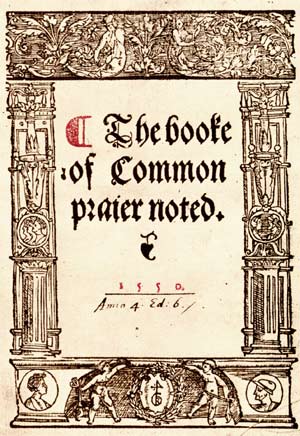
Possible New Prayer Book. . . too new???

Apparently the Episcopalians are thinking of updating the Book of Common Prayer (1979) and we got a brief preview of what that book might look like from The Rev. Ruth Meyers, Hodges-Haynes Professor of Liturgics at Church Divinity School of the Pacific since 2009 and the one who led the Standing Committee on Liturgy and Music from 2009 to 2015.  You can read about it here.

Meyers urged continuing use of “expansive language” for God, including a return to “more concrete images of the Bible and the liturgy” in place of the arcane philosophical language of the fourth-century creeds. The texts of the 1979 book, while using a more inclusive language for humanity, are “overwhelmingly masculine in language and imagery.”

She described the Nicene Creed as “a stumbling block for many,” and wondered if a creed is necessary during the Eucharist, given the Great Thanksgiving’s robust affirmation of God’s work in Christ. The use of modern creedal texts alongside the Nicene Creed might be a creative opportunity for engaging worshipers.

She also commended a proposal of allowing communion of the unbaptized only as part of a congregation’s coordinated evangelistic plan, oriented toward growth in discipleship.

While it is good to hear the desire to return to concrete Biblical images it is certainly a foreboding statement that the language of the fourth century creeds is arcane philosophical language that ought to be replaced or that modern creedal texts (whatever they are) should be used alongside the Nicene Creed.  As an aside, creeds are not there to engage worshipers but to confess the orthodox faith.

And then there is the desire to commune the unbaptized.  We have heard rumblings of this in the ELCA so it is not surprising that we would encounter it in the Episcopal Church (a full communion partner of the ELCA).  That said, it is the most serious breach of faith with catholic doctrine and practice to suspend baptism as the primary requisite of those admitted to the Lord's Table.  Certainly those who would follow this practice are separating themselves from the historic shape of Christian teaching and life to the present day.  But then these are the same bodies who have fully welcomed GLBT folks and already distinguished themselves from those who went before them.

Just a few thoughts as a church body is prepared to update the Book of Common Prayer, for a church body that once defined its unity more or less by the BCP and less by the faith confessed in it.  So we have no reason to doubt that the liturgical changes Meyers spoke of either portend or reflect the changes in belief that have already taken place.

Praise and worship?


A Roman Catholic wrote about praise and worship music and highlighted some of the presuppositions about praise and worship music that need to be challenged.  I have adapted his list for our own church but he is clearly on track.

  1. P&W music assumes that praise is worship.
  2. P&W music assumes that worship is principally something we do.
  3. P&W music assumes as its [primary] principle relevance.
  4. P&W music assumes as its second principle the active participation of a certain age group.
  5. P&W music self-consciously divides the Church into by such things as age and personal preference.
  6. P&W music subverts the Biblical and liturgical texts of the lectionary and Divine Service.
  7. P&W music assumes that the church's liturgical tradition is not an integral part of our doctrine.
  8. P&W music focuses more consciously on emotions and uses this music as a tool to produce a setting seen as necessary for spiritual conversion.
  9. P&W music focuses more on the present moment and seems to equate transcendence with feeling or sentiment.
  10. P&W music tends to focus on individual interpretations of what happens in worship and less upon the larger assembly, the unity of the liturgical songs of the Divine Service and the roles of music to speak confessionally of what we believe and teach.
  11. P&W music values simplicity and ease of comprehension over the rich, deep, and full appreciation of the mystery of Christ's presence in the means of grace and the fuller doctrinal confession intrinsic to the lectionary and the use of primarily liturgical texts.
You can argue about his conclusions or mine own adaptation of his list for Lutheran use but I believe he is pretty much on track.  Praise and worship music is certainly an ecumenical phenomenon and this is both one of its strengths and its primary weakness.  It is difficult to use praise and worship music in sacramental and non-sacramental churches without that music being intentionally vague or devoid of the specific doctrinal confession inherent to the classical Lutheran chorale and the songs of the liturgy.

You can read his words here and this might spark a discussion, a healthy one I believe, and this would be good thing.  For Lutherans, the worship wars continue and the biggest hot spots are in the areas of the music used in worship -- both form and text.  If we take worship seriously, we will not short circuit this discussion but will work through it deliberately and carefully.  Worship is so important that it deserves nothing less... 

Sunday, October 11, 2015

Jesus eats with sinners; he does not sin with sinners.

Ooooh what a great line!  Jesus does indeed eat with sinners but He most certainly does not sin with sinners.  Therein lies the rub.  On the one hand we hear the drumbeat of people who insist that Jesus must accept them as they are -- faults, foibles, and fetishes -- or not at all.  These are the folks who claim desire defines them and such desire is natural and if natural then divinely sanctioned.  What kind of God would plant such desires in them only to condemn those same desires and the people who act upon them?  A missing understanding of original sin screams from such a perspective!

On the other hand, there are those who somehow or other look down their noses at ordinary Christian folks who go to Church, confess their same, tired, old sins, receive the Sacrament, head home and do battle with the same weakness before temptation all over again.  Somehow or other these folks (once thought to be the bread and butter folk of Christianity) are less than spiritual because they live within the parameters of repentance and faith, prayer and piety, sin and forgiveness day in and day out.

There is something wrong with using our inclinations to evil to define us. They do not make up who we are nor are they are true or real personalities. Inclinations to evil are impediments to us and they distort who we are by God's intention and design. What problems we have when we own the desire as the defining mark of who we are as people.  When a person has stolen he is not defined chiefly as a thief -- as a sinner, yes, but not as a thief alone.  So when are person has desires not in accord with God's creative purpose and will, there is something wrong in taking those desires and using them as the blanket identity that marks who they are as people -- the lens through which who they are is revealed to the world. 

Of course we are tempted.  Of course temptation exists and preys upon even our most basic desires -- food, love, etc... No one is saying that we are not tempted or that this temptation preys upon the most basic of our desires.  But when we define ourselves by those desires we transform the disorder into the new norm and we make what is a mark of our fallen humanity into something good and even fortunate.  It them becomes necessary for everyone around us to affirm those desires (no matter how fallen) and even Jesus must bow before the altar of our desires and affirm who we are.  He must not only eat with us but join with us in our sin.  But that is exactly what Christ cannot do.

That He eats with sinners is grace pure and simple.  But that He refuses to sin with sinners is also grace -- the grace that calls the forgiven to go and sin no more.  The grace that refuses to allow sin to rule our mind, heart, and senses.  The grace that insists we are defined by more than our desires.  The grace the meets us where we are as sinners but refuses to leave us there -- poor, miserable, and without hope or help.

So the Church in her witness to the world must follow Jesus.  Like St. Paul who said he became all things to all men in order to save sin, we must eat and drink with sinners.  But also like St. Paul, we cannot taste of their sins in order to redeem them.  We must maintain the integrity of the Gospel.  Augustine recounted his misspent youth but did not whitewash the glory of his debauched life.  God meets us at our sin but does not participate in that sin.  He wears its shame, carries its guilt to the cross, dies to pay its awful price, and then freely bestows the forgiveness won by His obedience to the disobedient and unworthy sinner.  When we stop seeing sins as sin, then Christ is no longer Savior and Redeemer.  Jesus eats with sinners but does not sin with sinners.  Thanks be to God!

Saturday, October 10, 2015

From blessing to bane

I am old enough to remember when people did not have a telephone in their homes.  These were folks who were not so sure about the real benefit of having their home connected to the outside world via a machine that mysteriously brought the human voice into the quiet of their kitchens, living rooms, and bedrooms.

My grandparents lived on a party line when they determined if the call was for them by the number and length of the rings the phone generated.  It was not uncommon to have people listen in uninvited to the party line which was, in reality, the way a world could gain access to your most guarded words.

It did not take long and nearly everyone got a phone and the party line gave way to the rotary phone with a dial that eliminated the job for Mrs. Johnson who was central or the operator for the town.  In the end we could not put off the enticing idea that we could transverse miles in a moment and speak to people far away as if they were right next to us.

It was still expensive.  So when I went away to college I was cautioned by my parents not to call home unless it was really necessary -- it did not have to be a bona fide emergency but it had to be a serious reason to pick up the phone, call collect, or drop the change into the payphone to cover the cost of those precious minutes choking back tears of homesickness or finding the courage to ask for a couple of spare bucks.

All of those are merely memories now.  More than that, they are antique memories of a quaint but, by most accounts, foolish era.  In the beginning the ring of the telephone was a harbinger of excitement -- who was calling, what was the news, and why was it so urgent.  We were happy to have a meal interrupted by the prospect of an uncle calling from far off Seattle.  But soon the phone was seen as a blessing not without its cost.  The intrusions were less and less welcomed and the sound of the phone ringing became something you complained about and resented.  Now we check the caller ID to see if we will answer and even if we know the caller we might put off answering until later.  The phone is no longer an open door to a familiar voice.  No, we do other things on our phones that have replaced talking to people.  And nobody can remember the days when phones hung on walls, had coin slots on them, or cost you by the minute.  Now we carry them around as gadgets supposedly for our personal pleasure.

Texting, surfing the internet, catching up on social media, tweeting, looking at instagram, playing games, listening to our favorite tunes, and watching movies have replaced the conversations that once were so treasured.  When we do talk we don't know what to say except "where are you" or "whatcha doin."  Having a phone handy for texting or social media often means that arguments continue unabated by distance and unaffected by circumstance and often be made public.  I have noticed that the more we use text or social media, the harder it is to detect the tone in the voice and decide whether or not to be offended or concerned by the remarks.  Perhaps we instinctively choose to be offended yet the sound of a real voice and, better yet, the look of a person's face can tell you as much as their words.

In the realm of the church we use all sorts of media to communicate with our people but the central means by which we all connect is sitting together in the pew, hearing the Word of the Lord, adding our voices to the assembly in song, creed, and prayer, and extending the sign of peace.  There is something inherently foreign to the nature of the Church in the ways we have come to communicate or stay abreast of things.  That does not even address how the way we use our phones has shifted our focus exclusively to the immediate, to the present moment almost in isolation from past or future.

Technology has a way of being blessing that becomes bane, of gift that comes with a cost we are less and less sure is worth paying.

Friday, October 9, 2015

Faith by osmosis is dead. . .

Every now and then I encounter a line I wish I had written.  This is such a line.  Faith by osmosis is dead.  If ever there was a time when cultural Christianity would prove itself unable for the task, this is that time.  Where we might have gotten away with a less rigorous, more nuanced, and even habitual faith, our age demands much more from us.  We must be ready to give answer for the hope that is within us -- even within our homes and among our family members!

Parents cannot wait for the Church to step up to the job of catechizing their children.  They must do a better job at home and by example.  The Church must not allow catechesis to be simply one course and must call the people of God to a lifelong journey of catechesis in which there is no end in sight until God calls us home.  Repentance will need to be more than a church word but a personal word that defines our daily lives within the faith before the Lord.  Our witness must be more deliberate and oblique references to the faith will not suffice.

We have lived too long with a lukewarm, pick-and-choose style Christianity.  This kind of faith will not long survive in a world where contending for the Gospel will certainly come at some cost.  If we are going to be Lutheran, we will need to be real Lutherans -- the kind who take our Confessions seriously, who speak according to the Catechisms, and who worship like Lutherans on Sunday morning.  Any other kind of Lutheranism will surely not survive the pressures of the unfriendly culture and political wilderness that appears on the horizon. The old kind of Lutheranism that was Protestantism with a twist will not survive.  We will need to distinguish ourselves not as the fearful whose goal is to survive but as the confident who believe the promises of God and who see with eyes of faith the outcome of the faith and our own future.

I am NOT talking about ramping up the excitement or the enthusiasm but about taking seriously the Word of the Lord, His action and work in the means of grace, and the intention to be the Body of Christ.  We have seen much of what we thought were friendly elements of the cultural and political landscape turn against the Lord and His Word.  That we have had our eyes opened is not a bad thing.  It is a good thing to be awakened from our complacency and to be renewed and refreshed in our baptismal identity.

The Law is not the only thing that is offensive.  The Gospel is as well.  Both offend the climate of a world intent upon pleasure at any cost and preference as the supreme and highest value.  It is shocking to speak a Law which always accuses, always convicts the sinners as to his sin, and always closes the door to self-righteousness.  It is shocking to speak of a sinful people so mired in death that they cannot free themselves, that God must become His people's Savior, that salvation is born of suffering and death, and that the freedom this Gospel bestows has a higher calling than selfish desire and self-expression.

The Church has always been a missionary enterprise -- even though it is true we have tried to forget it.  Maybe the persecution of God's people for righteousness' sake and the suffering of a people for the sake of Christ will distract us enough from the moment to see more clearly the eternal future God has prepared for us.  Maybe the worst thing for the Church and the kingdom is not a war with a culture unfriendly to virtue or to the values of the kingdom.

But do not fear and do not lose hope.  We are not fighting a losing battle when we fight the good fight of faith.  The victory is already ours -- hidden and not obvious to the eye or to the mind.  We see this victory in the cross where sin was claimed and killed, where death itself died, and where life was born never to die again.  We see this in baptismal water churning with the breath of the Spirit to grasp hold of and rejoice in this eternal life.  We see this in bread that hides Christ's body and the wine that hides His blood -- only with faith can we taste Him and rejoice in His goodness.  We hear this in the Word that is not symbol or mere historical record but living voice that speaks and reclaims, that addresses and restores the lost to life and the unworthy to an alien righteousness gifted to us in Christ.

Forty-six years ago the man who would before Benedict XVI wrote:  From the crisis of today a new Church of tomorrow will emerge—a Church that has lost much. She will become small and will have to start afresh more or less from the beginning. She will no longer be able to inhabit many of the edifices she built in prosperity. As the number of her adherents diminishes, so she will lose many of her social privileges. In contrast to an earlier age, she will be seen much more as a voluntary society, entered only be free decision . . . But in all [this] . . . the Church will find her essence afresh and with full conviction in that which was always at her center: faith in the triune God, in Jesus Christ, the son of God made man, in the presence of the Spirit until the end of the world.  (Faith and the Future)

We live in a world where the last vestiges of the sacred are being stripped away from the culture, when faith is being challenged and rejected even by those who claim to be in the midst of the Church, and when the sacred character of life is discarded for a utilitarianism that serves the whim and desire of the moment.  But the Lord will not abandon us and the cause of Christ will not be overcome.  We shall overcome.  Do not fear.  He is faithful.  He will do it.  What we judge impossible, He will bring to pass.  Do not grow weary of well-doing.  Do not given into bitterness and anger.  Perhaps now we see more clearly than we have for a very long time the nature of the battle, the stakes of the warfare, the urgency of the cause, and the victory of Christ which will not disappoint us!

Thursday, October 8, 2015

A few thoughts about courage. . .

Caitlyn Jenner accepted the Arthur Ashe Courage Award in July of this year.  It sparked a discussion that continues about courage, about the transgender issue, and about Jenner.  Jenner is remembered by people of my age as the Olympic hero whose image adorned Wheaties boxes and whose exploits as an athlete inspired a nation and a world.  From now on Jenner will be remembered more as a celebrity whose life intertwined with the Kardashians and who surprised the world by coming out as transgendered individual.

In one sense Jenner's life has been relatively easy.  The success hard work provided and its Olympic gold reward propelled Jenner into a life of fame and made celebrity status first possible.  The notoriety of the Kardashians made Jenner into a famous (or infamous) member of the cult hero clan so well known as a media phenomenon more than for any particular achievements.  Jenner was recognized  for courage but that courage was made easier because of the privilege of wealth, fame, the many available media platforms and all of the other advantages that Jenner has enjoyed along the way.  I do not mean to express sour grapes but the fact is that Jenner's courage came at far less a cost than many, many others who have not been so recognized.

Yes, it did take some courage to come out and Jenner exploited the moment fairly well.  But the kind of courage Jenner is being recognized for is a different kind of courage.  Those who have shown their courage by their willingness to sacrifice for the sake of others are not quite the same as those whose courage led them to be true to themselves despite what others might think.

Certainly Jenner is correct in noting that in the acceptance speech about transgenders: “They’re getting bullied, they’re getting beaten up, they’re getting murdered, they’re committing suicide.”  No one should be happy or smug or content  by the pain these folks are enduring.  Yet, on one level we must admit that it is a choice -- a choice to make one's gender identity the chief component of their identity.  I am uneasy about the idea of basing your whole identity on desires (as I have expressed here before) and I am also uneasy about equating the GLBT liberation movement with the truly heroic and courageous figures in history whose lives have been sacrificed for the sake of others.  It is one thing to face the consequences of your decision to make the world see you in your terms and it is something different to endure the consequences of your race (not your choice).  Hardly any Black Americans had a choice about being known as Black but nearly every GLBT has a choice about whether they will make their sexuality the defining lens through which the world must see them.

Just a few weeks ago we heard the courage of three Americans who fought a terrorist on a train and prevented many lives from being lost.  We just remembered the fourteenth anniversary of the terrorism that took down the World Trade Center towers and the courage of those people who ran into the buildings to rescue those inside.  We are constantly surrounded by the courage and self-less attitudes of quiet heroes who choose others over themselves day in and day out.  Yes, GLBT people fight all sorts of judgments against them (some fair and many not) but it is easier to be GLBT today than about any other time in history.  They have the law of the land on their side (including when it comes to marriage).  All I am suggesting is that this kind of courage is not the same kind of courage as those who step in harm's way for strangers all the time -- the police who protect us, the firefighters who risk their lives to save us, the disaster workers who run toward the ruin we run from, the soldiers who continue to pay the cost of our freedom with their lives, etc...

Funny how we honor Jenner for being true to self in being publicly known as transgender but the baker who chose not to make a wedding cake is vilified and told to hide their true self.  If being true to yourself is what makes you a hero, that heroism is something different than the courage of those who risk all for the sake of others. My point is not to trash Jenner but to suggest that the courage to come out is a different kind of courage than those who put self in the background to put others first.  I don't think we should forget that.  Some may label me a hater or blind but that is why we live in a free country.  The courage of Jenner has been deemed worthy of notice and honored with an award.  It is their award to give.  Just don't forget the courage of the unsung heroes whose selfless service enriches the lives of all people -- often at the cost of their very lives!

Wednesday, October 7, 2015

It had to come sooner or later. . .

Same sex marriage is legal, but causing controversy in a local Lutheran church. The Senior Pastor at Messiah Lutheran in north Fargo just resigned after feeling pressure from his parishioners for not performing same sex marriages. 

Messiah Lutheran is a part of the Evangelical Lutheran Church in America (ELCA). The ELCA does not condone nor endorse same sex marriage.

Messiah Lutheran Pastor Steve Berntson told his church Sunday he would be resigning after months of difficulty since the legalization of same sex marriage. Berntson stated his views in June to his nearly 1,000 worshipers at Messiah. "Based on what the scripture says about God's design for marriage I would not be able to participate or officiate same gender weddings," said Steve Berntson.
Berntson says he decided to step down since his view differed and caused a riff. . . 


"It does strike me sometimes how little tolerance in certain circles there are for people with biblical views. That has kind of struck me in the midst of all of this," said Berntson.

You can read more about it here. . .

We are not told if this involved a specific couple but clearly the issue reveals the hollowness of the so-called bound conscience idea that supposedly gave cover to those who disagreed with the ELCA decisions.  Bound conscience does not prevent this issue from dividing a congregation in the same way it has divided the ELCA (and led to a bleed off of some 1,000 congregations).

Another proof of Neuhaus' law:  "Where orthodoxy is optional, orthodoxy will sooner or later be proscribed."  The Biblical and historic Christian view until the last few years was dominant and now it has become, in some churches, a minority that cannot be tolerated.  Proof again there are none so intolerant as those who claim liberty and diversity.


How IVF and our reproductive technology devalues women. . .

A growing number of clinics in the United States now offer a controversial service called “family balancing” or “nonmedical sex selection.” Fertility Institutes, a network known for sex selection services in Los Angeles, New York, and Mexico City, says nearly 90 percent of its clients have no medical fertility issues, but instead come from the U.S. and abroad to ensure their next child’s gender, The Wall Street Journal reported. For about $18,000, the clinic offers parents a 99.99 percent guarantee of their chosen gender and evaluation of all 46 chromosomes in the embryo for genetic disease.

The process, legal in only a few countries including the U.S. and Mexico, combines in vitro fertilization (IVF) with genetic testing to guarantee accuracy. Couples undergo IVF—the woman’s eggs and her partner’s sperm are used to create embryos. Instead of implanting right away, the embryos are first tested using preimplantation genetic diagnosis. The test is often used to determine if an embryo has any genetic diseases, but it also identifies the sex of the embryo. In the sex-selection process, only the embryos of the desired sex are then implanted in the woman.  Read the rest here. . .

I suppose we might say that if people are paying the freight for the cost of reproductive technology, they ought to get what they want (what they are willing to pay for).  The reality of this is that the vast majority of choices are made to select male embryos, not female.  So what about those not chosen or found to be of the wrong sex?  The conceived embryos of the “wrong” gender are discarded or indefinitely frozen.

Hmmm... another case in which the fruits of feminism, the power of choice, and the privilege of technology has worked against women instead of for them.

Tuesday, October 6, 2015

Rulebook rightesouness and marriage under the cross.

Sermon for Pentecost 19, Proper 22B, preached on Sunday, October 4, 2015.

    In 1969 then Gov. Ronald Reagan signed into law the first no fault divorce.  Prior to this legal grounds of guilt had to be laid to set aside a marriage. Within 15 years every state US had followed California’s lead.  It seemed the perfect solution, nobody was wrong and everyone got what they wanted.  We knew it was legal and we thought it was moral.  Now a court has redefined marriage so that it includes at least same sex couples and maybe more.  From this point on, I am sure to upset some folks by what is said in this sermon but all of us are vulnerable here.  And so it was when some folks asked Jesus a question about divorce so long ago.
    We want to know also.  Is divorce okay?  Is homosexuality okay?  Is living together okay?  Jesus refused to frame the answer about who is okay and who is not. Instead, Jesus reminds us what is God’s will and purpose in creation.  Jesus turns us not to the broken pieces we see after the fall but to the intention in God’s design.  God created male and female and ordered their life in such way that they were not consulted but discovered the joy of His purpose and design.
    The Pharisees approached Jesus not from the perspective of what God willed but what rules permitted.  Though He was asked about rules Jesus answered with another question about design: WHY did Moses command and why?  It was not what they asked but it is the key to understanding Jesus’ words.  Moses did not permit divorce but Moses did regulate it.  There is a difference.  Moses regulated what had been done for the sake of protecting both the people and the very idea of marriage itself.  The concern of the Pharisees was simple.  What rules do we have to follow to get what we want.  They confused their own happiness with God’s will and forgot that their will had not resulted in the happiness they desired.  They did not want righteousness; they wanted to justify whatever they thought was good or right.
    If they followed the rules to do what they wanted, they assumed God was happy.  In other words, as long as the letter of the law was kept, you could keep your hard heart and God put His stamp of approval on you and what you did.  Jesus refused to frame righteousness or a clear conscience on rules or best efforts or good intentions.
    Jesus’ concern is not justifying the rule keepers but calling sinners to repentance.  Jesus directs us not to take comfort in the fact that we followed all the rules, dotted all the i’s, crossed all the t's or did our best, but rather that we repented of our sins, we trusted in the mercy of God, and we are forgiven.
    So what is marriage --before sin screwed it up?  God created man for woman and woman for man.  Adam found this out when he named all creatures but found no one like him and Eve found this out when Adam exclaimed that this at last is bone of my bones and flesh of my flesh.  This marriage was not merely given to us but we were created for it. It framed our very identity; it mirrored God’s own creative love in providing children. Be fruitful and multiply was not a choice but a command, the first Great Commission.  Love always bears fruit.  This fruit for husband and wife is the flesh and blood of children. 
    When sin entered the world, it corrupted marriage.  Adam looked at Eve and felt guilty and Eve looked at Adam and felt the same guilt.  Desire distorted God’s gift and left us captive to our selfish desires.  Yet God did not walk away from us nor did He relieve us of His purpose and plan in marriage.  He did, however warn us, that the very things we desired would come at great cost to us and love would require us to sacrifice the very desires that made marriage pleasing to us.  And He taught us the love that repents and forgives.
    As we approach the Gospel for today, we ask ourselves what is God’s purpose and plan?  Has it changed?  In the end, God must now protect us not only from others who wish to harm us but from our desires soiled with sin.  And He must challenge our vain attempts to cover our sin with His approval by appealing to rules or best intentions.
    The trouble is that we look at marriage much like the Pharisees of old.  Follow the rules, do your best and you can have a clear conscience and be happy.  What we seek from God is His approval of our desires and not instruction in love or marriage.  So now it does not matter if you just tire of your spouse or your marriage is broken by adultery, we rush to find refuge in the rules or our intentions  Jesus speaks harsh words to us.  Rules do not create clear consciences.  Repentance and forgiveness do.  The answer to the question is always the same.  Confession and absolution.  This is where new marriages begin and where old marriages end.  Not with rule book righteousness but with Christ’s righteousness, purchased upon the cross and given freely to sinners.
    If you are married, Jesus is to be the middle between husband and wife, leading you to repentance and teaching you forgiveness.  If you are divorced, your comfort is not that you gave it your best shot but that God forgives sinners who repent.  Sin has left us with no innocent parties and no appeal to desire can create a clear conscience.  We are all called to confess our sins and trust in the mercy of God in Christ.
    As a nation and people we have tainted marriage by separating sex from love and commitment, we have laid upon our spouses the impossible burden of making us happy, we have made children an unessential option to marriage, and have decided that marriage is just definition and desire -- and nothing more.
    So our Lord calls us to set aside the desires that rule our hearts and to give up a righteousness of works and, like a child, trust in God’s Word and in His ways.  We are called to repent and be absolved, and promised here the clear conscience we seek.  Marriages cannot long survive unless a husband and wife learn to confess and forgive each other.  When marriages fail, our consolation lies not in the rules we followed or did our best but in confession and forgiveness.  This is not new but old, what has always been, from the conversation Jesus had so long ago to us today.  And the miracle of it all is that where repentance and forgiveness rule the home, God repairs our broken marriages.  Where this cannot be done, He repairs us as broken people through the same absolution to the penitent. 
    Too long we have hidden behind best efforts, best intentions or following the rules.  There is no righteousness there, no clear conscience, and no contentment or peace.  These are found only through repentance and forgiveness.  None of us are righteous; all of us are sinners.  For the sinner there is grace to absolve, heal, and restore but if you are not a sinner, there is nothing for you here.  When we learn this, then we will be wise unto salvation.  Amen

Lets get physical. . .

Reality is too often shaped only by the senses -- what we can see, smell, taste, or touch.  Often even hearing is not accorded the same grasp of reality as what the eye beholds, the nose smells, the tongue tastes, or the skin feels.  Even for Lutheran Christians, physical reality is too often limited to the what the senses perceive.  So it is easy for Lutherans to approach the presence of Christ in the Sacrament of the Altar with a sort of high church Protestant view.  Many do not find much difference between Luther, Calvin, and Zwingli on this issue and so some Lutherans (the ELCA) have made eucharistic concords with groups that have not recognized or defined Christ's presence the way Lutherans have and do.  It is not church dividing -- at least so say those who believe the presence is more in the eye of the beholder than in the bread and wine.

Therein lies the rub.  Lutheran spirituality often tends to be Word oriented (and ever more feeling based) instead of the classical Lutheran orientation in the means of grace.  Lutherans buy popular books by evangelical authors and do not find in them much different from their own estimation of things -- especially in the area of sacramental theology.  But we have ended up drifting away from the vibrant sacramental understanding of our Confessions and from the robust baptismal and eucharistic spirituality of our forbears.

Nowhere does this become more evident than in the way we approach the presence of Christ in the bread and cup.  Having grown up in an era when some of our pastors had been taught and turned out somewhat receptionist in their thinking, there is not much of the sacrament when the real presence seems tied to the moment of reception.  Never mind that the Confessions are clear that the Body and Blood of Christ are distributed and eaten and drunk.  It is safer to confine Christ's presence to the moment of reception.  Then you do not have to deal with the messy issues of dropped hosts or spilled cups or reliquae.

Then there are those who insist that the presence of Christ is spiritual only.  In our fear of munching on flesh and bone we have shied away from the idea that you are chewing on the flesh of Christ.  In this respect it has become for some an unnatural eating and drinking that happens not with the lips or the mouth but with the mind and heart.  It is definitely less messy to feed on Christ by faith in thine heart than it is to deal with such things as consecration, real presence, spills, and leftovers.  Never mind that the Formula of Concord insists that Paul teaches not only the sacramental union, but also a physical union, namely, that the communicants receive the body and blood of Christ orally (manducatio oralis ), and that the unbelievers truly receive the body and blood of Christ  (manducatio in- dignorum) (SD, VII, 60). To be sure, the Confessions attempt to avoid misunderstanding, and distinguish this "oral  or sacramental eating" by saying that it is not a "coarse, carnal Capernaitic manner, but in a supernatural [above nature], incomprehensible manner" (SD, VII, 63; cf. also 127; and Ep., VII, 42).

As Herman Sasse put it:  Luther was right when he indicated that it is impossible to understand one part of this explanation literally, [and] another part figuratively. One cannot say, “take and eat” are to be literally understood, “this is My body” is figuratively to be understood, and “for you” is again to be literally understood. These words are a unit; they are the gospel itself.

Lets get physical.  Lutherans may disagree with the explanation of that presence that Roman Catholics use (transubstantiation) but we also refuse to be defined as holding to consubstantiation.  We are bound by the Word of Christ who insists that His flesh is real food and His blood is real drink and, as St. Paul insists, that such eating and drinking is a full participation in the body and blood of Christ.  We do not locate the moment of the consecration and Christ's presence to a syllable but to the Word.  We insist that the Sacrament is neither given for nor can we have confidence in Christ's presence without the intention to complete the usus (eating and drinking) and therefore we do not adore Christ in the elements outside the Divine Service as a substitute for the eating and drinking which Christ commands in His Word.  We

The Lutheran Confessions affirm, "[Christ] was speaking of his true, essential body, which he gave into death for us, and of his true, essential blood, which was poured out for us on the tree of the cross for the forgiveness of sins" (Formula of Concord, Solid Declaration VII, 49). In the SD VII, 75 it says, “The true and almighty words of Jesus Christ which He spake at the first institution were efficacious not only at the first Supper, but they endure, are valid, operate, and are still efficacious so that in all places where the Supper is celebrated according to the institution of Christ, and His words are used, the body and blood of Christ are truly present, distributed, and received, because of the power and efficacy of the words which Christ spake at the first Supper.” And to our contention that the bread remains with the body and the wine with the cup, we turn to our common history for voices to affirm that which transubstantiation rejects: Certainly the sacraments of the body and blood of Christ are a divine thing, through which we are made partakers of the divine nature; and yet the substance or nature of bread and wine does not cease to be.-- Pope Gelasius De duabis nature. In Chr. Adv. Eutych. Et Nestor. Patrology IV, 1:422

The Lord's Supper was instituted for us Christians to eat and to drink.  Our confidence in Christ's presence in and with the bread and the cup is based upon Christ's solemn word and promise (Words of Institution).  We do not speculate about how or attempt to define the nature of Christ's presence except to say what it is not and what it is as Scripture tells us.  We refute those who would dilute the Sacrament by spiritualizing what takes place and we refuse those who would dilute the Sacrament by deriving benefit from anything other than the eating and drinking of the faithful as Christ clearly says.  Christ's presence is real, it is physical, it is located in the bread and wine (not the believer to the exclusion of the elements themselves), and it is a full koinonia in that body and blood of Christ where we receive the forgiveness of sins.

To quote a beloved father, St. John Chrysostom, the fourth-century Doctor of the Church: Let us submit to God in all things and not contradict Him, even if what He says seems to contradict our reason and intellect; let His word prevail over our reason and intellect. Let us act in this way with regard to the Eucharistic mysteries, and not limit our attention just to what can be perceived by the senses, but instead hold fast to His words. For His word cannot deceive.

We Lutherans are guided too much by our fears of being misunderstood or sounding too Roman Catholic so that even the very words of our Confessions become alien and strangers to our voices today.  This problem keeps us from knowing and enjoying the full, rich, and blessed gifts which Christ gives to us in this Holy Sacrament.  We sometimes sound as if the real absence would be easier for us to deal with than the blessed Real Presence of Christ who does what He promises and delivers to us what His Word insists for us, for the forgiveness of our sins, for the strengthening and nourishment of His new life in us by baptism, and for the seal of our eternal life which this Eucharist anticipates.


Monday, October 5, 2015

A sad demise. . .

North Heights Lutheran Church in the Minneapolis/St. Paul area, once among the mega church stars of Lutheranism with nearly 4,000 in attendance, nearly 10,000 members, and some 8 sites, has entered a period of decline with turmoil among leaders.  Their Senior Pastor, Morris George Cornell Vaagenes, was an ELCA clergy who led them through much of their peak years (starting in 1961).  He also directed their foray into the Charismatic Movement and published a number of books about Charismatic Renewal.  It was always a bit of an odd duck among the ELCA congregations with its emphasis on the Spirit and its association with Charismatic Renewal.  In fact, when they left the ELCA they did not join any Lutheran jurisdiction but are only affiliated with the Alliance of Renewal Congregations.

You can read about it all here. . .

One of their staff pastors and the one listed as Interim Leader, has spoken about the 70 life span of a congregation and the prospect of being reborn.  This is a hopeful spin on a story filled with disappointment, pain, and bitterness.  The point here is ampilifed by the fact that, typical of mega churches, this is an independent congregation and there is no real denominational leadership to assist them in their strife.  Now they are down to some 1,300 - 1,600 in attendance (depends on who is reporting) and have laid off the majority of their paid staff, closed satellites, and hunkered down to figure out if this parish has a future and what kind of future that might be. . .

They are advertising for a Senior Pastor so some of you might apply?!? 

My purgatory. . .

Clergy meetings are normally my idea of purgatory.  Not all of them, mind you, but many of them.  They drag on and seem without purpose or goal.  We pray for them to end and expect to endure them longer than we think we should.

Perhaps one of my biggest complaints is that these meetings too often have a distinctly practical emphasis that is, in reality, not all that practical.  We are inundated with ideas on how to raise more money, how to fill the pews, how to increase the Sunday school attendance, and how to get with the times (usually something referring to technology).  I should suppose that it would not be all bad to increase offerings, to have more folks in the pews, to find more kids in Sunday school, or to use the many forms of technology and media more effectively.  But we too easily forget that the Church grows through the means of grace and not through programs that come and go.

I have been a pastor long enough to remember a host of acronyms for programs introduced at over hyped pastor meetings -- nearly all of which are now forgotten and probably rightfully so.  In that same amount of time I can recall fewer agendas in which the subject was given over to the eminently practical stuff of the leadership of the liturgy, the preaching of the faith, the teaching of those new to the faith or of youth, or the subject of prayer.  Whether they were directed to the pastor as an individual or to his role within the parish, the times when clergy have been gathered to be instructed in their basic duties or schooled in the skills related to those duties have been too few.

This is not always the case but it is more often the way clergy meetings are.  I will admit that even though I have been a pastor for 35 years, I need to continually be nourished in the liturgy, nurtured in presiding, challenged by and equipped for the preaching task, helped with the major task of teaching the faith to the faithful and those not yet of the faith, and my own personal piety as well as aiding the people with their piety and lives of good works and mercy works.

Pastors face the same struggles in the daily living out of the faith that our people do.  Wouldn't it be great if we were prepared by others to meet these challenges and struggles and this, in turn, helped us to equip those in our care to meet these challenges and struggles?  We spend a lot of money and we expend a great deal of precious time on clergy meetings.  It would help all of us if we made sure that these meetings were focused and faithfully directed to us and to the essential tasks and challenges of the faithful living out the faith.  Not really a rant here but a sigh.  I thought Lutherans did away with purgatory.  Perhaps we merely shifted the burden from laity to clergy.

Sunday, October 4, 2015

Guinea pigs. . .

For too long Sunday morning has been seen as a setting to try new things.  I am not here speaking of the restoration of old things long forgotten or those things set aside in fear of being who we are.  Rather, I am addressing the kind of liturgical experimentation in which we try out new things to see how people like them.  The age of liturgical experimentation began in the 1960s and proceeded full steam through the 1970s.  At some point folks might have expected that the publication of new hymnals might have slowed the pace of change but they appear to have been wrong.

Lutherans in particular are guilty of carrying a certain amount of angst or insecurity about how we appear on Sunday morning.  Lutheran pastors are often apologetic about the liturgy as if it were some weird uncle in the family that new people must be warned about.  We are self-conscious about ceremonial as if the worst possible thing on earth would be to be judged Catholic (in the Roman sense of that term) and so we gladly forego the catholic (whole, complete, universal sense of that term) that our Confessions claim just so people won't get the wrong impression.  But I have complained about this here too many times.

My point is that there is something wrong when we treat the baptized people of God like guinea pigs or lab rats upon whom we are free to experiment.  Again, this is NOT the same thing as restoring Lutheran liturgy to those among whom it has been lost.  What I am speaking about is the practice of borrowing from Evangelicalism the latest and greatest trends and fads and then trying them out on our unsuspecting people to see if things improve, change, etc...

Lutherans seem intent upon shopping in the aisles of the big box Evangelical establishments for books, songs, worship forms, and preaching techniques.  Even those of us who condemn it are subtly influenced by such.  We have lost confidence not only in ourselves but in the means of grace and seem to think that if we tinker with the mix of songs and actions and sermon styles we will find the formula for growth and we will be able to raise our heads high once again.  Meanwhile there are Lutheran people who come to church on Sunday morning not knowing what they will encounter.  Some come with a certain sense of fear and foreboding but others come because they are delightfully curious about what the pastor or worship diva will do today.

Why do we think it is okay to inflict our own angst as leaders upon the assembled people of God?  Okay, some of us as pastors and worship leaders may have preferences or suspicions against the shape of Lutheran piety on Sunday morning.  I get that.  But why do we think we have the right to inflict them upon the people of God?  Such honesty with the flock is inherently dishonest and disingenuous. 

I have heard Lutheran pastors joke about wearing robes (which we do not; we wear vestments) or snicker about how old fashioned they think the liturgy is or who lead worship as if the liturgy were a straight jacket upon their wonderful creativity and sparkling personality.  It grows wearisome for me, the occasional visitor, but what does it do to the people who hear it or see it week after week?

Pastors -- do not treat your people like guinea pigs or lab rats.  Do not experiment on them.  Restore the Divine Service if it is missing and teach people why.  Re-introduce them to the shape of Lutheran piety with its source and summit in the Sacrament of Christ's body and blood.  Preach the Word faithfully.  Refrain from inflicting your preferences or your doubts about it all to those who have come not for these but for the Christ who comes to us where and when He has promised.  Do not preach your doubts but proclaim the Gospel so that the people may confidently look to and receive from the Word of the Lord what He has promised. 

The people God has placed in our care are worth more than our whims or our uncertainties.  They are worth nothing less than the means of grace, in full and without apology.  You undermine their faith when you do anything less.

Saturday, October 3, 2015

A majority but not enough

The Lutheran Church in Australia has taken its vote on the ordination of women and, once again, there was a clear majority (269 of 423 delegates, 63.6%) but note enough -- by less than 4% or 17 delegates.  As you may recall, twice as many lay delegates vote as clergy.  I do not know the break down of the vote on the basis of clergy and lay.  What I do know is that this is a repeat of the majority but the majority is not enough to depart from the existing practice of the LCA -- a two-thirds majority is the threshhold for change.

So let us rejoice that the super majority was not met but let us not forget that this is one more majority and that this stance rests on the fragile foundation of a dozen and a half delegates who could change their vote the next time this is taken up (and, to be sure, there will be a next time).  Let us praise the Lord that the LCA held the line for now but let us not fail in our prayers for the future.  There will be another vote at some point in time but I expect it cannot be sooner than a few years and probably will not be soon unless the supporters of the ordination of women believe that there is a change in the complexion of the delegates to make the vote passable.

The LCA is not a huge church body but it has produced some exemplary confessional Lutherans who are international figures.  We have had a faithful partnership with the LCA for many years and it is our hope and prayer that this continues and that both the LCA and the LCMS remain confessional in doctrine and practice.  That is not an established fact but a choice and a battle which we fight each day in every parish as well as in the larger venues of district, synod, seminary, etc...

God bless our brothers and sisters in the LCA!

Update. . . 

I am told the breakdown for the vote was:
Pastors in favor of WO: 63
Pastors opposed to WO: 75
Laity in favor of WO: 206
Laity opposed to WO: 70
Abstentions: 9


As is clearly noted, the majority of pastors are NOT in favor of the ordination of women but the delegates are stacked 2/3 lay and 1/3 clergy and this is where the majority numbers for changing the LCA stance has come.

Not all was disappointing, a very fine confessional pastor, Andrew Pfeiffer,  was elected Assistant Bishop (and without much of any opposition!). 

We are the products of our rites. . .

It was Churchill who famously said that we shape our buildings and then they shape us.  I know I have quoted it here before.  But it is a truth that applies equally to our liturgical rites.  We shape them and then they shape us, or, more accurately, our children and their children.  Certainly Rome is awaking to the fact that the changes made post-Vatican II have significantly impacted much more than the worship life of their church but also its doctrine and piety.  If we Lutherans are honest, we would agree that the liturgical changes of the 1970s have had a profound impact upon us and even more upon our children.

My own parish has a kind of lost generation -- some of the boomers who bought into a casual church in which the music mirrored the sounds of the radio and the participants in the rites were accorded their roles by estimations of equality and egalitarian ideals.  They have followed their ideals to their logical conclusions and now their attitudes toward the faith itself has become somewhat casual and distant.  They go when they feel like it and do not feel like they are missing much when they are absent.

Some of their children and grandchildren gave up on the church at the same time as their parents and grandparents and remain largely unchurched or underchurched.  They have come to define nearly everything by personal preference and judge everything according to its entertainment value.  On the other hand, some of their children and many of their grandchildren have rebelled against their casual attitudes toward church and worship.  They have sniffed around for authority and legitimacy in transcendence rather than relevance and the old patterns of liturgy have called them home to a place they never knew existed before.  In Rome and in Lutheranism younger folks have shown a definite affection for liturgical worship and doctrinal preaching.

Our renewed rites with their focus on the catholic ceremonies we once knew and the doctrinal certitude we once espoused have fostered a faith that, God willing, will raise up a new generation without the blinders of preference and relevance to betray them the way my own generation was.  We are the products of our rites.  Just as we grew apart from the transcendance of the Holy One and the worship shaped by awe, reverence, and transcendence, so we will grow again into a renewed understanding of the Mighty God who delivered up His only Son into our flesh to redeem us from sin's curse and its despecible child of death.  We are the products of our rites.  That very same principle which worked against us and the Lord's purpose will now become the rootes and foundation of a new generation of people who want the thing signed more than the mere sign, who insist upon the full counsel of God's Word, who believe that words mean something and that doctrine does not change or transform to fit cultural norms.  Yes, we were the products of our rites and we shall be still.

I am personally encouraged by young men coming from our seminaries expecting to be Lutheran pastors and expecting their parishes to be Lutheran in doctrine and practice.  I am hopeful that just as we were once led by a spirit at odds with our catholic identity, we will be led anew by the a spirit which is insistent upon the Word yesterday, today, and forever the same the worship which proceeds from this conviction.  That is why we must work to support those who will lead us into a new generation of faithfulness.  Sure, they will make mistakes and people will rebel against their leadership and some will raise untrue suspicion against their commitment to be fully Lutheran and confessional.  But they will prevail if we who get it support them and insist that this is who we are, who we have always been, and who we must be if we have a future.  We are the products of our rites -- both for ill and for good.  A little child shall lead them and this child begins our journey on Sunday morning.  Come, let us follow...

Friday, October 2, 2015

The humility of faith. . .

Sermon preached for the Mid-Week Eucharist using the propers for St. Michael and All Angels. . .

    Who says Pastors have no power!  By pastoral decision we rolled back the calendar to Sept. 29 so we could remember St. Michael and All Angels – all by the magic of a Pastor’s pen!  But then when you might have expected to hear the Bible talk about angels, the Gospel for St. Michael’s Day talks about children – in a mirror to what Pastor Ulrich preached about last Sunday.  So maybe another Pastor and another stab at it and we might learn something here... or maybe not.
    A child is a picture of humility until the kid opens his mouth.  Ask him.  He will tell you he is the smartest, fastest, strongest, boldest, best looking, etc. of all.  Nope a child is hardly ever humble about himself.  But there are those who are genuinely humble – who seek not their own will nor their own way but who serve at the pleasure of God and do His bidding.  A child is not humble but the myriad of angels who serve the Lord possess proper humility – something mostly beyond our reach.  We are too wrapped up in ourselves.  Even our humility is arrogant.  But not the angels.  They have no identity apart from God’s will and ways.
    They are examples of those who do the Lord’s will without question or pause.  Their joy is the joy of the Lord and their sorrow is His sorrow and their purpose is His glory.  Even at our best we are not like them.  They wait upon the Lord and watch over us.  They rejoice every time a sinner repents.  They spoke to Mary at the conception of Jesus. They sang while a world slept and God delivered His own Son of a Virgin.  They served the Lord in His weakness in the desert after Satan had tempted Him in every way.  As the Psalmist says, He has given His angels charge of you.  Not authority to bark orders to you but to care for you and fight on your behalf, hidden and unassuming.
    For some strange reason we want to become angels.  In the great mythology of spiritual but not religious, we become angels when we die.  Nothing could further from the truth and nothing could be further from what we want and desire.  Christ died for sinners and not for angels.  Why would we want to give up the most precious gift of all to become those who rejoice with but not as a sinner who repents, who rejoice when the Gospel is preached but not to them, who are ecstatic when you commune upon the Lord’s body and blood but never eat or drink, who love to watch as those outside are catechized into the faith but not them, and who are happy when you pray but they do not.
    Why would you want to be an angel when you die?  The work of the angels is to rejoice over you, sinners who repent, the dead made alive, the lost found, and the dying led to eternal life.  You are called to a different humility.  You are called to the humility of faith, the absolute trust in the Lord and in His Word that only the Spirit can give and whom the Spirit gives even to children, sinful, goofy, and self-absorbed though they are.
    For the angels the grace of God is a gift meant for another, that they can never possess or know like sinners who rejoice in sins forgiven or the dying who rejoice in eternal life or the lost who rejoice to be found again, or the weak who are made strong.  Yet they are not sad that this grace is given to you or to me.  They rejoice in it.  So don’t pine away to be an angel.  Instead rejoice to be what you are.  And rejoice that God has assigned His angels and given them charge over you.  And try as best you can to be truly humble by being truly faithful.  The best humility is not to pine away to be something you are not.  This is what the angels teach us. They are content for who they are and for you and me as sinners redeemed by the precious blood of Jesus.  It is enough for them.  Now let it be enough for you... and for me...  Amen.

Always needing a recharge. . .

It seems a common complaint that life is boring, empty, shallow...  It seems the common response to fill our lives with things that do not necessarily fill us but that do at least help us to ignore or overcome the feelings temporarily.

In our loneliness, we rush to social media of one sort or another and if things work out we might be satisfied for a while.  In our boredom we turn to our tunes and drift off into the world of our favorite music (sitting all alone with headphones or car speakers blaring).  In our sadness we are distracted by laughter, jokes, and other diversionary joy (joy that is not our own but which we borrow from whatever source we can find it).

Our longing is not for technology or recognition from peers or a smile but for meaning and purpose.  Though we delight in pursuing the answer to our longing in a variety of ways more or less meaningful to us, the longing itself is only temporarily stilled. 

We need not humor or interesting distraction but God.  Jesus has come to restore our place and purpose.  He has come to bring us back to Eden's command and promise to be fruitful and fill all things and to exercise dominion over all things on behalf of our Creator God.  We are not led away from this purpose and identity but to it and given it again after losing it by choice.  We need a God who can love us in our sins but not leave us there.  We need a God strong enough to suffer for our sins and die in our place.  We need a God who can direct us as people to a goal and purpose strong enough to rediscover our identity as gift of God.

Augustine knew the want, the emptiness, and painful routine of trying to fill it up with things ill equipped to meet our need. . . and then He knew God in Christ.  There he found the illusive rest. . . and there we will find it too.  Come to me, He says, who came for us.  Lord, help me to do just that. . .


Thursday, October 1, 2015

The meaningful life. . .

I got a piece of email recently that said Jesus wants you to live a meaningful life.  Hmmmm.  Does He?  I guess you will have to ask Him.  And you might want to define meaningful also!  Off the top of my head I am tempted to say that Jesus does not want any such thing -- at least and because of the way most of us define meaningful.  Now that does not mean that Jesus wants us to live aimless and unpurposed lives, either.  The problem lies with the word meaningful.  It is not a word used by Jesus or even found in Scripture.  It is a vastly modern word that even our ancestors a generation or two back would not have recognized or used.  But today it is a word used as if it has always been part of the vocabulary of the faith and the chief goal of the faithful.

I looked it up.  Meaningful is an adjective.  It means having meaning."meaningful elements in a language;" its synonyms include: significant, relevant, important, consequential, telling, material, valid, worthwhile. . .It implies having a serious, important, or useful quality or purpose.  So a meaningful life is a life that fulfills all of these qualities.  Surely we all want such a life.  But does Jesus want it for us?  It is significant that the word meaningful which has so filled our minds and vocabularies does not relate to the word faithful.  I am pretty sure that Jesus wants us to live a faithful life (faithful to our baptismal vocation, faithful to His Word, faithful to Him, faithful to His Church, and faithful to His work).  But I will go out on a limb here and suggest that while we all want to live a meaningful life, we are not so sure we want to live a faithful one.  Why not?  A faithful life has no guarantees of personal reward or satisfaction -- the kind inherent in a judgment of a meaningful life.  The hitch is that we tend to be the ones who define meaningful and we are the ones who decide whether or not our lives live up to that term.  Therein lies the problem.

If we get to define what is meaningful (consider the synonyms -- significant, relevant, important, consequential, telling, material, valid, worthwhile), then the single most important criterion is NOT Jesus or our new life in Him but what we think about it all.  Because of original sin, this is a problem for us.  What we deem to be significant, relevant, important, consequential, telling, material, valid, and worthwhile is defined against a distinctly personal standard.  Jesus defines all of this against Him and His Word.  So it is entirely possible, some might say essential, that what we and the world finds to be meaningful lies in conflict and opposition with the judgment of our Lord.  Let me go further to say that most everyone outside of the Kingdom believes the Gospel, Jesus, and the work of the Kingdom to be distinctly unmeaningful, insignificant, irrelevant, unimportant, inconsequential, etc...

I think it is a lie to tell people that Jesus wants you to live a meaningful life.  The truth is that we are all called to live in faithfulness to Christ where God has placed us.  Husbands and wives are to live in faithfulness to each other when marriage no longer is meaningful, satisfying or fun.  Parents are to live in faithfulness to the children God has placed in their care when caring for them is intrusive, demanding, and sacrificial.  We do not get to choose when to be faithful.  We have only to be faithful.  Anything less is sin.  Any unfaithfulness to your spouse is sin.  Any unfaithfulness to the responsibility you have to your children is a sin.  Any unfaithfulness to the work that God has called us to do is sin (yes, even going to church and supporting the church with the offerings of money and time).  Meaningful means we do them because we find them significant, relevant, important, and we do them wantingly and cheerfully.  But you do not get the choice of not doing what you don't feel like or find meaningful just because it is a burden.  That is NOT your call.  You are to live faithfully -- in faithfulness to the voice of the Law and in faithfulness to the gift of the Gospel.

You do not get to be husband to your wife only when it is meaningful to you.  In fact, the nature of love revealed by God is the faithfulness that endures the humdrum and ordinary things that accompany your marriage.  The same is true for the wife to her husband.  You do not get to act like a parent when it fits you, suits you, or is meaningful to you.  You are a parent for the down and dirty of changing diapers, helping with homework, attending your children's school and sports and musical events (ad nauseam), and for the unpleasant and life wrenching moments when you stand with them unable to fix what is wrong for them.

The most eloquent endeavors of the Christian life are usually not the ones we find meaningful but the ones in which we demonstrate to others the selfless and sacrificial character of God's service to us.  I think it is high time we got rid of that word meaningful from our vocabulary.  It has ruined too many things.  We want worship to be meaningful but discard the presence of God and His gifts in Word and Sacrament as yesterday's news.  We sigh at the mundane and routine things that we do to and for our spouses as if these had little to do with real love.  We struggle to find meaning and purpose in significant lives as if the places where we are are too ordinary and beneath us.  It is Eden all over again.  There is nothing less meaningful than a life of obedience in which the innocent dies for the guilty. But the Spirit teaches us that this is the greatest thing of all.  We want to be noticed by others and we want to think we are great (or at least thought great by others).  In the midst of it all, we have not escaped God's notice and while we were yet sinners and His enemies, Christ died for us.  In the midst of it all, we discover by the aid of the Spirit that God loves us sinful and unclean people enough to declare us righteous, clothe us with Christ's holiness, and restore to us what our ancestors once willingly abandoned.  I do not need to find meaning in my life nor do I need to find a meaningful life.  Christ is all the meaning I need and the most meaningful thing I can do is to live my life faithfully in response to Him.