Beauty is not an end in and of itself. At least not for Christianity. Beauty and goodness are always in service to the truth of God. Their power to encourage and restore the faith lie not in themselves but in their service to the Gospel. Like music the handmaid to the Word, so does beauty reflect the eternal beauty of the Gospel, giving to the eye a glimpse of the glory of God revealed in the cross and empty tomb. That does not in any way diminish the role and purpose of beauty and excellence in service to the faith. Just the opposite. The highest good is to serve Christ. Beauty and excellence find their proper role and glory in service to Christ.
But how do they serve Christ? To honor the Lord and serve the cause of the faith, beauty and excellence points to the doctrine of the faith, borne of Scripture's unchanging Word, that finds its fullest glory in the redemptive work of Christ. Lex orandi, lex credendi. Faith and prayer, worship and belief go hand in hand. Yet doctrine is not only words on the page. We learn, we confess, and we worship through signs and symbols — above all, the Church’s liturgy where the sign and symbol of bread and wine convey what they signify! The sad reality, however, is that the experience of the liturgy from the vantage point of the pews does not
correspond to the lofty words [doctrine] written on paper. This is not simply a disappointment but a challenge to the Church.
The attention given to the content and craft of the preacher, the excellence of text, music, and (in the best sense of this word) performance, and the setting with its beauty and reflection of the most noble and wondrous mystery all work together for the benefit of the Church and the witness to the world. So the work to make sure that the liturgy is beautiful to see and to hear and reverent to what takes place within the liturgy serves the mission of the Church and instills within us an appreciation for and an awareness of the the sacredness of God's mighty act of deliverance through His Son.
It would do well for us to hear more sermons on this. Frequent preaching on the liturgy and the sung Scripture that is the liturgy, how to receive the Lord's body and blood worthily, how best to prepare for our communion, the practiced skill of presiding and the various assistants (from deacon to acolyte to usher) -- all of these are fitting topics for the benefit of the people in the pews and the world watching us from afar. Church etiquette is not simply the domain of the fastidious but the way we honor the Lord. From the profoundness of silence (of which there is little anymore) to the way we dress to our demeanor with the technological devices deemed so essential to modern day life, we show forth our faith and honor the Lord for all He has accomplished for us.
In too many cases, we have forgotten the nobility of beauty in service to the Gospel. So we have justified warehouses instead of churches as the places where people gather to meet the Lord in the means of grace and borrowed music from the secular realm to provide a seamless transition between the sacred and the secular. This has left our people not only confused but lost in a sea of gray without the Light of Christ to shine upon the way. We need to restore the Church to her rightful place where all human arts and crafts are given the patronage of the faith so that they might find their fulfillment in service to the Gospel within the Sunday liturgies in ordinary
parishes. As the faith once inspired the genius of so many artists and artisans for
centuries, so do we need to employ their talents and skills to lift souls to God's gracious acts of deliverance for a people so often left to wrestle with the ugliness strife, struggle, scandal, and shame that have marked our lives.
Sunday, December 15, 2019
Saturday, December 14, 2019
History of Incense. . .
Ran across it the other day. From the Catholic Encyclopaedia, I believe. I am sure it will rankle a few comments.
Source
In ancient times incense was furnished by two trees, viz. the Boswellia sacra of Arabia Felix, and the Boswellia papyrifera of India, both of which belong to the Terebinthian family. Mention is made of it in Num.7:14; Deut. 33:10, etc. It was procured from the bark much as gum is obtained at present. To enhance the fragrance and produce a thicker smoke various foreign elements were added (cf. Josephus, "Bella Jud.", V, 5).
Use
The use of incense was very common. It was employed for profane purposes as an antidote to the lassitude caused by very great heat, much as perfumes are now used. Mention of its introduction into pagan worship is made by classical writers (cf. Ovid, "Metamorph.", VI, 14, Virgil, "AEneid", I, 146). Herodotus testifies to its use among the Assyrians and Babylonians, while on Egyptian monumental tablets kings are represented swinging censers. Jewish usage was extensive and connected especially with the eucharistic offerings of oil, fruits, and wine, or the unbloody sacrifices (Leviticus 6:15). By the command of God Moses built an altar of incense (cf. Ex.. 30), on which the sweetest spices and gums were burned, and to a special branch of the Levitical tribe was entrusted this prayer office of daily renewal (1 Chronicles 9:29).
When, exactly, incense was introduced into the religious services of the Christian Church is hard to nail down. During the first four centuries there is no explicit reference to its use and yet there is no reference to it being forbidden or not used. However, with its consistent association and usage in the Temple and the references to it in the New Testament (cf. Luke 1:10; Revelation 8:3-5), it would be difficult to say that Christians were not familiar with it or that it was not used in conjunction with early Christian worship. Oftentimes the historical record does not mention things common or presumed but spends more ink on those things extraordinary or unusual. When references do occur, it is likely that they acknowledge the more uniform usage which has become ordinary or commonplace.
The earliest authentic reference to the use of incense in the worship of the Church is found in Pseudo-Dionysius ("De Hier. Ecc.", III, 2). The Liturgies of Sts. James and Mark -- which in their present form are not older than the fifth century -- refer to its use at the Sacred Mysteries. A Roman Ordo of the seventh century mentions that it was used in the procession of the bishop to the altar and on Good Friday (cf. "Ordo Romanus VIII" of St. Amand). The pilgrim Etheria saw it employed at the vigil Offices of the Sunday in Jerusalem (cf. Peregrinatio, II). Almost all Eastern liturgies bear witness to its use in the celebration of the Mass, particularly at the Offertory. In the Roman Church censing at the Gospel of the Mass appears very early, at the Offertory in the eleventh century, at the Introit in the twelfth century, at the Benedictus and Magnificat of the canonical Hours about the thirteenth century, and, in connection with the Elevation and Benediction of the Blessed Sacrament, about the fourteenth century. "Ordo Romanus VI" describes the censing of the celebrant, and in the time of Durandus (d. 1024/5; Rat. off. Div.) the assisting clergy were censed. In the present discipline of the Western Church incense is used at solemn Mass, solemn blessings, functions, and processions, choral offices, and absolutions for the dead. On these occasions people, places, and things such as relics of Christ and the saints, crucifix, altar, book of Gospels, coffin, remains, sepulchre, etc. are censed. While incense is generally burned, there are two cases when unburned incense grains are placed into the Pascal candle and placed into the sepulchre of consecrated altars.Those who find themselves interested in this subject may wish to also consult the Alcuin Club's, A History of the Use of Incense in Divine Worship, written by E.G. Cuthbert Atchley, which extensively covers the subject.
At Mass incense is generally blessed before use.
Symbolism and Manner of Incensing
Incense, with its sweet-smelling perfume and high-ascending smoke, is typical of the good Christian's prayer, which, enkindled in the heart by the fire of God's love and exhaling the odour of Christ, rises up a pleasing offering in His sight (cf. Amalarius, "De eccles. officiis" in P.L., CV). Incensing is the act of imparting the odor of incense. The censer (q.v.) is held in the right hand at the height of the breast, and grasped by the chain near the cover; the left hand, holding the top of the chain, is placed on the breast. The censer is then raised upwards to the height of the eyes, given an outward motion and slightly ascending towards the object to be incensed, and at once brought back to the starting point. This constitutes a single swing. For a double swing the outward motion should be repeated, the second movement being more pronounced than the first. The dignity of the person or thing will determine whether the swing is to be single or double, and also whether one swing or more are to be given. The incense-boat is the vessel containing the incense for immediate use. It is so called from its shape. It is generally carried by the thurifer in the disengaged hand.
Friday, December 13, 2019
Hymnody optional or essential. . .
Every now and then at our Thursday Divine Service a musician is not available and there is no choice but to have a spoken Divine Service. To most everyone in attendance, it is a service missing something. To a few, hymns may not be missed but to most of those born of the Reformation it is hard to have worship with singing hymns. That is not necessarily a thought shared by Roman Catholics. Though hymns have become staples of the Novus Ordo, they really are an extra that does not quite fit into the Latin Mass. Even in the Novus Ordo, hymns are still optional and not expected.
Not long ago John Henry Newman was raised to sainthood within the Roman Catholic Church. One of the many English voices for anglo-catholicism who later gave up on the idea that Anglicanism was legitimate, Newman was noteworthy for his continued affection for the hymn even after his conversion. At the masses said in England on the occasion of his canonization hymns were prominent, especially the hymns he himself wrote. Such hymns – especially the great Victorian hymns – constitute a distinctive feature of English Roman Catholicism. The English choral tradition extends to polyphony and great choral anthems but it is also essentially the fruit of a life of rich hymnody. At the mass of thanksgiving for Newman's canonization, Cardinal Vincent Nichols repeated such a comment by the archpriest of Santa Maria Maggiore in Rome marveling at the hymn singing and admitting he had never heard such singing in the basilica!
Having said all of this, certainly the hymn is even more essential to the Lutherans. From the tradition of the Deutsche Messe and its substitution of hymn paraphrases to the traditional texts of the mass (something I am not necessarily keen on) to the Lutheran chorales that literally sang in the Great Reformation in Germany, we know hymns, we love hymns, and we cannot conceive of worship without them. I wonder if the greatest impact for those who swim the Tiber (or the Bosporus for that matter) is the loss of the hymn. I have a Lutheran friend who after converting to Orthodoxy admits that Advent hymns were the hardest to live without, followed by the chorales of the greats (like Paul Gerhardt). Certainly for me it would be very difficult to give up the choral tradition with its great Lutheran composers and the great hymns of the faith that are written upon my heart after years of singing them.
When I admit this to my Roman Catholic friends, they look at me in disbelief. They feel the hymn was thrust upon them against their wills and tell me that nobody sings them at Novus Ordo masses because nobody wants to sing. Having been at more than a few, I know exactly what they are talking about. Oh, sure, there are exceptions but these are as uncommon as Lutherans worshiping without music! Now midway through Advent, we are singing some of my favorites. There are wonderful Scandinavian Advent hynms, ancient ones, German texts, and even modern additions and I hate that Advent is too short to sing them all in one season!
Here is the list from Lutheran Service Book. How many have you sung so far?
The Advent of Our King Savior of the Nations, Come Once He Came in Blessing O Lord, How Shall I Meet You O Bride of Christ, Rejoice Lo! He Comes with Clouds Descending The Night Will Soon Be Ending Come,Thou Long-Expected Jesus Lift Up Your Heads, You Everlasting Doors Lift Up Your Heads, Ye Mighty Gates Lift Up Your Heads, Ye Mighty Gates What Hope! An Eden Prophesied Prepare the Royal Highway On Jordan's Bank the Baptist's Cry Hark! A Thrilling Voice Is Sounding When All the World Was Cursed Comfort, Comfort Ye My People The King Shall Come When Morning Dawns Hark the Glad Sound Come, Thou Precious Ransom, Come Creator of the Stars of Night Let the Earth Now Praise the Lord Jesus Came, the Heavens Adoring Arise, O Christian People O Savior, Rend the Heavens Wide The Angel Gabriel from Heaven Came O Come, O Come, Emmanuel
Tell me that losing out on these and so many others would not be hard!
Not long ago John Henry Newman was raised to sainthood within the Roman Catholic Church. One of the many English voices for anglo-catholicism who later gave up on the idea that Anglicanism was legitimate, Newman was noteworthy for his continued affection for the hymn even after his conversion. At the masses said in England on the occasion of his canonization hymns were prominent, especially the hymns he himself wrote. Such hymns – especially the great Victorian hymns – constitute a distinctive feature of English Roman Catholicism. The English choral tradition extends to polyphony and great choral anthems but it is also essentially the fruit of a life of rich hymnody. At the mass of thanksgiving for Newman's canonization, Cardinal Vincent Nichols repeated such a comment by the archpriest of Santa Maria Maggiore in Rome marveling at the hymn singing and admitting he had never heard such singing in the basilica!
Having said all of this, certainly the hymn is even more essential to the Lutherans. From the tradition of the Deutsche Messe and its substitution of hymn paraphrases to the traditional texts of the mass (something I am not necessarily keen on) to the Lutheran chorales that literally sang in the Great Reformation in Germany, we know hymns, we love hymns, and we cannot conceive of worship without them. I wonder if the greatest impact for those who swim the Tiber (or the Bosporus for that matter) is the loss of the hymn. I have a Lutheran friend who after converting to Orthodoxy admits that Advent hymns were the hardest to live without, followed by the chorales of the greats (like Paul Gerhardt). Certainly for me it would be very difficult to give up the choral tradition with its great Lutheran composers and the great hymns of the faith that are written upon my heart after years of singing them.
When I admit this to my Roman Catholic friends, they look at me in disbelief. They feel the hymn was thrust upon them against their wills and tell me that nobody sings them at Novus Ordo masses because nobody wants to sing. Having been at more than a few, I know exactly what they are talking about. Oh, sure, there are exceptions but these are as uncommon as Lutherans worshiping without music! Now midway through Advent, we are singing some of my favorites. There are wonderful Scandinavian Advent hynms, ancient ones, German texts, and even modern additions and I hate that Advent is too short to sing them all in one season!
Here is the list from Lutheran Service Book. How many have you sung so far?
The Advent of Our King Savior of the Nations, Come Once He Came in Blessing O Lord, How Shall I Meet You O Bride of Christ, Rejoice Lo! He Comes with Clouds Descending The Night Will Soon Be Ending Come,Thou Long-Expected Jesus Lift Up Your Heads, You Everlasting Doors Lift Up Your Heads, Ye Mighty Gates Lift Up Your Heads, Ye Mighty Gates What Hope! An Eden Prophesied Prepare the Royal Highway On Jordan's Bank the Baptist's Cry Hark! A Thrilling Voice Is Sounding When All the World Was Cursed Comfort, Comfort Ye My People The King Shall Come When Morning Dawns Hark the Glad Sound Come, Thou Precious Ransom, Come Creator of the Stars of Night Let the Earth Now Praise the Lord Jesus Came, the Heavens Adoring Arise, O Christian People O Savior, Rend the Heavens Wide The Angel Gabriel from Heaven Came O Come, O Come, Emmanuel
Tell me that losing out on these and so many others would not be hard!
Thursday, December 12, 2019
The burden of comfort. . .
More than most things, the affliction the Church in the West has been forced to bear is prosperity. We have, in the words of one seminary president, plenty of money but not many seminarians. He is not speaking only of the seminary. It is the affliction of much of Christianity in the West. From parishes large to small, we find ourselves in much the same boat. We are being killed by it. Sure, we use some of it to salve our consciences by supporting those missions where the work is outpacing funds, where seminarians are too many for the teachers, and where Christians are growing faster than the parishes to support their lives of faith. But much of it is spent on us.
Comfort is killing the Church. We have great properties and fine buildings. We heat them until they are comfy in winter and we cool them until we are refreshed in summer. We have well appointed restrooms. We have welcoming entryways. We have abundant parking. We light up our properties at night. We have great and free wifi to fuel their smartphones and not use up their data plans. We have free coffee as much as anyone can drink. We equip our parish kitchens and fellowship halls to serve a hundred times more meals than we ever cook in them or serve in them. We pad our pews and have easy chairs in the Narthex. We play the music people want to hear, preach about topics they are interested in, and schedule the services (and meetings) for when it is convenient for them. We teach people how to be comfortable with their sins instead of confessing them. We are, if anything, very comfortable. Though we say it is because we do not believe that people accustomed to these creature comforts would consider attending or joining a church without them, the real reason is that they make us feel better. Why the last thing any Christian ought to be asked to do is to sacrifice something! No sir. Not in our church.
We are obsessed with our stuff. People are always saying what we need. It is usually not a matter of need but of want and much of the want is not to get what we do not have but to upgrade what we think is out of date. My dad once said that hardly anyone replaces carpet because it has worn out. They have simply grown tired of the color or the style. He was right and not simply about carpet.
Now, don't get me wrong. I am not suggesting that if we rid ourselves of all of this good stuff the problems of the Church would go away. What I am saying, however, is that we have taught ourselves that just as the Church is comfortable, so is faith. And that is a dangerous idea. This in the face of a Savior who insist that foxes have holes and birds have nests but the Son of Man has none of these. This in the face of marching orders which prohibit extra cash, coats, shoes, and the like. This is the face of the promise that Christians will suffer as He has suffered from a world at odds not only with their Creator but with their Redeemer. We have subtly taught our people that just as Church asks nothing of them but a few bucks in the plate, so faith is easy and rewards you with great things that make you happier, more at peace, richer, and healthier than you would have been if you did not believe.
We in the Church have become the helicopter parents to the children of God and instead of preparing our people to weather life's storms we have left them an impossible dream that can be realized only by being patently unfaithful to Jesus Christ and to the authentic Gospel. Now I am sure that some folks will be offended by what I wrote. I am. But it is the hard truth. Where are those who once proclaimed in no uncertain terms:
Comfort is killing the Church. We have great properties and fine buildings. We heat them until they are comfy in winter and we cool them until we are refreshed in summer. We have well appointed restrooms. We have welcoming entryways. We have abundant parking. We light up our properties at night. We have great and free wifi to fuel their smartphones and not use up their data plans. We have free coffee as much as anyone can drink. We equip our parish kitchens and fellowship halls to serve a hundred times more meals than we ever cook in them or serve in them. We pad our pews and have easy chairs in the Narthex. We play the music people want to hear, preach about topics they are interested in, and schedule the services (and meetings) for when it is convenient for them. We teach people how to be comfortable with their sins instead of confessing them. We are, if anything, very comfortable. Though we say it is because we do not believe that people accustomed to these creature comforts would consider attending or joining a church without them, the real reason is that they make us feel better. Why the last thing any Christian ought to be asked to do is to sacrifice something! No sir. Not in our church.
We are obsessed with our stuff. People are always saying what we need. It is usually not a matter of need but of want and much of the want is not to get what we do not have but to upgrade what we think is out of date. My dad once said that hardly anyone replaces carpet because it has worn out. They have simply grown tired of the color or the style. He was right and not simply about carpet.
Now, don't get me wrong. I am not suggesting that if we rid ourselves of all of this good stuff the problems of the Church would go away. What I am saying, however, is that we have taught ourselves that just as the Church is comfortable, so is faith. And that is a dangerous idea. This in the face of a Savior who insist that foxes have holes and birds have nests but the Son of Man has none of these. This in the face of marching orders which prohibit extra cash, coats, shoes, and the like. This is the face of the promise that Christians will suffer as He has suffered from a world at odds not only with their Creator but with their Redeemer. We have subtly taught our people that just as Church asks nothing of them but a few bucks in the plate, so faith is easy and rewards you with great things that make you happier, more at peace, richer, and healthier than you would have been if you did not believe.
We in the Church have become the helicopter parents to the children of God and instead of preparing our people to weather life's storms we have left them an impossible dream that can be realized only by being patently unfaithful to Jesus Christ and to the authentic Gospel. Now I am sure that some folks will be offended by what I wrote. I am. But it is the hard truth. Where are those who once proclaimed in no uncertain terms:
Gird yourselves and weep O priests! Wail O ministers of the altar. Come, spend the night in sackcloth… proclaim a fast. Blow the trumpet in Zion, sound the alarm on my holy mountain! Let all who dwell in the land tremble, for the day of the Lord is coming. Yes, it is near, a day of darkness and of gloom.All of this written in the shadow of Christmas. . . boy am I a party pooper. . .
Wednesday, December 11, 2019
Curious religion. . .
Over at Religion Unplugged you find a story about the Democratic Candidates and their religions. It is a curious story about curious religion. I am not singling out these candidates and fear that many (most?) religious people would characterize their religion in similar words. But I do raise the issue of whether this is really all or even mainly what these faiths are about.
You can go there and click on the photo of your favorite candidate or least favorite, for that matter, and find out what religion that candidate is and how they characterize their faith. Remarkably, you find in nearly all of them a common identity that expresses itself not in terms of doctrine or belief but in practice and, in particular, social policy. Behavior is the focus of most of these candidates and what their church actually teaches is conspicuously absent.
Again, I am not picking on them. They probably reflect a goodly number of folks from these religions. Polls tell us that our people tend to hear things framed in terms of behavior more than in terms of theology. Just a few months ago Rome was unsettled by the statistic that most of their congregants do not believe in the Real Presence -- hardly a fringe idea to Roman Catholic worship and doctrine! Yet that is where it is. We live in a time when our people are more and more ignorant of what their church teaches because they hear less and less doctrinal teaching and preaching. The two are connected.
Catechesis is not the same as the Divine Service but the two are not separated by some high wall. Catechesis begins in the Divine Service and the Divine Service unpacked is the starting point of catechesis. We used to know this. The problem is that preaching so often has so little to do with the Divine Service or even the lectionary or even doctrine. Across Christianity preaching has focused more and more on people, on their goals and dreams, hurts and pain, wants and needs. Yet this preaching is missing something essential if it fails to preach who Jesus is, what He has done, why we needed it, and what the fruits of His life in us look like. That is doctrinal preaching practically applied to the person in the pew (and not in the least to the preacher himself).
Lutherans have a fall back sermon of "you were bad, God was good to save you, and isn't that wonderful." I am not sure that even approaches faithful preaching of justification but it could be worse. Sin could be omitted and Christ's sacrificial death could be skipped over. Yet the sermon should not simply repeat justification over and over again without ALSO preaching the doctrine of what we believe, confess, and teach AND how then we should live as God's holy and redeemed people. Lent is not the only time of the year to preach sermons on the catechism, for example. St. Paul spends at least as much time encouraging people to walk worthy of their calling as Christian people as he does justification by grace and he spends a good deal of his time talking about what we believe (like 1 Corinthians 15, for example).
The challenge here is not to paint the candidates or our people as shallow or deaf but to example how it is that we proclaim the faith to them and for the preacher to ask himself if he has done a faithful job of preaching the text if he does not also preach the faith.
You can go there and click on the photo of your favorite candidate or least favorite, for that matter, and find out what religion that candidate is and how they characterize their faith. Remarkably, you find in nearly all of them a common identity that expresses itself not in terms of doctrine or belief but in practice and, in particular, social policy. Behavior is the focus of most of these candidates and what their church actually teaches is conspicuously absent.
Again, I am not picking on them. They probably reflect a goodly number of folks from these religions. Polls tell us that our people tend to hear things framed in terms of behavior more than in terms of theology. Just a few months ago Rome was unsettled by the statistic that most of their congregants do not believe in the Real Presence -- hardly a fringe idea to Roman Catholic worship and doctrine! Yet that is where it is. We live in a time when our people are more and more ignorant of what their church teaches because they hear less and less doctrinal teaching and preaching. The two are connected.
Catechesis is not the same as the Divine Service but the two are not separated by some high wall. Catechesis begins in the Divine Service and the Divine Service unpacked is the starting point of catechesis. We used to know this. The problem is that preaching so often has so little to do with the Divine Service or even the lectionary or even doctrine. Across Christianity preaching has focused more and more on people, on their goals and dreams, hurts and pain, wants and needs. Yet this preaching is missing something essential if it fails to preach who Jesus is, what He has done, why we needed it, and what the fruits of His life in us look like. That is doctrinal preaching practically applied to the person in the pew (and not in the least to the preacher himself).
Lutherans have a fall back sermon of "you were bad, God was good to save you, and isn't that wonderful." I am not sure that even approaches faithful preaching of justification but it could be worse. Sin could be omitted and Christ's sacrificial death could be skipped over. Yet the sermon should not simply repeat justification over and over again without ALSO preaching the doctrine of what we believe, confess, and teach AND how then we should live as God's holy and redeemed people. Lent is not the only time of the year to preach sermons on the catechism, for example. St. Paul spends at least as much time encouraging people to walk worthy of their calling as Christian people as he does justification by grace and he spends a good deal of his time talking about what we believe (like 1 Corinthians 15, for example).
The challenge here is not to paint the candidates or our people as shallow or deaf but to example how it is that we proclaim the faith to them and for the preacher to ask himself if he has done a faithful job of preaching the text if he does not also preach the faith.
Tuesday, December 10, 2019
Pesky emails. . .
Okay. I am addicted. I cannot but open those emails that I probably should delete without reading. It is in some ways the same fascination we have with things that we find distasteful but cannot stop ourselves from looking. Sort of like when somebody hands you something and says, "smell that" and we know it is going to be bad but we do. We smell it.
Now before some think I am just being hypercritical, let me say that I am sure that the writers of such things are sincere and earnest. I just think they are wrongheaded. They are separating things which belong together and focusing on one thing without focusing on the other. The complaint in the email was on pastors and parishes intent upon making attenders but not disciples, pastors who had been taught to preach, teach, administer sacraments, conduct meetings, administer programs, visit the sick…but had no modeled how to disciple people, statistics that focused on attendance instead of disciples... You get the picture.
What is so strange is that attendance is contrasted with discipleship. Does that mean that disciples do not attend? Are disciples somehow less in need of or constrained by the need to gather weekly around the Lord's Word and Table? I do not know how to take a statement like that. Disciples are those who attend, who attend regularly, who attend faithfully, even weekly, at least in my book. Disciples understand that there is no higher priority to their time than the weekly gathering of the baptized to hear the voice of their Good Shepherd and to be fed by Him upon His own flesh and blood. Or do disciples have something more important to do that this? Is not this Divine Service the fount and source of our baptismal life and vocation and that to which we return?
Second is the idea that disciples are made with means other than the means of grace the Lord has provided. Can we accept such a premise? Does the Lord work either primarily or secondarily through means other than His Word in aural or visible form? What is discipleship if it does not lead people to that place where the Word is preached and the Sacraments administered? Can you lead a person to Christ and leave that person without a church to hear the Word, to be taught the faith, to be called to repentance, to be absolved of his sins, to be baptized into Christ, and to live by the food of His Table? Again, I don't know how to take such talk.
To be sure, it sounds good. The organized church is a pain and a mess at that. Wouldn't it be better and easier if we could be Christians without the Church or lead people to Christ without having the mess that is the Church get in the way? Everyone feels that way at one point or another. But the Church is not optional. The invisible nature of that communion does not trump or replace the need to see the Church where the marks are and to be joined into that visible gathering of the people of God around the means of grace. Christ nowhere suggests to us that the Church is in our imagination or His but always speaks of it in concrete terms. St. Paul can exhort the Church in error and commend the Church in faithfulness but nowhere does he suggest that the Church is optional or does not matter. Hebrews insists that we are not to neglect the gathering of the people of God in the assembly that is the Church around the Lord's Word and Sacraments. So when those in the pews on Sunday morning are characterized as pew potatoes contrasted with daring disciples, we have a problem.
We may not like the Church, we may be frustrated by the fact that her people and leaders are sinners, and we may find it too often preoccupied with institutional goals rather than the Lord's calling, but we do not have a choice. To be Christian, to be a disciple, is to belong to a community of believers with faithful confession, true Gospel, the Word in all its fullness, the ministry, and the Sacraments according to Christ's institution. So I find it unhelpful to the end goal to denigrate attenders as if they are less than members of the Church, Christ's body, and entirely distracting to suggest that making disciples is not connected to bringing people into the Church.
Now before some think I am just being hypercritical, let me say that I am sure that the writers of such things are sincere and earnest. I just think they are wrongheaded. They are separating things which belong together and focusing on one thing without focusing on the other. The complaint in the email was on pastors and parishes intent upon making attenders but not disciples, pastors who had been taught to preach, teach, administer sacraments, conduct meetings, administer programs, visit the sick…but had no modeled how to disciple people, statistics that focused on attendance instead of disciples... You get the picture.
What is so strange is that attendance is contrasted with discipleship. Does that mean that disciples do not attend? Are disciples somehow less in need of or constrained by the need to gather weekly around the Lord's Word and Table? I do not know how to take a statement like that. Disciples are those who attend, who attend regularly, who attend faithfully, even weekly, at least in my book. Disciples understand that there is no higher priority to their time than the weekly gathering of the baptized to hear the voice of their Good Shepherd and to be fed by Him upon His own flesh and blood. Or do disciples have something more important to do that this? Is not this Divine Service the fount and source of our baptismal life and vocation and that to which we return?
Second is the idea that disciples are made with means other than the means of grace the Lord has provided. Can we accept such a premise? Does the Lord work either primarily or secondarily through means other than His Word in aural or visible form? What is discipleship if it does not lead people to that place where the Word is preached and the Sacraments administered? Can you lead a person to Christ and leave that person without a church to hear the Word, to be taught the faith, to be called to repentance, to be absolved of his sins, to be baptized into Christ, and to live by the food of His Table? Again, I don't know how to take such talk.
To be sure, it sounds good. The organized church is a pain and a mess at that. Wouldn't it be better and easier if we could be Christians without the Church or lead people to Christ without having the mess that is the Church get in the way? Everyone feels that way at one point or another. But the Church is not optional. The invisible nature of that communion does not trump or replace the need to see the Church where the marks are and to be joined into that visible gathering of the people of God around the means of grace. Christ nowhere suggests to us that the Church is in our imagination or His but always speaks of it in concrete terms. St. Paul can exhort the Church in error and commend the Church in faithfulness but nowhere does he suggest that the Church is optional or does not matter. Hebrews insists that we are not to neglect the gathering of the people of God in the assembly that is the Church around the Lord's Word and Sacraments. So when those in the pews on Sunday morning are characterized as pew potatoes contrasted with daring disciples, we have a problem.
We may not like the Church, we may be frustrated by the fact that her people and leaders are sinners, and we may find it too often preoccupied with institutional goals rather than the Lord's calling, but we do not have a choice. To be Christian, to be a disciple, is to belong to a community of believers with faithful confession, true Gospel, the Word in all its fullness, the ministry, and the Sacraments according to Christ's institution. So I find it unhelpful to the end goal to denigrate attenders as if they are less than members of the Church, Christ's body, and entirely distracting to suggest that making disciples is not connected to bringing people into the Church.
Monday, December 9, 2019
John is the fire. . .
Sermon for Advent 2A, preached on Sunday, December 8, 2019.
Living in the South we sometimes joke about fire and brimstone preaching. The idea here is that the job of the preacher is first to preach the sinner so close to hell that he feels the heat and the pain before answering that with the balm of the Gospel. You don’t hear much about fire and brimstone preaching anymore. Even old time fundamentalist churches have adopted big screens, cup holders, and praise bands and a more winsome perspective on God. But not John the Baptist.
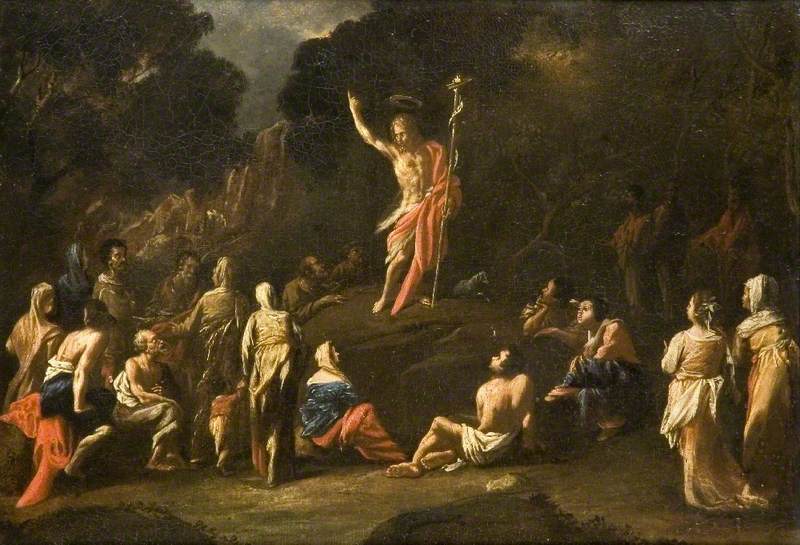
John the Forerunner of Christ, came wearing the odd clothing of camel hair and eating the odd food of locusts and wild honey. He was not some winsome or welcoming. He did not worry about being liked. He confronted the weak and the powerful with the same blunt call to repentance. He cut away all the traditional props that people had used to comfort themselves with the idea that God liked them. He warned them that the hour was coming and the axe was laid to the root of the tree, a tree already rotting from within. John does not preach fire and brimstone, he IS fire and brimstone.
St. John does not appease the powerful or conform his message to the feelings of the weak or scratch the itchy ears of those seeking to hear what they want or water down the Word of the Lord. John does none of those things. Instead he calls the religious authorities snakes in the grass. Without repentance and faith, there is only hell and fire, death and more death, according to St. John. But in the midst of all of this fire and brimstone, St. John points them to Jesus, to the Lamb of God who takes away the sin of the world. But John does not let himself off the hook. John is not the mighty one, Jesus is. John is unworthy of Jesus along with every sinner shaking in his boots with John. The fire is already lit and the chaff is being readied to feed this eternal fire.
So, Merry Christmas, right? This is probably not what you came to church today to hear. This will not put you in a holiday mood. But it will prepare you for the Lord and His coming in power and glory as Lord and Judge of all. And this is the Christmas we ought to be concerned about. Not simply gifts and greetings, cookies and cakes, but holiness and righteousness. For all the energy and effort put into trying to make a picture perfect Christmas for our families, how much do we put into repairing our lives to be ready for Christ when He comes as judge and King of all?
John does not merely preach this kingdom but offers those shamed by their sins and broken by the weight of their guilt a way to a clear conscience and freedom. Though it is not quite the baptism that Jesus will command, John’s baptism is not without hope.
I baptize you with water for repentance but the One who is coming, the One greater than I, will baptize you with the Holy Spirit and with fire. John’s baptism may not be the baptism Jesus commanded but it was not without hope because it pointed to Jesus. It did not offer what Christ’s baptism offered but it pointed them to Christ and directed their hearts to repentance and faith.
Jesus is coming. That was the message. Prepare His way and make straight His path. He is coming to offer Himself as the once for all sacrifice for sin. He is coming to die the death that was not His so that those marked with this death might have life in His name. He is coming to offer the baptism that is not a symbol but a means of grace, the water that kills those who are marked with sin and its death and raise them up to life that death cannot touch. He is coming to give new hearts to those whose sin stained hearts can do nothing but sin. Jesus is coming to put on His bride the Church a perfect, spotless wedding dress that will cover all her sin and make her holy and worthy of the very Son of God. You know that.
Christmas is not coming. It is past. Oh sure, we still have the annual remembrance of that miracle in the manger but the saving deed is done. Christ has died. Christ is risen. And Christ will come again. The fire is here by the power of the Spirit. It has burned up all our sins and cast its light upon us so that we might burn with the first of His love. We have been circumcised not of the flesh but of the Spirit. All our earthly divisions have been healed. We wear now the one name that counts, the name of Jesus placed upon us in our baptism.
We are in less danger of forgetting this Gospel than we are taking it for granted. We are in less danger of failing to forget the Christ in the manger than we are forgetting that this is not the whole story. Christ died in our place upon the cross, rose on the third day and is coming again. Could we be the Pharisees and Sadducees of our day, going through the motions without feeling the heat of the fire? Could we be those whose lives show no fruit of repentance and have become complacent in our faith? Do we need people like John to be the sparks to light a fire within us? Do we need prophets who will speak God’s Word so that we do not fear the axe but also welcome judgement day?
The sad reality is that preaching has become the mere suggestion of hope rather than real preaching. Too many of our sermons dance around the truth rather than speaking it bluntly. Too many preachers are worried more about offending people than offending God by failing to preach the whole counsel of His Word. Too many sermons are like lukewarm coals whose heat and light has all but gone out. Too many preachers preach to us a better today but leave us unprepared for eternity.
Today we are warned. This is not about decorations but death. This is not about likes but about life. Not about keeping warm but being burned up. God is in Christ making nobodies into His holy people. God is in Christ killing what is left that sin has not already killed so that we may be raised up to the life death cannot overcome. God is in Christ creating a people who will love righteousness and hate evil. God is in Christ cutting through all the peripheral stuff to expose the core, the beating heart of Christ and the beating hearts of a people born again in Christ to be His own.
So John warns the axe is laid to the root of the tree. Because we have heard the Word of God, we are ready. Because we have been washed clean in baptism, we are ready. Because we have been fed and nourished upon the Body and Blood of Christ, we are ready. Because we abide in Christ and Christ in us through these means of grace and we bear the good fruit of the Kingdom in our lives, we are ready. Ready not simply for Christmas but for Christ.
So John, let the axe fly. Let it cut to the quick. We are ready. We are Christ’s and Christ is ours. We are here not simply for a manger but for but a new heavens and a new earth. It is not a baby we seek but the Son of God in all His glorious splendor. It is not a comfortable Word we want to hear but the fire that consumes what will not endure so that what we are in Christ may remain. God grant it for Jesus’ sake. Amen.
Living in the South we sometimes joke about fire and brimstone preaching. The idea here is that the job of the preacher is first to preach the sinner so close to hell that he feels the heat and the pain before answering that with the balm of the Gospel. You don’t hear much about fire and brimstone preaching anymore. Even old time fundamentalist churches have adopted big screens, cup holders, and praise bands and a more winsome perspective on God. But not John the Baptist.
John the Forerunner of Christ, came wearing the odd clothing of camel hair and eating the odd food of locusts and wild honey. He was not some winsome or welcoming. He did not worry about being liked. He confronted the weak and the powerful with the same blunt call to repentance. He cut away all the traditional props that people had used to comfort themselves with the idea that God liked them. He warned them that the hour was coming and the axe was laid to the root of the tree, a tree already rotting from within. John does not preach fire and brimstone, he IS fire and brimstone.
St. John does not appease the powerful or conform his message to the feelings of the weak or scratch the itchy ears of those seeking to hear what they want or water down the Word of the Lord. John does none of those things. Instead he calls the religious authorities snakes in the grass. Without repentance and faith, there is only hell and fire, death and more death, according to St. John. But in the midst of all of this fire and brimstone, St. John points them to Jesus, to the Lamb of God who takes away the sin of the world. But John does not let himself off the hook. John is not the mighty one, Jesus is. John is unworthy of Jesus along with every sinner shaking in his boots with John. The fire is already lit and the chaff is being readied to feed this eternal fire.
So, Merry Christmas, right? This is probably not what you came to church today to hear. This will not put you in a holiday mood. But it will prepare you for the Lord and His coming in power and glory as Lord and Judge of all. And this is the Christmas we ought to be concerned about. Not simply gifts and greetings, cookies and cakes, but holiness and righteousness. For all the energy and effort put into trying to make a picture perfect Christmas for our families, how much do we put into repairing our lives to be ready for Christ when He comes as judge and King of all?
John does not merely preach this kingdom but offers those shamed by their sins and broken by the weight of their guilt a way to a clear conscience and freedom. Though it is not quite the baptism that Jesus will command, John’s baptism is not without hope.
I baptize you with water for repentance but the One who is coming, the One greater than I, will baptize you with the Holy Spirit and with fire. John’s baptism may not be the baptism Jesus commanded but it was not without hope because it pointed to Jesus. It did not offer what Christ’s baptism offered but it pointed them to Christ and directed their hearts to repentance and faith.
Jesus is coming. That was the message. Prepare His way and make straight His path. He is coming to offer Himself as the once for all sacrifice for sin. He is coming to die the death that was not His so that those marked with this death might have life in His name. He is coming to offer the baptism that is not a symbol but a means of grace, the water that kills those who are marked with sin and its death and raise them up to life that death cannot touch. He is coming to give new hearts to those whose sin stained hearts can do nothing but sin. Jesus is coming to put on His bride the Church a perfect, spotless wedding dress that will cover all her sin and make her holy and worthy of the very Son of God. You know that.
Christmas is not coming. It is past. Oh sure, we still have the annual remembrance of that miracle in the manger but the saving deed is done. Christ has died. Christ is risen. And Christ will come again. The fire is here by the power of the Spirit. It has burned up all our sins and cast its light upon us so that we might burn with the first of His love. We have been circumcised not of the flesh but of the Spirit. All our earthly divisions have been healed. We wear now the one name that counts, the name of Jesus placed upon us in our baptism.
We are in less danger of forgetting this Gospel than we are taking it for granted. We are in less danger of failing to forget the Christ in the manger than we are forgetting that this is not the whole story. Christ died in our place upon the cross, rose on the third day and is coming again. Could we be the Pharisees and Sadducees of our day, going through the motions without feeling the heat of the fire? Could we be those whose lives show no fruit of repentance and have become complacent in our faith? Do we need people like John to be the sparks to light a fire within us? Do we need prophets who will speak God’s Word so that we do not fear the axe but also welcome judgement day?
The sad reality is that preaching has become the mere suggestion of hope rather than real preaching. Too many of our sermons dance around the truth rather than speaking it bluntly. Too many preachers are worried more about offending people than offending God by failing to preach the whole counsel of His Word. Too many sermons are like lukewarm coals whose heat and light has all but gone out. Too many preachers preach to us a better today but leave us unprepared for eternity.
Today we are warned. This is not about decorations but death. This is not about likes but about life. Not about keeping warm but being burned up. God is in Christ making nobodies into His holy people. God is in Christ killing what is left that sin has not already killed so that we may be raised up to the life death cannot overcome. God is in Christ creating a people who will love righteousness and hate evil. God is in Christ cutting through all the peripheral stuff to expose the core, the beating heart of Christ and the beating hearts of a people born again in Christ to be His own.
So John warns the axe is laid to the root of the tree. Because we have heard the Word of God, we are ready. Because we have been washed clean in baptism, we are ready. Because we have been fed and nourished upon the Body and Blood of Christ, we are ready. Because we abide in Christ and Christ in us through these means of grace and we bear the good fruit of the Kingdom in our lives, we are ready. Ready not simply for Christmas but for Christ.
So John, let the axe fly. Let it cut to the quick. We are ready. We are Christ’s and Christ is ours. We are here not simply for a manger but for but a new heavens and a new earth. It is not a baby we seek but the Son of God in all His glorious splendor. It is not a comfortable Word we want to hear but the fire that consumes what will not endure so that what we are in Christ may remain. God grant it for Jesus’ sake. Amen.
The chicken or the egg. . .
It has oft been the case that we begin with the Bible says about something. So, for example, the question of what the Bible says about preaching or baptism or the Eucharist might establish for us what we think about it. The Scriptures define what it is and and that is that. Or is it?
The reality is that preaching precedes the New Testament, for sure, and exists alongside the Old Testament. The New Testament did not establish preaching but preaching was happening before the New Testament was put to page by pen. St. John the Forerunner came as preacher to call the world to the fact that the Kingdom of God was near. The Lord preached the Kingdom in word and in deed as He manifested Himself to be the Son of God in flesh. The Apostles preached at the Lord's command and at His bidding even before Pentecost. It is impossible to say that the Scriptures establish preaching when preaching clearly is happening before the New Testament is written.
The same is true of baptism and the Eucharist. People were being baptized into the Name of the Father and of the Son and of the Holy Spirit before, during, and after the time when the New Testament is written. Indeed, preaching and baptism are the hallmarks of the Church before a New Testament Scripture is even conceived of (at least from below). You cannot suggest that the New Testament established baptism when our Lord gave the command the His disciples heeded that Word before the writing of the New Testament. The same could be said of the Eucharist. While we try to figure out what Scripture says about the Eucharist, the reality is that the Lord's Supper was being celebrated before the New Testament was written. We had doctrine and piety, preaching and sacraments at the earliest stage of Christianity. At least that is what the New Testament itself says (Acts 2:42-46).
Could we also say then that the New Testament presumes that preaching is happening within the life of the Church, that people are being baptized into Christ in the Name of the Triune God, and that people were eating and drinking the Lord's body and blood? We should. Now none of this undermines or pushes Scripture to the sideline but admits and even celebrates that the Church was not in limbo unto the New Testament was written but Christians were preaching and hearing the Word of the Lord, baptizing and being baptized into Christ's death and resurrection, and eating and drinking the flesh and blood of Christ AS this New Testament text was being put to page by pen under the direction of the Holy Spirit.
Just something to think about after listening to the Gottesdiest paper presented by Dr. James Busher. Which, by the way, is accessible here through the good services of Gene Wilken and the Flaneur Record.
The reality is that preaching precedes the New Testament, for sure, and exists alongside the Old Testament. The New Testament did not establish preaching but preaching was happening before the New Testament was put to page by pen. St. John the Forerunner came as preacher to call the world to the fact that the Kingdom of God was near. The Lord preached the Kingdom in word and in deed as He manifested Himself to be the Son of God in flesh. The Apostles preached at the Lord's command and at His bidding even before Pentecost. It is impossible to say that the Scriptures establish preaching when preaching clearly is happening before the New Testament is written.
The same is true of baptism and the Eucharist. People were being baptized into the Name of the Father and of the Son and of the Holy Spirit before, during, and after the time when the New Testament is written. Indeed, preaching and baptism are the hallmarks of the Church before a New Testament Scripture is even conceived of (at least from below). You cannot suggest that the New Testament established baptism when our Lord gave the command the His disciples heeded that Word before the writing of the New Testament. The same could be said of the Eucharist. While we try to figure out what Scripture says about the Eucharist, the reality is that the Lord's Supper was being celebrated before the New Testament was written. We had doctrine and piety, preaching and sacraments at the earliest stage of Christianity. At least that is what the New Testament itself says (Acts 2:42-46).
Could we also say then that the New Testament presumes that preaching is happening within the life of the Church, that people are being baptized into Christ in the Name of the Triune God, and that people were eating and drinking the Lord's body and blood? We should. Now none of this undermines or pushes Scripture to the sideline but admits and even celebrates that the Church was not in limbo unto the New Testament was written but Christians were preaching and hearing the Word of the Lord, baptizing and being baptized into Christ's death and resurrection, and eating and drinking the flesh and blood of Christ AS this New Testament text was being put to page by pen under the direction of the Holy Spirit.
Just something to think about after listening to the Gottesdiest paper presented by Dr. James Busher. Which, by the way, is accessible here through the good services of Gene Wilken and the Flaneur Record.
Sunday, December 8, 2019
"Fresh" thinking. . .
Rome has been preoccupied with the so-called Amazonia Synod to address problems common to the area but not only there. So far we have heard of the need for Amazon culture to inform the culture of the Roman Church and to open the ministry to women (albeit so far only the diaconate). What intrigues me, however, is that these things are called fresh ideas. There is nothing fresh about the stale thinking that the faith must be subject to the culture both in content and in form. That is the oldest thinking in the world and one with which every age of Christianity has had to wrestle. It is surely no different in our own age. Fresh ideas and fresh thinking continues to attack the faith with old ideas and stale thinking that has contributed more to the decline of the faith than its vibrancy.
Some of you may be wondering why we Lutherans should pay any attention to what is happening in Rome or in the Amazon, for that matter. But that is the issue. We are facing exactly the same challenges. We are being told all the time that the liturgy is the impediment to a vibrant faith and congregation, the hymns are driving people away and different music will bring them back, that the Church's doctrine must develop and change to keep up with what is going on in the culture around us or we will be judged irrelevant.
Rome is not the only church body threatened with and by these old passe ideas. We have had our own voices insistent that because of the times, things must change. And to be fair, that is true to a point. The way people communicate has changed. The family is under constant threat. The social media have led to individual isolation. The idea that there can be truth or that you can know it or that it matters is no longer a given. It is not your grandfather's church, to be sure, but the faith is the one thing that dare not change and the liturgy is the faith prayed on Sunday morning so when it changes, the faith changes. Until we learn this, Rome and Lutheranism will continue to be victims of our own desperation.
But the solution to our problems cannot be gleaned by setting up listening posts among the people who do not know Christ and who are not asking us any questions about Christ. We must learn to hear what they are saying but the Church will survive, grow, or die because we have confidence in and preach and teach faithfully the Word of God. In every case when we have second guessed God and tried to fix the problem on our own, the result has not been success but disaster. From Abraham and Sarah's fix to the problem of no heir to the Golden Calf that kept the Israelites busy while Moses was with God on the mountain, we have a history of disasters that came from fresh ideas that were stale rehashes of yesterday's failings. Now is no different. I am not saying that we must keep on doing what we have always done -- some things must and will change -- but we need to take care that we are not changing the one thing needful, the Word of the Lord, the creedal confession of fidelity before the world, the liturgical life that meets the Lord where He has pledged to be, and the Office of the Ministry which is itself a means of the means of grace (at least!).
Some of you may be wondering why we Lutherans should pay any attention to what is happening in Rome or in the Amazon, for that matter. But that is the issue. We are facing exactly the same challenges. We are being told all the time that the liturgy is the impediment to a vibrant faith and congregation, the hymns are driving people away and different music will bring them back, that the Church's doctrine must develop and change to keep up with what is going on in the culture around us or we will be judged irrelevant.
Rome is not the only church body threatened with and by these old passe ideas. We have had our own voices insistent that because of the times, things must change. And to be fair, that is true to a point. The way people communicate has changed. The family is under constant threat. The social media have led to individual isolation. The idea that there can be truth or that you can know it or that it matters is no longer a given. It is not your grandfather's church, to be sure, but the faith is the one thing that dare not change and the liturgy is the faith prayed on Sunday morning so when it changes, the faith changes. Until we learn this, Rome and Lutheranism will continue to be victims of our own desperation.
But the solution to our problems cannot be gleaned by setting up listening posts among the people who do not know Christ and who are not asking us any questions about Christ. We must learn to hear what they are saying but the Church will survive, grow, or die because we have confidence in and preach and teach faithfully the Word of God. In every case when we have second guessed God and tried to fix the problem on our own, the result has not been success but disaster. From Abraham and Sarah's fix to the problem of no heir to the Golden Calf that kept the Israelites busy while Moses was with God on the mountain, we have a history of disasters that came from fresh ideas that were stale rehashes of yesterday's failings. Now is no different. I am not saying that we must keep on doing what we have always done -- some things must and will change -- but we need to take care that we are not changing the one thing needful, the Word of the Lord, the creedal confession of fidelity before the world, the liturgical life that meets the Lord where He has pledged to be, and the Office of the Ministry which is itself a means of the means of grace (at least!).
Saturday, December 7, 2019
Parts is parts. . . or not
While visiting an aged homebound parishioner, I was treated to his homespun wisdom regarding his situation. His parts were getting old and while some had been replaced, new parts sometimes make the old parts work less well. Joint replacements with complications and arthritic troubles had left him with limited mobility. He had parts that were dying, he said, and parts that were living. The living part of him was his mind, ever sharp with a biting sense of humor. It was not easy for him to read but read he did and he found what he read stimulated his thoughts. Parts were definitely not working but parts were working very well.
It occurred to me that the Church is in a similar situation. Parts of it are living and parts of it are dying. The parts that are living are still reading and hearing the Word of God and trusting in its promises. The parts that are dying have given up confidence in the Word except as overall principle and then bent that principle to justify whatever they happen to be thinking or feeling in the moment. The parts that are living still live in the wonder of water that churns with Christ's life and delivers every one placed down into it new. The parts that are dying have gone beyond baptism and any notion that anything really happened in the water and the ceremony of that sacrament. The parts that are living still meet with awe before the grand mystery of Christ present in bread and wine for us to eat and drink for the forgiveness of our sins. The parts that are dying go through the motions of eating and drinking but find their food somewhere other than the meal Christ established in the Upper Room and still hosts as its priest and victim. The parts that are living are convicted by the Law and seek the consolation of absolution and a clear conscience. The parts that are dying are not so sure that they have anything much to confess and are pretty sure that they are relatively comfortable in their sins.
Our bodies are constantly sloughing off dead cells -- both internally and externally. It is something that has to happen for the body to be health. The Church, under God's direction, is provided moments of test and opportunity in which we must cast off the dead ends in order to stay in Christ the Way and be a healthy body. Perhaps this is one of those times. Like the Reformation of old, the dying parts are exposed and challenged with the magnifying glass of God's Word and the faithful witness of the past. Sometimes the very institutions that were charged with aiding the health of the body (the clergy for Lutherans or the papacy for Rome) become agents of death and they too must be convicted and cast away for the good of the whole. Could it be that this is the time the Lord has set for the Church, particularly in the West, to be placed under scrutiny to see what lives by His grace and what is dying because it no longer is connected to that grace? I wish I knew. But on the whole, it cannot be a bad thing to acknowledge that parts of the Church are living and parts of it are dying. In fact, it is unhealthy to presume that things are the same, that all is equally good or that all is equally bad. There will be constant challenges and threats to the body. Some of them are old and recycled from the past and very few of them are really new but every age must address these with the force of the Word that endures forever and with the orthodox doctrine that does not change.
Parts of the Church are living and flourishing. Parts are dying and withering. The threats may be different but the Church's common life flows not out of material successes or statistics good or bad but from the living voice of the Word, the living water of baptism, the living grace of absolution, and the living food of the Eucharist. It may be the Lord's will that some parts will continue to die until they are fully dead, if only to prove to us that programs will not save us nor can we save ourselves. It may be that the Church will grow smaller in our eyes while she grows stronger in the Lord. But the hope of the faithful remains living captive to the Word, trusting in Christ alone, and refusing to waver in confession of this unchanging truth before the world and the skeptics within. And this Church, whether its buildings be full or it be left to a remnant, will be welcomed into the joy of the Master when Christ comes again in His glory. Which, by the way, is the same hope that sustains my old friend whose pithy wisdom began this blog post.
It occurred to me that the Church is in a similar situation. Parts of it are living and parts of it are dying. The parts that are living are still reading and hearing the Word of God and trusting in its promises. The parts that are dying have given up confidence in the Word except as overall principle and then bent that principle to justify whatever they happen to be thinking or feeling in the moment. The parts that are living still live in the wonder of water that churns with Christ's life and delivers every one placed down into it new. The parts that are dying have gone beyond baptism and any notion that anything really happened in the water and the ceremony of that sacrament. The parts that are living still meet with awe before the grand mystery of Christ present in bread and wine for us to eat and drink for the forgiveness of our sins. The parts that are dying go through the motions of eating and drinking but find their food somewhere other than the meal Christ established in the Upper Room and still hosts as its priest and victim. The parts that are living are convicted by the Law and seek the consolation of absolution and a clear conscience. The parts that are dying are not so sure that they have anything much to confess and are pretty sure that they are relatively comfortable in their sins.
Our bodies are constantly sloughing off dead cells -- both internally and externally. It is something that has to happen for the body to be health. The Church, under God's direction, is provided moments of test and opportunity in which we must cast off the dead ends in order to stay in Christ the Way and be a healthy body. Perhaps this is one of those times. Like the Reformation of old, the dying parts are exposed and challenged with the magnifying glass of God's Word and the faithful witness of the past. Sometimes the very institutions that were charged with aiding the health of the body (the clergy for Lutherans or the papacy for Rome) become agents of death and they too must be convicted and cast away for the good of the whole. Could it be that this is the time the Lord has set for the Church, particularly in the West, to be placed under scrutiny to see what lives by His grace and what is dying because it no longer is connected to that grace? I wish I knew. But on the whole, it cannot be a bad thing to acknowledge that parts of the Church are living and parts of it are dying. In fact, it is unhealthy to presume that things are the same, that all is equally good or that all is equally bad. There will be constant challenges and threats to the body. Some of them are old and recycled from the past and very few of them are really new but every age must address these with the force of the Word that endures forever and with the orthodox doctrine that does not change.
Parts of the Church are living and flourishing. Parts are dying and withering. The threats may be different but the Church's common life flows not out of material successes or statistics good or bad but from the living voice of the Word, the living water of baptism, the living grace of absolution, and the living food of the Eucharist. It may be the Lord's will that some parts will continue to die until they are fully dead, if only to prove to us that programs will not save us nor can we save ourselves. It may be that the Church will grow smaller in our eyes while she grows stronger in the Lord. But the hope of the faithful remains living captive to the Word, trusting in Christ alone, and refusing to waver in confession of this unchanging truth before the world and the skeptics within. And this Church, whether its buildings be full or it be left to a remnant, will be welcomed into the joy of the Master when Christ comes again in His glory. Which, by the way, is the same hope that sustains my old friend whose pithy wisdom began this blog post.
Friday, December 6, 2019
Ethical relativism. . .
Though I encountered it long after it had hit the bookshelves igniting a firestorm of controversy when published in 1966, Joseph Fletcher's Situation Ethics
was no less radical when I read it in 1974. That is not how it was portrayed. It was hailed as a welcome alternative to a world of concrete rights and wrongs that no longer seemed to fit the minds and wills of some folks. It was seen as a sort of reformation of morality, freeing choice from absolutes and acknowledging the circumstances of the moment to define the right choice. Of course, it was much more than that. It was the beginning of a new anarchy of feelings and desires that rules the choices of people. Though defined as an ethic of loving concern,
Fletcher was, in reality, overturning the common morality and raising questions about everything that had once been seen as right or wrong. In his view everything from lying to premarital sex to
adultery to murder could be morally right. It depended upon the circumstances and the mindset of the person making the choice. The outcome was also a significant factor in the morality of a choice, sort of the end justifying the means.
Though this was not quite ethical relativism, it was close. Ethical relativism says there are no moral absolutes, no moral right and wrongs. Instead, right and wrong are based on prevailing social norms and may change. Anglican Fletcher was a pioneer in the promotion of a morality in which circumstance and outcome were the defining factors of right and wrong and some might defend him against the charge of advocating the prevailing ethical relativism of the day. I am not sure that he would be uncomfortable with where the situational ethics has led. He was not alone but his was a powerful voice to suggest that the old constraints and categories of right and wrong no longer applied to the way things are.
Further, like Margaret Sanger and others hailed as voices of liberation in a world of moral absolutes, we find that Fletcher also had a dark side with respect to issues of life. In Sanger's case it was the desire to rid the world of substandard people. Fletcher also had the idea that it would be moral to relieve the living of the burdens of caring for the aged and infirm. He did not quite stop there but implied that any means to rid the families of the burden of physically or genetically defective individuals was indeed moral. “We ought to protect our families from the emotional and material burden of [genetically and congenitally] diseased individuals, and from the misery of their simply ‘existing’ (not living) in a nearby ‘warehouse’ or public institution.” – Joseph Fletcher
The reason I write this is because this was a standard college text when I was in school going on 50 years ago and at the time it seemed like a breath of fresh air. In reality it was poisoned air that has been breathed in so long that it seems we no longer know what it means to smell what is good and right. Whether my generation sensed an ally in this movement and used it to foster a wholesale change in our moral barometer or whether the present day is the fruit of seeds planted by such radical voices, the ethical and moral dimensions of what ails us as churches, as Christians, and as a culture are shocking. In a couple of generations we have gone from having a common morality that once united us as a nation and which churches found theologically friendly to no common morality and to churches either out of step with the times or in lock step with the moment. The tension that should have existed between the church and the world has infiltrated the churches to the point where it is nearly impossible to use the term Christian morality and have any real meaning to it. And it does not matter much to Fletcher who later renounced his faith and became an atheist. As big as the mess is, God will have the last word on Fletcher and our corroded moral compass, especially with respect to the value we place upon life in the womb and lives that we deem not worth living.
Though this was not quite ethical relativism, it was close. Ethical relativism says there are no moral absolutes, no moral right and wrongs. Instead, right and wrong are based on prevailing social norms and may change. Anglican Fletcher was a pioneer in the promotion of a morality in which circumstance and outcome were the defining factors of right and wrong and some might defend him against the charge of advocating the prevailing ethical relativism of the day. I am not sure that he would be uncomfortable with where the situational ethics has led. He was not alone but his was a powerful voice to suggest that the old constraints and categories of right and wrong no longer applied to the way things are.
Further, like Margaret Sanger and others hailed as voices of liberation in a world of moral absolutes, we find that Fletcher also had a dark side with respect to issues of life. In Sanger's case it was the desire to rid the world of substandard people. Fletcher also had the idea that it would be moral to relieve the living of the burdens of caring for the aged and infirm. He did not quite stop there but implied that any means to rid the families of the burden of physically or genetically defective individuals was indeed moral. “We ought to protect our families from the emotional and material burden of [genetically and congenitally] diseased individuals, and from the misery of their simply ‘existing’ (not living) in a nearby ‘warehouse’ or public institution.” – Joseph Fletcher
The reason I write this is because this was a standard college text when I was in school going on 50 years ago and at the time it seemed like a breath of fresh air. In reality it was poisoned air that has been breathed in so long that it seems we no longer know what it means to smell what is good and right. Whether my generation sensed an ally in this movement and used it to foster a wholesale change in our moral barometer or whether the present day is the fruit of seeds planted by such radical voices, the ethical and moral dimensions of what ails us as churches, as Christians, and as a culture are shocking. In a couple of generations we have gone from having a common morality that once united us as a nation and which churches found theologically friendly to no common morality and to churches either out of step with the times or in lock step with the moment. The tension that should have existed between the church and the world has infiltrated the churches to the point where it is nearly impossible to use the term Christian morality and have any real meaning to it. And it does not matter much to Fletcher who later renounced his faith and became an atheist. As big as the mess is, God will have the last word on Fletcher and our corroded moral compass, especially with respect to the value we place upon life in the womb and lives that we deem not worth living.
Thursday, December 5, 2019
Test of our resolve. . .
There are no pastors who have not enjoyed endured some not so humorous joking about the length of sermons and worship services. The sacred hour of worship is generally 59 1/2 minutes or less as most of us know or have been told. That said, the only real constraints we face in worship are our own scheduling (when multiple service times must inhabit the same space) or our own lack of attention to the things of God. What a strange idea it is that a fitting distribution of time leaves God with but an hour a week and the rest of left to us from recreation to rest to work!
In one sense, the suspension of time within the Divine Service is both for our benefit (in the gifts that God gives us there) and a test of our actual resolve and desire to be holy, to attend to matters of faith, and to love being in the presence of God. Often we set rather lofty goals for ourselves about the time we plan to set aside in devotion and prayer, the attention we will give to good works on behalf of the poor and needy, and time in His Word. In most cases, our ambitions are greater than our follow through. We carry a bit of guilt about the failure of our noble intentions. But it might be good for us to ask ourselves if we have trouble dedicating even Sunday morning to the Lord without fidgiting or being distracted or clock watching, how will we ever come close to setting aside time for prayer, devotion, and the good works of our piety the rest of the week? If it is such a labor for us to get ourselves to church at the prescribed time, to meet the Lord where He has promised to be in His Word and Sacraments, to respond in prayer, praise, and thanksgiving, and to take to heart and to remembrance the things we heard in preached to us, then it will surely be a stretch to doing much of anything godly the rest of the week. If our minds are so easily bored or distracted that we cannot concentrate upon the means of grace provided us with the framework of the Divine Service, then how shall we presume to keep our attention upon the Lord when we are not constrained by the rhythm of the liturgy, by music in service to the Word, by the preaching of the faith, and by our participation in the great mystery of His flesh in bread and His blood in wine?
Every pastor lives within the constraints of the time he knows people are willing to give. So it is routine that the shorter selections of the readings are often the default choices and hymns are chosen either because they have fewer stanzas or have their poetry and development derailed by an arbitrary choice of verses to be sung. Yet, as real as these considerations are, should they exist at all? Is a hymn to be discarded only because it exceeds three or four stanzas? Is an edit of the reading better than the full account from the Old Testament, Gospel, or Epistle? Do we justify our shorter sermons with the craft of a good preacher who says more with fewer words when the reality is that we just don't want to hear them at all? Yes, the sad reality is that we are reluctant to give God much of our money but we are more likely to give Him that than our time. Is it no wonder that the world looks at us and wonders how important this God and His worship could really be if we only endure it and wish it were over a long time ago?
In one sense, the suspension of time within the Divine Service is both for our benefit (in the gifts that God gives us there) and a test of our actual resolve and desire to be holy, to attend to matters of faith, and to love being in the presence of God. Often we set rather lofty goals for ourselves about the time we plan to set aside in devotion and prayer, the attention we will give to good works on behalf of the poor and needy, and time in His Word. In most cases, our ambitions are greater than our follow through. We carry a bit of guilt about the failure of our noble intentions. But it might be good for us to ask ourselves if we have trouble dedicating even Sunday morning to the Lord without fidgiting or being distracted or clock watching, how will we ever come close to setting aside time for prayer, devotion, and the good works of our piety the rest of the week? If it is such a labor for us to get ourselves to church at the prescribed time, to meet the Lord where He has promised to be in His Word and Sacraments, to respond in prayer, praise, and thanksgiving, and to take to heart and to remembrance the things we heard in preached to us, then it will surely be a stretch to doing much of anything godly the rest of the week. If our minds are so easily bored or distracted that we cannot concentrate upon the means of grace provided us with the framework of the Divine Service, then how shall we presume to keep our attention upon the Lord when we are not constrained by the rhythm of the liturgy, by music in service to the Word, by the preaching of the faith, and by our participation in the great mystery of His flesh in bread and His blood in wine?
Every pastor lives within the constraints of the time he knows people are willing to give. So it is routine that the shorter selections of the readings are often the default choices and hymns are chosen either because they have fewer stanzas or have their poetry and development derailed by an arbitrary choice of verses to be sung. Yet, as real as these considerations are, should they exist at all? Is a hymn to be discarded only because it exceeds three or four stanzas? Is an edit of the reading better than the full account from the Old Testament, Gospel, or Epistle? Do we justify our shorter sermons with the craft of a good preacher who says more with fewer words when the reality is that we just don't want to hear them at all? Yes, the sad reality is that we are reluctant to give God much of our money but we are more likely to give Him that than our time. Is it no wonder that the world looks at us and wonders how important this God and His worship could really be if we only endure it and wish it were over a long time ago?
Wednesday, December 4, 2019
Hosanna...Blessed is He Who Comes!
Sermon for Advent 1A, preached on Sunday, December 1, 2019, by the Rev. Daniel M. Ulrich.
It’s interesting that we begin the Advent season with the same Gospel reading that is read on Palm Sunday. It’s interesting that we begin our time of looking forward to our Lord’s birth with a reading that looks forward to His death. These two times we think should be separate, but they’re inseparably tied together. Christ’s birth and death go hand in hand for they’re both needed for salvation; they’re both needed to answer to our prayer Hosanna, save us.
That’s what Hosanna means, it means “save us.” It’s a plea for help and deliverance. It’s a word that’s sung in the Psalms calling on God for salvation. And it’s a word that praises Him for that salvation. That’s why the people of Jerusalem shouted it as Jesus entered the city.
As Christ entered Jerusalem one short week before His crucifixion, He was welcomed by a shouting “Hosanna to the Son of David! Blessed is he who comes in the name of the Lord! Hosanna in the highest!” (Mt 21:9). What a sight that must’ve been; people running to the street, putting their cloaks on the ground, waving palm branches, all shouting with joy and celebration. The people welcomed Jesus as their Messiah. They welcomed Him as their king. They’d heard about everything He had done in His ministry: the feeding of thousands, the calming of storms, the healing of sorts of sickness and disease and paralysis, even the raising of the dead. They’d heard about it all and they were ready for Him to do the same for them. They were ready for freedom.
The crowd praised Jesus calling Him the “Son of David.” This wasn’t just a reference to His descent from David, although He was. Instead this was a messianic title of kingship. It comes from God’s promise to David that one of his descendants would establish an eternal kingdom (2 Sam 17:13-14). The people of Jerusalem were ready for that kingdom. They were tired of being ruled by the Romans. They wanted their own kingdom ruled by their own king. And they welcomed Jesus expecting Him to bring that freedom.
Like the people of Jerusalem, we welcome Christ singing Hosannas. We look forward to the celebration of His coming at Christmas. We look forward to it because in His birth He entered our world to set us free, to be our King. The people of Jerusalem wanted Christ to bring an earthly kingdom, freedom from the Romans, but that’s not the kingdom Christ came to establish. Our Lord brings the kingdom of heaven with freedom from that which truly oppresses us: our sin and death.
We like to think of ourselves as free. In our country we’re not beholden to anyone. We don’t have a monarchy or dictator who rules with an iron fist. We get to decide for ourselves how we’ll live. And yet, even with all the freedoms that we have, we’re mistaken if we think we’re free, because we’re not. We’re not truly free. We’re enslaved to ourselves, we’re enslaved to sin and to death.
We’re born into this slavery. We’re born with sin in our hearts, sin that’s focused completely inward, sin that’s focused on satisfying selfish desires. We’re beholden to this original sin. We can’t disobey it. It’s a slave master that controls everything we do; everything we say; even everything we think. And we can’t free ourselves from it. We can’t save ourselves from sin and death. No matter how hard we try, unless Christ comes before it, death is our end. And so we cry out, Hosanna.
God has answered this plea for help and deliverance. He’s answered it with His Son, whose birth we’re looking forward to and celebrate. Christ Jesus was born to free you, to save you from sin and death. And there’s only one way that salvation could be accomplished, with His death.
Freedom isn’t free. Freedom from slavery comes at a price, it must be bought, and that price is Jesus birth and death. Your Savior answers your Hosanna with His holy, precious blood and with His innocent suffering and death. Jesus was born to die on the cross to pay the price of your freedom. Jesus was born to die so that you could live. And in response to this salvation we praise Him singing, Hosanna...Blessed is he who comes in the name of the Lord!
During Advent all our focus tends to on Christmas. Everything we do is getting ready for that celebration. And yet, during Advent, we don’t just look forward to the manger alone, but to how our Lord continues to come to us today and how He promises to come on the Last Day.
Our Savior still comes to us today for the very same purpose of bringing us salvation, and we continue to welcome Him singing Hosanna. We literally do this every Sunday as we approach this altar to receive Christ’s body and blood, the very body and blood that was laid in the manager, the very body and blood that was crucified on the cross, the very body and blood that was raised from the tomb. We welcome Him by singing, Holy holy holy Lord, Lord God of pow’r and might: Heav’n and earth are full of Your glory. Hosanna in the highest. Blessed is He who comes in the name of the Lord. Hosanna in the highest. We sing the same words the people of Jerusalem sang as our Lord physically comes to us to feed us His body and blood for the forgiveness of sins. And we continue to sing Hosannas calling Him to come again on the Last Day.
Because of Christ’s death and resurrection, our salvation is complete. The price of freedom has been paid, and freedom is yours. You’ve received it in your Baptism, in the words of forgiveness applied to your sins, and in the Supper. And yet, we don’t physically see and experience that freedom now. We’re still plagued with sin’s temptation, and we still give in to that temptation. Death still rules in our lives. The freedom that is yours in Christ isn’t fully realized yet, and it won’t be until He comes again. And so, as we sing Hosanna looking forward to that day of the Lord.
The people sang Hosanna welcoming Christ into Jerusalem. We sing Hosanna as we celebrate His birth, celebrating our King come in the flesh to save. We sing Hosanna, welcoming Him as He feeds us His very body and blood for forgiveness and salvation. And we sing Hosanna calling our Lord to come again, to bring in fullness the salvation He won with His birth, death, and resurrection. With faith and confidence we see sing Hosanna to the Son of David! Blessed is He who comes in the name of the Lord! Hosanna in the highest! In Jesus’ name...Amen.
It’s interesting that we begin the Advent season with the same Gospel reading that is read on Palm Sunday. It’s interesting that we begin our time of looking forward to our Lord’s birth with a reading that looks forward to His death. These two times we think should be separate, but they’re inseparably tied together. Christ’s birth and death go hand in hand for they’re both needed for salvation; they’re both needed to answer to our prayer Hosanna, save us.
That’s what Hosanna means, it means “save us.” It’s a plea for help and deliverance. It’s a word that’s sung in the Psalms calling on God for salvation. And it’s a word that praises Him for that salvation. That’s why the people of Jerusalem shouted it as Jesus entered the city.
As Christ entered Jerusalem one short week before His crucifixion, He was welcomed by a shouting “Hosanna to the Son of David! Blessed is he who comes in the name of the Lord! Hosanna in the highest!” (Mt 21:9). What a sight that must’ve been; people running to the street, putting their cloaks on the ground, waving palm branches, all shouting with joy and celebration. The people welcomed Jesus as their Messiah. They welcomed Him as their king. They’d heard about everything He had done in His ministry: the feeding of thousands, the calming of storms, the healing of sorts of sickness and disease and paralysis, even the raising of the dead. They’d heard about it all and they were ready for Him to do the same for them. They were ready for freedom.
The crowd praised Jesus calling Him the “Son of David.” This wasn’t just a reference to His descent from David, although He was. Instead this was a messianic title of kingship. It comes from God’s promise to David that one of his descendants would establish an eternal kingdom (2 Sam 17:13-14). The people of Jerusalem were ready for that kingdom. They were tired of being ruled by the Romans. They wanted their own kingdom ruled by their own king. And they welcomed Jesus expecting Him to bring that freedom.
Like the people of Jerusalem, we welcome Christ singing Hosannas. We look forward to the celebration of His coming at Christmas. We look forward to it because in His birth He entered our world to set us free, to be our King. The people of Jerusalem wanted Christ to bring an earthly kingdom, freedom from the Romans, but that’s not the kingdom Christ came to establish. Our Lord brings the kingdom of heaven with freedom from that which truly oppresses us: our sin and death.
We like to think of ourselves as free. In our country we’re not beholden to anyone. We don’t have a monarchy or dictator who rules with an iron fist. We get to decide for ourselves how we’ll live. And yet, even with all the freedoms that we have, we’re mistaken if we think we’re free, because we’re not. We’re not truly free. We’re enslaved to ourselves, we’re enslaved to sin and to death.
We’re born into this slavery. We’re born with sin in our hearts, sin that’s focused completely inward, sin that’s focused on satisfying selfish desires. We’re beholden to this original sin. We can’t disobey it. It’s a slave master that controls everything we do; everything we say; even everything we think. And we can’t free ourselves from it. We can’t save ourselves from sin and death. No matter how hard we try, unless Christ comes before it, death is our end. And so we cry out, Hosanna.
God has answered this plea for help and deliverance. He’s answered it with His Son, whose birth we’re looking forward to and celebrate. Christ Jesus was born to free you, to save you from sin and death. And there’s only one way that salvation could be accomplished, with His death.
Freedom isn’t free. Freedom from slavery comes at a price, it must be bought, and that price is Jesus birth and death. Your Savior answers your Hosanna with His holy, precious blood and with His innocent suffering and death. Jesus was born to die on the cross to pay the price of your freedom. Jesus was born to die so that you could live. And in response to this salvation we praise Him singing, Hosanna...Blessed is he who comes in the name of the Lord!
During Advent all our focus tends to on Christmas. Everything we do is getting ready for that celebration. And yet, during Advent, we don’t just look forward to the manger alone, but to how our Lord continues to come to us today and how He promises to come on the Last Day.
Our Savior still comes to us today for the very same purpose of bringing us salvation, and we continue to welcome Him singing Hosanna. We literally do this every Sunday as we approach this altar to receive Christ’s body and blood, the very body and blood that was laid in the manager, the very body and blood that was crucified on the cross, the very body and blood that was raised from the tomb. We welcome Him by singing, Holy holy holy Lord, Lord God of pow’r and might: Heav’n and earth are full of Your glory. Hosanna in the highest. Blessed is He who comes in the name of the Lord. Hosanna in the highest. We sing the same words the people of Jerusalem sang as our Lord physically comes to us to feed us His body and blood for the forgiveness of sins. And we continue to sing Hosannas calling Him to come again on the Last Day.
Because of Christ’s death and resurrection, our salvation is complete. The price of freedom has been paid, and freedom is yours. You’ve received it in your Baptism, in the words of forgiveness applied to your sins, and in the Supper. And yet, we don’t physically see and experience that freedom now. We’re still plagued with sin’s temptation, and we still give in to that temptation. Death still rules in our lives. The freedom that is yours in Christ isn’t fully realized yet, and it won’t be until He comes again. And so, as we sing Hosanna looking forward to that day of the Lord.
The people sang Hosanna welcoming Christ into Jerusalem. We sing Hosanna as we celebrate His birth, celebrating our King come in the flesh to save. We sing Hosanna, welcoming Him as He feeds us His very body and blood for forgiveness and salvation. And we sing Hosanna calling our Lord to come again, to bring in fullness the salvation He won with His birth, death, and resurrection. With faith and confidence we see sing Hosanna to the Son of David! Blessed is He who comes in the name of the Lord! Hosanna in the highest! In Jesus’ name...Amen.
Preach what you confess. . .
British author and journalist Douglas Murray, who is not a Christian, says he supports Christianity from the outside and is supportive of conservative causes in general. What is most interesting is his complaint that Christians have become either apologetic about or simply fail to preach their truth. They substitute social positions for Christian truth and they fail to preach their own doctrinal identity. You can read his complaint below:
My own view is that the Churches have, broadly speaking, become very bad at preaching the doctrine of their own faith. So, I am always attacking the Scandinavian churches; they are the worst example. But the Church of Rome, as we call it in the U.K., under this current pope, also has the tendency to migrate towards the sort of “Jesus was a refugee,” “Jesus was a migrant” and then the forms of green politicking which make the Church a little more than the Greenpeace of prayer. I think this is very worrying because I think that the Church has doctrine, beliefs, and they should preach them, they shouldn’t seek to preach new different things like social justice action, or welfarism or greenery or anything like this. So weirdly enough one of my positions is to try and persuade the churches to preach their own doctrine.His point is well taken. But it is not merely true of those churches that substitute social or political positions for doctrine, it is also true of churches that preach a generic Jesus. So, for example, is it possible to preach a Lutheran sermon without mentioning baptism, Holy Communion, absolution, etc.? It would do well to consider if somebody sitting in your pews for a span of a couple of years would be surprised to find out that Lutherans believe in infant baptism, the Real Presence in the Eucharist, or that the efficacy of the Word of God? If your members moved would they seek out a church that matched their worship preference or their doctrinal confession? It is high time that Lutherans (and others) actually preached the faith they confess in their public doctrine and not hide who they are. This is part of my issue with so-called contemporary worship and music. It is deceptive. It is simply deceptive to worship like an evangelical and they insist they you believe like a Lutheran. The people sitting in the pews will define the church on the basis of what happens on Sunday morning and not on the basis of confessional documents they have only limited experience with. Preach who you are and worship like you confess. That has integrity. Anything else does not.
I do actually find myself in studios sometimes with bishops begging them just to preach the doctrine of their own faith, and they are really reluctant to do it, you really have to push them. I don’t think the Church can criticize nonbelievers if it doesn’t have confidence in its own beliefs, or to put it in another way, to sneak through without anyone noticing that they are Christian.
Tuesday, December 3, 2019
Everyday thanksgiving to God. . .
Sermon for Thanksgiving preached on Wednesday, November 27, 2019, by the Rev. Daniel M. Ulrich.
There are several holidays that are unique to us in the United States. Most obviously there’s the 4th of July. Thanksgiving, as we know it, is also truly American. Its history can be traced all the way back to the pilgrims and the celebration of the first harvest in the New World. But Thanksgiving isn’t just American. People all over the world celebrate a “Thanksgiving Day.” They may not celebrate it like we do with turkey and stuffing and football; but most countries and cultures set aside a specific time to be thankful. This is an interesting fact because it shows that we understand the importance and goodness of being thankful. But being thankful isn’t something that comes naturally.
We don’t naturally have a thankful disposition. As sinners, we don’t think about others and their generosity toward us. Instead, we think first on ourselves: our needs and wants and desires. We’re selfish people. We think about the stuff that will satisfy us and how we can get that stuff from others.
Thankfulness is something that we must be taught. Children need to be reminded to say “thank you”. Adults need to be reminded to be thankful, as evidence by Thanksgiving Day itself. We constantly need to be reminded. We constantly need to be instructed in gratitude. We constantly have to practice thinking about others and recognizing their generosity. And we most especially need to be reminded to be thankful towards the Lord.
Over and over again, God’s Word calls us to be thankful. Psalms 107 and 136 sing “Oh give thanks to the LORD, for he is good, for his steadfast love endures forever!” Paul in His letter to the Philippians (4:6) writes: “do not be anxious about anything, but in everything by prayer and supplication with thanksgiving let your requests be made known to God.” Again and again we’re called to be thankful because too often we take God and His gifts for granted. We fail to recognize the good things He daily gives.
In Luther’s explanation to the 4th petition of the Lord’s Prayer, “Give us this day our daily bread” he writes: “God certainly gives daily bread to everyone without our prayers, even to all evil people, but we pray in this petition that God would lead us to realize this and to receive our daily bread with thanksgiving.” This petition isn’t just about asking God for our needs, but it’s also asking for faith to recognize God’s graciousness in meeting those needs and to receive His gifts with thanksgiving.
God’s gifts are numerous. Just as the prayer for today says, His mercies are new every morning and He graciously provides for all our needs. The food on our table is a gift from God. The clothing on our backs is a gift from God. The roofs over our heads are a gift from God. But there’s more. Our families are a gift. Our friends are a gift. Our employment is a gift. The weather is a gift. Our government is a gift. Our reputation is a gift. Everything we have is a gift from the Lord. But we don’t always see these things as gifts.
Our food, our clothing, our homes, our friends and family, our jobs, the things of life, we don’t always recognize these as gifts. Instead, we think of them as things we’re owed and things we’ve earned. I’ve earned my job and my paycheck. I’ve earned my reputation. I’ve earned everything with my hard work and dedication. When we view these things as being earned and owed to us, there’s no need to be thankful; we have no one to thank but ourselves. And yet, without God’s gracious care and mercy, we’d have none of it, because we wouldn’t have life. It’s only by God’s grace and mercy that we’re alive. It’s only because of Christ that you have life.
As Jesus made His way to Jerusalem for the last time, He was met by 10 lepers. These men cried out to the Lord for mercy, they cried out for life. They were the walking dead, cut off from everything. Because of their leprosy, the Law required them to be separated from the community. They were separated from the life of God and His people.
Jesus heard their cries and He answered them. He said, “Go and show yourselves to the priests” (Lk 17:14). This going to the priests was for the purpose of being declared clean, and they were. As they went they were cleansed. The death that infected their skin was gone. The death that separated them from God and His people was removed. They were given life. And seeing this, one of the men immediately returned to Christ. He fell on his face and praised God. He came back to thank the Lord.
But you see, only one came back. For some reason, the other nine didn’t return to praise and thank God. And in these men we see our own failure to give thanks.
We don’t always thank to the Lord. Sure, on Thanksgiving, we make sure to say “thank you.” We say “grace” before our turkey feast…but why don’t we remember to do this every day? And why are there empty pews here this evening and on Sundays? Why aren’t God’s people here to return thanks and praise to Him? Is it because we’re not truly thankful? Is it because we think we’re owed His gifts of forgiveness and? Is it because we think it’s no big deal what the Lord has given us?
We can think it easy for the Lord to bestow His gifts upon us, after all He’s the Creator of all things. He spoke everything into existence; so it should be easy for Him to provide our daily needs. And in a way, this is correct. God can easily provide for our daily needs. But what about your everlasting life? What about the forgiveness of your sins? What about the overcoming of your death? Are those easy things? Most certainly not.
We think it’s easy for Him to absolve us of our sins, to overcome death and give us everlasting life, but it’s not. These gifts came at a heavy price. The cost of these gifts was the sacrifice of His only begotten Son. The cost of your healing, the cost of your forgiveness, the cost of your very life is Jesus’ life. The cross of Christ was no way an easy thing. And yet, because of God’s unending love for you, an ungrateful sinner, He willing gave up His Son to the cross so that He could give you life and salvation. And for this, you need to be thankful.
The man who returned to give thanks understood what a great gift He received. With faith he understood life was given in Christ, and with faith we know the same. With faith we rightly understand that everything is a gift from God. We rightly understand that we only have life in Christ. And so, with faith we give thanks to God for life. To be sure, we fail to always have a thankful heart. We often take God and His gifts and His life for granted; and we need to repent of this. We need to fall on our knees and ask God’s forgiveness; and the Lord will answer this plea, just as He answered the plea of those 10 men.
Every day, not just on Thanksgiving, but every day we need to thank the Lord. Like the Psalms sing, let us give thanks to the Lord for He is good, and His steadfast love endures forever. It’s because of this love that you have your daily needs. It’s because of this love that you have forgiveness. It’s because of this love that you have life. So let us give thanks to the Lord for all these things, today, tomorrow, and every day. In Jesus’ name...Amen.
There are several holidays that are unique to us in the United States. Most obviously there’s the 4th of July. Thanksgiving, as we know it, is also truly American. Its history can be traced all the way back to the pilgrims and the celebration of the first harvest in the New World. But Thanksgiving isn’t just American. People all over the world celebrate a “Thanksgiving Day.” They may not celebrate it like we do with turkey and stuffing and football; but most countries and cultures set aside a specific time to be thankful. This is an interesting fact because it shows that we understand the importance and goodness of being thankful. But being thankful isn’t something that comes naturally.
We don’t naturally have a thankful disposition. As sinners, we don’t think about others and their generosity toward us. Instead, we think first on ourselves: our needs and wants and desires. We’re selfish people. We think about the stuff that will satisfy us and how we can get that stuff from others.
Thankfulness is something that we must be taught. Children need to be reminded to say “thank you”. Adults need to be reminded to be thankful, as evidence by Thanksgiving Day itself. We constantly need to be reminded. We constantly need to be instructed in gratitude. We constantly have to practice thinking about others and recognizing their generosity. And we most especially need to be reminded to be thankful towards the Lord.
Over and over again, God’s Word calls us to be thankful. Psalms 107 and 136 sing “Oh give thanks to the LORD, for he is good, for his steadfast love endures forever!” Paul in His letter to the Philippians (4:6) writes: “do not be anxious about anything, but in everything by prayer and supplication with thanksgiving let your requests be made known to God.” Again and again we’re called to be thankful because too often we take God and His gifts for granted. We fail to recognize the good things He daily gives.
In Luther’s explanation to the 4th petition of the Lord’s Prayer, “Give us this day our daily bread” he writes: “God certainly gives daily bread to everyone without our prayers, even to all evil people, but we pray in this petition that God would lead us to realize this and to receive our daily bread with thanksgiving.” This petition isn’t just about asking God for our needs, but it’s also asking for faith to recognize God’s graciousness in meeting those needs and to receive His gifts with thanksgiving.
God’s gifts are numerous. Just as the prayer for today says, His mercies are new every morning and He graciously provides for all our needs. The food on our table is a gift from God. The clothing on our backs is a gift from God. The roofs over our heads are a gift from God. But there’s more. Our families are a gift. Our friends are a gift. Our employment is a gift. The weather is a gift. Our government is a gift. Our reputation is a gift. Everything we have is a gift from the Lord. But we don’t always see these things as gifts.
Our food, our clothing, our homes, our friends and family, our jobs, the things of life, we don’t always recognize these as gifts. Instead, we think of them as things we’re owed and things we’ve earned. I’ve earned my job and my paycheck. I’ve earned my reputation. I’ve earned everything with my hard work and dedication. When we view these things as being earned and owed to us, there’s no need to be thankful; we have no one to thank but ourselves. And yet, without God’s gracious care and mercy, we’d have none of it, because we wouldn’t have life. It’s only by God’s grace and mercy that we’re alive. It’s only because of Christ that you have life.
As Jesus made His way to Jerusalem for the last time, He was met by 10 lepers. These men cried out to the Lord for mercy, they cried out for life. They were the walking dead, cut off from everything. Because of their leprosy, the Law required them to be separated from the community. They were separated from the life of God and His people.
Jesus heard their cries and He answered them. He said, “Go and show yourselves to the priests” (Lk 17:14). This going to the priests was for the purpose of being declared clean, and they were. As they went they were cleansed. The death that infected their skin was gone. The death that separated them from God and His people was removed. They were given life. And seeing this, one of the men immediately returned to Christ. He fell on his face and praised God. He came back to thank the Lord.
But you see, only one came back. For some reason, the other nine didn’t return to praise and thank God. And in these men we see our own failure to give thanks.
We don’t always thank to the Lord. Sure, on Thanksgiving, we make sure to say “thank you.” We say “grace” before our turkey feast…but why don’t we remember to do this every day? And why are there empty pews here this evening and on Sundays? Why aren’t God’s people here to return thanks and praise to Him? Is it because we’re not truly thankful? Is it because we think we’re owed His gifts of forgiveness and? Is it because we think it’s no big deal what the Lord has given us?
We can think it easy for the Lord to bestow His gifts upon us, after all He’s the Creator of all things. He spoke everything into existence; so it should be easy for Him to provide our daily needs. And in a way, this is correct. God can easily provide for our daily needs. But what about your everlasting life? What about the forgiveness of your sins? What about the overcoming of your death? Are those easy things? Most certainly not.
We think it’s easy for Him to absolve us of our sins, to overcome death and give us everlasting life, but it’s not. These gifts came at a heavy price. The cost of these gifts was the sacrifice of His only begotten Son. The cost of your healing, the cost of your forgiveness, the cost of your very life is Jesus’ life. The cross of Christ was no way an easy thing. And yet, because of God’s unending love for you, an ungrateful sinner, He willing gave up His Son to the cross so that He could give you life and salvation. And for this, you need to be thankful.
The man who returned to give thanks understood what a great gift He received. With faith he understood life was given in Christ, and with faith we know the same. With faith we rightly understand that everything is a gift from God. We rightly understand that we only have life in Christ. And so, with faith we give thanks to God for life. To be sure, we fail to always have a thankful heart. We often take God and His gifts and His life for granted; and we need to repent of this. We need to fall on our knees and ask God’s forgiveness; and the Lord will answer this plea, just as He answered the plea of those 10 men.
Every day, not just on Thanksgiving, but every day we need to thank the Lord. Like the Psalms sing, let us give thanks to the Lord for He is good, and His steadfast love endures forever. It’s because of this love that you have your daily needs. It’s because of this love that you have forgiveness. It’s because of this love that you have life. So let us give thanks to the Lord for all these things, today, tomorrow, and every day. In Jesus’ name...Amen.
The evolution of law. . .
English law is in most cases the model for American jurisprudence. While there is much good in this, there is also much to cause concern. Over at First Things in an article called Human Dignity Redefined a detailed survey of the direction and conclusions of modern British legal thought. It is a shocking line from a nation in which Christianity was presumed to one in which its doctrines can no longer be tolerated. The pursuit of equality and diversity has cast aside the historic place Christianity once enjoyed. You can read it for yourself. I was struck by one sentence from case law that I fear could very well be the direction of American law if the progressive party in politics has free rein.
Peter Hitchens wrote that the "Lord Justice Laws in the case of relationship counselor Gary McFarlane. He said 'Law for the protection of a position held purely on religious grounds cannot …be justified. It is irrational, as preferring the subjective over the objective. But it is also divisive, capricious and arbitrary.'” In other words, equality and diversity have become the official aims of the law and the uncompromising principle that must be preserved. Christianity has become mythology and irrational mythology at that. Regardless of whether it is legend or has any basis in fact, the fact remains that there is no room for such Christian truth in a society under girded by the twin pillars of equality and diversity.
He quotes Soren Kierkegaard who is alleged to have said, “A passionate tumultuous age will overthrow everything, pull everything down; but a revolutionary age which is, at the same time, reflective and passionless, leaves everything standing but cunningly empties it of significance.” Surely this is the modus operandi of progressivism. It does not challenge Christianity but marginalizes the Church by emptying it of its truth and significance. So while some may applaud the court decisions which have decided that a nativity scene or cross may be allowed because they no longer are religious or exclusively religious symbols, I fear this more than anything else. Like Flannery O'Connor who famously insisted that if the Eucharist were merely symbolic then to hell with it all, we should follow her lead and insist that the nativity scene or cross MUST go because they are OUR symbols and they stand for a truth and reality in conflict with the world and its wisdom. Conservative justices have done us no favors by suggesting that we can keep our symbols because they are merely symbols. In this way the progressive agenda is at work stealing from us all that matters and leaving us with an empty shell of truth and reality -- an an irrational one at that.
As we enter the season in which nativity scenes will be placed in public view, it is high time that we insist that the civic plaza is the wrong site for an exclusively religious symbol. But I fear that Christians have bought into the same ideas that will certainly lead us to the same situation which Christianity finds itself in England. We can keep our symbols because they are meaningless and we can hold to our truth so long as we are silent about it and it does not influence our words or our deeds.
Peter Hitchens wrote that the "Lord Justice Laws in the case of relationship counselor Gary McFarlane. He said 'Law for the protection of a position held purely on religious grounds cannot …be justified. It is irrational, as preferring the subjective over the objective. But it is also divisive, capricious and arbitrary.'” In other words, equality and diversity have become the official aims of the law and the uncompromising principle that must be preserved. Christianity has become mythology and irrational mythology at that. Regardless of whether it is legend or has any basis in fact, the fact remains that there is no room for such Christian truth in a society under girded by the twin pillars of equality and diversity.
He quotes Soren Kierkegaard who is alleged to have said, “A passionate tumultuous age will overthrow everything, pull everything down; but a revolutionary age which is, at the same time, reflective and passionless, leaves everything standing but cunningly empties it of significance.” Surely this is the modus operandi of progressivism. It does not challenge Christianity but marginalizes the Church by emptying it of its truth and significance. So while some may applaud the court decisions which have decided that a nativity scene or cross may be allowed because they no longer are religious or exclusively religious symbols, I fear this more than anything else. Like Flannery O'Connor who famously insisted that if the Eucharist were merely symbolic then to hell with it all, we should follow her lead and insist that the nativity scene or cross MUST go because they are OUR symbols and they stand for a truth and reality in conflict with the world and its wisdom. Conservative justices have done us no favors by suggesting that we can keep our symbols because they are merely symbols. In this way the progressive agenda is at work stealing from us all that matters and leaving us with an empty shell of truth and reality -- an an irrational one at that.
As we enter the season in which nativity scenes will be placed in public view, it is high time that we insist that the civic plaza is the wrong site for an exclusively religious symbol. But I fear that Christians have bought into the same ideas that will certainly lead us to the same situation which Christianity finds itself in England. We can keep our symbols because they are meaningless and we can hold to our truth so long as we are silent about it and it does not influence our words or our deeds.
Monday, December 2, 2019
Evangelicalism and the New Pharisees. . .
Old heresies never die but are resurrected by those who have forgotten them. So the new Gnostics try to be more spiritual than God. They disdain simple grammar and matter itself in pursuit of something hidden that is above the material. Not only are they dualists but they have no regard for God's work in creation and therefore no appreciation for what it means for Jesus to become incarnate. Ritual is for children who cannot understand or appreciate the hidden and spiritual meaning of it all. Sacraments are observed not because of desire but because they are commanded and yet they are given little real attention since they involve the material and the material is not nearly as important as the spiritual (usually hidden). In effect, it is the rule of the mental over the tactile, the reading, marking, and inwardly digesting of something whose material reality is disposable.
In the same way, the Pharisees of old have not gone away but come back in the form of Evangelicals who treat the Word of God as guidebook rather than the efficacious and living Word that delivers what it says and does that of which it speaks. So instead of obeying Jesus like a servant, trusting in His Word to do what it says and deliver what it promises, the Pharisee obeys Him like a "lawyer looking for loopholes in a contract." The Word is mined for its wisdom, to be sure, but what is wiser than figuring out a way around the raw meaning and demand of the text. So faith is less important than knowing the text well enough to know how to keep it with a minimum of effort and better than others. So they obey the letter of Jesus’ words and do the absolute bare minimum that Jesus' words demand. In the same way then, the Sacraments can have little real value except to showcase the obedience of the one keeping them. In this way baptism cannot be about Jesus and what He does in the material of water but rather what we do in coming to the water and submitting to His Word as law to be kept.
So often it is turned on end to suggest that those who take Sacraments seriously are the new Pharisees who insist upon obeying red letter words (rubrics) and bowing on cue. In reality, those who value Sacraments and the rites and rubrics of those rites do so because they value so highly the promise our Lord has embedded in water that cleanses and gives new birth and bread and wine that are Christ's body and blood for the forgiveness of our sins. So the new Pharisees are the ones who tolerate the Sacraments because they must but have no confidence in water or bread and wine and presume that material things cannot possibly be as important or as grand as the spiritual. They peruse the Word of God the way a lawbreakers reads the statutes of law to find a way to excuse them from accountability when they break them and to avoid having to keep them at all. The pursuit of the bare minimum has more in common with the Pharisees than those who seek to do more.
Of course, both have the what the person does matters more than anything else. That said, those who have no investment in the material presume that their mental work is what counts and those who trust too much their piety presume that matter matters even to God. While we certainly do not need those who take the gold and use it inconsistently with God's purpose, we also do not need those who bury their gold waiting for Jesus to come. And besides, not to adore Christ in the material of the Sacrament is sin just as it is worshiping the material which does not have His blessing and promise.
In the same way, the Pharisees of old have not gone away but come back in the form of Evangelicals who treat the Word of God as guidebook rather than the efficacious and living Word that delivers what it says and does that of which it speaks. So instead of obeying Jesus like a servant, trusting in His Word to do what it says and deliver what it promises, the Pharisee obeys Him like a "lawyer looking for loopholes in a contract." The Word is mined for its wisdom, to be sure, but what is wiser than figuring out a way around the raw meaning and demand of the text. So faith is less important than knowing the text well enough to know how to keep it with a minimum of effort and better than others. So they obey the letter of Jesus’ words and do the absolute bare minimum that Jesus' words demand. In the same way then, the Sacraments can have little real value except to showcase the obedience of the one keeping them. In this way baptism cannot be about Jesus and what He does in the material of water but rather what we do in coming to the water and submitting to His Word as law to be kept.
So often it is turned on end to suggest that those who take Sacraments seriously are the new Pharisees who insist upon obeying red letter words (rubrics) and bowing on cue. In reality, those who value Sacraments and the rites and rubrics of those rites do so because they value so highly the promise our Lord has embedded in water that cleanses and gives new birth and bread and wine that are Christ's body and blood for the forgiveness of our sins. So the new Pharisees are the ones who tolerate the Sacraments because they must but have no confidence in water or bread and wine and presume that material things cannot possibly be as important or as grand as the spiritual. They peruse the Word of God the way a lawbreakers reads the statutes of law to find a way to excuse them from accountability when they break them and to avoid having to keep them at all. The pursuit of the bare minimum has more in common with the Pharisees than those who seek to do more.
Of course, both have the what the person does matters more than anything else. That said, those who have no investment in the material presume that their mental work is what counts and those who trust too much their piety presume that matter matters even to God. While we certainly do not need those who take the gold and use it inconsistently with God's purpose, we also do not need those who bury their gold waiting for Jesus to come. And besides, not to adore Christ in the material of the Sacrament is sin just as it is worshiping the material which does not have His blessing and promise.
Sunday, December 1, 2019
It's Advent Again!!!
It is now Advent and already I am sad it is too short. Nobody does Advent like Lutherans! The wreath is good but the
hymns are the best. I have commented more than once (probably here as
well) that if I were no longer Lutheran, one of the chief things I would miss most are the Advent hymns! I have a friend who became Orthodox and he says he misses the Lutheran Advent hymns every year.
LSB boasts a couple of dozen in the Advent section plus a couple that ended up elsewhere (Rejoice, Rejoice Believers and Wake, Awake, for Night Is Flying, for example). That is up a couple from LW (though Hosanna Now through Advent and Comfort, Comfort Says the Voice did not make the LSB cut). TLH had one or two less (though Jesus, Thy Church with Longing Eyes, When Sinners See Their Lost Condition, Hosanna to the Living Lord, and Watchman Tell Us of the Night are found only there). LBW had fewer (though Fling Wide the Door is found there and not LSB) and SBH had the usual suspects but ELW adds more than a half a dozen to LSB (especially newer ones like Light One Candle to Watch for Messiah, Awake! Awake, and Greet the New Morn, Come Now, O Prince of Peace, Each Winter as the Year Grows Older, He Came Down, Unexpected and Mysterious, As the Dark Awaits the Dawn, and All Earth Is Hopeful as well as the older Nordic one Lost in the Night). Another Swedish translation is missing from all (Now Hail We Our Redeemer). It will be interesting to see what Advent hymns prove to be favorites from the upcoming WELS hymnal.
Others ancient and new include The Venerable Bede's The Great Forerunner of the Morn. I am sure I am leaving many out and some have been shoved into other sections (Christmas or the End of the Church Year). But for me, among the best remain two very different ones:
Awfully good. Really!
LSB boasts a couple of dozen in the Advent section plus a couple that ended up elsewhere (Rejoice, Rejoice Believers and Wake, Awake, for Night Is Flying, for example). That is up a couple from LW (though Hosanna Now through Advent and Comfort, Comfort Says the Voice did not make the LSB cut). TLH had one or two less (though Jesus, Thy Church with Longing Eyes, When Sinners See Their Lost Condition, Hosanna to the Living Lord, and Watchman Tell Us of the Night are found only there). LBW had fewer (though Fling Wide the Door is found there and not LSB) and SBH had the usual suspects but ELW adds more than a half a dozen to LSB (especially newer ones like Light One Candle to Watch for Messiah, Awake! Awake, and Greet the New Morn, Come Now, O Prince of Peace, Each Winter as the Year Grows Older, He Came Down, Unexpected and Mysterious, As the Dark Awaits the Dawn, and All Earth Is Hopeful as well as the older Nordic one Lost in the Night). Another Swedish translation is missing from all (Now Hail We Our Redeemer). It will be interesting to see what Advent hymns prove to be favorites from the upcoming WELS hymnal.
Others ancient and new include The Venerable Bede's The Great Forerunner of the Morn. I am sure I am leaving many out and some have been shoved into other sections (Christmas or the End of the Church Year). But for me, among the best remain two very different ones:
1 Rejoice, rejoice, believers,
And let your lights appear;
The evening is advancing,
And darker night is near.
The Bridegroom is arising
And soon is drawing nigh.
Up, pray and watch and wrestle;
At midnight comes the cry.
And let your lights appear;
The evening is advancing,
And darker night is near.
The Bridegroom is arising
And soon is drawing nigh.
Up, pray and watch and wrestle;
At midnight comes the cry.
2 The watchers on the mountain
Proclaim the Bridegroom near;
Go forth as He approaches
With alleluias clear.
The marriage feast is waiting;
The gates wide open stand.
Arise, O heirs of glory;
The Bridegroom is at hand.
Proclaim the Bridegroom near;
Go forth as He approaches
With alleluias clear.
The marriage feast is waiting;
The gates wide open stand.
Arise, O heirs of glory;
The Bridegroom is at hand.
3 The saints, who here in
patience
Their cross and suff’rings bore,
Shall live and reign forever
When sorrow is no more.
Around the throne of glory
The Lamb they shall behold;
In triumph cast before Him
Their diadems of gold.
Their cross and suff’rings bore,
Shall live and reign forever
When sorrow is no more.
Around the throne of glory
The Lamb they shall behold;
In triumph cast before Him
Their diadems of gold.
4 Our hope and expectation,
O Jesus, now appear;
Arise, O Sun so longed for,
O’er this benighted sphere.
With hearts and hands uplifted,
We plead, O Lord, to see
The day of earth’s redemption
That sets Your people free!
O Jesus, now appear;
Arise, O Sun so longed for,
O’er this benighted sphere.
With hearts and hands uplifted,
We plead, O Lord, to see
The day of earth’s redemption
That sets Your people free!
AND, of course,
1 Savior of the nations, come,
Virgin’s Son, make here Your home!
Marvel now, O heav’n and earth,
That the Lord chose such a birth.
Virgin’s Son, make here Your home!
Marvel now, O heav’n and earth,
That the Lord chose such a birth.
2 Not by human flesh and blood,
By the Spirit of our God,
Was the Word of God made flesh—
Woman’s offspring, pure and fresh.
By the Spirit of our God,
Was the Word of God made flesh—
Woman’s offspring, pure and fresh.
3 Here a maid was found with
child,
Yet remained a virgin mild.
In her womb this truth was shown:
God was there upon His throne.
Yet remained a virgin mild.
In her womb this truth was shown:
God was there upon His throne.
4 Then stepped forth the Lord
of all
From His pure and kingly hall;
God of God, yet fully man,
His heroic course began.
From His pure and kingly hall;
God of God, yet fully man,
His heroic course began.
5 God the Father was His
source,
Back to God He ran His course.
Into hell His road went down,
Back then to His throne and crown.
Back to God He ran His course.
Into hell His road went down,
Back then to His throne and crown.
6 For You are the Father’s Son
Who in flesh the vict’ry won.
By Your mighty pow’r make whole
All our ills of flesh and soul.
Who in flesh the vict’ry won.
By Your mighty pow’r make whole
All our ills of flesh and soul.
7 From the manger newborn light
Shines in glory through the night.
Darkness there no more resides;
In this light faith now abides.
Shines in glory through the night.
Darkness there no more resides;
In this light faith now abides.
8 Glory to the Father sing,
Glory to the Son, our king,
Glory to the Spirit be
Now and through eternity.
Glory to the Son, our king,
Glory to the Spirit be
Now and through eternity.
Awfully good. Really!
Subscribe to:
Posts (Atom)