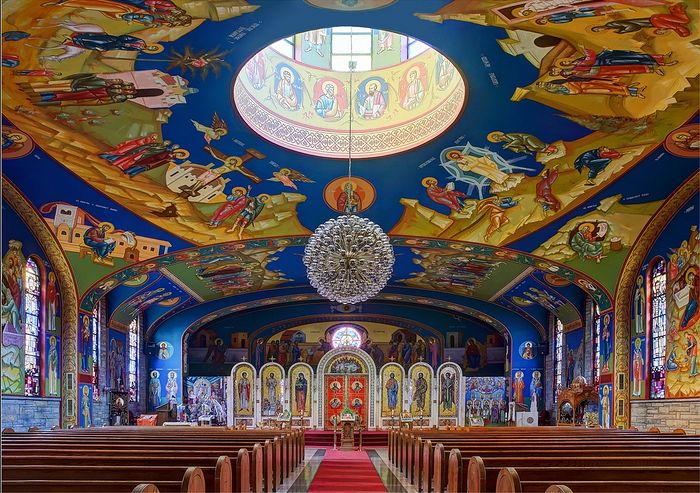
As one who has long lamented the buildings built to satisfy architectural whim or earthly focus or budgetary dime, I find it hard not to be haunted by our unwillingness to build as did the faithful folk of old. Without computer aided design or modern mechanical technology, over many years they built at great cost and labor because they were convinced the cause was worthy and the need was noble. Now we seem satisfied with warehouses for God instead of houses, with apartments instead of cathedral spaces, and with plastic instead of wood or stone.
Churches are not ends in and of themselves. That is exactly why we built them so grand and glorious. They did not end our vision but directed it, making us hunger for the completion of what was begun in brick and mortar. They did not attempt to create the heavenly reality but to imagine it in the same way imagining food does not satisfy our hunger but enhances our desire to eat and be filled. They did not imagine a shape and impose it upon the liturgy and its life-giving Word but proposed a form that flowed from that holy purpose of the Lord's House on the Lord's Day.
Listen to Andrew Guild of New World Byzantine Studios, in Charleston, S.C.
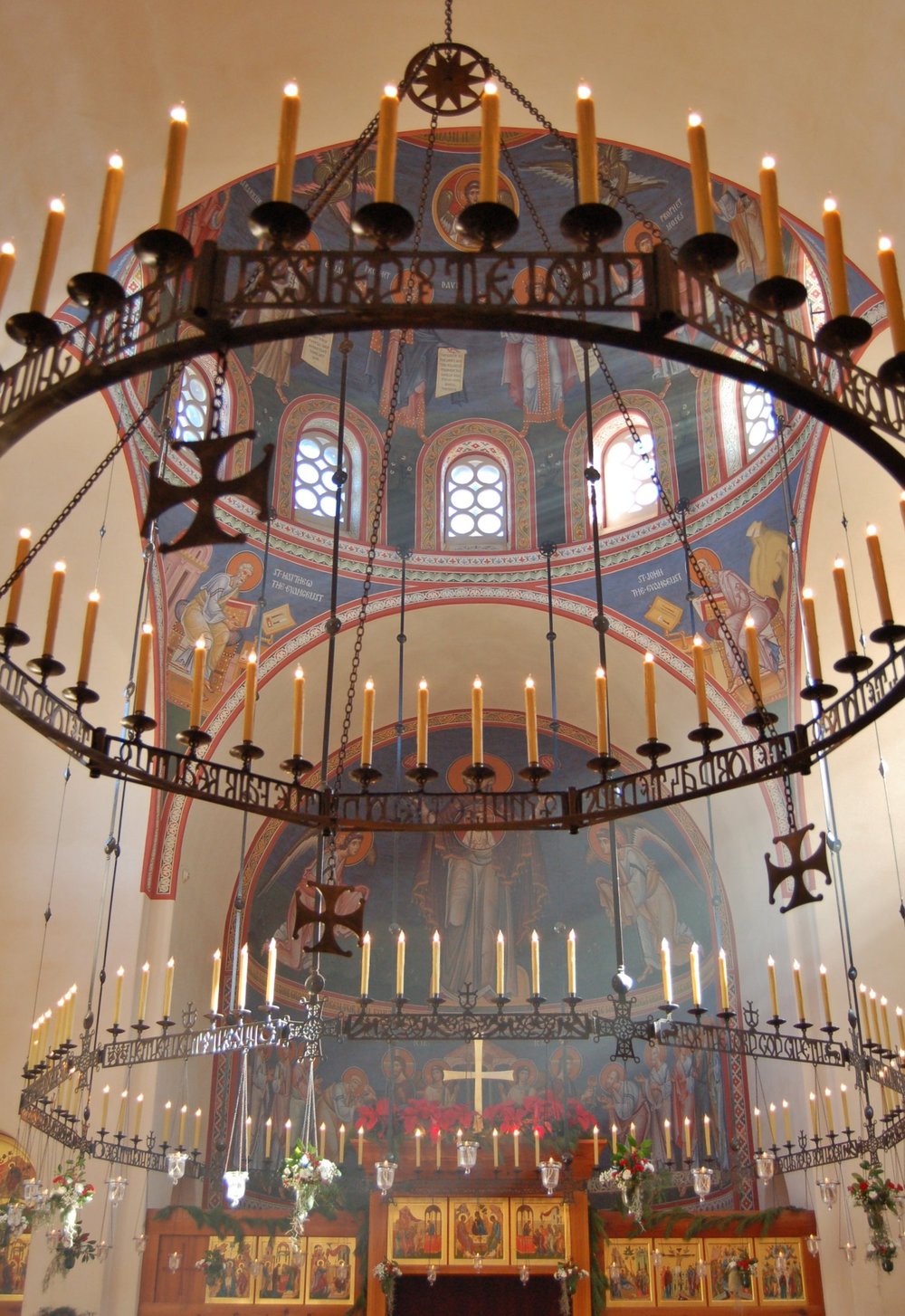
“If you build something that looks like a Byzantine church, but it isn’t really built like a Byzantine church, then it isn’t going to look and sound and function like a Byzantine church — generation after generation,” said Gould.
What he says of Byzantine Churches is no less true of Western Churches, is it? Or at least it should be true of us as well as the East.“The goal in most architecture today is to create the appearance of something, not the reality. ... When you build one of these churches, you want the real thing. You want reality. You want a church that’s going to last.”
Again, Terry Mattingly:
Take a classic, Gothic cathedral in which all the sight lines point toward the altar and sacred art linked to the Incarnation and Resurrection of Jesus Christ. Is that theology different than a giant, mall-friendly megachurch in which the theater seats are focused on huge multimedia screens, a clear plastic pulpit and a studio-quality zone for a rock band?Perhaps he has it down. We no longer see Church in terms of God, of the centrality of the Creator who made all things We no longer have our whole being flow out of and back to the death and resurrection of our Lord Jesus Christ. I am not speaking of those outside the faith but those within the household, or who claim to be. Faith is formed by us and it is not we who are formed by faith. God has become the chief captain of our great service economy whose job it is to do as we please when we want it. So it would follow that architecture must reflect a church where people are front and center, where each of us participate according to preference, and where we all get our 15 minutes in the spotlight. So the failure of modern church architecture is not a case of the architect failing us but we who have failed to tell the architect what faith is, what church is, and where it is all directed. So the master of design has given us what we wanted, though it is not what God intends, and we have learned to be content with strip malls and retail, with coffee houses and comfort, with technology on parade and we controlling it all (and God) with the movement of a single thumb on a keyboard.