Sermon for the Last Sunday after Pentecost, the Last Sunday of the Church Year, Proper 29B, preached on Sunday, November 25, 2018.
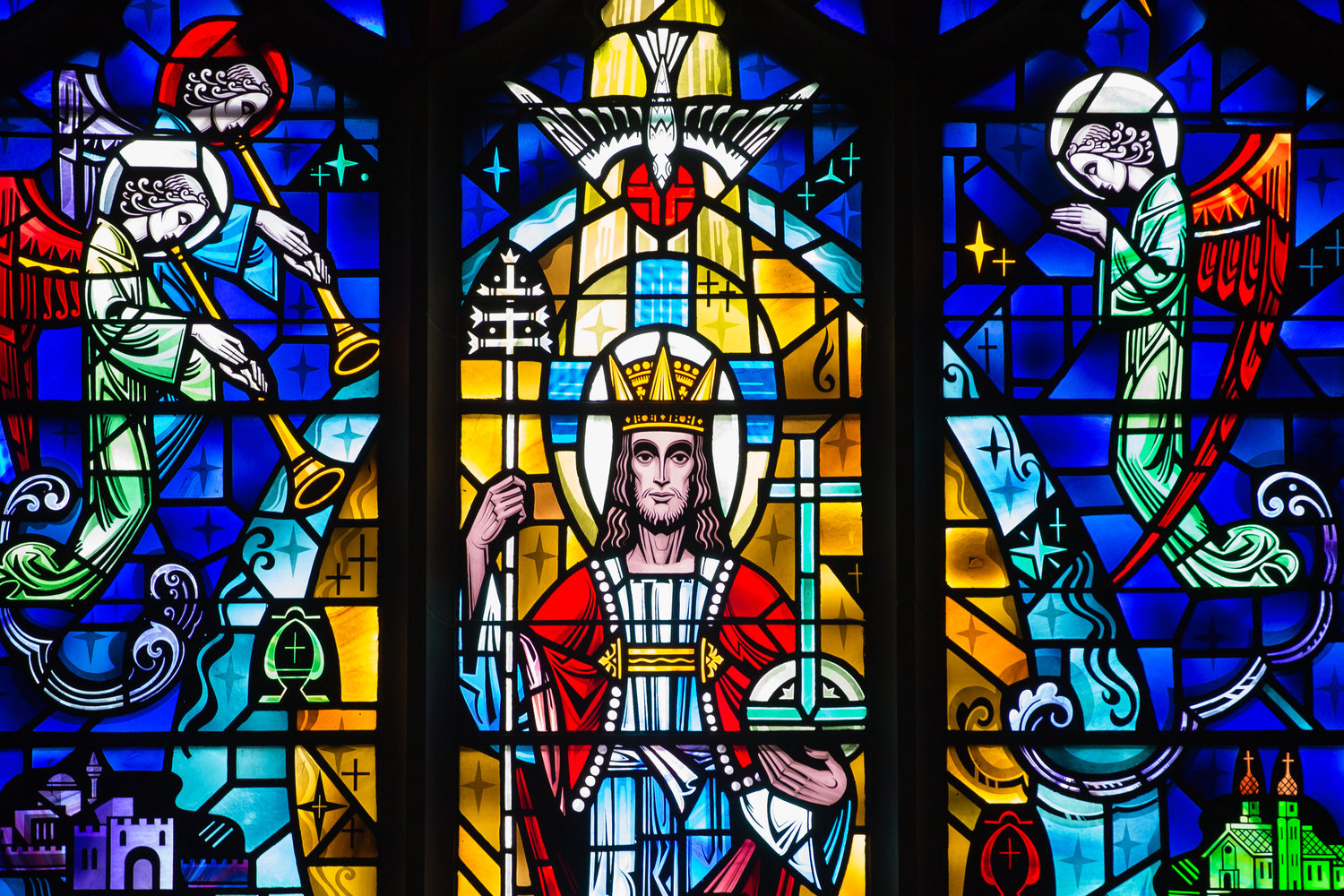
This day is called on some calendars “Christ the King.” But King of what? Instead of earthly victories, we Christians seems to racking up defeat after defeat. Instead of becoming an ever stronger force for morality and virtue, we seem to be impotent against sin that reigns without challenge and immorality that has become normal, even within some churches. We find ourselves under attack and instead of advancing the line of Christ’s reign, we appear to be in retreat against evil. Our numbers shrink if you include those who have decided to abandon the gathering together on Sunday morning and make membership just a name on paper.
We thought that we were fighting for more than a toehold of this world. We thought God had put us here to make a difference against evil and to make a difference for good. We thought we were on a winning team that would grow ever stronger until nations would lay down their swords and pound them into plows to feed the world and meet the needs of the moment. What happened? The dream was false. We missed what God said.
God has never promised said we were to be warriors battling in His name to take back territory from the devil. This world is already passing away. Only a fool would fight to own what no one can possess. We were not placed here to establish an earthly kingdom with borders and governments. These things are also passing away. Do not put your trust in earthly rulers or earthly kingdoms says the Psalmist. Jesus is blunt. My kingdom is not of this world. We are not here to wage a winning campaign for land and power but to preach the Kingdom of God. Jonah ran from his calling but the Lord sent Him to Nineveh -- not to win over a city but rather to preach the Word, calling His people to repentance and faithfulness. The rejection of the prophets and their message was predictable through the ages but the Word of the Lord still endured to John the Forerunner who pointed to the Messiah, the Lamb of God who takes away the sins of the world.
The Lord is not about to prop up an earthly kingdom that must be constantly defended. The Lord is about His Word -- the Law preached in all its truth to condemn the hearts of sinners and the Gospel to be preached with the holy and sweet balm of forgiveness. The Lord is not about raising an army to fight His enemies but preaching Christ’s victory once for all. So Jesus says that those who hear you or me, hear the Lord, when we repeat before the world the Word of Christ’s death and resurrection. The Lord is not in the business of simply trying to improve our bad behavior but is determined to make new old sinful hearts and to wash clean that which is stained with sin. Heaven and earth will pass away, but the Word of the Lord will endure forever.
You know not the hour nor the day. When He will determine to finish His new creation is a mystery we cannot crack. The angels who will act as reapers of the harvest of judgment and the angels who will act as heralds of the harvest of the righteous do not know when. Not even the Son of Man knows. It has been appointed by the Father alone. He who saw through the ticking clock of the ages to determine the ripe and fruitful moment to bring forth from the Virgin the long promised Savior, He will also sift through the passing days to determine when the final day dawns. Until that time, it is enough for us to be on guard and awake, doing His bidding and speaking His Word until He comes again.
Our comfort lies in the fact that we are the elect, the chosen of the Father, to whom the Spirit has spoken and in whom weary and fearful hearts have been raised to hope by faith. Our comfort lies not in earthly kingdoms and rulers but in the promise placed upon us in water that we are the children of God. Our comfort lies not in earthly victories or successes but in the bread of heaven that feeds us Christ’s flesh and the cup of salvation in which we drink of His blood. Our comfort lies not in improving our position against our enemies but proclaiming the Word of Him who surrendered Himself for us and when hell was dancing rose up on the third day to end their celebration. Our comfort lies not in seeing with our eyes how God’s eternal purpose unfolds but in seeing through eyes of faith that we are His, we are the people of His pasture and the sheep of His flock, and the Good Shepherd has lain down His life for us, His sheep. And not only for us but for many in other folds we do not know.
The sun will surrender to the darkness, the moon will reflect no light, and the stars will fall from the heavens, but do not fear. Christ is our light and He is our sun, moon, and stars, the lamp for our feet and the light for our path. The world will erupt with the uncertainty of wind and weather, of earthquake and storm, of human and natural disaster, but we shall not be moved. We belong to Him. He is coming. He is coming with His angels to gather the elect from the corners of the earth. Not one whom the Father has chosen will be lost. Remember what Jesus prayed in the Garden, “I have lost not one whom You gave Me.” Jesus is speaking about you and me and all who have loved His appearing. Nothing shall separate us from the power of His love. Not dominions or powers, principalities or kingdoms, height nor depth, things in heaven or things on earth nor things under the earth. So great is His grasp upon us.
Set free from our fears, we are free to speak the eternal word without constraint. Since it remains His Word even when He speaks through our voices, we do not worry about the outcome. His Word shall not return to Him empty handed but will accomplish the purpose for which He sends it. It is enough for us to be faithful, to be awake and alert, always doing what He has given us to do while it is still day lest the night come when the work must be finished.
He is near. Though this is a threat to those who refuse His mercy, this word is comfort and promise to those who know that mercy in Christ. We are not on our own. We have not been abandoned. The Church is not a franchise operation with a silent partner. We are His and the Church is His. He is always here. His Word is the living voice through which He speaks and accomplishes His saving purpose. His Sacraments convey Christ to us where He has promised to be, where His grace is accessible, and where the Spirit is working even now.
Luther’s words spur us on. A Mighty Fortress is our God, a trusty shield and weapon. He helps us free from every need that hath us now o’ertaken. The old evil foe now means deadly woe. Though devils all the world should fill we tremble not we fear no ill. They shall not overpower us. He can harm us none; He’s judged; the deed is done. One little word can fell him. Take they our life, goods, fame, child, and wife – though these all be gone, our victory has been won. The Kingdom ours remaineth.
The year is surely drawing near, the day which God appointed. But do not lose heart, do not grow weary in well doing, and do not surrender to the foe. You belong to the Lord. He has promised to speak through your voice and He refuses to surrender you to the enemy. So take heart. Rejoice. Heaven and earth will pass away but the Word of the Lord and those whom He has redeemed will endure forever. Amen.
Tuesday, November 27, 2018
A Tone Deaf Pope. . .
Leo X will be forever remembered for his handling of Luther and the call to reform. Alexander VI will be forever remembered for his lifestyle. Pius XII will be forever remembered for how he dealt with the Nazi threat. Benedixt XVI will be forever remembered for his resignation. Some popes have risen to the challenge but the memory of those who failed seems to be more firmly entrenched in history than those who were competent or better.
Pope Francis has proven to be somewhat a theological lightweight, certainly not up to the standards of Papa Ratzinger. He also seems to be somewhat of an enigma -- running right up to the edge of controversy and then failing to follow through, confounding critics and supporters alike. So what is the actual outcome of Amoris Laetitia? Those were battles of his choosing. The issue of clergy sexual abuse, homosexuality, and the failure of episcopal supervision was not his choice but it will certainly be one of those things for which he will be forever remembered. So what does it mean that Francis has named Cardinal Blase Cupich of Chicago to a four-member organizing committee for next February’s Vatican summit on clerical sexual abuse -- you know, the summit that stunned the USCCB when their own plans were forcibly put on hold until its outcome.
So why is this appointment raising eyebrows? Because this is the self-same Cardinal Cupich who has rejected Archbishop ViganĂ²’s testimony on the McCarrick abuse cover-up calling it a “rabbit hole” distracting the Church. This is the same Cardinal Cupich who rejected homosexuality as a significant contributing factor in the abuse of minors (despite the reality of statistics showing that it was perhaps the most significant factor). This is the same Cardinal Cupich who not only brought his own competing plan to the USCCB meeting and then welcomed the Vatican postponing U.S. bishops from voting on new measures to prevent abuse and its cover-up by bishops failing to be bishops.
In other words, Francis has chosen a fellow who has distanced himself from Francis Cardinal George and failed to repudiate Theodore no-longer Cardinal McCarrick, and proven to be something of a PR nightmare in suggesting that the pope had bigger fish to fry than the failure of priests and bishops to do their jobs (climate change among them). All in all, Francis seems rather tone deaf, perhaps more wishing that it will fade from the news and people's memories so that he does not really have to do anything. If you will allow me, this is typically the way Rome has met most challenges. Rome and the occupants of the Chair of St. Peter have chosen to bide their time, focus on peripherals and window dressing, and do less than what people want and is necessary. Francis seems up to this norm and it is hard to see how tainted individuals can function as leaders in the resolution of this crisis. So pardon this Lutheran for comments from the peanut gallery, but it does not seem that there is much hope for decisive, honest, honorable, and effective resolution to this failure that seems to come back when Rome has sighed in relief believing that it has survived another crisis.
If Lutheran leaders are reading, take note and do not follow Rome's lead. Our problems are not the same as Rome but they cry out for decisive, honest, honorable, and effective leadership from courageous and faithful Lutheran leaders. A PR moment will not due for us anymore than Rome. We need to figure out what it means to be the Church of the Augsburg Confession and then to act like it. Pray for our leaders to help us make the faithful and difficult choices that surely need to be made for our Lutheran jursidictions to survive and not slide into obscurity among the foibles of evangelicalism and an unbelieving mainline Protestantism.
Monday, November 26, 2018
The age of blind faith. . .
The Middle Ages are often described as “the Age of Faith.” But surely, if any age deserves that epithet, it is ours. True, the Middle Ages were the age of Christianity, but hardly the age of faith. If we take faith in the common, though oversimplified sense of blind belief in that which is not seen or understood, then the Middle Ages, with their worshipful admiration of Aristotle, fine definitions, and extremely precise use of language, and monasteries full of busy monks copying and commenting on scholarly texts, are the reverse of the age of faith.So begins a good article from The Federalist. You can read it all here. David Breitenbeck has done a very effective job in making his case that ours is the age of faith -- not of Christianity but of faith. Therein lies the problem. It is not just that what under girds our secular age is a skepticism of religion and an antagonism against it but that the secular worldview is itself accepted by faith and not by reasoned explanation or informed consent.
The educated man of the Middle Ages or Renaissance, by contrast, could tell you exactly why the Earth must be the center of the solar system based on empirical observations and sound reasoning. He could cite the arguments for and, what is more important, the arguments against his own position.Today the prevailing opinion of scholars or scientists is accepted without any real understanding of why or any real consideration of the opposing points of view. It is the anarchy of a people easily led and easily convinced without having first considered who is leading or where things are going and without having paid all that much attention to the arguments for or against where things are going. We are a people of blind faith but we posit that faith not in the gods of our fathers but in our modern gods of opinion and feeling. We trust our instincts about what is true and what is false more than we pay attention to the reasons for such judgments. Worst of all, we have rejected religion not because its claims have proven false but simply because its tenets violate our sacred principles of who should be right and who should be wrong.
Christianity is not waging a war for the mind but for the heart and the modern heart is captive more to whims, desires, feelings, and instincts than to anything else. It is a dangerous time and things are moving very quickly -- so quickly, in fact, that it is a struggle to keep up with what people should be thinking and believing. Facts do not move so quickly but game on the ground is not about facts any longer. Christianity fares rather well when we judge the facts alone but the faith cannot compete for the heart untethered from anything but desire, whim, and fancy.
It is not that Christianity has been tested and found wanting but that Christianity has been rejected by those who think they know what it is but who, in reality, do not have the foggiest idea of its claims or its history in fact and truth. While this is certainly a problem for the witness of the faith in our modern age, it is not without terrible consequence for our life together as a whole. We are divided not over facts but over thoughts, desires, and instincts that often conflict with the facts. Consider, for example, how quickly the idea of gender has been surrendered to feeling and instinct. The facts of anatomy count for nothing in the face of a fluid and abstract idea of gender that has only an invented reality. As people, we have become sheep the slaughter, led by unreliable truth toward goals whose consequences have yet to be seen or understood. We are a people ripe for self-destruction, divided over ideas that have no basis in fact, blind to the outcomes of the things we judge true or false, and vulnerable to a pace of change that makes it impossible for us to be a cohesive society and community.
Our modern age ridicules the blind faith in God that Jesus calls us to follow but they fail to see that they have an equally blind faith in the claims of science, the rule of experience, and the instinct of feeling or desire. Breitenbeck is surely correct in saying most folks today know little about the science behind the facts they claim. Instead, they have deposited scientists with the same awe and respect that medieval peasants once reserved for priests alone. The science that they trust so absolutely is not experience sifted through rational judgement but experience that is hard to replicate and conclusions with which others may and often disagree. Technology and its engineers and inventors have become the modern day magicians except that we give them more than our attention and our curiosity -- we have abandoned our skepticism and deposited all our trust in them -- without knowing who is a charlatan and who is a truth sayer. We are the blind being led by the blind without Jesus to cast away the scales from our eyes.
Sunday, November 25, 2018
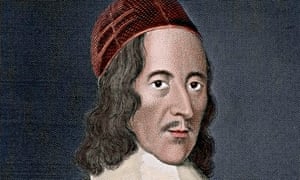
George Herbert. . . a little poetry
Oh King of grief! (a title strange, yet true,
To thee of all kings only due)
Oh King of wounds! how shall I grieve for thee,
Who in all grief preventest me?
Shall I weep blood? why thou has wept such store
That all thy body was one door.
Shall I be scourged, flouted, boxed, sold?
‘Tis but to tell the tale is told.
‘My God, my God, why dost thou part from me? ‘
Was such a grief as cannot be.
Shall I then sing, skipping, thy doleful story,
And side with thy triumphant glory?
Shall thy strokes be my stroking? thorns, my flower?
Thy rod, my posy? cross, my bower?
But how then shall I imitate thee, and
Copy thy fair, though bloody hand?
Surely I will revenge me on thy love,
And try who shall victorious prove.
If thou dost give me wealth, I will restore
All back unto thee by the poor.
If thou dost give me honour, men shall see,
The honour doth belong to thee.
I will not marry; or, if she be mine,
She and her children shall be thine.
My bosom friend, if he blaspheme thy name,
I will tear thence his love and fame.
One half of me being gone, the rest I give
Unto some Chapel, die or live.
As for thy passion – But of that anon,
When with the other I have done.
For thy predestination I’ll contrive,
That three years hence, if I survive,
I’ll build a spittle, or mend common ways,
But mend mine own without delays.
Then I will use the works of thy creation,
As if I us’d them but for fashion.
The world and I will quarrel; and the year
Shall not perceive, that I am here.
My music shall find thee, and ev’ry string
Shall have his attribute to sing;
That all together may accord in thee,
And prove one God, one harmony.
If thou shalt give me wit, it shall appear;
If thou hast giv’n it me, ’tis here.
Nay, I will read thy book, and never move
Till I have found therein thy love;
Thy art of love, which I’ll turn back on thee,
O my dear Saviour, Victory!
Then for thy passion – I will do for that –
Alas, my God, I know not what.
–George Herbert (1593-1633)
Preaching truth to closed ears. . .
By now you heard and have probably already forgotten the story of Fr. Kalchick, a victim in his youth of abuse by a priest, who found a rainbow flag with a cross in his parish. He intended to burn this relic of a previous priest and another time in which this was by intention a gay friendly parish. When Cardinal Cupich got wind of it, he insisted that nothing of the kind be done. In the end, lay folks from the parish burned the flag but Ft. Kalchick has come under the bishop's thumb. We all know what happens when a priest stands up to his bishop’s agenda -- the fellow is finished in Chicago, and probably as a priest anywhere.
The Cardinal's tactic is to claim psychological problems, to order the priest to a psych hospital for an evaluation, and then to decide what to do with the now wounded priest, marked as mentally or emotionally scarred and broken.
This was once the method for those abusing priests but it is also a convenient practice for priests who get under the skin of bishops. Now I am not Roman Catholic and have no skin in this game, as they say. I know that there are certainly occasions in which such evaluation and treatment is salutary and compassionate. I know that in the halls of power, abuse of that power takes many forms. So, you might be wondering, what is the point here or is this Lutheran simply meddling in Roman affairs.
The point is this. Conflict comes from various sources. There are priests and pastors who seem oblivious to how they come across and are offensive when they should not be. Their people skills are wanting. There are conflicts that involve priests and pastors but they are not the source or even the focus of that conflict -- they are collateral damage to internal power struggles and prey to the alligators who seem to thrive in some congregations. There are conflicts due to priests and pastors who themselves delight in pushing people's buttons and who seem to create chaos and bitterness wherever they go -- not a mere personality defect but worse -- all so that everything goes their way.
But. . . there are other conflicts over doctrine and truth and practice. They are not the same but are often treated as if they were. These things happen not only in Rome or in Wittenberg but everywhere doctrine matters and because doctrine matters, practice cannot be ignored. We tend to lump them all together into one as if these conflicts were not different. They are radically different. Priests and pastors are sometimes their own worst enemies and do themselves in with foolish things said and done or by making everything into a doctrinal matter and making every hill one to die on. I know. I was probably that guy at one point. I have had friends and acquaintances who were those guys. We need good and honest friends to help us out when we are those priests and pastors. Probably not bishops but peers are best suited to help us see how we have contributed to the mess. But when doctrine is at stake or faithful practice is dismissed as something unimportant, this is not something treated by therapy or friendly conversation. This must be addressed with truth.
When doctrine and faithful practice are at stake, when this is conflict over that which we must faithfully preach, teach, and pass on, the solution is not therapy or friendly conversation. The role of episcope has become confused with the role of conflict manager. Those whom the churches have assigned with ecclesiastical supervision have been gravely tempted to become firemen, to go and put out fires in parishes, find out who is to blame (conveniently often the priest/pastor), and deal with him. Ecclesiastical supervision is not about putting out fires but standing for truth. Speaking the truth with love is the domain of all of us but it is surely and essentially the specific responsibility of those who exercise ecclesiastical supervision over priests/pastors and parishes. Doctrinal conflicts cannot be resolved by a change of leadership. Surely there is room and place for those involved in those conflicts to confess and seek the forgiveness for those whom they have wronged in their vocation of preaching, teaching, and presiding but there is not and should not be repentance for holding to the truth of the Word that endures forever. When we confuse other conflicts with conflict over what we believe, confess, and teach, we trivialize the faith and betray the solemn responsibility given to those who provide this pastoral presence within the parish and those assigned to oversee priests/pastors and parishes.
In Lutheranism as in Rome, those assigned with ecclesiastical supervision have not only great responsibility but great power. That power can easily be abused and I am sure it has many times but it can also be denied. Those assigned roles of ecclesiastical supervision of doctrine and practice in the churches must be careful to discern what the conflicts are and are not and how best to deal with them. Putting out fires is a hard and wearisome duty -- ask those who battle forest fires in our land. If all the energy is spent trying to calm the waters, how much time and energy is left for the greater duty to preserve doctrinal integrity and promote faithful practice?
Whether we call them bishops or superintendents or district presidents is a smaller matter than what duties they have been assigned and how they carry out those duties. I know that we expect much of them -- too much. We think them wizards to fix all sorts and kinds of problems (from declining numbers to financial shortfalls to personality conflicts to alligator filled swamps of congregations to pastors who have no people skills, and well, the list goes on). We love to criticize them (as some might think I am doing here) but what we need to do is to free from of their firefighting responsibilities in order that they may fulfill the most important duty they have -- to oversee doctrine and practice over those assigned into their care. Their success and integrity -- indeed for the whole church -- depends on this more than anything else.
It is frightfully easy to promote false doctrine in a church -- certainly much easier than changing the color of the carpet in the narthex! Because of this, both priests and pastors as well as their parishes need to hear and heed their overseers (managerial speak for bishops) and overseers need to make sure that the highest goal and duty they have is to orthodox doctrine and its accompanying faithful practice. The Word of the Lord that endures forever demands no less than our full attention to this. Speak the truth in love but speak it clearly and hold us accountable for that saving truth in Christ is the ONLY rationale for our being.
Saturday, November 24, 2018
Here! Here!
Having lately led my Bible study group through Hebrews, I again testify with wonder to the power of God's Word, to its timeliness for this moment, and to its profound wisdom even unto salvation. But my journey through Hebrews was itself led by one of the per-eminent teachers of our day, the Rev. Dr. John Kleinig. His mastery of the text and teaching skill is available to all through the commentary published not long ago by Concordia Publishing House and available here. It is certainly not outside the appreciation of anyone in the pews even as it offers a more skilled reader deeper insights than you had ever imagined from the text. I especially love the way he connected each section to a hymn from our hymnal, Lutheran Service Book. My friend is one of the most trusted voices in a sea of people shouting for our attention; he is one worth your time and a great treasure of the faith for us all and not only for Australia, which is his home. All of us would do well to pay heed to such teachers and their voices calling us to faith and faithfulness.
If you wanted to walk with me through Hebrews, alas, it is too late and we have moved onto another topic. But if you want to walk through Hebrews with Dr. Kleinig, you can do so. Click here for all 27 YouTube videos and you can hear it from the mouth of the teacher himself. The playlist is worth every minute of your time! Just to make things easier, I have posted the first video here below.
And if you like what you hear, he applies his same skills to another book profound in its teaching but less well known to us, the book of Leviticus. Truly knowing Leviticus opens up not only Good Friday but the Divine Service of Sunday morning to you in ways that will not only impress but strengthen you, your faith, and your life in Christ. The whole series of 20 videos is available here as it was taught at Concordia Theological Seminary and the commentary from Concordia here.
Of course I would be remiss in not pointing you to the Flanuer Record and the good work of Gene Wilken who has made available a wide range of videos for the benefit of the faith and the faithful. Good work, Gene! Keep it up. We count on you!
Friday, November 23, 2018
Worse than the Reformation. . .
The Reformation was a theological challenge and not a moral one. Yes, Luther railed against Popes and their excesses, bishops and their lavish lives, monks whose vow of poverty did not prevent them from living better lives than the people outside the monastery, and priests who were ignorant and immoral. But the Reformation was not primarily a call to moral reform but to theological reform, to the renewed voice of the Scriptures in defining what is believed and how it is practiced in the worship life of the people. It was a theological debate over the core and center of why we are able to stand before God and what commends us to Him. It was a question of authority that compelled Luther and the Reformers to turn away from erring popes, erring councils, and erring magisterium. Luther did so not by turning away from the Church but by digging down to the foundations -- to the apostles and prophets, Jesus Christ the chief cornerstone.
The Reformation took place within a culture that was, at least on the outside, distinctly Christian. The secular rulers were not entirely secular and the community and culture of the people was thoroughly imbued with the Christian identity of the past. Yes, new things were happening. The birth of humanism and the printing press and the notion of state supported education were all shaping what was happening at the time but the landscape was a Christian one -- people believed in God, they had respect for the Church, they observed their lives through the Sacraments, their calendar was shaped as much by the Church Year as by season, and they saw themselves within the context of God's unfolding work and will.
The post-Reformation period did not see the decline of Christianity but its renewal, albeit within the fractured state of Protestantism and the competing claims of different churches. Judged by the number of books published alone, it was a fruitful time of considering, study, confession, and theological endeavor. Even Rome was renewed, becoming even more Roman following the Council of Trent. This Counter-Reformation was not simply a me too movement but an attempt by Rome to confront some of the things that they believed the Reformation had exposed -- liturgical abuse, failure of catechesis, and corruption among them.
The modern day abuse scandals are far different and they have occurred at a far different time in history. It is not so much about theology but about morality. The scandal here is that priests not only abused children, youth, and young adults but that this was primarily homosexual abuse that betrayed a culture of secret acceptance of homosexuality. The scandal here is that bishops not only knew but turned a blind eye to it all -- from the active homosexual behavior of the clergy to the abuse of children and youth. The scandal here is that the message of the Gospel has been betrayed not by false theologies but by the immorality of clergy. Yes, I know, it is not strictly morality at play here but those outside the Church see this as a grave moral failure and not a theological crisis. The world has stopped listening to those who speak for the faith not because they found them to be speaking falsely but because they found them to be unworthy voices and untrustworthy ones at that.
All of this comes at a time when the culture is already unfriendly toward Christianity in general and the specific jurisdictions in particular. Europe is a declining Christian landscape in which the people have largely privatized what faith they have and ignored the Church -- except for the cultural expressions that accompany seasonal feasts and festivals. The diversity of Europe's ethnicity and its culture have competed against Christianity and the decline in the vitality of the Christian faith have been hastened by the moral scandals. In other words, those who reject the Church's theology have no found good reason to reject the Church's witness -- one with which the faithful who remain find hard to disagree. This is not primarily a theological crisis but a moral one and yet it has profound theological implications. The voice of the Church has been tainted, perhaps even silenced, and at least muted by the loss of moral authority and credibility. While this abuse scandal is largely, at least in terms of the media, a Roman Catholic problem, it will affect the witness of Christianity as a whole.
The aftermath of this scandal will most certainly be met with some sort of reform and yet it will also be accompanied by definite decline in Rome. The renewal may very well take the shape of a smaller Roman Church and the turnover of leaders responsible for the scandal or who have failed to be agents of its rightful repair. The consequences for non-Roman churches may be similar. In the end, the efforts of those to silence orthodox Christianity will be bolstered by this moral failure and will require other faithful Christian institutions to regroup -- as well as Rome. Finally, the one positive fruit of the scandal may well be the renewal of ecclesiastical supervision within the churches -- renewed attention to the fact that we are all accountable and this accountability has consequences.
So, will it be worse than the Reformation for Rome? Possibly, at least from the secular forces aligned against Rome. The moral house must be set in order for Rome to survive but to one Lutheran looking from outside, the theological house still requires serious attention. The heart and soul of orthodox Christianity is under attack and morality alone will not turn back these enemies of Christ. What we should all hope and pray for is not the end to terrible news from the media but an honest and faithful movement of renewal in creed and confession, clergy and church, doctrine and life.
Thursday, November 22, 2018
The Day Before Black Friday. . .
According to reports, while Black Friday sales' start times have continued to creep
earlier as retailers look to max out on one of the biggest shopping days
of the year, some retailers are bucking the trend.
While the past has seen many stores open
their doors the day before, on Thanksgiving, (Sears did so in 2010,
Walmart in 2011, then Target in 2012), several retailers and mall owners have refused to open early. According to data gathered by BestBlackFriday.com,
at least 60 retailers plan to keep their stores closed on Thanksgiving
this year. Whether this is because they wanted to
give employees time to spend with family or because they have decided another marketing strategy will work better for them, I do not know. But I hope that we will take time to give thanks for more than a day reprieved from the holiday stresses that we know are soon to come.
When the Church acknowledges a day of national thanksgiving, we do so not to baptize the old holiday traditions and somehow make them Christian but to acknowledge the mercy of the Lord who makes the sun to shine on us all and makes it rain upon the just and the unjust. The world does not have to acknowledge this mercy to benefit from it. Remember Luther's Catechism:
Give us this day our daily bread. What does this mean? God certainly gives daily bread without our prayer, even to all the wicked; but we pray in this petition that He would lead us to acknowledge this and to receive our daily bread with thanksgiving. Without God’s providence none could survive just as without God’s forgiveness no one could be saved. In the Our Father we pray not so much for the daily bread but for holy heads and hearts to know and rejoice in the mercy that provides it. For in teaching us to pray for daily
bread and forgiveness of sins, our Lord Jesus teaches us to pray in acknowledgment that our lives
depend entirely upon God -- here and now and there in the hereafter.
Neither the rain nor the sun is different but the same no matter on whom it showers or shines. Yet we are different. It may not seem fair or just to us but the mercy of God is never fair or just. He gives what we do not deserve and we are richer for those gifts -- whether we see or acknowledge them or not. But in the reception of a grateful heart the mercy transforms us by those gifts. So today, if we do anything at all, let us not forget to give thanks for such mercy. It confuses and confounds us in its lavish generosity but it has the power to do even more than that -- it has the power to transform. Pray for such faith, such a thankful heart, and for eyes open to see His mercy new every morning.
Wednesday, November 21, 2018
PENTECOST 2017. . . coming to a parish near you. . .
On Sunday June 4, 2017, Pentecost, the parishioners at The Church of St. Francis Xavier in New York City were asked to let loose and “celebrate” in honor of Pentecost. Father Bob VerEecke blasted Kool & The Gang’s 1980’s hit “Celebration” and asked his congregation to “abandon care to the wind” and join him in THE WAVE! A parish served by Jesuits, the heart and soul of Pope Francis, and clearly a rather vain and obvious attempt at being culturally relevant.
Tuesday, November 20, 2018
A privileged class. . .
I remember when one heard complaints that it was hard to be single in a culture (and church) designed for those married (and with children). There were books written to remind the culture (and church) to be sensitive to the singles among the privileged class of married men and women with children. It seems like just yesterday.
Whatever privilege was once associated with married (and with children), that is not the case today. It is true that government and other institutions did foster a special place for the family but that was because it was understood that marriage and children were good for America. It was less attached to objective values than the desire to see people to take care of their spouses and families to produce children needed for the ever expanding economic need for workers. In any case, families were once considered better for society as a whole than singles. It was not a religious judgment but it was once a common conclusion and not without evidence. No more.
More than 3.8 million babies were born in the U.S. last year, but the birth rate drop was the largest one-year decline since 2010. The drop continues a decline but the consequences of the decline and how it has sped up recently remain to be seen. The impact of this will be felt on a whole variety of institutions and not simply the economy. A family living in a split level, with kids and pets behind a white picket fence with a station wagon in the driveway is more than nostalgia -- it is ancient history to most folks today. Just Google fertility rate and you will see articles in conservative journals and in the most liberal media as well.
So, if husbands, wives, and children are no longer a privileged class, is there another group that has taken up their role as a favored group? Gay, lesbian, and transgenders certainly seem to have become the privileged class in America today. No one would even think of trying to produce a successful movie or TV series without a significant gay, lesbian, or transgender character. All across the media spectrum, gay, lesbian, and transgender have become an essential ingredient in the ever sacred goal of diversity. Watch any gay pride parade and you will see homosexuality flaunted in all its most elaborate extremes and yet the class reserves its role as a protected group that should be immune from all criticism. Couple this with the fact that the numbers of exclusive homosexuals remains very small (3-4% at most with transgenders being a significantly smaller percentage in comparison to even this group) and you see what I mean.
So what does it all mean? I wish I knew. It is certainly true that gay, lesbian, and transgendered Americans have moved quickly from an oppressed super minority to a tolerated super minority to a favored class but still a super minority. At the same time, Christians have seen some of the teflon wear off and criticisms seem to stick more now than ever. Furthermore, there is more than a super minority of people ready to label Christian opposition to the gay, lesbian, and transgendered lifestyle hate speech not to be tolerated.
At any rate, I am getting a little tired of the old saw that gay, lesbian, and transgender suffer oppression. As I see it, nobody from the Christian side is saying anything about restraining the flamboyance of life and the provocative speech of this group but the GLBTQ side is very ready to muzzle Christians who refuse to celebrate the GLBTQ sexual identity. Such power can only be exercised by a group which has become a favored group and a privileged class.
Monday, November 19, 2018
The only stone left. . .
Sermon for Pentecost 26, Proper 28B, preached on Sunday, November 18, 2018.
A year ago almost to the day, the Georgia Dome was imploded. Where the Olympics were held, where two Superbowls were played, where three Final Fours finished, what was then the biggest covered stadium in the world, was demolished after 25 years. Imagine that. But then again, we are used to it. Life way is gone; Amazon is coming. We live in a world in which buildings come and go. Some outlive their usefulness and are taken down. Others fall to terrorists. Others are destroyed by natural or manmade disaster. We build them up, we tear them down, and we build them up again. We are in love with this power to remake the landscape to our image.
In the days of Jesus, buildings took a long time to build. The temple was 46 years in construction. Timbers were hauled from far away and stones cut in quarries and then placed one on another without the benefit of modern technology and without computer aided design. Where we are impressed with new buildings, the disciples were impressed with the buildings that were there before they were born and would be long after they were dead. We see no constant but in Jesus’ day the buildings stood for generations.
So the disciples commented to Jesus about the seeming permanence of those stone buildings in the Temple square. Jesus knew it was all soon to pass away. The temple made with hands, even hands that stretched over several generations would be gone and only its foundation would remain. But there was another temple – not built with hands – that would endure forever. Yet the disciples were not ready to hear of this. They only wanted to know when – when will all these things take place and what are the signs that will point to them? In other words, the disciples were still focused upon building when Jesus was calling them to be focused on Him. Could it be that we have the same problem?
The constant is not the skyline of the city or the feelings inside you or even your memories. The constant is the Lord and His work to save a lost and condemned people. Where we are tempted to look around us or to look inside of us, Jesus calls us to look away from ourselves or our accomplishments and to Him. “See that no one leads you astray.” Our great temptation is not monuments to our greatness but believing in our power to tear down and make new. This is our great temptation and what will lead us astray – not buildings but hearts that seek something new, minds that are attracted to other ideas, and voices in our ears who promise us everything but only fill us with lies.
Many will come in my name. Not a few distractions but many who presume to speak for God or who promise secret wisdom or who entice us with the promise of getting everything we want without giving up anything in exchange. Many will come in His name and they will offer either the false god of our technology that will enable us to have every-thing our hearts desire or the false god of permanence that says everything remains the same.
Many will come in His name but they will oppose His truth with the lies that sins are not sins and that evil is not evil. Many will come in His name but they will turn things upside down to the point where we don’t even know what a man or a woman is, what marriage or family is, what life is sacred and what life is disposable. Many will come in His name but they will not preach the cross; instead they will preach your best life now, how to make peace with death, and how to be spiritual without being religious.
We think that the worst thing that could ever happen is that we might not get what we want but Jesus warns against an empty religion in which everyone gets what they want, gets to do what they want, gets to worship how they want, and gets to make God do what they want. The disciples of old thought that the world would come to an end if the great and mighty buildings that stood before they were born ever came crashing down at their feet. We think that the world will come to an end if we cannot tear down the past and build up a new world in our own image and for our own purpose and to reflect our own values.
We are in love with the idea of a better world in which nations work out their differences and violence threatens no one, where no one is bullied or threatened by things they don’t want or like, where we can tame nature to prevent disaster, where the environment is as valuable as people, where every child is wanted, every family is happy, and every person fulfilled, where no one goes hungry or without fresh water or medical care. It is not that these are bad things but this is not what Christ has come to accomplish. The world is passing away and you can do nothing to stop it or slow it down or turn it around. We are not resigned to it but look forward to what will endure – a new heavens, a new earth, and a new you.
Christianity is not destined for world dominance but to be rejected, persecuted, and ridiculed. Our future does not lie in a kingdom built in and of this world but in the kingdom that is not of this world, the kingdom that will not pass away, the eternal kingdom that we know here only in part but soon we shall know fully – when Christ comes again.
Yet do not be anxious by the things around you – the bad you fear or the good you want to keep. Do not surrender your hope to despair nor give up your faith in the face of trial. The Lord is with you. The stones of the temple may fall but the temple of Christ’s body will endure forever. The world may be passing away but the eternal future is waiting to dawn. The Church may not be popular but she will endure; the gates of hell shall not prevail against her.
And you. You whom the Lord has called through the voice of His Word and washed in baptismal water and forgiven your many sins and fed and nourished at His Table. You will endure. And those who endure shall be saved. The world cannot hasten the day when all these things will be done nor can it bypass the time and the day when the Lord will surrender what is already passing away in order to bring forth that which is eternal. So do not lose heart, do not great weary of well-doing, do not neglect the meeting together as is the habit of some, and do not exchange your eternal hope for a moment of fear. God is at work in all this.
Keep your eyes fixed upon Jesus. Make sure you know His Word well enough to spot the fakes and to uncover those who would deceive you. Speak this eternal Gospel in every circumstance because the world cannot steal from you that which Christ has given you. You belong to Him. There is only one stone that will not fall and that is the stone the builders rejected. It is the stumbling stone of those who do not believe and it is the rock of refuge on which we shall stand today, tomorrow and forever.
And you are living stones whom the Lord is building up into that eternal dwelling place, that everlasting Temple that the violence of this world cannot shake and the powers of this world cannot tear down. You do not need to know when or how these things will take place. All you need to know has been revealed to you in Christ Jesus, whom you know through the Word of Scripture and the means of grace.
Last week the Lord lauded the faith of the widow who gave all she had to the Temple. Now just a few verses later, Jesus says the temple will be gone. Did that woman make a bad investment? No, Jesus does not condemn her but lauds her faith that sees not simply buildings but the ministry that went on in them. This is the same thing you have been asked to do in the Blessed, Chosen Generation campaign. The building is not our goal but the work that goes on within this place.
In the end, we do not fear the fake wizards behind the curtain because the curtain has been torn from top to bottom. It exposes those who are not real and it reveals the One who is eternal. So keep your eyes on Christ. Draw near with a true heart for God is with you and in you and will not now surrender you for any cause or to any enemy. Hold fast to your faith and you shall endure and be saved.
Winston Churchill famously said that we shape our buildings and then they shape us. In other words, we fall in love with what we can do and we think what we have done is the mark of our glory. He is surely right. We have been undone by our accomplishments and undone by our fears time and time again. To a people in the throws of change and decay, this is the message. Do not be led astray. The one who endures to the end, shall be saved. Look to Jesus and you will be saved. Amen.
Let the Dead Still Speak. . .
You have read it here before. Tradition means giving votes to the most obscure of all classes, our ancestors. It is the democracy of the dead. Tradition refuses to submit to the small and arrogant oligarchy of those who merely happen to be walking about. G. K. Chesterton, in “The Ethics of Elfland,” Orthodoxy (1908), p. 85
So lets hear from the dead:
Antinomian Aversion to Sanctification?
By Doctor Kurt Marquart
An emerited brother writes that he is disturbed by a kind of preaching that avoids sanctification and “seemingly questions the Formula of Concord . . . about the Third Use of the Law.” The odd thing is that this attitude, he writes, is found among would-be confessional pastors, even though it is really akin to the antinomianism of “Seminex”! He asks, “How can one read the Scriptures over and over and not see how much and how often our Lord (in the Gospels) and the Apostles (in the Epistles) call for Christian sanctification, crucifying the flesh, putting down the old man and putting on the new man, abounding in the work of the Lord, provoking to love and good works, being fruitful . . . ?”
I really have no idea where the anti-sanctification bias comes from. Perhaps it is a knee-jerk over-reaction to “Evangelicalism”: since they stress practical guidance for daily living, we should not! Should we not rather give even more and better practical guidance, just because we distinguish clearly between Law and Gospel? Especially given our anti-sacramental environment, it is of course highly necessary to stress the holy means of grace in our preaching. But we must beware of creating a kind of clericalist caricature that gives the impression that the whole point of the Christian life is to be constantly taking in preaching, absolution and Holy Communion-while ordinary daily life and callings are just humdrum time-fillers in between! That would be like saying that we live to eat, rather than eating to live. The real point of our constant feeding by faith, on the Bread of Life, is that we might gain an ever-firmer hold of Heaven-and meanwhile become ever more useful on earth! We have, after all, been “created in Christ Jesus unto good works, which God hath before ordained that we should walk in them” (Eph. 2:10). Cars, too, are not made to be fueled and oiled forever at service-stations. Rather, they are serviced in order that they might yield useful mileage in getting us where we need to go. Real good works before God are not showy, sanctimonious pomp and circumstance, or liturgical falderal in church, but, for example, “when a poor servant girl takes care of a little child or faithfully does what she is told” (Large Catechism, Ten Commandments, par. 314, Kolb-Wengert, pg. 428).
The royal priesthood of believers needs to recover their sense of joy and high privilege in their daily service to God (1 Pet. 2:9). The “living sacrifice” of bodies, according to their various callings, is the Christian’s “reasonable service” or God-pleasing worship, to which St. Paul exhorts the Romans “by the mercies of God” (Rom. 12:1), which he had set out so forcefully in the preceding eleven chapters! Or, as St. James puts it: “Pure religion and undefiled before God and the Father is this, to visit the fatherless and widows in their affliction, and to keep himself unspotted from the world” (1:27). Liberal churches tend to stress the one, and conservatives the other, but the Lord would have us do both!
Antinomianism appeals particularly to the Lutheran flesh. But it cannot claim the great Reformer as patron. On the contrary, he writes:
“That is what my Antinomians, too, are doing today, who are preaching beautifully and (as I cannot but think) with real sincerity about Christ’s grace, about the forgiveness of sin and whatever else can be said about the doctrine of redemption. But they flee as if it were the very devil the consequence that they should tell the people about the third article, of sanctification, that is, of new life in Christ. They think one should not frighten or trouble the people, but rather always preach comfortingly about grace and the forgiveness of sins in Christ, and under no circumstance use these or similar words, “Listen! You want to be a Christian and at the same time remain an adulterer, a whoremonger, a drunken swine, arrogant, covetous, a usurer, envious, vindictive, malicious, etc.!” Instead they say, “Listen! Though you are an adulterer, a whoremonger, a miser, or other kind of sinner, if you but believe, you are saved, and you need not fear the law. Christ has fulfilled it all! . . . They may be fine Easter preachers, but they are very poor Pentecost preachers, for they do not preach… “about the sanctification by the Holy Spirit,” but solely about the redemption of Jesus Christ, although Christ (whom they extol so highly, and rightly so) is Christ, that is, He has purchased redemption from sin and death so that the Holy Spirit might transform us out of the old Adam into new men . . . Christ did not earn only gratia, grace, for us, but also donum, “the gift of the Holy Spirit,” so that we might have not only forgiveness of, but also cessation of, sin. Now he who does not abstain from sin, but persists in his evil life, must have a different Christ, that of the Antinomians; the real Christ is not there, even if all the angels would cry, “Christ! Christ!” He must be damned with this, his new Christ (On the Council and the Church, Luther’s Works, 41:113-114).
Where are the “practical and clear sermons,” which according to the Apology “hold an audience” (XXIV, 50, p. 267). Apology XV, 42-44 (p. 229) explains:
“The chief worship of God is to preach the Gospel…in our churches all the sermons deal with topics like these: repentance, fear of God, faith in Christ, the righteousness of faith, prayer . . . the cross, respect for the magistrates and all civil orders, the distinction between the kingdom of Christ (the spiritual kingdom) and political affairs, marriage, the education and instruction of children, chastity, and all the works of love.”
“Grant, we beseech Thee, Almighty God, unto Thy Church Thy Holy Spirit, and the wisdom which cometh down from above, that Thy Word, as becometh it, may not be bound, but have free course and be preached to the joy and edifying of Christ’s holy people, that in steadfast faith we may serve Thee, and in the confession of Thy Name abide unto the end: through Jesus Christ, Thy Son, our Lord. Amen.”
Concordia Theological Quarterly Volume 67:3/4 July/October 2003
Sunday, November 18, 2018
Saturday, November 17, 2018
A Church that listens. . .
Having seen a few standard operating procedure manuals that range in size from 1000 to 1500 pages, I know how easy it is to answer every issue with words and more words. It is equally difficult to wade through so many words in pursuit of real answers. This is no less true in the Church when we attempt to button down every issue and every possibility. Some have complained that we give the Spirit no wiggle room. I am not sure that the Spirit is all that concerned with the mountains of paper generated in institutional venues and shaped as much by legal concerns as spiritual. No, the Spirit is not required to follow our SOPs. That said, it seems the Roman Catholic Church has it topped.
By the time you read this, the Bishops will have gathered for the XV Ordinary General Assembly of the Synod of Bishops in Rome on the theme “Young People, the Faith, and Vocational Discernment.” The “working document” for this gathering of bishops was a 30,000+ brick of words. What one author called: a bloated, tedious door stop full of sociologese but woefully lacking in spiritual or theological insight. Moreover, and more sadly, the IL has little to say about “the faith” except to hint on numerous occasions that its authors are somewhat embarrassed by Catholic teaching—and not because that teaching has been betrayed by churchmen of various ranks, but because that teaching challenges the world’s smug sureties about, and its and fanatical commitment to, the sexual revolution in all its expressions. Who am I to disagree with his assessment?
In it is the same pious and not so pious drivel that most of us hear and do not heed when a church issues such a monumental sized document. The writer cited, George Weigel, put it this way: [In it is the] oft-repeated claim that young people want a “Church that listens.” That is so obvious as to be a thumping banality: no one, young or old, wants a Church that’s a nagging, unsympathetic nanny. And yes, young people (and the rest of us) want a “Church that listens” in spiritual direction and confession to the difficulties we all experience in living and sharing the Gospel and in obeying God’s law. But above all, and perhaps especially in this time of grave troubles, what young people want (and what the rest of us want, at least in the living parts of the Church) is a Church that lives joyfully, teaches clearly, manifests holiness, offers comfort and support to the needy—and answers our questions clearly and honestly. Young people (and the rest of us) do not want a pandering Church, but an evangelically-vibrant Church that manifests and offers friendship with Jesus Christ.
I want to believe what he has written -- not simply for Rome but for my own communion. I want to believe that we want a Church that listens to the voice of God in His Word, pays attention to the catholic creeds and symbols, is true to its confessions, and holds its pastors and those who exercise supervision of doctrine and practice AND the folks in the pew accountable to what we say we believe. I want to believe that we want a Church that teaches faithfully this faith, not substituting the opinions of man for the doctrines of God while at the same time paying due attention to the faithful who have spoken through the ages the one, unchanging truth. I want to believe that we want a Church that gathers the faithful not for whim or desire of the moment but before the presence of Christ who in His Word and Sacraments is head of the body and Lord of the Church (and we are not). I want to believe that we want a Church that is less concerned about lawyer talk and bylaws and minimums and basic requirements and more concerned with the Word of the Lord that endures forever and how to live out this faith in holy fear and joyful trust as best and as much as we are able within the boundaries of our human frailty. I want to believe that we want such a Church that charts not simply statistic but faithfulness as the criteria for our best for His glory and one that is not as concerned with institutional survival as the flourishing of God's people around the Word and Table of the Lord. I want to believe that. . . but part of me fears that it may not be so.
In every church body there is the soft underbelly of weakness that lives in fear of the judgment of the world that the Church is irrelevant or old-fashioned or out of touch or behind the times or not paying attention to culture or prevailing views. And it is this enemy that threatens us most of all. As long as people die, the Gospel is relevant and the Church that proclaims and lives that Gospel is relevant. As long as people sin, the Gospel is relevant and the Church that proclaims that Gospel is relevant. As long as people are in pain and suffer, the Gospel is relevant and the Church that proclaims that Gospel is relevant. We are contemporary not because we follow on the heels of cultural change or moving opinions but because the need is there and ours is the only Christ to whom we can go to meet that need. We worry about friendliness when we should be worrying about being faithful, speaking the truth in love but not the love that fails this test of honest truth in Christ. We worry about keeping our young people but we pander to them by entertaining them when it is teaching and modeling the faith that will keep them in the Church and not a good time. We worry about financial viability and yet the average church going Christian contributes a very small percentage of all that God has supplied -- so effectively have we communicated the priority of God's will and work that Christ's Church has been forced to beg for that which belongs to the Lord.
Mountains of paper will not save the Church. Listening to the voices of those outside or inside will not save the Church. Christ will save His Church and He will do so through the means of grace that deliver what they speak and sign. He will do so where His people listen to His Word and keep it in holy hearts created anew in baptism with the desire to love Him with all their mind, body, soul, and strength. He will do so not where institutional identity is weak or strong but where identity to the body of Christ and attachment to that community gathered around the Word, Font, and Table of the Lord is central to who they are and what they do. We need a Church that listens, alright, but not one that listens to the clamor of change from culture, technology, desire, and sexual identity. We need a Church that listens, to be sure, but not one that looks for a voice to relieve them of the burdens of the Word that formed them and gave them their life (whether other revelation or extra-Biblical revelation). We need a Church that listens to the voice of God in His Word, pays attention to the faithful confession of that voice in creed and symbol through the ages, and does so from the clergy offices through to the pews and the baptized. Only then will there be a Church strong enough to endure.
Friday, November 16, 2018
Repent. The Kingdom of God is near!
Sermon for Trinity 25, preached by the Rev. Larry A. Peters
In the old cartoon, an aged man with a beard holds up a sign that says “Repent! The end is near!” Well, I am an aged man with a beard and I am here to tell you, it is no joke. The end IS near.
Near is a relative term. Last week ended with the shocking unexpected death of a healthy 68 year old man in our parish. We have many in our parish who are, as it were, waiting for God, that is, nearer than others to their death. But instead it came to one no one was expecting. Such a death reminds us that near is a relative term. The young are to take no comfort in the prospect of a future and the old are to take no comfort from a presumption that they won’t be around to deal with the messes in the news. We are all waiting upon God.
Near may be a relative term but the end is not. It is clear and blunt. The end. The end of all our eyes survey and our minds know and our hearts desire. Nothing of what is will remain except those who live and die in Christ. Everything else is gone to be replaced by something more, something St. Paul calls unimaginable, and something none of us now can predict but only believe. The end is near.
The end is near and we are a people of unclean lips, unclean hearts, and unclean lives. We have spoken words that should not have been said, allowed ourselves to be captive to our hearts desires instead of the Word of God, and been consumed with the things that are not permanent but temporary. We live in an age in which it is legal and moral to rip a child from a woman’s womb but not to speak words that might offend this right. We live at a time when we squander the resources of the internet on porn, unsocial media, and pretend lives. We live together without marriage, divorce when we do marry, lie until we no longer know what is true, and hate those who dare to disagree with us or our political opinions. The end of it all is that we do not feel safe in a world of war and the violence that comes too close to home.
The end is near and we are an unclean people awaiting a clean, holy, and righteous God. Who can make us clean? Who can make us holy? Who can make us righteous? Who can prepare us for the end to come so that we will not be found wanting or unprepared? That is the promise we Christians hold to the world. We cannot predict tomorrow but we can tell them the end is near. We cannot create a better world or a better life insulated from pain, strife, or threat but we can tell them of Him who will not abandon them in their pain or need. We cannot erase sin by ignoring it but we can tell them of Him who forgives our sins. We cannot make the dirty clean but we can tell them of the blood of Christ that cleanses us from sin and its stain. We cannot satisfy with a good life or a long one but we can tell of Him who raises the dead to life that does not end.
Job’s despair is not ours. The end may be near but Christ is with us. He is not some cold and aloof God who watches us from afar but the God who became flesh in Mary’s womb, who lived the perfect life for the imperfect, who died to pay sin’s price, and who rose to end death’s reign. This Jesus not only can but does render clean the unclean. He does it in our midst when baptismal water gives new life to the old dead life left behind in that water. This Jesus is holy enough to cast His holiness over us as clothing so that we are not who we were even though we are not quite who we shall be. This Jesus is righteous enough to keep the Law’s demands for all who trust in Him and not in their own works. No, Job’s despair is not ours. The end is near but Christ is with us.
Christ is with us in the voice of His Word speaking this Gospel to those who have no hope, through flawed and frail voices of preachers whom He calls to serve Him. Christ is with us in the absolution that forgives not in the name of the minister but in the stead and by the command of the Lord Jesus Christ. Christ is with us in the bread and wine that He sets apart to be His flesh and blood, our Passover feast and the foretaste of the Marriage Feast of the Lamb which is coming. The end is near but Christ is with us.
So do not look where people claim but look where Christ has placed His name. Do not despair like Job but rejoice that God IS with us and He is even now bringing us to be with Him when He comes in His glory. Do not seek fulfillment in the world but in Him who is even now completing what He began in you in your baptism. Do not cry out in fear or lash out in bitterness. For we have no attachment to the things of this world. We are but strangers and pilgrims here who know that our lives are hidden with God and He will reveal the blessed and everlasting place He has prepared for us. It is enough for us simply to endure, to hold on in faith to the promises of God kept in Christ so that we may hope in the face of a world which is not improving and a life which is not getting better and better.
Repent. Repent not simply of sin and its free reign in your heart, mind, and life. Repent for exchanging your joy for despair, your hope for fear, your confidence for doubt, and your present God for a distant dream. God IS with you. That is exactly why we are here. We come not for an absent God who might watch us but for a present God who will save us, who is even now saving us by His Word and Sacraments, and who has saved us by marking us with the cross in our baptism and raising us to new life in Christ.
Remember what we sang on Reformation Sunday? The Lord of hosts is with us; the God of Jacob is our refuge. Remember the saints and great cloud of witnesses we sang about on All Saints Sunday? Still, still to faithful warriors cometh rest. Remember, not simply that the end is near but Christ is the end, the beginning and end, for you and me.
Not simply weird. . . blasphemous. . .
One Colorado businesswoman is taking a symbol of her faith to those on the go. Theresa Lay came up with God’s Pill after going through a personal tragedy. “I had gone through loss in my life and I was taking daily communion.
And I thought about a portable way, a quick and easy way to do it,” she
told CBS4’s Dominic Garcia.
One pill is made of matzo bread powder, the other red wine extract.
She says it could be used by the military or people who are traveling.
One person who reviewed the product said it has allowed them to worship in the jungles of Gambia.
“Large groups or just people on the go who want to worship and give thanks to God. That’s pretty much how I invented the communion pill.”
Theresa says the pill isn’t associated with any denomination, it doesn’t matter if you’re Protestant or Catholic. She says 2,000
years ago communion was with fresh bread and wine. These days it’s wine
or juice and processed wafers. The next step can now be prayer in pill
form.
One pill is made of matzo bread powder, the other red wine extract.
She says it could be used by the military or people who are traveling.
One person who reviewed the product said it has allowed them to worship in the jungles of Gambia.“Large groups or just people on the go who want to worship and give thanks to God. That’s pretty much how I invented the communion pill.”

(photo credits: CBS)
Thursday, November 15, 2018
No room in the church. . .
Long ago it was said that the GLBTQ community was looking simply for a place in the churches. Now it seems that this is no longer the aim of those so self-identified and their supporters. In effect, they want to own the place and to be able to prevent those who disagree with them from having any place in the churches -- churches who only a generation or so ago uniformly stood together in opposing the normalization of GLBTQ relationships among those in pews or in pulpits. This is the pace of change which has come with dizzying effect upon the faithful. Even more than owning the place, the GLBTQ community is intent upon repudiating the Christian past which disagreed with their agenda.
But there is one Episcopal bishop who refuses to go with the flow. The Rev. William Love, Bishop of Albany, NY, is the lone U.S. bishop refusing to comply with the new resolution of the Episcopal Church which insists that other bishops and priests will have jurisdiction to act in a diocese in which the current bishop opposes same sex marriage. According to The Rev. Susan Russell, an activist for an inclusive church based in the Los Angeles diocese, Love not only stands alone but must be challenged. Episcopal Church Presiding Bishop Michael Curry said in a prepared statement Monday he's "assessing the implications" of Love's letter and will soon decide on "appropriate actions." The Presiding Bishop insists that the Episcopal Church is "committed to the principle of full and equal access to, and inclusion in, the sacraments for all of the baptized children of God, including our LGBTQ siblings." Curry reminded those who might refuse this that these bishops have taken vows to obey church doctrine and must act in ways that uphold decisions of church. What is either humorous or sad is the fact that the same obedience to church doctrine has notoriously failed to uphold orthodox Christian teaching with respect to the Trinity, the deity of Christ, and a host of other doctrines. There is, apparently, room for disagreement in everything BUT the full acceptance and approval of the GLBTQ agenda.
That has not deterred Bishop Love who not only directed that no same sex marriages would take place in his diocese but labeled the GLBTQ agenda a cause for satanic division in the churches that "turns upside down over 2000 years of Church teaching" about marriage.
We will see how long he lasts. My $$ are on the structures of the Episcopal Church to gut the bishop's power and enforce their stand for inclusivity for everyone but those who disagree with them. Will anyone take my bet???
Wednesday, November 14, 2018
Bishops needed now more than ever. . .
I read a while back “The End of the Imperial Episcopate,” in which Father Jay Scott Newman has some ideas about that which has created a climate for the Roman Catholic Church's current dilemma. One of the things he wrote is something that I have been saying for a while, not about Rome but about the LCMS and, indeed, all Lutheran bodies. He suggests that too many
bishops have become simply distant managers, administrators,
whisperers to governmental agencies and elected officials, and CEOs of a religious enterprise instead of being bishops -- that means administering ecclesiastical oversight as models and supervisors of faithful doctrine and practice within their jurisdictions. While he is positing this as something that has contributed to today's problems in Rome, I believe it is true across the board, certainly within my own denomination.
For too long we have minimized the importance and the essential character of ecclesiastical supervision and instead emphasized administrative competence and a coaching role for those who are assigned episcopal ministry. That has been to our poverty. We do not need bishops to serve as politicians, managers, administrators, counselors, visionary leaders, or coaches. We need bishops who act like bishops -- people who teach, shepherd, watch over, hold accountable, and, if and when necessary, discipline those within their charge. You can quibble about the title bishop (as I am sure some commenters will) but the essential role and responsibility of bishops must be handled faithfully by those to whom it is assigned or the church (no matter the denomination) will be disfunctional and chaotic. The administrative and managerial roles of the institutions can well be handled by laymen and lay women who have both skills and commitment to the faith and the church. We need bishops who know the parishes and the pastors and who watch over the flocks within their care for the good of both parish and pastor.
The same, of course, is true in the parish. We suffer because for so long pastors have either been told or decided to be something other than pastors (life coaches, visionary leaders, encouragers, counselors, inspirational or motivational personalities, etc.) that our people have forgotten what it means to have a pastor as much as the churches (speaking in broad terms here) have forgotten what it means to be a pastor. We have minimized the pastoral responsibilities and lumped them off on others to make time and room for duties that are never mentioned in Paul's descriptions to Timothy and Titus or hinted at in the NT. We are in danger of having sheep without shepherds, vulnerable to being prey for the wolves, or starving for lack of solid food from the means of grace. We certainly do not need pastors to be counselors, administrators, board chairmen, facilitators, vision casters, or whatever to the neglect of their priestly, liturgical, and sacramental calling as servants of Christ. In the end, we need people to be faithful to their particular callings at all levels of the clergy and among the lay, within all the domains in which they live and work.
Might it be a good time for us to spend refreshing ourselves on the Table of Duties?
Tuesday, November 13, 2018
Fear not. . . Gen Z is coming and they are so much better than the Millenials. . .
About 17 million members of Generation Z are now adults and starting to enter the U.S. workforce, and employers haven’t seen a generation like this since the Great Depression. They came of age during recessions, financial crises, war, terror threats, school shootings and under the constant glare of technology and social media. The broad result is a scarred generation, cautious and hardened by economic and social turbulence.
Gen Z totals about 67 million, including those born roughly beginning in 1997 up until a few years ago. Its members are more eager to get rich than the past three generations but are less interested in owning their own businesses, according to surveys. As teenagers many postponed risk-taking rites of passage such as sex, drinking and getting driver’s licenses. Now they are eschewing student debt, having seen prior generations drive it to records, and trying to forge careers that can withstand economic crisis.
Early signs suggest Gen Z workers are more competitive and pragmatic, but also more anxious and reserved, than millennials, the generation of 72 million born from 1981 to 1996, according to executives, managers, generational consultants and multidecade studies of young people. Gen Zers are also the most racially diverse generation in American history: Almost half are a race other than non-Hispanic white.
Gen Z is reporting higher levels of anxiety and depression as teens and young adults than previous generations. About one in eight college freshmen felt depressed frequently in 2016, the highest level since UCLA began tracking it more than three decades ago. Smartphones may be partly to blame. Much of Gen Z’s socializing takes place via text messages and social media platforms—a shift that has eroded natural interactions and allowed bullying to play out in front of wider audiences.I am not sure what to think. But when it comes to the Church, there are both openings and challenges facing the way we reach this generation. The anxious character of this group may be a profound opening for the Gospel. The changeless Christ in a changing world has never gone out of style but at some points in time this is a clearer opening than others. The fact that they have been hardened by so much economic and social upheaval may mean that this group is harder to reach, harder to break through so that they can believe and rejoice. The media nature of both life and friendship presents typical challenges for a Gospel that is Word (largely oral) and worship that is as sensual as the splash of water and the taste of bread and wine. But the same could be said in varying degrees to most generations today. They are adverse to risk and it may seem to some that faith is simply too big a risk to take and at the same time the depression so common within this group may compel them to find peace outside themselves.
I cannot predict the future and I have serious doubts the WSJ can either. But I do know that God will continue to work through the means of grace, that the Holy Spirit is a match for all the adversities and adverse conditions we suffer, and that there is no other way than to faithful preach and teach this Gospel. If there is one thing this generation can smell, it is a phoney -- people who say one thing and act like another. Perhaps this may mean they will find entertainment worship a bore and look for something truly transcendent and for a hope that is bigger than getting a good life now. In any case, as much as it is good to know who they are, we do not change the message for the sake of the hearer. We proclaim Christ, the Way, the Truth, and the Life. To whom else can we go? He has the Word of eternal life and He alone.
Monday, November 12, 2018
What are God's promises worth?
Sermon preached for Pentecost 25, Proper 27B, on Sunday, November 11, 2018, by the Rev. Daniel M. Ulrich.
We judge the value of things in terms of dollars and cents. The amount of money in our wallets and our bank accounts make a lot of decisions for us. Should we upgrade to that new phone? Check the bank balance. Should we take that mini vacation? Check the bank balance. Should we increase our offering this week? Double check the bank balance. We look at price tags and costs, we look at what we have, and we ask ourselves, “Is it worth it?” So, let me ask you, WHAT ARE GOD’S PROMISES WORTH?
God has given you many promises. In the waters of Baptism He has promised that you’re His child, and that He is and will always be your Father, your heavenly Father that gives you life.
This life is an earthly life. None of us would be alive if it wasn’t for the Lord who knitted us together in our mother’s womb (Ps 139:13). As our Father, He promises to care for us, to provide us with the things we need, our daily bread as Luther put it. This is what Jesus talked about in His Sermon on the Mount when He said don’t be anxious about what we’ll eat and wear. The Lord knows our needs and He’ll provide.
We see this provision in a miraculous way in the OT reading. During a great drought, the Lord sent Elijah to a widow in Zarephath to care for him. Meeting this woman Elijah told her to make some food for him, but she explained that all she had was enough for her and her son’s last meal. But then Elijah spoke the promise of the Lord, “Do not fear....The jar of flour shall not be spent, and the jug of oil shall not be empty, until the day that the LORD sends rain.” (1 Ki 1713, 14). Hearing this promise, the woman responded in faith. She gave all that she had, because that’s what the promises of God are worth.
We see this same faith displayed by the widow in the Gospel reading. Sitting across from the temple offering box Jesus watched as people brought their tithes and offerings to the Lord. Those with a lot of money put in a lot. But a poor widow came and put two small coins in, all that she had. Seeing this Jesus said, “This poor widow has put in more than all those who are contributing...For they all contributed out of their abundance, but she out of her poverty has put in everything she had…” (Mk 12:43, 44). Why would she do this? Because that’s what the promises of God are worth. This widow knew and trusted in the promise of God’s care, in His promise of life, not just her earthly life, but her everlasting life.
God’s number one promise has always been everlasting life. This is a promise to overcome sin and death. This is a promise to defeat our great enemy Satan. The everlasting life that God promises is the life that is lived in His presence, in peace and communion with Him, where there’s no longer pain and suffering, where there’s no need of any kind, no sickness and disease, no tears or mourning, no sin...no death. What is this life worth? It’s worth all that we have: all our money; all our time; even our very selves.
God’s promises are worth everything, but is that how we respond? Do respond to the God’s promises with faith like the widows, giving everything, even out of our poverty? Or, are we like those who only give out of our abundance?
What’s our motivation in giving to the Lord? How do we determine what we put in the plate to support the proclamation of His promises here on earth? Do we look at our bank balance and what’s in our wallet? Do we add up all our bills and the money we need for entertainment and then whatever extra we have from our paycheck, that’s what we put in the plate? How do we decide how much time to give? Do we give ourselves to work, sports, leisure, and other activities first and then if there’s any time left over and we’re not too tired we might consider coming to worship and Bible Study? Does God get our leftovers, or does He get our first fruits, our very selves?
The promises of God are worth everything, all that we have and more. And with faith, that’s how we should respond to them. God shouldn’t get our leftovers. Think about that. The very Creator of everything, your heavenly Father who’s given you life, you give Him your leftovers. What’s that say about how you view Him; what you think about Him; what you believe about Him?
God’s promises are worth our first fruits. God’s promises are worth all that we have: our money, our time, and our very selves. So with faith, that’s what we give. We give these things because the promises of the Lord are worth that. But we don’t give them to buy His promises.
The widow of Zarephath and the widow at the temple didn’t give all they had to purchase God’s promises. No, those promises came first; they were already spoken. Their actions were faithful responses to what their heavenly Father promised. And that’s what our giving to the Lord is.
We give back to the Lord in thanksgiving for what He’s given to us and in response to the promises He’s spoken to us. Our tithes and offerings, our giving of time and our very selves, it’s not about planting financial seeds expecting God to give us a return on our investment. It’s not about paying a down payment in order to reserve our spot in heaven. No, we give all that we have because He’s already spoken those promises to us; because that’s what the promises of God are worth.
The promises of God, the promise of everlasting life with Him is worth everything. It’s even worth God’s only begotten Son.
There is a price, a cost, associated with God’s promised everlasting life, but we can’t pay it. Only God can, and He did, by giving His Son, Jesus Christ. In order for God to give us the life He promises, He had to buy us back from our sin and death. This cost couldn’t be paid with all the money in the world. It had to be paid with blood, with the sacrifice of Christ. Jesus, the only begotten Son of God, willingly, graciously, and mercifully gave up is life in exchange for yours. God the Father gave all that He had for you, because that’s what His promise is worth. His promise to save you from your sin and death and to give you everlasting life is worth His Son’s life, so He paid it. That’s the depth of love your Father has for you.
God’s promises are worth everything. His promise of earthly life is worth all our time and money. His promise of everlasting life is worth our very selves, and even more. But we can’t buy this promise. God doesn’t deliver on His promise because we met the cost. We can’t. God delivers on His promises because He has met the cost. His promise of everlasting life is worth everything to Him, even His only begotten Son. And this He has given, so that He might have you, so that you might have His everlasting life. In Jesus’ name...Amen.
The limits of inclusivity. . .
We all know that the Boy Scouts caved on everything from gay scouts and scout leaders to admitting girls to the formerly all boy program. Perhaps we all thought that this was a great egalitarian effort to erase distinctions and embrace diversity. Maybe not. It appears that the Boy Scouts may have done this with a market strategy to trounce their Girl Scout organization counterpart in the great marketplace of youth organizations. Not so fast, say the Girl Scouts.
The Girl Scouts are suing the Boy Scouts and charge the organization’s inclusive rebranding effort as a purposeful endeavor to blur distinctions and make people think either the groups have merged or the Boy Scouts has taken over the Girl Scouts. They sued for trademark infringement hoping to prevent the inadvertent or intentional uncertainty.
Though the two separate youth organizations had long coexisted and even complemented each other,
problems arose when “core gender distinction” was altered by the Boy Scouts of America when they announced in October 2017 the doors were now open to girls. All of this has taken on a sense of urgency since the doors open in 2019. Earlier this year, the Boy Scouts unveiled new marketing campaign to back their efforts to include girls with a tagline “Scout Me In.” The Girl Scouts’ lawsuit said the Boy Scouts of America had no right under New York State and federal law to use words like “scouts” or “scouting” by themselves “in connection with services offered to girls, or to rebrand itself as ‘the Scouts. ’”
Hmmmm. . . this inclusivity and diversity thing works fine until it impedes the marketplace. Then it is every man er woman er person for themselves, himself, herself, person self. . . Wow. . . I am getting to old for this. . .
Subscribe to:
Posts (Atom)