Tuesday, June 14, 2022

One God in Three Persons for Your Life

Sermon for the Holy Trinity (C) preached on Sunday, June 12, 2022, by the Rev. Daniel M. Ulrich.

Jesus said to [the Jews] “Truly, truly, I say to you, before Abraham was, I am” (Jn 8:58). 

               Jesus' closing words in our Gospel reading today can seem a bit confusing.  How is it that He could say He was before Abraham?  Abraham had been dead and gone for almost 2000 years before Jesus was even born.  His words made no rational sense.  They didn't agree with history and time.  But the Jews weren’t confused at all.  They knew exactly what Jesus was saying.  When Jesus said, “I am,” He was saying He was God.  He and the Father were One; and for the Jews, that was blasphemy deserving death by stoning. 

The Jews knew exactly what Jesus was saying.  With those two small words, “I am,” Jesus identified Himself in the same way that God identified Himself to Moses in the burning bush.  With those two small words, Jesus was revealing the truth of the Trinity, our One God in Three Persons.  This One in Three reality is confusing for us.  It doesn’t make rational sense.  It doesn’t agree with math.  But it’s true.  Our God is One in Three Persons.  Unity in Trinity and Trinity and Unity.  And this is what we celebrate today. 

The Feast of the Holy Trinity is a celebration and adoration of our One God in Three Persons: the Father, the Son, and the Holy Spirit.  The purpose of this day isn’t to explain the Trinity, to figure it out so our rational minds can comprehend it.  No, the purpose of this day is to acknowledge this mystery.  The purpose of this day is to praise God for the gift of life He gives: our life that He has created, our life that He redeems, our life that He sanctifies. 

               If you were to search every word in Scripture, one word you’ll never find is the word “Trinity.”  This word was used later on by church fathers to describe our One God in Three Persons; and yet, the Trinity is clearly revealed in Scripture, even from the very beginning.  Before creation, our Triune God was there.  God the Spirit was there, hovering over the face of the deep.  God the Father was there, ready to speak all things into existence.  And God the Son was there, the eternal Word spoken, by which all things were made, as John teaches us in his first chapter, and as we confess in the Nicene Creed.  All Three were there, and they were all there for one purpose, for your life. 

               Just think about that for a moment.  Before there was anything, there was God; the Almighty and All-powerful Triune God.  And He chose to create life.  He chose to speak everything into existence.  He chose to form man and woman out of the dust of the ground and to breathe the breath of life into them.  He did this, because of His love, because of His love for you.  This is why He created everything.  His love for you; His lover for all people. 

               God the Father didn’t stop creating life on the sixth day.  His work of creation didn’t end with Adam and Eve.  He continues to create.  He has intimately created every single one of us.  Our lives aren’t accidents.  Our lives aren’t by chance.  All of you are specific creations that God has made, because He wants you to have life.  King David praises the Father for this work in Ps 139(:13-14), “You formed my inward parts; you knitted me together in my mothers’ womb.  I praise you, for I am fearfully and wonderfully made.”  The Almighty and All-powerful God has given you life, because of His love for you.  But His love doesn’t stop at your creation. 

               We know the world today isn’t exactly the same world that God the Father created in the beginning.  After each day of creation He declared everything good; and on the 6th day, it was very good.  But now, looking at the world, we don’t just see good, do we?  We don’t just experience good, do we?  No, we see hunger and thirst.  We see pain and suffering.  We see loneliness.  We see senseless violence and war.  We see abuse and neglect.  We see natural disasters of all kinds that destroy homes and take lives.  We see sickness and disease that take the lives of young and old alike.  In short, we see sin and death.  Because of our sin, this is the life we live.  But this isn’t the life that God the Father created for you.  And because of His Almighty and All-powerful love for you, He sent His Son, Jesus Christ, born of Mary, to redeem you; to buy you back from sin, death, and the devil.  

               When we think of the Christian faith, more often than not we think it’s all about morality.  The whole purpose of Jesus is to teach us how to live according to God’s will and commands.  After all, that’s why He gave us the 10 Commandments, isn’t it?  And to be sure, there is an aspect of our faith that calls us to that godly living.  But Jesus’ purpose, God the Son’s purpose, isn’t to only be your teacher.  He is your Redeemer.  He’s your Savior, rescuing you from sin and death.  His purpose is to win you the life God has planned for you, a life that is everlasting.  And He did that with His death on the cross. 

               No verse in Scripture makes this more clear than Jn 3:16.  “For God so loved the world that He gave His only Son, that whoever believes in Him shall not perish, but have eternal life.”  Because of His love for you, with grace and mercy, the Father sent His Son to die the death that we all deserve, so that your sins would be forgiven, so that death would be conquered, and so that you’d have the promise of everlasting life.  This everlasting life, it is yours right now.  This life is given to you by the Third Person of the Trinity, by the Holy Spirit. 

               During the Thursday Divine Service, we heard about Jesus’ interaction with Nicodemus, a Pharisee and one of the rulers of the Jews.  And Jesus said to him, “Unless one is born again he cannot see the kingdom of God” (Jn 3:3).  Well, Nicodemus didn’t understand what Jesus was saying.  He was thinking about an earthly birth, being born from his mother a second time.  But this isn’t what Jesus meant.  He explained further, “Unless one is born of water and Spirit, he cannot enter the kingdom of God.” (Jn 3:5).  Christ was speaking about baptism.  He was speaking about being born from above, receiving the gift of life by the Holy Spirit.

This is the very life that you’ve received in your baptism.  You’ve been born again.  You’ve been born from above, born of water and the Spirit.  You’ve received the new and everlasting life that Christ won for you; and the Spirit nurtures and sanctifies that life, making it holy through His Means of Grace; His Word and His Sacraments. 

Born of the water and Spirit, you live holy lives, not because your works are so great, not because you follow all of God’s Commandments, because you don’t.  Your lives are holy because the Spirit gives you Christ’s righteousness.  Your lives are holy because you live in God’s grace and forgiveness.  Your lives are holy because you bear the fruits of the Spirit that He works within you.  This is what God the Spirit gives to you, a holy, sanctified everlasting life. 

In the Athanasian Creed that we’ll confess today, we say, “the catholic faith is this, that we worship one God in Trinity and Trinity in Unity, neither confusing the persons nor dividing the substance.” Our God is One; and at the same time He’s Three Persons.  How this all works, we can’t explain it.  It’s simply a mystery of faith that we confess.  But what we do know is God’s love for us: His love shown in our life He’s created; His love shown in Christ’s redemption; and His love shown in the work of the Spirit, making us holy by His forgiveness in Word and Sacrament.  This is what the feast of the Holy Trinity is about.  We celebrate and praise our God in Trinity, and Trinity in Unity, because He has shown great love for us, and given us everlasting life.  In Jesus’ name…Ame


Not affiliated. . .

I admit it.  I am not simply behind, I am probably hopelessly behind in my reading stack.  Every now and then, often while on a phone queue or waiting for an appointment the occasion to rifle through the stack appears.  This time it was an April issue of Living Lutheran.  They have a series of articles, a rather nice idea actually, with people writing about why they are Lutheran.  The articles are a mixed bag at best and often leave me wishing I had not gotten an answer to why this or that person was Lutheran.  But it is the ELCA and they edit and promote the content.

In this particular issue, right under the name of the author who answers the question Why I am a Lutheran there is this:  A lifelong Lutheran, he currently isn't a member of an individual congregation but continues to be affiliated with the ELCA.  I get the lifelong Lutheran part -- me, too!  But the more curious part is how he is affiliated with the ELCA without being a member of an individual congregation.  Unless I am mistaken, in the ELCA, as in all Lutheran churches in the USA, congregations and clergy are members of the denomination but not laity.  It did not appear that this individual was on the clergy roster so what does it mean to not be a member of an individual congregation but affiliated with the ELCA?  That said, it is not simply the ELCA but, I fear, many Lutherans who might define their situation in the same way.  They are not tied to an altar but feel like they are still connected to Lutheranism.  How, exactly, does that work?  There are some folks like that who show up in my parish occasionally but do not hold membership in any Lutheran congregation and yet would argue fiercely that they are, indeed, Lutheran.  What does this mean?  (A distinctly Lutheran question!)

How did Lutherans get that idea?  Where did Lutherans get that idea?  Is it not required to belong to an individual Lutheran congregation to be affiliated with a Lutheran denomination?  Even paper membership would require this but surely membership in the sense of belonging to and being part of the assembly of the baptized around the Word and Table of the Lord presumes at least this.  Sadly, I find more and more folks who show up in my parish and even desire to be a member here but who cannot remember when or the name of the last Lutheran parish where they did hold membership.  They are like Lutheran lone rangers who identify as Lutherans without actually belonging.  Ahhhh, maybe I stumbled upon it.  They identify as Lutheran.  Is that not the same idea as those with a woman's body who think/feel they are men and those with a man's body who identify as a woman?  Maybe this is what laid the groundwork for the gender identity issue that is the rage.  If you identify as a Lutheran, that is enough -- no need to be part of the messy stuff of church, worship, communion, Bible study, giving, etc...  It is in what you identify as and not what you believe or do that makes you Lutheran.  

I am a hard edged sort of guy who presumes that in order to be Lutheran, at minimum that ought to mean belonging to a Lutheran congregation and worshiping with Lutherans around the Word and Table of the Lord on a regular (meaning mostly weekly) basis.  Otherwise what does that mean?  Affiliated in what way?  We are not a movement or a club but a Church -- a Church that comes together in the weekly gathering of the people of God in His House.  Affiliated is not like a political party designation (oops, I forgot, plenty of folks who identify as Democrats or Republicans never both to vote).  Affiliated is not like belonging to an association that mails you stuff once in a while and you send in a few bucks to let them know you are still alive (oh, wait, that is what affiliated means to some).  I guess the problem is belonging.  But then, it always has been about belonging.

Part of me wishes that God would have chosen a more permanent and visible outward mark to replace baptism -- like a cross branded onto the forehead of the baby or some other indelible sign that people would see.  It would be harder to hide a cross burned into your forehead but it seems far too easy to hide baptismal new life behind fuzzy words like affiliation.  Thanks be to God, He is the almighty Redeemer and I am a poor, humble servant.  But it does not keep me from complaining now does it?

Monday, June 13, 2022

Knowing more than God. . .

It is always a curious thing when some presume to know more than or better than God.  Pope Francis seems to wonder if combat can ever be moral.  Never mind anything in Scripture that might address the morality of combat for noble cause and the protection of the oppressed and vulnerable.  It reminds me of those Christians who insist that they are really pro-life because they oppose the death penalty.  Never mind that God approves of the taking of a life in certain occasions as both the right and responsibility of the state.  Or of those who look at the bodies and insist the biology has nothing to do with sex and gender (sort of like Ketanji Brown who answered she had not definition of a woman because she was not a biologist).  Choosing to ignore Scripture or rebuke it for its failure to reflect the modern mind has become something of a pattern.  While you might expect it from those outside the Kingdom, those who claim to be within the Church also take up the cause against Scripture and presume to know better than God or more than God.

Of course, this is not reserved to popes and pro-life folks or even to critics of Christianity, we as Christians do this every day.  We insist that what God has said is either not clear or wrong or not applicable to us and to our situation today.  This is nothing less than the convenient justification for choosing to ignore or dismiss what we do not like of that which God has said.  This is nothing new.  Recall Thomas Jefferson and his distillation of the New Testament down to a few pages of that which is essential, incontrovertible, and true.  In the end it tells us less of God than it does of Jefferson.  And that is the point.  What we choose to ignore or dismiss always tells us more about us than it does about God.  Which is all understandable since that is what we want to hear -- our voices speaking out loud what we think, feel, or desire.

Sunday, June 12, 2022

How long. . .

In politics the clamor for term limits remains -- except, of course, for your senior elected official who knows how to bring home the bacon for his or her constituents.  He or she can stay but the rest should leave and not let the door hit them on the way out.  For whatever reason, elections are seldom seen as the means to limit terms -- at least that is how elections were conceived when our country first began its grand experiment in democracy.  Yet it seems more true than ever that illness, death, or a high paying job offer are more likely to turn out someone elected than the voters themselves.  So how this applies to other vocations?

In most vocations, age and experience are not seen as problems or causes to depart the work force.  We value those who have the wisdom of life and whose academic instruction has been aided and abetted by their work.  The one thing working against older workers is the cost to the employer.  When you are at the top of your productivity, you are also generally at the top of the pay scale and some employers think that it is better to get rid of one high cost employee even if you have to hire two younger and cheaper workers to replace them.  Now that the work force is tight and inflation high, many seniors are returning to the work force out of necessity, boredom, and the employers need and want them back.  We see it everywhere -- from fast food to executive suites.

In the Church, the question of how long a pastor should serve remains sensitive and controversial.  There are some parishes in which a pastor pushing 55 is literally on the way out.  Then there are other parishes who know that the supply of pastors is shrinking and the older pastor's stock has gone up.  The sheer number of our own LCMS parishes looking for part-time pastors has created a market for the man who is retired but bored or with too much energy to do nothing.  We will surely see this trend continue.  As our health and life improve, what is there to stop and why should a pastor end his years of credible service simply because he hits a magic age number?

There is also a number of other questions related to how long.  How long should a pastor remain in one parish.  Rome once specified that a priest served for an indeterminate amount of time, then added a 6 year term, and, for some, the Bishop spins the wheel and moves them around at will.  In Lutheranism it has been a mixed bag.  Some parishes traded in clergy like car buyers eyeing all the bells and whistles of the next, new model.  Others saw their pastors remain for a decade or more.  Still others found their pastors the same faithful shepherd from a first call to the last one before retirement.  I have a friend who spent his whole 44 year active life as a pastor in one parish.  For me, it has been mixed.  I spent my first nearly 13 years in the parish where I was placed from seminary and I have been in my current parish for nearly 30 years.  I guess you can see why that question has been on my mind.

It seems to me that unlike politics or business, the parish thrives from stability.  I abhor the idea that a parish must relearn worship and faith every time a new pastor shows up.  It ought to be a slow progression and smooth transition and not an abrupt change -- unless, of course, conflict and problems force such a change.  Pastors would do well not to run from parish to parish and to stay and weather the storms.  It is hard for the pastor and his family but it is better in the long run for all.

My mentor, Pastor Charles Evanson of Redeemer, Ft. Wayne, IN, had a rocky beginning.  From his installation in 1975 (I was there) to the early 1990s, he very nearly had his call rescinded no less than twice and the efforts remained in the background of his service there for most of his tenure.  How unlikely for a man who was unassuming, patient, and kind!  But he stayed through it all -- at some personal cost to himself and his family -- but the fruit was the parish endured.  Their current pastor often says that Redeemer would not be in existence today without that strong but quiet and steady leadership of Pastor Evanson.  How true it is!

For myself, both parishes I have served and even my vicarage have been in troubled congregations without a certain future.  It was and is my privilege to be with them in some of their worst moments and to help them celebrate the goodness of the Lord that resulted in both being stable, growing, and rich environments for faith and life in Christ.  At some point I will give up the daily grind but the most urgent thing ahead for me now is to secure a smooth transition for the pastor who will follow me, the associate pastor who will assist him, and the many structures of the congregation that need routine maintenance and renewal in order to be fully ready to meet the days to come.  My only goal is to see that our focus now on Christ and His gifts remains the focus when the musical chairs get played and both lay leaders and pastors change.  While there is always room for improvement, the gains come from building upon strengths and not from tearing things down.  That is my goal and purpose -- stability for the parish even when the people and pastors come and go!  It ought to be the goal and purpose of every pastor.  Keep the focus on Christ and His gifts.  Longer pastorates help establish this within the hearts, minds, and lives of the people of a congregation better than shorter.  Smooth transitions are better than abrupt ones.  Careful planning and deliberate steps are better than sudden, unrehearsed moves.  That is why I am still here and that is the focus of my work today and every day.

Saturday, June 11, 2022

Significant. . .

In a somewhat small decision with not so small impact, the Supreme Court on March 25 ruled 8-1 in favor of a death row inmate who sought to hear in person the prayers and feel the touch of his pastor. The decision is significant precisely because it impacts the very nature of religious freedom in its application of protections of that freedom even to the extreme of the execution chamber.

Writing for the majority, the opinion of Chief Justice John Roberts confirms that the Texas Department of Criminal Justice, like other justice departments, has a clear interest in safely carrying out execution procedures but insists such safety concerns do not justify barring inmates from hearing a prayer or having a spiritual adviser next to them as they die.

“Prison officials could impose reasonable restrictions on audible prayer in the execution chamber — such as limiting the volume of any prayer so that medical officials can monitor an inmate’s condition, requiring silence during critical points in the execution process, ... allowing a spiritual advisor to speak only with the inmate and subjecting advisors to immediate removal for failure to comply with any rule,” Roberts wrote for the majority.  I do not know if there was a minority opinion but, strangely enough, Justice Clarence Thomas was the lone dissenter in the case. 

What is odd is that at the very time one petitioner sought clarity for the importance of presence to the Christian in time of need and death, we still live in a world where Christians of nearly all persuasions have decided that it is precisely presence that is not necessary or essential to the practice of their religion.  For them the digital word is presence enough -- whether by speaker into the ear or eye on the screen.  How interesting it is, then, that this case hinges on whether the in person presence is a protected aspect of religious freedom.  I wonder where that could lead?


Friday, June 10, 2022

That is the calling folks. . .

Before you close this tab because you think I am going to sound off against our culture, society, and populace and their intolerance of duty and service and responsibility.  It would be true but that is not where I am going.  Instead I want to focus on pastors.

I knew a pastor many, many moons ago who negotiated one Sunday off every month plus the regular vacation Sundays and weeks.  Instantly I thought this person my hero.  If only I had enough moxie to make such a bold request.  Then I thought more about it.  Sure, there were all the right reasons for this request -- time to rest, recuperate, and renew for the hard task of the ministry, time for family and to be with those also your vocation, etc...  But there were also all the right reasons such a request was foolish.  Pastor's work on Sundays by design -- it not only tells the folks in the pews that they can take a weekend off from church here and there, it suggests that time off of worship is salutary.  Nothing could be further from the truth.  The pastor's duty is Sunday morning and the people's duty is Sunday morning.  Vacations are fine but not if vacation is an excuse to skip the Lord's House on the Lord's Day -- no matter who you are.

The ministry can be hard.  I know this.  Every pastor does.  More importantly, every pastor's family knows this.  Maybe it would be a good thing for the folks in the pew to discover this truth as well.  Nobody in their right mind would suggest that the ministry is easy or getting easier when the opposite is true.  Yet, there is something quite wrong with the suggestion that we work harder than God for God's people and therefore need time away from God and God's people on a regular basis.  This is the calling.  If you don't like that part of it, perhaps it is not the vocation for you.  My family certainly has lived with frustrations over the years because of Sunday duties that cannot be ignored or postponed and I have lived with the frustrating tension of being in between duty to family and duty to church.  This is the calling, folks.  

Over the years I have heard of two pastor congregations where one pastor sits in the pews with family when the other is on duty.  Pastors are always on duty on Sunday mornings -- at least those with a call and a pulpit and an altar.  Really?  I have heard of pastors who cancelled worship in order to deal with family situations (births, weddings, funerals, etc...).  If you have to be away on Sunday, then find somebody so that the rest of the congregation can be together with the Lord.  Another pastor is best but if not, have an elder read a sermon you prepare and lead matins.  I understand emergencies.  Not so much shutting down the congregation.  I am not speaking to anyone in particular or about anyone but more lamenting that something like this even needs to be said.

My dad was not a pastor.  He was a plumber, electrician, HVAC repairer/installer, and owner of a hardware store.  The store was never really closed.  If a farmer had an emergency or a family did not have heat or a house was blowing fuses or a toilet was overflowing, he was on duty.  We waited for him to finish jobs before heading out on the rare vacation and we waited meals for him when duty called.  I learned something about duty from him.  And, by the way, we never ever missed church.  

Pastors are not the only ones who balance work and family and church -- we just do it in another way.  So you won't find much support in me for pastors who would suggest that because they work on Sundays they need a regular Sunday off every month.  Nor will you find me approving of cancelling worship for any reason -- not even a pandemic, bad weather, or government order!  It may be harder work to find a way but it is so very important that pastors find that way and give witness in their lives that the House of the Lord on the Day of the Lord is the first and highest priority on us and the time we love to call our own. 


Thursday, June 9, 2022

A minor irritant. . .

So I got to the level of the stack and noticed the Concordia Journal (Winter 2022, yes, I know I am behind) and saw a very nice photo of a church on the cover.  I paged through the journal for a minute and then was about to set it down when I noticed a reference on the inside cover identifying the handsome church.  Turns out it was Westminster Presbyterian Church in Minneapolis, MN.  Apparently there are no good looking Lutheran buildings, and in particular LCMS church buildings, appropriate for the cover of the official journal of Concordia Seminary, the Log Cabin Seminary with all its Walther pedigree and all, of the LCMS.  

Now I will readily admit to using images here from a variety of sources but I am not the official voice of an official seminary of the LCMS.  Perhaps they were rushed for time or just liked how this admittedly good looking Presbyterian Church looked.  Or maybe they just wanted to show a little ecumenical grace.  Whatever.  For my money, they should have put an LCMS congregation or of the seminary on the cover of an LCMS theological journal.  I hear they have some nice buildings in St. Louis and a new stained glass window?  After all, we are promoting our church, are we not?  Or maybe there is a hidden message here.  Perhaps they are neither Lutheran nor theological?  I am sure that the good folks on the faculty and in the administration would insist that was not the case.  Oh, well..... Just another minor irritant...

Wednesday, June 8, 2022

Profane but not sordid. . .

A concern among some about the buildings of churches that are closing or have been closed is not some sort of superstitious or aesthetic issue.  It is most practical.  Church buildings that are being closed and sold are seldom nondescript structures.  Unlike the modern facilities erected to look like warehouses (because they are warehouses!), these are glorious buildings that are distinctly churchly.  Though they may be in grave need for repair and in decline (as with the congregations they once housed), they are still unmistakably marked as a house of God.  This will hardly change even though the building may have been officially deconsecrated and secularized.

I have written in the past of the penchant of bishops of the Episcopal Church and the ELCA to waste their money suing to get buildings back from congregations that have gravitated to one of the more conservative forms of their jurisdiction.  At one point the Episcopal Church was spending in the millions to get back properties it could not and would not use -- seemingly as punishment to prevent the breakaway group from using the structure they paid for and once called their own.  I hope that this foolish extravagance has slowed or ended completely.  But they are not alone.  The ELCA was not without its own refusal to let the majority of a congregation have a building the minority could not use or maintain.  In both cases it was not unknown for the hierarchy to sell the structure to a pagan group before allowing the breakaway group to purchase it (even when the breakaways offered a higher price!.

So we have not seen the last of church buildings turned into community centers, senior living facilities, art galleries, or musical venures (if lucky).  But neither have we seen the end of church buildings being sold to pagan religious groups (at least as any orthodox Christian would define them) and used for purposes that offend against their first and intended use.  It is one thing to take a secular temple and turn it into a useful structure for Christianity but it is quite another for Christians to let a church building be used for everything from a bar to a restaurant to a strip club.

Rome, with its sturdy system of canon law, would seem to be more immune from this problem than it is.  Canon law permits a diocesan bishop to relegate a church to “profane, but not sordid use” -- only if the structure can no longer be used for sacred worship, is beyond repair, or if “other grave causes suggest [it] can no longer be used for divine worship" (whatever that means!).  Yet even this canon law has not and will not prevent Roman Catholic bishops from selling buildings for much needed cash.  Lutherans, without canon law, have even less means of preventing such an atrocity.  There is one solution.  Bulldoze it down to the ground if you much but it is unconscionable to let the distinctive structure of a Christian Church be allowed such sordid use as a temple for an idol, a sex related industry, or a common usage as eatery or bar.  

Growing up we would often drive past an LCMS church building, distinct for its original purpose, which was then being used as a hog house amid a sea of pig urine and manure.  I was never so happy as to when the whole structure collapsed.  It is my wish for all those buildings, readily marked by architectural style to be a church building, to be destroyed before the land can be turned over to other uses (some profane and others positively sordid!).   Can I get an "amen"?

Tuesday, June 7, 2022

A tired argument. . .

As I sit and watch the wars in Rome over what side of the altar the priest shall stand, I see that we Lutherans seem to have picked up the dispute and made it our own.  Some make much of whether the celebrant faces the people or the altar.  The foolishness of this argument is shown by the fact that the celebrant is not facing either the people or the altar but Christ and this posture does not change depending upon which side of the altar the celebrant stands.  And that is the poverty of it.  We have grown so accustomed to speaking of the earthly dimension of who the celebrant faces that we no longer think or expect that one is facing Christ.

You can certainly argue whether or not you think ad orientem or versus populum better represents what it means to face Christ, it is a fool's errand and only admits the error of the modern liturgical to frame it as a choice between altar or people.  If that is the choice, then I vote for none.  No man of God worth his salt is facing the altar or the wall or east or liturgical east during the Divine Service.  Our only posture is to toward Christ.  And, while we are at it, this very dispute only confirms the important loss of the eschatalogical which, though present in words, seems to be absent from the hearts and minds of God's people and those who serve them from the altar.  

To say we face Christ is to say we are looking toward His coming again in glory.  It is an eschatalogical posture surely missing in an immanent Church.  That is the source of our problems over posture and direction and that is what cries out to be resolved in the life and perspective of the Church.  It would seem that the Revelation of St. John was placed in the canon precisely to disavow the Church of this error of focusing on those assembled or on the furniture of the chancel or on a wall of the church building.  We are not looking toward any earthly direction but to the Christ who is to come.  One may argue and play games over which side of the altar the celebrant stands but it is no game and no amusement that most of the celebrants and the people do not see the posture toward Christ in either point of view.

To the Protestants who worship the absence of God or His presence in their emotion and experience, we cry out, "Hey, over here.  Christ is here!" and lift the host and the chalice.  But this is no mere conflict of locations but of perspectives.  The ancient Church was much more eschatalogical in its understanding and direction than we are.  We have come to presume that God is not coming anytime soon so we are justified in turning the focus back onto us (our problems, wants, desires, and needs -- at least as we would define them).  But He IS coming.  That is the terrible problem that is resolved in the Eucharist.  We see Him who is to come as the same compassionate and forgiving Lord who suffered and died for our sins and who won the victory over death by escaping the prison of the grave on the third day.  It is not that we only see the Cross but that we see Christ through the cross and are thus prepared and focused on the Coming One with joy and relief.  The absence of such holy joy and the lack of such anticipatory relief is a sure sign that what we see in the room is only the people and the altar -- not Christ the redeemer come to turn the redeemed heavenward so that they will see Him when He comes again.

The eastward-facing position of the celebrant in the old Mass was never intended as a celebration toward the holy of holies, nor can it be described as “facing the altar”. In fact it would be contrary to all theological reason, since the Lord is present in the Eucharistic gifts during the Mass in the same way as he is in the gifts of the tabernacle which come from the Mass. Thus, the Eucharist would be celebrated “from” the Host “to” the Host, which is plainly meaningless. There is only one inner direction of the Eucharist, namely, from Christ in the Holy Spirit to the Father. The only question is how this can be best expressed in liturgical form.  Joseph Ratzinger in The Feast of Faith: Approaches to Theology of the Liturgy

Furthermore, the Eucharistic offering must also be about the Christ who offers us to the Father as well as our song of praise and thanksgiving or else we have missed it still.   It is not simply about whether or not the Church offers Christ or re-offers Christ to the Father but who Christ is offering.  He who has vanquished our sins with His suffering, cleansed us with His blood, clothed us with His righteousness, and raised us from the death of sin has not done so in order that we might look good here and now but that we might be prepared to stand before the Father.  This is what I fear is sorely missing in the preaching and teaching and faith of those on both sides of the rail.  We Lutherans are keen on talking about gottesdeinst as God serving us with Christ's gifts that flow from the cross and empty tomb but perhaps we have forgotten why He serves us.  It is not for here and for now but for eternity, that we may be found holy and blameless when He comes in His glory.  Heaven on earth in the liturgy is not a permanent location but always a tent of meeting in motion, moving ever closer to the completion, consummation, and culmination.  If this is to be true in our lives, it must first be true about what happens at the altar.

Monday, June 6, 2022

Drunk on the new wine of the Spirit...

Sermon for the Day of Pentecost (C) preached on Sunday, June 5, 2022.

When the crowds gathered from the various parts of the world to be in Jerusalem for a high and holy feast, they gathered as any of us would.  They met old friends and found new.  They told jokes and updated them on their families.  And they ate, just as we eat when those from far away come together.  And they drank, enjoying the reunion and the heady experience of the Temple with the wine that God made to gladden the hearts of men.  They expected that the disciples were doing the same thing.  In their search to explain the languages that came from their mouths and the message that they heard, they presumed it was old wine that moved their lips to speak.  But it wasn’t; it was the new wine of the Spirit, the joy of salvation.

Those who once hid behind locked doors fearful of anyone and everything, were made bold by the Spirit and ventured out into this Israelite family reunion to herald the source of their joy in the fulfillment of the prophet’s word and the law’s demands in the flesh and blood of the crucified and risen One.  This is not the old harvest festival focused upon the fruits of the ground but the new harvest of the Spirit in the hearts and minds of people.  Our Lord was planted in death and rose to with new life for all the world.  He brings forth a harvest of souls for the kingdom of God – a crop a hundredfold many times over.  Jesus promised it.  Unless a seed falls into the ground and die, it remains alone but if it dies it brings forth much fruit.  And now Jerusalem was filled with this fruit.

All the scattered and exiled will be gathered in as the harvest of the Lord.  As one preacher put it so well:  “Gluttonous Cretans, bullying Romans, proud and belligerent Parthians, the backwoods hicks of Phrygia in their silly hats, the rich and vain dark-skinned Arabians with swords and knives, the law-loving Jews and half-hearted proselytes, even the stiff-necked Krauts, the pagan Barbarians, the cynical Gauls, the stuck up English, even, the prideful Americans too lazy to learn any language but their own.”  Every one.  New wine, new song, new life – sinners  whom the Lord has redeemed, clothed with His righteousness, and now presents as the first fruits of the harvest to the Father who owns the vineyard.

The sinners of Babel have one language again.  The lost coin is found.  The wandering sheep returned.  The prodigal son welcomed.  None of them obeyed the command of God, not one.  But God sent His Son whose obedience would cover all the rebels and bring home to Him a world created in love and redeemed in love.

How odd it is that we have it reversed today.  For us Easter is the big day with full pews and trumpets and choirs and alleluias to ring in the day.  And Pentecost is a quiet day often unnoticed and forgotten.  Originally Easter was the quiet day.  Mary and the women gazing into the tomb, the disciples who came to look and then return home behind locked doors, and only a stone rolled away to catch the attention of the world.  But Pentecost was not quiet.  You could not hear yourselves think in the sound of many languages speaking the same Gospel.  You could not miss the flames on their heads and the spectacle of ignorant fishermen telling the high and mighty of Israel what God had done.

The curse of sin has been undone.  The back of death has been broken.  The nations divided have one voice to confess the one Christ by the power of the Spirit.  Now everyone who calls on the Lord will be saved.  This is the promise first spoken on Pentecost that has become the message that reaches across time and geography.  Repent and be baptized everyone one of you, for the forgiveness of your sins and you will receive the gift of the Holy Spirit – the promise for you and your children realized in devotion to the apostles’ doctrine, to the fellowship of baptismal brothers and sisters, to the table where Christ’s flesh and blood are eaten and drunk, and to a people who pray as one, “Our Father, who art in heaven...”

You were born a citizen of Adam and heir to all that Adam’s sin had done.  It inclined your heart to sin, your mind to error, and your body to self-indulgence.  It turned the world into a competition for the things the world deemed valuable and for power.  It delivered you up to death and to the punishment for your sins you truly deserved.  But now you have been born again by water and the Word.  You have received the new inheritance of Christ and the fruits of His obedient death and life giving resurrection.  Your citizenship is no longer earthly.  Your baptismal certificate is your passport as pass from this world fading away and into the permanent world to come.  Until then, you live with the a future that is not yet.

So the world is still your enemy precisely because you belong to Christ.  A battle rages in your hearts and minds and bodies between the good that belongs to Christ and the death pangs of the old Adam - dying but not quite dead. The Church you see with your eyes is divided on earth but the one that we confess in the creed is united in doctrine and life, awaiting the day when there will be no more Lutherans, Roman Catholics, Methodists, Baptists, or any other –only brothers/sisters in Christ.  You cannot rush that day – it is God’s day and God’s time.
These are the best of days and the worst of them.  Pentecost has come and the future is assured but the past is not quite gone and the present is a struggle.  But know this.  What is the worst you experience on earth is the worst you will ever know and what is the best you experience on earth is but a shadow of the blessed future God has prepared for you.  It gets better.  Whether you see it or not, it is always getting better.  For the coming of the Spirit ushers in the age of hope.

The future is not yet but it is already yours.  Everyone who calls on the name of the Lord will be saved.  You are not what you were, but you are not yet who you will be.  You have before you the vision of that eternal tomorrow in the book of Revelation.  You have the foretaste of that eternal in this very communion, the earthly glimpse of the eternal marriage supper of the Lamb in His kingdom without end.  Though sorrow touches your life, gladness will erase its every memory when Christ finishes what began today.  Though sin is still your struggle and your will hard to convince, the ease of heaven will replace every hard choice and weary battle.  Though your conscience is still weighed low with sin, the repentance and forgiveness that relieves you now daily will cover you eternally with peace of mind and peace of heart.  Though death still casts its shadow over you, the mountain of the Lord will rise above the veil of death and you will live without end

For now the altar rail may seem a place of division, the world confused by the many voices claiming to speak for God, and a Scripture that some have deemed either myth or dark words that don’t mean anything until interpreted.  It can seem overwhelming.  For now the world grows increasingly unfriendly and intolerant of the things of God and the voice of His Word.  It can seem overwhelming.  For now the mirror is dim and our vision weak.  It can seem overwhelming.  But now will give way to the promise of the prophet Joel and the Spirit will live in God’s people, old men will dream new dreams and young men shall see great visions and all shall prophesy of the things of God.  Your and all who call on the name of the Lord.  Heard in the ear, filling the mind, transforming the heart, felt in water, and tasted in bread and wine.  We are as strange to the world today as the twelve with flames of fire dancing on their heads.  We are drunk, alright, but drunk on the new wine of the Spirit.

Rise, my friends, let us go from here into that new day, the today of faith and heading toward the face to face of tomorrow, drunk on the new wine of the Spirit, sure that nothing can separate us from the love of God in Christ Jesus.  Amen.

As good as God wants. . .


How good are things going?  By all accounts, not well.  Not well politically in a bitterly divided nation of red and blue.  Not well economically in a nation with mounting debt and an endless desire to spend.  Not well in a world in which tensions, war, violence, oppression, competition, and self-interest divide what is supposed to be a global economy.  Not well in a society in which no one knows male from female and the right pronouns to use for those just as confused.  Not well in a business environment in which people are not sure if they want to work but confident they want good wages.  Not well in society in which we had learned to fear each other and isolate from each other and kind of liked it that way.

But it is also not well in a Church with empty pews and empty pulpits, with worship that entertains but does not call to repentance, with music that has a beat but no message, and with religious leaders who are too human and not holy enough.  

So when the stranger in line or the friend of many years or the voice on the phone or the greeting in the narthex asks "How are things going?"  What shall we say?  What determines our answer?  Do we speak from the ache of a heart that is wounded and bleeding or a life that is a shadow of what we hoped it would be or the news that is always grim or the political leaders whose voices we are not sure we can trust?  Do we speak from the midst of the nave where pews hold the assembly of God's people or from the pulpit where the Word of the Lord is preached?  Do we speak as adults who trust ourselves and hardly anyone else or children who trust the voice of their fathers?

As bad as things are, they can get worse.  As good as things might be, they could be better.  This world and its rulers and kingdoms and joys and sadness are unreliable, fickle, and unstable.  If we pin our hopes and dreams upon these, we will live in a constant life of lament for what is against what we wanted it to be.  But that is not where we live, is it?  We live as citizens of the Kingdom by royal birth in baptism.  We live as the adopted sons and daughters who wear not our names but the name of Him who purchased and won us for Himself.  We live as the strangers who became family and heirs of a splendid eternity.  We live as people of faith who trust what God says and faith sees even more than we trust the lips of others and what our eyes behold.  We live as a pilgrim people here destined for an eternal land of promise once and forever pledged to us in the blood of our brother Savior Jesus.  We live as a people who are weekly moved from the crumbs that belong to the dogs to the high place of honor at the Table of the Lord.  We live as a people who are nourished not by bread for our bodies only but by the bread of life, His flesh and blood for the life of the world and for our lives.

Do not lose heart, dear people of God.  Do not linger too long in the discontent of misery but move along to the promise of mercy.  Do not lament that things are not better and do not whine that things are not good enough.  There is one thing better than you deserve and a gift bestowed despite your unworthiness.  How are things going?  “As good as God wants.”   Nothing can disrupt His love for you or His plan to bring all things to their consummation (even it that does mean the destruction of that which refuses redemption).  God is even now at work bringing good from your disappointment and heart ache and rescuing you from the dead ends and detours where you have put yourself.  You live not on your own but in Christ, by the power of the Spirit, through the means of grace.  How are things going?  “As good as God wants.”  And that, my friends, is better than can imagine.  So wait.  Wait patiently.  Wait as the busy doing His bidding.  Wait as the hopeful who want what is coming.  Wait as the people who anticipate that blessed future right here and right now around His Word and Sacraments.  Wait.  That is the posture of faith.  And, if you can, withhold judgment on the day until you see how it turns out in the dawn of God's new day of mercy, life redeemed, and death overcome.  We are not optimists who see things that are not there, we are realists who see the eternal where the world sees only the moment.

Sunday, June 5, 2022

Lead you into all truth. . .

The promise of the Holy Spirit is no small thing.  It is not like frosting on an already decadent cake.  No, Our Lord's promise of the Holy Spirit whom the Father will send in His name is part of the core and essence of the Gospel.  We are not on our own, orphans left to our own devices.  Neither are we left to our best recollections.  The Spirit testifies of Jesus and all that He has accomplished in fulfillment of the saving will of the Father.  The Spirit also speaks truth -- leading us into all truth.  By these words of our Lord in John 16 and 17 we have an abundant and rich pledge and promise that we not only need but count on.  That said, does Jesus promise here that the Church will be prevented from error?  Is the Church infallible?  Is the Pope?

It seems a circular reasoning to say that the Church has never erred and if she has, the error was not hers but one of her erring servants.  It seems another circular reasoning to say that the Pope has not erred and if he has, he was not speaking from the Chair of St. Peter infallibly.  Well, of course that is how it must be.  The reality is that the Church has suffered through many erring teachers and preachers and popes and councils and magisteria.  Scripture cannot lie or deceive but even Scripture in the hands of a false teacher can be twisted by error.  This infallibility cannot be deposited in flesh and blood or even an institution but Scripture -- not a naked Scripture as some would suggest but a Scripture that lives within the community of faith, attested to and attesting to the living tradition that has and will always surround that Word of God, and within the witness of creed and confession.  

The explicit teaching of the Church's infallibility was not brought forward until the first Vatican Council in direct response, it would seem, to the contention of the Reformation and its heirs that the Church did err in raising what is not explicitly in Scripture to the level of Scripture and assigning these doctrines to be essential.  Of course, Christ established the Church and bestowed upon the Church His own teaching authority along with the promise of the Spirit.  This was not simply to the apostles in their lifetime but the Church until the end of times.  Yet with this promise did not come the assurance that error was impossible.  Just the opposite, warning was given explicitly in Scripture to hold fast to the doctrine once delivered and not to add or take away even a word from Scripture.  Everywhere there was and is the promise of an unchanging truth, it is posited in the Scripture and only by extension to those who keep and proclaim this Scripture faithfully.  

Unity of faith was manifested to the Church not by virtue of a person or office but by the Spirit working through the Word of God.  It is not a Word subject to private interpretation or hidden meaning that must be explicated by the reason or erudition of man.  It is the work of the Spirit to impart knowledge and understanding -- and more importantly faith.  The promise that the gates of hell shall not prevail is not a promise that the Church shall not ever have to suffer error but that the devil cannot win what Christ has already won.  If error does creep into the Church, her appeal is not to an institution or an office but to the Word of God.  This Word is a reforming and renewing Word for the Church as well as a Word of witness to those not yet of the Kingdom.

Even Luther would admit (though perhaps none of the radical reformers) that even in the darkest hours of the history of the Church the Word remained to bring forth faith in the hearer and the Sacraments were efficacious in supplying the mercies and merits of Christ and His promises to the people of God.  If this is what infallibility means, then we could grant it gladly but that is not what Rome means.  Rome insists that the magisterium preserves  the Church from all error in matters of faith and morals through the exercise of the papal office.  Although individual bishops may err in their official teachings about faith and morals, the Magisterium as a whole never does, nor does the Pope.  This relates not simply to the extraordinary teaching of the papal office but also to its ordinary teaching.  But look at the current pope and the conundrum he offers Rome.  He has overtly and by skirting on the edge of truth denied what his predecessors have said and what Scripture says, even gone so far as to say that a worship form used for more than four centuries is now abrogated by one that is still being refined.  In short, Francis has done a pretty good job of proving by experience that the kind of infallibility of the Church, apart from Scripture, is a tenuous unproven and unprovable article of faith which even Scripture does not attest.  Far better than struggling to maintain the untenable with regard to the institution and an office is to meet the promise of our Lord right where it is given in the Word of God.

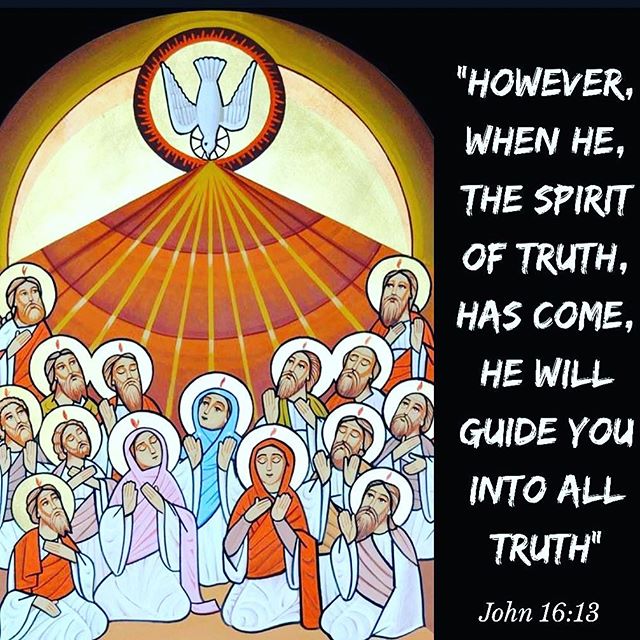
When the Spirit of truth comes, he will guide you into all the truth, for he will not speak on his own authority, but whatever he hears he will speak, and he will declare to you the things that are to come. John 16:13  I have given them Your Word...Sanctify them in the truth; Your Word is truth.  John 17

Saturday, June 4, 2022

It's not like anybody followed Jesus around with a recorder. . .

I cannot tell you how often I have heard people raise questions about the accuracy of the Gospels, indeed of Scripture as a whole, with the seemingly obvious question:  It is not like anybody had a recorder going when Jesus spoke, did they?  Well, there you have it.  We cannot trust the written Word of God because we have no original recording to testify to the accuracy of that Word.  

There were no common cameras or video recorders when I grew up.  Photos were expensive to have and the ones we took were largely staged -- whether recorded by the amateur or professional photographer.  I remember getting my first tape recorder and going around capturing snippets of conversations and then thinking I was some kind of celebrity.  But all of that changed with the smartphone.  Suddenly in audio and video (as well as print) the standard of truth changed.  Think how many things in the news only got into the news because somebody had their smartphone going.  The only problem with this standard of truth is that it records only one perspective and not the whole event.  What we think happened is defined by what we see and hear even though what we see and hear is but one perspective on the whole yet in our minds it is the whole truth.

It would surely have been easier for Christians if a scribe had followed Jesus around during all His years of live and, in particular, of His public ministry.  It would have been better if we had actual audio and video.  It would certainly have been convenient if those whom the Savior called as apostles to proclaim His Gospel to the ends of the earth had simply kept contemporaneous notes and compared them so that any differences could be expunged and one version be left for all humanity. Alas, we have none of these but that does not mean we have no truth or fact.

What we call the Gospels (and the whole of Scripture) were not immediately committed to skin, parchment, or papyrus.  In fact, the oral history of the living eyewitnesses to the works and words of God was written largely when it became apparent that the living apostles, prophets, and evangelists would die.  However, that did not mean there was something hidden or distorted or missing from their record.  The Word itself would compel us to believe that what is attributed to the words and physical deeds of the Lord and His servants on earth still rings true with historical accuracy.  What has changed is not the documentation of that Word but the way we view truth and truthfulness.

With the birth of higher criticism and a certain form of textual criticism, the Word as we know it became suspect.  When Rudolf Bultmann, one of the pioneers of form criticism, the Synoptic Gospels began to be regarded more as “folk literature” than historical record.  The way we deal with things now became the suspected way the Gospel writers dealt with their information.  So Bultmann and others presumed that the apostles collected and edited material more from the perspective of what the Church held as truth than what actually happened. Form criticism and source criticism combined to posit an explanation for why the Gospels had things in common and why they were different.  In the end, the books were rejected as history.  They might contain historical data but along with that fact or truth were embellishments produced by those who pursued a certain point of view.  Now we have these  “inventions” along with some historical facts and the job of the Church is to figure out which were really true and which were only offered as truth.

Josef Fitzmyer, writing from the perspective of Roman Catholicism, suggests there are three “stages of tradition” in which the historical accuracy of the words (and actions) of Jesus must be viewed. First, of course, is what Jesus actually did and said -- based upon what His apostles experienced directly as they accompanied the Lord.  However, this record is sparse and somewhat suspect.  Where was the iPhone video or audio to back up their perception?

What follows were the "wordsmiths" who crafted the experience into a keryma, testimonies of the apostles when and where they preached the good news. While we have only their word to attest to their words, we can presume that they were being faithful, at least to their perspective.  Think of how St. Peter preached in the days of Pentecost and those that followed. But a physical record and an objective source would have helped our skeptical age.

Lastly it the issue of the Spirit.  Jesus insisted that the very function of the Spirit was to bring to remembrance all that I said and did.  The very purpose of the Spirit's descent is to lead us into all truth, especially the apostles.  The central doctrine of our faith is that these are not the words of men but the Word of God, breathed by the Spirit, and delivering to those who follow the faithful Gospel.  But this is not simply truth of the Gospels, it is also truth of the Scriptures Jesus said testified to Me.  Pentecost is not incidental to the fact that we have the Scriptures and how we read them.  But this is certainly the perspective of faith and not of doubt, fear, skepticism, or uncertainty.  Again, no crackly recording here to testify to what St. Peter preached or St. Paul dictated but could there be something more profound to attest to this truthfulness?

This brings us back to the beginning.  We have Scripture as an infallible record but even more as a efficacious voice that speaks and that of which it speaks is made to happen.  Faith comes by hearing.  The problem here is not with the Word of God but with the ear that hears it and how it judges what is heard.  Our standards have changed.  We have come to believe there is no such thing as an objective anything and therefore we must, as our first duty to any text, interpret it -- even to God's words.  With that interpretation comes our experience of it.  Even if something is true, if it is not something that accords with our experience, it is not true to me or for me.  Lastly, we have added another qualifier.  Is it relevant?  Do I need to hear it or believe it?  It is one more way we have placed ourselves above Scripture.  In the end, even if we had audio and video of Jesus and the other Biblical authors, our modern day mindset would figure out a way to wriggle out from under that Word and turn the tables so we were above it.  And that is why the Battle for the Bible cannot simply be fought on the ground of whether it is true, infallibly and objectively so.  It must also be engaged on the basis of whether or not that truth is power to bring forth faith in our cold and darkened hearts of suspicion and doubt.


Friday, June 3, 2022

Anglicans no more. . .

More and more Anglican clergy (including bishops) are taking the plunge and swimming the Tiber.  The Anglicans seemed to have found a way to be a big tent and to keep divergent beliefs together in one communion.  They seemed to have invented a recipe for the appearance of history even while taking positions or allowing their members to take positions that are not simply modern but in conflict with what has been believed everywhere and at all times.  In grudging respect, they seemed to have done this with better ceremony, wine, cheese, and music than most all other denominations.

Some of those who made the decision to swim away point to the decision of the Church of England to ordain women in 2014 and, in particular, consecrate them as bishops.  That is the problem.  You have a big job ahead of you trying to keep those who see this action as a break with the catholic past in the same communion as those who say this is just the beginning.  It was not and is not simply about women but about the ground and basis of the faith.  Is Scripture an infallible voice?  Can we see in tradition a consistency and voice to restrain extremes?  Is the job of the Church to address societal and worldly ills or to preach the Gospel of the cross and empty tomb?  The ordination of women is but the tip of the iceberg.

The problem here was not the Anglican's efforts that fell short but the impossibility of reconciling an orthodox and Christian worldview, liturgy, doctrine, and practice with liberal, progressive, and woke worldviews and agendas.  It simply cannot be done.  The shock and surprise should not be that some Anglicans are leaving but that Anglicanism continues somehow to claim both orthodoxy and to be modern.  That was a fallacy a long time ago and it has been a joke ever since.  I loved the old BBC show Yes, Prime Minister, which admitted that a modernist was, in effect, not a Christian anymore.


How strange it is that nowadays politicians want to talk morals and bishops want to talk politics.  Indeed.  The Church of England may have a few folks who want to talk about sin and forgiveness through the cross of Christ and the resurrection as the first of the many to follow.  But the Church of England has many more who want to talk about the whole woke agenda of sexual liberation, gender identity, critical race theory, climate change, income redistribution, and a host of other things that Jesus did not and would not have advocated.

Unfortunately, what is happening in the Church of England is also happening throughout its Anglican sons, daughters, cousins, and friends.  Everywhere except Africa, Anglicanism has become the poster church for woke positions.  Of course, we Lutherans dare not point the finger from a vantage point of innocence.  We have Lutherans all over the page as well and we have Lutheran denominations that gladly stand behind the social and moral agenda of a woke culture while they jettison any remnant of the Biblical, confessional, and liturgical past.  Their Lutheranism is heritage and legacy more than it is anything of real substance to affect what is believed, taught, and confessed.  The only problem with us is that we seem just as intent upon ditching the liturgy and doing our meager ceremonial as if we were embarrassed by it all or none of it mattered.

The institutional Christianity of the old state churches preserve a legacy of historical buildings and ancient vibrancy but empty of anything creedal, confessional, or catholic.  Sadly, the Lutheran Church Missouri Synod is not even an option to those who are leaving.  Could it be that we have been trying for so long to hide our catholicity behind closed doors that have come to believe we are merely better dressed Baptists or conservative evangelicals?  I wish they would have given us a second look but I also worry if they have not found a home in Rome precisely because the current Papa seems to want to be more Anglican and Protestant than he does Roman.

Thursday, June 2, 2022

What kind do I want today?

It is not uncommon and by some Districts required that the people in the pews be surveyed as to what kind of pastor they would like to have when a vacancy occurs in the pastoral office in that parish.  It is often accompanied by some sort of ratings scale that the good folks in the pews are asked to use to decide what things are important and the new pastor should spend his time doing and what things are not important and he need not sweat doing them.  What is so curious about this survey process is that the things that the people know and value may have little or nothing to do with the official duties and responsibilities of the call (at least as defined by those documents).   But when has such confusion ever stopped us before?

It is nice to know that people want a pastor who is friendly or outgoing or has a sense of humor or does a good job of balancing family and occupation.  Who would not want a pastor with all of these qualities?  It is nice to know that people want their pastor to be a good preacher, a good teacher, and a team player.  Again, who does not want such a pastor?  The thing missing in all of this is whether or not the people want their pastor to be thoroughly Lutheran -- to know, support, and advocate for Lutheran doctrine and practice.  It would seem to me that if I had a choice between a pastor who could tell a good joke or preach like Billy Graham or be Lutheran in the pulpit and at the altar, I would choose one who was Lutheran where it matters most.  I am not sure that we have catechized our people well enough so that this would be their first choice, however.  Of course, one of the problems lies with a congregation that views the new pastor as either the savior who will fix what is wrong (and to their liking) or some interloper who has come to invent mischief.

It seems to me that there ought to be only two questions when a congregation faces the prospect of calling a new pastor.  Do we want change or don't we?  In other words, do we believe that our doctrine, practice, preaching, teaching, and pastoral care are solidly Lutheran and we want this to continue (or, perhaps, even get better) or are their problems that need to be fixed?  That is probably the biggest question and all the rest are hardly worth asking.  If we had a pastor who was solidly Lutheran in the pulpit, at the rail, teaching, and in pastoral practice, then it ought to be a done deal that we want this to continue.  After all, we are Lutheran, and Missouri Synod at that.  Of course, there are always improvements to be made.  No pastor is perfect.  I am the least of those called pastor and should be considered exemplary by no one.  Yet, it has been my endeavor to be fully Lutheran in doctrine and practice within the faithful parameters of our Synod -- not in the sense of minimums but in the fullness of what this means.  Positions and practices which are thoroughly Lutheran but not quite uniform across the Synod are the things I have insisted we must take and we must do.  Examples?  Private confession, weekly Eucharist, closed communion, solid ongoing and lifelong catechesis, striving for our best for His glory in all we do...  Many Lutheran pastors might see private confession or a weekly Eucharist as hills on which they were not prepared to die.  I made them the mountains that tested our conviction to be Lutheran.  We lost some folks over these things.  They were raised in a Lutheran congregation in which such things were not talked about, much less taught and advocated.  Okay.  They left.  But they could not leave having said that I was not as Lutheran as I could be.  Why would any congregation that had seen decades of advocacy for such a fuller Lutheran teaching and practice call or even have on the call list the name of a pastor who advocated for Lutheran lite?  Continuity is beneficial for the parish as well as for the ministry.

If a congregation has problems, then perhaps change is what must be sought and the pastor as agent of that change should be considered.  Note what I am not saying.  I am not advocating for a more Lutheran lite approach no matter how much the folks in the pews may want it.  This is not an issue of taste but of confession.  That said, there are times when the congregation needs particular skills from its pastor.  If the tenure of the previous pastor was touched by conflict or dispute (again, not a doctrinal conflict or dispute in which a Lutheran lite position was advocated by either pastor or people), the vacancy is a time to discern what is needed to help the parish coalesce and regroup toward the goal of twin markers of Lutheran identity and practice in the most excellent way they can.  Maybe there are issues that must be identified and marked for the agenda.  Maybe there are issues in the community that are creating specialized challenges.  Maybe the congregation has experienced decline.  There are a host of things that could be identified here.  If change needs to be made, the people need to know this as they consider whom they will call and the one called needs to know that this issue is here.  Example?  I knew of a pastor whose previous pastor had left under the cloud of sexual abuse and infidelity but nothing of this was considered by the parish as it sought to call or even disclosed to the pastor they called.  This is no time to be silent.

Neither of the two parishes I have served were without conflict.  In fact, my vicarage congregation was not without its problems.  I knew nothing of them before coming but found out about them quickly.  My vicarage congregation was very large but their longtime pastor had just died of cancer not long before I was placed there.  They called someone to fill an opening but did not deal with their own grief or the circumstances in the parish and it was not good either for them or for the man whom they called.  I was in the middle and was not happy there either.  They needed an agent of change not to reinvent the parish but to lead them through a painful and difficult loss.  My first parish out of seminary was divided between bronze age Missourians (those whose theology and practice was shaped by their life within an LCMS congregation in the 1930s-40s) and charismatic folks.  Both agreed to call from the seminary because they were sure the seminary would send them a pastor just like them.  Instead, they got a chanting, Eucharistic vestment wearing pastor neither of them expected.  I immediately united the congregation in the conviction that I was was the wrong guy for the wrong place.  God had other plans, as He usually does.  Instead of choosing between the two forms of Lutheranism I found, I spent thirteen years of catechetical preaching and teaching (including the Augsburg Confession).  In the end we grew and did not decline and reversed a history of financial chaos.  Those so sure I was the wrong guy actually shed tears for us when we left to come here.  My present parish had a history of conflict, hired an expensive conflict mediator, and still was filled with hurt, anger, and division.  It had lain stagnant in a city growing quickly around them.  They called others before me and were declined and called me as a name on a piece of paper.  God had plans for this mistake and I have been here ever since (now in my thirtieth year).  Again they needed change -- not a new idea but to learn again what it means to be Lutheran -- Lutheran as a positive force.  Our financial problems improved, we added on needed space, we added staff, we developed new ministries, and we saw the congregation grow -- and we did it together.

It was not me but it was a core of lay leaders, the support of good district people, and the desire on the part of their pastor to be intentionally Lutheran that created the helpful change that strengthened and showed much fruit in numbers and in service to both parishes.  Some of the struggles in the early years might have been avoided if somebody had simply asked and they wrestled with the basic question of whether they needed change or continuity.  When the day comes and I leave by retirement, call, or casket, it will be the same question:  change or continuity?  The goal of both is the same -- to keep the focus of God's people on Christ and His gifts.  Vacancies can be mine fields when the whole thing might explode as old conflicts reignite and new disputes appear -- their threat is the same.  To take the focus of God's people away from Christ and His gifts.  The goal of every call process ought to be the same.  To keep the focus of God's people on Christ and His gifts.  Deo volente, this will ensure that every time of pastoral change will not be an occasion for trouble and an opportunity to remember who we are, whose we are, and why we are as the people of God.

Wednesday, June 1, 2022

Which lens?

All this talk about worldview can be somewhat confusing to a people not accustomed to speaking in this way.  But it is not some theoretical or ethereal aesthetic.  It is the most practical thing of all.  Let me give you an example.  A worldview is a set of beliefs or a mental model of reality that influences the way people perceive, think, know, and act in the world.

Depending on your worldview, you will either look at the liturgy (worship) through the lens of the world or the world through the lens of the liturgy (worship).   What is the difference?  If you are looking from the lens of the world, worship is programmatic.  It is something you do in order to obtain a certain result and it is something you change in order to achieve that result.  Worship is like a recipe -- the object is the end and the end that counts is the one that is filled with accolades from people who have judged it tasty, who want to eat it again, and who will pass on the recipe to a neighbor.  Sounds pretty normal, right?  Of course it does.  That is the way everything in the world works -- from the endless customer satisfaction surveys that follow up on our every outing to a restaurant or purchase from a store or online retail experience.  The product is important only because it is important in the eyes of those who seek it.  The temporal governs the eternal because the temporal is that which is most important of all (like Your Best Life Now).

If you look at the world through the lens of the liturgy, the opposite perspective is at work.  The things of the world are judged and valued according to God's revelation, the preaching of the Gospel, and the reception of His gifts (eternal gifts given in time).  What happens in the liturgy (worship) is a given -- it does not change.  It is what changes both us and the way we see everything.  The eternal governs the temporal and when they conflict, it is the our way in the world that changes and not the other way around.  Worship is the core and center of everything -- of who we are and what the world is.  It is our lens which we use to see ourselves in the mirror and see the world around us.  It programs us for the things around us and for the eternal and what we bring to it is responsive and not determinative.  It is not that the response of the people is not important -- it is -- but its importance is to God and not to the people planning that worship.  Of course, we do not get in the way of God by making things purposefully obtuse but neither do we define what happens to satisfy the desires of the people in the moment or for the purpose of being judged meaningful.  God's Word and the gifts of His grace are meaningful whether we judge them so or not -- because they bestow forgiveness, life, and salvation.

Worldview is what defines how we approach worship (well, in reality everything!).  If we view the present through the lens of the eternal, then that will govern how we view pain, suffering, happiness, joy, life, death, truth, lies, and everything.  The worldview rooted in God and the things of God is static -- it is yesterday, today, and forever the same.  This is because that worldview is Christ and He is the lens through which we see, value, and judge everything -- including us.  The worldview that flows from the world is ever changing and you must play catch up all the time because that view evolves and the goal posts constantly move.  If you get where I am going with this, liturgical reformation which returns to sources (ad fontes) is the only legitimate  renewal but the other kind of liturgical change -- the one which reflects things around us, must not only change the form but the content and it must change them over and over and over again.  

Those who advocate worship styles and practices designed to fit the preferences of people not in the Church are using a worldview that posits more weight on the shape of culture than on the cultus of the Divine Service.  Whether you advocate this or not, you cannot deny that the divide between style and substance was created so that worship can change at will while presuming, in theory at least, that the content or dogma does not change.  Lex ordandi lex credendi finds this presumption faulty but what must be addressed is not only what is changed but why.  And that involves a worldview informed by and shaped by the world in which the doctrine and pattern of worship are merely bargaining chips in the larger game of numbers.  Everything from the woke viewpoint of sex, gender, race, economics, and the role of government will find a willing partner with those who begin with a largely secular worldview (even though they claim to be religious) while those whose worldview is shaped by Scripture and lived out within the context of liturgy will object to and battle against the targets of the woke.