Sunday, January 15, 2017

Rigidity is bad. . . or is it?

"Whatever works!"  It is the typical perspective of a baby boomer -- more wedded as he is to results rather than how you get them.  Boomers, the category in which I fit by birth, do not like the constraints of rules and regulations nor do they respond will to the constraints of history and tradition.  We, it is said, live in the moment.  That is true to a point.

"Whatever" is the word but it does not mean what it says.  It is not whatever.  Whatever is what you say when you do not get the response you desire.  Boomers like to appear free-wheeling and fanciful but we/they are a group increasingly intolerant of those who violate their ideals of tolerance.  They like relativism but it is a narrowly conceived of relativism that fits within certain predispositions that dare not be violated. 

In the mind of the free spirited Boomers, the enemies are rigid and unbending.  They are the modern day version of the Pharisees who wage war over jots and tittles and miss the point of love that is greatest of all.  The Boomers came to age in the years just after the sexual revolution that raised all sorts of questions about marriage and family, love and sex.  They grew up with the prospect of free love and sex without consequences (due to the "pill") and they have accompanied their gray hair with another "pill" (the little blue one) to keep up the formative years of youth.

It became fashionable for the Boomers to decry the opponents of their relative morality and truth as rigid.  It was a word designed to offend.  Who wants to be "rigid?"  The problem is that while the Boomers have presided over a mass deregulation of so many things (morality, truth, economics, etc...) they have assembled a huge machine to regulate opinion (what will or will not be tolerated in the public square).  Political correctness is the enforcement agency of those who claim to be the most tolerant of all.  What cannot be allowed, must be discredited and shamed into silence.  So new words appeared.  Misogynist, homophobe, etc...  These were the bullies who were merely trying to hold onto political power and hid their prejudice behind calls for order and structure.  It was also true of arguments in the sphere of the Church.  Listen to the debate between those for and against the openness of Pope Francis and the eruptions of his bully pulpit that pass for theology.

We woke up and found a world in which Brits exited the EU and Trump ended up President-elect and a Pope's refusal to answer five yes or no questions unleashed voices that insist the Holy Spirit is being questioned.  Maybe rigid is not such a bad word.  In a world of constant change and turmoil, people cry out for the security of order and structure -- in Church and state.  These are not the deplorables but the wounded who find no healing in the modern prescription of relativism.

They want to be able to hold their leaders accountable, to be concerned with self-interest without being cast aside as the selfish, to see the rule of just law honored, to a hermeneutic of continuity in which values remain constant even as situations change and speech is truly free.  They want to be able to go to Church and hear something more than social justice advocacy and to be castigated for being unwelcoming.  They believe the Word of the Lord endures forever and they hope to anchor their lives to what does not change in a world of dizzying changes.  They trust commandments that do not constantly redefine sin and a Gospel which offers real forgiveness, hope, and freedom through a once for all sacrificial death.  They come to dream of a resurrection not to the status quo continued but a glorious flesh and a blessed eternity prepared for them.  They desire baptism which works whether they feel it or not and they come to eat what is His flesh and blood even when their minds and hearts cannot wrap around the Mystery.

Once I felt wounded by the charge of being rigid, now I happy to wear the label.  I am rigid.  I believe in the eternity of truth and the paternal guidance of tradition.  I may be mocked by the term or derided as the fearful or prejudiced or those who care more for maintenance than mission but I see the value of security, the gift of structure, and the promise of a certain rigidity.  The liturgy is not an Etch-a-Sketch in which we draw what we want and the Scriptures are not a book of suggestions we are free to disregard without much harm.  The liturgy belongs to the Incarnate Word it cradles and the Scriptures, too.  It is my job and my joy to anchor the faithful in both.  My people and those who come looking to me are not searching for something to validate their feelings but something to transcend them.  They are worn out by their feelings and by the constant need to define themselves by their preferences and yearn for everlasting and saving truth.  Christ is that Word and truth and He is the focus of all I do (I do not get to invent myself as a pastor but must fit into His category).

Francis seems to want to rebuild Rome into something that more closely resembles the free wheeling image of the Boomers and some of the Lutherans are ready to redesign, reform, and reinvent our own Confessions in the same way.  Jesus is no friend to the Pharisees who hide behind a false structure and man-made rigidity but neither is He a friend to those who believe all truth is good truth and no truth is forever.  As a parent of Millenials, I find that this generation has rejected mine (no surprise) precisely because they have grown up with constant change and ache for truth, security, and structure.  Rigidity may be just what we need  -- if we can just get over the baggage that has come to be associated with the word.

Saturday, January 14, 2017

News from the East. . . .

The Greek Orthodox Patriarchate of Alexandria and All Africa has announced its first formal step toward restoring the ancient office of deaconess. A commission of bishops will now examine how the restoration would unfold in the modern era.  But should the Greek Orthodox Patriarchate eventually restore the office, it is not foreseen that this could serve as a modern-day precedent for the Catholic Church to ordain women deaconesses.  According to the statement released by the patriarchate, the bishops decided on Nov. 16, the second day of their holy synod, to move forward with reinstituting deaconesses. This was after a presentation by Metropolitan Gregory of Cameroon, who “spoke on the institution of deaconesses in the missionary field,” followed by an involved theological debate and discussion.  “On the issue of the institution of deaconesses, it was decided to revive it and elect bishops on tripartite committee for detailed consideration,” the patriarchate’s media release stated.
While the Patriarchate is convinced that the female diaconate existed in the early Church, reaching its greater significance between the 3rd-5th centuries, the incomplete historical record makes it impossible to speak with authority the scope of their duties or the actual shape of this diaconal service.  This female diaconate seems to have died out by the 12th century.  The liturgical component of the female diaconate's service seems to have been limited to certain choirs of deaconesses for the Divine Liturgy, however, it is believed that they did serve as catechists for women, assisted in baptisms of female converts, and brought the Eucharist to female sick and housebound.  They believe the the historical record has established that the female diaconate was only for celibate women over the age of 40.  It is noted that while ordination rites for deacons and deaconesses in the Greek Orthodox tradition seem to be almost identical, these were parallel rites and institutions and were not thought of as interchangeable or equivalent roles since the female diaconate never progressed to priestly ordination or service.

In the Coptic Church, the female diaconate has seen to the needs of its members and dependents along with male deacons, however, the deaconesses have no liturgical function in the Coptic Church.  In the Armenian Church, all female deaconesses are nuns.

All of this, of course, gives larger context for the initiative of Pope Francis for Rome to study the issue of deaconesses, albeit within the larger perspective that such diaconal status could not lead to ordaining women to the priesthood.  Pope John Paul II spoke definitively on ordination but he did not declare anything definitive regarding women and diaconal ordination/consecration.  This group appointed by Pope Francis began meeting only November 25. 

Clearly the problems lie in the seemingly "separate but equal" status of the female diaconate which will hardly solve the issue for those in favor of the full opening of the priestly and episcopal offices to women nor will the parallel tracks necessarily console those who believe that any move in this direction can prevent the ultimate outcome of a change from male only to female ordination.  In addition, the histories of Eastern Christianity and Western (Latin) Christianity are distinctly different and there is little to support an ordained female diaconate in the West during that early period.  Finally there is the issue of "clericalizing" the laity -- one which seems to be a concern of Pope Francis.  Diaconal or mercy service may not be helped at all by institutionalizing this in a formal diaconate for women.  Especially in the West, though certainly in somewhat of a decline today, the role of the non-cloistered nun has been the focus of the the service that might be associated with the female diaconate.

Friday, January 13, 2017

All I got for Christmas was this sweater. . . er. . . vestment


Could not resist reposting an image sent to me by a friend.  Someone has creatively photoshopped Pope Francis into sweater vestments, undoubtedly created for him by a well meaning relative.  It sort of reminds me of Jimmy Carter and his cardigan.  In any case, it is a bit of fun.  I will admit that Frankie looks nice and toasty warm under those vestments, although I do think the design tends to draw attention to his belly in an unflattering way!  If someone has a fire in their belly to make one for me I may not be stylish but I would be cozy in the cold winds of winter!

The danger of looking at things through an economic lens. . .

The world is awash with people suggesting that economics is the lens through which everything must be viewed.  These are the globalists who long for the day when borders no longer matter and the world is one big supermarket with brands on the shelf but free access to purchase anything and everything by everyone.  It has long been suggested that the path to peace and justice will come when one currency rules the marketplace and everything that might cause conflict or division is viewed through the lens of economic best interest (that is the best interest of the world and not the individual nation or people).  Trade agreements have for a long time attempted to minimize the distinctions of border and nationality and make for an even playing field.  For a few decades this was a conservative cause that had a few champions on the liberal side as well (Bill Clinton and Barack Obama among them).  Then populism and nationalism raised its ugly head in Britain, America, and now it seems in many other places.

I once thought the free market vision was a real path to peace and justice until it began to sink in that this path was also a very real threat to freedom, especially the freedom of religion.  Globalism has not exactly been friendly toward Christian orthodoxy.  Now most see religion as best a private idea that dare not intrude upon the politically correct ideals of subjective truth in an egalitarian world where we are tolerant of anything and everything except a challenge to our confidence in technology, science, and relativism.

Apparently faith is no longer a comfort to children in the throws of despair over Britian's exit from the EU or to children who woke up to find Donald Trump as President-elect.  Nationalism is the enemy every bit as much as globalism is the universal hope.  Religion that refuses to bend over backwards in support of this elitist view of the world is also an enemy that must be silenced.  Let's see how well Christianity has fared in this global dream of world economic and social union.  The UN treats the pro-life cause as an offense to humanity.  A church which dares to offend the minority du jour (now GLBTQ) has forsaken its right to a place at the table (unless, of course, you are an Islamic religion).  It is the commonly accepted wisdom that religion is the cause of war, violence, and oppression and not an agency of compassion, respect for all life (except the unborn, of course), and good.

It has been a stain on our policy in the Middle East that Christians have fared better under dictators than the governments that replaced them.  It is the great inconsistency that the elites smile and look the other way at the overt discrimination against Christianity, women, and the GLBTQ community in the Middle East while treating the stance of Roman Catholics (and Lutherans of the Missouri stripe) as incompatible with science, morality, and modern ideals.  Never mind that no Christians are murdering or raping those whose lifestyles they cannot countenance. 

Because China owns so many American dollars we tip toe around their abuses of human rights, their restrictions of free speech and religious freedom, and their environmental irresponsibility.  Because Russia has an economy half the size of California, we treat them as no credible threat.  (Tell that to those who thought the same of Japan's small economic power at the start of World War II.)  No, I am no longer certain that globalism is a friend to peace and justice OR to Christianity.  I am not at all suggesting that we ought to return to the days when wars were fought over every presumed or real offense against nations and peoples.  I am merely suggesting that Christians rethink the idea that globalism and its corollary of free trade are the only real means to a peaceful world and justice for the oppressed.  On their own they guarantee little for those who suffer most.  For this reason alone, the Church must not bow down before this altar or modern idealism and must continue to raise up the sacredness of life, the real freedom to disown modernity when it conflicts with Scripture and tradition, and remind all that goodness and virtue flow from the Gospel first of all.

Politics makes for strange bedfellows so do trade agreements and globalism.  But the economic value is hardly the sole or even the primary value to be protected in our world.  In fact the truth remains.  The love of money is the root of all evil (and oppression, violence, and countless wars).  Greed can be dressed up to look pretty but it cannot lead us into the utopia we want.  Nothing can.  Only Christ can set us free.

Thursday, January 12, 2017

And the worship was good, too!

In Great Catholic Parishes, William E. Simon, Jr. has published the fruit of his own question in defining what makes for a great, that is, dynamic parish.  His own organization, Parish Catalyst, has been studying study parish life in America. In this volume, the author reports on the results of nearly 250 interviews with pastors around the country (three out of five from the Northeast and Midwest with the rest from the South and West).  It is not unlike the books that are regularly published among Protestants in our endeavor to find out what works and emulate it wherever we are.  Even the LCMS has published its own version of Courageous Parishes.

Fr. Gerald Murray, no stranger to Roman Catholic parishes, has given us a review of Simon's work on the pages of First Things.  You can read it here.  Murray offers some constructive thoughts on the subject of great parishes and suggests that Simon's third characteristic should have been the lens through which everything was viewed.  The third characteristic being they excel on Sundays (a rather general perspective on the Mass).  So in addition to fostering shared leadership, spiritual maturity, and evangelization, they do what they do on Sundays well.  Murray is correct in identifying this as the font from which all good things come and not simply one of the several things happening in a parish that are "good."

Such books are worth a read.  Every parish (including Lutheran ones) should reflect every now and then on what they are doing and how well they do it.  Thriving congregations are not accidental but the fruit of the Spirit's work in the richness of the life of the baptized around the Word and Table of the Lord, encouraging a deep and abiding life of prayer and devotion, and challenging the people of God to enter their communities with words of witness and actions of love and mercy.  Still and all worship can never be one of the many things or even one of the few.  It is THE lens through which all other things must be seen and the single most important reason for the vitality of the whole of the parish and what it does.

If you read this blog, you know that I adamantly I maintain that everything starts from and flows back to Sunday morning.  The Divine Service is source and summit of all that God has done and all we are in Him.  This is not worship in the sense of whatever you do, you must do well, but worship that is catholic and evangelical in the best sense of those terms.  For Lutherans this is rooted in our Confessions.  We insist we have not abolished the Mass or abandoned the liturgy but observe it and "do it" even more faithfully than our opponents.

What flows out of Sunday morning will determine what comes back.  Without the solid food of Word and Sacrament and the vibrant liturgical worship of God in which the means grace live, there is nothing to encourage or sustain the kind of activities God seeks from us or the kind of fruit that will glorify Him.  What do we have to offer the world if we cannot first and foremost offer them entrance into the mysteries of God, the means of grace, through which God comes to us and delivers to us the riches of His grace and mercy to forgive, enliven, and save us?  Any parish that hopes to accomplish God's bidding must have this mission flow from their Sunday morning life together around the Word and Table of the Lord or what they do will be superficial and temporary.

The Church is no social service agency.  We do not feed the poor or raise up virtue or care for the sick and needy because we are good people (better people than others) or because we think we can earn God's approval.  We do this because God has found us poor and made us rich in Christ and His righteousness, covered us with His holiness so that we might learn to be holy in Him, come to us sick and wounded and bestowed upon us the healing of His own flesh for the life of the world, and saw our need and answered it with nothing less than His own self-sacrificial life and death upon the cross.  We are no mere do-gooders.  We are instruments of God's own purpose and gracious favor.

For this reason everything else we do flows from our encounter with God in His Word and at His Table and everything flows right back to this Divine Service.  We are doing a poor job at everything we do if it is not formed, shaped, motivated, and empowered by the God who meets us in the earthly forms of His Sacramental grace and graces our ears with the divine sound of His saving voice.  Worship is not one of the things we do.  It is the lens through which our health or sickness is seen, through which our noble work or worthless busyness is revealed, our depth or shallowness proclaimed for all to see.

Sunday morning is not everything but there is nothing good in our life together that is not the fruit of this cup that overflows with mercy.  Once we learn this, we will be richer by far and way ahead in the goal of serving the Lord with all our strength, will, resources, and energy.

Wednesday, January 11, 2017

Not good news from Down Under. . .

For some time now there has been a movement for the Lutheran Church in Australia to reconsider its stance against the ordination of women.  There has been a not so subtle movement on the part of some to advocate both officially and unofficially to review the articles of agreement and its provision not to ordain women -- something that many believe would divide the Lutheran Church in Australia.  As I reported here before, the last formal attempt to make a change did not succeed -- not because it did not have a majority in favor of the ordination of women but because it was not the super majority required to make the change.

For many, the ordination of women is one of the first steps in the rejection of what the Scriptures teach and leads, inevitably it seems, to other deafness to the Word of God, namely, the acceptance of same sex marriage, the recognition that GLBTQ orientations are as legitimate and pleasing to God as the male/female pattern of creation, and the opening of the office of the pastor to GLBTQ folks actively pursuing their sexual choices.  We saw in the ELCA how many years of acceptance of the ordination of women was followed, almost overnight, by the 2009 changes which fully embraced the GLBTQ agenda and marked a breach with Lutheranism and the catholic history that preceded it.

Now the November 2016 issue of the Australian Lutheran magazine has taken up the cause of homosexuality.  It is not the kind of stance that one would have hoped.  First of all, a couple of articles written from the vantage points of parents of gay children place the issue in the emotional tension of love for your child and acceptance of that child in every aspect of their being and what they do.  One parent ends with this:
Is it right to grant homosexual couples a sanctioned relationship, recognised as legitimate by society? Would that be sufficient? Isn't that the best we can or should do? But what if homosexual people are not a deviance from the norm, whom we feel sorry for and  compensate for as best we can? Could homosexuality in fact be one of the infinite varieties in God's created world? Is that what homosexuality is? Are we to celebrate that as a gift of God?
For now these are still questions for my family, as well as many congregational families, and the LCA. We continue to search the Scriptures for what they do say and don't say  and we listen to the best available scientific research.
As for me and my family, we believe we are called to live by faith and walk with risk in love. We would rather err on the side of helping hurting people than on hurting helpless people. And I pray to God that my son - a gentle and loving soul - won't allow the ungodly treatment he has received from some of God's misguided children to keep him from seeing the God who suffers all to seek after him.
 A second article has the same tone:

Whenever we realise that, through our actions or inactions, we are perpetrating injustice, we must work to create a better world. My hope is for Christian gay people to be free to live in the kingdom of God into which they were baptised and be active members of our church.
 The parental perspectives are placed between a brief article restating LCA beliefs:
Marriage is a divine order created by God for the good of humanity. The gift of marriage has three main parts: lifelong love and fidelity between husband and wife, the enjoyment of sexual intimacy within the context sanctioned by God, and the potential privilege and challenge of bearing and raising children. When a society, perhaps with the best of intentions, legalises committed same-sex relationships as marriage, it diminishes the
uniqueness of the life-giving male female relationship which we believe a marriage properly is. The church acknowledges the right of the state to recognise civil unions between people of the same sex and to accord them full legal recognition and rights. . . 
All Christians need to seek God-pleasing choices about the way they live their lives. Homosexual Christians will seek God's guidance for their life choices.

Some are convinced that God's will is that homosexuals live a celibate life and seek their life fulfilment without a life partner. They may see the celibate life as an opportunity to offer another form of Christian service. Others believe that God's will allows them
to express their sexual feelings in some form of intimacy, and may form a friendship in which they can do so.
 

It is important to remember that there are many dimensions to intimacy and commitment,
including care and support. There is spiritual and mental, emotional and social intimacy, as well as physical intimacy, and there are different expressions of physical intimacy. All of us should make responsible judgements about our sexuality, and be careful about making judgements regarding each other.
So what is wrong?  Where is the voice of Scripture?  We have heard about what some think and others see as right and wrong within the whole GLBTQ debate but the article fails to state what Scripture says.  As interesting as it might be to know what some think or others believe, we are bound not to opinion or feelings or even the painful sentiment of a parent of a gay son or daughter.  We are bound to the Word of God.  That is one perspective severely missing in this magazine and in most debates over the subject but it is the only one that really counts.  The first step to distancing yourself from Scripture is to replace the Word of God with the thoughts and feelings of people -- on any issue!  Finally, where is the voice of Luther and the Catechism?  Whatever happened to the memorized explanation of the sixth commandment?  One translation says:  We should fear and love God so that we lead a sexually pure and decent life in what we say and do, and husband and wife love and honor each other.  An older edition says it even more clearly and bluntly to both gay and straight:  We should fear and love God that we may lead a chaste and decent life in words and deeds, and each love and honor his wife.  Or consider from the Large Catechism: 

These commandments now [that follow] are easily understood from [the explanation of] the preceding; for they are all to the effect that we [be careful to] avoid doing any kind of injury to  our neighbor. But they are arranged in fine [elegant] order. In the firs t place, they treat of his  own person. Then they proceed to the person nearest him, or the closest possession next after his  body, namely, his wife, who is one flesh and blood with him, so that we cannot inflict a higher  injury upon him in any good that is his. Therefore it is explicitly forbidden here to bring any  disgrace upon him in respect to his wife.  201] And it really aims at adultery, because among the  Jews it was ordaine d and commanded that every one must be married. Therefore also the young  were early provided for [married], so that the virgin state was held in small esteem, neither were  public prostitution and lewdness tolerated (as now). Therefore adultery was the most common  form of unchastity among them.  202] But because among us there is such a shameful mess and the very dregs of all vice and  lewdness, this commandment is directed also ag ainst all manner of unchastity, whatever it may  be called;  203] and not only is the external act forbidden, but also every kind of cause,  incitement, and means, so that the hear t, the lips, and the whole body may be chaste and afford  no opportunity, help, or persuasion to inchastity.  204] And not only this, but that we also make  resistance, afford prot ection and rescue wherever there is danger and need; and again, that we  give help and counsel, so as to maintain our neighbor's honor. For whenever you omit this when  you could make resistance, or connive at it as if it did not concern you, you are as trul y guilty as  the one perpetrating the deed.  205] Thus, to state it in the briefest manner, there is required this  much, that every one both live chastely himself and help his nei ghbor do the same, so that God  by this commandment wishes to hedge round about and protect [as with a rampart] every spouse  that no one trespass against them.
In any case, the cause for truth and faithfulness is not yet fully won in Australia or anywhere.  Pray for our Lutheran brothers and sisters there and throughout the world that we do not cave into the pressure from culture to disregard the Scriptures and the great tradition of orthodox and faithful Christianity on this topic but remain steadfast.  We do so not with as those who judge but as those who are called to keep the judgments of God, not to harm any but to call all to repentance and faith, not to elevate our own righteousness but to proclaim the righteousness of Christ which we wear by baptism and faith and in which we are called to live.

Tuesday, January 10, 2017

Where have all the organ students gone?

I was reading an interview with Dr. Charles Ore, an acquaintance who has been an organist, composer, teacher, and parish musician for most of his long and storied life.  The piece is in the December issue of The Diapason and I would encourage you to read it there.  That said, one line stuck out at me.  In the late 1960s when Dr. Ore was teaching at Concordia Teachers College, Seward, Nebraska, that school had 180 organ students!!  Let me say that again.  180 organ students!!

Now Concordia University-Nebraska, this little college on the plains has never been a large scale university and has always served the Lutheran Church Missouri Synod with a very significant number of church worker vocation students -- something that has diminished over the years but still leaves this school at or near the top of all the colleges and universities of the LCMS.  Imagine then how many organ students there were in that same time period if you added in the totals from Concordia-St. Paul (remember Paul Manz was there!), Concordia-River Forest (Paul Bunjes, Carl Schalk, and so many others were there!), Concordia-Bronxville, Concordia-Milwaukee, Concordia-Portland, St. Paul-Concordia (MO), St. John's-Winfield, Concordia-Austin, Concordia-Ann Arbor, Concordia-Selma, and Concordia Senior College-Ft. Wayne (Joel Kuznik was there!).  When I entered St. John's in Winfield (near where Dr. Ore also lived for his earliest years) there were so many organ students that practice times were signed up over 24 hours a day, 7 days a week!

And now look at things in the same church body (which now is larger and has more congregations, at least on paper).  Some of those schools no longer exist (St. John's, the Senior College, St. Paul's College.  At least one has consolidated (Ann Arbor is part of Concordia-Wisconsin now in Mequon).  Some no longer even have an organ department or teachers (such as Concordia-Bronxville).  And most others have organ students in such small numbers that they are statistically irrelevant to the student body as a whole.  And then we wonder why it is that Lutherans cannot find organists!

Of course there is no shortage of reasons why when you walk in a Lutheran Church today you may find canned music or praise bands in place of the organ (this from the church that produced such people as Bach (the whole family!), Pachelbel, Buxtehude, Bruhns, Walter, and modern giants like Manz, Ore, Schalk, etc...).  Culture, taste, preference, money, interest, etc....  We have plenty of reasons why not.  What we need to work on are the reasons for the leadership of the organ in a Reformation that was accomplished through song as through theological treatise.

I grew up in a small, rural Lutheran congregation that had an ancient Estey tracker of a dozen or so ranks (nothing brighter than a 4' Octave, half of the stops too soft to be of much use in congregational song, and a bear to play if you used the couplers!).  The instruments still serves that parish but the organist (the same one who was there when I was still a member there) is 80 and is looking for a replacement.  Where will she find one?  The numbers of children grows ever smaller in that community and the numbers who are interested in organ and piano is not increasing either.  Unless this pipe organ is to become a piece of art to look at and remember but not hear, that congregation will have to find some new blood, some young blood, perhaps pay for organ lessons and up the compensation (when I played there 50 years ago it was $2.50 a Sunday).

This is not a story whose final chapter has been written -- unless we choose to let this decline be the final chapter.  I appeal to parents and kids, pastors and church boards, teachers and colleges -- let us raise up a new generation of great Lutheran organists, cantors, kapellmeisters, and parish musicians.  The Reformation is not over and it will continue to be renewed as much by the great Lutheran hymns as well as catechesis.  Let us resolve to rescue the cause of organ and organists from the curious or obscure to the ordinary of every Lutheran congregation.  We will all be better off for it.  If you cannot play, consider donating to a Lutheran university to provide organists (call up my old friend Dr. Joe Herl at Seward, where Dr. Ore spent most of his career).  Through the Church, the song goes on!

Monday, January 9, 2017

Only one answer. . .

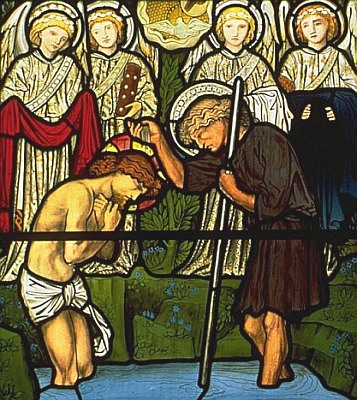
Sermon for the Baptism of Our Lord A, preached on Sunday, January 8, 2017.

Epiphany is filled with questions – why would Persian astrologers pack up and follow a star to a Jewish King?  What exactly was that star?  Why did it lead to Jerusalem and Herod instead of directly to Bethlehem?  Why didn’t the priests and scribes of the Temple hop the first bus to Bethlehem to meet the Messiah?  Why would God allow the rage of Herod and the death of the Holy Innocents of Bethlehem?  How did John recognize that Jesus was the Messiah?  Why was Jesus baptized in a baptism designed for sinners to confess their sins and repent of them?

Sooo many questions!  Only one answer.  Jesus Christ.  He is the answer to them all just as He is the answer for everyone – Jew, Greek, slave, free, male, and female.  There is salvation in Him and in no other.  What we do not understand is not the fault of the Scriptures but our weakness and yet we can trust that every question is answered in Jesus Christ, an answer we apprehend by faith.

The context of the star and its Light is significant.  The Roman conquest of the world provided a time ripe for the spreading of the Gospel.  There was the peace of Rome, the safety to travel, and order – all do to the Roman Empire.  The time was ripe for the fruit that is Christ our Lord.  The Law and the prophets all looked to this day and to this moment though only the Father knew the time.

Zechariah had been mute for nearly a year and then he spoke to name his son of promise “John.”  John was born as the messenger to prepare the way of the Lord.  From the kick in the womb of Elizabeth to John standing in the waters of the Jordan calling people to repentance, you would have to be blind and deaf not to know that something was up.  God was doing something, something new. The key was in the Scriptures and the new thing was Jesus Christ.

Herod was not simply a crazed and wicked man but he got it right.  God’s will was on a collision course with the status quo.  Nothing would ever be the same again.  The world was in the throws of radical change in the unfolding of the plan of salvation made before the world itself.  Earthly rulers and kingdoms were not the focus of this move but the infant Son of the Virgin Mary who was welcomed by shepherds and Magi and who would reveal Himself in word and deed as God’s Son enfleshed.

The meaning of that Light is even more radical.  The Gospel would come first to Israel but it would not be for Israel alone but for the whole world. The old barriers of clean and unclean would be bridged by the Savior who would make all who receive Him sons and daughters of Abraham - regardless of their nationality or birth.  The Magi were the first signal of the fulfillment of Israel’s forgotten prophecy.  The nations will come to this Light.

The child Jesus is the God whom we worship and no other.  The mountains of Sinai and Gerazim would be swallowed up in the little hill called Calvary.  The Temple stones would fall never to rebuilt but Christ would come from the grave in three days.  In many and various ways God spoke to His people of old through the prophets, but now He spoke fully and finally through His Son, incarnate of the Virgin to take our place under the Law, on the cross, and as the first of many to rise to everlasting life.

The Gospel comes not to a world that welcomes it but to a world set against it.  This Gospel will always have enemies and Christ will always have His skeptics and His detractors.  This is no political kingdom but one born of faith and it comes to sinners who stop hiding their sins and confess them, to a people who repent of their sin and wear the lament of its death right down into the baptismal water.  He is come not for judgement but for mercy -- a bruised reed He will not crush and a dimly burning wick He will not extinguish.

Yes, this Gospel will always have martyrs.  We grieve for the lost boys of Bethlehem who died in Herod’s rage but death did not end with them.  in 2016 nearly 100,000 Christians died as martyrs – people who refused to bow to the Baal of Mohammed or any other false god.  Even if it meant death!  And the blood of the martyrs remains the seed of the Church.

The answer is not a choice we make or a decision we render but the splash of baptismal water where we meet Him who came to be one with us except without sin and to die in our place upon the cross.  In baptism the holy and clean Lord entered the Jordan and came our stained with the dirt of our sins. And in the baptism with which we were baptized, we, the guilty, go down dirty but we rise up washed, cleansed, clean, and righteous in Christ.  We may not yet be who we shall be, but we are not who we were!  We do not look back with longing but forward with anticipation.

Baptism is the font that makes new the old, gives life to the dead, and bestows a future on a people with only a past.  In baptismal water was the womb of our new birth and in Christ we struggle to live out this new life.  A part of us longs for the old ways of sin that we struggle to leave behind.  A part of us longs for the new to be complete in us.  Such is the tension of those who are sinners and saints at the same time, in the moment awaiting the finish of what God began in us when we were first baptized into the Name of Jesus.

So many questions.  Only one answer:  Jesus Christ!  He leads pagan strangers to find a home in God’s presence.  Here in this church is the new stable where stinky shepherds and heathen astrologers and every one of us finds a home, a place, a new life by God’s mercy and grace.

This Christ is Israel’s rightful and eternal King but He has not come to restore the dull glory of an earthly kingdom.  No, He has come to give to a people captive to death life in an eternal kingdom where death no longer reigns.  He will sit on David’s throne not for a while but forever and in Him shall all the nations of the earth be drawn. 

He fulfills all the prophet promise that kept hope alive when nothing else did.  He now keeps every prophecy and fulfills every promise made of old. As the prophets spoke, Jesus keeps and the Word of God is complete.  But it is not without enemies and not without opposition.  The world and even our own sinful hearts resist this new thing God was doing.  We have all been more comfortable in the evils we knew well than the good we meet in Christ.  But He refuses to write us off.  He bids and invites us still.  His Word speaks, the Spirit works, and the heart learns to believe in Him.

His Kingdom is come not for a moment ripe for change but for an eternity unfolding.  He does not see with the nearsighted vision of a people who live only in the moment but as the God of yesterday, today, and forever.  We meet Him not in our dreams or in our feelings or in a thin veneer of earthly righteousness to hide who we really are.  No we meet Him in baptism where we are forgiven and made clean by His Word planted in water.

Here is the welcome of God for strangers who do not belong.  Here is the mercy of God that forgives all sin.  Here is the righteousness for sinners to wear instead of the soiled rags of their own good works and piety.  Here is the Light that shines in the darkness and the darkness has not overcome it.  Here is hope for a people who long ago gave up hoping and here is the One who satisfies the hunger, the thirst, and the longing the world could not fill.

So many questions.  Christ is the answer.  To the nations who were once His enemies and to the children of Israel who thought they alone were His chosen, Christ comes and shines upon us the Light of His love, His grace, and His mercy.  So now I say to you as Paul said of old: walk not as people of darkness but as people of Light.  Live not as those who are anonymous but as the Christians marked with Christ and for Christ.  Live not as a people captive to fear but filled with hope.  Live not as a people who love sin but as the new people who love righteousness.  Christ came to bear your sin so that you, the baptized children of God, may now bear His light and like stars we shine with the brightness of His borrowed light.  In the name of Jesus.  Amen.

The Ultimate Demagoguery. . .

BUZZ FEED, which is one of those organizations that fills the empty space all over social media, has taken up the cause against the stars of a popular house flipping show in which the husband and wife are more the draw than their rehab work on fixer uppers.  According to the story written by Kate Aurthur, published Tuesday on BuzzFeed, the great sin of the Gaines' family is belonging to a church that espouses traditional views of sex and marriage.

The piece begins by describing the seeming overnight success of Chip and Joanna Gaines, the husband-and-wife team whose chemistry on screen has made the series “Fixer Upper” is one of the most popular shows on HGTV. But it is no puff piece.  After time spent describing all that is right with the show, the author quickly pounces upon the religious beliefs of the Gaineses without at all mentioning what they believe.  Instead, their great sin is that they go to an evangelical church whose pastors oppose same-sex marriage!

A while ago I got the same kind of hit by a gay activist and his organization targeting this blog for being anti-gay.  Here my greatest sin was in not disowning some of the comments placed by others in which is an unmoderated conversation after my posts.  I received mail and my congregation recceived mail threatening to expose my "hate" speech.  That I oppose same sex marriage is hardly a secret to anyone who reads this blog.  That I do so not to discriminate -- in the traditional sense of that term -- but because I stand with the unbroken Judeo-Christian morality in this (still officially espcoused by at least two-thirds of all Christianity) is sometimes lost in the debate.  Yet the mere fact that someone opposes what is by all accounts a radically new idea that has only recently garnered much public support is grounds for a charge that seeks to either get them kicked off the air (in the case of the Gaineses) or discredit their integrity (for my blog).

This is the ultimate demagoguery.  Because you oppose gay marriage, you are a homophobe, you are unworthy of being in the public square, and you must be punished for holding to such shocking views!  At least in the case of the Gainses, we don't even know where they stand personally on the issue and nothing on their show presumes any discrimination as appears to be charged against them (though we ought to be able to presume of them,, with all church members, that they stand with their church (at least until they tells us otherwise).  Yet the shocking this here is how quickly something that was considered a radical fringe idea has now become the litmus test of anyone's right to be the public eye or to raise their voice in the public square.

The folks the likes of those at BuzzFeed and all the PC police are shrewd: They know that the Gaineses and HGTV will be forced to make a public statement in support of the GLBTQ agenda or the network will take the show off the air.  In the same way, this pressure is being used to force churches to comply with the socially acceptable positions on same sex marriage of they will also be forced into silence in the public square (after all the only freedom of religion that cannot be impeded is what goes on behind closed doors on Sunday morning).  If the PC police in the media can forsake their role of actual objective reporting and become advocates for a position, then they can use all the tools in their arsenal to make sure that only those who comply have a place and a voice and those who do not are shammed into silence.  So great is the power we have given to those who will decide what speech is tolerated, what positions are moral, and what rights belong to those who disagree!

Once again we find ourselves facing the intolerance tolerance and this is one of the most dangerous threats to freedom of speech that has yet been faced by Americans.  How we handle this will determine whether free speech is a right or a privilege, whether unpopular ideas are allowed to stand with the popular, and whether religious speech, in particular, is allowed the right to disagree with the politically correct views of media, minority, or, even, majority.

Sunday, January 8, 2017

Coexist or not. . .

Lutherans look different on Sunday morning.  No, not different from Roman Catholics or even different from Evangelicals.  No, Lutherans look different from Lutherans on Sunday morning.  It is the radical coexistence not of competing ideas or ideologies but of conflicting ideas and ideologies.  It is the radical disconnect between doctrine and practice that presumes something can be held sacred in theory but the practice may vary to the point of extreme.

On one hand we have the evangelical side of the Lutheran persona.  Liturgy is adiaphora and ceremony, too.  Nothing is sacred except the Gospel (rendered largely as justification by grace through faith and not works).  Everything else is wide open.  As long as the material principle of justification is not compromised or contradicted, Sunday morning may look like what people want, like what seems to work best within a distinctly American persona, and what fits best into the culture of the specific community.  Contemporary Christian music or even secular music?  If it works.  Media displays that provide relevant and pithy visual commentary?  Sure, if it works.  A generic Christian identity that defers nearly everything to taste and preference?  Yup, if it works.  So whether you are borrowing form Rick Warren or Bill Hybels or Joel Osteen or whoever happens to be the next best guru of growth, it is all good as long as it does not conflict with that material principle.  Creeds, vestments, liturgy, Sacrament, music, even ordo are all negotiable -- subject either to pastoral preference or "style" and congregational want.

On the other hand we have the bronze age Missourians who follow the hymnal (preferably TLH but LSB Divine Service III will do).  They have the Sacrament (just not too often lest it become routine or ordinary but always "special").  They love preaching and the "dry mass" best of all (it does not hurt that you are in and out in about 45 minutes or so).  They like the good old American style hymns (okay, the Gospel songs of old that should be in the Hymnal but are not).  They will tolerate vestments but black is best, topped by a little white -- and it does not hurt if there is no clerical collar underneath!).  They do what Lutherans are supposed to do -- not because they like it (cause they are not sure they do) or because they should (they don't for the life of them know why Lutherans do what they do) but because it is what Lutherans did and do (Grandpa's church).  They think of themselves as orthodox Lutheran in theology but worship is something you should not make rules about even though we all know the best is page 15 (okay, pg. 5) done without too much enthusiasm.  Pastors do it because Lutherans do it this way -- not that is something we enjoy.  We like it done right because we like anything done right (without too much falderal). 

And then there is the group both of the above love to hate -- the liturgical crowd!  They are too interested in ceremony and even though they talk all the time about such things as catechesis and orthodoxy we all know they are a bit suspect.  No really orthodox Lutheran likes vestments or chanting or ceremonial or the like. . . especially NOT chanting or incense!  They are always in a clerical collar and they give as much attention to the liturgy as to the sermon (a sure sign that something is screwy).  These are the people who like to use the word "catholic" and to emphasize everything from a weekly Eucharist to private confession.  They insist that it is not about personal preference but they seem to like this stuff too much (perhaps thou dost protest too much??).  They hold their hands different from us and, God forbid, they might genuflect at the incarnation in the creed or the consecration at the altar!  They are always introducing new hymns from 8-10 centuries ago and they act like worship is the most important thing the Church does (more than bringing people to know Jesus as their personal Savior???).  Pastors like this stuff but not too many people in the pews.

We say that all three groups ought to be able to coexist -- to live together as one within the same church body.  After all, we are talking about adiaphora here!!!  The stuff nobody can legislate and which everyone is free to ignore or use as they please (and it pleases the congregation).  Except that this is indeed the problem.  How DO we coexist?  How do you divide doctrine and practice so that any of this is equally legitimate and acceptable on Sunday morning.  Is it possible to coexist when some things so deeply affect us as people and define us?  Perhaps that is indeed the problem.  It is not possible for such divergent perspectives on worship and practice merely to “coexist,” to live and let live, or to try in some way to actually complement one another and fit together in the same church.

These are not surprising causes of conflict but different confessions seeking to define what is Lutheran and what is not.  What is at war here is nothing less than the soul of a Church and all the souls of the people therein. How is it possible to be all things to all people and retain some integrity of doctrine and practice?  Perhaps it is not.  Churchs actually look like what the believes on Sunday morning.  There is no both/and, no in between the liturgy or a semblance of the liturgy and no liturgy at all. Not only the people are this or that; so it the Church.  Catholic as a word does not mean all encompassing but that which has always been.  If Rome cannot figure a way out to have the Latin Mass and Novus Ordo as they same and equal, how is it possible for Lutherans to preserve all that the Augustana claims to preserve and then coexist with those who keep none of it?

Am I saying that it is a lost and forgotten dream to think that Lutherans can be evangelicals, mainline Protestants, and catholics on Sunday morning and live together in happiness and bliss within the same church body?  I don't know but the older I get the harder it is for me to envision the evangelicals giving up their identity or the catholics to insist that it is all style or the bronzies to say its all good and we all mean it and live happily ever after.  Even more, it is harder and harder for me to reconcile this to my own people much less to those who do not even know what a Lutheran is.  I wish I could say coexist but, like the child who wants everything on the menu, we must eventually decide which is preferable even if we also decide which may be tolerated.  And for how long.

Saturday, January 7, 2017

Two sermons from our Seminarian. . .


Sermon for the Feast of St. Thomas, Apostle, observed.  Preached by the Rev. Sem. Coleman Geraci.

Grace to you and peace from God our Father and the Lord Jesus Christ. Amen.

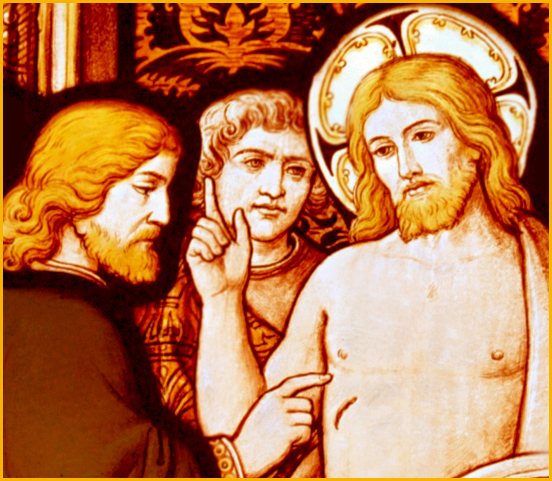
Although yesterday was the feast of St. Thomas, today we commemorate it today and our Gospel reading that highlights Thomas. I’d love to say that we have a stunning profile of how extraordinary a disciple St. Thomas is. But, that just isn’t the case. That really isn’t the case for any of the disciples. The Lord didn't choose a bunch of straight laced, well to do,  Concordia Seminary St. Louis educated men to be his disciples. (He would have chosen Ft. Wayne guys obviously). He chose twelve seemingly ordinary, normal men – tax collectors, fisherman –sinners, like you and me. And in fact, in today’s Gospel, St. Thomas reminds us of how ordinary all the disciples were –how normal they were.

In the Gospel reading, we get a glimpse of how normal Thomas was. Instead of painting Thomas as a great hero of faith we get a picture of a skeptical man. Maybe there is some divine humor that today we commemorate Thomas, an Apostle, who is best known for being an unbelieving or doubting disciple. No one ever uses St. Thomas in a complimentary way. No one ever says,  “Oh, that man is a Thomas because he is a Twin.” No, you get called a Thomas because you are a doubter, unbelieving. You don’t get called a Thomas for making a bold statement of faith, a bold confession –arguably the greatest confession in Scripture –no, you get called a Thomas because you won’t believe until you see.

You see, St. Thomas is very much a reminder of how normal the disciples were. But more than that, how abnormal believing is -how extraordinary, how difficult believing is for us our own. Not just how abnormal, difficult, and extraordinary, but how downright impossible believing on our own is. And we as good Lutherans should know this well. We confess it in our Small Catechism. “I cannot by my own strength or reason believe in my Lord Jesus Christ or come to him.” For Thomas, on his own strength or reason, he would not believe.

St. Thomas wouldn't believe the disciples’ message. It almost seems as if Thomas could understand that the other disciples may have seen someone resembling Jesus. Maybe someone that had an appearance of Jesus, that looked and spoke like Jesus, but certainly not the Jesus Thomas knew.

Certainly not the Jesus Thomas had seen taken away to Chief priests and then onto Pilate. Certainly not the Jesus that had been mocked, scorned, beaten, led away to Golgotha. Certainly not the Jesus who had his hands and feet nailed to cross, that after that cross was lifted up, died hanging there.  Certainly not the Jesus who had his side pierced to make sure He was dead.

No, Thomas wouldn't believe the disciples had seen that crucified Jesus unless he placed his hands in those wounds. Without that evidence, Thomas would never believe the crucified Jesus he knew was raised from the dead. But that Jesus, the Crucified Jesus, the Resurrected Jesus, that Lord Jesus mercifully comes to Thomas.

The Lord would not leave Thomas in his unbelief. Eight days after the Resurrection, while the disciples were all gathered together in a locked room, the Lord appears in their midst and says, “Peace be with you.” As if the Lord’s extraordinary entrance into the locked room wasn’t enough, and as if His extraordinary words spoken weren’t enough, Jesus gives more. He turns to Thomas and gives Himself to him. The Lord mercifully gives Thomas His hands and side. “Place your hands here… do not disbelieve but believe.”  And Thomas replies the only way he can, making the most profound confession in Scripture, crying out “My Lord and My God!”

And Jesus, gently rebuking Thomas, questions, “Have you believed because you have seen me? Blessed are those who have not seen yet have believed.” But don't mistake our Lord’s words here. Those who have not seen are not without evidence. Those who have not seen are not without a witness. No, those who have not seen are those to whom Jesus has given the Apostles, and Prophets, and Evangelists. He has given the shepherds, the pastors, and teachers. He gave these gifts to His people, to His Church that, though not having seen His glorified and resurrected body, they would still believe. He gives those gifts for you. But Jesus always gives extraordinarily more.

We do confess in the Small Catechism that we cannot by our own strength or reason believe in our Lord Jesus Christ or come to him. This is most certainly true. But Jesus, who is merciful, will not leave us in our unbelief. And we know this from the completion of the explanation in the Small Catechism.  “But the Holy Spirit has called me by the Gospel, enlightened me with His gifts, sanctified and kept me in the true faith.” Jesus gives His Holy Spirit to us. He gives His Holy Spirit to His church. He gives His Holy Spirit to you. And this Holy Spirit calls you us through Christ’s Word, through Christ’s promises, through Christ’s Gospel.

He calls us through the waters of baptism, the place where Christ’s Word of promise seals you as His own; where your sins are washed away; where His Spirit is poured out upon you; where He brings you into His holy church.

He calls you through the words of Apostles and Prophets, and Evangelists, read here for you today. He calls you through the words of the under shepherds, the pastors, as they stand in Christ’s stead, forgiving you your sins.

But Jesus always gives extraordinarily more. As Jesus breaks into our lives and speaks His word of peace to us, He turns to each of us and gives His body and blood. Today in this meal, He gives Himself anew, afresh into your mouth. He gives to you His very body and blood for the forgiveness of your sins, for the assurance of life and salvation. He gives Himself to you that you might be strengthened and kept steadfast in the true faith to life everlasting.

He gives Himself to you this day that you would not be disbelieving, but believing. He gives Himself to you today, as He has continually given Himself to all the saints who have come before us, and all those who will come after us. He gives himself to you as He gave himself to St. Thomas. And we receive Him and His gifts that we might confess with St. Thomas, “My Lord and My God!”  Amen.

Sermon for the Holy Innocents.  Preached by the Rev. Sem. Coleman Geraci.

In the name of the Father and of the Son and of the Holy Spirit. Amen.

I had no way of introducing the Feast Day we commemorate or the text for today lightly, so I am going to be up front and blunt about it: The events recounted in the Gospel lesson today are horrific. Today’s Gospel reading, appointed for just four days after the celebration of the Incarnation of our Lord is a harrowing reminder that evil, sin, and death still exist in the world. Four days after we have sung the chorus of “Glory to God in the highest and peace to his people on earth,” we now weep with Rachel who will not be comforted. We are taken from the joy and glad tidings of this celebration thrust back into the reality of this broken creation – this place where sin, evil, and death still persist.

Today’s reading is the completion of the story of the visitation of the Magi –the part of the story we don’t want to recall. The Magi come to Herod to find the Christ child –the one born king of the Jews – and Herod, after consulting with his scribes, after reading the Prophets, points them in the right direction, but wants them to bring the child to him. The Magi complete their journey offering gifts to the Christ child, but being warned by God do not return to Herod.

Today’s reading is the rest of the story and the rest of this story is tragic. The Magi had brought the good news of the Christ child to Herod. But instead of believing the Magi, instead of going to worship this newborn king –Herod treats this news as a threat to his kingdom, to his power. His fear gives way to anger after the Magi do not return to him. His anger boils over into wrath with wicked intent to destroy the Christ child. In his wrath, he slaughters these children in Bethlehem, these defenseless babes.

We hear in horror the evil that Herod has committed. This act of horror seems to diminish the joy from the birth of the Savior; it makes us realize that, though the Savior has come, though the Word has become flesh and dwells among us, sin and evil still persist in this world.  As the sin in Herod’s heart, as the evil in his mind incite him to destroy the Christ child, so sin and evil seek to destroy our joy in what this Christ child brings to us.

Now, the good news is: Jesus Christ and His sacrifice on the Cross have conquered sin, death, and the devil once and for all. However, they still persist in our world. They still persist to thwart us from the joy we have in Jesus. They persist to tear us away from the consolation we have in Christ.

We face these realities day in and day out. Perhaps you may have faced them personally and intimately over these last several days. This may have been the first Christmas you have celebrated without a loved one or the bringing together of families has re-opened old wounds.  Perhaps, you have encountered struggles in your own life –with your own sin, with your own doubts. Or perhaps you have seen it in the lives of those around you -the sin and evil that has ravaged your neighbors. And if you have not faced them personally, certainly you have seen sin, death, and evil rear its head against the church of Christ in Iraq and Syria and North Africa. We have seen sin and death try to destroy the name of Jesus. In these times of confusion and turmoil, we wonder where can we turn to be comforted.

The Gospel writer Matthew would point us to Jeremiah.

If we return to the Old Testament text of Jeremiah for today, we begin to see the larger picture that Matthew is painting. Matthew points us to the prophecy of Jeremiah about Rachel weeping for Israel, her children, who have been displaced from Jerusalem. But, as Paul Harvey used to say, “Now, for the rest of the story.”

Jeremiah writes: The Lord says, “Keep your voice from weeping, and your eyes from tears, for there is a reward for your work,” declares the Lord, “and they shall come back from the land of the enemy. There is hope for your future, declares the Lord, and your children shall come back to their own country.”

The Lord seems heartless and cold by telling us not to weep or cry – but He tells us this so that we do not miss what He is giving –the greater thing that He is doing. We know from the history of Israel that this prophecy was fulfilled when the Israelites returned to Jerusalem. But Matthew is using Jeremiah to point to a greater fulfillment. Matthew points us to a greater hope and future that Lord speaks of in Jeremiah –not just a temporal hope and return to Jerusalem. Matthew is pointing to the greater fulfillment in Jesus Christ–Matthew points us to the rest of his story.

The rest of Matthew’s story is that Jesus will be the one rewarded for His work; that Jesus is the one who completes his work on the Cross, who goes into the land of the enemy, into death for us, and HE returns. And from His work, He gives us His Name and the Name of the Father that we might be the children who come back to their own country - to return to the Greater Promised Land. And we get a glimpse of this in the reading from the Revelation.

Jesus gives us the name of the Father that we might stand with Him, on His Holy Mountain. He gives us the name of Father that we might be the redeemed, blameless. He transforms our cries of lament, our weeping into a new song. This is the glory that awaits us when Jesus returns –when sin, death, and the devil are ultimately destroyed.

Until that point though, we live here and now in what Luther calls, “the vale of tears.” We live in the tension of the hope and promises of Christ and the brokenness and sin of the world. We live by faith in His Word against the lies and deceit of the world. We pray for His Kingdom to come and His will to be done among us to hinder every evil plan and purpose of the devil, the world, and our sinful nature.

We fight against the evil and sin that persists. We put forth our best efforts to love and serve our neighbor, especially the most defenseless, tiniest neighbors among us. And though we may still suffer the effects of evil and sin in this world, nevertheless, we continue to hold on to the hope that God has given us in Christ Jesus.

We hold onto His Word of comfort, we hold onto His Name; the Name He has given you, the Name into which you were baptized, the Name by which you are saved. We hold onto Him and His promise that meets you here today at the altar. His body and blood, that conquered sin, death, and the devil –that body and blood given for you. We take hold of these promises here and now, against the sin and evil that persists. We trust in faith that despite the circumstances, He is still our good, loving and merciful Savior who is our helper, the upholder of our lives, who has delivered us from every trouble (Psalm 54).

In the name of Jesus.  Amen.