As plans were being made for the extraordinary ordinary Amazonia Synod were being finalized and the event was to begin, a few days before the synod in the Vatican Gardens there was this things described as an
“indigenous ecological ritual.” The “ritual” included a male fertility totem with a
distinctively male and erotic profile. In attendance was what appeared to be a surprised
Pope Francis. Though he watched at a distance, it was rather obvious that he was uncomfortable. This was only confirmed when he decided to skip his
prepared remarks and left the whole affair abruptly after the Lord’s Prayer.
Why was Francis surprised? He had given every indication that this Synod was wide open to consider that may be considered emergency measures but which will diverge from the official teachings of the Roman Catholic Church. These are things such as allowing married men to be priests, perhaps instituting a female diaconate, and giving precedence to the indigenous culture over the culture of the faith itself. Now you can argue these points and that is not my point but rather I have a question. Why was Francis surprised by all of this? After all, was it not Francis who opened the door in the first place?
Let me move another direction. There are many, some of them I count as friends, who are in distress over the direction of the ELCA. But why are they surprised? After all, the door to these changes was opened long ago, was it not? When in a somewhat backdoor method, the Lutherans in the old ALC and LCA began ordaining women in 1970, they did so without a compelling defense of this action that could be substantiated from Scripture, the Confessions of the Evangelical Lutheran Church, and the larger catholic tradition. It was, by all accounts, a distinct breach from the historic and nearly universal understanding and practice of the Lutheran Church prior to that day. Yet it was determined that a larger purpose was at work than fidelity to the doctrine and practice of the faith that went before them.
So when in 2009 the Church Wide Assembly broke with historic doctrine and practice again to open the ELCA to same sex marriage, to the full incorporation of the GLBTQ+ agenda, and to the radical altering of the requirements for ordination and practice of pastors, should anyone have been surprised? It is my opinion that this did not represent a serious detour from the direction charted first generation after generation before this action took place. Indeed, the seeds were laid a long time ago when the Gospel was lifted from its basis in fact and history, when the Gospel became a principle more than a message of Christ and Him crucified and risen, when culture became a voice and a prominent voice in what the Church says and does, and when it was determined that creativity was more important than fidelity. Why were people surprised by this in 2009? That remains my question to those who are uncomfortable with these decisions and those who left to form new church bodies that rolled back time to an ELCA just prior to 2009.
The liberal or progressive direction was long ago set when these seeds were sown and to be surprised at where it has led is to be blind to the consequences and implications of those choices. So Pope or Lutheran or whatever kind of Christian you might be, do not cry out with surprise when liberalism and progressivism refuses to be bound and limited by any artificial constraints. The genie is out of the bottle, folks. You may not have wanted to see this coming but that does not mean you should be surprised that there is no limit to where these things will lead. Any, by the way, we have not seen the end of it all. Change is even now being fomented which will make even the things mentioned here seem moderate.
Tuesday, November 12, 2019
Monday, November 11, 2019
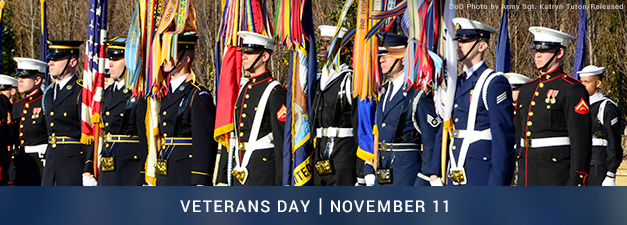
Veteran's Day. . .
Living in a city with such a huge presence of active duty, former
military, and retired military has left me with renewed awe and
appreciation for those who have defended our nation, fought to protect
our liberty, and gone the world over in the cause of American
interests. The numbers of those dead and wounded over the years is too
great a number for me to imagine. On Sunday morning I see the faces of
so many young and middle aged folks who may be there in civilian
clothing but who are always "on duty." We have had colonels and the
lowest of the enlisted ranks, helicopter pilots and mechanics,
paratroopers and chaplains, special forces and regular army. They are
tall and short, men and women, from cities and rural areas, but they
share in common a remarkable sense of duty that makes me feel safe and
secure. More than this, it makes me feel a deep and abiding sense of
gratitude toward those who have served and now serve.
As we observe Veterans Day (formerly Armistice Day and known as Remembrance Day for our Commonwealth friends), we lament that promise of the war to end all wars has not been kept. Instead we find ourselves in conflict after conflict. Some are nearer to our homes and some are so far away we can barely pronounce the geographic names. In the midst of it all are those young men and women who have borne the lion's share of the burden of liberty's defense. But don't just say a prayer of thanks, tell a veteran or active duty soldier "Thank you."
Sunday, November 10, 2019
A dangerous mindset. . .
Decline has become the norm for Christianity in the West. Look at Europe. Look at the writing on the wall here. It is true for all incarnations of Lutheranism (from liberal to conservative). It is pretty bad, however, when you take comfort from the fact that others (for us the ELCA) are declining more rapidly than we are (the LCMS). All of this is true, of course, and yet one has to wonder if our constant drumbeat of decline has not become a self-fulfilling prophecy.
Could it be that we are shaped more by our mindset of expected decline than by our confidence in the Word of the Lord? This has become one of my fears for the Church. My fear is that we have more confidence in the dire predictions of our immanent demise than we have faith in God's promises. It may be an irritant for an old curmudgeon like me but it is the kiss of death for pastors just beginning their service or congregations who truly believe that their best years are gone and the best they can hope for now is to survive a little while longer.
The time of youth is youth in part because it is filled with enthusiasm and dreams. What happens when we steal those dreams and dampen that enthusiasm by the constant press to believe that there is no future for the Church? The early years of a congregation are filled with hope because they believe God will bless them. What happens when a congregation believes that blessing has passed and they will soon face the day when the last one out the door will turn off the lights forever?
It is reported that Socrates was worried about the future and had written off the youth in his day. Perhaps that is the curse of age. But we dare not lost sight of the fact that God is not finished with His Church and we do not get to write the last chapter in His work -- He does!
Dr Larry Rast read to our pastor's conference words from a several hundred year old introduction to the Book of Concord translated into English:
If those facing a Lutheranism threatened by linguistic and ethnic division, by disorganization, by the pressure of Americanization, by the isms of the day (rationalism, pietism, and liberalism), and by the challenge of immigration and an American frontier still awaiting pastors and parishes can find hope, can we dismiss that hope and surrender to despair? We have always faced an uncertain future marked with enemies and challenges far beyond us and yet God has endured with mercy, grace, and hope beyond measure. All of us would rather we were in the same boat as parts of Africa where Christianity and Lutheranism are growing too quickly, but that does not mean that the Gospel is dead here or that God no longer calls people by His Word and equips them with His Spirit to respond with faith. Our future is challenged but God is above all of those challenges. We dare never forget it.
Could it be that we are shaped more by our mindset of expected decline than by our confidence in the Word of the Lord? This has become one of my fears for the Church. My fear is that we have more confidence in the dire predictions of our immanent demise than we have faith in God's promises. It may be an irritant for an old curmudgeon like me but it is the kiss of death for pastors just beginning their service or congregations who truly believe that their best years are gone and the best they can hope for now is to survive a little while longer.
The time of youth is youth in part because it is filled with enthusiasm and dreams. What happens when we steal those dreams and dampen that enthusiasm by the constant press to believe that there is no future for the Church? The early years of a congregation are filled with hope because they believe God will bless them. What happens when a congregation believes that blessing has passed and they will soon face the day when the last one out the door will turn off the lights forever?
It is reported that Socrates was worried about the future and had written off the youth in his day. Perhaps that is the curse of age. But we dare not lost sight of the fact that God is not finished with His Church and we do not get to write the last chapter in His work -- He does!
Dr Larry Rast read to our pastor's conference words from a several hundred year old introduction to the Book of Concord translated into English:
. . . we cherish the anticipation of a brighter day in the Lutheran Church. In a land of freedom, of science and art, where the generous spirit of political wisdom encourages the exercise of reason, and guards the decisions of conscience; where industry, energy, and enterprise, though daily attaining fresh prospects of future improvement, are continually unburying the sacred treasures of the past, we believe that the doctrines of our church will ultimately be reclaimed, and that men of our western clime will enter into the investigation of these doctrines with all the avidity natural to a love for the truth. ...Those words should shame us today with their optimism and hope in God's grace and favor that what has been lost will be reclaimed and that the day will come when serious people will reconsider the hope God has given in Christ and will rise up renewed in the doctrine and piety of the Christian faith. We owe it to our children and to those who new to the faith NOT to bequeath to them our cynicism and disappointment. We owe to them all to preserve not only the form of the faith but its beating heart in the efficacious Word of God and the Sacraments that bestow what they sign.
If those facing a Lutheranism threatened by linguistic and ethnic division, by disorganization, by the pressure of Americanization, by the isms of the day (rationalism, pietism, and liberalism), and by the challenge of immigration and an American frontier still awaiting pastors and parishes can find hope, can we dismiss that hope and surrender to despair? We have always faced an uncertain future marked with enemies and challenges far beyond us and yet God has endured with mercy, grace, and hope beyond measure. All of us would rather we were in the same boat as parts of Africa where Christianity and Lutheranism are growing too quickly, but that does not mean that the Gospel is dead here or that God no longer calls people by His Word and equips them with His Spirit to respond with faith. Our future is challenged but God is above all of those challenges. We dare never forget it.
Saturday, November 9, 2019
The Day Will Come. . .
For much of my youth, I have thought about or desired to be a pastor. When I entered St. John's College (Winfield), I joined more than 30 other teenagers just turned 18 -- all of us seeking the same goal. In the midst of it all, the LCMS nearly imploded with a war of the Bible that ended up bleeding off 120,000 people and nearly killing a seminary -- a successful effort to maintain the truth of the faith and its authoritative Word.. That, along with Greek and Hebrew, killed off the dreams of the bulk of that class but, in the wisdom of God, I was not among them. When the Seminary in Ft. Wayne commended me to the Church and I received a call, the education came to an end but not the formation and training of a pastor. With the trials of a congregation divided and the patience of some folks who clearly deserved better than me, the title "pastor" became a real vocation lived out within the life of God's people. Now, some 47 years after I showed up in Winfield to begin the journey, I find that I have forgotten who I am apart from this calling. So when people ask me about retirement, the panic sets in. Who am I and what will I do if I am not a pastor serving a parish?
That is one side of the coin. . . my desire to be a pastor and my life as a pastor. The other side of the coin is the ministry itself. The thousand of so babies, children, youth, and adults baptized at my hand, the thousands upon thousands of faithful communed from my hand at the Lord's altar, the hundred and hundreds of youth and adults confirmed in their baptismal faith before me, the tens of thousands of sermons preached for ordinary Sundays, festival days, and in pastoral care to couples being married and loved ones being buried . . . these are the things that I love and love to do. These are the things I still do week after week (better with experience and a varying degree of expertise and accomplishment). And I am not ready to give it up -- even if there are some who think it may be time. I have trouble with the whole idea of retirement.
Some long for the day of retirement and count it down by the year, month, week, day, and hour. Some dream about the day when they will no longer be pastor. Some hope for the day when they will be free to do what they want (as if being a pastor is not it). Some long for the day when they can do nothing. Not me. I am not counting down but rather terrified of the day when the calendar of active service will end (whether due to desire, health, age, infirmity, or family pressure). The truth is I love what I do.
Just a few thoughts after hearing somebody extol the wonder of a life without a clerical collar. I looked across the table at a guy a year older than I am and he whispered what I was thinking. . . not me. Not me. . .
That is one side of the coin. . . my desire to be a pastor and my life as a pastor. The other side of the coin is the ministry itself. The thousand of so babies, children, youth, and adults baptized at my hand, the thousands upon thousands of faithful communed from my hand at the Lord's altar, the hundred and hundreds of youth and adults confirmed in their baptismal faith before me, the tens of thousands of sermons preached for ordinary Sundays, festival days, and in pastoral care to couples being married and loved ones being buried . . . these are the things that I love and love to do. These are the things I still do week after week (better with experience and a varying degree of expertise and accomplishment). And I am not ready to give it up -- even if there are some who think it may be time. I have trouble with the whole idea of retirement.
Some long for the day of retirement and count it down by the year, month, week, day, and hour. Some dream about the day when they will no longer be pastor. Some hope for the day when they will be free to do what they want (as if being a pastor is not it). Some long for the day when they can do nothing. Not me. I am not counting down but rather terrified of the day when the calendar of active service will end (whether due to desire, health, age, infirmity, or family pressure). The truth is I love what I do.
Just a few thoughts after hearing somebody extol the wonder of a life without a clerical collar. I looked across the table at a guy a year older than I am and he whispered what I was thinking. . . not me. Not me. . .
Friday, November 8, 2019
Your two brains. . .
Five years ago I read an article entitled: “Your Paper Brain and Your Kindle Brain Aren’t the Same Thing.” The point was that you do not read the same when you read from a screen as you do when you read from paper. But this split personality is having trouble living in you side by side. So the end result is that you are beginning to read from paper (books, journals, etc.) the way you do online, especially the little screens we all carry around with us. The problem is that we have adapted to reading online a little too
well. Because we have learned too well to read by scanning and skimming (the way we do a Twitter Feed), and we are not reading from the deeper part of your brain, you lose
that deep reading part of your brain and it becomes impossible to read without skimming and scanning.
Despite the centrality of the Word in God's self-revelation, individuals reading the Bible did not become routine until the modern age of cheap books, commercial printing, and public education. It is absolutely true that the Reformation happened when it did because of the existence of the printed Word. Prior to the Reformation, the Scriptures were words in the ear not before the eye. The people heard that Word of God. Even well after the Reformation, this continued to be the norm.
With the Reformation came the prospect of a new focus on individual reading and when literacy became normative, the shift from hearing the Word of God to reading it with the eye took place. Although few of us today think about it, this change did not happen until more modern times. We read the Scriptures and it is shocking to us to think that for most of Christian history this Word was heard in the ear -- even such familiar passages as “In the beginning was the Word, and the Word was with God, and the Word was God” from John 1:1, as from Genesis 1, when God created the world through the Word. The many expressions of the Word of the Lord in Scripture reference primarily an aural word heard in the ear. While this does not exclude the written Word, the written Word was not the normative way people understood or experienced the Word. Yet in a rather quick shift, the normative experience of God's Word was by reading with the eye what was printed on the page. Now, in the fastest change of all, the shift has moved again from paper to pixels.
What is even more important is that this affects reading more than many had first thought. The digital text tends to isolate verses apart from their immediate context so that what is read is lifted from its surrounding and from the Bible as a whole. It is not simply what we remember but how we read it in the first place. A digital Bible may not be exactly the same as a paper Bible -- not because the Word is different but how we encounter it, what we read of it, and what we remember of it changes. We are reading the Bible more -- just as we are reading more -- but the way we read is different. It resembles the way people encountered God's Word through the visual image of stained glass more than the way we read and recall a whole book read from the page. In the end, it will surely affect not only catechesis but preaching. It will also make it harder for us as Christians to understand and appreciate the confessional writings that mark our divisions.
Something to think about. . .
Despite the centrality of the Word in God's self-revelation, individuals reading the Bible did not become routine until the modern age of cheap books, commercial printing, and public education. It is absolutely true that the Reformation happened when it did because of the existence of the printed Word. Prior to the Reformation, the Scriptures were words in the ear not before the eye. The people heard that Word of God. Even well after the Reformation, this continued to be the norm.
With the Reformation came the prospect of a new focus on individual reading and when literacy became normative, the shift from hearing the Word of God to reading it with the eye took place. Although few of us today think about it, this change did not happen until more modern times. We read the Scriptures and it is shocking to us to think that for most of Christian history this Word was heard in the ear -- even such familiar passages as “In the beginning was the Word, and the Word was with God, and the Word was God” from John 1:1, as from Genesis 1, when God created the world through the Word. The many expressions of the Word of the Lord in Scripture reference primarily an aural word heard in the ear. While this does not exclude the written Word, the written Word was not the normative way people understood or experienced the Word. Yet in a rather quick shift, the normative experience of God's Word was by reading with the eye what was printed on the page. Now, in the fastest change of all, the shift has moved again from paper to pixels.
What is even more important is that this affects reading more than many had first thought. The digital text tends to isolate verses apart from their immediate context so that what is read is lifted from its surrounding and from the Bible as a whole. It is not simply what we remember but how we read it in the first place. A digital Bible may not be exactly the same as a paper Bible -- not because the Word is different but how we encounter it, what we read of it, and what we remember of it changes. We are reading the Bible more -- just as we are reading more -- but the way we read is different. It resembles the way people encountered God's Word through the visual image of stained glass more than the way we read and recall a whole book read from the page. In the end, it will surely affect not only catechesis but preaching. It will also make it harder for us as Christians to understand and appreciate the confessional writings that mark our divisions.
Something to think about. . .
Thursday, November 7, 2019
Not so private privacy. . .
I am sure that my 2 year old granddaughter has infinitely more pictures of her than I have had in my nearly 33 times as many years. The interweb is literally filled with photos. Some are public and some are hidden away in clouds for those who are given privileged access. She will grow up in a world far different from the world I grew up with -- at least when it comes to privacy. Whether she knows it or not, her life has been lived at least in part in the very open world of the internet and social media. Now, mind you, her parents are far more discriminating that many when it comes to what is posted and where but she has a more substantial media presence than her grandpa and she has never hit send or post -- not once (well, at least deliberately!).
I find it rather odd that we as a society don't want the government in our bedrooms but we regularly tell our most intimate secrets willingly and freely on social media. We as a culture are offended by religions that violate the politically correct stands of the moment and want to silence the voices of disagreement around us yet we ourselves are not restrained by much of anything. On TV a commercial jokes about a monitor that plugs into your car the tells your insurance company about your driving but it is not joke. People a generation ago would have insisted it is nobody's business but theirs. Phone calls target me for certain products based on a host of information that must be readily available to them or they would not know the age of my vehicle or whether I am eligible for Medicare or who I voted for in the last election. On one hand we are offended by the leaks of information we consider private by Facebook or financial firms whose computers were hacked but we as a people routinely give out tons of information once considered privileged and private.
I am limited by law for the information I can find out about a member of my parish who is hospitalized and where and why (unless they agree to have it shared with their pastor). Yet at the same time this information is routinely divulged on social media without even the shrug of a shoulder. When I get my flu shot I have to sign off on the privacy policy the provider is bound to by law and yet that information gets shared in the background with a host of people I do not know and will never meet -- my health care network! People routinely sign up to belong to a retail customer rewards program and routinely tell them their email, cell phone number, and contact information and yet when they show up in church they want to be anonymous and refuse to let us know this same information.
It is a strange circumstance. We guard our privacy but so much of our lives are routinely public. Yet at the same time, we are adamant that no one dare judge us and all the things we make public -- except, of course, those things that violate the standards of acceptable things as defined by the moment. It makes me wonder sometimes. China has been most successful at exploiting the use of such public privacy and has, in effect, turned its populace into spies and probation offices for their neighbors. We are well behind them but moving in the same direction. England is filled with cameras recording everything that takes place and the government uses all of this in pursuit of its responsibilities and its political agendas. We are well behind them but moving in the same direction. Yet in the end it just may be that algorithms will rule the day in place of a common set of values and morality. Social credits will become not only the currency of note but that which binds us together. Perhaps not the kind of social credits China is using but social credits through business and social media with a modicum of governmental participation. And where will religion fit into this? You tell me.
I find it rather odd that we as a society don't want the government in our bedrooms but we regularly tell our most intimate secrets willingly and freely on social media. We as a culture are offended by religions that violate the politically correct stands of the moment and want to silence the voices of disagreement around us yet we ourselves are not restrained by much of anything. On TV a commercial jokes about a monitor that plugs into your car the tells your insurance company about your driving but it is not joke. People a generation ago would have insisted it is nobody's business but theirs. Phone calls target me for certain products based on a host of information that must be readily available to them or they would not know the age of my vehicle or whether I am eligible for Medicare or who I voted for in the last election. On one hand we are offended by the leaks of information we consider private by Facebook or financial firms whose computers were hacked but we as a people routinely give out tons of information once considered privileged and private.
I am limited by law for the information I can find out about a member of my parish who is hospitalized and where and why (unless they agree to have it shared with their pastor). Yet at the same time this information is routinely divulged on social media without even the shrug of a shoulder. When I get my flu shot I have to sign off on the privacy policy the provider is bound to by law and yet that information gets shared in the background with a host of people I do not know and will never meet -- my health care network! People routinely sign up to belong to a retail customer rewards program and routinely tell them their email, cell phone number, and contact information and yet when they show up in church they want to be anonymous and refuse to let us know this same information.
It is a strange circumstance. We guard our privacy but so much of our lives are routinely public. Yet at the same time, we are adamant that no one dare judge us and all the things we make public -- except, of course, those things that violate the standards of acceptable things as defined by the moment. It makes me wonder sometimes. China has been most successful at exploiting the use of such public privacy and has, in effect, turned its populace into spies and probation offices for their neighbors. We are well behind them but moving in the same direction. England is filled with cameras recording everything that takes place and the government uses all of this in pursuit of its responsibilities and its political agendas. We are well behind them but moving in the same direction. Yet in the end it just may be that algorithms will rule the day in place of a common set of values and morality. Social credits will become not only the currency of note but that which binds us together. Perhaps not the kind of social credits China is using but social credits through business and social media with a modicum of governmental participation. And where will religion fit into this? You tell me.
Wednesday, November 6, 2019
Singing with giants. . .
For many years he taught various music classes at his alma mater, Concordia University (then River Forest, now Chicago) -- a tenure spanning more than 40 years! Prior to that, he served as Lutheran teacher and parish musician to students, choirs, and congregations most fortunate to have such a great man as their parish musician. His bibliography reads long on the many books on worship in the church, church music, and commentary as well as scholarly articles and popular columns (thinking here of The Amen Corner). In addition to all of this, he also worked as an editor for the journal Church Music.
His primary influence was in congregational hymn tunes and choral works for the parish choir. He exerted a deep influence over the generations of parish musicians whom he mentored and he is a living example to the best of our ability for the glory of God accompanied with the highest commitment to Lutheran doctrine and piety with its high view of Scripture. So open your hymnal, look at the index to find composers, and sing through some of the hymn tunes and hymn settings Dr. Schalk produced -- works that live on as we open our hymnals to sing to the Lord every Sunday! And as you do this, do not forget to say thank you to the Lord for providing such examples of faith and dedication.
Click here to find a list of his compositions from CPH and you can also listen to any number of his anthems recorded. Or, listen to one of my personal favorites, Before the Marvel of This Night.
Tuesday, November 5, 2019
A monumental work. . .
Although in the works for 13 years, the Lutheran Service Book: Companion to the Hymns - 2 Volume Set, is now ready for pre-order. It will be officially released in early December of this year. Some may sigh wondering why this volume and what took so long.This unparalleled work presents engaging stories, insightful
theological commentary, and encyclopedic historical details for the
complete hymnody of Lutheran Service Book. The culmination of over a decade of groundbreaking research, the Companion to the Hymns was developed from the study of more than 1,500 primary sources and the work of 127 contributing authors. Read the first nineteen pages here.
Volume 1 includes text and tune background, theological and scriptural discussion, usage advice, and exhaustive historical details of original sources for all LSB hymns. 1,680 pages.
Volume 2 includes biographies for all hymn authors and composers, essays providing a survey of hymnody, and indexes, appendixes, and charts. 944 pages.
General Editors: Joseph Herl, Peter C. Reske, Jon D. Vieker
FeaturesIt took so long because of the scope of the project -- an unprecedented volume that will become a standard reference work for many generations. It took so long because of the cost of the project -- there were little funds left from the development of the LSB hymnal to expend to cover the development costs of these volumes and the budget of CPH for new professional resources is limited, indeed. It took so long because of the editors -- their commitment to and insistence upon the best made the progress deliberate. I know them and can vouch for their meticulous efforts to produce a serious and yet accessible work. It is not cheap but it will probably not be duplicated for a lifetime and it will offer the wider church a resource of quality as well as the LCMS a solid tool for the future, even after LSB has been replaced.
- Two-volume set with slipcase
- 656 hymns
- 680 biographies
- 17 essays (9 historical, 8 topical)
- 42 music examples
- 12 figures
- 11 indexes
- 3 appendixes
- 8 charts
Monday, November 4, 2019
Just not me. . . or the real me. . .
Sermon for All Saints' Day (Observed) preached on Sunday, November 3, 2019.

Have you ever watched one of those home shows or perhaps a show in fashion in which a person looks at a prospective house and says “That is definitely not my taste” or holds up clothing as they look in the mirror and says “That is just not me.” Saint is one of those terms we might say does not reflect my style or who I am. We know who we are, what we like, and what we don’t like. We may not be evil people but we are not quite saintly. A saint is someone who never had too much to drink, never said a choice word when the hammer hit their thumb, never broke some thing in anger or told a lie. I may not be a terrible person, but I am no saint, we admit. That is just not me, not who I am or at least who I think I am.
The Roman Catholic Church has a definite process to decide who is a saint. It requires several steps along the way – one of which is a miracle attributed to the work or intercession of that dead person. It is not quite Lutheran to think of a saint as an intercessor who gave us a miracle. Besides we are not really miracle people. We see the world in cause and effect. In this age of YouTube, smart phones, social media, and such, everybody has a not so hidden past. Who has the nerve to say they are saintly when we know everyone has something to hide. Finally, how much fun is it to be a saint? Who wants to give up all the fun to pray all day and be good all the time?
But that is not how saint is used in Scripture. The word saint appears some twenty times in the New Testament and it means exactly what we think it does – a holy person. The problem is that “a holy person” does not mean what we think it does. For many of us, perhaps most of us, holy person means a person of virtue, without sin, with public righteousness of their own. A saint is somebody so good, that he does not need much help from God. But that is not what the Bible means when it calls us saints. In the Bible the saint is not the one who has his own righteousness or holiness but who has the Lord’s. The saints are those whom God has claimed as His own in baptism, set apart to be His people, and clothed with the righteousness of Christ.
If you look at those whom the Scriptures calls saints, they are flawed people, sinners in need of redemption, but they are also people called by God, set apart by Him for holy purpose, and declared righteous by faith. Look at the list in Romans 4 and in other places. The giants of the faith whose names we all know and the anonymous saints known to God alone share this common identity. They are sinners forgiven and redeemed by God. In the saints in heaven God has finished His good work but in the saints on earth are those in whom God is still working toward that completion. That is who we are.
On All Saints Day we combine our remembrance to include the saints who rest from their labors, in whom God’s good work has been brought to completion, and who are no more troubled by sin and death – along with the baptized, who still labor against sin but marked as God’s own by baptism, in whom God’s good work is still laboring toward completion, and who still sin but are forgiven. This day is not a day set aside to honor those who don’t need God’s redemptive work in Christ but to celebrate those who have welcomed that work by faith, rejoiced in what God’s mercy has done, and sought with every ounce of their being, under the guidance of the Holy Spirit, to be the people God has declared them to be.
You are these saints. You were baptized. You are forgiven. Your guilt has been removed. You have been set apart to be God’s own. You are not your own but a people bought with a price. You belong to the Lord. Of course you daily sin much and need forgiveness. What do we say every Sunday? If we say we have no sin we deceive ourselves and the truth is not in us. But because you belong to the Lord the blood of Christ cleanses you from your sin. You will not be a saint but you are one right now, and yet, not a finished one but one in whom God is still at work. So what do you hear every Sunday? May He who began this good work in you bring it to completion on the Lord’s Day.
Those who accuse the Church of being filled with hypocrites are making a false accusation. There are hypocrites among us but you, the saints of God, are not hypocrites because you sin. You would be a hypocrite if you denied that you sin. But you acknowledge that sin. You confess that sin. You repent of that sin. You do not claim to be without sin. What your claim is and mine is that you are a sinner claimed by God in baptism, forgiven in the baptismal water and daily forgiven of all your sins, and though you are filled with the inconsistency of a sinful nature and the new person born of baptism, God is still at work in you. Your sins are not minor things but big deals and only the big deal of Christ mercy and blood can cleanse and restore you. This is why you are here today.
We do not see much progress in our battle to quit sinning and be holy. Perhaps this is a good thing because as soon as we saw some progress, we would take credit for it and would presume we do not need God to finish His work in us. Because you do not see the progress, does not mean it is not there. God sees it because God is working it, with your cooperation and by the power of the Spirit. We see the sins we keep on sinning but faith also sees repentance and the forgiveness that takes those sins away in Christ. Righteousness is not only trying to be holy but fleeing into the arms of Jesus for forgiveness, and trusting that what Jesus says in the absolution, is true.
We live here in the world but we are not of it. Daily we learn to see what sin is and to hate it and to love righteousness and to seek it. That is why we hate the sins in others that we see in ourselves. Righteousness is calling us. That is why we admire in others the virtues we seek most for ourselves. The sad truth is that we don’t talk much about this part of it. We talk more about sin, repentance, and forgiveness than we do the other part – loving righteousness, hating evil, and striving to become holy. But this too is part of what it means to be called the saints of God.
You are to fight the good fight. Not simply the one against the enemies of the faith around you in the world but against your own sinful nature. You are to fight the good fight. Fighting with all your might and with the might of the Holy Spirit to become the people God has declared you to be – the holy ones of God, who wear Christ’s righteousness before the world, who love what is good and right and true, who hate what is sin and evil, who delight in forgiving as you have been forgiven, and who love serving as you have been served. The promise is clear. Those who hunger and thirst for the things of God, who desire to live in faith toward Him and toward neighbor, to do what is good, right, holy and true – they are the blessed of the Father who shall be satisfied. The good work begun in them will be finished.
For now, dear saints loved by God, your lives are not characterized by clear victories as much as by painful struggles. But do not lose heart. Do not grow weary in well doing. Fight the good fight of faith. Contend for Christ where you are. In our homes, on our jobs, in our neighborhoods, and in our church we fight the fight. It is personal within ourselves and it is public against the ungodliness and sin the world loves. It is tedious and costly. Only those who die in Christ live forever. Only by self-denial and taking up the cross. Only by being close to Christ and His Word and Supper. Only by remembering that the goal is never to be perfect but to be in Christ. Only by rejoicing in Him who is right now at work in you, finishing what He began when first He called you saint in the waters of your baptism.
You are the saints of God no less than those might ones whose names we all know as well as every anonymous saint who has departed this life with the sign of faith and now rests from his labors. You are those whom God has claimed as His own and marked as His people now and forevermore. You are those in whom God is now at work, teaching you to love righteousness and to hate sin and restoring with forgiveness when you screw it up. Rejoice and be glad for great is your reward in heaven. Amen

Have you ever watched one of those home shows or perhaps a show in fashion in which a person looks at a prospective house and says “That is definitely not my taste” or holds up clothing as they look in the mirror and says “That is just not me.” Saint is one of those terms we might say does not reflect my style or who I am. We know who we are, what we like, and what we don’t like. We may not be evil people but we are not quite saintly. A saint is someone who never had too much to drink, never said a choice word when the hammer hit their thumb, never broke some thing in anger or told a lie. I may not be a terrible person, but I am no saint, we admit. That is just not me, not who I am or at least who I think I am.
The Roman Catholic Church has a definite process to decide who is a saint. It requires several steps along the way – one of which is a miracle attributed to the work or intercession of that dead person. It is not quite Lutheran to think of a saint as an intercessor who gave us a miracle. Besides we are not really miracle people. We see the world in cause and effect. In this age of YouTube, smart phones, social media, and such, everybody has a not so hidden past. Who has the nerve to say they are saintly when we know everyone has something to hide. Finally, how much fun is it to be a saint? Who wants to give up all the fun to pray all day and be good all the time?
But that is not how saint is used in Scripture. The word saint appears some twenty times in the New Testament and it means exactly what we think it does – a holy person. The problem is that “a holy person” does not mean what we think it does. For many of us, perhaps most of us, holy person means a person of virtue, without sin, with public righteousness of their own. A saint is somebody so good, that he does not need much help from God. But that is not what the Bible means when it calls us saints. In the Bible the saint is not the one who has his own righteousness or holiness but who has the Lord’s. The saints are those whom God has claimed as His own in baptism, set apart to be His people, and clothed with the righteousness of Christ.
If you look at those whom the Scriptures calls saints, they are flawed people, sinners in need of redemption, but they are also people called by God, set apart by Him for holy purpose, and declared righteous by faith. Look at the list in Romans 4 and in other places. The giants of the faith whose names we all know and the anonymous saints known to God alone share this common identity. They are sinners forgiven and redeemed by God. In the saints in heaven God has finished His good work but in the saints on earth are those in whom God is still working toward that completion. That is who we are.
On All Saints Day we combine our remembrance to include the saints who rest from their labors, in whom God’s good work has been brought to completion, and who are no more troubled by sin and death – along with the baptized, who still labor against sin but marked as God’s own by baptism, in whom God’s good work is still laboring toward completion, and who still sin but are forgiven. This day is not a day set aside to honor those who don’t need God’s redemptive work in Christ but to celebrate those who have welcomed that work by faith, rejoiced in what God’s mercy has done, and sought with every ounce of their being, under the guidance of the Holy Spirit, to be the people God has declared them to be.
You are these saints. You were baptized. You are forgiven. Your guilt has been removed. You have been set apart to be God’s own. You are not your own but a people bought with a price. You belong to the Lord. Of course you daily sin much and need forgiveness. What do we say every Sunday? If we say we have no sin we deceive ourselves and the truth is not in us. But because you belong to the Lord the blood of Christ cleanses you from your sin. You will not be a saint but you are one right now, and yet, not a finished one but one in whom God is still at work. So what do you hear every Sunday? May He who began this good work in you bring it to completion on the Lord’s Day.
Those who accuse the Church of being filled with hypocrites are making a false accusation. There are hypocrites among us but you, the saints of God, are not hypocrites because you sin. You would be a hypocrite if you denied that you sin. But you acknowledge that sin. You confess that sin. You repent of that sin. You do not claim to be without sin. What your claim is and mine is that you are a sinner claimed by God in baptism, forgiven in the baptismal water and daily forgiven of all your sins, and though you are filled with the inconsistency of a sinful nature and the new person born of baptism, God is still at work in you. Your sins are not minor things but big deals and only the big deal of Christ mercy and blood can cleanse and restore you. This is why you are here today.
We do not see much progress in our battle to quit sinning and be holy. Perhaps this is a good thing because as soon as we saw some progress, we would take credit for it and would presume we do not need God to finish His work in us. Because you do not see the progress, does not mean it is not there. God sees it because God is working it, with your cooperation and by the power of the Spirit. We see the sins we keep on sinning but faith also sees repentance and the forgiveness that takes those sins away in Christ. Righteousness is not only trying to be holy but fleeing into the arms of Jesus for forgiveness, and trusting that what Jesus says in the absolution, is true.
We live here in the world but we are not of it. Daily we learn to see what sin is and to hate it and to love righteousness and to seek it. That is why we hate the sins in others that we see in ourselves. Righteousness is calling us. That is why we admire in others the virtues we seek most for ourselves. The sad truth is that we don’t talk much about this part of it. We talk more about sin, repentance, and forgiveness than we do the other part – loving righteousness, hating evil, and striving to become holy. But this too is part of what it means to be called the saints of God.
You are to fight the good fight. Not simply the one against the enemies of the faith around you in the world but against your own sinful nature. You are to fight the good fight. Fighting with all your might and with the might of the Holy Spirit to become the people God has declared you to be – the holy ones of God, who wear Christ’s righteousness before the world, who love what is good and right and true, who hate what is sin and evil, who delight in forgiving as you have been forgiven, and who love serving as you have been served. The promise is clear. Those who hunger and thirst for the things of God, who desire to live in faith toward Him and toward neighbor, to do what is good, right, holy and true – they are the blessed of the Father who shall be satisfied. The good work begun in them will be finished.
For now, dear saints loved by God, your lives are not characterized by clear victories as much as by painful struggles. But do not lose heart. Do not grow weary in well doing. Fight the good fight of faith. Contend for Christ where you are. In our homes, on our jobs, in our neighborhoods, and in our church we fight the fight. It is personal within ourselves and it is public against the ungodliness and sin the world loves. It is tedious and costly. Only those who die in Christ live forever. Only by self-denial and taking up the cross. Only by being close to Christ and His Word and Supper. Only by remembering that the goal is never to be perfect but to be in Christ. Only by rejoicing in Him who is right now at work in you, finishing what He began when first He called you saint in the waters of your baptism.
You are the saints of God no less than those might ones whose names we all know as well as every anonymous saint who has departed this life with the sign of faith and now rests from his labors. You are those whom God has claimed as His own and marked as His people now and forevermore. You are those in whom God is now at work, teaching you to love righteousness and to hate sin and restoring with forgiveness when you screw it up. Rejoice and be glad for great is your reward in heaven. Amen
The window is not the problem. . .
![]() |
| Can you see the crucifix here? |
After a two-year study by a campus stained glass committee, Lynchburg Stained Glass of Lynchburg, Va., removed the faceted stained glass window in the chancel of the Chapel of St. Timothy and St. Titus in October 2019 to make way for new stained glass windows which Lynchburg is designing and fabricating. New stained glass windows will be installed throughout the chapel — the chancel, transept, nave and narthex — by early 2020 thanks to a generous trust established by the sainted Nell S. and Eugene Fincke, a former member of the Seminary’s Board of Regents. Because of the Finckes’ generosity, the chapel will now be as it was originally planned. When the chapel was designed, it was built with the capacity for stained glass throughout the building but the funding was not available at the time. As such, the only stained glass windows in place in the chapel have been in the chancel since the chapel was dedicated in 1992.
The theme of the new windows is the Te Deum Laudamus (Latin: Holy God, We Praise Your Name), a historic text of praise to God. The south transept window will depict the humiliation and crucifixion of Jesus Christ while the chancel window will depict the resurrection and the north transept will show the exaltation and second coming of Christ. The nave windows will push the worshipping community forward through Word, praise, prayer, thanksgiving and song to the primary elements of the Te Deum represented in the transept: “You had overcome the sharpness of death” and “You will come to be our judge.” Figures from salvation history as well as the redeemed from all the ages entering into the eternal kingdom will be represented. The past, present and future reality of training pastors, deaconess, missionaries and other church workers will be interwoven as a thread throughout the windows providing a thematic link to the old stained glass window, which featured the chapel namesakes on the center panels — Timothy and Titus — and the mission of Concordia Seminary.
While it is high time to replace the clear glass with the intended stained glass, the window in the
chancel of the Seminary Chapel of St. Timothy and St. Titus is NOT the problem. What needs replacing more than ever is the paltry little crucifix that is so nondescript that it little does not even register to the eye. What more fitting need can there be in a Lutheran Seminary Chapel than to have a prominent crucifix that befits the cross on which hung the Savior of the world for our redemption?
It is a crucifix to have to say you have one but with plausible deniability since no one will ever see it without it being pointed out to them.
Now lest you think I unfairly tar and feather the other Seminary in the LCMS (meaning the one I did not attend), I have long said the same thing about the Chapel at Concordia Theological Seminary, Ft. Wayne. Saarinen did not have a clue about Lutheran theology as it related to worship and if anyone had any sense when the place was built that stick cross would have given way to a glorious Reinhardt mosaic of Christ crucified that would have filled the giant wall like a canvas in order to clearly say to the eye we know and preach only Christ and Him crucified. Maybe we can find a donor to help us make that happen at the Fort.
Are you with me? Two great chapels with two dominant crucifixes.
Sunday, November 3, 2019
At odds with God's intention. . .
Almost all the work of modern liturgical development has been to make the Mass, the Divine Service, more accessible, to strip away its layers of mystery and majesty, and to make it more egalitarian and a work of the people. It has been a dismal failure. People have departed the worship of the Church more since this restaging of the Mass or Divine Service than ever before. Worse, however, this has betrayed the very intention of God in creating a place where we not only anticipate the future but participate in that future in the foretaste of the blessed and eternal feast to come.
Like a child who peers into a toy store in the days before Christmas, the Mass or Divine Service (pick your name) allows us to glimpse the future God has prepared for us. But better than the child who is left to his dreams as he views with wide eyes all that glitters, we are invited into this moment in time where eternity is present and we are given the taste of heaven in the bread which is His body and the cup of His blood. It is heaven on earth.
The typical view of modern liturgy is that we do the work and God is the watcher. The historical view of the Mass or Divine Service is that God is doing the work and we are both watchers and invited participants. We are the people of God for whom all of this exists. So we are not the actors who eagerly await His divine approval nor are we spectators who watch and applaud the show. We are those who watch and who enter into the Divine Mystery by hearing the efficacious Word of God read and preached, by recalling our baptism into Christ when we died and were raised to the new life that death cannot end, and by tasting the goodness of the Lord in the flesh of Christ and the blood of Christ hidden but really present in bread and wine.
We know what is coming so the Mass or Divine Service begins with the confiteor. We confess that we are unworthy to be there at all, stained by sin so that we should not even dare to ask to watch. But God in His great mercy welcomes the unworthy through the grace of absolution and sets the Table of the Lord in the presence of this world and all the enemies of the Kingdom. Then in the introit comes the invitation to come into the presence and the entrance rite of introit, Kyrie, and Gloria leads us to the collect where we ask in prayer for the promises to be heard in the pericopes of the day. Instructed in the divine and saving Word and having had the saving acts of Christ brought again to our joyful remembrance, we are ready to offer the sacrifices of praise, thanksgiving, tithes, and offerings. Then we are deliberately brought into the sublime moment when Christ, true to His Word and promise, as Host and Victim, delivers to us the food of the Kingdom -- His flesh and blood in bread and wine. We adore Him first by singing His praise and then by eating and drinking in faith. What can be added to this wondrous grace except a quick thanksgiving song and prayer only to be sent forth in the world as His people doing His bidding with His name and blessing upon us as we depart to fulfill our vocation.
Friends, if this is NOT what you think is happening on Sunday morning, you need to review the Word, relearn the Catechism, and discover the doctrine in the liturgy. Because Sunday morning is nothing short than God delivering heaven on earth for a foretaste and preview of what is to come -- to keep us in the way, holy and blameless so that we may meet Him when He comes and enter into the joy of our Master forevermore. When the modern liturgical movement chose to emphasize accessibility and simplicity and the work of the people, we were betrayed and Sunday morning began to be more about us than about the God who bids us come and delivers to us a glimpse of forever within a moment in time.
Like a child who peers into a toy store in the days before Christmas, the Mass or Divine Service (pick your name) allows us to glimpse the future God has prepared for us. But better than the child who is left to his dreams as he views with wide eyes all that glitters, we are invited into this moment in time where eternity is present and we are given the taste of heaven in the bread which is His body and the cup of His blood. It is heaven on earth.
The typical view of modern liturgy is that we do the work and God is the watcher. The historical view of the Mass or Divine Service is that God is doing the work and we are both watchers and invited participants. We are the people of God for whom all of this exists. So we are not the actors who eagerly await His divine approval nor are we spectators who watch and applaud the show. We are those who watch and who enter into the Divine Mystery by hearing the efficacious Word of God read and preached, by recalling our baptism into Christ when we died and were raised to the new life that death cannot end, and by tasting the goodness of the Lord in the flesh of Christ and the blood of Christ hidden but really present in bread and wine.
We know what is coming so the Mass or Divine Service begins with the confiteor. We confess that we are unworthy to be there at all, stained by sin so that we should not even dare to ask to watch. But God in His great mercy welcomes the unworthy through the grace of absolution and sets the Table of the Lord in the presence of this world and all the enemies of the Kingdom. Then in the introit comes the invitation to come into the presence and the entrance rite of introit, Kyrie, and Gloria leads us to the collect where we ask in prayer for the promises to be heard in the pericopes of the day. Instructed in the divine and saving Word and having had the saving acts of Christ brought again to our joyful remembrance, we are ready to offer the sacrifices of praise, thanksgiving, tithes, and offerings. Then we are deliberately brought into the sublime moment when Christ, true to His Word and promise, as Host and Victim, delivers to us the food of the Kingdom -- His flesh and blood in bread and wine. We adore Him first by singing His praise and then by eating and drinking in faith. What can be added to this wondrous grace except a quick thanksgiving song and prayer only to be sent forth in the world as His people doing His bidding with His name and blessing upon us as we depart to fulfill our vocation.
Friends, if this is NOT what you think is happening on Sunday morning, you need to review the Word, relearn the Catechism, and discover the doctrine in the liturgy. Because Sunday morning is nothing short than God delivering heaven on earth for a foretaste and preview of what is to come -- to keep us in the way, holy and blameless so that we may meet Him when He comes and enter into the joy of our Master forevermore. When the modern liturgical movement chose to emphasize accessibility and simplicity and the work of the people, we were betrayed and Sunday morning began to be more about us than about the God who bids us come and delivers to us a glimpse of forever within a moment in time.
Saturday, November 2, 2019
All Souls and our false perceptions. . .
In the old calendar this was All Souls Day, the Commemoration of the Faithful Departed -- all of them and not simply those commonly identified as saints. This was the day to remember all the baptized who have died in Christ and now rest from their labors. Sadly, this day has largely fallen into obscurity and is a vestige of an earlier era. I am somewhat sad about that.
We live in an age in which the churches across America are aging. Gray is not the more common color of hair -- not because we adore gray hair but because so many congregations have so few youth and young adults! This is certainly true across denominations but not across the world. True, what we see beginning here in the USA is already an accomplished fact throughout Europe. Yet it is a grave misunderstanding of the faith to suggest that the Church is or every has been predominantly white or Western. Though nearly every denomination has programs to encourage diversity in the pews here in America, the Christian world has always been filled with diversity -- not by our intent but by God's design!
The great missionary work of the last couple of centuries and even now among some groups would suggest that Christianity is somehow more native to white Westerners than to any other group. The mythology is that Christianity is a white, Western religion forced upon other cultures and that this faith is responsible for the destruction of native cultures and the introduction of slavery to a more egalitarian world. But that picture, as attractive as it might be for progressives and liberals, is a lie.
Westerners were and are certainly mission minded. The reality, however, is that Westerners are directly responsible for only a small number of converts and that the vast majority of the work of witness was accomplished by those converted who brought the Gospel home to their tribes and villages. To be sure, some of Western culture was woven into the Christian witness but the radical effect of the Gospel was not the Westernizing of the mission fields but the Christianity that has thrived even to the present day. This has especially benefited the status of women, worked for the breaking down of economic and tribal barriers, and brought hope to a people struggling against many forces.
We live in an age in which the churches across America are aging. Gray is not the more common color of hair -- not because we adore gray hair but because so many congregations have so few youth and young adults! This is certainly true across denominations but not across the world. True, what we see beginning here in the USA is already an accomplished fact throughout Europe. Yet it is a grave misunderstanding of the faith to suggest that the Church is or every has been predominantly white or Western. Though nearly every denomination has programs to encourage diversity in the pews here in America, the Christian world has always been filled with diversity -- not by our intent but by God's design!
The great missionary work of the last couple of centuries and even now among some groups would suggest that Christianity is somehow more native to white Westerners than to any other group. The mythology is that Christianity is a white, Western religion forced upon other cultures and that this faith is responsible for the destruction of native cultures and the introduction of slavery to a more egalitarian world. But that picture, as attractive as it might be for progressives and liberals, is a lie.
Westerners were and are certainly mission minded. The reality, however, is that Westerners are directly responsible for only a small number of converts and that the vast majority of the work of witness was accomplished by those converted who brought the Gospel home to their tribes and villages. To be sure, some of Western culture was woven into the Christian witness but the radical effect of the Gospel was not the Westernizing of the mission fields but the Christianity that has thrived even to the present day. This has especially benefited the status of women, worked for the breaking down of economic and tribal barriers, and brought hope to a people struggling against many forces.
It was in Antioch that the followers of Christ were first called “Christians” — Antioch which lies within the modern day borders of Turkey. So it is a lie to say that Christianity came from the West. Everywhere the Gospel was planted, the life and teachings of Jesus were a scandal and an offense and yet where this Word was spoken a Church was planted that has continued to thrive. Read Acts to find the diversity of a Church in which the Spirit was at work through the preaching and teaching of the Apostles to bring the Good News to every people “from every nation under heaven” (Acts 2:5). Though our maps of the Middle East look all Muslim, that is not how things looked for the first 600 years and Christianity has existed though hidden within modern-day Iran, Iraq, Turkey, and Egypt.
Though the mythology is that white Westerners brought Christianity to darkest Africa, the reality is very different. In Acts we meet Philip and the Ethiopian eunuch and find a path for the Gospel to reach Africa even before it ever had a chance to dominate Europe and the West. Africa has provided the Church with some of our greatest fathers, including Augustine of Hippo! Though we have seen in modern times Christians suffer worse than anyone the divisions of the Middle East, we might have forgotten that Iraq itself was home to one of the oldest continuous Christian
communities in the world!
So today on All Souls Day it would be good to remember that Christianity is the largest and most diverse faith in the
world, that Christianity is found almost equally in in Europe, North America, Latin
America, and sub-Saharan Africa, and that nearly two-thirds of Christians today live in
the Global South. Thus the center of gravity for the Church is moving more to the Global South and the Church will increasingly become less white and less Western but no less vigorous and even more faithful. For some denominations, their hope lies with these mission lands and for the faith that has flourished even under threat and amid suffering. On All Souls Day, it is a good time to reconsider what a Christian face has and will look like and to give thanks to God who bridges cultures and nations with a mightier force than sword or weapon, with the Word of God!
Friday, November 1, 2019
Just be the Church. . .
On All Saints we might turn our attention to the great cloud of witnesses or to the newest of saints (Blessed John Henry Newman, if you are Roman Catholic) or to the anonymous saints known only to God. But several things have been on my mind lately that push me in another direction.
All Saints is one of those days in which our minds turn to the Church, to those who in every age have endured persecution, want, conflict, and even leisure to be Christ's own in a world (increasingly) at odds with orthodox Christianity. It has never been easy to be the Church. We need to discard the idea that it has ever been easy or without cost to be Christ's own and to live under Him as His baptized people. It may seem to us that at one point or another it might have been less difficult (and perhaps it was) but it has never been easy. Saints are tested in the crucible of crisis and despair in every epoch of Christian history. It has always been the temptation then to cry out about the unfairness of it all or to lament the uncertain future of a Church tried and tested from within or without. Our age is no different. We are so quick to insist that Christianity has never faced what we face. We are always ready to remind folks that this is the post-Christian era or to characterize our world as dechurched. In some ways, there may be no danger in these labels but in other ways these labels have a crippling effect upon us. We find ourselves more tempted to conform or compromise with the world around us and we justify it all by insisting that in survival mode different choices must be made.We are ready to sell of building after building to whomever is interested because we are sure that we have no need of such real estate in the hunker down mode of decline. Never mind the generations who scrimped and saved and sacrificed to place a building where there was no Christian presence before. We are so sure that the Church will grow smaller that we consolidate and downsize for our leaner future. We are so sure that the ministry is so unattractive to our age that the only way we can fill the empty pulpits is to jettison the residential educational model, switch to online training more practical than theological, and accept men who in another age might have been deemed less than stellar candidates for the Holy Office. We are too willing to presume that regular attendance will be less and less often and that participation will be more and more passive (without responsibility) and so we make it easier and easier to become a member and stay a member. As we approach All Saints, we ought to pause to repent of our decision to make due, lower our expectations, and scrape by on both sides of the pulpit.
The saints are examples of God's work when those inside and outside the Church were ready to give up and give in. They shine like stars reflecting not their ingenuity or creativity or their great wisdom but God's grace, sufficient for every situation and more than enough for every need. They put us to shame with the way we have allowed grace to become cheap, the gospel to become sentiment, and the Christian life conditioned upon that which was comfortable. On this day as we remember the mighty, the ordinary, and the anonymous saints of old, we should meet them in repentance for refusing to have hope in the face of challenge and for too quickly surrendering truth for popularity. On this All Saints we ought to confess that too much we have trusted in our own abilities and too seldom trusted that God will keep His Word, sustain His Church, and provide all that we need to fulfill His calling. And then we should rejoice because the stories of the saints and martyrs are heroic even as they are testaments to God's reliability and faithfulness. If the Church withers, it will not be because God has failed us but because we have given up on Him. So as you remember the saints and give thanks to God for them, it is also your calling as Christian people to follow them in faith and confidence as well as in suffering and perseverance. It has never been easy to be Christian, but this is the time in which we find ourselves, the place to which God has called us, and we dare not surrender our hope that God will keep His promise if we will just keep the faith. The lesson of this day is that we are not God, we are the Church by His gracious and blessing. So be the Church. Shine with the brightness of His Light, reflect His faithfulness to those not yet of the Kingdom and to our children learning what it means to confess Him. Be the Church, people. Be the Church.
Thursday, October 31, 2019
Reformation thoughts. . .
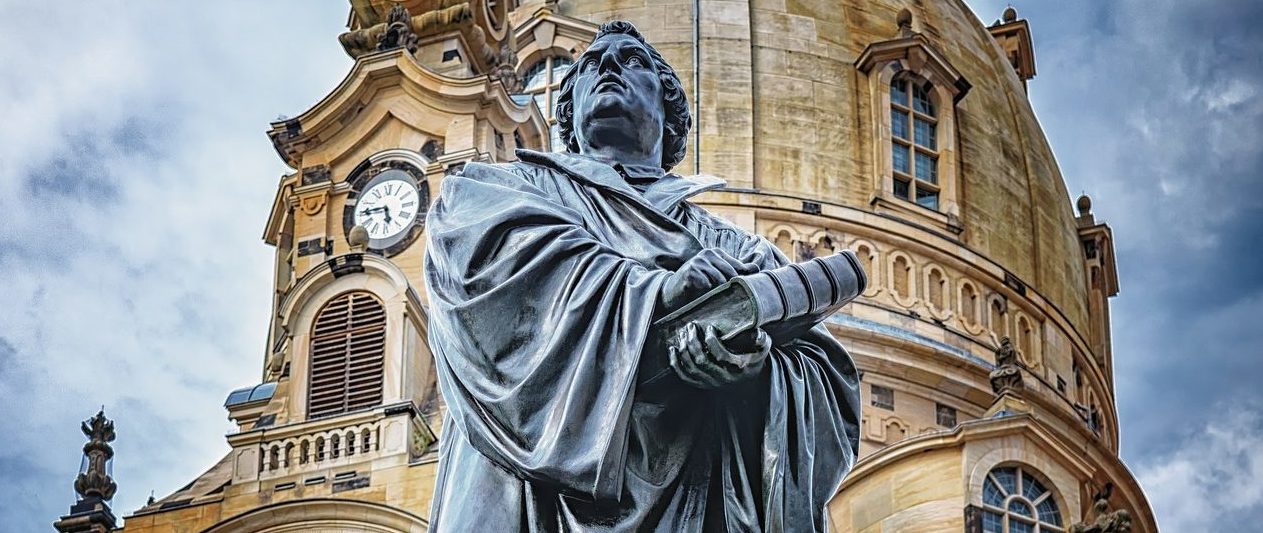
In the face of the suggestion that the Pope believes Jesus was mere man from His incarnation to His death, we find ourselves recalling again the Great Reformation, Martin Luther, and the Confessions that were born of this movement. Who knows what the Pope said or did not say to that aging atheist but without the Pope's insistence that a grave misunderstanding has taken place, we are left to believe that the sense of what the journalist reported is accurate and the Pope is a heretic. If he is not, he could be even worse. He could simply love the fringes of darkness and the vagaries of imprecise language. That, my friends, should be no consolation for the worst damage to the Church has been done not by those who barged into heresy but those who left room for it to enter by the back door unnoticed.
Lest we take this occasion for Lutherans to beat our chests and sneer with pride, our house is an equal state of shambles. We have Lutherans who love the name but know nothing of the faith. We have Lutherans who are captive to culture and social movement but not to the Word of God. We have Lutherans who value institutional loyalty over unchanging truth. We have Lutherans who prefer to see a dying church body over repentance and renewal of the faith yesterday, today, and forever the same. So do not take this as an occasion to look down at our Roman brethren. We are all in a terrible mess and it is a wonder the Church has a future at all. That she does is due not to anything we might do or fail to do but only to the Word of the Lord and the Holy Sacraments through which God is still at work calling, gathering, enlightening, and sanctifying His Holy Church -- even while institutions crumble.
Yet this should not be a time of great despair or retreat. Just the opposite. We do not get to pick and choose the time in which we live. God does. That means that God has supplied us not only the resources but the people to ensure that His Church endures and the gates of hell do not prevail. This is our time. We inherit the successes and failures of those who went before us, to be sure, but we are responsible for what we bequeath to those who come after us. God has brought us to this time and this place. Ordained or lay, from the pulpit or the pew, it does not matter. This is the time and this is the place where God has placed us, given us the new birth of Water and the Word, spoken into our ears the living voice of the Good Shepherd, absolved us of our sins, and fed and nourished us upon the Bread of Heaven and the Cup of Salvation. The challenge for those of yesteryear is the same as for those of this moment -- do we believe this is enough? Far from making too much of the Word of the Lord or the Holy Sacraments, the Church has always been her weakest when she devalued the means of grace and presumed people or programs would bring success when it seemed faithful preaching, teaching, and the administration of the Sacraments was not. But this is a fault of our shortsightedness and not of God's failure. Faith is the difficult way but the only way. We can have no certainty of the eye and what it sees or reason and what seems good to us until God finishes His new creation and transforms what is fading into what is eternal.
So on this Reformation Day I say, do not lose heart. Do not give into despair. Do not throw up your hands in frustration and disgust. Do not abandon the means of grace wherein God's gift and promise are yours (as they were the people of God's before you and will be for those who follow you). There is only one message on Reformation Day and it needs to be heard in Rome and Geneva as well as in Wittenberg, God is faithful. He will do it. Be faithful to Him and He will bring all things to pass as He has ordered. Repent of the sin of pride and arrogance and renew your desire to know only Jesus Christ and Him crucified. Cast off the works that presume to please God and do what God has called you to do where He has called you, fulfilling your baptismal vocation as His own child. Things just may get worse before they get better but that does not matter. What matters is Christ and our lives in Christ.
Lest we take this occasion for Lutherans to beat our chests and sneer with pride, our house is an equal state of shambles. We have Lutherans who love the name but know nothing of the faith. We have Lutherans who are captive to culture and social movement but not to the Word of God. We have Lutherans who value institutional loyalty over unchanging truth. We have Lutherans who prefer to see a dying church body over repentance and renewal of the faith yesterday, today, and forever the same. So do not take this as an occasion to look down at our Roman brethren. We are all in a terrible mess and it is a wonder the Church has a future at all. That she does is due not to anything we might do or fail to do but only to the Word of the Lord and the Holy Sacraments through which God is still at work calling, gathering, enlightening, and sanctifying His Holy Church -- even while institutions crumble.
Yet this should not be a time of great despair or retreat. Just the opposite. We do not get to pick and choose the time in which we live. God does. That means that God has supplied us not only the resources but the people to ensure that His Church endures and the gates of hell do not prevail. This is our time. We inherit the successes and failures of those who went before us, to be sure, but we are responsible for what we bequeath to those who come after us. God has brought us to this time and this place. Ordained or lay, from the pulpit or the pew, it does not matter. This is the time and this is the place where God has placed us, given us the new birth of Water and the Word, spoken into our ears the living voice of the Good Shepherd, absolved us of our sins, and fed and nourished us upon the Bread of Heaven and the Cup of Salvation. The challenge for those of yesteryear is the same as for those of this moment -- do we believe this is enough? Far from making too much of the Word of the Lord or the Holy Sacraments, the Church has always been her weakest when she devalued the means of grace and presumed people or programs would bring success when it seemed faithful preaching, teaching, and the administration of the Sacraments was not. But this is a fault of our shortsightedness and not of God's failure. Faith is the difficult way but the only way. We can have no certainty of the eye and what it sees or reason and what seems good to us until God finishes His new creation and transforms what is fading into what is eternal.
So on this Reformation Day I say, do not lose heart. Do not give into despair. Do not throw up your hands in frustration and disgust. Do not abandon the means of grace wherein God's gift and promise are yours (as they were the people of God's before you and will be for those who follow you). There is only one message on Reformation Day and it needs to be heard in Rome and Geneva as well as in Wittenberg, God is faithful. He will do it. Be faithful to Him and He will bring all things to pass as He has ordered. Repent of the sin of pride and arrogance and renew your desire to know only Jesus Christ and Him crucified. Cast off the works that presume to please God and do what God has called you to do where He has called you, fulfilling your baptismal vocation as His own child. Things just may get worse before they get better but that does not matter. What matters is Christ and our lives in Christ.
Wednesday, October 30, 2019
Man is not the enemy of creation. . .
The little Swedish climate change advocate has certainly made waves. She has become fodder for ridicule by those opposed to her radical vision of how the world should look and she has become the visionary for those who believe this is the cardinal doctrine of the future. There is no denying her basic premise that man has not been a good steward of the good earth God has given. We have squandered the resources God has supplied, sullied the beauty of His creation, distributed its gifts unevenly and unjustly, and scarred its landscape in the pursuit of progress. For this we need to repent for this is sin every bit as much as the immoralities that afflict our culture as normal today. Those Christians who refuse to see this are blind and their lack of repentance is telling.
That said, the basic principle underlying the whole agenda of climate change activists and those in pursuit of a more radical environmentalism is flawed. They see man as the problem. Everything would be hunky dory if there were fewer people and more responsible people and it would be even better if there were none. In this view man is the interloper and the natural world is its own perfect system of balance, order, and life. But this is a fundamental lie that no Christian can accept -- unless that Christian has abandoned all sense of Scripture and its eternal truth.
The problem is this. According to Scripture man is not simply part of creation but its lord, not simply curator of its wonder but the one for whom it was made and the one who was meant to benefit from its gift. Man was not an accidental part of this world but God created the world with man in view and for man to live to God's glory and in His service.
From the first verses of the Bible, man is front and center within God's whole creative work. He is blessed in the role God has assigned and given the command to be fruitful and fill the earth -- the earth which existed to support man's fruitful expansion.
Man was created to live within creation not simply as a consumer of its goodness but with the authority of a steward and the responsibility of a manager. He is not simply to reap the harvest of the earth but to subdue it. Note the Hebrew used here: kabash (subdue). To subdue means to bring something wild into submission, to tame it and to impose upon it a certain order. Then the LORD God took the man and placed him in the Garden of Eden to cultivate and keep it (Gen 2:15). Note here that the Garden did not live on its own with man living a live of leisure but man already had been given from the beginning the work of cultivating and keeping the Garden, imposing upon it the order designed by God.
Of course sin screwed it all up. Even creation groans under the weight of all that went wrong. But these words spoken before Original Sin were not negated by that sin. Within Eden and its paradise, there was an order to be undone but not erased and after Original Sin the original responsibility was not narrowed but expanded. Even after the Fall, man had the responsibility to work with God in the ongoing work of maintaining God's creation and managing all its resources for His glory.
The reality was that Original Sin did not simply hurt the relationship of man to God but distorted and harmed all of creation. In his address to Adam, God said: Cursed is the ground because of you; through toil you will eat of it all the days of your life. Both thorns and thistles it will yield for you, and you will eat the plants of the field (Gen 3:17-18). Yet within the shadow of the worst that sin wrote for humanity and the world in the flood, God reiterated the responsibility of man and the role of man with respect to creation:
That said, the basic principle underlying the whole agenda of climate change activists and those in pursuit of a more radical environmentalism is flawed. They see man as the problem. Everything would be hunky dory if there were fewer people and more responsible people and it would be even better if there were none. In this view man is the interloper and the natural world is its own perfect system of balance, order, and life. But this is a fundamental lie that no Christian can accept -- unless that Christian has abandoned all sense of Scripture and its eternal truth.
The problem is this. According to Scripture man is not simply part of creation but its lord, not simply curator of its wonder but the one for whom it was made and the one who was meant to benefit from its gift. Man was not an accidental part of this world but God created the world with man in view and for man to live to God's glory and in His service.
From the first verses of the Bible, man is front and center within God's whole creative work. He is blessed in the role God has assigned and given the command to be fruitful and fill the earth -- the earth which existed to support man's fruitful expansion.
God
blessed them and said to them, “Be fruitful and multiply, and fill the
earth and subdue it; rule over the fish of the sea and the birds of the
air and every creature that crawls upon the earth.” Then God said,
“Behold, I have given you every seed-bearing plant on the face of all
the earth, and every tree whose fruit contains seed. They will be yours
for food” (Genesis 1:28-31).
Of course sin screwed it all up. Even creation groans under the weight of all that went wrong. But these words spoken before Original Sin were not negated by that sin. Within Eden and its paradise, there was an order to be undone but not erased and after Original Sin the original responsibility was not narrowed but expanded. Even after the Fall, man had the responsibility to work with God in the ongoing work of maintaining God's creation and managing all its resources for His glory.
The reality was that Original Sin did not simply hurt the relationship of man to God but distorted and harmed all of creation. In his address to Adam, God said: Cursed is the ground because of you; through toil you will eat of it all the days of your life. Both thorns and thistles it will yield for you, and you will eat the plants of the field (Gen 3:17-18). Yet within the shadow of the worst that sin wrote for humanity and the world in the flood, God reiterated the responsibility of man and the role of man with respect to creation:
And God blessed Noah and his sons and said to them, “Be fruitful and multiply and fill the earth. The fear and dread of you will fall on every living creature on the earth, every bird of the air, every creature that crawls on the ground, and all the fish of the sea. They are delivered into your hand. Everything that lives and moves will be food for you; just as I gave you the green plants, I now give you all things” (Genesis 9:1-3).It is impossible to reconcile the full agenda of those who agitate against climate change and radical environmentalism with the Scriptures and a Christian worldview. In fact, this green movement has become a religion which discards one of the most basic truths of God's creation -- man was intended to occupy the center place in it all and to enjoy its fruits while subduing the earth. Man is not an alien in God's creation and the goal is not reduce his presence in that creation. Of course, man owes his Creator far better than a landscape littered with his rubbish and scarred by his failures (most of which are related to that Original Sin of desiring to be his own God!). But redemption was given not to repair the earth but to replace it with the new heavens and the near earth filled with the glory of God in a humanity redeemed and restored never to be stained by sin or darkened by death again. When churches forget this in order to pursue a cultural agenda that may well be popular with the people, they abandon the very reason for their claim to be the people of God.
Tuesday, October 29, 2019
Just a paper tiger???
Sermon for Reformation Day Observed, preached on Sunday, October 27, 2019.
Do you recall what started off the Reformation? It was not some grand affair but pieces of paper to which the Pope had affixed his signature and which promised to shave off many years from the purgatory that had to be endured before heaven’s joys began. It was not the sound of cannon fire or clinking suits of armor or a political assassination or some movement of social discontent. It was merely a piece of paper, like so many other pieces of paper that had been sent out before, all to raise funds to build a spectacular church in Rome. It was a fund raising scheme on steroids that had kings and princes and dukes lined up to buy their indulgences along side the poor peasants of the day. Who would have thought one piece of paper would have started such a movement?
But there was one voice raised to say "wait a minute." This was not the teaching of the Bible, it was not the faith of the apostles, and it was not the faith that saves. One man and one voice. It was one man who pounded to the door of the Castle Church an invitation to debate whether indulgences were moral and godly or immoral and a lie. It was one man who dared to fear offending God more than offending popes and kings and lords and soldiers. It was one man who stood his ground in he face of power and privilege designed to make him quake in his boots and recant his every thought. It was one man who became God’s man for the moment to reform and restore His failing church.
His power was not the might of an army or even the mass of peasant folk who rose up in arms. His might was paper printed with 95 Theses, with a Confession of Faith, with a catechism, and with hymns that would sing the call to reformation in the minds and hearts of God’s people. His authority was not divine right but humble faith that insisted upon championing the cross over glory and the salvation that was free to all who believed even though it cost Jesus His life in suffering and death upon the cross. His was an unlikely heroic virtue in a world of cowards who refused to speak up even thought their consciences were pricked by the lies being paraded as truth.
Well, friends, we are back at square one. More than 500 years have passed and the crime of indulgences seems almost tolerable in the face of Christians who care little for the Gospel and who believe freedom means they can give into every sin and error without guilt. More than 500 years have passed and most of the world not only does not care about Martin Luther, they do not care about God. More than 500 years have passed the Church that bears the name of the Reformer has become a pale and weak shadow of its former self. More than 500 years have passed and we have learned to call virtue sin and sin truth, to value faithfulness to desire over faithfulness to God, to label His Word myth and legend, and to judge God on the basis of what feels good in the moment or sounds reasonable to us.
Reformation Churches have great buildings, colleges and universities, seminaries and schools. Reformation Churches have publishing houses and media strategies. Reformation Churches have mountains of paper. But you know what they don’t have anymore? They don’t have confidence in God’s Word. They don’t have the courage to stand up and to stand out for God against the world and its thinking which does not fear God, does not fear death, and does not fear hell but does fear not being happy, not filling your life with rich experiences, and not being who you think you are at any given moment. Reformation Churches have reams of paper that no longer mean much of anything anymore against the pursuit of what feels good in the moment because they no longer preach and teach with confidence this eternal Gospel.
Where are the Luthers of this day? Where are youth confirmed with promises of faithfulness and where are adults who insist they will keep the faith and suffer all even death rather than fall away? Where are the bodies that should fill the empty pews you find in every Church every week? Where are the faithful singing the mighty hymns of old in a world that uses music to glorify anything and everything except the Word of God? Where are the pastors who have the courage to speak the unchanging Gospel in a changing world? Where are the people who refuse to listen except to the Word of God faithfully preached and taught?
In Wittenberg where it all began, the faith of Luther is almost dead. Dictators and philosophers have persecuted the faith until it is timid and shallow. War and bloodshed have dulled the sharp edge of God’s Word with too many disappointed hopes. Perversions become normal in the minds of most people. Depression and prosperity have taught people you get by without God. But in the places where you least expect it, the Reformation still lives. In Africa’s dark jungles and Siberia’s freezing cold and in India’s crowded cities, people rejoice to hear the Gospel of Christ crucified and give up everything for the prospect of a freedom purchased with the blood of Christ once for all.
And here today four youth will add their halting voices to the chorus of those who say “This we believe, teach, and confess.” Today a mighty organ calls us to sing the battle hymn of the Reformation “A Mighty Fortress Is Our God.” Today through confession you let go of your sins and leave them at the cross of Christ. Today a people rejoices that God does forgive and restore His lost and fallen people. Today a people will pray with confidence to the God they know hears their prayers and will give them all that they need for this body and life and for eternal life. Today people come to kneel at the altar and open their mouths to feast upon the bread of heaven come down from above and to drink the blood of Christ that cleanses us from all our sin. Today a people will not only open their hearts but their wallets to make sure that today is not the last Reformation day, that the work goes on and the Word ventures forth to do God’s bidding.
Dear people of God, no matter how far ahead we plan, the Church lives one week at a time, by the grace of God given in Word and Sacrament, to a people called, gathered, and enlightened by the Spirit. Our future is known not by sight but by faith. Tomorrow’s army of God is right now being nurtured by parents who hold their children’s hands and teach them to pray “Our Father who art in heaven.” The battlefields where we meet Satan with the sword of the Word of God are not far off hills in distant lands but the very streets where we live, the buildings where we work, the schools in which our children learn, and the churches fighting to keep the doors open one more week.
People loved by God, the Word of God is not a paper tiger but a mighty Word that does what it says and delivers what it promises. The water of baptism is no symbolic washing but the place where we die to sin and rise up in Christ as new people. The absolution spoken by the pastor is not a wish or a dream but the verdict of God who declares you sinners forgiven. The table of the Lord is no snack counter but where the people of God eat the flesh of Christ and drink His blood that His forgiveness and life may live in us still. The Church seems like a paper tiger that barks at all the things that are wrong in this world but forgets to speak God’s yes in Christ. But we are a paper tiger only when we fail to speak the Word that endures forever and live from faith our baptismal lives, fed and nourished at the Altar. The Body of Christ is where the lost, the least, the lone, the lame, the little, the left out, and the last are given place, purpose, promise, and power in Christ our Lord.
If the Son sets you free, you shall be free indeed. That is the Gospel. The gates of hell cannot prevail and Satan cannot threaten. One little Word has toppled the devil and his legions. No one can snatch you from His hand. Nothing can separate you from His love in Christ. You are not your own; you belong to Him. Oh, it is true that you will suffer for the sake of Christ and you will have to make sacrifices so that the church can do her work, and you will have to rebuild what the devil, the world, and the sinful flesh seek to tear down, but if you keep the faith, God will deliver you from all your enemies and give you Christ’s eternal victory. Let these and all things be gone but your enemies have not won. You will endure in Christ and be kept holy and blameless to the day of Christ’s coming when all will be replaced, when a new heaven and a new earth will rise up from the ruins of this world and you will wear a new flesh and blood that death cannot touch and sin cannot stain. And in this Kingdom God will reign and He will share His glory with you and your hearts will be so full of joy and peace that it will seem they cannot contain it all, forevermore.
He who has ears to hear, let him hear. Fear God and give Him glory. Amen
NB Parts of this sermon were inspired and words borrowed from a number of different Reformation sermons I have heard over the years.
Do you recall what started off the Reformation? It was not some grand affair but pieces of paper to which the Pope had affixed his signature and which promised to shave off many years from the purgatory that had to be endured before heaven’s joys began. It was not the sound of cannon fire or clinking suits of armor or a political assassination or some movement of social discontent. It was merely a piece of paper, like so many other pieces of paper that had been sent out before, all to raise funds to build a spectacular church in Rome. It was a fund raising scheme on steroids that had kings and princes and dukes lined up to buy their indulgences along side the poor peasants of the day. Who would have thought one piece of paper would have started such a movement?
But there was one voice raised to say "wait a minute." This was not the teaching of the Bible, it was not the faith of the apostles, and it was not the faith that saves. One man and one voice. It was one man who pounded to the door of the Castle Church an invitation to debate whether indulgences were moral and godly or immoral and a lie. It was one man who dared to fear offending God more than offending popes and kings and lords and soldiers. It was one man who stood his ground in he face of power and privilege designed to make him quake in his boots and recant his every thought. It was one man who became God’s man for the moment to reform and restore His failing church.
His power was not the might of an army or even the mass of peasant folk who rose up in arms. His might was paper printed with 95 Theses, with a Confession of Faith, with a catechism, and with hymns that would sing the call to reformation in the minds and hearts of God’s people. His authority was not divine right but humble faith that insisted upon championing the cross over glory and the salvation that was free to all who believed even though it cost Jesus His life in suffering and death upon the cross. His was an unlikely heroic virtue in a world of cowards who refused to speak up even thought their consciences were pricked by the lies being paraded as truth.
Well, friends, we are back at square one. More than 500 years have passed and the crime of indulgences seems almost tolerable in the face of Christians who care little for the Gospel and who believe freedom means they can give into every sin and error without guilt. More than 500 years have passed and most of the world not only does not care about Martin Luther, they do not care about God. More than 500 years have passed the Church that bears the name of the Reformer has become a pale and weak shadow of its former self. More than 500 years have passed and we have learned to call virtue sin and sin truth, to value faithfulness to desire over faithfulness to God, to label His Word myth and legend, and to judge God on the basis of what feels good in the moment or sounds reasonable to us.
Reformation Churches have great buildings, colleges and universities, seminaries and schools. Reformation Churches have publishing houses and media strategies. Reformation Churches have mountains of paper. But you know what they don’t have anymore? They don’t have confidence in God’s Word. They don’t have the courage to stand up and to stand out for God against the world and its thinking which does not fear God, does not fear death, and does not fear hell but does fear not being happy, not filling your life with rich experiences, and not being who you think you are at any given moment. Reformation Churches have reams of paper that no longer mean much of anything anymore against the pursuit of what feels good in the moment because they no longer preach and teach with confidence this eternal Gospel.
Where are the Luthers of this day? Where are youth confirmed with promises of faithfulness and where are adults who insist they will keep the faith and suffer all even death rather than fall away? Where are the bodies that should fill the empty pews you find in every Church every week? Where are the faithful singing the mighty hymns of old in a world that uses music to glorify anything and everything except the Word of God? Where are the pastors who have the courage to speak the unchanging Gospel in a changing world? Where are the people who refuse to listen except to the Word of God faithfully preached and taught?
In Wittenberg where it all began, the faith of Luther is almost dead. Dictators and philosophers have persecuted the faith until it is timid and shallow. War and bloodshed have dulled the sharp edge of God’s Word with too many disappointed hopes. Perversions become normal in the minds of most people. Depression and prosperity have taught people you get by without God. But in the places where you least expect it, the Reformation still lives. In Africa’s dark jungles and Siberia’s freezing cold and in India’s crowded cities, people rejoice to hear the Gospel of Christ crucified and give up everything for the prospect of a freedom purchased with the blood of Christ once for all.
And here today four youth will add their halting voices to the chorus of those who say “This we believe, teach, and confess.” Today a mighty organ calls us to sing the battle hymn of the Reformation “A Mighty Fortress Is Our God.” Today through confession you let go of your sins and leave them at the cross of Christ. Today a people rejoices that God does forgive and restore His lost and fallen people. Today a people will pray with confidence to the God they know hears their prayers and will give them all that they need for this body and life and for eternal life. Today people come to kneel at the altar and open their mouths to feast upon the bread of heaven come down from above and to drink the blood of Christ that cleanses us from all our sin. Today a people will not only open their hearts but their wallets to make sure that today is not the last Reformation day, that the work goes on and the Word ventures forth to do God’s bidding.
Dear people of God, no matter how far ahead we plan, the Church lives one week at a time, by the grace of God given in Word and Sacrament, to a people called, gathered, and enlightened by the Spirit. Our future is known not by sight but by faith. Tomorrow’s army of God is right now being nurtured by parents who hold their children’s hands and teach them to pray “Our Father who art in heaven.” The battlefields where we meet Satan with the sword of the Word of God are not far off hills in distant lands but the very streets where we live, the buildings where we work, the schools in which our children learn, and the churches fighting to keep the doors open one more week.
People loved by God, the Word of God is not a paper tiger but a mighty Word that does what it says and delivers what it promises. The water of baptism is no symbolic washing but the place where we die to sin and rise up in Christ as new people. The absolution spoken by the pastor is not a wish or a dream but the verdict of God who declares you sinners forgiven. The table of the Lord is no snack counter but where the people of God eat the flesh of Christ and drink His blood that His forgiveness and life may live in us still. The Church seems like a paper tiger that barks at all the things that are wrong in this world but forgets to speak God’s yes in Christ. But we are a paper tiger only when we fail to speak the Word that endures forever and live from faith our baptismal lives, fed and nourished at the Altar. The Body of Christ is where the lost, the least, the lone, the lame, the little, the left out, and the last are given place, purpose, promise, and power in Christ our Lord.
If the Son sets you free, you shall be free indeed. That is the Gospel. The gates of hell cannot prevail and Satan cannot threaten. One little Word has toppled the devil and his legions. No one can snatch you from His hand. Nothing can separate you from His love in Christ. You are not your own; you belong to Him. Oh, it is true that you will suffer for the sake of Christ and you will have to make sacrifices so that the church can do her work, and you will have to rebuild what the devil, the world, and the sinful flesh seek to tear down, but if you keep the faith, God will deliver you from all your enemies and give you Christ’s eternal victory. Let these and all things be gone but your enemies have not won. You will endure in Christ and be kept holy and blameless to the day of Christ’s coming when all will be replaced, when a new heaven and a new earth will rise up from the ruins of this world and you will wear a new flesh and blood that death cannot touch and sin cannot stain. And in this Kingdom God will reign and He will share His glory with you and your hearts will be so full of joy and peace that it will seem they cannot contain it all, forevermore.
He who has ears to hear, let him hear. Fear God and give Him glory. Amen
NB Parts of this sermon were inspired and words borrowed from a number of different Reformation sermons I have heard over the years.
I should not read my email. . .
I opened an email and got this:
But, by and large, by 2030 there won’t be much left of what we’ve known.
Ask any conscientious congregational leader…they may not have named it, but they feel the burden. Add the congregation’s curious questions of why…
Disagree?
Exponentially accelerate and you arrive at a “not much left” 2030 landscape.
All of this may be true. I have no crystal ball. But I suspect that it is a scenario born more of a liberal and progressive Christianity unleashed from its moorings in the Word of God than it does of the Church in general. I suspect that where Christianity has ceased to stand out and stand apart from culture (whatever that culture is) there is no compelling reason to be Christian. I suspect that the kind of Christianity in which worship focuses upon the individual and rests upon the pillars of interest and preference will find itself shoved to the side by better entertainment that comes without all the baggage of orthodox faith that may still be clinging to it. I suspect that the vision of Christianity being offered here lumps together the churches with confidence in the Word of God with those who find the Scriptures riddled with myth, quaint expressions of an outdated worldview, and irrelevant to a world in which the feelings and reason of the individual are the ultimate barometers of truth and life.
I must admit that I weary of those voices of doom and destruction. They presume a world in which we are the reasons for success or failure and God is sidelined. They offer their own ideas of what should be done or must be done to repair God's sinking ship. They encourage creativity and innovation as if theology were a spiritual version of technology in which newer is better. They operate on the fringes of the Church with enough connection to have credibility but without the burden of operating under creed and confession. So, if you are like me and read these prophets of Christianity's demise, don't pay too much attention to them.
By 2030 the Christian landscape in the United States will be mostly cleared.
- Historic denominations will be a whisper of what they once were…by 2030.
- Congregations gone. Many more will be simply shadows of what they once were…by 2030.
- The Christian “footprint” of the people of God will be minimal…by 2030.
But, by and large, by 2030 there won’t be much left of what we’ve known.
Ask any conscientious congregational leader…they may not have named it, but they feel the burden. Add the congregation’s curious questions of why…
- a bit more work…
- a bit more programming…
- a bit better preaching…
Disagree?
- Look in any major metropolitan area in the U.S. Churches are almost all gone in these hard soils. (And the pastor-champions that are plowing oftentimes feel undervalued by the rest of the church.)
- Count the under 50 crowd in your own congregation this Sunday.
Exponentially accelerate and you arrive at a “not much left” 2030 landscape.
All of this may be true. I have no crystal ball. But I suspect that it is a scenario born more of a liberal and progressive Christianity unleashed from its moorings in the Word of God than it does of the Church in general. I suspect that where Christianity has ceased to stand out and stand apart from culture (whatever that culture is) there is no compelling reason to be Christian. I suspect that the kind of Christianity in which worship focuses upon the individual and rests upon the pillars of interest and preference will find itself shoved to the side by better entertainment that comes without all the baggage of orthodox faith that may still be clinging to it. I suspect that the vision of Christianity being offered here lumps together the churches with confidence in the Word of God with those who find the Scriptures riddled with myth, quaint expressions of an outdated worldview, and irrelevant to a world in which the feelings and reason of the individual are the ultimate barometers of truth and life.
I must admit that I weary of those voices of doom and destruction. They presume a world in which we are the reasons for success or failure and God is sidelined. They offer their own ideas of what should be done or must be done to repair God's sinking ship. They encourage creativity and innovation as if theology were a spiritual version of technology in which newer is better. They operate on the fringes of the Church with enough connection to have credibility but without the burden of operating under creed and confession. So, if you are like me and read these prophets of Christianity's demise, don't pay too much attention to them.
Monday, October 28, 2019
No safe vocation. . .
I have had a bit of a trying month. I will not hide the fact that I work too hard. I know my family does not appreciate it and neither does the parish for that matter. Most folks looking in from the outside do not see and cannot imagine all that a typical pastor does between Sundays. But I knew this going in. So did my wife. No, neither of us had a specific idea of the costs or sacrifices born but we knew that was the job description. It did not take long to figure it out. A dozen funerals in the first month. Serious illness and surgeries that happened on my supposed day off. Crises that seemed to be planned by the devil or his minions around my busiest calendars. We learned quickly that the ministry is not a safe vocation.
At the same time, there was a movement arising to see the pastor as a professional church worker and the ministry as a career. It began the idea that pastors need to have care given and personal time and it has flourished in the wellness wheels that offer the illusion of balance between the demands of family, church, spirit, home duties, leisure, physical activity, etc... Everywhere I go I hear the mantra of this now sacred deception that the ministry can be managed, that your time can be scheduled, and that the vocation of pastor can be fit into a neat 9-5 slot with two full days off. Worse than this, I get constant mail and email from my health insurer insisting that I succumb to their programs designed to make me healthier and suggesting I am a candidate for everything from diabetes to heart disease unless I manage my life better (though they have no clue what is actually going on in my life!).
So today you get my crankier side that says much of this stuff promotes an idea of the pastoral office that is blatantly false and sets up a young pastor for serious disappointment and conflict. The ministry is not a career. Your work as a pastor does not follow a neat schedule. You will miss family events or force them to fit the schedule of emergencies and crises that will surely come. You will not be rewarded for the good you do and you will be blamed for things that were not your fault. You will need to teach your people every week what pastors do or they will never get it or get you. You will be caught in budget crunches and you will do maintenance and clear side walks in winter and unlock and lock the building and clean a toilet or two all in the regular course of your pastoral life and work. So get over it. There is no congregation out there that provides a perfect work environment for you and your family and there is no easy life without struggle or sacrifice.
At the same time, you are making the difference of an eternal lifetime. It may feel like you have little to offer, few tools to use against the problems laid upon you, and little real impact on the lives of people. This is a lie as well. You have the Word of the Lord and His gracious Sacraments of life and worship. These accomplish an eternal good in a world of seemingly impossible evils. Do not give up or give into despair. A pastor is doing a mighty work for the benefit of his people and for the sake of the Lord simply by being the mouth, hands, and heart of the Lord within the midst of the people. Do the work of the ministry and let God worry about the successes or failures. Do it without complaint and remember that even the folks in the pew are called to take up the cross and follow Him. Pastors may be more visible in this role but they are not alone in bearing the cross.
Recently I read a couple of good lines: We don’t need men looking for a career. We need warriors who are willing and ready to suffer and sacrifice for the sake of the Church in love for Christ. We need men full of zeal and compassion who will give up the best years of their lives... Let me add one more thing. We need pastors who are willing to die. We don't need legions of people looking for a safe or easy career but we need a few men willing to sacrifice and die each day for the sake of the Kingdom of God. Jesus never promised the apostles an easy life or Christians a comfortable path. He is painfully blunt about the challenges and pitfalls that lie before us. Yet even pastors would do well to remember that they are not alone and their labors are not in vain.
At the same time, there was a movement arising to see the pastor as a professional church worker and the ministry as a career. It began the idea that pastors need to have care given and personal time and it has flourished in the wellness wheels that offer the illusion of balance between the demands of family, church, spirit, home duties, leisure, physical activity, etc... Everywhere I go I hear the mantra of this now sacred deception that the ministry can be managed, that your time can be scheduled, and that the vocation of pastor can be fit into a neat 9-5 slot with two full days off. Worse than this, I get constant mail and email from my health insurer insisting that I succumb to their programs designed to make me healthier and suggesting I am a candidate for everything from diabetes to heart disease unless I manage my life better (though they have no clue what is actually going on in my life!).
So today you get my crankier side that says much of this stuff promotes an idea of the pastoral office that is blatantly false and sets up a young pastor for serious disappointment and conflict. The ministry is not a career. Your work as a pastor does not follow a neat schedule. You will miss family events or force them to fit the schedule of emergencies and crises that will surely come. You will not be rewarded for the good you do and you will be blamed for things that were not your fault. You will need to teach your people every week what pastors do or they will never get it or get you. You will be caught in budget crunches and you will do maintenance and clear side walks in winter and unlock and lock the building and clean a toilet or two all in the regular course of your pastoral life and work. So get over it. There is no congregation out there that provides a perfect work environment for you and your family and there is no easy life without struggle or sacrifice.
At the same time, you are making the difference of an eternal lifetime. It may feel like you have little to offer, few tools to use against the problems laid upon you, and little real impact on the lives of people. This is a lie as well. You have the Word of the Lord and His gracious Sacraments of life and worship. These accomplish an eternal good in a world of seemingly impossible evils. Do not give up or give into despair. A pastor is doing a mighty work for the benefit of his people and for the sake of the Lord simply by being the mouth, hands, and heart of the Lord within the midst of the people. Do the work of the ministry and let God worry about the successes or failures. Do it without complaint and remember that even the folks in the pew are called to take up the cross and follow Him. Pastors may be more visible in this role but they are not alone in bearing the cross.
Recently I read a couple of good lines: We don’t need men looking for a career. We need warriors who are willing and ready to suffer and sacrifice for the sake of the Church in love for Christ. We need men full of zeal and compassion who will give up the best years of their lives... Let me add one more thing. We need pastors who are willing to die. We don't need legions of people looking for a safe or easy career but we need a few men willing to sacrifice and die each day for the sake of the Kingdom of God. Jesus never promised the apostles an easy life or Christians a comfortable path. He is painfully blunt about the challenges and pitfalls that lie before us. Yet even pastors would do well to remember that they are not alone and their labors are not in vain.
Sunday, October 27, 2019
Who gets the vote?
Everyone knows the great Chesterton quote:
Lutherans give no class the decisive vote or veto; only Scripture has that. However, that does not mean that we ignore the voice of those who have gone before us or discount their witness against the voices of the present moment. Lutherans do not look for some pristine moment in church history to recreate. We understand that every moment has had its challenges and choices. We put our trust in the Word and we attempt to be faithful to that Word in all circumstances and this is what we have received from those who went before and that is what we pray we will pass on to the generations to come. Tradition is part of this witness.
Yet the sad reality is that we too often give to another class the veto we refuse to give to the dead. I am speaking to those outside the Church. We defer to those who have either rejected the faith or never believed in the first place more than any other group. Does anyone else find this strange? We ask people outside the Church what our buildings should look like, what kind of music we should use, what ceremonies (or none) we should include, what we should be preaching about, how we ought to preach, what programs we should offer, what stands we should take on this issue or that, and the list goes on. Those barely involved or not even involved are regularly polled to find out what might just bring them in. But is that not the job of the Word (what with faith coming by hearing the Word of God and all)?
As we prepare to celebrate the Reformation again, it is time for us to remember that this movement was not fueled by poll or survey but by the Word of God. Luther was one of the Reformers who particularly rejected the idea that we had to reinvent the Church as if it had never been and forget the witness of the saints through history. This was not because he gave to the dead the greatest authority but because he recognized that the Church was and is where the marks of the Church are, where the Word is faithfully preach and taught and the Sacraments are administered in accord with Christ's institution -- as it was and always will be.
The Church born of this Reformation refuses to dismiss the witness of the past but rejoices to recognize God's faithful voice echoed in the mouths of the faithful through the ages. That is one of the things we Lutherans tend to forget and this is the time to remember it. We will not survive by rejecting the voice and vote of the dead but we just may die because we chose to listen to those not of the faith more than the faithful who went before us. The saints of old advise us as people in whom and through whom the Lord worked. We ought to be relieved by this instead of fearing tradition. If we cannot find our way to more profoundly reflect the deep respect that Luther and our great Lutheran fathers had for the saints and tradition, we run the risk of failing to be their heirs.
Tradition means giving votes to the most obscure of all classes, our ancestors. It is the democracy of the dead. Tradition refuses to submit to the small and arrogant oligarchy of those who merely happen to be walking about. ... The ancient Greeks voted by stones; these shall vote by tombstones.The funny part of this is that tradition has been more universally denied voice or vote for some time. As Lutherans some think that our default is to deny tradition its voice or vote and to let the Word stand alone. Those Lutherans have great theory but they have not read Luther or know anything about the Lutheran Symbols. Sola Scriptura has never meant a naked Word stripped out of the community of believers and cut away from the living tradition of faith and the faithful who have believed and taught this truth in the generations before our own time.
Lutherans give no class the decisive vote or veto; only Scripture has that. However, that does not mean that we ignore the voice of those who have gone before us or discount their witness against the voices of the present moment. Lutherans do not look for some pristine moment in church history to recreate. We understand that every moment has had its challenges and choices. We put our trust in the Word and we attempt to be faithful to that Word in all circumstances and this is what we have received from those who went before and that is what we pray we will pass on to the generations to come. Tradition is part of this witness.
Yet the sad reality is that we too often give to another class the veto we refuse to give to the dead. I am speaking to those outside the Church. We defer to those who have either rejected the faith or never believed in the first place more than any other group. Does anyone else find this strange? We ask people outside the Church what our buildings should look like, what kind of music we should use, what ceremonies (or none) we should include, what we should be preaching about, how we ought to preach, what programs we should offer, what stands we should take on this issue or that, and the list goes on. Those barely involved or not even involved are regularly polled to find out what might just bring them in. But is that not the job of the Word (what with faith coming by hearing the Word of God and all)?
As we prepare to celebrate the Reformation again, it is time for us to remember that this movement was not fueled by poll or survey but by the Word of God. Luther was one of the Reformers who particularly rejected the idea that we had to reinvent the Church as if it had never been and forget the witness of the saints through history. This was not because he gave to the dead the greatest authority but because he recognized that the Church was and is where the marks of the Church are, where the Word is faithfully preach and taught and the Sacraments are administered in accord with Christ's institution -- as it was and always will be.
The Church born of this Reformation refuses to dismiss the witness of the past but rejoices to recognize God's faithful voice echoed in the mouths of the faithful through the ages. That is one of the things we Lutherans tend to forget and this is the time to remember it. We will not survive by rejecting the voice and vote of the dead but we just may die because we chose to listen to those not of the faith more than the faithful who went before us. The saints of old advise us as people in whom and through whom the Lord worked. We ought to be relieved by this instead of fearing tradition. If we cannot find our way to more profoundly reflect the deep respect that Luther and our great Lutheran fathers had for the saints and tradition, we run the risk of failing to be their heirs.
Saturday, October 26, 2019
Words to warm my heart. . .
I came home from Church tired. Two services and a Bible study can tax your stamina whether you are pastor or parish musician. But it is also taxing for a mom who, because her husband is not available this Sunday morning, is a single parent of two at least when it comes to Church. She wrote more eloquently than I could because she lived it and she made the harder choice. God bless her for making that choice for herself and for her children. Would that more would make the same more difficult choice on Sunday. But enough of me, read on in her words. . .
It would be easier.God bless Heidi and all those parents who make the hard choice that is the right choice. I know the Lord understands what she goes through to make sure they are there on Sunday morning and I want her to know that so do I.
It would be easier to stay in bed. It would be easier to relax on the couch and sip my coffee while the kids watch tv. It would be easier to not leave the house at 7:30 am.
This morning I reheated my coffee 4 times I think. And I still didn't finish it. A was tearing the house apart and pulling out all the toys that I had worked so hard to clean up yesterday. B was giving me attitude, telling me he didn't want to go. I forgot I had cleaned the carseats yesterday, so I had to put them together and reinstall them. It would have been easier to just say screw it, and not even bother and just relax instead.
It would have been SO MUCH EASIER.
But we all need this. We need to pray, to hear the Word, receive the sacraments. And I need grace, and to hear I am forgiven despite all my shortcomings and sinfulness.
We need it.
So on Sundays, we go to church. Even though it would be so much easier not to. Because after we go, I know we made the right choice. And my week is easier because I made the hard choice on Sunday.
Subscribe to:
Posts (Atom)