Saturday, September 10, 2022

A sad day. . .

The death of the Queen was sad for more than those who called her their sovereign.  It is, in many ways, the death of dignity among world leaders and the death of duty among a people more concerned than ever for self-interest.  It is the death of the proverbial stiff upper lip that the crown and commonwealth for generations and it stands now in stark contrast with people who are offended by pronouns.  It is the death of fidelity on the part of one of the most visible faces and families in the world amid a world now living on the whim of the moment (dare I contrast Harry and Meghan with the Queen and Prince Phillip?).  It is the death of longevity in a world in which stardom lasts for a moment and political leaders come and go with the same whimsical timing.  But there is another sadness to her passing.  It is the death of a voice heard across the world which often spoke of Christian faith and virtues with eloquence while too many voices on the world's stage spoke only of the doubts or nothing at all.  That is the voice I will miss the most. 

The Queen was no saint and lived no fairy tale or fantasy life.  She had her annus horribilus and not just one, either.  Thrust into the world's spotlight by the untimely death of her father and crowned at the age of 25, she managed not simply to maintain her dignity amid the antics of political leaders, cultural trends, and family scandals.  She gave the visible witness of attending church regularly.  She spoke of her faith.  Now I have no doubt that her many speeches were carefully scripted and I can only imagine that those with the red pens were always ready too minimize the references to God and her faith but she managed to keep them in and made them markedly profound.  I often paid more attention to her Christmas messages than most letters from church leaders (letters that tended to be more political then religious!).  The Queen seemed to wonder less about God than how people could live their lives without Him.  I suspect that we will not be hearing the same kind of talk from King Charles III or his successors.  That is also an aspect of her death worth mourning.

The English and the Anglicans always do things up right even when their Amen is more symbolic than affirmative of what they believe.  It will be worth the time spent watching a nation and a commonwealth of nations honor their fallen Queen.  But if there was one who paid more attention to the words and not less, it was her and if her subjects and family were paying any attention, this could be her most valuable legacy in a lifetime of achievements and honors.  I suspect, however, that this will pass unnoticed before the commentators and people straining for a glimpse of the caisson and missing one of the most significant aspects of her grand legacy.


Friday, September 9, 2022

The new normal. . .

As I said yesterday, you can blame Covid for some things but not for everything.  One of the most disturbing trends in churches is the decreasing frequency of worship attendance -- something that is especially prominent among the young, young adults, and young families.   There was a time in which it was normal to see your people three to four times a month -- even to the point where a pastor might make a phone call when the regular was missing for even one week.  A generation or so ago that norm was replaced by the twice a month attenders.  They were present half the time but that constituted their full-time commitment to the Lord, His work, and His Church.  As long as numbers remained fairly solid, this was accepted by churches without too much said.  Now a family is considered active if they attend once a month. The pandemic did not cause this but it did hasten the practice and help it to become normal -- and for many congregations and clergy, they were happy to see the folks back at all!

It appears from those who survey such trends in church that the once-a-monthers is the fastest growing segment of those who attend church at all.  Even more disturbing is that families, church leaders, and pastors seem to have quietly and rather passively accepted this as inevitable.  We hear little formal push back from the congregations and pastors against the new normal of once a month.  Sure, there is grumbling among them but it appears that after Covid we just don't have the stomach to pick a fight if people are coming even occasionally.  

Some of it has to do with learning to stay at home and work from home and worship in the home.  It was a pandemic lesson that will not be unlearned without deliberate effort.  Habits once learned influence every aspect of our lives.  Worship attendance is one of those good and salutary habits but a habit still.  More of it has to do with other things.  Sunday sports’ leagues, lazy sleep-ins, and fifteen weekend (Sunday) vacations a year are just some of the things that fill the time that was once devoted to the Lord and the things of His House. 

It is probably time to admit the obvious -- the habit of weekly attendance has been broken.  A broken habit is hard to repair and many of those who have ticked this box on their schedule will not be returning to a more frequent practice.  Furthermore, Covid is no longer keeping people away but it has taught us the hard truth.  If someone has not returned by now, they probably not coming back.... ever.  This is what some call evidence of the de-churched population -- once active but no longer.   Digital offerings will not slow or erase them from checking out.  If you look at the dropping numbers of folks who actually watch the services and other video offerings of churches you will find the new phenomenon of digital dropouts or inactives.  In truth, many, though not all, those who have dropped out were already in the edges of the Church's life. The new normal of once a month will make it even easier for folks to drop out entirely.  In most congregations, they will not even be missed until too much time has passed to reclaim them.

In my own parish, I have noticed that we have more people but attendance has not increased as much as the membership.  As people attend less frequently, overall attendance will remain the same rather than improve.  I once said that we had three congregations on Sunday morning -- the regulars who are there every time the door opens (perhaps a third of the total), the twice a monthers who are not all there on the same Sunday (again, perhaps a third of the total), and the once a monthers and those who attend even less regularly.  The neat division of thirds may be changing with the latter category growing -- unless we do something to challenge the assumption that once a month is regular and constitutes the new normal.

Thursday, September 8, 2022

No longer pretending. . .

You cannot blame Covid for everything.  But you can blame it for some things.  Emptying the churches was not Covid's fault but it was a defining moment in which pretense was abandoned and the truth stands starkly clear.  

Christians who do not have a Biblical and creedal worldview find themselves hard pressed to resist the onslaught of change pressed upon them by the world.  Some have responded by abandoning all restraint and simply given up on the faith.  Certainly they can still consider themselves spiritual without the baggage of dogma and practice but Covid did allow them to strip away the uncomfortable idea of living for an eternal tomorrow to focus on the present.  Some have responded by boxing in the faith into a closet of their lives -- there when you want it or need it but out of the way when other things in life require your attention.  The outcome of all of this is that, of course, such a faith has little impact upon choices, decisions, values, and the daily lives of the person. 

Many of those who attended on the high and holy days have, for all practical purposes, given up pretending to be part of the Church or the faith.  Where it was once custom to pretend to embrace the family religion on Christmas or Easter or baptisms or confirmations, that pretense is largely gone.  No one even bothers to make excuse for sons and daughters who are absent.  This even applies to such family events as weddings and funerals.  It is easier and easier to avoid having to deal with the faith by sending a gift card or money and letting that express your good wishes -- without having to endure the rituals and rites that remind them of the faith they no longer have or seem to care about.

The shift to the Nones has been encouraged by the dropping of all social niceties about church attendance and while the family may privately lament this loss, it appears little is spoken about in public.  For all the push to believe that you don't have to attend church to be a Christian, it seems just as true today that you do not have to believe to be one either.  The images of convenience and sentiment are retained without the weight of uncomfortable belief or constraining commandments.  

Could we not compare this to the way we have stopped being polite or restraining our tongues against people with whom we disagree?  The tone of the conversations on social media seem to reflect the abandonment of manners in favor of honest, blunt, and provocative opinion.  It is clear from many that you cannot be a friend (whatever that means on social media) and disagree with them about their opinions or beliefs.  Even facts seem powerless to change the minds of people who are convinced that what they think or feel is the most real truth of all.  Is it no wonder, then, that such would eventually intrude into the sacred rituals of the home (like meal prayer) or holiday tradition (like going to church) or the sacred rites of passage (baptism, confirmation, marriage, and funeral)?

Covid certainly did not cause this but it hastened the normalization of the abandonment of pretense.  I suppose we could be thankful that things are not quite as cluttered as they once were on holidays but it also means that there are fewer entry points for those who have checked out.  As long as the Word was heard, there was at least the chance for God's Spirit to work in their hearts to renew what was dying or breathe new life where there was only death.  I am sad about that.  Yes, I know that in many ways we never had these folks in the first place but even their occasional presence in the Lord's House was an opportunity for them to be numbered among the faithful -- even it if came at the duty of not disappointing grandparents or parents for one or two days a year.  There is a hard edge to this reality that will be hard to shake.  When some have said to me they thought it better not to be in church than to be a hypocrite, I remind them that we have plenty of hypocrites in the church and there is always room for one more.  God has a history of taking deniers, enemies, runaways, and refusers and making them into heroes of the faith and for the faith.

Wednesday, September 7, 2022

Not distinct. . .

For many the issue of contemporary Christian worship and music and the generic style of casual worship is no big deal -- just a difference of taste and preference.  I am not sure there was ever a time when you could really get away with saying that.  It simply is not true.  But in this age of generic Christianity which is as bland as cafeteria food, as weak as a tea with last week's tea bag, and as colorful as the best beige can be, Christianity cannot afford to blend in.  We must stand out.  We must be distinctive.

The more our buildings, programs, and worship looks like the world around us, the less compelling or urgent the visual is to accompany the Word of Christ.  The more we resemble the mall complex of shops, the less attention is drawn to the Gospel as God's unique and saving Word for the nations.  The truth is that we already look and act like those who never profess any faith or attend any worship services so why would we style Sunday morning to look like the same kind of entertainment and variety show with a bit of an inspirational bent that you can find everywhere on TV, podcast, and internet?

The times require us to be distinct and distinctive, in the world but not of it, and clearly identified as Christian folk.  What better way to do that than on Sunday morning?  Instead of apologizing for our distinctiveness or trying to explain away our difference, we need to stand up for it and make it known.  Lutherans often have a monopoly in their communities of the very things that the world needs.  Now more than ever, we need to exploit our distinctiveness.

We preach and teach Christ and Him crucified.  We clearly divide and apply the Law and the Gospel.  We have a consistent and abiding confessional identity -- going all the way back to the Augsburg Confession.  We have preserved the riches of our Western catholic liturgical identity but without sacrificing the cause of the Word faithfully and dynamically preached and taught.  We know who we are and where we are going.  We believe that truth and righteousness are the most noble of all causes and refuse to practice expediency or to compromise the truth of that Word.  We expect to meet Christ on Sunday morning, on the holy ground of His presence, where His voice speaks absolution to our guilt, proclaims the Gospel to our wounded souls, and He has set His table among us in the presence of our enemies and with the foretaste of the eternal feast to come.

Lutherans are often their own worst enemies.  We end up being embarrassed about our strengths and cannot stop talking about our weaknesses.  The disenchanted and disenfranchised of this world find hope and truth and life and peace from the Savior whose assembly it is and whose is both Giver and Gift.  But we find it hard to admit that these things are anything important and we play into the hand of the devil who says everything is preference -- from worship to music to truth.  We have got to stop being so timid and start standing up and standing out for who we are -- which has little to do with us and everything to do with Jesus!

Not long ago we snickered when a Supreme Court candidate with the right pedigree and access to power stumbled up on the simple question what is a woman?  We need to be careful.  We end up looking just as foolish to the world when we treat the distinctives of reverence, awe, solemnity, and liturgy as if they had gone out of style or actually worked against true, spiritual worship.  If we cannot be who we are and be ready at every juncture to give answer to the hope within us, maybe we deserve to decline and fade away into the fabric of nothingness.  

I will admit and also admit I am happy that our parish is known for its distinctive, liturgical, ceremonial, and rich worship tradition.  I am more than pleased that people have come to expect good and faithful preaching and teaching in this place.  I could not be more proud that we have become a welcoming place where the stranger in our midst soon finds a home among us.  We have no magic beans to make this happen.  It has take a good deal of hard work -- teaching and learning the faith and then learning not to apologize for who we are.  If you belong to an LCMS congregation, put your parish on the map for being known as confidently and unapologetically Lutheran in faith and in practice -- Lutheran in the catholic sense of that word that the Augsburg Confession insists upon.  We have no doubt that God is giving us His best for our salvation.  It is time for Lutherans to insist that we can do no less in return.  Far from being a time to be generic or bland, Lutheranism needs to be boldly who we say we are.  Before it is too late.

Tuesday, September 6, 2022

The corporate ladder. . .

Back in the log cabin seminary days when I went out, the presumption was that you began in a small parish somewhere off the beaten path and, if you were good and had the numbers to prove it, you would advance into a larger parish, making the move until you reached the pinnacle of success.  There were pastors who move every couple of years or so and it was the odd man out who remained a long time in his first call.  In fact, there were those voices in the church who suggested that it was not good for the parish or the pastor to have him remain a very long time in the same parish.  I spent almost 13 years in my first call and am now in my 30th in my second call.  In one sense, I have broken the rules.

Longevity was the presumption of the early church.  It was unthinkable that a bishop would move from place to place and some might even have called such moves a kind of adultery and ambition that was alien to the ethos of the ministry.  It could and should be said that the same thing was thought of the priest.  At least that is how it once was.  Of course, the culture was different and mobility was an unknown thing then.  People stayed where they were -- except for the missionary who moved around not as preference but as part of his calling.  Now it seems more likely that pastors and bishops mirror the worldly view of success, advancement, and achievement.

Rome moves bishops around like figures on a chess board -- for strategic purpose more than pastoral.  Bishops move priests around in the same way and also to discipline and keep them in line.  We all know this.  It is foolish to deny.  But in Lutheran circles the bishop has no inherent power to move pastors where they could be or maybe even should be.  Instead we have an often misunderstood system of calls, facilitated by the information and advice provided by the DP (bishop in any other vocabulary).  Yet this has not and does not seem able to prevent us from looking at the whole thing like a business hiring talent and an ambitious executive seeking advancement.  That, in my view, is a real problem all the way around.

What too often pastors are evaluated upon and parishes and jurisdictions seek is administrative skill -- even more than pastoral.  Good pastoral care is key to longevity in the parish but good administrative skills will turn the pastor into a prize commodity and often a bidding war erupts for somebody who is good at running things.  Given the way the lay often willingly surrender with relief the duties that should be rightfully theirs, a pastor who can manage the affairs of a congregation is certain to find himself in a big church or in a district or synod office.  I suppose there is no way around it all but I fear the growing shortage of pastors and the growing numbers of parishes in search of a quick miracle for success will make it even easier for administration to trump the pastoral care department and turn the seelsorger into a CEO.

In Rome bishops are able to close, merge, and define parishes seemingly at will.  Sure, there are ways to protest but who in Rome wants to intervene in the often difficult task of spreading fewer clergy around declining parishes?  In Lutherville, DPs (bishops in any other vocabulary) often want the power to shut down, merge, and define the boundaries of parishes in their care just like Rome.  They cannot according to our polity.  But they can work to place pastors on call lists where they are needed most.  All of this might seem prudent and even efficient use of the resources God has supplied but in the end I fear it is merely symptomatic of our penchant to run the churches like businesses instead of as the House of God in that place.  The more the struggles are before us, the less likely we are to trust the efficacious means of grace and emphasize pastoral care (especially catechesis).  That does not bode well for our long-term future even though it might seem wise for the moment.

Monday, September 5, 2022

Discipleship comes with a cost. . .

Sermon for the Thirteenth Sunday after Pentecost, Proper 18C, preached on Sunday, September 4, 2022.

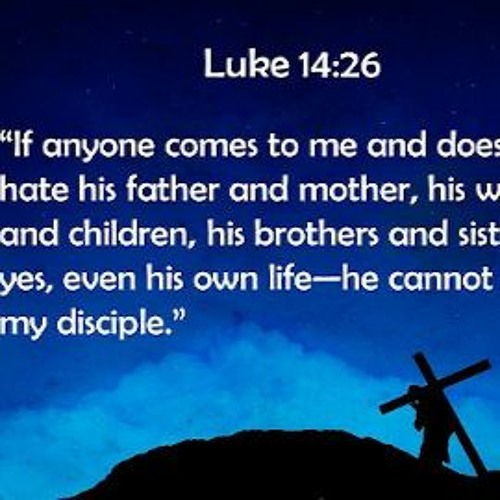
Throughout the Gospel of Luke we hear the call of Jesus to follow Him and at the same time are warned of the cost of following Him.  It is not how any one of us might recruit followers.  Especially here in the Church we tend to minimize the work of the Kingdom telling prospects for an office that it is really no big deal, it is easy, anyone can do it, and it takes hardly any time.  So why should we be surprised if we get church leaders who think their service is not important, should not take any time, and could just as easily be done by others.  We are more than foolish in the way we treat the things of the Kingdom of God.  But not Jesus.

Jesus shocks us all by saying that anyone who does not hate father, mother, wife, children siblings, and himself cannot be His disciple.  Of course, we know Jesus did not mean that.  Didn’t He?  If He did not mean it, why did He say it?  Of course, we presume Jesus means we should love Him more than we love everything else.  But if that is what Jesus meant, why did He not say that plainly?

Hate seems such a strong word.  Especially after a few chapters before affirming the call of the commandments to love God above all and our neighbor as ourselves. Jesus says hate and not simply a lesser love.  Not to be fair, Jesus is not saying that we are to harm our parents or spouse or children or anyone.  Jesus does not justify hurting anyone.  But Jesus is clear.  We must renounce all – even self – in order to be His disciple – the cost of discipleship.

Lest we think that this is unique in all of Scripture, Jesus says the same thing in different ways and St. Paul makes it personal.  I am determined, I have decided, I have resolved to know nothing except Jesus Christ and Him crucified.  This is not some novelty for those who are extreme disciples and it is not the particular calling of pastors and church workers but the common call of Jesus to know the cost of being His disciples and every day to bear that cost for the very sake of Christ.

We always sugar coat life with Jesus.  We tell people the convenient lies that following Jesus will give you peace in your heart, tranquility in your home, joy in your work, recognition from others, and help you achieve your dreams.  We front load discipleship with all sorts of promises that sound great but may not be true at all.  In contrast, Jesus tells us the inconvenient truth He will not be one among many priorities and claims upon your heart or your life.  Ever, only, all for Him.

This is not you are given to do as a private or personal assignment.  This is why we are here in God’s House today.  We pass the baptismal font where we died and rose from those waters of life and promise to become new people.  Not the same old people with a new understanding of life or new priorities for our lives but brand new people.  We no longer belong to the world and we do not belong to our selves either.  We belong to Him.  That is not simply the first or the highest claim upon us but the only claim.  Every other relationship has to be seen in the context of this life we have in Christ or we cannot be His disciples.

Self-denial is not something we do from time to time but the shape of our daily lives.  Though this is the pattern of our lives in Christ, we will deviate from that path and go our own way, playing with Christ as if He were a toy instead of dying to be raised to be Christ’s own, God is on our side.  He provides us the means to rescue us from our failures.  This is why the Church talks not about one repentance but daily repentance and daily restoration.  This is why the Church calls us to the blessing of confession and the gift of absolution as a regular part of our daily lives.  Self-denial is not one decision or even many decisions but is the daily fight of faith.  We count the cost – a cost Jesus has made painfully known to us – and we daily deliberate on what is our baptismal calling and how it is to be lived out.

The reality is that for too many of us the things of our homes and families and workplaces and leisure and self-interest are the things we know best and the things of God are always a little strange, somewhat unfamiliar, and less urgent to us than these other things.  God’s House is not our house but a place we visit.  Prayer is not a daily conversation but an occasion tweet.  The food of the Sacrament is not the most important food but a snack for the moment.  Baptism is not the pivotal event in our lives and identities but merely something that happened to us long ago that few of us can even remember.  Count the cost.  Renounce all.  Follow Jesus.  But only for an hour or so on Sunday morning and a few scattered minutes in our busy days.  If Christianity is failing and we are failing as Christians it is not because we have taken Jesus too seriously but too lightly.

The Christian life is not some peaceful meadow where our souls enjoy complete tranquility but a battlefield in which the enemies of the kingdom fight against us with the ally of our own sinful flesh, heart, and mind.  The reason there is so much battle imagery in Scripture is because this is the shape of Christian life.  Even in the 23rd Psalm, Jesus sets His table in the presence of our enemies.
Moses puts it clearly in the first reading.  The struggle before us is nothing less than life and death, good and evil.  There is no muddy middle ground.  The choices before us are not simple but the choices of life and death, good and evil.  It is not individual but for all our household and the generations who follow us.  To love the Lord, to obey His voice, to hold fast to Him only, and to see Him as our life and our future, this is the battle waged in our hearts, minds, and lives every day.

So Jesus does not mince words.  The call of Christ is to come and die.  To surrender all that we are and all that we hope for and all that defines our lives to Him.  This is not the condition which He places upon us which we must fulfill before He loves us but the fruit of discipleship and the work of His love in our hearts, minds, and lives.  The Christian path does not look like all the other paths of the world except on Sunday when we Christians detour to Church.  No, indeed.  Ours is the cruciform life that we see in Christ.  He loved us more than life, more than His own life, and more than anything else in life.  Such wondrous love will work in us the same radical discipleship.

The call of Christ is not a once in a lifetime decision but the daily call issued through His Word, pointing us to what happened in baptismal water, what equips us for this life in absolution, and what feeds us for this journey with His flesh and blood in Holy Communion.  Jesus is constantly at work in us merging our double-minded scatterbrained focus so that it shoots as straight as an arrow.  From the cross, in the shadow of the cross, and to the cross we live.  It is not one small thing but the everything that defines us.  Not sexual choice or felt gender or sins we love to hate or lives we hate to love but Christ in us, Christ to us, Christ for us, now and for everlasting life.  Amen.

Labor not in vain. . .

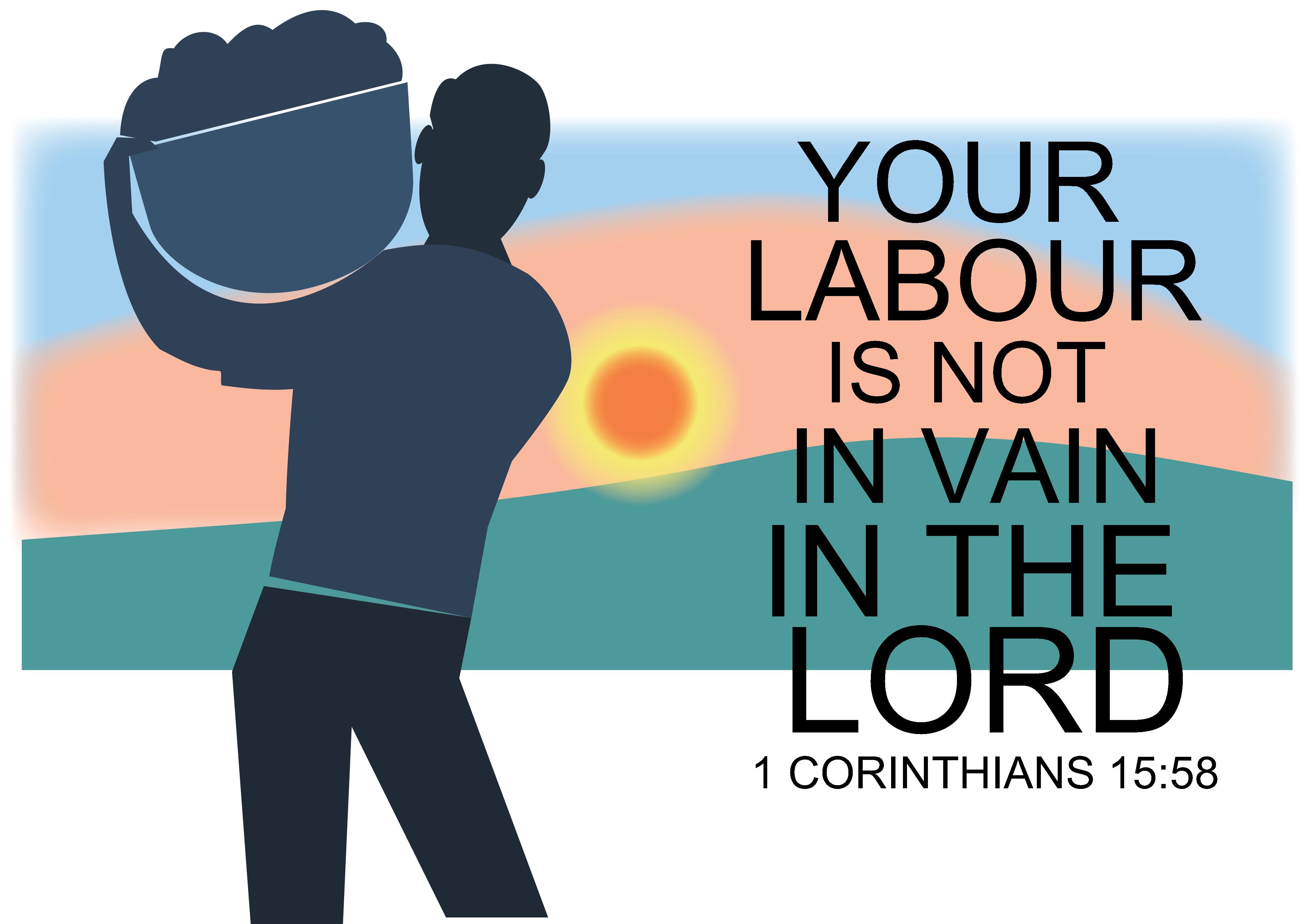
Therefore, my beloved brothers, be steadfast, immovable, always abounding in the work of the Lord, knowing that in the Lord your labor is not in vain.  1 Corinthians 15:58

If you have read my blog before, you might have noticed I am not so much convinced that retirement is a good thing.  Oh, sure, you get to do what you want and hopefully have set aside money to do it but it comes at a point in life when you are more likely to have health limitations.  But that is not what I am talking about.  I am talking about the idea that retirement means you are finished with the work you must do in order to do the work you want or like to do or find fun.  It is sort of a reversion to childhood when you had to do nothing but a few chores and could focus your time on having fun.  But the retired are not old versions of small children -- or at least they should not be.

The work God has given you to do is not something from which you retire.  You remain a husband or wife and this is your vocation that does not change with retirement.  You remain a child of your parents (as long as they live) and this does not change whether or not you are working full-time.  You remain a parent of your children even after they grow up and become adults.  You remain a neighbor to those around you and this does not end with retirement.  You are a member of the community and a citizen of your country and this vocation does not fade away when you stop working full-time.  The things of your vocation do not change and the labor expended in these works is never in vain.  It endures long after you are gone and if nobody else remembers it, God does. 

The other part of your vocation that does not change is your labor for the Lord in His Church.  There seems to me no excuse for ditching worship in pursuit of leisure and travel and entertainment just because you don't have to punch the old time clock anymore.  Retirement ought to me that you are there every time the church door opens -- if not in your own parish then in a congregation where you are.  Retirement ought to mean that you are free to do more work as a volunteer serving the Church in everything from choir to ushers to church gardens to painting to teaching Sunday school and everything in between.  Retirement ought to mean that your assets are structured so that they provide a witness to your family, friends, and brothers and sisters in the pew -- why would you not think of the Lord and His work but remember to assign every trinket and bank account to those you want to inherit them?

If you no longer need to be employed to support yourself and those in your care, then you are free to use the fullness of all that you are and have to really make a difference -- to take up the work that is never in vain.  On this Labor Day when we are lazily sitting in our lawn chairs or burning a few burgers or hot dogs or speeding down the lake on our boats or putting the ball on a nice green, let us remember and give thanks for the labor that provides for the necessities of life by God's design and blessing.  But let us not forget the labor which is never in vain -- our vocations as the baptized children of God within the Church, the home, and neighborhood, and the community.

Sunday, September 4, 2022

The death of fun . . .

As some of you know, I have come to despise the news media.  On one hand they deliver the worst news ever with a cheery smile as if they were happy a war was being fought or people died or a pandemic ruled or whatever.  Whatever happened to a sense of gravitas.  Tell me the facts and do not sugar coat them but neither omit the hard ones either but do it with a sense of honesty and gravity due the words you are saying.  On the other hand, yellow journalism is the rule.  Everything is sensationalized.  Breaking news happens every minute of every day and if it doesn't, it will be invented.  A steady barrage of terrible news with a silly YouTube video thrown in at the end has become the norm of programming in newsrooms (if there are any real newsrooms anymore).  It was a little entertainment with a lot of news and now it is a lot of entertainment with a little news.

Perhaps I am drawn to conspiracy theories but it almost seems that the news media is working in an undercover and illicit plan to steal all our fun away.  In this, they are aided and abetted by the government.  Together they have already made common sense rare and seem hell bent to rob us of any fun we might have.  All of it has to be spoiled by the introspective analysis of the racism, misogyny, sexism, and every other kind of ism that might be involved in the smile or the laughter.  There can be only one real reason for all of this -- it helps to keep the populace submissive and fear prevents people from thinking.  So our social media platforms and our news media and our government refuse to allow us to have any fun -- except the fun with all the sign-offs and approvals of the powers that be.  In others, no fun at all.  Fun seems to be viewed as a subversive force in a world suspicious of anything and everything.  

We already did it to our kids.  We robbed them of any play that was not burdened by some educational or socializing purpose that made the fun not so fun at all.  We forced them to think about adult things during their carefree years of childhood.  Now, before puberty even kicks in, they must decide on a gender, must admit that they are institutionally racist, must ally themselves with the forces of social justice, must take on the big world problems of climate, race, and inequity, and they must endure the mind-numbing cartoons that make sure no one is offended, excluded, has hurt feelings, or is not perfect just the way they are.  Ugh.  I long for the days when Wile E. Coyote and Road Runner went at it -- no matter how hard one of them was slammed, he seemed always to get up and go on (what a terrible lesson to learn, huh).

Now we are doing it to ourselves.  According to the news, everything has become a life threatening problem.  Prisoners to our feelings, we seem to have learned to revel in playing the role of victim, of assigning blame to others, of expecting others to fix what is wrong, and to insist upon every right we can possible imagine or manufacture before allowing anyone a measure of happiness.  Fear is the constant drumbeat of the media and it has make us skeptical and suspicious of relationships, of those we know, of those we do not know, and of those we thought we adored as media stars, sports heroes, or politicians.  All we seem to know and care about anymore is the unseemly dark side of everyone and everything.

Some of you are thinking that perhaps church has some responsibility to bear in all of this.  I don't think so.  In fact, I think that faith is a source of fun, a cause for joy, and a reason for feeling safe and content.  As Christianity has been marginalized, at least the orthodox variety of Christianity, the faith has become the same, tired, and wearisome domain of pronoun picking, choice affirming, feelings respecting, preference honoring, fun stealing force that our culture has become.  The gift of God was meant for joy but we took His gift and repackaged it into the same mess the world has.  Fun begins with knowing that God made all things and still preserves them.  Fun begins with the awareness of such love that suffering was not too great to save us and death not too terrible to endure to raise us.  Fun begins with knowing that God is at work in history -- not as puppeteer but as the force of mercy bringing rescue and hope where there was only despair and death.  Fun begins with the Holy Spirit transforming our hearts from the prison of fear and suspicion into places of trust and confidence that can sustain the joy He has planted in them.  Fun begins with beginning each week in the presence of the Most High, bidden to come by His own mercy and then filled with grace upon grace as the Word unfolds with the voice of the Gospel and the Eucharist imparts a taste of a future greater than our imagination.

Terror is the fruit of sin.  Fear is the currency of the demons.  But joy is the gift of God -- the wonder and fun of creatures who have no right to expect anything good and who find the surprise of a Savior who has done all things well for our salvation.  This same marvelous God picks us up when we fall, cleanses us from our shame, restores us as His own, feeds and nourishes with grace to satisfy every hunger and third.  It is called fun.  It is no coincidence that as Christianity has diminished as a presence and force in the world so has fun faded into a people who cannot laugh or look in awe or enjoy anything anymore.

Saturday, September 3, 2022

Not selling a car. . .

More than a few years ago we had a good experience purchasing a vehicle at a local dealer.  We sent someone there not long ago.  Their experience was different.  They said they felt like roadkill with vultures swooping in for lunch.  They did not go back.  I still think that the dealer is a decent car dealer but times have changed and both the people shopping and the dealers are in a different position than they were then.  Could it be true of church?

It is old news that Shia LaBeouf has been received into the Roman Catholic Church.  I am not going to debate that here.  But his comments about the Latin Mass and the character of what happens in worship have continued to intrigue me.  He characterized his experience with much of Novus Ordo as someone trying to sell him an idea or a car and how the difference he found in the Latin Mass was simply the invitation to enter into and participate in the holy.  He found the reverence of the Mass to be an profound thing -- something that affected him deeply.

You can talk all you want to about Shia LaBeouf and his conversion but what he says about reverence and the emphasis on the mystery should not pass unnoticed.  Whether it is the supposed appeal of contemporary Christian music or a faux casualness about the presence of God or the sermon as the appeal to an idea (dare I say the selling of one?), the world has become rather jaded about much of what passes for worship.  The churches that practice it shuffle people around but do not greatly impact the unchurched and, when they do, those whom they attract are soon worn out by it all.  It is like a constant part one must play instead of the entrance into the holy place of God to be served by Him with His own priceless gifts.

I hope we are paying attention.  I hope that we hear more from those who have been turned off of religion for the entertainment or retail environment that presumes to be where God does His bidding and I pray we are listening.  Retail religion has run its course.  It no longer needs a retail location and can be just as easily consumed at home, on screens, at convenient times, for the desired affect.  If that is church, that church is dying on the outside and already dead on the inside.  We all need to hear that.  In my own community, the contemporary style churches that are growing are the next best greatest incarnations of the same old tired model and the churches that are dying are yesterday's version of the same.  But their growth is recycled people who, like the addict, continue to seek out the same means for a new experience of the high that they desire.  When that does not work, some of them show up at our door and find in the rich ceremonial, reverent liturgy, majestic music, and Biblical preaching something they had not experienced before.  I think this is what Shia LaBeouf is saying.

Worship and preaching are not apologetics (which has its rightful place).  This is the arena where the unworthy have place and the undeserving are moved to seats of honor, where God meets them and serves them with the gifts that bestow eternity, and where they are transformed through forgiveness and the gift of the Spirit to be the people of God (who were once no people).  Liturgical and sacramental preaching aids in the same pursuit as the liturgy -- it reveals the Christ among us who serves us with His gifts and makes possible the response of faith, praise, and thanksgiving.  And one more thing.  He makes possible the means of living out this new identity within the world but not as people of the world -- the love for neighbor and mercy work that do for others what Christ has done for us.  This is where the battles need to be fought within my own denomination and among every church body where the liturgy is seen as a straight jacket preventing the Spirit and the success of worship to be the selling of an idea or the entertainment of the bored with meaningful and felt experience.  In contrast, the real Divine Service is where Word and liturgy live on the same plane, where Christ is among us and where Christ bestows His gifts freely and where the Spirit works to enable us to have arms to receive those gifts, believe in Him, and live new lives here as we prepare for the eternal to come.


Friday, September 2, 2022

Emotional overkill. . .

Emojis are part of the emotional currency of this age.  We cannot simply say what needs to be said, we feel compelled to add an icon to attach to the words our emotional state at the moment.  From the first few emojis that first crept into usage, the world of the little icon has exploded to the point where emojis are being added to the library of emoticons faster than we can keep up with and you can even manufacture your own through apps for Android or iPhone users.  They were simply cute but now they have become almost more important than the words themselves.  To some, they communicate more than the words do.  Emojis are the perfect accompaniment to a world in which feelings always trump facts and sentiment is more than truth.  Ours is a culture in which emotions are front and center.  Gone is the stiff upper lip and here is the you need to know what am I feeling at this moment world.  

I am probably the wrong person to write about this.  On the one hand I find emotions crippling and on the other, following years of covid conditions, people who have not returned to the pews, and the recent departure or retirement of my associate pastor and most of our church staff, my emotions are on edge more than in a long time.  I am weary, to be sure, but what drives me are not emotions.  It is the simple fact that the work needs to get done.  That means that emotions have to take a second place to the responsibilities of life.  My wife the (now retired) nurse knows this as well as I do.  She worked while dealing with family issues and life troubles because the sick need to be cared for and cannot wait until we are at an emotional peak for us to jump in and do our jobs.

Social media thrives on emotion.  From the anger that urges us to respond in anger to the easy bruising of our egos, social media exploits those emotions and counts on them to fuel the use of their platforms.  There is not that much fact on social media and emotion seems to be everything.  That is part of the reason we are so divided as a nation -- it has less to do with the facts over which we disagree as our feelings laid out there for the world to see along with a dare to ignore us or disagree.  We live in a time of over-sharing emotions and emoticons have become part of the essential ritual of our friendships and our disagreements.  I wonder if they are not also a symptom of our loneliness and if their use is not an attempt to hook people or to hook into their sympathy or righteous anger along with us. 

Because we live at a time when brevity is more valuable than nuance, emoticons communicate a great deal without any words -- perfect for the short capacity of Twitter (140 first and then 280 words) and the visual age of Instagram.  It is perfect for this time in our communication but do emojis really communicate anything at all?  Are we really concerned for the emotional state of the person who sends us the little face with a tear or is that simply the veneer of emotion we expect from folks today?  I fear that the person investing in the emoji has a vastly different expectation of the little icon than the person receiving it.  Perhaps the angry or tearful emoticon is simply saying to the reader "run away."   In any case, the vast amount of attention given to emojis has not helped us communicate better or more substantially and may be a symbol of how badly we do communicate and listen to one another.

I fear that Christianity is being sucked into all of this emotion in ways that work contrary to the Gospel itself.  For the faith we confess lives not in the ups and downs of our feelings but in that which is the substance of things hoped for and the conviction of things not seen.  Faith is not an exercise of opinion or emotion but the encounter with a fact that has the power to transform us.  Scripture is not designed to appeal to our emotions (though it certainly does) but to engage us with the facts of God's mighty deliverance in which we meet His mercy to forgive, restore, redeem, and rescue with eternal life.  Again, God's primary concern is not to make us happy but to make us holy.  Holiness is not an emotional state or one dependent upon our feelings.  It is the saving work of Christ accomplished on our behalf, made known to us by the Holy Spirit working through the means of grace, so that the same Spirit might work in us to desire and to do that which is well pleasing in His sight.  Sanctification cannot exist without justification but justification is not the same as sanctification.  One happens apart from our will and desire and the other manifests itself in a new will and desire.  Both justification and sanctification can be appreciated on an emotional level but neither resides there.  We apprehend justification by faith and by faith we learn to know and to want what is good and right before God.  The currency here is not how we feel but what we trust.

The problems with contemporary worship seem to include the expectation of a sustained emotional plane and the confusion of this emotion with faith.  The music is designed to appeal to our emotions and the preaching reaches us more with stories designed to motivate and inspire rather than with the facts of the Gospels.  What generally passes for contemporary worship (though I hate the term) has as its central focus an appeal to emotion.  While this was well learned with the old pattern of preaching and music that accompanied the sinner's prayer and giving your heart to Jesus, evangelicalism has left behind the revival and turned worship into a spectacular production.  While it was created in order to reach beyond the borders of Christianity into the secular world, the reality is that its primary appeal was to bored Christians who yearned to experience an emotional mountain top experience.  Contemporary Christian music and worship have themselves become emoticons -- in contrast to the experience of the transcendent and the reception of heavenly grace that is the center of liturgical worship.  The emotional overkill in church has done the same thing it did in society.  It has created a shallow and plastic niceness that distracts us from what sin has done and what Christ has done to overcome sin.  We are just as effusive in our insistence of how wonderful God is and how wonderful we are to know Him as we are praising the latest selfie or rundown of the day from our friends on social media.  In the end it all means the same.  Not much. Or the wrong thing -- hey, everybody, look at me.

Part of the blessing of the liturgy is that it challenges this emoji world that has crept into and taken over so much of what passes as church.  It is emotional overkill in a world which insists our emotions are the best things about it and may be even what it means to be created in God's image.  Lord, help us, if that is true.

Thursday, September 1, 2022

Some random thoughts on the Church and Ministry. . .

Something happened when the bishop became something other than a pastor.  Hardly anyone believes that what we have structured today reflects anything like what the Church looked like in the early years.  Those who try to square our massive bureaucracies and administrative officials with what the Church knew in the first centuries of her life are worse than foolish.  They prefer the lie that we have invented to the truth.  What happened when the bishop became something other than a pastor is clearer now than ever before.  In the wake of COVID 19, the lack of strong pastoral leadership was clearly evident -- whether from Rome and its episcopal direction or Lutheran silence in the face of governmental edict.  I believe it is due in large part to the fact that bishops no longer see themselves as pastors and are not, at least in any recognizable form, pastors anymore.  They are mostly good men and desire to be good bishops but their churches have bequeathed to them offices that are not churchly anymore and given them duties that make it impossible for them to be pastors.  We are all the worse for wear because of this.

Our unity has become a paper unity built upon our desire to be an institution of some size and influence more than upon doctrinal knowledge and confessional unanimity.  In our poverty, we work to maintain our house of cards through constitutions and bylaws.  They are all well and good but they cannot replace the unity of people who speak with one voice this we believe, teach, and confess.  Fellowship has become an issue of church membership more than our place before the pulpit and at the altar.  So pastors check ID cards more than they know and examine the communicants who come to the rail.  Preaching has become an art form, a type of speech, more than the pastoral address of the shepherd of the flock speaking the Word of the Lord to them.  We talk about preaching as if it were a skill and good preachers as if the knack could ever be divorced from the content.  We push programs that compete for the heart of the good people of God and confuse them into thinking that good refreshments can feed the hungry soul and good social life can supplant the discipline of faith and worship.  Nobody has done this to us.  We have done it to ourselves.

We might look back to someone like Cyprian for a good challenge to what we have created.  He knew that the unity of the Church is centered in the Ministry of the Gospel.  He would challenge our way of dealing with issues of unity and fellowship and call for the honest conversation of bishops who preach, teach, and preside.  In the LCMS we have raised up the congregation above the bishop and in other places the bishop has been raised up above the congregation and in too many places the only understanding of church is what you see right there on Sunday morning.  It is that, to be sure, but no congregation can or should live in isolation.  The larger unity and the fuller fellowship of the Church has been lost in our pursuit of what seems right in our own minds and we forget the duty we have to the saints who bequeathed this faithful deposit and to those around us who are also gathered around the Word and Table of the Lord and to those who will judge us after we are gone.  

We have orchestrated our larger gatherings so that real conversation is missing and real theological debate seldom happens.  We have a corporate structure which is not the Church and we have the Church which depends to some extent upon a corporate structure for too many things.  As pastors we are too focused upon our pension plan, retirement options, and health care system.  We need these, to be sure, but have they become the real glue that binds us together?  We have a financial system that is a testament to our frugal roots and our desire to keep things in house but has it become one more driver behind the wheel of what it means to be the Church?  We have a penchant for programs that we trust more than the means of grace and we seem to endlessly pursue the reinvention of ourselves and what we do as if no generation has anything in common with the generation that gave it birth.

The center of gravity in our churches has moved from altar and pulpit to conference rooms and board meetings.  Some of us have tried to adopt the accountable manager structure which seems more efficient as a method of doing business but in doing so we have sacrificed some of our identity as churches.  We have developed a seemingly endless street of storefront parachurch organizations to do what we think the Synod is not or cannot or should not be doing and they mine our pocketbooks in competition with the local parish.  We start churches without them being churches and instead of places where the people of God are focused upon the Word and Sacraments, we create a confusing array of coffee houses, day care centers, leader dependent inspirational groups, and whole movements in which worship is a mere sideline.  

Congregations are defined and characterized by lots of other things, which compete with or practically take precedence over the Ministry of the Gospel; so that congregations are identified with and known by particular styles of practice, or programs, or whatever. And as far as our 'fellowship' is concerned, that seems to be more a matter of formality, of political and legal structures, a shared pension plan, and so forth, rather than an active theological engagement of brother pastors. Our bishops have, by and large, been taken out of the parish, and the parish pastors typically stick to their own 'turf,' guard their own 'territory,' keep their heads down, and ignore one another to whatever extent they can. I know that is not universally the case, and that there are notable exceptions. But, to my observation, most of the interaction between pastors is based upon personal friendship rather than fellowship in the Gospel, and is governed more by common opinions to begin with than by the catholicity of the Church in the common Ministry of the Gospel of Christ. I've been as guilty of falling into these patterns as anyone else; but it grieves me, and I don't believe it bodes well for the life and health and future of our Synod.

Wednesday, August 31, 2022

The Pieperization of Missouri. . .

The Missouri Synod has long been more an extended family than simply a denomination or a jurisdiction.  Its feuds and squabbles were often family conflicts as well as being legitimate disputes over doctrine and practice.  A look at ancestry.missouri would reveal an integrated family of sons following fathers and brothers following brothers and sons-in-law anointed with the familial crest of authority and orthodoxy.  That is hardly something to be ashamed or embarrassed about.  It was the way of most immigrant groups from that era and it continued long after those groups diversified -- aided by a system of education that was decidedly in house.  But it does offer us a chance to look a bit into how those dynasties of the royal families of Missouri did actually affect the character of the larger church over time.

Most are want to point to the Preus family -- the brothers who came into Missouri rather late in history but whose coming certainly affected the direction of our history as well as the character of our faith.  There are plenty of Preus family members still around -- actively serving and retired.  But that represents more a family that upset the apple cart of Missouri's ruling clans than it does any real relationship to that earlier history.  And this chapter of Missouri, while involving family, was clearly about doctrine and practice most of all.  It was not a power play, strictly speaking, that gained entrance to this Norwegian set of brothers but an internal struggle at play in Missouri that had begun to expose the fracture points that had long laid hidden, covered over most of the time by the family desire not to deal with them.  So when the Preus brothers came in, the mechanisms of family and relation that had long defined Missouri were being stretched thin by conflicts and disputes that were already threatening to come undone before they showed up.  No, the story does not start with them.

Walther's Missouri was vastly different than the Missouri of today.  It was not a Synod of insiders but of strangers welcomed into a doctrinal family.  At some points in Missouri's early history, the ministerium represented in the Synod convention was dominated by pastors serving non-Missouri congregations!  Something that would never happen today!  In fact, Missouri's history began with strangers learning to come together for the sake of doctrine and practice -- the Frankenmuth contingent with the Loehe men with the Saxons and Perry County folk.  They did not know each other well but they knew what they believed, confessed, and taught and this provided a basis for the formation of a Synod and marked the character of that Synod's early life.  Their conventions were more theological than political or programatic and they somehow found how to kick out somebody and then receive him back a few years down the road.  Can you imagine either of those happening today?

It would be hard to overestimate Walther's influence over this early history of Missouri but it would also be hard to see Walther in the complexity of bylaws and resolutions that have come to define us today.  What would Walther think of the way we approach the Synod or fellowship or the contemporary worship styles of so many congregations?  What would Walther think of such inventions as Associate Pastors or conventions designed more as the confirmation of outcomes already decided and housekeeping affairs instead of deliberative assemblies arguing less rules than doctrine?  What would Walther think of a Synod in which leaders were rather timid about suggesting anything is really wrong (the most we often can must is not best practice) and of congregations and clergy who routinely act as if Synod were of little need, benefit, or consequence to them?  What would he say about the colleges and universities that no longer had a core mission of providing pastors and teachers to the churches or of a Synod once known for schools now known more for closing them down?  I will leave you to contemplate these things.

Although we claim that Missouri is Walther's Synod, I wonder if it might be more true to say that Missouri has become Pieper's church body.  Franz August Otto Pieper was born 27 June 1852, in Carwitz, Pomerania, Germany, to his father, the mayor.  He was one of seven children.  He immigrated to the U.S. in 1870 and 5 years later, graduated from Concordia Seminary, St. Louis. Ordained by Rev. A. Hoenecke on 11 July 1875 in Centerville, Wisconsin, he served there for only one year before accepting a call to Manitowoc.  On 2 January 1877 he married Minnie Koehn in Sheboygan. He would served the Manitowoc congregation until 1878, when he became a professor at Concordia Seminary, St. Louis, and, 9 years later, its president.   Three of his brothers like him became pastors: Reinhold was a professor at the Missouri Synod seminary in Springfield, IL; August was a professor at the Wisconsin Synod seminary in Thiensville, WI; and Anton was a pastor in the Wisconsin Synod.

When brother August became a proponent of the so-called “Wauwatosa Theology,” there were strong disagreements between the two Pieper brothers on various issues relating to church and ministry. Despite their private disagreements, Franz never publicly criticized his brother or the Wisconsin Synod. He was not quite so reticent with everyone else -- including his colleagues at the Seminary. One anecdote from about 1930 (a year before he died) tells of Pieper reviewing the lecture notes of the professors at Concordia Seminary in St. Louis, and then in a faculty meeting remarking that only he and P.E. Kretzmann were not “deviating from the Word of God.” Theodore Graebner stormed out of the room in protest.

Pieper served on the Missions Board for the Synodical Conference. He was the Synod’s president from 1899 until 1911.  But most know him as the author of Christliche Dogmatik (3 vols., 1917-1924; translated as Christian Dogmatics, 1950-1953).  It would be hard to overestimate the impact of those volumes upon Missouri.  Historian Carl S. Meyer put it well when he wrote, “After the death of C.F.W. Walther, [Pieper] was regarded as the ‘Elisha’ on whom Walther’s mantle had fallen.”  Pieper was not Walther and did not hold as many positions simultaneously as Walther did but his dogmatics text ensured that Missouri's clergy would be defined by him more than any other.  The delayed and rather dismissed volumes that were to replace Pieper's work only show that the power of this text upon Missouri's ministerium -- for good or for ill.

A major movement toward Lutheran unity among the conservative mid-western synods of Missouri, Iowa, Ohio and Buffalo seemed on the verge of success in the late 20s, but it would be Missouri’s insistence on agreement on all doctrines that persuaded Iowa, Ohio and Buffalo to put church fellowship with Missouri on the back burner as they united to form the American Lutheran Church (ALC).  Many would fault Pieper (and sometimes Stöckhardt) for being over-zealous against unionism. It was his position that fellowship and unity required agreement in all articles of doctrine and that has been Missouri's position ever since.  He was also the main author of the Missouri Synod's A Brief Statement of 1932, an authoritative presentation of the doctrinal teaching of the LCMS -- a document some say was designed to derail any Missouri conversations with other American Lutherans.  It cannot be forgotten that American Lutheranism would have been in a distinctly different state today if that unity sought a century ago had been brought to fruition.  Maybe the Pieperization of Missouri was inevitable as this church body moved from being the new kind on the block to being an institutionalized structure that needed to be preserved as much as it needed to grow.  The Missouri of today needs to learn a little something from its earlier incarnation and maybe it is time we stopped trying to out Pieper one another and trying to solve every theological issue with a bylaw and a dispute resolution process and adding to the Book of Concord without really adding to it.

Tuesday, August 30, 2022

Grow up. . .

Living in a world so in love with youth, it is hard to advocate for adulthood and yet that is, indeed, what is needed more than anything else.  We find ourselves at a time when boys seem never to put away childish things and seem to be getting away with living in their childhood without much challenge.  Our reality is defined not by things objective and truthful but by feelings and these feelings are fueled by technology that appeals to the fantasy.  Life has become one giant video game, complete with do-overs.  Men do not need to put away childish things and women do not need men, at least the kind of men who are large version of their childish selves.  Women live in their own fantasy world in which they dominate and control their world, eliminating what they find offensive and establishing a political correctness that forces everything to conform to feminist ideals.  Worse, many churches seem content to reshape themselves, their mission, their purpose, and their gospel to fit it all.  Far from being a conscience against the excesses of a childish culture of individualism and subjectivism, these churches have become the voices that echo the feminist ideal of strong women and weak men (the only good men are those who will not challenge this feminist gospel.

What we have are little boys who are given drugs so that they sit quietly like the little girls in the classroom.  Then we rob them of recess when some of their energy might be worn off and tell them to sit quietly a little longer and complain why they cannot be as cooperative as the girls.  These boys learn to defer to girls and give up competition in order to take on supportive roles.  They are no longer all that useful since girls can do whatever they want and boys just get in the way of the girls who know what they want and go after their goals and dreams. Follow the path down the road a few years and you find that boys have forgotten how to compete and left the honors stage at high school graduation to females, dropped out of college, and left the graduate programs more and more to women.  Even reproduction no longer needs a man to participate except as a sperm donor -- which has become a typical term for what we once called a dad.  Watch any major news program and you find that more and more of the anchors and reporters are women.  This is not about balance but about a genuine disdain for masculinity.  The men are there for comic relief and to be supportive of the female leads or they are there to show that there are some men who not toxic and more friendly to women.  We celebrate the first woman to do this or that but have we considered that we have not simply opened the door to the best and most qualified person but set the stage for a future in which men are not invited unless they are emasculated men?  The media know where culture is headed and are in front of the curve instead of being behind it. 

Gender dysphoria and the rapid advance of transgender from the fringes to the center of things is a consequence of how uncomfortable our culture is with masculinity.  Parents seem more and more hesitant to guide their children and instead seem to look for signs of confusion in their children, especially male children. It is as if we have decided that masculinity is a disease to be treated.  Feminists long complained about the way we groomed our women to need men and now find themselves at a time when they might want to give men a second look but have trouble finding men who are not simply large boys.  So now we have men who think that they are women, that their biology is at war with their hearts, and, though we cannot really define what a woman is, we know that being a man is not anything all that good.  Is it no wonder that our children are confused?  Is it no wonder that a psychological disorder is now being proclaimed as the ultimate courage -- to look at your body and say this is not who I am?  At the same time, we have opened up to women all the traditional roles assigned to men -- including mortal combat.  We want our women to be strong and our men to be weak.  And then we say we have a problem with boys.  Boys are not causing the problem but suffering because of it.  Before you rush to judge me, I am not at all suggesting that it is the masculine nature to bully or dominate or that these things should be overlooked for the sake of boys being boys.  What I am saying is that the deck is stacked against our boys and stacked against our boys becoming men and against our men growing up into the role and place God prepared for them.

Monday, August 29, 2022

The Myth of Self Love. . .

I read it all the time.  I hear it all the time.  It sounds more and more reasonable every time I read it and hear it.  You have to love yourself first.  First before you can love another as spouse.  First before you can love God above all.  First before you can love your neighbor.  You have to love yourself first or you will be no good to spouse, family, neighbor, or God.

The sentiment is good.  We have all known folks who seemed intent upon making themselves doormats for all sorts of abusive people who used them up literally!  We have all known people who wasted their lives loving people who could not love them back.  We have all known those who do not seem to have any self-respect and will literally do anything to be loved, to be recognized, and to be accepted.  But I am not at all sure that urging them to love themselves will repair the damage or lead them out of the abyss of their poor choices and empty souls.

The fact is that we love ourselves more today than ever before.  We pamper ourselves with things we cannot afford.  We consider ourselves worth the best -- from the newest and best of the technological toys for sale to the way we think we ought to be treated.  The advertising pushes this self-love on us all the time.  It is nearly impossible not to feel pushed to love ourselves first and before all.  But this is not Christian. . .

If the Law were all there was, love your neighbor as yourself might seem to imply, even require that we love ourselves first and most of all in order to be equipped to love others.  But this call to love others as you love yourself is no promotion of self. Love one another as I have loved you, says Jesus, tying the commandment's use as guide to His own example.  He does not abrogate this Law but fulfills it and defines it that we may be no longer mistaken by its intent.  Our Lord does not practice self-love but sacrificial love for the sake of others.  Love for God and for neighbor comes not from me and how I value or view me.  No, it comes from Him whose love is servant love, suffering love, and even dying love.  He frees us not for ego but from it.

It is one thing to challenge those who surrender morality and integrity in order to find love, acceptance, and fame.  It is quite another to encourage self-love as the preliminary requirement of love, acceptance, and fame.  Our self-esteem does not come from looking in the mirror, from the approval of others, or even from the mountain of accomplishments we have to our credit.  Our self-esteem is rooted and planted in the sacrificial love of God at work in Christ's suffering, death, and resurrection.  Not with silver or gold  but with His holy and precious body and blood given and shed for us -- this is the price our Lord has placed upon us and it is what He expended that we might be His own and live under Him in His kingdom.  This is the value He has applied to our lives and from this value we learn who we are, what we are, and what we are here to accomplish.  Unworthy though we are, God has esteemed us worth nothing less than the priceless body and blood of Christ given and shed for us.

Robert Schuller is surely one of the modern fathers of this self-esteem, self-acceptance, and self-love movement but he is not alone.  The fact is that too many popular preachers today have incorporated the tragic dead end of pop psychology into Christian theology as if it is God's will and intent for us to love ourselves first and foremost before and as the means to love Him and love others.  Baloney.  To this false and misleading dream of self-love that gives birth to love for others and for God, the Law must be spoken to kill the lie and silence the liar who speaks it.  What is love?  Not that we loved God but that He first loved us -- the love we know from the cross.  

We are not called by God to preserve ourselves or to save ourselves from sacrificial service but to give ourselves up for Him, for our spouse, for our children, for our neighbors, and even for the stranger on the street corner.  Ours is not a self-love with safe boundaries that make sure we are always taking care of ourselves first.  Deny yourself, take up your cross, and follow Me.  It seems to me that the myth of self love hardly ever leads to having any love for others and almost always means that we are too busy caring for ourselves to care about God or anyone else.

Sunday, August 28, 2022

What does it mean to actively participate in worship?

Lutherans often turn up their noses at the Latin Mass presuming a sense of superiority because ours is in the vernacular and has pretty much always been that way (even though Luther loved the Latin and believed it would continue).  We sometimes presume that to participate in worship mans to understand everything that takes place.  I am not sure that this is a tenable position and am confident that what happens in worship is not primarily targeted toward our understanding anyway.  But Rome does not seem to have much patience with the Latin anymore anyway so there goes one of our favorite complaints.

Some Lutherans turn up their noses at ceremonies in the Divine Service believing that only those things that are understood (and, for many, appreciated) are worthy anything.  The rest falls somewhere in the category of vain words and empty gestures -- the stuff that falls under Jesus' complaint against the worship He encountered among those who were known for their zeal.  This is a red herring as well.  We teach our children to do things all the time but know that their understanding may not come for a long time and their zeal for such things may never arrive -- still it does not keep us from teaching these rituals to them.  I am not sure that the value of ceremonies is simply that we get them or appreciate them.  They teach without words.  That is enough.

I grew up in an age in which to actively participate in worship meant giving people equal time and exposure in leading parts of the Divine Service.  Although my congregation never did it, at the time I would have jumped at the chance for a youth Sunday in which the kids did everything on Sunday morning.  Then I was really participating because I was large and in charge.  What we thought as youth eventually became the cause for putting women in leadership roles on Sunday morning as well.  Unless you have your shot at the center stage, you cannot really be participating, can you?  Unless you are doing something, you are not doing anything.  Or, are you?

Some would point to the postures of worship as the areas of participation for the majority of folks at the Divine Service.  All the sitting, standing, kneeling, speaking and singing of the Divine Service is our participation, right?  While these things help us to participate in the Divine Service, they are not the actual participation.  They aid us to participate more than just standing or sitting there the entire time with a blank look on our face does but that is not really what it means to actively participate in worship.  I figure you can guess what I think about comfortable seats with cup holders so that we can watch as spectators what others do in worship.

Active participation is not getting something out of it either.  I can well recall somebody wrestling with a small child during church and then saying offhandedly to someone in the Narthex "I don't know why I came to Church today -- I got nothing at all out of it!"  Okay, I understand what she was saying and her kid was a holy terror that day but getting a little tidbit of information or a help to make your life better or some insight into something you had wondered about or any other such thing is not what active participation in the Divine Service is.  Active participation is not the feeling that it was worth it to be there or it made you think about something or feel closer to God.  These things are nice enough but that is not what it means to actively participate in the Divine Service.

To actively participate in the Divine Service is to believe.  Faith is what makes active participation in the Divine Service happen.  By faith.  

  • By faith we hear not simply the voice of the pastor but the voice of God declare our sins forgiven.  
  • By faith we meet the Lord on the holy ground of His presence but as His bidding and invitation.  
  • By faith we listen to the Word of God read not as a record of the past but the living voice of the God who works through that efficacious Word to do what that Word says in you and among you at that very moment.  
  • By faith we hear the voice of the preacher address us with that life giving Word to engage us with what God has done to save us and what God is doing right now to make us into the holy people He has declared us to be.  
  • By faith we confess the creed not as some personal statement of opinion but as our voice added to the manifold voices of the saints before us, echoing with St. Peter, "You are the Christ, the Son of the Living God!"  
  • By faith we worship God with the songs that proceed from our lips and the tithes and offerings we bring forth with our hands knowing that this is what God has called us to do and the Spirit is empowering us to do -- in response to His gift and grace. 
  • By faith we hear the words of our Lord and trust that because it is His Word and He is still speaking it, that bread is no longer mere bread but His flesh and that cup is no longer mere wine but His blood.   
  • By faith we come to kneel at the altar and receive upon our lips His body and blood hidden in bread and wine -- the meal that bestows not what we think or want but what Christ declares and for the forgiveness of our sins and as the foretaste of the eternal in the Marriage Supper of the Lamb in His kingdom without end.  
  • By faith we depart from the Lord's House not with a little tidbit of truth but with the Lord tabernacling within us in our communion in the holy things of His Word and Table.  
  • By faith His blessing attaches to us and to all  that we endeavor to do as His children from this place forward throughout the rest of the week.

This is our active participation -- believing in it all and trusting that God has been in this place and we have dwelt with Him as the recipients of grace undeserved and life beyond imagination. Active participation is not about what you do but what God does for you, to you, and through you and your trust that it is as He has said, He does what He has promised, and the future He has prepared will be yours in His time.

To actively participate in the Divine Service means to believe.  Faith is not incidental to it all but the object of all that God is doing -- to build us up in this faith and preserve us in this faith until He has finished all things and delivered us into His heavenly kingdom forevermore.   

Saturday, August 27, 2022

This is not Christian. . .

The loudest voices always seem to be heard.  If you do not believe me, just turn up the volume as you scroll through social media and you will hear people shouting at you.  It is true nearly everywhere else as well.  Those with the loudest voices must be heard.  Or, maybe not.

The world is filled with loud voices trying to define Christianity.  The world has rejected not so much what the Scriptures say about the faith but what the loudest voices have to say about Christianity.   The problem is that what most of those loud voices say is not an accurate reflection of what the Scriptures teach.  We are facing an epidemic of misinformation about what the Christian faith is and what orthodox Christianity confesses.

What is being sold as Christian is not only not Christianity, it is not even really a religion.  Religion has always included the encounter with the transcendent but what is being sold as Christianity today seldopm even references the transcendent or God for that matter.  Religion has become less about man meeting God and God interacting with man than it has what works to make it through the day getting what you want (or make it through life getting what you want).  What passes as Christian is more political than transcendent, more therapeutic than redemptive, and more about making yourself happy than holy.  In the end, what the world knows of Christianity is a sham, a sad and dangerous betrayal of what Scripture says, creed professes, and confessions declare.

While this is certainly true of the West, it is less true of places like Africa where the once dependent mission fields are rapidly turning their back on the churches that planted them because the churches that planted them no longer believe, teach, and confess the Christian faith.  What is killing Christianity in the west is the detachment of Scripture and truth from the faith.  It is sort of like the impossible burgers that are being sold as burgers but have no meat.  Call them what they are but don't call them a burger.  It is the same with non-alcoholic wine or beer -- it is what it is and it may be fine to drink but it is not wine and it is not beer.  You may like the taste but it will not give you the kick the alcohol does.  Christianity lite may fit the taste buds of the moment but without sin and death, the cross and resurrection, there is no kick to it.

Christianity in the West has become a different faith but presumes the same vocabulary, the same rituals, and the same buildings as its past.  That is the dangerous lie that is killing us.  It is a fake Christianity using false advertising to insist that this is the real faith.  In reality, it has nothing to do with Jesus and nothing to do with sin and nothing to do with death and nothing to do with the resurrection.  It is a religion of feelings, for feelings, with a means of grace that offers feelings.

In this religion there is a hatred that masquerades as love -- the hatred of God's creative order and redemptive work.  Love is not truth or redemption but acceptance and tolerance and even the celebration of the whims of the moment.  All of this comes face to face in the celebration of transgenderism.  If being male or female is merely a feeling or a judgment you make about yourself in a given moment, then the most basic shape of everything in the world is disrupted.  When a candidate for the Supreme Court says she cannot say what a woman is or is not, she is admitting that nothing is true or real except that which we feel.  So the God of Christianity has been kidnapped, undergone plastic surgery, and come out as a God who has no concern for truth except the truth the individual defines, no concern for holiness except being true to yourself at the moment, and no concern for life except you being happy.  How does this square with the Scriptures or what the Church has confessed and taught through the ages?  It does not.

We live in an age in which not only the people outside the Church do not have an accurate picture of what Christianity is, the people in the pews are being fed a lie about the faith and they no longer know the true God or the order of all created things or the redemptive love of the God who saves.  How is it that some churches are more concerned with getting someone's pronouns correct than calling sin a sin, acknowledging its consequence of death, and speaking forgiveness to the sinner and the resurrection to the dead?  Christ has become a caricature more than God in flesh and the Gospel a positive principle that affirms.  We are not simply dealing with a Christianity in error but Christianity which is not Christian anymore.  This is the destiny to which Christianity is headed.

Rome has its Francis and synodal way and bishops looking for a kindler, gentler Christianity.  Lutheranism has whole synods that have long ago left behind the truth of the creed for a more compelling idea of a better world through social justice instead of the cross.  Evangelicalism is surely headed down that same path with a soundtrack of contemporary Christian music that has nice words and a good beat.  Conservative Protestantism is but a bus stop away from disappearing as they distance themselves from their own denominational identities.  Missouri is in for the fight of its life and many are not sure we have it us to win this battle not for the Bible but for the faith itself.  

I have not given up on God.  I am coming to the conclusion that the larger church structures may indeed be what the Psalmist had in mind when he warned us against putting our trust in earthly rulers or kingdoms.  Like the dark moments before the Reformation, the Word is still working and the Spirit working through the Word.  The numbers may decline -- if God wills it -- but the Church will not disappear and we will find ourselves more like the pioneers forging a path through the wilderness than churches casting a large shadow over the world.  But that is okay.  God never promised that we would be more than a minority or more than a small minority.  Like Elijah we are tempted to despair but God has seven thousand who have not bowed their knees and an Elisha waiting to take our place.  But it will mean that we cannot count on things looking the way they look today and it will be harder and harder to remain faithful to God and to His Word as the world and this fake Christianity grows increasingly intolerant of orthodoxy.

Friday, August 26, 2022

Children are a blessing from the Lord...

Do we believe what the Scriptures say about children?

  • Behold, children are a heritage from the LORD, the fruit of the womb a reward. Like arrows in the hand of a warrior are the children of one’s youth. Blessed is the man who fills his quiver with them! He shall not be put to shame when he speaks with his enemies in the gate.
    (Psalm 127:3-5).
  • All your children shall be taught by the LORD, and great shall be the peace of your children. (Isaiah 54:13).
  • Before I formed you in the womb I knew you, and before you were born I consecrated you; I appointed you a prophet to the nations. (Jeremiah 1:5). At that time the disciples came to Jesus, saying, “Who is the greatest in the kingdom of heaven?” And calling to him a child, he put him in the midst of them and said, “Truly, I say to you, unless you turn and become like children, you will never enter the kingdom of heaven.” (Matthew 18:1-3).  
  • I have no greater joy than to hear that my children are walking in the truth (3 John 1:4). 
  • But Jesus called them to him, saying, “Let the children come to me, and do not hinder them, for to such belongs the kingdom of God” (Luke 18:16).
  • “Whoever receives one such child in my name receives me, and whoever receives me, receives not me but him who sent me.” (Mark 9:37)
  • When a woman is giving birth, she has sorrow because her hour has come, but when she has delivered the baby, she no longer remembers the anguish, for joy that a human being has been born into the world (John 16:21).

Children are a heritage from the Lord, the more the better!  Peace is His gift to the children He knit together in the womb of the mother.  Children are greatest and great the children who walk in the way of the Lord.  Children belong to the Kingdom and our service to them is to God.  The cry of childbirth is joy.  I could go on but I will stop here.  Perhaps I have forgotten to include the best and your own favorite verses on children.  These words are not just nice words.  God means them.  I am not at all sure we do anymore.

We live in a world in which being pregnant is considered a burden and a problem -- something that needs to be fixed by getting rid of the child in the womb.  In our age, having a child is about the last thing you want to result from sex.  At this time, people are working feverishly to try and figure out how to save women from children and men from having to support the women with child.  A significant number of our population is living in pain because some of the freedom to dispose of the life once conceived might be restricted here and there.  The left accuses the right of only caring about babies and the right insists that we do not only care about babies while I wonder why it is so wrong to care about babies in the first place?

The lie has become the only truth to be tolerated -- and that lie is that sex was never about love, love was never about marriage, and marriage was never about children.  It was only about the pleasure and desire of the person and not about the intended fruits of it all.  No one should be expected to restrict sex to love or presume love leads to marriage and the fruit of marital love is a child.  That would be a burden too great to bear.  So the job of the world is to make sure people can do what they want, when they want to do it, without ever having to deal with the ordinary consequences of it.  Is it any different to want a cheeseburger that offers no calories or cholesterol or sodium from wanting sex without commitment or consequences.  There was a time in which the appeal of sex was the child but now that same baby has become the poster child for inconvenience, a drag on somebody's style, and a mistake to be corrected.

Abortion drove the nail in the coffin but the box was already full of the stench of death when it became possible to do what makes babies without ever having a second thought about babies being made.  Lest we blame it all on those godless heathen who live detached form the borders of our parish, Christians have been learning to mouth the mystery of the ages in secular terms for so long now that few of us see what is wrong with lightening up on all the pro-life talk to focus on more urgent needs of the Kingdom.  Ouch!!!

.