Tuesday, July 15, 2014

The Garden of Weedin

Sermon for Pentecost 5, Proper 10A, preached on Sunday, July 13, 2014.

    Images from seed packets and the well kept plants of a nursery all invite us to believe it is possible to have an Eden on earth.  But the sign over our unkept garden says it all.  The Garden of Weedin.  Gardening seems so easy in theory.  Till the soil, plant the seed, add water, and wait.  It is not only skill; it is a gamble.  Rain may or may not come but weeds and insects always will.  If your crops come in, you may find you have many friends.  Until then, you have only enemies – weather, insects, and weeds.
    The same is true of our growth in faith as individuals and the growth of God’s Church.  It seems so easy – why wouldn't our lives as Christians be an easy path to growth?  Why wouldn’t the Church grow and people believe?  But obviously it is not easy. The broken ruins of our lives and the empty pews only prove what we have long suspected.  There is no fool proof formula to a fruitful Christian life and church growth.
    The enemies of the gardener are birds, deer, and insects who all think that the garden exists for them.  Though they do nothing to help grow it, they feel the perfect right to steal away its fruits.  Then there are the soil conditions.  Clay and rocks are hardly an ideal base to plant a fruitful garden.  But it is all we have.  And then there are the weeds.  Why do weeds grow so easily and crops not?  Ahhhh, it is a sinful world after all!
    The same enemies work against the seed of God's Word and the work of His Church to grow the Kingdom.  Don't be foolish!  The devil puts the birds, deer, and insects to shame.  He is the predator of God's good fruit, stealing that which he did not plant and harming that which is not his own.  We do not labor against a benign or weak enemy.  The devil is at work against the seed taking root and against the weak plant that has just born of the seed.
    Don't forget about the world.  The world foists upon us the weight of cares, doubts, and fears.  It tempers God's mercy with enough trials, troubles, and temptations to almost ensure we will not make it to the fruit bearing stage.  And do not forget about the cares of this life and the anxieties over food, money, shelter, job, pleasure, etc...  These steal our attention away from Christ and consume our energy so that we are left weak and helpless in the face of our enemies.
    The ways of God are mystery to us.  Even we know better than to sow the seed upon the rocky soil or the hardened soil of the path or soil that is shallow.  So is God foolish or is He generous?  He sows seed where no one expects it to grow.  He sows the seed of His Word upon all the wrong soil, amid all the enemies of His harvest, and in the face of all the conditions which will compete against the seed.  That ought to tell you something about the lavish grace of God!
    We stand at the garden of the Church and wonder why more does not grow.  God rejoices over one seed that bears the good fruit of faith.  We are filled with reasons why things are all wrong and meanwhile God is sowing seed and watering.  Could it be we are focused on all the wrong indicators of success?  God calls us to sow, to wait, and to trust.  But these are exactly what we do NOT want to do.  Impatient and doubting, we want action.  God calls us to trust.
    There are certainly enough know-it-alls to tell us what we are doing wrong, what we should have done, and how they are smarter and more skilled than we are.  This is true of growing a church as much as growing a garden.  Don't listen to them.  The garden of Eden is gone and we are left with the garden of weedin.  We face unpredictable results that certainly confound, confuse, frustrate and disappoint us.  But not the Lord.  He merely keeps on sowing.
    Every honest Pastor will admit to reading the junk mail that promises growth in ten easy steps or six steps to meeting budget.  We want to believe there is a shortcut.  God calls us to scatter the seed and trust Him for the results.  Pastors grow just as impatient with the slow pace of church growth as individual Christians grow frustrated over their slow pace to spiritual maturity.
    The key to growing faith and growing the Church is not simply sowing the seed but trusting in the promise of the Lord.  It is, after all, His garden.  He will keep His promise.  His Word will not return to Him empty but will accomplish the purpose for which He sends it.  Do not despair.  The Lord is in charge.  Do what He has given you to do and leave the rest to Him.  It is enough.  The Word of the Lord will not return empty but will accomplish God’s purpose in us... and through us.  Do you believe this?  That is the test question of daily life.
    Every Pastor fears the Sunday morning when nobody shows up.  We are not shaped by the power of fear.  We are shaped by trust.  The Word will not return empty.  God has promised this.  Every Christian fears faith that won’t stand the test of time.  The Word will not return to God empty.  Do you believe this?  That is the crunch of faith that meets life.
    Given the power of the devil, the weight of this world and its cares, and the resistence of our own sinful hearts, it is a miracle anyone shows up on Sunday morning and anyone makes it to eternal life.  It is all grace.  God’s are the seeds and God will bring the growth.  The seed sown in us will bring forth God’s intended fruit in our lives – that is what faith is.  The seed of the Word sown through us will bring forth God’s intended fruit for the growth of His kingdom – this is the big question of faith.  So go forth and sow the seed indifferent to the soil conditions, the enemies of the faith, and all the other reasons why it will not work.  God brings the growth.  So, dear friends, do not lose heart.  Sow the seed. Speak His Gospel. It will not fail – not for you or for the Church of Christ.  It will produce His results.  Amen!

Incomprehensible does not mean inapproachable. . .

The Athanasian Creed is often regarded as a turgid succession of baffling notions. As the old joke goes: “the Father incomprehensible, the Son incomprehensible, the Holy Spirit incomprehensible, the whole thing incomprehensible.”  - borrowed from another blog. . .

With the sound of the Athanasian Creed distant in our ears from the Sunday of the Holy Trinity, it is strange how we find it so easy to isolate tidbits from the whole and then raise questions.  Chief among them is the isolation of the final lines (those who have done good and those who have done evil...) from the beginning definition of the catholic faith that unless one believes one will certainly suffer eternal death.  That said, I am sure many folks find the Quicumque Vult a baffling creed but I am strangely drawn to it because I think it speaks of God in much more concrete and contemporary terminology than we usually care to admit.

The Athanasian Creed does not use abstract terminology to speak of God as it appears at first glance.  Rather, it uses concrete language and language we use all the time -- Person, Father, Son, Spirit, He, One, etc...  Contrast this with the usual ways in which we speak of the internal workings of the Trinity (substance, essence, etc...) and the Athanasian Creed is remarkably earthy and modern -- if we will hear it.

I also love the way the creed speaks of God as mystery -- not completely unknowable but known as much by what God is not.  That is exactly the way we speak of things we do not know.  We address them from the perspective of what they are not.  In this way the Athanasian Creed fits well with the way we approach any mystery.

It is also quite logical and orderly in its construction.  John Henry Newman, a fan of the creed, outlined its truth in this neat little progression that summarizes its faithful confession:
  1. There are Three who give testimony in heaven, the Father, the Word or Son, and the Holy Spirit.
  2. From the Father is, and ever has been, the Son.
  3. From the Father and Son is, and ever has been, the Spirit.
  4. The Father is the One Eternal Personal God.
  5. The Son is the One Eternal Personal God.
  6. The Spirit is the One Eternal Personal God.
  7. The Father is not the Son.
  8. The Son is not the Holy Ghost.
  9. The Holy Ghost is not the Father.
The other thing about the creed that I like is the inherent insistence that the Trinity is not a truth proposition to be argued or defined by the mystery to be worshiped as God Himself has made possible by His own self-revelation and the mans of grace that give access to the grace in which we stand.  The catholic faith is not something to be left to the learned in their scholarly debates nor is the Trinity a philosophical endeavor.  Rather, we encounter God where He discloses Himself and confess Him as He has revealed Himself.  We worship one God in three persons not as some vague spiritual notion but as the God who speaks through the living voice of His Word, who places His Trinitarian name upon us in our baptism, and who delivers to us the heavenly food of Christ's flesh and blood as the fulfillment of the paschal promise and the foretaste of the feast to come.

Those who have done good are those who so worship and believe for it is only in this context that they can do the good works of Him who has called them from darkness into His marvelous Light -- works of faith done not to merit grace but because grace has visited them through the Word and Sacraments, declared them holy, righteous, and blameless in the crucified and risen Christ and given them the new birth of water and the Spirit.  Those who have done evil have not done worse works but have rejected this faith, refused to worship the Triune God, and chosen to life apart from the grace of life He sought to bestow upon them. 

What is so hard about that?

Monday, July 14, 2014

Finding new ways to be the church. . .


I have gotten plenty of "helpful" emails and seen any number of articles warning of the sea change in the life of the church that has been and continues to challenge us.  No one but a fool would deny that the world is changing and not for the better.  I am really not a nostalgic sort of person and do not long for a snapshot in time to serve as both the model and goal to which life in the church should mirror.  I would not be truthful, however, if I did not admit to longing for a few things from various points in the past -- a simpler and slower pace of life, a time when people's lives really were affected by the rhythm of the church year and by the Divine Service, among other things.  That said, I am also not one who gripped with fear and hysteria over the changes around us and neither am I convinced that we need to jettison everything of our past and remake ourselves for the future.

But that is exactly what I am warned about and what I am told I must do to "survive."  Indeed, I am told by people of all sorts of denominational labels and unofficial as well as official status that the church cannot survive without radical change.  The most recent piece of unsolicited mail put it bluntly.  "We must find new ways to be the church..."  Yep, we cannot depend upon the efficacy of the Word and Sacrament any longer.  We cannot afford to hold on to the doctrines and practices that brought us to this present day because they don't work anymore.  We cannot continue to catechize, witness, worship, and serve -- we must redefine who we are and what we are here to do.  Anything short of this and we will be as extinct as the dinosaurs of old -- and what good would we be to God then!

The only problem is how do you find new ways of being the church without repudiating the old ways or determining God to have told us a fib about what we need to do and be in order for Him to do what he has promised to do?  To find new ways of being church nearly always begins with Sunday morning.  Give it up, they say!  Give up the liturgy, the music of the past, the order passed down from generation to generation, the Word and Sacrament identity, and the preaching of Law and Gospel.  Give it up, they say!  Exchange those tired old vestments for a new uniform that mirrors the casual style of modernity.  Exchange those tired old hymns and, for that matter, the emphasis on singing the faith, and let music entertain us according to our preferred style.  Give it up, they say!  Exchange those old notions of truth that endures for cutting edge truth that is here and gone so quickly you have to stay connected to the social media to find out what works and what doesn't.

Inevitably finding new ways to be church means ditching old doctrines and the old emphasis upon dogma (what we believe, confess, and teach).  Instead let the focus be on us, what we think in the moment, what we feel for now, and what we want to do and be at this particular juncture in time and space.  Creeds and confessions are relics of a bygone era and they won't be coming back.  So find what works for today, what is meaningful for the moment, and accept a truth that has an expiration date on it.  It is simply the way things are.

Jesus does not talk much about paradigms or core values or mission statements or listening to the people.  He is quaintly obsolete in insisting that His church preach the Gospel of the cross.  Jesus refuses to banish sin from our vocabulary or to forget about death for the moment.  No, Jesus gives little inkling of a need to be made over for a new generation nor does He countenance the constant naval gazing that is the common pastime of church growth gurus intent upon justifying their radical ideas and the great disconnect with our past they say has to happen or we will be judged irrelevant.  Jesus is dead set against spending all our time on methodology while sinners stew in their sins and the dying long for hope.  Jesus insists that we need to leave this part of it strictly to Him.  Speak, act, and do what He has called us to -- faithfully -- and He will bring the results He desires (even if they do not turn out to be what we want).  Underneath all the effort to find new ways to be the church is a crisis of confidence in which we no longer believe His Word and promises and we no longer trust Him to bring His chosen fruits from our faithfulness.

You bet we need to pay attention to all the changes in the fabric of our society, culture, and lifestyles.  But what we dare not do is take our cue from them on who we are and what we are to do.  Our Lord has this covered.  To abandon His Word for our own reasoned conclusions only presumes that we do think ourselves smarter, keener, and wiser than Jesus.  Ya, you betcha (as they say in Minnesota).  Ford nearly went broke with the Edsel when it decided it could read the desires of people and tell them what they could not live without.  We have only one certainty and one promise -- the Word of the Lord will not return to Him empty handed but will accomplish His purpose in sending it.  In the world of Scripture, faithfulness IS success.   

Sunday, July 13, 2014

Who mourns for the Christians of Iraq?

[Though the focus of the world is on the civil war in Iraq and the violence between the opposing Muslim factions, I am] mourning a more specific disaster: the flight and dispersal of the last remnants of Iraq's once-proud community of Christians. Emil Shimoun Nona, the archbishop of the Chaldean Catholics of Mosul, has told news agencies that the few Christians remaining in the city prior to the ISIS invasion have abandoned the city.

Since the Americans invaded Iraq in 2003, he estimates, Mosul's Christian population dwindled from 35,000 to some 3,000.Since the Americans invaded Iraq in 2003, he estimates, Mosul's Christian population dwindled from 35,000 to some 3,000. "Now there is no one left," he said. Most of them have joined the estimated 500,000 refugees who have fled the ISIS advance; many of the Christians, including the archbishop, have opted for the relative security of Iraqi Kurdistan. (The photo above shows girls praying in the Church of the Virgin Mary in Bartala, a town to the east of Mosul.)

The exodus has been triggered, above all, by the jihadists' reputation for bloodlust -- a reputation that ISIS has consciously furthered through its own propaganda. A few days ago, the jihadists used social media to distribute photos supporting their claim that they had killed 1,700 Shiite prisoners taken during their rapid offensive. No sooner had ISIS entered Mosul than some of their fighters set fire to an Armenian church. This all seems consistent with the group's grim record during the civil war in Syria, where, among other things, it has revived medieval Islamic restrictions on Christian populations. (It's their fear of Islamist rebels that has tended to align the Syrian Christian community with the secular regime of Bashar al-Assad.)

In 2003, it was estimated that some 1.5 million Iraqis were Christians, about 5 percent of the population. Since then, the overwhelming majority has reacted to widening sectarian conflict and a series of terrorist attacks by leaving the country. (Archbishop Nona's predecessor, Paulos Faraj Rahho, was kidnapped and killed outside his Mosul church back in 2008.) Almost all of the various Iraqi Christian communities -- the Chaldeans (who are part of the Roman Catholic Church), the Armenians, the Syriac Orthodox, the Greek Orthodox -- have benefited from large émigré contingents around the world who have welcomed refugees from Iraq.


So writes Christian Caryl in Foreign Policy magazine.  There is little I need to add to the sad and too often overlooked story of the most vulnerable of the victims of Islamic violence -- the Christians of the Middle East.  But let us pray for them and send them the aid they need to protect them and, if no other option, to relocate them away from the cross hairs of a nation and a religion seemingly bent on self-destruction.  Sadly, it seems the world has decided to pretty much ignore the once vibrant Christian population in the Middle East and seems blind to the travesty and injustice they have and continue to suffer in places like Iraq, Iran, Syria, and Egypt, to name but a few. It is more than unfair that the folks so concerned with Islam and with offending Islam the religion or the people who adhere to it are not more inclined to notice or protest the persecution, suffering, and death the indigenous Christian population of those areas suffered, suffers, and, it seems, will continue to suffer at the hands of those who cannot agree on Islam but who seem united in their delight in making Christians the scape goats of their warring madness.

Saturday, July 12, 2014

An onerous burden or a joyful opportunity???

Growing up there seemed to be no end to the distasteful jobs that had to be done.  As a child I was sure that I had it worst -- that one of the perks of parenthood was delegating the awful duties of the home to the lowest on the totem pole.  As a parent now I see how wrong I was -- not only in the false idea that my mother and father had abused me by requiring me to do what they neither wanted to do or were willing to do.  But more than that, I see how wrong I was in the estimation of what was distasteful and of what was good.

Somehow or other we have allowed the idea to stand that worship is the most distasteful of all duties and obligations that God has placed upon us mortal beings.  It is the worst of punishments that parents inflict upon their children and it is the worst of duties we must endure as adults.  So, in turn, the job of the Church has become the renovation of worship to make it less painful, to relieve some of the burden of it all, and, even, to make some parts enjoyable.

What folly is there in this entire thesis!  If the unregenerate heart dislikes and fears worship at one and the same time, we certainly understand it.  But if worship is the assembly of the baptized, those in whom God has worked the new birth of water and the Spirit, then worship is for us, at minimum, not a terrible burden to be endured or an awful duty to be fulfilled but the delight of the soul.  Yet we perpetuate this foolish idea that worship is unpleasant by making ourselves captive to the clock and by refusing for a moment to place on hold our whims, desires, techno toys, and attention to the things not taking place in the Divine Service.  We are our own worst enemies!

If our children have learned that worship is a duty that must be done, no matter how unpleasant it may be, they have learned it from parents who grow fidgety when the time approaches the one hour mark, who sit disinterested in what is going on, who fail to crack the book or open the lips to speak or sing the praise of God or even an Amen to His gifts, and who bolt at every sudden urge for bathroom, drinking fountain, or other distraction.  I note that most children of parents who participate fully in the service have less trouble getting their children to church on Sunday morning than those who dread it themselves (even though they think they have hidden their disdain from their children).

It is high time that challenge the long accepted notion that worship is not only NOT fun, but the worst of torments to be imposed upon a soul on Sunday morning.  It is high time that we as Pastors forgo the most urgent of pursuits of keeping the entire service constrained to a minimal commitment of time and give up the great temptation to try and find ways (even within the liturgy) to keep it all light and entertaining.

If worship is worth anything, it is worth a few hours of time without constantly clock watching.  If worship is worth anything, it is worth the effort to speak and sing as a full participant in the assembly of those whom God has called and gathered and in which He is at work enlightening and sanctifying His people.  If worship is worth anything, it is worth encouraging our children to see this as the highest of privileges to be invited into the holy ground of God's presence and only to receive gifts beyond price, explanation, estimation, or our power to earn or merit.  If worship is worth anything, it is worth every effort and energy we put into it for Him who spared nothing in order to save and redeem us as His own new creation.

Summer is the time of great temptation to reduce obligations upon the people of God, to shorten the time devoted to worship, to put Sunday school and Bible study on hiatus (in favor of the pursuits we love more?), and to skip the Divine Service altogether.  How ever great the temptation, it always proceeds from the idea that worship is an awful bore, a terrible burden, and an unpleasant task.  It is as if we program the wrong idea into our people and then program according to that idea -- assuming that summer is too great a distraction for those who find worship something that must be endured.  We fear that too much time in church on Sunday morning will cause us to miss something -- on TV, on the lake, at the golf course, of sleep, or a thousand other things -- but we are sure that you can miss the Divine Service and not miss anything important, essential, or worth the investment of time.

Being in the Lord's House on the Lord's Day around the Lord's Word and Table is not some inhumane cruel and unusual punishment.  It is the highest of all privileges and the domain of grace beyond measure.  When the worker complained that he got the same wage as the worker who entered the vineyard late in the day, the parable asks "Do you begrudge me my generosity?"  It seems that this is exactly what we do.  We begrudge the Lord's generosity not out of jealousy for others who receive its gift but because we find it too burdensome to come to the place where His Word calls, His water washes, and His Meal feeds. 

I pray that we as Pastors and our congregations will not succumb to the great temptation to agree that a Sunday morning is too great a thing for the Lord to ask of us, too dull and boring to keep our attention, and too unpleasant a duty to be done except when we must.  It is time to be prophetic and challenge this false and misleading dream of time that is only mine, of lives that insist upon being entertained, and of hearts whose self-centered desires rule the day.  We are, after all, not the heathen and pagan masses but the Church of God who gathers on Sunday morning -- the baptized who hear the call and joyfully respond, the sinners bidden to confess because we know His mercy, the disciples who delight in His instruction and guidance, and the hungry and thirsty who are satisfied only with the bread that is His body and the Cup of His blood.

It is meet, good, right, salutary, and our bounden duty...  

Friday, July 11, 2014

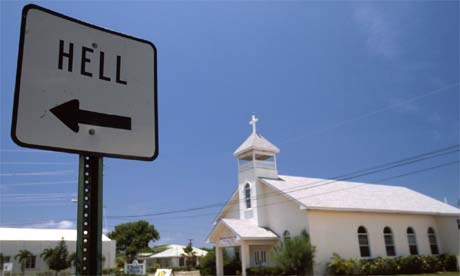
Hell on Earth. . .

It is certainly not uncommon for people who have gone through the wost horrors of this mortal life to declare their experience as hell on earth.  In the shadow of D-Day with its waves of death prior to success, we could well imagine the living hell that those soldiers endured... or the Concentration Camps... or Stalin and his purge.. or the more recent atrocities of the Khmer Rouge or the Sudan or even now in Iraq... truly hell on earth. In another sense  those waiting what will only be bad new at the hospital or a young family at the funeral home grieving a mother or father or child -- they all qualify as nominees for the title true hell on earth.

But C. S. Lewis described hell somewhat differently.  We must picture Hell as a state where everyone is perpetually concerned about his own dignity and advancement, where everyone has a grievance, and where everyone lives the deadly serious passions of envy, self-importance, and resentment.  Yes, hell is that -- searing flame that tortures without consuming, separation from Him who is the Life and the Light, punishment that knows no end... but I wonder if C. S. Lewis has not caught on to something.  If God giving someone over to sin is simply allowing them the full consequences of their choice, then hell just might be the unbridled and unrestrained selfishness, narcissism, and victimhood that seems more and more to characterize not simply a place of eternal torment but the shape of our modern day world.

Individualism that refuses community by always and in everything placing self first... where everyone has a grievance against another, a complaint against all, an excuse for their brutality, and justification for their disregard of others...  where the passions are no longer subject to the self-control of will or morality but reign in our members with impunity...  where privilege replaces responsibility and people claim what they are owed instead of working for that which is earned...

Without world war or financial collapse or personal tragedy, we dwell in a modern day living hell in which those things that once were acknowledged but disdained have become the virtues of our day.  We define everything through the lens of pleasure, happiness, sex, and self-interest.  Perhaps no more than a previous age but certainly without the public shame or embarrassment that once constrained us from living what our sinful hearts truly believed, we are exactly that world in which everyone does what is right in his or her own eyes.  A society cannot continue without conflict when values, morality, and virtue no longer unity us or inspire us.  No, there is no heaven on earth nor has there ever been but the increasing reluctance to hide or restrain our evil lusts and desires makes it possible to say that there is a hell on earth.

The remedy is not simply to seek a refuge from the world but to speak even more boldly and without regard to the consequences the truth of God's Word with love for the lost and without a gloating heart over those who may well get what they deserve.  If Christians are to be a leaven in society, they cannot aid the curb of the law by abandoning the public square nor can they help the eternal saving purpose of the Father by speaking the Gospel of His Son only to themselves.  Courage is what we need --the Spirit's gift of holy boldness not for individual glory but for faithfulness in word and deed to Him who has called us from darkness into His marvelous Light.  Ours is not merely the story of a God angry over self-centeredness, immorality, and injustice but a God whose lament over the sadness of our state moved Him to act unilaterally in His Son to bring mercy to bear in a world deserving only condemnation and punishment.  As much as Christians want to condemn what is wrong around us, we dare not forget to proclaim with at least equal vigor the mercy that redeems, restores, and rescues us from the hell of our own creation as well as the hell first created for the spirits who refused to bow the knee to the Lord.

Thursday, July 10, 2014

A bit of history. . .

The Friends of Wyneken will hold their first public open house at the 1850s-era home once lived in by the Rev. Friedrich C.D. Wyneken, a pioneer in what is now the Lutheran Church-Missouri Synod denomination.  For information or to donate, go to www.friendsofwyneken.org

By Kevin Kilbane of The News-Sentinel [Fort Wayne, IN}

The first public open house at the Wyneken House will allow visitors this weekend to tour what may be the sole remaining structure with a link to one of the pioneers of the Lutheran Church-Missouri Synod (LCMS) denomination.

The house at 11730 N.W. Winchester Road near Decatur will be open 10 a.m.-6 p.m. Saturday and 11 a.m.-6 p.m. Sunday. Admission is free, but donations will be welcomed.

"It is still under construction, but that is part of the reason we want to do this," said Ken Selking, chairman of Friends of Wyneken. The group, a subcommittee of the Indiana German Heritage Society, formed in 2004 to save the house from demolition and transform it into an interpretive center.

Visitors tour the house to see how much work has been done and how much still needs to be completed, Selking said.

Built about 1850, the wood-frame home served as the residence of the Rev. Friedrich Conrad Dietrich Wyneken and his wife, Sophie, from 1859 to between 1860-1862.

The German-born clergyman came to this area in 1838 from Germany to minister to German Lutherans on the American frontier, Selking said. He is credited with helping found or nurture a number of Lutheran churches in Indiana, Ohio and Michigan, as well as helping to start Concordia Theological Seminary in Fort Wayne.

Wyneken, who died in 1876, also served two terms from 1850 to 1864 as president of what is now the LCMS, which means the house briefly served as the denomination's headquarters while he lived in it.

The house originally stood on Adams County Road 1000N in the northwest part of that county. The Friends of Wyneken raised money to move the home in 2005 to member Dona Schaefer's farm on Winchester Road near the Adams-Allen county line.

Schaefer later donated 3 acres of land to give the house a permanent home, Selking said.

Major donations from Paul and Carolyn Wolf have helped significantly with the cost of repair work on the house, he added.

Selking estimates the Friends group has invested more than $200,000 so far in moving the house and making repairs. But he's excited about the progress.

Much of the house's exterior siding was in bad shape and has been replaced, he said. While the home stood vacant for possibly 50 years, people removed the front porch and took out most of the oak flooring and floor joists. The porch and flooring now have been replaced.

Workers rebuilt all of the home's windows, using as much of the original windows as possible, Selking said.

In the past few weeks, workers finished building the kitchen that once was attached to the side of the house, and they now are finishing the back porch, he said. The only other exterior work left involves placing a brick veneer on the exposed walls of the walk-out basement.

Inside, the house still needs a lot of work, Selking said. Portions of its plaster walls are missing. The Friends group also needs to install a water well, heating and cooling systems, and full electric service.

When completed, Selking said the house will serve as an interpretive center focusing on four areas: Germans' migration to America in the 1800s, Wyneken and his significance in the Lutheran faith, the house as a pre-Civil War structure, and how people lived in the mid-1800s.

The basement will have modern amenities, as well as displays and space for lectures, Selking said. The home's two upper floors will be returned, as much as possible, to how they would have looked in the 1850s.

How quickly the group reach those goals depends on the money they receive.

"We live and die on donations, plus the fundraisers we do," he said.

Wednesday, July 9, 2014

Making the rounds. . . but it is worth seeing again

Good ole Luther is always up for a provocative quote to stir things up...

Funny, though, how hard it is in practicality.  We preachers want to be loved more than just about anything else.  So when we preach the Law we preach it with kid gloves.  I admit it.  I am guilty of the same.

God save us from ourselves (preachers) so that we can preach the whole counsel of God without apology.

Something to think about when you sit down to write out your Sunday medication meditation.

The holy joy of faith. . .

Sermon for Pentecost 4, Proper 9A, preached on Sunday, July 6, 2014.

    If being a Christian makes you groan, something is wrong. We groan under the weight of burdens, of demands laid on us, of duties we must fulfill.  Jesus insists that He has not come to lay a burden on us. Rather, He has come to bear the full weight of the hard yoke Himself.  His yoke on us is easy, His burden on us is light.  To be sure, faith is a complication of our daily lives.  Refusing to allow sinful desire to reign in us is not the path of least resistence.  That we heard from St. Paul in the Epistle.  But faith is not a great burden; Christ has born that burden for us.
    The burden of sin, the weight of its death, the loneliness of the cross, the coldness of the grave, the emptiness of death - Christ born all of this that you and I might be free.  Free through forgiveness of our sins... Free from the fear of death to really live life...  Free from the judgment of the world on us... Free from the impossible yoke of the law...  Free from sin's captivity to do good and be holy – the good and holy we could never be!
    It is the yoke of the Law that is heavy.  Its demand on us is nothing less than perfection.  It remember every sin and forgets every attempted act of righteousness.  Its power is fear – the fear of failure and the fear of our failure exposed and our secret sins made public.  Its threat is death – the slow living death of guilt and shame and eternal death apart from God.
    That yoke Jesus bore for you and me.  He met the Law with His holiness and righteousness.  He was obedient even to death on the cross.  This He did so that you and I might be free.  The yoke of the Law IS heavy but the yoke of the Gospel is light.
    If Christ is our perfection then you and I are free from the impossible duty of pleasing God with our worthless works and our failed intentions.  If Christ is our righteousness, then you and I are free from the pursuit of holiness that always ends in failure (undone by our flawed motives, sins, and its shame).  To be in Christ means to wear the cover of His righteousness, holiness, and perfection.  This is the yoke Christ has given us to bear.
    If Christ is our sin-bearer, then there are no sins left to slip out at judgment day, no embarrassment to endure or condemnation to fear.  If Christ is our sin-bearer then to stand in Him is to be saved by Him for sure.  In baptism we put on Christ like clothing, the new clothing of a new people washed, justified, and holy.  That is the yoke we are given to bear.
    If Christ is our death, then death is done.  Oh, to be sure we will exchange these earthly rags of flesh for the new flesh He already wears but death cannot take from us what Christ has given.  But the death we die as Christians is not the death we fear.  Instead, Christ has turned our  death into a tool of His promise and the gate through which we pass to be with Him forever.
    Now if you find your faith to be a burden, then it could be because you are carrying the burden alone and walking in the law instead of grace.  If you find your faith to be a heavy load, it could be because you have taken back what Christ took from you.  Jesus wants to keep the heavy load – your sin, your death, and your life.  In exchange He offers the easy burden of His forgiveness, of His new life, and of His everlasting salvation.
    Joy is not the same as the momentary happiness at things going your way.  Joy is the relief of the sinner who knows Christ has forgiven Him, the rest of the saints whose future is made secure in Christ and His resurrection, and the peace of those who have been saved not because of anything in them but purely as a act of free and rich grace.
    Certainly that does not mean we are immune from struggles or doubts or fears.  No one can nor should we expect a life without trials.  But our focus is NOT on these things.  It is on Christ.  It is on His cross.  This is the joy that the Spirit sustains in us even when our lives appear to be falling apart.  We carry this joy by faith.  Christ has borne all things for us for our salvation – the crushing weight of our sin, its burden of guilt and shame, our fear of death that keeps us from living life. . .  Stand in Christ and not under the impossible yoke of the law.  Then all these burdens must crush Christ before they can crush you.  Stand in your baptism.  Then there are no sins left to accuse you, only Christ's righteousness to wear.  Our joy is not a fragile thing but as strong as the One who carried the weight of our sins and death.  This joy is not a face full of smiles but a conscience free from blame in Christ and a life stronger than death because of Christ.
    Faith is not a drudge but a dance.  Christ is the lead.  You follow.  Do not try to steal the lead from Him or you will face the impossible burden of the Law all by yourself.  Faith lets Christ lead.  Faith rejoices in what He has born for you.  Faith gladly wears the easy yoke and the light burden of simple trust.  We do not know the future but we know that every day we will wrestle to focus the attention from us to Christ.  This focus on Christ and what He has done is the one surpassing joy that remains when happiness, pleasure, and laughter cease.  Don’t forget it.
    The world has no right to expect perfection from us sinners redeemed in Christ but they ought to be impressed with the contentment of our hearts and the holy joy of sinners who know their sins are washed away, their lives reborn to eternal life, and their futures sealed with Him who rose to lead us to our eternal home.  This faith is not easy but neither is it a drudge and a burden.  God grant it for Jesus’ sake.  Amen

Tuesday, July 8, 2014

There is a benefit to so few Lutherans in politics. . .

Though for a long time I have lamented the lack of Lutherans in the public square, at least officially as elected members of Congress or in the White House, I am not so sure it is as big a problem as I once thought.  I do believe that Lutherans, specifically LCMS Lutherans, have much to bring to the public square both as people inside as well as outside of government, there is a dilemma faced when those who claim to be Lutheran speak and act in ways that contradict that Lutheran confession.  Witness the specter of the Roman Catholics abundantly in politics but less abundantly in step with the doctrine and witness of their own communion.

No less than Nancy Pelosi, sometime Roman Catholic, has contributed much to my growing ease at the fact that we have too few Lutherans among the ranks of senators, congressmen, and presidents.  Recently she suggested that the her bishop, Archbishop Salvatore Cordileone of San Francisco, cancel his attendance at the June 19 March for Marriage in Washington.  To be truthful, she did much more than that.  Pelosi compared those in favor of traditional marriage to bigots and hatemongers who confused vitriolic hatred as virtue.  She insisted that her church leaders should have nothing to do with such people.  The Archbishop responded in a nuanced, reasoned, and yet forceful rebuttal of Pelosi's charge and insisted that his office compelled him to march for marriage.

The Archbishop insisted that his responsibility as a shepherd of souls required his involvement in the event.  He stated that the “intrinsic human dignity of all people” not only required him to defend the sanctity of all human life, but “to proclaim the truth — the whole truth — about the human person and God’s will for our flourishing.”  “I must do that in season and out of season, even when truths that it is my duty to uphold and teach are unpopular, including especially the truth about marriage as the conjugal union of husband and wife. That is what I will be doing on June 19th,” he stated emphatically.

The Vatican’s chief justice, Cardinal Raymond Burke, said the California Democrat should no longer receive the sacrament of Holy Communion, according to CNS News.

You know, now that I think about it, we have enough Lutherans embarrassed about their Lutheranism, without giving them access to a national microphone and the full media to disown the faith they claim.  It is almost a relief to know that there are so few Lutherans among the ranks of elected officers or representatives of our government and they are generally so hidden from public view that we seldom face the kind of heresy and apostasy Rome faces from its very visible and vocal politicians.  Why, just maybe there is a blessing to be hidden among the hills in the ethnic and cultural ghettos of the Midwest and generally small towns across America.  Our people may not be much more consistent with their faith than these Roman Catholics but at least the news media does not throw it in our face day after day.  I almost sympathize with Rome in this regard.  It is clearly one aspect of their life I do not envy.

An update even before posting:

The Vatican has finally had enough of U.S. House Minority Leader Nancy Pelosi illogically insisting she’s a “good Catholic” while consistently supporting unrestricted abortionBurke iv“Certainly this is a case when Canon 915 must be applied,” Burke in a Sept. 5 interview with The Wanderer, a national Catholic weekly, CNS News reported Monday. “This is a person who obstinately, after repeated admonitions, persists in a grave sin — cooperating with the crime of procured abortion — and still professes to be a devout Catholic.”
Burke emphasized that Catholics have to at least attempt to live their faith.
“This is a prime example of what Blessed John Paul II referred to as the situation of Catholics who have divorced their faith from their public life and therefore are not serving their brothers and sisters in the way that they must — in safeguarding and promoting the life of the innocent and defenseless unborn, in safeguarding and promoting the integrity of marriage and the family,” the cardinal said.

While I am glad somebody finally told Pelosi that publicly opposing core church teaching does not make you a good Roman Catholic, it might come as a bit of relief to those charged with ecclesiastical supervision in the LCMS that we have enough on our plate with those teaching and preaching and, sigh, do not have to deal with politicians presuming to be theological spokespersons for their church and opposing what their church believes, confesses, and teaches...

Monday, July 7, 2014

Discerning the age for baptism. . .

Though by definition Baptists agree that a person should be baptized only after confessing faith in Jesus Christ, there are several views on how old a believer must be, or should be, before such a confession can be trusted and acted upon. The views range, on the one end, from baptizing a confessing believer no matter how young to, on the other end, not baptizing them until they are practically independent from their parents.

With those words, one blogger raises the specter of a dispute among the Baptists over the age appropriate for baptism.  He then shows several congregation's choices and their reasoning behind their choice.  It is all very interesting.  They range from any age (which does not, I presume, include infants but perhaps as young as 5) to in between (as young 12), to delayed semi-adulthood, whatever that might look like).  Some Lutherans might cheer the prospect of Baptists exploring baptism at a younger age -- I am not one of them.

The issue here is not one of age but of what faith is and what baptism is.  It appears that on this count, Baptists show little desire to become more Biblical in their understanding of what faith is and what baptism is.  In my mind it matters little the change in age if you still are not hearing what Scripture says and what the Church has confessed.

Faith is not knowledge, understanding, and consent.  Faith is trust.  Jesus affirms such when He insists that the little ones believe in Him and that adults must become as little children in order to enter the Kingdom.  No creative exegesis of these texts can explain why it is that from the get go the Church understood these words to mean that infants and toddlers could, should, and would be included in the baptismal command and promise.  As long as Baptists are looking for signs of faith, a rudimentary understanding of the faith, and a certain maturity to make a promise, the age of the baptismal candidate is the least of the problems.  To be sure, we do not disdain knowledge, understanding, and consent but these are the fruit of the Spirit's work within the trusting heart in whom the baptismal grace has been given and these remain the domain of the daily realm of sanctifying grace that sustains what God has begun and brings it to completion on the day of our Lord Jesus Christ.

Secondly, as long as baptism remains the obedient act of the faithful, the issue of who gets baptized is less significant than the refusal to acknowledge the Scriptural witness to what baptism really is.  Baptism saves us.  By baptism we are connected to Christ's death and raised with Him to newness of life.  Baptism places upon us the new and perfect clothing of Christ's righteousness.  Baptism is our incorporation into Christ and into the Church Christ has established by His blood.  Baptism is the means of grace by which the old man has been drowned and the new person has arisen.  The passages abound on what God does, gives, bestows, and describes baptism as but the list of passages that accord the greater responsibility to the baptized is severely lacking.  What good is it to baptize a person at a younger age if the baptism that you are baptizing into remains a work of man, a reflection of our obedience, and its efficacy is dependent upon the strength of our will and promise?

The truth is, although I submit to the decision of the Church through the ages to accept baptism in water in the name of the Father, Son, and Holy Spirit, I find it at best inconsistent that we accept the formula when the people administering that formula and those receiving it clearly do not intend to enter into the baptismal mystery clearly described by Scripture and confessed by the Church through every generation.  So I will permit myself no joy over the prospect of Baptists baptizing at a younger age and instead find myself even more confused and confounded by the actions of those who claim to have no truth but Scripture with respect to baptism.

Sunday, July 6, 2014

34 years ago today. . . updated with new picture!

At Golgotha Lutheran Church, rural Wausa, Nebraska, the Rev. Caryl Ritchey hosting Pastor, the Rev. Eldor Meyer ordaining, the Rev. Marion VonRentzell preaching, and assorted other clergy participating, the Rev. Larry A. Peters was ordained a minister of Christ's holy catholic church.... 34 years ago today!

It was as hot as h e double hockey sticks and a few of the participants were late and the Bishop was making his first trip ever to the parish but... God help us, we made it...  And it has been an exercise in unworthiness countered by the lavish grace of God that still rules the day (thanks be to God!).


Moralistic Therapeutic Deism -- Say that three times as fast as you can...

As described by Smith and his team, Moralistic Therapeutic Deism consists of beliefs like these: 1. “A god exists who created and ordered the world and watches over human life on earth.” 2. “God wants people to be good, nice, and fair to each other, as taught in the Bible and by most world religions.” 3. “The central goal of life is to be happy and to feel good about oneself.” 4. “God does not need to be particularly involved in one’s life except when God is needed to resolve a problem.” 5. “Good people go to heaven when they die.”

Now for the shock.... none of those five statements is true on the whole and even those that might be partially true are so distorted as to make the truth within them unintelligible.  Yet... many, dare I say most?, people who call themselves Christian will agree to them.  In other words, Christianity has been so shifted from its moorings on Scripture and tradition that Christians are unable to recognize the wholesale makeover of the Christian faith into something that it is not, powerless to bestow what it promises, and complete incapable of leading us to God and to the life with God that is His gift and gracious will in Christ.

Rather than me rant against this, I found an Orthodox blogger who has succinctly answered MTD rather well.  See if you do not agree...  I could not help but add a few comments in green.

1. “A god exists who created and ordered the world and watches over human life on earth.”

This is only half true. The Incarnation is the direct contradiction of this statement. It’s semi-deist, which holds the belief that God made the world then withdrew from it and watches from a distant. Christ and His incarnation directly contradict this.
[Watch out for theistic evolution and for the devaluing of the Incarnation.  It is the kiss of death to the authentic Gospel.]

2. “God wants people to be good, nice, and fair to each other, as taught in the Bible and by most world religions.” 

Again, only half true. There is NOTHING spiritual about being moral and nice and good. Nothing at all. As you know, there are many atheists and agnostics who are good people who have values and principles. 

Christ did not come to make bad men good, but to make dead men live is how my priest puts it. Our problem is not one of morality, but of ontology. Father Stephen writes, “The Orthodox contention is that morality fails to describe the true nature of the Christian life. Rather the world ontological is more proper: it means have to do with the very being of someone – their essence. What we need is not a change in behavior (morality) but a change in who we are (ontology). Christ came to change us, not reform us.
[Baptismal rebirth, the gift of new life, and the vocation of life that proceeds from that baptismal regeneration is the lens through which Christians talk.  Christ did not come in the flesh, suffer, die, and rise again to make us better people but still dead but to make us dead people alive and from that new birth proceeds the new life which embraces the commandments not in fear but in love, the new heart created anew in Christ for good works.]
Morality does not use Orthodox means – it’s all in the ‘head.’ It is rules. Ontological change requires that our very being or existence (thus the word existential) be united with Christ, His life becomes our life and thus we live a new life.” This contradicts MTD. 


3. “The central goal of life is to be happy and to feel good about oneself.” 

This thought is very pagan and hedonistic. God is not your therapist or pal in the sky who solves your problems. It’s bad theology, and it fails to deal seriously with sin and the falling out of communion with God that we have experienced. Of course the goal of our living is “the Good Life”, but I will go on the record to say that that does not mean being happy all the time and feeling great about one’s self. Nor does it mean being gloomy, downplaying the Image within us, and having too low a view of anthropology as the Calvinist would. The Good Life can mean a lot of things, and I do not want to digress too much into said topic.
[The Joel Osteens and his wannabes who profess your best life now have betrayed the Gospel with an illusive dream that always ends in death, eternal death, and eternal unhappiness.  This is not about nuance but about truth -- the truth that saves.]

4. “God does not need to be particularly involved in one’s life except when God is needed to resolve a problem.” 

This is again contradictory to Christian teaching and the Incarnation. God is involved in every aspect of our lives. 

For more on this I recommend reading Father Stephen’s book, “Everywhere Present: Christianity in a One-Story Universe.” He states the thesis that we have created this false 2 story universe where God is up there somewhere and should stay there, and that we are all down here with the physical world of secularism, which does not deny there is a god, but that seeks to put Him in His proper place in the second story where He can mind His own business and we’ll mind ours. It again contradicts the incarnation. 

The Kingdom of heaven is here and now and present. There is but one story in this universe not two. God is here and now. We have tried to push Him out, but it is never going to work. God is very active and moving. St. Luke tells us in Acts that “in Him we live, and move, and have our being”. St. Paul says in Colossians that “all things all together in Him.” I believe our very being, our existence, our very breath is held together by Him. He is alive and active in our hearts. If one is a true believer than one would never say God is there just to solve a problem. The Scriptures make it clear we are the Holy Temple in whom the Spirit dwells.
[Maybe it is time we stopped pointing to heaven when our kids ask us where God is.  The sad truth is that we have come to believe it and the false myth of a distant God whose presence must be invoked.  Vocatus atque non vocatus Deus aderit.]

5. “Good people go to heaven when they die.”

This is false because, again, as Father writes in the blog I linked to earlier, it is not about being “good” or “bad”. It’s about being alive and being in communion with God; it’s about being changed ontologically. 
[Here the Athanasian Creed (Quicumque Vult) spells it out clearly (unless we quote mine and separate the words at the end from the beginning).  Whoever would be saved must what?  Confess the Trinity, worship the Trinity, live within the life of the Trinity, as Jesus has revealed in His incarnation and the Spirit imparted whom He sent in His name.]

Saturday, July 5, 2014

Entering the Dark Ages?

It is my personal quest to stop the use of the term "Dark Ages" to describe the period from the fall of the Roman Empire to the start of the Renaissance.  While it might be descriptive of the relative relationship of the world and its state following the decline of the Roman Empire, the lack of a more centralized government, the devastation of plagues, etc...  the period was not without its light.  The idea of a Dark Age originated with Petrarch in the 1330s and was primarily a term applied to literature.  Although later applied by Caesar Baronius in 1602 to a tumultuous period in the 10th and 11th centuries, it has become common to characterize the entire period of the Middle Ages as a time of intellectual and artistic darkness -- it not in fact at least in relative terms to the periods before and after this time.

That said, I sometimes wonder if we are not entering a new age that might equally be described as the "Dark Ages."  Many of the things used to define the term for the historical epoch from 600 to 1300 are reoccurring -- at least in terms of an intellectual darkness.  Though some may insist that it is impossible to compare our "enlightened" age with such a period, there are points in common. 
  •  In contrast with a free flow of ideas, our schools (from elementary to university) are becoming places of great intolerance in which only certain ideas are tolerated.  Far from being merely a matter of political correctness, this has become a real antagonism to the religious, moral, and conservative contribution to life and the public square. 
  • The advancements of technology and industry are being used less to benefit the individual or promote virtue in culture and society and more in the pursuit of an individualism in which restraint is cast aside and the person is free to be as self-absorbed, self-obsessed, and narcissistic as is desired.  There is an extreme lack of noble virtue, sacrifice, or personal responsibility -- all of which are key to goodness in society and in the life of the individual.
  • Art is no longer in service to beauty, truth, and goodness but reflects what is most crude, vulgar, and base within the human and his culture.  Consider how nudity has become pornography and the internet the prime purveyor of cheap (even free) pornographic depiction of sex in its most crass and abusive forms.  When a glass of urine with a crucifix in it can be considered fine art, we find ourselves in a world where shock value is equated with artistic excellence.  What is there left to expose and what boundaries are there left to protect us from our crudest self?
  • Music has become a tool of personal preference and it, like art, has taken on a crude and mean streak.  What our children listen to on their ear buds are lyrics that diminish us as individuals, describe the institutions of marriage and family in hideous terms, and delight in using epithets forbidden in every other form of speech.  What are we teaching them?
  • Social media isolate us from personal contact so that we can be anonymous in our relationships with others, lie about who we are to those we call "friends", and allow us to preoccupy ourselves with the trivial even as the problems of our culture, society, family, and community grow increasingly impossible to confront.  This isolation is for all practical purposes little different from the geographic isolation of the Middle Ages once the Roman roads deteriorated and the threats to the travelers by the lawlessness of society prevented free trade and travel.
I am not Chicken Little and I am not saying the sky is fallen but I challenge those of us who would resist the pressures of a modern day Dark Ages not to sit idly by as our community, culture, and church are taken from us.  There is more at stake than ever before... 

Friday, July 4, 2014

A right place and time. . .

Here in the South it is not uncommon on the patriotic Sundays (nearest Memorial Day, July 4th, Veteran's Day, etc...) for churches to have patriotic services.  A color guard brings in the flag.  Patriotic songs are sung and perhaps a Sousa march is played.  A sermon inevitably addresses the sacrifices of those who paid for our liberty with their lives, on the need for national repentance to regain God's favor upon our nation, and on the special status of America before God.  I do not know if this is done in other nations but here it is common to weave together the fabric of faith and patriotism, at least on certain Sundays of the year.

I consider myself a patriotic American.  I am jealous about the good name and noble virtue of American exceptionalism in the world.  I am in awe of the faithful folk who have stood guard against our enemies and whose blood was shed on battlefields far and near for the sake of this nation and the freedom we value so highly.  I grew up carrying those white crosses adorned with poppies out to the cemeteries of fallen soldiers.  I still shudder when the guns of a military salute go off and tears well up in my eyes at the funerals of veterans when a soldier gets down on one knee and presents the flag to the bereaved on behalf of a grateful nation.  But there is no American flag inside the nave or chancel of this church and there should not be.

It is one of the gravest of sins to presume God's loyalty to a people or a land and to interweave faith and patriotism.  The resulting fabric will not be faithful to either cause when we assume that God is one of us (Americans or any other nation and people) and when we declare ours the only righteous land and citizenry in the world.  We do not do our nation or our faith any good by beating our chests and proclaiming God in our hip pocket.

If you are a patriotic American, then pray for the our President, the members of Congress, your Governor, state legislature, judges, mayors, and all levels of civil servants elected and appointed.  Do not pray for those you like or those with whom you agree but for all manner of leaders in the kingdom of the left.  Pray for their wisdom, for their faithfulness, for their faithful exercise of the powers entrusted to them as servants of the people, and pray for them to be people of truth and integrity who love justice, who act mercifully, and who carry the solemn mantle of public service humbly.  And while you are at it, do not speak so disparagingly of our politicians that no one of good repute and noble character would deign to serve the public good.

If you are a patriotic American, then render unto Caesar the things that are his as your civil, patriotic, and solemn duty.  Don't cheat on your income taxes and call it the great national sport.  Don't sit at home while others cast their ballots for people, initiatives, and referendums.  Don't be a silent minority or majority but engage the issues, causes, and conversations of the public square, guided by principle and faith as well.  Don't refuse to speak circumspectly or to act virtuously but show forth good citizenship as best you can until and unless to do so would violate God's law.

If you are patriotic American, then teach your children our history -- the good and the bad -- and urge them to give nothing less than their best for the cause of liberty, the rule of good law, and the common good.  Teach your children the sacrifices of those who went before them on lonely beachhead, in jungle heat, on thunderous wave, and cloudy sky to protect, preserve, and defend our freedom.  Teach your children not to squander this legacy of liberty in the pursuit of selfish endeavor or to justify lustful desire but to pursue it with honor, integrity, and virtue.  Teach your children to honor the flag without confusing flag and cross and thereby diminishing both.  Teach your children how the government works and prepare them for their own time when they must pass the torch to their own sons and daughters.

If you are a patriotic American, cheer on the defense of the defenseless, the protection of the vulnerable, the cause of the unborn, the aged, and the infirm, and challenge oppression, hatred, and bigotry in all its forms.  Honor life as precious gift and not as the prerogative of  rich, the powerful, or those who intimidate.  Refuse to allow life to be valued by the almighty dollar, the parade of accomplishments, or how productive one can be.  Protect rights without dismantling morality or diminishing virtue or surrendering right to wrong, goodness to evil.

Going to worship on a Sunday close to a national holiday and raising up the flag where Christ alone should reign helps neither patriotism nor the faith.  Be wary of those who intermix and confuse the two for they are prone to abuse one for the sake of the other.  God is not an American but live your life and profess your faith so that your patriotism will not diminish your faith and your faith will ennoble your life as citizen and both will be honored.  I know that there will be those who might take offense at what I have written but a patriot is more than someone who waves the flag a couple of times a year.


Thursday, July 3, 2014

Ya Think?!!!

What use is confession if nothing is a sin, you are not a sinner, and there are no consequences for sin?

To use a Biblical image, only the sick need a physician.

When we stop preaching sin and forgiveness, law and Gospel, then we give the people cause to ignore sin and avoid confession.  There is no daily repentance and there is no desire to become the new people God has called us to be.  It is a deadly circle...

Wednesday, July 2, 2014

The big stones. . .

Sermon preached for Saints Peter and Paul, Apostles, on Sunday, June 29, 2014.

    What a day.  Today we commemorate the big stones, two large building blocks of God's Church, Saints Peter and Paul.  We have already made Paul an honorary Lutheran for the lightening bolt revelation of salvation by grace through faith. Peter, on the other hand, is very different.  He is the guy you would go for a beer with.  Full of spit and vinegar, spontaneous, impetuous, warm, genuine, human.  We saw him when he shone and when he fell deep and hard.  Together they are the dynamic duo of Christendom.
    But as bold and strong as they two were, the rock on which the Church is built is not Paul the person with the unparalleled Jewish pedigree, nor is it Peter and his raw, unpolished brass. The rock on which the Church is built is Christ.  Christ is the rock split and the living water of baptism flows.  Christ is the rock foundation that does not move.  Christ is the Word which is rock solid, that endures forever.
    We have fought over whether Jesus meant Peter was the rock or Peter's confession is the rock on which He builds His church.  As deep as Paul was and as bold as Peter was, neither was rock material until Christ made them into the saints He declared them to be.  Apart from Christ they are but pebbles.  And so are we.
    We tend to think of sainthood as personal achievement, as personal righteousness or personal accomplishment.  Jesus does not call the saints rocks and living stones built up into His Church because they are or have done something noteworthy.   No, whether Peter or Paul or those baptized this morning, we are holy only because we live in Christ the new life of baptism. We are saints only because we live now in Christ by faith born of the Spirit.  We are rocks only because Christ brought us into Himself and in Him our weakness is made strength.
    The miracle is not that we are strong or mighty or holy but that Christ makes rocks from the worthless pebbles we are, that He shapes and cuts those raw rocks to be the living stones which He uses to build His temple.  If sainthood is an achievement there is little hope for any of us but if sainthood is the declaration of God in baptism and the grace of God at work on us, in us and through us, then saints we are and living stones through which He builds His Church.
    Paul knew this.  He called himself an apostle untimely come.  He was an enemy whom the Lord turned into the apostle to the Gentiles and a pillar of His Church.  Peter knew this.  He was a fisherman who denied Jesus three times and he is made into the spokesman for the Church, the Pentecost preacher.  Do we know this?  Do we acknowledge all the weaknesses, sins, and flaws that render us worthless pebbles to the Lord? Do we plead Christ and His righteousness alone?  Do we surrender ourselves to His grace to be shaped and formed into the building blocks He can use, through whom He has promised to work.
    How tempting it is to think of forgiveness as a commodity we are given or grace in the same way.  But forgiveness and grace are what we are incorporated into by baptism.  We do not do His work but Christ does His work through us.  His Word is spoken through our voices to a world still in darkness and sin and His love shown through our hands.
    It is no accident that in the same breath that Jesus calls Peter rock on which He builds His church to which the gates of hell cannot prevail, the Lord gives the keys of the kingdom to His Church to exercise in His name.  This is the sacramental grace of absolution to free the penitent and the solemn binding of the sins to the unrepentant.  Peter and Paul are saints only by the power of this forgiving grace.  You and I endure in this baptismal new life only because daily the Lord reclaims us from our sin and death by the grace of forgiveness – forgiveness which we offer to others in His name.
    You and I are here today only because this sacramental grace of forgiveness still works with the power to release us sinners from our sins and reclaim the life begun in us in our baptism.  Our only purpose in the world is to live out this grace first within the household of faith and then to every people and place – Christ working on us, in us, and through us.
    What makes us rock is not our education or personality but Christ, working in baptism to draw us into Himself, to wear His clothing of righteousness, and to serve His purpose in all we do. Christ is the building stone but He is also the stumbling stone.  If we disown the cross and walk away from our baptism we remain useless, worthless pebbles.
    If we hope to endure we must be rock and the only way to be rock is to live in Christ, to hear the voice of His Word, to feast upon His flesh and drink His blood in this Supper, to confess our sins and be absolved and then to speak this forgiving grace in home, family, community, and world.
    What Jesus was saying to Peter in today's Gospel is this.  Stand in me and your works stand forever.  Outside of Me, you are forgotten and nothing endures.  That is call of the Gospel today.  Stand in Christ as rocks of His making and you will endure and all your works will endure.  Stand outside of Christ,  you have nothing and you are nothing.  This is the power of grace, to turn us pebbles into stones, us stones into His temple, and His temple as the beacon of forgiveness and hope to the world.  Amen.

Giving permission to be narcissistic. . .

When we as the Church adopt certain things from the culture, we give our people permission to indulge in that culture.  Nowhere is that more true than the culture of self and individualism.  We live in a time of unabashed narcissism epitomized by the selfie.  Why, at the symphony the other night a handful of folks around me (not all of them in their 20s) pulled out their smart phones, took a selfie, and posted it to the social media right there before the sound of Brahms (it was the Requiem).

By tailoring everything in the Church to individual taste and personal preference, we have, in essence, given cover to our people and permission to be as self-indulgent as the world around them.  You worship when it is comfortable to you, in the style you prefer, listening to the music that appeals to you, in seating designed primarily for comfort, while sipping away at Starbucks or the perennial water bottle.  That is what religion has become.  And we have given permission for this shallow and self-absorbed idea of faith and life. We have ridden the horse of culture so well that even service to our neighbor is primarily about me -- the care and feeding of the volunteer and the intentional design of projects so that people will get more than they give have virtually assured our people that Jesus was just kidding when He said, deny yourself, take up your cross, and follow Me...

Not everything in culture is a hill worthy dying on but this one is.  Faith does not condone the natural narcissism since the Fall.  No, faith speaks the law to the curved in self and frees us from the prison of "me" with nothing less than the victory won by the opposite -- the suffering of the Servant Son of God who died in our place our death and payed our debt for sin.  Where is the talk of responsibility, of self-control, of growth in faith, of increase in holiness, and of sacrifice?

I will be honest here.  I love to preach the things God did in love to save us.  I will preach the law that condemns us for our sins.  But I loathe to preach sanctification.  I know I am not alone in this.  Yet part of what we must preach is the new way of those declared righteous in Christ and born of the new birth of baptism.  We have not been free to be me but freed in Christ so that Christ may begin to be all in all in us.  He died for all that those who live [because of that death] should not live for themselves but for Him...  I read that somewhere.

The worst thing about the cultural Christianity of the day, about the entertainment worship of the moment, of the appeal to self, individual choice, and personal preference is not that it fails to bestow what it promises upon the sinners in need of redemption but that it condemns us in our sins, justifies our arrogant self-indulgence, and excuses our narcissistic manner of life.  Who needs a faith to do that?  The world is already doing a more than fine job of proclaiming the gospel of desire.  Are we just justifying our jobs?  It seems to me there is only one reason for the Church -- to proclaim Christ and Him crucified.  When and where that happens (authentically), the selfie lifestyle will be exposed, challenged, and labeled for what it is -- the glorification of that which marks us as the already dead.  Unless we use church simply to plan a party for the dying to mask the reality of their mortality, we need to counter the culture of me with the one and only word that can convict us with respect to sin and deliver us with respect to new life.  That, my friends, would be the Word of the Lord, the law in its bite and the Gospel in its sweet healing.  Like the old movie, we find the taste of truth strange and prefer instead the lie that is the soylent green gospel.

Tuesday, July 1, 2014

Lutherans and the Sunday School. . .

A while back a source used the size of the Sunday School as a distinct indicator of healthiness for a Lutheran congregation.  The point was that the Sunday School needed to number at least twice the number of adults in Bible class in order for the congregation to exhibit a healthy spectrum of generations and therefore be in good position for the future.

It is a perspective born of the 1950s and 1960s when Sunday Schools were booming among Lutherans.  Even into the 1970s, Sunday School attendance often competed with worship attendance.  On my vicarage the Sunday School ran at the same time as the second of three Sunday services, thus providing a convenient way for parents to worship unhindered by fidgeting little ones in another building for Sunday School.  Indeed, it was successful -- from a numbers perspective!  Some 500+ children gathered in the gym and Sunday School rooms while the worship attendance was about 700.  But those were the boom years and things have not been so rosy ever since.

Funny, though, because Sunday School was never quite a good fit for Lutherans.  From the Catechism we expressed the desire -- dare I say expectation -- that the religious instruction of the young was the duty and obligation of the parents.  In America the Sunday School was not so essential when most of our children went to the Lutheran parochial school of the parish and received their religious instruction there.  But we Lutherans have never been one to ignore an idea when it comes to us from others.  So we bellied up to the idea and owned it for a time.  It became more essential when numbers in the Lutheran school dropped and when we began mission congregations without schools during the great boom years of church planting in the 1950s and 1960s.  What else were we to do with kids who were not in a Lutheran school and whose parents had largely abdicated their responsibility as the primary teachers of the faith?

Now we find ourselves in the position of providing nearly all the religious instruction of the young through the congregation -- Sunday School, catechism class, and youth group.  Little is expected from the home and many of our parents do very little there to impart the faith -- at least in terms of instruction.  The Sunday School became our lifeline... until things changed again.

What changed?  Lutheran birth rates dropped.  We had less children to educate in the faith.  Lutherans divorced.  Their children were with the custodial period only every other weekend and often gone during the summer as well.  Lutherans took up outreach.  The unchurched changed from being lapsed Christians baptized as children and raised in the Sunday School into people without much of any religious background for whom Sunday School was a concept as foreign to them as the creed.  They did not immediately warm up to the value of Sunday School instruction for their youth.  Lutherans found alternatives to church and Sunday School.  They found recreational choices, enrolled their kids in sports programs on weekends and Sunday mornings, and found Sundays a convenient time to sleep late and reduce religious commitments to worship only.

My neighbors, the second largest Baptist church in town, have also struggled.  Once their Sunday School attendance was advertized as the most vital statistic of their vitality and growth.  They found the same problems Lutherans did and now their folks are not necessarily there every Sunday, for Sunday School and worship, or for the evening services of Sunday and Wednesday nights.  Many developed sports ministries of their own in an effort to reclaim youth to the church (and, their parents, of course).  But even the mighty Southern Baptists have seen numbers decline.

My own hidden desire would be to ditch Sunday School and go back to the idea of a Lutheran home being the center of instruction in the Scriptures and catechism and where Lutheran kids are educated in Lutheran elementary, middle, and high schools.  But that will not happen.  So I am stuck with an institution Lutherans did not invent and are not fully comfortable with yet we cannot discard or our youth will not be instructed as they should in the great stories of the Bible and the six chief parts of the Christian faith.  I kind of feel like the diabetic who must take the pill or shot to live but wishes every day he did not have to....  I suspect I am not alone in my ambivalence to Sunday School.

Monday, June 30, 2014

Productivity Tips. . .

These were forwarded to me by someone. . . At first I ignored them but as I thought about them, they are not bad...   You can follow the link and tell me what you think...


6 Tips to Being More Productive:

    Manage Your Mood
    Don’t Check Email in The Morning
    Before You Try To Do It Faster, Ask Whether It Should Be Done At All
    Focus Is Nothing More Than Eliminating Distractions
    Have A Personal System
    Define Your Goals The Night Before


Manage your mood.  It is easy for me.  I tend to be a morning person -- waking up each day about 4:50 am.  I like to start quietly -- a few chores on my way to the kitchen and Greek yogurt, Honey Nut Cheerios, and coffee.  Most days I am pretty content to begin the day.  It is not necessarily something I do to prepare myself but there is something to the idea that you choose your mood more than events and people choose or change it for you.

Once I had my email constantly going on a second monitor of my office computer system.  I have five email accounts.  Now I check the one that gets "subscription" kinds of stuff once a month or maybe twice.  And progressing up to twice a day for the account I use the most.  I agree.  Email can be a terrible slave and it is a great opportunity to be a jerk.  Take it easy here (a lesson I learned the hard way).

Faster is not quicker.  I have learned to do things when I can and am moved to do them.  I cannot schedule creativity and I cannot tackle heavy reading when I am weary.  So it means that I do things when I am ready to do them but I do give myself time to make sure I am ahead of the deadline. 

Distractions -- remember the movie UP and the dog and squirrels?  We are easily distracted -- especially when we don't want to do what we think we must.  Distractions are unavoidable for a Pastor -- but there comes a time when you realize that distractions are a problem because you really do not want to do what is on your schedule -- that is the time to deal with them.  By the way, I am alone in the office from 6 am to 8 am and this is generally the most productive time of my day -- minimal distractions and a fresh mindset!  Works wonders -- really, it does.

Have a system.  For years I struggled to adapt to personal systems created by others.  It ever worked.  I kept up with them for a while and then not only ditched them but got lost in what I had done, needed to do, and did not need to do.  I have a system -- sometimes no more than a schedule -- for tackling the things that I must do regularly so that I get them done and am ready when the surprise of life happens in the middle of my well planned out day.

Define your goals -- ahead of time!  One of the first things I do about 6:30 am, after my devotions and prayer, is figure out what is on my plate, what must be done, what must be done right now, and what can be delayed.  For example, Mondays I NEVER schedule appointments -- it is my day to deal with all the messes of the weekend, the tidbits of information found out on Sunday, and the aftermath of many meetings (most often held on Sundays after worship in this congregation).

I will tell you what helps me most of all is experience.  The reason I find this aspect of my life and ministry easier is that I have come to know and expect -- sometimes anticipate -- the things that normally govern a Pastor's week and it helps when you know what is or might come up.  I am NOT saying I am on top of everything but I have minimized the number of immobilizing crises to a few.  For this reason, I would not want to start all over again at ordination and try to figure out for the first time what I have learned over repeated experiences over many years.  The sage part of wisdom is often that you have been through it before -- not something the wise can take credit for at all but the Spirit at work in our lives teaching us.  I thank God for that aspect of age even as I sometimes lament that it took so long to learn the easy stuff.

Let me add one more point to the author's -- take your ministry seriously but not yourself.  In other words, do not treat lightly the calling to preach, teach, baptize, absolve, commune, visit, counsel, advise, and pray.  Do take yourself lightly -- it is always of great comfort that God could use Balaam's ass and so He can use me, in spite of my faults, foibles, and failings.  I do not worry much about people not honoring me but I am jealous for the office of the ministry.  I do not worry much about what people say about me but I take very seriously what they say about God's work in us, among us, and through us.  The Church is not mine and I do not own it.  I steward it for a while and, God willing, I will pass it on to another after having been as faithful as human frailty allows during my own tenure as undershepherd.  I am content about that and know that the greatest hindrance to my work for the Lord may be my own uninhibited self.  Therefore any good Pastor knows the value of self-control --- at little self-deprecating humor does not hurt either.