If you can stomach it, here is the whole thing. . .
Friday, March 15, 2019
And Jesus wept. . .
If you can stomach it, here is the whole thing. . .


Thursday, March 14, 2019
The Outcome Was Never in Doubt. . .

The battle of temptation fought between Jesus and the devil in the wilderness was no suspense thriller. You did not need to hang on the edge of your seat. Jesus was not going to lose. Jesus was never going to lose. Because Jesus is sinless. Jesus is sinless not because He tries harder than you or I try to be holy but because He is the Son of God. While we try to point out the similarities between Jesus and Adam or Jesus and us, it is more a study in contrasts. Adam could sin – the question was whether he would or not. Jesus cannot sin – the issue is not if He could but why He cannot.
The devil is always in a losing position with regard to God. He did not have a chance in hell, so to speak, to overcome the angels in the battle for heaven told in Revelation. He did not have a chance in hell to overcome the Son of God in the battle for earth. It was never a dramatic version of what you and I face but the unique battle between the Son of God and the devil. It was not even close. And it was never a fair fight.
When the devil tempted Adam in the garden, he was still licking his wounds from being banished from heaven in the unsurprising defeat of the devil and his angels by the mighty forces of God. When he came to earth, the devil found himself in a better position. Though Adam could have resisted the devil, he did not. He was not hungry like Jesus or even weary like Jesus. He had heard the voice of God. But Adam had already failed by the time the fruit was eaten.
He had not loved God above all things or loved Eve as himself. He has not faithfully spoken the Word of God to the woman whom God had given Him and so he failed not only Eve but the Lord and himself. He was seduced not by weakness but by delusions of grandeur – dreams of being like God. In the end he became like the devil. And in the end, he lost everything. He lost the loving wife God had given him, the garden in which to fulfill his creative purpose, and the God who had made and preserved him. All for a lie. In the end, Adam was a hollow man, one who did not know who he was or why he lived. He knew guilt that he was not created to know and he knew death that he was not created to experience.
So he gathered up the woman and ran to hide from the God who had given him life. He was sure God would destroy him and did not even realized that he had already done it to himself. So when Jesus was tempted by Satan, it was not a battle of wits but the triumph of truth and life over lies and death. God was not about to let the devil win. Jesus had come to fulfill the promise of God that Adam had all but forgotten – the promise of mercy and forgiveness and life. The first step was to meet Satan on his own turf and steal from the devil his bragging rights. God had come in Jesus Christ to take back Adam and all his heirs – back from sin and its guilt, back from death and its grave, and back to life and the triumph of hope.
It was not that the devil did not really tempt Jesus. The temptation was real. But Jesus was not Adam. Jesus is pure and holy. He seeks not Himself or His own way or His own glory. Jesus is not deluded by imagination but is directed by truth. He will not participate in the devil’s conversations. In every case, Jesus ends the devil’s dialogue with the Word of the Lord that endures forever. Jesus does not speak this Word like someone who has memorized it (like we do) but as the author of that Word who speaks what He knows to be true forever.
The devil cannot win but he does not know this. So he tries and fails. And he goes home with a chip on his shoulders. What once worked in Eden does not work any longer. So all the devil will do is to try to extract a cost from Jesus. He will haunt Jesus and threaten Jesus so that the Lord of life cannot forget that He must suffer in order to redeem the fallen world. The devil thinks He can tempt Jesus away from His saving purpose but Jesus is in it for the outcome, for the salvation of our souls.
So this is not about what Jesus might do but what God cannot. God cannot forget YOU. He cannot forget that sin tore you from Him. He cannot forget the death that claims you. He cannot forget what His love promised Adam and Eve in the garden so long ago. And in the great surprise, the devil has unwittingly become a pawn in God’s plan of salvation. The tempter has become the tempted. The manipulator has been manipulated. The liar has been cornered by the truth. Jesus is still tired, still weary, and still hungry but the devil is lost. Like an animal in pain, he will lash out to hurt anyone in his path but the outcome of it all is not and was never in doubt.
Therein lies the miracle. Jesus suffers and you are relieved. Jesus aches and you are healed. Jesus dies and you are given life. Jesus does not lose His righteousness but you are made righteous in Him. This was the first battle in the great war of Your redemption and you are already the winner. And at the end, it is the devil who limps away and Jesus who remains.
The angels come to Him and for Him because God has appointed them for this service. And because they come to Him, they come for us, doing the Father’s bidding in us and for us. And you and I discover that man does not live by bread alone but by every Word that proceeds from the mouth of the Lord. You and I discover that the Lord’s love cannot be tested and it cannot be lost. You and I discover that the cost of salvation is free but only because Jesus paid it for us. That is what we learn from all of this. The devil knows God’s Word but when he speaks that Word it is twisted and turned upside down. When Jesus speaks that Word it speaks clearly, bluntly, and directly to seek and save those who are lost.
Jesus is tempted like us to show He is not us. He is the holy and righteous One, the Son of God long promised, the voice who speaks the Father’s Word, the God who fulfills that Word, and the Savior who suffers to give life and hope to the sons and daughters of Adam. We stand in awe not that Jesus did not sin but that God has loved us with such a love, saves us despite knowing our sin, and will not be distracted from His saving purpose.
And now, what about you? Will you stand in Christ and with Him? Will you give up the false misleading dream for the reality of the God who loves and saves you? Will you rejoice that the Lord has done all things well for you, to save you? Will hope in Him who gave His life for you and calls you now to live in Him? The devil will tempt but Christ will still be there for you. And when the devil is gone, no one is left to accuse you. The only one left is the One who died for you. And He who spared not His own Son but willingly gave Him up for us all, will He not now give us all things in Christ? That is what we learn today. He has given us all things and He will give us all things. That was never in doubt. Amen.
That you may have confidence. . .

So we have ended up at the place where the Church is loathe to criticize the politicians who govern when their governance conflicts with God's Word and will. We have ended up in the place where freedom of religion has become freedom from religion, consigning the Christians to a right of private worship but attempting to silence them in the public square. We have ended up at the place where we are so dependent upon tax exemption for our property, sales tax exemption for our work, and charitable exemptions for our workers and our people's contributions that we are easily bullied into silence by the threat of their removal.
In all of this we face a real decline of warm bodies in the pews, of families and children, of church work vocations, of financial viability for many congregations, and of a real sense of purpose and hope. But most of all, we face a crisis of confidence. In our lack of confidence we have borrowed business models based upon consumer preference and satisfaction over preaching the Word in season and out and looking like the Church on Sunday morning. In our lack of confidence, we have accepted the conclusion that it is really all about money and we don't have enough. In our lack of confidence we have accepted a destiny in which survival depends upon our silence in the face of the acceptance of sin and immorality and it is a cost too many are willing to pay.
In the beginning of Luke's Gospel he gives the purpose for his writing. It seemed good to me, having followed all things closely for some time past, to write an orderly account for you that you may have certainty concerning the things you have been taught. Luke understands his is not the first written witness. He purposefully directs his readers to the issue of an orderly account (not meaning here neat and tidy but chronologically ordered). But the key is in two words. One is certainty (or confidence) from the Greek asphaleia (ἀσφάλεια). It means firmness, stability, certainty, undoubted truth, and security and safety from enemies and danger. I have no crystal ball to see what will happen in the next ten minutes, much less ten years, but what I do have and what you do have is confidence -- not as a personality trait but confidence in the catechesis or teachings of the Word of God. That is the second word, κατήχησις, which means instruction by word of mouth. Here it is good to remember that nowhere in the New Testament did the apostolic writers envision their words to be read alone apart from the company of the faithful nor did they conceive of it being a private word or a word for the eye. It was a preached and taught Word of God that they understood they were delivering upon a page and they fully expected people to hear that Word in the ear and, by the Holy Spirit, to be brought to faith and confidence in the things written for their instruction.
Before the folks in the pews can have this confidence and act upon it, they must have leaders in the Church who act as though they have confidence -- even amid their own personal doubts and struggles. Theirs is a ministry of a certain trumpet. They are to lead with confidence not only in the church’s teachings, drawn from the Word of God, but in the capacity of the Church even in this present age of skepticism and indifference to witness and vindicate those teachings before threat and under persecution -- especially from a hostile culture, a government, or political leaders. Confidence alone is surely not all we need for this day but it must be precondition for the rebirth of the Church from the chains of doubt and fear.
As a sideline, several readers have sent me links to the visions of Our Lady at Fatima. Rome has always had a fascination about the apparitions of Our Lady at Fatima. Much of this is cloaked in mysterious prophecies. According to some, then Cardinal Pacelli (later Pius XII) is said to have hinted at some of the content to one of his closest friends, Count Galeazzi. While granting no weight to the Fatima oracles, what is hinted at does not need much vision to see and predict. A reported English translation says:
“Suppose, dear friend, that Communism
is the most visible among the organs of subversion against the Church
and the Tradition of Divine Revelation. Thus, we will witness the
invasion of everything that is spiritual: philosophy, science, law,
teaching, the arts, the media, literature, theater, and religion.
I am concerned about the confidences
of the Virgin to the little Lucia of Fatima. This persistence of the
Good Lady in face of the danger that threatens the Church is a divine
warning against the suicide that the alteration of the Faith, in its
liturgy, its theology, and its soul, would represent.
I hear around me innovators who wish
to dismantle the Sacred Chapel, destroy the universal flame of the
Church, reject her ornaments, and make her remorseful for her historical
past. Well, my dear friend, I am convinced that the Church of Peter
must affirm her past, or else she will dig her own grave.
I will fight this battle with the
greatest energy on the inside of the Church, just as outside of it, even
if the forces of evil may one day take advantage of my person, my
actions, or my writings, as they try today to deform the history of the
Church. All human heresies which alter the word of God are so that a
greater light might appear.
These underdeveloped peoples will
save the Church, Eminence. A day will come when the civilized world will
deny its God, when the Church will doubt as Peter doubted. She will be
tempted to believe that man has become God, that His Son is only a
symbol, a philosophy like so many others. And in churches, Christians
will search for the red lamp where Jesus awaits them, like the sinful
woman crying out before the empty tomb: ‘Where have they taken Him?’
Then, priests will rise up from
Africa, from Asia, from America, formed here in this seminary of the
Missions, who will say and who will proclaim that the ‘bread of life’ is
not ordinary bread, that the mother of the God-man is not a mother like
others. And they will be cut to pieces to testify that Christianity is
not a religion like others, since her head is the Son of God, and the
Church is His Church.”
Now I have no idea what to make of these words and do not quote them to lend legitimacy to the visions but it does not seem to me that anyone would need a revelation from God for Christians to see this same future predicted -- that the greater enemy to the faith is not from those outside but from those inside, tinkering with the truth, turning worship away from God to self, forgetting the witness of history and tradition, believing that man is the only real deity, and embarrassed by the Scriptures. The last line is one of the things now almost universally accepted by the more progressive wing of Christianity, a sell out of objective truth to subjective feelings. You and I have seen the witness of Africa and Asia and their resistance to the decadence and emptiness of the West. And all of this rings true the question of Jesus when He returns, will He find faith? No, in our day we need less people of vision than leaders who have confidence in the things into which they were catechized so that they might lead the people in the pews to believe and trust the Word of God now more than ever.
Wednesday, March 13, 2019
The key. . .

If a case can be made that the liturgy is key to understanding error in the church -- especially the loss of the liturgy and the use of worship forms that either conflict with or distract form the confession of the faith -- then it will be the restoration of the liturgy which will be key to the rebirth of the faith as a whole. Let me say that again. Far from being something indifferent, it was in liturgical loss that the decline of the faith began, then and now, and it will be in the recovery of the liturgy that the renewal of the faith will begin (as it did then, so now).
I have made the case before that liturgical change must be incremental and deliberate. Certainly, the changes that were the fruit of the liturgical movement now 50 years ago or more may not have been intended to engender a breach but they did. Even when the changes were less radical than Rome, say in the liturgical changes that affected Lutherans, a distinct change was soon followed by radical change. Among some Lutherans, the words of the liturgy (including the creed) became tradition unconnected to what is believed and among others the liturgy itself was seen as an impediment to outreach to the dechurched or unchurched who had no preference for it. In both cases, the distance from the liturgy and the faith believed, taught, and confessed has been a disaster for every church body.
Just as liturgical change accompanied, even if it did not cause, the rupture between the two lexi of credendi and orandi, the recovery of the liturgy will be the key to the restoration of the integral connection and its life lived out among the faithful on Sunday morning. It is not simply a matter or recovering doctrinal integrity but of recovering how it is that this doctrine is confessed and lived out within the life of the church for the faithful -- the liturgy. The liturgy is not and can never be itself a thing indifferent. The elaborate or simple ceremonial that accompanies it can rightly be called adiaphora -- not something indifferent but simply that which cannot bind the conscience -- but not the liturgy itself. We certainly do confess the faith but we also pray it on Sunday morning -- as a people who believe that God's Word and Sacraments deliver to us more than symbolism but efficaciously deliver what they sign and say to the people.
The liturgy is not a matter of personal taste but of the integrity of doctrine and life. Without such a deep and profound connection, the faith becomes cerebral and worship merely a matter of the heart. This is disaster. So, if I may, let me suggest that any renewal of the faith is inherently a renewal of worship, of the liturgy. If we got into our mess, at least in part, by introducing forms or an absence of forms in order to appeal to preference, then we will get out of this mess by restoring the form, the liturgy, and learning again to pray its words as well as believe and confess them. If the faith is the coffee, the liturgy is the cup from which we drink it. When the cup leaks, the faith will be lost.
Tuesday, March 12, 2019
Lead us not into temptation. . .
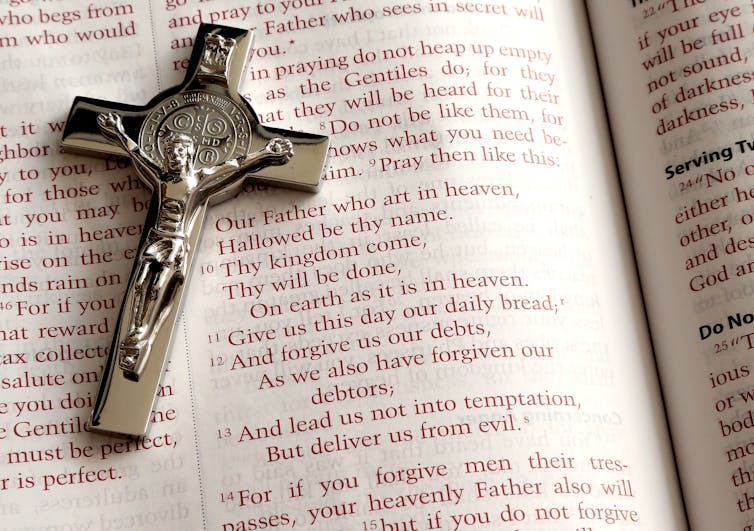
“And Jesus, full of the Holy Spirit, returned from the Jordan and was led by the Spirit in the wilderness for forty days, being tempted by the devil.” (Lk 4:1)
We pray it every Sunday, “lead us not into temptation.” With this petition we ask God to grant us divine protection and to guard us against the devil and all his schemes to get us to sin. But why do we need to pray this way? Hasn’t God defeated Satan? Hasn’t He already given us salvation in Christ? Yes He has, but Satan isn’t one to give up easily. He’s still on the prowl looking to devour us (1 Pt 5:8).
The temptation of Christ is always the Gospel reading for this first Sunday in Lent, so we’re familiar with it. Jesus was in the wilderness, fasting for 40 days. And the devil comes to Him, tempting Him to turn stones into bread. But Jesus resisted, quoting Scripture: “Man shall not live by bread alone” (Lk 4:4; Dt 8:3). The devil’s second temptation promised Jesus all the glories and all the authority of all the earthly kingdoms if He would just bow down to Satan. Again, Jesus resisted, quoting Scripture: “You shall worship the Lord your God and him only shall you serve” (Lk 4:8; Dt 6:13). Finally, Satan took Christ to the top of the temple, telling Him to jump because God promises in His Word that no harm will come to His people. But again, Jesus resisted, quoting Scripture: “You shall not put the Lord your God to the test” (Lk 4:12; Dt 6:16).
We know this story. We know all the temptations that Satan threw Jesus’ way. But do we really think of these as temptations, temptations like the ones we face? After all, it’s Jesus, the Son of God; of course He would resist Satan. Of course He wouldn’t give in. He saw the tempter right there in front of Him. If we too could see Satan, then we’d also be able to easily resist him...right? Wrong.
Satan’s crafty. He hides himself in his temptations. He covers up his true intentions, his desire to take you away from God. Satan is the great deceiver, the father of lies (Jn 8:44); and he dresses up his temptations to make them look good.
First, he appealed to Jesus’ hunger. Christ was without food for 40 days. Just imagine how hungry you are after 1 day of not eating. The temptation to satisfy this hunger was real. The temptation for Christ to use His divine power to satisfy His hunger was real. But when you look at this temptation, it doesn’t really look like temptation. Food isn’t bad. Eating isn’t bad. It’s how God made us. And Satan telling Jesus to eat is a normal thing. It looks like a good thing; and that’s the first way that he dresses up temptation; he makes it look good.
He did this in the Garden with Adam and Eve. He convinced them that eating the fruit which the Lord had forbidden was actually a good thing. Satan does this with us. The lust of our heart he makes look good by convincing us that we’re being true to our heart. The hurtful words we say he makes look good by convincing us we need to share our feelings. The neglect of helping those around us, like our family and friends, he makes look good by convincing us we need to take time for ourselves.
The second way Satan dresses up his temptations is that he appeal to our wants and desires. Again, he did this with Christ. He promised Jesus all the glory and all the authority of the all the kingdoms on earth. Who wouldn’t want that? He did this with Adam and Eve, appealing to a desire to be like God. And he does this with us. We’ll do just about anything if it will give us what we want, even if it only promises to give us what we want. The temptation to join in on gossip promises us friends. The temptation to withhold our offerings from the Lord promises us more money in our pockets.
Finally, the devil dresses up his temptations with God’s Word. He twists it. This happens when Scripture is taken out of context. The devil loves this because it keeps us from knowing the truth. “Judge not” (Mt 7:1-3) turns into “Don’t talk about sin.” “Work out your own salvation” (Phil 2:12) turns into “If you try hard to be a good person, that’s good enough.” “Worshipers must worship in the Spirit” (Jn 4:21-24) turns into “I don’t need to go to church to be a Christian.” All of these lies are disguised as God’s Word, and the devil loves it because it leads us away from God and the truth of His Word.
These are hard temptations to resist. Every day we encounter them. Every day the devil comes at us. Every day he tries to pull us into sin and death. Therefore we must be vigilant. We need to be aware of Satan’s temptations, and we must continually pray for the Lord to deliver us from these temptations, because on our own, we’d give in to them every time.
When Christ was tempted by Satan, He faced real temptations, but the outcome was never in question. Christ was going to overcome them, because that’s what had to happen. It’s interesting that in all the accounts of Jesus’ temptations, the evangelists say that it was the Spirit that led Jesus into the wilderness to be tempted. It was according to God’s plan of salvation that Christ be tempted, not to give you an example of how to overcome the devils entrapments on your own, but to overcome them for you.
Jesus endured these temptations for you. He overcome them for you, so that He could rescue you from the death of your sin; so you could be forgiven when you give into temptations. Adam in the Garden listened to the devil’s lie, plunging the whole world into death. Jesus, the second Adam, did what our first parents couldn’t, He did what we can’t. Jesus resisted all the devil’s temptations so that He might be sinless, so that He could be the perfect sacrifice, and through His sacrifice give you life.
Christ has overcome. The devil’s been defeated, and Jesus gives you the spoils of that victory. Our sin plunges us into death, but Christ brings you to life. He undoes everything that Satan did. He redeems you and gives you the everlasting life that was always God’s plan for you.
Christ has defeated Satan and promises you salvation. This salvation is freedom from sin and death, but not freedom from temptation. Satan still comes after us, and he comes hard. Therefore, we must stand firm, with the Word of the Lord in our hearts and on our lips. We must prayer for Christ’s protection, “lead us not into temptation.” Jesus endured Satan’s temptation. He overcame them for you, so that you might be saved from. So when you feel the crafty pulling’s of the devil, say with confidence, “Be gone devil, for I am a redeemed child of God, and in Jesus I have salvation.” In His name...Amen.
Outside the Body of Christ. . .
:max_bytes(150000):strip_icc()/CatholicHistory-56a146925f9b58b7d0bdba25.jpg)
Rome for many years lived both by the promise and threat that its judgment was the judgment of God and that to offend Rome was to suffer the possibility of being removed from the Body of Christ and booted from the Kingdom of God, now and forever. In the mid to late 20th century these words were softened. Christians outside of Rome were talked of as separated brethren (and, we presume, sistren, to be politically correct). It was a seeming admission that it could be more than a felicitous inconsistency that the Spirit might bring about saving faith outside the structures of the Roman Church. That evolved into the idea of ecclesial communities -- now, not churches, mind you, but the semblance of church and, it appeared, more than merely separated brethren. Then there was Pope Francis admission that God willed a diversity of religions (read here back in February). Certainly if God willed a diversity of religions (not simply versions of Christianity) that ought to give some stature to those creedal and confessional non-Roman Christians, right? You might think so. But perhaps not so much.
Catching up on the gossip about Rome, I came across a blogger who began his post with these words: I do not enable comments which claim, for whatever reason , that PF is not (or might not be) the true Bishop of Rome. I do not wish, on the Day of Judgement, to have to explain my collusion in encouraging souls for whom Christ died to separate themselves from His Body the Church. That makes it a bit clearer. As a confessional Lutheran, certainly a profound distinctive in the plethora of churches that are nominally bunched under the term Protestant, I stand out (for good or for ill). It is clear when you come to my parish or hear me preach or read this blog that I am not of the stripe that disavows objective truth or disdains orthodoxy or promotes personal truth or suggests feelings can stand in for faith believed and confessed. Yet, when push comes to shove, my life is outside the life of the one true church and I live, as it were, outside the Body of Christ -- simply because I am not in communion with the Bishop of Rome. Think about this.
There are those who love to call me a Romanist or a closet Roman Catholic (for I have done nothing to hide my claim to be catholic and apostolic as the Augustana claims as well). They love to joke about chancel prancing or an inordinate love of vestments and ceremonies. If you think this is what Rome is and this is her central truth, you are a greatly mistaken. Do not be foolish. Luther's quarrel with Rome had nothing to do with a chasuble, chanting, or ceremony. It has everything to do with the central question of authority and whether that authority is posited in Rome, in the Chair of St. Peter, in its current occupant, and in the teaching magisterium and conciliar structures that both express and support Rome's claim to be the exclusive Body of Christ. Of course, it may be a bit muddier when it comes to the Eastern Church, but make no mistake, if you are not in Rome, you are not in the Body of Christ -- at least as Rome sees it.
I have many friends in Rome, some of them former Lutherans. They always assure me that this is but a technicality, this exclusive claim to be in communion with Christ and to be His very Body on earth but every now and then it comes home. Under the niceties and softer language of the modern era, the truth about Rome is that Rome is exclusively the Body of Christ and those of us who live outside its communion live in something more than a fractured state with God but under the threat of eternal damnation. If you are a Lutheran who thinks Lutheranism is fighting about what vestment to wear or whether or not to use incense or to chant, you need to wake up. The issues that divide us rest upon the central foundation of authority -- the Word of the Lord (not according to personal reason or individual magisterium but in the greatest sense of the catholic always and everywhere) or a papacy and its structures that ultimately sit above the Word, may add to what is in that Word, and have an undefectible truth that does not depend upon that Word.
Monday, March 11, 2019
The threat is real. . .
So began a Wall Street Journal article on the threat to America's colleges, especially those smaller, poorer, and religious schools who are finding competition from online degree programs a hefty challenge. Clayton Christensen of the Harvard Business School thinks that half of America’s colleges will close due to the same threat Guelzo, author of the WSJ article, thinks America’s 1,800 private colleges are especially vulnerable. In the case of Selma, the student body dropped by 43%, the school was deep in debt, and it became no longer financial viable. In other words, it was bankrupt. It may be the tip of a growing trend.‘Total Liquidation Sale! Everything Must Go!” the signs screamed. Which was odd, because this wasn’t a furniture store or a carpet warehouse. It was Concordia College, a small historically black private college in Selma, Ala., and it was selling office equipment, classroom articles and athletic apparatus.

Of course, there are many threats -- online degree programs, cheap state schools, state programs to reduce tuition cost or even make it free, and the lack of big endowments. But Guelzo said the threat may be much simpler -- demographics. The sagging birth rates reduce potential applicants (he says 450,000 during the 2020s) mean that competition for the remaining pool of candidates will be fierce and the big schools are in a much better position to weather the shrinking population and have a diverse income stream to support their efforts. On the other hand, private colleges must raise money through tuition increases that will effectively price them out of the market. Tax dollars that support public universities mean that the student population does not have to bear the entire cost as they do in private schools. Plus the drumbeat of free college for all indicates the threat is not only real but is moving quickly to hamstring the recruitment at the vast majority of private colleges.
So the threat that forced the closure of Concordia College, Selma, was not unique to that school and is a very real threat to most of our Missouri Synod Concordias. While some (Mequon) have done an effective job of adding programs and recruiting students, it also has (apart from the Ann Arbor campus) a very small population of those training for church work vocations. So it is succeeding by inventing a purpose different from what it was created by the church to do. Unfortunately, the other Concordias are not as well positioned, have smaller student bodies, and are much more vulnerable to the threats faced by all private and especially religious colleges and universities.
In the LCMS there is a very strong desire to see our Concordias prosper and to find a way to reinvigorate their role as trainers for the church workers of our future. That said, it is by all accounts an uphill battle. Some will inevitably have to close and others will perhaps find ways to build programs and recruit students to a more diverse campus and all of them will have to figure out what to do to compete with other online degree programs. The Synod has already seen this threat and is working on it but it may not be possible to maneuver around the obstacles in their path and leave these decisions to a triennial convention cycle. I wish I had a crystal ball to see into the future but all I have is a basic understanding of the potholes facing those Concordias and the church body that has always seen these institutions are auxiliaries to the primary mission of the LCMS. In any event, it will not be a simple matter for our leaders to work through and it will require us to make some hard decisions -- sooner rather than later.
As a product of the LCMS system of junior colleges, a senior college, and seminaries, I am convinced of the value. But I fear it is a jewel too pricey for us to keep in anything at all resembling what I knew or even what we see in place right now. This is a time of prayer and angst and yet we meet it with the confidence that God will work among us to find the right way and to make the hard decisions. The last thing we need is politicking that polarizes the state of the church that must make such decisions.
Sunday, March 10, 2019
Voices of death. . .

It is clear that the Democrats have become the party of choice -- a sacred tenet in their game plan to regain the White House and Senate and control the destiny of our nation. It is also clear that the Republicans are the part of life -- a sacred plank in the platform that appeals to their base and to their vision of regaining the House and keeping the Senate and White House. But somewhere under this all I am abhorred by the way we argue and talk as if this were all theoretical and not about actual children, killed in the womb, for the same of something as difficult to nail down concretely as the mental or physical health of the woman.
How far will such a future take us? Where will it end? As I have said before, we have lived with the horror of safe, legal, and free abortion long enough to end the lives of one and half the times the population of Canada and it is clear that the longer this continues, the harder it is to turn it back. It has, much to my regret, become the norm for most Americans. While it is easy to see how someone can support something in theory, it is a grave shock to see how people can support in specific detail how a child might be killed moments prior to birth or moments after (if the mother has a change of heart).
We cry out that guns are killing our kids but guns have killed very few in comparison to the many who are routinely taken from life and consigned to death either by medical procedure or pill. In fact, many of the same voices crying out against the school shootings are crying out for the right to killing the unborn to continue without any kind of restriction.
Sadly, the media is against any honesty in this discussion and many churches would prefer the whole thing would just go away rather than take a stand. The fear of offending people has become the more powerful motivator over the fear of offending God. We are surrounded by voices of death shouting down every reasoned argument or rational defense of life. We will not debate our way through this and we will most certainly resist exile from the public square and persecution from those who control official media and social media but the cause is more urgent now than ever.
It is probably going to offend many when I say that abortion will need to become not one of many but the signal issue and the single issue for those who defend life. There are few elections in the near future but we must begin now raising up the cause of life as the ONLY issue about which we cannot compromise -- whether in the election of those who serve and lead us or in the legislation passed and enforced by those who serve and lead us. Do we really want to be on the same side as North Korea and China and Herod of old when it comes to our appreciation for life?
Saturday, March 9, 2019
Coming out for all the wrong reasons. . .

NBC has the story of one of the sources of that article and how he came out to his parish.The closet of the Roman Catholic Church hinges on an impossible contradiction. For years, church leaders have driven gay congregants away in shame and insisted that “homosexual tendencies” are “disordered.” And yet, thousands of the church’s priests are gay.
Fewer than about 10 priests in the United States have dared to come out publicly. But gay men probably make up at least 30 to 40 percent of the American Catholic clergy, according to dozens of estimates from gay priests themselves and researchers. Some priests say the number is closer to 75 percent. One priest in Wisconsin said he assumed every priest was gay unless he knows for a fact he is not. A priest in Florida put it this way: “A third are gay, a third are straight and a third don’t know what the hell they are.”
The stories describe poignantly the painful accounts of priests who feel they must live a lie. It might seem callous then for me, who is neither Roman Catholic nor gay, to challenge the whole idea of coming out. But that is what I am doing. I challenge the idea that a priest or anyone's first duty is to be authentic according to their sexual desire. I challenge the idea that sexual desire is primary or even among the most important things that define people. I certainly challenge the idea that it is so for one who claims to be Christian, much less for one who claims to be Christian within a church that listens to the voice of Scripture in defining this as disordered desire unsanctioned by God. Honestly, it would be better for those who feel compelled to come out to resign from the priesthood instead of presuming that it is possible to come out while living faithfully the vocation of the priesthood."I am Greg. I am a Roman Catholic priest. And, yes, I am gay!" A Roman Catholic priest in Milwaukee has come out as gay, writing that he will no longer live in the shadows of secrecy and plans to be authentic to his gay self.The Rev. Gregory Greiten first disclosed his sexual orientation publicly on Sunday to the St. Bernadette Parish and was greeted with a standing ovation from his parishioners, the Milwaukee Journal Sentinel reported. He also wrote a column that was published Monday in the National Catholic Reporter.
Fr. Greiten wrote: "I will embrace the person that God created me to be. In my priestly life and ministry, I, too, will help you, whether you are gay or straight, bisexual or transgendered, to be your authentic self — to be fully alive living in your image and likeness of God." In other words, this is not about coming out at all but about a radical transformation of the ethical imperatives and moral identity shaped by Scripture and expressed in nearly 2,000 years of unbroken witness. Fr. Greiten is not simply in search of honesty or integrity but wants orthodox Christianity to change -- to radically change -- its doctrine and piety. That is why coming out as a Roman Catholic priest is not freedom but simply the shifting of the burden of fidelity from the priest to those in his care. Fr. Greiten and those like him are not searching for understanding but acceptance, not for love but for the approval of a desire the CCC says is disordered and the practice sinful. He says he feels like a new person for coming out. Would that he felt like a new person because of the gift of a new identity in baptism, of a new direction for piety shaped not by the glorification of desire but by its self-control. Could it be that Fr. Greiten and those like him are not looking to have their identity transformed but approved by a God whose job it is to make them feel good about themselves and their desires more than make them new people, created with new hearts, and with a love and desire to keep the will of the Lord according to His commandments? If a priest is striving to live a holy life, he needs to get on with his priesthood and stop complaining about a God and a church that does not sanction his desire over his baptismal identity and priestly calling. Finally, that priest needs to stop rubbing his plight in people’s faces and making it their problem instead of his. If he cannot do this, he must resign.
This has become local since the Roman Catholic parish down the road heard its pastor announce to the congregation he was gay but closeted no more. His past and current bishops knew but did nothing. It has scandalized the parish -- Roman Catholics, though the largest congregation in town, try not to be too conspicuous in a city well within the Bible Belt. What’s the big fuss about Fr. Wolf? Maybe it’s his vanity-press booklet “Gay Respect in the Good News.” Maybe it’s his association with dissenting Catholic groups like New Ways Ministry. Fortunate Families, and Equally Blessed, or with other non-Catholic groups like “PFLAG” and the active LGBT agenda-pushers in the heart of the Bible-Belt community of Clarksville. Maybe it’s the fact that, despite claiming to a parishioner that he thinks he was “born gay,” it wasn’t until he “discovered” he was “gay” at age 33 that Wolf decided to enter the seminary. Maybe it’s the fact that Wolf led a retreat for self-identifying “gay” clergy in 2017, ironically titled “Following Jesus in Holy Honesty.”
No priest should announce he is gay or straight or anything in between or several identities simultaneously. This is not supposed to be what defines us and God has not saved us in order to glorify our desires but to reshape them so that they may be for Him. This is not about repressing desire but reordering it, not about hiding sexual identity but transcending it, and not about seeking to live first in accord with desire but first in accord with Christ and the new life of His kingdom. How can a priest who does not get this help the people in his care to do this in their daily lives? What is it that St. Paul is directing us to when he calls upon us to live upright and self-controlled lives?
But as for you, teach what accords with sound doctrine. Older men are to be sober-minded, dignified, self-controlled, sound in faith, in love, and in steadfastness. Older women likewise are to be reverent in behavior, not slanderers or slaves to much wine. They are to teach what is good, and so train the young women to love their husbands and children, to be self-controlled, pure, working at home, kind, and submissive to their own husbands, that the word of God may not be reviled. Likewise, urge the younger men to be self-controlled. Show yourself in all respects to be a model of good works, and in your teaching show integrity, dignity, and sound speech that cannot be condemned, so that an opponent may be put to shame, having nothing evil to say about us. Bondservants are to be submissive to their own masters in everything; they are to be well-pleasing, not argumentative, not pilfering, but showing all good faith, so that in everything they may adorn the doctrine of God our Savior. For the grace of God has appeared, bringing salvation for all people, training us to renounce ungodliness and worldly passions, and to live self-controlled, upright, and godly lives in the present age, waiting for our blessed hope, the appearing of the glory of our great God and Savior Jesus Christ, who gave himself for us to redeem us from all lawlessness and to purify for himself a people for his own possession who are zealous for good works.The world will surely not get it but those within the household of faith ought to and surely one who is ordained and set apart to be priest and pastor to the people of God should be expected to get it. I have no doubt that a person who has homosexual desires can serve faithfully by controlling those desires and putting baptismal identity and priestly calling over and above them. This is not the path of the world but it is and has always been the path of life within orthodox Christianity. Yes, I know, we Lutherans have other issues with the priesthood (such as the requirement to be celibate) but in this instance, we stand together in saying that disordered desires should not be celebrated as gifts of God nor should the burden of living with them (or without them) be dumped upon the faithful in the pews. We have a higher identity and calling than the glorification of desire (whatever that desire is) and everyone, single or married, is to live pure and chaste lives within their calling. We do not give an out to straight people who come to find marriage a burden or who have tired of the one to whom they promised faithfulness before God and His church and we do not give to those outside of marriage a choice on how to fulfill sexual desire with impunity. This is not about us. It is about the Lord, about His Word, and about the shape of new hearts created in Christ Jesus not for self but for Him. On this Lutherans and Roman Catholics ought to agree.
Spiritual uncles instead of spiritual fathers. . .

While reading, always a dangerous thing to do, I came across a great line. The complaint being made against Roman Catholic bishops (indeed it might be worth considering for all bishops) is that they tend to be or want to be more spiritual uncles than spiritual fathers. Wow. Great line. Of course Rome will think of Theodore non-Cardinal McCarrick who once went by the nickname Uncle Ted. As if what you do with Uncle Ted stays with Uncle Ted (to paraphrase the Las Vegas slogan).
Yet it is hard not to see the same charge laid before a Timothy Cardinal Dolan who is always smiling and good for a media shot as a happy, winsome, non-judgmental, and slightly rotund uncle rather than a spiritual father with the gravitas to stand up to would be Roman Catholics on the vanguard of pro-choice legislation and causes.
Or, if you have a long memory like me, the kind of spiritual uncles who could not muster the voice or votes to condemn their brother bishop John Shelby Spong or James Pike or Gene Robinson or a host of other Episcopalians who lived beyond the fringes of moral integrity or outside the circle of doctrinal orthodoxy.
And, if you want to be personal, Lutherans who have the title (ELCA) or not (LCMS) who either refuse to hold errant or vulgar folks acountable (Her Church or Nadia Bolz-Weber) or those who either publicly or quietly ignore all semblance of close(d) communion or liturgical integrity or a God who actually creates instead of simply getting the ball rolling to step aside and watch it all unfold (as is charged by so many in Missouri).
C.S. Lewis once wrote, “We want, in fact, not so much a Father in Heaven as a grandfather in heaven—a senile benevolence who, as they say, ‘liked to see young people enjoying themselves’ and whose plan for the universe was simply that it might be truly said at the end of each day, ‘a good time was had by all.’” If you want, simply change the terms and apply the same criticism to bishops (those who exercise ecclesiastical supervision) and who want to be liked (like you happy go luck Uncle Buck of John Candy movie fame) or who have to be discrete in what they say and do in order to get re-elected.
We judge the great bishops and pastors largely by statistics (attendance, money raised, etc.) rather than by faithfulness (too often a lonely path in a world that loves diversity but abhors objective truth). We as pastors (and as bishops) have a craving for affection that is our weakness and makes it easier to play the happy uncle (a little naughty but fun) instead the spiritual father (who must say no and enforce it for our good and the good of the family that is the church). I know this is what I fight against every day and I would suspect every honest pastor or bishop has the same secret flaw.
Judge not lest ye be judged has become the motto of too many of those whose good offices in the church expect and require them to judge truth from error and integrity from immorality lest we fail in St. Paul's expectation that those who desire the office be of good repute and those whose confession is orthodox. Spiritual uncles are a luxury that might be afforded when things are going well within the household of God but when threatened within and without, we need spiritual fathers.
Friday, March 8, 2019
Emocracy. . .

On target! We have become a nation of people in search of good feelings and one intent upon demonizing those who would deny us our good feelings. What was meant as a gift has become a curse as feelings have grown out of control and now dominate nearly everything. From truth to leisure, feelings define us. From gender and identity to reality and religion, feelings decide our truth.
How does the Church function in a world in which fact and truth mean less than perception and feeling? How does the Gospel of Christ crucified for us sinners fly in a world which needs no Redeemer since sin has been redefined and good news conditional upon what we want to hear?
This is certainly a religious crisis but it goes far deeper than faith alone. It is what has fueled our appetite for an unsocial social media and what has created barriers and divisions that make it hard to establish any real sense of community or friendship. In the end, we are left in the solitude and prison of our feelings -- something that is confirmed by the shocking increase of depression and despair.
In the Church, some have embraced the move away from fact and truth to emotion and emoji and turned worship away from the Word of the Lord that endures forever to the whim of the moment. In so may ways, we have loosened our moorings to the foundation of facts and the temple of truth that had kept us secure and even conservative churches find themselves hard pressed to do much more than slow the pace of this progressive idea which is really a throw back to Eden and its rebellion. What is true is up for debate and so what is right is equally up for grabs. Without fact and truth, we can have no common values and no common morality to inform and shape our lives together.
So God's gift of emotion now out of control has become a curse that threatens to undo us every bit as much as Adam and Eve's rebellion resulted in the loss of paradise for the prison of feelings. While there may not be much we can do for what happens in the world around us, the outpost of the Christian Church must not capitulate and must risk all in order to be faithful to the Scriptures and people of the Word in a world skeptical of those Scriptures where words mean nothing at all but what we choose them to mean at the moment.
Thursday, March 7, 2019
The big thing. . .

Sermon for Ash Wednesday C, preached on Ash Wednesday, March 6, 2019.
I do not know why just these verses were chosen from Matthew 6. It used to be all 21 verses and not a few verses picked from the beginning and the ending. Originally it included the giving of the Our Father and the call to forgive. Because they were omitted, it ends up sounding like the big things to be concerned about are how we give instead of whether we give, how we pray instead of praying, and how we fast instead of tasting. That is not Jesus point. In fact we miss what He is saying entirely if we concentrate on giving so no one notices or praying without looking like we are praying or fasting while we look like we just got done pigging out at Golden Coral. That is the easy stuff. Just about anyone can do that. After all, we love rules because we know exactly where we stand before rules. Tell us what we should do, and we will do it.
Jesus is not laying down rules for us to follow. He is exposing the weakness of a heart empty of faith, a heart that has forgotten that God’s greatest gift is His mercy. For if justice were the bigger thing, none of us would even be here. Justice would mean the Lord would abandon us to the sin and death chosen in Eden. Justice would mean that the only reward in this life was the passing notoriety of having our good deeds lauded before we die. Jesus has come not for judgment of those who deserve it but for mercy. He has come to call sinners to repentance and to pronounce forgiveness upon them. This is the big thing. Repentance and forgiveness within the mercy of God.
In verses 14-15 Jesus makes this plain. If you forgive others their sins, your heavenly Father will forgive you but if you don’t forgive others their sins, neither will your Father in heaven forgive yours. You see, the big thing is sin and the only thing bigger than sin is the mercy of God that endures forever. This forgiveness is God’s gift to us because of Christ. It is a transformative gift which does not merely remove something from the exterior of our lives but changes the way we deal with one another. If God does not count our sins but forgives us, how can we justify remembering and holding the sins of others against them. Even worse is when we lie and say we forgive but we delight in remembering and resenting both sin and sinner who commits it.
Some wonder what ashes have to do with all of this. Ashes is not how we judge the authenticity of the confession. We love tears, we love the emotional display of sorrow, and we love the earnest promises never to do it again. We have turned repentance into an acting lesson. We act it out before God in hopes that He will judge our show worthy. We do not do this only for confession, we also do this when we announce the good works we do for others and when we pray with great show before those who are listening. We love emotion but repentance is not about emotion. It is about something far more real that feelings. It is about mercy.
David wore ashes when the secret sins of Bathsheba and her husband could no more be hidden. Tamar, daughter of David put ashes on her head after her brother deceived her and violated her. Mordecai and all the Jews wore ashes before their Persian oppressors. Job sat in ashes. The King of Nineveh too. Jeremiah the prophet calls us to sit in ashes before the Lord. These ashes are the public admission of our disgrace. We wear them not to tell the Lord we are sorry but to own the consequence of our sin, without blaming the devil or excusing them because of circumstance Confession is not about how sorry you are or about all your promises never to do it again. Confession is simply about owning your sin.
Absolution is not about saying your sin was not so bad or not to worry about it or it is no worse than others or that you will make up for it. Your sin has killed you. Your primary concern should be about the death you wear in your body because of sin and not whether or not you are better or worse off than others. Absolution does not mean God has shrugged off your sin or decided you are worth forgiving. God has taken the sin you owned away from you and made it His. Your sin now belongs to Jesus and to the cleansing power of His blood. What you admitted, He has borne even to the suffering and death of the cross. He died for the guilty so that you might be declared just and holy and forgiven. He died for those unworthy of being forgiven. That is the big thing.
God lifts the needy from the ash heap, says the Psalmist. He does not do so because He has judged them worthy or they made a good show of their contrition. He forgives because it is His will and purpose in Christ. You own your sin so that Christ may own and restore you to the Father. Ashes are not meant to look pretty. They are dirty. Because your sins are dirty. Because you are dirty. But those ashes look like a cross. Because God lifts the needy from the ash heap by the cross. He has forgiven you. Now, forgive others in His name.
Do not take back your sins from Jesus and wear them back home tonight. But neither do you get to judge what is sin and whether the sinner is worthy of forgiveness. The power that God has given to you is to the power to forgive one another in His name and not to judge each other. It happens here in Church when the Pastor speaks in the name of Christ and absolves you. It happens in behind a closed door when the guilt cripples your life and you seek confession and absolution from your Pastor’s hand. It happens in the hope when husbands forgive their wives and wives forgive their husbands and parents forgive their children and children forgive their parents and all of them forgive neighbor, co-worker, and even stranger. Not because they have convinced you they deserve this forgiveness or have suffered long enough or done something to convince you that they are contrite and worth forgiving. You forgive simply because God lifted you from the ash heap by the cross and turned this cross into your calling, so that you may forgive others as you have been forgiven.
Remember you are dust and to dust you shall return. The Law is not concerned with emotion but with truth – the raw and blunt truth of your guilty heart. Neither is the Gospel concerned with emotion but with truth – the raw and blunt truth that you are forgiven in Christ, through the blood of the cross, because of His righteousness. You are judged holy in Christ and the most holy thing that you can do is to forgive others in His name. This is not some painful duty God has afflicted you with in exchange for His forgiveness but the fruit of hearts redeemed, restored, and forgiven. God has lifted you from the ash heap and now you actually get to lift others from the ash heap of sin by speaking to them Christ’s forgiveness.
You may have thought that the big thing was making sure you were humble when you helped the needy or that you prayed secretly or smiled like you pigged out a the buffet when your belly ached from your fast. Those are the easy things. The hard thing is this. To admit and confess your sin. To wear it before the world. To repent not as a show but as people who own the truth of their and admit their lives are an ash heaps. For God lifts sinners from the ash heap all the time. And this is His gift to you. That you may forgive others as you have been forgiven. Not as the small print you hate to read in an otherwise glorious contract of grace but as the fruit of the forgiven who know that mercy is bigger than justice, mercy is better than justice, and mercy endures while justice is forgotten.
God help us to do this in Jesus’ name. Amen.
Safe zones. . .

- Glassed off areas for those who prefer non-smoking (that is, no incense) seating. Simply note your preference to the usher and he will find you a seat in the non-smoking area.
- Glassed off safe room for those who find the service or sermon content offensive and feel threatened by it. People are free to get up and rush into the room (formerly known as the cry room) anytime they feel offended or threatened or object to anything.
- Soundproof and glassed in cubicles for folks who do not like music, do not like the music currently in the service, or who prefer not to sing.
- Climate controlled zones for people who prefer it cooler or warmer. Each are is supplied with a thermostat (not connected, of course) for folks to adjust to their preference. Fans and quilts are also provided upon request.
- Casual areas for people who prefer to come in the sleep pants or hunting outfit or bathrobe or beach wear, behind one way glass so that those who dress up do not have to view those who dress down.
- Latex free zones and vinyl free zones for people who do not have allergies but who would prefer not to be subjected to skin to skin touch.
- Solitude zones for people who prefer to sit alone, avoid the greeting of peace, and who like their own quiet time with Jesus.
- Sound zones that allow the people to turn down the volume a bit on the pastor, choir, or organist.
- Special communion ques for those who prefer gluten free, low gluten, whole wheat, white, thick or thin hosts and red, white, sweet, dry, low alcohol, vintage or box wines or grape juice (red, white, and carbonated choices there, of course).
Wednesday, March 6, 2019

A larger Pope than Luther faced. . .
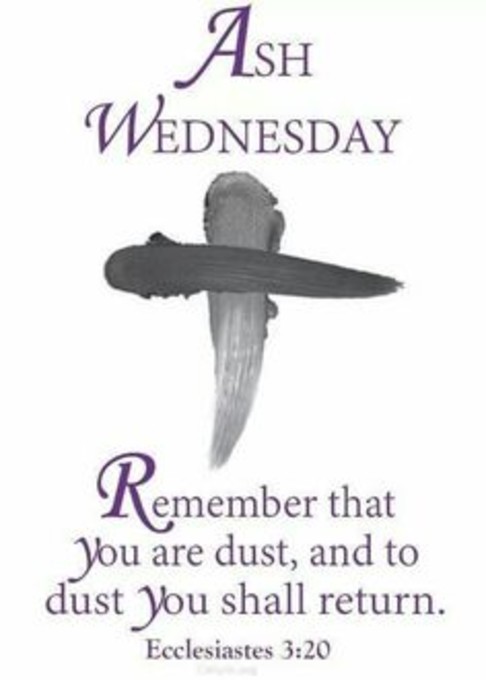
Modern popes -- more in the legacy of Vatican I -- and the globalization of a church body have made a centralized authority and supreme office even more essential to maintaining order. This central authority has come to reside exclusively with the office of the pope. The problem facing such a pivotal office is not only the heresy of prior occupants of that office but also the current state of affairs in which Francis has assumed more and more direct control while appearing to have delegated that authority and making a more democratic church structure. Even Benedict XVI, while still Joseph Cardinal Ratzinger, made Peter and his successors the rock which alone guarantees the right faith and the right understanding of the Word of God. If the pope is that essential link, then what of the heresies of the past (of such Popes Liberius, Vigilius, Honorius, Nicholas Paschal II, John XXII, etc.)? Indeed, Francis has taken upon himself the sole right to adjust the catechism and to initiate distinct breaks with the past -- a hermeneutic of discontinuity -- instead of the preserver of the ancient and unchanging truth. So the question comes down to this -- if the pope is a poor captain does that mean the the Roman Catholic Church is shipwrecked?
Luther was certainly unkind with respect to the papacy and its occupant in his time but at that time the pope was less central to the fidelity of the church to the faith than the current pope is today. Indeed, so much dependency on the pope for the strength of the Roman Church, while working acceptably even when popes may be personally immoral but doctrinally orthodox, creates an impossible situation when even moral character is not in question but doctrinal orthodoxy is. When the infallibility of the Pope became the exclusive guarantor of the Roman Church's fidelity, his supremacy over the Roman Church combined with his immunity from earthly judgment has created a crisis even Luther's challenge did not present.
The East has placed infallibility in the Ecumenical Council(s) in which the individual bishops, priests, deacons, and theologians may confess error or heresy, the Council protects the Church from serious theological error and thus preserves the Church itself from heresy. For Luther this infallibility is posited in the Scriptures. While Luther cites approvingly the evidence of the Fathers and early church for his positions, he does not accord them a role above Scripture itself or even equivalent to Scripture. For Rome all of this authority is posited in one individual. Rome long ago left behind a conciliar shape in favor of a papal structure and this occurred largely after Luther and in the more modern era (think liturgically of how this was exercised when comparing the actual canons of Vatican II with what was published as the new mass).
Tuesday, March 5, 2019
Fear and love. . .

Among the lies we tell ourselves is that if only God would give us a sign, we would believe and never doubt again. If only God would explain Himself and give us reasons for what happens, we would be okay with it. Though we long to escape it, fear is the constant companion of faith for as long as we live in this mortal life. Only in heaven will love completely overcome fear but for now, fear and love always go together. Remember Luther’s explanations to the commandments: We are to fear and love God... We fear because we know our sinful hearts that God is holy and we love because we know God’s heart in Christ is merciful.
Today is Transfiguration Day. We all would have loved to be there to see the hidden glory of God revealed, to see what is hidden from us here on earth and known only by faith. But on the mount of Transfiguration there was no end to fear. There the raw and powerful glory of God was revealed in all its truth and terror. Peter and James and John were taken by Jesus up to the top of the mountain on the heels of a great mission trip with all sorts of victory stories to tell and impress Jesus. They had watched Jesus distribute five loaves and two fish to feed thousands. Peter had confessed boldly that Jesus was the Christ of God. So why fear?
Why would they fear? Because as wonderful as each of these things were, they were also filled with terror. Yes, it was wonderful to be given authority to preach the gospel and heal the sick but what a big burden for such small shoulders. Yes, it was wonderful to see the miracle of thousands fed by so little but people were still hungry and now they expected the disciples to be able to do something about it. Yes, it was wonderful to confess Jesus as the Christ but not if being the Christ meant the suffering of the cross for Him and perhaps for those who followed Him. The disciples were afraid. I know I would have been.
Up the mountain they went with Jesus expecting to pray about it all. But before they could bow their heads and fold their hands, Jesus began to shine and they saw two men appear to be with Jesus. Could this be Moses dead for thousands of years now come to converse with Jesus? Could this be Elijah who ascended into the presence of God on chariots of fire? No wonder they were afraid! And with the fear came the weariness of minds too full and eyes too heavy and sleep beckoned to them. Surely everything will be better in the morning, right? They were denied not even this moment of solace.
Just when they knew enough to fear, it was over. What on earth was going on? Who stood with Jesus and why? Should they stay here or should they go? Was it a voice or was it thunder? And then it was gone. The glory was gone. Moses was gone. Elijah was gone. Only Jesus was left. They did not say another word. Their tongues had been stolen by fear and they could not even tell the other disciples what they had seen or confide into wives and children the great mystery of this mountain and its glory.
We long to see a glimpse of God’s glory, to get answers or signs to erase all our fears. We want to behold the glory of God because life is too filled with troubles and trials. We want to admire the glory of God because there is too little on earth worthy of our admiration and trust. But for Peter, James, and John this glory was not comfort or peace. It was pure and raw terror. Instead of being relieved of their fears by the glory of God, their fears were only magnified by the presence of God’s glory. Here on earth love and fear live together in faith. Someday God will wipe away all tears and fear will fade from memory and heart but not yet. For now they are always together.
Jesus told them not be afraid. He told them over and over again. He tells us not to be afraid. We come Sunday after Sunday still seeking an end to all our fears. Jesus never told them they had nothing to fear but directed their fears to the One who can destroy body and soul. Think of the context. In the Old Testament it was a curse not to have a son to wear your name. Without heirs to continue your line, it was like your memory was obliterated from the earth. The Lord does not promise us that the earth will remember us. Instead He promises us that God cannot forget us. Not that there will always be people who knew us and loved us and admired us but that God knows us even in our sin, loves us enough to save us, and His mercy will remember us when all else is lost and will deliver us to everlasting life.
Jesus does not promise that if we love Him enough or pray hard enough or work hard enough to follow Him that all our fears will vanish. What He promises us is that our fears are answered by the love of God, by the mercy of God, by the determination of God to do all things for our salvation, and by the power of God to raise our dead bodies and give to us life that death cannot overcome. This fear drives us into His arms of love. There fear and love stand together – fear that acknowledges we have real enemies and we are in real danger and love that comes to us in Christ – stronger than our enemies and the only one who can rescue us forevermore. Faith is the union of honest fear with the only God whose love gives the fearful hope. So we come acknowledging and confessing not only our sin but also the love that forgives that sin. Fear and love walk together on this earth and it is a good thing. The fear of the Lord is the beginning of wisdom but the end of it is love, Christ, the love of God in flesh.
The Law must be spoken to our willful and lying hearts and to awaken us to to own our sin and its consequences. . . But the Gospel speaks sweetly of forgiveness and life in Christ. This is how the Word God speaks to us. And hearing that Word of God, the Spirit directs our fears away to the Lord who has conquered all things for our salvation. But the Lord does not only comfort, He corrects and the Lord does not only correct but comforts. In this holy tension faith lives and without fear or love it dies.
This tension is focused in Jesus. He is Savior who dies that we might live and He is Judge before whom all must appear. When the glory had faded and Moses and Elijah had gone, only Jesus was left. And Jesus is always all that is left. He is the voice of comfort to our conscience terrified by sin and its death and He is the voice of terror to our conscience no longer convicted by sin and in fear of death. God has not redeemed us so that we might play together as friends in the sandbox of eternity. God has redeemed us so that we may live under Him, honoring Him as God and knowing that we are not, and yet rejoicing in the mercy that saves us. The Gospel is not some grand egalitarian scheme to tame God but God taming the power of our sin by turning our eyes and hearts to Jesus, our Savior and Redeemer.
You may think you need to get rid of your fears but what you really need is to have your fear focused so that you are drawn to daily repentance by the power of the Holy Spirit. You may think that what you need is to figure out the secret of loving perfectly but what you really need is to be rescued by that love, called from your wandering ways, from your daily dances with the devil, and turned to Jesus. You may think that fear and love cannot live together but they must live together in us for now. . . until He comes in His glory to finish His new creation and fear is swallowed up in love forever. You may think you need answers to make sense of it all but in the end it is only Jesus, the author and perfector of the faith whom we follow because there is none other. You may think that fear is a curse, but if that fear draws you back to God through repentance, that fear is a gift and a blessing. You may think that love is always gentle but love which cannot growl the voice of the Law into your prideful heart is not love at all.
Like a parent who cares more about a child’s safety than their happiness, the Lord uses fear to drive you to repentance but He does not leave you in your fears. He forgives all your sins. In heaven perfect love will cast out fear but here on earth we are grateful that someone loves us enough to put the fear of God in our hearts for truly it is the beginning of wisdom. We do not live on the mountain tops but in the valleys and in the shadows. Fear is real but the fear that points us to Jesus gives way to perfect love and this love abides forever. Thanks be to God! Amen.
Lets get good works out of the church and into the world where they beong. . .

A while ago I listened to a hurting soul complain that they church had not been there during the worst any parent could face, the death of a child. The pastor did not visit, the church did not seem to care, and, the best ministry that person received was from people not even associated with a church, or at least a Lutheran one, the peers from that person's workplace. This had happened before I became pastor and yet I took it personally. I inquired since the person was well connected to the congregation. Did no one from the congregation visit, bring food, ask how they might help, write a card, offer support, shed tears, pray for you, etc? Well, yes, they did but the church did nothing and the pastor did not do much at all. Therein lies the problem. The church is ONLY what the pastor does and only what the congregation does as an organized whole and not what individual Christians do as part of that body.
This is especially true when it comes to good works. Some in my parish complain that we are not doing as much as we should (is that ever not true?) in the community. When I begin mentioning what is done, the complaint is that much of that is not being done by the church but individual Christians within the church. In other words, it only counts what is done by the collective whole working together and the good works of individual Christians are separate. They look at the budget to find out what the church is doing and they see most of that budget particular to the work of the planting, nurturing, and growing the Kingdom -- missions in district and synod, mission to a sister group in Africa, teaching and learning the Word, worship, etc... Yes, there is also money for the soup kitchen, cooperative financial aid for poor, money to support those who cannot afford counseling, etc... but these are not enough. They complain that the church is not doing enough good works in the community.
They are wrong. The good works the church is doing include the good works individual Christians are doing who belong to that community of faith. The fruit of their life together in Word and Sacrament IS reflected in their good works on behalf of neighbor. It is an artificial and foolish distinction to separate out what the church does as a community working together (largely budget) from what the church does as individual Christians in the world. David Scaer has it right and it also applies to the way we judge the work of the church in the community -- good works are the fruit of the individual's life in the Word and nourished by the Table of the Lord and this is the work ONLY the church can do. Without this good work of the means of grace, the good works that flow from faith will not flow to neighbor.
I am not sure when the good works of the church became identified solely with budget and the programs of the community but it is not a good thing. I am not sure when people began to make a distinction between what was done by the church as a whole and the church as individual Christians fulfilling their baptismal calling in the world, but it is not a good thing. We need to reverse this false perception of the good done by the church and the good done by the Christian. ONLY the church can and will do the good of teaching the doctrine of that Word, preaching that Word, baptizing, nurturing the faith, setting the Lord's Table, hearing confession, and equipping the baptized to live out their vocation in the world. UNLESS the church does that which only the church does, there will be few good works happening to benefit neighbor, few words of witness spoken to family, friends, co-workers, and strangers, and few actions of love toward those in need.
So my friend is wrong. They may not have gotten all they wanted from the pastor and they may being carrying that wound for a long time, but they are not correct when they said the church was not there for them. Their brothers and sisters in the faith were there -- doing what Christians do when they cannot make the hurt go away. They bear the burden with the wounded, feed and console, sit in silence, do what can be done while grief holds the wounded frozen in pain, and remind them of the hope that is in them. And that is how it should be. I expect, that is exactly how it is. I see it in my own parish, have experienced it in my own grief, and encourage it as best I can for this is how and where the people of God manifest their faith amid the family of faith and in the world.
Monday, March 4, 2019
A few election thoughts. . .

I am not greatly upset by politics in the Church. It is, after all, a sign of the depth of our conviction that we take the Church, her doctrine and her practice so seriously. I don't there is anything to complain about when these convictions inform and direct our corporate conversation. What would be better? A passionate debate that reflects our great investment in Christian faith and life or passionless debate in which no one invests anything of themselves in their positions?
That said, when things become more about personalities and individuals than issues, there is always more heat than light and more people are disillusioned than inspired. My own church body is often characterized as a warring communion with a long history of dispute. Some of that is correct. Most of it is about doctrine and practice although some of it is personal in nature. Every few years things ramp up a bit as the convention dates near. Some of the conflict and partisan positioning is about who to elect and some of it is about the goals and challenges that we face in the coming days. This year it is less about issues and more about the people. And that is not a good thing.
I am not adverse to the creation of lists of people or positions. After all, most of those attending a synodical convention are new to the process and do not know the names on ballots or the full story behind the issues. We long ago stopped being an extended family in which relationships connected us and surnames meant something. But lists that recommend people have given way to character assassination and carefully crafted position papers have been replaced by lies and half truths that inflame more than they inform.
I am personally saddened by the politics of some in this convention cycle. I have seen websites created to attack people instead of persuade them. Social media has been exploited in the same way and for the same effect. Inconvenient truths have been replaced by convenient lies. Some have demonized the current leaders and glorified their own candidates. Some have attempted to retrace history but have omitted some of the facts and distorted others.
In our Synod, we have had accusations of mobbing, as if an organized machine exists only to intimidate, allowed anecdotal story to replace evidence and corroborating facts, and created divisions based upon personal loyalty rather than fact or truth. I would urge those involved to stop and think about what they are doing. Loyalty to an institution is already an endangered commodity in our age and the integrity of the Church is suffering from the failures of many. While honest debate over issues will not damage us as a community of faith, the politics of threat or innuendo will not only damage the institution but also all of its people and every part of its mission. If you are not helping, you maybe hurting the very Synod your purport to love. We can debate and survive, even impassioned debate! But we will not long survive nor should we when character assassination, lies, and half-truths replace an open, earnest, and honest conversation.
Subscribe to:
Posts (Atom)